
Efficient Fast Charging of Plug in Electric Vehicle Using Adaptive
Slide Mode Controller
Selvadurai C. K., Sankarganesh R., Sripathy D. and Gukankavin M. N.
Department of Electrical and Electronics Engineering, K.S.R College of Engineering, KSR Kalvi Nagar,
Tiruchengode - 637 215, Namakkal (Dt), Tamil Nadu, India
Keywords: Energy Storage System, SRA, GRA.
Abstract: With technological improvement, the interest in electric vehicles (EVs) has regained in the 21st century, as
well as the focus on renewable energy sources and a potential to reduce the negative impacts of transportation
on environmental issues like the climate change. The fast charging stations are gaining popularity with electric
cars as they can shorten the time, and help to reduce range anxiety. For effective alleviating grid stress and
reduction of carbon emissions, it is essential to integrate solar systems with conventional direct current fast
charging stations. However, challenges exist since GIC are underutilized and ESS are too expensive. To fully
leverage the advantages of electric vehicle (EV) installations and their supporting charging infrastructure,
these challenges must be effectively addressed. A proposed direct current (DC) fast-charging station
architecture, designed to operate solely with photovoltaic (PV) systems and without incorporating energy
storage systems (ESS), aims to minimize costs. In scenarios where an ESS is absent from the fast-charging
setup, the suggested Smart Charging Algorithm (SCA) ensures optimal alignment between power sources and
loads from both the grid and EVs. This optimization enhances power output from the PV system while
maximizing the efficiency of grid-integrated chargers (GICs). The GICs function based on a grid-regulated
algorithm (GRA), while EVs follow a self-regulated algorithm (SRA). As long as DC bus voltage fluctuations
remain within an acceptable range, the SRA dynamically adjusts the charging power for each EV according
to its state-of-charge (SOC) feedback, ensuring power balance within the fast-charging system (FCS). Both
simulation and experimental results validate the effectiveness of the proposed SCA. Additionally, the GRA
takes part in the regulation process when the DC bus voltage remains within the predefined excitation voltage
range, ultimately reducing the overall charging time for EV batteries.
1 INTRODUCTION
Consequently, electric vehicles (EVs) and hybrid
electric vehicles (HEVs) are widely advocated to
reduce the reliance on fossil fuels and lower carbon
emissions. Direct Current Fast Charging Systems
(DC FCS) can enhance the charging speed and extend
the driving range of EVs; however, they also increase
stress on the utility grid and introduce new
challenges. To mitigate grid stress and decrease
carbon emissions, DC FCS integrated with
photovoltaic systems is employed.
At the megawatt scale, photovoltaic technology
proves to be both practical and cost-effective.
Overall, hybrid power supply systems (HPSS) or DC
FCS that utilize renewable energy sources help to
eliminate dynamic power fluctuations.
Significant research results have been obtained
about the optimization of the ESS cost, but the
elimination of the ESS cost of FCS has not been
explored. Clearly, the removal of the ESS will save a
considerable amount of money for FCS. However, the
previous ESS based energy management strategies
for the HPSS are retained to highlight the important
role of ESS in power flow balancing. However,
without ESS power support, traditional energy
management strategies become ineffective for the
FCS. The DC FCS architecture based on ESS free is
introduced and studied to address the large cost of
ESS. At the same time, the smart charging algorithm
(SCA) is proposed for the effective coordination of
the grid and EVs' source or load properties to
minimize power fluctuations of FCS in the absence of
ESS.
C. K., S., R., S., D., S. and N., G. M.
Efficient Fast Charging of Plug in Electric Vehicle Using Adaptive Slide Mode Controller.
DOI: 10.5220/0013893700004919
Paper published under CC license (CC BY-NC-ND 4.0)
In Proceedings of the 1st International Conference on Research and Development in Information, Communication, and Computing Technologies (ICRDICCT‘25 2025) - Volume 3, pages
171-178
ISBN: 978-989-758-777-1
Proceedings Copyright © 2025 by SCITEPRESS – Science and Technology Publications, Lda.
171

2 PROBLEM DEFINITION
In several nations, the technology of electric vehicles
(EVs) has been advocated as the way to minimize
local air pollution and increase transportation energy
security. Electric vehicles are still very immature,
with their cost still very high, especially for pure
electric vehicles, and there is still not very suitable
infrastructure. This paper covers some of the
roadblocks and challenges that are likely to obstruct
progress in this challenging area. The current
problems can be divided into two groups Battery
performance and prices, as well as battery
manufacturing, including material supply concerns.
The environmental benefits of electric vehicles are
dependent on the energy sources used to generate
electricity and their carbon intensity. The length of
time it takes to charge an automobile is determined by
the battery capacity and other factors.
3 LITERATURE SURVEY
This study (Akhtar Hussain et al., 2020) presents an
optimized approach for determining the appropriate
size of a battery energy storage system (BESS) in a
fast-electric vehicle (EV) charging station that
experiences power outages. The research focuses on
minimizing energy storage system costs, enhancing
EV resilience, and reducing peak power demand to
establish the most effective BESS configuration.
Additionally, it emphasizes the robustness of EV
operations during power interruptions. In the initial
phase, the stochastic demand of the fast-charging
station (FCS) and the resilience of EV loads are
analyzed using probability distribution models. To
ensure EVs remain operational despite power losses,
the energy levels in the storage system are maintained
at a stable level. Based on this, the annualized cost
rate of the BESS is determined, considering yearly
interest rates and component lifetimes. The optimal
BESS size is then derived by factoring in the
annualized cost, penalties for peak-hour power
purchases, and penalties for resilience violations.
Furthermore, simulations and sensitivity analyses are
conducted to assess the impact of various parameters,
such as the number of EVs at the charging station,
converter ratings, and uncertain factors like market
price fluctuations, EV arrival times, and residual
energy levels. Simulation results indicate that
increasing costs during peak intervals effectively
reduces overall FCS expenditures while managing
peak capacity efficiently.
Primary and Secondary Control in Dc Microgrids
a Review offered a Direct and indirect control in DC
microgrids are discussedThe concept of microgrids is
well-known in the field of electrical engineering due
to the rapid advancement of power electronics
technology. DC microgrids (MGs) are becoming
increasingly common due to the advantages of DC
power distribution networks, such as reduced losses
and simplicity in connecting with energy storage
resources. A DC microgrid with multiple sources is
gaining importance as a research issue with the
increasing acceptance of distributed generation. The
challenge with a multi-source DC microgrid is to
supply voltages that effectively facilitate power
sharing. Given the significance of the control method
in ensuring the power system reliability of the
microgrid, an extensive analysis of current condition
control techniques in DC microgrids is necessary to
ensure their efficacy. This work covers both the direct
and indirect control techniques used in hierarchical
control.
Integrated Pv Charging of Ev Fleet Based on
Energy Prices, V2g, An Offer of Reserves developed
an integrated reserve offer, V2G, and energy price PV
charging solution for EVs. There are several
advantages to using office building photovoltaic (PV)
panels to charge electric vehicles (EVs) while at
work. This includes using PV energy that is generated
locally, using it to charge electric vehicles, and
establishing energy exchanges with the grid through
the use of dynamic grid pricing.This study presents an
original mixed-integer linear programming (MILP)
formulation designed to tackle distribution network
constraints, aiming at effective electricity
management and grid overload prevention. Utilizing
a receding-horizon methodology, the MILP model
governs the charging of electric vehicle fleets through
photovoltaic sources.
4 DESCRIPTION
In light of the rapidly increasing global demand for
energy and the need to locate a substation of fossil
fuel resources before their eventual long-term
depletion, this recommended solution reduces the
time required for charging an electric automobile as
well as the energy storage system.
ICRDICCT‘25 2025 - INTERNATIONAL CONFERENCE ON RESEARCH AND DEVELOPMENT IN INFORMATION,
COMMUNICATION, AND COMPUTING TECHNOLOGIES
172
5 BLOCK DIAGRAMS
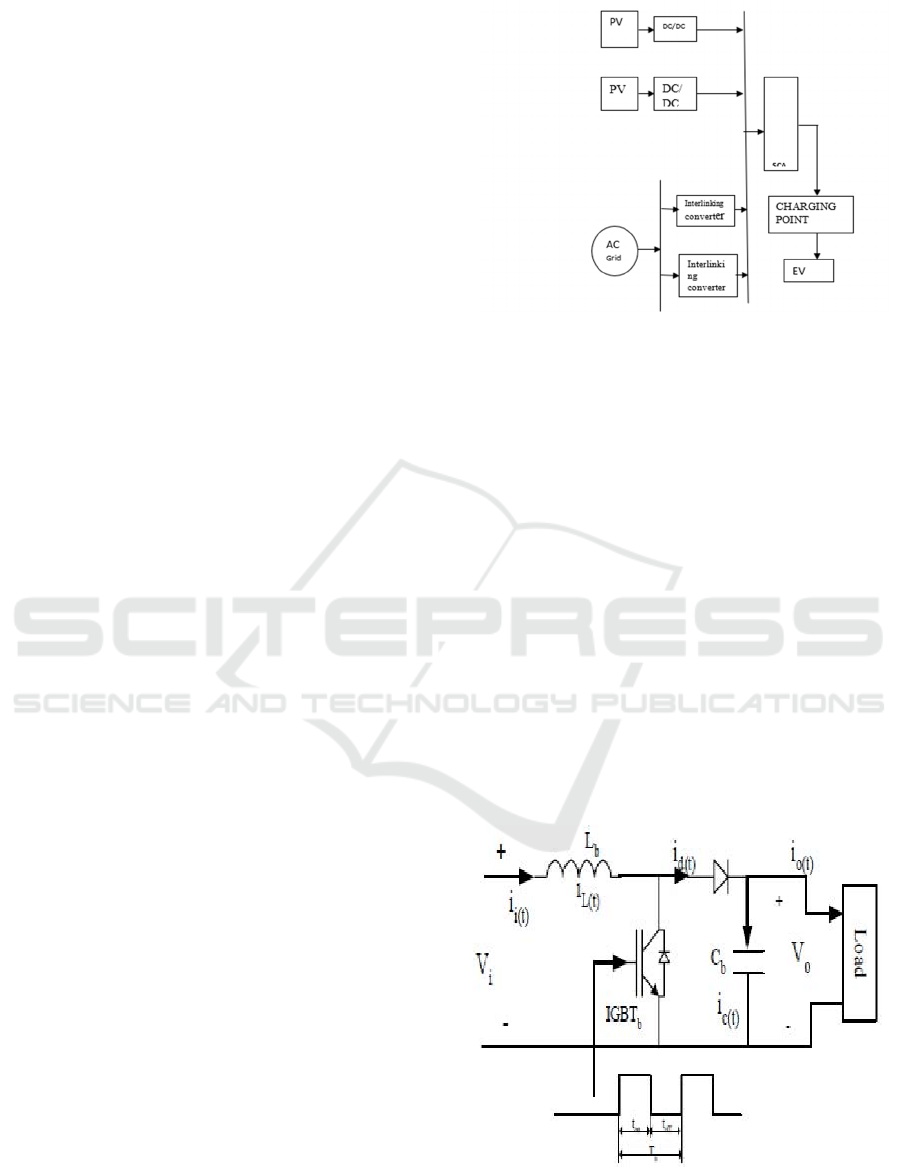
Solar panels capture sunlight, and a direct current (dc-
dc) converter is employed to transfer this energy to
the battery. The electric vehicle is charged using a
dc/dc converter within a charging station.
Additionally, the power grid serves as an alternative
power source. Refer to Figure 1 for the block diagram
of the suggested system.
Fast-charging stations (FCS) commonly utilize
energy storage systems (ESS) to mitigate power
fluctuations caused by the unpredictable and frequent
charging demands of electric vehicles (EVs), as well
as the variability of photovoltaic (PV) power
generation. The primary goal of the scheduling
coordination approach (SCA), which integrates the
scheduling regulation approach (SRA) and global
regulation approach (GRA), is to optimize the use of
ESS within the FCS through coordinated
management of EV charging and grid-interface
converters (GICs). The power fluctuation range of the
FCS is effectively represented by variations in DC
bus voltage. Due to the frequent fluctuations in
power, GICs may experience lower utilization rates,
given that EVs exhibit distinct temporal and dynamic
load characteristics.
Since EV charging durations typically fall within
the hourly range, this study employs the SRA method
to regulate EV charging power, thereby mitigating
minor power fluctuations in the FCS. By
implementing a modified droop charging strategy
with state-of-charge (SOC) feedback, SRA enables
proportional and dynamic power adjustments across
EVs. However, while SRA effectively reduces
fluctuations, it may either slow down EV charging or
negatively impact battery lifespan—both of which are
undesirable for users. To address this limitation, GRA
is introduced to ensure that EVs receive adequate
charging power for handling larger power
fluctuations while simultaneously improving the
utilization efficiency of GICs.
5.1 Solar Panel
The primary HPSS component in FCS is the PV
system. A photovoltaic system with many parallel
array sets is connected to the DC bus. In the planned
FCS, PV systems will be given preference while
charging EVs, which will ease the load on the electric
grid, particularly during peak hours.
Figure 1: Proposed Block Diagram.
5.2 Converter
A converter is an electrical circuit that takes a direct
current (DC) input and delivers a DC output at a
different voltage level. This is typically achieved
through high-frequency switching, along with the use
of inductive and capacitive filtering components.
Depending on its design, a converter can serve
multiple functions while altering the input voltage. In
the proposed system, a DC-DC converter is utilized,
which integrates both boost and buck conversion
capabilities to regulate the voltage as needed.
5.2.1 Boost Converter
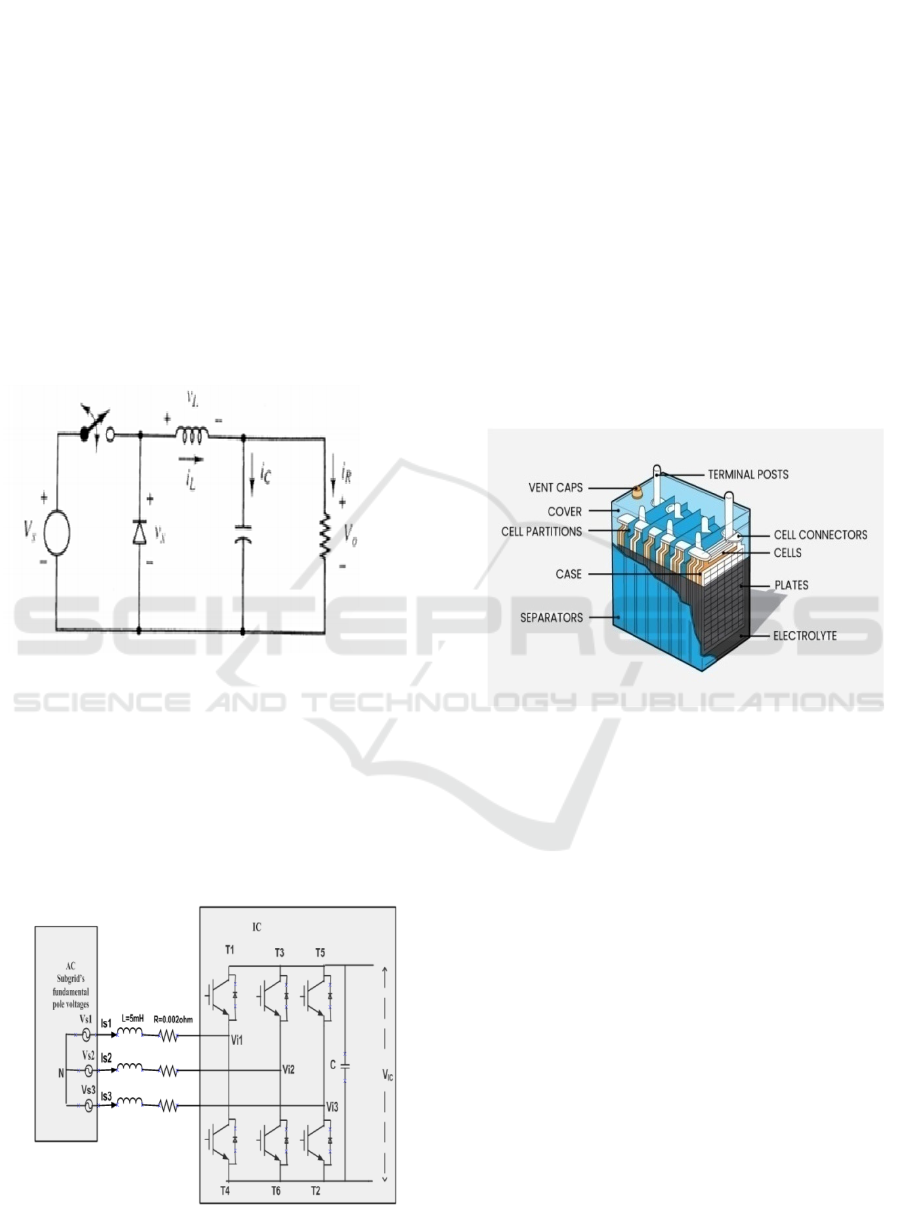
This proposed system employs a dc-dc converter that
combines the operations of a buck and a boost
converter. Figure 2 depicts the boost converter used
in the PV system to achieve maximum power point
tracking (MPPT).
Figure 2: Boost Converter.
Efficient Fast Charging of Plug in Electric Vehicle Using Adaptive Slide Mode Controller
173
Each boost converter is assessed based on its
capacity to operate efficiently, as well as its size and
implementation cost. Traditional boost converters
and interleaved boost converters are extensively used
topologies in solar systems, although they have the
disadvantage of varying efficiency levels depending
on the weather.
5.2.2 Buck Converter
The charging station has the buck converter shown in
Figure 3. The DC/DC stage is the second stage of
power conversion in an EV charging station. It does
this by changing the incoming DC link voltage to a
lower DC voltage, which charges the battery of an
electric car. The buck converter is a typical DC-DC
converter that turns a high voltage to a low voltage.
Figure 3: Buck Converter.
5.2.3 Interlinking Converter
By granting control over the exchanged active and
reactive power, interlinking converters enable the
direct management of power flow between grids. A
key component of the stability of the entire hybrid
microgrid is the interlinking power converter, which
connects the AC and DC sub grids in Figure 4.
Figure 4: Interlinking Converter.
In grid-connected mode, the utility grid could
assure power balance, and the converter could ensure
DC bus voltage stability. In both micro grids, an
interlinking converter is employed for power balance,
transferring power from one micro grid to the other if
one is overwhelmed.
5.3 Battery
In applications involving electric vehicles (EVs), lead-
acid batteries make up 25–50% of the vehicle mass
overall. At 30–50 Wh/kg, their specific energy is less
than that of petroleum fuels, which is the standard for
all batteries. Figure 5 shows an example of a lead-acid
battery. Even the most sophisticated batteries, when
used in cars with a conventional range, typically lead
to larger masses; however, this difference is lessened
because an EV's drivetrain is lighter.
Figure 5: Lead Acid Battery.
Batteries release hydrogen, oxygen, and sulfur
during charging and usage. These gases are naturally
occurring and, when properly vented, are typically
safe. Among the various types of batteries, lead-acid
batteries are the most affordable. In situations where
vehicle speed is not a concern, this type of battery is
commonly used in professional settings.
6 SMART CHARGING
ALGORITHM
Power fluctuations caused by the intermittent nature
of the PV system and the irregular and frequent access
of EVs are the most important reasons that the ESS
needs to be used in order to eliminate this. In this
work, the ASMC aims to cooperatively allocate the
power distribution of EVs and GICs in order to
replace the ESS in FCS. The SCA flow chart is as
shown in Figure 6. The FCS power fluctuation range
ICRDICCT‘25 2025 - INTERNATIONAL CONFERENCE ON RESEARCH AND DEVELOPMENT IN INFORMATION,
COMMUNICATION, AND COMPUTING TECHNOLOGIES
174
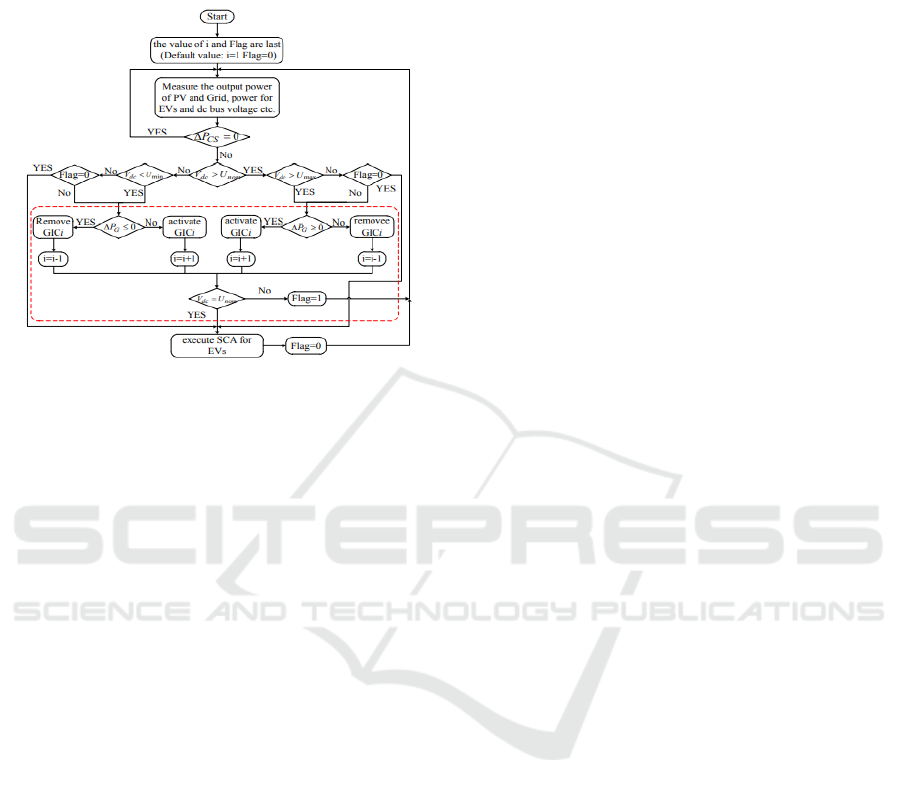
can be well indicated by the DC bus voltage. EVs
have different temporal and dynamic load
characteristics, therefore frequent power fluctuations
will lead to a poorer usage of GICs.
Figure 6: Flow Chart of ASMC.
Because EV charging time is measured in hours, this
article employs the Self-Regulated Algorithm (SRA)
to adjust EV power input in order to smooth out minor
power variations in FCS. With SOC feedback, the
ASMC for EVs can accomplish proportionate
dynamic power control among EVs via modified
droop charging.
1. Since FCS has large power fluctuations,
GICs should be involved in the regulation of the
charging power of EVs.
2. To maintain the stability of the High-
Performance Storage System (HPSS), it is essential to
adjust the droop coefficient based on the operational
status of the Grid Interface Converter (GIC) and
fluctuations in DC bus voltage. When the GIC is not
operating at full capacity, it retains its initial droop
coefficient, and the DC bus voltage remains
proportional to the output power. However, once the
GIC reaches its maximum power output and an
additional GIC is activated, the droop coefficient
adjusts in response to changes in DC bus voltage. By
implementing a dynamic adaptive management
approach, the output voltage of each GIC can be
effectively synchronized with the DC bus voltage,
ensuring optimal system performance.
6.1 AC Grid
Grids are typically consistently synchronous,
indicating that all distribution areas operate on
synchronized three-phase alternating current (AC)
frequencies, allowing voltage fluctuations to happen
nearly simultaneously. In FCS, the AC module is
movable and is made up of many parallel GICs. The
GICs will turn on when EVs are unable to manage
power fluctuations to the point where the DC bus
voltage rises over the predetermined threshold range.
To guarantee that EVs are charging at the proper
power, GICs are able to endure significant power
fluctuations. To increase the converter's usage, use
numerous GICs.
6.2 Charging Point
Every CP is connected to the common DC bus, which
is managed and maintained by the FCS, and each CP
has a buck converter installed independently. When
an EV battery pack is being charged, the CP keeps
track of its voltage, current, and state of charge (SOC)
and relays this data to the control center. The
enhanced CC&CV charging mode provided by the
CP guarantees the efficiency of EV charging.
7 SIMULATION DIAGRAMS
By working together to coordinate the power
distribution of EVs and GICs, the ASMC hopes to
accomplish ESS replacement within FCS. In Figure 6,
the ASMC flow chart is shown. The power fluctuation
range of FCS is effectively represented by the DC bus
voltage. Due to frequent power fluctuations, the
unique temporal and dynamic load characteristics of
EVs might lead to a decline in the usage of GICs.
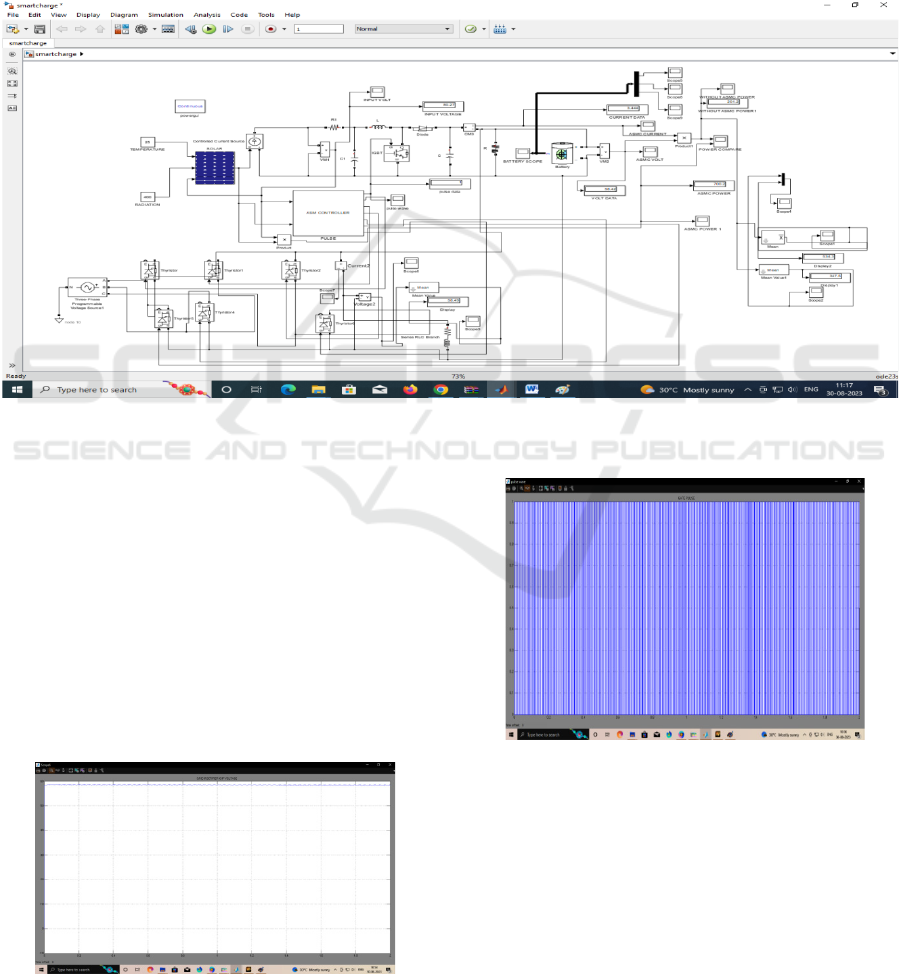
Figure 7 depicts the suggested system's simulation
diagram.
The Smart Regulation Algorithm (SRA) for electric
vehicles (EVs) relies on feedback mechanisms to
ensure balanced and dynamic power distribution.
However, continuously using Adaptive Sliding Mode
Control (ASMC) to suppress power fluctuations can
lead to undesirable effects—either slowing down
charging due to reduced power levels or causing
battery degradation from excessive charging power.
To address these challenges, an optimized control
approach is required.
To manage significant power variations, ASMC is
employed to regulate charging power levels and
improve the efficiency of grid-interface converters
(GICs). During this process, there is a continuous
exchange of power between the fast-charging station
(FCS) and the utility grid. ASMC is activated only
when voltage fluctuations caused by power variations
remain within a defined range.This study presents an
enhanced droop control strategy that integrates state-
of-charge (SOC) data to achieve power balance in an
Efficient Fast Charging of Plug in Electric Vehicle Using Adaptive Slide Mode Controller
175
FCS handling multiple EVs. Additionally, it provides
a comprehensive analysis of droop behavior in both
constant current (CC) and constant voltage (CV)
charging phases.
To maintain optimal charging power, GICs play a
vital role in stabilizing power fluctuations within the
FCS. Deploying multiple GICs significantly enhances
system efficiency compared to using a single unit. To
ensure the stability of the hybrid power supply system
(HPSS), the droop coefficient must be dynamically
adjusted based on the DC bus voltage and the
operational state of the GICs. When a GIC is not fully
utilized, the DC bus voltage remains proportional to
output power, preserving the initial droop coefficient.
However, when a GIC reaches its capacity limit, the
next GIC is activated, which may lead to variations in
the droop coefficient relative to the DC bus voltage.
By implementing an adaptive droop coefficient
management strategy, each GIC’s output voltage
aligns with the DC bus voltage, ensuring optimal
system performance.
Figure 7: Simulation Diagram of Proposed System.
8 RESULTS AND SIMULATION
The simulation output and analysis of solar panel,
converter, battery, inverter, grid and charging time
with ASMC were shown in following figures. The
output of solar panel after using dc-dc boost converter
is shown in Figure 8.
The power taken from the grid to charge the
battery of electric vehicle by using smart charging
algorithm is shown in the Figure 9 The power is
drawn from the grid only when there is high power
fluctuation is observed.
Figure 8: Solar Voltage.
Figure 9: Grid Voltage.
The gate pulse shown in Figure 10 is given to the
switch by using the smart charging algorithm. This
gate pulse is used to trigger the gate of the switch to
fasten the process of open and close of the switch.
This process can speed the flow of charge through the
circuit. So, that charging speed can be increased.
ICRDICCT‘25 2025 - INTERNATIONAL CONFERENCE ON RESEARCH AND DEVELOPMENT IN INFORMATION,
COMMUNICATION, AND COMPUTING TECHNOLOGIES
176
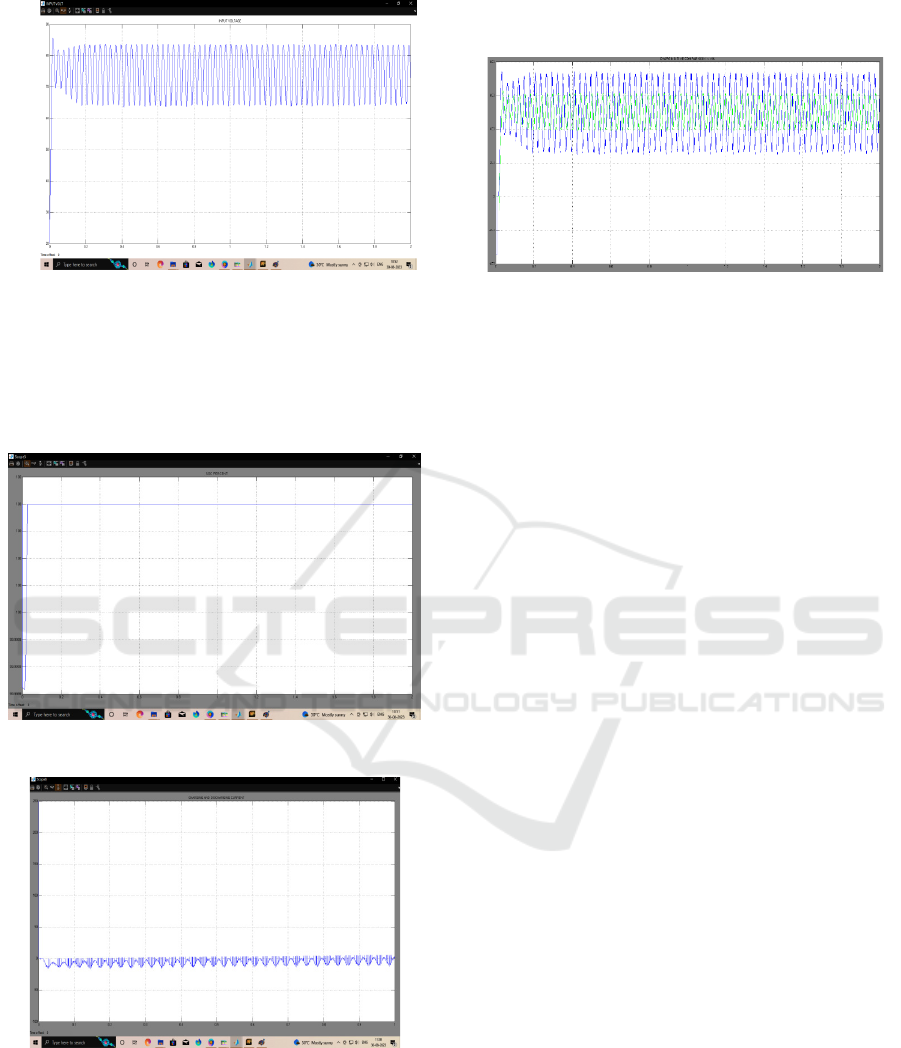
Figure 10: Gate Pulse.
The battery gets charged by using the source such
as solar power and grid. The charging source of
battery is decided by using the controller such as
smart charging controller. The current, voltage and
state of charge of a battery is shown in the Figure 11
Figure 11: SOC of Battery.
Figure 12: Battery Current.
The aim is to reduce the charging time of electric
vehicle. This is obtained by using the newly proposed
algorithm called smart charging algorithm. This
algorithm is basically a switching technique which
controls the switching operation of the system. The
comparison of charging time of an electric vehicle
with ASMC and without ASMC is shown in the
figure 13.
Figure 12 shows the Battery Current.
Figure 13: Time Comparison of Charging EV.
9 CONCLUSIONS
In a DC fast-charging station (FCS) that employs a
hybrid power supply system (HPSS), it is crucial to
lower the costs associated with energy storage
systems (ESS) while enhancing the performance of
grid-integrated chargers (GICs). The proposed DC
FCS incorporates an Adaptive Sliding Mode Control
(ASMC) strategy that functions independently of the
ESS. Simulation outcomes demonstrate the
algorithm's effectiveness in sustaining power
stability. By removing the reliance on ESS, the
ASMC optimizes power delivery from both GICs and
electric vehicles (EVs) within the FCS. This approach
mitigates power fluctuations resulting from the erratic
arrival of EVs and the variable output of photovoltaic
(PV) systems, thereby ensuring a stable power
supply. The ASMC employs a dynamic droop control
mechanism that modifies EV charging power based
on state-of-charge (SOC) feedback, allowing it to
effectively respond to the changing load
characteristics of EVs and enhance power support
within the FCS. Utilizing an adaptive droop control
strategy, the ASMC improves the efficiency of
multiple GICs in comparison to depending on a single
unit. A significant benefit of this method is its
capacity to decrease the number of battery charging
cycles in EVs, which in turn promotes battery
longevity and enhances overall system efficiency.
10 FUTURE SCOPE
In further research, the vehicle-to-grid mode (V2G)
will be taken into consideration to enhance power
support to the grid. The load (motor) will be charged
using a battery that provides feedback to the ASM for
the protection of battery life. This approach is
Efficient Fast Charging of Plug in Electric Vehicle Using Adaptive Slide Mode Controller
177

suggested to keep the electrical grid's voltage stable.
REFERENCES
Akhtar Hussain; Van-Hai Bui; Hak-Man Kim, “Optimal
Sizing of Battery Energy Storage System in A Fast Ev
Charging Station Considering Power Outages”, IEEE
Transcation on Transportation Electrification (Volum
e: 6, Issue: 2, June 2020).
F. Gao, R. Kang, J. Cao and T. Yang, "Primary and
secondary control in DC microgrids: a review," Journal
of Modern Power Systems and Clean Energy, vol. 7, no.
2, pp. 227-242, Mar. 2019.
Gautham Ram Chandra Mouli; Mahdi Kefayati; Ross
Baldick; Pavol Bauer, "Integrated PV Charging of EV
Fleet Based on Energy Prices, V2G, and Offer of
Reserves”, IEEE Transactions on Smart Grid, (vol. 10,
no. 2, Mar. 2019).
Hossam A. Gabbar; Ahmed M. Othman; Francesco Pino;
Maurizio Repetto, “Improved Performance of Flywheel
Fast Charging System (Ffcs) Using Enhanced Artificial
Immune System (EAIS) “, IEEE Systems Journal,
Volume:14, Issue:1, 2020.
Hossein arastvand; OctavianBass;Mohammad A. S.
Masoum;AirlieChapman,Stefan W. Lachowicz,
“Robust Placement and Sizing
of Charging Stations From a Novel Graph Theoretic
Perspective”, IEEE Access, Vol: 8, pp- 118593 -
118602 Jun 2020.
H. Tu, H. Feng, S. Srdic and S. Lukic, "Extreme Fast
Charging of Electric Vehicles: A Technology
Overview," IEEE Transactions on Transportation
Electrification, vol. 5, no. 4, pp. 861-878, Dec. 2019.
J. Zhou, Y. Xu, H. Sun, Y. Li and M. Chow, "Distributed
Power Management for Networked AC–DC Microgrids
with Unbalanced Microgrids," IEEE Transactions on
Industrial Informatics, vol. 16, no. 3, pp. 1655-1667,
March 2020.
K. Chaudhari, A. Ukil, K. N. Kumar, U. Manandhar and S.
K. Kollimalla, "Hybrid Optimization for Economic
Deployment of ESS in PV-Integrated EV Charging
Stations," IEEE Transactions on Industrial Informatics,
vol. 14, no. 1, pp. 106-116, Jan. 2018.
L. Zhang, X. Hu, Z. Wang, F. Sun, J. Deng and D. G.
Dorrell, "Multiobjective Optimal Sizing of Hybrid
Energy Storage System for Electric Vehicles," IEEE
Transactions on Vehicular Technology, vol. 67, no. 2,
pp. 1027-1035, Feb. 2018.
Md Ahsanul Hoque Rafi;Jennifer Bauman, “ A
Comprehensive Review of DC Fast-
Charging Stations With Energy Storage: Architectures,
Power Converters, and Analysis”, IEEE Transactions
on Transportation Electrification, Vol: 7, Issue: 2, pp-
345-368, Jun 2021.
Mohammad Ekramul Kabir; Chadi Assi; Hyame
Alameddine; JosephAntoun; Jun Yan, “Demand-
Aware Provisioning of Electric Vehicles
Fast Charging Infrastructure”, IEEE Transactions on
Vehicular Technology, Vol: 69, pp- 74853 - 74863, Apr
2020.
MondeepMazumder; Sanjoy Debbarma, “EV Charging
Stations with a Provision of V2G and Voltage Support
in a Distribution Network”, IEEE Systems
Journal (Vol: 15, Issue: 1, pp- 662 - 671, Mar. 2021).
Mostafa M. Mahfouz;RezaIravani, “A Supervisory Control
for Resilient Operation of the Battery-Enabled
DC Fast Charging Stationand the Grid”, IEEE
Transactions on Power Delivery, Vol: 34, issue: 6, pp-
2532 - 2541, Aug 2021.
Mostafa M. Mahfouz; M. Reza Irvine, “Grid-Integration of
Battery-Enabled DC Fast Charging Station for Electric
Vehicles”, IEEE Transaction on Energy Conversion
(Vol: 35, Issue: 1, March 2020).
PreethamGoli and WajihaShireen, “PV Integrated Smart
Charging of PHEVs Based on DC Link Voltage
Sensing “, IEEE Transactions on Smart Grid, (VOL. 5,
NO. 3, MAY 2014).
ICRDICCT‘25 2025 - INTERNATIONAL CONFERENCE ON RESEARCH AND DEVELOPMENT IN INFORMATION,
COMMUNICATION, AND COMPUTING TECHNOLOGIES
178
