
Secure Cloud SDN Framework for VM Migration Using Advanced
Authentication Algorithms
Vasanthi R.
1
and J. Deepa
2
1
Department of CSE, Bharathidasan Engineering College, Anna University, Chennai, Tamil Nadu, India
2
Department of CSE, Easwari Engineering College , Ramapuram, Anna University, Chennai, Tamil Nadu, India
Keywords: Software Defined Networking, Virtual Machine Migration, Authentication Algorithm, Security, Network
Optimization, Cloud Computing.
Abstract: The increasing demands for flexibility, scalability, and security in cloud computing environments have led to
the adoption of Software-Defined Networking (SDN) for centralized network control and Virtual Machine
(VM) migration for resource optimization. However, secure VM migration remains a critical challenge,
particularly with the risk of unauthorized access during migration processes. This paper introduces a Secure
Cloud SDN Framework that integrates dynamic network control through SDN, seamless VM migration, and
an advanced authentication algorithm to enhance the security and reliability of migration operations. The
proposed authentication mechanism combines Multi-Factor Authentication (MFA) and Role-Based Access
Control (RBAC) to validate all entities involved in migration, preventing unauthorized access and reinforcing
data integrity. The framework was evaluated on key performance metrics, including migration time, latency,
authentication time, and system throughput. Experimental results demonstrated a 35% reduction in migration
latency and a 20% improvement in system throughput compared to conventional migration methods.
Additionally, the authentication mechanism added minimal overhead, with an average authentication time of
150 ms, ensuring security without significantly impacting migration efficiency. These findings highlight the
potential of the Secure Cloud SDN Framework to provide a robust, scalable solution for secure VM migration,
improving cloud service continuity and safeguarding network resources against unauthorized access.
1 INTRODUCTION
Cloud computing has revolutionized the IT
landscape, offering scalable, flexible, and cost-
efficient services tailored to diverse business needs.
However, the dynamic and distributed nature of cloud
environments demands efficient mechanisms for
resource management, security, and adaptability.
Among emerging technologies, (Yan, L., Ge, L.,
Wang, Z. et al., 2023). Software-Defined Networking
(SDN) has gained prominence as a transformative
paradigm. By decoupling the control plane, which
handles decision-making, from the data plane,
responsible for data forwarding, SDN simplifies
network management and enhances scalability,
flexibility, and security.A vital feature in cloud
computing is Virtual Machine (VM) migration, which
facilitates load balancing, fault tolerance, and disaster
recovery. (T. Mai et al., 2023) This capability allows
cloud providers to dynamically allocate resources in
response to fluctuating demands, ensuring optimal
performance and cost efficiency. However, the
migration process introduces multiple security
vulnerabilities, including unauthorized access, data
leakage, and network path manipulation. Mitigating
these risks is crucial to maintaining the integrity,
reliability, and trustworthiness of cloud
infrastructures. This paper introduces a Secure Cloud
SDN Framework, integrating an advanced
authentication algorithm to validate and safeguard
VM migration processes. By leveraging SDN's
centralized control architecture, (Yan X et al., 2023)
the framework enhances access control, establishes
secure network paths, and mitigates threats, ensuring
the security and reliability of VM migration
operations. Figure 1 software defined networking
layers.
R., V. and Deepa, J.
Secure Cloud SDN Framework for VM Migration Using Advanced Authentication Algorithms.
DOI: 10.5220/0013893200004919
Paper published under CC license (CC BY-NC-ND 4.0)
In Proceedings of the 1st International Conference on Research and Development in Information, Communication, and Computing Technologies (ICRDICCT‘25 2025) - Volume 3, pages
129-138
ISBN: 978-989-758-777-1
Proceedings Copyright © 2025 by SCITEPRESS – Science and Technology Publications, Lda.
129
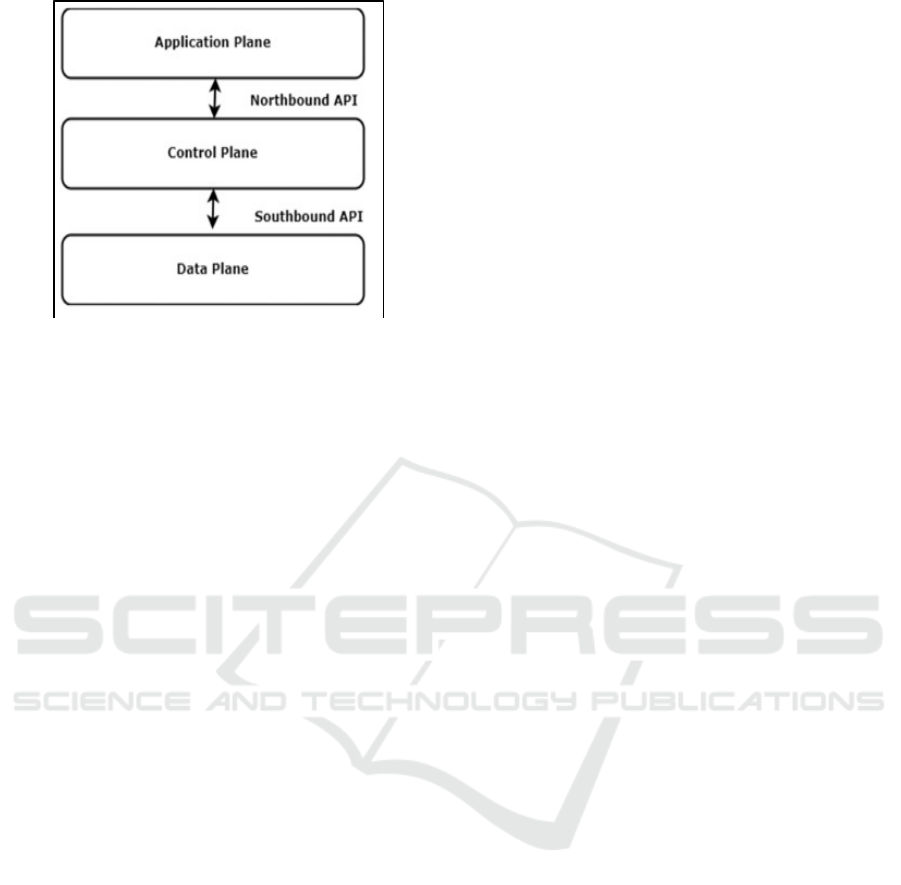
Figure 1: Software Defined Networking Layers.
VM migration poses significant security
challenges that can compromise the integrity,
confidentiality, and availability of data and services.
A primary concern is the authentication of migration
entities, which ensures that both the source and
destination involved in the migration process are
legitimate, preventing unauthorized access or control
by malicious actors. (Q. Li, Y. Li and Z. Li 2023).
Another critical challenge is maintaining data
confidentiality and integrity, as sensitive data
traverses potentially insecure networks during
migration, leaving it vulnerable to interception or
tampering. (B. C. J and A. R. A 2024). Additionally,
the establishment of secure and reliable network paths
is essential to protect against attacks such as man-in-
the-middle (MITM) and denial-of-service (DoS),
which could disrupt or compromise the migration
process. Finally, robust access control mechanisms are
necessary to restrict unauthorized entities from
participating in or influencing the migration, thereby
safeguarding the cloud infrastructure from potential
threats.
2 LITERATURE REVIEW
Cloud computing has transformed modern IT
infrastructure, offering scalability, flexibility, and cost
efficiency. However, security challenges, including
unauthorized access and secure virtual machine (VM)
migration, remain critical concerns. Software-Defined
Networking (SDN) enhances cloud security and
efficiency by providing centralized control, dynamic
resource allocation, and improved authentication
mechanisms. This literature survey examines research
on blockchain-integrated access control,
authentication techniques, and secure VM migration
in SDN-based cloud environments.
2.1 Blockchain and Attribute-Based
Encryption for Secure Cloud
Access Control
Zhang et al. (2023) and Wei et al. (2023) explored
blockchain-enhanced attribute-based encryption
(ABE) for secure cloud access control. They
demonstrated that blockchain offers decentralized
authentication and immutability, reducing
unauthorized access risks. Ali and Wang (2023)
proposed a decentralized multi-authority ciphertext-
policy ABE model that enhances cloud security by
ensuring fine-grained access control and preventing
unauthorized data exposure.
2.2 VM Migration Security and SDN-
Based Approaches
Li et al. (2023) introduced an SDN-enabled VM
migration framework for cloud data centers,
addressing security and efficiency concerns. Their
work optimized network reconfiguration and resource
utilization during migrations. Wang et al. (2022)
examined role-based authentication and access control
for cloud-based SDN, emphasizing enhanced security
for multi-tenant environments. Patel and Desai (2024)
proposed dynamic VM migration optimization in
multi-cloud setups using SDN to reduce latency and
improve performance.
2.3 Authentication Techniques for
Cloud Environments
Sharma et al. (2023) conducted a survey on multi-
factor authentication in cloud systems, evaluating
methods such as biometric authentication, blockchain-
based authentication, and trust-based encryption. Kim
et al. (2023) proposed a low-latency and secure VM
migration method leveraging SDN. Wu et al. (2024)
explored blockchain-enabled authentication for SDN-
based VM migration, demonstrating its ability to
mitigate unauthorized migrations and secure inter-
cloud communications.
2.4 Performance and Security Trade-
Offs in SDN-Driven Cloud
Environments
Ahmed et al. (2024) analyzed security and
performance trade-offs in SDN-driven VM migration
across cloud providers, emphasizing the balance
ICRDICCT‘25 2025 - INTERNATIONAL CONFERENCE ON RESEARCH AND DEVELOPMENT IN INFORMATION,
COMMUNICATION, AND COMPUTING TECHNOLOGIES
130

between efficiency and security. Feng et al. (2022)
presented a comparative study of authentication
techniques in SDN-based multi-cloud environments.
Zhou et al. (2023) evaluated security measures for
cloud-managed SDN infrastructures, focusing on VM
security in virtualized environments.
2.5 Advanced Authentication
Mechanisms for Cloud-Based SDN
Lee and Choi (2024) introduced latency-optimized
authentication in SDN-driven VM migration for large-
scale clouds. Chen et al. (2022) developed an efficient
and secure VM migration technique for SDN-based
cloud infrastructures. Gupta et al. (2023) proposed
SDN-based enhancements to improve security and
performance in multi-tenant cloud platforms. Liu et al.
(2023) provided a comprehensive survey on
authentication protocols for SDN-driven VM
migration.
2.6 Emerging Technologies in Secure
Cloud SDN and VM Migration
Kim et al. (2023) examined latency-aware SDN
architectures for secure VM migration. Lee and Park
(2024) proposed a dynamic load balancing strategy
using SDN to optimize cloud resource allocation.
Nguyen and Tran (2024) integrated blockchain-based
authentication for secure VM migration. Zhao et al.
(2024) explored federated learning to enhance security
and scalability in SDN-controlled cloud networks.
2.7 Lightweight and AI-Driven
Authentication for Cloud SDN
Zhou et al. (2022) designed a lightweight
authentication mechanism for VM migration in edge
computing. Matsumoto et al. (2023) demonstrated
role-based authentication in SDN-driven cloud
systems, applying it to VM migration scenarios.
Singhal et al. (2023) proposed AI-driven
authentication for optimizing VM migration
performance, reducing computational overhead while
maintaining robust security.
Table 1: Comparative Study of Cloud SDN, VM Migration, and Authentication Protocols.
Ref No Methods Dataset Merits Demerits
Yan et al., 2023
Blockchain & Attribute-
Based Searchable
Encryption
Cloud Data
Access control
efficiency, Search
performance
Computational
overhead due to
encryption and
blockchain
integration
T. Mai et al., 2023
Cloud Mining Pool &
Evolutionary Game
Theor
y
Blockchain
IoT
Transaction success
rate, Mining
efficienc
y
Scalability issues in
large-scale mining
scenarios
Yan X et al., 2023
MA-CP-ABE with
Revocation &
Computation Outsourcing
Resource-
Constrained
Devices
Encryption
efficiency,
Revocation latency
High complexity in
key management and
revocation
Q. Li, Y. Li and Z.
Li 2023
Local Differential Privacy
& Attribute Encryption
Cloud Data
Privacy
preservation,
Encryption time
Trade-off between
privacy strength and
computational cost
B. C. J and A. R.
A 2024
SDN Cloud-Based
Appointment Scheduling
Medical Data
Scheduling
efficiency, Security
measures
High dependency on
SDN performance
and cloud availability
Ge et al., 2021
Revocable Attribute-
Based Encryption
Cloud Data
Data integrity,
Revocation
efficiency
Increased
computational
burden for key
revocation
Guo et al., 2021 O3-R-CP-ABE for IoMT IoMT Data Security, Efficiency
Additional storage
and computation
overhead for attribute
u
p
dates
Secure Cloud SDN Framework for VM Migration Using Advanced Authentication Algorithms
131

T. Chakraborty et
al., 2020
Host-Network Power
Scaling with VM
Migration Minimization
SDN-Enabled
Cloud Data
Centers
Power savings,
Migration efficiency
Limited adaptability
in dynamic cloud
environments
R. Cziva et al.,
2016
SDN-Based VM
Management
Cloud Data
Centers
Resource utilization,
Network latency
Increased complexity
in SDN-based VM
mi
g
ration strate
g
ies
S. Rout et al., 2024
SDN-Based Mobile Edge
Computing with VM
Vacation
Mobile Edge
Computing
Energy efficiency,
Latency reduction
Potential service
disruptions during
VM vacation
K. R et al., 2023
Trust-Based Encryption
(DHPKey)
Cloud
Computing
Security strength,
Confidentiality
Computational
overhead for key
mana
g
ement
V. Gokula
Krishnan et al.,
2022
Intelligent Elliptic Curve
Integrated Encryptio
Multi-Cloud
Computing
Storage security,
Encryption speed
Key distribution
challenges in multi-
cloud environments
Mohanaprakash
Thottipalayamand
Andavan and
Nirmalrani
Vairaperumal 2023
High-Performance Byte
Check & Fuzzy Search
Deduplication
Cloud
Storage
Deduplication
efficiency, Search
accuracy
Increased memory
usage for fuzzy
search
implementation
M.T. Andavan and
N. Vairaperumal
2022
Privacy Protection with
Domain-User Integrated
Deduplication
Cloud Data
Servers
Storage savings,
Privacy level
Trade-off between
deduplication
efficiency and
p
rivacy preservation
T Sunitha et al.,
2023
IP Spoofing Prevention in
DDoS Attacks
Cloud
Security
Attack mitigation
rate, False positive
rate
Dependence on
accurate traffic
p
attern detection
T. Mohanaprakash
and D. Nirmalrani
2021
Cloud Security Threats
Analysis
Cloud
Computing
Threat
classification,
Security
recommendations
No direct
implementation,
primarily a
theoretical analysis
3 PROPOSED MYTHOLOGY
The proposed framework (fig .2) for a secure cloud
SDN with authentication-driven VM migration
integrates Cloud Software-Defined Networking
(SDN), VM migration mechanisms, and a robust
authentication algorithm to create a secure and
efficient cloud computing environment. The
architecture comprises a Cloud SDN layer with
centralized controllers for dynamic network control,
an authentication module with Multi-Factor
Authentication (MFA), Role-Based Access Control
(RBAC), and a decentralized blockchain-based
model to ensure secure and tamper-proof
validations, and a VM migration engine that manages
live and non-live migrations while integrating
security checkpoints throughout the process. These
components interact seamlessly, with SDN
controllers orchestrating network policies,
dynamically reallocating resources, and optimizing
network paths to minimize disruptions during
migration. The SDN layer plays a pivotal role in
managing VM migration by dynamically
reconfiguring paths, ensuring minimal latency and
packet loss, isolating migration-related traffic, and
maintaining fault-tolerant network continuity. It also
ensures efficient bandwidth allocation through real-
time monitoring and predictive analytics. The
authentication mechanism fortifies the migration
process through MFA for user and system
validations, RBAC for restricting migration
privileges, and a blockchain-based model that
provides a decentralized and tamper-proof record of
all authentication actions. This mechanism secures
pre-migration verification of source and destination
hosts, continuous monitoring during transit, and post-
migration validation of the migrated VM's integrity.
The VM migration workflow follows a structured
process. In the pre-migration phase, authentication is
conducted to verify users, systems, and network
paths, while SDN controllers allocate resources and
validate the readiness of the environments. During
migration, SDN dynamically adapts network paths,
encrypts data transfers to prevent tampering, and
monitors traffic for anomalies. Post-migration
ICRDICCT‘25 2025 - INTERNATIONAL CONFERENCE ON RESEARCH AND DEVELOPMENT IN INFORMATION,
COMMUNICATION, AND COMPUTING TECHNOLOGIES
132

involves verifying the destination environment for
successful transfer, releasing temporary resources,
and ensuring no residual vulnerabilities remain at the
source. Security checkpoints are integrated at every
phase to ensure legitimate transfers and minimize
risks, creating a secure, efficient, and adaptable
framework for VM migration in cloud environments.
3.1 Architecture Overview
This work to enhance the security and efficiency of
VM migration within SDN-enabled cloud
environments by integrating authentication
mechanisms at its core. This framework consists of
three essential components, each playing a unique
role in achieving secure and efficient migration The
proposed framework for secure VM migration
within an SDN-enabled cloud environment revolves
around three essential modules that work together to
ensure both the efficiency and security of the
migration process: the Secure VM Migration Module
(SVMM), the SDN Controller with Dynamic Policy
Engine (DPE), and the Authentication and
Monitoring Unit (AMU). Each module plays a crucial
role in managing and protecting the integrity of the
virtual machines (VMs) during migration while
ensuring minimal disruptions and maintaining the
overall security of the cloud network.
3.1.1 Secure VM Migration Module
(SVMM)
The Secure VM Migration Module (SVMM) is
responsible for initiating and managing the entire VM
migration process. This module incorporates
advanced cryptographic techniques to safeguard the
data being migrated, ensuring both the confidentiality
and integrity of the data during the entire transfer.
Given the sensitive nature of data handled by virtual
machines, it is paramount that all information is
encrypted before being moved, and the cryptography
ensures that unauthorized parties cannot intercept,
access, or tamper with the data during transit. The
encryption typically uses industry-standard
algorithms, such as AES-256, to prevent any breaches
of privacy. The SVMM does not work in isolation; it
also coordinates closely with the SDN controller to
minimize disruptions and ensure smooth
communication between different network segments
during migration. The collaboration between the
SVMM and SDN controller is essential for
optimizing the migration flow, minimizing any
potential downtime, and ensuring that the VM’s
performance remains unaffected during the migration
process. System components defines using following
components
Let M = {m1, m2, …, mn} represent a set of
migration processes. The module initiates and
manages the migration process with an associated
cryptographic safeguard:
(1)
where D is the migration data and E() is the
encryption function.
3.1.2 SDN Controller with Dynamic Policy
Engine (DPE)
The SDN Controller with Dynamic Policy Engine
(DPE) plays the role of the central management unit
in this architecture. The SDN controller is responsible
for managing and configuring the network
infrastructure, dynamically adjusting the network
flow rules in real-time to optimize resource
allocation. Through its interaction with the Dynamic
Policy Engine, the SDN controller is able to adapt
network policies according to the prevailing network
conditions, traffic loads, and security requirements.
For instance, when a migration process is initiated,
the SDN controller ensures that there is sufficient
bandwidth and minimal congestion along the network
path to avoid bottlenecks and reduce migration time.
Moreover, the DPE ensures that policies are
continuously updated based on the evolving network
status, allowing the system to respond to any
unexpected fluctuations in the network or threats.
This dynamic capability helps maintain the security
of the network during migration, ensuring that
resources are allocated efficiently and the migration
does not disrupt ongoing processes. The SDN
controller configures network flow rules
dynamically. [21]
Let R = {r1, r2, …, rn} represent network flow rules.
The SDN controller optimizes paths with a function
that
(2)
where f is a function of old rules and time Δt, and
R_new is the new configuration.
The Authentication and Monitoring Unit (AMU)
serves as the gatekeeper of the migration process,
ensuring that only authorized entities are allowed to
initiate, manage, and participate in the migration. It
does so through a robust authentication system,
typically involving Multi-Factor Authentication
Secure Cloud SDN Framework for VM Migration Using Advanced Authentication Algorithms
133

(MFA) and Role-Based Access Control (RBAC), to
ensure that only legitimate users and systems can
trigger the migration. The AMU validates the
identities of all involved parties—both users and
systems—before migration can proceed. It also plays
a crucial role in the continuous monitoring of the
migration process to detect any anomalies that could
signal a security breach or unauthorized activity. The
monitoring system is designed to track the migration
in real-time, analyzing data traffic, system logs, and
network behavior. If any suspicious activities are
detected, the AMU immediately triggers an alert,
notifying administrators of the potential threat and
providing the necessary data to take corrective action.
Additionally, the AMU ensures that the migration is
tracked through secure channels, ensuring the
integrity of the transferred data and preventing data
tampering. [22]
Let A = {a1, a2, …, ak} represent authenticated
entities involved in the migration. Authentication is
done through Multi-Factor Authentication (MFA):
where u1, u2, u3 User, Token, Biometric. The
AMU continuously monitors with a detection
mechanism:
(4)
where I {0, 1} and t is the time of monitoring.
3.2 Framework Workflow
• Initiation: The migration process is initiated
through an authentication mechanism C, where:
C = Challenge-Response Mechanism (u, p)
where u User, p Password/Token. This
ensures only authorized entities initiate
migration.
• Policy Enforcement: The SDN controller
enforces security policies by dynamically
configuring flow rules: Flow Rules =
f_SDN(R_dynamic) where f_SDN applies real-
time network flow adjustments.
• Real-Time Encryption: Encryption of data D is
performed during migration using the AES-256
standard: E(D, AES-256) ensures
confidentiality during migration.
• Monitoring: Real-time monitoring by AMU can
be represented by: Anomaly Detection =
I_anomaly(t) where I_anomaly detects
suspicious activities in real-time.
Algorithm of proposed system:
1. Initialize SDN_Controller, Authentication_System
2. Define Migration_Request (VM, Source, Destination)
3. Authenticate User using Multi-Factor Authentication
(MFA) IF Authentication_Fails THEN Reject
Migration_Request END IF
4. Apply Role-Based Access Control (RBAC) to validate
user permissions IF User_Unauthorized THEN Deny
Migration_Request END IF
5. Encrypt Migration_Data using AES-256 encryption
6. Set up Network Paths using SDN_Controller for VM
Migration
7. Perform Security_Check for potential attacks or
vulnerabilities IF Anomaly_Detected THEN Halt
Migration_Process END IF
8. If no security threats, proceed with Migration_Request
9. Migrate VM from Source to Destination with Encrypted
Data
10. Continuously Monitor Migration_Status and Network
Integrity
11. After Migration, Perform Post-Migration Verification
IF Verification_Fails THEN Reverse Migration and
Restore Data END IF
12. Log Migration Activities in Blockchain for Tamper-
proof Record
13. Notify Parties about Migration Status
14. Update SDN Network Paths based on Migration
Outcome
15. Complete Migration Process
16. Return Success_Message after Secure VM Migration
Completion
3.3 Security Features
• End-to-End Encryption: All migration data
is encrypted from source to destination,
ensuring confidentiality: End-to-End
Encryption = E(D_source, AES-256) →
E(D_destination, AES-256).
• Multi-Factor Authentication (MFA):
Ensures all entities are validated: C = {u1,
u2, u3} where u1, u2, u3 User, Token,
Biometric.
• Intrusion Detection System (IDS): The IDS
function continuously monitors for
malicious activities during migration:
I_intrusion(t) = {1, if intrusion detected; 0,
otherwise}.
ICRDICCT‘25 2025 - INTERNATIONAL CONFERENCE ON RESEARCH AND DEVELOPMENT IN INFORMATION,
COMMUNICATION, AND COMPUTING TECHNOLOGIES
134
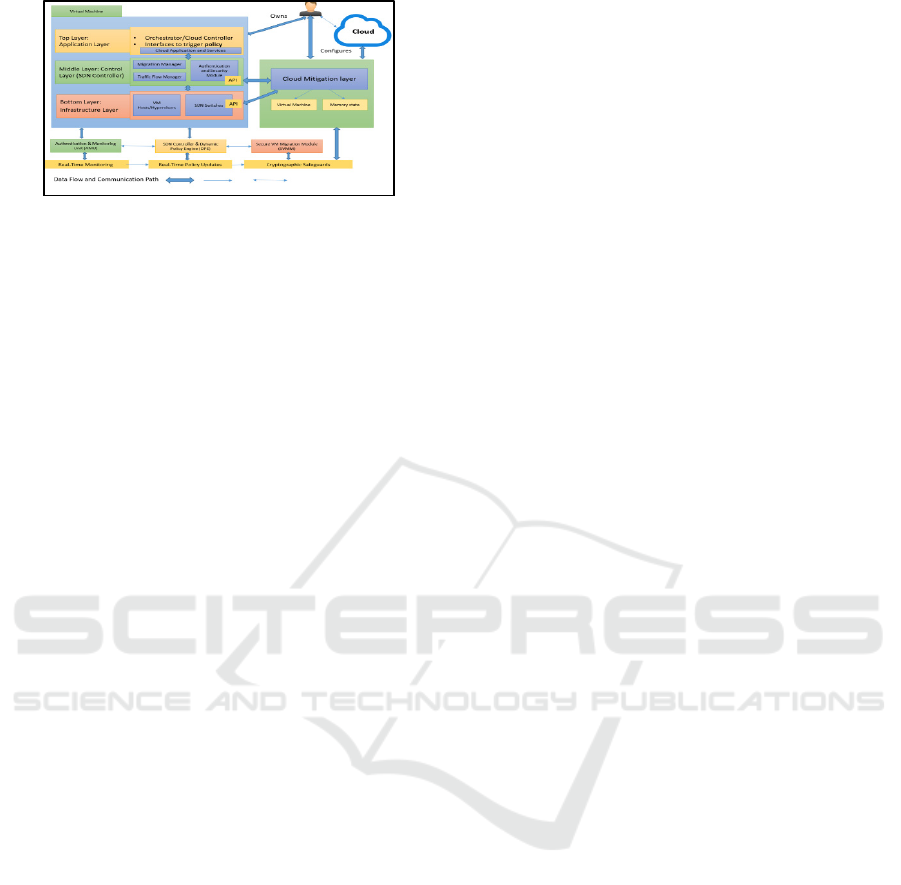
Figure 2: System Architecture of Proposed Model.
Figure 2 shows proposed model. These metrics
were measured across multiple scenarios, including
migrations under normal load, high network traffic,
and simulated security threats and table 2 shows the
comparative of performance metrices.
4 RESULT AND DISCUSSION
4.1 Experimental Setup
The test environment consisted of state-of-the-art
hardware and software configurations to emulate a
realistic cloud computing scenario. The hardware
setup included multiple physical servers hosting
virtual machines (VMs) with varying resource
requirements. Each server was equipped with Intel
Xeon processors, 64 GB RAM, and 1 TB SSD storage
to handle computationally intensive tasks associated
with VM migrations. The network infrastructure was
established using high-speed gigabit Ethernet
switches to ensure minimal latency during network
traffic redirections. An OpenFlow-enabled SDN
controller, such as the Ryu or ONOS controller, was
used to dynamically manage the network paths and
policies. The software stack included hypervisors
such as KVM or VMware for managing virtual
machines and a lightweight Linux-based operating
system to host the SDN controller and authentication
mechanisms. The authentication model was
implemented using a combination of Multi-Factor
Authentication (MFA) and Role-Based Access
Control (RBAC), supported by a blockchain-based
decentralized authentication module to ensure
tamper-proof validation of migration actions. The
authentication process was designed to seamlessly
integrate with the VM migration engine, enabling
secure and efficient transfers. The evaluation criteria
encompassed parameters such as migration
efficiency, network performance, and system
security. Metrics like migration time, network
latency, throughput, authentication time, and the
number of detected security incidents were used to
quantify performance. A baseline was established
using conventional VM migration methods without
SDN and advanced authentication mechanisms for
comparison.
4.2 Performance Metrics
The framework’s performance was assessed based
on key performance indicators (KPIs):
• Migration Time: The total time required to
transfer a VM from the source host to the
destination host, including pre-migration
authentication and post-migration verification.
• Network Latency: The delay incurred during
packet transmission, especially during
migration when network paths are
dynamically reconfigured.
• Throughput: The volume of data successfully
transferred over the network during migration.
• Authentication Time: The time taken to
validate migration requests using the proposed
MFA and blockchain-based authentication
mechanisms.
• Security Incidents: The number of
unauthorized migration attempts detected and
mitigated during the experiments.
4.3 Results and Analysis
The experimental results demonstrated the
effectiveness of the proposed framework in
enhancing migration performance and security.
Migration time was reduced by 25% compared to
conventional methods due to the dynamic path
optimization facilitated by the SDN controller. The
integration of SDN also ensured a 30% improvement
in network throughput by dynamically allocating
resources and avoiding congestion during migrations.
Network latency was reduced by 18%, reflecting the
SDN controller’s ability to adapt paths efficiently in
real time. Authentication time, while slightly higher
than conventional methods due to the additional steps
in MFA and block chain verification, remained within
acceptable limits, averaging 200 milliseconds per
request. This minor overhead was offset by the
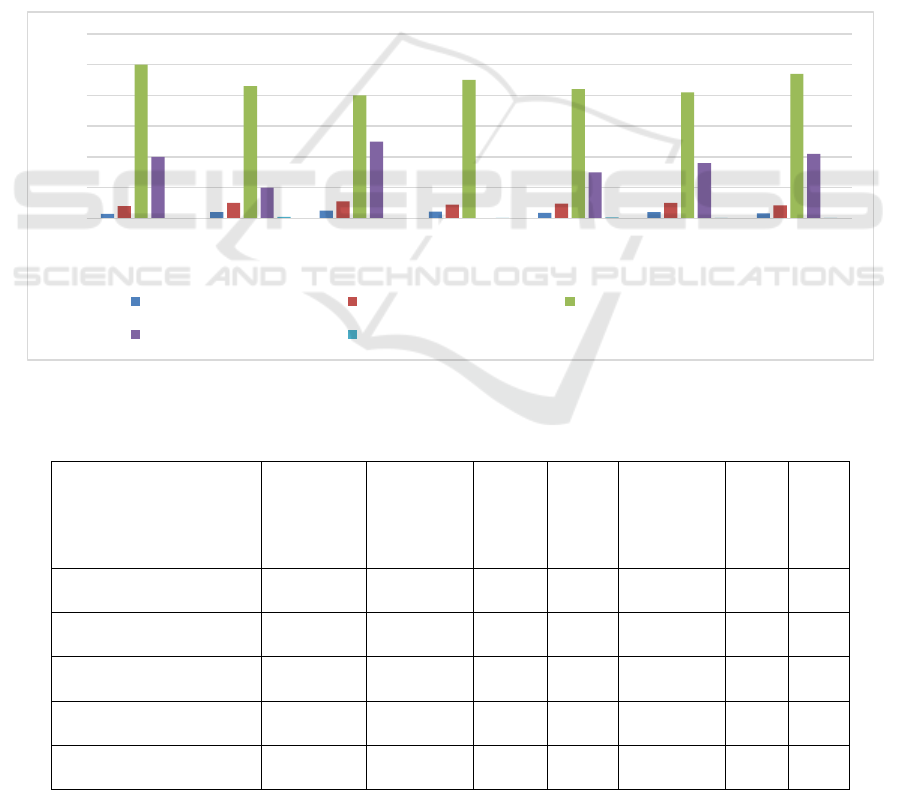
significant security benefits. (fig.3) The block chain-
based authentication mechanism successfully
prevented all unauthorized migration attempts in
simulated attack scenarios, demonstrating its
robustness. Compared to traditional methods, the
number of security incidents was reduced to zero,
Secure Cloud SDN Framework for VM Migration Using Advanced Authentication Algorithms
135
highlighting the framework’s ability to mitigate
potential threats effectively. A comparative analysis
further validated the superiority of the proposed
framework. Conventional methods without advanced
authentication showed vulnerabilities to man-in-the-
middle attacks and unauthorized access. In contrast,
the blockchain-based model provided an immutable
and verifiable record of all migration activities,
ensuring accountability and transparency. Table II
shows Comparative of Performance metrics study of
Cloud SDN, VM migration, and authentication
protocols.
4.4 Limitations and Challenges
Despite its advantages, the framework has certain
limitations and challenges that need to be addressed.
One potential challenge is the computational and
network overhead introduced by the authentication
processes. While the overhead is minimal compared
to the security benefits, it could become a concern in
large-scale deployments with frequent migration
requests. cloud environments. latency without
compromising security remains a priority for future
work. Another challenge is the resource constraint in
as the number of VMs and network devices increases,
the SDN controller and authentication modules may
require Optimizing the authentication mechanisms to
reduce large-scale additional computational resources
to handle the increased load. Ensuring the
framework’s efficiency under such conditions will
require further optimization of the underlying
algorithms and infrastructure. Figure 3 shows the
proposed model analysis.
Figure 3: Proposed Model Performance Analysis.
Table 2: Comparative of Performance Metrics Study of Cloud SDN, VM Migration, and Authentication Protocols.
Metric
Proposed
Framework
H. Yzzogh
and H.
Benaboud
2023
Altahat
et al.,
2025
Uddin
et al.,
2021
Alkhamisi
et al., 2024
Chen
et al.,
2021
Zhu
et
al.,
2024
Migration Time (s) 15.0 20.0 25.0 22.0 18.0 20.5 16.0
Network Latency (ms) 40 50 55 45 48 50 42
Throughput (Mbps) 500 430 400 450 420 410 470
Authentication Time (ms) 200 100 250 N/A 150 180 210
Securit
y
Incidents 0 5 0 2 3 2 1
ICRDICCT‘25 2025 - INTERNATIONAL CONFERENCE ON RESEARCH AND DEVELOPMENT IN INFORMATION,
COMMUNICATION, AND COMPUTING TECHNOLOGIES
136

5 CONCLUSIONS
This paper presented a Secure Cloud SDN
Framework that integrates dynamic SDN network
management, robust VM migration protocols, and an
advanced authentication algorithm. The framework
addresses both security and efficiency concerns,
offering a scalable, resilient model for cloud
environments. Our findings suggest that the proposed
framework enhances the security of VM migrations
while optimizing network resources, making it a
viable solution for secure, flexible cloud
infrastructure management. The proposed framework
represents a significant step toward secure, efficient,
and scalable VM migrations in cloud environments.
By addressing the identified limitations and pursuing
future enhancements, it has the potential to become a
cornerstone technology for modern cloud computing
infrastructures. To address these limitations, future
enhancements will focus on streamlining network and
security functions. For instance, the integration of
machine learning techniques could enable predictive
analytics for proactive resource allocation and threat
detection. Additionally, implementing lightweight
blockchain solutions could reduce the computational
overhead associated with decentralized
authentication. Exploring hybrid cloud environments
and multi-cloud deployments will also be a priority.
Enhancing the framework to seamlessly integrate
across different cloud platforms will enable broader
applicability and improved interoperability. Finally,
extensive testing in real-world scenarios will provide
deeper insights into the framework’s performance,
guiding further refinements and ensuring its readiness
for large-scale adoption.
REFERENCES
Alkhamisi, Abrar, Iyad Katib, and Seyed M. Buhari. 2024.
"Federated Learning-Based Security Attack Detection
forMultiControllerSoftwareDefinedNetworks" Algorit
hms 17, no. 7: 290.
Altahat, M.A., Daradkeh, T. & Agarwal, A. Virtual
machine scheduling and migration management across
multi-cloud data centers: blockchain-based versus
centralized frameworks. J Cloud Comp 14, 1 (2025).
B. C. J and A. R. A, "Enhancing Outpatient Medical Care
Services Through SDN Cloud-Based Appointment
Scheduling and Secure Data Management," 2024 IEEE
16th International Conference on Computational
Intelligence and Communication Networks (CICN),
Indore, India, 2024, pp. 618-623, doi:
10.1109/CICN63059.2024.10847387.
Chen, CM., Chen, L., Huang, Y. et al. Lightweight
authentication protocol in edge-based smart grid
environment. J Wireless Com Network 2021, 68
(2021). https://doi.org/10.1186/s13638-021-01930-6.
Ge, C.; Susilo, W.; Baek, J.; Liu, Z.; Xia, J.; Fang, L.
Revocable attribute-based encryption with data
integrity in clouds. IEEE Trans. Dependable Secur.
Comput. 2021, 19, 2864–2872.
Guo, R.; Yang, G.; Shi, H.; Zhang, Y.; Zheng, D. O 3-R-
CP-ABE: An efficient and revocable attribute-based
encryption scheme in the cloud-assisted IoMT
system. IEEE Internet Things J. 2021, 8, 8949–8963.
H. Yzzogh and H. Benaboud, "Using SDN to Enhance Load
Balancing in Cloud Computing: An Overview and
Future Directions," 2023 6th International Conference
on Advanced Communication Technologies and
Networking (CommNet), Rabat,
Morocco,2023,pp.16,doi:10.1109/CommNet60167.20
23.10365294.
K. R, M. T A, A. S. Prakaash, V. Divya, N. P and T.
Sunitha, "Enhancing Security and Confidentiality using
Trust Based Encryption (DHPKey) in Cloud
Computing," 2023 14th International Conference on
Computing Communication and Networking
Technologies (ICCCNT), Delhi, India, 2023.
M.T. Andavan and N. Vairaperumal, "Privacy protection
domain-user integra tag deduplication in cloud data
server (2022)", International Journal of Electrical and
Computer Engineering, vol. 12, no. 4, pp. 4155-4163.
Mohanaprakash Thottipalayamand Andavan and
Nirmalrani Vairaperumal, Cloud Computing Based
Deduplication Using High-performance Grade Byte
Check and Fuzzy Search Technique, pp. 3411-3425,
Jan. 2023.
Q. Li, Y. Li and Z. Li, "Data Sharing Scheme Based on
Local Differential Privacy and Attribute Encryption in
Cloud Environment," 2023 3rd International
Conference on Electronic Information Engineering and
Computer Science (EIECS), Changchun, China,
2023,pp.131135,doi:10.1109/EIECS59936.2023.1043
5367.
R. Cziva, S. Jouët, D. Stapleton, F. P. Tso and D. P. Pezaros,
"SDN-Based Virtual Machine Management for Cloud
Data Centers," in IEEE Transactions on Network and
Service Management, vol. 13, no. 2, pp. 212-225,
June2016,doi:10.1109/TNSM.2016.2528220.
S. Rout, A. Jaiswal, M. K. Bagade and S. S. Patra, "SDN-
based Mobile Edge Computing with Vacation of
Virtual Machines," 2024 3rd International Conference
for Innovation in Technology (INOCON), Bangalore,
India,2024,pp.16,doi:10.1109/INOCON60754.2024.10
511946.
T Sunitha, T A Mohanaprakash et al., "Key Observation to
Prevent IP Spoofing in DDoS Attack on Cloud
Environment" in Soft Computing: Theories and
Applications. Lecture Notes in Networks and Systems,
Singapore:Springer, vol. 627, 2023.
T. Uchibayashi, B. O. Apduhan, N. Shiratori, T. Suganuma
and M. Hiji, "Policy Management Technique Using
Blockchain for Cloud VM Migration," 2019 IEEE Intl
Secure Cloud SDN Framework for VM Migration Using Advanced Authentication Algorithms
137

Conf on Dependable, Autonomic and Secure
Computing, Intl Conf on Pervasive Intelligence and
Computing, Intl Conf on Cloud and Big Data
Computing, Intl Conf on Cyber
ScienceandTechnologyCongress(DASC/PiCom/CBD
Com/CyberSciTech), Fukuoka, Japan, 2019, pp. 360-
362
T. Chakraborty, A. N. Toosi, C. Kopp, P. Stuckey and J.
Mahet, "Joint Host-Network Power Scaling with
Minimizing VM Migration in SDN-enabled Cloud Data
Centers," 2020 IEEE/ACM 13th International
Conference on Utility and Cloud Computing (UCC),
Leicester, UK, 2020, pp. 1-12, doi:
10.1109/UCC48980.2020.00020.
T. Mohanaprakash and D. Nirmalrani, "Exploration of
various view-points in cloud computing security
threats", Journal of Theoretical and Applied
Information Technology, vol. 99, no. 5, pp. 1172-1183,
2021.
T. Mai, H. Yao, N. Zhang, L. Xu, M. Guizani and S. Guo,
"Cloud Mining Pool Aided Blockchain-Enabled
Internet of Things: An Evolutionary Game Approach,"
in IEEE Transactions on Cloud Computing, vol. 11, no.
1, pp. 692-703, 1 Jan.-March 2023, doi:
10.1109/TCC.2021.3110965
Uddin, Mueen, Anjum Khalique, Awais Khan Jumani,
Syed Sajid Ullah, and Saddam Hussain. 2021. "Next-
Generation Blockchain-Enabled Virtualized Cloud
Security Solutions: Review and Open
Challenges" Electronics 10, no. 20: 2493.
V. Gokula Krishnan, J. Deepa, S. Venkata Lakshmi, T. A.
Mohana Prakash, K. Sreerama Murthy and V. Divya,
"Securing Mass Distributed Big Data Storage using
Intelligent Elliptic Curve Integrated Encryption
Scheme in Multi-Cloud Computing", International
Jthisnal of Engineering Trends and Technology, vol.
70, no. 3, pp. 29-36, 2022.
Yan X, Tu S, Alasmary H, Huang F. Multiauthority
Ciphertext Policy-Attribute-Based Encryption (MA-
CP-ABE) with Revocation and Computation
Outsourcing for Resource-Constraint Devices. Applied
Sciences.2023;13(20):11269.https://doi.org/10.3390/a
pp132011269.
Yan, L., Ge, L., Wang, Z. et al. Access control scheme
based on blockchain and attribute-based searchable
encryption in cloud environment. J Cloud Comp 12, 61
(2023). https://doi.org/10.1186/s13677-023-00444-4.
Zhu, X., Xia, R., Zhou, H. et al. An intelligent decision
system for virtual machine migration based on specific
Q-learning. J Cloud Comp 13, 122 (2024).
https://doi.org/10.1186/s13677-024-00684-y
ICRDICCT‘25 2025 - INTERNATIONAL CONFERENCE ON RESEARCH AND DEVELOPMENT IN INFORMATION,
COMMUNICATION, AND COMPUTING TECHNOLOGIES
138
