
A Real‑Time Phishing Detection System: A Web‑Based Solution for
Enhanced Cybersecurity
Chitturu Sudheer, Sridevi Sakhamuri, Gaadhe Naveen and Sala Vidwath Sai
Department of Electronics and Computer Science, Koneru Lakshmaiah Education Foundation, Green Fields,
Vaddeswaram, Guntur District, Andhra Pradesh, India
Keywords: Phishing Detection, Machine Learning, Gradient Boosting Classifier, URL Classification, Cybersecurity.
Abstract: Phishing is a deceptive online scam where attackers trick users by sending fake messages that seem to be from
reliable sources. These messages usually contain URLs or attachments intended to steal confidential details
or compromise systems with malware upon interaction. While conventional phishing techniques relied on
mass spam campaigns targeting a broad audience, modern approaches have become more sophisticated. To
combat phishing effectively, machine learning provides a powerful approach by categorizing URLs as either
malicious or safe. By examining different URL attributes, algorithms such as SVM, DL architectures like
Neural Networks, along with Random Forest and Decision Trees, and XGBoost have been employed in
detection systems. This study proposes a gradient boosting classifier-based method for real-time phishing
URL detection. The approach leverages distinct URL characteristics to distinguish genuine links from
fraudulent ones, demonstrating significant effectiveness in accurately identifying phishing attempts in real-
time scenarios.
1 INTRODUCTION
Phishing, which takes use of human weaknesses and
deceptive tactics to trick users into disclosing private
information like passwords and bank account
information, has emerged as one of the most
persistent challenges in the realm of cybersecurity.
These deceptive schemes often manifest as fraudulent
messages, websites, or content that appear authentic,
making them hard to detect (S. A. Murad et al. 2023).
As the frequency and complexity of phishing attacks
continue to rise, enhanced detection mechanisms
have become paramount.
The ever-changing tactics used by attackers make
it especially difficult to identify phishing websites or
URLs. Although somewhat successful, traditional
techniques like blacklisting are unable to keep up
with the speed at which new dangerous URLs are
created. This problem has prompted academics to
investigate cutting-edge AI and ML techniques,
which provide flexible and scalable answers. (S. A.
Murad et al. 2023),(K. Dutta et al. 2021). For
instance, models incorporating Recurrent Neural
Networks (RNNs) and transformer-based
architectures have demonstrated remarkable potential
in analyzing large datasets and identifying malicious
patterns [(K. Dutta et al. 2021).
Phishing URL detection leverages a variety of
approaches, including URL structure analysis,
domain reputation checks, and content-based
evaluations. These techniques intention to identify
anomalies and suspicious traits that distinguish
phishing web sites from legitimate ones (J. Misquitta
et al. 2023),( R. Mourya et al. 2021). Machine
learning plays a crucial role by automating the
detection process, using algorithms to learn and
recognize patterns indicative of phishing (V. A. Onih
et al, 2024).
This study's goal is to provide a machine learning-
based algorithm that can recognize phishing URLs
with accuracy. By addressing limitations such as false
positives and negatives and improving detection
efficiency, this research aims to enhance online
security and mitigate the impact of phishing attacks
on users and organizations.
Sudheer, C., Sakhamuri, S., Naveen, G. and Sai, S. V.
A Real-Time Phishing Detection System: A Web-Based Solution for Enhanced Cybersecur ity.
DOI: 10.5220/0013891000004919
Paper published under CC license (CC BY-NC-ND 4.0)
In Proceedings of the 1st International Conference on Research and Development in Information, Communication, and Computing Technologies (ICRDICCT‘25 2025) - Volume 3, pages
19-25
ISBN: 978-989-758-777-1
Proceedings Copyright © 2025 by SCITEPRESS – Science and Technology Publications, Lda.
19

2 LITERATURE SURVEY
Phishing attacks, which take advantage of users'
weaknesses to trick users and steal private data, have
become a serious problem in the field of
cybersecurity. In response, a great deal of research
has been done to create effective detection methods,
and machine learning is essential to thwarting these
kinds of attacks.
In this section, a selection of research studies that
utilize the algorithms mentioned above are reviewed,
and their findings are summarized:
Marwa Abd Al Hussein Qasim and Dr. Nahla
Abbas Flayh (2025) examined machine learning
techniques for phishing website identification. In
order to identify phishing websites using
characteristics like URL architecture and website
content, the study focuses on techniques like Support
Vector Machines (SVM), Decision Trees, and
Random Forests. In order to improve detection
accuracy, the researchers stress the importance of
feature selection and dimensionality reduction
methods like PCA. They also discuss the importance
of dataset preprocessing and performance evaluation
metrics. This review underscores the potential of
hybrid models in mitigating phishing threats and
providing efficient solutions to protect users from
cyberattacks.
R. Jayaraj, A. Pushpalatha, K. Sangeetha, T.
Kamaleshwar, S. Udhaya Shree, Deepa Damodaran
(2023) examined machine learning for phishing
website identification. They emphasize the
application of Hybrid Ensemble Feature Selection
(HEFS), which successfully selects features by
combining function perturbation and data
perturbation techniques. The study introduces the
Cumulative Distribution Function gradient (CDF-g)
algorithm to improve feature subset generation and
reduce overfitting. The authors emphasize the
importance of feature engineering and reducing
classifier complexity to enhance phishing detection
accuracy. Their findings suggest that hybrid
approaches provide robust solutions for phishing
threat mitigation.
Machikuri Santoshi Kumari, Chiguru Keerthi Priya,
Gondhi Bhavya, Haridas Tota, Monisha Awasthi,
Surendra Tripathi (2023) examined machine learning
for phishing URL detection. To improve detection
accuracy, they suggest a methodology that combines
blacklisting and boosting strategies. A sizable dataset
of annotated URLs is used to train the method, and
metrics like precision, recall, and F1 score are used to
assess its effectiveness. The authors emphasize the
importance of data collection, URL preprocessing,
feature extraction, and blacklisting in the detection
system. They suggest future improvements, such as
leveraging deep learning and expanded datasets, to
enhance the robustness of phishing detection.
Ameya Chawla (2022) examined machine learning
for phishing website identification. The study
examines typical characteristics of phishing websites
and creates a model to identify them. A dataset was
used to train a number of classifiers, such as Random
Forest, Decision Tree, Logistic Regression, K Nearest
Neighbors (KNN), and Artificial Neural Networks
(ANN). A Max Vote Classifier that combined
Random Forest, ANN, and KNN had the greatest
accuracy of 97.73%; Decision Tree and ANN also
performed well. A web application that uses the
trained model to analyze input URLs and identify
phishing websites is one practical way to implement
the suggested solution.
Sibel Kapan and Efnan Sora Gunal (2023)
reviewed machine learning for phishing attack
detection. They created a new phishing dataset,
combining Alexa and PhishTank URLs. The study
found that URL and HTTP features provided the best
performance, with the decision tree classifier
achieving an F1-score of 0.99. The paper highlights
the significance of feature engineering and classifier
choice in enhancing phishing detection.
Arathi Krishna V, Anusree A, Blessy Jose,
Ruthika Anilkumar, and Ojus Thomas Lee (2021)
reviewed phishing detection models using machine
learning-based URL analysis. The performance and
accuracy of many machine learning methods used for
phishing URL identification are examined in this
research. It highlights that Random Forest often
outperforms other models but notes that performance
varies depending on factors like dataset, train-test
split ratio, and feature selection. The authors mention
the importance of further research to optimize
detection models for accuracy and efficiency.
Jinu Kulkarni and Leonard L. Brown III (2019)
examined machine learning for phishing website
identification. The study looked at a number of
methods for increasing the precision of phishing
detection. Neural networks and support vector
machines (SVM) were tested on a dataset of 1,353
URLs that were classified as phishing, suspicious, or
legitimate. According to their research, these
classifiers had an accuracy of over 90%, and features
like SSL, web traffic, and URL length were crucial
for detection. The authors underlined the necessity to
address problems like overfitting in Decision Tree
classifiers to increase robustness and the growing
significance of machine learning in distinguishing
authentic websites from phishing ones.
ICRDICCT‘25 2025 - INTERNATIONAL CONFERENCE ON RESEARCH AND DEVELOPMENT IN INFORMATION,
COMMUNICATION, AND COMPUTING TECHNOLOGIES
20
Keerthana Shankar, U. Rithika, Sathya M.,
Shishani Chitapur, and Tejaswini J. (2024) looked
into phishing website identification using machine
learning. Their proposed model utilized the Gradient
Boosting Classifier (GBC), leveraging feature sets
extracted from phishing and legitimate websites.
They emphasized feature engineering, including URL
structure, subdomain length, and website attributes, to
differentiate phishing sites. The system achieved 97%
accuracy and integrated tools like Flask and Fast API
for deployment and scalability. The authors
highlighted the importance of continuous monitoring
and retraining to adapt to evolving phishing tactics.
Sundar et al. (2024) created a phishing detection
model using machine learning that extracted features
from a dataset of 89 variables and used Lasso
regression and recursive feature reduction to choose
the best features. The study created a web-based
solution for real-time detection and used Random
Forest, AdaBoost, Gradient Boosting, and XGBoost
to categorize phishing URLs. Their approach focuses
on linguistic and URL-based feature analysis,
enhancing resilience against adversarial attacks. In
contrast, our study, "Real-Time Phishing Detection
System: A Web-Based Solution for Enhanced
Cybersecurity," improves real-time usability,
automating feature selection and leveraging advanced
ensemble models for better phishing classification.
Yau and Chia (2024) Using deep learning
architectures including Autoencoder, XGBoost, and
Random Forest (RF), examined phishing detection by
combining list-based and ensemble learning
techniques for two-tier security. Using the wrapper
technique for feature selection, they discovered that
Random Forest performed exceptionally well in
managing complex data and class imbalances,
achieving 97.03% accuracy. Their work highlights
the need for model adaptation and the role of
ensemble techniques for robustness. In comparison,
our study, "Real-Time Phishing Detection System: A
Web-Based Solution for Enhanced Cybersecurity,"
expands on real-time detection and usability,
leveraging advanced ensemble models and web-
based implementation for enhanced phishing
prevention.
3 METHODOLOGY
By discovering trends in data, machine learning has
proven to be useful in spotting phishing websites.
This methodology employs supervised learning
techniques, leveraging a dataset of website features to
classify websites as phishing or legitimate.
3.1 Data Description
The dataset consists of 11,054 samples with 30
features extracted from website URLs. These features
include structural properties, domain-based
information, and behavioral patterns. The target
variable classifies each website as:
• “1” for phishing websites.
• “-1” for legitimate websites.
3.2 Feature Engineering
The development of a strong machine learning
framework for identifying phishing websites heavily
relies on feature engineering. It entails selecting,
extracting, and refining features that encapsulate the
core attributes of phishing websites. In this study, we
emphasize three main categories of features: URL-
based, Page-based, and Domain-based. These
characteristics help distinguish genuine websites
from phishing ones by capturing important behavioral
patterns and oddities. (V. Shahrivari et al. 2020).
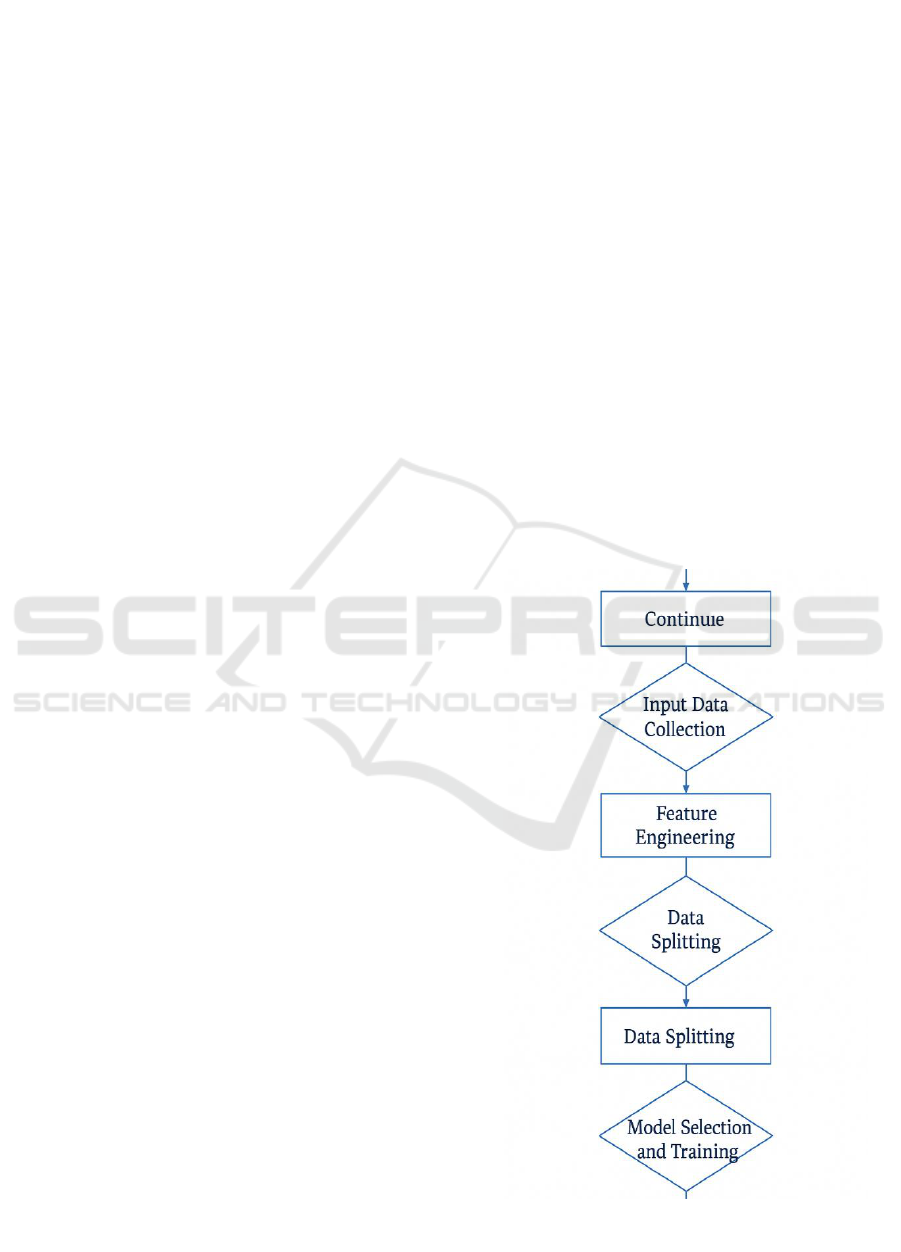
Figure 1 Shows the Flow Diagram of Phishing
Detection System.
Figure 1: Flow Diagram of Phishing Detection System.
A Real-Time Phishing Detection System: A Web-Based Solution for Enhanced Cybersecurity
21

3.2.1 URL: Based Features
Phishing URLs often exhibit anomalies like longer
lengths, special characters, and multiple subdomains
to mimic legitimate sites. Additionally, they
frequently use obscure TLDs or embed IP addresses
in URLs to deceive users.
3.2.2 Page: Based Features
Phishing pages mimic legitimate websites but often
lack valid SSL certificates or host mismatched
favicons. They also redirect links to unexpected
domains and include suspicious content such as pop-
ups and excessive advertisements.
3.2.3 Domain: Based Features
Phishing domains are often newly registered, lack
complete WHOIS information, or use free hosting
services Legitimate domains can be distinguished
from one another thanks to their extensive DNS
records and greater popularity.
3.2.4 Selection of Features
We used the following methods to decrease
dimensionality and increase model efficiency:
• Correlation Analysis: Features with high
correlation (>0.8> 0.8>0.8) were identified
and removed to avoid redundancy.
• Mutual Information: Assesses the
relationship between features and the
dependent variable. Features with
insignificant mutual information were
discarded.
• Recursive Feature Elimination (RFE):
Gradually removes less important features
based on their influence on model accuracy.
3.3 Algorithms Used
Advanced machine learning algorithms are used in
phishing detection to recognize and categorize
fraudulent websites. Important methods include
Logistic Regression (LR) for statistical analysis,
Support Vector Machines (SVM) for decision
boundary creation, and Random Forest (RF) for
improving prediction accuracy. Additionally,
Gradient Boosting techniques such as XGBoost
incrementally reduce errors, while neural networks
uncover intricate relationships within data.
Probabilistic methods like Naïve Bayes (NB) further
enhance classification by utilizing prior knowledge.
These approaches collectively strengthen phishing
mitigation efforts.
3.3.1 Logistic Regression (LR)
• A probabilistic model that predicts the
likelihood of a website being phishing:
(1)
• Objective: Minimize the logistic loss function
to determine the optimal weights β.
3.3.2 Support Vector Machines (SVM)
• A discriminative classifier that separates
data using a hyperplane:
(2)
• Kernel Trick: Maps data into higher
dimensions for non-linear classification.
3.3.3 Decision Tree (DT)
A rule-based model that splits the data into
homogenous subsets:
• Splitting Criterion: Gini Index or Entropy
• Formula for Gini Index:
(3)
3.3.4 Random Forest (RF)
Using a group of decision trees to increase resilience:
• Combines predictions from multiple trees
using majority voting.
• Reduces overfitting compared to a single
decision tree (Ali, W. (2017).
3.3.5 Gradient Boosting (e.g., XGBoost)
An iterative algorithm that optimizes weak learners
(trees) by minimizing a loss function:
(4)
3.3.6 k-Nearest Neighbors (k-NN)
A distance-based algorithm:
• Predicts the class based on majority voting
among k-nearest neighbors.
• Common distance metric: Euclidean
Distance.
3.4 Model Evaluation
Performance metrics used to evaluate models:
ICRDICCT‘25 2025 - INTERNATIONAL CONFERENCE ON RESEARCH AND DEVELOPMENT IN INFORMATION,
COMMUNICATION, AND COMPUTING TECHNOLOGIES
22

• Accuracy:
(5)
• Precision: Measures true positives among
predicted positives.
• Recall (Sensitivity): Measures true
positives among actual positives.
• F1 Score: precision and recall harmonic
mean.
• ROC-AUC: Assesses model
discrimination.
3.5 Comparison of Results
The performance of various machine learning models
in phishing website identification is thoroughly
examined in this section. Important performance
metrics, such as accuracy, F1 score, recall, and
precision, are used to evaluate these models.
Finding the most efficient model for spotting
phishing websites is the main goal. Table 1 Shows the
Evaluation Metrics.
The following steps are employed to compare model
performance:
• Dividing the dataset into training (80%) and
testing (20%) subsets.
• Hyperparameter tuning using Grid Search or
Random Search.
• Evaluating on the test set using the above
metrics.
• Selecting the best-performing model based
on F1 Score and AUC-ROC.
Table 1: Evaluation Metrics.
S.
No
ML Model
Accuracy
F1 Score
Recall
Precision
1
Gradient Boosting
Classifier
0.974
0.974
0.988
0.989
2
CatBoost Classifier
0.972
0.972
0.990
0.991
3
Random Forest
0.967
0.971
0.993
0.990
4
Support Vector Machine
0.964
0.968
0.980
0.965
5
Multi-layer Perceptron
0.963
0.963
0.984
0.984
6
Decision Tree
0.962
0.966
0.991
0.993
7
K-Nearest Neighbors
0.956
0.961
0.991
0.989
8
Logistic Regression
0.934
0.941
0.943
0.927
9
Naive Bayes Classifier
0.605
0.454
0.292
0.997
3.5.1 Best Model
The Gradient Boosting Classifier emerged as the best-
performing model, achieving the highest accuracy
(97.4%) and F1 score (97.4%). It also demonstrated a
strong balance between recall (98.8%) and precision
(98.9%), making it the most effective model for
detecting phishing websites.
3.5.2 Confusion Matrix
An important tool for determining how well a
categorization model works is the confusion matrix.
It displays counts of cases that were properly and
erroneously classified, including true positives, true
negatives, false positives, and false negatives, in
order to visually depict the model's predictions.
This Table 2 is the Gradient Boosting Classifier's
confusion matrix:
Table 2: Confusion Matrix.
Actual \
Predicted
Phishing
(Positive)
Non-Phishing
(Negative)
Phishing
(Positive)
True Positives
(TP)
False Negatives
(FN)
Non-Phishing
(Negative)
False Positives
(FP)
True Negatives
(TN)
• True Positives (TP): The count of phishing
websites correctly identified as phishing.
• False Negatives (FN): The count of phishing
websites incorrectly classified as non-
phishing.
A Real-Time Phishing Detection System: A Web-Based Solution for Enhanced Cybersecurity
23

• False Positives (FP): The count of non-
phishing websites incorrectly classified as
phishing.
• True Negatives (TN): The count of non-
phishing websites correctly identified as non-
phishing. Confusion Matrix Shown in Figure
2.
Figure 2: Confusion Matrix.
The Gradient Boosting Classifier demonstrated its
efficacy in differentiating between phishing and
authentic websites by achieving a noteworthy number
of true positives and true negatives. The occurrence
of FP and FN was minimal, highlighting the model's
capacity to reduce errors.
The proposed approach seamlessly integrates
feature engineering with ML architectures to enhance
phishing website detection. By analyzing multiple
algorithms, we ensure better classification
performance, strengthening efforts to combat
phishing attacks.
4 RESULTS
The goal of the phishing website detection study was
to assess how well various machine learning
architectures could detect fraudulent websites using a
dataset of 11,054 samples with 30 features. With the
highest accuracy of 97.4% and an F1 score of 97.4%,
the results showed that ensemble approaches in
particular, the Gradient Boosting Classifier
performed better than other models. This model
performed exceptionally well in maintaining
minimum FP and FN by striking a balance between
recall (98.8%) and precision (98.9%).
With accuracies of 96.7% and 97.2%,
respectively, other models like Random Forest and
CatBoost also performed well, but more
straightforward models like Logistic Regression and
k-Nearest Neighbors produced results that were
mediocre. Despite having a high precision (99.7%),
Naive Bayes fared poorly, with a correctness of
60.5%. This was mainly because it was unable to
detect phishing websites with perfect accuracy (low
recall of 29.2%). The Gradient Boosting Classifier's
confusion matrix demonstrated a high proportion of
true positives and true negatives with little
misclassifications, further confirming the model's
resilience.
The experiment demonstrated the value of feature
engineering and exploratory data analysis (EDA) in
enhancing detection accuracy, in addition to model
performance. Features such as "HTTPS," "Anchor
URL," and "Website Traffic" were identified as key
contributors in differentiating phishing sites from
legitimate ones.
Correlation analysis and visualizations provided
deeper insights into feature relationships and their
impact on model performance. Overall, the study
highlights the value of machine learning in combating
phishing attacks, with ensemble methods like as
Gradient Boosting showing itself to be the most
effective approach. To further increase accuracy and
adaptability, future research could concentrate on
real-time detection systems, more feature integration,
and the use of deep learning models.
5 CONCLUSIONS
In this study, a Gradient Boosting Classifier has been
proposed for a highly effective real-time phishing
detection, showing the best accuracy level of 97.4%
and high F1 scores. Integration of URL along with
page-based and domain-based features significantly
improves the model in distinguishing between
phishing and legitimate sites. Ensemble models
outperformed traditional methods in phishing
detection tasks, as confirmed from comparative
analysis. Feature Engineering and Dimensional
Reduction were critical to enhancing classification
speed. In conclusion, the proposed framework
contains automated and scalable web solution for
mitigating cyber threats from phishing attacks.
REFERENCES
A. K. Dutta, "Detecting phishing websites using machine
learning technique," PLoS One, vol. 16, no. 10, p.
e0258361, Oct. 2021. DOI:10.1371/journal.pone.0258
361. PMCID: PMC8504731, PMID: 34634081.
ICRDICCT‘25 2025 - INTERNATIONAL CONFERENCE ON RESEARCH AND DEVELOPMENT IN INFORMATION,
COMMUNICATION, AND COMPUTING TECHNOLOGIES
24

A. Krishna V, A. A, B. Jose, K. Anilkumar, and O. T. Lee,
"Phishing detection using machine learning based URL
analysis: A survey," IJERT, vol. 9, no. 13, Paper ID:
IJERTCONV9IS13033, Aug. 2021.
A. Chawla, "Phishing website analysis and detection using
Machine Learning," Int. J. Inf. Syst. Appl. Eng., vol.
2022, pp. 1-10, 2022, doi: 10.18201/ijisae.2022.262.
Ali, W. (2017). Phishing website detection based on
supervised machine learning with wrapper features
selection. International Journal of Advanced Computer
Science and Applications (IJACSA), 8(9)
Arun Kulkarni and Leonard L. Brown III, "Phishing
Websites Detection using Machine Learning,"
International Journal of Advanced Computer Science
and Applications (IJACSA), vol. 10, no. 7, pp. 1-7,
2019, doi: 10.14569/IJACSA.2019.0100702.
J. Misquitta and A. K., "A Comparative Study of Malicious
URL Detection: Regular Expression Analysis, Machine
Learning, and VirusTotal API," Research Article, Dec.
2023. DOI: 10.21203/rs.3.rs-3685949/v1.
Keerthana Shankar, K., Rithika, U., Sathya, M., Chitapur,
V., and Tejaswini, J., "Detection of Phishing Website
using Machine Learning," TIJER - International
Research Journal, vol. 11, no. 5, May 2024, pp. b651.
ISSN 2349-9249.
M. Santoshi Kumari, C. Keerthi Priya, G. Bhavya, H. Neha,
M. Awasthi, and S. Tripathi, "Viable detection of URL
phishing using machine learning approach," E3S Web
of Conferences, vol. 430, p. 01037, 2023, doi:
10.1051/e3sconf/202343001037.
M. A. A. H. Qasim and N. A. Flayh, "Phishing Website
Detection Using Machine Learning: A Review," Wasit
Journal for Pure Sciences, vol. 2, no. 2, p. 270, 2025.
R. Jayaraj, A. Pushpalatha, K. Sangeetha, T. Kamaleshwar,
S. Udhaya Shree, and D. Damodaran, "Phishing
website detection using novel machine learning fusion
approach," Measurement, vol. 203, p. 101003, 2023,
doi: 10.1016/j.measen.2023.101003.
R. Mourya, A. R. Khan, P. Jain, and S. K. Singh, "Phishing
URL Detection Using Machine Learning," IRE
Journals, vol. 7, no. 8, pp. 198-202, Feb. 2024. DOI:
1705486.
S. Kapan and E. S. Gunal, "Improved phishing attack
detection with machine learning: A comprehensive
evaluation of classifiers and features," Appl. Sci., vol.
13, no. 24, p. 13269, Dec. 2023, doi:
10.3390/app132413269.
S. A. Murad, N. Rahimi, and A. J. M. Muzahid,
"PhishGuard: Machine Learning-Powered Phishing
URL Detection," in Proceedings of the IEEE
International Conference on Computing Sciences &
Computer Engineering (CSCE), Hattiesburg, MS,
USA, 2023, pp. 371 375. DOI:10.1109/CSCE60160.2
023.00371.
Sudar, K.M., Rohan, M. & Vignesh, K. Detection of
adversarial phishing attack using machine learning
techniques. Sādhanā 49, 232 (2024). https://doi.org/10
.1007/s12046-024-02582-0
V. Shahrivari, M. M. Darabi, and M. Izadi, "Phishing
Detection Using Machine Learning Techniques," arXiv
preprint arXiv:2009.11116, Sep. 2020.
V. A. Onih, "Phishing Detection Using Machine Learning:
A Model Development and Integration," International
Journal of Scientific and Management Research, vol. 7,
no. 4, pp. 1-10, 2024.
Yau, J.X., Chia, K.L. (2024). Machine Learning-Based
Phishing Website Detection: A Comparative Analysis
and Web Application Development. In: Ghazali, R.,
Nawi, N.M., Deris, M.M., Abawajy, J.H., Arbaiy, N.
(eds) Recent Advances on Soft Computing and Data
Mining. SCDM 2024. Lecture Notes in Networks and
Systems, vol 1078. Springer, Cham.https://doi.org/10.
1007/978-3-031-66965-1_18
A Real-Time Phishing Detection System: A Web-Based Solution for Enhanced Cybersecurity
25
