
Neem Leaf Disease Detection Using Hybrid Deep Learning Models
Jaldu Balasubramanyam Guptha
1
, E Elakiya
1
, K Ramesh
2
and E Anuja
3
1
School of Computer Science and Engineering, Vellore Institute of Technology, Chennai– 600127, Tamil Nadu, India
2
Department of CSE, Sri Bharathi College for women, Pudkottai -622303, Tamil Nadu, India
3
Department of Chemistry, University College of Engineering, Anna University, BIT Campus, Trichy – 620024,
Tamil Nadu, India
Keywords: Neem leaf, Disease Detection, Deep Learning, Hybrid models, Smart Farming.
Abstract: Neem is well-known for its medicinal value however; neem yields are highly affected by various leaf diseases.
Management and control of the diseases requires timely and accurate detection. This paper introduces a
mobile hybrid deep learning framework based on MobileNet and DenseNet that has high accuracy of 90.5%
compared to other hybrid models. The proposed framework consists of image processing, feature extraction
model, and ensemble learning model to improve accuracy and robustness. The dataset includes 1862 images
of neem leaf diseases in six classes; a split of an 80-20 training to testing ratio was used for the dataset. The
proposed MobileNet DenseNet framework is an enhancement from existing framework and illustrates the
feature extraction and classification capabilities. Empirical results support our model has the highest accuracy
and is an effective approach for neem leaf disease detection. The current paper provides precision agriculture
with an automated framework for accurate neem leaf disease detection and timely disease management
programs.
1 INTRODUCTION
Neem, one of the highly recognized medicinal trees,
possesses antibacterial, antifungal, and insecticidal
characteristics. Nevertheless, various leaf diseases
have a huge impact on its health and productivity,
hence restraining its growth capacity and medicinal
qualities. Some of the most prevalent neem leaf
diseases are Alternaria, Dieback, and Leaf Blight.
These diseases not only diminish the natural
resistance of the tree against insects but also decrease
the overall vigor of the tree, resulting in massive
agricultural and economic losses. A timely and
accurate diagnosis of these diseases is indispensable
for the proper implementation of control measures.
Traditional approaches for detecting neem leaf
diseases rely on manual inspection performed by
agricultural professionals. These methods are
subjective in nature, time-consuming, and not ideal
for large-scale surveillance. Moreover, most of the
neem leaf diseases have the same visual symptoms,
which poses a challenge to differentiate between them
through human observation. This makes it absolutely
crucial to devise an automated, accurate, and efficient
method for proper classification of neem leaf
infections.
Deep learning models have shown promising
performance in plant disease diagnosis, with the
ability to extract complex information and precisely
identify images. These architectures, such as
DenseNet, ResNet, MobileNet, AlexNet, and
GoogleNet, have shown promising performance in
image classification. However, single models are
prone to failure in handling intra-class variability
problems and limitations on feature extraction, which
results in decreased classification accuracy. In an
attempt to address these problems, hybrid models
have become increasingly popular in the area of
recent work. This work introduces a hybrid deep
learning model that combines the strengths of
MobileNet and DenseNet for neem leaf disease
classification (Elakiya, E et al., 2024). MobileNet,
with its lightweight architecture and computational
aspect, enhances feature extraction, while DenseNet,
with its dense connection and deep feature
propagation, enhances classification accuracy. We
compare the MobileNet-DenseNet model with other
hybrid frameworks, such as DenseNet-AlexNet,
DenseNet-ResNet, and DenseNet-GoogleNet, to
Guptha, J. B., Elakiya, E., Ramesh, K. and Anuja, E.
Neem Leaf Disease Detection Using Hybrid Deep Learning Models.
DOI: 10.5220/0013887500004919
Paper published under CC license (CC BY-NC-ND 4.0)
In Proceedings of the 1st International Conference on Research and Development in Information, Communication, and Computing Technologies (ICRDICCT‘25 2025) - Volume 2, pages
627-635
ISBN: 978-989-758-777-1
Proceedings Copyright © 2025 by SCITEPRESS – Science and Technology Publications, Lda.
627

determine the best architecture to apply in the
classification of neem leaf diseases. To evaluate the
performance, a dataset of 1,862 images of neem
leaves was used, classified into six classes:
Alternaria, Dieback, Leaf Blight, Leaf Miners with
Powdery Mildew, Powdery Mildew, and Healthy.
From the experimental results, the proposed
MobileNet-DenseNet model contributions are
proposing a hybrid deep learning model (MobileNet-
DenseNet) for accurate neem leaf disease
classification (R. Kanagaraj et al., 2023). Compares
the performance of the other three hybrid models to
select the optimal architecture. Demonstrates the
proposed model's practical application for the
diagnosis of neem leaf diseases automatically, which
is beneficial for precision agriculture and sustainable
neem tree cultivation.
2 RELATED WORKS
This paper explores a set of hybrid deep learning
architectures for plant disease detection, emphasizing
their effectiveness in the field of precision
agriculture. One of the commonly used methods
involves combining EfficientNetB0 with
MobileNetV2, both light-weight mobile
architectures, with an accuracy rate of 98.44%. This
hybrid system is more effective compared to other
conventional CNN-based architectures like ResNet
and AlexNet and, therefore, is a promising candidate
for plant disease diagnosis in real-time (Vamshi et al.,
2024). Another method involves combining Artificial
Neural Networks (ANNs) and Convolutional Neural
Networks (CNNs) for differentiation between
different types of plant diseases and achieves 98%
accuracy, 97% precision, and 96% recall (Vellela et
al., 2024).
A hybrid stacking learning approach that
integrates pre-trained models with image processing
technology has demonstrated improved performance.
With ensemble CNNs trained on the Plant Village
dataset that contains images of healthy and diseased
leaves, this approach achieves a classification
accuracy range of 99.75% to 100% (Sheneamer et al.,
2024). A hybrid approach integrating wavelet
analysis, autoencoder denoising, and SVM
classification has been reported to be effective for a
range of plant species but is not specifically neem leaf
disease (Huddar et al., 2024). A hybrid model
integrating EfficientNetB7 enhances image
segmentation and classification with an Adaptive and
Attention-aided Mask R-CNN (AAM-RCNN), which
is further optimized by the Boosted Random
Parameter-based Golden Tortoise Beetle Optimizer
(BRP-GTBO). This approach significantly improves
plant disease detection and classification accuracy
(Patil et al., 2025). Another hybrid model involving
Convolutional Neural Networks (CNNs) and K-
means clustering clocks 98.38% accuracy on a
database of 7,771 leaf images, which suggests its
application in the automatic diagnosis of diseases
(Mallma et al., 2021). Comparison of deep learning
architectures such as VGG16, VGG19, and ResNet50
has stated that limitations in datasets are a significant
challenge, thus resulting in the application of hybrid
models that combine deep learning and machine
learning methods in a bid to improve classification
performance (Kumar, S., & Singh, S. R. (2023).
Traditional image processing techniques such as
histogram equalization, K-means clustering, and
feature extraction via methods such as the Discrete
Wavelet Transform (DWT), Principal Component
Analysis (PCA), and Gray-Level Co-occurrence
Matrix (GLCM) have also been tried, with CNNs
performing consistently better than Support Vector
Machines (SVM) and k-Nearest Neighbors (KNN)
classifiers in disease identification (Kanabur et al.,
2019).
A hybrid AlexNet+SVM model was discovered to
have 99.9986% accuracy in large-scale plant disease
classification of 38 leaf diseases on 12 crop species,
though this approach is not particularly designed for
neem leaf infections (Kawatra et al., 2020). A CNN-
DenseNet hybrid model was employed in another
research to enhance feature extraction to an accuracy
of 98.79% and may potentially be employed as a
precision agriculture tool (Dari et al., 2023). Hybrid
models with K-means clustering to mark disease area
and CNNs for classification had a mean accuracy of
92.6%, which is higher than conventional
classification methods (Devi, N., et al., 2025). The
fusion of ViTs and CNNs has also been employed for
the detection of plant diseases. A VGG16, Inception-
V3, and DenseNet20-based model as the CNN feature
extractors attained 99.24% accuracy in apple leaf
disease detection and 98% accuracy in the
classification of corn leaf diseases, signifying the
effectiveness of hybrid models in multi-scale feature
extraction (Aboelenin et al., 2021). Transfer learning
techniques incorporating DenseNet201 and VGG16
and SVM have also significantly enhanced the
performance of disease classification with high F-
scores and improved performance over individual
deep learning models (Sharma et al., 2023).
ICRDICCT‘25 2025 - INTERNATIONAL CONFERENCE ON RESEARCH AND DEVELOPMENT IN INFORMATION,
COMMUNICATION, AND COMPUTING TECHNOLOGIES
628
3 MATERIALS AND METHODS
3.1 Dataset Description
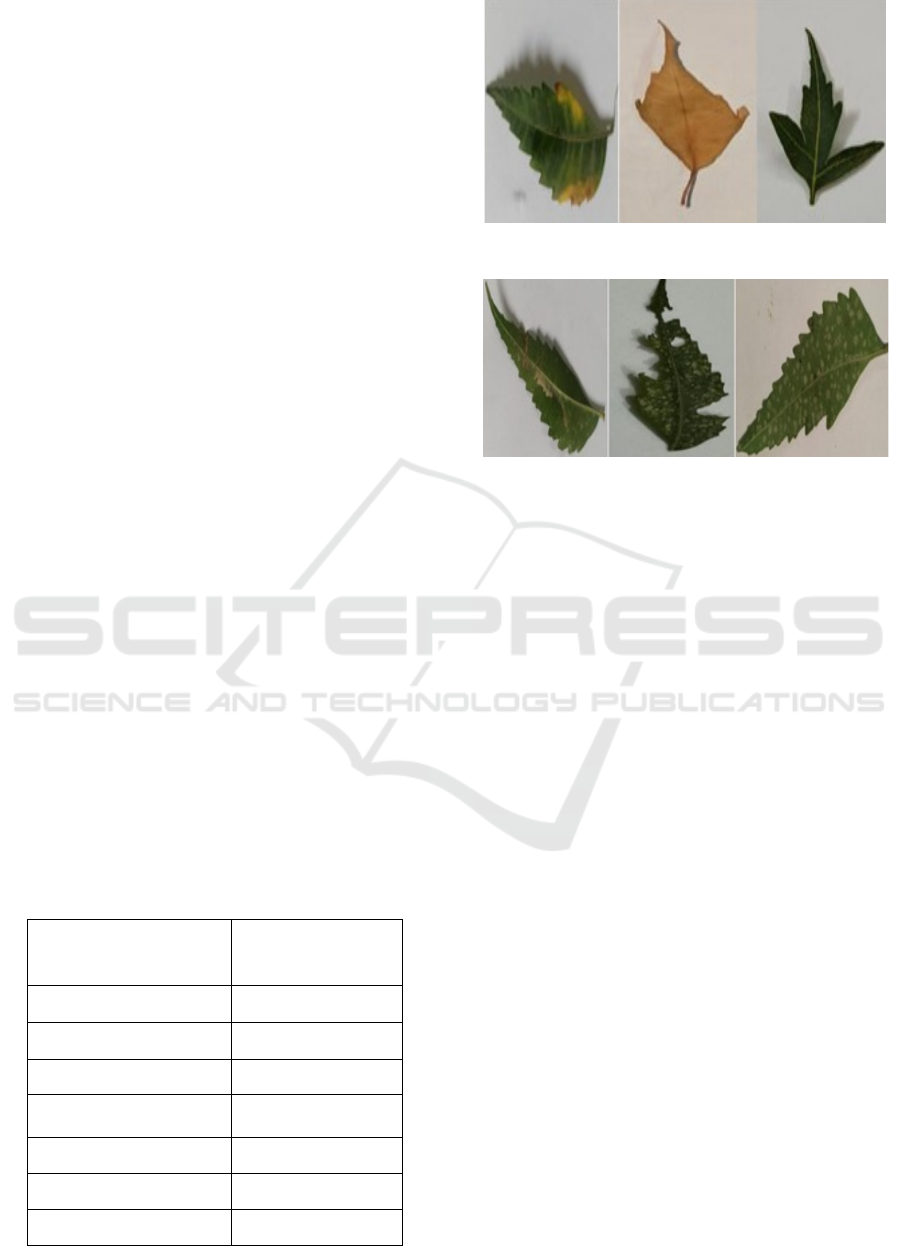
The dataset, which includes 1,862 neem leaf photos,
was collected from Mendeley Data, as shown in Table
1. It is divided into six categories: Alternaria,
Dieback, Leaf Blight, Leaf Miners with Powdery
Mildew, Powdery Mildew, and Healthy leaves, with
examples shown in Figures 1 and 2. Due to a
considerable class imbalance, image augmentation
techniques were used to obtain a uniform distribution
across every classes, hence improving the model's
capacity to generalize across different diseases.
Several pre-processing processes (E. Elakiya, 2017)
were performed prior to training to ensure
consistency and increase dataset quality. Each image
was resized to fit the input dimensions of the CNN
architectures. Pixel values were also adjusted within
the 0 to 1 range to help with training stability and
convergence. To improve the model's emphasis on
key leaf properties, noise reduction techniques were
used to reduce background interference.
3.2 Data Augmentation
Augmentation techniques were employed prior to
dataset splitting to rectify class imbalance. A
balanced dataset was achieved by augmenting each
class with 565 images. The augmentation techniques
included brightness correction, zooming (±20%),
rotation (0° to 360°), horizontal and vertical flipping,
and the insertion of Gaussian noise. These
adjustments reduced the likelihood of overfitting
while also supporting models in learning more robust
and generalized properties through changes in scale,
illumination, and orientation.
Table 1: Neam Leaf Disease Dataset.
Diseases Number of images
Alternaria 191
Dieback 174
Leaf blight 231
Leaf miners’ Powdery
mildew
203
Powdery mildew 544
Healthy 519
Total 1862
Figure 1: (a) Alternaria (b) Dieback (c) Healthy.
Figure 2: (d) Leaf blight (e) Leaf miners’ Powdery mildew
(f) Powdery mildew.
3.3 Data Splitting
The final dataset size after augmentation was 3,390
images, of which 80% were used for training (2712
images) and 20% were used for testing (678 images).
In addition to preserving an independent test set for
unbiased evaluation, this ensured that the models had
enough data to train. The training set was utilized to
optimize model parameters, while the testing set gave
an objective evaluation of classification accuracy.
3.4 Architecture Design
The proposed hybrid deep learning model improves
neem leaf disease classification through a structured
pipeline that includes data preparation, augmentation,
model implementation, compilation, and training.
The dataset was preprocessed by scaling all images to
224×224 pixels for compliance with pretrained
models. Pixel normalization was the dataset was class
imbalance further, we apply data augmentation
techniques to the dataset where they are rotation,
flipping, zooming, brightness modifications, and
translations were used to avoid overfitting. The
hybrid model design is built on feature fusion, which
involves two deep learning models extracting distinct
feature representations that are then concatenated for
classification. The MobileNet+DenseNet hybrid
model, which performed best, combines
MobileNetV2's lightweight and efficient feature
extraction (Elakiya et al., 2024) with DenseNet121's
Neem Leaf Disease Detection Using Hybrid Deep Learning Models
629
hierarchical feature propagation. Additionally,
DenseNet+AlexNet, DenseNet+ResNet, and
DenseNet+GoogleNet hybrid models were created
for comparative analysis using a similar
methodology. Transfer learning was used in all
models, with ImageNet-pretrained weights to utilize
learnt feature representations while freezing the basic
model layers. Each model retrieved deep hierarchical
features from neem leaf images, then used Global
Average Pooling (GAP) to convert the feature maps
into one-dimensional vectors. The concatenation of
these feature vectors formed a compounded
representation that was used to increase classification
accuracy. The features went through a fully
connected dense layer of 128 neurons with ReLU
activation before the last SoftMax classification layer.
This layer allowed for the classification of input
images into six different neem leaf disease groups.
TensorFlow and Keras were used to create the
models, which were trained using an 80-20 train-
validation split across 60 epochs, with early pausing
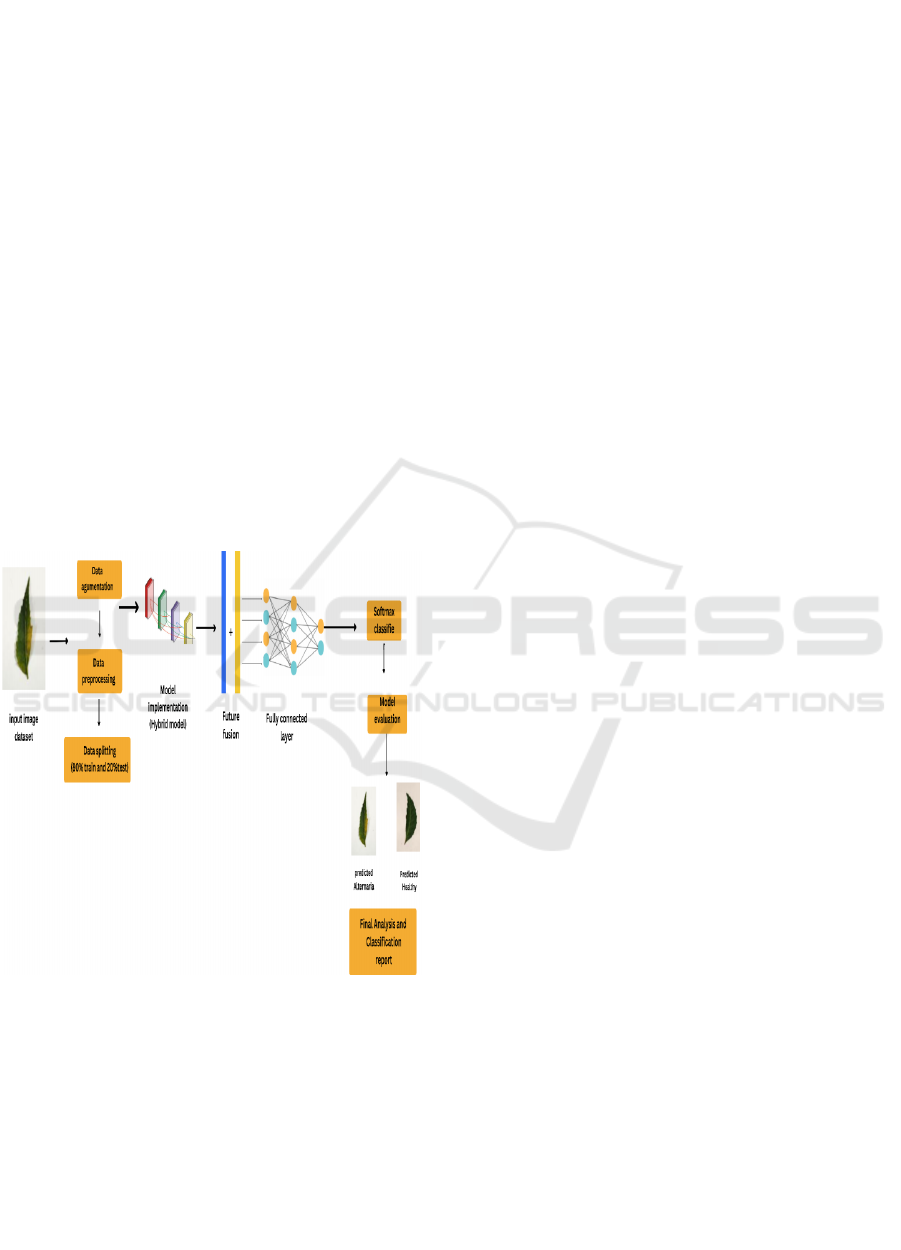
to prevent overfitting. Figure 3 illustrates the full
workflow. A full explanation of each model's
operating principles is given below.
Figure 3: Functional Diagram of the Proposed Model.
4 HYBRID MODELS
4.1 Mobile Net-DenseNet
The hybrid model between MobileNet-DenseNet
combines the excellence of MobileNetV2, a light-
weight and computation-efficient convolutional
neural network, and DenseNet121, a deep learning
network with better feature propagation.
MobileNetV2 is particularly optimized for mobile
and embedded vision tasks, providing the optimal
performance-computation trade-off. DenseNet121
helps in efficient reuse of features, thus enhancing the
performance of the model with a reduction in the
number of total parameters at the same time
compared to normal convolutional networks. The
hybrid model accepts an input image of size
224×224×3 by simultaneously utilizing
MobileNetV2 and DenseNet121, both pre-trained on
the ImageNet database. For pre-learned
representation integrity maintenance, the layers are
frozen. After feature extraction, Global Average
Pooling (GAP) layers transform feature maps into
one-dimensional vectors, thus reducing the
dimension without losing essential spatial
information. The output feature vectors of both
models are concatenated to produce a single
representation that combines MobileNet's efficient
spatial feature learning with DenseNet's hierarchical
feature propagation. The concatenated feature vector
is then fed into a fully connected dense layer of 128
units with ReLU activation followed by a softmax
classifier, which classifies the image into one of the
six neem leaf disease classes. Figure 4 shows the end-
to-end process.
4.2 DenseNet-AlexNet
DenseNet121 is the base deep feature extractor within
the DenseNet-AlexNet hybrid model, with AlexNet
offering supplemental feature learning potential
within its plain but effective convolutional layers.
Five convolutional and three fully connected layers
comprise AlexNet, successfully extracting principal
textures and low-level spatial information to enhance
DenseNet's deeper feature representations. Again, as
with the initial model, both networks compute an
input image in parallel, and feature maps generated
from both networks are reduced to one-dimensional
feature vectors using Global Average Pooling (GAP).
Concatenation at this point is where both these feature
vectors, taking the strength of each network, are
concatenated before moving through a fully
connected layer. The concatenation here takes feature
vectors, borrowing strength from each network,
before moving through a fully connected layer. The
final classification uses the softmax activation
function. The combination of AlexNet's simplicity
and DenseNet's deep connections yields a model that
adequately balances computation with deeper feature
extraction.
ICRDICCT‘25 2025 - INTERNATIONAL CONFERENCE ON RESEARCH AND DEVELOPMENT IN INFORMATION,
COMMUNICATION, AND COMPUTING TECHNOLOGIES
630

4.3 DenseNet-ResNet50
The hybrid DenseNet-ResNet50 architecture
integrates the useful features of DenseNet's feature
reuse mechanism with the residual connections of
ResNet, which stabilize deep neural networks by
avoiding the vanishing gradient issues. The ResNet50
deep residual learning architecture improves the
gradient flow between layers, resulting in better
extraction of deep features. Under this setup,
DenseNet121 and ResNet50, pre-trained on
ImageNet, both forward an input image in parallel.
After the feature extraction process, Global Average
Pooling (GAP) is used to transform the output of both
networks into one-dimensional feature vectors. These
vectors are concatenated to form a combined feature
representation that captures ResNet's hierarchical
learning benefits with connectivity of DenseNet. The
resulting merged feature vector then passes through a
fully connected layer with 128 neurons followed by
classification through a softmax layer. This hybrid
model benefits from ResNet's capacity to retain
learned information in deep networks and,
simultaneously, exploits the efficient feature sharing
between layers by DenseNet.
4.4 DenseNet-GoogleNet
The DenseNet-GoogleNet model combines
GoogleNet's inception modules with DenseNet's
densely connected layers to improve multi-scale
feature extraction. GoogleNet (InceptionV3) is
widely used for its parallel convolutional filters with
different kernel sizes, which allow the model to
collect information at different scales. This is very
useful in the detection of complex patterns of disease.
In this hybrid design, DenseNet121 and GoogleNet
(InceptionV3) process the input image separately, so
each network extracts features independently.
GoogleNet's inception modules can recognize fine-
grained features as well as larger structural
information. The feature maps extracted from each
network are then fed to Global Average Pooling
(GAP) to get compact feature vectors. These
concatenated feature vectors leverage the best of both
designs before being passed to a fully connected
dense layer followed by a final softmax classifier.
Where entire working process of hybrid model is
depicted in Figure4. GoogleNet's capability of
processing input at different scales complements
DenseNet's hierarchical feature extraction, so this
hybrid model is extremely successful in recognizing
neem leaf diseases of varying intensities.
Al
g
orithm 1: DenseNet-MobileNet H
y
brid Model.
1. Input: X → Dataset,d → Preprocessed dataset and resized images,l → Corresponding labels for the images
2. Output: Final classification performance on the test dataset
3. For each and every epoch:
4. Feature Extraction using MobileNet:
5. For each convolution layer in MobileNet:
6. For each input image in X:
7. Extract feature map 𝑎𝑖𝑗 from MobileNetV2 convolutional layers.
8. End for
9. End for
10. Apply Global Average Pooling (GAP) for obtaining compact feature representation.
11. Final MobileNetV2 feature vector: (1, num_filters)
12. Feature Extraction using DenseNet121:
13. For each convolution layer in DenseNet121:
14. For each input image in X:
15. Extract feature map 𝑎𝑖𝑗 from DenseNet121 convolutional layers.
16. End for
17. End for
18. Use Global Average Pooling (GAP) to generate a compact feature representation.
19. Final DenseNet121 feature vector: (1, num_filters)
20. Hybrid Feature Fusion:
21. Define feature set fet from dataset d.
22. For each image in dataset:
23. Preprocess the image before inputting it into the models.
24. End for
25. Split dataset into train_fet, test_fet, train_labels, test_labels.
26. Train & Evaluate MobileNetV2:
Neem Leaf Disease Detection Using Hybrid Deep Learning Models
631
27. M_MobileNet ← Train MobileNetV2 on train_fet, train_labels.
28. Extract training features: MobileNet_train ← M_MobileNet.predict(train_fet).
29. Extract testing features: MobileNet_test ← M_MobileNet.predict(test_fet).
30. Train & Evaluate DenseNet121:
31. M_DenseNet ← Train DenseNet121 on train_fet, train_labels.
32. Extract training features: DenseNet_train ← M_DenseNet.predict(train_fet).
33. Extract testing features: DenseNet_test ← M_DenseNet.predict(test_fet).
34. Hybrid Model Construction:
35. Combine extracted features:
36. model_train ← Concatenation of MobileNet_train and DenseNet_train.
37. model_test ← Concatenation of MobileNet_test and DenseNet_test.
38. Train a fully connected neural network on the merged feature set.
39. Evaluate performance on test data.
5 RESULTS AND DISCUSSION
The performance of proposed hybrid deep learning
models was checked through various measures of
performance, i.e., accuracy, loss, precision, recall,
F1-score, sensitivity, specificity, AUC (Area Under
the Curve), and MUC (Mean Under curve), which
are displayed in Table 2.
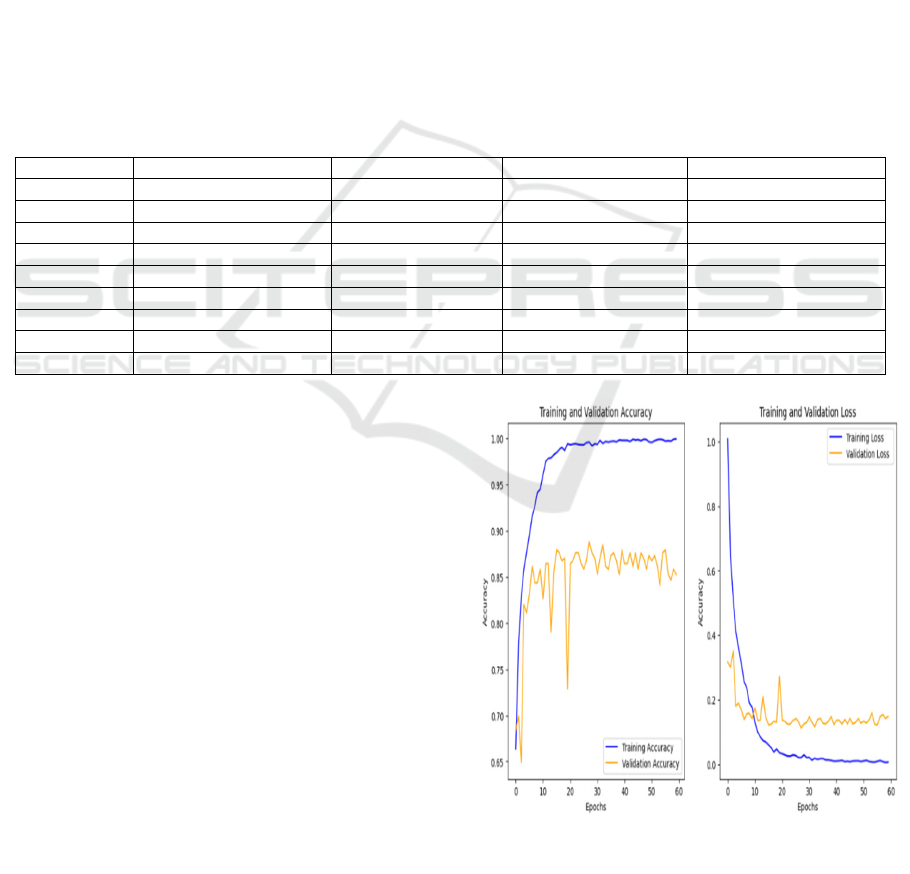
Table 2: Comparison of Used Models Accuracy and Error.
Parameters Densenet- Goo
g
leNet DenseNet-AlexNet DenseNet-Resnet50 DenseNet-MobileNet
Accurac
y
88.20 88.50 88.79 90.56
Precision 87.68 87.82 87.97 89.71
Recall 87.09 87.43 86.96 89.36
F1score 87.29 87.47 87.13 89.42
Sensitivit
y
87.09 87.43 86.96 89.36
S
p
ecificit
y
97.63 97.68 97.57 97.95
MCC 85.50 85.86 85.23 87.64
AUC 98.25 98.46 98.14 97.64
Loss 0.1 0.1 0.1 0.09
Among the evaluated models, DenseNet-
MobileNet achieved the highest performance,
attaining an accuracy of 90.56%., because of
MobileNet's fast feature extraction and DenseNet's
hierarchical connection. The DenseNet-ResNet
model followed with 88.79% accuracy, because of
residual learning, while DenseNet-AlexNet and
DenseNet-GoogleNet showed lower accuracy in Fig
12. Despite the fact that GoogleNet's inception
modules allow for multi-scale feature extraction, the
decreased accuracy shows feature redundancy in
neem leaf disease diagnosis. The training and
validation accuracy and loss curves give a better
understanding of the performance of the model. The
accuracy graph indicates a steady increase with the
epochs, with DenseNet-MobileNet having the highest
stability level, while the loss graph indicates effective
convergence, which depicts decreased classification
errors. Figure 4 to 11 shows the Accuracy, Loss and
Confusion Matrix of various models.
Figure 4: Accuracy and Loss Graph for DenseNet-
MobileNet.
ICRDICCT‘25 2025 - INTERNATIONAL CONFERENCE ON RESEARCH AND DEVELOPMENT IN INFORMATION,
COMMUNICATION, AND COMPUTING TECHNOLOGIES
632
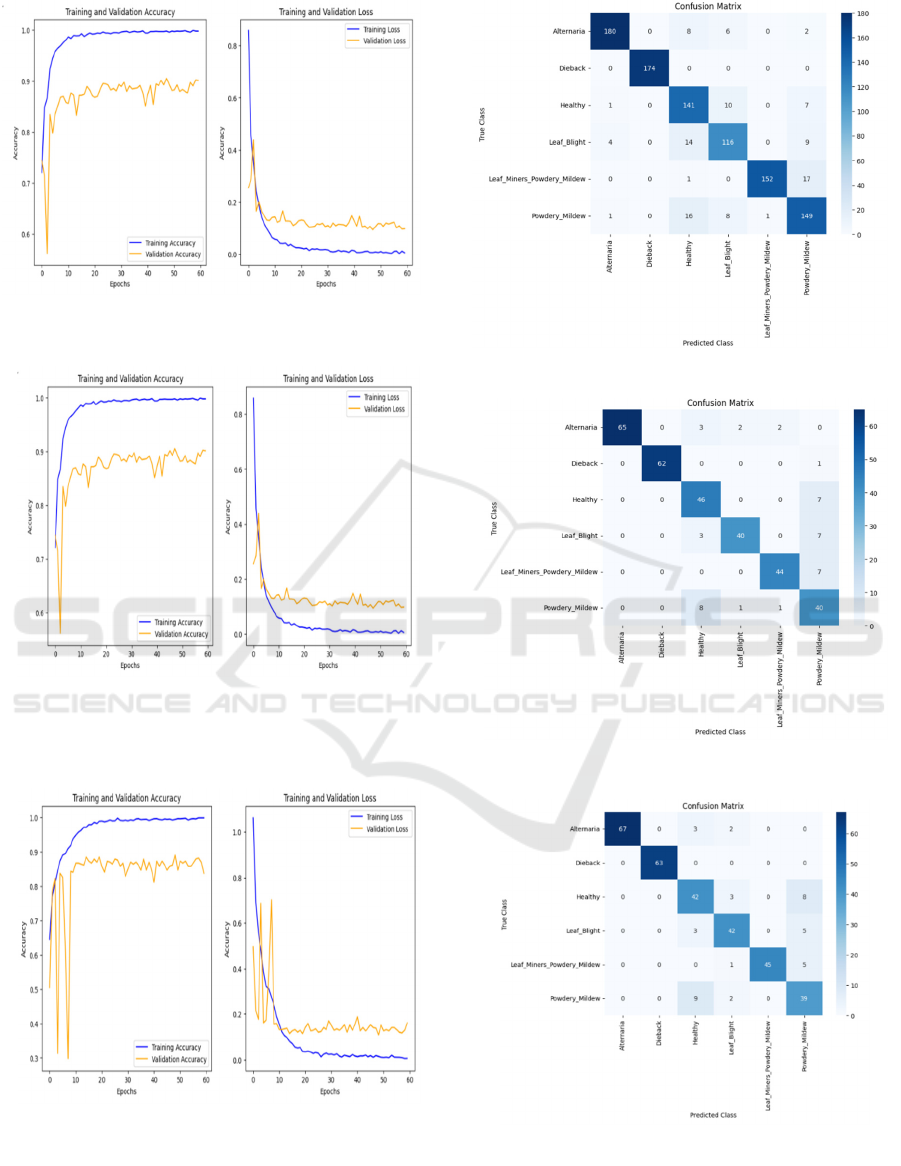
Figure 5: Accuracy and Loss Graph for DenseNet-ResNet5.
Figure 6: Accuracy and Loss Graph for DenseNet-
GoogleNet.
Figure 7: Accuracy and Loss Graph for DenseNet-AlexNet.
Figure 8: Confusion Matrix of DenseNet-MobileNet.
Figure 9: Confusion Matrix of DenseNet-ResNet50.
Figure 10: Confusion Matrix of DenseNet-GoogleNet.
Neem Leaf Disease Detection Using Hybrid Deep Learning Models
633
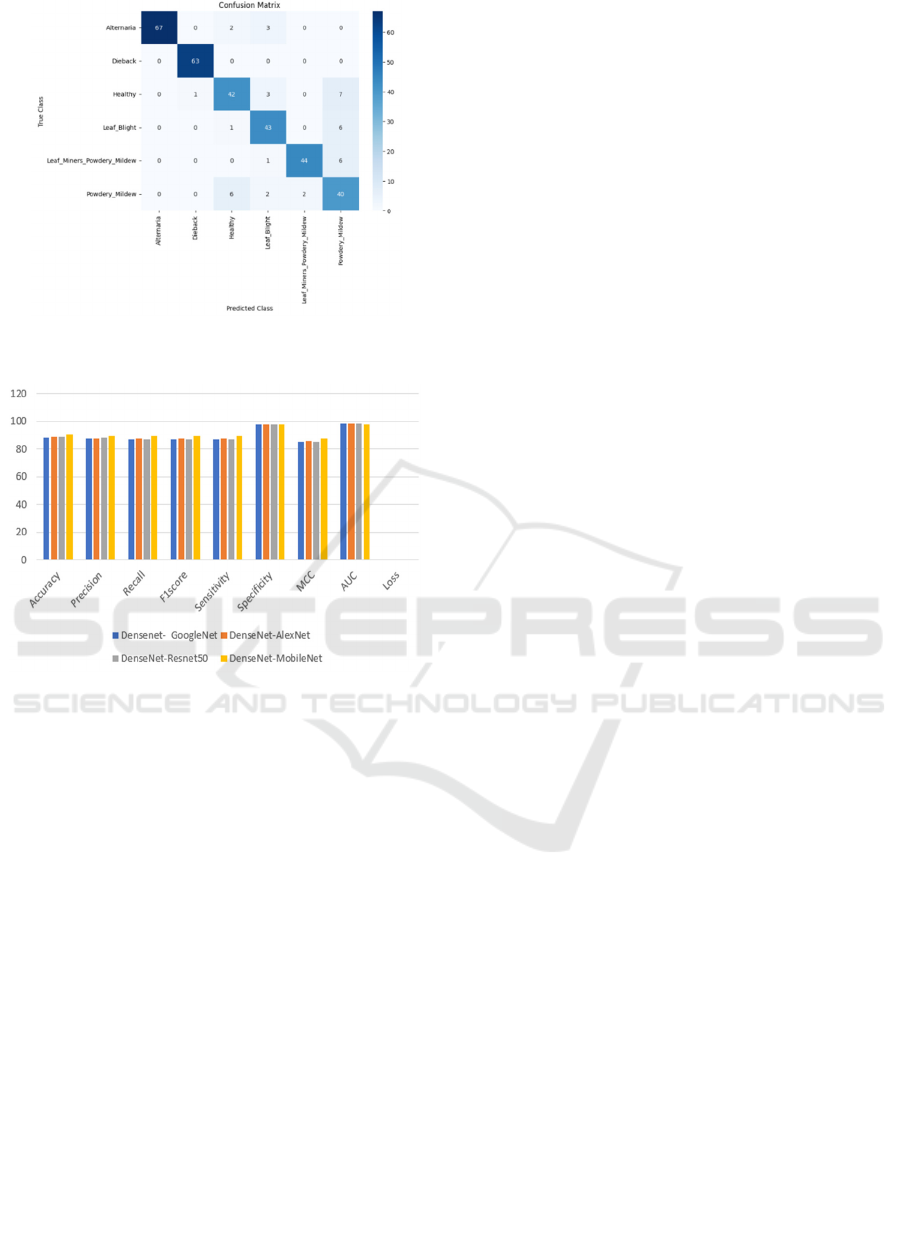
Figure 11: Confusion Matrix of DenseNet-AlexNet.
Figure 12: Comparison of used Models.
6 CONCLUSIONS
This study proposed a hybrid deep learning approach
for neem leaf disease detection by integrating
DenseNet with MobileNet, ResNet, AlexNet, and
GoogleNet. Among these models, DenseNet-
MobileNet had the highest accuracy of 90.5%,
making it the most effective for neem leaf disease
classification. Other hybrid models, including
DenseNet-ResNet (88.7%), DenseNet-AlexNet
(88.5%), and DenseNet-GoogleNet (88.2%), also
performed well but were slightly less accurate. The
study of model performance utilizing criteria such as
accuracy, loss, precision, recall, and AUC revealed
that hybrid models outperform independent
architectures. The accuracy and loss graphs showed
stable training and convergence, confirming the
reliability of the proposed models for automated
disease prediction. For future work, tribrid models
integrating three deep learning architectures shall be
explored to further enhance classification accuracy.
In addition, a new neem disease dataset will be
compiled to increase model generalization and
robustness. To improve model performance, attention
mechanisms, explainable AI approaches, and
hyperparameter tuning will be combined.
Furthermore, efforts will be made to create
lightweight models for real-time disease
identification in mobile and edge computing settings.
These developments will help precision agriculture
(S. Banerjee et al., 2024) by enabling early and
efficient disease identification.
REFERENCES
Vellela, Sai Srinivas, et al. An Identification of Plant Leaf
Disease Detection Using Hybrid Ann and Knn. 2024,
pp. 149–58, doi:10.58532/v3baio8p5ch4.
Vamshi, J., Tanwar, S., Thatipudi, J. G., Ponsangeetha, A.,
Mukherjee, S., & Mandhare, J. B. (2024). Novel Plant
Leaf Disease Detection Approach using Hybrid Deep
Learning Strategy. 266–273.
https://doi.org/10.1109/icicv62344.2024.00047
Sheneamer, Abdullah. “Early Detection of Plant Leaf Dis-
eases Using Stacking Hybrid Learning.” PLOS ONE,
vol. 19, no. 11, Nov. 2024, p. e0313607,
doi:10.1371/journal.pone.0313607.
Huddar, Suma, et al. “Deep Autoencoder Based Image En-
hancement Approach with Hybrid Feature Extraction
for Plant Disease Detection Using Supervised Classifi-
cation.” International Journal of Electrical and
Com6puter Engineering, Aug. 2024,
doi:10.11591/ijece.v14i4.pp3971-3985.
Patil, Manesh P., and Indrabhan S. Borse. “A Novel Hybrid
Convolution and Multiscale Dilated EfficientNetB7-
Based Plant Disease Detection and Classification with
Adaptive Segmentation Procedures.” International
Journal of Image and Graphics, Jan. 2025,
doi:10.1142/s0219467827500203.
Mallma, J. B., Rodriguez, C., Pomachagua, Y., & Navarro,
C. (2021). Leaf Disease Identification Using Model Hy-
brid Based on Convolutional Neuronal Networks and
K-Means Algorithms. International Conference on
Computational Intelligence and Communication Net-
works.
https://doi.org/10.1109/CICN51697.2021.9574669
Kumar, S., & Singh, S. R. (2023). Plant Leaf Disease De-
tection: A Deep Hybrid Learning Approach. 625–630.
https://doi.org/10.1109/mosicom59118.2023.1045874
8.
Kanabur, V., Harakannanavar, S. S., Purnikmath, V. I.,
Hullole, P., & Torse, D. A. (2019). Detection of Leaf
Disease Using Hybrid Feature Extraction Techniques
and CNN Classifier (pp. 1213–1220). Springer, Cham.
https://doi.org/10.1007/978-3 030-37218-7_127.
Kawatra, M., Agarwal, S., & Kapur, R. (2020). Leaf Dis-
ease Detection using Neural Network Hybrid Models.
ICRDICCT‘25 2025 - INTERNATIONAL CONFERENCE ON RESEARCH AND DEVELOPMENT IN INFORMATION,
COMMUNICATION, AND COMPUTING TECHNOLOGIES
634

International Conference on Computing, Communica-
tion and Automation.
https://doi.org/10.1109/ICCCA49541.2020.9250885.
Dari, S. S., Tiwaskar, S., Kumar, J. R. R., Langote, V., Mo-
hadikar, G. M., & Ashtagi, R. (2023). Enhancing Plant
Leaf Disease Identification with a CNN and DenseNet
Hybrid Model. 102:1-102:6.
https://doi.org/10.1145/3647444.3647929.
Devi, N., et al. “Categorizing Diseases from Leaf Images
Using a Hybrid Learning Model.” Symmetry, vol. 13,
no. 11, Nov. 2021, p. 2073,
https://doi.org/10.3390/SYM13112073.
Aboelenin, S., Elbasheer, F. A., Eltoukhy, M. M., Elhady,
W. M., & Hosny, K. M. (2025). A hybrid Framework
for plant leaf disease detection and classification using
convolutional neural networks and vision transformer.
Complex & Intelligent Systems, 11(2).
https://doi.org/10.1007/s40747-024-01764-x.
Sharma, Pavan, et al. “Hybrid Models for Plant Disease De-
tection Using Transfer Learning Technique.” Interna-
tional Conference on Computing for Sustainable
Global Development, Mar. 2023, pp. 712–
18.https://data.mendeley.com/dasets/sjtxmcv5d4/3#:~:
text=This%20dataset%20consists%20of%202544,into
%20further%20six%20disease%20classes.
Elakiya, E. and Sai Nikhil, Parasu and Sujithra@kanmani,
R. and Christopher Columbus, C., Early-Stage Classifi-
cation of Diabetic Retinopathy in Retinal Images using
Efficient-DenseNet (November 15, 2024). Proceedings
of the 3rd International Conference on Optimization
Techniques in the Field of Engineering (ICOFE-2024),
Available at http://dx.doi.org/10.2139/ssrn.5088869
DenseNet-121, MobileNetV2, and ResNet-50 in Im-
ageCLEF 2024. Available at: https://ceur-ws.org/Vol-
3740/paper-160.pdf
Architectural design of MobileNetV2 model. Available at:
https://www.researchgate.net/figure/Architectural-de-
sign-of-MobileNetV2-model_fig2_358006784
S. Banerjee, P. Akhila, S. Kanmani R, E. Elakiya and B.
Surendiran, "CropBot: A Chatbot for Agriculture Ad-
vancement," 2024 International Conference on Signal
Processing, Computation, Electronics, Power and Tel-
ecommunication (IConSCEPT), Karaikal, India, 2024,
pp. 16, doi: 10.1109/IConSCEPT61884.2024.1062784
8.
Elakiya, E., Paturu, T., Naik, K.C., Sai Tarun, V. (2024).
Investigating Feature Extraction and Classification Al-
gorithms for Effective disease Lung Disease Detection
Using Chest X-Ray Images. In: Ranganathan, G., Papa-
kostas, G.A., Shi, Y. (eds) Inventive Communication
and Computational Technologies. ICICCT 2024. Lec-
ture Notes in Networks and Systems, vol 23. Springer,
Singapore. https://doi.org/10.1007/978-981-97-7710-
5_33
R. Kanagaraj, E. Elakiya, A. Kumaresan, J. Selvakumar, J.
Suganya and K. Shruthi, "Predictive Classification
Model of Crop Yield Data Using Artificial Neural Net-
work," 2023 5th International Conference on Inventive
Research in Computing Applications (ICIRCA), Coim-
batore, India, 2023, pp. 747-751, doi:
10.1109/ICIRCA57980.2023.10220791.
E. Elakiya and N. Rajkumar, "Designing preprocessing
framework (ERT) for text mining application," 2017 In-
ternational Conference on IoT and Application
(ICIOT), Nagapattinam, India, 2017, pp. 1-8, doi:
10.1109/ICIOTA.2017.8073613.
Neem Leaf Disease Detection Using Hybrid Deep Learning Models
635
