
Automated Cyber Threat Identification Using Natural Language
Processing
Parumanchala Bhaskar, Kandukuri Ramachari, Shaik Arbas Basha, Kamireddy Vivekananda Reddy,
Bandi Malleswara Reddy and Suravi Ravi Teja
Department of Computer Science and Engineering, Santhiram Engineering College, Nandyal, Andhra Pradesh, India
Keywords: Intelligence on Cyber Threats, Cybersecurity, Natural Language Processing (NLP), Automated Threat
Recognition, Analysis of Threats, Machine Learning, Deep Learning, Information Mining, Extraction of
Information.
Abstract: This abstract paper addresses this challenge through the application of Natural Language Processing (NLP)
to facilitate the automation of cyber threat detection. The suggested system uses modern NLP methods to
interpret large volumes of textual data from sources including cybersecurity reports, social media, forums and
dark web conversations. In an increasingly digital world, cyberthreats are becoming more common and
present a major security and privacy threat. As malevolent behaviour is dynamic, most conventional threat
detection mechanisms tend to lag. The solution aims to enhance the resilience of digital infrastructures against
cyberattacks by improving the precision, effectiveness, and scalability of threat detection. As there are rapid
dynamics of the digital world, the cyberattacks are also growing to be more sophisticated and bigger than
ever. This research will solve this basic problem by creating a mechanised system for cyber threat
identification using some Natural Language Processing (NLP). The solution aims to strengthen the defences
of digital infrastructures against cyberattacks by increasing the precision, effectiveness and scalability of
threat detection.
1 INTRODUCTION
The Problem: We have tons of information about
potential cyber threats. This information is scattered
everywhere – in security logs, reports, social media,
etc. It's too much for humans to handle, and it's hard
to find the real threats quickly. Plus, the threats are
always changing.
The Solution: NLP can help! Think of NLP as
teaching computers to understand human language.
Rather than simply focusing on words, computers
have the ability to grasp the meaning behind the
words.
How NLP Assists: Makes Sense of the Data: NLP
can analyse all that intricate threat data (logs, reports,
posts) and decipher it. It’s akin to having a super-fast
reader who understands what it is reading. NLP is a
branch of artificial intelligence that focuses on
analysing, comprehending, and producing the
languages that people naturally use to facilitate
computer interactions using human natural languages
instead of computer languages. Natural language
processing allows computers to interact in a manner
akin to human speech.
Discovers Patterns: NLP is capable of uncovering
hidden patterns and clues that might suggest a cyber-
attack is happening or is about to happen. It has the
ability to recognize connections that humans might
overlook. NLP allows computers to comprehend and
process large amounts of text data to identify cyber
threats more efficiently and swiftly than humans can
do alone. It’s like giving cybersecurity experts a
powerful assistant that can read and understand
everything!
2 LITERATURE REVIEW
Web applications in the current era play an extremely
crucial part in personal life as well as in the progress
of any nation. Web applications have experienced an
extremely fast evolution during the recent years and
their acceptance is increasing at a quicker pace than
was anticipated some years ago. In these days,
614
Bhaskar, P., Ramachari, K., Basha, S. A., Reddy, K. V., Reddy, B. M. and Teja, S. R.
Automated Cyber Threat Identification Using Natural Language Processing.
DOI: 10.5220/0013887300004919
Paper published under CC license (CC BY-NC-ND 4.0)
In Proceedings of the 1st International Conference on Research and Development in Information, Communication, and Computing Technologies (ICRDICCT‘25 2025) - Volume 2, pages
614-619
ISBN: 978-989-758-777-1
Proceedings Copyright © 2025 by SCITEPRESS – Science and Technology Publications, Lda.

trillions of transactions are made online with the help
of various Web applications. Although these
applications are accessed by hundreds of users, in
most instances the security level is low, and hence
they are prone to get compromised. In the majority of
the scenarios, a user must be authenticated before any
communication is made with the backend database.
An arbitrary user must not be granted access to the
system without evidence of valid credentials.
Nevertheless, a crafted injection provides access to
unauthorized users. This is primarily achieved
through SQL Injection input. Despite the emergence
of various methods to avoid SQL injection, it
continues to be a threatening issue for Web
applications. In this paper, we have provided an
in-depth survey on various SQL Injection
vulnerabilities, attacks, and prevention methods.
Besides discussing our results from the research, we
also write down future prospects and potential
evolution of countermeasures for SQL Injection
attacks.
The Internet is Important but RiskWe rely on the
internet for everything, but it's also full of dangers
like cyberattacks.
Threat Intelligence Helps: To fight these attacks,
we use "threat intelligence". This is like gathering
clues about upcoming attacks, including details
regarding the attacker’s methods (“signatures”). This
prepares us. Where We Obtain Clues: We gather
these clues from different places:
Formal Sources: Authorized organizations that
share threat information in a methodical, organized
way (like a formal report).
Informal Sources: More casual sources, such as
news articles, blogs, or discussions.
Organized Clues are Ideal: When the clues are
structured (“organized”), security tools can more
readily understand them and take automated
measures to keep us protected.
In summary: We collect signs of cyberattacks
from multiple sources. The more organized these
pieces of information are, the more effectively we can
shield ourselves. However, the slide indicates that
there remains a significant amount of unstructured,
chaotic information that is challenging to utilize, and
that’s where the new danger arises.
3 EXISTING RESEARCH
Current research has examined multiple aspects of
NLP-based cyber threat detection, including:
Automated phishing identification using machine
learning techniques.
Real-time threat surveillance on social media
utilizing NLP strategies.
Automated extraction of threat intelligence from
security documents. Implementation of message
queuing and stream processing for handling large data
volumes. Studies have also explored the use of NLP
models in cloud environments to achieve scalability
and efficiency.
Drawback in Existing System:
Contextual Noise: A lot of natural language
depends on context and has ambiguity. Potentially,
the same name or term can have different meanings
based on context, creating difficulties in prediction
and makeup of evolving cyber threats.
Domain-Specific Models: Most of NLP models
do not generalize well across domains.
sectors, or languages. A model which might have
trained up to a specific data category may differ
completely in another scenario.
Extractable knowledge and Trust: Natural
Language Processing models are often described as
black-boxes, and these are not straightforward for us
humans to interpret This ambiguity can erode trust
and limit broad use.
Adversarial Attacks: Similar underlying to
images, NLP models can fall victim to adversarial
layouts where malicious actors intentionally shape
input data to fool the model.
4 PROPOSED SYSTEM
The framework coordinates three fundamental
elements: first, the identification of cyber threats and
their classification; second, the profiling of these
identified threats, distinguishing their motives and
goals through a sophisticated machine learning
architecture; and third, the issuance of alerts based on
the danger posed by the identified threats. A
significant innovation in our work lies in our
approach to define these emerging threats, providing
contextual understanding of their motives. This
improved layer of understanding not only enhances
threat detection but also offers avenues for effective
countermeasures. In our experimental research, the
profiling stage achieved an impressive F1 score of
77%, demonstrating a strong ability to identify and
understand identified threats. " "This Paper leads the
forefront of proactive cybersecurity strategies, aiming
to equip defenders with a sophisticated system
capable of performing early threat detection and
advanced threat characterization. By utilizing a rich
source of event data and advanced machine learning
techniques, the framework not only identifies threats
Automated Cyber Threat Identification Using Natural Language Processing
615
but also delves deeper into their motives, providing
valuable insights for proactive defence strategies
against rapidly evolving cyber threats.
The Problem: The rising quantity and complexity
of cyber threats necessitate automated and scalable
solutions for early detection and mitigation.
Traditional security systems that rely on manual
analysis are ineffective and susceptible to human
errors. Natural Language Processing (NLP) offers a
powerful method to automate the identification of
cyber threats from text data, enabling real-time
analysis and proactive defence.
The Solution: Researchers created a system to
combat them. It operates in three stages: Identify
Threats: Recognizes and tags the threats to
cyberspace.
Profile Threats: Establishes the intentions of the
attacker using machine learning (a form of AI). This
uncovers what the attackers intend to achieve.
Generate Alerts: Based on the threat's severity,
alerts are generated by the system.
Main Idea: The core of this system is how it
discerns what the attackers are trying to accomplish.
Understanding the attackers' goals allows defenders
to be better prepared and react effectively.
Advantages of Proposed System:
Real-time Threat Detection: NLP can process and
analyse large volumes of unstructured data quickly.
The sooner the threat is identified, the more
opportunities organizations have to act to counter it
before it can do damage.
Adaptability to Emerging Threats: NLP models
can be continuously trained and updated to stay in
line with evolving cyber threats. The system can
remain relevant, compare and contrast its past
decisions with new data & retraining the models at
regular intervals to detect new threats.
Enhanced Situational Awareness: NLP systems
increase situational awareness by processing and
interpreting natural language. Organizations gain
insight into the evolving threat landscape,
adversarial techniques, and can take proper actions
with regard to cybersecurity.
Cost-Effectiveness: Reduces manual labour by
using NLP-automated threat detection that works on
large volumes of text data. This economical approach
enables organizations to optimize resource allocation
and devote efforts to strategic cybersecurity
initiatives.
5 METHODOLOGY
Data Collection and Preprocessing
A pipeline will be built to harvest text data around
the web/post-processed. Text cleaning, tokenization,
normalization, etc., will be automated in data
preprocessing. TF-IDF, word embeddings are some
of the techniques that will be used for feature
extraction. Manh power from message queueing
technologies will be used to process data streams.
Development and Deployment of NLP Models:
“NLP models (for Machine Learning models and
Deep Learning models) will be created for the
identification and classification of threats. The
models will be tuned to latency and throughput for
real-time processing. Your models will be deployed
at scale, such as in a cloud environment or
containerized environment. "
Real-Time Threat Detection: A real-time threat
detection system will be implemented, utilizing
stream processing technologies. " The system will
continuously analyse incoming data streams and
trigger alerts for detected threats.
Evaluation Metrics: Accuracy, precision, recall,
F1-score, latency, throughput, and scalability
metrics.
6 ARCHITECTURES
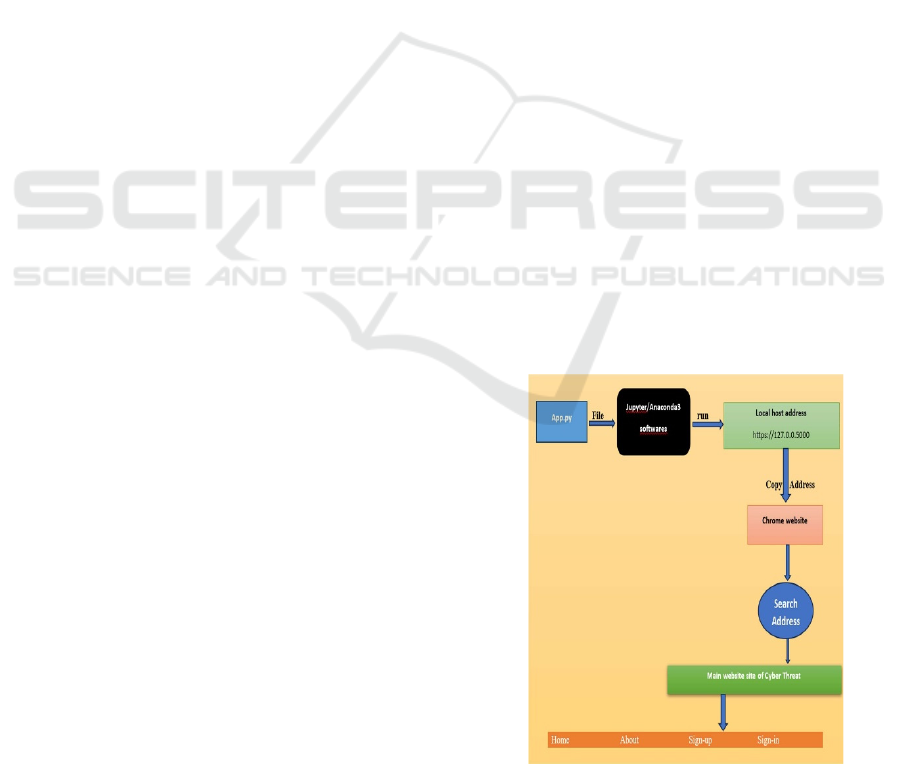
Figure 1 illustrates the proposed architecture for
cyber threat detection utilizing Natural Language
Processing (NLP) techniques.
Figure 1: Architecture of cyber threat detection using NLP.
ICRDICCT‘25 2025 - INTERNATIONAL CONFERENCE ON RESEARCH AND DEVELOPMENT IN INFORMATION,
COMMUNICATION, AND COMPUTING TECHNOLOGIES
616

Application File (App.py):
The process begins with an application file, denoted
as App.py. This represents the user- initiated program
or script designed to interact with the cyber threat
platform.
File Execution via Jupiter/Anaconda3:
The App.py file is executed using Jupiter Notebook
or Anaconda3, which are powerful environments for
Python development and data science.
Local Host Address Generation:
Upon
execution,
the
application
generates
a
local
host
address,
specifically
https://127.0.0.5000.
Address Copying:
The generated local host address
(https://127.0.0.5000) is copied for subsequent
access.
Chrome Website Access
The copied address is subsequently used to launch
the service via the Chrome web browser.
This clarifies the use of a standard web browser for
engaging with the local service. The choice of
Chrome indicates suitability and ease for the user
Search Address Input:
The copied address is pasted into the browser's
search bar or address field.
Main Website of Cyber Threat Platform:
The browser navigates to the main website of the
cyber threat platform, based on the provided address.
Platform Interaction:
The platform offers various interactive options,
including "Home," "About," "Sign-up," and "Sign-
in."
7 EXPECTED OUTCOMES
This Paper aims to:
Develop an automated framework for real-
time cyber threat identification.
Enhance the efficiency and effectiveness of
threat detection through automation.
Provide a scalable and adaptable solution
for large-scale data analysis.
Improve the speed of response to cyber
threats.
Future research will focus on:
Integrating automated threat response
capabilities.
Improving the explainability of real-time
threat detection models.
Implementing adaptive learning techniques
for continuous model improvement.
Building a report to future screening of
identified threats.
8 CONCLUSIONS
We researched a range of machine learning
algorithms Naive Bayes, SVM, KNN, Random
Forest, Bagging, Boosting, Neural Networks, and
Voting Classifier in this research that are specifically
well-suited for various classification and prediction
tasks. These algorithms find
important applications across a range of fields
from text classification and image recognition to
anomaly detection and ensemble learning. What
makes them work is their capability to manage
complex data relationships, respond to differing
datasets, and make accurate predictions. In the future,
machine learning algorithms for applications such as
cybersecurity, health diagnostics, and autonomous
systems have promising prospects. Developments in
deep learning and reinforcement learning are poised
to make algorithms even better, allowing more
advanced applications in real-world situations.
Additionally, combining these algorithms with new
technologies like edge computing and quantum
computing could provide new paths for processing
speed and accuracy.
9 FUTURE SCOPE
Future work may include optimizing such algorithms
to run in real-time, enhancing explainability via
model explainability methods and exploring how
these can be combined with other new technologies
such as blockchain for enhanced security and
transparency in data-driven systems. More research
work will also be directed towards improving the
scalability of algorithms, adversarial robustness and
addressing the ethical considerations in the
deployment of AI systems in various domains.
10 RESULTS
The Figure 2 below represents the classification of
Cyber Threat Types using the proposed model
Automated Cyber Threat Identification Using Natural Language Processing
617
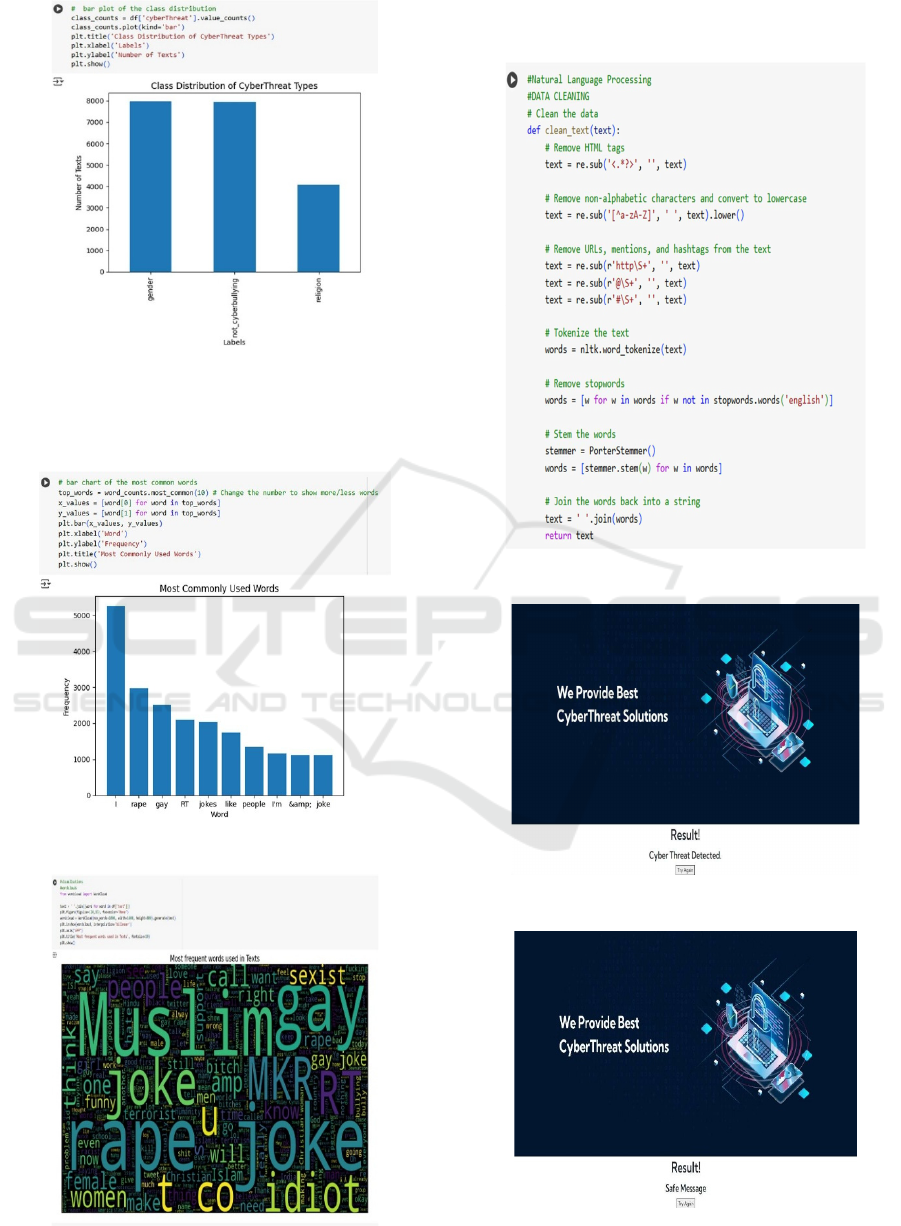
Figure 2: Class distribution of cyber threat types.
The below Figures 3 and 4 represents mostly used
words and most frequently used words in the given
dataset.
Figure 3: Most commonly used words.
Figure 4: Most frequent words used in texts.
The below Figures 5,6 and 7 shows the Process of NLP
is Started, Cyber Threat Not Detected and Cyber Threat
Detected.
Figure 5: Process of NLP is started.
Figure 6: Cyber threat not detected.
Figure 7: Cyber threat detected.
ICRDICCT‘25 2025 - INTERNATIONAL CONFERENCE ON RESEARCH AND DEVELOPMENT IN INFORMATION,
COMMUNICATION, AND COMPUTING TECHNOLOGIES
618

REFERENCES
Chaitanya, V. Lakshmi, and G. Vijaya Bhaskar. "Apriori vs
Genetic algorithms for Identifying Frequent Item Sets."
International journal of Innovative Research &
Development 3.6 (2014): 249-254.
Chaitanya, V. Lakshmi. "Machine Learning Based
Predictive Model for Data Fusion Based Intruder Alert
System." journal of algebraic statistics 13.2 (2022):
2477-2483
Chaitanya, V. Lakshmi, et al. "Identification of traffic sign
boards and voice assistance system for driving." AIP
Conference Proceedings. Vol. 3028. No. 1. AIP
Publishing, 2024
Devi, M. Sharmila, et al. "Machine Learning Based
Classification and Clustering Analysis of Efficiency of
Exercise Against Covid-19 Infection." Journal of
Algebraic Statistics 13.3 (2022): 112-117.
Devi, M. Sharmila, et al. "Extracting and Analyzing
Features in Natural Language Processing for Deep
Learning with English Language." Journal of Research
Publication and Reviews 4.4 (2023): 497-502.
Mahammad, Farooq Sunar, Karthik Balasubramanian, and
T. Sudhakar Babu. "Comprehensive research on video
imaging techniques." All Open Access, Bronze (2019).
Mahammad, Farooq Sunar, and V. Madhu Viswanatham.
"Performance analysis of data compression algorithms
for heterogeneous architecture through parallel
approach." The Journal of Supercomputing 76.4
(2020): 2275-2288.
Mahammad, Farooq Sunar, et al. "Key distribution scheme
for preventing key reinstallation attack in wireless
networks." AIP Conference Proceedings. Vol. 3028.
No. 1. AIP Publishing, 2024.
Mandalapu, Sharmila Devi, et al. "Rainfall prediction using
machine learning." AIP Conference Proceedings. Vol.
3028. No. 1. AIP Publishing, 2024.
Mr. M. Amareswara Kumar, "Baby care warning system
based on IoT and GSM to prevent leaving a child in a
parked car" in International Conference on Emerging
Trends in Electronics and Communication Engineering
- 2023, API Proceedings July-2024.
Mr. M. Amareswara Kumar, EFFECTIVE FEATURE
ENGINEERING TECHNIQUE FOR HEART
DISEASE PREDICTION WITH MACHINE
LEARNING" in International Journal of Engineering &
Science Research, Volume 14, Issue 2, April-2024 with
ISSN 2277-2685.
Paradesi Subba Rao, "Detecting malicious Twitter bots
using machine learning" AIP Conf. Proc. 3028, 020073
(2024), https://doi.org/10.1063/5.0212693
Paradesi Subba Rao,"Morphed Image Detection using
Structural Similarity Index Measure"M6 Volume 48
Issue 4 (December 2024),https://powertechjournal.co
m
Parumanchala Bhaskar, et al. "Machine Learning Based
Predictive Model for Closed Loop Air Filtering
System." Journal of Algebraic Statistics 13.3 (2022):
416-423.
Parumanchala Bhaskar, et al. "Incorporating Deep Learning
Techniques to Estimate the Damage of Cars During the
Accidents" AIP Conference Proceedings. Vol. 3028.
No. 1. AIP Publishing, 2024.
Parumanchala Bhaskar, et al "Cloud Computing Network
in Remote Sensing-Based Climate Detection Using
Machine Learning Algorithms" remote sensing in earth
systems sciences(springer).
Suman, Jami Venkata, et al. "Leveraging natural language
processing in conversational AI agents to improve
healthcare security." Conversational Artificial
Intelligence (2024): 699-711.
Sunar, Mahammad Farooq, and V. Madhu Viswanatham.
"A fast approach to encrypt and decrypt of video
streams for secure channel transmission." World
Review of Science, Technology and Sustainable
Development 14.1 (2018): 11-28.
Automated Cyber Threat Identification Using Natural Language Processing
619
