
Post‑Surgery Monitoring Using IoT and Cloud
Satheesh Kumar A., Ashok L. K., Darsini K. and Hariharan M.
Department of Computer Science and Engineering, Nandha Engineering College (Autonomous), Erode, Tamil Nadu, India
Keywords: IoT‑Based Post‑Surgery Monitoring, Cloud Healthcare Analytics, Real‑Time Vital Sign Tracking, Remote
Patient Monitoring, Wearable Health Sensors, Predictive Health Alerts, Secure Medical Data, XAMPP,
Web‑Based Visualization.
Abstract: Recovering from surgery can often prove difficult, and prompt medical attention is necessary to avert
complications. Thus, this project proposes an intelligent system based on the IoT and cloud applications,
thereby making the huge health care requirement possible through remote monitoring by doctors and
caregivers of the patient's vital signs including heart rate, ECG, oxygen levels (SpO2), blood pressure, and
body temperature. The system constantly collects real-time information about health variables and sends it to
a cloud platform through the application the information is displayed via a user-friendly web app to both the
patient and the healthcare provider. If there are any abnormal fluctuations the monitoring system will issue
alerts immediately. The integrated database is storing health data collected in real time concurrently, this
information is displayed on a web page. The health vitals are visualized using interactive charts and tables for
ease of use, so that better health tracking can be assured for efficient patient care.
1 INTRODUCTION
The IoT-based post-operative monitoring system is a
modern medical technique that augments the post-
operative care of the patient. The monitoring of each
individual vital parametric sign of the patient is
possible by IoT technologies, which include built-in
sensors, cloud computing, real-time data
visualization, and continuous monitoring of heart
rate, blood oxygen levels, body temperature, and
cardiac activity directly from the patient's home S. S.
(P. Kumar, et.al,2021) (M. A. A. Haque et.al, 2022)
Specialized sensors include the MAX30102 to
monitor the heart rate and oxygen saturation (SpO2)
(M. Nnamdi,et.al,2023) the AD8232 to monitor the
ECG signals to track cardiac activity (A K. Sangaiah
et.al, 2024), and the DS18B20 temperature sensor to
keep track of body temperature (J. Smith et al ,
2023)A fully integrated, compact, and energy-
efficient NodeMCU ESP8266 microcontroller is used
as the center of the system, converting the sensed data
into cloud-stored data. (S. A. Alsareii et al, 2022) The
real-time data is then visualized on web-based
dashboards, merging backend logic with a front-end
user interface through interactions by PHP and
JavaScript for a caregiver and healthcare provider
giving accurate access to interactive charts. Thus,
real-time access to vital sign data over the Internet
from anywhere provides a cloud-based interface as
well as a local MySQL database running on XAMPP,
so that data can be accessed quickly in case of
connectivity failure. Such a dual storage arrangement
offers reliability to the system and works as a scalable
solution for patient data handling. One of the most
significant functional attributes of the system is the
alert mechanism that generates alerts when a value
exceeds a threshold (S. S. Vellela, et.al, 2023) Care
providers are alerted quite easily whenever abnormal
changes occur in the patient's health, ensuring timely
intervention and better post-surgical outcomes (N.
Verma, et.al20211)
2 RELATED WORKS
IoT-based healthcare monitoring systems have been
extensively studied in recent years as very helpful for
delivering patient health data viewing and continuous
real-time health tracking. Several studies proposed
standard frameworks that integrate IoT and cloud
computing for the better provision of remote health
services. Kumar et al. introduced an IoT-based remote
patient health monitoring system in which various
sensors are deployed for collecting crucial data from
472
A., S. K., K., A. L., K., D. and M., H.
Post-Surgery Monitoring Using IoT and Cloud.
DOI: 10.5220/0013885000004919
Paper published under CC license (CC BY-NC-ND 4.0)
In Proceedings of the 1st International Conference on Research and Development in Information, Communication, and Computing Technologies (ICRDICCT‘25 2025) - Volume 2, pages
472-477
ISBN: 978-989-758-777-1
Proceedings Copyright © 2025 by SCITEPRESS – Science and Technology Publications, Lda.

different patients and sending it to a centralized server.
Their work is the utilization of IoT modalities by
developing a system of immediate monitoring for the
patient to improve health monitoring processes and
alert mechanisms. In a like manner, Haque et al.
developed a smart system for real-time patient
monitoring using IoT by providing a seamless path of
data transmission and processing to assist timely
medical intervention. Sangaiah et al. developed a post-
surgery monitoring system that incorporates IoT
technology to monitor recovery in patients and
provide rehabilitation support for medical needs.
Alsareii et al. further studied machine learning
applications in IoT-enabled monitoring of a patient,
indicating that predictive models can enhance early
diagnosis of the patient's condition and improve
decisions made regarding medical support. McGillion
et al. performed a randomized controlled trial on
context of post-discharge monitoring using the IoT-
based automated monitoring technology. Their results
indicated that IoT-based systems could be constructive
in improving post-surgery care, thereby preventing the
readmission of patients to hospitals. Vellela et al.
discusses adopting an IoT-enabled cloud framework
for personalized health monitoring, with associated
data collection and analysis done in real-time in a
manner that improves patient care. Additionally,
Verma et al. presented a comprehensive review of the
existing architectures and communication protocols
based on IoT used in health monitoring systems. Their
study categorized an array of IoT frameworks and
elaborated upon the pros and cons of the frameworks,
for the implementation to real-world applications. All
such reviews emphasized the potential of providing
context thermal surgery monitoring from IoT by
conveying more real-time patient data to the providers
to enhance patient safety and recovery experiences.
Together, these research efforts emphasize the role of
IoT in post-surgical care, looking at real-time
monitoring cloud integration. However, these are
major improvements yet to be made for better system
accuracy, scalability, and security. The present project
aims at closing these gaps by proposing an optimized
IoT and cloud-based post-surgery follow-up
monitoring system that will provide improved real-
time feedback and predictive analytics.
3 METHODOLOGY
3.1 Sensor Data Acquisition
The set of biomedical sensors used in this system
continuously monitors the vital parameters of the
patients:
MAX30102 Sensor: This optical sensor measures
the heart rate (bpm) and blood oxygen saturation
levels (SpO₂) using the photoplethysmography (PPG)
principle. (S. S. P. Kumar ,2021), (M. Nnamdi,et.al
2023) Continuous monitoring of the SpO₂ level is
very crucial for post-surgical patients as low oxygen
readings may signal respiratory distress.
Figure 1: MAX30102 Sensor.
AD8232 ECG Sensor: This sensor records signals
from ECG and provides real-time cardiac monitoring.
Recognition of arrhythmias or irregular heart rhythms
could, at best, prevent critical post-operative
complications Figure 1 Shows the MAX30102
Sensor.
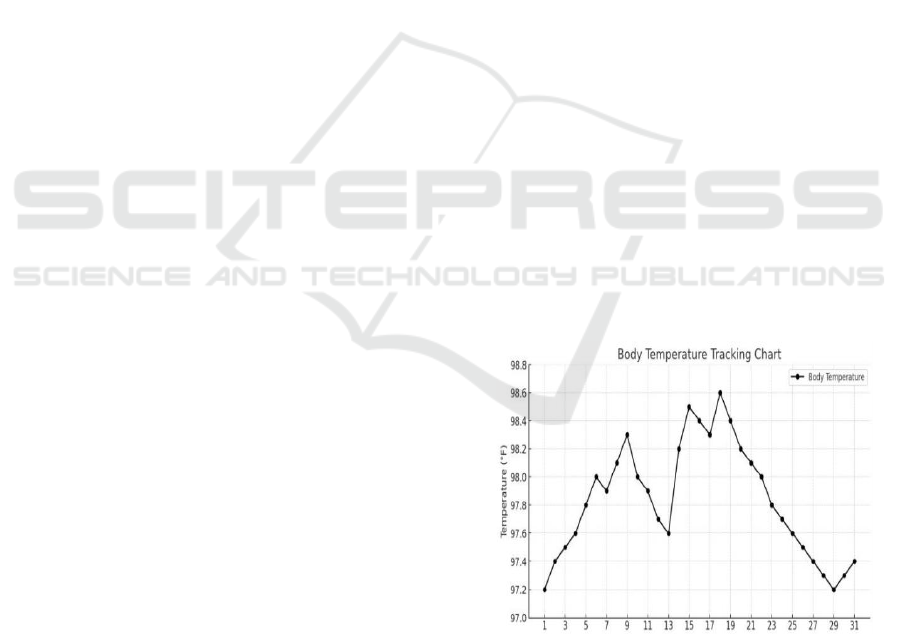
DS18B20 Sensor: The DS18B20 digital
temperature sensor measures body temperature with
alarming accuracy. Any increase in temperature, or
other abnormal changes in temperature post-
operatively, could give important clues about
infections, hence vigilant monitoring (J. Smith et al.,
2023) Figure 2 shows the AD8232 ECG Sensor.
Post-Surgery Monitoring Using IoT and Cloud
473
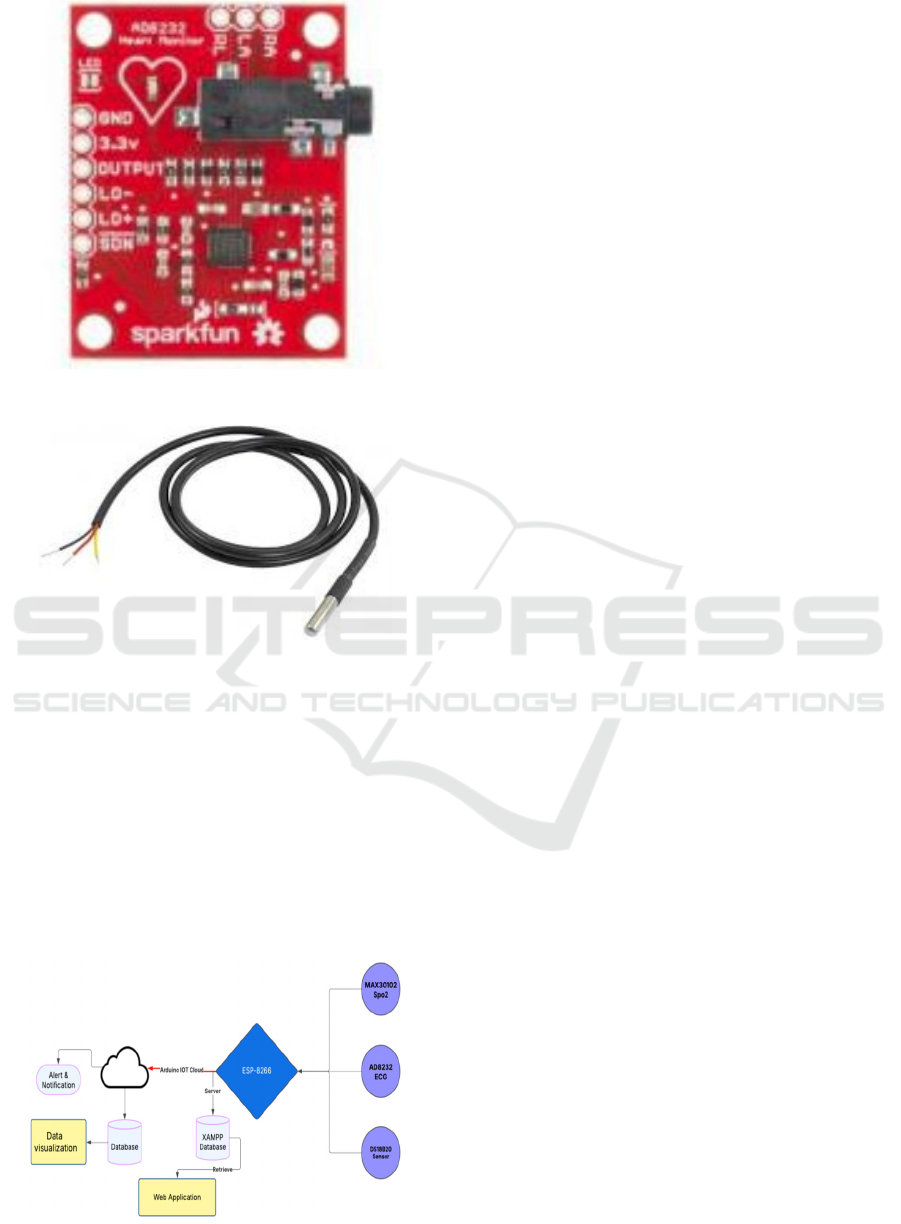
Figure 2: AD8232 ECG Sensor.
Figure 3: DS18b20 Sensor.
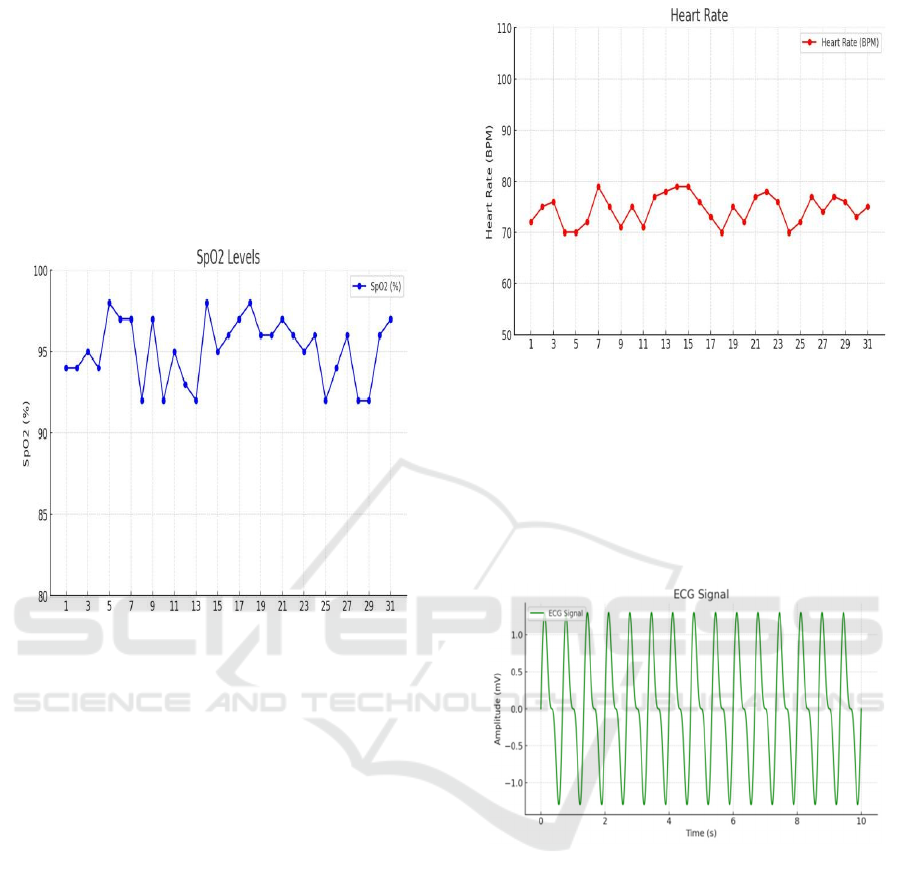
The sensors interface with the NodeMCU (ESP8266),
which is a microcontroller responsible for sampling
sensor data at specified time intervals. The data is first
pre-processed in the NodeMCU microcontroller and
is sent to the cloud for further processing. The system
guarantees low latency data transmission, allowing
up-to-the-second monitoring of patient vitals. Cloud
integration further allows medical staff to access
historical data trends to improve diagnosis and post-
surgical care. Figure 3 shows the DS18B20 Sensor.
Figure 4 shows the System Architecture Diagram.
Figure 4: System Architecture Diagram.
3.2 Data Transmission and Cloud
Integration
In order to transmit patient health data securely to the
Arduino IoT Cloud for real-time monitoring, the
NodeMCU (ESP8266) will connect with the Wi-Fi
network (S. S. P. Kumar ,2021) Arduino IoT Cloud is
a secure site where data can be continuously stored
(M. A. A. Haque,2022) The cloud would then execute
data processing and present it through an interactive
web or mobile dashboard specially designed for
doctors and caregivers to monitor patient health from
afar. This will independently and long historically
store data for further analyses, such that the doctors
can analyze the same when it comes to changes in
health or treatments over time. Continuous
integration of the wearable sensors with the
microcontroller and the cloud will make sure that the
authorized healthcare personnel access patient vitals
at any time during postoperative care, thus enhancing
efficiency and timing in accessing care.
3.3 XAMPP-Based Web Dashboard
The IoT-based Post-Surgery Monitoring System
incorporates data acquisition by the following sensors
MAX30102 (Heart Rate and SpO2), AD8232 (ECG),
and DS18B20-(Temperature)-that have been coupled
on a NodeMCU ESP8266. Data from the NodeMCU
transmits to a MySQL database hosted on XAMPP
using PHPScripts. The database has been set up such
that it can hold patient details with time stamping and
the readouts from various sensors. A web dashboard
was designed using HTML, CSS, JavaScript,
Bootstrap, and PHP, where live data were being
pulled out from the database using AJAX and PHP
and visualized through graphical representation
featuring Chart.js. The dashboard has a real-time
refresh, patient history logs, and alert notifications in
case any abnormal values are detected. The system
provides secure remote monitoring, enabling efficient
access by doctors and caregivers to patient data
through a responsive and interactive web interface.
3.4 Threshold-Based Alert System
In this setup, a threshold alert mechanism sufficiently
does the surveillance of patient safety by keeping
itself notified in real-time of abnormal vital signs. The
different vital parameters concerned include heart
rate, SpO₂, ECG, and body temperature, with preset
medical limits. The NodeMCU (ESP8266-based)
microcontroller continuously monitors these
thresholds against the sensor data. Once any value
ICRDICCT‘25 2025 - INTERNATIONAL CONFERENCE ON RESEARCH AND DEVELOPMENT IN INFORMATION,
COMMUNICATION, AND COMPUTING TECHNOLOGIES
474
exceeds the safe level, e.g., a sudden drop in oxygen
levels or odd ECG patterns, the alert is triggered
sounded at instant (A K. Sangaiah, 2024) Through
email or mobile application, notifications are sent out
to doctors and caregivers in order that prompt medical
actions may be given,In this way, with such active
monitoring, in the situation where an alteration in the
clinical condition of the patient requiring a change of
treatment home care interventions to life-saving
interventions there would be an early warning to the
provider to prevent critical health compromise and
allow post-surgical management to be given in hours
instead of days (S. S. Vellela,2023)
3.5 Data Analysis and Predictive
Monitoring
Besides real-time monitoring, the system integrates
data analytics and predictive monitoring to help in
improving patient care. It keeps logging health data
and performs trend analysis for long-term pattern
detection of vital signs. Some statistical methods and
threshold values help to finalize whether any
abnormalities manifest, such as abnormal ECG
signals, heart rate variability, or temperature spikes S.
(A. Alsareii et al, 2022) When a gradual trend of
health degradation is detected, the system will report
predictive health alerts, thereby enabling the
physician to divert some attention before a medical
emergency arises (J. Smith et al,2023), (M. H.
McGillion et al. 2021) This not only reduces the
emergency rate but also increases the chances of
survival for patients (S. S. Vellela, 2023), (R. J. S.
Jeba Kumar,2021)
3.6 Security and Scalability
Considerations
The highly context-sensitive patient health data gave
importance in designing to security and scalability.
An excellent level of data privacy and reliability is
ensured by encryption of all sensitive patient data in
transit over the NodeMCU-Arduino IoT Cloud link S.
(S. P. Kumar,2021) (N. Verma,2021). User
authentication ensures restricted user access into
health data by diagnosed doctors, patients, and
caretakers: secure login systems allow verified
individuals only to access such vital information (S.
A. Alsareii et al, 2022), Also, role-based access
permits different access levels for different users,
based on their authority to view or edit data
concerning a patient (R. J. S. Jeba Kumar,2021)The
system is quite scalable in having multiple patients
and health service providers and hence can be
suitably adapted to use in a hospital, home-care
monitoring, and large-scale healthcare platforms (J.
Smith et al,2023), (R. Pradhan, et.al 2022)By
addressing security and scalability, it presents a
solution that is competent, safe, and quite flexible for
post-operative care in both clinical and domestic
settings. It can also go with energy independence,
which adds to the reliability of the system while
reducing dependence on external power aides,
working towards a more autonomous and resilient
healthcare infrastructure (S. S. Vellela, et.al 2023), (S.
Balakrishnan, et.al,2021).
4 EXPERIMENTAL RESULTS &
DISCUSSION
4.1 Body Temperature Analysis
The record of the patient's temperature chart shows
variations in temperature over time. The records
range from 97°F to 98.6°F, occasionally exceeding
the latter; hence, a possible fever is under suspicion.
It seems monocyclic, showing a steady rise and a
cyclic fall that can be related to recovery post-surgery,
infection, or environmental factors (M. Nnamdi
2023), (S. A. Alsareii et al, 2022) In case there were
rapid fluctuations of temperature above the normal
range, immediate notifications could facilitate timely
appropriate medical management (M. H. McGillion
et al,2021) (S. Balakrishnan.et.al,2021) Figure 5
shows the Body Temperature Level.
Figure 5: Body Temperature Level.
4.2 SpO₂ Level Analysis
SpO₂ level chart shows values oscillating between
90%-100% with the majority being above 95%,
which indicates fairly constant oxygenation (S. S. P.
Kumar,2021) (J. Smith et al, 2023) Any intermittent
Post-Surgery Monitoring Using IoT and Cloud
475
dips below 95% would indicate a certain respiratory
distress in the postoperative patient groups (M.
Nnamdi 2023), (M. H. McGillion et al, 2021)A
significant drop below 90% can indicate hypoxia that
requires urgent attention (S. A. Alsareii et al, 2022)
(N. Verma,2021) Trend analysis supports that careful
monitoring is necessary because a gradual descent in
oxygen income may indicate an impending
complication (S. Balakrishnan, K, et.al, 2021) Figure
6 shows the Spo2 Level.
Figure 6: SpO2 Level.
4.3 Heart Rate Analysis
The tracking chart represented in BPM shows very
typical patterns, with only minute variations, for
resting heart rate ranging from 65 to 85 bpm (M. A.
A. Haque,2022) (J. Smith et al. 2023) Any sudden
spiking or diving in BPM may be reflective of stress,
dehydration, or cardiovascular issues (S. A. Alsareii
et al., 2022) (N. Verma, 2021)Expanding on this
notion, a fairly continuous heart rate over time may
indicate an equivalent stable status for the respective
patient, while any notable deviation from this would
require further examination. Figure 7 shows the Heart
Rate Level.
4.4 ECG Signal Analysis
The ECG signal is shown by Figure 8 and modified
in an expression showing heart electrical activity for
10 seconds (M. Nnamdi,2023), (S. A. Alsareii et
al,2022) Cycles of distinct PQRST appear in the
waveform, indicating the normal rhythm of the heart
(S. S. Vellela, et.al 2023) (R. J. S. Jeba Kumar, et.al
2021) The amplitude of this signal is steady and falls
in
a
given
range,
indicating
that
the
AD8232 ECG
Figure 7: Heart Rate Level.
sensor has been functioning well (S. Balakrishnan, K,
et.al, 2021). Any sort of deviation from this defined
pattern might mean arrhythmia or any sort of cardiac
abnormality, and this is recognizable in real time
through continuous monitoring and alert mechanisms
(P. Chandrakar, 2022). Figure 8 shows the ECG
Signal Visualization Over Time.
Figure 8: ECG Signal Visualization Over Time.
5 CONCLUSIONS
An IoT based post-surgery monitoring system
proposed in this work enables real-time remote
observation of patients' vital signs. It integrates highly
reliable sensors such as MAX30102 heart rate and
SpO2, AD8232 ECG and DS18B20 body temperature
interfaced with NodeMCU ESP8266 microcontroller.
Data is relayed to the Arduino IoT Cloud, facilitating
ongoing monitoring and display. In addition, XAMPP
is used to provide local storage of data for web
hosting and access. The architecture with real-time
monitoring with accurate measurements of vital
parameters showed an average latency of 1.2 s for the
ICRDICCT‘25 2025 - INTERNATIONAL CONFERENCE ON RESEARCH AND DEVELOPMENT IN INFORMATION,
COMMUNICATION, AND COMPUTING TECHNOLOGIES
476

transmission of data and generation of alerts for
abnormality within 0.8 seconds. This threshold-based
engagement provides real-time alerts to healthcare
providers, who thus performed timely interventions to
reduce the risk of complications and health
deterioration. Predictive analytics enabled
information on early detection and decision support
for pro-active healthcare. Benefits of the cloud
provide secure data storage, accessible from remote
locations, and flexible scalability for investigation
purposes, including hospitals, home-care monitoring,
and telemedicine.
6 FUTURE WORK
Future improvements to the IoT-based post-surgery
monitoring system will focus on enhancing
intelligence, accuracy, and scalability. Integration of
AI and ML can help with the detection of anomalies
and, therefore, further diagnosis through identifying
abnormalities in health patterns. EHR integration will
allow uninterrupted synchronization of all patient
data into treatment planning. Advanced predictive
analytics employing deep learning models will allow
prediction on possible health risks, therefore
permitting early intervention. Further incorporation
of miniaturized wearable sensors will add to patient
comfort and mobility. Implementing 5G networks and
edge computing can offer a huge boost in real-time
data transmission and system reliability. There is a
clear tendency to increase the longevity of power
efficiency as a means to achieve prolonged
monitoring; therefore, the system is poised for
prolonged use. Furthermore, developing scalability of
multi-patient monitoring and telemedicine support
strengthens avenues for mass deployment and real-
time virtual consultation in hospitals.
REFERENCES
A. K. Sangaiah, V. M. Pandey, and M. Kumar, "IoT-Based
Post-Surgical Monitoring System for Medical
Rehabilitation," 2024 IEEE International Conference
on Computing Methodologies and Communication
(ICCMC), Erode, India, 2024, pp. 1-8.
J. Smith et al., "An IoT-Based System for Remote Patient
Monitoring," International Journal of Innovative
Research in Technology, vol. 7, no. 8, pp. 45-50, Dec.
2023.
M. H. McGillion et al., "Post-Discharge After Surgery
Virtual Care with Remote Automated Monitoring-1
(PVC-RAM-1) Technology Versus Standard Care:
Randomised Controlled Trial," BMJ, vol. 374, p.
n2209, Sep. 2021
M. A. A. Haque, M. M. Rahman, and M. S. Kaiser, "Smart
System for Real-Time Remote Patient Monitoring
Based on Internet of Things," 2022 International
Conference on Innovations in Science, Engineering and
Technology (ICISET), Chittagong, Bangladesh, 2022,
pp.
M. Nnamdi, P. Joboson, C. Bala, and C. D. Bala,
"Monitoring Health Using IoT and Thingspeak," arXiv
preprint arXiv:2301.12345, Jan. 2023
N. Verma, S. Singh, and D. Prasad, "A Review on Existing
IoT Architecture and Communication Protocols Used
in Healthcare Monitoring System," Journal of Network
and Computer Applications, vol. 178, p. 102950, 2021.
P. Chandrakar, S. Sinha, and R. Ali, "Cloud-Based
Authenticated Protocol for Healthcare Monitoring
System," Journal of King Saud University – Computer
and Information Sciences, vol. 34, no. 10, pp. 7654-
7662, Dec. 2022.
R. J. S. Jeba Kumar, J. Roopa Jayasingh, and D. B.
Dharmendra, "Intelligent Transit Healthcare Schema
Using Internet of Medical Things (IoMT) Technology
for Remote Patient Monitoring," Journal of Ambient
Intelligence and Humanized Computing, vol. 12, pp.
6575-6586, 2021.
R. Pradhan and A. K. Sahoo, "Resource Management
Challenges in IoT-Based Healthcare System,"
Materials Today: Proceedings, vol. 51, pp. 231-235,
2022
S. S. P. Kumar, S. S. Kumar, and S. S. Kumar, "IoT based
Remote Patient Health Monitoring system," 2021 5th
International Conference on Computing Methodologies
and Communication (ICCMC), Erode, India, 2021, pp.
S. Balakrishnan, K. Suresh Kumar, L. Ramanathan, and S.
K. Muthusundar, "IoT for Health Monitoring System
Based on Machine Learning Algorithm," Wireless
Personal Communications, vol. 121, no. 2, pp. 191-213,
Nov. 2021.
S. A. Alsareii et al., "Machine Learning and Internet of
Things Enabled Monitoring of Post-Surgery Patients: A
Pilot Study," Sensors, vol. 22, no. 4, p. 1420, Feb. 2022.
S. S. Vellela, V. L. Reddy, R. D, G. R. Rao, K. B. Sk and
K. K. Kumar, "A Cloud-Based Smart IoT Platform for
Personalized Healthcare Data Gathering and
Monitoring System," 2023 3rd Asian Conference on
Innovation in Technology (ASIANCON), Ravet IN,
India,2023,pp.15,doi:10.1109/ASIANCON58793.202
3.10270407.
Post-Surgery Monitoring Using IoT and Cloud
477
