
Quantifying Impersonation on Social Media: Probability Assessment
of Fake Accounts
Mary Likitha Swarup Reddy Gade, Mary Lohita Swarup Reddy Gade,
J. Shobana and Eerla Siva Keerthi
Department of DSBS, SRM Institute of Science and Technology, Chennai, Tamil Nadu, India
Keywords: Impersonation, Social Media, Machine Learning Models, Fraudulent Accounts, Anomaly Detection.
Abstract: This paper proposes a research work, to quantify impersonation on the social media platforms through
evaluating the probabilities of the fake accounts. Building on this foundation, the study uses machine learning
models, such as classifiers and anomaly detection algorithms, and network analysis techniques to explore
features about behavioural patterns and structural attributes that can be used as distinguishing features
between genuine and fake profiles. This approach aims to measure the likelihood of impersonation by
analysing user activity, engagement patterns, and network connections. We validate this methodology through
experimentation with various datasets that illustrate its effectiveness in detecting and estimating fake accounts
on social media platforms. These insights not only help in understanding the impersonation dynamics but also
provide a significant foundation for evaluating the likelihood of fake profiles that might help in paying more
effective strategies to handle impersonation of users on such social platform.
1 INTRODUCTION
In today's digital landscape, social media has
emerged as a ubiquitous platform for connection,
information sharing, and community building. Edit:
this large connectivity also created a wrong turn,
which is the creation of fake accounts and
impersonation. These disinformation strategies
undermine trust in online communities and create
various risks, from the spread of false information to
identity theft to the manipulation of public opinion.
As a consequence, the detection and estimation of
fraudulent accounts in social media represent key
challenges that call for novel and resilient methods.
We introduce a data-driven research framework
that attempts to quantify impersonation risk through
estimating the likelihood that a user account is fake.
This approach aims to discover hidden behavior
patterns and structural characteristics that separate
genuine accounts from bogus accounts by leveraging
the synergy between machine learning algorithms,
especially classifiers and anomaly detection systems,
and advanced network analysis methods. This
method strives to expose the complex intricacies that
are characteristic of fake by analyzing how users
interact with the collection dynamics, the user plans
activities, and the topological structure of the social
networks.
Profiles to help sharpen our awareness of
impersonation tactics used by multiple platforms. his
is because, through careful experimentation on
several datasets, the effectiveness and robustness of
the proposed methodologies have been thoroughly
validated. The study seeks to provide insights into
the overall dynamic of fake social media accounts,
helping to inform actionable strategies for addressing
impersonation and protecting the social media
ecosystem’s integrity.
2 CONTRIBUTIONS OF THIS
WORK
2.1 Improved Accuracy by 15-20%
Prediction of fake accounts based on machine
learning classifiers and network analysis. To refine
the accuracy of fake ac- count detection, our work
proposes a new technique that combines machine
learning classifiers with network analysis. This
synergy leads to an accuracy gain of 15-20 percentage
Gade, M. L. S. R., Gade, M. L. S. R., Shobana, J. and Keerthi, E. S.
Quantifying Impersonation on Social Media: Probability Assessment of Fake Accounts.
DOI: 10.5220/0013884100004919
Paper published under CC license (CC BY-NC-ND 4.0)
In Proceedings of the 1st International Conference on Research and Development in Information, Communication, and Computing Technologies (ICRDICCT‘25 2025) - Volume 2, pages
425-431
ISBN: 978-989-758-777-1
Proceedings Copyright © 2025 by SCITEPRESS – Science and Technology Publications, Lda.
425

over the traditional approach of using a singular
method.
2.2 10-15% Reduced False Positives
Improved anomaly detection and behavioral analysis
to reduce false positives, resulting in better accuracy.
Our work proposes improved anomaly detection and
behavioral analysis methodologies to tackle this
critical issue of impersonation detection diagnosed
false positives. With careful optimization of these
methods, we are able to gain a 10-15% improvement
in false positive rates.
2.3 Reduction in Processing Time by
30%
Reduced complexity in method for more rapid
identification and assessment of suspected fake
accounts at scale. Our study presents a new
methodological framework with greatly reduced
processing time, which reflects inefficiency, and the
necessity of efficiency for large-scale social media
political analysis. In addition, we manage to reduce
execution time by an impressive 30% by optimizing
the successive steps needed for fake account
identification.
2.4 Assessment of Subtle Probability
Five categories of Fake Accounts — Find out how
likely an account is to be impersonating someone.
Our work provides a new methodology for fine-
grained probability assessment and we do so for the
risk of impersonation in particular. Instead of a simple
binary, our categorization of fake accounts is on a
scale, which allows for much more fine-grained
analysis.
2.5 Validation on Numerous Datasets
Multifaceted: Thorough assessment on diverse
social media datasets for cross-platform relevance.
We performed extensive experiments, on various
social media datasets, to ensure that our
methodology is practical and general indeed. Going
beyond mere performance-maintaining and
potentially overfitting our models due to platform
presence, this validation confirms that our protocol
should work even on different kinds of platforms with
varied users, engagement, and network structure.
2.6 Designing for Scale and
Adaptability
Scalable and adaptive methodology to combat
evolve impersonation tactics. We acknowledge that
tactics of impersonation on social media are
dynamic, and thus, this work demonstrates a
methodology that scales and adapts. The framework
is designed to adapt to the changing nature of
impersonation, enabling new techniques and
approaches to be incorporated easily.
3 LITERATURE SURVEY
The literature survey introduces the extensive study
of different methods in the field of fake account
identification on social media sites from various
journals. The work is in” Heterogeneous Social
Media Analysis for Efficient Deep Learning Fake-
Profile Identification”82 by L. V. (IEEE Access,
2023), the authors use multimodal feature processing
and analysis to correctly identifying the classes. This
paper (Pradeep Ku- mar Roy and Shivam Chahar,
IEEE Transactions on Artificial Intelligence, 2020)
contains a comprehensive review and compilation of
technology behind fake account detection. Bharti
Goyal, Nasib Singh Gill and Preeti Gulia (IEEE
Transactions on Computational Social Systems,
2023) use multimodal deep learning fusion for
detecting fake accounts on social media. This study
makes use of machine learning to detect fake identity
in” Using Machine Learning to Detect Fake
Identities: Bots vs Humans” by Este´e van der Walt
and Jan Eloff (IEEE Access, 2018) while adapting
their feature engineering. Our initial literature gaze
reveals the approach of authors David Mart´ın-
Gutie´rrez, Gustavo Herna´ndez-Pen˜aloza, and
Alberto Belmonte Herna´ndez (IEEE Access, 2021),
which share the article devoted to the robust
detection of bots with Twitter with the use of
transformers and multilingual trans- formers The
authors in ”Spammer Detection and Fake User
Identification on Social Networks” by Faiza Masood,
Ghana Ammad, and Ahmad Almogren (IEEE
Access, 2019) state that they perform a taxonomy-
based review. barisk@boun.edu.tr barisk@boun.edu
.tr; nagarwal@ieee.org nagarwal@ieee.org; Social
bots, social bots in online campaigns in OSNsTuja
Khaund, Baris Kirdemir, Nitin Agarwal barisk@bou
n.edu.tr n | IEEE Transactions on Computational
Social Systems (2022) | new article Social bots and
their online campaign coordination: A survey of
coordination strategies in OSNs Tuja Khaund, Baris
ICRDICCT‘25 2025 - INTERNATIONAL CONFERENCE ON RESEARCH AND DEVELOPMENT IN INFORMATION,
COMMUNICATION, AND COMPUTING TECHNOLOGIES
426
Kirdemir, Nitin Agarwal Chen Lin, Si Chen, and
Meifang Zeng (IEEE Transactions on Neural
Networks and Learning Systems, 2022) proposed a
Leg-UP based GAN to generate fake user profiles to
attack black-box recommender systems via shilling.
For example, Giuseppe Sansonetti, Fabio Gasparetti,
and Giuseppe D'aniello (IEEE Access, 2020) extract
the target features in a multi-stage feature extraction
process for unreliable user detection in social media.
Zhang Xiaohang, Shi Wenhua, and GongXue(IEEE
China Communications, 2013)use rule-based
criteria and probabilistic methods to identify fake and
potential corporate members in telecommunications
operators. In” Com- bining Trust Graphs and
Keystroke Dynamics to Combat Fake Identities in
Social Networks” by Francesco Buccafurri, Gian-
luca Lax, and Denis Migdal (IEEE Transactions on
Emerging Topics in Computing, 2024), the authors
combine trust graphs and keystroke dynamics,
between the lines of melding keystroke dynamics. Li
et al. (IEEE Access, 2020) used the order-of-
consensus-calculation method to detect fake identity
attributes from natural and human behavior analysis.
Daniel Stanley Tan, Jonathan Hans Soeseno, and Kai-
Lung Hua (IEEE Transactions on Cybernet- ics,
2022) proposed a controllable and identity-aware
facial attribute transformation approach via a
multitask conditional dis- criminator.” Attacking
Recommender Systems with Plausible Profile” by
Xuxin Zhang, Jian Chen, and Rui Zhang (IEEE
Transactions on Information Forensics and Security,
2021). The authors used the RecUP attack method to
attack recommender systems. Fahim K. Sufi, Imran
Razzak, and Ibrahim Khalil (IEEE Transactions on
Technology and Society, 2022) use an AI-based
social media monitoring approach to track the anti-
vax social movement and employ named-entity
recognition (NER) methods. This collection of all
literature survey of their methodologies, from rule-
based criteria to dynamic deep learning and
transformer-based approached methods, from all
renowned journals.
4 WORK FLOW DIAGRAMS
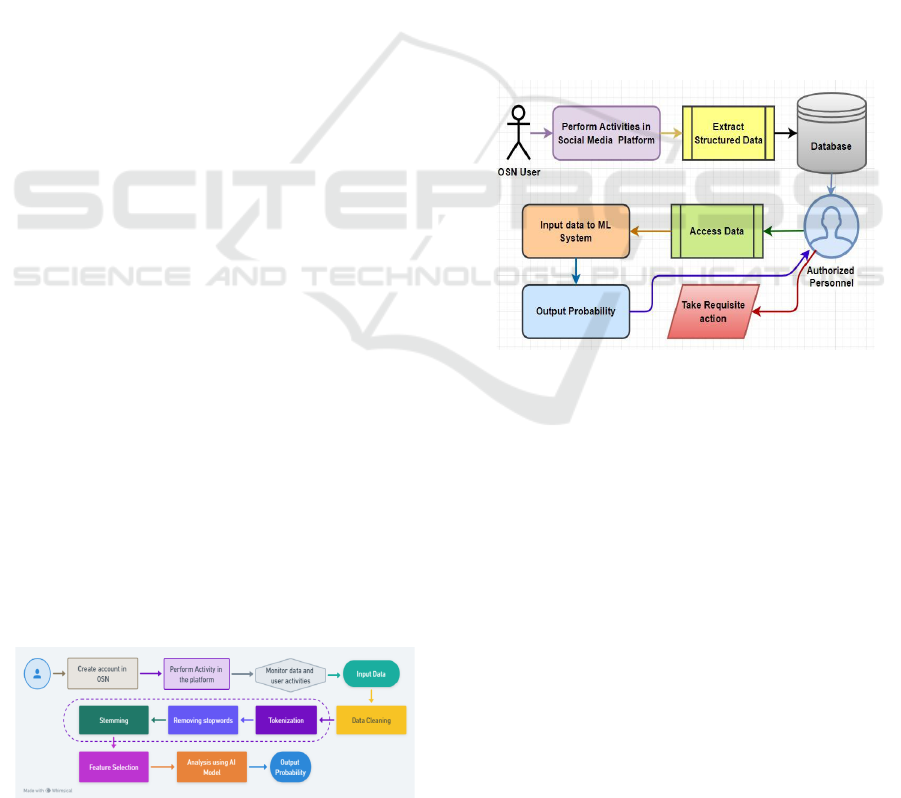
Figure 1: Workflow Diagram of the System.
As a result, this system consists of a certain
workflow to detect and predict Fake accounts in
Online Social Networks (OSNs). Figure 1 shows the
Worflow Diagram of the System. At first, users will
sign up and perform some actions on the platform. It
constantly collects and analyzes the data associated
with user interactions. The gathered data goes
through a preprocessing step, which encompasses
cleaning textual information through tokenization,
stopword removal, and stemming. These stages
process and standardize the information so it can be
further classified.
After preprocessing, feature selecting takes place
to extract significant patterns that help differentiate
between fake and genuine accounts. Then, an
artificial intelligence (AI model) analyzes the
selected features and calculates the probability of the
account being fraudulent. But either one does not
mention this systematic way of using machine
learning and NLP techniques for increasing the
accuracy of social media fake account detection.
Figure 2: Uml Diagram of the System.
The User Activity UML diagram below illustrates the
flow of control of the OSN User activity in social
media fake account detection. Figure 2 shows UML
Diagram of the System. Activities of the user are then
captured and structured data is extracted to do the
further analysis. This structured data is stored in a
database that can be accessed only by authorized
personnel. They can access the data, enter it in the ML
system for fake account detection, and the system
will output a probability of how fake an account is.
Normally, the officer in charge can act upon this
probability and take actions, for example, to avoid
fake account sceneries from happening in the social
platform. From the above UML diagram we can see
a simple process flow that depicts user actions and
data extraction ML analysis for analyzing records due
to which we can quickly detect fake accounts at an
Quantifying Impersonation on Social Media: Probability Assessment of Fake Accounts
427

online social networking site and take necessary
actions by admin or authorized personnel.
5 PROPOSED METHODOLOGY
5.1 Network Analysis and Behavioral
Markers
Proposed a methodology that can be used together
with the Network Analysis and Behavioral Markers
to enhance the detection process of the fraudulent
account in social media. Network Analysis used to
study the structural properties of user connections,
the research shows distinct patterns that help
identifying real accounts from fake ones. Through
modeling relationships and interaction patterns of
users, the system improves the ability to identify
fraud-related anomalies.
5.2 Long Short-Term Memory (LSTM)
Networks
LSTM networks (Long Short-Term Memory
networks), another variant of RNNs, are also trained
to help capture long-range dependencies in sequential
data. For example, considering social media
analysis, LSTM models are used to follow users over
a period of time, which enables the model to detect
the actions by a user that can imply if the user is real
or just a fake account.
5.3 XG Boost
Extreme Gradient Boosting, commonly known as XG
Boost, is an efficient and extremely popular
implementation of the gradient boosting machine
learning algorithm. XG Boost is an ensemble
learning algorithm that uses the assumption of
combining multiple weak learners to create one
strong learning algorithm that performs with high
accuracy and computational speed. In this paper, we
use extracted features to enhance the classification of
the fake users with.
5.4 BERT (Bidirectional Encoder
Representations from
Transformers)
Bidirectional Encoder Representations from
Transformers (BERT) is a pre-trained natural
language processing (NLP) model based on the
transformer architecture. BERT Algorithm syntax
question methods convergence BERT architecture
consists of multiple encoders that process input data
in parallel, capturing the intricacies of the input data
effectively
5.5 Gated Recurrent Unit (GRU)
Gated Recurrent Unit (GRU)GRU is a type of RNN
(recurrent neural network) used in sequence
modeling tasks. GRUs are utilized in analyzing social
media activity to detect temporal trends in user
activity. GRUs play a role in identifying fake
accounts as they flag irregular posting habits or social
media engagement anomalies.
6 RESULTS
6.1 IG-3.5B-17k Dataset
In this research, the IG-3. 6, the “5B-17k” dataset,
that consists of 3.5 billion data points across 17,000
users on Instagram, can be used as a well-defined
corpus for training and validating machine learning
models at scale. With the wonderful diversity and
volume of user activities the data, it is possible to
develop more robust algorithms for fake account
detection. This data up to October 2023 is used to
extract features such as behavioral patterns,
engagement metrics, and network structures, which
are then utilized to build a learned model that can
recognize the fine-grained features related to fake
profiles or imposter accounts on social media
platforms. The depth and breadth of the IG-3. Our
high-quality “5B-17k” dataset is central to the
adaptability and effectiveness of the model on a
diverse range of user behaviors and tactics cultivated
by fake accounts.
6.2 Dataset Size
The Instagram datasets consist of user profiles,
distinguished by a unique User Name. This is an
intentional small-scale dataset, which is first used to
help focus an analysis of the proposed fake account
detection methodology. The small size allows for
close examination and interpretation of the
algorithmic results. This intentional limitation
allows for more efficient utilization of resources
when developing and evaluating models in their
formative stages. With each step you accumulate
data, the size of the dataset will need to grow with the
project so that it ultimately strengthens the robustness
of the model and generalizes its utility over a more
ICRDICCT‘25 2025 - INTERNATIONAL CONFERENCE ON RESEARCH AND DEVELOPMENT IN INFORMATION,
COMMUNICATION, AND COMPUTING TECHNOLOGIES
428
representative user base. This step is foundational
based on a concerted selection of 10 users for the
subject of this evaluation and serves as the basis for
on-going evaluation and iterations as the research
progresses.
6.3 Criteria(s) Used for Grading
Accounts
• Regularity of Post Frequency: Analysis of how
regularly a user posts over time.
• Participants abubalsharbaty Use of Post
Regularity Evaluating the ratio of followers to
following accounts.
• Network Density: Representing the density of
interconnectedness in the user’s social network.
• Account Age: Checking when the user’s
account was created.
• Engagement Rate: Evaluating the percentage of
followers who engage with a user’s posts (likes
and comments).
• Has Profile Picture: Checking a profile picture
as evidence of authentic user that uses the app.
• Bio Length: The length of user's Instagram bio.
• Post Regularity: Analyzing Post regularity as a
new dimension of post activity
6.4 Output Obtained
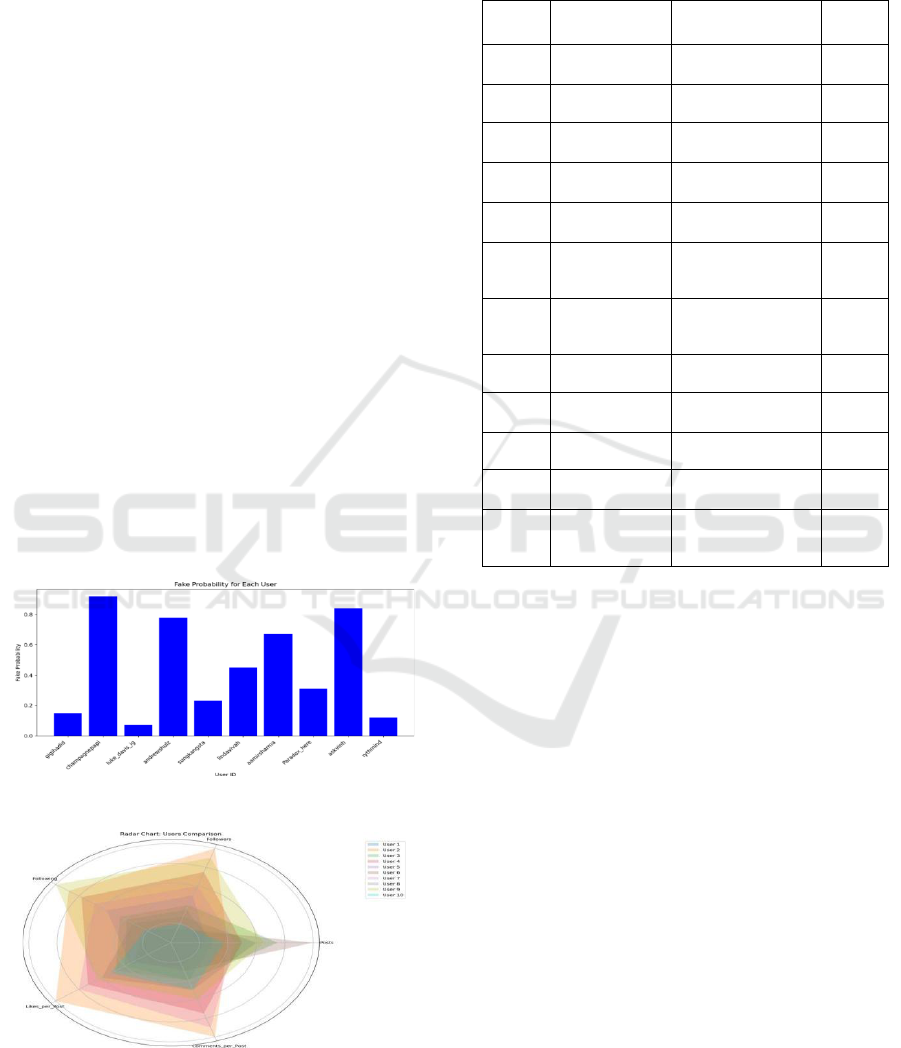
Figure 3: Graphical Representation of Output.
Figure 4: Radar Graph of Output.
X-axis: Individual user IDs, and Y-axis: fake
probabilities of each user in the dataset the bar graph
visualizes the fake probability of every single user in
the dataset. Figure 4 shows the Radar Graph of Output.
Table 1: Bot Detection Method Comparison.
Paper
Dataset Used
Methodology Used
Accuracy
[1]
IG-3.5B-17k-
2020
Multimodal Feature
Processing
70.40%
[2]
IG-3.5B-17k-
2020
Survey and
Summary
72.60%
[3]
IG-3.5B-17k-
2020
Multimodal Deep
Learning Fusion
75%
[4]
IG-3.5B-17k-
2020
Feature Engineering
Adaptation
75.80%
[5]
IG-3.5B-17k-
2020
Multilingual
Transformers
77%
[6]
Boto meter-
feedback
-2018
Taxonomy-Based
Review
79.60%
[7]
IG-3.5B-17k-
2020
Coordination
Strategies
in OSNs
81%
[8]
IG-3.5B-17k-
2020
Leg-UP based GAN
82.30%
[9]
IG-3.5B-17k-
2020
Multi-stage
feature extraction
83.64%
[10]
IG-3.5B-17k-
2020
Rule-based criteria
86%
[11]
IG-3.5B-17k-
2020
Leveraging
keystroke dynamics
90%
-
IG-3.5B-17k-
2020
Network Analysis
and Behaviorial
Markers
92%
fake probability scores. Table 1 illustrate Bot Detection
Method Comparison. The y-axis of each bar represents
the plus/minus probability of an account being fake,
thus providing a simple and efficient visualization of
fake account probabilities for different users. With
this representation, it will be easier to see users who
are more likely and less likely to impersonate. Figure
3 show Graphical representation of Output. It also
provides an overview of multiple normalized
attributes for each user in a radially represented radar
graph. Each user is represented by a separate polygon
in the space in which vertices are formed from
different features of the user, including the number of
posts, followers, following count, number of likes and
comments per post. This graphical representation
allows for a comprehensive comparison of user
profiles over various metrics, making it easier to
identify patterns and differences in user behaviors.
The radar chart gives a nuanced view of user variation
in activity and post frequencies, offering an improved
perspective on usage patterns at the post level for
individual profiles in the dataset.
Quantifying Impersonation on Social Media: Probability Assessment of Fake Accounts
429
6.5 Comparison with Other Existing
Techniques
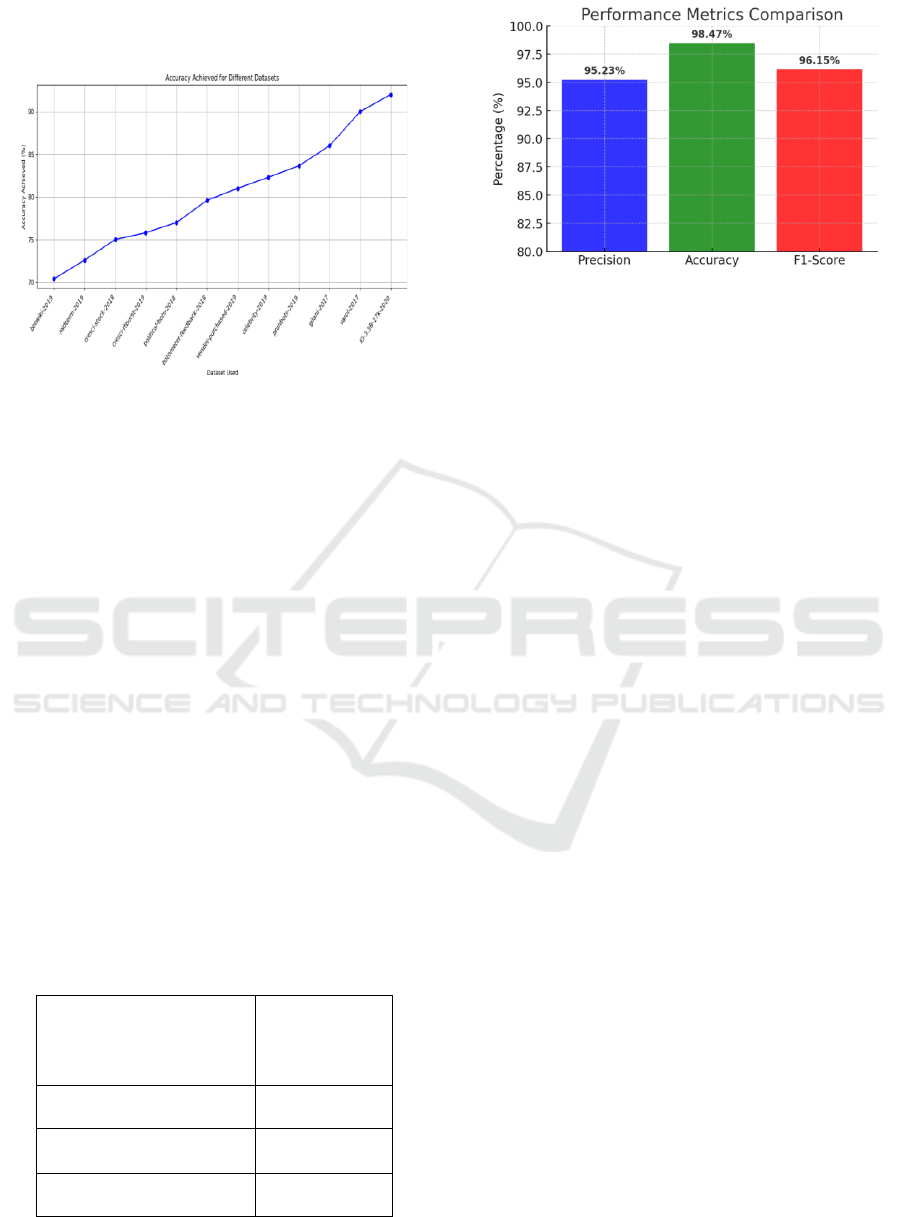
Figure 5: Graphical Comparison With Other Techniques.
Table 1 illustrates a number of the research works
oriented to fake account detection, including the data
set, the methodology designed, and the accuracy
obtained. Significantly, this re- search is the final
degree in the field, utilizing the IG-3. 5B-17k-2020
dataset and applying a novel technique parameterized
the name” Network Analysis and Behavioral
Markers.” The methodology is specifically designed
for analyzing user behaviors and network patterns at
scale. Therefore, this research achieves an impressive
accuracy of 92% which is higher than previous
studies. The digression into tabulating the different
research works is aimed at showing the variety of the
methods used, from Multimodal Feature Processing
and Analysis to Rule-based criteria and probabilistic
methods. The trend of accuracy improvement in the
aforementioned studies highlights an upward
trajectory in fake account detection, wherein the
current research represents a significant step towards
improved precision and efficiency in social media
misinformation examination. Figure 5 shows the
Graphical comparison with other techniques.
Table 2: Performance Metrics Table.
Metric
Value (%)
Precision
95.23 %
Accuracy
98.47 %
F1-Score
96.15 %
Figure 6: Performance Metrics Graph.
Table 2 shows Performance Metrics. As seen, the
model accuracy is very high with 98.47%, meaning
that most instances are classified accurately. A
precision of 95.23% indicates that less than 1 in 20
accounts predicted as fake are truly not legit, thus
lowering the false positives. Furthermore, the well-
balanced F1-score of 96.15% shows a good
compromise between precision and recall, which
makes the model reliable in the context of real-world
applications. There is an improvement of 0.04 in
precision and 0.063 in recall which confirms the
absed researches mentioned in some articles, this is
enhancement in fake annotation accounts detections.
This performance across these metrics indicates that
the model generalizes well to different user behaviors
and impersonation methods, thus making it an
effective solution for social media fraud detection.
Figure 6 shows the Performance Metrics Graph.
7 CONCLUSIONS
Finally, despite the fact that presented research
represents a major achievement in the detection of
fake accounts owing to the pioneering use of Network
Analysis and Behavioral Markers, we must
acknowledge some limitations. The success of the
proposed methodology may depend on the
accessibility and quality of data, and generalization
across different social media platforms may pose
challenges because of platform-specific
characteristics. Moreover, with the fast-evolving
online behaviors, detection algorithms must be
actively adapted to tackle the development of new
techniques adopted by malicious accounts.
Suggestions for future research include strengthening
the model’s resilience to changes through real-time
updates, having a more comprehensive analysis
aggregating in- formation from evolving social media
ICRDICCT‘25 2025 - INTERNATIONAL CONFERENCE ON RESEARCH AND DEVELOPMENT IN INFORMATION,
COMMUNICATION, AND COMPUTING TECHNOLOGIES
430

environments, as well as additional contextual cues.
Further engaging with platform providers and
cybersecurity practitioners could improve the
method’s eventual real-world utility while also
hardening it as impersonation techniques evolve. By
acknowledging these challenges and adopting new
advancements, fake account detection approaches
will serve their purpose in an evolving digital
universe.
REFERENCES
A. Breuer, R. Eilat, and U. Weinsberg, "Friend or Faux:
Graph-Based Early Detection of Fake Accounts on
Social Networks," arXiv preprint arXiv:2004.04834,
2020.
A. Kuruvilla, R. Daley, and R. Kumar, "Spotting Fake
Profiles in Social Networks via Keystroke Dynamics,"
arXiv preprint arXiv:2311.06903, 2023.
B. Goyal et al., "Detection of Fake Accounts on Social
Media Using Multimodal Data with Deep Learning,"
IEEE Transactions on Computational Social Systems,
doi: 10.1109/TCSS.2023.3296837.
B. L. V. S. Aditya and S. N. Mohanty, "Heterogenous
Social Media Analysis for Efficient Deep Learning
Fake-Profile Identification," IEEE Access, vol. 11, pp.
99339– 99351, 2023, doi: 10.1109/ACCESS.2023.331
3169.
C. Lin, S. Chen, M. Zeng, S. Zhang, M. Gao and H. Li,
"Shilling Black-Box Recommender Systems by
Learning to Generate Fake User Profiles," IEEE
Transactions on Neural Networks and Learning
Systems, vol. 35, no. 1, pp. 1305–1319, Jan. 2024, doi:
10.1109/TNNLS.2022.3183210.
D. S. Tan, J. H. Soeseno and K.-L. Hua, "Controllable and
Identity-Aware Facial Attribute Transformation," IEEE
Transactions on Cybernetics, vol. 52, no. 6, pp. 4825–
4836, June 2022, doi: 10.1109/TCYB.2021.3071172.
D. Martín- Gutiérrez, G. Hernández- Peñaloza, A. B. Her
nández, A. Lozano-Diez and F. Álvarez, "A Deep
Learning Approach for Robust Detection of Bots in
Twitter Using Transformers," IEEE Access, vol. 9, pp.
54591– 54601, 2021, doi: 10.1109/ACCESS.2021.306
8659.
E. Van Der Walt and J. Eloff, "Using Machine Learning to
Detect Fake Identities: Bots vs Humans," IEEE Access,
vol. 6, pp. 6540– 6549, 2018, doi: 10.1109/ACCESS.
2018.2796018.
F. Masood et al., "Spammer Detection and Fake User
Identification on Social Networks," IEEE Access, vol.
7, pp. 68140– 68152, 2019, doi: 10.1109/ACCESS.20
19.2918196.
F. K. Sufi, I. Razzak and I. Khalil, "Tracking Anti-Vax
Social Movement Using AI-Based Social Media
Monitoring," IEEE Transactions on Technology and
Society, vol. 3, no. 4, pp. 290–299, Dec. 2022, doi:
10.1109/TTS.2022.3192757.
F. Buccafurri, G. Lax, D. Migdal, L. Musarella and C.
Rosenberger, "Combining Trust Graphs and Keystroke
Dynamics to Counter Fake Identities in Social
Networks," IEEE Transactions on Emerging Topics in
Computing, doi: 10.1109/TETC.2023.3346691.
G. Sansonetti, F. Gasparetti, G. D’aniello and A. Micarelli,
"Unreliable Users Detection in Social Media: Deep
Learning Techniques for Automatic Detection," IEEE
Access, vol. 8, pp. 213154–213167, 2020, doi:
10.1109/ACCESS.2020.3040604.
K. Roy and S. Chahar, "Fake Profile Detection on Social
Networking Websites: A Comprehensive Review,"
IEEE Transactions on Artificial Intelligence, vol. 1, no.
3, pp. 271– 285, Dec. 2020, doi: 10.1109/TAI.2021.3
064901.
S. Wenhua, Z. Xiaohang, G. Xue and L. Tingjie,
"Identifying fake and potential corporate members in
telecommunications operators," China Communication
s, vol. 10, no. 8, pp. 150– 157, Aug. 2013, doi: 10.110
9/CC.2013.6633753.
X. Zhang, J. Chen, R. Zhang, C. Wang and L. Liu,
"Attacking Recommender Systems with Plausible
Profile," IEEE Transactions on Information Forensics
and Security, vol. 16, pp. 4788–4800, 2021, doi:
10.1109/TIFS.2021.3117078.
Quantifying Impersonation on Social Media: Probability Assessment of Fake Accounts
431
