
Evaluating the Effectiveness of Health Disease Prediction Using
Ensemble Learning
A. A. Babar, R. V. Argiddi and M. A. Mahant
Department of Computer Science and Engineering, Walchand Institute of Technology, Solapur, Maharashtra, India
Keywords: Machine Learning, NLP, Disease Prediction, Chatbot.
Abstract: In today's world, the healthcare sector is vast and faces numerous challenges, especially in rural areas where
access to timely and affordable medical consultations is often limited. High costs, time constraints, and a
shortage of healthcare professionals in remote regions hinder early disease detection, diagnosis, and treatment,
which can lead to serious health complications. Recent advancements in technology have opened up new
possibilities for innovative solutions, including healthcare chatbots. However, current chatbot systems
encounter issues such as inaccurate predictions, a lack of contextual understanding, limited adaptability to
user preferences, and concerns about data privacy. The proposed system aims to tackle these challenges by
utilizing advanced NLP and ML algorithms to develop an intelligent healthcare chatbot capable of real-time
disease prediction. By assessing user symptoms, medical history, and lifestyle factors, the chatbot can offer
preliminary diagnoses, personalized health recommendations, and guide users to appropriate medical
consultations. This system provides immediate assistance, alleviates the burden on healthcare professionals,
and enhances patient care management by effectively distinguishing between critical and non-critical cases.
1 INTRODUCTION
A chatbot system is basically a smart piece of
software that’s designed to have conversations with
users in a way that feels natural. It combines Artificial
Intelligence (AI), Machine Learning (ML), and
Natural Language Processing (NLP) to create
automated chats. In healthcare, getting timely
diagnoses and early interventions is key to managing
diseases effectively. However, traditional doctor
visits can often be slow, expensive, and sometimes
hard to access due to location or resource issues. To
tackle these problems, this study introduces a disease
prediction chatbot that uses NLP and ML algorithms
to evaluate user symptoms, medical history, and
lifestyle choices. It offers initial diagnostic insights
and guidance on when to seek further medical help.
The goal of the chatbot is to boost early disease
detection, make healthcare more accessible for
patients, lighten the load on medical professionals,
and encourage preventive care through proactive
health monitoring. This research looks into how
effective AI-driven chatbots are at predicting
diseases, assesses the performance of ML models in
real-time health evaluations, and examines their
influence on patient engagement and healthcare
access. By automating initial health assessments, the
proposed chatbot aims to streamline healthcare
delivery, empower individuals with self-care tools,
and support early disease detection to enhance overall
health outcomes.
2 RELATED WORKS
In this section, detailed review of research papers is
discussed.
Kulkarni et. al (2020). In this paper, the research
introduces studies on the elements of natural language
understanding, dialogue management, and natural
language generation in conversational AI agents,
while also pointing out potential future directions for
the field of Conversational AI.
Wang et.al (2020). In this paper, the research
introduces a chatbot focused at tracking and
evaluating the mental health of women during the
perinatal period. The research uses supervised
machine learning algorithms to analyze 31 features
from 223 samples, designing a model to evaluate
Babar, A. A., Argiddi, R. V. and Mahant, M. A.
Evaluating the Effectiveness of Health Disease Prediction Using Ensemble Learning.
DOI: 10.5220/0013883500004919
Paper published under CC license (CC BY-NC-ND 4.0)
In Proceedings of the 1st International Conference on Research and Development in Information, Communication, and Computing Technologies (ICRDICCT‘25 2025) - Volume 2, pages
389-397
ISBN: 978-989-758-777-1
Proceedings Copyright © 2025 by SCITEPRESS – Science and Technology Publications, Lda.
389

anxiety, depression, and hypomania levels in this
group. Additionally, psychological test scales are
included to assist in the evaluation process and
provide treatment recommendations aimed at
enhancing user’s mental well-being.
Ayanouz et.al (2020). In this paper, the research
introduces the key Deep learning models and a useful
architecture for developing an efficient chatbot for
healthcare support are two AI ideas required to create
an intelligent conversational agent.
Raina et.al (2022). In this paper, the research
introduces the architecture for a cloud, edge, and fog
computing-based intelligent and interactive
healthcare system that places a major focus on speech
recognition and its many interactive system
applications. Speech's accessibility and capacity to
identify psychological as well as physical distress are
the main drivers behind its integration into healthcare.
After all, human speech is the most natural form of
communication. The proposed method employs the
Hidden Markov Model, as this probabilistic approach
is particularly effective for making predictions.
Abdeen et.al (2022). In this paper, the research
introduces the possibilities of implementing smart
health systems by integrating advanced technologies
such as IoT, AI, cloud computing, and big data
analytics. It presents a detailed, multi-layered
architecture that encompasses various components
for collecting, processing, storing, and making
decisions based on data. Sensors and wearable
devices capture real-time health information, which is
then transmitted to cloud platforms for analysis using
AI algorithms. The system leverages machine
learning models to identify anomalies, predict
diseases, and provide personalized healthcare
recommendations.
Priya G et.al (2019). In this paper, the research
introduces an innovative healthcare system that
merges a wearable device with a smartphone. It
leverages machine learning to monitor vital signs like
heart rate and body temperature, while also keeping
tabs on mood and physical activities. By gathering
user data through sensors and analyzing it via a
mobile app, the system offers personalized health
recommendations, thanks to the power of natural
language processing (NLP) and advanced machine
learning algorithms.
Kandpal et.al (2020) In this paper, the research
introduces Neural networks have been used to
analyze data and create various tools that improve our
results. This chatbot combines principles of Natural
Language Processing with Deep Learning to enhance
outcomes.
AHMAD et.al (2023). In this paper, the research
introduces the ongoing COVID-19 pandemic has
highlighted the critical need for improved
telemedicine and virtual care systems. These cutting-
edge solutions can provide essential healthcare
services remotely to a broader range of patients,
including those with common illnesses, the elderly,
individuals with disabilities, and those with mild
COVID-19 symptoms.
CHAKRABORTY et.al (2022). In this paper, the
research introduces an innovative AI-powered
medical chatbot designed to predict infectious
diseases by leveraging natural language processing
(NLP) and machine learning. This model takes in
symptoms provided by users, analyzes them with a
trained classifier, and forecasts potential diseases. By
utilizing deep learning techniques, the accuracy of
these predictions is significantly improved. Plus, the
chatbot features a user-friendly interface that ensures
smooth interaction. To assess the model's
performance, metrics like accuracy, precision, recall,
and F1-score are used.
Athota et.al (2020). In this paper, the research
introduces a medical chatbot powered by Artificial
Intelligence can help diagnose diseases and offer
important information about them before a patient
sees a doctor. This approach seeks to lower healthcare
expenses and increase access to medical information
through chatbot utilization. These computer
programs, known as chatbots, communicate with
users using natural language and maintain a database
to identify keywords in sentences, which aids in
making decisions about queries and providing
answers. The system uses techniques like n-gram
analysis, TF-IDF, and cosine similarity to rank and
assess sentence similarity. Each input sentence is
given a score, enabling the chatbot to deliver more
relevant responses. If the bot encounters a question, it
cannot comprehend or find in its database, a third-
party expert program will step in to address it.
K. Oh et.al (2017) In this paper, the research
introduces on classifying emotions using AI
techniques. They concentrate on creating models for
emotion classification by utilizing large labeled
datasets, employing recurrent neural networks
(RNN), deep learning methods, and convolutional
neural networks. In counseling, effective
communication plays a crucial role, utilizing natural
language processing (NLP) and natural language
generation (NLG) to comprehend user interactions. A
multi- modal approach to emotion recognition is
implemented, with corpora collected to learn the
semantic information of words, which are then
ICRDICCT‘25 2025 - INTERNATIONAL CONFERENCE ON RESEARCH AND DEVELOPMENT IN INFORMATION,
COMMUNICATION, AND COMPUTING TECHNOLOGIES
390

represented as vectors using word vectors and
synonym knowledge from the lexicon.
Du Preez et.al (2009) In this paper, the research
introduces the creation of a chatbot with voice
recognition. Third-party expert systems are used to
further process questions that the bot is unable to
understand. Web bots are designed to act as web
friends, engaging users through text and
entertainment. The research focuses on enhancing a
system that is not only text- based but also equipped
for voice interaction. A two- part process is necessary
for voice recognition, which involves capturing and
analyzing input signals. This includes identifying and
processing the data from server answers. The server
uses SOAP and runs on a black box methodology. An
expert system can be used to increase intelligence in
an infinitely flexible and independent way.
Bayu Setiaji et.al (2016). In this paper, the
research introduces the chatbot is created to enhance
interactions between people and machines. It uses a
knowledge database to assess sentences and generate
suitable replies. The input sentences are compared for
similarity through bigram analysis. The chatbot's
information is kept in a relational database
management system (RDBMS).
Rashika Raina et.al (2022). In this paper, the
research introduces an Intelligent and Interactive
Healthcare System (I²HS) that integrates speech
recognition and machine learning within a framework
leveraging edge, fog, and cloud computing to deliver
efficient and scalable healthcare services. Utilizing
Hidden Markov Models (HMMs) for speech
recognition, the system evaluates both physical and
psychological health conditions by prioritizing tasks
based on data rates: text processing is handled at the
edge, voice processing in the fog, and video
management in the cloud. By implementing a Cloud
Radio Access Network (C-RAN), the system
centralizes processing, reduces latency, and enhances
energy efficiency. This approach incorporates
advanced feature extraction techniques, resource
allocation strategies, and robust security protocols to
ensure real-time processing, data privacy, and
effective healthcare delivery.
Ayain John et.al (2023). In this paper, the research
introduces Chatbots are designed to imitate human
conversation, enhancing user experience and
providing entertainment. Recent advancements in
Natural Language Processing (NLP) and Artificial
Intelligence (AI) have greatly enhanced chatbots'
ability to engage in more natural and fluid
conversations. As mobile device usage increases and
people rely more on texting and messaging, chatbots
can effectively deliver customer support and services.
Mark Lawrence et.al (2024). In this paper, the
research introduces implementation of a healthcare
chatbot system that utilizes AI to provide efficient
and personalized medical assistance. By utilizing
libraries such as Pandas, NumPy, Sklearn, and
gensim, machine learning algorithms enhance the
accuracy of disease predictions and the relevance of
the suggested solutions. Evaluation results provide a
high level of accuracy in predicting diseases and the
suitability of the provided solutions. Ethical
considerations, such as data privacy and user trust, are
considered, marking an important advancement in
enhancing healthcare accessibility and paving the
way for future innovations in AI-driven healthcare
services.
The reviewed literature highlights various
approaches to integrating AI and machine learning in
healthcare chatbots. However, existing studies are
often concentrated either on the prediction of
diseases, the assessment of mental health or the
interaction of a chatbot, without a single structure that
effectively unites these aspects. To overcome this
gap, this study is aimed at developing a healthcare
chat, which integrates several machine learning
algorithms for accurate prediction of the disease
based on user symptoms, increasing diagnostic
reliability and involving users.
2.1 Objectives
The main objective of this proposed system is to
develop a remote disease prediction tool. This system
is becoming increasingly popular and accurate,
offering numerous advantages such as ease of use,
cost-effectiveness, rapid and reliable decision support
for medical diagnostics, and help in the treatment and
prevention of diseases.
2.2 Problem Statement
The growing need for accessible and effective
healthcare services underscores the importance of
innovative solutions that help patients recognize
potential health issues. This proposed system seeks to
create an AI-powered chatbot for disease prediction,
utilizing machine learning (ML) and natural language
processing (NLP) to evaluate patient symptoms and
deliver an initial health assessment. The chatbot will
serve as a virtual health assistant, enabling users to
describe their symptoms through a conversational
interface. It will process the information gathered,
Evaluating the Effectiveness of Health Disease Prediction Using Ensemble Learning
391
match it against a medical knowledge base, and
suggest possible conditions. Furthermore, it will
provide guidance on the next steps for recovery, such
as consulting a healthcare professional, considering
self-care options, or pursuing additional diagnostic
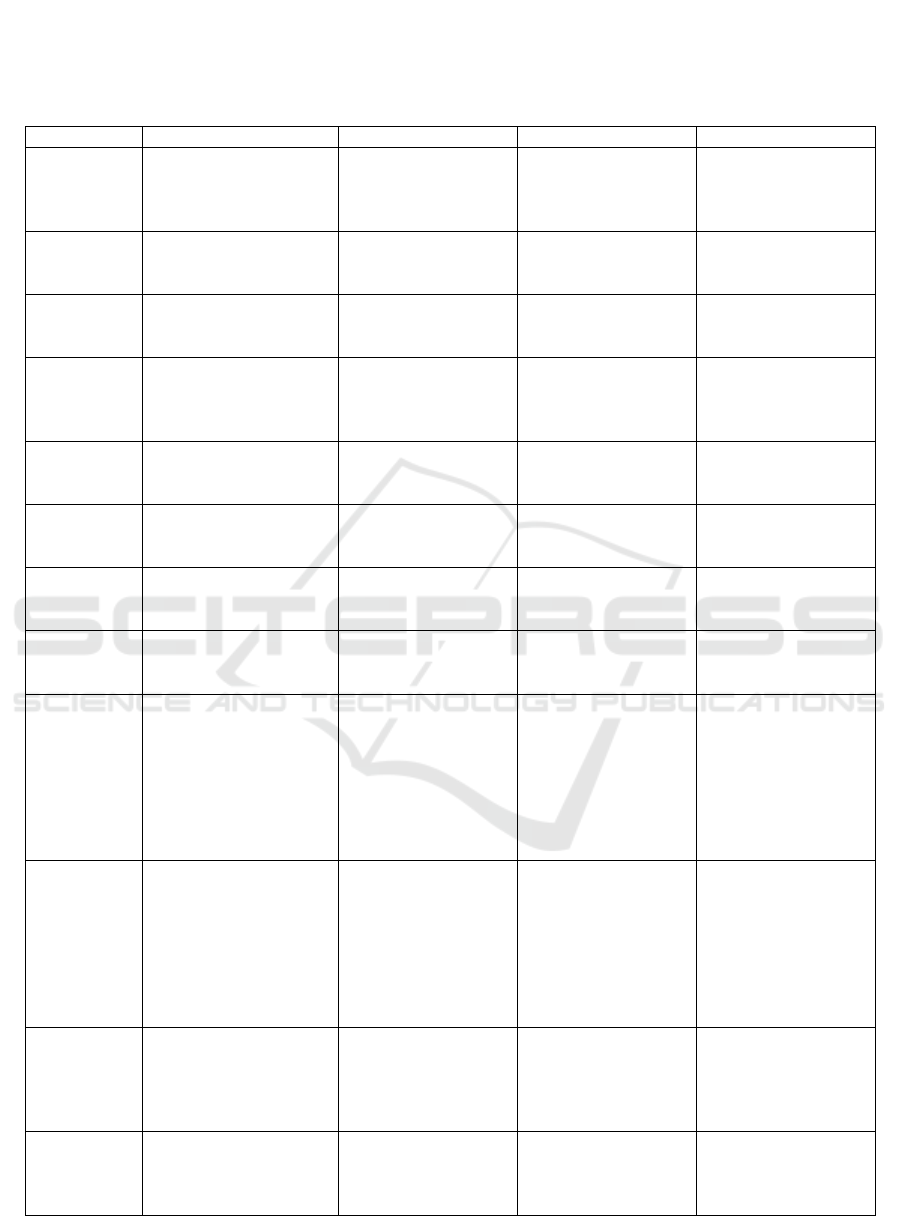
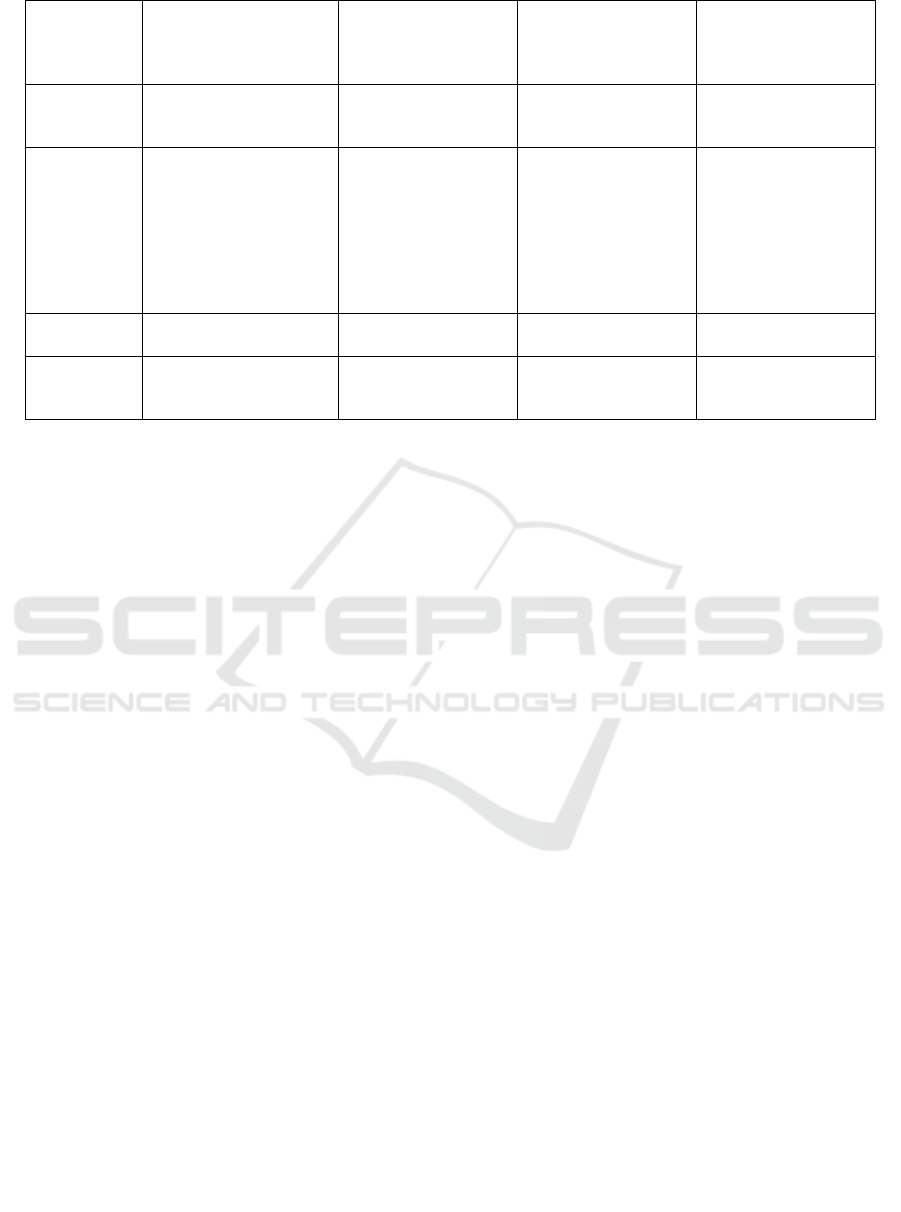
tests. Table 1 shows summary of literature.
Table 1: Literature Summary.
Ref. Technolo
gy
Stac
k
Advanta
g
es Disadvanta
g
es Future Sco
p
e
Kulkarni et
al. (2020)
Natural Language
Processing (NLP) and
AI-based dialogue
systems
Covers key elements
of conversational AI
Lacks practical
implementation and
evaluation
Enhancing AI-driven
dialogue
management
Wang et al.
(2020)
Supervised ML for
mental health tracking
Effective in
evaluating perinatal
mental health
Limited dataset (223
samples), potential
b
ias
Expanding dataset
and improving
p
rediction accurac
y
Ayanouz et
al. (2020)
Deep learning models
for healthcare chatbots
Provides an efficient
chatbot framework
Lacks real-world
deployment results
Testing in real
healthcare
environments
Raina et al.
(2022)
Edge, fog, and cloud
computing with Hidden
Markov Models
(HMMs)
Focuses on real-time
speech recognition
High computational
cost
Optimization for
resource-constrained
devices
Abdeen et al.
(2022)
Review of smart health
systems
Highlights AI and
ML in healthcare
Identifies challenges
but lacks practical
solutions
Developing solutions
for AI integration in
healthcare
Priya G et al.
(2019)
Literature review on
smart health systems
Highlights BANs and
remote monitoring
Lacks experimental
validation
Practical
implementation and
case studies
Kandpal et
al. (2020)
Neural networks for
chatbot enhancement
Improves chatbot
interaction
Lacks integration
with healthcare
systems
Integrating NLP with
healthcare databases
Ahmad et al.
(2023)
Telemedicine and
virtual care systems
Supports remote
healthcare access
Privacy and security
concerns
Enhancing data
security in
telemedicine
Chakraborty
et al. (2022)
AI-based medical
chatbots
Assist users anytime,
reducing dependency
on healthcare
professionals for
initial diagnosis.
The accuracy can be
limited: It might not
always deliver
precise predictions,
particularly when it
comes to complex or
uncommon diseases.
Advanced AI
Models: Using deep
learning and
transformer-based
models (e.g., GPT) to
improve prediction
accuracy.
Athota et al.
(2020)
AI-based chatbot with
NLP techniques
Automates minor
health consultations,
reducing the need for
frequent doctor visits.
Lacks adaptive
learning capabilities
Integration of voice-
based interaction for
better user
experience.
Enhancement with
deep learning for
improved contextual
understandin
g
.
K. Oh et al.
(2017)
Emotion classification
using deep learning
Utilizes multi-modal
data (text, voice,
video, sensor inputs)
for emotion
recognition.
Accuracy depends on
the training dataset
and multi-modal
recognition quality.
Integration with
wearable devices for
more accurate
emotion detection.
Du Preez et
al. (2009)
Voice recognition
chatbot with expert
system
Provides both text
and voice-based
interactions for
accessibilit
y
.
Requires significant
processing power for
real-time voice
reco
g
nition.
Integration with
mobile and IoT
devices for broader
accessibilit
y
.
ICRDICCT‘25 2025 - INTERNATIONAL CONFERENCE ON RESEARCH AND DEVELOPMENT IN INFORMATION,
COMMUNICATION, AND COMPUTING TECHNOLOGIES
392
Uses a self-learning
AI module to
improve responses
over time.
Dependent on third-
party expert systems,
which may limit
lon
g
-term viabilit
y
.
Development of
context-aware AI to
improve chatbot
intelli
g
ence.
Setiaji et al.
(2016)
Rule-based chatbot
using RDBMS
Simple
implementation
Limited
conversational ability
Integrating deep
learning for better
res
p
onses
Rashika
Raina et al.
(2022)
Speech recognition
with cloud-fog-edge
computing
Improves response
time through
edge/fog/cloud
computing.
Energy-efficient
design through C-
RAN and optimized
resource allocation.
Requires large
datasets for training
speech recognition
models.
Latency issues may
arise in cloud-based
processing.
Integration of
reinforcement
learning to improve
chatbot intelligence.
Expansion to
multiple languages
and regional dialects.
Ayain John
et al. (2023)
AI-powered chatbots
with NLP
Improved chatbot-
human interaction
Lacks domain-
specific optimization
Developing
specialized chatbots
Mark
Lawrence et
al. (2024)
AI-driven healthcare
chatbot with ML
algorithms
High accuracy in
disease prediction
Ethical concerns,
data privacy issues
Strengthening ethical
AI frameworks
3 METHODOLOGY
3.1 Data Collection
The dataset will consist of patient symptoms and their
corresponding disease diagnoses to aid in the
development of predictive models. It will feature
symptoms as attributes and the relevant diseases as
labels. Each row will represent a patient case with
various symptoms as attributes.
• Symptom Attributes: The dataset will
include 132 columns for symptoms, each
indicating a specific symptom such as
‘fever’, ‘cough’, or ‘nausea’. These will be
encoded in binary format (1 for presence, 0
for absence).
The final column (prognosis) will contain the disease
label (predicted disease).
3.2 Data Preprocessing
Data preprocessing will involve the following steps:
Data Cleaning: Addressing missing values through
imputation methods, such as replacing absent
symptoms with None or using statistical values.
Ensuring that records are unique to avoid bias and
standardizing symptom names (e.g., changing “high
fever” to “fever”).
• Symptom Encoding: Transforming textual
symptoms into numerical formats using
techniques like One-Hot Encoding or Label
Encoding (e.g., cold represented as [1, 0, 0,
0]).
• Data Balancing: Implementing SMOTE
(Synthetic Minority Over-sampling
Technique) or adjusting class weights to
manage imbalanced datasets.
• Feature Engineering: Improving symptom
representation by grouping related
symptoms (e.g., combining fever and rash to
assign a higher weight for dengue).
• Text Preprocessing: Tokenization: Breaking
down sentences into individual words.
• Stopword Removal: Removing common
words such as “the,” “and,” and “is.”
• Lemmatization/Stemming: Reducing words
to their base forms (e.g., converting fevers to
fever).
• Data Splitting: Dividing the dataset into
three parts: Training Set (70%) – This
portion is utilized for training the model.
Validation Set (15%) – This segment is used
for adjusting hyperparameters. Test Set
(15%) – This part is reserved for evaluating
the model's performance.
The system architecture for disease prediction using
machine learning consists of several key components
and processes that work together for disease
prediction as shown below in figure 1.
Evaluating the Effectiveness of Health Disease Prediction Using Ensemble Learning
393
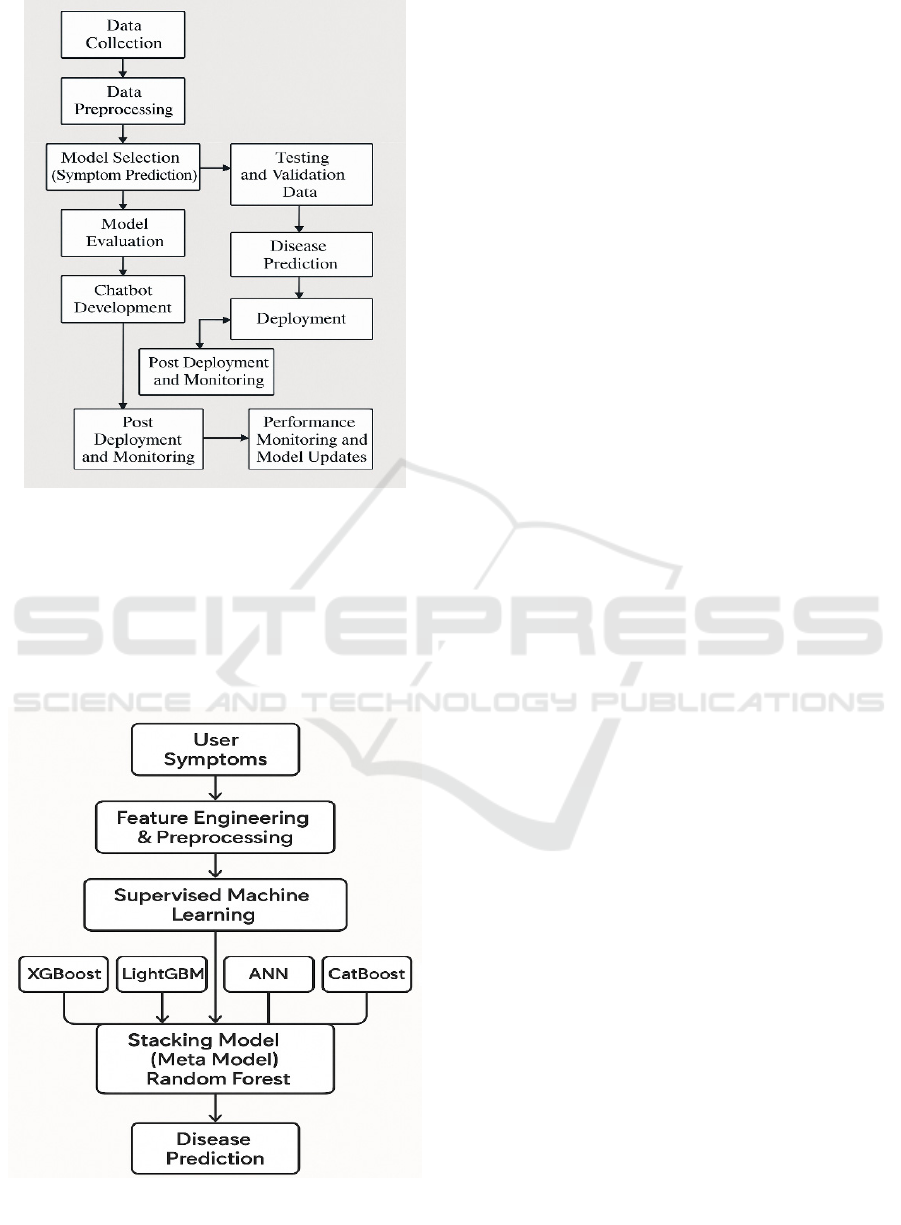
Figure 1: System Architecture Diagram for Disease
Prediction Using Machine Learning.
3.3 Model Selection (Symptom
Prediction)
Figure 2 shows the Advanced Supervised Machine
Learning Algorithms will be utilized for disease
prediction:
Figure 2: Model Selection Process for Disease Prediction
Using Advanced Machine Learning Algorithms.
3.3.1 Extreme Gradient Boosting (XGBoost)
• Input: Feature vectors that represent user
symptoms.
• Model: XGBoost employs gradient
boosting trees to manage complex
relationships and enhance accuracy.
XGBoost uses decision trees and gradient
boosting to examine symptom patterns. By
consistently improving its predictions to
minimize errors, it reaches a high degree of
accuracy in diagnosing diseases based on
the symptoms given.
• Output: Prediction of disease labels.
• Advantages: Efficient computation, strong
handling of missing values, and high
accuracy.
3.3.2 Light Gradient Boosting Machine
(LightGBM)
• Input: Feature vectors that represent user
symptoms.
• Model: LightGBM uses a histogram-based
method to segment data, significantly
speeding up the training process. This
technique efficiently manages large
symptom datasets while maintaining high
prediction accuracy, making it well-suited
for real-time disease detection.
• Output: Prediction of disease labels.
• Advantages: Faster than traditional
boosting algorithms and effective with
large datasets.
3.3.3 Artificial Neural Networks (ANNs)
• Input: Feature vectors that represent user
symptoms.
• Model: A deep learning model with
several hidden layers is used to capture
non-linear relationships in symptoms. It
simulates the human brain through a
network of interconnected neurons. This
model identifies hierarchical patterns in
symptoms, effectively capturing the
intricate, non-linear relationships between
symptoms and diseases, resulting in highly
accurate predictions.
• Output: Prediction of disease labels.
• Advantages: High accuracy for complex
datasets and the ability to learn
hierarchical feature representations.
ICRDICCT‘25 2025 - INTERNATIONAL CONFERENCE ON RESEARCH AND DEVELOPMENT IN INFORMATION,
COMMUNICATION, AND COMPUTING TECHNOLOGIES
394

3.3.4 CatBoost
• Input: Feature vectors that represent user
symptoms.
• Model: A boosting algorithm designed
specifically for categorical data that
automatically manages missing values and
categorical symptom features. This
approach minimizes the need for extensive
preprocessing and enhances prediction
stability for medical datasets.
• Output: Prediction of disease labels.
• Advantages: Performs well with
categorical data and automatically
manages missing values.
3.3.5 Stacking Model
• Input: Predictions from various supervised
learning base models (XGBoost,
LightGBM, ANN, CatBoost).
• Model: Stacking model combines
predictions from XGBoost, LightGBM,
ANN, and CatBoost, using a meta-learner
Random Forest to make the final decision.
By leveraging the strengths of different
models, it reduces bias and improves the
accuracy of disease classification.
• Output: Disease prediction.
• Advantages: Enhances model performance
by utilizing the strengths of different
models and minimizing bias.
3.3.6 Natural Language Processing (NLP)
Model for Symptom Text Input
• Input: Unstructured symptom descriptions
provided by users. Model: The BERT
(Bidirectional Encoder Representations
from Transformers) model analyzes free-
text symptom descriptions by
understanding the context and identifying
relevant symptoms. It converts
unstructured text into structured feature
vectors, allowing the chatbot to engage
naturally with users and accurately predict
diseases based on their input.
• Output: Disease prediction based on the
textual input. Advantages: Allows for free-
text symptom input, enhancing chatbot
interaction.
3.4 Chatbot Development
An interactive chatbot will be created for gathering
symptoms and predicting diseases:
• Platform Selection the chatbot will be
developed using Flask or FastAPI for the
backend, with the capability to integrate into
web applications or mobile interfaces.
• Natural Language Processing (NLP) for User
Interaction Text Preprocessing: Tokenization,
Lemmatization, Stopword Removal.
• Intent Recognition: Classifying user
input into specific categories (e.g.,
symptom input, request for diagnosis).
Symptom Synonym Handling:
• Mapping various symptom expressions
to standard medical terminology (e.g.,
“hot body” → “fever”).
• Entity Extraction: o Identifying
symptoms from user text input (e.g., “I
have a cold and cough” → Entities:
cold, cough).
• Dialogue Management
• Symptom Collection: Initial Greeting:
“I’m your health assistant. Please
describe your symptoms.”
• Parsing Symptoms: Extracting
symptoms using NLP techniques.
• Asking Follow-Up Questions: “If fever
is identified, do you also have chills or
sweating?”
• Confirmation: “You’ve mentioned cold
and cough. Are there any other
symptoms?”
• Decision Flow for Disease Prediction
• If the chatbot gathers enough symptoms,
it will move forward with predicting the
disease.
• If the symptoms are not enough, it will
keep asking for more details.
• Integration with Machine Learning Model
• The chatbot will send the gathered
symptoms to the Stacking Model for
disease prediction.
• The model will provide the predicted
disease along with recommendations
(e.g., “You may have the flu. Please see
a doctor for confirmation.”).
When a patient informs the chatbot, "I have a
fever, cough, and sore throat," the chatbot uses a
BERT-based NLP model to analyze the input,
identify the symptoms, and organize them in a
Evaluating the Effectiveness of Health Disease Prediction Using Ensemble Learning
395

structured manner. This structured data goes through
preprocessing steps, which include encoding,
addressing any missing values, and feature
engineering. The processed input will then be sent to
various machine learning models (XGBoost,
LightGBM, ANN, and CatBoost), each making its
own prediction. The results are combined using a
stacking model, with Random Forest serving as the
meta-learner to produce the final disease prediction,
such as Influenza (Flu). After this, the chatbot
responds to the patient: You may have Influenza.
Please consult a doctor for confirmation and
treatment.
4 ADVANTAGES OF PROPOSED
SYSTEM
Accessibility and Convenience: The healthcare
chatbot is available for 24/7, enabling users to seek
advice at any time without waiting for healthcare
professionals and it can be accessed using multiple
platforms, such as websites, mobile apps.
Early Detection and Prevention of disease: This
chatbot system encourages early detection and
prevention of diseases by prompting users to report
symptoms quickly. This helps in identifying potential
health issues early on and assists users in recognizing
when they should consult a healthcare professional,
potentially preventing complications.
Personalized User Interaction: Regarding
personalized user interaction, the chatbot gathers and
analyzes user-specific symptoms, offering disease
predictions based on those symptoms and follow-up
questions tailored to the initial responses. This results
in a more engaging and interactive experience for
users.
Scalability: The Chatbot system can handle
thousands of users concurrently, making it suitable
for large-scale implementations such as hospitals or
public health services and it also easily updatable
with new disease data or improved machine learning
models.
5 CONCLUSIONS
Creating a chatbot that can predict diseases in
healthcare is a major leap toward making medical
advice more accessible and boosting patient
engagement. By tapping into cutting-edge
technologies like natural language processing,
machine learning, and smart data integration, this
chatbot can become an invaluable resource for
spotting potential health issues early. This means
faster interventions, less strain on healthcare
facilities, and empowering people to take charge of
their health. However, it’s crucial to remember that
these chatbots aren’t a replacement for professional
medical advice; they’re meant to assist healthcare
professionals and offer initial insights. To ensure
they’re accurate, reliable, and trustworthy, it’s
essential to have ongoing updates, thorough testing,
and strict adherence to data privacy regulations.
While the potential is thrilling, this study does
encounter some limitations, which can be divided into
theoretical and practical challenges. Theoretical
limitations include algorithm accuracy, where the
success of predictions hinges on machine learning
models that might produce false positives or
negatives, necessitating further refinement; data bias
and generalizability, as training datasets can
introduce biases that lead to inaccurate predictions for
underrepresented groups; and contextual
understanding, where natural language processing
models may struggle with complex medical
conditions or nuanced patient descriptions, resulting
in misunderstandings. On the practical side, there are
regulatory and ethical hurdles, as strict healthcare
regulations concerning data privacy, patient consent,
and AI-driven medical advice can hinder widespread
adoption; integration with existing healthcare
systems, which requires significant technical and
financial resources, making it tough to implement in
resource-limited settings; and user adoption and trust,
where both patients and healthcare providers might
hesitate to rely on AI predictions due to concerns
about reliability and accuracy.
REFERENCES
Ayain John, Abhigna G, Adithi K V, Harusha R, Kavya A
S, “HEALTHCARE CHATBOT”, International
Research Journal of Computer Science in 2022.
Bayu Setiaji, Ferry Wahyu Wibowo, "Chatbot Using a
Knowledge in Database: Human-to- Machine
Conversation Modeling", Intelligent Systems
Modelling and Simulation (ISMS) 7th International
Conference in 2016.
Ijaz Ahmad, Zeeshan Asghar, Tanesh Kumar, Gao Lei Li,
Ahsan Manzoor, Konstantin Mikhaylov, Syed Attique
Shah, Marko Hoyhtya, Jarmo Reponen, Jyrki Huusko,
Erkki Harjula. “Emerging Technologies for Next
Generation Remote Health Care and Assisted Living”,
ICRDICCT‘25 2025 - INTERNATIONAL CONFERENCE ON RESEARCH AND DEVELOPMENT IN INFORMATION,
COMMUNICATION, AND COMPUTING TECHNOLOGIES
396

IEEE Access – DOI: 10.1109/ACCESS.2022.3177278
in May 23.
Kyo-Joong Oh, DongKun Lee, ByungSoo Ko, Ho-Jin Choi,
"A Chatbot for Psychiatric Counseling in Mental
Healthcare Service Based on Emotional Dialogue
Analysis and Sentence Generation," 2017 18th IEEE
International Conference on Mobile Data Management
(MDM), Daejeon, 2017, pp. 371-375. doi:
10.1109/MDM.2017.64 in 2017.
Lekha Athota, Vinod Kumar Shukla, Nitin Pandey, Ajay
Rana. “Chatbot for Healthcare System Using Artificial
Intelligence.”,8th International Conference on
Reliability, Infocom Technologies and Optimization
(Trends and Future Directions) (ICRITO) Amity
University, Noida, India in 2020.
Mark Lawrence, MD Istiyak, Mohd Aman,
“HEALTHCARE CHATBOT SYSTEM”,
International Journal of Novel Research and
Development, in 2024.
Mohammad A. R. Abdeen, Mohamed Hossam Ahmed,
Hafez Seliem, Tarek Rahil Sheltami, Turki M.
Alghamdi “Smart Health Systems Components,
Challenges, and Opportunities”, IEEE Xplore, DOI:
10.1109/ICJECE.2022.3220700 in December 2022.
NaliniPriya G, Priyadarshini P, PujaShree S,
RajaRajeshwari K. BayMax: “A Smart Healthcare
System Provide Services to Millennials Using Machine
Learning Technique”, IEEE 6th International
Conference on smart structures and systems ICSSS in
2019.
Pradnya Kulkarni, Ameya Mahabaleshwarkar, Mrunalini
Kulkarni, Nachiket Sirsikar, Kunal Gadgil.
“Conversational AI: An Overview of Methodologies,
Applications & Future Scope”, 5th International
Conference on Computing Communication Control and
Automation (ICCUBEA) 2019, IEEE Xplore in 2020.
Prathamesh Kandpal, Kapil Jasnani, Ritesh Raut, Prof. Dr.
Siddharth Bhorge. “Contextual Chatbot for Healthcare
Purposes (using Deep Learning)”, Fourth World
Conference on Smart Trends in Systems, Security and
Sustainability (WorldS4). IEEE Xplore in 2020.
Rashika Raina, Rakesh Kumar Jha. “Intelligent and
Interactive Healthcare System(I2HS) Using Machine
Learning”, IEEE Access, DOI:
10.1109/ACCESS.2022.3197878 in August 2022.
RASHIKA RAINA, RAKESH KUMAR JHA, “Intelligent
and Interactive Healthcare System (I2HS) Using
Machine Learning”, IEEE Access, DOI:
10.1109/ACCESS.2022.3197878 in 2022.
Ruyi Wang, Jiankun Wang, Yuan Liao, Jinyu Wang.
“Supervised Machine Learning Chatbot for Perinatal
Mental Health care”, International Conference on
Intelligent Computing and Human Computer
Interaction (ICHCI), IEEE Xplore -
DOI:10.1109/ICHCI51889.2020.00086 in 2020.
S. J. du Preez, M. Lall, S. Sinha, “An intelligent web- b a s
e d voice chat bot”, IEEE-2009,386 -
391.10.1109/EURCON.2009.5167660 in 2009.
Sanjay Chakraborty, Hrithik Paul, Sayani Ghatak, Saroj
Kumar Pandey, Ankit Kumar, Kamred Udham Singh,
Mohd Asif Shah. “An AI-Based Medical Chatbot
Model for Infectious Disease Prediction”, IEEE Access
– DOI: 10.1109/ACCESS.2022.3227208 in December
2022.
Soufyane Ayanouz, Boudhir Anouar Abdelhakim,
Mohammed Benhmed. “A Smart Chatbot Architecture
based on NLP and Machine learning for health care
assistance”. NISS2020 in 2020.
Evaluating the Effectiveness of Health Disease Prediction Using Ensemble Learning
397
