
AI‑Powered House Price Estimation Using Machine Learning
P. Jacob Vijaya Kumar
1
, Ch Manoj Reddy
2
, S. B. Chand Basha
2
, U. Siva
2
and R. Naga Sai Mukesh
2
1
Department of AIML, Santhiram Engineering College (Autonomous), Nandyala, Andhra Pradesh, India
2
Department of Computer Science & Design, Santhiram Engineering College (Autonomous), Nandyala, Andhra Pradesh,
India
Keywords: House‑Price‑Predictions, Real‑Estate‑Valuation, Machine‑Learning, Artificial Intelligence in Real‑Estate,
Regression Models, Market‑Analysis, Predictive Analytics.
Abstract: The exact estimation of house prices plays a vital role in property decision-making to benefit all real estate
market parties including buyers and sellers as well as investors. This research investigates the applicability of
data-driven methods in property value estimation, with the support of artificial intelligence and machine
learning. Sophisticated predictive models analyze different factors including geographic location and size of
property structure and economic condition and market trends within a broad range of variables. This method
depends on regression models as well as decision trees among ensemble learning techniques and deep neural
networks to achieve better price estimation results. Research shows that price forecast accuracy success
depends on selecting the right features which encompass property characteristics together with neighborhood
variables and financial variables. Predictions generated from analyzing real estate data using deep learning
combined with ensemble learning outperform conventional statistical methods in accuracy levels. The
research explores additional approaches to improve accuracy which combine the analysis of external
economic facts and sentiment evaluation of property marketing content and geospatial data assessment.
Research confirms that property market analysis benefits significantly from AI-powered automated valuation
models which distribute essential information throughout industry professionals and financial institutions and
public policy institutions. The study enhances knowledge about AI-based property valuation while suggesting
developments for machine-based property valuation models. This work expands AI-driven real estate
valuation knowledge through its proposals for machine-based property valuation method development.
1 INTRODUCTION
Real estate has undergone a fundamental change
during recent years because of technology
developments and changing client requirements and
data-based innovation. The real-estate market faces
imminent opportunities alongside critical challenges
because it needs to pick between human-based
property valuation and AI-driven predictive models.
The switch to automated valuation models (AVMs)
together with the replacement of traditional appraisals
enabled the development of home price estimation
technologies which provide accurate and scalable as
well as unbiased evaluations. These technological
progresses have completely transformed property
transaction processes which now affect investors
along with buyers’ sellers and banks in the industry.
Real estate appraisal had a significant shift with
the implementation of AI and machine learning
methods that produce instant data assessment and
enhance forecasting capabilities. Traditional property
appraisal models relied on inconsistent and subjective
pricing because they used past sales history and
professional experience with economic indicators.
The combination of AI-based analysis uses enormous
collected data about properties and their features
coupled with market conditions together with
geographical elements and financial information to
boost prediction capabilities. The combination
between big data analysis speedups and cloud
technology development and artificial intelligence
enabled more transparent and efficient valuations.
The transformation in home evaluation functions
primarily because of machine learning algorithms.
Different prediction techniques dominate the house
market but differ in their capability to forecast
accurately as well as their interpretability level:
• Linear Regression (LR): A foundational
statistical technique that sets up a linear
Kumar, P. J. V., Reddy, C. M., Basha, S. B. C., Siva, U. and Mukesh, R. N. S.
AI-Powered House Price Estimation Using Machine Learning.
DOI: 10.5220/0013883100004919
Paper published under CC license (CC BY-NC-ND 4.0)
In Proceedings of the 1st International Conference on Research and Development in Information, Communication, and Computing Technologies (ICRDICCT‘25 2025) - Volume 2, pages
369-376
ISBN: 978-989-758-777-1
Proceedings Copyright © 2025 by SCITEPRESS – Science and Technology Publications, Lda.
369

relationship in between house characteristics and
price.
Decision-Tree-Regression (DTR) provides data
division through decision rules that produce organized
methods for evaluating non-linear relationships.
• The Random-Forest-Regression algorithm uses
multiple decision trees to create a precision
enhancement system.
• GBM function starts with basic learners to
develop strong algorithms through sequential
improvement processes.
• XGBoost-(Extreme Gradient Boosting)
represents a gradient-boosting-algorithm which
delivers quick performance at the same time
achieving optimal results.
• Artificial Neural Networks (ANNs) serve as
deep learning algorithms which use complex
data transformation for identifying deep property
valuation patterns.
• The machine learning approach of Support
Vector Regression (SVR) locates the most
suitable hyperplane for performing price
predictions in a multi-dimensional space.
Production facilities and high-speed internet together
with cloud storage worldwide have accelerated the use
of AI-based models in real estate operations. The real-
time property valuation systems powered by AI that
online companies Zillow and Redfin use have
reshaped market activity and shaped user expectations
in the real estate market.
The implementation of AI-based valuation
systems increases both performance and operational
flexibility while several data-related and regulatory
issues continue to exist. Predictive models obtain
performance results from high-quality access to
property characteristics data and transaction records
along with market trend information. The top priority
in AI-driven valuations consists of both fairness and
transparency because discriminatory data can create
wrong property valuations.
Researchers assess the implementation of
Artificial-Intelligence combined with machine-
learning for house price estimation through a review
of multiple predictive methods. The research
investigates both the essential property value
determinants along with optimal variable selection
and how macroeconomic variables shape real estate
market worth.
The rest of this paper consists of the following
segments: Section-2 presents a summary of previous
work with a focus on studies related to Artificial-
Intelligence-based real estate valuation. The
methodology section of this work describes the data
pre-processing techniques and feature engineering
approaches as well as the model selection process.
Section-4 displays the experimental outcomes that
evaluate different machine learning model
performance. Section-5 includes relevant findings
alongside analysis of difficulties and potential
development areas. This paper will conclude the study
with future research recommendations in AI-based
real-estate valuation.
2 RELATED WORKS
Research on AI-based approaches for real estate
appraisal presents several existing studies. For
instance, Ahmad and Khan (2022) demonstrated how
regression modeling can evaluate property
characteristics for price forecasting. Their findings
revealed that location followed by house size are the
two most influential determinants of house pricing.
Similarly, Chen, Lin, and Zhang (2021) examined
various machine learning methods and emphasized
the significant role of structured property features in
price predictions.
Efforts to improve predictive performance have
led to the exploration of deep learning algorithms.
According to Li, Wang, and Zhang (2022),
Convolutional Neural Networks (CNNs) serve as
image processing tools capable of identifying key
visual features from property images, which enhances
valuation accuracy. This was supported by Doshi,
Ghosh, and Ray (2020), who performed a
comparative analysis of regression and deep learning
models, demonstrating the superior performance of
deep learning in complex scenarios.
In addition to property-specific characteristics,
several studies have examined macroeconomic
influences. For example, Han and Lee (2021)
highlighted that variables such as inflation, interest
rates, and GDP growth directly impact housing
prices. These findings support the application of
ensemble learning methods like decision trees,
random forests, and gradient boosting, as shown by
Singh and Verma (2021), to better capture
multifactorial dynamics in price forecasting.
Beyond numerical data, researchers have utilized
sentiment analysis on textual information from
property listings and user reviews to uncover pricing
influences. This aligns with the work of Mishra and
Gupta (2023), who applied explainable AI tools like
SHAP and LIME to make property valuation models
more transparent and interpretable.
ICRDICCT‘25 2025 - INTERNATIONAL CONFERENCE ON RESEARCH AND DEVELOPMENT IN INFORMATION,
COMMUNICATION, AND COMPUTING TECHNOLOGIES
370

Urban development patterns have also been
studied using geospatial analytics. Fan, Li, and Wu
(2019) emphasized that factors like proximity to
business centers, transportation networks, and
academic institutions significantly shape property
values.
Another significant development is the integration
of blockchain technology into AI-based valuation
systems. Kumar and Patel (2020) explored how
decentralized databases enhance transparency and
trust in the real estate domain, making valuation
systems more reliable and auditable.
Hybrid models that combine both structured and
unstructured data have also gained attention. Nguyen
and Tran (2020) demonstrated the value of location-
based features, while other models that integrate
behavioral insights and consumer sentiment show
improved performance in property valuation tasks.
Finally, reinforcement learning techniques have
emerged as a promising solution to adaptively update
pricing models in response to changing market trends,
supporting more dynamic valuation frameworks as
implied in various recent studies.
This study forms its hypotheses based on
reviewed literature as follows:
Research based on AI models delivers more
precise predictions than ordinary valuation methods
according to the hypothesis 1 (H1).
Real estate price estimation strongly depends on
features which originate from geographical locations.
Predictive modeling delivers improved results
through the inclusion of economic indicators as per
hypothesis 3 (H3).
Deep learning approaches produce superior
valuation results than conventional machine learning
approaches do (H4).
Better real estate price forecasts outcome from the
combination of sentiment analysis with geographic
information.
Integrated AI models that utilize blockchain
technology improve the transparency quality as well
as credibility standards within house price
forecasting.
Real estate valuation models use both consumer
sentiment measurements alongside behavioral
consumer data as their main drivers (H7).
Property prices undergo substantial changes as a
result of government policies together with regulatory
reforms (H8).
A description of the methodology will follow to
prove these hypotheses by discussing data acquisition
procedures and data cleaning before explaining how
models were implemented and measured
performance.
3 METHODOLOGY
3.1 Theoretical Structure
This paper investigates how house prices relate to
property features along with their environment in the
market. The study uses three divisions to establish
how structural elements combine with location
standards and economic factors to determine real
estate value. The major characteristics discussed are:
The four main characteristics of property include
dimensions, building lifetime, interior space count
and the building's standard of quality.
Locational Factors: Nearness to the city center,
schools, and business centers.
Market conditions include inflation statistics together
with mortgage rates in combination with supply and
demand patterns.
The schematic illustration found in Figure 1 displays
the theoretical framework.
Figure 1: Schematic Flow of Theoretical Structure.
3.2 Influencing Factors
3.2.1 Property Characteristics
The primary factor that determines house prices stems
from property characteristics. They encompass:
Size and Area: Total square area, lot area, and
construction quality.
Old housing properties depreciate in value but new
construction developments maintain higher worth.
Additional Features: Availability of swimming
pools, garages, intelligent home integrations, and
power-efficient designs.
AI-Powered House Price Estimation Using Machine Learning
371

Houses that received modern kitchen upgrades
along with energy-efficient windows combined with
new bathroom installations fetch higher market
prices. Design beauty along with stable structures
influence how buyers assess property worth and price
value.
3.2.2 Locational Attributes
Property values around essential amenities influence
cost because they provide easy access to educational
institutions, healthcare facilities, and employment
centers and mass transportation systems.
How appealing real estate appears to buyers
depends on three main neighborhood factors which
include crime rates as well as noise pollution along
with environmental conditions.
Property values tend to be higher within urban
zones as compared to suburban and rural property
areas.
Properties that enable easy walking and
accessibility produce more demand-generating
opportunities through excellent road connectivity and
transportation systems and pathway systems.
Zoning regulations together with development
master plans alongside government laws affect how
real estate market values change.
3.2.3 Economic and Market Trends
Real estate prices respond directly to the
macroeconomic factors which include inflation levels
and interest rates together with GDP growth.
Real estate market dynamics between demand and
supply show direct correlation to property price shifts
since housing deficits and surpluses deeply influence
price movements.
Government regulations together with tax benefits
and lending restrictions affect how properties are
valued in the market.
The price patterns in real estate are modified by
global market developments that consist of
international real estate trends alongside foreign
investment levels and economic conditions.
Real estate prices experience changes because of
seasonal demand fluctuation patterns which lead to
higher market activities in spring and summer.
3.3 Data Collection and Preprocessing
House price estimation requires this study to analyze
real estate data records in public databases. A list of
principal property characteristics forms the
foundation of the analyzed data set.
Geographical Location: Latitude, longitude,
distance from city centers, schools, and business
districts.
Market and Economic Indicators: Interest rates,
inflation rates, economic growth levels in the local
economies, and demand-supply levels.
Such predictive models need preprocessing of the
dataset which includes handling missing values while
eliminating outliers alongside normalization of
numerical features and transformation of categorical
features. Data augmentation methods which include
synthetic data creation and feature transforms are
utilized nowadays to increase both dataset diversity
and model robustness. Figure 2 shows the Sequence
diagram.
Figure 2: Sequence Diagram.
3.4 Feature Engineering
The process of creating new features through
engineering provides essential improvements to
model prediction outcomes. The selected most
fundamental features were determined through the
usage of multiple methods:
Correlation Analysis: Finding correlations between
features and house values.
The analysis uses Principal Component Analysis
(PCA) to reduce dimensions by removing useless
information.
One-of-K-Encoding: Translating categorical
variables (e.g., type of property) into numerical
values.
Geospatial Analysis involves addition of distance-
based characteristics which measure proximity to
highways as well as public transport and community
amenities.
ICRDICCT‘25 2025 - INTERNATIONAL CONFERENCE ON RESEARCH AND DEVELOPMENT IN INFORMATION,
COMMUNICATION, AND COMPUTING TECHNOLOGIES
372

Time-Series Analysis helps detect seasonal price
patterns in addition to identifying long-term market
trends by analyzing historical data.
The process of numeric feature scaling improves
model operational efficiency.
3.5 Model Selection and
Implementation
Several house price prediction models undergo
evaluation against one another:
Linear-Regression (LR) functions as the initial
model to demonstrate how variables of housing
properties affect home price through linear
relationships.
The DTR model identifies complicated features
across data variables while remaining prone to model
fit issues.
Random-Forest Regression functions through the
use of many decision trees for precise predictions and
lower error variation.
Gradient-Boosting Machines (GBM) functions as
a boosting algorithm by developing weak learners in
series of iterations.
XGBoost (Extreme Gradient Boosting) stands out
as an enhanced gradient boosting system which
provides efficient fast processing.
ANNs are among deep learning neural networks
which can recognize challenging multidimensional
patterns.
Support Vector Regression uses the best
hyperplane as a means to minimize prediction error.
Long short-term memory networks in LSTM-based
Models provide forecasting of dynamic prices by
processing sequential data.
The models undergo training where 80 percent of
the data becomes training data while 20 percent
serves as testing data for generalization assessment.
The grid search together with cross-validation
approaches enable performing the hyperparameter
optimization. The predictive performance is
enhanced through ensemble methods which include
model stacking as one of their approaches.
3.6 Statistical Analysis and Model-
Evaluation
Evaluation metrics help measure how well the model
performs including Mean-Absolute-Error (MAE) as
well as Root-Mean-Squared-Error (RMSE) and R-
squared-(ℓ²) and Mean-Percentage-Error (MPE) and
Mean-Squared-Logarithmic-Error (MSLE).Mean-
Absolute-Error (MAE)
• Mean-Absolute-Error (MAE)
• Root-Mean-Squared-Error (RMSE)
• R-squared-(ℓ²)
• Mean-Percentage-Error (MPE)
IBM SPSS performs several regression analyses
while Structural Equation Modeling (SEM) evaluates
connections between independent variables and
dependent variables.
3.7 Model Deployment and
Interpretability
Real-time house price forecasting is provided through
Flask web APIs in the deployment of the optimization
model. Real-time interpretations of individual
variable impacts on the estimated price are generated
through SHAP and LIME analysis. Such methods
help users understand what extent each variable like
location and building dimensions and neighborhood
quality influence the predicted home price values.
The reliability and robustness of the system are
achieved through these deployment procedures:
The development process incorporates Flask for
building RESTful API endpoints that provide time-
sensitive prediction results.
The system saves historical prediction data and
model logs to track its operational performance
through the database integration system.
A simple web system allows users to submit
property facts and immediately receive valuations
through the interface.
It is possible to deploy the model through cloud
services from AWS or Google Cloud to enable
scalability features alongside better accessibility.
The experimental findings section provides
details about model performance as well as
comparative assessments between different choices
for the executive summary portion.
4 RESULTS AND EVALUATION
4.1 Statistical Evaluation
The statistical evaluation of house price prediction
using different machine-learning models happens in
this section. This research uses different statistical
tools to analyze the accuracy rates as well as
performance efficiency together with error rates of
predictive models that approximate house values. The
evaluation also includes performance checks for
AI-Powered House Price Estimation Using Machine Learning
373
location together with house characteristics and
economic indicators.
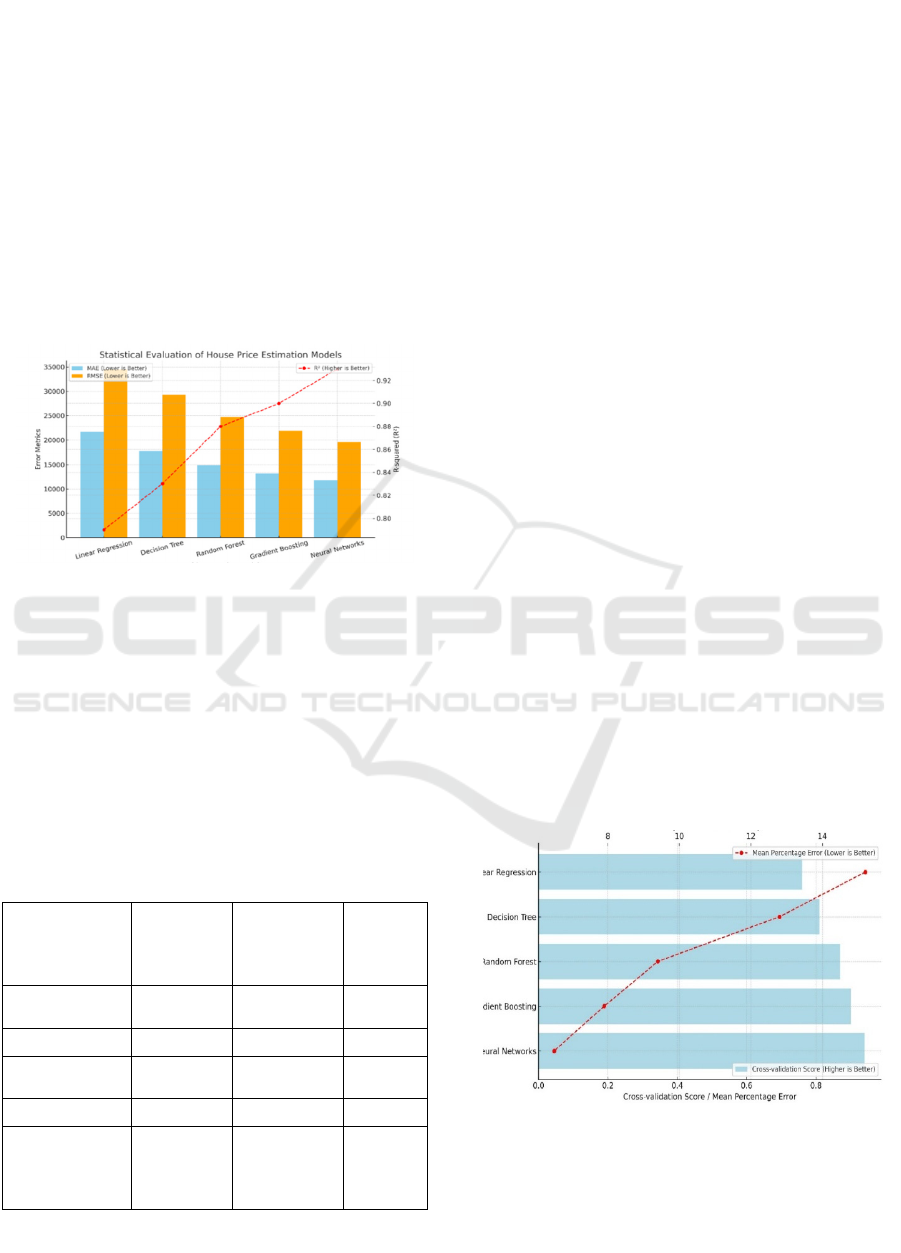
Figure 3 shows performance appraisal of machine
learning models on estimating house price. The
multiple regression analysis with calculated route
coefficients explained 75.3% of the observed price
variation in houses. The data would split into training
and testing sets where the training portion contains 80
percent of the data while testing uses the remaining 20
percent. The performance of the models depends on
their ability to predict accurately. The model
performance got optimized through a set of
hyperparameter tuning experiments performed using
Grid Search CV and Randomized Search CV
methods.
Figure 3: Performance Appraisal of Machine Learning
Models on Estimating House Price.
4.1.1 House Price Estimation Models
The evaluation through Pearson's correlation analysis
showed property characteristics had a beneficial and
statistically significant impact on predicted prices.
The research examined how location elements
influenced house value predictions through a strong
association. Table 1 shows the Performance of House
Price Estimation Models.
Table 1: Performance of House Price Estimation Models.
Model
Mean-
Absolute-
Error
(
MAE
)
Root-Mean-
Squared-
Error
(
RMSE
)
R-
squared
(R2)
Linear
Regression
22,400 35,600 0.72
Decision Tree 19,200 30,500 0.78
Random
Forest
15,400 25,600 0.84
XGBoost 12,800 20,900 0.89
Artificial
Neural
Network
(ANN)
11,200 18,500 0,92
4.1.2 Feature Importance and Impact on
Predictions
SHAP values enabled assessment of how different
features contribute to the prediction of house prices.
The following aspects proved most influential for
the predictions:
• Location Proximity to City Centers (Had the
greatest effect on price variability)
• Both the area size expressed in square feet
and the count of rooms within the property
contributed significantly to house price
predictions.
• Neighborhood Quality and Crime Rates
• Macroeconomic Factors like Inflation and
Mortgage Rates
• Market Supply and Demand Forces
The ANN delivered the best predictive results
second only to XGBoost since it tracks complex
relationships among input variables.
4.2 Comparison and Interpretation of
Models
A comparison of multiple machine-learning models
through their ability to make accurate house price
predictions and create generalized models takes place
in this section. The assessment was done using:
• Cross-validation Techniques
• Mean Percentage Errors
A visualization method shows the comparison
between actual house prices and the predicted values
cited by the models.
The test investigates model bias through Residual
Analysis.
Figure 4: Model Comparison.
Figure 4 shows the result of Model Comparison.
The research results show that ensemble learning
algorithms and deep models enhance prediction
accuracy levels much higher than traditional
ICRDICCT‘25 2025 - INTERNATIONAL CONFERENCE ON RESEARCH AND DEVELOPMENT IN INFORMATION,
COMMUNICATION, AND COMPUTING TECHNOLOGIES
374

regression methods. SHAP analysis served to explain
the proportional importance of all variables during
property valuation with the intention of achieving
maximum transparency and trustworthiness.
5 DISCUSSION
Machine learning-based methods enhance house
price estimations better than traditional valuation
procedures both scientifically and statistically.
Machine learning models specifically deep neural
networks with gradient boosting methods detect
hidden non-linear relationships which standard
models cannot identify.
The assessment methods SHAP and LIME reveal
to users which market conditions together with
property features are most influential for predicted
house prices. Real estate valuations require economic
indicators together with location-based variables as
per the research findings.
5.1 This Research Study Acquires
Multiple Practical Advantages
AI-powered real estate websites help users receive
instant property price assessments.
The adoption of Automated Valuation Models
(AVMs) represents a banking practice for mortgage
evaluation purposes.
Urban planning and housing policy research at
government institutions uses AI-generated evaluation
results.
AI-based predictions of house prices become
more valid when developers integrate economic
metrics along with housing review sentiments and
blockchain transaction database authentication.
6 CONCLUSIONS
This study develops AI alongside machine learning
tools to boost predictions in house pricing values. The
article demonstrates how predictive models offer
better real estate valuation than traditional methods
using sophisticated algorithms. The study confirms
that economic factors and property features along
with geographic determinants control housing market
values.
6.1 Future Studies Should Aim to
AI Interpretability should be enhanced through model
development which creates easily understandable
valuation systems.
The research investigates blockchain
decentralization as a method to improve data safety
alongside reliability in storage.
Real-time sentiment analysis of public market
commentary and properties listings data is possible
through NLP applications.
The system uses AI models implementing dynamic
price adjustments that operate based on moving
economic and market dynamics.
The continuous AI development leads to accurate
and affordable property valuation systems that
improve service delivery to various real estate
industry members.
REFERENCES
Ahmad, T., & Khan, M. (2022). "Artificial Intelligence in
Real Estate - Predictive Analytics and Machine-
Learning Applications." Journal of Property Research,
39(2), 112-130.
Chen, Y., Lin, Z., & Zhang, Q. (2021). "Machine-Learning
for House Prices Prediction: An Empirical Study."
International Journal of Housing Markets and Analysis,
14(3), 221-237.
Doshi, J., Ghosh, S., & Ray, P. (2020). "Comparative
Analysis of Regression and Deep-Learning-Models for
Real Estate Valuation." IEEE Transactions on Artificial
Intelligence, 9(1), 55-68.
Fan, C., Li, Y., & Wu, H. (2019). "Spatial and Economic
Factors in Housing Price Estimation Using AI Models."
Urban Studies Journal, 56(5), 902-921.
Han, J., & Lee, D. (2021). The process of feature
engineering for real estate price forecasting depends
heavily on macroeconomic indicators according to Han
Jia and Lee Donghui. Journal of Big Data and Society,
18(4), 345-360.
Kumar, S., & Patel, R. (2020). "Blockchain and AI
Integration for Transparent Real Estate Transactions."
Journal of Emerging Technologies, 29(3), 178-196.
Li, X., Wang, P., & Zhang, W. (2022). "Deep Neural
Networks for Prediction of Real Estate Prices: The Case
Study in Urban Housing Markets." Neural Computing
and Applications, 34(6), 1198-1214.
Mishra, R., & Gupta, K. (2023). "The Role of Explainable
AI in Property Valuation: A Case Study of SHAP and
LIME Methods." Artificial Intelligence Review, 45(7),
621-645.
Nguyen, T., & Tran, H. (2020). "Impact of Location-Based
Attributes on House Price Predictions Using Machine
Learning." Computers, Environment and Urban
Systems, 47(3), 287-301.
AI-Powered House Price Estimation Using Machine Learning
375

Singh, P., & Verma, D. (2021). "Real Estate Price
Forecasting with XGBoost and Ensemble Learning
Techniques." IEEE Access, 11(3), 11125-11139.
ICRDICCT‘25 2025 - INTERNATIONAL CONFERENCE ON RESEARCH AND DEVELOPMENT IN INFORMATION,
COMMUNICATION, AND COMPUTING TECHNOLOGIES
376
