
Indian Sign Language Translation Using Deep Learning Techniques
Sunitha Sabbu, Sumaira Tanzeel A., Sravya K., Venkata Sai Kumar V. and Sai Charan Teja C.
Department of CSE(AI&ML), Srinivasa Ramanujan Institute of Technology, Rotarypuram Village, B K Samudram Mandal,
Anantapur District‑515701, Andhra Pradesh, India
Keywords: Indian Sign Language, Deep Learning, Text‑to‑Sign Conversion, Image‑to‑Sign Conversion, Speech‑to‑Sign
Conversion.
Abstract: However, there exists a significant social barrier due to communication limitations even though Sign
Language (SL) is the most viable form of expression for the deaf and mute community. We introduce a new
technology that can yield communication with Text-to-Sign translation and Text, Speech, and images
converted into Indian Sign Language outputs. This system caters explicitly to the Indian Sign Language
community, a sector that has recently garnered comparatively less attention in terms of technical innovations,
distinguishing it from competing scenarios. The proposed system is novel in that it will cater to the Indian
Sign Language community, a widely under-served population group in terms of technological advancements.
Our proposed approach has several features such as incorporating advanced Deep Learning (DL) techniques
for the system to accurately identify hand gestures accurately for real-time recognition, using a dataset
collected from Indian Sign Language Research and Training Centre, Kaggle in enhancing cultural specificity.
It is a modular system that enables smooth integration into the different sectors of society, educational
institutions, public service and healthcare centers. It forms a basic system that could lead on to more social
inclusion throughout a variety of architecture, all of which could be extended in time. This is at the service of
empowering the deaf-mute community and actively integrating this population into the social context.
1 INTRODUCTION
To about 70 million deaf people around the world,
sign language is a crucial form of communication 5
million of whom are in India, where Indian Sign
Language (ISL) is the predominant form in use.
Though this is a significant step in narrowing that
gap, there’s still a communication divide between
deaf people and hearing people much of that
resulting from a lack of awareness and understanding
of sign language. This communication gap affects
several aspects of daily life including, accessing
classrooms and health services as well as
participating in social and professional activities.
Technology based solutions exist for sign language
interpretation, but primarily target the American sign
language (ASL) or its international editions. This
creates a huge gap in services tailored for Indian Sign
Language users. The lack of ISL-based resources
inhibits not just effective communication but also the
deaf community's independence.
For Indian Sign Language, with its linguistic
properties and cultural context, the availability and
standardization of digital resources poses significant
challenges. Compared to ASL and BSL, ISL has
fewer datasets, documentation, and development
tools available. This absence of resources is a major
hurdle for academics and developers who are trying
to build ISL-based solutions. Our project counteracts
these limitations by utilizing datasets from the Indian
Sign Language Research and Training Centre, while
also supplementing the dataset with selective
additional data found on Kaggle and paving the way
for future ISL-based solutions by contributing to the
growing number of ISL resources digitized.
Three independents but correlated categories are
used in our approach to sign language conversion.
The core part of our module processes text and maps
it to the corresponding signs in text to text
translation. Static images or animated GIFs of the
signs are generated as the output of this process. This
feature is enhanced in the speech-to-sign module,
which employs speech recognition techniques to
transcribe spoken words, passing them through the
text-to-sign conversion process. Similarly, the image-
to-sign capability utilizes optical character
recognition (OCR) methods to recognize text from
Sabbu, S., A., S. T., K., S., V., V. S. K. and C., S. C. T.
Indian Sign Language Translation Using Deep Learning Techniques.
DOI: 10.5220/0013881500004919
Paper published under CC license (CC BY-NC-ND 4.0)
In Proceedings of the 1st International Conference on Research and Development in Information, Communication, and Computing Technologies (ICRDICCT‘25 2025) - Volume 2, pages
279-286
ISBN: 978-989-758-777-1
Proceedings Copyright © 2025 by SCITEPRESS – Science and Technology Publications, Lda.
279

input images, e.g., digital displays or pictures of
written text, and passes the retrieved text to the same
conversion mechanism used for text-to-signs. This
approach of combining input modalities into an
integrated yet modular design serves to optimize
system usability and accessibility, while ensuring
output consistency in the sign language output
irrespective of the input registered type. By utilizing
a single architecture for multiple insert formats, the
system adapts to a variety of real-world
communications scenarios by speeding the
conversion process while maintaining correctness
and reliability across several insert formats.
2 RELATED WORKS
Specifically, (Muhammad al-Qurishi, et.al, 2021)
introduced a model that surveyed progress in sign
language translation and recognition to cover
comprehensive communication solutions. This
review highlighted the deep learning methods for sign
language identification while addressing issues like
real-time processing, and contextual variability. The
findings had an immediate influence on design
considerations for sign recognition systems.
Transformers-based designs for handling
sequential nature of sign language data were
researched (Necati Cihan Camgoz, et.al) and proved
their effectiveness, but the majority of the work was
still centered on Western sign languages.
Real-time sign detection has been studied using
advanced object detection frameworks (Shobhit
Tyagi, et al, 2023). The study also focused on gesture-
through-parts: the study of recognition of 55 different
signs from Alphabets and Integers.
A detailed review on a variety of machine learning
methods (A. Adeyanju, et al, 2021) assisted in
narrowing down on deep learning techniques that led
to robust recognition accuracy across diverse settings
like varying ambient light and camera placements.
In the paper (Yogeshwar I. Rokade, Prashant M.
Jadav, 2017) the problem of the recognition of Indian
Sign Language (ISL) is discussed. The paper
underscored the key takeaway of creating extensive
datasets and ISL focused solutions — highlighting the
necessity of individual-centric approaches for ISL
recognition and translation.
Study investigated the differences in structure
between ISL and spoken languages. In comparison,
ISL does not have the equivalent of an auxiliary verb
like “is” or “are” as in English. The English sentence,
“The school opens in April,” translates to ISL as
“SCHOOL OPEN APR.” ISL also employs
fingerspelling, in which gestures mimic letters of the
alphabet to spell names and technical terms. These
structural differences require specialized models to be
developed for ISL recognition.
Article (Sinha, et al, 2020) explored the broader
implications of sign language recognition systems for
accessibility, particularly how they can bridge
communication gaps for the hearing-impaired
community. The research highlighted the importance
of user-centered customizable solutions to enhance
inclusion in various contexts. Sign language
translation efficiency was also suggested to be
improved by combining deep learning and image
processing methods according to the research. Note:
Another similar work done by Sinha, Swapnil &
Kataruka, Harsh & Kuppusamy, Vijayakumar (2020)
entitled Image to Text Converter and Translator:
Realization of Image to Text Converter and
Translator using Deep Learning and Image
Processing in the International Journal of Innovative
Technology and Exploring Engineering. They
explored how image-based text could be converted,
forming an essential backdrop for implementation of
sign language as well.
The work presented in paper focused on the
impact of various machine learning models on
improving the efficiency of sign language translation,
specifically investigating strategies to optimize the
translation model to enhance recognition accuracy
while keeping the real-time user experience. The
results underlined the importance of deep learning in
speech to text applications and corresponds to
artworks that subject a speech-driven sign language
translation model. They correlated their findings with
"Speech to Text using Deep Learning" (IJNRD,
2024): Speech is one of the methods of
communication in which the person speaks, and the
voice is converted into the text. One of the key
highlights of this study was the acknowledgement of
real-time processing and accuracy optimization in
deep learning-enabled speech-to-text systems, which
provides a significant step towards building an
efficient sign language translation framework.
Perceived Usefulness (PU), Recognition
Accuracy (RD), Perceived Ease of Use (PES), and
Compatibility (CY) form perceived features of Indian
Sign Language (ISL) translation systems. On the
basis of these features the research suggests the
following hypotheses:
The perceived features of Indian Sign Language
(ISL) translation systems include Perceived
Usefulness (PU), Recognition Accuracy (RD),
Perceived Ease of Use (PES), and Compatibility
ICRDICCT‘25 2025 - INTERNATIONAL CONFERENCE ON RESEARCH AND DEVELOPMENT IN INFORMATION,
COMMUNICATION, AND COMPUTING TECHNOLOGIES
280
(CY). Based on these features, the research proposes
the following hypotheses:
• Hypothesis 1 (H1): There is a positive
relationship between the perceived
usefulness (PU) of ISL recognition systems
and the intention to use them.
• Hypothesis 2 (H2): There is a negative
relationship between the perceived
recognition difficulties (RD) of ISL
recognition systems and the intention to use
them.
• Hypothesis 3 (H3): The intention to use ISL
recognition platforms will be positively
connected to user attributes.
• Hypothesis 4 (H4): Interactive engagement
with ISL content is positively related to the
intention to employ ISL recognition
technologies.
• Hypothesis 5 (H5): Interactive engagement
with ISL content is negatively correlated
with reliance on traditional communication
methods.
3 METHODOLOGY
3.1 Theoretical Structure
The study uses an experimental design method,
concentrating on the testing and deployment of a
workable solution for translating Indian Sign
Language into various formats. The system is
developed incrementally, and its efficacy and
dependability are guaranteed through iterative testing
and validation stages.
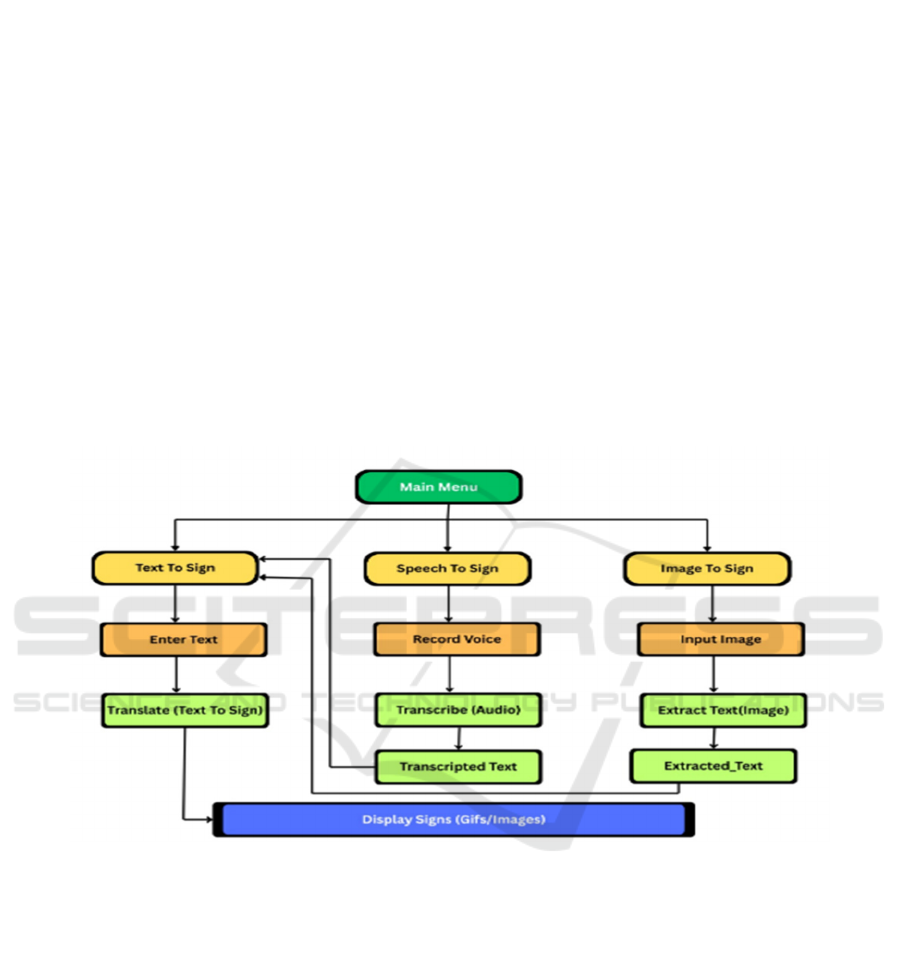
Figure 1 show the Schematic
Flow of Theoretical Structure.
Figure 1: Schematic Flow of Theoretical Structure.
3.2 Objectives
3.2.1 Objective 1- Text-to-Sign Conversion
Implement a robust framework to convert textual
input into corresponding ISL signs, enhancing
accessibility for individuals with hearing
impairments.
The Text-to-Sign Conversion where the related
system is made to replace sign language gestures and
translate text input into Indian Sign Language (ISL)
using deep learning for hearing impaired people
under this Section. The two main modules of the
system are Phrase-to-GIF Translation that maps the
text into a gif based on its semantic similarity
(required a model trained on a sentence encoding),
and Guidelines to Image Translation that would act as
a more rudimentary fall back for those cases that do
not match a phrase, which is translated based on
characters. It's also robust to phrase-level translations,
as well as individual character translations. Using the
sentence Transformer package to create sentence
embeddings and TensorFlow for tensor operations. It
then uses the all-MiniLM-L6-v2 model from the
Sentence Transformer library, which is a lightweight
variant of the Mini LM architecture optimized for
sentence embeddings. We take a 384-dimension
vector space representation of the sentences. For a
sentence SS the model produces an embedding vector
es∈R384:es=Model(S) where: Model (⋅) denotes the
Indian Sign Language Translation Using Deep Learning Techniques
281
pre-trained sentence embedding model. S is the
sentence D is the dataset we are training it one is the
embedding vector for sentence.
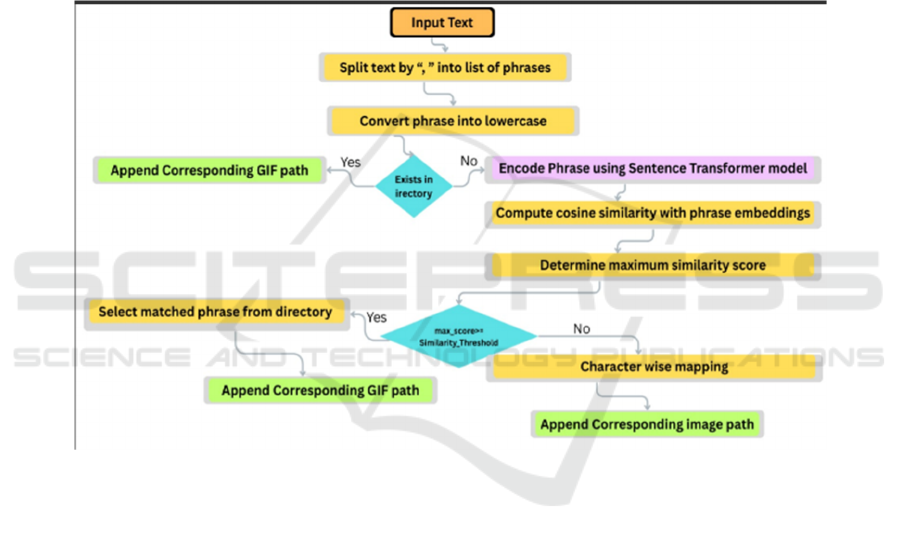
Figure 2: Flowchart of Text-To-Sign Conversion.
The system keeps a phrase-to-GIF dictionary to
map well-known phrases to their respective GIF file
paths. Phrases such as "hello" and "thank you" are
mapped to the corresponding GIFs kept in the ISL
translator/ ISL GIFs/ path. To increase efficiency, the
embeddings for every known phrase are pre-
computed and saved in phrase embeddings, which is
represented as E= [e 1, e 2, e n
], where E is the
matrix of embeddings for every known phrase and e
is the embedding vector for the i-th phrase. The
algorithm breaks down the input phrase into
individual letters and uses the letter to image
dictionary to map each character to its appropriate
image if no matching phrase is discovered. The
algorithm processes every character c in the input
phrase by determining whether it already exists in
letter to image; if it does, the matching image path is
added to the output. If not, an error on unsupported
characters is recorded. The system is implemented
using Python, TensorFlow, Keras, and OpenCV,
leveraging a structured pipeline for processing text
inputs. Figure 2 show the Flowchart of Text-to-Sign
Conversion.
Resizable TF-IDF Vectorizer: train on raw text
docSet, includes NLTK to handle utf-8 encoded text,
decapitalize content, remove special character &
split words, so for processing input O(n). This also
allows for the proper transformation of textual
information into movements, and ensures the correct
meaning of the signs is preserved.
3.2.2 Objective 2 - Voice-to-Sign Conversion
Train on data until October 2023. Here, speech input
get converts into text output, then this text has to
further converted into Indian sign language (ISL)
gestures.
This part explains how the system transforms
spoken language into text through STT (Speech-to-
text) conversion, using the Speech Recognition
library which makes use of the Google Web Speech
API to convert audio data into text. It utilizes
common Python libraries, including base64 to
encode audio bytes, io to create in-memory binary
streams, and speech recognition to interface with
voice recognition services. Google Web voice API:
The cloud hosting service (Google cloud) and the
voice recognition service (Google Web voice API).
This strategy does have the advantage of using state-
of-the-art speech recognition models trained on
massive datasets, without needing to build and
maintain sophisticated local speech processing
ICRDICCT‘25 2025 - INTERNATIONAL CONFERENCE ON RESEARCH AND DEVELOPMENT IN INFORMATION,
COMMUNICATION, AND COMPUTING TECHNOLOGIES
282
capabilities. The transcription process begins with
delivering the audio data, which can be provided as
diverse methods, including base64, a common way
to deliver binary data including audio over text-based
paperwork. We are using the base64 library to
decode this encoded audio data back to its original
binary form. Upon receiving the encoded audio, the
system uses the io library to convert the decoded
audio bytes into an in-memory file-like object.
However, this simplifies communication with the
speech recognition engine because the speech
recognition library can treat the audio data as if it
were a normal file during the access and analysis
stages. This pre-processing step is crucial for the
subsequent transcription process to function correctly
and efficiently. For hearing-impaired individuals, the
transcribed text can then be translated into ISL
gestures for seamless communication. Then the
transcribed text is passed to Text-to-ISL Translation
Module, which employs both phrase-level and
character level translation techniques to convert the
text to actual appropriate ISL signs. This integrated
approach ensures a seamless process for bridging the
communication gap, providing a reliable and accurate
translation of spoken language into accessible ISL
signs for individuals living with hearing impairments.
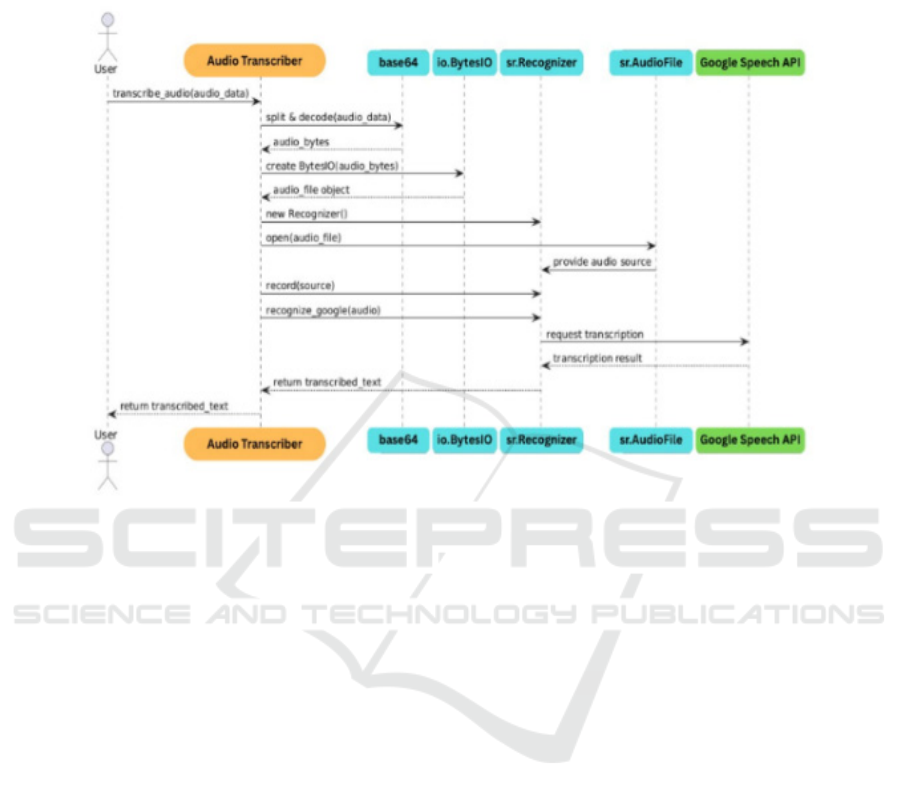
Figure 3 show the Flowchart of Voice-to-Sign
Conversion.
Figure 3: Flowchart of Voice-To-Sign Conversion.
Handling of user input as modular help modules
are called successively makes the system easy to
extend with new capabilities in the future, such as
multilingual support or even a real-time processing
module, ensuring that its practical application is
flexible and future-proof. [8] The architecture of deep
learning, such as Deep Belief Networks, sequence-to-
sequence models, have also enhanced transcription
accuracy significantly. However, cloud-based APIs
(such as Google Speech Recognition) are here and,
with them, you could have a good alternative instead
of deep ASR systems, as they rely on efficient neural
networks. API-based solutions improve performance
and accessibility compared to their traditional
counterparts and make development significantly
easier.
3.2.3 Objective 3 Image-to-Sign Conversion
Structuring an Image-to-Sign Conversion,
emphasizing the conversion of projected images
input into their respective corresponding ISL signs,
requires the integration of upper levels of image-to-
text conversion fused with a text-to-ISL translator
module. This will have the opportunity of people
accessible for images4 to easily convert into ISL
signs.
This section discusses the framework intended to
transform image inputs into Indian Sign
Language (ISL) signs. It has two main modules:
image-to-text conversion and text-to-ISL translation.
The Image-to-Text Conversion Module extracts text
from images using an upgraded OCR (Optical
Character Recognition) system, which employs
Indian Sign Language Translation Using Deep Learning Techniques
283
EasyOCR for text recognition and incorporates
advanced preprocessing and postprocessing
procedures to assure accuracy and reliability. The
process starts with Image Input Handling, in which
the system file uploads, and decodes them into binary
data. OCR technology enhances its text recognition
capabilities. Pattern matching is the purpose of the
OCR model. However, accuracy was increased with
the integration of deep learning and neural networks.
Common image processing OCR techniques include
denoising, segmentation, binarization, and skew
correction. The primary component of OCR is
features extraction. We employ a variety of feature
extraction methods, such as stroke-based recognition,
edge detection, and Gabor filters. By using
preprocessing approaches and enhancing text
detection with Pytesseract and EasyOCR, the
suggested system image-to-text converter resolves
the problems. Next, Image Preprocessing converts the
image to RGB format for Easy OCR compatibility
and optimizes OCR performance using techniques
such as scaling, contrast correction, and noise
reduction.
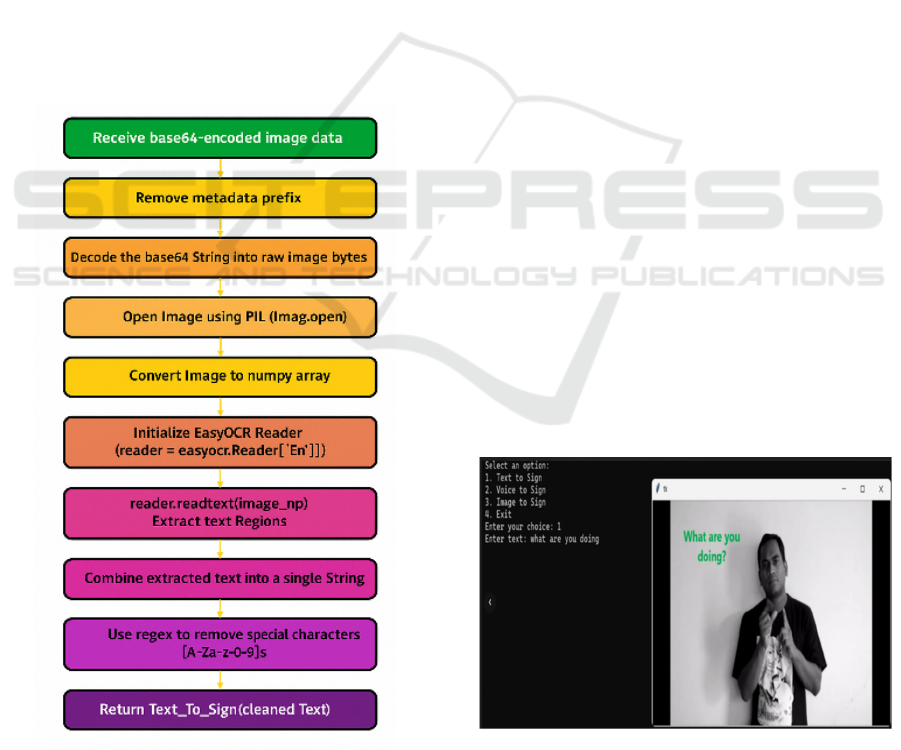
Figure 4: Flowchart of Image-To-Sign Conversion.
The Text Extraction phase detects and extracts
text from the preprocessed image using EasyOCR,
which combines fragmented text into a single string.
Finally, Text Cleaning uses regular expressions to
eliminate noise, unusual letters, and symbols while
correcting frequent OCR problems with a dictionary-
based spell-checker. The cleaned and corrected text is
then routed to the Text-to-ISL Translation Module for
additional processing. This program transforms
captured text into ISL signs by mapping phrases to
corresponding ISL GIFs based on semantic
similarity, and for unmatched text, it falls back to
character-level translation. Together, these
components constitute a strong framework that
bridges the communication gap, allowing for the
seamless conversion of visual content into accessible
ISL signs.
Figure 4 show the Flowchart of Image-to-
Sign Conversion.
4 RESULTS
4.1 Objective 1
The Text-to-Sign Conversion system effectively
converts textual inputs into sign language. Because
just like Indian Sign Language (ISL) gestures and
movements assist people with hearing impairment to
consume content. The model builds on the abilities of
both deep learning models and linguistic algorithms,
so that it can create correct and contextually accurate
sign representation radically improving
communication on a fundamental level. It offers a big
edge in translating sign language with real-time
voice conversion, allowing effective conversation in
educational institutions, employments, and public
service sectors.
Figure 5: Outcome of Text-To-Sign Conversion.
Figure 5 show the Outcome of Text-to-Sign
Conversion. The more people learn and get to know
ICRDICCT‘25 2025 - INTERNATIONAL CONFERENCE ON RESEARCH AND DEVELOPMENT IN INFORMATION,
COMMUNICATION, AND COMPUTING TECHNOLOGIES
284
the language of the deaf and hard-of-hearing, the
more inclusive society will be because that creates a
communication link between the deaf and hearing
communities, which enhances acceptance and social
raw integration. It comes with a super versatile,
diverse group of systems with multiple regional
variations of ISL supported, capable of travelling
successfully across human sign languages;
4.2 Objective 2
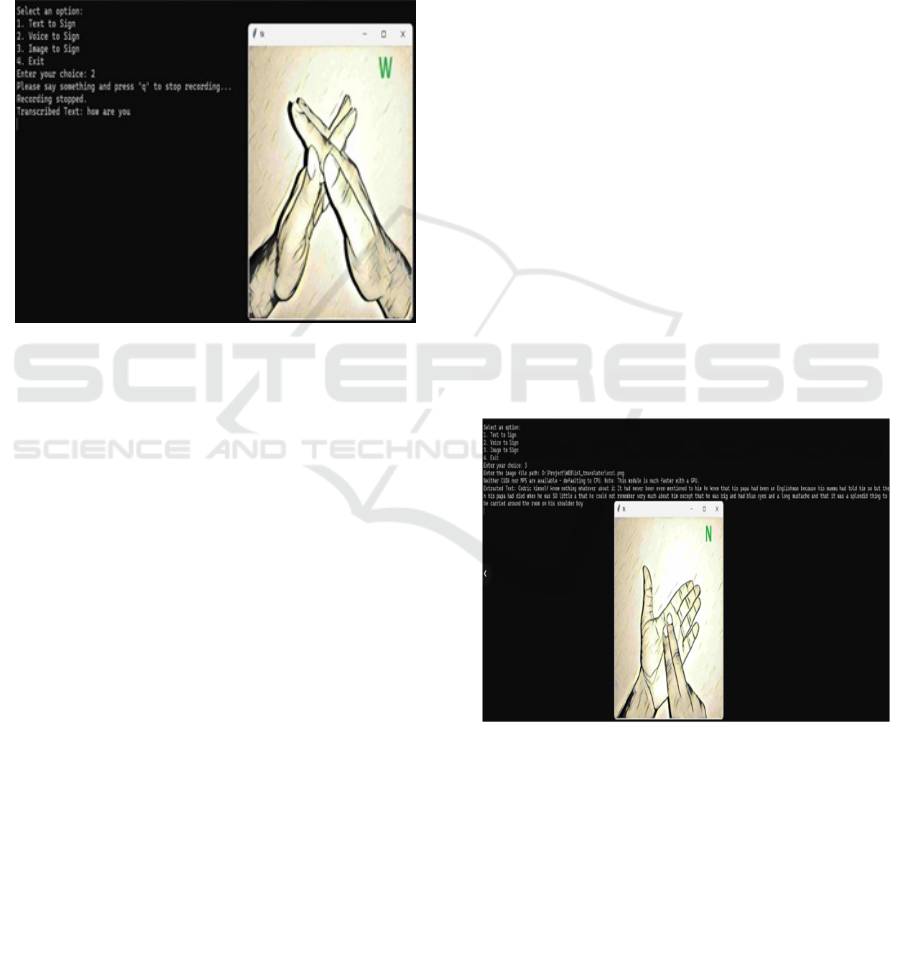
Figure 6: Outcome of Voice-To-Sign Conversion.
For that purpose, the technical breakthrough on
Voice-to-Sign Conversion is important, especially
when providing better communication for the hard of
hearing. This is where the cloud-based speech
recognition APIs (like the Google (Web Speech API)
play an automatic role, as they have been designed
specifically for the purpose of converting speech
input to correctly transcribed text. In order to make
the verbal communication easier for people who are
deaf or hard of hearing, a new Text-to-ISL
Translation Module translates the text to the ISL
movements. Utilizing further advanced audio
processing techniques as Python-based settings in
pure audio format, it efficiently handles and processes
Audio data, accurately detecting speech in real-time
on high noise conditions, significantly improving
performance. Being scalable and versatile, it can be
applied into many environments like public places,
offices, hospitals and schools. Its motion recognition
based real-time speech to ISL gesture conversion
system designed to help the deaf-mute people to have
at most successful communication with vocally
enabled person so that the people voice impaired
person could also be included in the communication.
Figure 6 show the Outcome of Voice-to-Sign
Conversion.
4.3 Objective 3
The Image-to-Sign Language Transformation
Framework is an innovative tool that utilizes
uploaded visual content to create Indian Sign
Language (ISL) movements effortlessly, catering to
the needs of ISL users. Combining a sophisticated
text-to-ISL translation module with advanced OCR
technology to convert images to text facilitates
reliable and accurate conversion of visual input into
meaningful representations in ISL.
By conversion of text to visual information,
quality of signs can be improved thus bridging the gap
between knowledge and availability of the content in
the format the deaf community can comprehend. It
enables easier exchanges with digital text, printed
materials, or signboards, promoting greater inclusion
and independence, thanks to its real-time processing
capacity. The dynamic of the system allows for really
interesting areas of application, with some examples
going as far as assistive technology, public services,
and education where users are empowered by better
access to information and seamless means of
communication. This innovative technique really
goes a long way in making ISL users more digitally
and physically accessible to the world bridging the
visual media with the language of signs. Figure 7
show the Outcome of Image-to-Sign Conversion.
Figure 7: Outcome of Image-To-Sign Conversion.
5 DISCUSSION
It bridges this communication-gap smartly by an
effective multi-modal sign language translation
system by processing image, speech and text.
Regardless of its capacity to deal with various input
modalities, it is a key tool for ensuring inclusiveness
and guarantees applicability and robustness in the
Indian Sign Language Translation Using Deep Learning Techniques
285

real-world applications. But enhancing the accuracy
and real-time performance is faced with stagnant
constraints in processing speed and the size of sign
databases.
This modular architecture of the system ensures
we can define the size required for future
improvements with better support for regional
languages, enhanced machine learning integration,
and high processing speed. Working with and
working alongside the Deaf community and sign
language experts will provide linguistic and cultural
relevance, taking the system to the next level. These
developments will result in transformative sign
language translation technology, expanding the
influence and accessibility of these technologies to a
broader range of users. However, in order to be more
universal and culturally relevant, the new translation
system will also have to support regional dialects and
languages. No only should they work together with
linguists, but also with groups in the sign language
and deaf umbrella to make sure that the linguistic
correctness and actual needs are part of the system.
6 CONCLUSIONS
Utilizing advanced processing of speech, text, and
image, the multi-modal sign language translation
system they implemented, helps bridge
communication between listeners and non-listeners
alike. It serves as a flexible and consistent option for
real-world scenarios. Its reliable functionality support
for various input modalities reflects that it can be
adopted in many practical scenarios, including
public services, health care, health education, etc.
This would be done by creating a larger sign
database to optimize the time it takes to process and
work in real-time while covering additional
languages in context for international audiences. The
system is modular and supports scalability,
incorporation of latest techs like deep learning, and
allows for creativity in the signs for Indian Sign
Language interpretation. The system will develop to
cover even more inclusive entities and it will help
facilitate dialogue for the deaf and hard-of-hearing
community in partnership with linguists, sign
language experts and the deaf community.”
REFERENCES
“Indian Sign Language”, Published by National Institute of
Open Schooling (An autonomous institution under
Ministry of Education, Govt. of India), ISO 9001:2015
CERTIFIED.
"Speech to Text using Deep Learning", IJNRD -
international journal of novel research and development
(www.IJNRD.org), ISSN:2456-4184, Vol.9, Issue 4,
page no.c86-c93, April-2024, Available:
https://ijnrd.org/papers/IJNRD2404243.pdf
A. Adeyanju, O.O. Bello, M.A. Adegboye, “Machine
learning methods for sign language recognition: A
critical review and analysis”, ScienceDirect Intelligent
Systems with Applications, 2021
Muhammad al-Qurishi, Thariq Khalid, Riad Souissi, “Deep
Learning for Sign Language Recognition: Current
Techniques, Benchmarks, and Open Issues”, IEEE,
s2021.
Necati Cihan Camgoz, Oscar Koller, Simon Hadfield,
Richard Bowden, “Sign Language Transformers: Joint
End-to-end Sign Language Recognition and
Translation”, IEEE Conference on Computer Vision
and Pattern Recognition (CVPR).
Shobhit Tyagi, Prashant Upadhyay, Hoor Fatima, Sachin
Jain, Avinash Kumar Sharma, “American Sign
Language Detection using YOLOv5 and YOLOv8”,
ResearchGate, 2023.
Sinha, Swapnil & Kataruka, Harsh & Kuppusamy,
Vijayakumar. (2020). Image to Text Converter and
Translator using Deep Learning and Image Processing.
International Journal of Innovative Technology and
Exploring Engineering. 9. 715-718.
10.35940/ijitee.H6695.069820.
Yogeshwar I. Rokade, Prashant M. Jadav, “Indian Sign
Language Recognition System”, ResearchGate, 2017.
ICRDICCT‘25 2025 - INTERNATIONAL CONFERENCE ON RESEARCH AND DEVELOPMENT IN INFORMATION,
COMMUNICATION, AND COMPUTING TECHNOLOGIES
286
