
Evolving Dimensions of Senior Citizen Care: A Prisma-Guided
Systematic Literature Review
Pushkar Dubey
1
and Srijan Pateriya
2
1
Department of Management, Pandit Sundarlal Sharma (Open) University, Bilaspur, Chhattisgarh, India
2
Department of Law, Dr. C.V. Raman University, Kota, Bilaspur, Chhattisgarh, India
Keywords: Elderly Care, Systematic Literature Review, PRISMA, Caregiving, Cultural Context, Mental Health.
Abstract: Introduction: Senior citizen care, as a salient concern within society, requires continuous exploration and
assessment to adapt to the evolving demands of an aging global population. This study sought to provide a
comprehensive understanding of the intricate dynamics and challenges of elderly care by examining the
relevant literature.
Methodology: A systematic literature review (SLR) was employed, utilizing the PRISMA flow diagram for
article selection. Databases such as Web of Science were extensively scoured using keywords related to senior
citizen care. Articles and book chapters published in English from 2010 to 2023 were included, with an
emphasis on achieving methodological consistency and avoiding biases.
Results: The analysis covered 466 documents with an average annual growth rate of 8.28%. Major
contributing journals included "Frontiers in Psychology" And "Health & Social Care in The Community,"
among others. Key themes elucidated included care work, elderly care, familial roles, societal expectations,
and the impact of regional cultural contexts. Significant emphasis was placed on mental health, with terms
like anxiety, depression, and stress making frequent appearances.
Implications: The study offers profound implications for policymakers, caregivers, and researchers,
suggesting a holistic caregiving approach. It emphasizes the necessity for updated caregiver training modules,
heightened community and governmental support, and culturally sensitive elder care strategies. Furthermore,
the inter sectionality of general health and elderly care uncovered encourages healthcare professionals to
inculcate an age-inclusive methodology.
1 INTRODUCTION
The world is experiencing a demographic revolution
in which the aging population has become one of the
leading issues affecting socioeconomic factors and
health care. The continuity of elder care as society
wrestles with the complexities of an ageing
population is a matter of increasing importance.
Home care is essentially services and other supports
provided to older people by family or designated
friends, and it has shifted from being a family
problem to a major field of international research,
and a topic of massive international policymaking
attention.
Through a systematic literature review (SLR)
methodology, this study strives to paint a
comprehensive picture of elder care by identifying
the most prominent themes, institutional
collaborations and trends from a global perspective.
As predicted by the World Health Organization, a
demographic change is coming: By 2050, individuals
over 60 will account for 22% of the world's
population, up from 12% in 2015. This impending
demographic revolution generates new stylised
demands on eldercare infrastructures, which
explicitly demand systemic interventions in both
healthcare (in its most narrow hierarchical form),
social support, and withered soulries in search of
healing. Unavoidably, when dealing with such
difficulties and lacking resources, academic interest
in elderly research is likely to expand. With rich
institutional and individual contributions, the
epistemic environment of elder care is a candle in a
whirlwind, evoking flashes of wisdom gleaned from
diverse cultural, contextual and disciplinary sensors.
In this multifaceted domain, the current research
aims to extract broader themes from existing research
in elderly care. This SLR endeavors to elucidate
894
Dubey, P. and Pateriya, S.
Evolving Dimensions of Senior Citizen Care: A Prisma-Guided Systematic Literature Review.
DOI: 10.5220/0013875500004919
Paper published under CC license (CC BY-NC-ND 4.0)
In Proceedings of the 1st International Conference on Research and Development in Information, Communication, and Computing Technologies (ICRDICCT‘25 2025) - Volume 1, pages
894-903
ISBN: 978-989-758-777-1
Proceedings Copyright © 2025 by SCITEPRESS – Science and Technology Publications, Lda.

emerged patterns that have not manifested in isolated
studies by systematically navigating through the vast
academic quantity. Through highlighting thematic
foci, reinforcing research geographical focal points,
and emphasizing co-authorship environments, we
aim to provide a consolidated narrative.
The prospective ramifications alone highlight the
epistemic gravitas of this research enterprise. We
hope that by clarifying active lines of research, we
can provide a foundation for future academic inquiry
that is grounded in strong epistemic footing, aware
of existing gaps, and adds value to both theory and
practice. In the crucible of elder care, a field that is as
nuanced as it is important on both a macro and micro
level such an integrative understanding can help
inform everyone from policymakers to practitioners
to caregivers alike toward empathetic interventions
that can effectively save lives.
2 OBJECTIVES OF THE
PRESENT STUDY
• Comprehensive Thematic Analysis: To
examine the prevailing themes, approaches, and
trends in elder care research from 2010 to 2023,
while comprehending their evolution and
importance.
• Collaborative and Geographical Insights: To
assess the characteristics of academic
collaborations by identifying principal
contributors and highlighting the geographical
distribution and focal areas of elder care research.
• Gap and Implication Assessment: To determine
the field's current research gaps and the findings'
applicability to international elder care policies
and practices.
3 METHODS AND
METHODOLOGY
3.1 Process of Study Selection and
Techniques Employed
The research analyzed a Systematic Literature
Review (SLR) method, which provided a systematic
and objective selection process of papers, inclusion-
lists criteria, and analysis techniques. The article
selection was performed following the PRISMA
(Preferred Reporting Items for Systematic Reviews
and Meta-Analyses) protocol normally recommended
for an SLR [4]. The aforementioned protocol can be
visualized in a flowchart with key stages depicted as
the steps ''Identification'', ''Screening'' and
''Inclusion''. We respectively apply these stages in
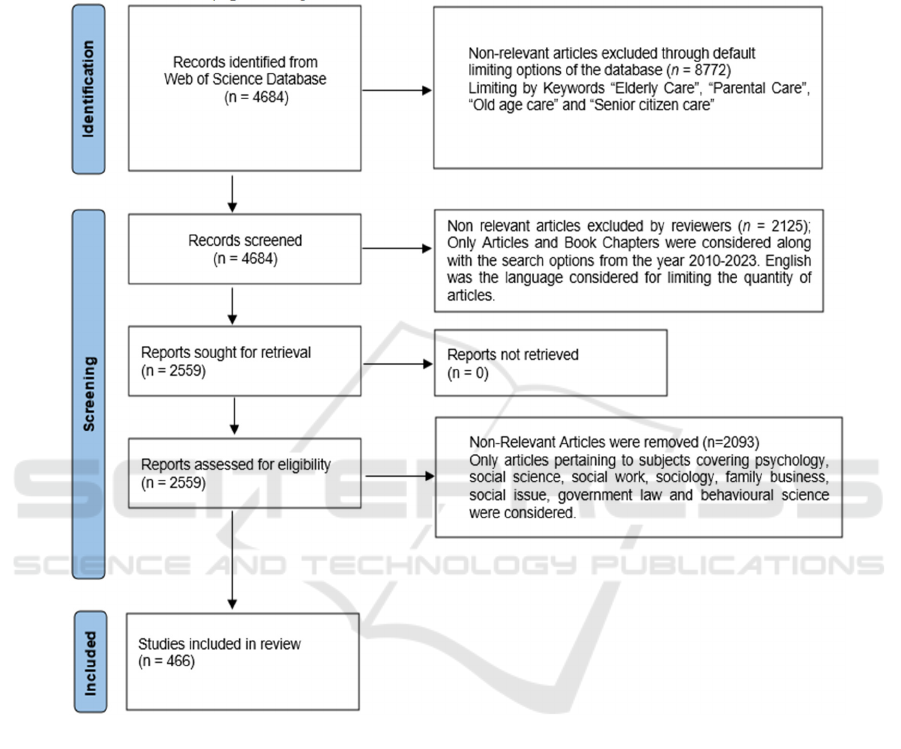
our study, described in Figure 1.
Identification includes Definition of search terms,
search criteria, relevant databases and data extraction
procedure. The primary term was "Senior Citizen
Care." To facilitate an extensive search, the
parameters included terms such as “Senior Citizen
Care,” “Elderly Care,” “Parent Care,” and “Old Age
Care.”
These terms were entered into the Web of Science
database using the logical operator “OR” in between.
As per PRISMA's 2020 guidelines, articles once
identified require screening. This phase incorporates
the tasks of screening, retrieving, and assessing the
aptness of each article for inclusion. Articles not
adhering to the specified criteria were subsequently
discarded. Criteria for considering articles included
those of the "article" or "book chapter" type, penned
in "English", and published between the years "2010
to 2023". We favored journal articles for SLRs as they
maintain a consistent methodological quality,
facilitating the extraction of pertinent results and
bolstering internal validity.
Utilizing a combination of automated and manual
means, the screening was executed. With the
assistance of the Web of Science's automated
functions, we pinpointed articles that met the
aforementioned inclusion criteria. Publications
deviating from these criteria, such as research notes,
commentary by editors, entire books, book excerpts,
book critiques, conference papers, and unpublished
materials, as well as those not in English or outside
the designated timeframe, were disregarded.
Subsequent to this, full versions of the filtered articles
were acquired for a deeper level of screening: the
evaluation of their relevance.
Relevance evaluation or eligibility assessment
leaned on tools offered by the Web of Science
database. The focus then narrowed down, prioritizing
specific fields like psychology, social science, social
work, sociology, family enterprise, societal
challenges, legislative studies, and behavioral
disciplines.
3.2 Evaluation of Bias Risk in the
Study
The integrity of a review can be compromised when
biases, either unintentional or deliberate, creep into
the processes of article selection and interpretation.
By adhering to a rigorously defined review protocol,
Evolving Dimensions of Senior Citizen Care: A Prisma-Guided Systematic Literature Review
895
and by implementing methodical, impartial
procedures for selecting and analyzing articles, the
propensity for such biases can be minimized. An
additional safeguard against bias is ensuring that
multiple researchers independently evaluate the
quality of articles, thereby providing a cross-check
mechanism. For this study, we meticulously followed
these guidelines and protocols, ensuring that potential
biases within the selected articles were duly
addressed and negated.
Figure 1: PRISMA Flow Diagram.
4 RESULT AND FINDINGS
4.1 Study Characteristics
The systematic literature review undertaken for this
study focuses on the time span between 2010 and
2023, encompassing a comprehensive collection of
466 scholarly documents. These documents, derived
from an array of 263 distinct academic sources,
predominantly consist of journals and book-based
publications, indicating the interdisciplinary nature of
the research in this domain. Over the studied period,
the literature manifests a notable annual growth rate
of 8.28%, underscoring the burgeoning interest and
expanding research frontiers in this field (Table 1).
The academic impact of these documents is
palpable, with each paper garnering an average of
12.57 citations, showcasing the resonance and
influence of the research within the scholarly
community. Further attesting to the depth and
richness of the collated literature, these documents
cumulatively reference a monumental figure of
20,992 works. In terms of thematic insights, a myriad
of 1,192 'Keywords Plus' and an additional 1,483
author-specified keywords have been identified,
providing a granular understanding of the research's
thematic contours.
ICRDICCT‘25 2025 - INTERNATIONAL CONFERENCE ON RESEARCH AND DEVELOPMENT IN INFORMATION,
COMMUNICATION, AND COMPUTING TECHNOLOGIES
896
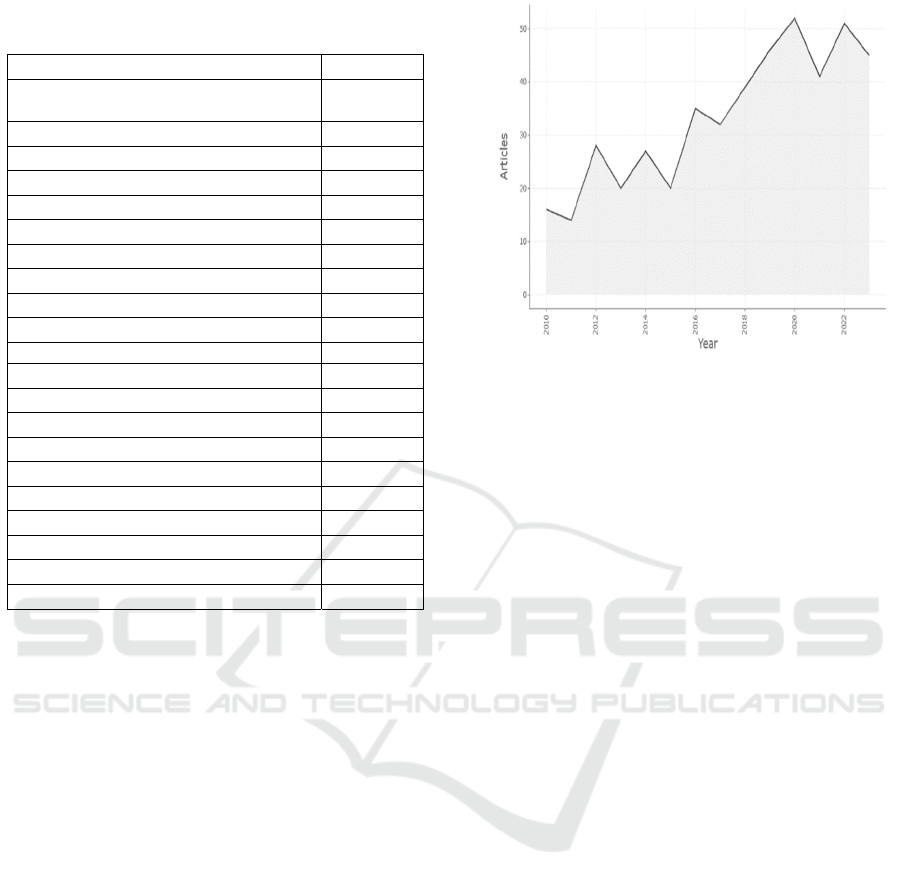
Table 1: Primary Information of the Article (Source:
Author).
Description Results
MAIN INFORMATION ABOUT
DATA
Timespan 2010:2023
Sources (Journals, Books, etc) 263
Documents 466
Annual Growth Rate % 8.28
Document Average Age 5.13
Average citations per doc 12.57
References 20992
DOCUMENT CONTENTS
Keywords Plus (ID) 1192
Author's Keywords (DE)
1483
AUTHORS
Authors 1274
Authors of single-authored docs 94
AUTHORS COLLABORATION
Single-authored docs 97
Co-Authors per Doc 2.97
International co-authorships % 20.82
DOCUMENT TYPES
Article 399
Article; book chapter 67
The collaborative fabric of this domain is robust.
Among the 1,274 contributing scholars, a segment of
94 has opted for independent authorship. However, a
predominant trend towards collaborative research is
evident, with the average document boasting
contributions from approximately 2.97 scholars.
Furthermore, the dimension of international
collaboration is significant, with 20.82% of the
contributions reflecting cross-border academic
partnerships.
Delineating the nature of these scholarly
contributions, a substantial portion, precisely 399, can
be categorized as academic articles. Nonetheless, a
unique segment comprising 67 documents offers an
amalgamation of article and book chapter formats,
reflecting the versatile and integrative approaches
adopted in the research endeavors of this domain.
In our systematic literature review spanning from
2010 to 2023, it was observed that research
contributions are disseminated across various
academic journals, highlighting the multifaceted
nature of the domain. Leading the charge is "Frontiers
in Psychology" with a contribution of 14 articles,
indicating its significant role in advancing discourse
in this area. In our study, we apply these stages
rigorously, as shown in Figure 2.
Figure 2: Annual Article Publication.
Close contenders include "Health & Social Care
in the Community" and "Journals of Gerontology
Series B-Psychological Sciences and Social
Sciences", each housing 12 articles. The "Children
and Youth Services Review" added another layer to
the discussion, bringing forth 11 pertinent articles. On
the other hand, "Social Policy & Administration" has
played a pivotal role with 9 articles, underlining its
influence in the socio-policy domain of the subject.
Several other prominent academic platforms have
enriched the literature landscape. "Child Care Health
and Development", "European Journal of Social
Work", and "Nursing Ethics" each showcased 8
significant contributions. With 7 insightful articles,
the "Sociology of Health & Illness" journal elucidates
the sociological dimensions of the topic. Finally,
"Journal of European Social Policy" cemented its
position in the scholarly tapestry with a contribution
of 6 key articles.
This distribution across varied journals
accentuates the interdisciplinary nature of the
research, with insights from psychology, social care,
gerontology, child and youth studies, policy-making,
ethics, and sociology.
5 RESULT OF STUDY
5.1 Result of authors' keywords
analysis
Vos Viewer's output reflects key themes in elderly
care research. The most common theme is "elderly
care" with 78 mentions placed in the central position
as the core and foundation of discussions. Another
major theme is “caregiving” .Cultural factors are also
Evolving Dimensions of Senior Citizen Care: A Prisma-Guided Systematic Literature Review
897
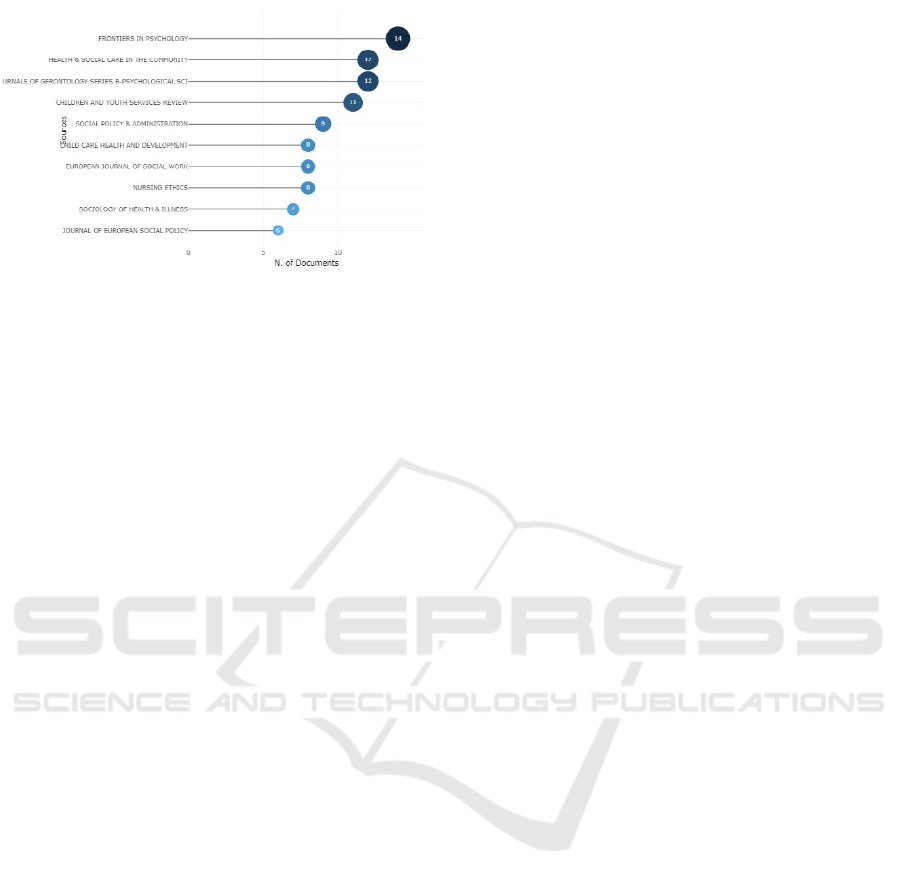
Figure 3: Most Relevant Sources of the Article
Publications.
evident, such as "China" (16 times) and "filial piety"
(6 times), suggesting the influence of Chinese culture.
The psychological dimensions are also represented by
the term’s "anxiety", "depression"," or "dementia".
The data also covers aspects of care relationships:
The issues of "care work," "children," "parenting,"
and "parents" all imply family responsibilities for
elderly care. Terms such as "long-term care", "social
support" and "social work" imply institutional and
community assistance. Finally, "gender" (16 times)
specifies its impact on the caregiving dynamics.
But—summary: the research presents a
multidimensional portrait of elderly care from
cultural conventions to institutional frameworks. In
our study, we apply these stages rigorously, as shown
in Figure 3. Based on the authors' keywords, the result
offers a six-fold cluster-based ordered perspective of
the main themes fundamental to the research corpus.
Every cluster reflects a different angle of view on the
main theme, probably implying particular areas of
concentration or methodological approaches.
5.1.1 Cluster 1 (9 items)
This cluster is mainly characterized by psychological
and family aspects of caregiving. Words such as
“anxiety”, “depression” and “stress” signal the mental
and emotional challenges of caregiving and the
impact of this on both caregivers and recipients.
Intergenerational dynamics may be indicated through
“children”, “parents”, and “caregiving” terms while
“culture” may emphasize how cultural determinants
drive the perception of caregiving. “Social support”
refers to the external networks or structures that can
help mitigate some of these challenges.
5.1.2 Cluster 2 (8 items)
Centered on elder care, this cluster delves into family
dynamics and societal structures. Keywords such as
"elder care", "family caregiving", and "elderly"
position the elderly at the core. "Gender" and
"migrant care workers" might address issues of
workforce demographics and implications, while
"well-being" suggests a holistic view on outcomes.
"Social services" might highlight institutional
supports.
5.1.3 Cluster 3 (7 items)
Oriented towards systemic structures, terms like
"welfare state", "long-term care", and "nursing"
denote institutional frameworks and professional care
environments. "Migration" could be related to the
global movement of caregiving workers or the elderly
themselves, while "childcare" introduces an
alternative caregiving paradigm. In our study, we
apply these stages rigorously, as shown in Figure 4.
5.1.4 Cluster 4 (7 items)
This cluster appears methodologically grounded.
With terms like "qualitative research", it might be
exploring in-depth, narrative-based insights. "Care
ethics" and "informal care" introduce moral and non-
professional dimensions, while "dementia" and
"elderly care" again centralize elderly needs.
5.1.5 Cluster 5 (7 items)
Geographical and cultural contexts seem dominant
here. "China" and "Sweden" suggest regional
perspectives, while "filial piety" introduces
traditional caregiving values, especially from East
Asian contexts. "COVID-19" introduces a temporal
and situational element, hinting at research spawned
by pandemic challenges.
5.1.6 Cluster 6 (6 items)
With terms like "Attachment", "Foster care", and
"Mental health", this cluster seems to veer into niche
areas, focusing on specific caregiving environments
and their psychological implications, including the
satisfaction derived from caregiving roles.
In summary, the clusters illustrate a
multidimensional exploration of caregiving. From
psychological underpinnings to methodological
orientations, systemic structures to geographical
contexts, and specific caregiving environments, the
research captures a comprehensive and intricate view
of caregiving dynamics.
ICRDICCT‘25 2025 - INTERNATIONAL CONFERENCE ON RESEARCH AND DEVELOPMENT IN INFORMATION,
COMMUNICATION, AND COMPUTING TECHNOLOGIES
898
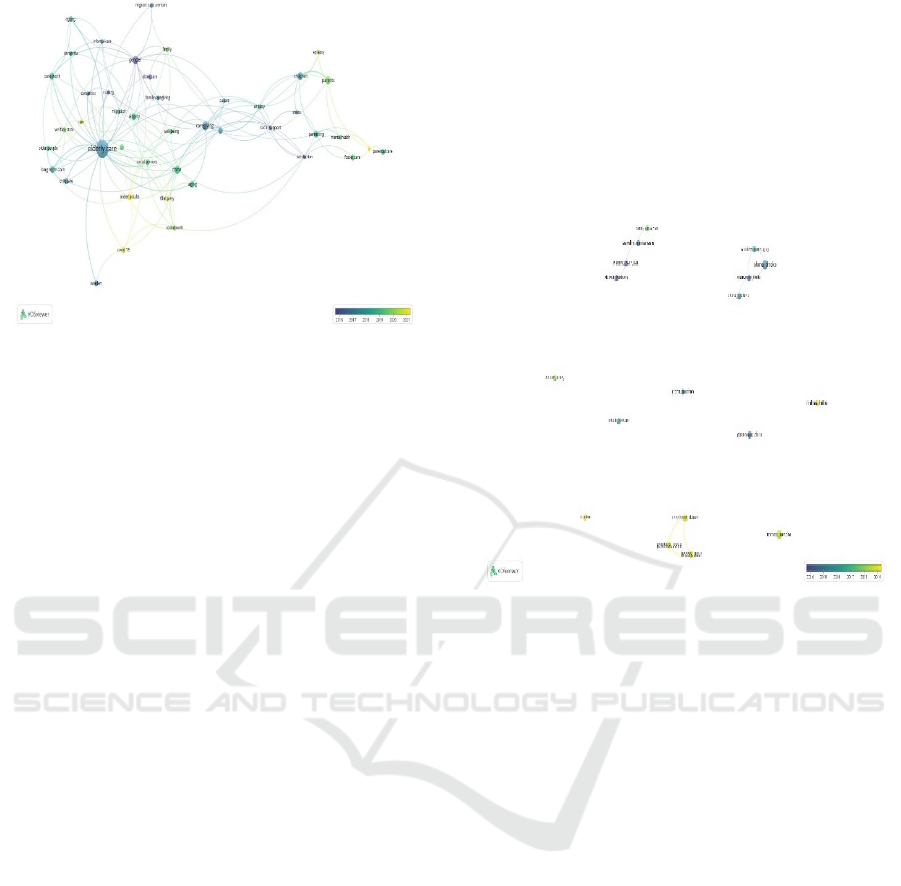
Figure 4: Authors Keyword Analysis.
5.2 The Co-Authorship Analysis
The co-authorship analysis in Vos Viewer provides
an insightful breakdown of the collaboration patterns
among researchers in the field. Let's delve deeper into
understanding these clusters:
5.2.1 Cluster 1 (4 items)
This cluster centers around 'abma, tineke' and 'abma,
tineke a.' suggesting that these may be the main
authors or different variations of the same author's
name. Collaborations with 'dauwerse, linda' and
'widdershoven, guy' indicate a close-knit research
team, which likely has consistent scholarly
contributions in their specific niche of the domain.
5.2.2 Cluster 2 (4 items)
A collaborative grouping involving 'da roit, barbara',
'naldini, manuela', 'pavolini, emmanuele', and 'rani,
costanzo' depicts another research team. Their
repeated co-authorship suggests a synergistic working
relationship in their specialized research area.
5.2.3 Cluster 3 (3 items)
The trio of 'goedeke, sonja', 'landon, jason', and
'shepherd, daniel' seems to be another collaborative
group. Their mutual endeavors in research projects
underscore a shared interest or complementary
expertise.
5.2.4 Clusters 4 to 10
These are single-item clusters, each representing a
distinct author. Such solitary clusters can imply
various things:
• These authors may primarily work
independently or with collaborators outside
the current dataset.
• They might be the primary authors in their
respective research areas, potentially
bringing unique perspectives or expertise.
• Alternatively, they could be entering the
field or domain and might develop
collaborative patterns in subsequent years.
Figure 5: Co-Authorship Analysis.
In essence, clusters 1 to 3 depict core research
teams or collaborative groups within the field,
suggesting areas of consolidated expertise. In
contrast, clusters 4 to 10, being single-author clusters,
may indicate individual research paths or potential
areas for new collaborations. In our study, we apply
these stages rigorously, as shown in Figure 5. The
overall co-authorship analysis provides a mapping of
the scholarly landscape, offering insights into
established collaborations and hinting at potential
areas for future research partnerships.
5.3 Country Clustering
The clustering of countries, as depicted by Vos
Viewer, can be understood as a representation of
certain shared characteristics, methodologies, or
collaborative patterns within the research field.
5.3.1 Cluster 1
This cluster includes countries like Austria, Denmark,
Finland, and others, predominantly from Northern
Europe and parts of Asia like Japan and Taiwan.
Their grouping might suggest a shared research
methodology or perhaps similarities in their eldercare
Evolving Dimensions of Senior Citizen Care: A Prisma-Guided Systematic Literature Review
899
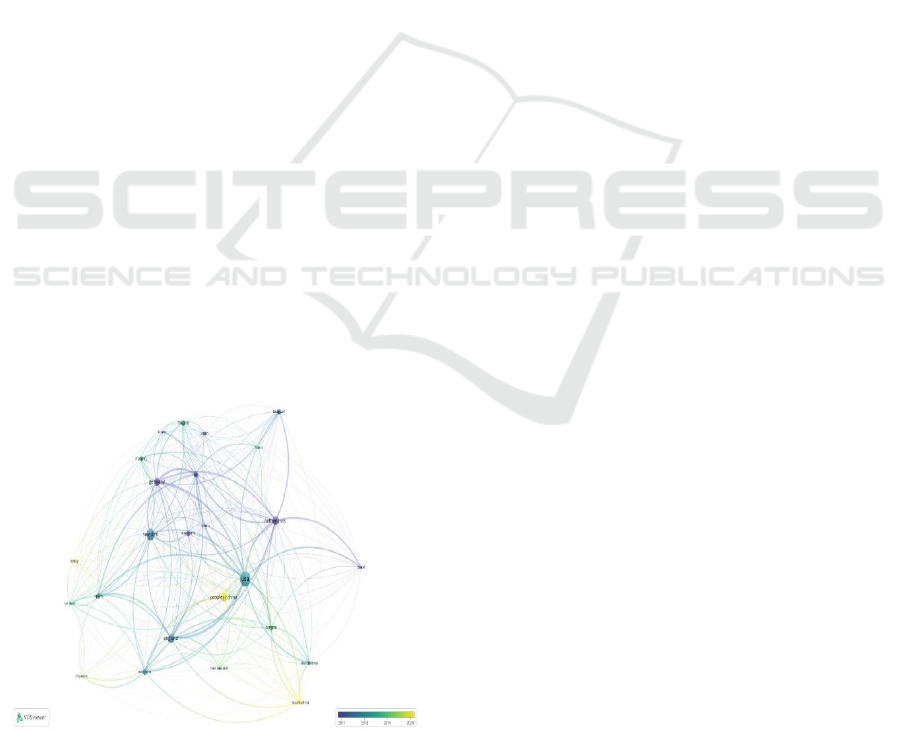
systems, reflecting common socio-cultural and policy
factors.
5.3.2 Cluster 2
Comprising England, France, Italy, and others, it's
largely a blend of Western European nations along
with New Zealand and China. The juxtaposition
might indicate that these countries have comparable
research outputs, methodologies, or eldercare
systems that are being studied in the given context.
5.3.3 Cluster 3
This cluster features Australia, Scotland, Singapore,
Spain, and Turkey among other more varied nations.
Their cooperation may suggest a wider spectrum of
research, maybe investigating several approaches and
techniques in elder care.
5.3.4 Cluster 4
With Belgium, Israel, and the Netherlands, this
cluster may be reflecting a different research
perspective or a specific eldercare model known from
these nations.
5.3.5 Cluster 5
Another diverse cluster is this group of Canada,
South Africa and South Korea. This implies that there
could be specific research collaborations or shared
elder care challenges and solutions around which
there is mutual interest. In our study, we apply these
stages rigorously, as shown in Figure 6.
Figure 6: Country Clustering.
In a sense, the clusters can reveal common research
methods, practices, and eldercare frameworks.
Furthermore, by studying these patterns, researchers
can find commonalities, potential collaborations, or
investigate dissimilar eldercare systems across
clusters.
6 DISCUSSIONS
We conducted a systematic literature review (SLR) to
provide an in-depth understanding of the eldercare
domain, to denote the intersection of multiple
thematic areas, and to outline the collaboration
behavioural among geographical entities. Our
triangulated methodology from author keywords to
co-authorship and geographical clusters reveals the
intricate cartography of eldercare studies. Now, let’s
dive on a journey of understanding our discoveries.
The study of geographical clusters becomes
especially important considering the worldwide aging
population problem. Recognized for their strong
social welfare systems, northern European nations are
inevitably leading front stage in studies on elder care.
Despite the varying social, cultural, and
economic matrices of different regions, the clustering
together of countries (e.g., Japan and Taiwan) in
Cluster 1 speaks to the universal nature of the
challenges of aging dynamics across diverse settings.
In contrast, the diversity of Cluster 2 may serve as
low-key hints toward the paradox in eldercare
paradigms although the aging population concerns of
Western European countries are quite similar in
nature, they are said to arrive at scenarios that are
awful (in the sense that these countries have big
chronic disease burdens, leading to very high health
care expenditure per capita) while China and New
Zealand showing off the other faces of the eldercare
from which mutual learning could be triggered.
The thematic clusters, built using the keyword
analysis reinforce the interdisciplinary nature of
eldercare research. And the depth and breadth of
eldercare issues are reflected in themes from mental
health (anxiety, depression) to the socio-cultural
frames of caregiving (gender, migrant care workers).
It’s interesting to see how much a word like
'caregiving' seems to hit outside of that segment of a
more region-specific discussion, such as 'China' or
'Sweden'. Eldercare can be perceived in general and
specific terms, and the mix of the two highlights the
importance of considering eldercare on both levels.
The co-authorship analysis is equally interesting.
The clustering of names shows patterns of
collaborators, and demonstrates the global nature of
eldercare research. Frequent co-authorship, for
instance, as illustrated between Cluster 1 and Cluster
ICRDICCT‘25 2025 - INTERNATIONAL CONFERENCE ON RESEARCH AND DEVELOPMENT IN INFORMATION,
COMMUNICATION, AND COMPUTING TECHNOLOGIES
900

2, may indicate broader institutional or collaborative
networks in the emerging research areas. Clusters 4 to
10, however, contained single entities, which may
reflect the niche expertise of reporters and would
therefore be worth further study.
The contribution from bibliometric tools such as
Vos Viewer towards SLR is clear from the detailed
insights generated, but there are certain limitations.
Co-authorship clusters may not fully represent
research dynamics. For instance, an impactful
researcher may indeed be collaborating across
severalthemes and their single inclusion in one cluster
may be an over-simplification of their contribution.
Furthermore, our study focused primarily on articles
and book chapters, potentially overlooking
significant insights from other forms of academic
outputs like conference proceedings or white papers.
It's also paramount to recognize that while
quantitative analyses like this provide a bird's eye
view, the granular nuances of individual research
articles and the qualitative depth they bring can
sometimes be overshadowed.
In summation, this SLR paints a vivid picture of
the state of eldercare research. While Northern
European countries emerge as dominant contributors,
the challenges and solutions in eldercare are
undeniably global. The diverse themes underscore the
complexity of eldercare, calling for multidisciplinary
solutions. As the world grapples with an aging
population, collaborative research endeavors, as
reflected in our co-authorship clusters, will become
increasingly pivotal. Future studies should strive to
integrate both quantitative bibliometric analyses and
qualitative evaluations to holistically understand the
ever-evolving domain of eldercare.
7 CONCLUSIONS
This systematic literature review 2010-2023 provide
a substantive overview of elder care research
presenting its multi-dimensional aspects. The key
themes, from psychological to societal constructs,
indicate the depth and breadth of discussions in this
domain. Cross-border collaboration emphasizes the
inclusive nature of the subject, spreading awareness
across the world. Though a few countries have been
consistently involved in research, it has not been
without gaps, which are a clear opportunity for
improvement in future efforts. However, with an
aging world, the take home messages from this
review highlight the importance of sustained research
interaction and implementation. Another hiatus, yet
one unerring aim still rings true: None of us wants to
be neglected and none of us wants other people to
neglect our elderly.
8 LIMITATIONS OF THE STUDY
• Database Specificity: The research relied
entirely on the Web of Science database,
potentially overlooking significant studies
from other databases such as PubMed,
Scopus, or Google Scholar.
• Language Constraints: Focusing on
publications and book chapters only in
English could have caused us to overlook
important insights from non-English
literature, especially from areas with
notable elder care research in other
languages.
• Time Frame: The study restricted its
review to publications from 2010 to 2023,
potentially overlooking earlier seminal or
more recent trailblazing works from
outside this time frame.
• Inclusion Criteria: The concentration on
specific types of publication, such as book
chapters, journal articles, etc., may have
led to the exclusion of relevant research
from white boxes, conference proceedings
or other kind of academic correspondence.
• Automated Screening: While automated
technologies ease the review process, they
may exclude potentially significant papers
offering original perspectives
inadvertently.
9 FUTURE AVENUES OF
RESEARCH
A primary recommendation is to pool data through
cross-database pooling providing a wide-angle view
of the elder care research landscape; As such, it may
be used to facilitate a deeper analysis of current
themes, but might also open the way for new avenues
of investigation. There’s also a good case that can be
made, and should be, to read literature in other-than-
English languages. This process magnifies the
extended care and caregiving values derived from
cultural and regional plurality, especially from non-
western contexts as the replications of subsequent
caregiving tenets and rituals.
Also, due to the complex structure of elder care, it
is necessary to adopt an interdisciplinary approach.
Evolving Dimensions of Senior Citizen Care: A Prisma-Guided Systematic Literature Review
901

Exploring the interface of aging with other salient
fields, like technology, urban planning, or economics,
will yield the broadest challenges and solutions to
your research around senior care. And relevance in
practice would be enormous, as accelerated tech
contexts like AI-assisted living or telehealth have
already changed elements of elder care delivery.
Finally, though quantitative data is useful for a
macro view, qualitative insights have an irreplaceable
richness. Future research could utilize in-depth
qualitative methods such as interviews or
ethnographic studies to more fully depict the
complexities and lived experiences of seniors and
their caregivers. This could shed some light, giving
practical recommendations that could bridge the gap
between the research realm and real-world impact.
Taiwan underwent a series of underfunded projects at
community level advocacy, we utilize this model in
our manuscript not just in the relevance of mental
health, but also in the field of a-population, one trying
to gather data from multiple sources in a low-income
country in an age of an increasingly aging global
population and socio-economic dynamics. Finally,
researchers adjusted research into this synergizing so
that academic activities result in direct propitious
hands-on applications within the quality of old age
care at the global level.
10 IMPLICATIONS OF THE
STUDY
Systematic literature reviews are critical tools in
identifying gaps in knowledge and arguing
implications in relation to policy-making, caregiving
and research as they relate to elder care. This makes
the insights extracted predominantly a strong
compass for the policymakers to explore, Avenues
towards more potency and knowledge-based
structures of elder care matching with the current
scenario. Moreover, the research emphasizes the
necessity for an integrated approach to caregiving by
illuminating various aspects of elder support care,
from the mental elements to a supportive family
dimension. Such a holistic approach may guarantee
that elder purpose solution tenders the physical as
well as mental health requirements of considerately
nursing the aged populace.
Additionally, these findings are invaluable for
caregiver training initiatives. By emphasizing the key
themes and challenges, there's potential to refine and
enhance training modules, equipping caregivers with
updated competencies. In parallel, the importance of
these insights for advocacy cannot be understated.
Highlighting the pivotal aspects of elder care can
drive more community and governmental support,
ensuring that the plight and needs of the elderly
remain at the forefront of societal discourse.
From an academic perspective, the study acts as a
lighthouse, illuminating areas that are well-trodden
and those that beckon further exploration. Such
directive is invaluable for researchers who wish to
focus on those areas with the highest potential for
disruptive insights. Furthermore, the expanding
relationship between technology and elder care, as
noted in the review, points to a fledgling opportunity
for tech inventors to tap. Bespoke technical fixes to
care for our elders will improve quality of life and
autonomy of our ageing population.
Another key theme highlighted by the paper is the
importance of cultural/ regional contexts for shaping
elder care practices. This cultural sensitivity became
a rallying cry for caregivers particularly those
working with diverse populations to implement more
culturally aware approaches to care. Last, data-
informed findings about the intersection of general
health and elderly care challenges healthcare
professionals to incorporate elderly care
considerations into more systems-level health
strategies. This integration ensures that a holistic
well-being of elderly is covered.
REFERENCES
Baldassar, L., Baldock, C., & Wilding, R. (2007). Families
caring across borders: migration, ageing and
transnational caregiving. Palgrave Macmillan.
World Health Organization. (2018). Ageing and health.
WHO.
Page MJ, McKenzie JE, Bossuyt PM, Boutron I, Hoffmann
TC, Mulrow CD, et al. The PRISMA 2020 statement:
an updated guideline for reporting systematic reviews.
BMJ 2021;372: n71. doi: 10.1136/bmj. n71
Liberati, A., Altman, D.G., Tetzlaff, J., Mulrow, C.,
Gøtzsche, P.C., Ioannidis, J.P.A., Clarke,
M.,Devereaux, P.J., Kleijnen, J. and Moher, D. (2009),
“The PRISMA statement for reportingsystematic
reviews and meta-analyses of studies that evaluate
health care interventions:explanation and elaboration”,
PLoS Medicine, Vol. 6 No. 7, e1000100, doi:
10.1371/journal.pmed.1000100.
Meline, T. (2006), “Selecting studies for systemic review:
inclusion and exclusion criteria”, Contemporary Issues
in Communication Science and Disorders, Vol. 33
Spring, pp. 21-27, doi: 10.1044/cicsd_33_S_21.
Priyashantha, K.G., De Alwis, A.C. and Welmilla, I.
(2021a), “Outcomes of egalitarian gender role attitudes:
ICRDICCT‘25 2025 - INTERNATIONAL CONFERENCE ON RESEARCH AND DEVELOPMENT IN INFORMATION,
COMMUNICATION, AND COMPUTING TECHNOLOGIES
902

a systematic literature review”, Vol.281, availableat:
http://repository.kln.ac.lk/handle/123456789/23557.
Priyashantha, K.G., De Alwis, A.C. and Welmilla, I.
(2021b), “The facets of gender stereotype change: a
systematic Literature review”, Proceedings of 12th
International Conference on Business and Information,
Faculty of Commerce and Management Studies,
University of Kelaniya. p. 70. doi:
10.2139/ssrn.4117570, available at:
http://repository.kln.ac.lk/handle/123456789/24018.
Priyashantha, K.G., De Alwis, A.C. and Welmilla, I.
(2021c), “Gender stereotypes change outcomes: a
systematic literature review”, Journal of Humanities
and Applied Social Sciences, Vol. ahead-ofprint No.
ahead-of-print, doi: 10.1108/JHASS-07-2021-0131.
Tranfield, D., Denyer, D. and Smart, P. (2003), “Towards a
methodology for developing evidence informed
management knowledge by means of systematic
review”, British Journal of Management, Vol. 14 No.
3, pp. 207-222, doi: 10.1111/1467-8551.00375.
Okoli, C. and Schabram, K. (2010), “A guide to conducting
a systematic literature review of information systems
research”, (SSRN Scholarly Paper No. 1954824),
Social Science Research Network. doi:
10.2139/ssrn.1954824.
Petticrew, M. and Roberts, H. (2006), Systematic Reviews
in the Social Sciences: A Practical Guide, Blackwell
Pub, Oxford.
Evolving Dimensions of Senior Citizen Care: A Prisma-Guided Systematic Literature Review
903
