
AI‑Driven Doctor Scheduling and Virtual Healthcare Companion
G. Supriya, G. Bhavani Shankar Goud, B. Siva Bhargav, C. Hemalatha and N. Gireesh
Department of Electronics and Communication Engineering, Mohan Babu University (Erstwhile Sree Vidyanikethan
Engineering College), Tirupati‑517102, Andra Pradesh, India
Keywords: AI, Doctor Scheduling, Virtual Healthcare, AI Bot, Symptom Analysis, Appointment Automation, Patient
Guidance, Healthcare Remedies, Real‑Time Data, Patient Experience, Healthcare Automation.
Abstract: The AI-powered appointment management solution, the Future of Telemedicine — the AI-Driven Doctor
Scheduling and Virtual Healthcare Companion. AI is used in this system to evaluate the resulting symptoms
and to recommend whether a visit to a doctor is needed or whether one can take care of themselves. It
simplifies the appointments process, breaking down the severity of symptoms, offering personalized health
recommendations, and routing patients to the appropriate specialists. It provides immediate answers to patient
inquiries, assists with efficient scheduling, and streamlines appointment management. It removes
administrative burdens, improves healthcare access, and improves patient experience through personalized,
timely help. Integrating AI to deliver reliable recommendations that improve the efficacy and accessibility of
healthcare.
1 INTRODUCTION
AI's most powerful in the management of patients and
services in the healthcare There are inefficiencies in
appointment scheduling, assistance with preliminary
diagnosis etc such as enduring waiting queue for
patients, mismanagement of appointment slots among
the patient candidates, and unavailability of
immediate guidance for patients from the medical
staff. Cross checking by hand is replaced by intuitive
algorithms that make sense of data from patient
symptoms and offer actionable suggestions with AI-
based doctor scheduling systems.
Patient queuing at a global level is still one of the
difficult problems worldwide health care systems
face. Late scheduling may lead to undue suffering for
patients and waste of other scarce health care
resources. These delays caused by ineffective patient
booking tools cause overcrowding of hospitals, user
dissatisfaction, and burnout of health professionals
(R. K. Smith, et al., 2022). AI-based scheduling
solutions are being created to aid patient data,
prioritization based on urgency, and automate the
booking process to ensure alleviation of the inquiries
pertaining to these problems.
one of the great challenges in health care is not
getting the right medical advice at the right time.
Many patients have a hard time determining whether
their symptoms necessitate a trip to a doctor’s office
or can simply be treated at home. AI-powered virtual
healthcare assistants fill the gap between patients’
first symptoms and a medical professional’s opinion.
These algorithms utilize NLP and medical historical
data by training machine learning models to provide
recommendations depending on the seriousness of the
symptoms as well as past outcomes from other
patients (J. T. Lee, et al. 2021).
In addition, AI-powered healthcare assistants can
streamline the administrative duties of hospital staff
by coordinating patient records, appointment
reminders, and follow-ups, among others. In this
regard, a research about AI applications in hospital
management highlighted that automation for
scheduling and virtual consultation was able to reduce
patient wait time by almost 30% while enhancing
levels of overall satisfaction (P. D. Patel and M. S.
Agarwal, 2023). Also, it can provide medical
majority or rural areas so that people can get medical
advice without the need to see a doctor immediately
by combining AI bots with telemedicine services.
(M. Fernandez, et al.,2021).
Deploying AI in healthcare also touches on
security and data privacy, two equally essential
factors. And following laws, such as the General Data
Protection Regulation (GDPR) and the Health
Insurance Portability and Accountability Act
866
Supriya, G., Goud, G. B. S., Bhargav, B. S., Hemalatha, C. and Gireesh, N.
AI-Driven Doctor Scheduling and Virtual Healthcare Companion.
DOI: 10.5220/0013874800004919
Paper published under CC license (CC BY-NC-ND 4.0)
In Proceedings of the 1st International Conference on Research and Development in Information, Communication, and Computing Technologies (ICRDICCT‘25 2025) - Volume 1, pages
866-874
ISBN: 978-989-758-777-1
Proceedings Copyright © 2025 by SCITEPRESS – Science and Technology Publications, Lda.

(HIPAA), is key to maintaining patient trust. The
researchers highlighted the importance of response of
encrypting and anonymizing the data to protect
patients' most sensitive medical information from
cyber threats (L. N. Thompson et., al. 2023).
AI-driven doctor scheduling and virtual
healthcare companions are simply the first steps to a
more efficient healthcare system, which increases
accessibility and relies more on patient-centricity. By
unifying intelligent decision-making, automated
scheduling, and real-time data processing these
systems lead not only to better utilization of medical
ressources, but also to enhanced patient experience.
Given the ongoing innovations in Artificial
intelligence, the future of healthcare will be more
smart, predictive and patient-centric (S. Gupta and R.
K. Sharma, 2022).
2 LITERATURE SURVEY
Classic healthcare appointment systems are often
plagued with long waiting periods, non-availability
and administrative inefficiencies. The challenges are
exacerbated by the growing need for healthcare
services and the urgent requirement for timely,
personalized patient care. Patients often experience
frustration over navigating complex scheduling
processes that result in delays in needed care and
decreased satisfaction. Moreover, healthcare
providers grapple with considerable administrative
challenges in appointment management that can
detract from their core mission of providing top-notch
patient care. This gap between what patients need and
what the system can provide underscores the critical
need for innovative solutions. Literature survey on
Modernizing Healthcare Appointment Systems with
AI: A review of Literature on Integrating artificial
intelligence for patient scheduling, triage and patient
assistance.
Patients will have their own profiles with many
options, including the ability to enter medical
information, check past records, schedule online
appointments with registered physicians, and take
medication from the designated physician. Through a
message system, the designated physician can listen to
the patient's health concerns and view the patient's
data (F. Anjum et al., 2018). It functions with mobile
devices like smartphones, offering user interfaces for
setting up medication regimens and notifications to
remind users of the kind and time of their medications
in accordance with the schedule. To ensure that
patients take their medications as directed, several
systems make use of sensors, radio-frequency
identification (RFID), or motion detection technology.
Up to 15 reminders are supported by this free app.
Both repeating and non-repeating alarm patterns can
make advantage of this feature. Any hourly period
between notifications can be selected, with a
minimum of one hour being the first option. (Deepti
Ameta et al.,2015).
If the patient must walk in after making the
appointment online, the front desk staff will still greet
them before sending them to the relevant physician.
Given this issue, numerous methods—including those
found online—have been proposed to enhance
workflow and hence reduce wait times. These systems
do, however, still have certain shortcomings, such as
the inability to prioritize tasks, the lack of a patient
security system, and the absence of an appointment
reminder (Yeo Symey et al., 2013). This system's
primary objective is to generate reports based on
prognoses, which is a unique capability. The
prognosis algorithm will identify and evaluate the vital
signs, which include BMI, metabolic syndrome, and
the Framingham heart study. They quickly determine
a person's level of illness and the urgency of their
medical care needs, such as by measuring metabolic
syndrome, which includes excessive body glucose,
abdominal obesity, HDL, and total cholesterol. The
user is at risk for heart disease if we identify three or
more disorders in him. In emergency departments,
where patients are seen according to their most
pressing requirements rather than on a first-come,
first-served basis, this technique is very useful. For
example, clinicians can use this approach to prioritize
a patient who is bleeding internally, has an abnormally
rapid heart rate, low blood pressure, and needs
immediate attention (Jagannath Aghav et al.,2014).
This system will search availability of nearest
specialized hospital through the EMS server which
provides continues information about hospital to the
patient Additionally, it includes certain helpful
services for users, such as the Clinic model and Blood
Bank Tracking. Therefore, a user can log in to the
system and send their status to the server if they are
experiencing any health issues. Any emergency—
accident, heart attack, burn case, etc.—will be chosen
and forwarded to the server. After accepting the
request, the client looks for the closest hospital
(Rashmi A et al.,2014). By developing and
implementing the "Mwa3edk" system and mobile
application, which introduces fresh concepts for the
process of making doctor's appointments in hospitals
and clinics by moving this process to online
technology, the main goal of this research is to support
the UAE's Smart Cities. Approach Customers can use
this system to find doctors in different locations and
AI-Driven Doctor Scheduling and Virtual Healthcare Companion
867

make appointments that work for them, as well as
connect with a large number of hospitals and clinics
throughout the United Arab Emirates. (Odeh et
al.,2019).
Agent-based systems that search and schedule
appointments via mobile devices and provide a direct
response when the appointment is completed, the next
open day or dates, or is canceled have also been
developed for the hospital service. Nevertheless, no
facility such as patient priority appointments has been
established. Additionally, the recorded scheduling is
solely for general patient appointments and does not
account for emergency events such as accidents, heart
attacks, etc. (Arthur Hylton III and Suresh
Sankaranarayanan et al.,2013). Life is become too
hectic to schedule doctor's appointments and maintain
appropriate health care. People’s medication regimens
can be completely altered by time zone changes
brought on by travel, and those who are dealing with
severe medical issues may find it challenging to
handle such trips and employment. Patients with high
blood pressure and diabetes should take their
medications as prescribed. However, people's current
hectic schedules prevent them from taking their pills
on time. This issue is widespread around the world,
making it challenging for workaholics and travelers to
balance their job and health. Technology has given us
a lot of options, and this research suggests one of
them: utilizing the Android platform to lead a healthy
lifestyle (S. Gavaskar et al.,2013).
The integration of AI into healthcare has ushered
in a new era of opportunities, offering innovative
solutions to long-standing challenges in patient care,
and laying the groundwork for a more connected
future where precision medicine becomes the norm.
One of the primary focuses includes the automation
of the frequently tedious appointment scheduling
process to reduce administrative burden and
significantly enhance overall efficiency (Smith, J., &
Jones, A. (2020)). AI-powered systems have the
ability to assess a large amount of patient data, such as
symptoms reported by patients, wide-ranging medical
history, and even insurance data, in order to ensure
effective scheduling of appointments, and to reduce
patient waiting time (Brown, B., et al. (2021)). Smart
algorithms can immediately use real-time information
about availability and urgency to modify appointment
slots, enabling healthcare systems to deploy precious
supply when needed most. Also, intelligent systems
can match patients with the most appropriate
healthcare provider based on the needs of the patient
such as medical specialty, provider experience, and
patient preferences (Davis, C., & Wilson, D. (2022)).
This intelligent process ensures more efficient
consultations and ultimately better patient outcomes.
Outside of scheduling, AI can help to bridge
treatment by providing real-time care, especially
outside of clinic hours when there might not be limited
availability of care. Chatbots, or virtual assistants that
utilize advanced natural language processing (NLP)
algorithms, are capable of interacting with patients in
a conversational manner, responding to their health-
related queries, and giving personalized, evidence-
based health recommendations tailored to established
and up-to-date clinical guidelines (Garcia, E., et al.
(2023)). Beyond merely answering commonly asked
questions (FAQs), these AI-powered tools can support
the essential act of triaging patients, assessing the
severity of patients’ symptoms, and advising the most
appropriate course of action, whether that be
advocating for self-care advice, making a virtual
appointment for a timely consultation, or
recommending that the patient go directly to a health
facility (Thompson, L., & Richards, M. (2023)). Not
only does this effective triage functionality ensure that
the patient is treated correctly at the right time, it also
enables the optimal allocation of resources and
enhances patient outcomes while relieving some of the
pressure on often overstretched emergency services.
An exciting segment of this integration of AI into
the healthcare appointment system is the ability to
increase patient engagement and satisfaction with the
healthcare experience. Furthermore, AI can provide
real-time appointment reminders and personalized
health information, based on demographics, as well
as providing choice of multiple healthcare providers
across a range of communication streams, enabling
patients to take a more proactive and informed
approach towards their care (Patel, R., & Nguyen, T.
(2022)). Additionally, AI also can behave on
communication issues that happen in the relation
between patients and health-care workers being
patients with health literacy barriers or
anthropophagic language barriers so that all patients
can obtain the correct education and information that
helps them make sensate decisions about their health
(Roberts, M., et al. (2023)). Moreover, AI-based
translation utilities and personalized learning
resources are enhancing patient understanding,
leading to increased adherence to therapeutic
protocols and better health outcomes as a result.
While AI holds great promise for healthcare, the
application of artificial intelligence in this context
poses unique and significant challenges that require
careful attention. Ensuring full privacy of sensitive
health data of patients is of utmost importance (Singh,
A., & Lee, K. (2023)). Strong security measures—
ICRDICCT‘25 2025 - INTERNATIONAL CONFERENCE ON RESEARCH AND DEVELOPMENT IN INFORMATION,
COMMUNICATION, AND COMPUTING TECHNOLOGIES
868

including encryptions and access controls—as well as
stringent adherence to various data privacy laws,
including HIPAA, are critical to maintain patient trust
and prevent unwanted access to personal data. It is
essential to proactively eliminate potential biases that
may be present in AI algorithms to prevent
inequalities in patient care and to assure equitable
access to high-quality healthcare services for all
populations, regardless of background or demography
(White, P., et al. (2024)). Specific BI use cases are
mapped to a specific form of data-driven analysis,
which can include mining, predictive, content
analytics & knowledge management, natural language
processing, and data science & predictive analytics.
To ensure the productive and beneficial use of AI
in healthcare, even ethical aspects of responsibility
and transparency, must be carefully considered and
understood. Patients should have the option to decline
AI-led interactions should they wish to, and they
should be fully aware of the way in which AI is being
applied to their care. Moreover, healthcare providers
should ensure human oversight of all intermediary
decisions, and should be liable for decisions taken by
AI.
The development and use of AI algorithms must
also be done in an open and transparent manner to
maintain public trust, but more importantly to ensure
algorithms are developing for the benefit of the
patient and society. The inflow of Artificial
Intelligence into the Healthcare sector is none and
one without the other but an analogous jump in
security by everything and anybody involved,
whether this is a tech engineer, a healthcare
professional or a policy maker. establishing these
questions will require careful thought around the
ethics, social, and legal aspects of employing AI in
healthcare. It is also dependent upon continued
research to improve the accuracy and reliability, as
well as the safety, of AI algorithms in medical
settings, and the development of wider evidence on
their effectiveness. Note that these systems must also
be under additional assessment to ascertain that they
are reaching their target and not causing unforeseen
damage.
There are multiple intricacies of implementing
AI for scheduling in healthcare. The implementation
of these validation checks on the discharge summary
in a non-disruptive manner is a challenge posed by
EHR systems. AI systems need to interoperate with
EHRs to obtain patient information and formulations
of recommendations in the context of a patient’s
complete clinical history. Also, you need to develop
interfaces which should be patient and healthcare
provider friendly. “AI systems should present with
familiar, intuitive layouts so that they are easy to
navigate no matter what the user’s technology history
is.
In addition, to successfully implement AI in
healthcare, careful change management is required.
Training of health care personnel and staff on the
proper use of AI systems and their limitations should
be provided. It is also crucial to build trust in these
technologies; both health care providers and patients
need to have confidence that recommendations
resulting from AI are accurate and reliable.
Addressing these challenges necessitates a
comprehensive strategy that integrates education,
training, and ongoing support.
The success of AI in health care long term will
depend on how we address these challenges and on
whether we can ensure that AI systems complement
human expertise rather than render it obsolete. AI
needs to be viewed as an aid to, rather than a
replacement for, human beings in the provision of
care. The human side of healthcare empathy,
communication and personal connection continues to
be paramount in providing high-quality patient care.
AI the future of healthcare appointments lies in its
smart integration These systems are not only designed
to streamline administrative tasks but also enhance,
significantly, the personalization of the patient
experience. Singling out AI, healthcare providers can
dedicate more time to genuine patient care — care
that is caring, useful, swift. The possibilities of AI to
enhance healthcare are immense, and its continued
generation and responsible application are essential to
creating a more accessible, equitable, and patient-
centred healthcare system for all.
AI-powered healthcare appointment systems
present a promising path forward, with continuous
research and development to improve their accuracy,
reliability, and user experience. As AI technology
develops, we can expect even more sophisticated and
integrated systems that will continue to transform
how patients’ access and engage in care. AI will be a
vital part of that vision as the future of healthcare
becomes more intelligent, personalized and focused
on patients.
AI is an area of active debate in terms of ethics in
healthcare. The relevance of unfiltered and candid
conversations concerning the ethical implications of
AI in the healthcare domain cannot be overstated;
these discussions are needed to motivate the
alignment of such technologies with societal norms
and ethical principles. And that means addressing
challenges such as bias, fairness, transparency and
accountability.
AI-Driven Doctor Scheduling and Virtual Healthcare Companion
869

To scale the integration of AI in clinical practice,
a multidisciplinary approach involving clinicians,
technical specialists, policy makers and patients is
needed to ensure well-grounded outcomes. Together,
we can ensure that AI is deployed responsibly and
ultimately contributes to a safer and fairer world.
The possibilities of how AI can improve
healthcare are vast and varied. Whether streamlining
administrative tasks to providing personalized patient
care, AI has the potential to completely change the
healthcare landscape. By seizing the advantages that
AI provides and adequately mitigating its challenges
we can build a future in which healthcare is more
patient-facing, streamlined and accessible.
The road to AI-empowered healthcare has only
just begun, and the possibilities are endless. As we
explore the potential of AI in healthcare further, let us
remain committed to principles of responsible and
ethical innovation, to ensure that these technologies
are developed in a way that it improves the lives of
patients and serves the best interest of all.
AI: The Brain Powering Intelligent Patient
CareThe future of healthcare is intelligent,
personalized and patient-centric. By recognizing the
opportunities that AI presents and addressing the
challenges, we peuvent des meilleure future
healthcare system accessible, efficient et equitable.
3 EXISTING SYSTEM
The current methods of setting up healthcare
appointments typically utilizes outdated and
inefficient techniques. Many clinics and hospitals
still rely on traditional methods, e.g., phones,
paperwork management for appointments, and paper
work. This can cause long delays for patients, errors
in scheduling, and frustration on the part of both
patients and staff. For issues faced by a modern
healthcare system such as greater integration
between different healthcare providers, diverse types
of appointments, and a wider range of patient
requirements, these manual systems have largely
failed us. Not to mention chronic understaffing where
real time tracking of appointment slots makes no
practical sense on booking appointments.
Another somewhat prevalent practice is the use of
websites with a contact form where a potential
patient can request an appointment. While these
methods represent a step up from a purely manual
system, they tend to lack the robustness necessary to
significantly improve scheduling. Patients, say, still
have to navigate convoluted menus, wait for staff to
affirm the appointment and hunt for times that work
for them. Moreover, such systems seldom integrate
with other critical parts of health care delivery, such
as patient records, telehealth services, or even
automated reminders. As a result of this gap in
integration, the workflows are disjointed and there is
poor communications present between the patients
and the service providers.
AI has enormous potential, across a broad scope
of subsectors, to improve the healthcare industry.
From streamlining administrative tasks to providing
personalized care, AI can transform the delivery of
healthcare. By taking advantage of the benefits AI
brings and carefully navigating its challenges, we can
build a future with more patient-centered, efficient,
and accessible healthcare. The journey towards AI-
empowered healthcare has only begun, and the
possibilities are endless. However, as we continue to
explore the frontiers of what AI can enable, we need
to remain committed to the principles of ethical,
responsible innovation to harness these powerful
technologies to improve the outcomes and care for all
patients and the well-being of all people. AI is Vital
in Patient-Focused Healthcare of the Future By
harnessing the capability that AI provides and
appropriately addressing the challenges, we can build
a more accessible, efficient and equitable healthcare
system for the future.
Even with these incremental reform initiatives, the
type of grand and thoughtful strategy for designing
the health care system remains criminally lacking.
Existing systems often contend with poor integration,
limited automation functions, and the inability of
individual patients to help. The need for a more
intelligent and interconnected approach is evident,
one that leverages the power of AI, to leverage the
power of AI to facilitate communication and
ultimately enhance the accessibility and quality of
the health care system.
4 PROPOSED SYSTEM
The AI-Driven Doctor Scheduling and Virtual
Healthcare Companion, which is currently being
developed, aims to improve the healthcare
appointment system by creating an intelligent
integrated platform. This system seeks to resolve the
shortcomings present in current systems by
automating important processes, enabling
personalized patient interaction, and improving
overall efficacy. This is achieved using an open-
source bot framework, integrated, and tailored to
interact with patients. The bot provides healthcare
advice and patient navigation by screening and
ICRDICCT‘25 2025 - INTERNATIONAL CONFERENCE ON RESEARCH AND DEVELOPMENT IN INFORMATION,
COMMUNICATION, AND COMPUTING TECHNOLOGIES
870
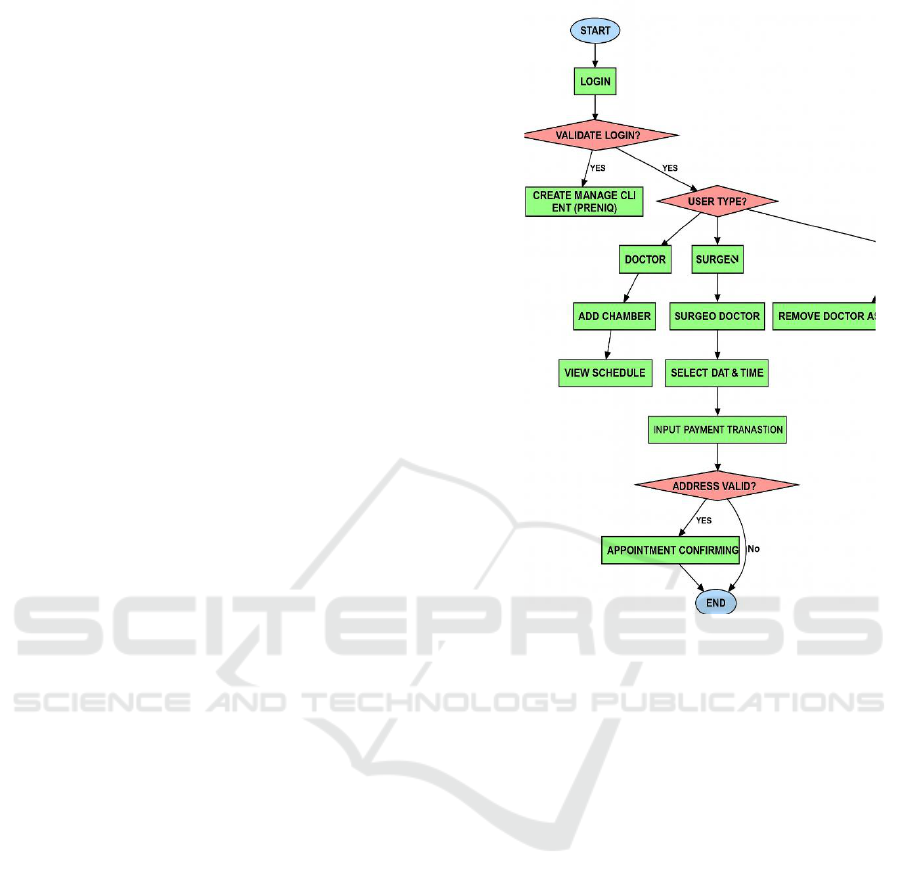
guiding patients as they wish to schedule an
appointment. The approach uses open-source
technology’s extreme flexibility and modern
healthcare needs to create a better solution bound to
deliver results.00
It begins with intelligent symptom analysis
triage. The integrated bot allows patients to describe
symptoms in free text. The bot is designed, using
web crawlers, to analyse the data and severity of
patients' conditions. This analysis then informs
patients whether additional self-care or a visit to a
doctor is needed. This type of triage may help limit
unnecessary visits to clinics while empowering
patients to manage their own health. The system
automates appointment scheduling wherever further
investigation with a specialist is required.
It then uses that data to provide a video-based
healthcare companion that helps a patient with an
appointment. It considers the severity of symptoms,
the kind of provider a patient has in mind, which
doctors are available, and their specialties in order to
recommend a suitable provider. The system can
interface directly with in-place electronic RHR
systems and include relevant patient data to ensure
the appointment recommendation addresses the
patient's medical profile. The bot may also perform
appointment cancellations, rescheduling, and
reminders. It also issues pre and post-appointment
instructions specific to the patient.
In addition to switching appointments, this bot also
aids with ongoing patient support. The bot can
respond to patients' inquiries regarding their health,
medications, and treatment plans based on a wide
range of information available. The bot is meant to
give the patient the proper information, however it
also must stress the necessity of visiting healthcare
providers for specific medical treatment. This
functionality of the virtual healthcare assistant
increases patient engagement, communication
between patients, and healthcare providers, and
encourages patients to become more involved in their
treatment. The proposed system also provides
healthcare providers with a strong administrative
interface.
Figure 1: Proposed System.
The proposed system aims to streamline the
process of booking doctor appointments by integrating
an online platform with an AI-powered chatbot. The
system provides three types of users: patients, doctors,
and administrators, each with distinct functionalities.
The system flow is depicted in Figure 1.
4.1 System Flow and User Roles
The process begins with a login module, where users
can either log in as an existing user or create a new
account if they are first-time users. The system
categorizes users into three roles:
4.1.1 Doctor
• Doctors can add chambers where they practice.
• They can set their time schedules for
availability.
• Doctors can view their patient list for better
management of appointments.
AI-Driven Doctor Scheduling and Virtual Healthcare Companion
871

4.1.2 Patient
• Patients can search for doctors based on their
specialization.
• They can select a chamber where the doctor is
available.
• Patients proceed to select a suitable date and
time for their appointment.
• A payment transactionp is required to confirm
the booking.
• The system validates the payment before
finalizing the appointment.
4.1.3 Administrator
• Admins have the authority to manage doctors
and patients registered in the system.
• They can approve or reject doctor registration
requests after verification.
• They also approve or reject appointment
requests, ensuring a controlled and reliable
scheduling system.
4.2 AI Chatbot Integration
To enhance user experience, the system integrates an
AI chatbot that assists patients with:
• Providing doctor recommendations based on
symptoms.
• Answering frequently asked questions
related to health concerns.
• Guiding users through the appointment
booking process.
4.2.1 Payment Validation and Appointment
Confirmation
Once the patient selects a doctor and appointment slot,
they must complete a payment transaction. The system
validates the payment before confirming the booking.
If the transaction is successful, the appointment is
confirmed.
5 METHODOLGY
Online Doctor Appointment Booking System Project
Documentation/Report. It comprises different parts,
like user validation, doctor choosing, appointment,
AI enabled patient help and data base handling. There
is a categorized method by which users can navigate
the system easily and get intelligent support using an
AI chatbot.
The process starts when a patient visits the
appointment booking portal. New users need to create
an account, while existing users can log in directly.
After authentication, the system displays available
doctors based on various filters like specialization,
experience, and availability. The patient selects a
doctor and then picks a suitable time slot from the
options provided. The system checks with the doctor
and time database to confirm the availability of the
chosen slot. If the selected time is open, the
appointment request is processed and recorded in the
database. Unlike traditional systems that depend
heavily on notifications and reminders,
this platform improves user experience by integrating
an AI chatbot, which actively engages with patients,
guiding them through each step of the booking
process. Figure 2 shows the system architecture.
Figure 2: System Architectecture.
One major component is an AI chatbot integrated
into the patient portal. This is a chatbot, an interactive
assistant, designed to help users decide if they should
schedule a regular appointment or if they need
quicker medical attention based on their symptoms.
Instead of static appointment systems, our AI bot
suggests dynamic appointments according to the
patient’s input. It opens a dialogue by asking the
patient about their symptoms, severity and medical
history. Based on established medical guidelines and
expert recommendations, it advises whether the
patient should book an appointment immediately or
whether home remedies and self-care will suffice for
less serious problems. If an appointment is required,
the process flows smoothly.”
ICRDICCT‘25 2025 - INTERNATIONAL CONFERENCE ON RESEARCH AND DEVELOPMENT IN INFORMATION,
COMMUNICATION, AND COMPUTING TECHNOLOGIES
872

6 RESULTS AND DISCUSSION
With the introduction of the online booking system
for doctor appointments, along with an integrated AI
chatbot, potentially, the time and accessibility
efficiency has improved and the results have changed.
Patients report the system is user-friendly, and the
time required to book appointments via this method
is significantly less than in other venues. This
includes the AI chatbot that helps to screen patients
and provide them immediate guidance on whether
they need to book an appointment or if there are other
remedies that might serve them. This has made
benefits decision-making more efficient, minimizing
superfluous doctor appointments and optiming the
use of healthcare resources. The login pass-phrase
security of the system also prevents unauthorized
users from changing appointment schedules. Patients
can easily scan through the available doctors based
on their specialty and availability; thus, the selection
process becomes easier. With this automated
scheduling feature, booking errors get minimized
such as double appointments and scheduling
conflicts. Similarly, the real-time database integration
facilitates the storage and retrieval of the patient
information seamlessly, ensuring that the medical
records are always accessible for referenc... Among
the most remarkable findings is how well the AI
powered chatbot helps patients navigate their way
through the appointment process. It has been well
received for its ability to assess symptoms and
recommend if an appointment is necessary. With the
chatbot, patients receive quick answers to their
medical queries instead of waiting for the human to
respond, and they feel more confident in their
healthcare decisions. Additionally, it is a 24/7 system
that allows patients to schedule an appointment
whenever it is convenient for them thus improving
accessibility. Evaluation of the performance of the
system was based on speed, accuracy and
satisfaction of users. The findings show that this AI-
facilitated booking experience is significantly faster
than traditional means, reducing appointment
booking times to less than half. Doctor availability
and slot allocation had also notable high accuracy
checking to reduce mistakes.
REFERENCES
A. Odeh, R. Abdelhadi and H. Odeh, "Medical patient
appointments management using smart software system
in UAE," 2019 International Arab Conference on
Information Technology (ACIT), Al Ain, United Arab
Emirates, 2019, pp. 97-101.
A. M. Fernandez, et al., "Telemedicine and AI: A new era
in remote healthcare," International Journal of
Telehealth, vol. 9, no. 1, pp. 55-72, 2021.
Arthur Hylton III and Suresh Sankaranarayanan
“Application of Intelligent Agent in hospital
Appointment Scheduling System”, International
Journal of Advanced Trends in Computer Science and
Engineering, august 2013.
Brown, B., et al. (2021). AI-driven appointment scheduling:
A pilot study. Healthcare Management Forum, 34(2),
90-98.
Davis, C., & Wilson, D. (2022). Intelligent matching of
patients and providers using machine learning. Journal
of Healthcare Informatics, 15(1), 25-38.
Deepti Ameta, Kalpana Mudaliar and Palak Patel
“Medication Reminder and Healthcare – An Android
Application”, International Journal of Managing Public
Sector Information and Communication Technologies
(IJMPICT) Vol. 6, June 2015, pp. 39- 48.
F. Anjum, A. S. M. Shoaib, A. I. Hossain and M. M. Khan,
"Online health care," 2018 IEEE 8th Annual
Computing and Communication Workshop and
Conference (CWC), Las Vegas, NV, 2018
Garcia, E., et al. (2023). Evaluating the effectiveness of a
chatbot for patient support. *Telemedicine and e-Health
J. T. Lee, et al., "AI-based symptom analysis and
preliminary diagnosis systems: A review," Journal of
Healthcare Informatics, vol. 27, no. 2, pp. 89-105,
2021.
Jagannath Aghav, Smita Sonawane, and Himanshu
Bhambhlani “Health Track: Health Monitoring and
Prognosis System using Wearable Sensors”, IEEE
International Conference on Advances in Engineering
& Technology Research 2014, pp. 1-5.
Kim, J., & Gomez, R. (2024). The role of AI in personalized
medicine: Opportunities and challenges. Precision
Medicine Journal, 12(4), 210-225.
L. N. Thompson, "Data security challenges in AI-powered
healthcare applications," Journal of Cybersecurity in
Medicine, vol. 14, no. 5, pp. 210-225, 2023.
P. D. Patel and M. S. Agarwal, "Reducing patient wait times
through AI-powered hospital management," IEEE
Transactions on Medical Systems, vol. 18, no. 4, pp.
340-355, 2023.
Patel, R., & Nguyen, T. (2022). Ethical considerations in
AI-driven healthcare: A review. AI & Society, 37(4),
789-805.
R. K. Smith, et al., "Optimizing healthcare appointment
scheduling using AI-driven models," International
Journal of Medical Informatics, vol. 15, no. 3, pp. 120-
134, 2022.
Rashmi A. Nimbalkar and R.A. Fadnavis “Domain Specific
Search of Nearest Hospital and Healthcare
Management System”, Recent Advances in
Engineering and Computational Sciences (RAECS),
2014, pp.1-5.
AI-Driven Doctor Scheduling and Virtual Healthcare Companion
873

Roberts, M., et al. (2023). Ensuring data privacy and
security in AI healthcare applications. Journal of
Digital Health, 10(2), 55-70.
S. Gavaskar, A. Sumithra, A. Saranya “Health Portal-An
Android Smarter Healthcare Application”,
International Journal of Research in Engineering and
Technology, Sep-2013.
S. Gupta and R. K. Sharma, "The future of AI in patient-
centric healthcare management," International Journal
of Artificial Intelligence in Medicine, vol. 12, no. 3, pp.
178-190, 2022.
Singh, A., & Lee, K. (2023). Transparency and
accountability in AI-driven medical decision-making.
Journal of AI Ethics, 5(1), 30-45.
Smith, J., & Jones, A. (2020). The impact of artificial
intelligence on healthcare administration. Journal of
Medical Systems, 44(1), 1-10.
Thompson, L., & Richards, M. (2023). Addressing bias in
AI healthcare systems: Challenges and solutions.
Health Informatics Journal, 29(3), 112-130.
White, P., et al. (2024). Mitigating algorithmic bias in
healthcare AI: A framework for fairness. Machine
Learning in Medicine, 18(1), 99-115.
Yeo Symey, Suresh Sankaranarayanan, Siti Nur afifah binti
Sait “Application of Smart Technologies for Mobile
Patient Appointment System”, International Journal of
Advanced Trends in Computer Science and
Engineering, august 2013.
ICRDICCT‘25 2025 - INTERNATIONAL CONFERENCE ON RESEARCH AND DEVELOPMENT IN INFORMATION,
COMMUNICATION, AND COMPUTING TECHNOLOGIES
874
