
A Novel Approach to Enhance Cyber Resilience by Combining the
Zero Trust Security Model and MITRE ATT&CK Matrix Strategy
P. Ramya, Badapu Yaswanth, Anem Nithish Kumar,
Ambati Harikrishna and Arikatla Balagurunath Reddy
Department of Computer Science and Engineering, Mahendra Engineering College, Tamil Nadu, India
Keywords: Cyber Resilience, Zero Trust, Threat Elimination, ZTM, Data Security, MITRE, ATT, CK Matrix, Cyber
Threat, CTES.
Abstract: Cyber threats have grown exponentially with the digital information era, changing cyberspace. We suggest
merging the Zero Trust (ZT) security paradigm with the MITRE ATT&CK matrix to improve cyber resilience,
an organization's ability to recover quickly from a cyber-attack or security event. Public sector organizations
are vulnerable to the Advanced Persistent Threat (APT), but this research also examines phishing, ransom
ware, and insider threats. These threats exploit a company's computer and network vulnerabilities. The ZT
model's "never trust, always verify," which ensures that all network traffic is examined equally, emphasizes
micro-segmentation, continuous authentication, and least privilege. Research reveals that combining the ZT
and ATT&CK models may increase a company's cyber threats, and the study provides metrics for doing so.
The Cyber Threat Elimination Strategy (CTES) encompasses all of these indicators and is cross-validated
using the Zero Trust Model to assess its success. The study introduces a new cybersecurity paradigm,
emphasizes the Zero Trust model's importance in modern security strategies, and shows that organizations
can proactively assess the changing cyber threat landscape to ensure a secure and resilient digital future. ZT
and the MITRE ATT&CK matrix must be merged since current security measures cannot handle the
complexity and sophistication of cyber-attacks. Integrating the two models helps discover research gaps and
give practical responses, strengthening an organization's cyber defenses.
1 INTRODUCTION
The accelerating development of the digital
ecosystem crosses conventional industrial borders,
attaching various elements of everyday life to its
ever-integrating web, all mirroring the increasing
notion of cyberspace in the fabric of the modern
society. While digital innovation promotes
connectedness, yet enterprises are faced by new
challenges related to more advanced and pervasive
cyberattacks. Naga Vinod Duggirala, 2024;
Chunwen Liu, et al., 2024, Given that cyberattacks
have the capacity to cripple infrastructure, invade
privacy, and pose a threat to national security, it is
imperative, now more than ever, to formulate an
effective cybersecurity plan. This study examined the
effectiveness of the Zero Trust security model with
the MITRE ATT&CK framework in advancing
cyber-resiliency. Cyber-resilience ensures business
continuity from any sort of cyber threat: the ability of
an organization to foresee, respond, recover, and
adapt in relation to that threat. Zillah Adahman, et al.,
2023, Emphasizing continuous verification of all
network traffic, irrespective of source, the Zero Trust
model is a radical departure from conventional
perimeter-based security. Shaikh Ashfaq, et al.,
2023, The latter intends to provide a solid framework
to protect digital assets against the ever-growing
cyber risks, emphasizing micro-segmentation,
continuous authentication, and the principle of least
privilege. Onome Edo, et al., 2022; Nisha T N, et al.,
2023; Naeem Firdous Syed, et al., 2022, This method,
besides, does bring a different view to a cybersecurity
field by merging the strategic recommendations from
the Zero Trust model and that from the MITRE
ATT&CK architecture. While such integration helps
fend off the tactics used in cyberattacks, it
concurrently enhances cyber resilience by allowing
organizations to analyze and foresee cyber risks. This
research aims to study how this integration can fortify
an organization's defenses against cyberattacks.
Naeem Firdous Syed, et al., 2023; Yiliang Liu, et al.,
Ramya, P., Yaswanth, B., Kumar, A. N., Harikrishna, A. and Reddy, A. B.
A Novel Approach to Enhance Cyber Resilience by Combining the Zero Trust Security Model and MITRE ATT&CK Matrix Strategy.
DOI: 10.5220/0013874600004919
Paper published under CC license (CC BY-NC-ND 4.0)
In Proceedings of the 1st International Conference on Research and Development in Information, Communication, and Computing Technologies (ICRDICCT‘25 2025) - Volume 1, pages
857-865
ISBN: 978-989-758-777-1
Proceedings Copyright © 2025 by SCITEPRESS – Science and Technology Publications, Lda.
857

2024, The aim of this paper is to contribute to the
ongoing discussion about cybersecurity and propose
for enterprises a strategic roadmap to cope with the
complex digital threat landscape by discussing
practical ideas to manage and implement such
security policies.
This study suggests tangible steps to be taken
toward understanding how to implement the Zero
Trust paradigm with the MITRE ATT&CK
framework in order to help organizations make
themselves stronger against cyberattacks. The
purpose of this multi-sectioned article is to improve
corporate cyber resilience through workforce
integration of the Zero Trust paradigm with the
MITRE ATT&CK methodology. The general
research objectives and rationale for the integration
are explained in Chapter I. Chapter II will contain a
theoretical characterization of the MITRE ATT&CK
Framework and Zero Trust Model. In Chapter III, the
methodology of the integration process must be laid
out. Chapter IV deals with the practical
implementation of the integration framework in an
organization. The integration is validated through
empirical evidence in Chapter V. Chapter VI
discusses the implications of these findings in terms
of strengthening cyber resilience. Chapter VII
compares the integration approach with earlier
investigations to illustrate how innovative and
effective it is. Chapter IX discusses the limitations of
this study. Chapter X details the contributions of this
study. Finally, Chapter XI will generalize our
findings and set out directions for further research.
2 RELATED WORKS
Conventional perimeter-based security solutions are
no longer sufficient to safeguard contemporary
organizational infrastructures in this age of more
sophisticated and frequent cyber-attacks. With the
rise of remote work, cloud computing, and mobile
devices, enterprises are quickly embracing digital
transformation and implementing a new security
paradigm: Zero Trust Security. Assuming that any
and all network communication, whether it originates
from within or outside the organization, might be
malicious is central to the Zero Trust cybersecurity
strategy. All users, devices, and system interactions
within a company's network are subject to constant
surveillance under this paradigm, which also
mandates stringent identification verification and
restricted access. FNU Jimmy, 2024, Key
components of Zero Trust Security, including Multi-
Factor Authentication (MFA), micro-segmentation,
Identity and Access Management (IAM), and least
privilege access, are described in this study, which
delves into its concepts and design. By delving into
the reasons for this model's adoption, the article
shows how Zero Trust overcomes the shortcomings
of traditional security measures, such as their
susceptibility to insider attacks and illegal network
lateral movement. This article provides a thorough
analysis of Zero Trust Security and how it may be
used to strengthen cyber defenses in today's
complicated digital landscape. It offers practical
advice to enterprises who are trying to update their
security measures.
Organizations in many different sectors are
switching to zero trust cybersecurity from older,
perimeter-based approaches. However, a new
management strategy is needed for the complicated
task of implementing zero trust, which differs from
conventional perimeter-based security.
Organizations may improve their zero-trust
cybersecurity planning, assessment, and management
with a well-defined set of key success factors (CSFs).
In response, we polled a group of twelve
cybersecurity specialists in three-round Delphi
research to ascertain their consensus on the CSFs for
zero trust cybersecurity implementation. The multi-
dimensional CSF framework comprises eight
components: identity, endpoint, data, network,
infrastructure, visibility, analytics, if/platform, and
orchestration and automation. Our intention was to
design a framework enabling the evaluation of an
organization's zero trust maturity levels, based on
such CSFs. William Yeoh, et al., 2023, From both the
theoretical and the practical point of view, the study
advanced our understanding of enforcing the zero
trust across diverse dimensions and at the same time
offers a real-world framework for organizations to
follow. This will be useful for the stakeholders of zero
trust cybersecurity efforts applied by organizations in
formulating, assessing, or applying the course of
action.
When it comes to cybersecurity, the Zero Trust
paradigm has emerged as a fresh perspective that
questions traditional perimeter-based approaches.
Sandeep Reddy Gudimetla, 2024, By analyzing the
concepts underlying access restriction and continual
trust testing for internal and external network traffic,
this article discusses the implementation and efficacy
of Zero Trust systems. This research delves at the
potential applications of technologies like as
encryption, continuous identification, micro-
segmentation, and identity-based access restrictions
in environments where trust is thin. The benefits and
drawbacks of Zero Trust implementations are
ICRDICCT‘25 2025 - INTERNATIONAL CONFERENCE ON RESEARCH AND DEVELOPMENT IN INFORMATION,
COMMUNICATION, AND COMPUTING TECHNOLOGIES
858

investigated in this article by reviewing empirical
evidence and looking at real-life case studies.
According to the results, Zero Trust is effective in
preventing both internal and external assaults on a
network. This makes it a proactive and flexible
security architecture that can be used with modern
networks.
Cyber threats, especially those made more
sophisticated by AI developments, are becoming
more complicated and sophisticated, and
conventional security measures are not keeping up.
Brady D. Lund, et al., 2024, The zero-trust
cybersecurity methodology, which helps businesses
reduce their exposure to risk by adhering to the "never
trust, always verify" philosophy, is described in this
article. This paper delves into the practical
implementation of zero-trust principles in settings
like schools and libraries, where a lot of information
is exchanged. It emphasizes the significance of three
practices: continuous authentication, least privilege
access, and breach assumption. The former takes into
account the possibility of a breach and uses multiple
checkpoints to limit its spread, while the latter ensures
that users only have access to what they specifically
need. This research determines possible directions of
research that can contribute to the protection of
vulnerable organizations.
Hongzhaoning Kang, et al., 2023, The need to
adapt to changing security requirements has become
increasingly difficult for traditional perimeter-based
network security approaches due to the frequency of
cross-border access. The guiding principle of this
new paradigm in cybersecurity, zero trust, is to "never
trust, always verify." Zero Trust is a cybersecurity
model that has a new approach following a "Never
trust, always verify" principle. By doing away with
the lines that normally separate an organization's
internal network from its external network, it hopes to
mitigate security concerns associated with attacks
from within. However, studies on zero trust are in
their early stages, and further study is needed to help
academics and industry professionals better
comprehend the paradigm. This article begins with a
discussion of cybersecurity trust before moving on to
zero trust's history, ideas, and ideals. Within the
framework of zero trust accomplishments and their
technological implementations in Cloud and IoT
settings, the features, strengths, and shortcomings of
the current literature are examined. Lastly, the notion
and its existing obstacles are examined to bolster
future development and use of zero trust.
3 METHODOLOGY
3.1 Theoretical Structure
System resilience and cyber security are two
overlapping issue categories. Cyber resilience
analysis may make use of several metrics that were
originally developed for other areas. Rather than
measuring mission assurance, security metrics often
center on security practices and capabilities (i.e.,
capabilities supporting the security objectives of
confidentiality, integrity, availability, and
accountability) or metrics relating to asset loss.
Figure ES-3 shows that most metrics for system
resilience are based on a time-based model of
disruption and recovery, which presupposes that
detection and reaction can be executed promptly.
However, when sophisticated cybercriminals plan
attacks, these tasks become much more difficult.
The following are the limitations presented in the
existing approaches, such as:
• The integration of very stringent access controls
of Zero Trust with the specific TTPs as per
MITRE ATT&CK matrix is not going to be
easier to implement as it needs considerable
skills and resources, given the complexity in
implementation. It could certainly add to
associated costs and prolonged timelines for
implementations, even more for organizations
lacking matured security infrastructures.
• The integration between Zero Trust and MITRE
ATT&CK would require monitoring, updating,
and maintaining them. Keeping ATT&CK
updated with threat intel poses a burden on IT
budgets and resources, along with constant
verification and monitoring of user, device, and
network activities.
• Both Zero Trust and MITRE ATT&CK would
require constant monitoring of user activities,
endpoints, and network traffic. As a result,
security teams would be inundated by a wide
array of false positives, alert overloads, and the
ingrained need to modify their detection
systems, which piled up together could
contribute to a considerably huge operational
handicap.
• While the MITRE ATT&CK Matrix updates
this knowledge of new attack techniques on a
regular basis, there are sometimes occasions
where, in real time, they cannot really represent
the latest, most advanced, or unique threats. This
can also create challenges in response to such
attacks. Consequently, organizations could find
A Novel Approach to Enhance Cyber Resilience by Combining the Zero Trust Security Model and MITRE ATT&CK Matrix Strategy
859
themselves unable to fortify defenses against
attackers who have learned to deploy
complicated or unusual means to evade
detection.
Zero Trust Model (ZTM) is a highly integrated
standard, because of several interactions built along
the least privilege concept, guaranteeing access to
critical systems only by users and devices with the
right authority. This, in addition to the threat
detection and hunting capabilities powered by the
MITRE ATT&CK matrix, will allow security teams
to better detect and respond to malicious activity by
effectively comparing real-time behavioral activities
to known attack geometries. This is an active model
in which the ATT&CK matrix is used to observe the
traffic inside the network, user activity, and the
behavior of the endpoint, while any detected
suspicious behavior would trigger automated
responses. In addition, the ability of the system to
dynamically assess risks and respond to new threats
ensures that protective measures evolve along with
the tactics employed by malicious cyber foes. The
improved threat detection, containment, and
mitigation capabilities from this integration, along
with the continuous alignment of protective measures
with the latest intelligence on attack techniques,
would, as a whole, increase the cyber resilience of the
organization.
The proposed approach features are listed below:
(i) Make Zero Trust and MITRE ATT&CK your
primary focus to improve cybersecurity.
(ii) Prioritize lowering risk by consistently checking
each access attempt.
(iii) The MITRE ATT&CK matrix is used to find
cyber dangers and how to lessen their impact.
(iv) Frameworks for detecting and responding to
threats are integrated with Zero Trust concepts.
(v) Strives to develop a defensive system that is more
proactive and adaptive in the face of cyber threats.
(vi) To improve overall resilience, it is encouraged to
conduct real-time monitoring and analysis.
(vii) Offers a holistic view of cybersecurity by
combining several models.
Establishing new security standards for
organizations and enterprises is the goal of
implementing the Zero Trust security paradigm.
Continuous authentication and dependability
verification take center stage in this paradigm, rather
than the more conventional VPN or physical network
access. Security solutions with more complex
features will eventually supersede older ones, or at
least adapt to this new paradigm. This would be
firewalls, intrusion detection systems, and
authentication systems. The method best adjusts
concerning complex and diverse network
configurations. Thus, users will have secure access to
the organizational resources from any device, any
time, and from any location. The first step is to gather
information on current security models, attack
vectors, and patterns, using the guidelines provided
by the MITRE ATT&CK methodology. Zero Trust
integration with ATT&CK seeks further security
through such data. In the input fall, among other
things, access control restrictions; system
vulnerabilities; threat intelligence reports; network
logs; and other information determine which assets
are critical and which are users in specific roles and
custom access controls. Furthermore, systemic
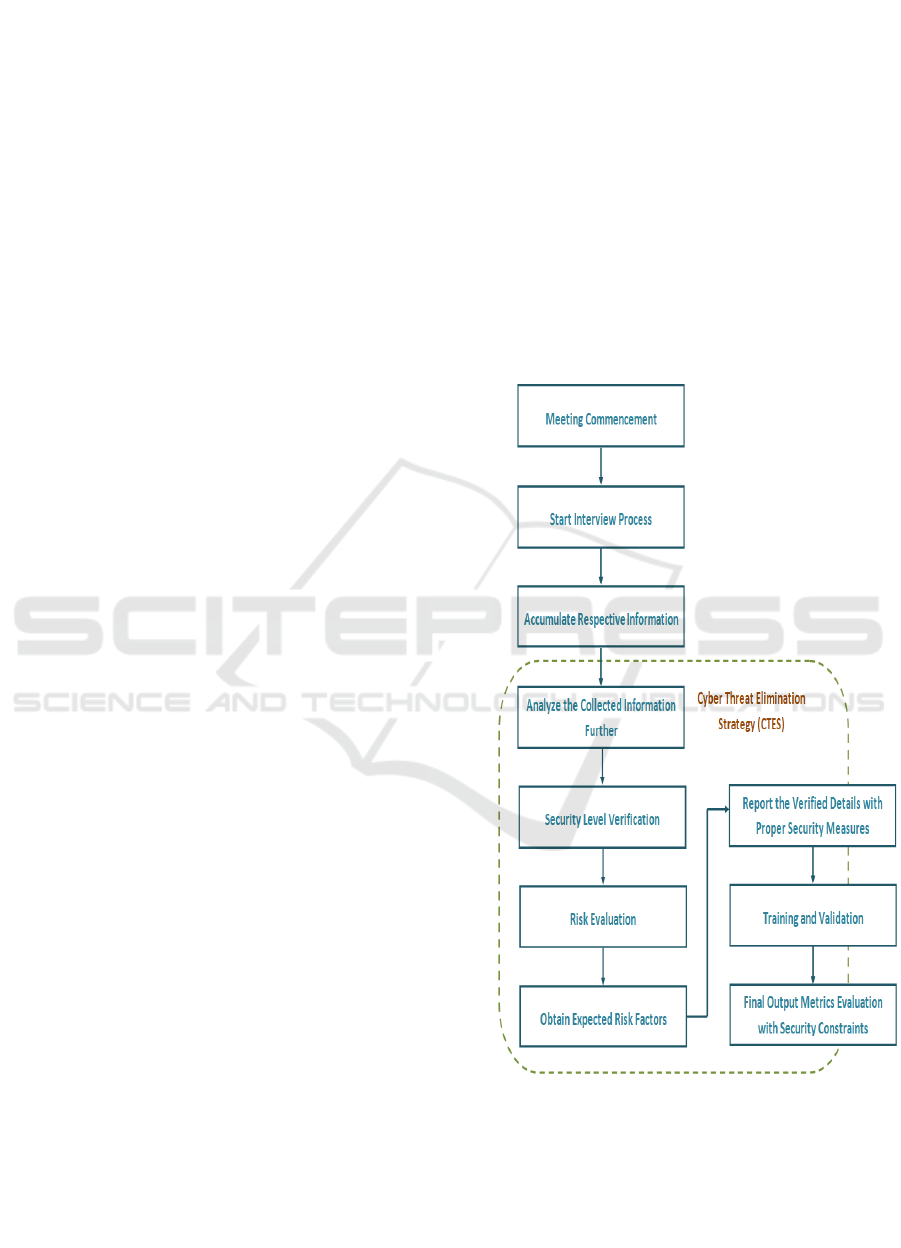
diagram Figure 1, explains the system flow in detail.
Figure 1: System Flow Diagram.
The integration relies on real-time monitoring to
identify anomalous behaviors, thus requiring constant
data feeds from endpoints, security tools, and sensors.
System configurations, device inventories, and user
authentication methods will round off the data input
ICRDICCT‘25 2025 - INTERNATIONAL CONFERENCE ON RESEARCH AND DEVELOPMENT IN INFORMATION,
COMMUNICATION, AND COMPUTING TECHNOLOGIES
860

in building a comprehensive security model. These
further stimulate scenarios to evaluate the efficiency
of the combined methodology. In essence, an
enabling, agile, and self-adjusting input paradigm to
build cyber resilience through proactive security
framework is the end goal and reports on the state of
security, vulnerability scanning, and the effectiveness
of implementing the Zero Trust strategy also formed
part of the results. It employs the MITRE ATT&CK
Matrix to enable detection of threats in real-time and
visualization of attack patterns and reactions in
dashboards. The outputs are made more user-friendly
and let users direct their attention toward concern
areas using visual representations such as heat maps
and trend graphs. Security event reporting, risk
assessment, and post-incident analysis are part of the
output and help in making decisions. Suggestions for
enhancing further access management, threat
detection, and response strategies are provided. In
relation to integration, security events are deeply
mapped against ATT&CK methodologies to aid in
finding the source of an attack. System logs and
performance measures provide feedback for repeated
fine-tuning of security program deliverables.
Ultimately, it provides clear and actionable
information to improve cyber resilience and thus
support continuous improvement. Every request
made by users or access attempts into a system will
go through control and authorization based on Zero
Trust principles; that concept applies code for real-
time monitoring and logging to maintain such
integrity. By incorporating aspects of the MITRE
ATT&CK Matrix, threats and attack tactics will be
matched to better enhance the identification and
classification of risks. Risk analysis through pre-
defined scenarios, vulnerability analysis, and threat
simulations forms part of the code. It identifies
potential security threats based on behavioral patterns
of network traffic as well as data obtained by
endpoints through machine learning techniques.
Modular enforcement through coded security rules
and policies is based on user role, access requirement,
and device condition. The architecture also has
flexibility, making it easy to update or add new
security measures or threat intelligence streams.
There is smooth integration between this code and
systems for real-time threat response, as well as
security information and event management (SIEM)
systems. The code design aims to bring a system
environment that is flexible and robust by continuous
testing and improvement of the protective measures
of the system.
All the necessary tables and fields for a dataset, as
well as the design of the business process, are
captured in the Dataset Design process. It serves as
the center for policy and procedural governance and
as the state of the migration to be. This research
demonstrates how the approach is implemented
through an Android application in another thread. The
language, framework, models, alongside all XML,
are the tools that the researcher is going to need to
design the User Interface. The architecture of the
application has been built with the JAVA
programming language. This research utilizes
Android Studio to write code and it is the backbone
of the study. For this design, the author relies on the
Android Native Framework. In a nutshell, for an
Android app that works with Firebase. In order to
provide seamless communication, the author
additionally makes use of firebase. One must have
access to the internet in order to use this program and
clients still need an internet connection to place
orders using the application, even though the delivery
guy and clients may communicate by phone. With
the right setup and mix of hardware and software, the
application may become smarter.
4 RESULTS AND DISCUSSION
We conducted independent study on the ZT security
approach and the MITRE ATT&CK matrix to
determine whether or not these models are effective
of a cybersecurity framework. Additionally, we
analyzed the impact that the combination of these two
approaches has on the enhancement of cyber
resilience in government institutions.
4.1 Evaluation of the ZT Cybersecurity
Framework
At first, we looked at implementing the ZT model
independently. Network traffic security, micro-
segmentation, and the enforcement of the concept of
least privilege were examined in relation to the ZT
model's guiding principle of "never trust, always
verify." The evaluation showed that the model
successfully reduced the attack surface and mitigated
unauthorized access, with notable gains in
safeguarding information and network security.
4.2 Evaluation Matrix for MITRE
ATT&CK
Subsequently, the MITRE ATT&CK matrix's
isolated application was evaluated with an emphasis
on its effectiveness in identifying, comprehending,
A Novel Approach to Enhance Cyber Resilience by Combining the Zero Trust Security Model and MITRE ATT&CK Matrix Strategy
861
and preparing for recognized attack vectors. This
component was instrumental in improving the
capacity of threat intelligence and security teams to
anticipate and respond to cyber threats by utilizing
documented adversary behaviors and techniques.
4.3 Assessment of an Integrated
Strategy
The combined impact of merging the Zero Trust (ZT)
model with the MITRE ATT&CK matrix has been
investigated after the individual assessments. The
objective of this integrated approach was to
incorporate the strategic insights provided by the
ATT&CK matrix with the proactive defense
mechanisms of ZT. The results indicate that the
integration considerably enhances an organization's
cyber resilience, providing a more comprehensive
and dynamic defense mechanism against
sophisticated cyber threats. The combination enables
the continuous adaptation to new tactics and
techniques employed by adversaries, in addition to
defending against known threats. In order to assess
the efficacy and efficiency of the proposed scheme,
the aforementioned models are collectively referred
to as the Cyber Threat Elimination Strategy (CTES).
This strategy is cross-validated with the conventional
security model, the Zero Trust Model (ZTM).
Table 1: Data Frequency Analysis Between CTES and
ZTM.
S. No. Data (kbps) ZTM (%) CTES (%)
1. 1000 32.45 73.54
2. 1500 35.14 72.66
3. 2000 31.56 75.66
4. 2500 44.69 79.52
5. 3000 49.70 80.43
6. 3500 53.50 81.51
7. 4000 57.21 82.52
8. 4500 62.61 85.53
9. 5000 66.42 88.66
10. 5500 69.56 88.72
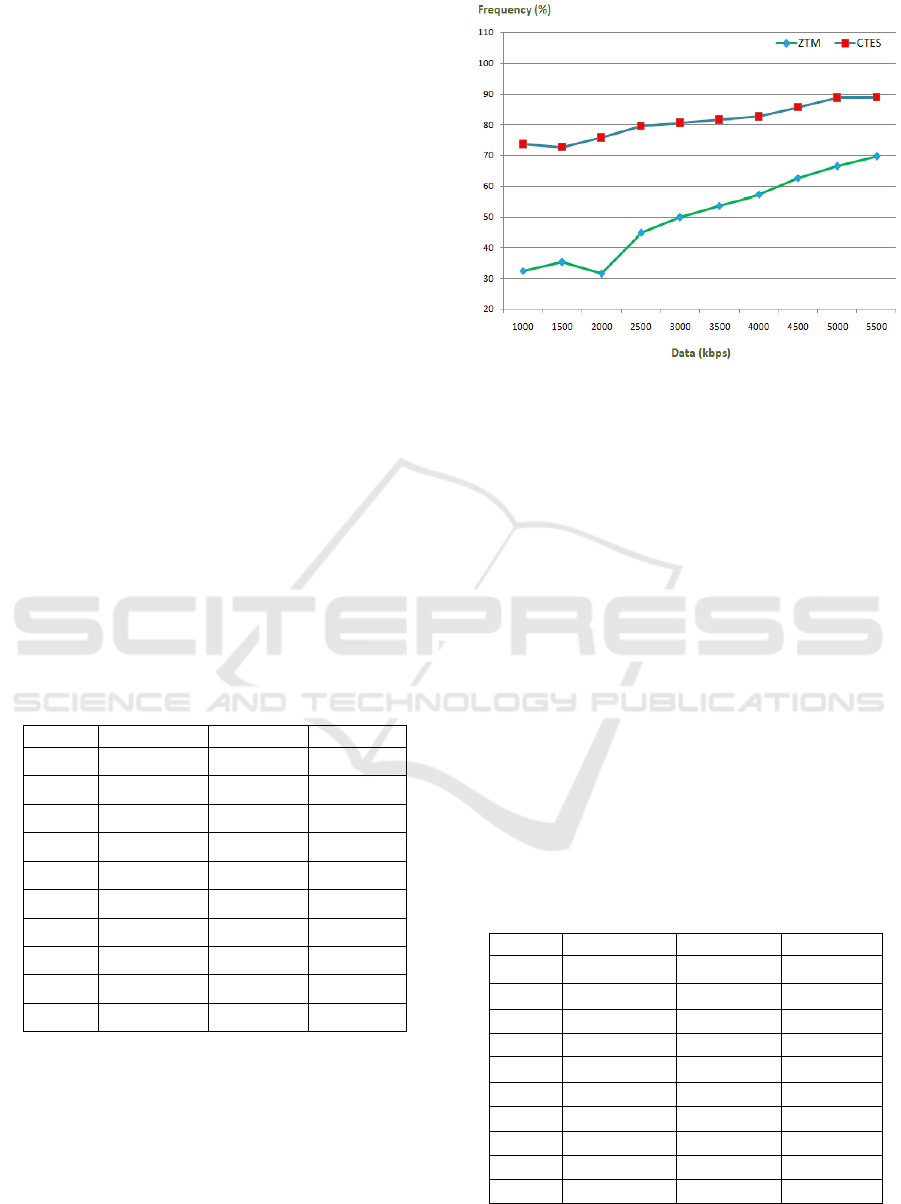
Figure 2: Data Frequency Evaluation.
The data frequency ratio of the suggested method,
which is referred to as CTES, is depicted in the
accompanying figure, which is referred to as Figure
2. This method is cross-validated with the traditional
model known as ZTM in order to assess the data
frequency ratio of the proposed scheme. A descriptive
representation of the same could be found in the table
that follows, which is referred to as Table 1.
4.4 Statistical Evaluation
By tracking indicators like breach detection rate and
incident response durations, quantitative analysis was
able to determine how long it took for responses to
finish after each occurrence and what percentage of
incidents were really discovered. After putting the
Zero Trust paradigm into practice in government
agencies, these measures were utilized to
quantitatively assess the effectiveness of security.
Table 2: Data Frequency Analysis Between CTES and
ZTM.
S. No. Data
(
kb
p
s
)
ZTM
(
%
)
CTES
(
%
)
1. 1000 82.63 97.64
2. 1500 84.54 97.72
3. 2000 81.26 96.71
4. 2500 84.39 95.59
5. 3000 89.51 95.64
6. 3500 83.42 96.69
7. 4000 87.39 95.47
8. 4500 82.77 96.58
9. 5000 86.45 97.49
10. 5500 89.61 97.56
ICRDICCT‘25 2025 - INTERNATIONAL CONFERENCE ON RESEARCH AND DEVELOPMENT IN INFORMATION,
COMMUNICATION, AND COMPUTING TECHNOLOGIES
862
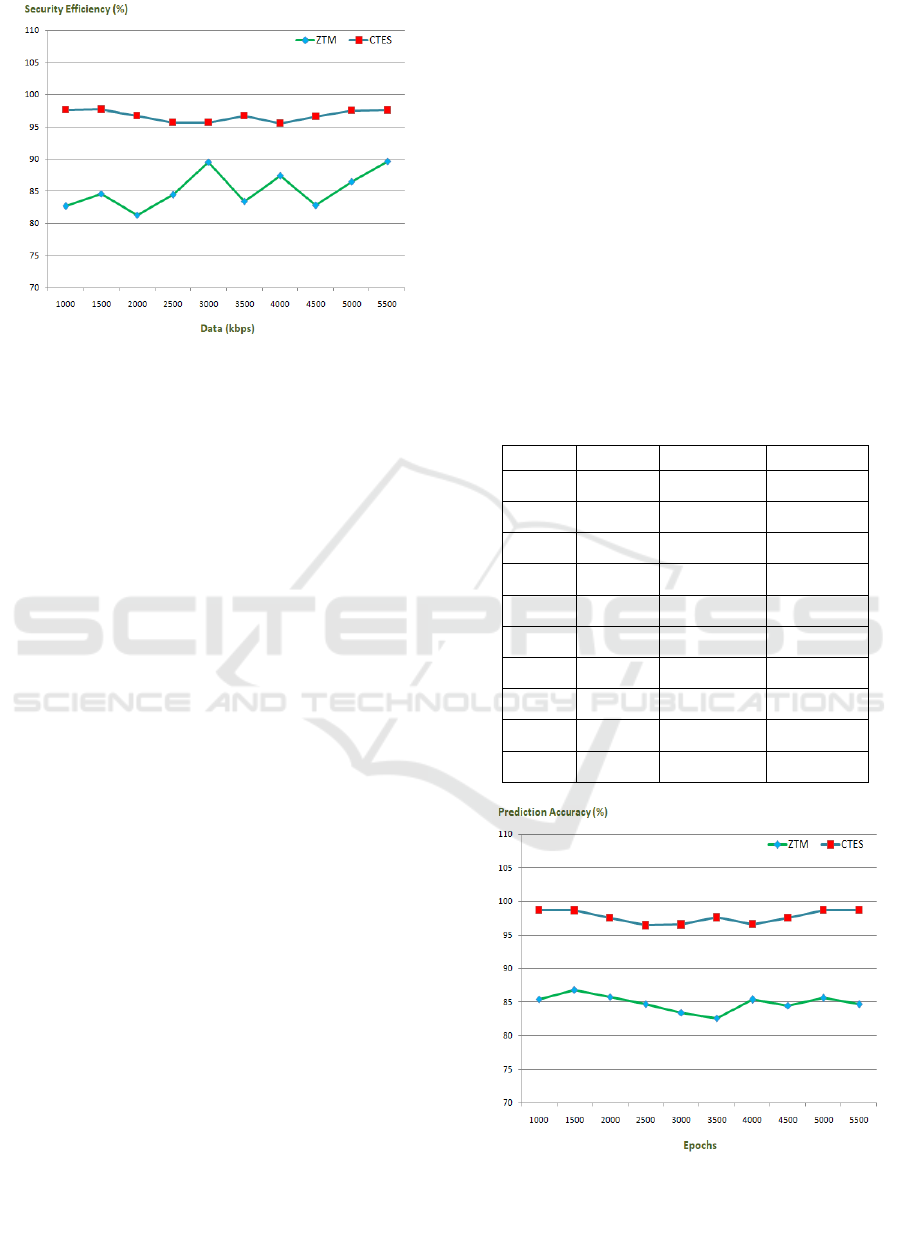
Figure 3: Security Efficiency Analysis.
Figure 3 shows the results of comparing the
suggested method, CTES, with the standard model,
ZTM, in order to determine the security ratio of the
proposed scheme. What follows is a descriptive table
of the same information, Table 2.
4.5 Acquire Expertise on Qualitative
Analysis
Gaining insights from IT managers and security
officials about the technical and operational obstacles
encountered during the deployment of the Zero Trust
model, the feedback acquired through qualitative
analysis highlighted the ease of implementation and
operational efficiency. We also looked at user and
administrative comments on how normal processes
become more efficient following the improvement.
Such qualitative analytical input was critical in
elucidating the difficulties and successes encountered
in putting the Zero Trust paradigm into practice.
Separate or combined evaluations of the Zero Trust
model's and the MITRE ATT&CK matrix's
contributions were conducted using time-based and
efficiency-based resilience assessment metrics,
incident response time and breach detection rate
quantitative analysis metrics, and operational
efficiency and ease of implementation qualitative
feedback metrics. The comprehensive methodology
used in this research to improve operational
continuity and boost security posture makes it
especially useful for public organizations that are
confronted with several security concerns. The
significance of each module and the enhanced
advantages of integration in bolstering cyber defense
postures are highlighted by this. It lays forth a
transparent plan for public institutions to strengthen
their cyber defenses. In addition, this study shows that
cyber threat environment is always changing and that
adaptive security solutions are necessary. It also
points out places where additional research is needed
and where improvements might be made. Public
institutions may implement a more robust cyber
security framework with the help of the clear tactics
and recommendations provided by this study. Also,
by helping us comprehend cyber risks better, they
greatly aid in the creation of strategic reaction
measures.
Figure 4 shows the results of comparing the
proposed CTES strategy to the standard ZTM model
for threat prediction accuracy. The goal of this cross-
validation is to see how well the CTES approach
performs. Table 3 presents the same information in a
descriptive format.
Table 3: Analysis of Threat Prediction Accuracy Between
CTES and ZTM.
S. No. Epochs ZTM (%) CTES (%)
1. 1000 85.43 98.72
2. 1500 86.82 98.63
3. 2000 85.71 97.47
4. 2500 84.69 96.38
5. 3000 83.43 96.49
6. 3500 82.55 97.57
7. 4000 85.34 96.56
8. 4500 84.42 97.49
9. 5000 85.56 98.71
10. 5500 84.71 98.66
Figure 4: Threat Prediction Accuracy.
Figure 5 shows the total time needed to process
the data with the aforementioned clear security
A Novel Approach to Enhance Cyber Resilience by Combining the Zero Trust Security Model and MITRE ATT&CK Matrix Strategy
863
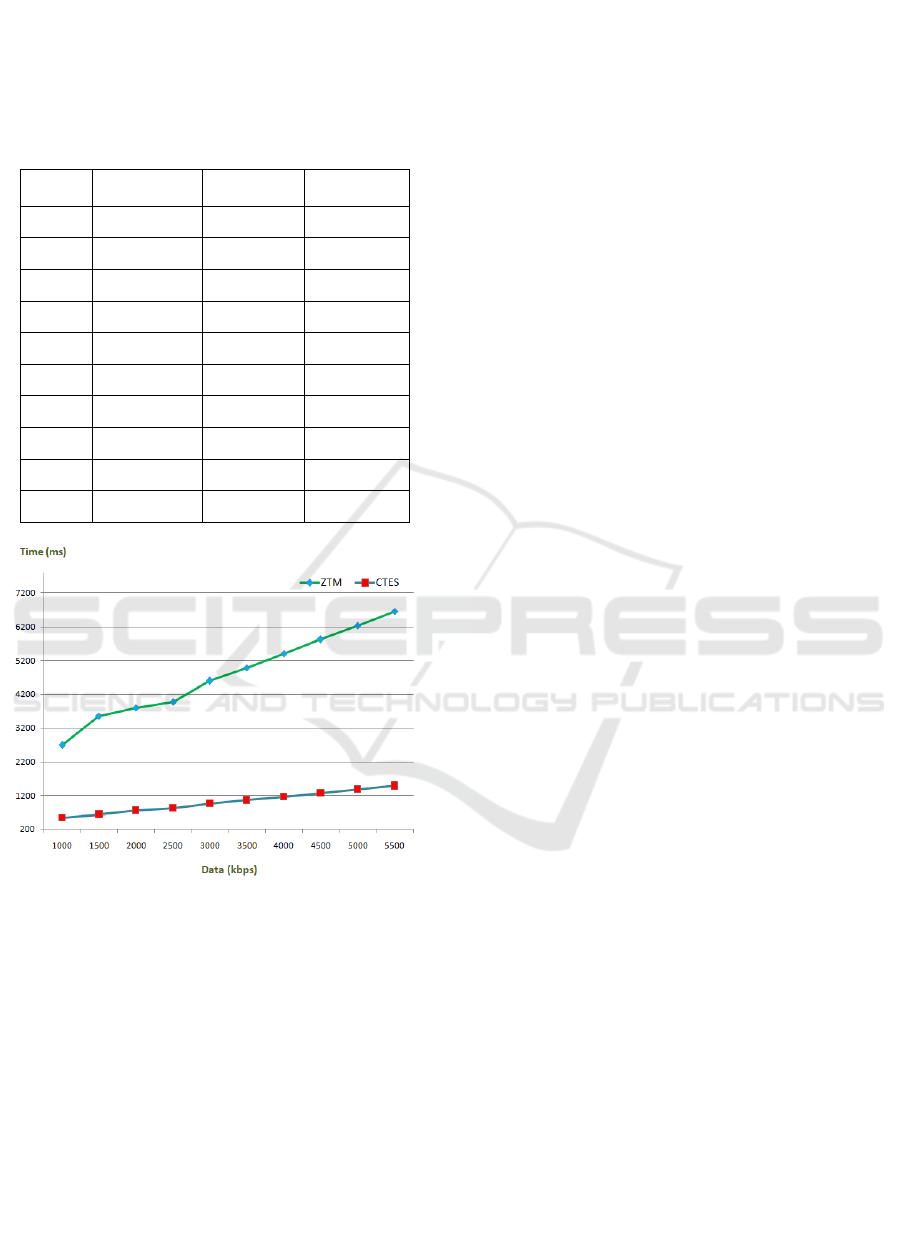
measures using the CTES approach. To evaluate the
time ratio of the proposed scheme, it is cross-
validated with the ZTM conventional model. Table-4
presents the same information in a descriptive format.
Table 4: Time Requirement Analysis Between CTES and
ZTM.
S. No. Data (kbps) ZTM (ms) CTES (ms)
1. 1000 2689 527
2. 1500 3554 638
3. 2000 3789 749
4. 2500 3963 824
5. 3000 4586 963
6. 3500 4977 1058
7. 4000 5397 1163
8. 4500 5818 1269
9. 5000 6238 1375
10. 5500 6658 1481
Figure 5: Time Requirements Evaluation.
5 CONCLUSIONS
Jun-Hyung Park, et al., 2025, With an emphasis on
measures that systems engineers and program
managers may utilize to guide alternative analysis,
this study expands upon previous work on cyber
resilience metrics. Cyber resilience metrics and
efficacy measurements may be established from four
separate perspectives: programmatic, engineering,
mission assurance, and risk management. It also
offers a score system for these indicators. It identifies
a vast number of potential metrics, traceable to cyber
resilience objectives. It includes a measure template
and instructions on how to choose, modify, and define
metrics. For anyone looking for a generic resource on
how to create and apply cyber resilience measures in
a repeatable manner, this paper offers a good place to
start. The topic of cyber resilience metrics still has
many unanswered questions. Some of these features,
as seen below, include the ability to compare, the
definition of computationally combinable metrics,
and the creation of a score system that systems
engineers may utilize to assess different solutions.
Consistency in assessment methodologies and
assumptions about the metric's relevant context is
essential for comparing metric values across
companies, projects, or systems. While model-based
systems engineering has the potential to capture
certain assumptions and calculate model-based
metric values, further research is required to identify
its limits and provide practical recommendations.
Having a standard way to describe enemies is one
potential foundational element. Cyber resilience
considerations at the level of a critical infrastructure
sector, a region, or a collection of businesses
executing a mission or business function is attractive
when expressed in terms of a single figure-of-merit
that allows comparison, such as a FICO-like score.
On the other hand, there are certain recognized
hazards associated with these types of ratings. For
example, they don't take organizational size or
mission into account, they rely on outdated threat
models or standards of practice, and they promote a
compliance mentality instead of a risk management
one. As the research progresses, it will become clear
that this reasoning needs improvement. To make sure
security measures are effective and easy to maintain,
more study might look at improved user experience
design. To conclude, strengthening cyber resilience in
the long run may be achieved by extending the
framework to include increasingly advanced
persistent threats.
REFERENCES
Brady D. Lund, et al., "Zero Trust Cybersecurity:
Procedures and Considerations in Context",
Encyclopedia, 2024.
Chunwen Liu, et al., "Dissecting zero trust: research
landscape and its implementation in IoT",
Cybersecurity, 2024.
FNU Jimmy, "Zero Trust Security: Reimagining Cyber
Defense for Modern Organizations", International
Journal of Scientific Research and Management, 2024.
ICRDICCT‘25 2025 - INTERNATIONAL CONFERENCE ON RESEARCH AND DEVELOPMENT IN INFORMATION,
COMMUNICATION, AND COMPUTING TECHNOLOGIES
864

Hongzhaoning Kang, et al., "Theory and Application of
Zero Trust Security: A Brief Survey", Entropy,
https://doi.org/10.3390/e25121595, 2023.
Jun-Hyung Park, et al., "A Proposal for a Zero-Trust-Based
Multi-Level Security Model and Its Security Controls",
Appl. Sci., 2025.
Kehe Wu, et al., "Design and Implementation of the Zero
Trust Model in the Power Internet of Things",
International Transactions on Electrical Energy
Systems, 2023.
Naeem Firdous Syed, et al., "Zero Trust Architecture
(ZTA): A Comprehensive Survey", IEEE Access, 2022.
Naga Vinod Duggirala, "Zero Trust Security: Redefining
Data Protection in the Digital", International Research
Journal of Engineering and Technology, 2024.
Nisha T N, et al., "Zero trust security model: Defining new
boundaries to organizational network", Proceedings of
the 2023 Fifteenth International Conference on
Contemporary Computing, 2023.
Onome Edo, et al., "Zero Trust Architecture: Trend and
Impact on Information Security", International Journal
of Emerging Technology and Advanced Engineering,
2022.
Sandeep Reddy Gudimetla, "Zero Trust Security Model:
Implementation Strategies and Effectiveness Analysis",
International Research Journal of Innovations in
Engineering and Technology, 2024.
Shaikh Ashfaq, et al., "Zero Trust Security Paradigm: A
Comprehensive Survey and Research Analysis",
Journal of Electrical Systems, 2023.
William Yeoh, et al., "Zero trust cybersecurity: Critical
success factors and A maturity assessment framework",
Computers & Security, 2023.
Yiliang Liu, et al., "Zero Trust-Based Mobile Network
Security Architecture", IEEE Wireless Communicatio
n, 2024.
Zillah Adahman, et al., "An analysis of zero-trust
architecture and its cost-effectiveness for
organizational security", Computers & Security, 2022.
A Novel Approach to Enhance Cyber Resilience by Combining the Zero Trust Security Model and MITRE ATT&CK Matrix Strategy
865
