
AI & IoT Based Flood Monitoring and System
Vansh Goel, Anshum Shukla, Vishal Kumar Pandey and Meena Kumari
Department of Computer Science & Engineering (Internet of Things), ABESIT, Ghaziabad‑201009, Uttar Pradesh, India
Keywords: Internet of Things (IoT), Artificial Intelligence, Time Series Analysis (ARIMA) Algorithm, LID Performance,
Flood Early Warning System.
Abstract: Floods are a global hazard to both life and property, in addition to the infrastructure in place, which are
enhanced by issues like urbanization, inadequate drainage, and climate change. Proper flood management and
warning systems can minimize such losses. Latest solutions that use Internet of Things, and machine learning,
make it possible to monitor risk assessment, and alerts, in real time. Some of the techniques used in flood
prediction, especially in high-risk urban areas, include the use of AI models and smart sensors. IoT-enabled
systems that are equipped with sensors to measure water levels, rainfall, and weather parameters feed into
cloud platforms for the precise prediction of flood risks and efficient communication of warnings to
stakeholders. The decision-support algorithms in predictive models like the Time Series Analysis ARIMA
improve the accuracy of the prediction of floods and enhance the efficient response to emergencies through
data analysis on meteorological as well as hydrological entities. These systems, in combination with Low-
Impact Development (LID) practices, resilient network connectivity can provide early flood warning
capacities, enable rapid decision making, and reduce the effect of floods on vulnerable groups of people.
Testing and applications within real-life environments establish significant potential for its acceptance widely
to enhance the effectiveness in managing urban flooding as a whole and disaster readiness on a global scale.
1 INTRODUCTION
Floods are one of the most common natural disasters
around the world, affecting millions of people's lives,
infrastructure, agricultural systems, and economies
with far-reaching and devastating effects. Thus, the
rise in frequency and intensity of floods has also
brought along apprehensions of their impact as the
population of the world and urbanization continue to
grow. Although urbanization acts as an impetus for
economic growth, it is also known to increase the
flood risk associated with the region when coupled
with poor infrastructure. Water absorption into the
ground decreases with impervious surfaces created by
roads, buildings, and pavements. This increased
vulnerability, combined with that of climate change,
causes unpredictable weather patterns and
increasingly intense rainfalls, placing the urban area
at high risks of extreme flooding. The techniques of
flood management call for approaches toward
managing flood risks across cities and communities
worldwide and are motivated to advance.
Traditionally, the application of flood management
techniques largely depends on historical records
regarding floods. These records could be invaluable
but hardly ever satisfy the actual demand for in real-
time risk mitigation, as observed today. It is because
of these very limitations of the traditional systems
that researchers and policymakers have used the
opportunities presented by these new technologies,
such as IoT and ML, for developing dynamic,
responsive, and data-driven flood management
systems. For example, this type of IoT technology can
track and connect millions of sensors, which allows
for real-time monitoring of key flood indicators in the
environment, such as water levels, rainfall, and
weather conditions. At the same time, ML algorithms
can go through this data to find patterns and make
predictions for early flood warning and informed
decision-making to mitigate damage to lives,
property, and infrastructure.
Flood prediction models, especially machine
learning and AI-based ones, are revolutionizing the
approach to flood management and rely on massive
datasets and computational power. Such models make
highly accurate forecasts of rainfall, river discharge,
and flood levels using predictive algorithms such as
Time Series Analysis and Auto-Regressive Integrated
834
Goel, V., Shukla, A., Pandey, V. K. and Kumari, M.
AI & IoT Based Flood Monitoring and System.
DOI: 10.5220/0013874200004919
Paper published under CC license (CC BY-NC-ND 4.0)
In Proceedings of the 1st International Conference on Research and Development in Information, Communication, and Computing Technologies (ICRDICCT‘25 2025) - Volume 1, pages
834-841
ISBN: 978-989-758-777-1
Proceedings Copyright © 2025 by SCITEPRESS – Science and Technology Publications, Lda.

Moving Average (ARIMA). Such predictions allow
for earlier warnings, which give local governments
and disaster response agencies crucial time to activate
the response plan, alert communities, and deploy
necessary resources. Improvements in cloud
computing allow for data centralisation and
processing in near real time from sensors placed
around the globe, easy to scale and integrate across
and between regions and even perhaps nationally.
The IoT allows for continuous monitoring and
automatic data collection, integral aspects of
providing timely and accurately provided flood risk
assessments. IoT technology permits a converged
network of strategically located sensors in flood-
prone areas to collect data in real time, thereby
affording the possibility of comprehensive
understanding of local environmental changes. Thus,
sensors might send real-time data to the cloud
platforms regarding a multiplicity of parameters
including precipitation rates, the moisture content in
the soil, levels of river water, and atmospheric
pressure. The final approach in data management
comprises a core of designing and developing reliable
flood prediction models together with making
actionable information delivery to the stakeholders.
Cloud infrastructures are rustic by strengthening
these systems, whereby easy integration of data
comes along with analytics at scale. They have made
data from vast sensor devices possibly available for
storage and processing. This ensures that local
authorities and emergency responders are kept
informed in order to respond quickly to such events.
Cloud computing bridged the gap of collecting data
and the actual action of decision-making within a
centralized data ecosystem. That is how flood
warnings through various channels, for example,
mobile applications, public alert systems, and even
direct notification to emergency teams, may be
delivered. Also, such systems are designed to work
under tough conditions with resilient network
connectivity ensuring constant monitoring even in
adverse weather events.
DSS forms a very important component of
effective flood management. It uses predictive
models and algorithms to evaluate the risk of flooding
in real-time and provides recommendations for
action. Decision-support algorithms incorporate not
only meteorological and hydrological data but also
contextual information, including land use patterns,
population density, and drainage system capacity, to
present an accurate risk profile. Contextual
integration allows for adaptive responses, with DSS
able to suggest preemptive actions such as activating
flood gates, issuing evacuation alerts, or mobilizing
emergency services in high-risk scenarios. Such
systems are more effective in terms of increasing
precision and response velocity of the strategies to
boost community resilience against flood disaster.
A new emerging concept of Low-Impact
Development in flood management practice that
seeks to combine a natural landscape feature and
good sustainable urban planning practice against risk
through flooding. LID approaches utilize the
application of permeable pavements, rain gardens,
and green roofs as measures to enhance the
infiltration rate of water while minimizing the runoff
and thereby intensifying the natural capacity for
urban areas to absorb. With LID coupled with IoT and
ML-based flood prediction systems, mitigation of
immediate risks associated with flooding also fosters
a long-term aspect of the resilience of the city at large,
thereby relieving pressure on the drainage systems so
that cities may face even extreme weather conditions
with a sense of security.
Advancement in IoT, ML, and cloud computing
improves multiple aspects of flood prediction, but
challenges in widespread usage are immense. These
high-tech systems have technical, financial, and
operational constraints that may not be achieved in
low- and middle-income regions. The extensive
sensor networks may be very expensive to deploy and
maintain resilient connectivity, especially in remote
or under-resourced areas. Moreover, issues of data
privacy and cybersecurity also need to be taken into
account because sensitive information gathered from
smart cities can easily be accessed by unauthorized
individuals. International cooperation, public-private
partnerships, and policy support are essential factors
in developing sustainable, accessible, and inclusive
flood management solutions against these challenges.
Case studies and pilot projects worldwide have
demonstrated the effective implementation of IoT and
ML-based flood management systems in spite of
these challenges. For instance, Japan and the
Netherlands have developed very large-scale, IoT-
enabled networks for flood monitoring that decrease
flood-related losses and strengthen community
preparedness. Working with technology vendors,
cities in flood-risk regions have created effective
alerting systems that combine real-time sensor
information, machine-learning-based forecasts, and
decision-support algorithms to inform the authorities
and citizens about a potential risk. Such examples will
transform the future of flood management and set a
precedent for other cities to become flood-resilient.
Instead, the confluence of IoT, ML, and cloud
computing technologies is helping open a new era in
flood management defined more by proactive risk
AI & IoT Based Flood Monitoring and System
835

reduction and improved disaster preparedness. Real-
time monitoring, predictive analytics, and decision
support systems allow communities to better
anticipate and respond to floods. LID-based practices
in urban planning could make cities less prone to
flooding over time and bring sustainable and resilient
development. As research continues, new
technologies are developed and policy frameworks
support this transition, the global adaptation of IoT
and ML-enabled flood management systems will
provide an opportunity for a safer, more resilient
future against the challenges of climate change.
1.1 Motivation
This paper synthesizes recent developments in AI and
IoT-based flood monitoring and rescue systems
aiming at pinpointing existing research gaps,
showcasing real-life applications, and offering
interdisciplinary insights. Focusing on floods as a
global challenge, it emphasizes the necessity of a
collaborative effort in order to resolve the issue.
Concerning the potential of AI and IoT technologies
to increase flood resilience and mitigate disaster
impacts, it speculates on future directions that provide
valuable perspectives for both academic discourse
and practical deployment in order to contribute to
enhancing global flood management strategies.
1.2 Objective
This is an advanced proactive system for monitoring
floods supported by AI and IoT technologies. The
system brings about mitigation of impacts from
floods. Sensors deployed to establish the water level
and early detection of danger, with support from AI
models, will help prepare for proper planning on how
to evacuate in time. Strong alert mechanisms with
SMS, mobile applications, and social media
notifications will ensure that warnings are brought
widely.
With location tracking and real-time
communication tools for emergency response teams,
rescue operations flow efficiently. Community
involvement is enabled through education and
resource availability. This system is scalable and
adaptable using open-source technologies and
resource optimization, which makes it affordable to
deploy in most geographical areas and flood
scenarios. The ultimate goal of this particular system
is to reduce loss of life and property and help develop
community resilience and disaster management
capacity.
2 LITERATURE SURVEY
Anisha Daniel P J et.al, 2021 proposed a model
Internet of Things (IoT) Based Monitoring of Floods
and Alerting System: Causes and implications of
flooding, the importance of flood monitoring, and
alert mechanisms are explained by the writer. He
recommends an Arduino Mega with water and rain
sensors, which would help predict flooding and hence
alert the authorities and other neighboring areas using
IoT technology. Real-time information and prediction
of the number of days before a given region gets
flooded will ensure prompt alarming to affected
regions. The IoT-based flood detection system for
early warning will provide timely alerts on level of
water and hence timely evacuations, preserving lives
and properties.
The project utilizes Raspberry Pi, LED, Buzzer,
ultrasonic sensor, and an Android Application for
monitoring floods and prediction. The model also
employs historical data and machine learning
algorithms for precise prediction of the flooding. This
means that users and authorities can conveniently
respond and manage a disaster. Himanshu Rai Goyal
et.al, 2021 proposed a post-management system with
the help of IoT devices and an AI approach. This
system uses the ANN algorithms to process data from
drainage condition sensors, rainfall sensors, and
network monitoring sensors. Although efficient, it
has limited scalability for extensive urban areas,
integration of various data sources, and validation
against real-time, large-scale floods. Other
comparisons with some other advanced AI models
remain unexplored, such as DNN and reinforcement
learning. Muhammad Izzat Zakaria el.al, 2023
reported a LoRaWAN-based IoT system using LoRa
Shield and ultrasonic sensors to monitor and alert of
floods in catchment areas. The system adopted
ARIMA for time series forecasting; however, it does
not attempt any adaptive spreading factors for
different scenarios, alternative communication
technologies, mesh networking towards the
expansion of coverage, and advanced data analysis
methods such as machine learning that enhance the
precision of flood prediction.
Kavitha Chaduvula et.al, 2021 presented an IoT-
based flood alert monitoring system using
microcontroller 8051 with pressure, water level,
temperature, and rainfall sensors. The proposed
system comprised the use of ARIMA and ANN
models for predictive analysis. Long-term reliability
and performance, integration with existing systems,
scalability for broad deployment, or energy
ICRDICCT‘25 2025 - INTERNATIONAL CONFERENCE ON RESEARCH AND DEVELOPMENT IN INFORMATION,
COMMUNICATION, AND COMPUTING TECHNOLOGIES
836
optimization strategies for remote use were not
addressed in the study.
Saeed Javanmaedi et.al, 2024 proposed an M-RL:
A Mobility and Impersonation Aware IDS for DDoS
UDP Flooding Attacks in IoT-Fog Networks, in
which they tackled the challenges of detecting and
mitigating DDoS attacks in IoT-fog environments.
The authors proposed a hybrid model, M-RL, which
fuses an RL technique with the RSS method for the
improvement of security in networks. The research
study finds out the lacunae present in today's anomaly
detection techniques and discusses the requirement of
comprehensive, energy-efficient solutions for power
nodes using fuzzy logic and operating with energy-
harvesting devices. In this study, Ismail Essamlali
el.al, 2024 has proposed a new architecture of Low
Impact Development (LID) stormwater management
using IoT and machine learning. By sensing rainfall,
soil moisture, water level, flow rate, and water
quality, the system enhances predictability and
develops decision-making capabilities. They point
out that no dedicated monitoring facilities and policy
framework exist for LID, and future work is in place
to overcome regulatory challenges and encourage
stakeholder collaborations.
Waheb A. Jabbar et al., 2023 presented an IoT-
based system using LoRaWAN for rural water quality
monitoring where pH, turbidity, temperature, and
TDS sensors have been integrated along with solar
cell power. Deep learning models enhance the data
handling process; however, the calibration process of
the system in a remote location is not perfect. Energy
consumption in idle and active states along with
integration of AI/ML for proactive monitoring and
more research work is required for effective
deployment.
Tae Sung Cheong et.al., 2024 proposed a flood
early warning system for small streams based on real-
time hydrodynamic information. Their approach
employs CCTV-based automatic discharge
measurement, water surface elevation gauges, and
surface imaging velocimetry, enhanced by the Robust
Constrained Nonlinear Optimization Algorithm
(RCNOA). Future work will delve into diverse runoff
forecasting within numerical models for rainfall
prediction, evaluating the effects of urbanization,
climate change, and land use on flood risk. Briefly,
Jinping Liu et al., 2022 reviewed the current state of
technologies for monitoring and forecasting urban
floods in the TC region through various types of
sensors, including satellite, radar, crowdsourced, and
IoT-based mobile sensors. Their finding brings out
the seriousness of the need to integrate advanced
sensor data into high-performance big data
techniques together with AI algorithms to be capable
of improving complex ones in urban flood forecasting
with intricate land and sewage systems. Martin Pies
et.al., 2024 elaborate advanced applications of IoT-
based wireless sensors for remote geotechnical
monitoring and structural diagnostics. Integration of
data accuracy along with outdoor antennas is the
primary aspect of their research, essentially using
geotechnical water-resistance sensors. Optimization
algorithms and signal prediction models have been
deployed; however, there is further scope for higher
sensor power efficiency, better water resistance, and
improved wireless signal transmission conditions,
mainly when underwater in different conditions.
2.1 Used Sensors
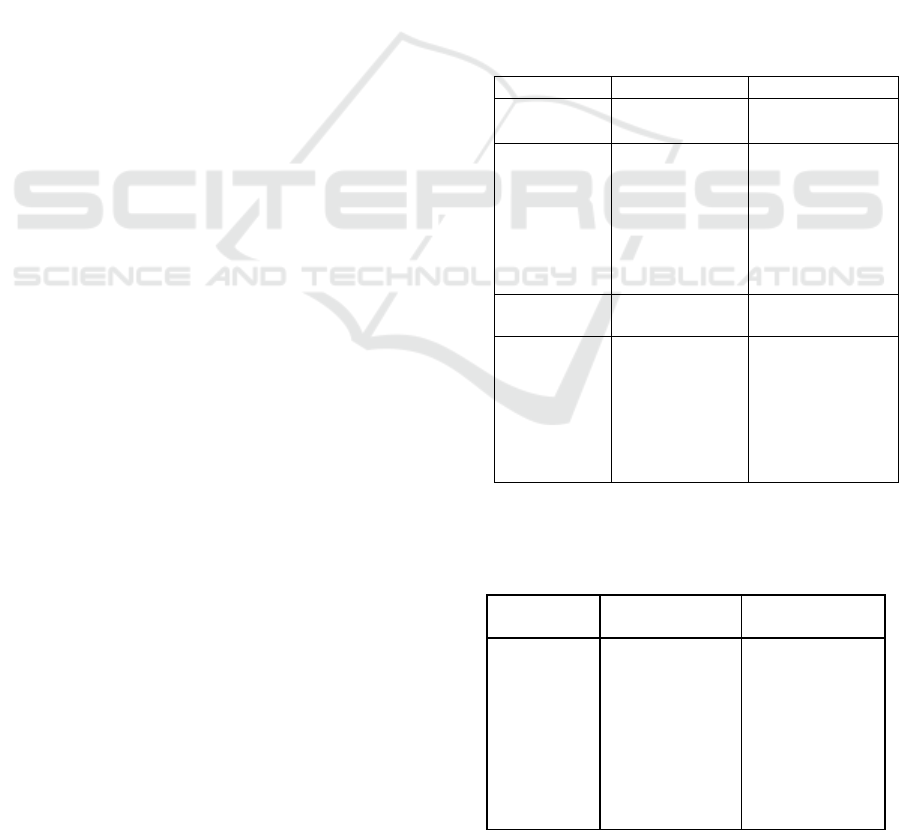
Table 1 shows the various sensors used and their
specifications.
Table 1: Sensor Specifications: Range and Accuracy.
2.2 Used Machine Learning Algorithm
Table 2: Algorithm Used.
Algorithm
Range
Accuracy
Time Series
Analysis
(ARIMA)
Short to
Medium-Term
Forecasting
Single-Variable
Forecasting
Dependence on
Historical Data
Quality
Trend and
Seasonality
Handling
Real-Time Data
Integration
Sensor
Range
Accuracy
Rainfall
Sensor
0 to 500 mm/h
Typically ±1% to
±5% of reading
Air Quality
Sensor
CO2 Levels: 0
to 5000 ppm
VOC (Volatile
Organic
Compounds): 0
to 1000 ppm
±(5-10)% of the
reading
depending on the
pollutant type
Flow Rate
Sensor
0.1 to 2500
L/min
±1% to ±3% of
reading
Temperature
& Humidity
Sensor
Temperature
Range: -40°C
to 125°C
Humidity
Range: 0% to
100% RH
Temperature:
±0.1°C to ±2°C
Humidity: ±2%
to ±5% RH
AI & IoT Based Flood Monitoring and System
837

Table 2 gives the range and accuracy of the algorithm
used.
3 PROBLEM STATEMENT
Worldwide, the frequency and intensity of flooding
events continue to rise as a result of climate change,
greater urbanization and changing weather patterns.
The outcomes of such flooding are severe, leading to
the loss of life and property in communities,
destruction or inundation of economic assets,
disruptions of port operations which facilitate
efficient trading activities amongst nations
precipitating into regional economies collapse as well
affecting biomes stability for example coral reef
susceptibility due sea temperature rise. Conventional
flood monitoring systems exist, but that requires data
to be gathered manually and they depend on localized
sensors which do not provide immediate assessment
of an extensive area due to the fact areas are so varied.
These limitations lead to slower response times,
insufficient early warnings and a greater dependency
on reactive rather than proactive disaster management
approaches.
In existing monitoring systems often only few
parts of the data are monitored which can make it
impossible to produce full, as fresh, insights that
would have been required for successful flood
prediction/migration. However, these systems
frequently lack the ability to offer forecasts on time
and at a high level of resolution while other
implementations that are based in resource-deprived
locations (such as remote rural regions) do not have
sufficient resources from sensor deployment and
maintenance. It is a deficiency that leaves wide open
the possibility of avoidable losses in affected areas.
The integration of Artificial Intelligence (AI) and
the Internet of Things (IoT) presents a transformative
solution to these challenges. By deploying IoT-
enabled sensors across critical flood-prone zones,
data on rainfall, river levels, soil moisture, and other
key variables can be continuously gathered in real
time. AI algorithms can then analyze this data to
produce predictive models, providing advanced flood
alerts and actionable insights for communities and
first responders. These systems allow for enhanced
situational awareness, early warning signals, and
automated response mechanisms, empowering
communities to take preventive action, optimize
resource allocation, and reduce potential damages. By
addressing the limitations of traditional monitoring,
an AI- and IoT-based flood monitoring system can
play a crucial role in adapting to the evolving climate
landscape and improving resilience against flood-
related disasters.
4 PROPOSED METHODOLOGY
The goal of this flood detection and alerting system is
to enable real-time monitoring, prediction, and alert
distribution through a centralized web portal. The
system integrates IoT sensors with a cloud-based
platform to collect, analyze, and disseminate
information, allowing users from various sectors such
as emergency response, healthcare, and the general
public to receive timely alerts and make informed
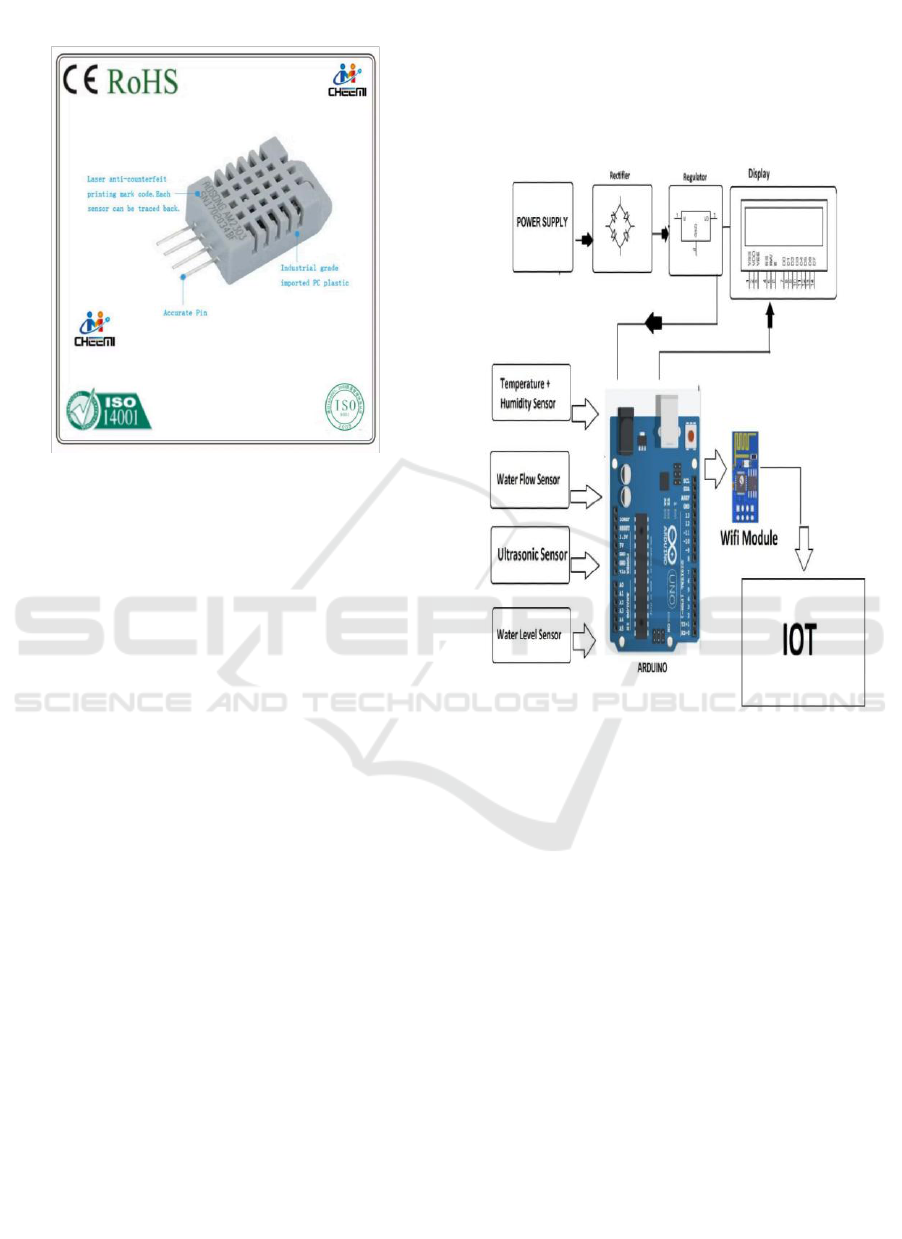
decisions. Figure 1 shows the block diagram of the
proposed system.
Figure 1: Block Diagram.
1. IoT Devices and Data Collection: The IoT
setup uses multiple sensors connected to an
Arduino Uno, which serves as the control unit.
The sensors continuously monitor
environmental parameters relevant to flooding.
Data collected by these sensors are transmitted
to a web server over the cloud using a Wi-Fi
module, allowing real-time access and storage
of information.
2. Data Storage and Cloud Integration: The
cloud serves as a centralized storage system,
holding both real-time and historical flood data
in CSV format. This data is accessible for
predictive analysis, enabling the detection of
potential flooding trends and making it available
for use in future machine learning models.
3. Real-Time Alerts and User Access: Based on
real-time data, alerts are triggered using visual
ICRDICCT‘25 2025 - INTERNATIONAL CONFERENCE ON RESEARCH AND DEVELOPMENT IN INFORMATION,
COMMUNICATION, AND COMPUTING TECHNOLOGIES
838
(LEDs), auditory (buzzers), and mobile app
notifications. Alerts are prioritized to notify
users according to the urgency, ensuring that
stakeholders can respond effectively to mitigate
flood damage.
4. Web Portal and Inter-User Communication:
The web portal connects users, allowing them to
access a range of services such as blood banks,
ambulance services, and hospitals that are
essential during flood emergencies. The portal
fosters communication and coordination among
users, enhancing emergency response
efficiency.
4.1 Role of Sensors
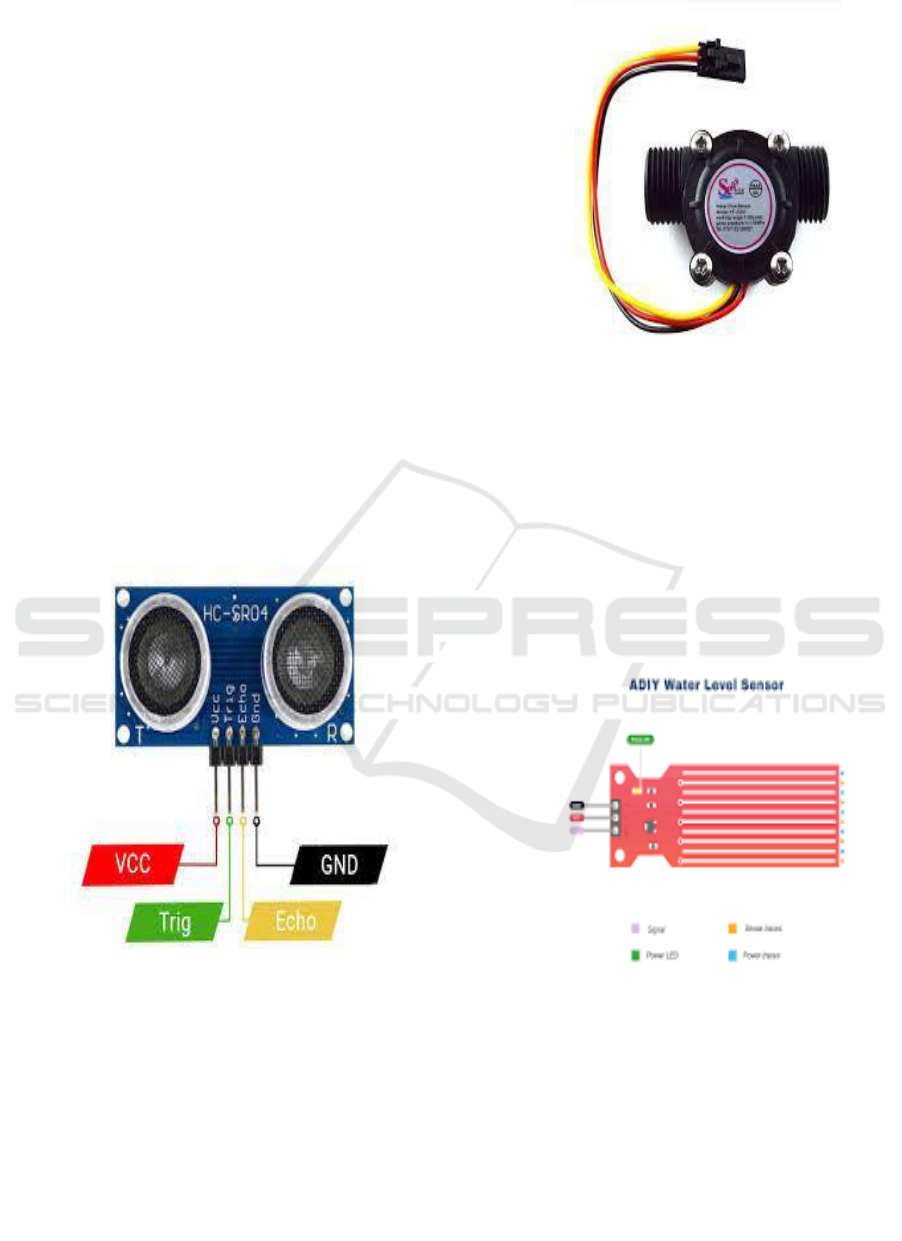
1. Ultrasonic Sensor: This sensor (figure 2)
measures the distance between the water surface
and a fixed point. In this project, it monitors
water level rise in real-time. By emitting
ultrasonic waves and calculating the time it
takes for the waves to bounce back, the sensor
estimates the water level, which helps detect
rising water before a flood occurs.
Figure 2: Ultrasonic Sensor.
2. Water Flow Sensor: A water flow sensor
(figure 3) detects the movement and rate of
water flow. This information helps identify
potential blockages or changes in water flow,
which can contribute to flooding. Monitoring
water flow rates enables the system to respond
proactively if flow patterns indicate flood risks.
Figure 3: Water Flow Sensor.
3. Water Level Sensor: The water level sensor
(figure 4) directly measures the water level in
reservoirs, rivers, or other bodies of water. The
data helps determine if the water level is
reaching critical points. This sensor is essential
for confirming that the water has exceeded safe
thresholds, signaling the need for immediate
alerts.
Figure 4: Water Level Sensor.
4. Temperature and Humidity Sensor:
Temperature and humidity sensors (figure 5)
monitor environmental factors that could impact
flooding conditions. High humidity and
significant temperature variations often
correlate with heavy rainfall, which can lead to
floods. Tracking these parameters enables better
AI & IoT Based Flood Monitoring and System
839
prediction of weather patterns that may result in
flooding.
Figure 5: Temperature and Humidity Sensor.
4.2 Predictive Analysis with the
ARIMA Algorithm
The AutoRegressive Integrated Moving Average
(ARIMA) algorithm is a statistical model used for
forecasting based on historical time-series data. In
this project, ARIMA analyzes historical flood data
(stored in CSV format) to predict future flood events.
The model processes trends and seasonal patterns in
the data, enabling it to forecast rising water levels or
other flood indicators. By integrating ARIMA
predictions with real-time sensor data, the system can
provide advanced alerts and help authorities take
preventive actions before flooding reaches critical
levels.
5 RESULT
All the proposed distributed flood detection and
alerting systems use a single centralized web portal to
monitor floods in real time, predict them, and,
consequently, warn the people. A cloud platform
integrates IoT sensors for the real-time collection and
analysis of environmental parameters. The
stakeholders who should receive an alert in time
before any flooding occurs in the area in which they
operate are the emergency responders, health-care
providers, and the public. The IoT setup has sensors
connected to an Arduino Uno that do level, flow rate,
and temp and humidity monitoring. Data is
transmitted in real time with a Glowlink Wi-Fi
module to a cloud server hence available and stored
continuously. If the data which are stored in the Cloud
in CSV format is helpful in business forecast analysis,
let's leave it as it is for later machine learning use
cases.
Figure 6: Circuit Diagram.
The urgency of the potential flood threats that
arrive is notified as push LEDs and buzzers and
mobile through alerts in a semi-automated
synchronized process, thus enabling people to take
any action on them quite early. The web portal will
offer access to needed services and facilitate a
medium for the communication between users which
could eventually come in handy as an emergent
response.
While the ARIMA algorithm processes historical
data for predictive analysis, it identifies changing
trends patterns including those in flood events. The
system augments predictions of ARIMA with live
sensor inputs to allow for proactive alerting that
equips the authorities with the information required in
order to take preventive actions before the flood
conditions aggravate. Figure 6 depicts the circuit
diagram of the proposed method.
ICRDICCT‘25 2025 - INTERNATIONAL CONFERENCE ON RESEARCH AND DEVELOPMENT IN INFORMATION,
COMMUNICATION, AND COMPUTING TECHNOLOGIES
840

6 CONCLUSION AND FUTURE
SCOPE
This project will show the possibility of creating an
alert system that would mitigate the risks of flooding.
By this, it could monitor what data the sensors have
held, and there is a possibility of the incorporation of
sensors within the system for an accurate and efficient
system of flood detection. It may prove to benefit
other government agencies or authorities, whereby
this benefits society in the management and
mitigation of flooding, a hazard natural disaster. It
gives wide monitoring of all factors that could cause
flooding. When water rises and its speed increases, it
gives an alert immediately. In simple words, this
system gives improved access within the
management and response to this catastrophic
occurrence. It aids the community to take informed
decisions and plan how to overcome this natural
catastrophe effectively.
This innovation shall decrease flooding which
essentially encompasses an ultrasonic sensor
measuring the flood levels on the road, a live
streaming camera to monitor live for the occurrence
of flooding, and Serial Communication that sends text
messages with warnings whereby date, time, water
level, and accessibility status are listed. There are
three modules under the system: Users, Logs, and
Contact Numbers. These can be edited by the admin.
For precision, the sensor unit is suggested to be
installed in front of the system, perpendicular to the
floodwater, and attached with a pole, 3 to 3.5 meters
long. For continuous operation, the flood sensors and
microcontrollers are all powered with an 80,000
Ampere-Hour (mAh) Solar Power Bank that ensures
uninterrupted, round-the-clock water level detection
and network data transmission.
REFERENCES
Anisha Daniel P J, Abhishek M L, Frelbin Nazeer3 and Ann
Johny “Internet of Things (IoT) Flood Monitoring and
Alerting System”, International Journal of Innovative
Research in Technology, Vol.8, Dec.2021.
Himanshu Rai Goyal, Kamal Kumar Ghanshala, Sachin
Sharma “Post flood management system based on smart
IoT devices using AI approach”, Materials Today:
Proceedings, Jan.2021.
Ismail Essamlali, Hasna Nhaila, Mohamed El Khaili “A
new architecture of Low Impact Development (LID)-
based stormwater management system through Internet
of Things (IoT) and Machine Learning integration”,
Case Studies in Chemical and Environmental
Engineering, Vol.10, Sep.2024.
Jinping Liu, Hyo-Seob Cho, Sazali Osman, Hyeon-Gyo
Jeong, Kwonmin Lee “Review of the status of urban
flood monitoring and forecasting in TC region”,
Tropical Cyclone Research and Review, Vol.11, July
2022.
Kavitha Chaduvula, Kranthi kumar k., Babu Rao
Markapudi, Rathna Jyothi Ch. “Design and
Implementation of IoT based flood monitoring system
using microcontroller 8051”, Materials Today:
Proceedings, 2021.
Martin Pies, Jan Velicka, Radovan Hajovsky “Advanced
IoT-Based Wireless Sensors for Remote Geotechnical
Monitoring and structural Diagnostics”, IFAC-
PapersOnLine, Vol.58, 2024.
Muhammad Izzat Zakaria, Waheb A, Jabbar, Noorazliza
Sulaiman “Development of a smart sensing unit for
LoRaWAN-based IoT flood monitoring and warning
system in catchment areas”, Internet of Things and
Cyber-Physical Systems, Vol.3, May 2023.
Saeed Javanmardi, Meysam Ghahramani, Mohammad
Shojafar, Mamoun Alazab, Antonio M. Caruso “M-RL:
A mobility and impersonation-aware IDS for DDos
UDP flooding attacks in IoT-Fog Network”, Computers
& Security, Vol.140, Feb.2024
Tae Sung Cheong, Seojun Kim, Kang Min Koo
“Development of measured hydrodynamic
information-based flood early warning system for small
streams” , Water Research, Vol.263, Aug 2024.
Waheb A. Jabbar, Tan Mei Ting, M. Fikri I. Hamidun,
Ajwad H. Che Kamarudin, Wenyan Wu, Jamil Sultan,
AbdulRehman A. Alsewari, Mohammed A.H. Ali
“Development of LoRaWAN-based IoT system for
water quality monitoring in rural areas ", Expert
Systems With Applications, Vol.242, Dec.2023.
AI & IoT Based Flood Monitoring and System
841
