Smart Agri Assist: Enhancing Leaf Disease Recognition Using Deep
Learning Techniques
Sirisha Pagadala
1
, Harshitha Reddy Peddakotla
2
, Kusuma Mara
2
, Greeshma Teja Gaddam
2
and Mythri Thammineni
2
1
Department of CSE, Srinivasa Ramanujan Institute of Technology, Rotarypuram Village, B K Samudram Mandal,
Anantapuramu - 515701, Andhra Pradesh, India
2
Department of CSE (AI & ML), Srinivasa Ramanujan Institute of Technology, Rotarypuram Village, B K Samudram
Mandal, Anantapuramu - 515701, Andhra Pradesh, India
Keywords: Plant Disease Diagnosis, Deep Learning, MobileNet, Image Classification, Treatment Recommendations.
Abstract: Implementing disease prediction systems for potato leaves would improve agricultural productivity and crop
yield through early identification. This project is focused on detecting blight diseases using Artificial
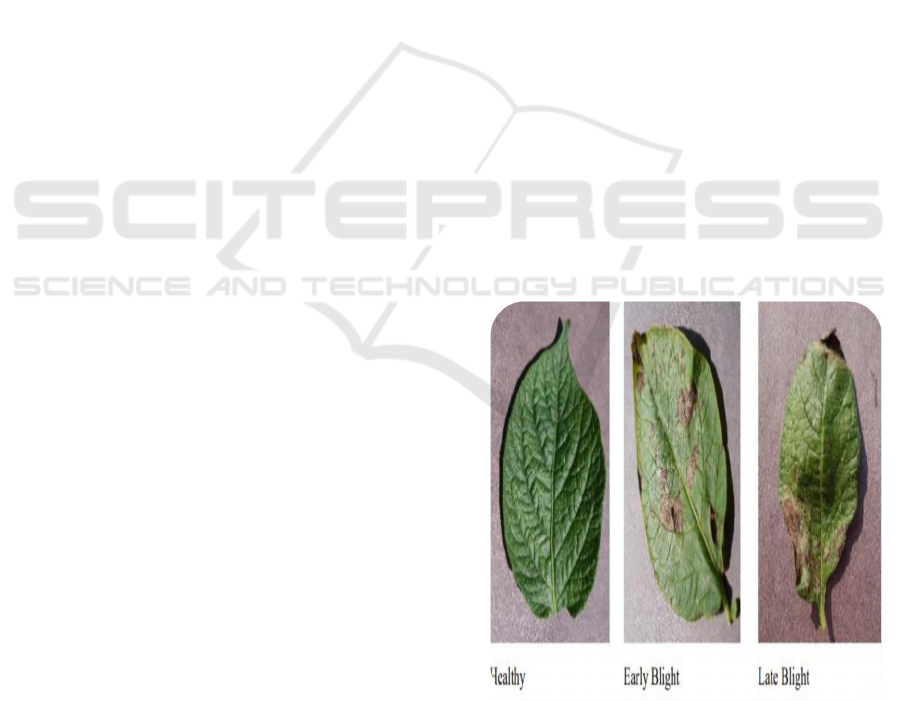
Intelligence (AI) and Deep Learning techniques. The proposed system can analyse leaf images, as shown in
Figure 1, using a MobileNet-based architecture to extract the critical features making sure enough attention
is paid towards colour, texture as well as shape in order to do leaf classification. Along with a dense layer,
this also requires a SoftMax layer to ensure that the model provides an output with a confidence score
corresponding to each diagnosis in order to establish the reliability of the output. It further offers personalized
therapeutic recommendations, including advice on organic and chemical pathologies and mechanical damage
management, aiding farmers in tracking up on the specified pathology and damage. This indicates how deep
learning is substantially changing agriculture and also holds the potential to help farmers make better decisions
to minimize crop loss and increase sustainability in agricultural practices.
1 INTRODUCTION
Potatoes are an important staple crop grown
worldwide crucial to food security, but potato
production is frequently threatened by diseases such
as Early Blight and Late Blight, leading to significant
yield losses. Early and accurate disease detection is
vital for the possible treatment of the crops and
reducing economic losses. Traditional visual checks
require trained scientists, are labor intensive and
reliant on subjective training and experience, thus not
widely adopted by farmers. Get involved in changing
computational intelligence and neural network
methods in the fight against the disease and the
automation of disease recognition.
In this project we will build an AI model that, by
looking at pictures of the leaves, we can identify
potato diseases. It is based on a MobileNet
architecture, an efficient one for visual analysis.
Basically, the system is trained on potato leaf dataset
containing images with different variety of potato
leaves, and it classifies the diseases into three classes
1.
Figure 1: Potato Leaves.
Initial fungal infection (Early Blight) 2. Advance
fungal infections (Late Blight) and 3. the healthy
leaves (Healthy). Data augmentation was used to
Pagadala, S., Peddakotla, H. R., Mara, K., Gaddam, G. T. and Thammineni, M.
Smart Agri Assist: Enhancing Leaf Disease Recognition Using Deep Learning Techniques.
DOI: 10.5220/0013874000004919
Paper published under CC license (CC BY-NC-ND 4.0)
In Proceedings of the 1st International Conference on Research and Development in Information, Communication, and Computing Technologies (ICRDICCT‘25 2025) - Volume 1, pages
819-826
ISBN: 978-989-758-777-1
Proceedings Copyright © 2025 by SCITEPRESS – Science and Technology Publications, Lda.
819

make the model more robust to variation in image
quality. The system not only provides classification
but also confidence scores to help communicate
prediction reliability, and precision treatment
recommendations, in terms of both organic and
chemical options for specific diseases. Crop
management is enhanced and accidents minimized
It.) The project brings AI into agriculture to improve
agricultural performance, support sustainable
solutions, and strengthen global food resilience.
2 RELATED WORKS
Liu, J., Cheng, Q., Gong, W., et al. (2022) A deep
learning-based proposed tomato and potato disease
recognition based on transfer learning which provides
a good classification accuracy. The model showed
robust performance across a range of lighting and
weather conditions, suggesting its potential for
agricultural use."
Arshaghi, A., Ashourian, M. & Ghabeli, L. (2023)
Deep learning methods (e.g., ResNet, VGG) potato
disease detection and classification were examined.
Both ResNet and Inception v4 produced the best
results compared to traditional machine learning
methods on a curated dataset of potato leaf images.
Kumar, A., Patel, V.K. (2023) In potato leaves
disease identification, developed a hierarchy deep
learning-based CNN. The proposed model not only
improved classification performance but also
addressed the scalability challenge of computational
complexity, making it suitable for real-world
deployment.
Sharma, A., Zhang, L., & Tanwar, S. (2021) A new
deep learning framework used for the early detection
of late blight in potato crops. The system, which
relied on hyperspectral imaging and CNN
architectures, predicted the onset of plant disease
before the manifestation of visible symptoms,
supporting preventive farming practices.
Yuan, D., Wu, C., & Li, J. (2020) A hybrid CNN
model was suggested in that combined traditional
image processing techniques with deep learning
methods for detecting potato leaf disease. In that case,
the work increased the efficiency of the feature
extraction, especially for late blight and early blight
diseases.
Kong, G., Wang, H., Wang, L., et al. (2022)
incorporated deep learning and edge computing for
accurate real-time potato late blight identification in
the field. This system effectively reduced latency and
the usage of bandwidth, and hence it became feasible
for IoT-based agriculture monitoring.
Shrestha, R., Gaire, A., & Moh, S. (2021) developed a
lightweight efficient CNN model for potato disease
recognition, which is suitable for low-power device
deployment. The model showed a balance between
accuracy and computational resource demands.
Parihar, N., Rani, A., Gupta, M., et al. (2020) Deep
CNNs were used in for potato disease classification
which, on public datasets, yield state-of-the-art
results. The approach highlighted the application of
data augmentation methods in scenarios where
training data is not abundantly available.
Zhang, L., Zhang, Y., & Zhu, Z. (2022) investigated
the detection of potato plant diseases with deep neural
networks with emphasis on its applicability at an
industrial scale. The model produced consistent
results in diverse environmental conditions, proving
its adaptability.
Yang, J., Xie, Y., & Wei, J. (2021) developed a new
CNN framework for detecting potato plant diseases
using attention-based modules to increase feature
localization. The method yields greater accuracy than
baselines.
Du, J., Ma, X., & Li, B. (2022) introduced attention
mechanism-based CNN for potato disease
classification that highlights the area where diseases
are present which gave better interpretability with
precision in disease localization. The effect of dataset
size on model performance has also been explored in
the study.
Zhang, Y., Chen, S., & Sun, Q. (2020) CNN-based
approach to identify potato late blight presented and
maintained external, real-world defense against it.
The result authenticated the accuracy of the model
for the early diagnosis of the disease which can save
the crop damage.
Sharma, S., Sharma, A., & Gupta, A. (2021) Recent
advances in deep learning for potato disease detection
were surveyed, which
revealed gaps in generalizability and real-time
processing. The review highlighted the requirement
of lightweight models designed for edge devices.
Wang, L., Liu, L., & Li, Y. (2020) developed an
efficient deep learning model for early potato disease
detection, emphasizing computational optimization
for farm-level use. The system achieved high
accuracy with minimal hardware requirements.
Ma, R., Hu, J., & Li, Y. (2022) proposed a CNN-
based late blight identification method, showcasing
its effectiveness in controlled and field environments.
The study highlighted the role of preprocessing in
improving model robustness.
Shen, L., Zhang, J., & Huang, X. (2021) validated a
deep learning approach for potato disease recognition
under varying lighting and occlusion conditions. The
ICRDICCT‘25 2025 - INTERNATIONAL CONFERENCE ON RESEARCH AND DEVELOPMENT IN INFORMATION,
COMMUNICATION, AND COMPUTING TECHNOLOGIES
820
model maintained consistent performance, proving its
practicality for real-world agriculture.
Li, M., Yang, Z., & Wang, Y. (2020) automated
potato disease detection using CNNs, focusing on
integration with precision agriculture systems. The
work outlined challenges in deploying AI models for
non-technical end-users.
3 PROPOSED WORK
3.1 Dataset
To develop a reliable website to detect and classify
potato leaf infections, we curated a diverse dataset
comprising images of healthy and those showing
signs of diseased. The dataset was sourced from
platforms like Kaggle as shown in Table 1, which
hosts a wide range of datasets for machine learning
applications. We utilized the Plant Village dataset,
which includes JPG color images of 256x256 pixels
representing healthy and diseased leaves of 14 plant
species. For this study, we selected a subset of 152
images of disease-free leaves combined with 2000
images showing symptoms of Blight-infected leaves.
3.1.1 Early Blight
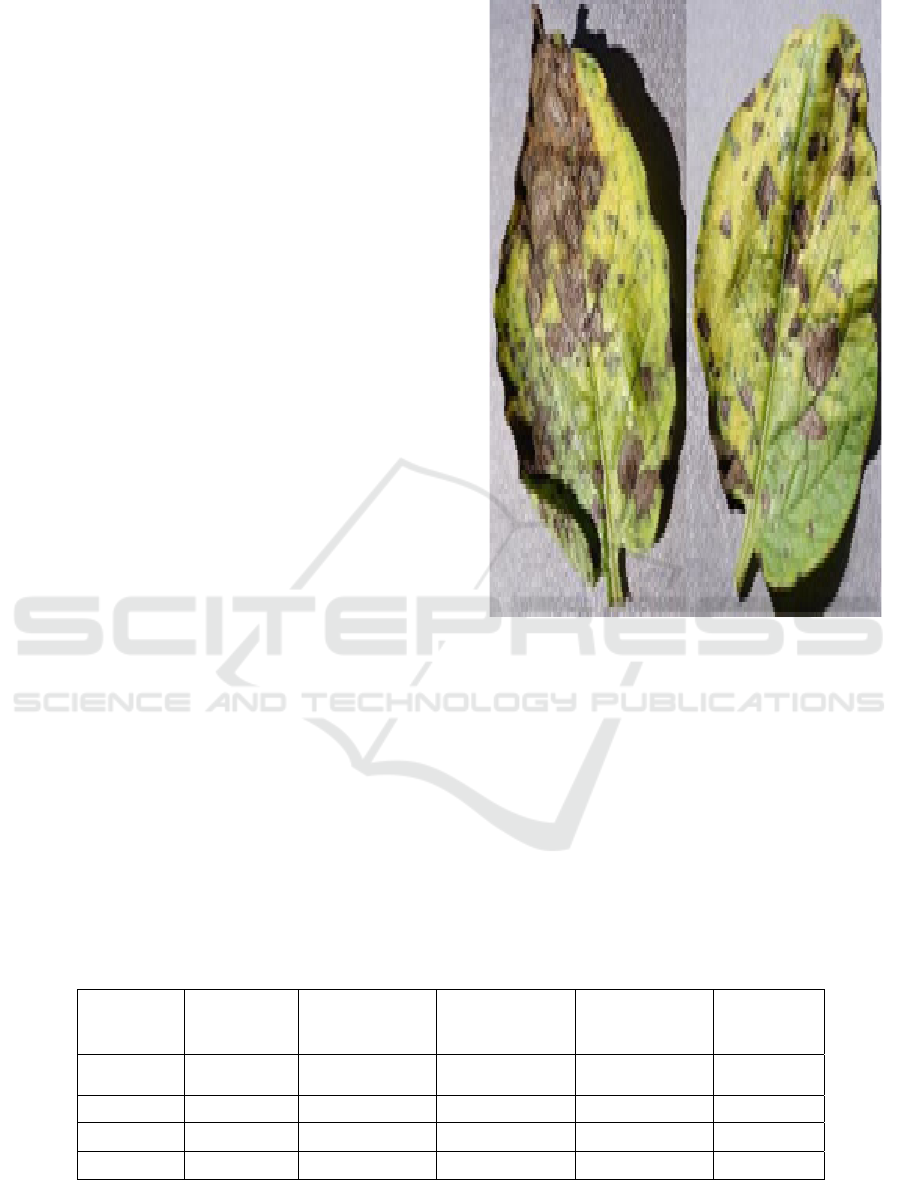
A fungal infection caused by Alternaria solani. It
begins as small black spots that gradually enlarge into
larger dark brown or black patches. These spots are
usually round or oval and often appear along the
edges of leaf veins. In some cases, a black fungal
growth can also be seen on the undersides of the
leaves. This disease primarily affects potatoes,
causing them to rot, especially in warm weather
(above 26°C) or when the plants are stressed due to
poor nutrition or excessive heat. Figure 2 shows the
Early Blight Disease of Potato Leaves.
Figure 2: Early Blight Diseased Potato Leaves.
3.1.2 Late Blight
A highly damaging disease caused by the pathogen
Phytophthora infestans. It severely affects potato
plants, particularly in cool and moist environments.
This fast-spreading disease harms both leaves and
tubers, leading to substantial reductions in potato
yields. Figure 3 shows Late Blight Diseased Potato
Leaves.
Table 1: Summary of Plant Village Dataset.
Label Category Total Images
Training
Samples
Validation
Samples
Test
Samples
1 Late Blight 1000 800 100 100
2 Early Blight 1000 800 100 100
3 Healthy 152 122 15 15
Total
2152 1722 215 215
Smart Agri Assist: Enhancing Leaf Disease Recognition Using Deep Learning Techniques
821

Figure 3: Late Blight Diseased Potato Leaves.
3.2 Data Preprocessing
Hence, the subsequent preprocessing steps were
carried out to maintain the integrity of the dataset:
3.2.1 Image Resizing
All images were resized to a constant 224x224 to
ensure consistency.
3.2.2 Normalisation
This was performed by calibrating the pixel
intensities with the number of possible colours per
pixel, which in this case was 255, constraining the
pixel values in the set of [0,1]
3.2.3 Training Data Enrichment
To maximize model adaptivity, techniques such as
image rotation, resizing, and horizontal flipping were
utilized during the training of the model in order to
maximize the variability of the dataset and minimize
risk of overfitting.
3.3 Model Development
3.3.1 Model Selection
MobileNet was selected because of its efficient
design and great performance for image classifier
tasks.
3.3.2 Training
80:20 split, with larger partition used for training and
smaller partition used for testing. The model was
trained using backpropagation with validation data to
track progress and avoid overfitting.
3.3.3 Evaluation
The performance metrics used to determine the
effectiveness of the model were overall detection
accuracy, positive prediction rate, negative
prediction rate, and the unified score.
3.4 User Interface Development
3.4.1 Web Application Framework
The system was built using Django, a powerful
framework for developing web applications.
3.4.2 Image Upload Functionality
A user-friendly interface was designed, enabling
users to upload images of potato leaves for disease
classification.
3.4.5 Result Display
The application presents disease predictions along
with confidence scores and recommends suitable
treatments based on the classification.
4 METHODOLOGY
The MobileNet model applies a systematic approach
to classify input images into several classes based on
their features. Fastai is a powerful and flexible deep
learning library designed to facilitate high-
performance image classification. Here’s a detailed
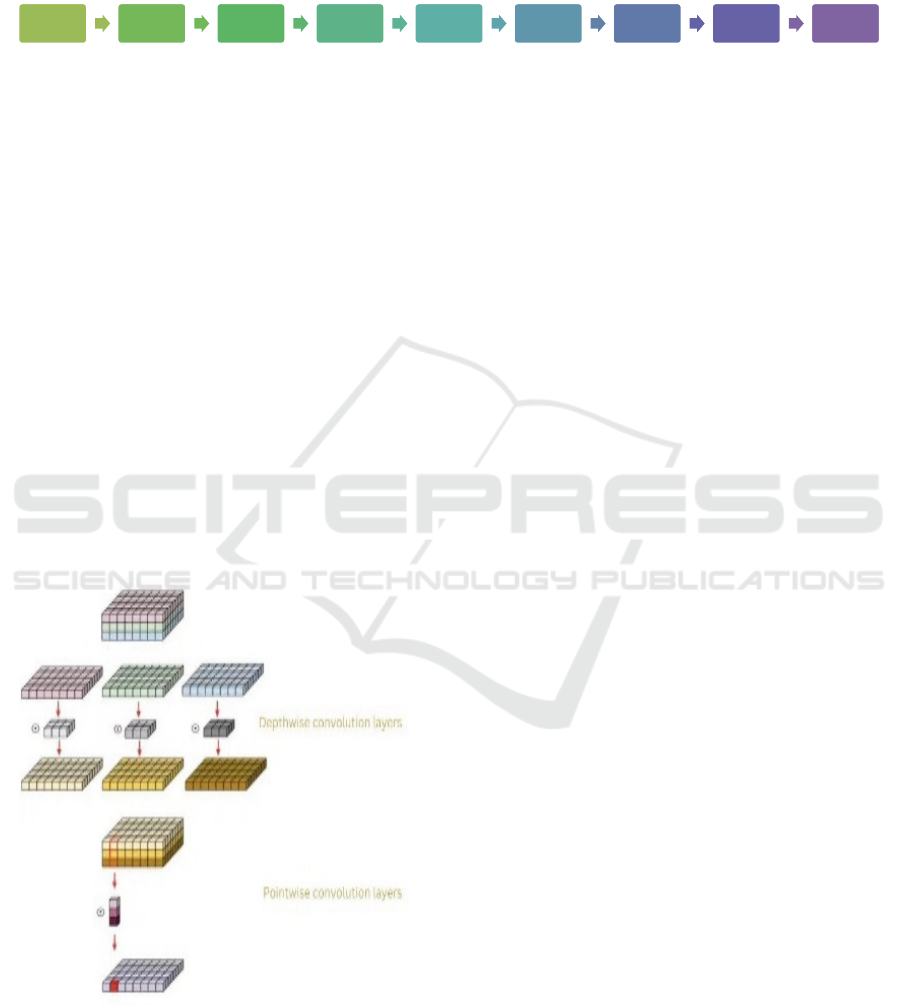
breakdown of how it operates step by step in figure
4.
4.1 Input Image Processing
The user uploads an image of a potato leaf, and the
process begins. So, to make it consistent, the input
image is resized into a fixed size (128×128 or
224×224 in some versions). This breaks down the
images to reduce the variations in their sizes. Takes
pixel normalization next. This step helps increase the
efficiency of the training, as pixel intensities are now
more homogeneous in range, resulting in lower
complexity of computation, as well as increased
stability of the learning.
4.2 Feature Extraction using
Convolutional Layers
MobileNet uses Depthwise Separable Convolutions
ICRDICCT‘25 2025 - INTERNATIONAL CONFERENCE ON RESEARCH AND DEVELOPMENT IN INFORMATION,
COMMUNICATION, AND COMPUTING TECHNOLOGIES
822
instead of regular convolutional layers, which greatly
decrease the computational cost without
compromising accuracy. This is achieved through
two fundamental operations:
Figure 4: Overview of MobileNet Architure.
4.2.1 Depth wise Convolution
Convolutional layer: A convolutional layer performs
a similar operation for a filter, except all input
channels are transformed with the same operation.
However, in a depth wise convolution, a single filter
is applied over each channel (Red, Green, Blue). This
means that the model learns (example: right and left
edges for pixels of the red color) independently per
color (channel), a computation is now much easier. It
eliminates the complexities of processing the image
entirely in RGB in exchange for maintaining core
features like edge, texture, and pattern details while
reducing computational overhead by processing the
RGB in parallel with three-edge channels.
4.2.2 Pointwise Convolution
Figure 5: Depthwise Separable Convolution Layers.
This is followed up by a pointwise convolution using
1×1 filter. Small filters learn inter-channel
relationships from extracted channel-wise features.
And this process is critical for establishing
informative feature representations. Figure 5
Depthwise convolution is about spatial feature while
pointwise convolution is the operation to merge these
facts to an effective yet informative features.
4.3 Activation Function (ReLU)
To introduce non-linearity and improve the feature
learning the Rectified Linear Unit (ReLU) function
is applied after each convolution layer. It zeros any
negative pixel values and helps retain only the metrics
we need to learn. This activation function was
helpful as it allowed the model to accurately process
details of potato leaf images, contributing to the
improvement of its results.
4.4 Feature Pooling (Max Pooling)
Max Pooling is used to reduce the final feature map
dimensionality, preserving only the most important
information. Due to this process the model pipeline
becomes efficient by down sampling the image
representation but keeping main features. Max
pooling enhances feature conservation and avoids
overfitting by maintaining only the highest value
across each section of the feature map.
4.5 Fully Connected (Dense) Layers
After the extraction of high-level features through
convolution and pooling, classification is the next
step. Features are first flattened to create a 1D vector
and passed through fully connected (dense) layers.
Layers are learned and adjusted as a classification
process.
4.6 Softmax-Driven Classification
Approach
The Softmax function is applied to generate
Input Image
Image
Preprocessing
Depthwise
Convolution
Pointwise
Convolution
ReLU
Activation
Max Pooling
Fully
Connected
Layer
Softmax
Activation
Output
Smart Agri Assist: Enhancing Leaf Disease Recognition Using Deep Learning Techniques
823
probability scores for each class and the class with
the greatest probability is selected as the final
prediction.
4.7 Output & User Interface
After the classification process is finished, the system
then shows the expected disease category as well as
the confidence level. The application further
recommends suitable treatments according to the
classification outcome. The predictions are displayed
on a web interface running on Django, giving users
an easy-to-apply platform for disease identification.
5 RESULTS AND EVALUATION
5.1 Training and Validation accuracy
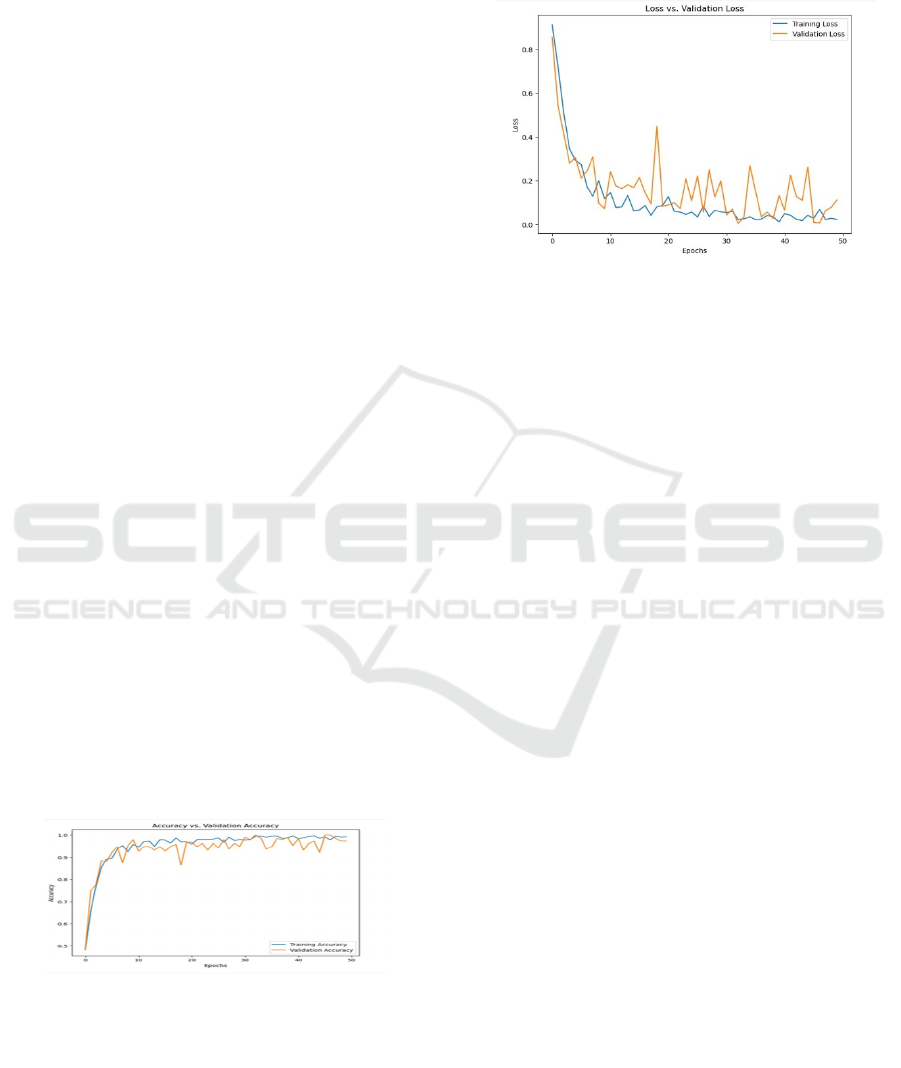
Figure 6. graph show us the learning process of our
deep learning system, for potato disease
classification, for each epoch The trend at early stage
is very steep, which means good feature extraction
and gradients optimization. Likewise, the accuracy of
the model on the validation set increases with time,
indicating that model generalizes well on new data.
After 10th epoch, the accuracy levels off; therefore,
we can tell that the model have learned the necessary
features for classification and are minimizing the
errors. The validation curve remains stable with only
minor fluctuations, showing that the data is not too
complex and not getting overfit, as the validation
accuracy remains high and close to the accuracy of
the training dataset. When the upper right threshold is
plotted against the lower right threshold, variable, the
close distance between the two curvatures indicates
that the model is well- regularized and the
hyperparameters have been optimally calibrated.
Figure 6: Accuracy Trends During Training and Validation.
5.2 Training and Validation Loss
Figure 7 All epochs' performance of our potato deep
learning classifier on the left, we see a steep decline
in both loss metrics, indicating our model is learning
and moving toward a minimum by successfully
updating its parameters during the backpropagation
and gradient descent updates.
Figure 7: Loss Trends Across Epochs.
The training loss has reached a steady low value
after around 10 epochs, indicating that convergence
has been reached. The validation loss seems to
fluctuate a little, I think because of the nature of the
validation dataset. The losses converge tightly,
indicating the model's robustness and reliability. The
characteristics of these loss patterns suggest that the
model is successfully implementing a well-
regularized learning process for agricultural disease
classification.
5.3 Confusion Matrix
Confusion matrix which shows performance of the
deep learning framework in classifying potato
diseases by using predicted labels and actual labels.
It measures the classification accuracy and helps find
entries misclassified across categories. The high true
positive is confirmed from 110 healthy, 125 late
blight, and 17 early blight samples predicated
correctly from the model. We see only a couple of
misclassifications with very little confusion. The fact
that there are no false positives in the Healthy
category shows that the model is doing good to tune
in to non-infected leaves. The proposed model shows
promising results in Figure 8, it can be relied upon for
automated potato disease detection in the field of
agriculture.
ICRDICCT‘25 2025 - INTERNATIONAL CONFERENCE ON RESEARCH AND DEVELOPMENT IN INFORMATION,
COMMUNICATION, AND COMPUTING TECHNOLOGIES
824
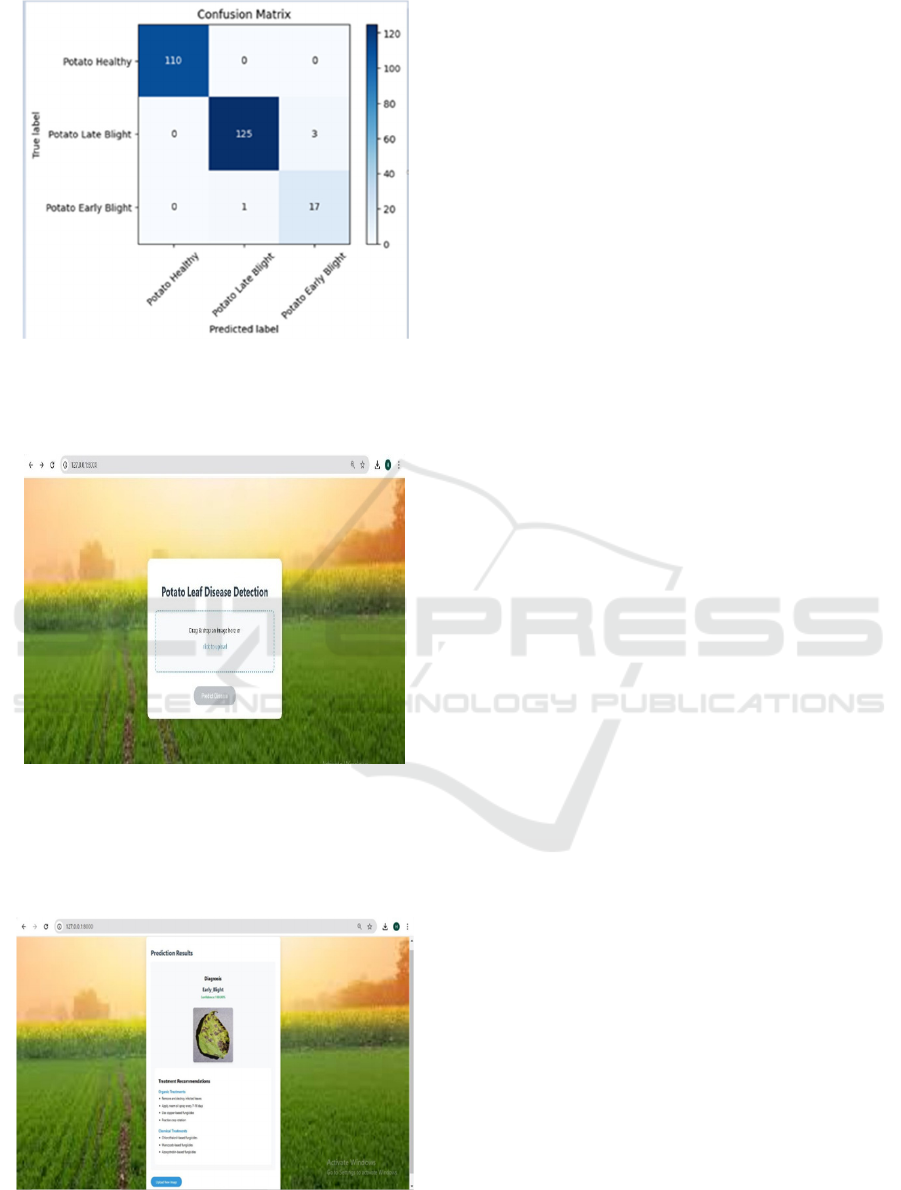
Figure 8: Prediction Outcome Grid.
5.4 User Interface
Figure 9: Image Upload Page.
Figure 9 shows the user uploading image page and Figure
10 shows the disease prediction and treament
recommendation.
Figure 10: Disease Prediction and Treatment
Recommendation.
6 DISCUSSION
The proposed potato disease detection system, based
on the MobileNet architecture, demonstrated high
accuracy (over 99%) in classifying healthy and
diseased potato leaves. This performance can be
attributed to the use of a well-curated dataset and data
augmentation techniques, which improved the
model's ability to generalize. The lightweight nature
of MobileNet proved beneficial for real-time
applications, as it reduced computational overhead
while maintaining high precision, making it more
efficient than heavier models like VGG16 or ResNet.
The web-based implementation using Django
provided an accessible and user-friendly interface for
farmers, allowing them to upload images and receive
instant disease predictions along with confidence
scores. The inclusion of treatment recommendations
(both organic and chemical) further enhanced the
system's practicality, bridging the gap between
disease diagnosis and actionable solutions. However,
the model's effectiveness depends on the diversity and
quality of the training data. Future iterations could
benefit from incorporating more disease variations,
environmental conditions, and regional-specific
datasets to improve robustness.
Additionally, while the current system focuses on
image-based detection, integrating real-time
monitoring through IoT devices or mobile
applications could enhance its usability in field
conditions. Edge computing optimizations could also
be explored to enable offline functionality,
particularly in regions with limited internet
connectivity.
7 CONCLUSIONS
This study successfully developed an efficient deep
learning-based system for detecting potato diseases
using the MobileNet algorithm. The model achieved
high accuracy, demonstrating its potential for real-
world agricultural applications. The lightweight
architecture ensured fast processing, making it
suitable for deployment in resource-constrained
environments. The accompanying web application
provided an intuitive platform for farmers to diagnose
diseases and access treatment recommendations,
thereby supporting better crop management
decisions.
Future work should focus on expanding the
dataset to include more disease types and
environmental variations, improving model
Smart Agri Assist: Enhancing Leaf Disease Recognition Using Deep Learning Techniques
825

generalizability. Further optimizations, such as edge
deployment and real-time monitoring capabilities,
could enhance the system's scalability. By addressing
these aspects, the proposed solution can evolve into a
more comprehensive tool for precision agriculture,
ultimately contributing to reduced crop losses and
improved farm productivity.
REFERENCES
Liu, J., Cheng, Q., Gong, W., et al. (2022). Deep learning-
based tomato and potato diseases recognition. Journal
of Food Engineering, 357, 109771.
Arshaghi, A., Ashourian, M. & Ghabeli, L. (2023). Potato
diseases detection and classification using deep
learning methods. Multimed Tools Appl, 82, 5725–
5742.
Kumar, A., Patel, V.K. (2023). Classification and
identification of disease in potato leaf using hierarchical
based deep learning convolutional neural network.
Multimed Tools Appl, 82, 31101–31127.
Sharma, A., Zhang, L., & Tanwar, S. (2021). A novel deep
learning approach for early detection of late blight
disease in potato crops. Computers and Electronics in
Agriculture, 182, 106075.
Yuan, D., Wu, C., & Li, J. (2020). Potato leaf disease
detection using a hybrid convolutional neural network.
IEEE Access, 8, 72671-72677.
Kong, G., Wang, H., Wang, L., et al. (2022). Identification
of potato late blight disease based on deep learning and
edge computing. IEEE Internet of Things Journal, 9(6),
5046-5054.
Shrestha, R., Gaire, A., & Moh, S. (2021). An efficient
potato disease classification model using convolutional
neural networks. In Proceedings of the IEEE
International Conference on Computer Vision (ICCV)
Workshops, 2021.
Parihar, N., Rani, A., Gupta, M., et al. (2020). Deep
convolutional neural network for the classification of
potato diseases. In Proceedings of the International
Conference on Computer Vision and Pattern
Recognition (CVPR), 2020.
Zhang, L., Zhang, Y., & Zhu, Z. (2022). Potato disease
detection using deep neural networks. Computers in
Industry, 134, 103590.
Yang, J., Xie, Y., & Wei, J. (2021). Potato leaf disease
detection using a novel CNN architecture. Computers
and Electronics in Agriculture, 184, 106095.
Du, J., Ma, X., & Li, B. (2022). Potato leaf disease
classification using a deep convolutional neural
network with attention mechanism. IEEE Transactions
on Image Processing, 31, 173-183.
Zhang, Y., Chen, S., & Sun, Q. (2020). Detection of potato
late blight disease using a convolutional neural
network-based method. Plant Disease, 104(10), 2671-
2678.
Sharma, S., Sharma, A., & Gupta, A. (2021). A survey of
recent advances in potato disease detection using deep
learning techniques. Journal of Agricultural Science
and Technology, 23(4), 815-834.
Wang, L., Liu, L., & Li, Y. (2020). An efficient deep
learning model for early detection of potato diseases
using CNN. Journal of Agricultural Information
Science, 42(2), 59-69.
Ma, R., Hu, J., & Li, Y. (2022). A novel method for the
identification of potato late blight disease based on
convolutional neural networks. Computers in Industry,
152, 103488.
Shen, L., Zhang, J., & Huang, X. (2021). Potato disease
recognition using a deep learning-based approach.
Plant Pathology, 70(4), 943-950.
Li, M., Yang, Z., & Wang, Y. (2020). Automated detection
of potato diseases using convolutional neural networks.
International Journal of Agricultural and Biological
Engineering, 13(6), 103-11.
ICRDICCT‘25 2025 - INTERNATIONAL CONFERENCE ON RESEARCH AND DEVELOPMENT IN INFORMATION,
COMMUNICATION, AND COMPUTING TECHNOLOGIES
826
