
Advancing Cloud Ecosystems: The Role of Serverless Computing and
Blockchain in Modern Infrastructure
S. Sivaranjani
1
, K. Ramya
1
and R. Anandhi
2
1
Department of Information Technology and BCA, Dwaraka Doss Goverdhan Doss Vaishnav College, Chennai, Tamil
Nadu, India
2
Department of Computer Science, Dwaraka Doss Goverdhan Doss Vaishnav College, Chennai, Tamil Nadu, India
Keywords: Cloud Computing, Serverless Computing, Blockchain Technology, Immutability, Cloud Security.
Abstract: In the digital age, cloud computing has transformed the way services are delivered by providing unparalleled
cost-effectiveness, scalability, and agility. What is Serverless Computing An application of Cloud Computing,
Serverless computing is distinct from its models in that it alleviates developers from the burden of
infrastructure management so they can focus on the code. Key advantages of this strategy include lower costs,
automated scalability, and faster time to market. To complement this development, blockchain technology
that provides decentralized technical approaches to manage data, improves security, transparency, and trust.
Combining Blockchain with Serverless Architectures Enable Organizations to Build Future-Ready
Applications with Improved Operational Efficiency and Robust Security Capabilities This paper explores how
these revolutionary technologies are converging and how they are likely to converge to build the next
generation of applications.
1 INTRODUCTION
Cloud computing is a paradigm shift in the way
computing resources are provisioned and consumed.
It has transformed how organizations and people
work by offering access to a pool of online resources,
facilitating operations efficiencies. This technology
alleviates users from the responsibility of maintaining
infrastructure by allowing them to buy processing
power, storage, and networking capabilities in the
cloud when they are needed storage (Sina Ahmadi,
2024). As per National Institute of Standards and
Technology (NIST), cloud computing is defined as
“A model for enabling ubiquitous, convenient, on-
demand network access to a shared pool of
configurable computing resources. It becomes
possible to rapidly provision and make available
networks, servers, storage, applications and services
with minimal administration overhead. As
organizations turn increasingly to data-driven
decision-making and request real-time access to
services, cloud computing provides the environment
needed to encourage innovation and responsiveness.
Its capabilities fit various business scenarios — from
deploying mobile apps to doing extensive data
analytics.
1.1 Server Computing: Traditional
Cloud
Dedicated servers or virtual machines are used to host
apps and services in server computing, also known as
conventional computing or server-based computing.
For decades, this paradigm has been the norm for
many organizations, and it depends on real or virtual
servers to supply the resources required for data
management, processing, and storage (Sina Ahmadi,
2024).
1.2 Limitations of Traditional Cloud
Computing
Since every coin has two sides, cloud computing
technology has also its own limitations as listed
below:
Expensive: The requirement for a sizable initial
hardware investment and continuing operating
expenses can be very onerous.
Scalability issues: Increasing or decreasing involves
a lot of preparation and technical know-how and is
frequently not agile.
584
Sivaranjani, S., Ramya, K. and Anandhi, R.
Advancing Cloud Ecosystems: The Role of Serverless Computing and Blockchain in Modern Infrastructure.
DOI: 10.5220/0013869600004919
Paper published under CC license (CC BY-NC-ND 4.0)
In Proceedings of the 1st International Conference on Research and Development in Information, Communication, and Computing Technologies (ICRDICCT‘25 2025) - Volume 1, pages
584-590
ISBN: 978-989-758-777-1
Proceedings Copyright © 2025 by SCITEPRESS – Science and Technology Publications, Lda.
Underutilization of Resources: Inefficiencies may
result from many servers not being used to their
maximum potential.
Maintenance Overhead: Needs constant supervision
and upkeep, which might use up important IT
resources.
2 SERVERLESS COMPUTING:
REVOLUTIONIZING CLOUD
APPLICATIONS
Developers can create and execute applications using
serverless computing without having to worry about
maintaining servers. It mainly charges and scales
automatically according to consumption. Event-
driven architectures in serverless computing are
bringing a major transformation to cloud applications
environment (Y. Li et al., 2023). In a conventional
cloud context, developers are often plagued by the
challenges associated with provisioning and
maintaining servers, which can slow them down and
hike up operational costs. In serverless computing,
however, this infrastructure management is
abstracted, allowing developers to write functions
that are automatically triggered by triggers such as
user events, system events, or scheduled jobs (M.
Ghobaei-Arani and M. Ghorbian, 2023).
2.1 The Evolution of Serverless
Computing
Serverless computing is one of the most creative
innovations in cloud computing. Serverless
computing is a cloud computing execution model in
which the cloud provider dynamically allocates
machine resources.
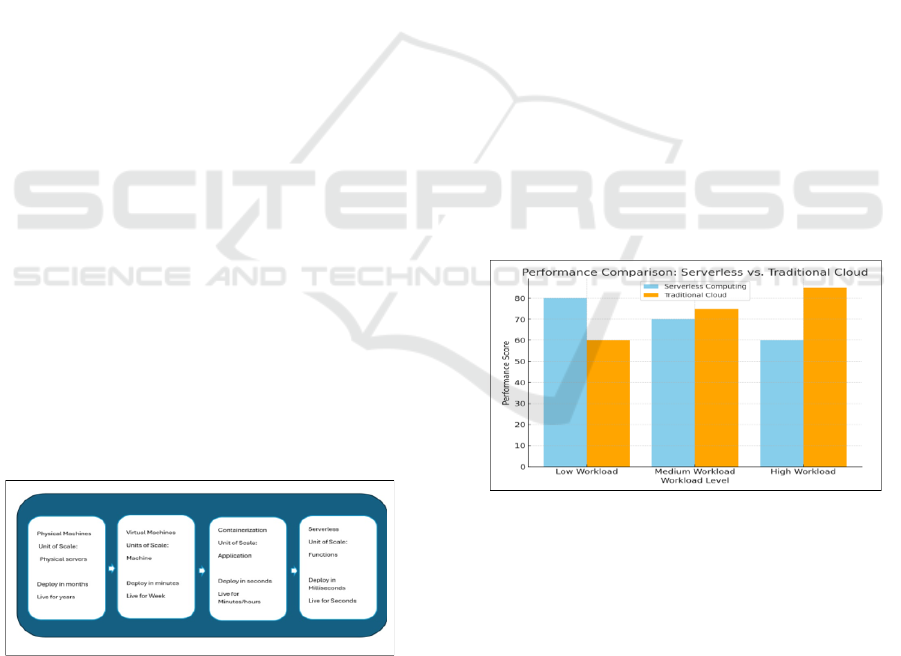
Figure 1: Evolution of Serverless Computing.
The provider takes care of server provisioning,
scaling, and deployment while developers write and
run the code (Mugunthan, S. R, 2021). This technique
abstracted server maintenance, lets us focus on
application functionality and logic is shown in Figure
1.
2.2 Event-Driven Workflow in
Serverless Computing
Event-driven workflows of serverless computing
provide a new methodology to build modern apps that
respond rapidly and in real time to events without
worrying about maintaining underlying infrastructure
(Mugunthan et al., 2021). In a serverless architecture,
developers create functions that respond to various
triggers, such as user activities, system events or
scheduled events, enabling seamless scaling and cost
effectiveness.
Cloud providers offer their own solutions (e.g.,
AWS Lambda, Azure Functions), where applications
can scale automatically based on the current demand.
The paradigm also leads to challenges like vendor
lock-in, difficulty in monitoring and debugging, and
latency because of cold starts (Chen et al., 2021), thus
careful design is important. Using serverless event
driven processes has many benefits: scalability and
cost effectiveness to name a few. Because they only
pay for the precise amount of resources used during
execution, companies can optimize resource
utilization and lower costs associated with idle
processing power by only executing code when an
event happens.
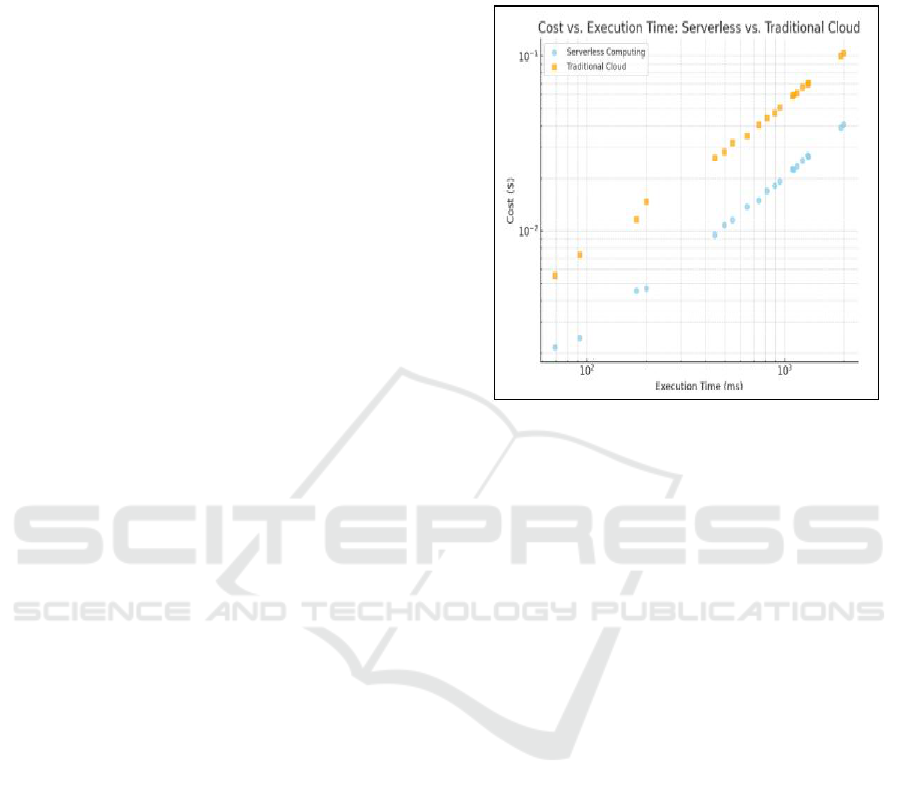
Figure 2: Performance of Serverless Computing Vs.
Traditional Cloud Models.
Figure 2 demonstrates how serverless computing
works with quick scalability and low latency and
allows it to operate well at low workloads when
compared to traditional cloud models. However,
because they provide consistent resource allocation
and circumvent serverless functions' cold start
latency, traditional cloud models perform better than
serverless at large workloads (Smys et al., 2021).
Advancing Cloud Ecosystems: The Role of Serverless Computing and Blockchain in Modern Infrastructure
585
2.3 Benefits of Serverless Computing
There are many benefits of serverless computing
greatly improving the creation of contemporary
applications.
2.3.1 Cost Efficiency
Because serverless computing uses a pay-as-you-go
pricing model, businesses only must pay for the
computer resources they really utilize during runtime.
This results in significant cost reductions by
removing expenses related to idle resources (Srikanth
et al., 2021).
2.3.2 Scalability
In response to demand, serverless architecture
automatically scale resources up or down.
Applications may manage different workloads thanks
to their elastic scalability without the need for human
intervention. Functions can automatically duplicate
during periods of high traffic, guaranteeing steady
performance in contrast, resources can be lowered
appropriately during periods of low demand (Suma
etb al., 2021).
2.3.3 Reduced Operational Overhead
Cloud service providers cover a large portion of the
operational load associated with serverless
computing, including server management and
maintenance (Kumar et al., 2021). This enables
development teams to devote more resources to
innovation and application development as opposed
to operational duties.
Figure 3 illustrates the cost efficiency of hosting
the serverless computing and traditional cloud models
based on execution time. The summary of the above
graph is:
1. Serverless Computing:
• Cost scales linearly with execution
time.
• Lower cost for short-duration tasks
due to the pay-as-you-go model.
2. Traditional Cloud:
• It has a higher baseline cost, even
for short tasks.
• More cost-effective for long-
running workloads due to fixed
pricing.
Hence, Serverless computing is ideal for short,
bursty workloads, while traditional cloud suits long-
running, predictable workloads (Jain et al., 2020).
Figure 3: Cost Efficiency in Serverless Computing Vs.
Traditional Cloud Models.
2.4 Real-World Applications for
Serverless Computing
Numerous real-world applications that make use of
serverless computing's scalability, affordability, and
simplicity of deployment have emerged because of its
considerable popularity across a range of industries
(Mugunthan, S. R, 2020).
• Companies like Netflix process enormous
volumes of real-time data using serverless
architecture, which helps them effectively
manage customer demands and improve
streaming quality.
• To handle erratic traffic during sales events, e-
commerce systems like Zalando use serverless
functions, which allow them to flexibly scale
resources to match client demand without
overprovisioning.
• To minimize operational costs and ensure
responsiveness, service providers like Slack
also use serverless solutions for background
operations like data integration and
notifications (Chen et al., 2024).
• In the financial sector, fintech firms use
serverless computing to quickly process
transactions as well as handle user
authentication that requires high levels of
security without compromising on efficiency.
ICRDICCT‘25 2025 - INTERNATIONAL CONFERENCE ON RESEARCH AND DEVELOPMENT IN INFORMATION,
COMMUNICATION, AND COMPUTING TECHNOLOGIES
586
3 IMPROVING CLOUD
SECURITY USING
BLOCKCHAIN
While cloud computing provides scalability,
flexibility, and cost-efficiency, it also brings forth
security challenges concerning data privacy, access
control, and cyber threats. These risks need to be
addressed by organizations to have secure cloud
environments (V et al., 2020). The following are
some major issues with cloud security:
1. Data Loss & Breach: As cloud providers
store plenty of private data, they are often a
victim of cyberattacks. Unauthorised access
due to weak authentication or poor storage
config can lead to data leaks
2. Inadequate Identity and Access
Management (IAM): If authentication
processes are not up to the mark,
unauthorized users might access the cloud
resources. Security issues may arise from
poorly designed IAM roles with excessive
permissions (Sha et al., 2020).
3. Insecure Interfaces and APIs: Cloud
services use Application Programming
Interfaces, or APIs, to communicate.
Attackers can use vulnerabilities in badly
configured APIs to gain unauthorized access
Yadav et al., 2024).
4. Cloud Settings Misconfiguration:
Misconfigured databases, storage buckets,
and access controls can expose sensitive
information. Such security breaches are
common as most default settings are never
changed.
5. Insufficient Cloud Visibility and
Monitoring: Organizations have trouble
monitoring cloud resources due to dynamic
scaling and multi-cloud environments. In a
scenario where there is insufficient
visibility, unauthorized activities are nearly
impossible to detect.
6. Compliance and Legal Issues: The data
protection laws vary in different countries
(GDPR, HIPAA, CCPA). Companies using
cloud services must protect data in
accordance with these regulations.
7. Insider Threats (Negligent Employees):
Employees/insider with privileged access
can help in violating cloud resources
Sensitive information can be exposed due to
accidental data deletion or phishing attacks.
3.1 Understanding Blockchain
Technology
Blockchain technology is one of the most
revolutionary inventions that can change lives in all
sectors. Blockchain is a shared, decentralized ledger
system that allows secure and open transactions to be
conducted without intermediaries. Blockchain is a
distributed digital ledger that securely records
transactions on many computers (Gupta et al., 2024).
Unlike traditional centralized systems, this system
operates on a distributed network, which makes it
impervious to fraud and tampering. Transactions are
collected in blocks, which are linked together to
create a chain, hence the term “blockchain”. It has
some features such as immutability, which means
transaction which is once recorded can never be
altered or deleted, which ensures security and trust.
With respect to validation of transactions, it replaces
the need for intermediaries using consensus
mechanisms (Gupta et al., 2024).
Structure of Blockchain
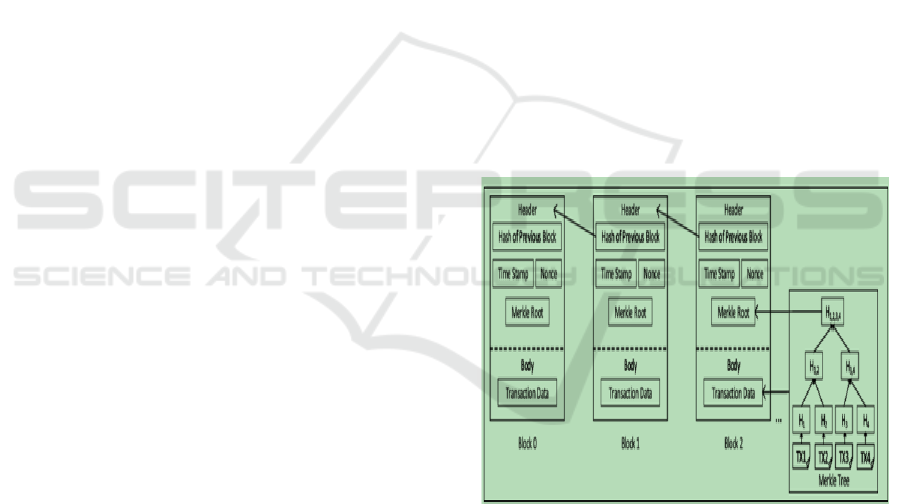
Figure 4: Structure of Blockchain.
Figure 4 shows the architecture of Blockchain. It
consists of blocks, each containing a set of
transactions, a timestamp, and a cryptographic hash
linking it to the previous block, forming an immutable
chain (Patel et al., 2023). The key components of
blockchain include nodes (participants in the
network), consensus mechanisms (such as Proof of
Work or Proof of Stake), smart contracts, and
cryptographic security. Blockchain operates without
a central authority by relying on consensus
Advancing Cloud Ecosystems: The Role of Serverless Computing and Blockchain in Modern Infrastructure
587

mechanisms for transaction validation. Common
mechanisms include,
• Proof of Work (PoW) - Miners solve
cryptographic puzzles to validate transactions
(e.g., Bitcoin).
• Proof of Stake (PoS) - Validators are chosen
based on the number of coins they hold (e.g.,
Ethereum 2.0).
3.2 How Blockchain Improves Cloud
Security
Blockchain technology offers numerous benefits
across various industries by enhancing security,
transparency, efficiency, and decentralization
(Rajasekar, P et al., 2024). One of its key advantages
is improved security, as blockchain uses
cryptographic encryption and decentralization to
prevent fraud, hacking, and data manipulation.
Additionally, it ensures immutability, meaning once a
transaction is recorded, it cannot be altered or deleted,
making data tamper-proof (Liu et al., 2020).
Figure 5: Security Benefits of Blockchain in Cloud
Computing.
Figure 5 shows the security advantages of
blockchain in cloud computing are highlighted in
the pie graph. Decentralization (25%) lessens
dependency on central authority, while data
integrity (30%) guarantees tamper-proof records.
Transparency (15%) increases confidence by
permitting verifiable records, while encryption
(20%) safeguards sensitive data. 10% access control
prevents unwanted access. Integrity,
decentralization, encryption, transparency, and
access control are some of the ways that blockchain
improves cloud security overall.
3.3 Performance Comparison
Cloud security has been improved by incorporating
Blockchain through its immutability feature. There
are evident advantages in implementing blockchain in
cloud model rather than cloud model without
blockchain. Table 1 gives the performance
comparison of systems with blockchain vs. without
blockchain across key factors like security,
transparency, decentralization, speed, cost,
scalability, trust and automation.
Figure 6: Comparison of Benefits of Blockchain Vs
Traditional Cloud.
Table 1: Cloud Model With Vs. Without Blockchain.
Factor
Cloud with Blockchain
Cloud without Blockchain
Security
High security due to cryptographic encryption
and immutability.
Vulnerable to hacking, fraud, and
data tampering.
Transparency
Transactions are recorded on a public or
permissioned ledger, ensuring transparency.
Limited transparency, data can be
hidden or manipulated.
Decentralization
Operates on a distributed network with no
central authority.
Centralized control, prone to single
points of failure.
Speed
It can be slower due to consensus mechanisms
and network validation.
Faster in centralized systems with
direct processing.
Cost
Reduces intermediary costs but may have
higher computational expenses.
Lower computational costs but
may require intermediaries.
Scalability
Limited scalability, especially for public
blockchains like Bitcoin and Ethereum.
Easily scalable in traditional
centralized systems.
ICRDICCT‘25 2025 - INTERNATIONAL CONFERENCE ON RESEARCH AND DEVELOPMENT IN INFORMATION,
COMMUNICATION, AND COMPUTING TECHNOLOGIES
588

Trust &
Reliability
Trustless system where transactions are
verified by the network.
Requires trust in a central authority
or third parties.
Automation
Supports smart contracts for self-executing
transactions.
Manual intervention often required
for contract execution.
Figure 6 shows the security benefits of
blockchain-based cloud and traditional cloud across
five key factors: data integrity, decentralization,
encryption, transparency, and access control (Liu et
al., 2020).
The blockchain-based cloud (blue bars)
consistently scores higher in all aspects, particularly
in decentralization and transparency, where the
traditional cloud (orange bars) lags. Encryption and
access control also show significant improvements
in blockchain-based solutions (Habib et al., 2025).
Overall, the chart highlights blockchain’s superior
security benefits over traditional cloud computing,
making it a more secure and reliable choice for data
protection and management.
4 CONCLUSIONS
This article hence brings out the improvement of
cloud infrastructure using serverless computing and
blockchain technology (Modi, R et al., 2024). Table
2 shows the comparison of serverless computing and
cloud models with Blockchain based upon the
metrics like security architecture, data integrity,
authentication, attack resistance, compliance,
performance and cost implications.
Table 2: Serverless Computing Vs. Cloud With Blockchain.
Factor
Serverless Computing
Cloud with Blockchain
Security
Architecture
Relies on cloud providers to manage
security, including infrastructure, runtime,
and application security.
Uses decentralized security mechanisms,
cryptographic hashing, and consensus
protocols to ensure data integrity and
immutability.
Data Integrity and
Confidentiality
Data is processed and stored in a
centralized cloud environment, making it
vulnerable to data breaches and insider
threats.
Provides tamper-proof records with
cryptographic security, making it more
resilient to unauthorized modifications.
Authentication
and Access
Control
Implements identity and access
management (IAM) controls, role-based
access, and API gateways for
authentication.
Uses cryptographic keys and decentralized
identity management, reducing
dependency on traditional centralized
authentication mechanisms.
Attack Resistance
Prone to Distributed Denial-of-Service
(DDoS) attacks, dependency
vulnerabilities, and supply chain risks.
More resistant to DDoS and single-point
failures due to decentralization but may
face Sybil and 51% attacks in public
networks.
Compliance and
Privacy
Compliance depends on the cloud
provider’s adherence to regulations
(GDPR, HIPAA, etc.), with limited user
control.
Offers enhanced transparency and
auditability, but privacy can be challenging
in public blockchains.
Performance and
Scalability
Highly scalable with dynamic resource
allocation but may suffer from cold start
delays.
Scalability issues in public networks due to
consensus mechanisms, leading to slower
transaction processing.
Cost Implications
Pay-as-you-go model reduces
infrastructure costs but may lead to
unpredictable expenses.
Higher computational and storage costs,
especially in proof-of-work-based systems.
Therefore, serverless computing is ideal for
scalable cloud applications but requires robust
security management. Blockchain provides
enhanced data integrity and decentralization but
faces performance and privacy challenges (Raghu et
al., 2025).
REFERENCES
Chen, Joy Iong-Zong, and Lu-Tsou Yeh, "Greenhouse
Protection Against Frost Conditions in Smart Farming
using IoT Enabled Artificial Neural Networks." Journal
of Electronics 2, no. 04 (2020): 228-232.
Advancing Cloud Ecosystems: The Role of Serverless Computing and Blockchain in Modern Infrastructure
589

Chen, Joy Iong Zong, and Joy Iong Zong. "Automatic
Vehicle License Plate Detection using K-Means
Clustering Algorithm and CNN." Journal of Electrical
Engineering and Automation 3, no. 1: 15-23, 2021.
Gupta, Harshita, and Prabhat Verma. "A survey on data
security and latency Frameworks in healthcare using
Blockchain." In 2024 4th International Conference on
Advance Computing and Innovative Technologies in
Engineering (ICACITE), pp. 1745-1750. IEEE, 2024.
Habib, Gousia, Sparsh Sharma, Sara Ibrahim, Imtiaz
Ahmad, Shaima Qureshi, and Malik Ishfaq.
"Blockchain technology: benefits, challenges,
applications, and integration of blockchain technology
with cloud computing." Future Internet 14, no. 11
(2022): 341.
Hengjinda, P., Dr Chen, and Joy Iong Zong. "An Intelligent
Feedback Controller Design for Energy Efficient Air
Conditioning System." Journal of Electronics and
Informatics 2, no. 3: 168-174, 2020.
Hussein, K., & Al-Gailani, M. (2022). An Efficient
Bandwidth Based on the Cryptographic Technique of
the RSA Accumulator in Block Chain Networks. 2022
Fifth College of Science International Conference of
Recent Trends in Information Technology (CSCTIT),
164-168.
Jain, Sukrutha A., and Avinash Bharadwaj, "Characterizing
WDT subsystem of a Wi-Fi controller in an Automobile
based on MIPS32 CPU platform across PVT." Journal
of Ubiquitous Computing and Communication
Technologies (UCCT) 2, no. 04: 187- 196, 2020.
Kumar, T. Senthil. "Study of Retail Applications with
Virtual and Augmented Reality Technologies." Journal
of Innovative Image Processing (JIIP) 3, no. 02 144-
156, 2021.
Liu, Haibing, Rubén González Crespo, and Oscar Sanjuán
Martínez. "Enhancing privacy and data security across
healthcare applications using blockchain and
distributed ledger concepts." In Healthcare, vol. 8, no.
3, p. 243. MDPI, 2020.
M. Ghobaei-Arani and M. Ghorbian, "Scheduling
Mechanisms in Serverless Computing" in Serverless
Computing: Principles and Paradigms, Cham: Springer
International Publishing, pp. 243-273, 2023.
Modi, R., Jammoria, A. S., Pattiwar, A., Agrawal, A., &
Raja, S. P. (2025). Secure system to secure crime data
using hybrid: RSA- AES and hybrid: Blowfish-Triple
DES. International Journal of Electronic Security and
Digital Forensics, 17(1-2), 194-232.
Mugunthan, S. R, "Decision Tree Based Interference
Recognition for Fog Enabled IOT Architecture."
Journal of trends in Computer Science and Smart
technology (TCSST) 2, no. 01: 15-25, 2020.
Mugunthan, S. R., "Wireless Rechargeable Sensor Network
Fault Modeling and Stability Analysis." Journal of Soft
Computing Paradigm (JSCP) 3, no. 01: 47-54,2021.
Mugunthan, S. R., and T. Vijayakumar. "Design of
Improved Version of Sigmoidal Function with Biases
for Classification Task in ELM Domain." Journal of
Soft Computing Paradigm (JSCP) 3, no. 02 :70-
82,2021.
Patel, Rahul K., Deekshitha Somanahalli Umesh, and
Nikunj R. Patel. "Improving Cloud Security Using
Distributed Ledger Technology." In Privacy
Preservation and Secured Data Storage in Cloud
Computing, pp. 135-153. IGI Global, 2023.
Raghu, N., Bhat, R., Nambiar, P. R., Shetty, G. S., & DB,
A. K. (2025). Blockchain-Enhanced GAN Image
Encryption Scheme for Cloud Computing. In Intellige
nt Systems and IoT Applications in Clinical Health (pp.
367-392). IGI Global.
Rajasekar, P., K. Kalaiselvi, Raju Shanmugam, S.
Tamilselvan, and A. Pasumpon Pandian. "Advancing
Cloud Security Frameworks Implementing Distributed
Ledger Technology for Robust Data Protection and
Decentralized Security Management in Cloud
Computing Environments." In 2024 Second
International Conference on Advances in Information
Technology (ICAIT), vol. 1, pp. 1-6. IEEE, 2024.
Sha, Srirang K., and Shweta Jha,"An Integrated Model of
Sustainable Management Systems for Start-ups." In
International Conference on Mobile Computing and
Sustainable Informatics, pp. 337-342. Springer, Cham,
2020.
Sina Ahmadi, “Challenges and solutions in network
security for serverless computing”, Int. J. Curr. Sci.
Res. Rev. 7, 01 (2024), 218–229, 2024
Smys, S., and Haoxiang Wang. "Security Enhancement in
Smart Vehicle Using Blockchain- based Architectural
Framework." Journal of Artificial Intelligence 3, no. 02:
90-100,2021.
Srikanth, M. S., TG Keerthan Kumar, and Vivek Sharma.
"Automatic Vehicle Service Monitoring and Tracking
System Using IoT and Machine Learning." In
Computer Networks, Big Data and IoT, pp. 953-967.
Springer, Singapore, 2021.
Suma, V. "Community Based Network Reconstruction for
an Evolutionary Algorithm Framework." Journal of
Artificial Intelligence 3, no. 01 :53-61, 2021.
ty management scheme of cloud storage based on
blockchain and digital twins. J Cloud Comp 13, 15
(2024). https://doi.org/10.1186/s13677-023-00587-4
Y. Li, Y. Lin, Y. Wang, K. Ye and C.-Z. Xu, "Serverless
computing: State-of-the-art challenges and
opportunities", IEEE Trans. Serverless Computing.,
vol. 16, no. 2, pp. 1522-1539, Mar./Apr. 2023.
Yadav, Dhananjay, Aditi Shinde, Akash Nair, Yamini Patil,
and Sneha Kanchan. "Enhancing data security in cloud
using blockchain." In 2020 4th International
Conference on Intelligent Computing and Control
Systems (ICICCS), pp. 753-757. IEEE, 2020.
ICRDICCT‘25 2025 - INTERNATIONAL CONFERENCE ON RESEARCH AND DEVELOPMENT IN INFORMATION,
COMMUNICATION, AND COMPUTING TECHNOLOGIES
590
