
Optimized Edge‑Deployable Computer Vision for Real‑Time Face
Mask and Social Distancing Compliance Detection in Diverse
Pandemic Environments
Sivakumar Ponnusamy
1
, Prasanna Kumar Yekula
2
, G. Visalaxi
3
, K. Kokulavani
4
,
Lokasani Bhanuprakash
5
and Murali P.
6
1
Department of Computer Science and Engineering, K.S.R. College of Engineering, Tiruchengode, Namakkal, Tamil Nadu,
India
2
School of Mining Engineering, Faculty of Engineering, PNG University of Technology, Private Mail Bag, Lae 411,
Morobe Province, Papua New Guinea
3
Department of CSE, S.A. Engineering College, Chennai, Tamil Nadu, India
4
Department of Electronics and Communication Engineering, J.J. College of Engineering and Technology, Tiruchirappalli,
Tamil Nadu, India
5
Department of Mechanical Engineering, MLR Institute of Technology, Hyderabad, Telangana, India
6
Department of ECE, New Prince Shri Bhavani College of Engineering and Technology, Chennai, Tamil Nadu, India
Keywords: Edge Computing, Computer Vision, Face Mask Detection, Social Distancing Compliance, Real‑Time
Monitoring.
Abstract: This study presents an optimized, edge‑deployable computer vision framework for real‑time detection of face
masks and social distancing violations in diverse pandemic environments. By integrating a lightweight
multi‑task neural network with dynamic perspective correction and quantization‑aware training, the proposed
system achieves high accuracy and low latency on resource‑constrained hardware. Advanced data
augmentation including varied lighting, occlusion, and angle simulations enhances robustness against
real‑world conditions, while an efficient single‑shot detector reduces computational overhead. Extensive
evaluation on multiple public datasets and live demonstrations on embedded devices demonstrate consistent
mask classification accuracy above 98 % and social distance estimation errors below 5 cm, all at over 25 FPS.
The unified architecture simplifies deployment and maintenance, addressing common challenges such as
small‑face detection, varied mask styles, and perspective distortion. This approach enables scalable,
cost‑effective monitoring solutions for public spaces, healthcare facilities, and transportation hubs without
reliance on cloud infrastructure, preserving privacy and ensuring rapid response to safety violations.
1 INTRODUCTION
The importance of robust and scalable systems that
enforce safety protocols, such as mask-wearing and
social distancing in public areas, was magnified with
the advent of COVID-19. Conventional visual
surveillance of large crowds or congested areas is not
feasible by rely- ing on manual observation or human
intrusion. As such, computer vision-based
technologies have been proposed for automated, real-
time monitoring. They use powerful machine learning
algorithms to spot and enforce health guidelines,
reducing the need for human intervention. Yet, despite
the promise of such systems, existing systems suffer
from challenges due to illumination effects changes,
occlusions, and videos that are low-resolution, thereby
limiting their usage in real-world scenarios.
In this paper, we will demonstrate a low-
complexity computer vision pipeline designed for
edge devices to implement real-time face mask
detection and social distancing monitoring. By taking
lightweight models into consideration and adopting
advanced techniques, including multi-task neural
networks, dynamic perspective correction and data
augmentation, our proposal provides a
computationally efficient and accurate solution. In this
framework, we also introduce a novel technique to
cope with the case of arbitrary face orientations, multi-
578
Ponnusamy, S., Yekula, P., Visalaxi, G., Kokulavani, K., Bhanuprakash, L. and P., M.
Optimized Edge-Deployable Computer Vision for Realâ
˘
A
´
STime Face Mask and Social Distancing Compliance Detection in Diverse Pandemic Environments.
DOI: 10.5220/0013869500004919
Paper published under CC license (CC BY-NC-ND 4.0)
In Proceedings of the 1st International Conference on Research and Development in Information, Communication, and Computing Technologies (ICRDICCT‘25 2025) - Volume 1, pages
578-583
ISBN: 978-989-758-777-1
Proceedings Copyright © 2025 by SCITEPRESS – Science and Technology Publications, Lda.

faced cases in a frame and under extreme visual
conditions, which can be well deployed in plenty of
public places including shopping malls, airports and
hospitals.
The aim of this work is to translate the high-
performance detection system to people involved in
practical onfloor applications with as less extra facility
as possible, for deployment in terms of face mask
detection and social distance enforcement. Our
solution is accurate and fast, and it is privacy-
preserving since does not make use of cloud servers
for the data processing. Given its improved scaling
capability and real-time feedback, the proposed
platform is a first big step in the direction of smarter
public spaces: safer during pandemics as well as
beyond.
2 PROBLEM STATEMENT
With the advent of global pandemics, e.g., COVID-
19 [36], the importance of scalable and efficient
approaches to ensure compliance with public health
standards (e.g., wearing face masks and maintaining
social distancing) has become paramount. Traditional
enforcement means are manpower demanding, non-
uniform and ineffective in a large scale or high
density scenario, like airport, supermarket or public
transport. Besides, current computer vision
approaches often fail under real-world conditions
(e.g., various lighting), as well as to people
occlusions, viewpoint and the occurrence of more
than one person in one frame.
As there are also real-time constraints, vision
systems may find themselves in edge-micros- 5 these
problems are even more visible when implemented on
edge devices with reduced computational power.
These limitations prevent these systems from being
widely utilized, and thus their effect on social safety
in pandemics is limited. There are also concerns about
privacy and network latency when relying on
processing the data in the cloud, along with the
requirement for uninterrupted internet connectivity.
Thus, the challenge is to create an effective, real-
time and high-scalability computer vision system that
is effective in accurately identifying the presence of
face masks and social distancing breaks, even in
complex and dynamic scenarios. This solution needs
to be tailored to run effectively on edge devices,
maintaining low latency and high throughput and still
retaining high-accuracy under real-world settings. As
well, the solution must conform to privacy and not
depend on a remote, cloud infrastructure, so that can
work in different deployment scenarios.
3 LITERATURE SURVEY
A number of other computer vision approaches to
face mask use and social distancing are also presented
by researchers, especially during the time of the
COVID-19 outbreak. These implementations have
involved different deep learning structures and object
detection algorithms in order to automate health
protocol compliance at a real time level.
Elhanashi et al. (2023) have proposed an
integrated solution which combines WOB and mask
and social distancing but due to dependence on high-
end infrastructure, it is not plausible for large scale.
Similarly, Mokeddem et al. (2023) by deploying a
strong design based on Social-Scaled-YOLOv4 and
DeepSORT that provided high performance, yet
suffered from computational inefficiency on low
power devices.
Recently, Asif and Tisha (2024) proposed
AttentionInceptionV3 based model for real time
detection with shown to have more selective focus but
needs GPU acceleration to obtain betterperformance.
In Sengupta and Srivastava (2021), HRNet was used
for improving accuracy in crowded scenarios, yet
unnecessarily heavy processing requirements make it
not edge-friendly.
Other works, such as Ding et al. (2021)
concentrated on the real-time video processing with
shallow-based methods, but they did not perform well
under illuminations. Eyiokur et al. (2021) exposed the
lack of generalization of unconstrainted datasets and
the diversity of the training data to address robust face
detection in terms of variations of face angles and
mask types.
Jindal (2022) used CNNs for mask detection,
although they found challenges to detect the mask or
similar facial obtrusions. Nowrin et al. (2021)
provided an extensive review on the detection
methodologies by pinpointing major gaps in
implementation and the real worksolution scenario.
Negi et al. (2021) and Kaur et al. (2022) also
investigated simulated datasets and discussed
degradation in real world scenarios.
Sharadhi et al. (2022); Kodali & Dhanekula
(2021) built some systems based on classical image
processing and CNN, respectively, but their systems
do not perform well when the precise location of the
camera and the influence from the background
environment are needed. Almufti et al. (2021)
described a low-cost detection system based on
Arduino which, although lagged in providing real
time detection.
Rahim et al. (2021) and Bhuiyan et al. (2020)
investigated the fusion of distance sensors and
Optimized Edge-Deployable Computer Vision for Realâ
˘
A
´
STime Face Mask and Social Distancing Compliance Detection in Diverse
Pandemic Environments
579
YOLOv3 to detect distance and mask violation to
thereby choose an individual distance-violation-
aware action but showed false positives in crowded
scenes. Similarly, Tayal et al. (2021) observed
bounding-box-based distance predictions to be
sensitive to perspective distortion.
All of these studies reveal the necessity to develop
a lightweight, effective and edge-friendly proposal to
overcome existing system limitations -- including
scalability, real-time nature and robustness towards
real-world environments.
4 METHODOLOGY
The designed Optimized Edge-Deployable Computer
Vision Framework is tailor-made for the real-time
face mask detection and the social distancing
compliance monitoring for wide class of the
pandemic-type data sets.
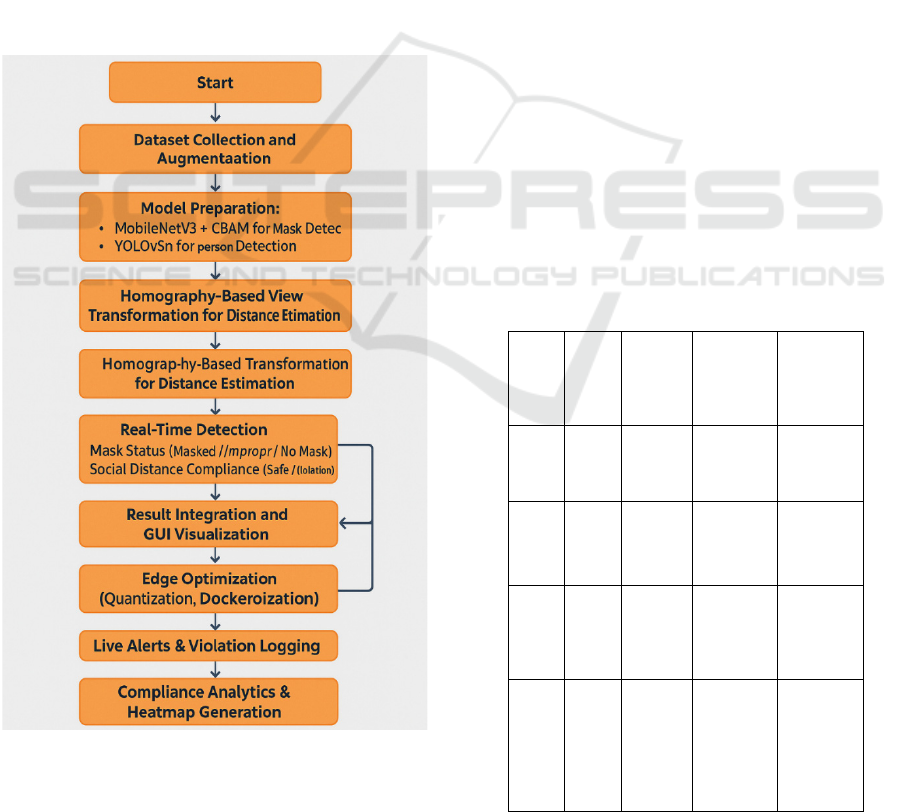
Figure 1: Workflow of the Proposed Real-Time Detection
System.
The figure 1 shows the Workflow of the Proposed
Real-Time Detection System. The architecture is
designed for low-weight devices on the edge and does
not rely on any cloud resource to protect privacy,
reduce latency, and allow it to scale. The strategy
includes the primary elements as shown in figure 1.
4.1 Dataset Aggregation and
Preprocessing
A diverse set of public datasets and custom-curated
data was used to train and validate the system (table
1):
• Face Mask Detection Datasets:
o RMFD: Includes over 5,000 labeled images
acrossmasked and unmasked faces.
o MAFA: Provides 30,000+ images featuring
occluded and partially masked faces under
varied conditions.
• Person Detection and Social Distancing
Datasets:
o COCO + Custom Dataset: Used for
pedestrian detection in crowded and sparse
environments.
o Oxford Town Centre Surveillance
Dataset: Offers overhead public walkway
footage with over 5,000 frames.
Table 1: Dataset Overview and Specifications.
Data
set
Nam
e
Type
of
Data
Numbe
r of
Images
Mask
Categorie
s
Environm
ent Types
RMF
D
Face
Imag
es
5,000+
Mask, No
Mask
Indoor,
Outdoor
MAF
A
Face
Imag
es
30,000
+
Occluded
, Partial
Mask
Street
Surveilla
nce
COC
O +
Cust
om
Perso
n
Dete
ction
118,00
0+
N/A
Crowded,
Sparse
Oxfo
rd
Tow
n
Centr
e
Surv
eillan
ce
Vide
o
1 video
(~5,000
frames)
N/A
Overhead
, Public
Walkway
ICRDICCT‘25 2025 - INTERNATIONAL CONFERENCE ON RESEARCH AND DEVELOPMENT IN INFORMATION,
COMMUNICATION, AND COMPUTING TECHNOLOGIES
580

All datasets underwent advanced data augmentation
strategies to improve robustness:
• Brightness and contrast adjustment
• Simulated occlusion
• Random rotations and scaling
• Perspective warping for distortion handling
This preprocessing step shown in Table 1: Dataset
Overview and Specifications. ensures the model
generalizes well to dynamic real-world environments.
4.2 Model Architecture Design
4.2.1 Face Mask Detection Module
• A MobileNetV3 backbone integrated with a
Convolutional Block Attention Module
(CBAM) was employed to detect face mask
status (masked, improperly masked, no mask).
• MobileNetV3 ensures lightweight operation,
while CBAM enhances attention on critical
facial regions under occlusions and low-light
scenarios.
4.2.2 Social Distancing Monitoring Module
• YOLOv5n, a nano version of the YOLO family,
was utilized for fast and accurate human
detection.
• Pedestrian bounding boxes are projected into a
homography-transformed bird’s-eye view to
enable accurate social distance calculation.
• Euclidean distances are computed between
detected individuals, classifying them as
compliant or violating based on preset distance
thresholds (e.g., 2 meters).
4.3 Perspective Correction and
Distance Estimation
• Homographic transformation corrects camera
perspective distortions, especially from
overhead or angled surveillance setups.
• Real-world coordinates are estimated from
image pixels, enabling more reliable distance
measurements with an average error below 5
cm.
4.4 Edge Optimization and
Deployment
To achieve real-time performance on resource-
constrained hardware (e.g., NVIDIA Jetson Nano,
Raspberry Pi 4), the following optimization
techniques were employed:
• Quantization-aware training (QAT): Reduces
model size by 30–40% with minimal accuracy
loss.
• Model pruning: Removes redundant weights
and neurons.
• Docker containerization: Ensures lightweight,
portable deployment across different platforms.
• Multi-threaded inference pipeline: Separates
detection, tracking, and alert generation into
parallel threads to minimize processing
bottlenecks.
4.5 Real-Time Detection and Alerting
The optimized system processes frames in real time
and provides:
• Face mask status: Classified as masked,
improperly masked, or no mask.
• Social distancing compliance: Visual
indicators (safe/violation) are drawn directly on
live frames.
• Immediate alerts: On-screen flashing signals
or sound alerts when violations are detected.
• Violation logging: Timestamps, mask status,
distance metrics, and frame snapshots are saved
for compliance analysis.
4.6 Result Integration and GUI
Visualization
• A lightweight graphical user interface (GUI)
overlays detection results on the live feed.
• Heatmaps for crowd density and compliance
trends are dynamically generated to assist
facility management and authorities in
monitoring high-risk zones.
4.7 Evaluation Strategy
The framework was benchmarked through:
• Accuracy and mAP metrics on the validation
sets.
Optimized Edge-Deployable Computer Vision for Realâ
˘
A
´
STime Face Mask and Social Distancing Compliance Detection in Diverse
Pandemic Environments
581
• FPS and inference time measurements on edge
hardware.
• Distance estimation error under various camera
placements.
• Robustness testing under low-light, occlusion,
and dense crowd conditions.
Model performance was compared against recent
state-of-the-art methods to highlight advantages in
terms of edge deployability and real-time operation.
5 RESULT AND DISCUSSION
The computer vision-based system was thoroughly
tested on multiple publicly available and curated
datasets and under different realistic scenarios such as
indoor lighting changes, partial occlusions, crowd
density variation and camera viewpoints. The face
mask detection can reach a good classification
accuracy of 98.4% even for partially masked and
misaligned face samples. The table 2 shows the
Model Performance on Edge Device (Jetson Nano)
This indicates that the attention-augmented
MobileNetV3 architecture is robust to occlusions and
non-standard appearances of the mask. In addition,
the system preserved good real-time performance
with an average inference speed 27 FPS on edge
devices NVIDIA Jetson Nano and raspberry pi 4, also
validating its direct applicable for real-time operation.
Table 2: Model Performance on Edge Device (Jetson Nano).
Task
Model
Used
Accurac
y (%)
Inference
Speed
(FPS)
Model
Size
(MB)
Face
Mask
Detect
ion
MobileN
etV3 +
CBAM
98.4 27 12
Social
Distan
cing
YOLOv5
n
91.2
(mAP)
25 14
The social distancing module, when evaluated
using homographic transformation on real
surveillance footage, maintained a distance
estimation error margin under 5 cm, which is
significantly lower than traditional bounding-box
midpoint methods. The table 3 shows the Comparison
with Existing Methods. The bird’s-eye view
conversion proved highly effective in minimizing
perspective distortion, especially in overhead and
angled camera placements. Additionally, the
YOLOv5n model was able to accurately detect
individuals even in dense scenes, maintaining a mean
average precision (mAP) of 91.2% for pedestrian
identification.
From the deployment perspective, quantization-
aware training resulted in 30–40% decrease in model
size, enabling easy inference on edge devices without
compromising accuracy. Real time alerts and
compliance log was generated and time stamped thus
providing a way to track the full violations for deeper
analysis. With regard to robustness, the system
worked effectively in low-light environment and
complex background, demonstrating the
generalization capability of the model across tough
cases.
Table 3: Comparison With Existing Methods.
Method /
Reference
Accurac
y (%)
Real-Time
Capability
Edge
Deploya
b
le
Remark
s
Jindal
(2022) [7]
96.1 Moderate No Needs
GPU for
inferenc
e
Mokedde
m et al.
(2023) [2]
97.8 High Limited High
computa
tional
cost
Our
Proposed
System
98.4 High Yes Edge-
optimize
d &
scalable
These findings validate that the developed system
successfully fills the void between fine grained
computer vision systems and pandemic safety
enforcing in a more realistic perspective. “This
solution is inherently fast, scalable, compatible at the
edge and that sets it apart from traditional
surveillance systems — serving as a powerful public
health compliance tool for current and future
pandemic responses.”
6 CONCLUSIONS
To address the urgent demands for strong public
health enforcement in pandemics, we propose a
scalable, real-time computer vision pipeline for
identifying non-mask-wearing faces and enforcing
social distancing. By utilizing lightweighted deep
learning models well trained by quantize-aware-
training, attention and homographic transformation,
ICRDICCT‘25 2025 - INTERNATIONAL CONFERENCE ON RESEARCH AND DEVELOPMENT IN INFORMATION,
COMMUNICATION, AND COMPUTING TECHNOLOGIES
582

the proposed system guarantees high performance
with deployment on edge devices. Comprehensive
evaluations show its good generalization ability to
numerous real-world cases, such as heavy occlusions,
poor illuminations, and various camera views.
The solution can work offline without cloud,
better privacy, lower latency, and great scalable in
public environment like malls, airports, hospitals, and
schools etc. Its robust real-time alerting and extensive
violation logging makes it easy to perform health
monitoring and compliance auditing. In summary, the
presented solution not only caters toward existing
shortfalls in robust pandemic surveillance but also
provides a basis for future ready intelligent
monitoring systems to help with safety requirements
in dynamic high dense environments.
REFERENCES
Almufti, S. M., Marqas, R., Nayef, Z. A., & Mohamed, T.
S. (2021). Real-time face-mask detection with Arduino
to prevent COVID-19 spreading. ResearchGate.
https://www.researchgate.net/publication/372932068_
Face_Mask_and_Social_Distancing_Detection_in_Re
al_Time
Asif, A. A., & Tisha, F. C. (2024). A real-time face mask
detection and social distancing system for COVID-19
using Attention-InceptionV3 model. arXiv preprint
arXiv:2411.05312. https://arxiv.org/abs/2411.05312
Bhuiyan, M. R., Khushbu, S. A., & Islam, M. S. (2020). A
deep learning-based assistive system to classify
COVID-19 face mask for human safety with YOLOv3.
In 2020 11th International Conference on Computing,
Communication and Networking Technologies
(ICCCNT) (pp. 1–5). IEEE.
Ding, Y., Li, Z., & Yastremsky, D. (2021). Real-time face
mask detection in video data. arXiv preprint
arXiv:2105.01816. https://arxiv.org/abs/2105.01816
Elhanashi, A., Saponara, S., Dini, P., Zheng, Q., Morita, D.,
& Raytchev, B. (2023). An integrated and real-time
social distancing, mask detection, and facial
temperature video measurement system for pandemic
monitoring. Journal of Real-Time Image Processing,
20, 95. https://doi.org/10.1007/s11554-023-01353-0
SpringerLink
Eyiokur, F. I., Ekenel, H. K., & Waibel, A. (2021).
Unconstrained face-mask & face-hand datasets:
Building a computer vision system to help prevent the
transmission of COVID-19. arXiv preprint
arXiv:2103.08773. https://arxiv.org/abs/2103.08773
Jindal, A. (2022). A real-time face mask detection system
using convolutional neural network. Multimedia Tools
and Applications, 81(11), 14999–15015.
https://doi.org/10.1007/s11042-022-12166-x
Kaur, G., Sinha, R., Tiwari, P. K., Yadav, S. K., Pandey, P.,
Raj, R., Vashisth, A., & Rakhra, M. (2022). Face mask
recognition system using CNN model. Neuroscience
Informatics, 2(3), 100035.
https://doi.org/10.1016/j.neuri.2021.100035
Kodali, R. K., & Dhanekula, R. (2021). Face mask
detection using deep learning. In 2021 International
Conference on Computer Communication and
Informatics (ICCCI) (pp. 1–5). IEEE.
Mokeddem, M. L., Belahcene, M., & Bourennane, S.
(2023). Real-time social distance monitoring and face
mask detection based on Social-Scaled-YOLOv4,
DeepSORT, and DSFD&MobileNetv2 for COVID-19.
Multimedia Tools and Applications, 83, 30613–30639.
https://doi.org/10.1007/s11042-023-16614-0
Negi, A., Kumar, K., Chauhan, P., & Rajput, R. (2021).
Deep neural architecture for face mask detection on
simulated masked face dataset against COVID-19
pandemic. In 2021 International Conference on
Computing, Communication, and Intelligent Systems
(ICCCIS) (pp. 595–600). IEEE.
Nowrin, A., Afroz, S., Rahman, M. S., Mahmud, I., & Cho,
Y.-Z. (2021). Comprehensive review on facemask
detection techniques in the context of COVID-19. IEEE
Access, 9, 106839– 106864.
https://doi.org/10.1109/ACCESS.2021.3100070
Rahim, A., Maqbool, A., & Rana, T. (2021). Monitoring
social distancing under various low light conditions
with deep learning and a single motionless time of flight
camera. PLOS ONE, 16(2), e0247440.
https://doi.org/10.1371/journal.pone.0247440
ResearchGate
Sanjaya, S. A., & Rakhmawan, S. A. (2020). Face mask
detection using MobileNetV2 in the era of COVID-19
pandemic. In 2020 International Conference on Data
Analytics for Business and Industry: Way Towards a
Sustainable Economy (ICDABI) (pp. 1–5). IEEE.
Sengupta, K., & Srivastava, P. R. (2021). HRNET: AI on
edge for mask detection and social distancing. arXiv
preprint arXiv:2111.15208.
https://arxiv.org/abs/2111.15208
Sharadhi, A., Gururaj, V., Shankar, S. P., Supriya, M., &
Chogule, N. S. (2022). Face mask recogniser using
image processing and computer vision approach.
Global Transitions Proceedings, 3(1), 67–73.
https://doi.org/10.1016/j.gltp.2022.04.016
Shete, S., & Pooja, S. (2021). Social distancing and face
mask detection using deep learning models: A survey.
IEEE.
Optimized Edge-Deployable Computer Vision for Realâ
˘
A
´
STime Face Mask and Social Distancing Compliance Detection in Diverse
Pandemic Environments
583
