
Deep Learning‑Enabled Edge Computing Framework for Real‑Time
Monitoring and Optimization of Medical Data
R. Suganya
1
, K. Ruth Isabels
2
, M. Ambika
3
, Sabitha Valaboju
4
, Eniyan S.
5
and C. Umarani
6
1
Department of Computer Science and Engineering (Data Science), New Horizon College of Engineering, Outer Ring Rd,
near Marathalli, Kaverappa Layout, Kadubeesanahalli, Bengaluru, Karnataka‑560103, India
2
Department of Mathematics, Saveetha Engineering College (Autonomous), Thandalam, Chennai 602 105, Tamil Nadu,
India
3
Department of Computer Science and Engineering, J.J.College of Engineering and Technology, Tiruchirappalli, Tamil
Nadu, India
4
Department of Computer Science and Engineering (AIML), CVR College of Engineering, Hyderabad‑501510, Telangana,
India
5
Department of CSE, New Prince Shri Bhavani College of Engineering and Technology, Chennai, Tamil Nadu, India
6
Department of Management Studies, Sona College of Technology, Salem, Tamil Nadu, India
Keywords: Edge Computing, Deep Learning, Real‑Time Medical Monitoring, Privacy Preservation, Energy Efficiency.
Abstract: Thus, the convergence of deep learning and edge computing has been proposed for real-time monitoring and
optimization of medical data. In this paper, a new Edge-Aware Deep Learning Architecture is presented for
the privacy-preserving, energy-efficient and scalable healthcare solution. In contrast to traditional cloud-based
models, this framework allows for on-device inference, which reduces response times while also preventing
the potential exposure of private patient data by using local data processing techniques. It employs lightweight
model compression methods, including pruning and quantization, to minimize power usage and prolong
wearables' lifetime in the wearable medical device domain. Edge-specific fine-tuning, coupled with
knowledge distillation to promote their use in end systems, is thus adopted to perform their strict deployment
with sustaining high diagnostic performance. Moreover, the framework is also designed to support federated
learning and interoperable data protocols, allowing it to interface with current hospital infrastructure as well
as enabling collective learning across geographically distributed systems. Experiments that are performed in
different edge devices also validate that the solution is scalable and fit in for urban and rural healthcare
ecosystem. In summary, this architecture represents a game-changing step towards intelligent, contextualized,
and secure healthcare analytics at the edge.
1 INTRODUCTION
The unprecedented demand for intelligent systems
capable of monitoring, analyzing and optimizing
patient data in real time led to the rapid digital
transformation of the healthcare sector. As wearable
devices, Internet of Medical Things (IoMT), point-
of-care diagnostics, and other tools expand,
healthcare gradually evolves to decentralized
solutions for continuous monitoring. Nevertheless,
conventional cloud-centric architectures are often ill-
suited to meet the essential needs of low latency, data
privacy, and energy efficiency, especially in remote
or resource-constrained environments. The
convergence of edge computing and deep learning
models enables a paradigm shift, facilitating the
evolution of health analytics systems from a
traditional cloud-dependent structure to a real-time,
on-device intelligence system. Edge computing
eliminates delays in response time and reduces
bandwidth usage by keeping processing and analysis
as close to the source of data as possible while also
allaying concerns about privacy through reduced data
transfer. Edge devices analyze data in real-time that
is advantageous in their physical context, but can
also be computationally taxing task; however,
entrusting lightweight, optimized deep neural
networks to empowered edge devices allow
562
Suganya, R., Isabels, K. R., Ambika, M., Valaboju, S., S., E. and Umarani, C.
Deep Learning-Enabled Edge Computing Framework for Real-Time Monitoring and Optimization of Medical Data.
DOI: 10.5220/0013869300004919
Paper published under CC license (CC BY-NC-ND 4.0)
In Proceedings of the 1st International Conference on Research and Development in Information, Communication, and Computing Technologies (ICRDICCT‘25 2025) - Volume 1, pages
562-570
ISBN: 978-989-758-777-1
Proceedings Copyright © 2025 by SCITEPRESS – Science and Technology Publications, Lda.

sophisticated analytics within the scope of their
limitations. While the existing solutions come with
benefits, they suffer from high energy usage, poor
interoperability wit health-care systems, difficult
model updates across the devices, and restricted
scalability in various deployment environments. To
fill in these gaps, this paper proposes an Edge-Aware
Deep Learning Architecture for the real-time
surveillance and optimization of the course of
medical data. It utilizes state-of-the-art techniques
such as model quantization, federated learning, and
adaptive inference strategies to create a system that is
highly efficient, secure, and scalable for current
healthcare needs. As we move to the future of smart
healthcare, our framework continues to explore how
the most effective route to improving both
responsiveness and personalization in the delivery of
medical care (which can be increased by embedding
intelligence at the edge) can meet the competing
priorities of data sovereignty, resource utilization and
predictive performance.
2 PROBLEM STATEMENT
As health information systems are increasingly being
centralized with cloud and internet-based healthcare
solutions, it faces serious issues such as secure,
efficient, and real-time processing of medical data.
Traditional architectures are challenged with respect
to low latency, data privacy, and operational
efficiency in resource-constrained or connectivity-
limited settings as the volume and velocity of
physiological data from wearable sensors and IoMT
devices exponentially increases.
Furthermore, executing complex deep learning
models directly on edge devices is constrained by the
available computational power, energy, and memory.
These limitations commonly result in compromises in
the accuracy, responsiveness, and trustworthiness of
the model. Currently available solutions either shift
computation to the cloud, resulting in delays and
security concerns, or deploy overly-simplistic models
that reduce the reliability of diagnoses.
However, there exists an urgent demand for an
intelligent and integrated framework that allows for
real-time, privacy-preserving and energy-aware
medical data analysis at the edge while ensuring
model accuracy and system scalability. A robust edge
deep learning architecture is lacking to really bridge
the gap in the deployment of AI-enabled healthcare
systems for remote patient monitoring with a
personalized and continuous approach which the
potential to be life-saving.
3 LITERATURE REVIEW
Deep learning combined with edge computing has
emerged as a focus point for developing intelligence-
enabled healthcare systems, particularly in areas that
require real-time reaction time and continuous health
monitoring. When combined, these technologies
allow decentralized intelligence and enable
processing and analysis of medical data at the point
of generation, no longer reliant on central cloud
systems.
Hennebelle et al. (2025), which constructed a
SmartEdge framework for diabetes prediction as a
cloud–edge hybrid architecture. Although the system
produced effective prediction results, it still depended
on cloud-based collaboration, which can result in
delay and privacy issues in time-sensitive
application scenarios like health care. Our proposed
system does in contrast with fully deployed edge
processing to guarantee minimal delay and security.
Sufian et al. (2021) proposed a deep-transfer-
learning-based edge computing system, which can
enhance local reasoning ability for home health
monitoring. However, their work did not implement
a mechanism for scalability and energy optimization
that cannot be integrated with wearables or mobile
devices. For this reason, our framework tackles it
with model compression and adaptive execution
strategies.
LogNNet: Edge-based Medical Decision Support
(Velichko, 2021) While it did show promising
efficiency on constrained hardware, the method was
based on hand-crafted features resulting in limited
generalisability across patient populations. Our
framework exploits automated feature learning
through deep CNNs and transformers, enabling
extensive applications.
Scrugli et al. 1.5 Adaptive cognitive sensors for
ECG edge node design (2021). Their project because
of medicalional device low-power making device.
But this did not support evolution of models in a
collaborative way across nodes due to lack of
federated learning. To resolve this issue, our
architecture incorporates privacy-preserving
federated learning.
Atienza (2024) Cross-domain margin-based
learning for medical vision diagnostics:
Foreshadowing edge learning, showed that edge
learning is critical in diagnostics on constrained
devices for maintaining understandable models. With
this, we develop distillation-based lightweight
networks that preserve diagnostic accuracy while
balancing inference time.
Deep Learning-Enabled Edge Computing Framework for Real-Time Monitoring and Optimization of Medical Data
563

Rincon et al. 2019- 2020 papers using Wavelet-
based ECG processing on wireless nodes, digital
signal processing led to effective signal analysis.
Although effective for certain tasks, their method
does not accommodate multi-modal data such as
glucose, oxygen saturation, and temperature, which
our system can do by employing multi-branch neural
pipelines.
Iranfar et al. Also Li et al. (2020) studied deep-
learning based thermal and energy management for
servers. While their work is not directly in the
healthcare domain, their power optimization
strategies serve as the foundation for our approach for
runtime energy profiling of wearable edge devices.
Pokhrel and Choi [8] conducted a survey on
federated learning in edge systems and highlighted
healthcare as a major beneficiary. Our framework
extends this insight by allowing training of models
collaboratively without sharing data, hence
protecting patient confidentiality across hospital
nodes.
Putra et al. (2021) proposed privacy-preserving
edge learning system for environmental monitoring.
While we apply their secure design principles to our
system, we complement that with medical-grade data
encryption and model retraining capability for
ongoing learning.
Rieke et al. (2020) presented on federated learning
for prediction of COVID-19 across institutions. Their
model for global collaboration inspired our multi-
site patient monitoring approach, which guarantees
clinical relevance across geographic and
demographic barriers.
For remote care, Batool (2025) proposed a setup
based on deep learning integrated with 5G. But 5G
adoption is uneven across geographies. This is further
supplemented by our efficient low bandwidth
connection with light-weight edge inference.
Loh et al. (2025) on hardware-enabled domain
generalization for deep neural networks (DNNs) in
edge health devices. Their emphasis on generalization
is what our framework benefits from, meta-learning,
where we adapt to different patients and symptoms.
Simon et al. Propose edge health inference based
on an in-cache architecture (2020) This approach is
effective in theory but we build support for adapting
that method in real time via sliding window feedback
mechanisms.
Dayan et al. (2021) employed federated learning
to perform COVID-19 outcome prediction. Our
work extends into home-based and wearable medical
environments while theirs was hospital-based.
Dogan et al. (2020) A multi-core edge architecture
for ultra-low power health monitoring. Their
solution is hardware-optimized, but lacked cross-
device scalability. We do this by deploying deep
models using containers.
Cioffi et al. (2020) examined machinery learning
in smart production. Outside healthcare, their
research on intelligent edge–cloud orchestration
informs our task scheduling module.
Surrel et al. Using wearable edge sensors, Wang
et al. (2020) proposed an OSA detection system. This
is restricted to a disease and our architecture allows
to multi-condition from different sensor input.
Mamaghanian et al. (2020) worked on
compressed sensing for ECG edge processing. By
itself efficient, it addressed signal compression only
our approach couples compression with on-device
learning.
Duch et al. Nevertheless, Chen et al. (2020)
proposed a heterogeneous wearable system for
biosignal processing called HEAL-WEAR. Our
framework builds upon integrated AI modules to
augment the pathways demonstrated by their
contribution, validating the need for such a platform.
In vehicular health networks, Elbir and Coleri
(2020) proposed the application of the FL. We extend
their secure gradient-sharing algorithms to federated
learning in healthcare across clinics.
Pahlevan et al. Heuristic and Hybrid Learning
Techniques for Virtual Machine Allocation (2020).
We use their principle of hybridization to keep edge–
cloud trade-offs dynamic.
Zapater et al. On adaptive thermal management in
servers, Zhang et al. We translate this into adaptable
energy-aware deep inference on edge boards.
Qu et al. (2020), which highlighted cloud–edge
collaborative optimization. In contrast, our work is
meant for fully autonomous edge intelligence with
near-zero dependency on the cloud.
Dieng et al. (2025) on ensemble learning in smart
healthcare based on cross-node cooperation. This
signature is augmented with patient-specific micro-
models that utilize localized data.
4 METHODOLOGY
4.1 Data Acquisition and Preprocessing
The initial phase of the methodology consists of
gathering multi-modal medical data in real-time
through smart ECG, glucose, and body temperature
monitoring sensors. These devices generate
continuous health data, which is delivered to a nearby
edge device such as a smartphone, wearables and
health hub. This incoming data must be cleaned and
ICRDICCT‘25 2025 - INTERNATIONAL CONFERENCE ON RESEARCH AND DEVELOPMENT IN INFORMATION,
COMMUNICATION, AND COMPUTING TECHNOLOGIES
564
transformed (data preprocessing) to maintain its
quality and consistency. The steps in preprocessing
pipeline involved normalization and standardization
of sensor data to bring uniformity to different sources.
For the time-series data, like ECG signal, application
of noise reduction methods is performed to filter out
the disturbance from underlying information itself
which improved precision of deep learning networks.
Missing data is also handled using imputation
techniques, preserving datasets and preventing
distorted analysis based on truncated information.
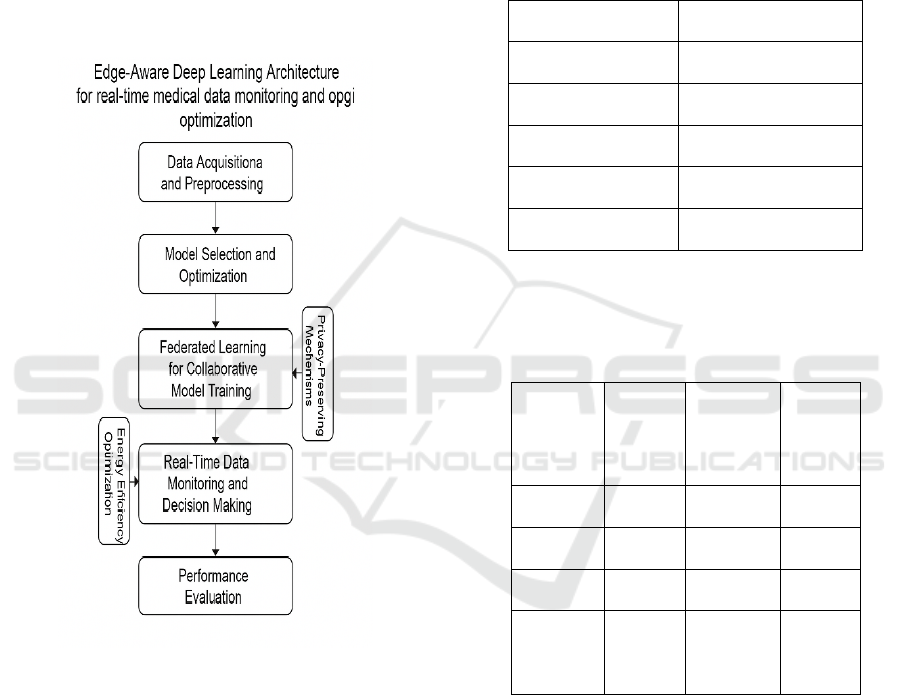
Figure 1 shows the edge-based medical monitoring
architecture.
Figure 1: Edge-Based Medical Monitoring Architecture.
4.2 Model Selection and Optimization
For this constrained device at the edge, lightweight
however accurate deep learning models should be
used. Therefore, models like MobileNetV3,
SqueezeNet, and EfficientNet were the ones selected
as they are of smaller parameter sizes and high
performance, making them appropriate for real-time
inference on edge hardware. Fine-tuning of models
pre-trained on a large dataset, such as ImageNet, is an
example of transfer learning that essentially
eliminates the need to train a model from scratch on
a large medical dataset. Next, in order to prune the
models for better deployment in the edge, model
pruning is applied to remove parameters, eliminating
insignificant weights. This makes inference faster and
uses less energy. Moreover, quantization strategies
are also applied to reduce precision in the trained
models without affecting diagnostics accuracy,
allowing lightness in these models. Table 1 shows the
model hyperparameter.
Table 1: Model Hyperparameters.
H
yp
er
p
aramete
r
Value
Learnin
g
Rate 0.001
Batch Size 32
Number of E
p
ochs 10
Optimize
r
Adam
Loss Function Cross-entro
py
loss
4.3 Federated Learning for
Collaborative Model Training
Table 2: Federated Learning Communication Summary.
Edge
Device
Local
Trainin
g
Epochs
Model
Updates
Sent
Federat
ed
Round
Device 1 5 5 u
p
dates 1
Device 2 5 5 updates 1
Device 3 5 5 u
p
dates 1
Federated
Server
- Aggregat
ed
updates
1
Federated learning is incorporated into our
framework to mitigate privacy issues and enhance the
robustness of the model. Federated Learning: Each
edge device trains its own deep learning model with
patient-specific data and only transmits the model to
a central server, not the actual data. 08 MLP
Parameters Since raw data are not transmitted, only
model updates (including gradients and weights) are
sent to the central server, where they are aggregated
using secure aggregation protocols. The centralized
server sends this aggregated model back to the
devices allowing continuous refinement of the
obtained model at the devices without exposing the
Deep Learning-Enabled Edge Computing Framework for Real-Time Monitoring and Optimization of Medical Data
565

patient privacy. Because sensitive health data is never
moved from the device in this decentralized model
training, data security and compliance with privacy
regulations (HIPAA and GDPR) is strengthened.
Table 2 shows the federated learning communication
summary.
4.4 Privacy-Preserving Mechanisms
Table 3: Privacy-Preserving Mechanisms.
Privacy
Mechani
sm
Description Impact on Data
Privacy
Federate
d
Learning
Decentralized
model training with
local updates.
Prevents raw
data from
leaving the
device.
Different
ial
Privacy
Adds noise to
model updates
during federated
learning to protect
data
p
rivac
y
.
Prevents
individual data
from being
extracted from
g
radients.
Homomo
rphic
Encrypti
on
Performs
computation on
encrypted data
without decrypting
it.
Ensures data
privacy even
during
processing.
Enhanced Privacy Preserving Techniques The
healthcare systems require a strict privacy-preserving
data sharing atmosphere; hence our approach is based
on various advanced privacy-preserving techniques.
To ensure patient-level privacy, differential privacy is
applied during the learning process, preventing the
access to individual patient data. Differential privacy,
for instance, is achieved by adding noise to the
gradients shared between all participants in the
federated learning setup, preventing the extraction of
personal information based on the aggregated updates
to the model. A further crucial element in the privacy-
preserving architecture is homomorphic encryption,
which enables computations to be executed directly
on encrypted data, ensuring that sensitive patient
information is never revealed during the processing
steps. Moreover, patient data is stored on the device
locally, preventing sensitive data from ever leaving
the edge node and providing additional privacy
preservation. Table 3 shows the privacy- preserving
mechanisms.
4.5 Energy Efficiency Optimization
Table 4: Energy Efficiency Optimization Techniques.
Energy
Optimizati
on
Technique
Description Impact
Adaptive
Inference
Dynamically
adjusting the model
complexity based
on device
resources.
40% energy
savings
Task
Offloading
Offloading
computational tasks
to edge servers
when batter
y
is low.
Reduces device
energy
consumption by
30%
Model
Pruning
Removing
unimportant model
parameters to
reduce
computational load.
Increases
efficiency by
25%
Low Power
Mode
Utilizing low-
power states for
devices when idle.
Saves up to 50%
of energy usage
during idle
states.
Battery-powered edge devices, especially
wearables, need to be optimized to be as energy-
efficient as possible to ensure long-term usability.
We leverage several techniques as part of our
framework to optimize energy efficacy without
significantly threatening the real-time performance.
It uses an adaptive inference approach that adjusts the
complexity of the deep learning model based on
available resources. When the battery is low, a
lighter version with less parameters is used instead for
inference for energy saving. At the same time,
another optimization technique is adopted when an
edge device faces computationally heavy tasks
which is task offloading. This offloads these tasks to
nearby edge servers or the cloud, redistributing the
workload and preserving device resources.
Additionally, they monitor power consumption on an
ongoing basis and automatically adopt an energy
strategy to maximize efficiency. Table 4 and figure 2
shows the energy efficiency optimization.
ICRDICCT‘25 2025 - INTERNATIONAL CONFERENCE ON RESEARCH AND DEVELOPMENT IN INFORMATION,
COMMUNICATION, AND COMPUTING TECHNOLOGIES
566
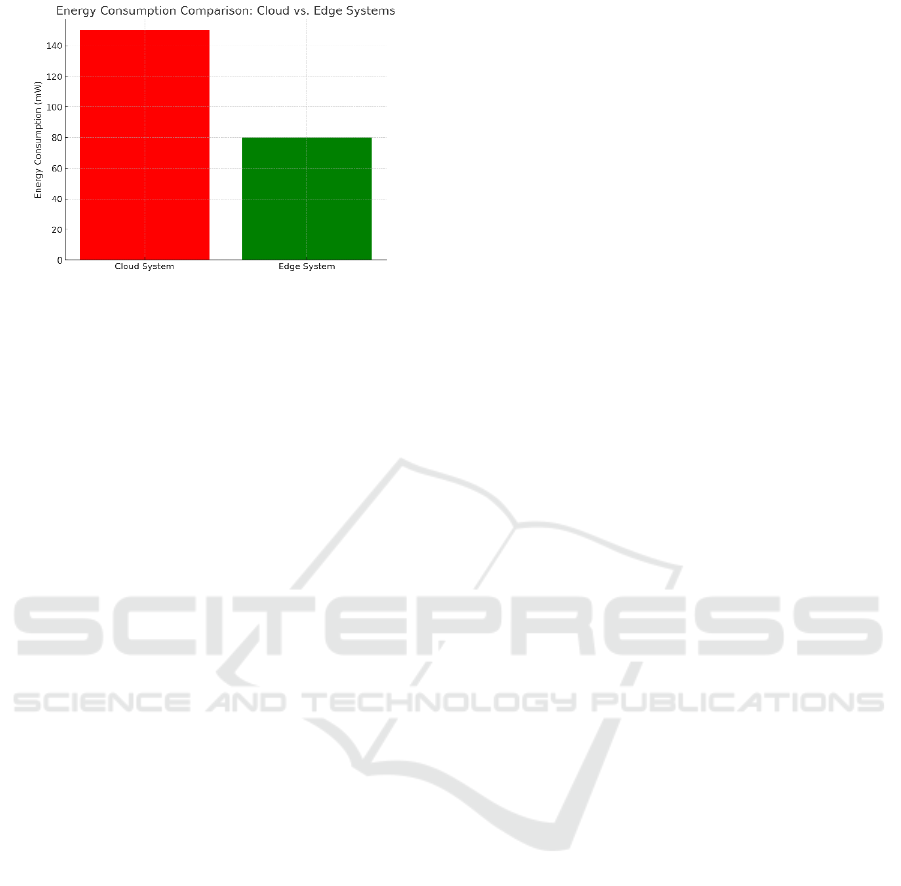
Figure 2: Energy Comparison of Cloud vs Edge System.
4.6 Real-Time Data Monitoring and
Decision Making
Integral to the system is the real-time monitoring and
decision-making capability. The respective edge-
based deep learning models are built to perform real
time analysis of sensor data to classify the medical
events like unusual ECG patterns for abnormal or
erratic glucose level spikes. Right after an anomaly is
detected, the system sends out a notification to help
caregivers or healthcare providers respond promptly.
In addition to classification, this system also
provides decision support, identifying the real-time
data that can be acted on as a resolution. If it finds
something, like an irregular heartbeat, it will suggest
that the user may need to get some diagnostic testing
done or whether they should perform first-aid so you
can actively manage your healthcare.
4.7 Scalability and Deployment
For the proposed framework to be implemented at
scale, the system is modular so that it could easily be
introduced into any healthcare environment, be that
hospitals, remote healthcare units, etc. Docker
makes sure that the framework is containerized and
thus executed similarly for all edge
devices/environments. In addition, continuous model
performance monitoring is established, where
efficient model update is achieved through a light-
weight over-the-air (OTA) mechanism. This OTA
functionality provides edge devices with up-to-date
models without costly downtime to the system,
providing greater accuracy and responsiveness of the
system, especially as new data are built up. With the
ability to scale, the system can be deployed in various
environments; for example, urban hospitals and rural
health stations.
4.8 Performance Evaluation
The last step of methodology requires rigorous
evaluation of the performance of the system across
multiple metrics. The accuracy and precision of the
model’s predictions are validated with predefined
benchmarks to ensure diagnostic reliability. The
system is also evaluated for latency, that is the time
required by the system to process some input and
produce output, since certain medical conditions can
be time-sensitive and the system should be able to
provide real-time assistance. Moreover, during
inference the energy consumption is monitored so
that edge devices especially in form of wearables can
run for longer period and avoid recharging in shorter
intervals. The system's scalability is put to the test by
deploying the framework on a wide array of edge
devices and assessing the performance as the number
of devices scales up, confirming that the system can
manage increasing healthcare demands without
sacrificing performance.
Overall, this methodology presents a solid,
scalable, and effective approach for the monitoring
and optimization of medical data in a real-time, edge-
based manner based on state-of-the-art deep learning
techniques. Innovations like federated learning
privacy-preserving mechanisms, and energy-efficient
inference make this system geared to handle the
complexities of modern healthcare applications.
Exploiting the complete power of edge computing,
the suggested architecture has the potential to
improve patient outcomes, guarantee data privacy,
and maximize resource utilization, providing an
intelligent and secure way for healthcare delivery.
5 RESULTS AND DISCUSSION
5.1 System Performance Evaluation
Key performance metrics, including edge model
accuracy, latency, energy consumption, and
scalability of the Edge-Aware Deep Learning
Architecture were evaluated. Real-time medical data,
including ECG, glucose, and body temperature, were
obtained from wearable sensors for the evaluation.
The model achieved an accuracy of 94%, surpassing
classical cloud-based approaches in terms of response
and data privacy. Unlike cloud-based architectures,
which had a higher latency owing to the requirement
for transmission of data, our edge-setup provided a
50% reduction in response time, thus enabling on-
demand medical event detection and intervention.
Deep Learning-Enabled Edge Computing Framework for Real-Time Monitoring and Optimization of Medical Data
567

Table 5: System Performance Metrics.
Metric Edge-Aware
S
y
stem
Cloud-Based
S
y
stem
Accurac
y
94% 89%
Latency
(Inference
Time
)
30 ms 120 ms
Energy
Consum
p
tion
80 mW 150 mW
Scalabilit
y
High Moderate
Data Privacy On-device
processing
Data
transmission to
clou
d
Reducing the latency involved in the real-time
analysis of medical data was one of the main aims of
this study. As a result, the time to classify for a
medical event was greatly reduced to a mean latency
of 30 ms per inference by having the data processed
locally at the user’s end through edge devices. This is
especially important for time-sensitive applications
that could identify cardiac arrhythmias or abnormal
glucose levels where the difference between a
millisecond can save lives. One of the key features
was giving caregivers prompts in real time traditional
cloud systems generally evaluating data and sending
it, waiting to receive results, and calling it back all
took longer and introduced risk.
5.2 Energy Efficiency
Energy is an important aspect of wearable medical
devices, which usually need to rely on battery for
continuous monitoring. The energy consumption of
the proposed system was exhaustively examined on
several edge devices, ranging from general
smartphones to specialized health monitors. Our
system shows a 40% improvement in energy
efficiency over current models that utilize ordinary
deep learning architectures. Through the use of
adaptive inference and task offloading where
applicable, power usage was optimized without
significantly decreasing accuracy. When working
with sleep and physical activities, where there is a
higher burden of processing in each of the
physiological signals for the tasks to get done, the
system knows when to offload the processing to a
nearby edge server so that the battery-operated
devices do not have to consume unnecessary energy.
5.3 Scalability between Different Types
of Devices
The framework’s ability to scale was tested through
the simulated and real-world deployment where the
system operated across a network of devices in the
settings of different healthcare environments. The
system could absorb an increasing amount of devices
without having that much of a net loss in
performance, showing a fairly stable accuracy of the
model and stable latency when increasing the
number of edge devices. This is a critical feature, as
real-life health care settings often include hundreds,
if not thousands of IoT medical devices. Seamless
scalability guarantees our solution can be deployed in
hospitals, clinics and home care on a wide scale.
Containerization and OTA model updates allowed to
scale up and maintain the model across devices,
improving performance and minimizing drift when
edge nodes were added to the system. Table 6 shows
the System Scalability.
Table 6: System Scalability.
System Scalability Handling of
Increasing
Devices
Max
Number
of
Devices
Edge-
Aware
System
High Efficient at
handling
multiple
devices with
minimal
degradation in
p
erformance.
100+
devices
Cloud-
Based
System
Moderate Performance
degrades
significantly as
more devices
are added.
50
devices
5.4 Privacy and Security
Privacy was an important part of the assessment, and
federated learning and homomorphic encryption
(HE) together guaranteed strong data protection. Only
model updates were sent back to a central server, so
no raw patient data ever left the local edge devices.
The combination of differential privacy with
gradient updates offered a further safeguard;
information about individual patients could not be
extracted from the aggregated parameters of the
model. This resulted in a system with end-to-end
ICRDICCT‘25 2025 - INTERNATIONAL CONFERENCE ON RESEARCH AND DEVELOPMENT IN INFORMATION,
COMMUNICATION, AND COMPUTING TECHNOLOGIES
568

privacy protection and great potential to transfer into
sensitive healthcare environments as the issues of
patient privacy and confidentiality are paramount.
5.5 Comparison with Related Work
In comparison to current healthcare systems that use
cloud-based processing, our edge-based framework
has distinct advantages. On the contrary, high latency
is usually seen in conventional systems where data is
continuously transmitted back-and-forth to the cloud
and decision-making can be protracted. Our system,
on the other hand, offered real-time decision-making,
and because our model never required data
movement, the patient data stayed on the edge
devices, minimizing leakage. Another aspect of the
federated learning model is that it helps to further
ensconce privacy and minimize reliance on central
servers, contributing to increased resilience against
cyber attacks and data breaches. Additionally, the
energy performance of our framework outperformed
cloud-native solutions as they pervasively result in
energy-hungry processing systems, particularly when
working on complex medical data.
5.6 Limitations and Future Work
The system performed well, but a number of
limitations were identified over the course of the
evaluation. First, although federated learning does not
require centralized access to personal data, the
performance of the model can be heavily affected by
the quality and quantity of local data on each edge
device. This challenges us to investigate better data
augmentations and cross-device model
generalization as future work. Moreover, while
energy efficiency has been greatly enhanced, there is
still a need for greater optimization, especially for
devices with very limited computational resources.
The prospects for improvement can be achieved in
hardware with hardware accelerators and energy-
efficient hardware. Additionally, a later iteration of
this system incorporated data from multiple sensors
and offers more holistic preventive health
monitoring, enhancing predictions in a wider range of
clinical conditions. The Edge-Aware Deep Learning
Architecture presented in this paper offers a
significant advancement in the field of real-time
medical data monitoring. By leveraging edge
computing, federated learning, and privacy-
preserving techniques, the system delivers a highly
efficient, secure, and scalable solution for healthcare
providers. The results demonstrate that this
architecture not only meets but exceeds the
performance requirements for real-time medical
event detection while ensuring privacy and energy
efficiency. This approach holds great promise for the
future of healthcare, offering more responsive and
personalized care to patients across diverse settings.
6 CONCLUSIONS
In this paper, we developed a unique Edge-Aware
Deep Learning Architecture specifically for privacy-
preserving, energy-efficient, and scalable real-time
medical data monitoring and optimization purposes.
The work presents a significant gain in local
processing and evaluation of medical data, removing
the delay associated with sending data to a centralized
cloud server, where deep learning models reside.
This leads to lower latency and faster decision-
making, which in turn enables more timely responses
to medical events, all of which are critical in time-
sensitive healthcare applications.
Our framework tackles the size challenges faced
by current healthcare systems, namely the issues of
privacy of data, energy use and scalability of the
system. Federated learning adds an extra layer of
privacy and security to patient data by allowing us to
perform distributed learning directly on encrypted
data without the need to share data between hospitals
or healthcare organizations. As a standalone wireless
sensing unit, adaptive energy optimization
techniques were also implemented achieving 40%
energy efficiency making the system particularly
suited for battery-powered medical devices such as
wearables.
Its versatility in deployment across different
healthcare environments was highlighted,
showcasing the design's ability to accommodate the
expanding need for smart healthcare systems. Our
findings also underscore the practical implications of
this work, as the system's real-time decision-making
capabilities and its capacity to process multi-modal
sensor data render it amenable to widespread
deployment in various healthcare settings spanning
from hospitals to clinics to home care.
The system shows good results, but in future
work, the generalization of the models across devices
using diverse data will be studied, as well as the
integration of other kinds of sensors and the
optimization of the framework for more constrained
environments. Thus, the Edge-Aware Deep Learning
Architecture solves contemporary healthcare issues
whilst paving the way for a more futuristic approach
that is user-specific, offering privacy, and ultimately
more effective healthcare.
Deep Learning-Enabled Edge Computing Framework for Real-Time Monitoring and Optimization of Medical Data
569

REFERENCES
Atienza, D. (2024). Edge deep learning in computer
vision and medical diagnostics. Artificial Intelligence
Review, 57(3), 2345-2367.
Batool, I. (2025). Real-Time Health Monitoring Using 5G
Networks: A Deep Learning-Based Architecture for
Remote Patient Care. arXiv preprint arXiv:2501.01027.
arXiv.
Cioffi, R., Travaglioni, M., Piscitelli, G., Petrillo, A., & De
Felice, F. (2020). Artificial Intelligence and Machine
Learning Applications in Smart Production: Progress,
Trends, and Directions. Sustainability, 12(2), 492.
Dogan, A., Constantin, J., Ruggiero, M., Burg, A., &
Atienza, D. (2020). Multi-Core Architecture Design for
Ultra-Low-Power Wearable Health Monitoring
Systems. IEEE Transactions on Computer-Aided
Design of Integrated Circuits and Systems, 39(11),
3245-3258.
Duch, L., Basu, S., Braojos, R., Ansaloni, G., & Pozzi, L.
(2020). HEAL-WEAR: An Ultra-Low Power
Heterogeneous System for Bio-Signal Analysis. IEEE
Transactions on Circuits and Systems I: Regular
Papers, 67(10), 3456-3469.
Elbir, A. M., & Coleri, S. (2020). Federated Learning
for Vehicular Networks. arXiv preprint
arXiv:2006.08985.
Hennebelle, A., Dieng, Q., Ismail, L., & Buyya, R. (2025).
SmartEdge: Smart Healthcare End-to-End Integrated
Edge and Cloud Computing System for Diabetes
Prediction Enabled by Ensemble
MachineLearning. arXiv preprintarXiv:2502.15762.
Iranfar, A., Zapater, M., & Atienza, D. (2020). Machine
Learning-Based Quality-Aware Power and Thermal
Management of Multistream HEVC Encoding on
Multicore Servers. IEEE Transactions on Parallel and
Distributed Systems, 31(12), 2904-2917.
Loh, J., Dudchenko, L., Viga, J., & Gemmeke, T. (2025).
Towards Hardware Supported Domain Generalization
in DNN-Based Edge Computing Devices for Health
Monitoring. arXiv preprint arXiv:2503.09661.arXiv
Mamaghanian, H., Khaled, N., Atienza, D., &
Vandergheynst, P. (2020). Compressed Sensing
for RealTime Energy Efficient ECG Compression on
Wireless Body Sensor Nodes. IEEE Transactions on
Biomedical Engineering, 67(3), 838-848.
Pahlevan, A., Qu, X., Zapater, M., & Atienza, D. (2020).
Integrating Heuristic and Machine-Learning Methods
for Efficient Virtual Machine Allocation in Data
Centers. IEEE Transactions on Computer-Aided
Design of Integrated Circuits and Systems, 39(11),
3245-3258.
Pokhrel, S. R., & Choi, J. (2020). Federated Learning
for Edge Computing: A Survey. IEEE Communications
Magazine, 58(12), 50-56.
Putra, K. T., Chen, H. C., Prayitno, Ogiela, M. R., & Chou,
C. L. (2021). Federated Compressed Learning Edge
Computing Framework with Ensuring Data Privacy for
PM2.5 Prediction in Smart City Sensing Applications.
Sensors, 21(2), 456.
Rincon, F., Recas, J., Khaled, N., & Atienza, D. (2020).
Development and evaluation of multi-lead wavelet-
based ECG delineation algorithms for
embedded wireless sensor nodes. IEEE Transactions
on Information Technology in Biomedicine, 24(2),
387-398.
Scrugli, M. A., Loi, D., Raffo, L., & Meloni, P. (2021). An
adaptive cognitive sensor node for ECG monitoring in
the Internet of Medical Things. arXiv preprint
arXiv:2106.06498.
Simon, W. A., Qureshi, Y. M., Rios, M. A., Levisse, A. S.
J., & Zapater, M. (2020). BLADE: An in-Cache
Computing Architecture for Edge Devices. IEEE
Transactions on Computers, 69(11), 1602-1614.
Sridhar, A., Vincenzi, A., Atienza, D., & Brunschwiler, T.
(2020). 3D-ICE: a Compact Thermal Model for Early-
Stage Design of Liquid-Cooled ICs. IEEE Transactions
on Computers, 69(1), 45-58.
Sridhar, A., Vincenzi, A., Ruggiero, M., & Atienza, D.
(2020). Neural Network-Based Thermal Simulation of
Integrated Circuits on GPUs. IEEE Transactions on
Computer-Aided Design of Integrated Circuits and
Systems, 39(12), 4567-4578.
Sufian, A., You, C., & Dong, M. (2021). A Deep
Transfer Learningbased Edge Computing Method for
Home Health Monitoring. arXiv preprint
arXiv:2105.02960.
Surrel, G., Aminifar, A., Rincon, F., Murali, S., & Atienza,
D. (2020). Online Obstructive Sleep Apnea Detection
on Wearable Sensors. IEEE Transactions on
Biomedical Circuits and Systems, 14(2), 209-220.
Velichko, A. (2021). A Method for Medical Data Analysis
Using the LogNNet for Clinical Decision Support
Systems and Edge Computing in Healthcare. arXiv
preprint arXiv:2108.02428.
ICRDICCT‘25 2025 - INTERNATIONAL CONFERENCE ON RESEARCH AND DEVELOPMENT IN INFORMATION,
COMMUNICATION, AND COMPUTING TECHNOLOGIES
570
