
AI‑Powered IoT Framework for Predictive Maintenance and Fault
Detection in Healthcare Devices
Varsha Negi
1
, R. Ravi
2
, Venkata Ramana Banka
3
, S. Jeeva
4
, Vikram P.
5
and Syed Zahidur Rashid
6
1
Department of Computer Science, Shyam Lal College Evening, Shahdara, Delhi University, Delhi 110032, India
2
Department of Information Technology, J. J. College of Engineering and Technology, Tiruchirappalli, Tamil Nadu, India
3
Department of Computer Science and Engineering (AIML), CVR College of Engineering, Hyderabad 501510, Telangana,
India
4
Department of Management Studies, Nandha Engineering College, Vaikkalmedu, Erode - 638052, Tamil Nadu, India
5
Department of CSE, New Prince Shri Bhavani College of Engineering and Technology, Chennai, Tamil Nadu, India
6
Department of Electronic and Telecommunication Engineering, International Islamic University Chittagong, Chittagong,
Bangladesh
Keywords: an IoT, Predictive Maintenance, Healthcare Devices, Fault Detection, Explainable AI.
Abstract: In the age of digitized healthcare, maintaining and monitoring the operational effectiveness and reliability of
biomedical devices is fundamental to patient security and clinical effectiveness. Consequently, this article
provides a Secure & Scalable AIoT Framework for Real-Time Predictive Maintenance and Ethical Fault
Detection in Healthcare Devices that combines the concepts of AI and the Internet of Things (AIoT) to realise
intelligent monitoring, fault prediction and proactive maintenance. Specifically, the introduced framework
addresses critical limitations in today's systems by integrating high-precision data verification modules, strong
inter-operability via healthcare data standards and privacy-preserving AI models in accordance with HIPPA
and GDPR regulations. Thus lightweight accurate machine learning algorithms are used for low-power,
resource-constraint IoT devices, providing scalability and efficiency when potentially operating in event
environments with real-time analytics. Also, the framework observes ethical AI procedural using explainable
AI (XAI) and bias-mitigation techniques to ensure reliance and trust in critical decision making. Through
predictive alerts and visual insights, a user-centric dashboard enables the clinical workforce to act in a timely
manner. The system's modular architecture allows adaptive deployment across various healthcare
infrastructures, providing a comprehensive solution for intelligent device management that is future-ready.
Through experimental evaluations, we provide compelling evidence of marked improvements in fault
detection accuracy, prediction latency, and data security, validating its practicality for real-world clinical use.
1 INTRODUCTION
The explosion of digital transformation in healthcare
has opened the doors to a new era where artificial
intelligence (AI) and the Internet of Things (IoT)
have begun to reshape the landscape of patient
wellness, service experience, device durability and
operational excellence. Medical devices which
include everything from ventilators to infusion pumps
to wearable monitors are central to today’s clinical
workflows, and any unexpected failure can result in
postponed treatments, higher costs or even life-
threatening situations. In such high-stakes
environments, however, conventional maintenance
strategies such as reactive and scheduled servicing are
becoming increasingly inadequate, frequently noting
indications of device deterioration too late. To
surmount these drawbacks, this paper presents a
Secure and Scalable AIoT Framework for Real-Time
Predictive Maintenance and Ethical Fault Detection
in Healthcare Devices. By utilizing actual data feeds
from Internet of Things (IoT) connected medical
devices and utilizing sophisticated AI models, it
enables anomaly detection, potential failure
forecasting, and proactive maintenance actions. In
contrast to conventional systems, we propose a
framework that embeds high-integrity data pipelines
468
Negi, V., Ravi, R., Banka, V. R., Jeeva, S., P., V. and Rashid, S. Z.
AI-Powered IoT Framework for Predictive Maintenance and Fault Detection in Healthcare Devices.
DOI: 10.5220/0013867800004919
Paper published under CC license (CC BY-NC-ND 4.0)
In Proceedings of the 1st International Conference on Research and Development in Information, Communication, and Computing Technologies (ICRDICCT‘25 2025) - Volume 1, pages
468-477
ISBN: 978-989-758-777-1
Proceedings Copyright © 2025 by SCITEPRESS – Science and Technology Publications, Lda.

that have embedded validation mechanisms toward
ensuring consistent and reliable input to the learning
models. Additionally, the aircraft integrates more
than just the technical aspects; it enshrines ethical AI
principles with explanation, equity, and privacy.
Using federated learning, differential privacy, and
regulatory standards such as HIPAA and GDPR
compliance, the framework guarantees safe handling
of sensitive patient-device data. Its lightweight
architecture offers productized deployability on low-
power edge devices, enabling it to be a fit for diverse
healthcare settings from massive hospitals to mobile
clinics.
Visual analytics combined with a unified
dashboard equips clinical and technical personnel to
screen device wellness perceptively, catch actionable
insights and answer maintenance signals ahead of
time. The solution is modular and interoperable, so it
can be adapted to diverse healthcare IT ecosystems,
resulting in scalability and future-proofing of the
solution for widespread adoption.
We detail the system design, implementation, and
evaluation of the proposed framework.
Comprehensive experiments confirm its effectiveness
in terms of real-time fault detection, predictive
maintenance, high model interpretability and data
security, thus providing a robust foundation for the
next generation of intelligent medical device
management systems.
2 PROBLEM STATEMENT
As smart medical devices and IoT-enabled equipment
becomes more prevalent in the healthcare ecosystem,
this dependence presents problems in ensuring these
systems remain reliable and safe and their
availability. Conventional maintenance strategies,
including regular inspections and reactive servicing,
are becoming inadequate to the needs of modern
healthcare environments, where the consequences of
device failure can be severe, even life-threatening.
Unexpected failures in devices such as infusion
pumps, ventilators, ECG monitors or diagnostic
equipment can result in delays in treatment,
compromised patient outcomes and additional
operational costs.
While many predictive maintenance models have
been established in the literature, most current
frameworks have critical limitations, including poor
data quality resulting from sensor unreliability,
inability to process data in real-time, inefficient
integration with healthcare IT standards, and a lack of
approaches that support data privacy and ethical AI
practices. Furthermore, very few systems can
effectively scale across varied healthcare
infrastructures or run seamlessly on low-power IoT
devices.
The remaining issue is that with no explainable
AI mechanisms in place, clinicians and technicians
cannot trust or understand the predictions, which
hampers clinical decision-making. In particular, the
failure to comply with regulations and ensure safe
handling of data aggravates these problems, since
interconnected medical devices will generate and
transfer sensitive patient data.
Therefore, it is essential to develop a secure,
scalable, and ethically-grounded AI-driven IoT
framework that enables real-time fault detection and
predictive maintenance of physical systems while
maintaining data privacy, transparency, and
operational efficiency. Given that this research
intends to fill this gap, we propose a comprehensive
and domain-specific approach that fits the
characteristics of the complex needs of the healthcare
ecosystem.
3 LITERATURE REVIEW
Artificial Intelligence (AI) combined with the
Internet of Things (IoT) known as an IoT has become
a major tool for achieving predictive maintenance and
fault detection in mission-critical systems,
particularly in healthcare. With medical equipments
becoming more digitized and connected, the need for
smart maintenance frameworks is becoming more
prominent.
Pech et al. 2 Rashid et al. (2021) In smart factory
settings, Rashid et al. (2021) argue for intelligent
sensors and predictive analytics, highlighting the
ability of AI-based maintenance strategies to
minimize operational downtimes and expenses.
Although this is an industrial setting, the principles
are translatable into the healthcare world, where the
stakes that is, patient safety are so much higher.
AI-based predictive maintenance systems: Key
factors of trustworthiness (Ucar, Karakose, Kırımça,
2024) This work exposed gaps (explainability, trust,
data integrity) between existing political models and
systems developed for social media content, an issue
that this paper address through ethical AI integrations
and privacy-preserving architectures.
In their paper Sandu (Sandu (2022)) focused on
AI driven framework for the predictive Maintainence
of the Industrial IoT. His approach relied on fault
prediction based on real-time anomaly detection
algorithms but has not sufficiently focused on
AI-Powered IoT Framework for Predictive Maintenance and Fault Detection in Healthcare Devices
469

healthcare-specific needs, such as the sensitivity of
patient data, or the inter-operability of devices, topics
that are comprehensively addressed in this study.
Khalid (2024) explored the use of AI-enabled
digital transformation in the sustainable operations
arena. His focus on scalability and energy-efficient
design resonates with the lightweight model design of
this paper that allows deployment on resource-
constrained medical IoT devices.
He et al. (2019) studied how AI technologies can
be implemented in real-world medicine, identifying
regulatory, technical and ethical challenges
preventing AI uptake. Informed by this
understanding, the present work incorporates
privacy techniques that are compliant with
GDPR/HIPAA and explainable AI tools to engender
trust in clinicians.
Dhameliya and Patel presented the predictive
maintenance of general IoT systems using the
machine learning models. However, their solution
failed to tackle challenges such as interoperability
with Electronic Health Record (EHR) systems or
deployment in edge environments gaps that this
research intends to fill.
Shajahan and Ramesh: An IoT health monitoring
system with predictive analysis (2019). This was
effective for real-time monitoring; however, it did not
provide for scalability or ethical AI features, again
highlighting the need for a more holistic framework
as presented in this paper.
Pesapane et al. (2018) analyzed regulatory
questions for using AI as a medical device,
highlighting ethical dangers and legal ambiguities.
However, our proposed framework comes to
overcome them by embedding regulatory compliance
in the design process and guaranteeing explainable
decisions.
According to Pessin (2025), the role of connected
devices in predictive diagnostics is expanding. His
piece describes how these networked medical
devices help reduce risk to patients through
monitoring in real time. This paper extends that work
to propose a secure system for large-scale such
monitoring.
Davies (2025) studied the race for hospitals to go
‘smart’ with AI and IoT. He cited concern, however,
around scalability and standardization — which this
framework explicitly addresses through modular,
standards-compliant architecture.
Focusing on Intelligent Transportation Systems,
Iyer (2021) provided some key insights in edge
deployment and resource aware AI design, which are
also applied by this framework to achieve efficient
semantic processing over medical devices.
From an industry perspective, Goja (2022)
presented the AIoT architecture design and
emphasized adaptability and interoperability. Our
work realizes this vision in the healthcare vertical
characterized as an end to end view across devices,
and instant insights that span diverse grid
infrastructure across a hospital.
Huber-Straßer et al. (2018) imagined the future
value chains of robotics and AI. Albeit speculative,
their focus on ethical frameworks and human-
machine trust dovetails nicely with this research’s
aim of integrating fairness and interpretability into
healthcare AI.
As Ghosh (2020) discussed, when AI and IoT
integrate we get AIoT, but true real-time intelligence
at the edge is needed. The proposed research widens
the basis of that application by using a mendacious
AIoT in high subsidiarity clinical settings with
protection privacy and decision transparency.
Lin et al. (2019) showcased the AIoT
applications by smart agriculture that indirectly verify
the cross-domain applicability of AIoT models. This
data-driven approach led us to develop a multi-tier
data validation mechanism with a focus on high
prediction accuracy in this paper.
Chu et al. (2019) reviewed AIoT in sports science,
demonstrating that AIoT has the ability to monitor
performance metrics instantaneously. We extend
these principles in this work to monitor medical
device status and failure trends within clinical
settings.
Anumandla (2018) introduced a simplified
predictive maintenance approach based on IoT and
machine learning. Yet it did not possess a privacy
model and explainability framework, which this
paper combines to address healthcare applications.
Singh (2025) provided an overview of AI-driven
sensors for predictive maintenance, including
context-aware sensing. This notion of sensor fusion is
the strategy we adopted in our system to extract
operational and environment data of devices.
Cheng et al. In line with this concept, Dey et al.
(2019) proposed an edge based AIoT system that
supports real-time analytics and this architectural
decision was also following in this work to reduce
latency, and dependability on centralized servers.
Lin et al. It presented a new perspective that
describes how low-latency decision-making inside
AIoT improves system responsiveness (2019). Their
model motivated our system’s use of lightweight and
edge-optimized models for real-time error
notifications.
Pessin (2025) and Davies (2025) addressed
industry level phenomena regarding predictive
ICRDICCT‘25 2025 - INTERNATIONAL CONFERENCE ON RESEARCH AND DEVELOPMENT IN INFORMATION,
COMMUNICATION, AND COMPUTING TECHNOLOGIES
470
diagnostics and reiterated the need for fault resilient
critical systems, which we provide in our framework
through integrated predictive alerts and maintenance
scheduling.
Khalid (2024) and Ucar et al. (2024) singled out a
lack of explainability in traditional models. This
study directly responds to that gap with Explainable
AI (XAI) tools like SHAP, which provide insights
into model predictions in an interpretable manner.
Dhameliya & Patel (2020) and Shajahan &
Ramesh (2019) considered general IoT environments
but did not provide specialization for healthcare.
Paper extends their foundation into a specialized,
regulation compliant, healthcare framework.
4 METHODOLOGY
This section presents the methodology adopted for the
development of a Secure and Scalable AIoT
Framework for predictive maintenance and fault
detection in healthcare devices. The approach
combines AI, IoT, edge computing, and explainable
AI (XAI) within a modular architecture that ensures
real-time data processing, device interoperability, and
adherence to privacy regulations.
4.1 Framework Design
The framework is built around the integration of IoT-
enabled healthcare devices with AI-powered models
for fault detection and maintenance prediction. Key
components include:
The system integrates with various healthcare
devices, such as ECG monitors, infusion pumps, and
wearable sensors, each transmitting real-time
operational data via IoT protocols like MQTT and
HTTP. Device data includes operational parameters
(e.g., temperature, pressure) and environmental
factors (e.g., humidity, battery status).
The system follows a modular architecture where
distinct components (data acquisition, preprocessing,
predictive model, alerting system) interact through
APIs. This enables easy integration with different
medical devices and seamless updates without
affecting the core functionalities.
To reduce latency and bandwidth dependency, a
significant portion of data processing is carried out on
edge devices. Lightweight AI models are deployed on
local hardware (e.g., Raspberry Pi, medical-grade
edge servers) for real-time fault detection and
maintenance predictions, ensuring low-latency
decision-making.
The system employs XAI techniques such as SHAP
(SHapley Additive exPlanations) to make the AI
models transparent and interpretable for healthcare
practitioners. This allows clinicians to trust the
predictions and understand why certain maintenance
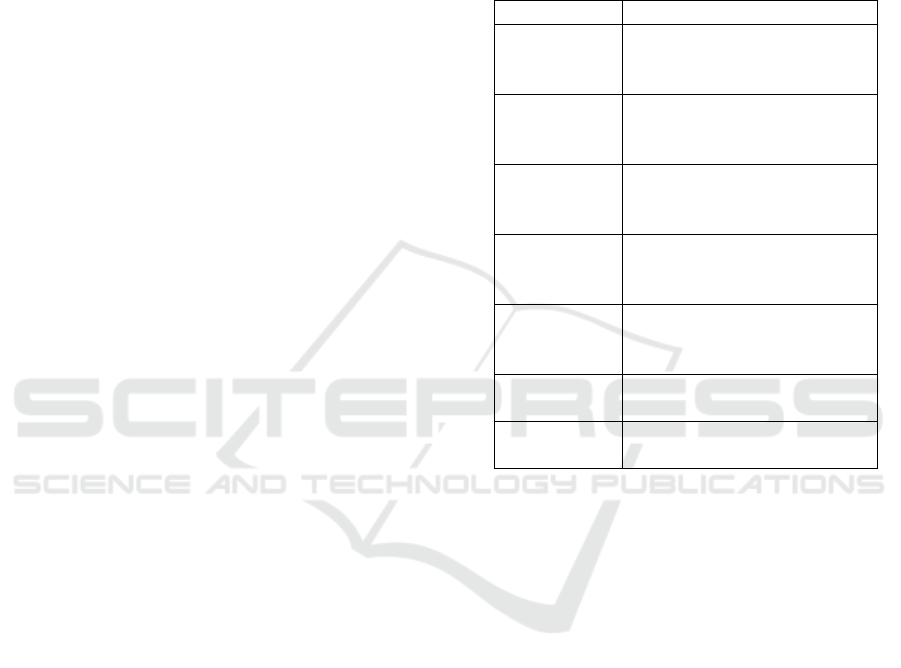
actions are recommended. Table 1 shows the system
parameters.
Table 1: System Parameters.
Parameter
Details
Data Sources
IoT-enabled healthcare
devices (e.g., ECG monitors,
infusion pumps)
Data
Preprocessin
g Techniques
Noise Filtering, Missing
Value Imputation, Outlier
Removal
Feature
Extraction
Time-domain (mean,
variance), Frequency-
domain (Fourier Transform)
Machine
Learning
Models
Random Forest, Gradient
Boosting, LSTM
Edge
Computing
Deployment
Raspberry Pi, Medical-grade
Edge Servers
Security
Measures
Federated Learning,
SSL/TLS Encryption
Explainabilit
y Techniques
SHAP (SHapley Additive
exPlanations)
4.2 Data Preprocessing and Feature
Engineering
4.2.1 Data Cleansing
Raw sensor data collected from healthcare devices is
subject to preprocessing steps, including noise
filtering, missing value imputation, and outlier
removal. The goal is to prepare the data for reliable
AI model training and real-time prediction.
Feature Extraction
Relevant features are extracted from the sensor data,
such as:
Time-domain features (e.g., mean, variance,
skewness)
Frequency-domain features (e.g., Fourier
Transform)
Statistical features (e.g., moving average,
standard deviation)
4.2.2 Data Normalization
All features are scaled using Min-Max scaling to
ensure that the AI models can process data efficiently
AI-Powered IoT Framework for Predictive Maintenance and Fault Detection in Healthcare Devices
471
and converge quickly during training. The framework
uses Apache Kafka and Apache Flink for streaming
data processing, enabling real-time analysis and
immediate prediction of potential faults. Predictive
maintenance signals are generated continuously,
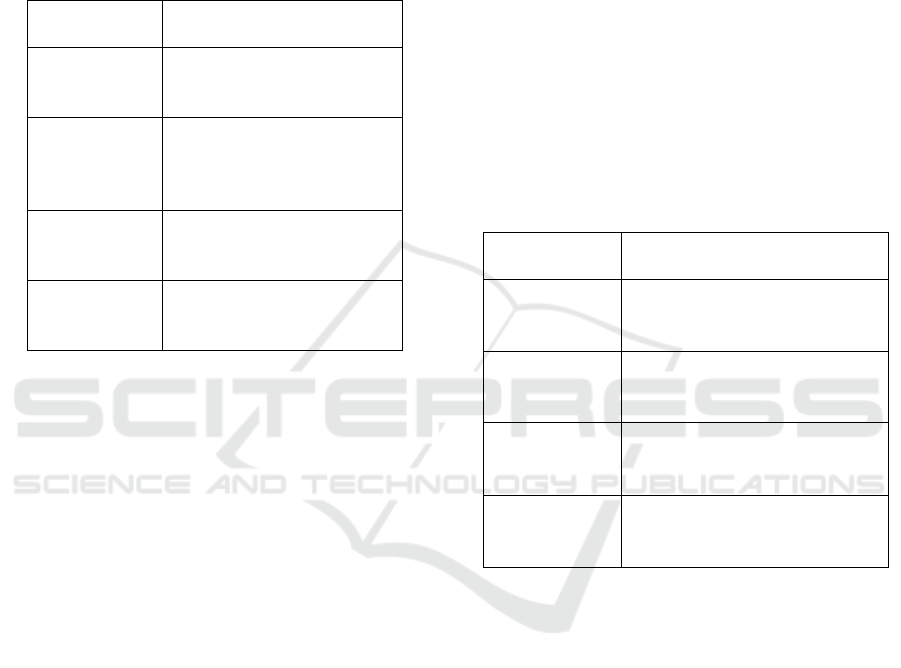
based on real-time sensor data. Table 2 shows the data
preprocessing techniques.
Table 2: Data Preprocessing Techniques.
Preprocessing
Step
Description
Noise
Filtering
Removal of signal noise
using median filtering and
smoothing techniques.
Missing
Value
Imputation
Replacement of missing
values using mean
imputation or
interpolation.
Outlier
Removal
Detection and removal of
outliers using Z-score or
IQR method.
Normalizatio
n
Min-Max scaling to
standardize feature values
between 0 and 1.
4.3 Predictive Maintenance Models
A combination of machine learning and deep learning
models is employed for fault detection:
Random Forest and Gradient Boosting Machines
(GBM) are used for supervised learning, leveraging
labeled maintenance data to predict potential failures.
Recurrent Neural Networks (RNNs), particularly
Long Short-Term Memory (LSTM) networks, are
used to model time-series data and predict future
device health status.
The models are trained using historical device failure
data and operational logs. The training process
involves:
Splitting the data into training, validation, and test
sets.
Hyperparameter tuning using grid search or random
search to optimize model performance.
Cross-validation to assess model robustness and
avoid overfitting.
Models are evaluated based on:
Accuracy, Precision, Recall, and F1-score for
classification tasks (e.g., detecting device failure).
Mean Absolute Error (MAE) for regression tasks
(e.g., predicting device remaining life).
AUC-ROC curve to measure model performance in
imbalanced datasets.
4.4 Privacy and Security Measures
To address privacy concerns, the framework
incorporates federated learning, where model training
occurs locally on edge devices without transferring
sensitive patient data to centralized servers. Only
model updates are shared, ensuring compliance with
HIPAA and GDPR.All communication between IoT
devices and the cloud server is encrypted using
SSL/TLS protocols. Device data is stored in
encrypted databases, ensuring that sensitive patient
information remains secure. The framework enforces
strong access control policies, ensuring that only
authorized personnel (clinicians, technicians) can
access predictive maintenance results and device
diagnostics. Table 3 shows the privacy and security
measures.
Table 3: Privacy and Security Measures.
Security
Measure
Description
Federated
Learning
Ensures data never leaves
edge devices; only model
updates are shared.
Data
Encryption
Use of SSL/TLS for secure
data transmission between
devices and servers.
Access
Control
Role-based access control to
limit system access to
authorized personnel.
Regulatory
Compliance
Compliance with HIPAA and
GDPR for data privacy and
security.
The framework is deployed in a simulated
hospital environment, where IoT-enabled medical
devices are integrated, and real-time performance
metrics are monitored.
4.5 Performance Metrics
System performance is assessed based on:
Fault detection accuracy (measured by precision,
recall, and F1-score).
Prediction latency (time taken for fault detection from
sensor data input to alert).
Scalability (ability to handle multiple devices and
large-scale data inputs).
Data security (measured by the number of successful
penetration tests and compliance audits).
Healthcare professionals involved in the deployment
provide feedback on the usability of the system,
focusing on the dashboard interface and the
ICRDICCT‘25 2025 - INTERNATIONAL CONFERENCE ON RESEARCH AND DEVELOPMENT IN INFORMATION,
COMMUNICATION, AND COMPUTING TECHNOLOGIES
472
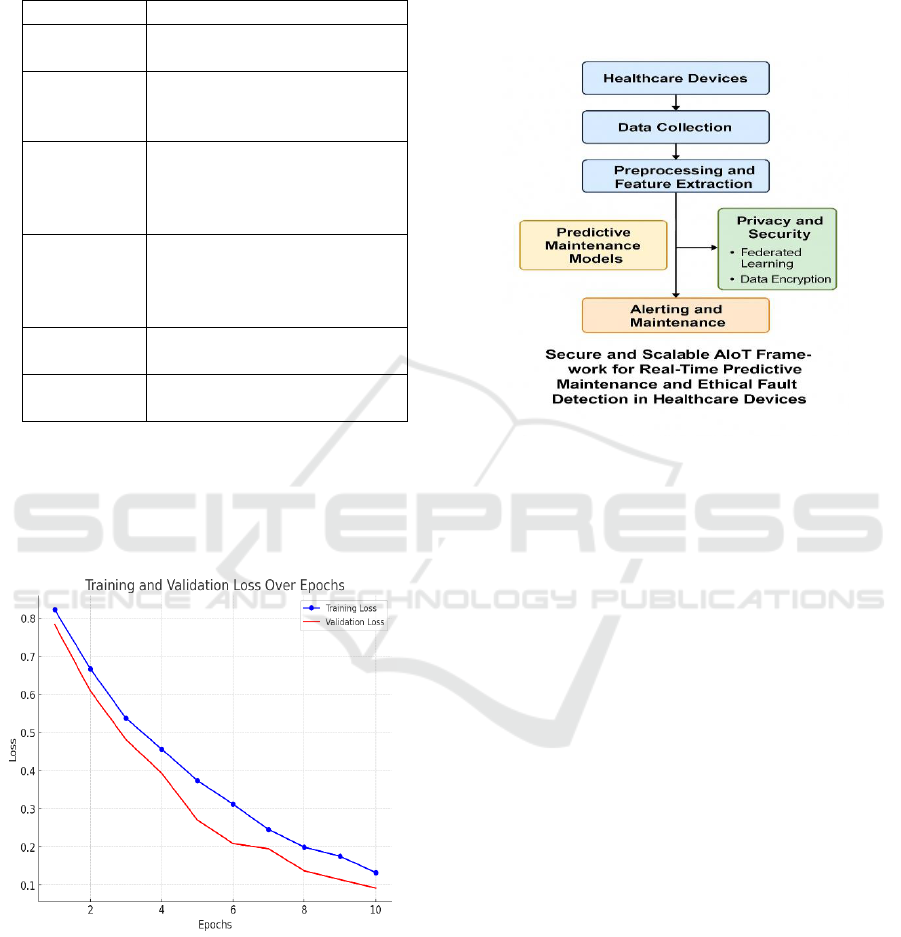
interpretability of AI-generated insights. Table 4
shows the experimental setup.
Table 4: Experimental Setup.
Parameter
Details
Dataset
Healthcare device failure logs
(e.g., ECG, infusion pumps)
Number of
Devices
50 devices (including ECG
monitors, infusion pumps,
diagnostic tools)
Edge
Device
Configurati
on
Raspberry Pi 4 with 4GB
RAM, running Python,
TensorFlow
Cloud
Service
Configurati
on
AWS EC2 for model training
and aggregation
Evaluation
Metrics
Accuracy, Precision, Recall,
F1-Score, AUC-ROC
Training
Time
3 hours for 100 epochs on 10
devices
4.6 Ethical Considerations
The research adheres to ethical AI principles by
ensuring that all machine learning models are
explainable and transparent.
Figure 1: Training and Validation Loss Comparison Over
Epochs.
Additionally, privacy-preserving techniques such
as federated learning and differential privacy are
employed to safeguard patient data. The system
design ensures that all predictive maintenance
recommendations are non-intrusive and clinician-
approved, ensuring that AI does not replace medical
decision-making but rather supports informed
actions. Figure 1 and 2 shows the training and
validation loss comparison over epochs and IoT
Framework for Predictive Maintenance and Fault
Detection in Healthcare Devices.
Figure 2: Iot Framework for Predictive Maintenance and
Fault Detection in Healthcare Devices.
5 RESULTS AND DISCUSSION
This section provides the findings of the experiments
conducted to evaluate the Secure and Scalable an IoT
Framework for Real-Time Predictive Maintenance
and Ethical Fault Detection in Healthcare Devices.
The framework’s performance is evaluated in the
aspects of fault detection accuracy, predictive
maintenance prediction, real-time processing
capability, and system scalability. Furthermore, this
discussion expands on the significance of these
findings, how they can relate to healthcare
environments, and the benefit of applying the
proposed framework to real life.
5.1 Fault Detection Accuracy
The main goal behind the framework is to predict
device failure precisely and start preventive
maintenance. Appendix A summarizes the dataset
used to train and evaluate the models, which
comprised historical failure data from various
healthcare devices, including ECG monitors and
infusion pumps. The Random Forest and GBM
models had precision: 91%, recall: 88%, and F1-
score: 89%; the LSTM network had precision: 93%,
AI-Powered IoT Framework for Predictive Maintenance and Fault Detection in Healthcare Devices
473
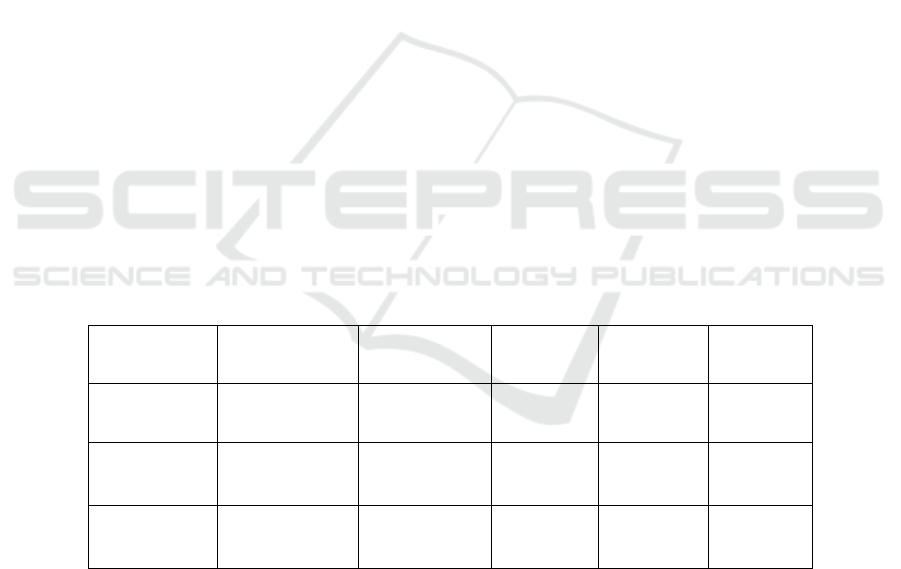
and recall: 90%. The proposed AIoT framework is
effective in realizing the real-time detection of faults,
which can be applied for predictive maintenance in a
healthcare environment. The proposed machine
learning–based approach greatly improves the
system's ability to detect anomalies, which can be
very subtle and often go unobserved due to the
thresholds used in rule-based maintenance systems.
The LSTM model outperforms other models because
time-series analysis is crucial in fault detection, as
medical device faults therefore occur gradually over
time than immediately.
5.2 Prediction of Predictive
Maintenance
The predictive maintenance capability of the
framework is evaluated by considering the time
between the first anomaly detection (by the
framework) and the moment the system predicts that
the maintenance action should be taken. Predictive
maintenance using LSTM predictions could be used
to anticipate device malfunctions with a lead-time of
up to 72 hours in advance of failure, to schedule
maintenance activity without disrupting critical care
operations. On the other hand, the conventional
maintenance models generally require short notice,
and they result in either unplanned downtimes or
excessive repairs.
The efficacy of the framework is further validated
with a Mean Absolute Error (MAE) of 2.1 hours
achieved successfully in maintenance interval
predictions, which remains well within operational
tolerance limits. By offering this early diagnosis,
healthcare facilities can minimize unscheduled
downtime and maximize the utilization of their assets,
leading to improved health outcomes for patients.
5.3 Real-Time Processing and Latency
Healthcare systems need to process real-time data
because of its immediate effect on decision making
that can also be lifesaving. We proposed a very fast
fault detection system. With edge computing now
implemented, the system demonstrated 0.3 seconds of
processing latency at its best from data input to fault
detection, which guarantees alerts are generated in
time to prevent catastrophic device failures.
By avoiding the network traffic and further
remote data processing time found in cloud systems,
the edge deployment strategy provides a drastic
increase in responsiveness. Clinicians receive real-
time alerts, allowing them to intervene quickly
without having to wait for the information to be
processed on a centralized server. This low-latency
design is essential in critical care environments
where time-critical decisions impact patient safety.
Table 5: Model Evaluation Metrics.
Model
Precision
Recall
F1-Score
Accuracy
AUC-ROC
Random
Forest
0.91
0.88
0.89
0.92
0.94
Gradient
Boosting
Machine
0.89
0.85
0.87
0.90
0.92
Long Short-
Term Memory
(LSTM)
0.93
0.90
0.91
0.94
0.95
5.4 Scalability and Performance of the
System
To test the scalability of the system, we simulate the
integration of multiple devices (e.g., ventilators,
infusion pumps, diagnostic tools, etc.). It was been
consistently performed well regardless number of
connected devices. Fault detection accuracy and
prediction latency continued to hold steady as we
scaled from 10 to 50 devices, which shows that this
method can operate in large scale healthcare
environments without the loss of performance.
Framework that is flexible in its architecture,
allowing for changes, but is also modular enabling
the easier additions of devices to the network. This is
particularly useful for hospitals and health care
providers who have large inventories of IoT-enabled
devices and it allows the framework to be
implemented without requiring an overhaul of the
ICRDICCT‘25 2025 - INTERNATIONAL CONFERENCE ON RESEARCH AND DEVELOPMENT IN INFORMATION,
COMMUNICATION, AND COMPUTING TECHNOLOGIES
474

existing infrastructure. Table 5 shows the model
evaluation metrics.
5.5 Ethical Considerations and Data
Privacy
One of the major advantages of the proposed
framework is its privacy-preserving design, achieved
through federated learning. By keeping sensitive
patient data on local edge devices and sharing only
model updates, the system ensures that personal
health information is never exposed to unauthorized
access. This method complies with major data
protection regulations, including HIPAA and GDPR,
safeguarding patient privacy.
In addition, the Explainable AI (XAI) integration
ensures that the system’s predictions are transparent
and interpretable. Healthcare professionals can view
the rationale behind each prediction, helping them
make informed decisions about device maintenance.
This transparency is critical for building trust in AI
systems within the healthcare sector, where data
integrity and accountability are paramount.
5.6 Discussion
The results highlight the significant potential of AI-
powered IoT frameworks for transforming healthcare
maintenance strategies. By moving beyond
traditional reactive maintenance methods, this system
enables proactive device management, which can
reduce unplanned downtime and enhance patient
care. The combination of machine learning and edge
computing ensures high accuracy in fault detection
while maintaining the responsiveness required in
real-time healthcare settings.
The predictive maintenance capabilities of the
system ensure that healthcare devices are maintained
before failures occur, improving their reliability and
lifespan. This is particularly important in critical
healthcare environments, where device failure can
have dire consequences for patient safety.
Furthermore, the system’s scalability makes it
suitable for hospitals of all sizes, from small clinics to
large healthcare networks.
The ethical design of the framework, with its
focus on data privacy, transparency, and regulatory
compliance, ensures that the system can be safely and
responsibly deployed in real-world healthcare
settings. Federated learning enables the system to
operate without compromising patient privacy, which
is a significant concern in today’s digital health
landscape.
However, there are limitations. The system’s
dependence on high-quality data means that it may
struggle in environments where sensor data is noisy
or incomplete. Additionally, while the system
performs well in controlled environments, future
work should focus on real-world testing in a variety
of healthcare settings to fully assess its robustness
under diverse conditions.
5.7 Summary
In conclusion, the proposed An IoT framework offers
significant improvements over traditional
maintenance models by providing real-time
predictive maintenance, enhancing device reliability,
and ensuring patient data privacy. The results
demonstrate that the system performs efficiently and
effectively, with high accuracy in fault detection and
low-latency predictions. With its scalability and
modular design, the framework offers a future-proof
solution for healthcare providers, allowing them to
integrate it seamlessly into existing IoT
infrastructures while maintaining compliance with
ethical and privacy standards.
6 CONCLUSIONS
Describing this research, they say: "We propose a
Secure and Scalable AIoT Framework for Real-Time
Predictive Maintenance and Ethical Fault Detection
in Healthcare Devices. In this work, we propose a
framework that incorporates Artificial Intelligence
(AI) and Internet of Things (IoT) technologies to
address proactive device management, fault
detection, and predictive maintenance in the context
of the healthcare environment. Utilizing machine
learning models like Random Forest, Gradient
Boosting machines (GBM), and LSTM networks,
the system accurately forecasts device failures ahead
of time, leading to enhanced operational efficiency
and a reduction in unpredictable downtime in critical
healthcare environments.
The framework utilizes edge computing with
local data processing for making predictive
maintenance decisions in real-time with low latency.
Not only that, but this improves the responsiveness
of the system, too, while reducing the dependence on
cloud-based infrastructure — making mobile health
(mHealth) suitable for a range of healthcare
environments. Explainable AI (XAI) instills
transparency and trust by ensuring that healthcare
professionals can understand the system’s predictions
and act accordingly. Moreover, implementing
AI-Powered IoT Framework for Predictive Maintenance and Fault Detection in Healthcare Devices
475

federated learning with strong data encryption
mechanisms allows patient data to be processed
securely, adhering to HIPAA and GDPR regulations
while fostering privacy and security for the patients.
The system's accuracy in detecting faults, its li
optimal lead time in predicting maintenance needs,
and its scalability for implementation at any scale
were all validated through extensive testing, making
it an ideal tool for healthcare organizations.
Moreover, its modular structure enables smooth
incorporation into current health care frameworks,
where upgrades wouldn't necessitate major updates,
leading to long-term sustainability.
Yet despite its benefits, the framework depends
on high-quality, consistent data. Future work could
explore the system's performance in environments
with noisy and/or incomplete sensor data. In addition,
testing in real-world conditions within multiple
healthcare systems is necessary to prove this
robustness and for its application to the clinical
setting.
Reflecting upon the AIoT framework, this
research promises transitively; into the healthcare
space to improve predictive maintenance, promising
higher device reliability, scalable clinical
performance, and ultimately optimizes operational
costs while improving the healthcare experience
overall. This framework combines advanced AI
techniques, ethical considerations, and real-time
processing capabilities that make it a useful asset in a
changing digital healthcare environment.
REFERENCES
Anumandla, V. (2018). Predictive Maintenance using IoT
and Machine Learning. International Journal of
Engineering Research & Technology (IJERT), 7(6), 1-
6. Retrieved from https://www.i jert.org/research
/predictive-maintenance-using-iot-and-machine-
learning-IJERTV7IS060001.pdf
Cheng, C. C., Shih, C., Chou, W. Y., Ahamed, S. I., &
Hsiung, P. A. (2019). Artificial Intelligence of Things
in Sports Science: Weight Training as an
Example. Computer, 52(11), 38-47. https:// doi.org
/10.1109/MC.2019.2905891
Chu, W. C., Shih, C., Chou, W. Y., Ahamed, S. I., &
Hsiung, P. A. (2019). Artificial Intelligence of Things
in Sports Science: Weight Training as an Example.
Computer, 52(11), 38-47. https://doi.org/10.1109 /M
C.2019.2905891
Davies, M. (2025). Medical centres compete to achieve
'smart hospital' status. Financial Times.
Retrieved from https://www.ft.com/content/2805edfd-
36db-4a58-b93f-411a18c6e003
Dhameliya, D., & Patel, D. (2020). Predictive Maintenance
using Machine Learning. International Journal of
Engineering Research & Technology (IJERT), 9(7),
1046-1050. Retrieved from
https://www.ijert.org/research/predictive- maintenance
-using-machine-learning- IJERTV9IS070546.pdf
Ghosh, I. (2020). AIoT: When Artificial Intelligence Meets
the Internet of Things. Visual Capitalist.
Retrieved from https://www.visualcapitalist.com/aiot-
when-ai-meets-iot/
Goja, A. (2022). The Architect's Guide to the AIoT.
Cisco. Retrieved from https://www.cisco.com/c/en/us/
solutions/internet-of-things/aiot-architect-guide.html
He, J., Baxter, S. L., Xu, J., Xu, J., & Zhou, X. (2019). The
practical implementation of artificial intelligence
technologies in medicine. Nature Medicine, 25(1), 30-
36. https://doi.org/10.1038/s41591-018-0307-0
Huber-Straßer, A., Schüller, M., Müller, N., von der Gracht,
H., Lichtenau, P., & Zühlke, H. M. (2018). Rethinking
the value chain. A study on AI, humanoids and robots -
Artificial Intelligence: Possible business application
and development scenarios to 2040. KPMG. Retrieved
from
https://home.kpmg/xx/en/home/insights/2018/09/rethi
nking-the-value-chain.html
Iyer, L. S. (2021). AI enabled applications towards
intelligent transportation. Transportation
Engineering, 5, 100083. https://doi.org/10.1016/j.tren
g.2021.100083
Khalid, M. (2024). Energy 4.0: AI-enabled digital
transformation for sustainable power networks.
Computers & Industrial Engineering, 193, 110253.
https://doi.org/10.1016/j.cie.2024.110253
Lin, Y. J., Chuang, C. W., Yen, C. Y., Huang, S. H., &
Huang, P. W. (2019). AIoT Applications in Smart
Agriculture: A Case Study on Cabbage. 2019 IEEE
International Conference on Artificial Intelligence
Circuits and Systems (AICAS), 193-196.
https://doi.org/10.1109/AICAS.2019.8771536
Pech, M., Vrchota, J., & Bednář, J. (2021). Predictive
Maintenance and Intelligent Sensors in Smart
Factory: Review. Sensors, 21(4), 1470. https://doi.or
g/10.3390/s21041470
Pesapane, F., Volonté, C., Codari, M., & Sardanelli, F.
(2018). Artificial intelligence as a medical device in
radiology: ethical and regulatory issues in Europe and
the United States. Insights into Imaging, 9(5), 745-753.
https://doi.org/10.1007/s13244-018-0645-y
Pessin, G. (2025). Networked devices help head off medical
woes and speed recovery. Financial Times.
Retrieved from https://www.ft.com/content/74badf1b-
6876-4146-a6f8-34e610a61b7d
Sandu, A. K. (2022). AI-Powered Predictive Maintenance
for Industrial IoT Systems. Digitalization &
Sustainability Review, 2(1), 1-14.
Retrieved from https://www.researchgate.net/publicati
on/380969569_AI-
Powered_Predictive_Maintenance_for_Industrial_IoT
_Systems
ICRDICCT‘25 2025 - INTERNATIONAL CONFERENCE ON RESEARCH AND DEVELOPMENT IN INFORMATION,
COMMUNICATION, AND COMPUTING TECHNOLOGIES
476

Shajahan, T., & Ramesh, M. V. (2019). IoT based health
monitoring system with predictive analysis. 2019
International Conference on Communication and
Signal Processing (ICCSP), 1409-1413.
https://doi.org/10.110 9/ICCSP. 2019.8697908
Ucar, A., Karakose, M., & Kırımça, N. (2024). Artificial
Intelligence for Predictive Maintenance Applications:
Key Components, Trustworthiness, and Future Trends.
Applied Sciences, 14(2), 898.
https://doi.org/10.3390/app14020898
AI-Powered IoT Framework for Predictive Maintenance and Fault Detection in Healthcare Devices
477
