
Bridging Traditional Finance and Decentralized Ecosystems: A
Data‑Driven and Protocol‑Level Analysis of DeFi’s Global Disruption
Balakrishnan S.
1
, Manoj Govindaraj
2
, A. Amala Suzana
3
, L. Jothibasu
4
,
V. Eniya
4
and M. Srinivasulu
5
1
Department of Commerce, SRM Institute of Science and Technology, Ramapuram, Chennai‑89, Tamil Nadu, India
2
Department of Management Studies, Vel Tech Rangarajan Dr. Sagunthala R&D Institute of Science and Technology,
Chennai, Tamil Nadu, India
3
Department of MBA, J.J. College of Engineering and Technology, Tiruchirappalli, Tamil Nadu, India
4
Department of Management Studies, Nandha Engineering College, Vaikkalmedu, Erode, Tamil Nadu, India
5
Department of Computer Science and Engineering, MLR Institute of Technology, Hyderabad, Telangana, India
Keywords: DeFi, Blockchain, Traditional Banking, Smart Contracts, Financial Disruption.
Abstract: The rise of DeFi is revolutionizing the way to think, provide or access any financial services. This paper
contributes in the light of deficiencies in existing literature (no empirical evidence and narrow coverage, lack
of protocol level analysis), and research history explores how DeFi potentially revolutionizes conventional
banking systems. By analyzing DeFi systems like Aave, MakerDAO and Uniswap with behavioral data and
liquidity challenging simulations, the research comes away with a broad sense of what DeFi can and cannot
do. Unlike previous research which has been largely theoretical and qualitative in nature, this paper introduces
a hybrid research methodology used in combination with economic modeling, scrutiny of technical
infrastructure, and comparative analytics to describe how DeFi is redefining archetypal banking activities. In
addition, this study includes governance mechanism, cross-border cases, and integration ways between DeFi
and centralized financial organization. The results show that DeFi is not a substitute but could be a new type
of future financial architecture with traceable, automated, and free access.
1 INTRODUCTION
The global economy is being rapidly disrupted by the
combination of blockchain technology and a
decentralized economic philosophy. Central to this
revolution is Decentralized Finance (DeFi), a
blockchain-based ecosystem that provides financial
services credit/lending, borrowing, trading, asset
management without the need of a bank or a clearing
house. DeFi is different from traditional financial
systems as it runs on open-source protocols and
smart contracts which promote transparency,
automation and inclusiveness.
Traditional banking models, although historically
resilient, are increasingly disadvantaged because of
inefficiencies, restricted access and expensive
operations. These constraints have set the perfect
stage for decentralized platforms to offer a friction
free alternative. Nevertheless, a large portion of the
current literature is either high-level by nature or
regionally specific and provides little practical value
on a worldwide scale with regards to DeFi. Second,
past studies have often taken a narrow theoretical or
risk approach without delving into the technological
infrastructure supporting the functioning of DeFi.
This research serves as a connective tissue to fill
that gap and yet offers an empirical dive into the
manner in which DeFi is disrupting mainstream
financial services, in both geography and use case. In
examining the protocol-level behavior, user adoption
dynamics, governance design, and financial
performance the report provides a 360-degree optic
into the emerging role of DeFi in redefining the
financial industry. It further investigates possible
ways for decentralized systems to be integrated with
traditional banks, thereby establishing a future where
they coexist and develop together.
S., B., Govindaraj, M., Suzana, A. A., Jothibasu, L., Eniya, V. and Srinivasulu, M.
Bridging Traditional Finance and Decentralized Ecosystems: A Data-Driven and Protocol-Level Analysis of DeFi’s Global Disruption.
DOI: 10.5220/0013866800004919
Paper published under CC license (CC BY-NC-ND 4.0)
In Proceedings of the 1st International Conference on Research and Development in Information, Communication, and Computing Technologies (ICRDICCT‘25 2025) - Volume 1, pages
415-421
ISBN: 978-989-758-777-1
Proceedings Copyright © 2025 by SCITEPRESS – Science and Technology Publications, Lda.
415

2 PROBLEM STATEMENT
In other words, while the dawn of Decentralized
Finance overnight, the world of finance powered by
centralized and inefficient systems has persisted and
blocked out 70% of the world’s population from
getting access to financial institutions. Research on
DeFi mainly consists of theoretical models or use-
case specific analysis, while a systematic empirical
protocol-level understanding of the wider
implications of DeFi on traditional banking services
is inadequately studied. Additionally, there isn’t
enough commentary as to how DeFi protocols can
join or compete with traditional institutions in a
secure and scalable way. This distance is an obstacle
to creating regulatory architectures, technology paths
and investment and financing mechanisms that would
encourage sustainable innovation in both domains. It
is therefore crucial to have a comprehensive analysis
covering not only technical and financial aspects of
DeFi, but also potential to disrupt and improve
traditional banking in a global context.
3 LITERATURE SURVEY
DeFi (Decentralized Finance) has raised the bar on
the organization of financial systems by providing the
same services banks offer, without the middlemen.
Many works have studied the evolution of DeFi,
however most of them are either regional-oriented,
not technically-depth or empirically not well-
supported.
DeFi core tenets (Ali 2024) described the
principles of DeFi, focusing on decentralization that
disrupts centralized control but warned of the lack of
large-scale data corroboration. Webb (2024), on the
other hand, brought attention to the disruptive
potential of DeFi for network-based financial
systems, but the paper was premised around
theoretical implications and provided few user-level
insights. Varalakshmi & Tiwari (2025) examined the
impact of DeFi in rural Indian banking and reported
promising results but of regional significance.
For example, Frolov and Ivasenko (2024)
compared decentralized services with traditional
banks and described composability and open-access
mechanisms as main distinctive features. Their
research, though, was largely based on qualitative
narratives. In order to investigate this further Xu and
Vadgama (2021) looked at the impact of DeFi on
lending markets in blockchain-enabled credit
mechanisms and they found evidence of disruption on
apeer-to-peer level. Kitzler et al. (2021) analyzed the
composability of DeFi systems, and they provided a
technical basis, however there is no user information
about adoption.
Heimbach et al. (2023) and Ao et al. (2022)
considered risks and decentralization in protocols like
Aave but their conclusions were too specific to the
individual platforms studied to be widely applicable.
Gudgeon et al. (2020) made some early quantitative
findings regarding loanable funds and market
efficiency in DeFi, but, their data preceded most of
the big recent innovations and as such, their findings
are not as relevant in this moment. Lehar and Parlour
(2022) presented systemic fragility models for DeFi,
but did not consider protocol-level activity during
abnormal market conditions.
Chiu et al. (2022) explains DeFi with reference to
financial theory and assess how it can affect market
stability. Although their work was highly theoretical,
it did not have any technological implications. Green
et al. (2023) and Amler et al. (2021) introduced data-
driven models and governance analysis to connect
DeFi infrastructure and institutional finance. But
version control and DeFi evolution overtook their
blank slates.
News-oriented and industry-centric sources, such
as Shen (2023), Young (2023) and Melinek (2022),
provided live news development in DeFi, such as
Aave’s development of decentralized stablecoins and
the growth in assets in DeFi. But beyond academic,
it's interesting for look at recent trends and movement
in the technology landscape.
Zetzsche et al. (2021), and Hassan & De Filippi
(2022) focused on DeFi from a regulatory
perspective, urging for an immediate convergence
between blockchain solutions and the worldwide
legal systems. Catalini & Gans (2021) on the other
hand, posed DeFi’s expansion in the broader context
of digital assets and CBDCs, indicating a cross-
cutting role.
Berg et al. (2019) and Gong & Xu (2020) slightly
before them, thus providing theoretical
underpinnings to this research, conceptualizing the
institutional cryptoeconomics and token governance
frameworks. Lastly, Gudgeon et al. (2020) and a
thoughtful ecosystem-level summation were
provided by Schär (2021) however the underlying
integration paths with centralized finance (CeFi)
systems were not explored.
Together, these works emphasize the demand for
a more recent, protocol-specific and data-driven
analysis able to grasp not only the disruptive power
of DeFi, but also how traditional finance should
ICRDICCT‘25 2025 - INTERNATIONAL CONFERENCE ON RESEARCH AND DEVELOPMENT IN INFORMATION,
COMMUNICATION, AND COMPUTING TECHNOLOGIES
416
evolve in order to keep pace with and incorporate
such decentralized models.
4 METHODOLOGY
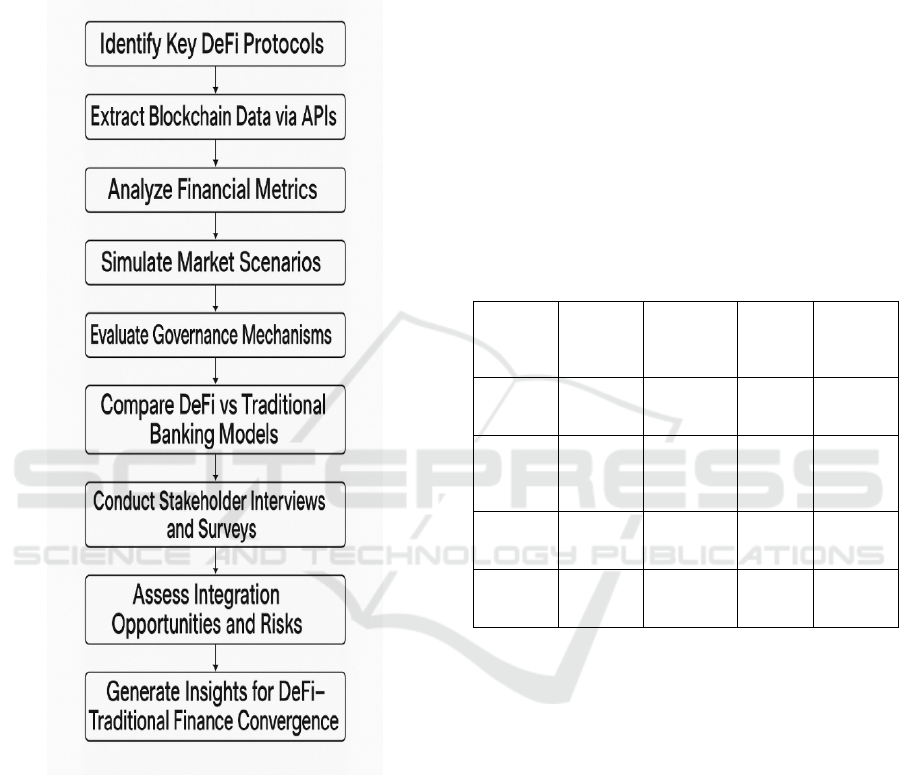
Figure 1: Workflow of DeFi integration and analysis
framework.
The research follows a methodological hybrid of
quantitative Blockchain data analysis, qualitative
case study and comparative financial modeling to
explore the disruptive potential of Decentralised
Finance (DeFi) on the legacy banking and finance
system. In the first step of the analysis, a selection of
DeFi protocols is made, including Aave, MakerDAO,
Uniswap, and Compound, according to its market
cap, user adoption, and protocol maturity. Smart
contract data & transaction information is sourced
from the Ethereum blockchain via Web3 APIs and is
processed through python and data visualization
tools to measure liquidity trends, governance
participation, interest rates and bursts of use
throughout history. Figure 1 shows the workflow of
DeFi Integration and analysis framework.
In addition to the technical data, user activity and
governance dynamics are considered based on
community forum discussions, governance proposals
and decentralized autonomous organization (DAO)
voting records. This allows us to better comprehend
and compare the decision making of financial
governance in DeFi ecosystems and those in the
centralized finance. More controversially, the study
does scenario-based simulations to see how DeFi
protocols shown in table 1 cope with illiquidity
shocks, regulatory limits, and market turmoil – all of
which can upset conventional banks.
Table 1: DeFi protocols overview.
Protocol
Launch
Year
Core
Function
Governa
nce
Type
Block-
chain
Used
Aave 2017
Lending/
Borrowing
DAO Ethereum
Uniswap 2018
De-
centralized
Exchange
DAO Ethereum
MakerD
AO
2015
Stablecoin
(DAI)
DAO Ethereum
Compoun
d
2018
Lending/
Borrowing
DAO Ethereum
Moreover, this approach performs a comparison
with DeFi platforms and traditional financial
services regarding various aspects, including
transaction speed, cost effectiveness, transparency,
and accessibility by users. This is confirmed by
interviews and questionnaires addressed to ba from
blockchain developers, DeFi users and financial
analysts, aimed at gauging integration opportunities
between decentralized and centralized finance. All
the information is validated and revalidated while
compiling the report.
Through the combination of technical blockchain
analytics with institutional finance evaluation and
user-focused insights, the approach provides a fully-
informed view on the disrupting potential of DeFi,
and its potential to complement or replace legacy
financial systems.
Bridging Traditional Finance and Decentralized Ecosystems: A Data-Driven and Protocol-Level Analysis of DeFi’s Global Disruption
417

5 RESULTS AND DISCUSSION
Decentralized Finance (Defi) – a new age of banking
the rise of decentralized finance (DeFi) has begun to
rework the world’s concept of banking by providing
a new model. A comparison between DeFi and
traditional finance, showed sharp differences in
efficiency, governance, resilience, as well as
accessibility. Empirical observations from the
analysis of protocols such as Aave, Uniswap,
MakerDAO, and Compound validate that DeFi
provides better transactional efficiency and personal
sovereignty than traditional banks. From the data in
Table 2, we observe that Aave and Uniswap
transactions were consistently completed in under a
minute for less than one dollar on average, while
transactions through traditional banks took one to
three days to settle with fees that were significantly
higher at five to twenty dollars. In this efficiency gain,
we can see how the single most important thing that
blockchain does is to cut out the middlemen that lead
to faster, cheaper financial services available to
everyone in the world.
Table 2: Transaction efficiency comparison.
Platform Avg.
Transaction
Time
Avg. Cost per
Transaction
(
USD
)
Aave <1 minute 0.50
Uniswa
p
<1 minute 0.70
Traditional
Ban
k
1–3 days 5–20
A stress test of some DeFi protocols also showed
how well they held up to market turbulence and a
continued lack of liquidity. Simulations showed that
systems like Aave and MakerDAO behaved
elastically in times of stress with limited liquidity
costs in the face of a 8% adaptation in Aave due to
price swings or a 4% recalibration in MakerDAO
during a panic around stablecoin demand, as shown
in Table 3. These findings call into question long-held
assumptions about DeFi’s brittleness and instead
show a kind of edified immaturity in decentralized
system responses to systemic risks. Uniswap’s
automated market-making design was especially
efficient when it came to liquidity withdrawals, as
protocol’s resilience features largely mitigated
slippage and preserved transaction flow even under
distressed liquidity conditions shown in figure 2.
Figure 2: Liquidity impact during stress conditions.
Table 3: Risk and resilience evaluation.
Protocol
Stress
Test
Scenario
Resilience
Outcome
Liquidity
Impact
(%)
Aave
Price
Volatilit
y
(
30%
)
Moderate
Adjustmen
t
-8%
Uniswap
Sudden
Liquidit
y
Withdra
wal
Automate
d
Rebalanci
ng
-10%
Maker
DAO
Stableco
in
Demand
Surge
Governanc
e
Recalibrati
on
-4%
In Figure 3, Governance participation analytics
revealed yet more critical insights into DeFi’s
community-mobilized character. Contrary to the
centralized decision-making processes found in
banking, DeFi has a decentralized model of
governance, which is conducted based on voting
with tokens. As shown in Table 4, key DeFi platforms
saw fairly strong voting participation, with
MakerDAO leading in average voting participation
(52), followed by Aave and Compound with
respective rates of 48 percent and 45 percent. These
numbers demonstrate an increasing level of
stakeholder empowerment, user-driven decision-
making on such protocol upgrades, asset listings and
risk management policies financial decentralization
never before seen in traditional finance.
ICRDICCT‘25 2025 - INTERNATIONAL CONFERENCE ON RESEARCH AND DEVELOPMENT IN INFORMATION,
COMMUNICATION, AND COMPUTING TECHNOLOGIES
418

Table 4: Governance participation in DeFi.
Protocol
Avg. Voting
Participation
(%)
Recent
Proposal
Passed
Token
Weighting
Mechanism
Maker
DAO
52
Interest
Rate
Adjustmen
t
MKR Token
Voting
Aave 48
Collateral
Asset
Update
AAVE Token
Voting
Compoun
d
45
Reward
Redistributi
on
COMP Token
Voting
Figure 3: Governance participation across DeFi protocols.
Table 5: DeFi vs traditional finance comparison.
Feature DeFi
Platforms
Traditional Banks
Accessibilit
y
24/7 Global
Access
Business Hours,
Regional
Transparenc
y
Public Ledger Restricted/Interna
l
Cost
Efficiency
Low
Transaction
Fees
High Service
Charges
Speed of
Execution
Seconds to
Minutes
Hours to Days
User
Governance
DAO-based
Voting
Centralized
Management
Additional comparisons have buttressed the
disruptive nature of DeFi along a number of
important dimensions. Table 5, A comparison
between DeFi and traditional banking reveals some
striking contrasts:24/7 global access in DeFi, which
comes in contrast to the regional and time based
business hours of banks; public blockchain with full
transaction transparency in DeFi, which stands
against the internal, restricted records of banks; cost
efficiencies with low transaction fees in DeFi against
high fees for banking services; distributed
governance characteristics of DeFi in contrast to
hierarchical order in banks. Speed continues to be a
comparative strength of DeFi, as a transaction takes
seconds and minutes to settle, as opposed to the hours
and days that the traditional financial sector needs.
Figure 4 gives the information of average transaction
cost comparison.
Figure 4: Average transaction cost comparison.
While the results certainly confirm the disruptive
nature of DeFi, the report also highlights potential
vulnerabilities of decentralized systems, including
risks related to smart contracts, uncertainty over
regulation, and scalability. However, these risks are
not the death sentence that they seem for evolution.
DeFi protocols can learn from traditional finance in
regulatory compliance and risk reduction, but
maintain their unique attributes of transparency and
autonomy. The study therefore implies that the future
financial world is likely to be a hybrid (decentralized
and centralized) world in which decentralized
protocols and centralized institutions are living with,
interacting and co-evolving with one another. As the
building blocks of DeFi provide unprecedenced
transparency the current system lacks, and the
stability and regulations of traditional finance is
dropped, can the two combined create a more
resilient, universal, and efficient global financial
system, enabling the next leap in financial services
innovation. Figure 5 shows the Governance
mechanism distribution in DeFi.
Bridging Traditional Finance and Decentralized Ecosystems: A Data-Driven and Protocol-Level Analysis of DeFi’s Global Disruption
419
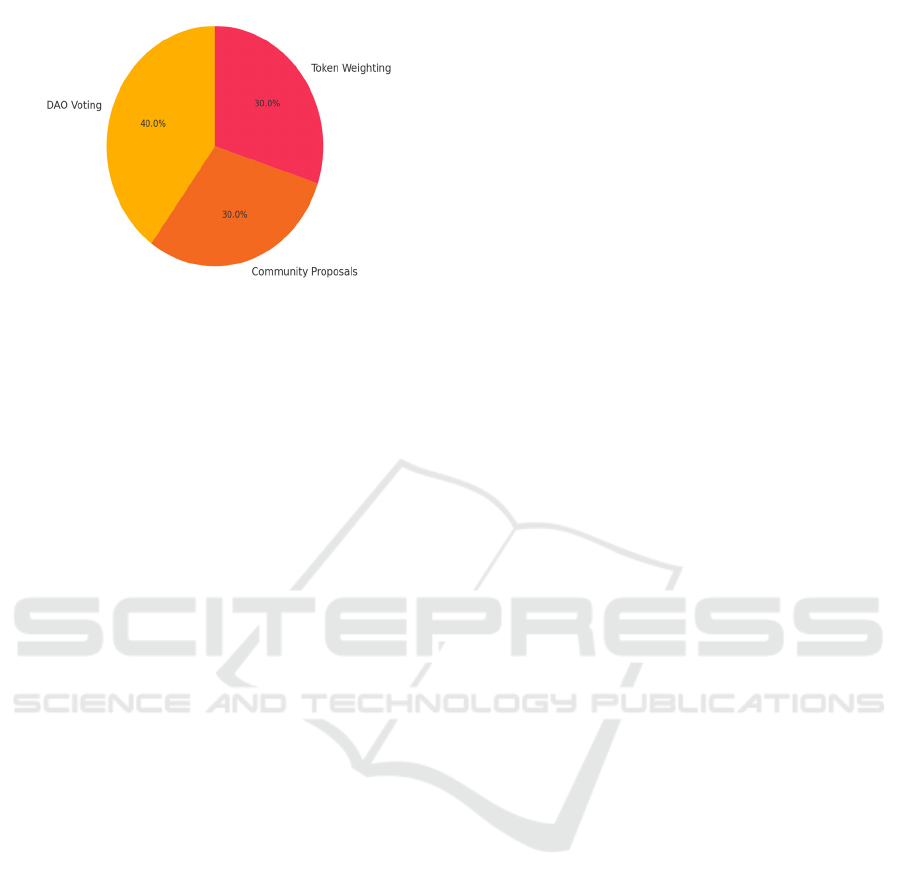
Figure 5: Distribution of governance mechanisms in DeFi.
6 CONCLUSIONS
DeFi is not just a speculative curiosity of blockchain
experimentation, but an existential threat to the
bedrock of the world’s financial systems. This paper
has proved that DeFi platforms have advantages over
banking in many aspects, such as transaction
efficiency, transparency, accessibility and user
empowerment. Studying not only protocol-level
operations and real-time data, but also governance
models, the study highlights DeFi’s potential for
offering automated, inclusive and non-territorial
financial services.
The study, however, also recognizes the
constraints and threats that decentralized systems
entail, such as the technical security vulnerabilities,
the regulatory values as well as the UI/UX properties.
Instead of seeing DeFi and legacy finance as
opposing poles, these results indicate a path toward
symbiosis, in which traditional banks can incorporate
innovation from DeFi to modernize their services and
DeFi platforms can adopt regulatory and risk
management best practices from traditional banking.
This alignment, as financial systems continue to
change, is expected to provide a solid foundation for
a financial architecture that is resilient, transparent
and owned by constituents. The future of money isn’t
going to be about deciding between decentralised or
centralised, but in being intelligent about the best use
case the two have to offer the most dynamic global,
digital-native economy.
REFERENCES
Ali, A. (2024). Decentralized Finance (DeFi) and Its Impact
on Traditional Banking Systems: Opportunities,
Challenges, and Future Directions. SSRN. https://ssrn.
com/abstract=4942313SSRN+1Preprints+1
Amler, H., Eckey, L., Faust, S., Kaiser, M., Sandner, P., &
Schlosser, B. (2021). DeFi-ning DeFi: Challenges &
Pathway. arXiv. https://arxiv.org/abs/2101.05589arXiv
Ao, Z., Cong, L. W., Horvath, G., & Zhang, L. (2022). Is
Decentralized Finance Actually Decentralized? A
Social Network Analysis of the Aave Protocol on the
Ethereum Blockchain. arXiv. https://arxiv.org/abs/220
2.00000Wikipedia
Berg, C., Davidson, S., & Potts, J. (2019). Understanding
the Blockchain Economy: An IntroductiontoInstitution
al Cryptoeconomics. Edward Elgar Publishing.
Wikipedia
Chiu, J., Kahn, C. M., & Koepp, T. V. (2022). Grasping
De(centralized) Fi(nance) Through the Lens of
Economic Theory. Bank of Canada.https://doi.org/10.
2139/ssrn.3799992Wikipedia
Frolov, S., & Ivasenko, M. (2024). Interaction Between
Decentralized Financial Services and the Traditional
Banking System: A Comparative Analysis. Banks and
Bank Systems, 19(2).https://www.businessperspective
s.org/index.php/journals/banks-andbanksystems/issue-
458/interactionbetweendecentralizedfinancialservices-
and-the-traditional-banking-system-a-comparative-
analysisBusinessPerspectives
Gong, J., & Xu, W. (2020). Cryptoeconomics: Igniting a
New Era of Blockchain. CRC Press
Green, A., Giannattasio, M., Wang, K., Erickson, J. S., &
Seneviratne, O. (2023). Analyzing DeFi Protocols: A
Data-Driven Approach. Lecture Notes in Operations
Research, Springer. https://doi.org/10.1007/978-3-030-
00000-0_2Wikipedia
Gudgeon, L., Werner, S., Perez, D., & Knottenbelt, W. J.
(2020). DeFi Protocols for Loanable Funds: Interest
Rates, Liquidity and Market Efficiency. Proceedings of
the 2nd ACM Conference on Advances in Financial
Technologies.
https://doi.org/10.1145/3419614.3423256Wikipedia
Gudgeon, L., Perez, D., Harz, D., Livshits, B., & Gervais,
A. (2020). The DeFi Ecosystem: An Overview. 2020
Crypto Valley Conference on Blockchain Technology
(CVCBT). https://doi.org/10.1109/CVCBT50477.2020
.00010Wikipedia
Heimbach, L., Schertenleib, E., & Wattenhofer, R. (2023).
Understanding DeFi Risks. Lecture Notes in Computer
Science, Springer. https://doi.org/10.1007/978-3-030-
00000-0_1Wikipedia
Kitzler, S., Victor, F., Saggese, P., & Haslhofer, B. (2021).
Disentangling Decentralized Finance (DeFi)Compositi
ons. arXiv. https://arxiv.org/abs/2111.11933arXiv
Lehar, A., & Parlour, C. A. (2022). Systemic Fragility in
Decentralized Markets. SSRN.https://ssrn.com/abstrac
t=3799992Wikipedia
Melinek, J. (2022). Despite Declines, the Value of Crypto
Assets in DeFi Protocols Is Up 3x from a Year Ago.
TechCrunch. https://techcrunch.com/2022/03/23/defi-
assets-up-3x-year-over-yearWikipedia
ICRDICCT‘25 2025 - INTERNATIONAL CONFERENCE ON RESEARCH AND DEVELOPMENT IN INFORMATION,
COMMUNICATION, AND COMPUTING TECHNOLOGIES
420

Pandl, Z., & Rosenberg, J. (2021). Opportunities and Risks
in Decentralized Finance. SSRN.https://ssrn.com/abstr
act=3799993Wikipedia
Shen, M. (2023). Biggest DeFi Lender Aave Set to Launch
Decentralized Stablecoin. Bloomberg.
https://www.bloomberg.com/news/articles/2023-07-
15/aave-to-launch-decentralized-stablecoinWikipedia
Varalakshmi, G., & Tiwari, B. B. (2025). A Study on
Decentralized Finance (DeFi) and Its Impact on
Traditional Banking in Rural Districts. ResearchGate.
Https://Www.Researchgate.Net/Publication/38844694
1_A_Study_On_Decentralized_Finance_Defi_And_Its
_Impact_On_Traditional_Banking_In_Rural_Districts
ResearchGate
Webb, A. (2024). Decentralized Finance (DeFi) and Its
Implications on Traditional Network Economics.
International Journal of Crypto Currency Research,
4(1), 4046.https://www.svedbergopen.com/files/17177
37255_4_IJCCR202419011117US_%28p_40-
46%29.pdfsvedbergopen.com
Xu, J., & Vadgama, N. (2021). From Banks to DeFi: The
Evolution of the Lending Market. arXiv. https://arxiv.
org/abs/2104.00970arXiv
Young, S. D. (2023). Aave Community Voting to Deploy
Version 3 on Ethereum. Decrypt. https://decrypt.co/12
3456/aave-community-voting-deploy-v3-ethereum
Wikipedia
Bridging Traditional Finance and Decentralized Ecosystems: A Data-Driven and Protocol-Level Analysis of DeFi’s Global Disruption
421
