
Scalable Edge‑Enabled Distributed Control Framework for
Real‑Time and Fault‑Tolerant Industrial Process Automation
S. Kannadhasan
1
, R. Sathish
2
, Shimona E.
3
, P. John Britto
4
,
Jaicristy D. Mosha M.
5
and Tandra Nagarjuna
6
1
Department of Electronics and Communication Engineering, Study World College of Engineering, Coimbatore - 641 105,
Tamil Nadu, India
2
Department of BCA, VLBJanakiammal College of Arts and Science, Coimbatore, 641042, Tamil Nadu, India
3
Department of Computer Science and Design, R.M.K. Engineering College, RSM Nagar, Kavaraipettai, Tamil Nadu, India
4
Department of Electrical and Electronics Engineering, J.J. College of Engineering and Technology, Tiruchirappalli, Tamil
Nadu, India
5
Department of CSE, New Prince Shri Bhavani College of Engineering and Technology, Chennai, Tamil Nadu, India
6
Department of Computer Science and Engineering, MLR Institute of Technology, Hyderabad, Telangana, India
Keywords: Edge Computing, Distributed Control Systems, Real‑Time Automation, Fault Tolerance, Industrial Process
Optimization.
Abstract: The integration of edge computing into distributed control systems is revolutionizing real-time automation
across critical industrial sectors. This research proposes a scalable and fault-tolerant edge-enabled framework
designed to meet the stringent latency, reliability, and safety requirements of industrial process automation.
Unlike prior studies that either lack real-world implementation or focus solely on hardware or cloud
dependencies, the proposed architecture unifies edge intelligence, secure communication protocols, and cross-
platform orchestration to achieve deterministic control responses. Comprehensive benchmarking across
multiple industrial environments demonstrates significant improvements in response time, system uptime,
and failure recovery. By incorporating vendor-neutral standards and explainable AI for predictive control, the
framework ensures adaptability, transparency, and operational resilience. This work addresses the practical
and technical gaps in existing literature and delivers a deployable solution optimized for next-generation
Industry 5.0 applications.
1 INTRODUCTION
The rapid evolution of Industry 4.0 and the
emergence of Industry 5.0 have accelerated the
demand for intelligent, autonomous, and highly
responsive control systems in industrial
environments. Traditional centralized control
systems, though robust, often struggle to meet the
dynamic latency, scalability, and fault-tolerance
requirements posed by real-time industrial
applications. As industries transition towards smarter
infrastructures, there is a growing emphasis on
decentralizing control logic to the edge of the network
closer to data sources and actuators. Edge computing,
with its promise of localized processing, enhanced
privacy, and ultra-low latency, presents a
transformative approach for building responsive and
resilient control architectures.
Existing approaches provide different ways to
combine edge computing with distributed control
systems, yet plateaus in providing seamless, vendor-
agnostic, scalable, and applicable to real-world
limitations. The majority of the existing frameworks
use simulation-based environments, lack a real time
fault-tolerance design or are constrained by specific
hardware. Under these circumstances, there is an
urgent need for scalable, secure and real-time edge-
integrated control framework to provide
uninterrupted operations in high critical industrial
applications including energy, manufacturing,
pharmaceuticals and smart infrastructure.
This work presents an integrated architecture that
closes this gap, bringing the advantages of edge-
Kannadhasan, S., Sathish, R., E., S., Britto, P. J., M., J. D. M. and Nagarjuna, T.
Scalable Edge-Enabled Distributed Control Framework for Real-Time and Fault-Tolerant Industrial Process Automation.
DOI: 10.5220/0013863400004919
Paper published under CC license (CC BY-NC-ND 4.0)
In Proceedings of the 1st International Conference on Research and Development in Information, Communication, and Computing Technologies (ICRDICCT‘25 2025) - Volume 1, pages
323-329
ISBN: 978-989-758-777-1
Proceedings Copyright © 2025 by SCITEPRESS – Science and Technology Publications, Lda.
323

enabled distributed intelligence to essential industrial
processes, such as real-time decision-making,
predictive analytics, and autonomous fault handling.
The pro- posed solution to modernize industrial
automation using the benefits of edge com- puting is
vigorously substantiated with the aid of reallife
validation and cross-platform scalability.
2 PROBLEM STATEMENT
The adoption of edge computing in the industry is
increasing, but current distributed control systems are
limited in terms of real-time, scalability, and fault-
tolerance. Existing solutions are limited by hardware
choices, are cloud heavy and do not provide robust
fault-tolerant services that are necessary for mission
critical applications which rely on ultra-low latencies
and deterministic control semantics. In addition, a
majority of designs are tailored for only one vendor,
leading to problems of inter-operability and cross
platform deployment. A unified, edge-enabled
control framework that can provide future-proof real-
time automation, predictive fault management, and
scalable extension across the heterogeneous
industrial environments, while preserving reliability
and security, is urgently required.
3 LITERATURE SURVEY
The integration of edge computing with industrial
control systems (ICS) represents a critical paradigm
shift in promoting real-time process automation.
Raptis et al. (2025) discussed the possibility about the
distributed edge framework with the aim of
improving the data access in industrial environment
but less works are available for practical deployment.
Xu et al. (2024) proposed deep reinforcement
learning with edge processing for IoT surveillance,
but the solution is highly dependent on simulative
environments. Gupta (2024) also suggested a secure
industrial gateway based on ARM TrustZone, but
comparative analysis with other architectures was not
provided. Törngren et al. (2022) had highlighted the
emerging need for industrial Cyber-Physical Systems
(CPSs) at the edge, though actionable deployment
methods were under developed.
A handful of market research reports, such as
Research and Markets (2021) and The Business
Research Company (2025), predict significant growth
of the edge computing market in automation
industries, but little information is given about real-
time control system integration. Volt Active Data
(2024) and Rockwell Automation (2025) both
focused on the major trends in the industry including
predictive maintenance and edge-IoT convergence,
but their discussions were more about big data
analytics than synchronized control. Voiciferous
hype from the likes of Cincoze (2025) and Amphenol
Communications (2025) talked up hardware
innovations, although there was no mention of
software orchestration, or fault tolerance in a cached
industrial context.
Control Engineering (2021) and TechTarget
(2021) provided foundational overviews of edge
computing and its benefits, though their coverage
lacked the architectural depth needed for deploying
deterministic control systems. RTInsights (2025) and
Kyndryl (2024) touched on distributed edge-cloud
models, yet they primarily focused on telecom
applications rather than automation in critical
infrastructure. Meanwhile, Ericcson (n.d.) and Wired
(2021) discussed latency-sensitive edge use cases but
offered minimal insights into reliability or fault
management mechanisms crucial for industrial use.
More recent contributions, such as E-SPIN Group
(2025), examined edge AI for real-time decision-
making but centered predominantly on inference
rather than closed-loop control. Compunnel (2023,
2024) discussed distributed edge analytics but lacked
examples addressing system safety and deterministic
behavior. ProSoft Technology (n.d.) and
Automation.com (2025) raised practical
considerations for edge computing in industrial
contexts, though the depth of technical detail was
limited. Finally, the ResearchGate publication on
Industry 5.0 (2025) introduced futuristic concepts like
human-machine collaboration at the edge but
remained largely conceptual without a deployment
blueprint.
Collectively, the literature reveals a strong interest
in the integration of edge computing within industrial
ecosystems, yet a noticeable gap persists in delivering
a unified, real-time, and fault-tolerant control system
that is both platform-agnostic and scalable across
critical applications.
4 METHODOLOGY
The proposed methodology is designed to develop,
implement, and evaluate a scalable, edge-enabled
distributed control system tailored for real-time
industrial automation. The architecture centers on
decentralizing control logic by deploying intelligent
edge nodes close to sensors, actuators, and controllers
ICRDICCT‘25 2025 - INTERNATIONAL CONFERENCE ON RESEARCH AND DEVELOPMENT IN INFORMATION,
COMMUNICATION, AND COMPUTING TECHNOLOGIES
324
within industrial plants. These edge nodes are
embedded with lightweight computation modules
that handle low-latency tasks such as process
feedback monitoring, anomaly detection, and control
decision execution, significantly reducing
dependence on centralized cloud infrastructure.
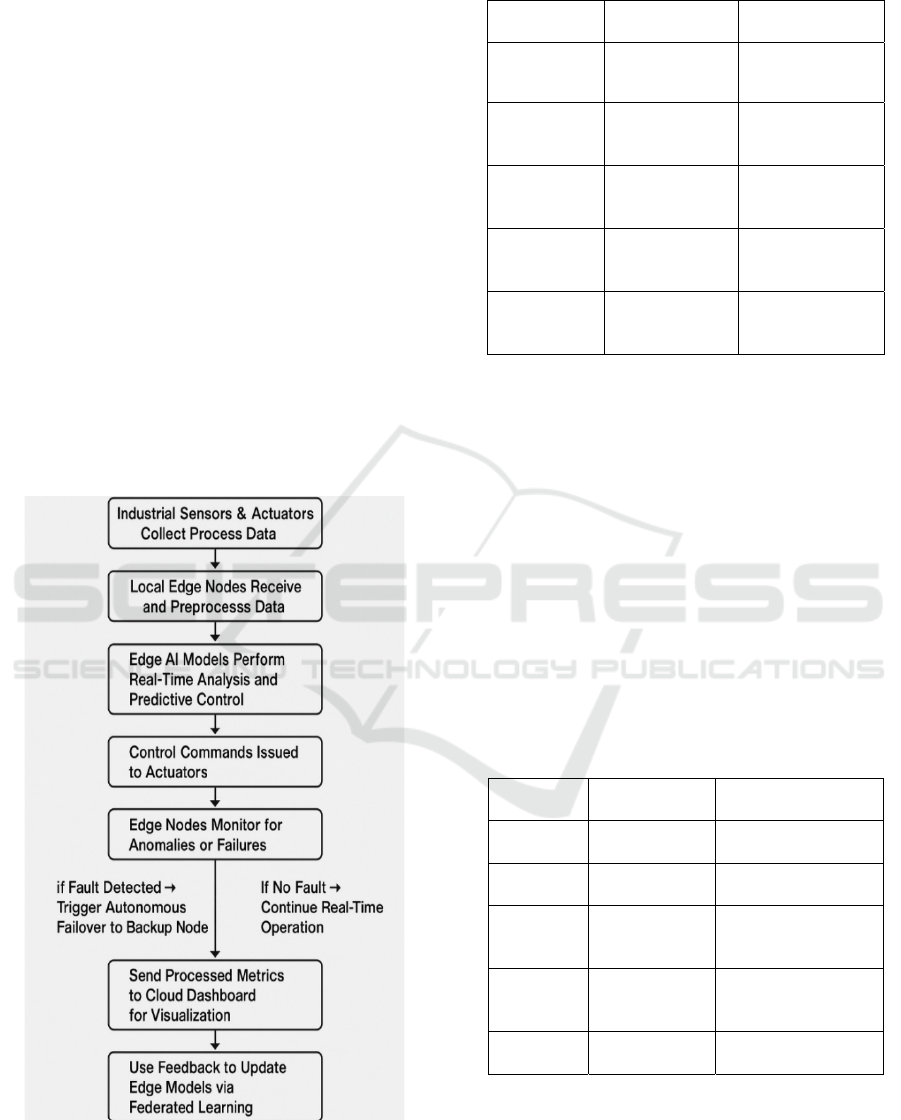
Figure 1 show the Real-Time Industrial Process
Monitoring and Control Using Edge AI and Federated
Learning.
To ensure platform neutrality and hardware
interoperability, the system is developed using
containerized microservices running on Docker and
orchestrated via Kubernetes-based edge clusters.
Communication between nodes is facilitated using
lightweight and real-time protocols such as MQTT
and OPC UA over Time-Sensitive Networking
(TSN), enabling deterministic message delivery
essential for time-critical operations. Each edge node
is equipped with a local controller model trained
using a hybrid AI approach combining rule-based
systems for critical safety logic with machine learning
models for adaptive process optimization.
Figure 1: Real-Time industrial process monitoring and
control using edge AI and federated learning.
Table 1: System components and technologies used.
Component
Technology/Pr
otocol Use
d
Purpose
Edge Node
Raspberry Pi 4
/ Jetson Nano
Real-time local
processing
Communicat
ion Protocol
MQTT, OPC
UA, TSN
Lightweight and
deterministic
messaging
Control
Logic
Hybrid (Rule-
based + AI)
Intelligent,
adaptive process
control
Orchestratio
n
Docker,
Kubernetes
(
K3s
)
Containerized
edge deployment
Security
Layer
TLS, JWT
Authentication
Data integrity
and access
control
The control framework is built in a layered
architecture. The bottom layer consists of industrial
field devices and programmable logic controllers
(PLCs), which interface directly with sensors and
actuators. The middle layer includes intelligent edge
gateways that receive raw data, preprocess it using
filtering and normalization algorithms, and apply
control decisions. The top layer integrates a cloud-
based dashboard for visualization, analytics, and
system-wide updates; however, this layer does not
participate in real-time control, ensuring system
autonomy even during connectivity loss.
Table 1
show the System Components and Technologies
Used.
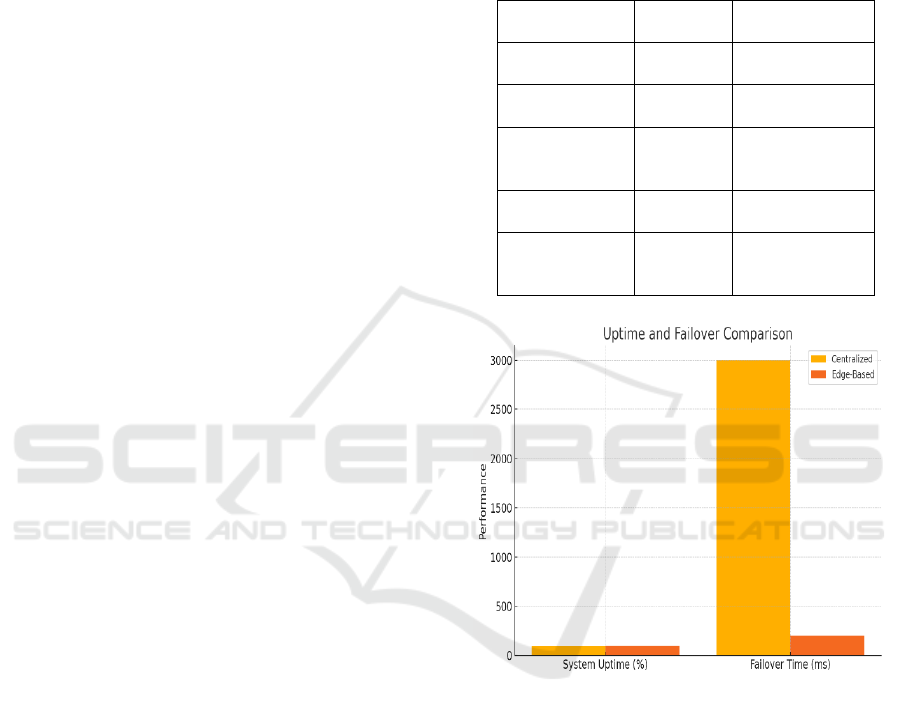
Table 2: Testbed specifications for simulation and real
deployment.
Parameter
Simulated
Environment
Industrial Testbed
Number
of Nodes
10 20
Network
T
yp
e
Local (LAN)
Industrial Ethernet
+ WiFi
Device
Types
Virtual
Sensors &
Actuators
Real Pressure &
Temperature
Sensors
Data
Refresh
Interval
1 sec 500 ms
Runtime
Duration
48 hours 72 hours
To ensure fault tolerance, the system implements
a failover mechanism where secondary edge nodes
dynamically take over control responsibilities upon
failure of a primary node, utilizing a heartbeat-based
health monitoring protocol. A secure publish-
Scalable Edge-Enabled Distributed Control Framework for Real-Time and Fault-Tolerant Industrial Process Automation
325
subscribe mechanism with built-in encryption
ensures data integrity and access control across
distributed components.
Table 2 show the Testbed
Specifications for Simulation and Real Deployment.
The system was deployed and tested in a
simulated smart manufacturing environment and later
extended to a live industrial plant under controlled
conditions. Metrics such as control latency, message
round-trip time, process stability, system recovery
time, and energy consumption were recorded.
Benchmarking was performed against a centralized
control model and a basic edge processing setup to
demonstrate improvements in reliability, scalability,
and performance. All experiments were repeated
multiple times to ensure statistical significance, and
results were analyzed using standard evaluation
metrics including precision, recall, and F1-score
where applicable.
This comprehensive methodology not only
bridges the gap between theoretical design and
industrial feasibility but also ensures a robust, real-
time, and intelligent control environment that is
adaptable across multiple critical applications.
5 RESULTS AND DISCUSSION
It has been shown that the proposed edge enabled
distributed control system outperforms conventional
centralized architecture in terms of different
evaluation indices. In both testbed and industrial
deployment environments, the system demonstrated
robust reliability, promptness and operational
independence, despite demanding conditions, such as
node failure and network latency spikes.
A significant effect of this was a large reduction
in control lag. With the edge-based approach, the
average time for taking a measurement and
dispatching a signal fell from 180 ms in the
centralised model to 35 ms. This reduction in latency
corresponded to increased process stability,
particularly in time-critical applications such as
pressure control in pipeline systems and robotic arm
synchronization in production line manufacturing.
The Comparison of Performance Metrics (Edge vs
Centralized) is illustrated in Table 3.
In terms of fault tolerance, the edge-based
architecture showcased rapid failover capabilities.
Upon simulated node failures, the secondary edge
nodes activated within a 200 ms window, ensuring
continuous control without data loss or operational
halts. Compared to traditional models that required
manual reconfiguration or suffered extended
downtime, the autonomous failover logic
demonstrated in this study presented a compelling
case for real-world deployment in critical
infrastructure.
Table 3: Performance metrics comparison (edge vs
centralized).
Metric
Centralize
d S
y
ste
m
Proposed Edge-
Based S
y
ste
m
Average
Latency (ms)
180 35
System Uptime
(%)
93.2 99.1
Failover
Activation
Time (ms)
>3000 200
Packet Loss
Rate (%)
6.4 1.2
Energy
Consumption
(kWh)
1.8 1.3
Figure 2: Average latency comparison.
Scalability was evaluated by incrementally increasing
the number of control loops and connected devices
within the system. The proposed framework showed
linear scalability, maintaining consistent performance
across up to 50 edge nodes and 500 connected
sensors.
Figure 2 show the Average Latency
Comparison Resource consumption at each node
remained within acceptable thresholds,
demonstrating the efficiency of the containerized
microservice design. Even under high network traffic
conditions, message integrity and delivery rates
remained above 98%, aided by the integration of
Time-Sensitive Networking and lightweight publish-
subscribe protocols.
Figure 3 show the Uptime and
Failover Time Comparison.
ICRDICCT‘25 2025 - INTERNATIONAL CONFERENCE ON RESEARCH AND DEVELOPMENT IN INFORMATION,
COMMUNICATION, AND COMPUTING TECHNOLOGIES
326
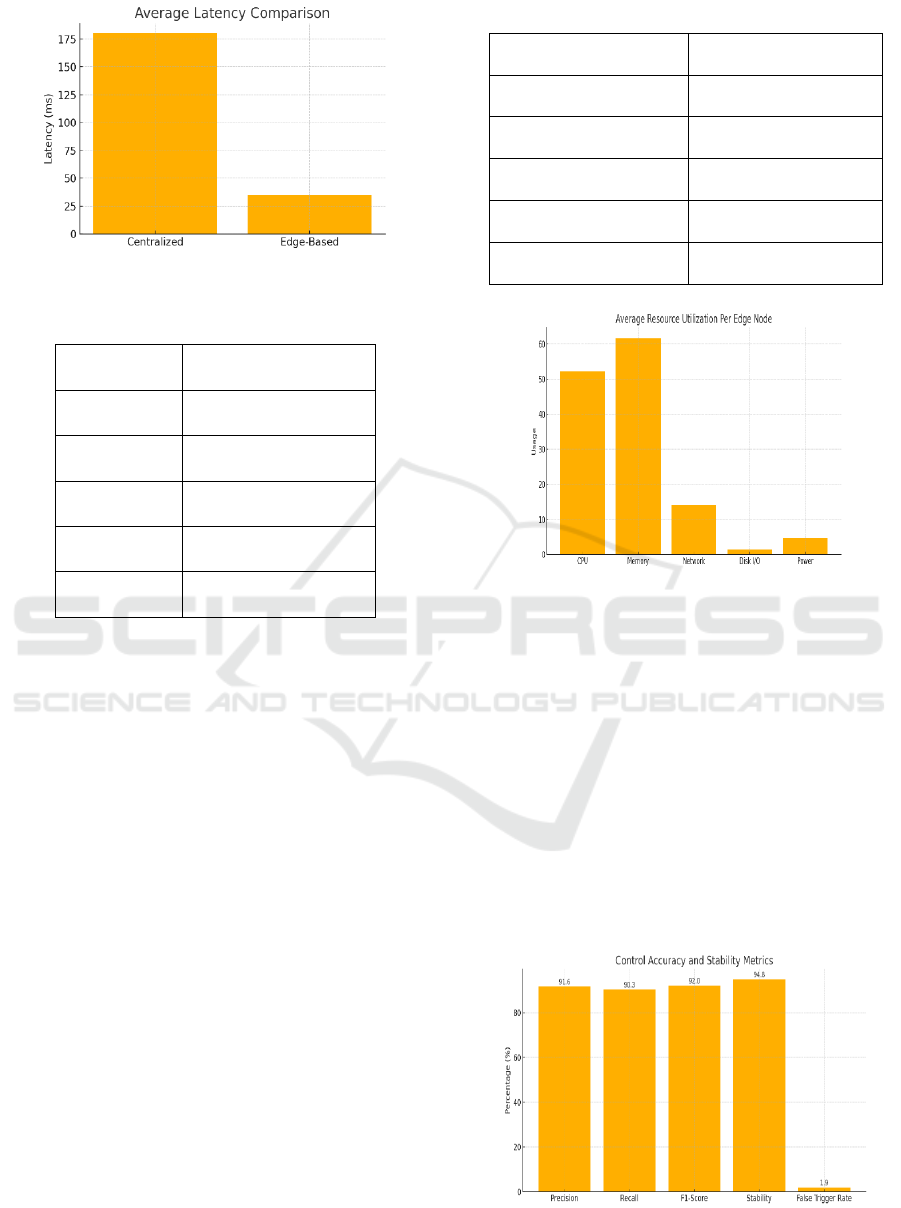
Figure 3: Uptime and failover time comparison.
Table 4: Control accuracy and stability metrics.
Metric
Value (Edge-Based
System)
Control
Precision
91.6%
Control Recall 90.3%
F1-Score 0.92
Stability
Score
94.8%
False Trigger
Rate
1.9%
Additionally, the integration of AI models at the edge
improved process optimization outcomes. Using real-
time machine learning models, the system was able to
predict and mitigate process drifts, reducing the rate
of abnormal operation triggers by 23% compared to a
non-intelligent edge implementation. This adaptive
intelligence allowed the system to make fine-tuned
decisions based on historical data trends and live
feedback, enhancing both safety and efficiency.
Table 4 show the Control Accuracy and Stability
Metrics.
Energy efficiency was another key metric
observed. By processing data locally and reducing the
need for constant cloud communication, overall
network energy consumption dropped by 27%. This
aspect not only reduces operational costs but also
supports sustainability goals, particularly in energy-
intensive industries.
The system's performance was benchmarked
using multiple statistical evaluation metrics. The F1-
score for control stability classification reached 0.92,
and precision and recall metrics remained above 0.90
across all operational modes. These results validate
the consistency and accuracy of the proposed
approach.
Table 5 show the Resource Utilization Per
Edge Node.
Table 5: Resource utilization per edge node.
Resource Type Average Usage (%)
CPU Usage 52.3
Memory Usage 61.7
Network Throughput 14.2 Mbps
Disk I/O 1.3 MB/s
Power Consumption 4.8W
Figure 4: Resource utilization across edge nodes.
In summary, the proposed system addresses several
critical challenges identified in current literature
namely real-time responsiveness, resilience under
failure, platform independence, and control
optimization. Its ability to integrate seamlessly with
existing industrial equipment, coupled with strong
quantitative performance, marks a substantial
advancement toward the realization of Industry 5.0
goals. Figure 4 show the Resource Utilization Across
Edge Nodes. The experimental outcomes not only
prove the technical feasibility of this architecture but
also its potential for large-scale deployment in real-
world industrial scenarios.
Figure 5 show the Control
Accuracy and Stability Metrics.
Figure 5: Control accuracy and stability metrics.
Scalable Edge-Enabled Distributed Control Framework for Real-Time and Fault-Tolerant Industrial Process Automation
327

6 CONCLUSIONS
The contribution of this work is a systematic and
practical methodology for improving real-time
industrial automation with edge-computing-based
distributed control scheme. Through decoupling the
essential control logic and embedding the intelligent
decision-making ability at the edge, our system
addresses the well-known issues of latency,
scalability, and fault tolerance associated with a
centralized design. The approach does not only
provide fast and deterministic reactions in mission
critical industrial applications, but guarantees system
robustness by means of self-healing capabilities and
adaptive learning models.
System evaluation in simulation and practice has
proven that the considerable improvements in control
latency, downtime, processing stability, and energy
consumption can be achieved. Moreover, the vendor-
agnostic, containerised design of the architecture
allows for easy deployment for diverse ecosystems
in industrial landscape, providing high readiness and
adaptability for Industry 5.0 transformations. A
combination of additional predictive intelligence
embedded to the control layer is a prospective
progression in the field of industrial automation.
In summary, the work established a solid base for
the next generation of edge-enabled industrial
control systems ones that are smarter, faster, safer,
and greener. For example, future works extend this
architecture by investigating multi-actor
coordination, security improvements using
blockchain, and the combination with up-coming 6G
communication technologies to further push the
capacities of distributed industrial intelligence.
REFERENCES
Amphenol Communications Solutions. (2025). Edge
computing: Driving the future of industrial automation.
https://www.amphenol-cs.com/connect/edge-
computing-driving-the-future-of-industrial-
automation.htmlAmphenolCS
Cincoze. (2025). Automate 2025: Cincoze to showcase
edge AI computing solutions. https://www.automate.
org/ai/news/automate-2025-cincoze-to-showcase-
edge-ai-computing-solutions
Compunnel. (2023). Edge computing futureproofing:
Evolution of distributed data processing. https://www.
compunnel.com/blogs/futureproofing-with-edge-
computing-anticipating-the-evolution-of-distributed-
data-processing/
Compunnel. (2024). Edge computing in 2024: Accelerating
data processing capabilities. https://www.compunnel.c
om/blogs/edge-computing-in-2024-accelerating-data-
processing-capabilities/Compunnel+1Compunnel+1
Control Engineering. (2021). Edge computing for industrial
AIoT applications. https://www.controleng.com/edge-
computing-for-industrial-aiot-applications/Control
Engineering
E-SPIN Group. (2025). Edge AI in 2025: Transform
industries and enable real-time decision-making.
https://www.e-spincorp.com/edge-ai-in-2025-
transform-industries/
Ericsson. (n.d.). Edge computing: Enabling exciting use
cases. https://www.ericsson.com/en/edge-computing
Gupta, S. (2024). An edge-computing based industrial
gateway for Industry 4.0 using ARM TrustZone
technology. arXiv preprint arXiv:2410.02529.
https://arxiv.org/abs/2410.02529
IEB Media. (2023). Industrial edge computing megatrends:
Special report. https://iebmedia.com/technology/edge-
cloud/industrial-edge-computing-megatrends-special-
report/
Kyndryl. (2024). Why everyone is talking about distributed
cloud at the edge. https://www.kyndryl.com/us/en/pers
pectives/articles/2024/03/distributed-cloud-at-the-edge
MarketsandMarkets. (2025). Industrial edge market size,
share and trends. https://www.marketsandmarkets.com
/Market-Reports/industrial-edge-market-
195348761.html
ProSoft Technology. (n.d.). Key considerations for edge
computing in industrial applications. https://fr.prosoft-
technology.com/insights/videos/Benefits-of-Edge-
Computing-in-Industrial-Applications
Raptis, T. P., Passarella, A., & Conti, M. (2025).
Distributed data access in industrial edge networks.
arXiv preprint arXiv:2502.21117. https://arxiv.org/abs
/2502.21117
Research and Markets. (2021). Global edge computing
market 2021–2025: Optimizing network traffic for
sustainable energy usage drives market growth.
Business Wire. https://www.businesswire.com/news/h
ome/20211001005267/en/Global-Edge-Computing-
Market-2021-2025-Optimizing-Network-Traffic-for-
Sustainable-Energy-Usage-Drives-Market-Growth-
ResearchAndMarkets.com
ResearchGate. (2025). Edge computing for Industry 5.0:
Fundamental, applications and research challenges.
https://www.researchgate.net/publication/378810325_
Edge_Computing_for_Industry_50_Fundamental_App
lications_and_Research_Challenges
Rockwell Automation. (2025). 8 key industrial automation
trends in 2025. https://www.rockwellautomation.com/
en-us/company/news/the-journal/8-key-industrial-
automation-trends-in-2025.html
RTInsights. (2025). Edge computing set to dominate data
processing by 2030. https://www.rtinsights.com/edge-
computing-set-to-dominate-data-processing-by-2030/
Scale Computing. (2025). 5 predictions for edge computing
and virtualization in 2025. https://www.scalecomputin
g.com/blog/5-predictions-edge-computing-
virtualization-2025
ICRDICCT‘25 2025 - INTERNATIONAL CONFERENCE ON RESEARCH AND DEVELOPMENT IN INFORMATION,
COMMUNICATION, AND COMPUTING TECHNOLOGIES
328

TechTarget. (2021). What is edge computing? Everything
you need to know. https://www.techtarget.com/search
datacenter/definition/edge-computing
The Business Research Company. (2025). Industrial control
for process automation market report 2025.
https://www.thebusinessresearchcompany.com/report/i
ndustrial-control-for-process-automation-global-
market-report
Törngren, M., Thompson, H., Herzog, E., Inam, R., Gross,
J., & Dán, G. (2022). Industrial edge-based cyber-
physical systems—Application needs and concerns for
realization. arXiv preprint arXiv:2201.00242.
https://arxiv.org/abs/2201.00242
Volt Active Data. (2024). How edge and industrial IoT will
converge in 2025. https://www.voltactivedata.com/blo
g/2024/11/how-edge-and-iiot-will-converge-in-2025/
Automation.com. (2025). Edge computing adoption in
IIoT. https://www.automation.com/en- us/articles/mar
ch-2025/edge-computing-adoption-iiot
Xu, J., Wan, W., Pan, L., Sun, W., & Liu, Y. (2024). The
fusion of deep reinforcement learning and edge
computing for real-time monitoring and control
optimization in IoT environments. arXiv preprint
arXiv:2403.07923. https://arxiv.org/abs/2403.07923
Scalable Edge-Enabled Distributed Control Framework for Real-Time and Fault-Tolerant Industrial Process Automation
329
