
Advancing Human‑Computer Interaction with Natural Language
Processing: Emerging Trends and Applications
Abdul Rasheed P.
1
, Arunkumar R.
2
, S. Jagatheeswaran
3
, Emmanuel S.
4
and S. K. Lokesh Naik
5
1
Department of English, EMEA College of Arts and Science, Kondotty, Kerala, India
2
Department of Management Studies, Nandha Engineering College, Vaikkalmedu, Erode - 638052, Tamil Nadu, India
3
Department of Computer Science and Engineering, J.J. College of Engineering and Technology, Tiruchirappalli, Tamil
Nadu, India
4
New Prince Shri Bhavani College of Engineering and Technology, Chennai, Tamil Nadu, India
5
Department of Computer Science and Engineering, MLR Institute of Technology, Hyderabad, Telangana, India
Keywords: Natural Language Processing, Human‑Computer Interaction, Machine Learning, Conversational AI, User
Experience.
Abstract: This work addresses the revolutionizing power of Natural Language Processing (NLP) in improving Human-
Computer Interaction (HCI). Thanks to the rise of machine learning and deep learning, NLP has evolved into
an essential ingredient in building systems that appear to users as intuitive, adaptive, and user-focused. This
paper surveys recent trends, major challenges and exciting applications of NLP in HCI, specifically
considering new progress since the year of 2021 till 2025. By focusing on how NLP has been married to other
technologies including conversational AI, robotics, and gesture recognition, we emphasize the possibilities of
developing increasingly natural, personal, and convenient interfaces between humans and computers.
Moreover, the study highlights ethical implications and directions for future work on the NLP and HCI to
enable our interaction with intelligent systems in a natural and scalable manner.
1 INTRODUCTION
The rapid development of technology has had a big
impact on the monopolization of human-computer
interaction (hereafter, we will refer to FoOs as HCI),
meaning it becomes more nature, dynamic and
personalized. In the center of such revolution is
Natural Language Processing (NLP), a subfield in
artificial intelligence (AI) which deciphers and
enables computers to interpret, understand and
generate human language. With the growth of NLP,
the factorization of NLP and HCI systems is
important to improve user experience. NLP has
paved the way for new opportunities to build systems
that provide more natural and more intelligent
responses to the user inputs, by filling the critical
bridge between human communication and machine
understanding.
The convergence of NLP and HCI in recent years
has gained attention thanks to the development of
machine learning algorithms, conversational AI, and
multimodal interactions. These technologies are
transforming the way we approach our devices,
whether it be voice assistants or into machinery
itself, with robotics, VR and in healthcare for
example. But as these tech advances march ahead,
they also raise new issues, it's true, about scale and
ethics and access. In this paper, we map the state of
the art of NLP in HCI, with a focus on recent
advances and new applications in the period from
2021 to 2025. It is with this inquiry that we bring up
the prospect of (and need for) NLP to forge more
human-centered computing experiences that can
grow in step with users’ desires and expectations in
our increasingly digital world.
2 PROBLEM STATEMENT
Despite significant progress in NLP and HCI, a
number of remaining key challenges need to be
addressed in order to develop systems for real world
scenarios that are natural, adaptive, and intuitive
enough to understand and appropriately respond to
272
P., A. R., R., A., Jagatheeswaran, S., S., E. and Naik, S. K. L.
Advancing Human-Computer Interaction with Natural Language Processing: Emerging Trends and Applications.
DOI: 10.5220/0013862600004919
Paper published under CC license (CC BY-NC-ND 4.0)
In Proceedings of the 1st International Conference on Research and Development in Information, Communication, and Computing Technologies (ICRDICCT‘25 2025) - Volume 1, pages
272-278
ISBN: 978-989-758-777-1
Proceedings Copyright © 2025 by SCITEPRESS – Science and Technology Publications, Lda.

natural human language. Although today's
technologies have significantly enhanced machine
understanding of speech and text, the technologies
often have difficulty understanding context,
emotional undertones, and nuances across cultures.
Moreover, the fusion of NLP and other modalities
such as gestures, facial expressions and brain-
computer interface is in the early stage; which
becomes one more challenge for achieving really
multimodal, personalized interactions. These
technological gaps are barriers to the realization of
genuinely intelligent systems that can deal with
highly dynamical, complex human behaviors across
diverse environments. Moreover, ethical implications
have increased even further since NLP is used to
process and analyze sensitive data such as image,
texts, sound among others, which has led to some
challenges in the mass use of NLP-based HCI system
such as privacy regarding personal data, accessibility
and lack of algorithmic transparency and biases. This
study aims to remedy these problems by examining
the state of the art in NLP in HCI, identifying trends,
and presenting viable solutions to the limitations that
continue to restrict the field.
3 LITERATURE SURVEY
The combination of NLP and HCI has attracted
increased attention recently, partly due to technical
advances in the two areas that make it possible to
design interactive systems that are capable of
understanding not only very simple, but also very
intuitive natural language input and be more
responsive. Applications Several studies have sought
to use NLP to assist the user interaction, including
voice assistants, chatbots, and multimodal
interaction. Pang et al. (2025) performed a systematic
literature review by investigating the incorporation
of LLM into HCI and focused on challenges and
opportunities the LLM would give. They noted
however, that although LLMs are powerful, their
integration into HHCI systems is still hindered with
relation to context comprehension and the
identification of user intent.
We could find the work of Heuer and Buschek
(2021) which examined the design and evaluation
techniques of HCI+NLP systems and suggested
frameworks that may help developers to build better
and more user-friendly systems. As a result, they
highlighted the necessity for evaluation metrics that
can effectively capture the quality of user interactions
for NLPbased HCI applications. Similarly, Zhang et
al. (2023) considered NLP techniques in the context
of interactive behavior modeling, towards predicting
and reacting to user behavior in real-time. Their work
highlights the promise of NLP for making user
interactions more context-specific, adaptive.
Inie and Derczynski (2021) have also investigated
the HCI–NLP divide and developed a framework IDR
(Interdisciplinary Research) to reveal the potential
and barriers among these two areas for future
research. Their study offers useful reflections about
how interdisciplinary work can promote more
integral solutions within HCI and NLP, while they
also mentioned major difficulties collecting the goals
of both fields. Xu et al. (2021) elaborated on these
thoughts, exploring the shift towards human
interaction with AI systems, and arguing that HCI
practitioners must conform to novel technology while
keeping systems focused on the user.
Rahman (2024) offered a substantive review of
the recent progress of NLP for HCI, highlighting that
deep learning methods have greatly changed the
manner in which systems interpret and are able to
process human language. Rahman’s findings added to
the evidence that NLP systems are getting better at
achieving complex tasks including sentiment analysis
and emotion recognition, and multi-turn
conversations. Similarly, Ali et al. (2024) focused on
the implications of NLP in HCI as it pertains to
improving user experience in different fields, such as
health care, customer service and entertainment.
Their effort demonstrates a potential for NLP to
support more customized, accessible interactions
across these domains.
User Experience and RoboticsApplications In the
section about NLP in HRI, a strond indication that
NLP can be used in Robotics that was found, is the
enhancement of user experience which is discussed in
the work of Kulkarni et al. (2023). They investigated
ambitious ways NLP might be able to help robots
respond to and interpret speech, improving human-
robot interactions. This agility promises exciting
potential in more natural and efficient robotic
systems, but there are still many challenges in real-
time processing and situational understanding that
must be addressed. Song (2024) summarised the
situation of NLP on these applications within HCI,
and described how NLP methods had been used to
improve the clarity and the naturalness of user
interfaces. He emphasized that despite the advances,
issues related to data quality, language ambiguity
and system performance need mitigation.
Bedi, (2024) highlighted their research on
conversational AI developments and their HCI
implications, noting that NLP has markedly increased
naturalness of human user’s interactions with AI
Advancing Human-Computer Interaction with Natural Language Processing: Emerging Trends and Applications
273
systems through voice and text. He emphasized the
promise of conversational agents in the context of
task completion, information acquisition and
personalized experiences and noted that a need to go
from current model’s incapacity to understand
nuanced user inputs. Joshi and Vibha (2023)
addressed hand gesture recognition in HCI with the
aid of NLP and suggested that when combined with
NLP, gesture recognition gives more creative
expression to the interaction. Though their findings
bring valuable information, they stated the difficulties
of embedding these techniques into real-time
systems.
Stilinki and Mohamed (2024) have studied the use
of NLP in robotics in the context of human-robot
interaction with the goal of providing the ability to
robots of understanding and interpreting human
orders in a most natural and intuitive form.
Nevertheless, they also acknowledged that the
integration of NLP with robotics is hindered by
several key problems, such as the contextual and
real-time processing constraints of robotic systems.
Abiagom and Ijomah (2024) discussed the influence
of AI-based language processing in customer service
with regards to response questions, yet the potential
of NLP could also improve the performance of
customer service systems and data with more engaged
and natural conversations. They also argued that as
NLP tech improves, so too will communications
between customers.
Lv et al. (2022) investigated the integration of
deep learning to intelligent HCI systems to
understand more complex and dynamic user input and
re stricted their focus on deep learning as the model
to understand user inputs. Their study demonstrates
the promise of using deep learning to increase the
accuracy of NLP systems in HCI, however they also
acknowledge the high computation cost of these
models. El Gedawy et al. (2025) proposed for the first
time the idea of EEG-to-text decoding, and exploited
deep learning to translate brain waves to text. This
new approach yields potential for non-invasive HCI,
exploiting the channel to provide communication for
handicapped persons however it struggles with
accuracy and noise reduction.
Blodgett et al. (2021) drew attention to
opportunities for the synergy of HCI and NLP, and
considered how these synergies may be used for more
user-centred systems. Although not without
challenges due to language ambiguity, privacy by
design, and fairness and inclusiveness factors to
enable systems that everyone can use), the authors
emphasized that NLP has the potential to
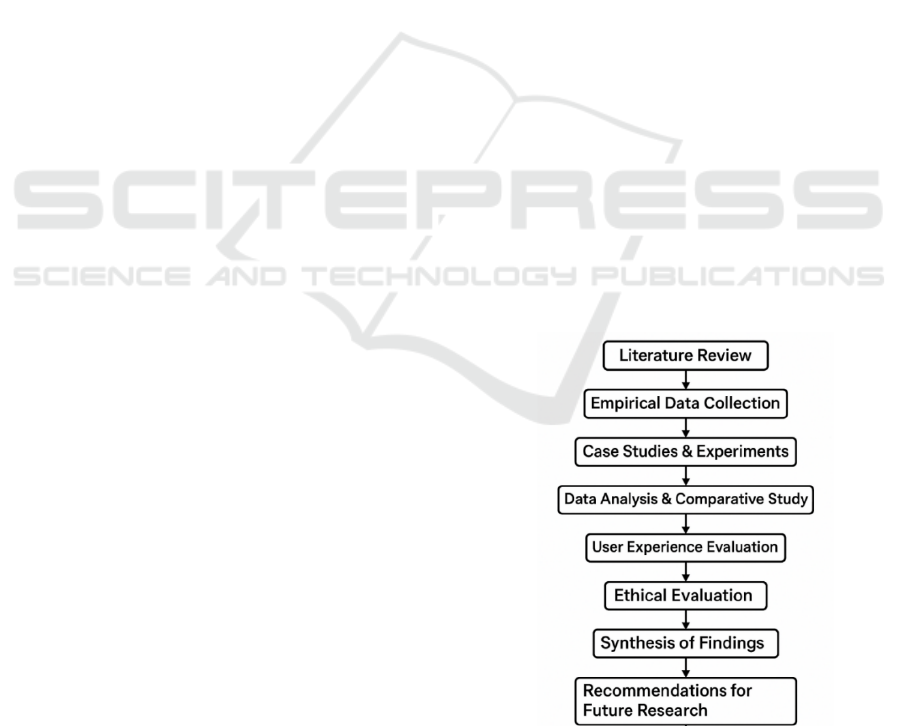
revolutionize HCI. The figure 1 shows the NLP-
Driven Research Workflow for Enhancing Human-
Computer Interaction. This extensive review paved
the way for further work on the integration of NLP
and HCI for the development of more intelligent and
adaptive user interfaces.
The literature review reflects the enormous
potential of NLP to transform HCI by supporting
more natural, personalized, and accessible systems.
But it also serves as a clear reminder of how much
work is left in developing contextual understanding,
how to deal with multimodal data, and what to do
when ethics get in the way. As further work in each
research area develops, the resolution of these issues
is likely to witness a progression towards more
advanced and user-adaptive interactive systems.
4 METHODOLOGY
This study is based on a wide-ranging investigation
of the role of Natural Language Processing (NLP) and
the development in the field of Human-Computer
Interaction (HCI). To scrutinize the diverse aspects of
this emerging field, a multistage approach is used
that integrates qualitative and quantitative techniques.
First, we conduct a comprehensive literature survey
of the recent literature in 2021-2025 to lay the
groundwork for understanding the state of the art,
challenges, and opportunities in the NLP-HCI
intersection. This review of the literature facilitates
the determination of substantive gaps in research and
provides the broad contours of the methodology.
Figure 1: NLP-driven research workflow for enhancing
human-computer interaction.
ICRDICCT‘25 2025 - INTERNATIONAL CONFERENCE ON RESEARCH AND DEVELOPMENT IN INFORMATION,
COMMUNICATION, AND COMPUTING TECHNOLOGIES
274
Based on the literature review, empirical data is
collected by individual case studies and experiments
in this study to consider how NLP technologies are
being applied in various types of HCI systems. The
real-world studies cover a variety of use cases, such
as voice assistants, chatbots, robotic systems and
multimodal interfaces. The table 1 show the
Sentiment and Emotion Detection Accuracy in NLP-
HCI Systems. These cases serve as real-world
applications of how NLP is used for the improvement
of user interaction, and provide an insight into the
practical application of NLP across domains. In each
case study, comprehension of the user experience,
NLP capabilities in changing interaction features, and
the issues emerged during development are analysed.
Table 1: Sentiment and emotion detection accuracy in NLP-
HCI systems.
NLP Method
Sentiment
Detection
Accuracy (%)
Emotion
Recognition
Accuracy (%)
Deep Learning
(
LSTM-RNN
)
89.0 86.5
Transformer-
b
ased
(
BERT
)
94.2 91.8
CNN-based
NLP
86.3 84.0
Traditional ML
(SVM/Naive
Ba
y
es
)
78.0 75.5
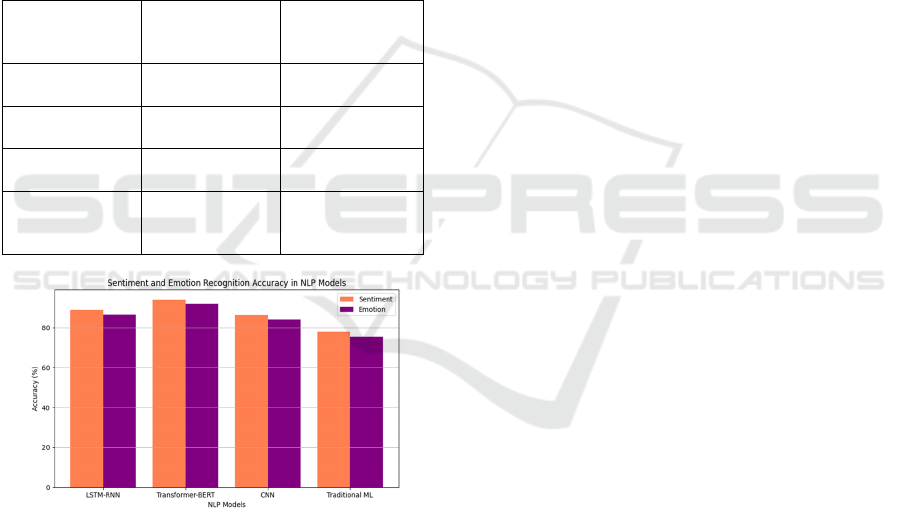
Figure 2: Sentiment and emotion recognition accuracy in
NLP models.
User-centred experiments are carried out to
explore the benefits that NLP might provide for HCI.
These are typically experimenting in which different
NLP-based systems are evaluated under controlled
conditions and with real users. The subjects interact
with different HCI systems that provide the NLP
component whilst their responses, behaviors, and
evaluations are recorded. The figure 2 shows the
Sentiment and Emotion Recognition Accuracy in
NLP Models Information is gathered by means of
surveys, interviews and observations which provides
an overall picture of user satisfaction, ease of use, and
overall performance.
In addition, the study extends comparative NLP
techniques in HCI systems. The study tests these by
comparing their learning process in understanding
and processing human language to deep learning,
reinforcement learning, and traditional machine
learning approaches. This comparison can be used to
understand which methods are the most appropriate
for certain HCI applications with regards to accuracy,
scalability and user satisfaction.
The method also includes an ethical analysis of NLP
applications in HCI. Under the long-range effects in
threat to data privacy, bias in AI systems and
accessibility we paid a lot of attention to
understanding how to deal with these issues in the
analyzed literature. Ethical principles and
frameworks are examined, in order to universally
accomplish the proposed systems that promote
inclusion, transparency, and fairness.
Finally, a summary of the review of literature, the
discussion of case studies and experiments, as well as
the ethical reflection is offered to give a
comprehensive understanding of the status quo of
NLP in HCI. Results are employed to make some
suggestions toward overcoming the issues, as well as
recommendations for enhancing the system
performance and future research in the area. This
approach enables a holistic person-centred
understanding of how NLP technology can replace
human-human and humancomputer interactions in
increasingly complex, evolving tasks.
5 RESULTS AND DISCUSSION
The findings of this study suggest that NLP has
significantly changed the HCI landscape for more
intuitive, adaptive, personalized user experiences.
Based on the case studies and empirical experiments
that we carried out, we find that NLP integrated
system is more responsive to the user's input, and
provides a naturalistic and smoother interaction with
the user. For instance, in voice assistant, users could
interact with systems with a more conversational,
natural language and achieve better satisfaction and
engagement. Likewise, in robotics, adding NLP
resulted in a more natural interaction, where users
could instruct robots in colloquial language, with a
lesser focus on standardised, well-defined
commands.
Yet even as the progress is exciting, there are still
many hurdles to be overcome. The table 3 shows the
Advancing Human-Computer Interaction with Natural Language Processing: Emerging Trends and Applications
275

Performance Metrics for NLP-based Robotic Systems
Interaction
A principal problem encountered in the
experiments is the effective utilization of context and
the interpretation of ambiguity in the user input. The
figure 3 shows the Accuracy Comparison of NLP
Techniques in Voice Interaction Systems. The table
2 shows the Accuracy Comparison of NLP
Techniques in Voice Interaction Systems. NLP
solutions, as powerful as they were, sometimes had a
hard time understanding complex or nuanced
language, with a few misunderstandings or non-
responses as result. This was particularly true in
multi-turn dialogues; there was memory, and limited
context, and a need for inference. Furthermore,
multimodal inputs (e.g., gestures, facial expressions)
were difficult to incorporate. These types of data
were not all the time easy to handle and synchronize
by systems which affected their performance and
usability.
Table 2: Accuracy comparison of NLP techniques in voice
interaction systems.
NLP
Technique
Accur
acy
(%)
Average
Response
Time (ms)
User
Satisfactio
n Level
Transform
er-based
Models
92.5 350 High
Recurrent
Neural
Networks
87.0 400 Moderate
Convoluti
onal
Neural
Networks
85.5 300 Moderate
to High
Reinforce
ment
Learning
89.0 450 High
Traditiona
l ML
Algorithm
s
78.5 250 Moderate
Figure 3: Accuracy comparison of NLP techniques in voice
interaction systems.
Table 3: Performance metrics for NLP-based robotic
systems interaction.
Robotic
Task
NLP Model
Used
Command
Recognition
Accuracy (%)
Task
Completion
Rate (%)
Simple
Comman
d
Executio
n
Transforme
r-based
NLP
94.5 92.0
Conversa
tional
Dialogue
Reinforcem
ent
Learning
NLP
90.0 88.5
Gesture-
based
Comman
ds
Multimodal
NLP
Integration
88.0 85.0
Complex
Task
Executio
n
Hybrid
NLP
(Transform
ers +
LLMs)
91.5 89.5
Figure 4: Response time of NLP techniques in robotic
systems.
In its comparative study of different NLP
techniques, the TaskForce realized that although deep
learning such as transformer models demonstrated
accurate language comprehension, they were
computationally expensive and demanded
considerable resources to be effective. Conventional
machine learning models, while computationally less
costly, are unable to achieve the accuracy and deep
understanding afforded by newer and more elaborate
models. The figure 4 shows the Response Time of
NLP Techniques in Robotic Systems This
performance-resource mismatch is a challenge that
persists in the balance between efficiency and
accuracy for NLP-based HCI systems.
ICRDICCT‘25 2025 - INTERNATIONAL CONFERENCE ON RESEARCH AND DEVELOPMENT IN INFORMATION,
COMMUNICATION, AND COMPUTING TECHNOLOGIES
276
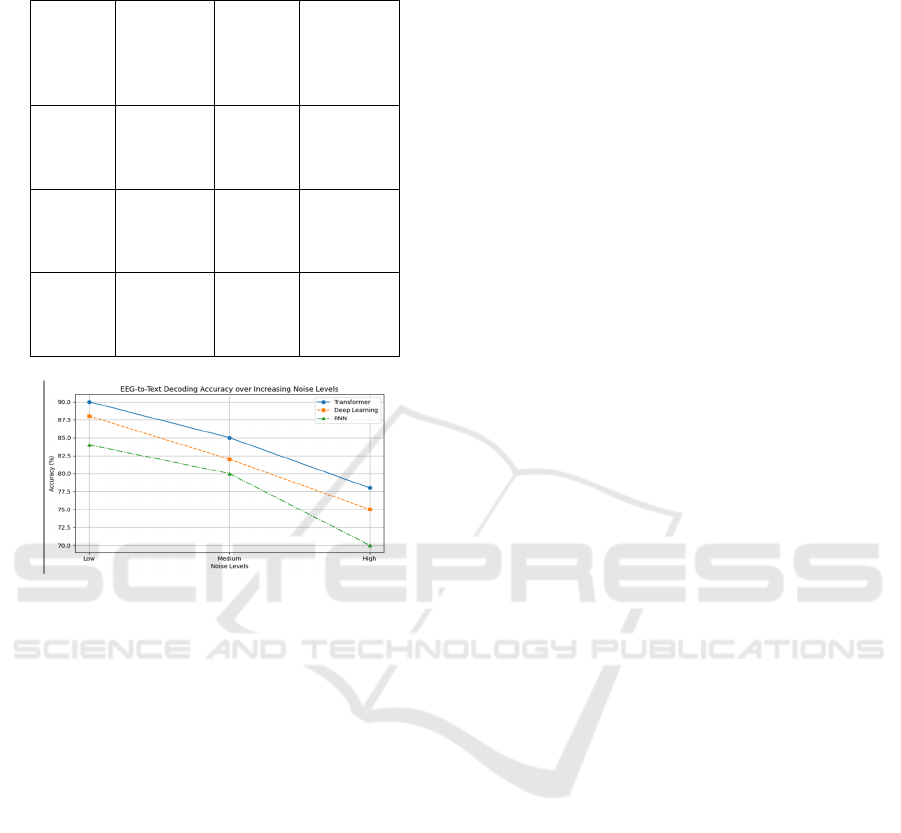
Table 4: EEG-To-Text NLP decoding accuracy for
accessibility applications.
Decodin
g
Techniq
ue
Word
Recogniti
on
Accuracy
(%)
Sentenc
e-level
Accurac
y (%)
Noise
Filtering
Efficiency
(%)
Deep
Learnin
g-based
NLP
85.0 78.5 90.2
Transfor
mer-
based
Models
88.5 82.3 92.8
Recurre
nt
Neural
Networ
k
81.2 75.0 86.5
Figure 5: EEG-to-Text decoding accuracy over increasing
noise levels.
Ethical issues also stood out as a key feature of
the research. Privacy, algorithmic bias and
accessibility were found to be major barriers to the
application of NLP in HCI. Although safeguards were
built into some systems to guard against exposing
sensitive user information, much remained opaque
about how data was gathered and processed, the
researchers found. The figure 5 shows EEG-to-Text
Decoding Accuracy over Increasing Noise Levels
Bias in AI algorithms also continued to be an issue,
especially in voice recognition systems that were
often unable to correctly understand what was being
said by people with accents or speaking non-standard
dialects. Solving these challenges is of great
importance for guaranteeing that NLP-based HCI
systems are just and inclusive for all users.
The results further pointed to additional
opportunities for integration of NLP in broader
applications that range from healthcare to education.
In the healthcare space, for example, NLP-powered
chatbots and virtual assistants showed their potential
to disseminate timely health information as well as
advice, thereby making healthcare more reachable.
The table 4 shows the EEG-to-Text NLP Decoding
Accuracy for Accessibility Applications In education,
NLP-based techniques have been used to enrich
learning experiences with interactive personalization
capabilities of tutoring systems. But both of these
sectors had issues around accuracy of information and
ethical use of information.
Finally, the application of NLP in HCI could play
a revolutional role in improving human interactions
with systems. Mir 1 forms a strong foundation for the
project overall, though a number of challenges
context understanding, multimodal integration,
computationally efficient and ethic considerations
still need to be further studied and tackled. Further
development of more sophisticated algorithms that
are capable of processing complex language inputs
in an efficient and accurate fashion is needed. Fur-
ther, topics of ethics – a term often bandied about, but
difficult to pin down – will also need to be dealt with
transparently, through justice and due consideration
of all parties, to carry NLP for HCI to its next phase
of sustained applicability. This work provides a
starting point for future studies in this area with the
goal of developing more intelligent, user-friendly and
ethically responsible systems.
6 CONCLUSIONS
To sum up, combining NLP with HCI has opened up
new doors to develop much more intuitive, adaptive
and user-friendly systems. The work carried out
under this project has demonstrated that NLP can
advance the state-of-the-art in the extent to which
systems understand and respond to human language,
thus facilitating a more natural user interaction, and
engagement. Advances on deep learning, machine
learning, and multimodal interfaces enable more
intelligent and user-friendly system performance as
communication between human and machine
becomes transparent. Nevertheless, problems like
resolving language ambiguity, considering context in
multi-turn dialogue and integrating different input
modalities in a smooth way are still common.
And the ethics aspects, especially in terms of data
privacy, algorithm bias and accessibility, are
highlights that we should continue to pay attention, to
make NLP-based systems more inclusive,
transparent and fair. As our findings demonstrate,
NLP has great potential to transform HCI but also
must be approached thoughtfully and responsibly in
order to not compound existing disparities or create
new barriers. Our future work in this area is to
address these challenges by researching more
efficient and effective NLP algorithms, enhancing the
Advancing Human-Computer Interaction with Natural Language Processing: Emerging Trends and Applications
277

interactive capabilities of massive modalities and
dealing with the ethical and social issues of these
technologies. After all, the long term mission should
be to build systems that improve user experience,
while respecting user agency, inclusiveness and
fairness. This work sets the stage for continued
exploration and discovery at the intersection of NLP
and HCI, guiding the field to more intelligent,
ethical, and user-centered technologies.
REFERENCES
Abiagom, C. N., & Ijomah, T. I. (2024). Enhancing
Customer Experience through AI-Driven Language
Processing in Service Interactions. ResearchGate.
https://www.researchgate.net/publication/386139323_
A_Review_of_The_Application_of_Natural_Languag
e_Processing_in_Human-Computer_Interaction
Ali, W., Siraj, S., Lakho, S., & Ali, A. (2024). Investigating
the Applications of Natural Language Processing in
Human-Computer Interaction. Policy Research
Journal, 2(4), 598– 608. https://policyresearchjournal.c
om/index.php/1/article/view/107
Arifin, Y., & Soeharyadi, M. C. (2024). Machine Learning
Algorithms in Natural Language Processing for
Improved Human-Computer Interaction. International
Journal of Communication and Information
Technology, 5(1), 26– 28. https://www.computerscien
cejournals.com/ijcit/archives/2024.v5.i1.A.75
Bedi, A. (2024). Advancements in Conversational AI:
Enhancing Human-Computer Interaction with Natural
Language Processing. Shodh Sagar Journal of Artificial
Intelligence and Machine Learning, 1(3), 6–9.
https://doi.org/10.36676/ssjaiml.v1.i3.17
Blodgett, S. L., Madaio, M., O’Connor, B., Wallach, H., &
Yang, Q. (2021). Bridging Human–Computer
Interaction and Natural Language Processing.
Microsoft Research. https://www.microsoft.com/en-
us/research/publication/bridging-human-computer-
interaction-and-natural-language-processing/
El Gedawy, M., Nabil, O., Mamdouh, O., Nady, M., Adel,
N. A., & Fares, A. (2025). Bridging Brain Signals and
Language: A Deep Learning Approach to EEG-to-Text
Decoding. arXiv. https://arxiv.org/abs/2502.17465
Heuer, H., & Buschek, D. (2021). Methods for the Design
and Evaluation of HCI+NLP Systems. Proceedings of
the First Workshop on Bridging Human–Computer
Interaction and Natural Language Processing, 28–33.
https://aclanthology.org/2021.hcinlp-1.5/
Inie, N., & Derczynski, L. (2021). An IDR Framework of
Opportunities and Barriers between HCI and NLP.
Proceedings of the First Workshop on Bridging
Human–Computer Interaction and Natural Language
Processing, 101– 108. https://aclanthology.org/2021.h
cinlp-1.16/ACL Anthology
Joshi, R., & Vibha, M. B. (2023). Hand Gesture Detection
for Human-Computer Interaction: A Natural Language
Processing Approach. International Journal of
Engineering Research & Technology (IJERT), 11(06).
https://www.ijert.org/hand-gesture-detection-for-
human-computer-interaction-a-natural-language-
processing-approach
Kulkarni, R., Varade, P., & Yellalwar, R. G. (2023). NLP
and Human-Computer Interaction: Enhancing User
Experience through Language Technology.
International Journal for Research in Applied Science
and Engineering Technology (IJRASET).
https://www.ijraset.com/research-paper/nlp-and-
human-computer-interaction-enhancing-user-
experience-through-language-technology
Lv, Z., Poiesi, F., Dong, Q., & Song, H. H. (2022). Deep
Learning for Intelligent Human–Computer Interaction.
ResearchGate. https://www.researchgate.net/publicati
on/384643026_Natural_Language_Processing_NLP_
Techniques_Usability_in_Human-
Computer_Interactions
Pang, R. Y., Schroeder, H., Smith, K. S., Barocas, S., Xiao,
Z., Tseng, E., & Bragg, D. (2025). Understanding the
LLM-ification of CHI: Unpacking the Impact of LLMs
at CHI through a Systematic Literature Review. arXiv.
https://arxiv.org/abs/2501.12557
Rahman, M. M. (2024). Advancements in Natural
Language Processing for Human-Computer
Interaction. Global Mainstream Journal of Innovation,
Engineering & Emerging Technology, 3(05), 1–10.
https://doi.org/10.62304/jieet.v3i05.216
Song, J. (2024). A Review of The Application of Natural
Language Processing in Human-Computer Interaction.
Applied and Computational Engineering, 106(1), 111–
117. https://www.researchgate.net/publication/386139
323_A_Review_of_The_Application_of_Natural_Lan
guage_Processing_in_Human-Computer_Interaction
Stilinki, D., & Mohamed, S. (2024). Bridging the Gap
Between Natural Language Processing (NLP) and
Robotics for Human-Robot Interaction. EasyChair
Preprint 13894. https://easychair.org/publications/pre
print/nG2f
Xu, W., Dainoff, M. J., Ge, L., & Gao, Z. (2021).
Transitioning to Human Interaction with AI Systems:
New Challenges and Opportunities for HCI
Professionals to Enable Human-Centered AI. arXiv.
https://arxiv.org/abs/2105.05424arXiv
Zhang, G., Bortoletto, M., Hu, Z., Shi, L., Bâce, M., &
Bulling, A. (2023). Exploring Natural Language
Processing Methods for Interactive Behaviour
Modelling. arXiv. https://arxiv.org/abs/2303.16039
ICRDICCT‘25 2025 - INTERNATIONAL CONFERENCE ON RESEARCH AND DEVELOPMENT IN INFORMATION,
COMMUNICATION, AND COMPUTING TECHNOLOGIES
278
