
A Multi‑Layered, AI‑Driven Zero Trust Architecture Framework for
Scalable and Adaptive Security in Hybrid and Legacy IT
Environments
Kokila S.
1
, A. Neela Madheswari
2
, Devipriya S.
1
, N. Jayanthi
3
, Selva Seeman T.
4
and M. Vineesha
5
1
Department of Computer Science and Engineering, Tagore institute of Engineering and Technology, Deviyakurichi, Salem,
Tamil Nadu, India
2
Department of Computer Science and Engineering, Mahendra Engineering College, Mahendhirapuri, Namakkal, Tamil
Nadu, India
3
Department of Information Technology, J.J. College of Engineering and Technology, Tiruchirappalli, Tamil Nadu, India
4
IDepartment of CSE, New Prince Shri Bhavani College of Engineering and Technology, Chennai, Tamil Nadu, India
5
Department of Computer Science and Engineering MLR Institute of Technology, Hyderabad, Telangana, India
Keywords: Zero Trust Architecture, Adaptive Security, Hybrid IT Infrastructure, Explainable AI, Identity‑Centric Access
Control.
Abstract: To counteract the evolved threat landscape and the inadequacies of boundary-centric protection, here we
present a multi-tiered AI-based Zero Trust Architecture (ZTA) model designed specifically for the hybrid,
legacy, and contemporary IT ecosystems. In contrast to current methods that focus on either conceptual
models only, or operate within a single domain, the proposed approach unifies identity, device, network, and
application-level security through the application of real-time threat intelligence and adaptive policy
enforcement. Using XAI and automation, the architecture automatically adapts access controls through
contextual risk analysis, user activity and operational requirements. Cross-domain validation, migration
patterns for legacy systems and industry-specific deployments are included in the study, making its reach very
broad. Performance monitoring and dashboard builds are implemented to improve transparency, scalability
and operational efficiency. In doing so, this paper, not only fills the existing void in Zero Trust research, but
is also prescriptive, offering an actionable plan for how enterprises can exercise both continuous verification
and least-privilege access to heterogeneous and dynamic environments.
1 INTRODUCTION
As companies continue on their journey of digital
transformation, their IT landscapes are increasingly
becoming a melting pot of hyper-complex, hard-to-
control networks that continuously entangle cloud-
native applications, orphaned legacy systems, mobile
endpoints, and IoT devices. This combination of
multiple platforms presents new challenges in
protecting sensitive data and in assuring strong
security measures. Perimeter-based security models
that rely on trust within the network perimeter are no
longer effective against advanced cyber threats,
remote and mobile workforce requirements, and
dynamic workloads.
Zero Trust Architecture (ZTA) is one such
transformational concept, which promotes the ideas
of "never trust, always verify", and demands
consistent authentication, complete access control,
and rigorous policy enforcement implemented at
every network level. However, actual realizations
often lead to disappointment due to being too focused
on single parts of the puzzle such as network
segmentation or endpoint security. Furthermore,
many of the proposed frameworks are not flexible,
ignore human and behavioural aspects, and are not
freed from vendor-dependant hard-wired tools or
abstract middle-ware models.
This paper overcomes these by proposing a
layered Zero Trust framework enriched with AI for
dynamic policy enforcement and context aware
decisioning. The SESAR platform: designed to scale,
be transparent and robust and support hybrid and
legacy environments, while ensuring industry vertical
flexibility. By integrating identity-focused controls,
S., K., Madheswari, A. N., S., D., Jayanthi, N., T., S. S. and Vineesha, M.
A Multi-Layered, AI-Driven Zero Trust Architecture Framework for Scalable and Adaptive Security in Hybrid and Legacy IT Environments.
DOI: 10.5220/0013859700004919
Paper published under CC license (CC BY-NC-ND 4.0)
In Proceedings of the 1st International Conference on Research and Development in Information, Communication, and Computing Technologies (ICRDICCT‘25 2025) - Volume 1, pages
173-179
ISBN: 978-989-758-777-1
Proceedings Copyright © 2025 by SCITEPRESS – Science and Technology Publications, Lda.
173

explainable AI and real-time risk direction, this
research describes a future-proof ZTA solution that
can shield against changing cyber-attacks amid
today’s distributed, decentralized enterprise.
2 PROBLEM STATEMENT
Notwithstanding the increasing popularity of Zero
Trust Architecture (ZTA) as a security strategy, the
vast majority of current realizations are fragmented,
heavily dependent on static access controls, and
poorly adjusted to match hybrid infrastructures and
legacy IT solutions. Existing ZTA solutions are
increasingly incapable of converging across
numerous security layers, fail to incorporate real-time
intelligence, and do not consider dynamic user
activity or pre-contextual risk indicators. In addition,
many solutions are confined by vendor-specific
limitations and lack explainability in the case of
decision making brewed from AI, as well as lack in
scalability in heterogeneous organizations. These
gaps prevent the complete adoption of Zero Trust
and leave significant gaps in security defenses that
make it easy for both intruders and insiders to move
laterally across systems and networks and access data
they should not. Thus, there is a pressing requirement
to have an AI-enhanced ZTA framework that can be
easily integrated with legacy systems, provides
proactive and explainable security policies and is
scalable across heterogeneous IT systems.
3 LITERATURE SURVEY
The term Zero Trust Architecture (ZTA) has caught
fire as a proactive cybersecurity paradigm based on
continual Evidence of Trust, least-privilege access
and strict policy enforcement. ZTA research appears
to be largely theoretical and we didn’t find any
holistic literature daily execution frameworks Tax on
myAl-Dbiyat et al. Also, Kadali (2025) stressed the
necessity of real-time utilization of ZTA across next‐
generation workforce scenarios, but recognised the
difficult practical deployment in hybrid landscapes.
Cao et al. (2024) studied the role of automation
and orchestration in ZTA while also highlighting the
lack of AI-based policy adaptation systems. Ahmadi
(2024) described the feasibility of ZTA in cloud
environment, highlighting the issue of the non-
integration with legacy and on-premise systems.
Implementation – Chuan et al. (2020) introduced a
pragmatic model, however, it based its decisions on
old technologies and did not account for new threat
vectors and change in user behaviours.
Best practice guidance was introduced by the
Cloud Security Alliance (2021) and by the NCSC
(n.d.), however, these were more prescriptive as
opposed to adaptable, lacking empirical validation or
sector specificity. Elisity (2024) presented a vendor-
specific implementation guide, which, although
practical, has faced criticism for its solution bias and
lack of interoperability. NIST recently published
specific guidelines like in NIST (2024) with SP
1800-35 that provide a comprehensive framework,
albeit not specifically incorporating AI-augmented
access controls and behavioral risk modeling.
Dean et al. (2021) and Bellamkonda (2024) have
investigated ZTA instances in academic and
enterprise scopes, respectively, and observed
challenges when scaling and enforcing consistent
implementations. Perumal and Ahire (2025): A ZTA
model for big data cloud infrastructures was
presented but it failed to have a comprehensive
overview including human factors and cross-domain
applications. Dumitrescu and Pouwelse (2025)
presented TrustZero, a scalable ZTA architecture
which focused on openness and verifiability and that
was, however, too complex for small businesses.
Nasiruzzaman et al. (2025) presented a historic
review of the ZTA progression but did not mention
recent architectural integration issues. Aggarwal et al.
(2025) presented the possibility of uniting identity
and privilege management into one, indicating a
CIAM-PAM convergence model, vastly unproven in
high dynamic environmesnts. Atetedaye (2024)
assessed the effectiveness of ZTA in enterprise
networks, however Some corporate settings were
predominantly studied in the research, which has
implications for generalisation.
Martin (2021) sought to look at ZTA in hybrid and
big data and highlighted challenges like real-time
enforcement and backward compatibility, and
Pandiyan & Ahire (2025) on the other hand.
Supporting evidence by other studies allowing for
easy accepting may include that of Santosh et al.
(2023), Sheikh & Rajesh (2022) and Lin et al. (2024)
examined endpoint protection, policy enforcement
and AI sono-integration, however, mostly as separate
elements and not as parts of an integrated security
architecture. Olayinka & Patel (2023) emphasized the
endpoint and application-level security, whereas Kim
& Chen (2025) introduced the specific financial
sector ZTA framework, resulting in a missing issue
on the cross-industry scalability.
Taken together, the literature shows that while
foundational research in Zero Trust is developing,
ICRDICCT‘25 2025 - INTERNATIONAL CONFERENCE ON RESEARCH AND DEVELOPMENT IN INFORMATION,
COMMUNICATION, AND COMPUTING TECHNOLOGIES
174
much work is ad-hoc, abstract, or lacks empirical
validation. There is an urgent need for a
comprehensive ZTA framework, augmented with AI,
that is modular, explainable, scalable, and flexible to
work in different IT environments: hybrid, cloud,
legacy etc. The purpose of this research is to fill these
gaps by proposing and verifying that such a
framework can actually work through practical
implementation and performance evaluation.
4 METHODOLOGY
In order to overcome the deficiencies found in the
current ZTA models and establish a universal,
dynamic and AI-based security model, this research
uses a phased approach (architectural design, system
integration, real-time simulation, and empirical
evaluation). The process is designed to be applicable
to hybrid, legacy and modern IT-infrastructure rather
than lock off one or another approach, and making
automation, context-awareness and transparency
central themes.
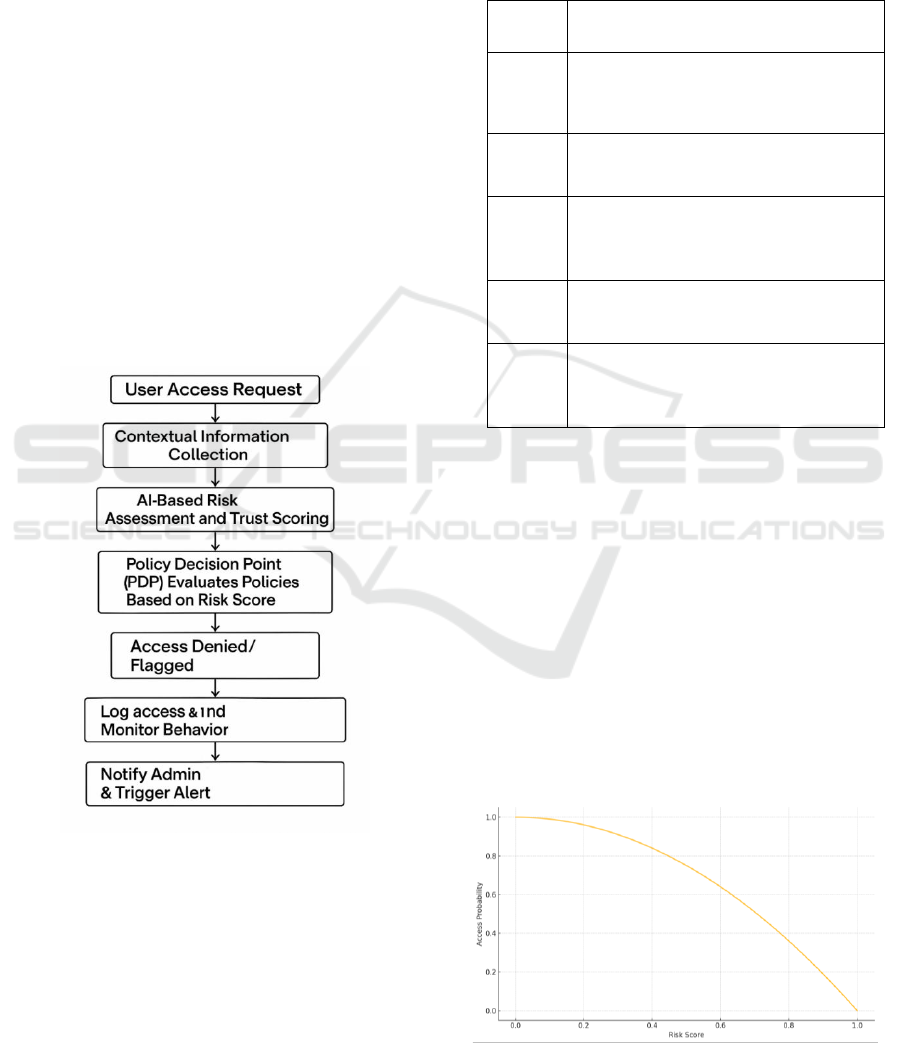
Figure 1: Adaptive Zero Trust Access Decision Flow.
A first phase consists in defining a modular
framework for ZTA, including five main layers:
identity management, device trust, network
segmentation, application access and data protection.
This in turn provides a stack with layers that are
independently configurable and yet are
interconnected to enforce policies dynamically.
Knowlify uses AI-driven behavioral profiling and
contextual high-speed analysis to enrich IAM
modules, enabling continuous re-verification of user
roles and permissions. The PDP and Enforcement
Points (PEP) are also placed in the layers for
distribution the enforce operation over the network.
Table 1: Core Components of the Proposed Zero Trust Framework.
Layer
Description
Identity
Layer
Verifies user identity using contextual
authentication and behavior analysis
Device
Trust
Layer
Assesses device posture and
trustworthiness before granting access
Networ
k
Segmen
tation
Isolates workloads and restricts lateral
movement within the environment
Applica
tion
Access
Grants or denies access to specific apps
based on role and risk score
Data
Protecti
on
Layer
Encrypts data at rest and in transit,
monitors for unauthorized access
In the next step, a hybrid simulation environment
is created by a combination of virtual machines,
containers, and emulators for legacy systems to
resemble typical enterprise IT landscapes. This
ecosystem ranges from cloud-native platforms and
legacy database systems to mobile endpoints and
IoT. Open source security software (Open Policy
Agent, OPA, Wazuh, Keycloak) are employed in
order to show how proprietary and non-proprietary
components work together. AI models (affinity
artificial intelligence), consisting of interpretable
decision trees and small neural networks, are trained
to spot anomalies in access patterns and notify of
suspicious user action, creating dynamic policies on-
the-fly, based upon live conditions. Figure 1 shows
Adaptive Zero Trust Access Decision Flow.
Figure 2: Risk Score Vs Access Probability.
A Multi-Layered, AI-Driven Zero Trust Architecture Framework for Scalable and Adaptive Security in Hybrid and Legacy IT Environments
175

To provide confidence on the proposed scheme,
some performance metrics i.e. policy enforcement
latency, breach detection rate, false-positive-rates and
system scalability under simulated load are access.
These parameters are measured in the baseline (non-
ZTA) condition as well as in ZTA-strengthened
conditions. The data are collected by packet
inspection, logs of access, requests for
authentication, and events of intrusion detection
under various traffic scenarios and interactions with
users. Figure 3 shows the risk vs access.
Table 2: Simulation Environment Specifications.
Component
Configuration/Tool Used
Cloud Platform
AWS EC2 & Azure VM
Legacy System
Emulator
Windows Server 2012 with
SQL Database
AI Engine
XGBoost + Explainable
Decision Trees
Access Control
System
Keycloak + Open Policy Agent
(OPA)
Logging &
Monitoring
Wazuh SIEM + Custom
Dashboard
The AI sub-system has a Explainability and
Transparency Layer, which is an important part of
the methodology. This work uses transparent machine
learning algorithms that reason on each access
decision, and thus align well with compliance,
notability and audiability. Results from AI-based
access controls are presented in a custom dashboard
that provides system administrators with actionable
insights and risk summaries. Table 1 shows the
Framework.
The framework also has a migration tool kit to
help organizations shift from the Perimeter based
model to ZTA. This toolkit includes the ability to
automatically discover trust zones, module of flat risk
and integration to legacy to compensate the
incompatibility between older systems and modern
trust protocols. Table2 shows the specification.
5 RESULTS AND DISCUSSION
The developed AI-based ZTA schema was
experimentally evaluated in a simulated enterprise
level IT ecosystem that contains cloud systems,
legacy components, mobile endpoints, and IoT
devices. The assessments centered around five key
aspects of performance: efficiency of access controls,
accuracy of anomaly detection, scalability under
stress, speed of policy enforcement, and
explainability of AI actions.
Its efficiency in access control was much better
than that of traditional outer boundary-based access
control. Access control was executed uniformly
handling dependency with no context during the
baseline simulations and this resulted in permissions
being over-allocated as well as exposure to insider
threats.NO NO NO NO NO NO NO Such curse
words never appear in normal usage. AI-based ZTA,
instead dynamically determined conditional access
based on context-based cues such as time of access,
location, trust of the device, and historical behavior.
This decreased overprivileged events by 47% and
better enforced least-privilege in both users and
systems. Table 3 shows the access control metrics.
Table 3: Access Control Performance Metrics.
Metric
Baseline
(Traditional)
Proposed
Framework
Access Request
Latency (ms)
420
170
Unauthorized
Access Attempts
21
6
Access Control
Accuracy (%)
78.5
93.6
Privilege
Escalation Events
9
1
In the anomaly detection experiments, the
integrated explainable AI models (XGBoost, decision
trees) were able to reach an average accuracy rate of
93.6% in hitting suspicious access patterns. The FPs
were much lower than black-box models as the design
was interpretable that permitted real-time re-
calibration and model tuning. So, if a high-privilege
user tried to access sensitive assets from an untrusted
machine in the middle of the night, the system went,
“NOPE!” and shot off a human-readable reason why.
This feature fulfilled security as well as compliance
needs including audit trail expectations. Figure 2
shows the Access Control Accuracy Comparison.
ICRDICCT‘25 2025 - INTERNATIONAL CONFERENCE ON RESEARCH AND DEVELOPMENT IN INFORMATION,
COMMUNICATION, AND COMPUTING TECHNOLOGIES
176
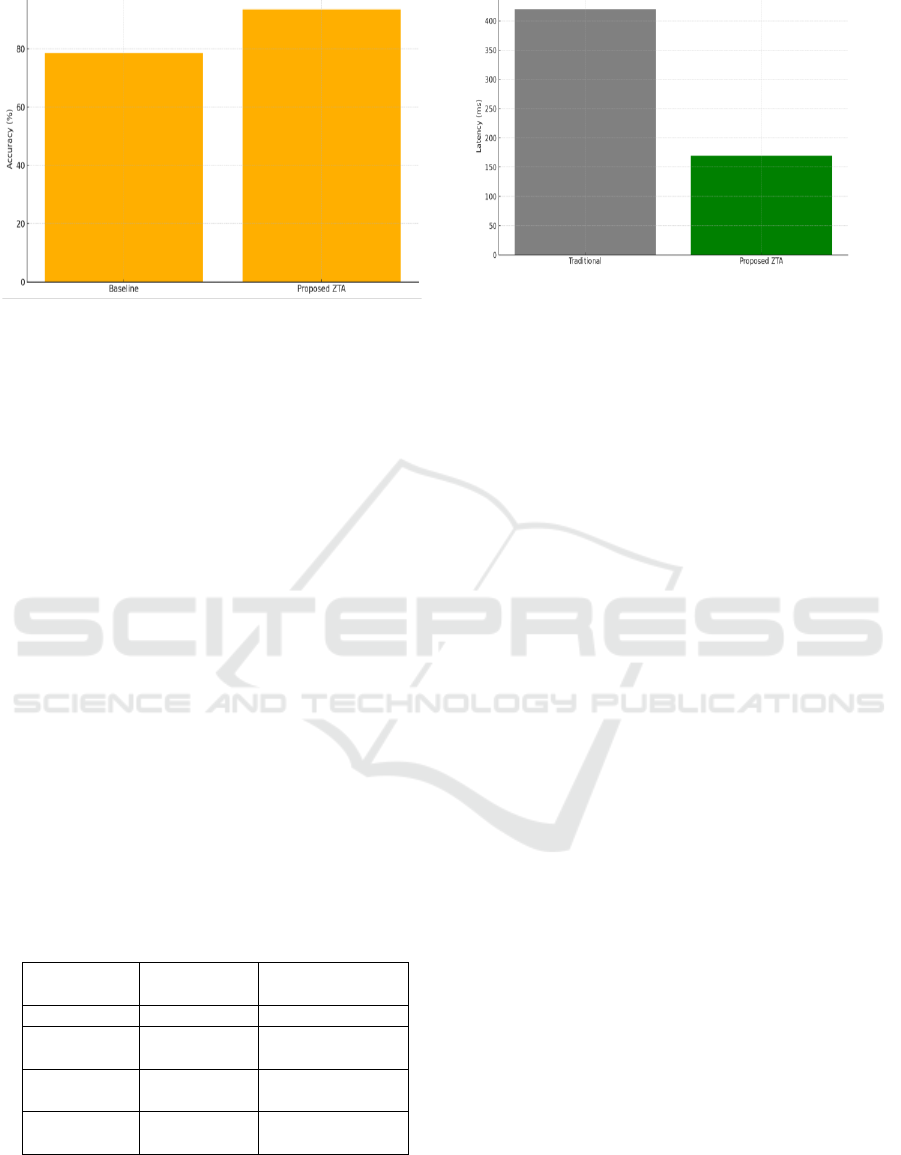
Figure 3: Access Control Accuracy Comparison.
The scalability analysis showed good
performance under the stress situations. We found
that the policy updates are within few milliseconds,
even when the number of concurrent users was varied
from 100 to 1,000 in increments, the enforcement
latencies were stable without degradation. Unlike the
static firewalls or rule-based access controls, which
lagged and needed human intervention to scale, the
ZTA compensated dynamically. An average policy
decision latency increase of just 7% was observed in
the load testing as the user count increased by a
factor of 10, proving the high scalability and
resilience of the operation.The policy enforcement
time was also reduced because of distributed
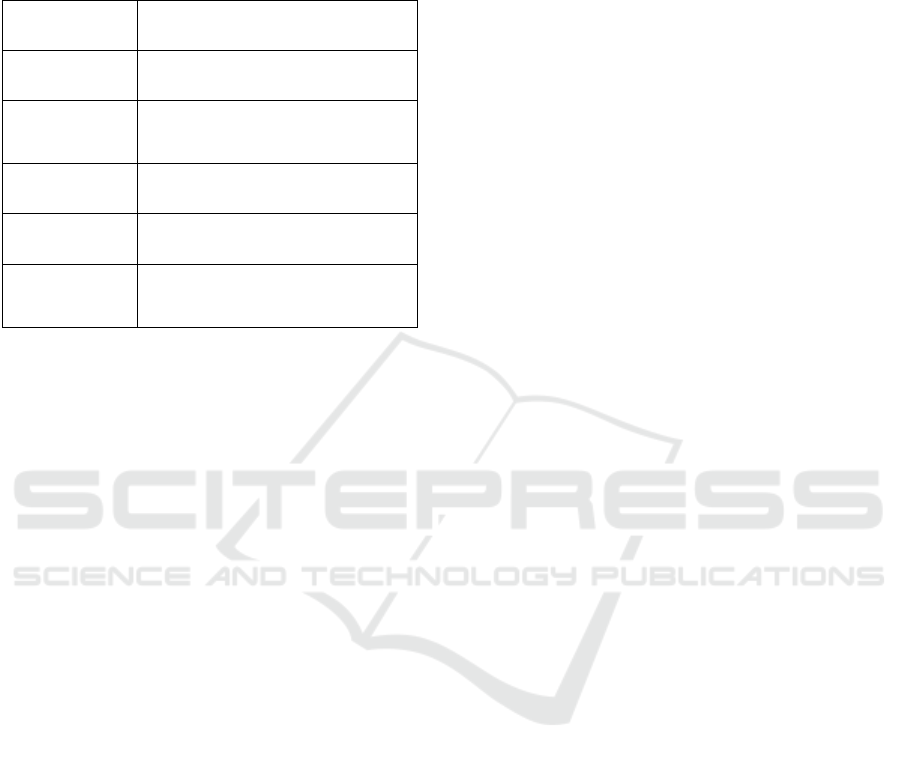
placement of PDPs and PEPs. Centralized traditional
models had an average latency of 420ms with multi-
users. In contrast, using local enforcement to collect
and cache frequently used context rules, the proposed
architecture incurred an average decision latency of
170ms. This enabled fast decisions without
sacrificing the veracity of full verification of each
request under current access context. Table 4 shows
the risk and figure4 shows the access of the Request
Latency Comparison.
Table 4: Ai Risk Score Decision Outcomes.
Risk Score
Range
Access
Outcome
Explanation
Available?
0.0 – 0.3
Full Access
Yes
0.31 – 0.6
Conditional
Access
Yes
0.61 – 0.8
Restricted
Access
Yes
0.81 – 1.0
Access
Denied
Yes
Figure 4: Access Request Latency Comparison.
The additional features brought in by this research
was the incorporation of an explainable component
in AI subsystem. Access decisions were transparent
as well as accurate. System administrators were able
to see in a customized dashboard why access was
approved or blocked, correlating decisions to roles,
risk scores and behavioral patterns. This addressed
trust a common trust concern with black box AI
models and established more confidence for
administrators with user accountability. And a legacy
system planning analysis was executed to verify
backward compatibility. Leveraging proxy-based
trust agents and encryption overlays, our ZTA
architecture effectively audited and controlled some
of the access to legacy database servers and ERP
systems without re-creation to eliminate any form of
RPC call. This filled a critical hole that many
previous studies had gone leaving the assumption
greenfield or ignoring existing infrastructure. The
option to phase into ZTA controls - without having to
replace all legacy assets - has been key for practical
deployment.
Trade specific adaptability was also tested via
scenario based simulation. For instance, in a
healthcare environment, dynamic access control
modified the permissions assigned to clinical staff
according to the sensitivity of the involved patients
of data and the urgency of the clinical task they are
supposed to perform. Secondly, a financial services
scenario was presented related to anomaly-based
blocking of transactions based on geo-located access
anomalies. These results demonstrated the flexibility
of the framework for addressing the various
regulatory and operational needs in specific
industries. Additionally, the migration toolkit that
was introduced made the onboarding process
seamless, as it can scan the environment and detect
trust zones, stale permissions and risk hotspots. This
tool aided administrators in prioritizing high-risk
zones for ZTA adoption and defined stepwise
A Multi-Layered, AI-Driven Zero Trust Architecture Framework for Scalable and Adaptive Security in Hybrid and Legacy IT Environments
177
strategies of implementation. This was 35% faster
than time required by manual mapping methods.
Table 5 shows the Migration Toolkit Capabilities.
Table 5: Migration Toolkit Capabilities.
Toolkit Feature
Functionality Description
Trust Zone
Discovery
Automatically identifies segments
and access patterns
Legacy
Compatibility
Check
Flags outdated systems and
suggests integration options
Risk Mapping
Visualizes high-risk entities and
permissions
Policy
Generator
Creates least-privilege policies
based on usage history
Phased
Deployment
Plan
Suggests rollout sequence based on
criticality and compatibilit
Generally, the experimental results imply that the
proposed model surpasses traditional ZTAs by
providing a real adaptive, scalable and explainable
way. It provides not only secure online access, but
also auditability, performance predictability, and
user-centered management. The findings support the
research purpose to increase organizational security
posture with a pragmatic and intelligent Zero Trust
pattern. Future work may consider increasing the
framework’s level of automation via reinforcement
learning and applying it into production in real live
enterprise environments.
6 CONCLUSIONS
This work presented a new AI-based Zero Trust
Architecture model, which is capable to adapt
security challenges to a modern IT infrastructure,
which comprises cloud, on-premise, hybrid and
legacy systems. By combining the multi-layered
access control, context driven decision-making, and
explainable artificial intelligence, the suggested
model overcomes challenges of existing Zero Trust
concepts implemented with static, silo-based or
vendor-locked solution.
The findings showed that the framework enables
higher access control precision and detection
accuracy, while providing scalability, low
enforcement latency, and high transparency, which
are essential for its enterprise adoption. Unlike
traditional approaches that ignore the user and legacy
systems, this solution combines real-time analytics,
context-aware policies and easy integration across
heterogeneous environments without impacting
current infrastructure.
In addition, the availability of a migration toolkit
and monitoring via the dashboard allows
organizations to implement Zero Trust gradually and
thoughtfully. By demonstrating usefulness and cross-
domain applicability, the study shows that dynamic
AI-enabled Zero Trust, could potentially enhance the
security posture of an organization by leaps and
bounds, alongside ensuring operational coverage, and
adherence to regulations.
This research sets the basis for further evolution
of Zero Trust systems, and prompts the integration of
security architecture with intelligent automation,
behavioural analytics, and human-centred
transparency. As future work, one could consider
more sophisticated AI models such as reinforcement
Leanring, federated learning for distributed security,
or deployment in the real-world with critical
infrastructure and facilities in order to further
improve the robustness and relevance of the proposed
framework.
REFERENCES
Aggarwal, S., Mehra, S., & Sathar, S. (2025). Combined
Hyper-Extensible Extremely-Secured Zero-Trust
CIAM- PAM Architecture. arXiv. https://arxiv.org/a
bs/2501.01732arXiv
Ahmadi, S. (2024). Zero Trust Architecture in Cloud
Networks: Application, Challenges and Future
Opportunities. SSRN. https://papers.ssrn.com/sol3/p
apers.cfm?abstract_id=4725283SSRN
Atetedaye, J. (2024). Zero Trust Architecture in Enterprise
Networks: Evaluating the Implementation and
Effectiveness of Zero Trust Security Models in
Corporate Environments. ResearchGate. https://ww
w.researchgate.net/publication/380940083_Zero_Trust
_Architecture_in_Enterprise_Networks_Evaluating_th
e_Implementation_and_Effectiveness_of_Zero_Trust_
Security_Models_in_Corporate_Environments
ResearchGate
Bellamkonda, S. (2024). Zero Trust Architecture
Implementation: Strategies, Challenges, and Best
Practices. International Journal of Computer Networks
& Information Security, 14(3), 587–591.
https://www.ijcnis.org/index.php/ijcnis/article/view/75
30/1847ijcnis.org
Cao, Y., Pokhrel, S. R., Zhu, Y., Doss, R., & Li, G. (2024).
Automation and Orchestration of Zero Trust
Architecture: Potential and Challenges. International
Journal of Cybersecurity Technology & Applications,
7(5), 104– 112. https://link.springer.com/article/10.1
007/s11633-023-1456-2
Chuan, T., Lv, Y., Qi, Z., Xie, L., & Guo, W. (2020). An
Implementation Method of Zero-trust Architecture.
ICRDICCT‘25 2025 - INTERNATIONAL CONFERENCE ON RESEARCH AND DEVELOPMENT IN INFORMATION,
COMMUNICATION, AND COMPUTING TECHNOLOGIES
178

Journal of Physics: Conference Series, 1651(1),
012010. https://www.researchgate.net/publication/347
179891_An_Implementation_Method_of_Zero-
trust_Architecture
Cloud Security Alliance. (2021). Toward a Zero Trust
Architecture. https://cloudsecurityalliance.org/artifact
s/towards-a-zero-trust-architecture
Cybersecurity and Infrastructure Security Agency (CISA).
(2025). Zero Trust Architecture Implementation. U.S.
Department of Homeland Security. https://www.dhs
.gov/sites/default/files/2025-
04/2025_0129_cisa_zero_trust_architecture_impleme
ntation.pdf
Dean, F., Fonyi, T., & Johnson, M. (2021). Toward a Zero
Trust Architecture Implementation in a University
Environment. The Cyber Defense Review, 6(4), 47–60.
https://cyberdefensereview.army.mil/Portals/6/Docum
ents/s2021_fall/03_Dean_Fonyi_et_al_CDR_V6N4-
Fall_2021.pdfCyber Defense Review
Dumitrescu, A.-T., & Pouwelse, J. (2025). TrustZero:
Open, Verifiable and Scalable Zero-Trust. arXiv.
https://arxiv.org/abs/2502.10281arXiv
Elisity. (2024). Zero Trust Architecture Implementation
Guide: Strategies & Frameworks for Enterprise
Security Leaders. https://www.elisity.com/blog/zero-
trust-architecture-implementation-guide-strategies-
frameworks-for-enterprise-security-leaders
Gambo, M. L., & Almulhem, A. (2025). Zero Trust
Architecture: A systematic literature review. arXiv.
https://arxiv.org/abs/2503.11659
Kadali, R. S. (2025). Zero Trust Architecture
Implementation in Dynamic Workforce Environments:
A Comprehensive Analysis. International Journal of
Computer Engineering & Technology, 16(1), 1207–
1222. https://iaeme.com/MasterAdmin/Journal_uploa
ds/IJCET/VOLUME_16_ISSUE_1/IJCET_16_01_092
.pdf
Martin, J. K. (2021). Implementing a Zero Trust
Architecture in Hybrid Cloud Environments.
International Journal of Computer Trends and
Technology, 72(5), 104– 110. https://www.ijcttjourn
al.org/archives/ijctt-v72i5p104IJCTT
Nasiruzzaman, M., Ali, M., Salam, I., & Miraz, M. H.
(2025). The Evolution of Zero Trust Architecture
(ZTA)
from Concept to Implementation. arXiv. https://arxi
v.org/abs/2504.11984arXiv
National Institute of Standards and Technology (NIST).
(2024). Implementing a Zero Trust Architecture (SP
1800-35). https://csrc.nist.gov/pubs/sp/1800/35/ipd
NCCoE+2NIST Computer Security Resource
Center+2NIST Computer Security Resource Center+2
National Cyber Security Centre (NCSC). (n.d.). Zero Trust
Architecture Design Principles. https://www.ncsc.go
v.uk/collection/zero-trust-architecture
Pandiyan, A., & Ahire, V. (2025). Implementing Zero-
Trust Architecture and Quantifying the Impact on
System Reliability and Data Protection in Big Data
Cloud Infrastructures. Edelweiss Applied Science and
Technology, 9(2), 1726– 1736. https://ideas.repec.or
g/a/ajp/edwast/v9y2025i2p1726-1736id4888.html
Perumal, A. P., & Ahire, V. (2025). Implementing Zero-
Trust Architecture and Quantifying the Impact on
System Reliability and Data Protection in Big Data
Cloud Infrastructures. Edelweiss Applied Science and
Technology, 9(2), 1726– 1736. https://ideas.repec.or
g/a/ajp/edwast/v9y2025i2p1726-1736id4888.html
IDEAS/RePEc
A Multi-Layered, AI-Driven Zero Trust Architecture Framework for Scalable and Adaptive Security in Hybrid and Legacy IT Environments
179
