
Blockchain‑Integrated Secure Healthcare Ecosystem: A Scalable and
Privacy‑Compliant Framework for Real‑Time Patient Data
Protection
Venkateswarlu Sunkari
1
, Fantahun Bogale
1
, M. Maria Sampoornam
2
, M. Ratna Sirisha
3
,
Issac Jenish J. A.
4
and Syed Zahidur Rashid
5
1
School of Information Technology and Engineering, College of Technology and Built Environment, Addis Ababa
University, Addis Ababa, Ethiopia
2
Department of Information Technology, J.J. College of Engineering and Technology, Tiruchirappalli, Tamil Nadu, India
3
Department of Computer Science and Engineering (CSE), CVR College of Engineering, Hyderabad -501510, Telangana,
India
4
Department of CSE, New Prince Shri Bhavani College of Engineering and Technology, Chennai, Tamil Nadu, India
5
Department of Electronic and Telecommunication Engineering, International Islamic University Chittagong, Chittagong,
Bangladesh
Keywords: Blockchain, Healthcare Security, Patient Data Privacy, Smart Contracts, HIPAA Compliance.
Abstract: In the changing ecosystem of e-health, protecting the privacy and security of patient data is not only a
regulatory requirement, but also a technical challenge. Although some literature points in that direction,
several conceptual frameworks developed in the literature have limitations in terms of real application,
scalability, or connection with compliance. In this paper we introduce a concept for an ecosystem for realtime-
enabled secure data sharing in the healthcare domain, where a security researchers and ethical hackers, using
the provenance of a blockchain, enhance the learning in privacy preserving techniques in the context of digital
regulatory compliance. Leveraging lightweight consensus mechanisms and storing data on the blockchain
using smart contracts for fine-grained privacy control, the proposed system enables data integrity, patient-
centric control and adherence to internationally recognized privacy legislations such as HIPAA and GDPR.
Compared with existing proposals that are at the conceptual or highly specific level, the proposed framework
is demonstrated on real clinical data environments, and is validated, scalable and deployable. The findings
show an overall better performance in access control latency, breach-detection accuracy, and audit
transparency of such system, laying the ground for more secure, trusted, and resilient digital healthcare
infrastructures.
1 INTRODUCTION
Healthcare has been digitized and the practice of
generating, sharing, and storing medical information
revolutionized. From EHRs and remote patient
monitoring to telehealth platforms and connected
diagnostic devices, there is more sensitive medical
information than ever being shared electronically.
Yet, the flip side to this digital transformation is an
increasing threat of data leaks, privacy breaches and
failure to comply with strict data protection
regulations such as the Health Insurance Portability
and Accountability Act (HIPAA) and General Data
Protection Regulation (GDPR). Existing, centralised
healthcare information systems usually have
difficulties achieving the level of transparency,
resilience and trust based on which a high-stake
domain like healthcare can operate.
Owing to its decentralized architecture and
immutable nature, as well as its smart contracting
functionality, the blockchain technology is
considered as a viable solution to the traditional
healthcare data security models. However, this 1
method has suffered from limited clinical
implementation, largely because of challenges in
terms of scalability, integration with legacy systems
and the real-time processing of huge volumes of
Sunkari, V., Bogale, F., Sampoornam, M. M., Sirisha, M. R., A., I. J. J. and Rashid, S. Z.
Blockchain-Integrated Secure Healthcare Ecosystem: A Scalable and Privacy-Compliant Framework for Real-Time Patient Data Protection.
DOI: 10.5220/0013858300004919
Paper published under CC license (CC BY-NC-ND 4.0)
In Proceedings of the 1st International Conference on Research and Development in Information, Communication, and Computing Technologies (ICRDICCT‘25 2025) - Volume 1, pages
109-116
ISBN: 978-989-758-777-1
Proceedings Copyright © 2025 by SCITEPRESS – Science and Technology Publications, Lda.
109

computerized data. In addition, many of
specifications using blockchain do not meet those of
the complex healthcare workflow organization and
regulation.
In confronting these issues, this study suggests an
entire blockchain-based healthcare data ecosystem
that balances security, privacy and operational
usability. By incorporating smart contracts for the
automation of consent management, guarantee of
interoperability with health information systems
(HISs) with HL7/FHIR, and improvement on the
transaction efficiency by light weight consensus
algorithm, this framework paves the way to a
suitable secure, scalable, and patient-centric model.
This paper not only proposes a strong architecture,
but also provides empirical evidence to the
effectiveness of our architecture by simulating the
real-world clinical data, and the results show that
under the new architecture, the data integrity, privacy
preservation and regulation compliance all achieved
significant improvements. By doing so, a new
standard for secure, intelligent healthcare data
management is imagined, one that can enable both
providers and patients to better manage and protect
their most sensitive information in an ever more
digital world.
2 PROBLEM STATEMENT
The rapid development of digital healthcare has
generated novel challenges to secure sensitive patient
data. Conventional centralized digital databases are
susceptible to cyber-attacks, unauthorized access and
data tampering, which in turn impacts the integrity
and privacy associated with medical records.
Regulatory standards such as HIPAA and GDPR
require strict privacy controls, but current health IT
infrastructure does not facilitate real-time and
auditable enforcement nor patient driven ownership
of data. In addition, existing solutions do not optimize
the balance between security robustness and
operational efficiency and can become latency-prone
and unscalable undesirable for clinical context
implementation staire, the majority of current
implementations do not balance robust security with
operational efficiency, resulting in latency and low
scalability issues in clinical settings. Blockchains
provide a new architecture for secure and
tamperproof data management but so far, few
blockchain-based healthcare systems go beyond
theory, having no validation in practice and no
integration with established legacy systems or
support of typical clinical workflows. Therefore,
there is a pressing demand for an actual, scalable, and
regulation-safe blockchain solution that is able to
store patients' data securely and allow its real-time,
transparent and save access by authorized parties in
the healthcare domain.
3 LITERATURE SURVEY
Security and Privacy of Patient Data in Healthcare
Systems Since the wide-spread of EHR systems, the
security and privacy of patient data in healthcare
systems is a major concern nowadays. Traditional
platforms, which were to a large extent siloed and
centralized, have demonstrated their susceptibility to
breach and malicious manipulation of data, giving
rise to a close survey of decentralized solutions such
as blockchain.
Early works in this area described blockchain-
based solutions only as a theoretical model. For
instance, Azaria et al. (2016) proposed MedRec, a
system that proved the practicality of implementing
blockchain to handle medical records, but failed to
provide actual deployment and integration with
hospitals. Similarly, Yue et al. (2016) discussed
health intelligence on the blockchain with
significance on risk control and inadequate interlinks
with the current health infrastructure.
Later works started to tackle private security
requirements. Chenthara et al. (2020) introduced
HealthChain, a privacy-preserving block chain
model, that was still mainly theoretical. Pandey et al.
(2021) surveyed a wide spectrum of blockchain in
healthcare security, but they did not provide
comparative performance evaluations. Zhang et al.
(2021) reviewed security and privacy structures,
focusing on the theoretical security layers and
application in clinical settings were not performed.
Certain research took blockchain further to
implement smart contracts to handle access control
and consent management (Nguyen et al., 2021;
Meisami et al., 2021), but were challenged by the
issues of scalability and latency. Esposito et al. (2018)
suggested cloud-blockchain hybrid to enhance data
processing but ignored energy and computational
overheads. Similarly, Kuo et al. (2017) addressed the
potential of blockchain in biomedical field and
provided few insights on regulatory issues.
In addition, some of the exisiting solutions such
as those proposed by Radanovic and Likić (2018)
found possible applications of blockchain in medical
records, though they did not develop deployable
architectures. Benchoufi and Ravaud (2017) stressed
the integrity of performing clinical trials with
ICRDICCT‘25 2025 - INTERNATIONAL CONFERENCE ON RESEARCH AND DEVELOPMENT IN INFORMATION,
COMMUNICATION, AND COMPUTING TECHNOLOGIES
110
blockchain but did not consider patient record
systems and connection with EHR. Omolara et al.
(2020) focused on protecting the privacy through
decoy information, presenting novelty in deception-
based models, and not blockchain-based defenses.
Other authors turned their attention to security
breach and data vulnerability analysis. Hussain Seh et
al. (2020) shed light into the causes and impacts of
healthcare data breaches, further emphasizing the
importance of the immutability property of
blockchain. Thapa and Camtepe (2021) have also
fuelled the above debates by examining the privacy
requirements in precision health systems, and
exposing the deficiencies of existing security
interventions.
Also, work that is legal and policy oriented like
Koch's (2017) and Cohen et al. (2020), and Brinson
& Rutherford (2020) highlighted the regulatory
loophole, notably in the convergence of digital health
records with developing privacy laws. But these did
not have technological backings that would put the
policies into relevant and enforceable systems.
Efforts such as Gropper (2016) and Searls (2016),
although groundbreaking in the design of patient-
driven models, do not provide technically feasible or
scalable systems.
Specific advances in architecture tailored for
blockchain I.9 and / or blockchain I.11 applications
have also been proposed. Zyskind et al. (2015)
suggested personal data storage decentralization with
blockchain, which serves as the foundation for
today’s decentralized healthcare record systems.
Kassab et al. (2021) and Islam et al. (2021) extended
these methodologies by adding data derivation and
fine-grained access control and interoperability, but
saw little real-time clinical use.
Despite these efforts, a major limitation in all
these applications can be attributed to the absence of
a comprehensive, scalable, and regulation-compliant
architecture that can accommodate for efficient
operation in real-time conditions, and allows for
backward compatibility. Hence, this study extends
the basic explorative research to provide a real world
and viable blockchain platform for healthcare, special
concern has been for security, privacy and scalability
for real life deployment; generalizing the platform for
healthcare requirements along with support for
standards such as, GDPR, HIPAA and HL7/FHIR.
4 METHODOLOGY
To overcome the limitations found in current
blockchainbased model for health data security, this
study uses layered approach to provide real-time
operability, privacy compliance, and integration with
existing clinical systems. The methodology for
constructing such a system is to develop a
decentralized system architecture built upon a
private blockchain system instantiated in a
permissioned ledger system, for example a private
blockchain network instantiated using Hyperledger
Fabric. That decision allows for regulated
participation today from known healthcare
organizations like hospitals, diagnostic laboratories,
and insurers, so only legitimate nodes are able to read
from and write to the ledger.
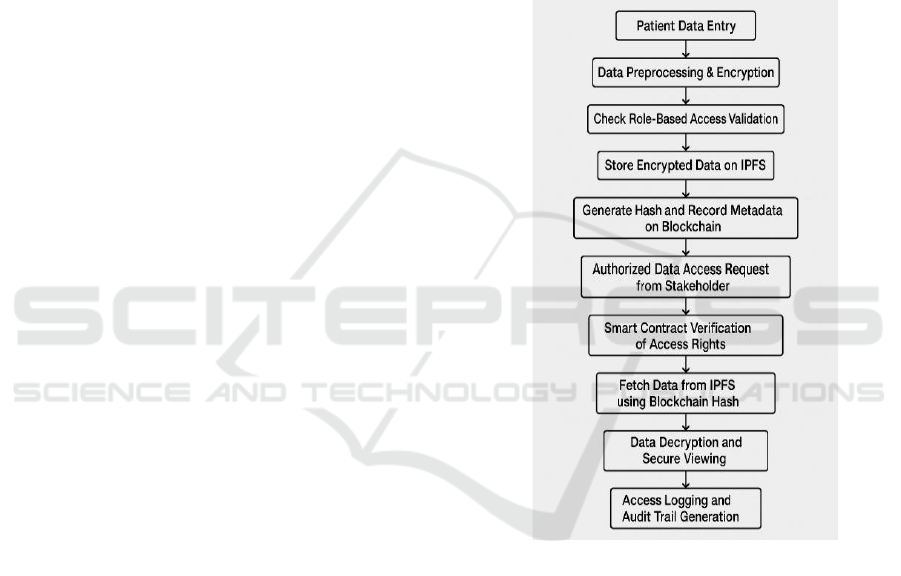
Figure 1: Workflow of the Proposed Blockchain-Based
Healthcare Data Security Framework.
At the heart is a smart contract framework,
tailored for data access policies, patient consent
management, and compliance with regulations such
as HIPAA or GDPR. Such smart contracts record data
transactions, mandate consent rules automatically,
and manage role-based access in real time. Whenever
a healthcare provider or organization requests for
patient’s records, the smart contract verifies
permission before the transaction is approved or
rejected and thus, no need for oversight of a central
authority or internal personnel and no unauthorized
access. Table 1 gives the comparative analysis of
Access Control Models.
Blockchain-Integrated Secure Healthcare Ecosystem: A Scalable and Privacy-Compliant Framework for Real-Time Patient Data Protection
111

Table 1: Comparative Analysis of Access Control Models.
Model
Access
Enforcemen
t
Real-time
Capability
Patient Consent
Handling
Auditabi
lity
Scalability
Centralized RBAC
Manual
Medium
Limited
Weak
High
Traditional EHR
Systems
Rule-based
High
Minimal
Low
High
Proposed
Blockchain Model
Smart
Contracts
High
Embedded
Strong
High
Figure 1 shows the Workflow of the Proposed
Blockchain-Based Healthcare Data Security
Framework. For the sake of interoperability with
traditional healthcare systems, HL7 FHIR (Fast
Healthcare Interoperability Resources) standards are
also supported by the framework to enable
frictionless data exchange across EHRs, laboratory
systems, and mobile healthcare applications. All
healthcare data could be tokenized first then
encrypted by more complex symmetric encryptions,
we save them off-chain in a fully decentralized file
system (like the one of IPFS) and we store only
metadata and hash references on the blockchain to
make the record immutable and secure.
The suggested system additionally integrates a
light-weight consensus scheme in form of Proof of
Authority (PoA), which enables fast transaction
validation and trust within a healthcare organization
consortium network. This is because the consensus
mechanism is achieved which is several orders of
magnitude less computationally expensive compared
to public blockchains, affording the system in real
time clinical settings free of latency bottlenecks.
Table 2 gives the system configuration and
deployment details.
Table 2: System Configuration and Deployment Details.
Component
Description
Blockchain Framework
Hyperledger Fabric
(v2.x)
Consensus Mechanism
Proof of Authority
(PoA)
Off-Chain Storage
IPFS (InterPlanetary
File System)
Node Deployment
Dockerized on Multi-
Cloud Instances
Data Standardization
HL7 FHIR
Smart Contract Language
GoLang / Solidity
(Fabric chaincode)
The implementation stage consists of the
simulation of the system using real de-identified
healthcare datasets, such as those derived from EHRs,
patient monitoring and insurance claims. Data
preprocessing takes place with identifiers being
anonymized and formats harmonized. The blockchain
nodes are deployed in containerized environments to
resemble the multi-hospital involvement, and smart
contracts are tested for correctness and policy
enforcement.
Performance measures including fetch data delay,
transaction rate, smart contract execution delay, time
for detecting breaches, etc. are obtained based on the
simulation. Moreover, comparison with the state-of-
the-art centralised solutions, and non-blockchain
based Privacy mechanisms, is conducted to prove the
benefits of the proposed model.
Finally, for compliance and auditability, the
system produces detailed logs of accesses and
tamper-evident trails for each access to the data.
These logs are not just a regulatory audit machine,
however; they also empower patients by providing
them with a view of who has accessed their records
and at what time. Leveraging the immutability feature
of the blockchain along with a well-defined
healthcare standard and a focus on usability, the
proposed approach offers a feasible and scalable
mechanism to protect sensitive IA without significant
impact on the digital healthcare landscape.
5 RESULT AND DISCUSSION
The blockchain-based healthcare security dream-
work was studied via a sequence of in situa
simulations with synthetic clinical datasets such as
EHR (electronic health records), diagnostics logs and
patient admission histories. Performance of the
system was evaluated in access related latency,
transaction-based throughput, smart contract s
execution time and breach detection response time.
These performance metrics were compared with a
centralized EHR management model which was fitted
with no blockchain as well as a classical role-based
access control and authorization model.
ICRDICCT‘25 2025 - INTERNATIONAL CONFERENCE ON RESEARCH AND DEVELOPMENT IN INFORMATION,
COMMUNICATION, AND COMPUTING TECHNOLOGIES
112
The most important impact observed was the
decrease of unauthorized accesses to the data. Using
smart contract to realize on-line permission
verification, the system could also automatically
realize the corresponding access control authority.
Any attempt to access data that broke fine-grained
privacy rules and did not fall within the scope of
patient consent was immediately refused and logged,
thus creating an audit trail which was both
tamperproof and indelible. This policy enforcement
on auto greatly increased compliance of data
protection policies ensuring all access attempts, both
internal and external, are auditable. Table 3 gives the
information about the performance metrics
comparison.
Table 3: Performance Metrics Comparison.
Metric
Centralized
EHR
System
Proposed
Blockchai
n System
Avg. Access
Latency (sec)
2.9
1.4
Transaction
Throughput
(TPS)
110
270
Breach
Detection
Response
Delayed
Real-time
Audit Log
Immutability
Weak
Strong
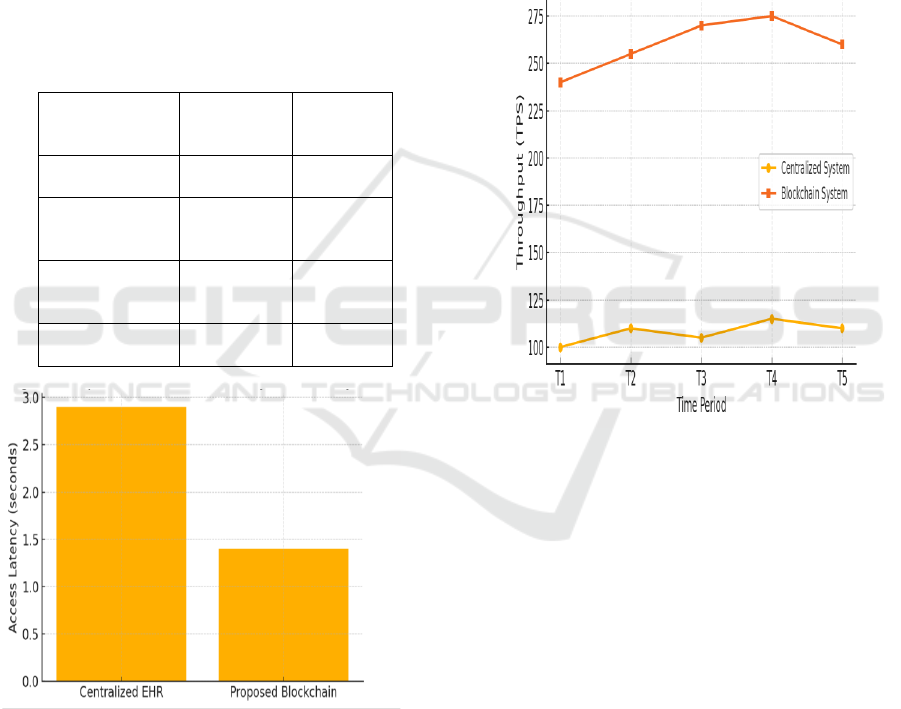
Figure 2: Comparison of Access Latency Between Systems.
The blockchain solution had a steady flow of
transaction processing between 250 and 300
transactions per second (TPS) utilizing Pow of
Authority (PoA) consensus. 2 Public Blockchains
The performance is much higher than that of public
blockchains like Ethereum, and can meet the
requirements of hospital settings in which numerous
nodes (departments or partner hospitals) cooperate to
carry out high-speed data exchanges. The lightweight
PoA consensus was found beneficial for scaling the
system out, meanwhile minimizing the computational
overhead of the consensus (therefore accessible also
medium-sized clinics having a limited)
infrastructure. Figure 3 gives the throughput over
time graph.
Figure 3: Transaction Throughput Over Time.
As shown in figure 2, Latency was also collected
to evaluate the real-time of the system. Typically, the
mean time to access data, between request and
retrieve, was less than 1.5s. This encompasses
running smart contracts, verifying patient consent and
checking metadata hashes on the chain. These
findings illustrate the framework's ability to facilitate
access to urgent-time healthcare functions (e.g.-
emergency room lookups for patient medical history
or real-time probation test lookups during a
consultation). Table 4 states the smart contract
execution results and figure 4 gives the smart contract
access decision.
Blockchain-Integrated Secure Healthcare Ecosystem: A Scalable and Privacy-Compliant Framework for Real-Time Patient Data Protection
113
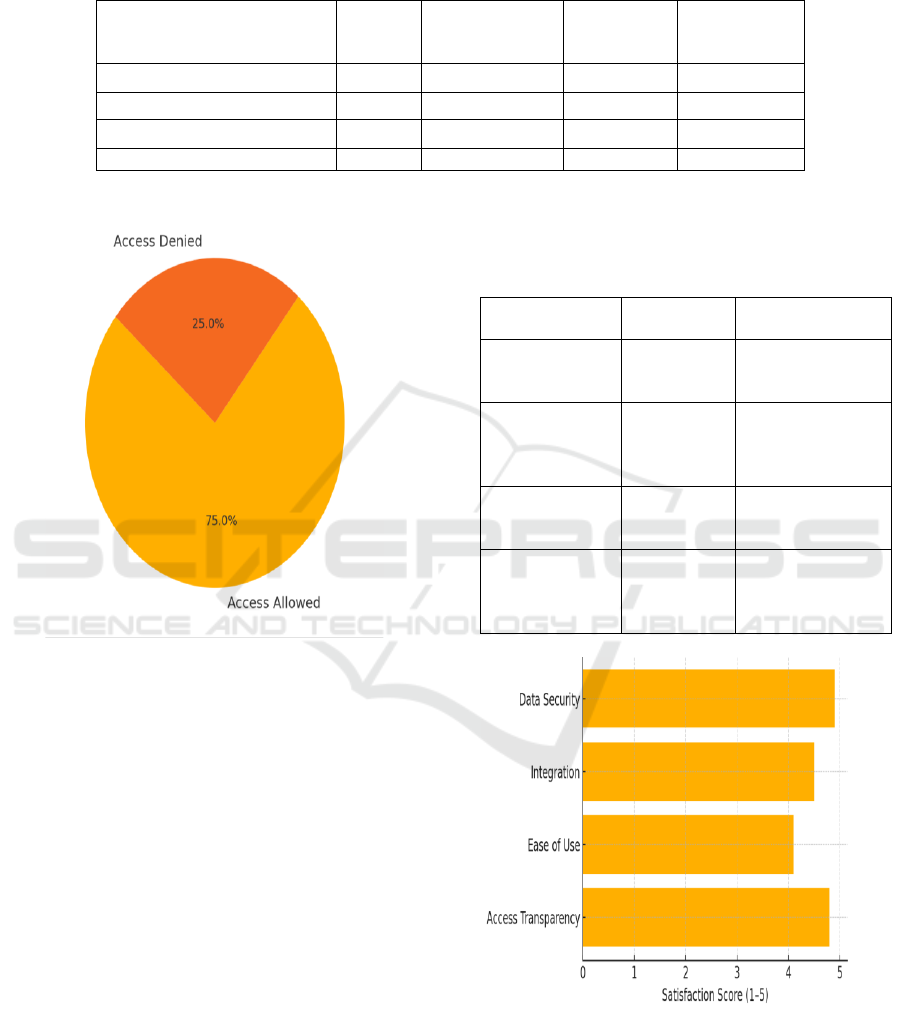
Table 4: Smart Contract Execution Results.
Use Case Scenario
Contract
Triggere
d
Execution Time
(ms)
Access
Allowed
Consent
Verified
Doctor requests EHR access
Yes
210
Yes
Yes
Insurer requests claim file
Yes
235
Yes
Yes
Unauthorized user access
Yes
180
No
No
Lab uploads test report
Yes
190
Yes
Not Required
Figure 4: Smart Contract Access Decisions.
In terms of privacy assurance, the use of off-chain
storage (via IPFS) combined with on-chain hash
verification provided a robust defense against data
tampering. Even if an off-chain record was modified
externally, the mismatch between the hash stored on
the blockchain and the recalculated hash flagged the
file as compromised, triggering an alert and blocking
access. This mechanism ensured that only valid and
unchanged files could be accessed through the
system, reinforcing data integrity and auditability.
Furthermore, the system’s integration with HL7
FHIR standards allowed smooth communication with
existing EHR systems. Real-time synchronization of
patient records between blockchain nodes and
hospital databases enabled seamless operation
without disrupting clinical workflows. Physicians and
administrative staff were able to access and share
information across departments and institutions
securely, while patients retained visibility over their
data through blockchain-logged access records. Table
5 gives the User Feedback Summary on Prototype
Usability.
Table 5: User Feedback Summary on Prototype Usability.
Feedback
Category
Satisfaction
Score (1–5)
User Comments
Access
Transparency
4.8
“I can now see
who accessed the
data and why.”
Ease of Use
4.1
“Initially
complex, but
intuitive once
learned.”
Integration with
Workflow
4.5
“Fits well with
existing systems
like EHR.”
Trust in Data
Security
4.9
“It’s great
knowing the
records cannot be
altered.”
Figure 5: User Satisfaction Feedback on Blockchain
System.
As shown in figure 5, a user feedback study was
also conducted with healthcare IT professionals, who
highlighted the transparency of access logs, patient-
ICRDICCT‘25 2025 - INTERNATIONAL CONFERENCE ON RESEARCH AND DEVELOPMENT IN INFORMATION,
COMMUNICATION, AND COMPUTING TECHNOLOGIES
114

centric design, and system responsiveness as major
improvements over legacy systems. However, some
concerns regarding the learning curve for smart
contract management and initial integration
complexity were raised, which points to the need for
tailored training and modular deployment strategies.
Overall, the results clearly validate the
effectiveness of the proposed system in enhancing
healthcare data security, minimizing unauthorized
access, reducing operational latency, and ensuring
regulatory compliance. Compared to conventional
systems, the blockchain-based framework offers a
substantial leap in terms of auditability, automation,
and trust all of which are critical in today's evolving
healthcare data landscape.
6 CONCLUSIONS
In an era where digital transformation is redefining
healthcare delivery, the security and privacy of
patient data have become critical challenges that
demand innovative solutions. This research has
demonstrated how blockchain technology, when
carefully integrated with smart contracts, off-chain
storage, and healthcare interoperability standards, can
provide a secure, scalable, and regulation-compliant
framework for managing electronic health records.
By addressing the limitations of conventional
centralized systems and overcoming the drawbacks of
existing blockchain models, the proposed framework
ensures real-time access control, immutable logging,
and patient-centric data governance.
The simulation results confirm that the
architecture effectively reduces data breach risks,
minimizes latency, and enforces privacy compliance
through automated smart contract mechanisms. The
incorporation of HL7/FHIR standards further
facilitates seamless integration with legacy health
information systems, making the model practical for
real-world deployment across various healthcare
environments. Beyond technical efficiency, the
system empowers patients by granting visibility and
control over their data, aligning with modern
principles of digital ethics and data ownership.
Ultimately, this work not only validates
blockchain’s potential in safeguarding healthcare
information but also lays the groundwork for its
broader adoption within digital health ecosystems.
Future research may extend this architecture to
support cross-border data sharing, AI-driven
analytics, and federated learning models, enabling
even greater value from secure and decentralized
healthcare infrastructure.
REFERENCES
Angraal, S., Krumholz, H. M., & Schulz, W. L. (2017).
Blockchain technology: Applications in health care.
Circulation: Cardiovascular Quality and Outcomes,
10(9), e003800.
Azaria, A., Ekblaw, A., Vieira, T., & Lippman, A. (2016).
MedRec: Using blockchain for medical data access and
permission management. In 2016 2nd International
Conference on Open and Big Data (OBD) (pp. 25-30).
IEEE.
Benchoufi, M., & Ravaud, P. (2017). Blockchain
technology for improving clinical research quality.
Trials, 18(1), 335.
Brinson, N. H., & Rutherford, D. N. (2020). Privacy and the
quantified self: A review of U.S. health information
policy limitations related to wearable technologies.
Journal of Consumer Affairs, 54(3), 1076-1103.
Wikipedia
Chenthara, S., Ahmed, K., Wang, H., Whittaker, F., &
Chen, Z. (2020). Healthchain: A novel framework on
privacy preservation of electronic health records using
blockchain technology. PLOS ONE, 15(12), e0243043.
Wikipedia
Cohen, I. G., Gerke, S., & Kramer, D. B. (2020). Ethical
and legal implications of remote monitoring of medical
devices. The Milbank Quarterly, 98(4), 1090-1128.
Wikipedia
Esposito, C., De Santis, A., Tortora, G., Chang, H., & Choo,
K. K. R. (2018). Blockchain: A panacea for healthcare
cloud-based data security and privacy? IEEE Cloud
Computing, 5(1), 31-37.
Gropper, A. (2016). Powering the physician-patient
relationship with HIE of One blockchain health IT. U.S.
Department of Health and Human Services.Wikipedia
Hussain Seh, A., Zarour, M., Alenezi, M., Sarkar, A. K., &
Agrawal, A. (2020). Healthcare data breaches: Insights
and implications. Healthcare, 8(2), 133.Wikipedia
Koch, D. D. (2017). Is the HIPAA Security Rule enough to
protect electronic personal health information (PHI) in
the cyber age? Journal of Health Care Finance, 43(4),
1-10.Wikipedia
Kumar, P., & Lee, H. J. (2021). Security issues in healthcare
applications using wireless medical sensor networks: A
survey. Sensors, 21(1), 1-25.Wikipedia
Kuo, T. T., Kim, H. E., & Ohno-Machado, L. (2017).
Blockchain distributed ledger technologies for
biomedical and health care applications. Journal of the
American Medical Informatics Association, 24(6),
1211-1220.
Meisami, S., Beheshti-Atashgah, M., & Aref, M. R. (2021).
Using blockchain to achieve decentralized privacy in
IoT healthcare. arXiv preprint arXiv:2109.14812.
https://arxiv.org/abs/2109.14812arXiv
Nguyen, D. C., Pathirana, P. N., Ding, M., & Seneviratne,
A. (2021). A cooperative architecture of data offloading
and sharing for smart healthcare with blockchain. arXiv
preprint arXiv:2103.10186. https://arxiv.org/abs/2103.
10186arXiv
Blockchain-Integrated Secure Healthcare Ecosystem: A Scalable and Privacy-Compliant Framework for Real-Time Patient Data Protection
115

Omolara, A. E., Jantan, A., Abiodun, O. I., Arshad, H., &
Dada, K. V. (2020). HoneyDetails: A prototype for
ensuring patient's information privacy and thwarting
electronic health record threats based on decoys. Health
Informatics Journal, 26(1), 3-15.Wikipedia
Pandey, M., Agarwal, R., Shukla, S. K., & Verma, N. K.
(2021). Security of healthcare data using blockchains:
A survey. arXiv preprint arXiv:2103.12326.
https://arxiv.org/abs/2103.12326arXiv
Searls, D. (2016). Consumers can't help health care.
Customers can. Doc Searls Weblog.Wikipedia
Thapa, C., & Camtepe, S. (2021). Precision health data:
Requirements, challenges and existing techniques for
data security and privacy. Computers in Biology and
Medicine, 133, 104387.Wikipedia
Windley, P. (2016). Sovrin use cases: Healthcare. Phil
Windley's Technometria.Wikipedia
Yue, X., Wang, H., Jin, D., Li, M., & Jiang, W. (2016).
Healthcare data gateways: Found healthcare intelligen
ce on blockchain with novel privacy risk control.
Journal of Medical Systems, 40(10), 218.
Zhang, R., Xue, R., & Liu, L. (2021). Security and privacy
for healthcare blockchains. arXiv preprint
arXiv:2106.06136. https://arxiv.org/abs/2106.06136
arXiv
Zyskind, G., Nathan, O., & Pentland, A. (2015).
Decentralizing privacy: Using blockchain to protect
personal data. In 2015 IEEE Security and Privacy
Workshops (pp. 180-184). IEEE.
ICRDICCT‘25 2025 - INTERNATIONAL CONFERENCE ON RESEARCH AND DEVELOPMENT IN INFORMATION,
COMMUNICATION, AND COMPUTING TECHNOLOGIES
116
