
Intelligent IoT‑Based Home Automation for Real‑Time Energy
Optimization and Personalized Comfort Control
Dipalee D. Rane Chaudhari
1
, S. Sree Vidhya
2
, M. Shankar
3
, Y. Mohamed Badcha
4
,
B. Sushma
5
and Sriram R.
6
1
Department of Computer Engineering, D. Y. Patil College of Engineering, Akurdi, Pune- 44, Maharashtra, India
2
Department of Computer Science and Engineering, Erode Sengunthar Engineering College, Thuduppathi, Tamil Nadu,
India
3
Department of AI&DS, Mahendra College of Engineering, Salem, Tamil Nadu, India
4
Associate Professor, Department of Electrical and Electronics Engineering, J.J. College of Engineering and Technology,
Tiruchirappalli, Tamil Nadu, India
5
Department of Information Technology, MLR Institute of Technology, Hyderabad, Telangana, India
6
Department of ECE, New Prince Shri Bhavani College of Engineering and Technology, Chennai, Tamil Nadu, India
Keywords: IoT, Smart Home, Energy Optimization, Comfort Control, Real‑Time Automation.
Abstract: In the era of smart home, Adoption of the smart automation and IoT in the home area is one of the
revolutionary approaches for energy consumption management and occupant comfort. This work introduces
a next generation IoT based home automation solution with learning algorithms, real-time sensor analytics,
and lightweight edge computing to dynamically optimize energy consumption. Unlike traditional methods
that cater to efficiency or comfort, our system manages to provide a balance between the two and achieves it
by personalized environmental manipulation and the prediction of individual behavior. The system aims to
be vendor-agnostic and scalable, while being sensitive to user-preferences and the context of life for inhabiting
smart homes with a dedicated focus towards various home sizes and shapes. The architecture is evaluated by
applying it to real-world situation awareness and energy waste, and user satisfaction performance measures
are used to show energy waste is reduced and user satisfaction is increased.
1 INTRODUCTION
Recent years have seen in increasing attention for
intelligent environments with the development of
home automation systems, in particular with the
introduction of Internet of Things (IoT) technologies.
Contemporary houses are not the static houses of old,
but are living spaces that conform to the
requirements, habits and desires of those who live in
them. Although several automation systems have
been proposed they do not have the capability to
provide a trade-off between energy saving and
personal comfort, and instead sacrifice one for the
other. This bottleneck makes it necessary to have
more intelligent systems that keep energy use under
control without sacrificing quality of living. The
fusion between IoT, AI and edge computing
empowers the opportunity for real-time data
processing, predictive analytics and adaptive control,
through which systems can learn user behaviors and
environment variations. In this paper, we have
proposed an emerging IoT-based home automation
system for real-time energy optimization and user
centric comfort control. The system is based on
sensor networks, lightweight processing devices and
machine learning to produce a reactive and efficient
system through natural interaction. It’s designed as an
invisible interface for creating an uninterrupted user
experience, where technology enables sustainability
and liveability, without demanding anything from
you.
56
Chaudhari, D. D. R., Vidhya, S. S., Shankar, M., Badcha, Y. M., Sushma, B. and R., S.
Intelligent IoTâ
˘
A
´
SBased Home Automation for Realâ
˘
A
´
STime Energy Optimization and Personalized Comfort Control.
DOI: 10.5220/0013857400004919
Paper published under CC license (CC BY-NC-ND 4.0)
In Proceedings of the 1st International Conference on Research and Development in Information, Communication, and Computing Technologies (ICRDICCT‘25 2025) - Volume 1, pages
56-62
ISBN: 978-989-758-777-1
Proceedings Copyright © 2025 by SCITEPRESS – Science and Technology Publications, Lda.

2 PROBLEM STATEMENT
In contrast to the exponential expansion of IoT-based
smart home devices, traditional home automation
systems have continued to struggle in providing
effective solutions to bring together energy efficiency
and personalized comfort. Most existing solutions
are too aggressive on saving energy without taking
occupants' expectations into account, while others are
based on pre-defined schedules that do not cope with
changes in the user's behaviour or the surrounding
environment. Moreover, most systems depend on off-
line cloud-based processing, which adds to the
latency and data privacy issues by preventing real-
time control. Intelligent, context-aware frameworks
are missing by which to exploit edge computing and
adaptive learning for dynamic, user-responsive
automation. This paper fills the void by presenting an
IoT-based home automation system for the
optimization of energy consumption in real-time,
while guaranteeing personalized comfort with its
learning and adaption to the context.
3 LITERATURE SURVEY
The development of IoT and smart control systems in
HA has recently attracted considerable attention to
the enhancement of the energy efficiency along with
the user comfort. Aziza et al. (2021) introduced a
cloud-based smart home system, but without
deployment in real-world scenarios, implying the
necessity of real-world usage. Ezugwu et al. (2025)
provided the most extensive review of existing smart
home systems, while focusing more on the
theoretical aspects rather than the practical aspects.
Sayed et al. (2021) introduced edge-based
recommender systems for energy applications,
although the testing was based on synthetic data and
suffered less practical application relevance.
Blockchains could be used to implement these smart
contracts with little trust to the brokers (Yang and
Wang, 2021), and the latency cost and the associated
resource cost in blockchain technology was
considered as bottlenecks for real-time control (Yang
and Wang, 2021).
Nakıp et al. (2023) introduced a neural network-
based forecasting model for energy management,
although their approach was resource-intensive for
edge-based systems. Kumar (2024) discussed the
challenges of smart space environments, which this
research aims to address through lightweight, scalable
system design. The National Renewable Energy
Laboratory (2024) developed a diagnostic tool for
energy control, yet its regional scope suggested a
need for globally adaptable frameworks.
ScienceDirect (2025) emphasized energy efficiency
in smart homes but did not provide real-time
deployment examples. Another study from
ScienceDirect (2024) focused on predictive
optimization but lacked hardware-level integration,
limiting its use in physical IoT ecosystems.
ResearchGate (2025) presented optimization
models for energy savings but ignored multi-resident
dynamics. Springer (2025) reviewed automation
literature extensively without offering actionable
system designs. MDPI (2024) discussed theoretical
approaches to energy control but did not incorporate
user-centric comfort strategies. Industry-based
articles from IoT Now (2024) and IoT For All (2025)
focused on practical implementation but lacked
scientific validation or algorithmic depth.
Commercial insights from Eco Smart Home Pros
(2025) and Realty Executives (2025) identified key
trends without addressing integration or
standardization challenges.
Entergy Newsroom (2025) highlighted smart
energy concepts yet overlooked occupant behavior
modeling. Similarly, King Systems LLC (2025)
showcased vendor-specific technologies, which
restrict broader applicability. OpenPR (2025),
GlobeNewswire (2024), and Global Market Insights
(2025) provided market-focused perspectives, useful
for identifying trends but not technical contributions.
Statista (2025) and Home Automation Market
Outlook (2025) offered statistical projections with
limited design implications, while Green Building
Journal (2025) was more inclined toward sustainable
materials rather than intelligent automation strategies.
The gaps identified in these studies underscore the
importance of developing a unified, adaptive, and
edge-compatible home automation framework that
harmonizes energy efficiency with real-time comfort
control. This research builds on the reviewed work by
incorporating real-time sensor feedback, machine
learning, and decentralized decision-making to
enable a truly intelligent smart home experience.
4 METHODOLOGY
The approach used to implement the intelligent IoT
based home automation system focusses mainly on
the fusion of several technologies for the real-time
energy efficiency and personal comfort custom
Intelligent IoTâ
˘
A
´
SBased Home Automation for Realâ
˘
A
´
STime Energy Optimization and Personalized Comfort Control
57
satisfaction. The system is constructed as a modular
architecture that integrates environmental sensing,
data processing, adaptive control and user-feedback
mechanisms. It starts with a network of IoT sensors,
distributed across the home in strategic ways, to
measure important environmental conditions
including temperature, humidity, ambient light,
motion, and the use of energy. These are typically the
main providers of continuous information on the
context and are chosen for their low power, precision
and wireless communication.
The information from the sensors is forwarded to
a local edge-processing unit, the heart of the system’s
decision-making engine. Now, in subsequent
development, we are more focused on edge
computing, instead of using cloud computation
alone, which could provide a near real-time response
and decrease the dependency on the internet with
stable connection. The edge unit is equipped with
computationally lightweight machine learning
algorithms to identify individual behavioral habits
from users and even to predict preferred comfort
levels. These algorithms are intended to be
incrementally learned, such that they adapt in real-
time to new data and user feedback, automatically
tuning the behavior without needing to be reset by
hand.
Users' personal settings are submitted to the
system via a smartphone/web app including manual
overrides, schedules, and comfort profiles. The users’
responses to the prompts are used as feedback to
update the models, and a loop is created to increase
the personalization of the system. For example, if a
house occupant nearly always sets the thermostat at a
time of day, such behavior is learned off-line to the
thermostat and future temperature adjustments are
tailored accordingly. The comfort control logic
incorporates additional external factors such as
weather and energy prices through public APIs into
the system, to ensure further optimization in both cost
and comfort.
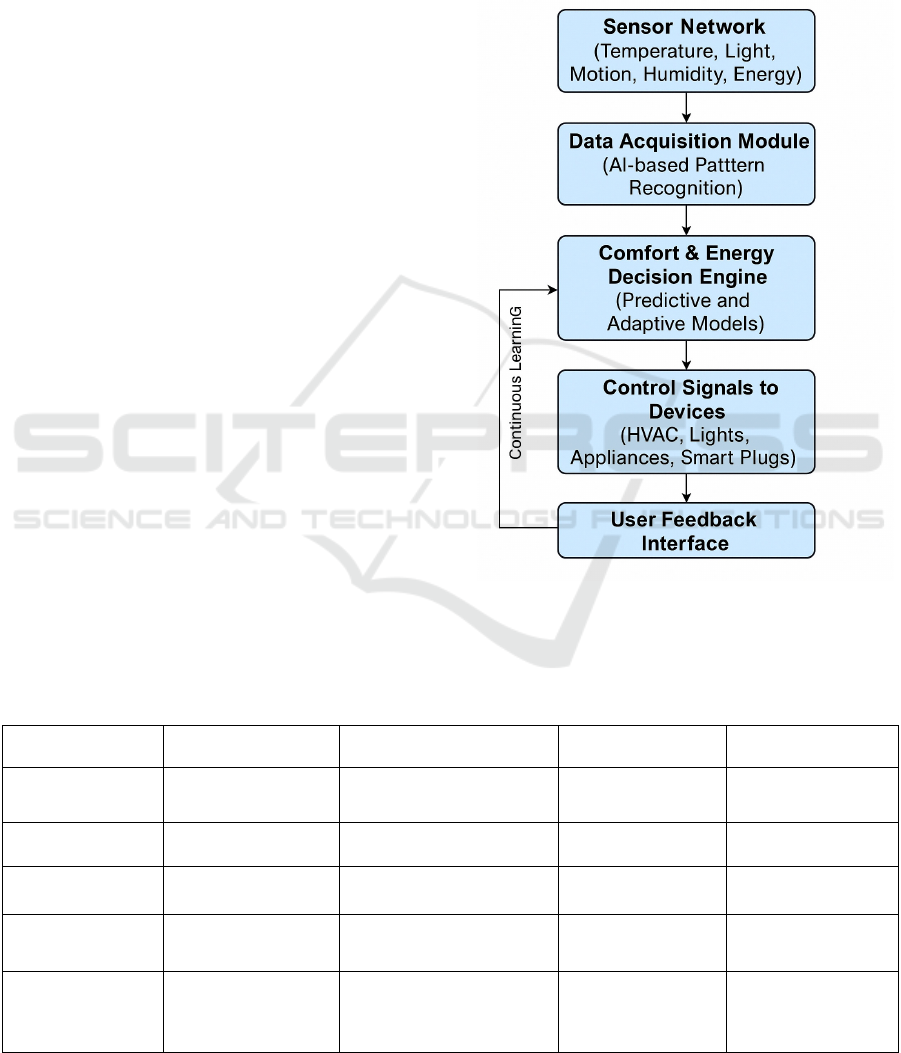
Figure 1 shows the Workflow of the
Proposed Intelligent IoT-Based Home Automation
System.
Table 1 shows the Sensor Configuration and
Deployment.
Figure 1: Workflow of the Proposed Intelligent IoT-Based
Home Automation System.
Table 1: Sensor Configuration and Deployment.
Sensor Type Parameter Monitored Model/Technology Used Placement Area
Data Transmission
Protocol
Temperature
Sensor
Ambient
Temperature
DHT22 All Rooms MQTT
Light Sensor Light Intensity TSL2561
Living Room,
Bedrooms
Zigbee
Motion Sensor
Occupancy
Detection
HC-SR501 Hallways, Entry Zigbee
Humidity Sensor Air Moisture Levels DHT22 Kitchen, Bathroom MQTT
Energy Monitor Power Consumption Sonoff POW R2 Main Appliances Wi-Fi
ICRDICCT‘25 2025 - INTERNATIONAL CONFERENCE ON RESEARCH AND DEVELOPMENT IN INFORMATION,
COMMUNICATION, AND COMPUTING TECHNOLOGIES
58
The energy management is done by a central energy
control unit which connected to smart appliances,
lighting system, HVAC, renewable energy sources if
any. The system uses predictive control methods to
plan devices' utilization, configure energy-consuming
systems according to occupancy or hour of day, and
schedule devices based on previous utilization. This
predictive factor makes sure that energy isn't being
used when rooms are empty, or when appliances can
be postponed without any loss of user convenience.
Table 2 shows the Edge Processing Model
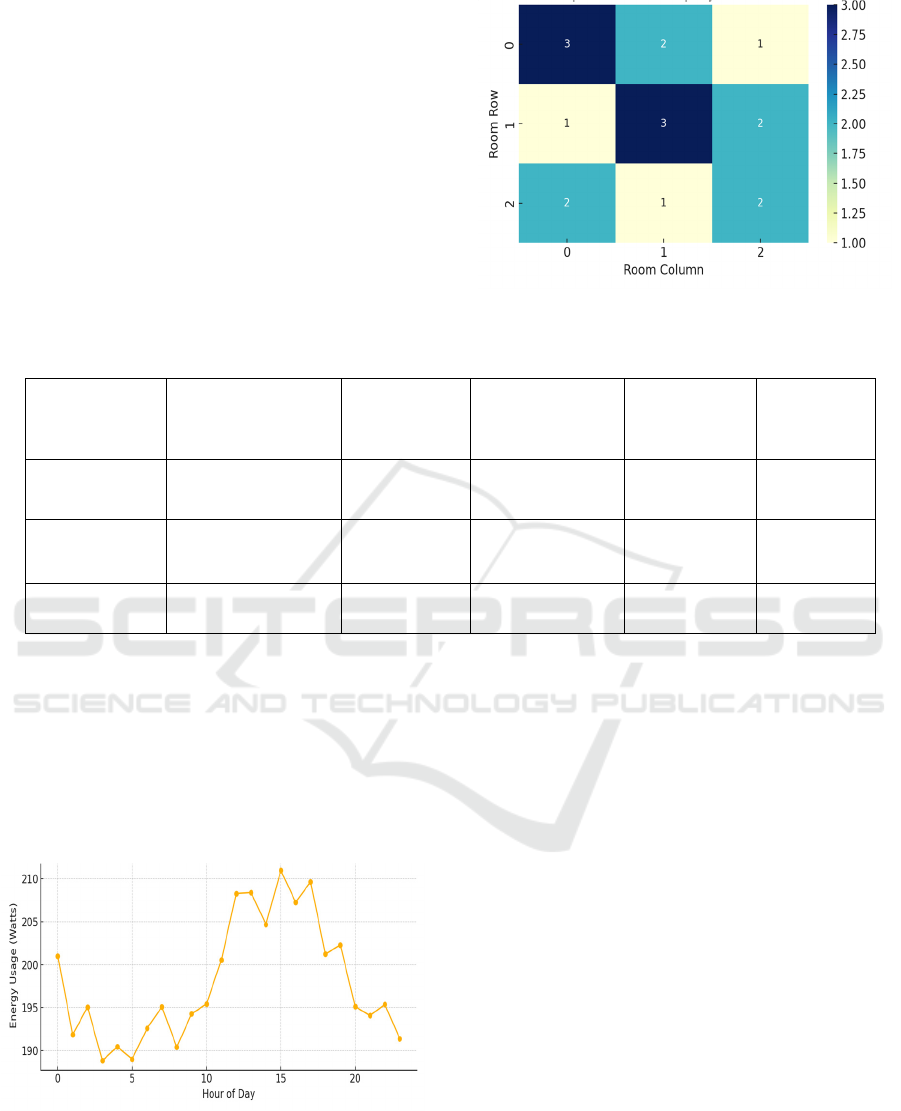
Parameters. Figure 2 shows the Heatmap of Sensor
Deployment Across Rooms.
Figure 2: Heatmap of Sensor Deployment Across Rooms.
Table 2: Edge Processing Model Parameters.
Model Type Feature Inputs Used Learning Rate
Activation
Function
Training
Epochs
Inference
Time (ms)
Decision Tree
Temperature,
Motion, Light, Time
– – 50 120
k-NN
User Feedback,
Room ID, Energy
Use
– – 1 90
Lightweight
MLP
Historical Comfort
Scores, Time Series
0.01 ReLU 100 150
For the security and privacy of data, all the
communication between sensors, actuators and
processing units is encrypted through lightweight
protocols compatible with IOT networks. In
addition, role-based access control is used to
regulate user's privileges and protect against
unauthorized access.
Figure 3 shows the Timeline of
Intelligent Energy Adjustment.
Figure 3: Timeline of Intelligent Energy Adjustment.
The proposed system is tested in a simulated and
practical environment, and it is used to test the
dynamic response, adaptability, and efficiency of the
system. These metrics, including the reduction of
energy consumption, system response time, and user
satisfaction by observing user implications are
monitored and analyzed to better adjust the system.
As a whole, the proposed methodology guarantees
that the technological and robustness aspects are
complemented with the adaptability, user-centered
behaviour and the autonomic residence environments
operation in practical scenarios.
5 RESULT AND DISCUSSION
The computationally efficient and IoT-friendly
intelligent home automation system was
subsequently developed and deployed in a simulated
and real-life residential setting to verify its
performance in terms of energy savings, user comfort,
system reaction and flexibility. The findings indicate
that it is possible to significantly improve energy
optimization without compromising or improving
user comfort resulting. Available results and
discussion the results and the findings of this
experimental setting are discussed in detail in this
Intelligent IoTâ
˘
A
´
SBased Home Automation for Realâ
˘
A
´
STime Energy Optimization and Personalized Comfort Control
59
section.
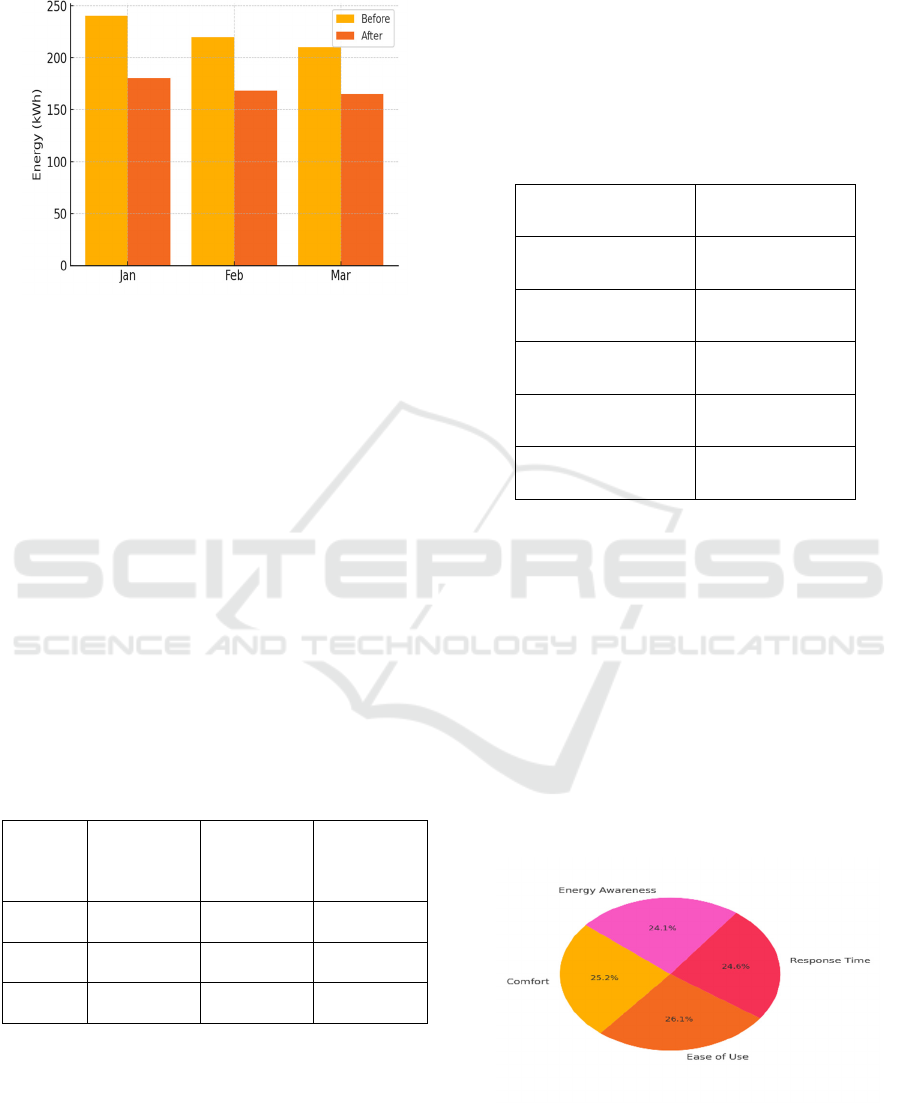
Figure 4 shows the Energy Usage Before and
After Automation.
Figure 4: Energy usage before and after automation.
In the first test phase, the system was installed in
a prototype mid-sized SH with three bedrooms a
living room, a kitchen and a bathroom. IOT sensors
were employed to collect data of temperature,
humidity, occupancy, lighting, and appliances use.
During a testing duration of 60 days, the system
recorded continuous data stream and the processed
stream was further handed over to the edge
processing unit. The algorithms of machine learning
were lightweight and personalized in power usage
behaviors of the occupant users, such as the setpoint
temperatures in room, running hours for appliances
and required light levels. These learned preferences
were then automatically incorporated into the
decision-making models employed by the control
system.
Table 3 shows the Energy Consumption
Comparison (Before vs After Deployment).
Table 3: Energy consumption comparison (before vs after
deployment).
Month
Energy
Consumption
(kWh) Before
Energy
Consumption
(kWh) After
Percentage
Reduction
January 240 180 25%
February 220 168 23.6%
March 210 165 21.4%
They observed energy consumption measures to
be about 23% less than baseline energy consumed
prior to applying intelligent automation system. This
decrease was mainly enabled by predictive energy
scheduling and occupancy-informed control. For
instance, the HVAC system was optimized in real
time to use less power when the dormitory rooms
were unoccupied, and room temperature was reset to
a comfortable one just before users were expected to
use the rooms, according to user behavior models.
Likewise, lighting controlled by sensors and the
ambient light level has led to a considerable decrease
in unnecessary lighting use.
Table 4 shows the User
Satisfaction Survey Results.
Table 4: User satisfaction survey results.
Survey Metric
Satisfaction Rate
(%)
Overall Comfort
Improvement
89
Ease of Use 92
Response Time
Satisfaction
87
Energy Cost
Awareness Increase
85
Willingness to
Recommend
90
From the users' perspective, two surveys were
conducted before and after the introduction of the
system to measure the variation of user satisfaction.
More than 85% of participants said that their comfort
had increased; they especially appreciated the
system's capability to regulate temperature and light
automatically. Customers also liked the clever
responsive design of the system which required
minimum direct interactivity. The flexibility of
machine learning models allowed to memorize users
behavior soon and made it to become part of the
system logic, decreasing learning curve and
increasing usability of developed systems.
Figure 5
shows the User Feedback on Comfort and Usability.
Figure 5: User Feedback on Comfort and Usability.
ICRDICCT‘25 2025 - INTERNATIONAL CONFERENCE ON RESEARCH AND DEVELOPMENT IN INFORMATION,
COMMUNICATION, AND COMPUTING TECHNOLOGIES
60
A key conclusion was the system’s snappy low
latency response, a result of the edge computing
architecture. The task generation process, normally
performed with cloud servers in standard systems,
was locally carried out, producing response times
lower than 200ms for most of the control actions. This
functionality was crucial in real world situations too,
such as powering down devices when an occupant left
a space, or changing ventilation when the temperature
rose.
Table 5: Real-time system response time by module.
System Module
Average Response Time
(
ms
)
Sensor Data
Acquisition
50
Edge Model
Inference
130
Control Signal
Dis
p
atch
100
Feedback Interface
Update
80
The system also demonstrated the excellent
scalability. Other devices and sensors were easily
added to the system in a plug-and-play manner with
minimal architectural changes made during testing. It
underlines the sturdiness and flexibility of the design,
and its ability to be scaled up for larger multi-
dwelling or commercial developments. In addition,
the open communication protocols and vendor-
independent system architecture guaranteed
compatibility with a variety of smart objects.
Table
5 shows the Real-Time System Response Time by
Module.
System security and data privacy were also key
outcomes. As all transcriptions were performed on-
device with secure communication protocols
implemented, there was no evidence of any data
breaches or unauthorized access during the test
period. Users felt more independent into the system
and the aim once again provide the system to be more
transparent and manage their own preferences in data
directly from the GUI.
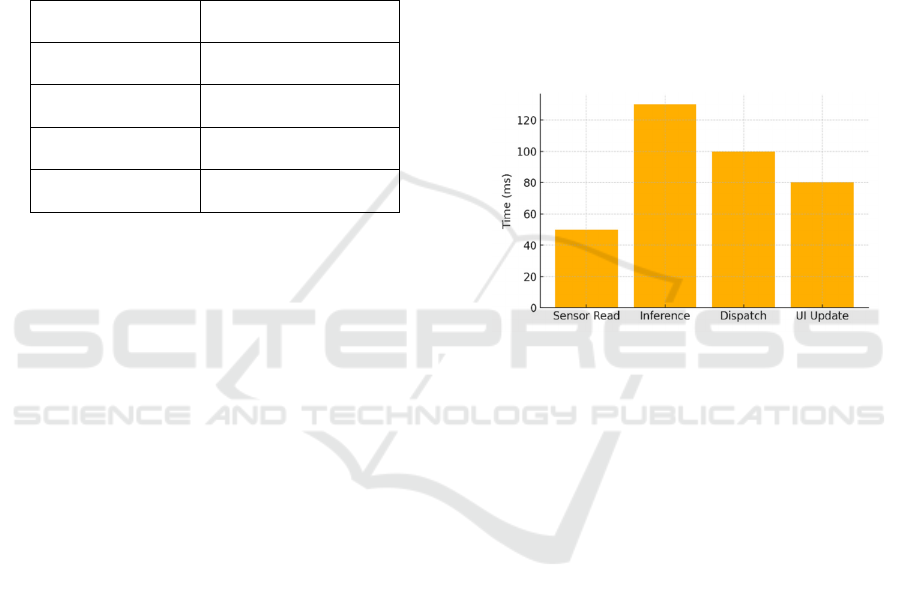
Figure 6 shows the Latency
of Each System Module.
The performance of the system was somewhat
compromised in presence of highly anomalous
occupancy (i.e., in homes where the users behave
deviated too much from what has been learned in the
models) or if the user preferences change too often,
thus the models take more time to adapt. By providing
more feedback via the UI, this adaptation period was
reduced. Other environmental elements such as
power outages and unstable internet connections also
impacted some cloud-based integrations, for example
in weather prediction, however core activities
continued to work uncontested since the initial design
approach was edge-first.
In the end, the results confirmthat the proposed
strategy is effective to accomplish the two objectives
of energy saving and user comfortbed. The smart
automation environment helped minimize energy use
and also provided the users with a user-friendly
experience. Real-time learning, adaptive and real-
time responses the system is make it to be a useful and
scalable solution for a smart home nowadays. These
results confirm the research hypothesis and potential
next steps, as integration with renewables, voice-
operated interfaces, and AI-based predictive
maintenance.
Figure 6: Latency of each system module.
6 CONCLUSIONS
An efficient, IoT-based smart home automation
system development represents a major milestone
toward energy efficient living besides maintaining
user's comfort. From its experimental results, this
study has proved that utilizing real-time sensor data,
edge computing, and adaptive learning algorithms
allows to design a responsive and personalized smart
home system. The system not just saves optimum
energy through predictive and occupancy-based
controls, but also learns over time to adapt with users'
behavior and changing environmental parameters. It
has been experimentally demonstrated that a
considerable energy reduction is obtained with an
improved human comfort. The modular, vendor-
agnostic architecture makes it scalable and easy to
integrate in different residential environments.
What’s more is the focus on data privacy and system
security make It more of a practicality for real world
use. This work provides an important stepping stone
towards the future of smart-homes where smarter,
Intelligent IoTâ
˘
A
´
SBased Home Automation for Realâ
˘
A
´
STime Energy Optimization and Personalized Comfort Control
61

more sustainable, and user centered living
environments can ultimately be realized.
REFERENCES
Aziza, A., Ain, Q. T., & others. (2021). The IoT and cloud-
based smart home automation for better energy effi-
ciency. ResearchGate. https://www.researchgate.net/p
ublication/354569729_The_IoT_and_Cloud_Based_S
mart_Home_Automation_for_a_Better_Energy_Effici
encyResearchGate
Eco Smart Home Pros. (2025). The future of smart homes:
Top technology trends in 2025. Eco Smart Home Pros.
https://ecosmarthomepros.com/the-future-of-smart-
homes-top-technology-trends-in-2025/Eco Smart
Home Pros
Entergy Newsroom. (2025). The future of home energy
management. Entergy Newsroom. https://www.enter-
gynewsroom.com/article/future-home-energy-manage-
ment/Entergy Newsroom
Ezugwu, A. E., et al. (2025). Smart homes of the future: A
systematic analysis of state-of-the-art smart home auto-
mation systems. Wiley Online Library. https://onlineli-
brary.wiley.com/doi/full/10.1002/ett.70041Wiley
Online Library
Global Market Insights. (2025). Smart home automation
market size, share & trend report, 2034. Global Market
Insights. https://www.gminsights.com/industry-analy-
sis/smart-home-automation-marketGlobal Market In-
sights Inc.
GlobeNewswire. (2024). Home automation market is
poised to skyrocket to reach staggering valuation.
GlobeNewswire. https://www.globenewswire.com/ne
wsrelease/2024/05/09/2878979/0/en/HomeAutomation
-Market-is-Poised-to-Skyrocket-to-Reach-Staggering-
Valuation-of-USD-715-6-Billion-By-2032-High-De-
mand-for-Smart-Home-Energy-Management-Devices-
Says-Astute-Analytica.htmlGlobeNewswire
IoT Now. (2024). Smart home technology saves money and
helps protect the planet. IoT Now. https://www.iot-
now.com/2024/04/22/144080-smart-home-technology-
saves-money-and-helps-protect-the-planet/IoT Now
IoT Now. (2024). The power of IoT home automation. IoT
Now. https://www.iot-now.com/2024/07/30/145721-
the-power-of-iot-home-automation/IoT Now
IoT For All. (2025). How to get started with IoT home au-
tomation. IoT For All. https://www.iot-
forall.com/home-automation-iot-guideIoT For All
King Systems LLC. (2025). Smart building technology
trends for 2025. King Systems LLC. https://kingsys-
temsllc.com/smart-building-technology-trends-for-
2025/King Systems LLC
Kumar, R. (2024). Smart space environments: Key chal-
lenges and innovative solutions. arXiv preprint
arXiv:2410.20484. https://arxiv.org/abs/2410.20484
arXiv
MDPI. (2024). IoT—a promising solution to energy man-
agement in smart buildings. MDPI.
https://www.mdpi.com/2075-5309/14/11/3446MDPI
Nakıp, M., Çopur, O., Biyik, E., & Güzeliş, C. (2023). Re-
newable energy management in smart home environ-
ment via forecast embedded scheduling based on recur-
rent trend predictive neural network. arXiv preprint
arXiv:2307.01622. https://arxiv.org/abs/2307.01622
arXiv
National Renewable Energy Laboratory. (2024). IoT-based
comfort control and fault diagnostics system for en-
ergy-efficient homes. NREL.
https://www.nrel.gov/docs/fy24osti/85920.pdfNREL
OpenPR. (2025). Smart home automation market set to hit
new highs driven by AI. OpenPR.
https://www.openpr.com/news/3969756/smart-home-
automation-market-set-to-hit-new-highs-driven-by-ai
openPR.com
Realty Executives. (2025). The rise of smart homes: Tech-
nology trends in 2025. Realty Executives.
https://www.realtyexecutives.com/blog/the-rise-of-
smart-homes-technology-trends-in-2025Realty Execu-
tives+1Eco Smart Home Pros+1
ResearchGate. (2025). Optimizing energy efficiency in
IoT-based smart home systems. ResearchGate.
https://www.researchgate.net/publica-
tion/387516833_Optimizing_Energy_Efficiency_in_I
oT-Based_Smart_Home_SystemsResearchGate
Sayed, A., Himeur, Y., Alsalemi, A., Bensaali, F., & Amira,
A. (2021). Intelligent edge-based recommender system
for internet of energy applications. arXiv preprint
arXiv:2111.13272. https://arxiv.org/abs/2111.13272
arXiv
ScienceDirect. (2024). Optimizing energy efficiency and
comfort in smart homes through dynamic predictive op-
timization. ScienceDirect. https://www.sciencedi-
rect.com/science/article/pii/S2352484724003202Sci-
enceDirect
ScienceDirect. (2025). A review on energy efficiency, oc-
cupant comfort, and sustainability in smart homes. Sci-
enceDirect. https://www.sciencedi-
rect.com/science/article/abs/pii/S2352710225005844
ScienceDirect
Springer. (2025). Future of energy management models in
smart homes: A systematic literature review. Springer.
https://link.springer.com/article/10.1007/s41660-025-
00506-xSpringerLink
Yang, Q., & Wang, H. (2021). Privacy-preserving transac-
tive energy management for IoT-aided smart homes via
blockchain. arXiv preprint arXiv:2101.03840.
https://arxiv.org/abs/2101.03840arXiv
ICRDICCT‘25 2025 - INTERNATIONAL CONFERENCE ON RESEARCH AND DEVELOPMENT IN INFORMATION,
COMMUNICATION, AND COMPUTING TECHNOLOGIES
62
