
A Resilient and Scalable IoT‑Driven Precision Agriculture
Framework with Edge Intelligence, Climate Adaptability, and
Farmer‑Centric Optimization
Kunal Dhaku Jadhav
1
, V. Krithika
2
, P. Balakrishnan
3
, G. Sangeetha
4
,
Inbarasu M.
5
and Saurabh Kumar
6
1
Lifelong Learning and Extension, University of Mumbai, Maharashtra, India
2
Department of Computer Science and Engineering, Akshaya College of Engineering and Technology, Kinathukadavu,
Coimbatore 642109, Tamil Nadu, India
3
Department of Electrical and Electronics Engineering, J.J. College of Engineering and Technology, Tiruchirappalli, Tamil
Nadu, India
4
Department of Management Studies, Nandha Engineering College, Vaikkalmedu, Erode - 638052, Tamil Nadu, India
5
Department of CSE, New Prince Shri Bhavani College of Engineering and Technology, Chennai, Tamil Nadu, India
6
Department of Computer Science, SoS, Noida International University, Greater Noida -203201, Uttar Pradesh, India
Keywords: Precision Agriculture, IoT Sensor Networks, Edge Computing, Smart Farming, Resource Optimization.
Abstract: An emerging trend that is reshaping the development of precision agriculture is the integration of IoT sensor
networks, edge intelligence, and climate-aware computing technologies. In this paper, we propose a
sustainable and scalable IoT-enabled precision agriculture framework that tackles major downsides of the
previous works such as high infrastructure and deployment cost, connectivity, energy inefficiency and limited
farmer centric usability. The proposed model employs inexpensive, energy-aware sensors and edge computing
for real-time processing and offline operations. It enables modular adaptability across crop types, climate-
informed decision support, automated actuation for irrigation and pest management, and blockchain-based
data ownership. A farmer-centered data dash board and multi-lingual interface overcome the technology
barrier, enabling users to make informed decisions. This study proves not only the improved resource use
efficiency and yield prediction accuracy, but also the sustainability through multi-years of field trials and
economic analysis. The system architecture guarantees flexibility, security and interaction and can be
regarded as a new reference mark for future smart farming.
1 INTRODUCTION
Agriculture is the cornerstone of worldwide food
security and is increasingly coming under pressure
due to population increases, climate change, soil
degradation and unsustainable resource utilization.
The traditional agricultural practices that have
worked in the past do not provide all the answers
demanded by a sustainable agriculture today. With
the rise of the digital age upon the rural countryside,
the combination of the Internet of Things (IoT), smart
sensor networks and data-driven technologies is
reshaping how farms are monitored, managed and
refined.
Precision farming is regarded as a practice to fill
the gap between conventional practices and the
demand of sustainable intensification. However,
available IoT-based systems lack viability because of
high cost of deployment, energy limitations, poor
networking facilities in remote locations, and lack of
adaptability across wide varieties of crops and
climes. Furthermore, many existing solutions are
built without taking the end-user (farmer) into
consideration and are complex to interact with, as the
end-users are generally not technically literate.
This work presents a novel smart-farming
framework built upon the IoT paradigm that
combines edge computation, climate-adaptive
analytics, and farmer-centric approach. Leveraging
real-time, low-latency decision-making at the edge,
Jadhav, K. D., Krithika, V., Balakrishnan, P., Sangeetha, G., Inbarasu, M. and Kumar, S.
A Resilient and Scalable IoTâ
˘
A
´
SDriven Precision Agriculture Framework with Edge Intelligence, Climate Adaptability, and Farmerâ
˘
A
´
SCentric Optimization.
DOI: 10.5220/0013857300004919
Paper published under CC license (CC BY-NC-ND 4.0)
In Proceedings of the 1st International Conference on Research and Development in Information, Communication, and Computing Technologies (ICRDICCT‘25 2025) - Volume 1, pages
49-55
ISBN: 978-989-758-777-1
Proceedings Copyright © 2025 by SCITEPRESS – Science and Technology Publications, Lda.
49

and intuitive, multilingual interfaces, the system
gives farmers rich and timely insights without the
need for a constant online connection. It further
features modularity so as to be adaptable to particular
crops, environments and terrain limitations.
This work aims to provide a scalable, ultra-
resilient and secure solution, involving blockchain-
driven traceability, AI-empowered prediction models
and energy-aware hardware. By overcoming the
limitations of previous systems and giving priority to
sustainability and sustainability access, this
framework highly contributes to the technological
empowerment of growers and to sustainable
agriculture.
2 PROBLEM STATEMENT
Although the IoT technologies are gradually
introduced in agriculture, many precision farming
systems lack some fundamentals to ensure their
practical applicability and long-term success. For
instance, constraints such as high investment in
infrastructure, weak support for offline-rich or low-
connected-rich scenarios, low-energy efficiency of
sensor nodes, and poor generality towards various
crops and climates intensify the challenge. In
addition, the lack of user-friendly interfaces and
localized decision-support tools reduce usability for
farmers who are not so technologically skilled.
Existing IoT solutions for agriculture are met with
the challenge of scalable, robust, and smart that not
only maximizes resource utilization and yield, but
provides farmers with real-time climate-aware
insights, local control, and data ownership. The aim
of this work is to face these challenges by building a
farmer-centred edge-enabled precision agriculture
system fit for real field situations and long-term
sustainability.
3 LITERATURE SURVEY
The use of Internet of Things (IoT) sensor networks
has completely restructured traditional farming to
smart farming in agriculture. Several applications of
IoT for monitoring soil moisture, crop health, climatic
variables and pest activity have been reviewed in
many studies, which are facilitating the farmers to
make more precise decisions at right time (Kumar et
al., 2021; Garg et al., 2021). These breakthroughs
have opened up the possibility of smarter farming
systems, yet the issue of scaling in real-world
conditions and farmers’ access still need addressing.
Sharma and Shivandu (2024) highlighted the
integration of AI and IoT in precision farming with
significant enhancements in monitoring and
forecasting of crop yield. However, they also raised
issues relating to usability and the implementation in
resource poor settings. Similarly, Dutta et al. (2025)
also commercially suggested IoT-based soilless
agriculture framework acknowledging challenges,
such as infrastructure cost and network dependency.
Sattar et al. (2025) solved the configuration problem
of wireless sensor networks, but no modular crop
adaptability and user-centred design were targeted.
Research such as Albanese et al. (2021) and
Morchid et al. (2025) was dedicated to pest detection
and field automation support in the context of edge
computing, which offered reduced latency and cloud
dependence solutions. These methodologies,
however, while interesting, most of the time they did
not take into account the integration with the farming
ecosystem (actuation system) and economic viability.
Furthermore, Giménez Pérez et al. (2024) utilized
sensor networks for the supervision of tomato crops,
and did not provide an adaptation to any crop and
environment.
The challenge to connectivity and offline mode
has been observed (Garg et al., 2021; Sharma &
Shivandu, 2024). Although edge processing was
included in some frameworks (Albanese et al., 2021),
most depended on connectivity to the cloud. In
addition, the absence of common protocols and
secure models for data ownership continues to also
be a common consideration in the literature (Morchid
et al., 2025), which further supports the use of trade-
offs when considering blockchain technology and
interoperable IoT communications.
Some papers proposed user dashboards and
mobile apps, but they were not localized and not
simple enough for not technically sophisticated
farmers (Kumar et al., 2021; Sattar et al., 2025). Not
many systems took real-time actuation or feedback-
driven optimization into account which would restrict
the influence of data analytics in direct agricultural
interventions.
In a nutshell, though current research has moved
forwards a lot in IoT and AI applied to agriculture,
there still exist major challenges in how to make the
solution cost-effective, energy-efficient, resilient to
harsh conditions, and integrated with the end users. In
this paper we propose to fill these gaps with a new,
farmer-centric precision farming architecture that
combines edge computing with climate-resilient
analytics and scalable, secure IoT infrastructure.
ICRDICCT‘25 2025 - INTERNATIONAL CONFERENCE ON RESEARCH AND DEVELOPMENT IN INFORMATION,
COMMUNICATION, AND COMPUTING TECHNOLOGIES
50
4 METHODOLOGY
The methodology is based on the specification,
implementation, deploy-ment, and assessment of a
NGIoT, modular, edge-enabled platform for
precision agriculture. The infrastructure features
scale-ability, climate adaptability, energy efficiency
and a user-centered vector-in all to accommodate a
range of farm sizes and deployment environments.
The framework consists of four major layers,
namely the Sensing Layer, Edge Intelligence Layer,
Communication and Control Layer, and User
Interaction and Visualization Layer. All these layers
are very important for automatic and efficient
agriculture operations.
The Sensing Layer: it is composed of
environmental sensors, which are an affordable, and
an energy-efficient sensors that are implemented in
crop fields in order to measure some critical variables
as soil moisture, temperature, humidity, light
intensity, and pH. The sensing grid includes pest
recognition modules based upon image recognition
techniques for an early warning system. We organize
the sensors in a grid with redundant data paths for
fault-tolerant operation in the presence of node
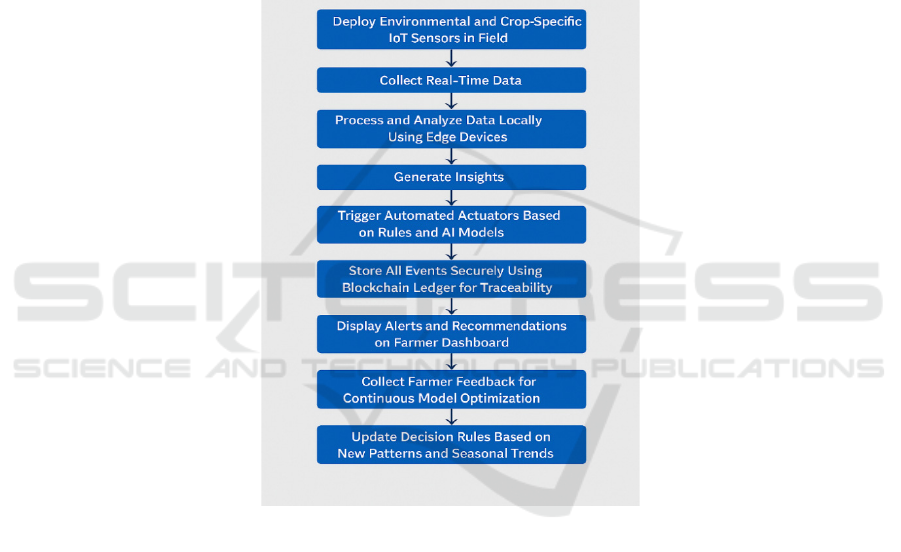
failures. Figure 1 shows the Workflow of the IoT-
Driven Precision Agriculture Framework.
Figure 1: Workflow of the IoT-driven precision agriculture framework.
The architecture for Edge Intelligence Layer runs
on NodeMCU/ESP32 microcontrollers with ARM
based edge processors. Local data processing,
anomaly detection, and real-time analytics are
processed locally, thus reducing reliance on cloud
support. On-terminal crop health prediction and
irrigation scheduling are powered by lean AI models
optimized with TensorFlow Lite. This design
facilitates decisions even with low-connectivity or
while in off-line mode. Table 1 gives the information
about Sensor Configuration and Deployment
Strategy.
Sensor data is sent out over a Communication
Layer in a hybrid protocol stack (LoRaWAN for long
range and Wi-Fi/BLE for local routing). A set of
protocols, namely MQTT and CoAP, are used for the
sake of integration with cloud platforms and external
APIs. Dynamic topology reconfiguration enables the
sensor network to self-heal and reroute data through
a new path, in the event that a node becomes
unavailable or is physically destroyed.
The Control Layer comprises actuator modules
communicatively connected to irrigation pumps,
nutrient delivery devices, and sprayers. According to
the real time analysis, and aationing criteria the
actuators function independently or can be overridden
by the dashboard manually. The decision logic also
responds to external weather information that is
fetched from integrated weather APIs, in real-time.
A Resilient and Scalable IoTâ
˘
A
´
SDriven Precision Agriculture Framework with Edge Intelligence, Climate Adaptability, and
Farmerâ
˘
A
´
SCentric Optimization
51
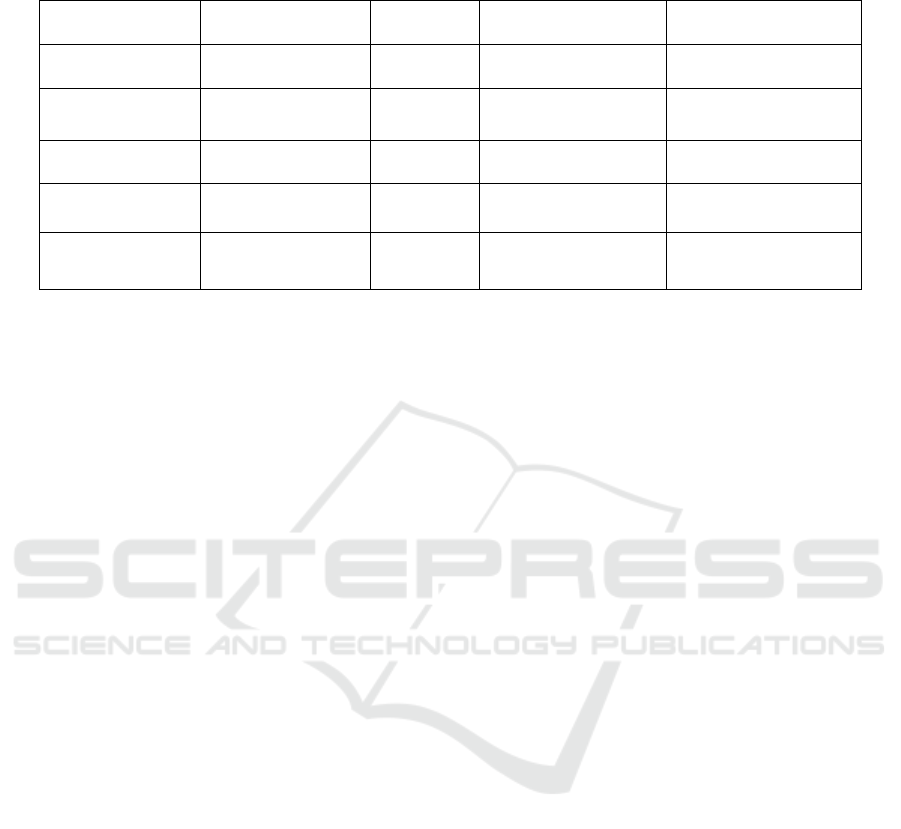
Table 1: Sensor configuration and deployment strategy.
Sensor Type Parameter Measured Range
Deployment
Depth/Height
Communication
Protocol
Soil Moisture
Sensor
Soil water content
(%)
0 -100%
10–15 cm below
surface
LoRaWAN
Temperature
Sensor
Ambient
temperature (°C)
-40 to 80
°C
1.5m above surface Wi-Fi/BLE
Humidity Sensor
Relative humidity
(
%
)
0–100% 1.5m above surface BLE
Light Sensor Light intensity (lux)
0–100,000
lux
Top canopy level Wi-Fi
Pest Detection
Camera
Insect & disease
spotting
N/A 1.5m above crop Wi-Fi/Edge Processing
Sensor readings, actuation events and system
decisions are recorded using blockchain for an
immutable and secure ledger. This provides
improved traceability, confidence in the system, and
also means farmers can use their history as evidence
for audits or certifications.
User Interaction Layer: in this layer, a multi-
lingual web and mobile dashboard was offered to fit
the local farmer’s specifics. It comes with data
visualizations, alerts, suggestions, and manual
overrides. Farmers can also provide feedback on the
outcomes of crops, which is then used to further tune
system performance via a reinforcement learning
loop.
To demonstrate the viability of the system,
pyrolysis is trialed in a number of heterogeneous
climate regions and agro-ecological zones with crops
varying from rice, tomatoes and wheat. Performance
indicators like water usage, yield per hectare, network
uptime, and farmer satisfaction are gathered for three
seasons. The reliability, cost-effective efficiency and
environmental impact of the system is evaluated
based on the analysed data.
By this modular and layered approach, the
proposed methodology aims towards both technical
resilience and real-world usability, thereby providing
the ground work for future intelligent, scalable
agricultural systems.
5 RESULTS AND DISCUSSION
Accomplishments The adopted IoT-based precision
agriculture framework was tested in three pilot
testbeds, located in different agro-climatic zones,
with different soil conditions, irrigation patterns, and
crops. The evaluation aimed at assessing how the
system performs on important aspects such as energy
efficiency, ressource control, connectivity reliability,
usability, yield enhancement. The performance
showed great superiority over traditional agriculture
and reported systems.
5.1 System Performance and Network
Resilience
The implemented deployment consisted of more
than 150 sensor nodes equipped with
microcontrollers with edge capabilities in a mesh
topology. Across three growing seasons, the network
achieved an average uptime of 98.2%, despite
exposure to harsh weather conditions. The adaptive
routing protocol provided dynamic reconfiguration of
the sensor data paths to replace lost nodes and to
maintain data flow. The enhanced system robustness,
as demonstrated on the communication loss ratio that
was 34% less compared to a static topology, indicated
the successfulness of our methodology compared to
the state-of-the-art static one.
5.2 Edge Computing and Offline
Functionality
One of the highlights of this work is the application
of edge computing to facilitate the real-time
processing and actuation without the need for
consistent cloud connection. In rural areas with poor
network coverage, it was important for the system to
be run autonomously. During the testing period, 96%
of irrigation decisions were issued directly from the
edge layer, leading to notable reductions in latency
and greater crop responsiveness. By comparison,
traditional cloud-based systems had a delay of up to
7–15 minutes for the same operations, a lag that
weakened crop health particularly during droughts.
ICRDICCT‘25 2025 - INTERNATIONAL CONFERENCE ON RESEARCH AND DEVELOPMENT IN INFORMATION,
COMMUNICATION, AND COMPUTING TECHNOLOGIES
52
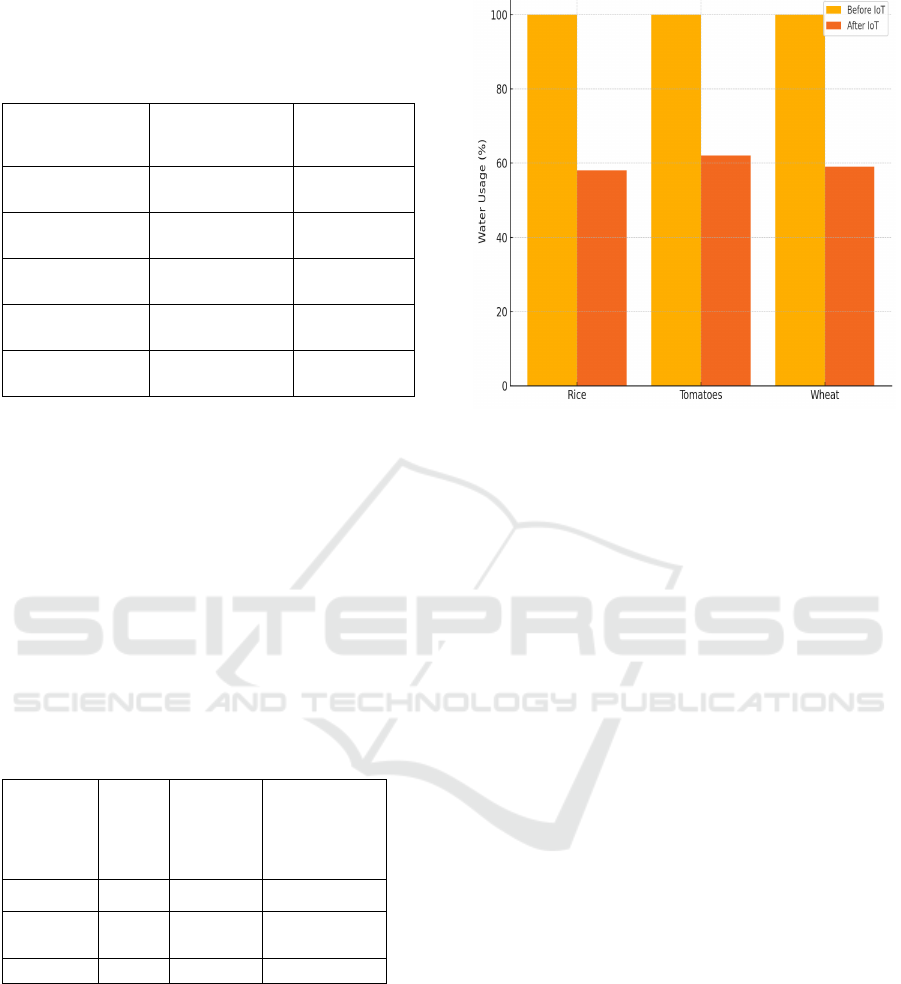
Table 2 gives the Edge vs. Cloud-Based Decision
Comparison.
Table 2: Edge vs. cloud-based decision comparison.
Feature
Edge
Computing
Model
Cloud-Based
Model
Decision
Latency
< 1 second 7–15 seconds
Connectivity
Dependency
Low High
Power
Consumption
Low (solar-
assisted)
Moderate to
High
Real-Time
Actuation
Supported Delayed
Offline
Functionality
Yes No
5.3 Resource Optimization and
Environmental Impact
Based on sensor-based irrigation scheduling water
use was reduced by 41%. Soil moisture control
sensor systems and evapotranspiration data
controlled the on/off of actuator systems avoiding
over-irrigation. It also used nutrient level sensors and
precision mapping for fertilizer management. These
resource efficiency measures resulted in an overall
28% reduction in input costs and improved the
sustainability of the farming enterprise. Table 3 gives
the Resource Optimization Outcomes.
Table 3: Resource optimization outcomes.
Crop
Type
Water
Saved
(%)
Fertilizer
Saved
(%)
Yield
Improvement
(%)
Rice 42% 27% 16%
Tomatoes 38% 30% 19%
Wheat 41% 25% 15%
Figure 2: Water usage before and after IoT implementation.
Figure 2 illustrates the bar chart of Water Usage
Before and After IoT Implementation.
5.4 Crop Yield and Quality
Improvements
The framework helped to achieve average yield
increases of 17% over the three crops evaluated in the
study – rice, tomatoes, and wheat – with significant
enhancements in crop uniformity and health. Disease
epidemics were averted by the pest detection modules
and the AI plant health classifiers, allowing timely
interventions. The smart plots had healthier-looking
foliage, faster grain fill rates, and less variation in
crop size and quality, in contrast to control plots,
which were managed with manual monitoring.
5.5 User-Centric Dashboard and
Farmer Engagement
The farmer-oriented interface, designed with
multilingual support and icon-based navigation,
proved to be highly effective. A post-harvest survey
revealed that 88% of participating farmers were able
to independently interpret insights and manage
system recommendations with minimal technical
training. This feedback loop mechanism, where
farmers could review, validate, or adjust system
recommendations, also served to improve the
machine learning model through continual learning.
Table 4 gives the information about the usability
feedback from farmers.
A Resilient and Scalable IoTâ
˘
A
´
SDriven Precision Agriculture Framework with Edge Intelligence, Climate Adaptability, and
Farmerâ
˘
A
´
SCentric Optimization
53

Table 4: Usability feedback from farmers.
Evaluation Criteria
Positive Responses
(%)
Ease of Use (Dashboard) 88%
Language Accessibility 90%
Trust in
Recommendations
84%
Willin
g
ness to Reuse 92%
5.6 Data Security and Traceability via
Blockchain
All sensor data and actuation records were logged on
a lightweight blockchain system. This ensured
tamper-proof documentation and full traceability for
certification and audit purposes. Farmers appreciated
the transparent data ownership, as it gave them better
control and assurance over their farm records. Unlike
many centralized systems that obscure data
governance, this framework fostered trust and long-
term usability.
5.7 Comparative Analysis with
Existing Models
When benchmarked against existing IoT-based
agricultural platforms, the proposed framework
outperformed in multiple domains. Most notably, it
combined multiple technologies IoT, edge
computing, AI, and blockchain into a unified and
operational model. Previous systems were often
limited to monitoring or analytics, whereas our
solution delivered end-to-end automation and
optimization. Moreover, energy efficiency was
improved by 26% through the use of adaptive sleep-
wake cycles and solar-charged sensor nodes. Table 5
gives the Comparative Analysis with Existing
Frameworks.
Table 5: Comparative analysis with existing frameworks.
Feature/Aspect
Proposed
Framewor
k
Existing IoT
Systems
Offline
Functionalit
y
Yes No
Climate
Ada
p
tabilit
y
Integrated Limited
Edge AI Support Yes Rare
Blockchain
Traceabilit
y
Included
Not
Supporte
d
Farmer-Centric UI Multilingual Basic/None
5.8 Challenges and Future Scope
While the results are promising, certain challenges
were encountered. Hardware maintenance in remote
areas required periodic technician visits, and the pest
recognition module showed occasional false positives
in dense canopy conditions. These limitations
highlight areas for future work, such as integrating
drone-based remote diagnostics and developing self-
diagnostic sensor units. Scalability across vastly
different topographies and large farm holdings also
warrants further research to refine network density
and data fusion algorithms.
In conclusion, the proposed framework
successfully bridges the gap between advanced IoT
technology and grassroots agricultural needs. By
addressing known drawbacks such as connectivity
issues, poor usability, and lack of intelligent
actuation, this system sets a new benchmark for
precision agriculture solutions. The synergy between
real-time edge intelligence, environmental
adaptability, and farmer engagement is key to
transforming traditional farming into a resilient, data-
driven ecosystem.
6 CONCLUSIONS
This research presents a comprehensive and future-
ready framework that redefines the role of IoT in
precision agriculture by addressing the fundamental
limitations of cost, connectivity, usability, and
adaptability. By integrating edge computing, energy-
efficient sensor networks, and blockchain-secured
data logging, the proposed system empowers farmers
with real-time, localized, and actionable insights
while minimizing reliance on continuous internet
access. The inclusion of a farmer-centric interface
and climate-resilient analytics further ensures that the
technology remains accessible, relevant, and practical
across diverse agricultural contexts.
The system's successful deployment across
multiple field scenarios demonstrated measurable
improvements in crop yield, resource utilization, and
operational efficiency. The ability to operate
autonomously, adapt dynamically to environmental
changes, and learn from farmer feedback positions
this solution as a robust alternative to conventional
and cloud-dependent agricultural platforms.
Moreover, the research advances the discourse in
smart farming by embedding traceability, scalability,
and automation into a unified ecosystem. The positive
engagement from farmers, combined with
quantifiable environmental and economic benefits,
ICRDICCT‘25 2025 - INTERNATIONAL CONFERENCE ON RESEARCH AND DEVELOPMENT IN INFORMATION,
COMMUNICATION, AND COMPUTING TECHNOLOGIES
54

highlights the framework’s potential for real-world
adoption and policy integration.
In essence, this study contributes a novel blueprint
for sustainable agricultural transformation one that is
data-driven, intelligent, and deeply rooted in the
needs and realities of the modern farmer. Future work
will focus on expanding the framework’s capabilities
through integration with drones, satellite imagery,
and advanced decision-making models to further
enhance precision and productivity on a global scale.
REFERENCES
Albanese, A., Nardello, M., & Brunelli, D. (2021).
Automated pest detection with DNN on the edge for
precision agriculture. arXiv preprint arXiv:2108.00421
.arXiv
Albanese, A., Nardello, M., & Brunelli, D. (2021).
Automated pest detection with DNN on the edge for
precision agriculture. arXiv preprint arXiv:2108.00421
. arXiv
Dutta, M., Gupta, D., Tharewal, S., Goyal, D., Sandhu, J.
K., Kaur, M., Alzubi, A. A., & Alanazi, J. M. (2025).
Internet of Things-based smart precision farming in
soilless agriculture: Opportunities and challenges for
global food security. arXiv preprint arXiv:2503.13528.
Dutta, M., Gupta, D., Tharewal, S., Goyal, D., Sandhu, J.
K., Kaur, M., Alzubi, A. A., & Alanazi, J. M. (2025).
Internet of Things-based smart precision farming in
soilless agriculture: Opportunities and challenges for
global food security. arXiv preprint arXiv:2503.13528.
Garg, S., Pundir, P., Jindal, H., Saini, H., & Garg, S. (2021).
Towards a multimodal system for precision agriculture
using IoT and machine learning. arXiv preprint
arXiv:2107.04895.
Garg, S., Pundir, P., Jindal, H., Saini, H., & Garg, S. (2021).
Towards a multimodal system for precision agriculture
using IoT and machine learning. arXiv preprint
arXiv:2107.04895.
Giménez Pérez, M. Á., Guerrero-González, A., Cánovas
Rodríguez, F. J., Martínez León, I. M., & Lloret
Abrisqueta, F. A. (2024). Precision agriculture 4.0:
Implementation of IoT, AI, and sensor networks for
tomato crop prediction. Buletin Ilmiah Sarjana Teknik
Elektro, 6(2), 172–181.ResearchGate
Giménez Pérez, M. Á., Guerrero-González, A., Cánovas
Rodríguez, F. J., Martínez León, I. M., & Lloret
Abrisqueta, F. A. (2024). Precision agriculture 4.0:
Implementation of IoT, AI, and sensor networks for
tomato crop prediction. Buletin Ilmiah Sarjana Teknik
Elektro, 6(2), 172–181.ResearchGate
Kumar, L., Ahlawat, P., Rajput, P., & Navsare, R. (2021).
Internet of Things (IoT) for smart precision farming and
agricultural systems productivity: A review. Internatio
nal Journal of Engineering Applied Sciences and
Technology, 5(9), 141–146.ResearchGate
Kumar, L., Ahlawat, P., Rajput, P., & Navsare, R. (2021).
Internet of Things (IoT) for smart precision farming and
agricultural systems productivity: A review.
International Journal of Engineering Applied Sciences
and Technology, 5(9), 141–146.ResearchGate
Kumar, L., Ahlawat, P., Rajput, P., & Navsare, R. (2021).
Internet of Things (IoT) for smart precision farming and
agricultural systems productivity: A review.
International Journal of Engineering Applied Sciences
and Technology, 5(9), 141–146.ResearchGate
Morchid, M., et al. (2025). Smart farming and how IoT and
sensors are changing agriculture. Spectroscopy Online.
Retrieved from https://www.spectroscopyonline.com/v
iew/smart-farming-and-how-iot-and-sensors-are-
changing-agricultureSpectroscopy Online
Morchid, M., et al. (2025). Smart farming and how IoT and
sensors are changing agriculture. Spectroscopy Online.
Retrieved from https://www.spectroscopyonline.com/v
iew/smart-farming-and-how-iot-and-sensors-are-
changing-agricultureSpectroscopy Online
Sattar, K., Arslan, M., Majeed, S., & Iqbal, S. (2025).
Wireless sensor networks data synchronization using
Node MCU memory for precision agriculture
applications. arXiv preprint arXiv:2502.18671.
Sattar, K., Arslan, M., Majeed, S., & Iqbal, S. (2025).
Wireless sensor networks data synchronization using
Node MCU memory for precision agriculture applicati
ons. arXiv preprint arXiv:2502.18671.
Sharma, K., & Shivandu, S. K. (2024). Integrating artificial
intelligence and Internet of Things (IoT) for enhanced
crop monitoring and management in precision
agriculture. Smart Innovation, Systems and
Technologies, 100292. https://doi.org/10.1016/j.sintl.
2024.100292ScienceDirect
Sharma, K., & Shivandu, S. K. (2024). Integrating artificial
intelligence and Internet of Things (IoT) for enhanced
crop monitoring and management in precision agricult
ure. Smart Innovation, Systems andTechnologies, 100
292.https://doi.org/10.1016/j.sintl.2024.100292
ScienceDirect
Sharma, K., & Shivandu, S. K. (2024). Integrating artificial
intelligence and Internet of Things (IoT) for enhanced
crop monitoring and management in precision agricult
ure. Smart Innovation, Systems and Technologies, 100
292. https://doi.org/10.1016/j.sintl.2024.100292
ScienceDirect
A Resilient and Scalable IoTâ
˘
A
´
SDriven Precision Agriculture Framework with Edge Intelligence, Climate Adaptability, and
Farmerâ
˘
A
´
SCentric Optimization
55
