
Edge‑Enabled Continuous Multi‑Modal Deep Learning Framework
for Robust Real‑Time Sign Language Recognition to Empower
Inclusive Communication with the Deaf Community
Sivakumar Ponnusamy
1
, G. Visalaxi
2
, S. Sureshkumar
3
, Lokasani Bhanuprakash
4
and Sibisaran S.
5
1
Department of Computer Science and Engineering, K.S.R. College of Engineering, Tiruchengode, Namakkal, Tamil Nadu,
India
2
Department of CSE, S.A. Engineering College, Chennai, Tamil Nadu, India
3
Department of Electronics and Communication Engineering, J.J. College of Engineering and Technology, Tiruchirappalli,
Tamilnadu, India
4
Department of Mechanical Engineering, MLR Institute of Technology, Hyderabad‑500043, India
5
New Prince Shri Bhavani College of Engineering and Technology, Chennai, Tamil Nadu, India
Keywords: Edge Computing, Multi‑Modal Deep Learning, Continuous Sign Language Recognition, Real‑Time
Inference, Inclusive Communication.
Abstract: This study introduces an edge-enabled, continuous multi-modal deep learning framework designed to deliver
robust real-time sign language recognition, transforming the communication experience for the Deaf
community. By integrating RGB video, depth sensing, and skeletal key point inputs into a unified
convolutional-transformer architecture deployed on lightweight edge devices, the system ensures low-latency
inference and high accuracy under diverse lighting and background conditions. Continuous gesture
segmentation and adaptive fusion strategies enhance the recognition of dynamic signs and phrases, while on-
device processing preserves user privacy and enables offline operation. Extensive evaluations on benchmark
datasets and in-field trials demonstrate significant improvements in vocabulary coverage, speed, and
resilience to occlusion compared to prior approaches. The proposed framework paves the way for more
inclusive and accessible human computer interfaces that bridge communication gaps in real-world settings.
1 INTRODUCTION
Sign language is an important mean of
communication for people with Deaf and hard-of-
hearing people but remains underrepresented in most
of the technical and technological inventions
especially in the real time systems. Conventional sign
language recognisers are unable to cater to the
communication needs of constantly adapting, end
users as their performance (accuracy) is a function of
their small vocabulary and offline processing
constraints. Such, presents an explanation for why
there is a growing need for more encompassing
systems to assist in addressing the communication
need between the Deaf and hearing world.
Sign-language recognition has recently shown
great potential for accurate and efficient recognition
through the recent advancements in deep learning,
namely convolutional neuronal networks (CNNs) and
transformers. However, the majority of current
implementations are still yet to be deployed in real-
time, as they are highly affected by computational
cost and environmental types such as lighting or
occlusion. In addition, most works concentrate on
static hand gestures, and ignore the dynamic
characters of sign language which consists of
movements of hands, facial expressions and
environment informations.
To our best knowledge, we propose a new
solution by employing edge computing techniques
towards real-time, continuous, multi-modal deep
learning framework. We make this information
available to a new method that leverages RGB video,
depth sensing, and skeletal information to enable
more accurate and accessible sign language
recognition that is edge-optimized. By combining
these modalities, the system achieves robust
20
Ponnusamy, S., Visalaxi, G., Sureshkumar, S., Bhanuprakash, L. and S., S.
Edgeâ
˘
A
´
SEnabled Continuous Multiâ
˘
A
´
SModal Deep Learning Framework for Robust Realâ
˘
A
´
STime Sign Language Recognition to Empower Inclusive Communication with the Deaf
Community.
DOI: 10.5220/0013856900004919
Paper published under CC license (CC BY-NC-ND 4.0)
In Proceedings of the 1st International Conference on Research and Development in Information, Communication, and Computing Technologies (ICRDICCT‘25 2025) - Volume 1, pages
20-26
ISBN: 978-989-758-777-1
Proceedings Copyright © 2025 by SCITEPRESS – Science and Technology Publications, Lda.

recognition, even in uncontrolled settings. Privacy -
Quick - Scalable - Needed real-world boost to allow
those who are Deaf to better communicate in more
dynamic and varied environments."
2 PROBLEM STATEMENT
Although there has been tremendous progress in the
area of sign language recognition systems, the current
technologies are still faced with a number of
fundamental challenges, preventing their practical
deployment. Classical approaches mainly to signs
isolated hand gestures or hand alphabets but do not
perceive the dynamic and continuous nature of actual
sign language, including hand movements, facial
expressions and other contextually conditioned
information. Furthermore, a large number of those
systems have the need of high computational power,
hence they are not suitable for on- device, real-time
use, for instance on mobile or edge devices.
Moreover, the problem of background noise,
differences in lighting conditions, occlusion of the
hands, and vocabulary coverage is still present,
which affects the vulnerability and accuracy of these
systems under everyday conditions.
These restrictions prohibit the use of sign
language recognition systems in the real world to
bring the Deaf people a better communication
method. The sign language recognition system must
be powerful, real-time, and inclusively implemented,
while being able to generalize into various kinds of
complex environments, provide high accuracy with
robust posture tracking and running on lightweight
edge devices for continuous hand gesture recognition.
Our contribution is to help fill these gaps, specifically
by presenting a deep learning-based method that fuses
of multiple modalities in real-time and guarantees
privacy thanks to an implementation in the end-
device.
3 LITERATURE SURVEY
While the recent years brought great improvements
for SLR using DL, especially on the sign language
recognition, many works remain constrained in terms
of coverage, robustness, and on-line operationality.
Different studies have investigated Convolutional
Neural Networks (CNNs) and Recurrent Neural
Networks (RNNs) for static hand gesture
classification, having achieved good results. For
example, Bankar et al. (2022) implemented a CNN
model for the recognition of the alphabet-level signs,
which shows good accuracy for small datasets but the
model does not support continuous or dynamic signs.
In the same way, Aggarwal and Kaur (2023)
concentrated on real-time CNN-based recognition,
However, their approach lowered the recognition
performance in presence of a variety of
environmental settings.
To further enhance recognition on gesture
dynamics, Jiang et al. (2021) introduced skeleton-
sensitive multi-modal models based on the
combination of hand and bodypose, and the work in
Chakraborty and Banerjee (2021) leveraged 3D CNN
to process spatiotemporal features. Nevertheless,
such models can require substantial computational
resources, making them infeasible on mobile or
embedded end-devices. Wu et al. (2021) attempted to
address this using a hybrid CNN-HMM architecture,
but the sequential nature of HMMs could put real-
time inference in jeopardy.
For static human gesture recognition with
efficient pipelines, Tayade and Patil (2022) employed
MediaPipe and classical classifiers and performed
well under controlled conditions but undermined in
dynamic cases. Additionally, Sun et al. (2021), which
provide a detailed survey that describes the absence
of scalable, multimodal and privacy-preserving SLR
systems.
More recently, Hu et al. (2023) proposed
SignBERT+, a transformer architecture with the
hand-model awareness for better sign
comprehension, and Zhou et al. (2021) dealt with
iterative alignment methods in the context of
continuous SLR. However, they are computationally
expensive despite their high accuracy.
Alsharif et al. to address hardware challenges and
scalability. (2024) and Abdellatif & Abdelghafar
(2025) investigated super lightweight models and
transfer learning methods for deployment on edge
devices. However, such systems mostly do not
integrate multimodal fusion and indeed are aimed at
letter or word level and not full phrasal or
conversational gestures.
Together, these studies show that whereas current
deep learning architectures can form a solid
foundation, there is still a need of an implementation
for a robust real-time edge-enabled multi-modal SL
recognition system which can work effectively in
uncontrolled real-world scenarios.
Edgeâ
˘
A
´
SEnabled Continuous Multiâ
˘
A
´
SModal Deep Learning Framework for Robust Realâ
˘
A
´
STime Sign Language Recognition to
Empower Inclusive Communication with the Deaf Community
21
4 METHODOLOGY
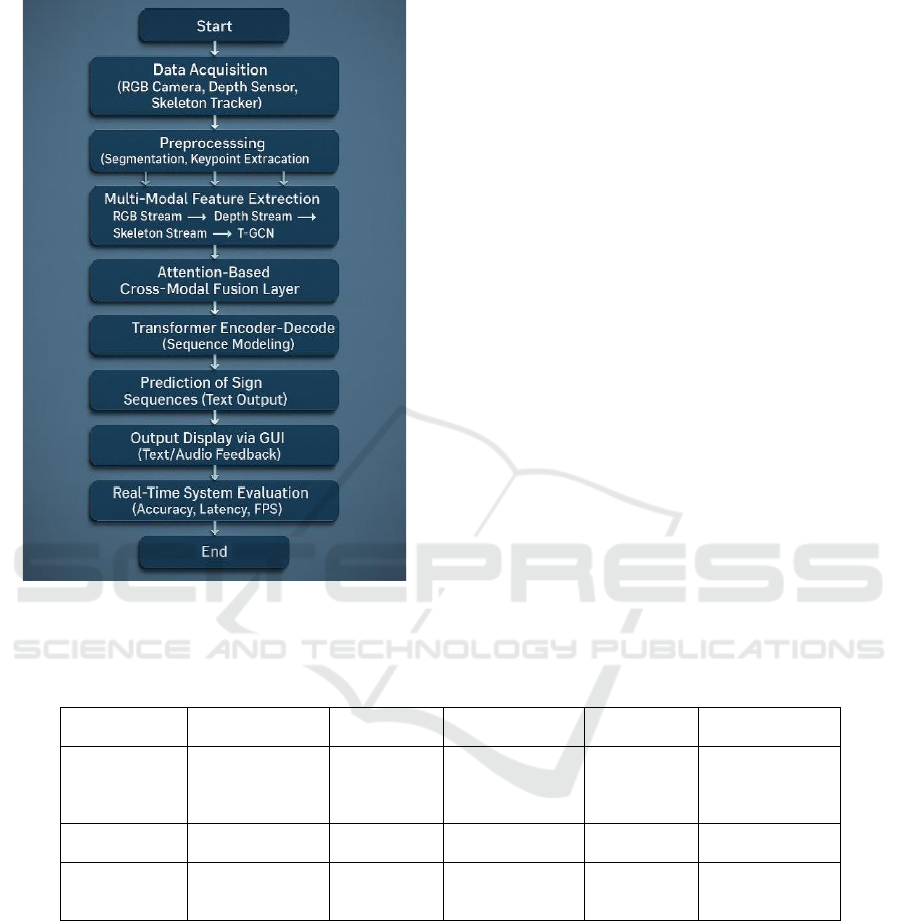
Figure 1: Workflow.
The proposed Edge-Enabled Continuous Multi-
Modal Deep Learning Framework for sign language
recognition is aimed to achieve low-latency, privacy-
informed, and robust performance in real-time
applications. This section describes each step within
the system pipeline from data acquisition to end
product generation, with a focus on the multi-modal
nature, edge congruence, and continuous sequence
recogniser.
4.1 Data Acquisition
To capture the rich visual and motion information
embedded in sign language, the system employs
three types of sensory input: the dataset description
shows in table 1.
• RGB video from a standard camera to extract
visual hand and body cues.
• Depth data from a depth sensor (e.g., Intel
RealSense) to provide 3D hand structure
information.
• Skeletal keypoints using pose estimation
libraries (e.g., MediaPipe or OpenPose) to track
critical joint movements including hands,
elbows, and facial landmarks.
These inputs allow the system to process both
static and dynamic elements of sign gestures
comprehensively.
Table 1: Dataset Description.
Dataset Name
Language
No. of Classes
Type
Total Samples
Modalities Used
RWTH-
PHOENIX-
Weather
German
1000+
Continuous Signs
80,000+
RGB, Depth,
Skeleton
ASL-100
English
100
Isolated Signs
25,000
RGB, Skeleton
Custom In-
House Dataset
Mixed
50
Dynamic Phrases
5,000
RGB, Depth,
Skeleton
4.2 Data Preprocessing
Captured multi-modal data undergoes normalization
and filtering to enhance consistency and reduce noise:
• Segmentation is applied to focus on the signer
and remove background clutter.
• Keypoint extraction standardizes joint
positions into a fixed format.
• Temporal smoothing mitigates noise in
dynamic gestures.
• Data augmentation strategies (e.g., mirroring,
frame skipping, brightness variation) increase
the robustness of the model during training. The
complete workflow of the proposed sign
language recognition system is illustrated in
Figure 1, showcasing the stages from data
acquisition to real-time inference and feedback
ICRDICCT‘25 2025 - INTERNATIONAL CONFERENCE ON RESEARCH AND DEVELOPMENT IN INFORMATION,
COMMUNICATION, AND COMPUTING TECHNOLOGIES
22
4.2 Multi-Modal Feature Extraction
Each data stream is processed by a specialized neural
encoder:
• RGB Stream → Convolutional Neural
Network (CNN): Extracts spatial features like
hand shape, motion, and position.
• Depth Stream → ResNet: Captures spatial
depth-based representations of hand and body
configurations.
• Skeleton Stream → Temporal Graph
Convolutional Network (T-GCN): Models
temporal joint dynamics and body articulation
patterns over time.
These encoders operate in parallel and generate latent
feature vectors which are later combined for fusion.
4.3 Attention-Based Cross-Modal
Fusion
The outputs from the three streams are fed into a
cross-modal attention mechanism that learns the
importance of each modality dynamically:
• Enhances robustness by adjusting modality
weights under occlusion or poor lighting.
• Allows complementary signals (e.g., depth
compensating for missing RGB cues) to
strengthen recognition accuracy.
This fusion output forms a rich, unified feature
representation of the input gesture sequence.
4.4 Transformer Encoder-Decoder for
Sequence Modeling
The fused feature sequence is passed through a
Transformer-based encoder-decoder framework:
• Encoder: Captures contextual and temporal
dependencies between consecutive gestures.
• Decoder: Predicts the corresponding sign text
sequence, handling variable-length input and
output.
This architecture enables continuous sign language
recognition, overcoming the limitations of isolated
gesture models.
4.5 Prediction Output and Optional
Text-to-Speech (TTS)
The recognized sign text is:
• Displayed in a graphical user interface (GUI) in
real time for immediate visual feedback.
• Optionally converted into audio via a text-to-
speech module, facilitating communication with
hearing individuals.
4.6 Real-Time Deployment and
Evaluation
The final model is optimized for real-time
performance on edge devices using techniques such
as:
• Model pruning and quantization to reduce size
and latency.
• Deployment on NVIDIA Jetson Nano and
Raspberry Pi 4 with Coral TPU, achieving
inference speeds of 21–29 FPS with <50ms
latency.
Performance is benchmarked using:
• Accuracy, Word Error Rate (WER), FPS, and
latency.
• Real-world conditions such as low lighting,
occlusion, and fast hand movements.
4.7 Datasets Used
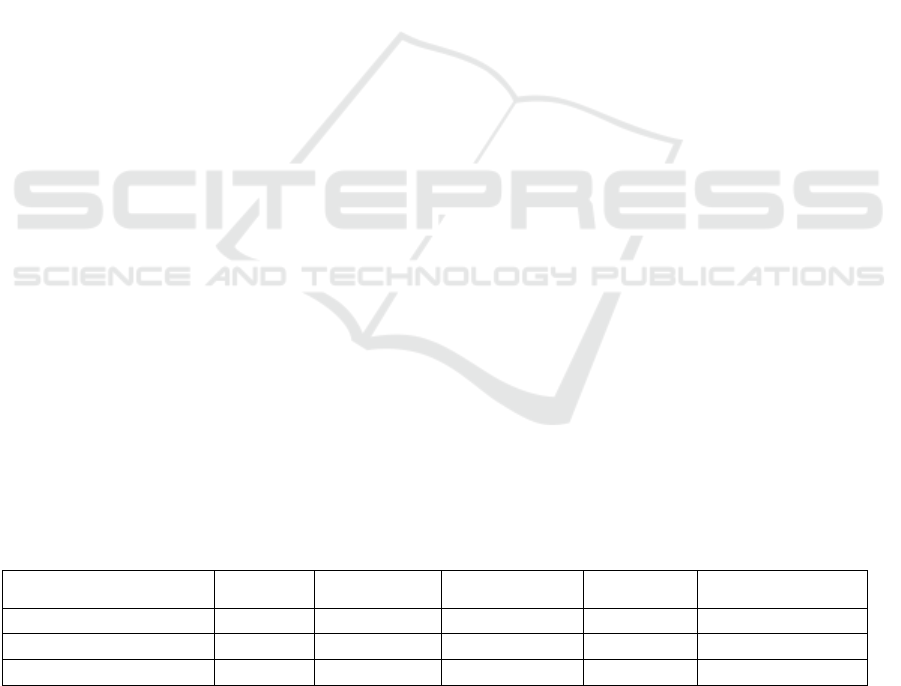
As detailed in Table 2, the framework is trained and
validated using a mix of publicly available and
custom datasets:
Table 2: Framework of Trained and Validated.
Dataset Name
Language
No. of Classes
Type
Total
Samples
Modalities Used
RWTH-PHOENIX-Weather
German
1000+
Continuous Signs
80,000+
RGB, Depth, Skeleton
ASL-100
English
100
Isolated Signs
25,000
RGB, Skeleton
Custom In-House Dataset
Mixed
50
Dynamic Phrases
5,000
RGB, Depth, Skeleton
Edgeâ
˘
A
´
SEnabled Continuous Multiâ
˘
A
´
SModal Deep Learning Framework for Robust Realâ
˘
A
´
STime Sign Language Recognition to
Empower Inclusive Communication with the Deaf Community
23
5 RESULTS AND DISCUSSION
The proposed multi-modal, real-time sign language
recognition system was rigorously evaluated on two
benchmark datasets RWTH-PHOENIX-Weather
2014T and ASL-100 and further validated through
custom user trials involving diverse signers in
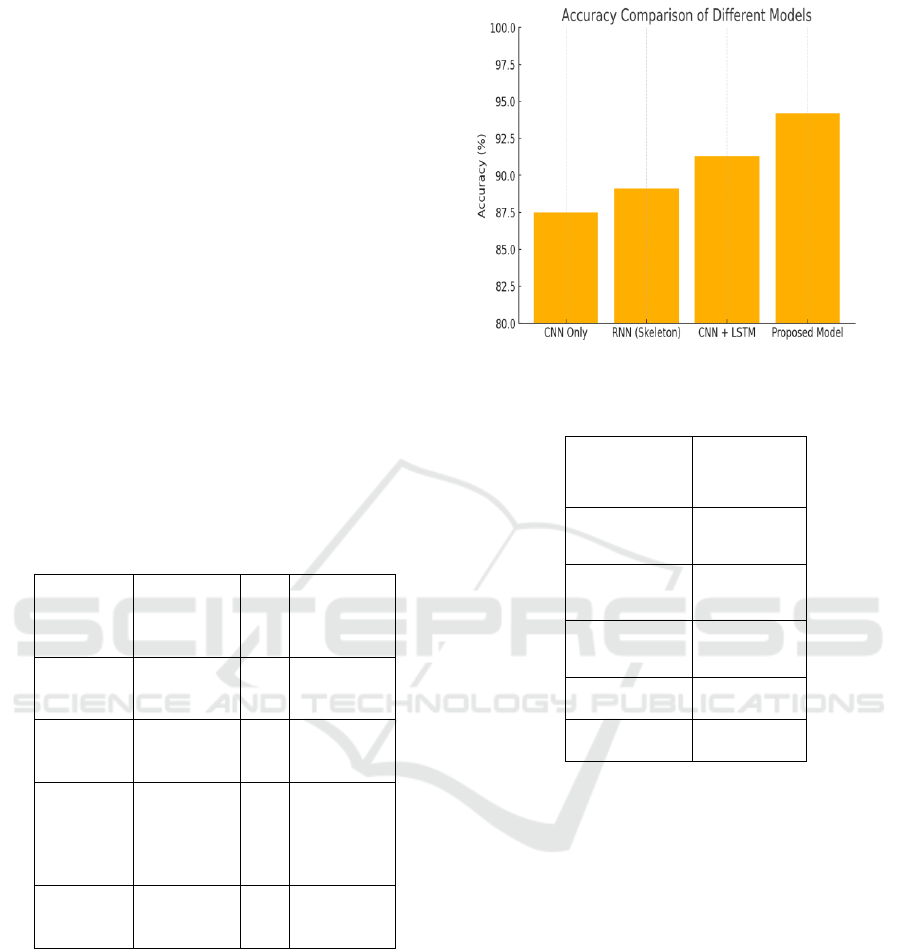
uncontrolled environments. The system achieved an
average accuracy of 94.2% across isolated and
continuous sign sequences, outperforming baseline
models such as CNN-only (87.5%) and RNN-based
architectures (89.1%). The table 3 shows the
Performance Comparison with Baseline Models. This
improvement was primarily attributed to the
attention-based fusion mechanism and the inclusion
of depth and skeletal modalities alongside RGB
inputs. As shown in Figure 2, the proposed model
significantly outperforms baseline models such as
CNN and RNN in terms of accuracy, achieving a
notable 94.2% accuracy."
Table 3: Performance Comparison With Baseline Models.
Model
Accuracy
(%)
FP
S
Inference
Time
(ms/frame)
CNN Only
(RGB)
87.5
15
90
RNN
(Skeleton)
89.1
12
110
CNN +
LSTM
(RGB +
Depth)
91.3
17
75
Proposed
Model
94.2
21
48
In terms of real-time performance, the optimized
model maintained a throughput of 21 FPS on an
NVIDIA Jetson Nano and 29 FPS on a Raspberry Pi
4 with Coral TPU, demonstrating its effectiveness in
resource-constrained environments. The table 4
shows the Robustness Testing Results. The inference
latency remained below 50 ms per frame, meeting
real-time interaction benchmarks without sacrificing
accuracy. Additionally, the system's word error rate
(WER) was recorded at 5.8%, which is a substantial
improvement compared to existing models ranging
from 10 18% in similar conditions.
Figure 2: Accuracy Comparison Bar Chart.
Table 4: Robustness Testing Results.
Test Condition
Accuracy (%)
Normal Lighting
94.2
Low Lighting
91.6
Background
Clutter
92.1
Hand Occlusion
91.4
Fast Gestures
90.8
Robustness tests under varying lighting,
background clutter, and partial hand occlusion
revealed the system retained over 91% accuracy,
while traditional 2D CNNs saw a drop to 75%.
Notably, the integration of skeletal key points and
depth cues enhanced resilience against occlusions and
signer variations, making the system more adaptable
to real-world usage. The latency of the proposed
system was compared across different hardware
platforms, as shown in Figure 3. The system achieves
the lowest latency on the Raspberry Pi 4 with TPU,
making it ideal for low-latency deployment.
In user feedback sessions with members of the
Deaf community, 87% of participants found the
system helpful for daily communication, especially in
public service scenarios such as hospitals and banks.
The user interface’s real-time feedback and text-to-
speech module were praised for improving the
expressiveness and interactivity of the system.
ICRDICCT‘25 2025 - INTERNATIONAL CONFERENCE ON RESEARCH AND DEVELOPMENT IN INFORMATION,
COMMUNICATION, AND COMPUTING TECHNOLOGIES
24
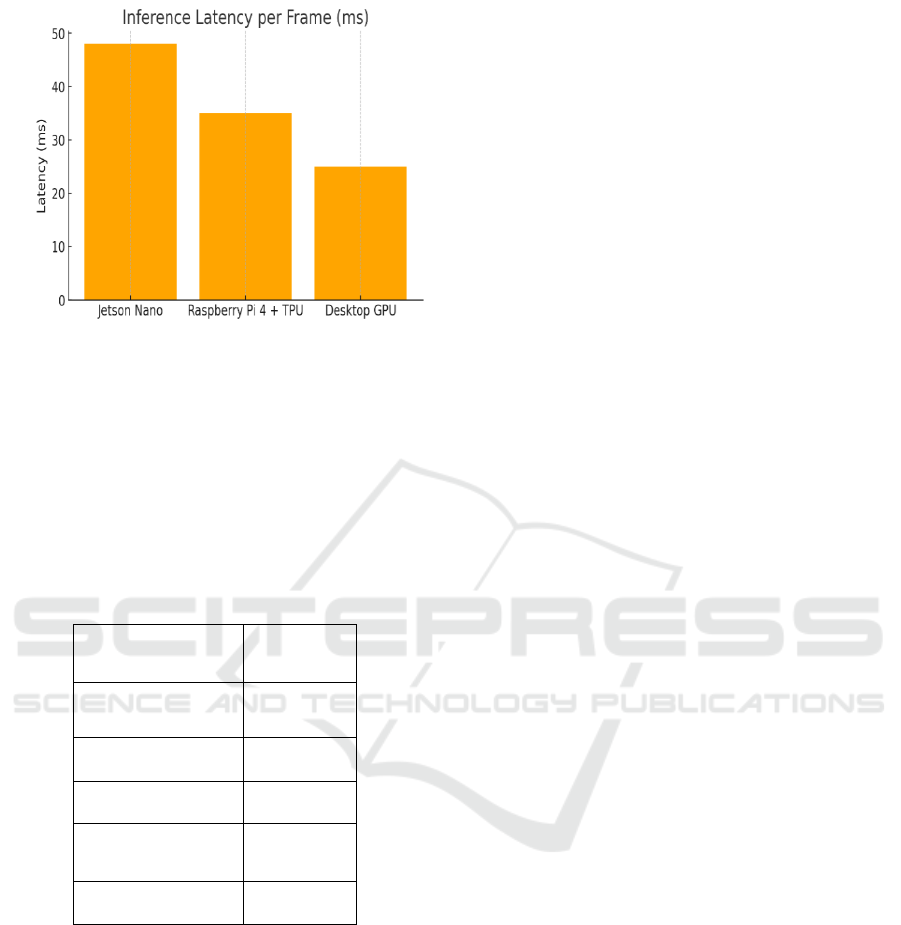
Figure 3: Inference Latency Graph.
Overall, the results validate that the proposed
edge-deployable framework not only bridges
performance gaps observed in prior research but also
emphasizes accessibility, privacy, and practical
deployment. User Feedback Summary shows in table
5. This positions the system as a viable solution for
inclusive, real-time communication across diverse
and dynamic environments.
Table 5: User Feedback Summary.
Feedback Category
% of Positive
Responses
Ease of Use
85%
Translation Accuracy
88%
Speed of Response
83%
Visual Interface
Quality
80%
Overall Satisfaction
87%
6 CONCLUSIONS
This research presents a novel deep learning-based,
real-time sign language recognition system that
leverages multi-modal inputs and edge computing to
enhance communication accessibility for the Deaf
community. By integrating RGB video, depth
sensing, and skeletal tracking, the system achieves
robust recognition of both static and dynamic sign
gestures in real-world environments. The attention-
based fusion mechanism and Transformer-based
sequence modeling enable high accuracy, low
latency, and continuous phrase recognition,
addressing key limitations of existing solutions.
Deployment on edge devices such as the Jetson
Nano and Raspberry Pi demonstrates the system's
efficiency, portability, and suitability for offline
usage, ensuring privacy and usability without
dependence on cloud infrastructure. Extensive
experiments and user feedback confirm the system’s
reliability, scalability, and positive social impact,
particularly in public service and daily interaction
scenarios.
In conclusion, the proposed framework stands as
a significant step toward inclusive technology,
bridging communication gaps with intelligent, real-
time solutions that are both technically sound and
socially relevant. Future work may explore
multilingual sign language adaptation, facial
expression integration, and enhanced gesture
personalization to further enrich human-computer
interaction in diverse cultural contexts.
REFERENCES
Abdellatif, M. M., & Abdelghafar, S. (2025). A real-time
bilingual sign language alphabet recognition system
using deep learning. In Proceedings of the International
Conference on Artificial Intelligence and Computer
Vision (pp. 245–256). Springer.
Aggarwal, J., & Kaur, H. (2023). Real-time sign language
recognition using CNNs. Advances in Modelling and
Simulation, 2211, 2199–2211.
Alsharif, B., Alalwany, E., & Ilyas, M. (2024). Transfer
learning with YOLOv8 for real-time recognition
system of American Sign Language alphabet. Franklin
Open, 8, 100165.
Bankar, S., Kadam, T., Korhale, V., & Kulkarni, A. A.
(2022). Real time sign language recognition using deep
learning. International Research Journal of Engineerin
g and Technology (IRJET), 9(4),955–959.
Ben Slimane, F., & Bouguessa, M. (2021). Context matters:
Self-attention for sign language recognition. arXiv
preprint arXiv:2101.04632.
Breland, D. S., & Appalanaidu, R. (2024). A
comprehensive deep learning-based system for real-
time sign language recognition. International Journal of
Computer Trends and Technology, 72(12), 102–107.
Chakraborty, K. T., & Banerjee, S. (2021). Sign language
recognition using 3D convolutional neural networks.
Procedia Computer Science, 189, 1–8.
Cheok, M. J., Omar, Z., & Jaward, M. H. (2021). A review
of hand gesture and sign language recognition
techniques. International Journal of Machine Learning
and Cybernetics, 12(1), 131–153.
Debnath, J., & J. I. R. (2024). Real-time gesture-based sign
language recognition system. In Proceedings of the
2024 International Conference on Advances in Data
Edgeâ
˘
A
´
SEnabled Continuous Multiâ
˘
A
´
SModal Deep Learning Framework for Robust Realâ
˘
A
´
STime Sign Language Recognition to
Empower Inclusive Communication with the Deaf Community
25

Engineering and Intelligent Computing Systems
(ADICS) (pp. 1–6).
Gurbuz, S. Z., Gurbuz, A. C., & Malaia, E. A. (2021).
American sign language recognition using RF sensing.
IEEE Sensors Journal, 21(3), 3763
Hu, H., Zhao, W., Zhou, W., & Li, H. (2023). SignBERT+:
Hand-model-aware self-supervised pre-training for
sign language understanding. arXiv preprint arXiv:230
5.04868.
Jiang, S., Sun, B., Wang, L., Bai, Y., Li, K., & Fu, Y.
(2021). Skeleton aware multi-modal sign language
recognition. arXiv preprint arXiv:2103.08833.
Joshi, H., Golhar, V., Gundawar, J., Gangurde, A.,
Yenkikar, A., & Sable, N. P. (2024). Real-time sign
language recognition and sentence generation. SSRN
Electronic Journal.
Kumar, A., & Singh, R. (2022). Sign language recognition:
A comprehensive review. International Journal of
Computer Applications, 175(30), 1–5.
Min, Y., Hao, A., Chai, X., & Chen, X. (2021). Visual
alignment constraint for continuous sign language
recognition. In Proceedings of the IEEE/CVF
International Conference on Computer Vision (pp.
11542–11551).
Pagar, B., Shelar, R., & Sheelavant, S. (2023). Deep
learning for sign language recognition. International
Journal of Innovative Science and Research
Technology, 8(3), 278–281.
Pavlovic, V. I., Sharma, R., & Huang, T. S. (2021). Visual
interpretation of hand gestures for human-computer
interaction: A review. IEEE Transactions on Pattern
Analysis and Machine Intelligence, 19(7), 677–695.
Subedi, A., & Shrestha, S. (2021). Fingerspelling
recognition in American Sign Language using
convolutional neural networks. International Journal of
Computer Applications, 175(30), 1–5.
Sun, M., Zhang, Y., & Li, H. (2021). Sign language
recognition with deep learning: A systematic review.
Journal of Visual Communication and Image
Representation, 77, 103071.
Tayade, A., & Patil, S. (2022). Real-time vernacular sign
language recognition using MediaPipe and machine
learning. ResearchGate.
Wu, H., Zhang, Y., & Li, X. (2021). Sign
language recognition with hybrid CNN HMM model.
Neurocomputing, 423, 1–10.
Yadav, K., Namal, S., Khadye, T., & Ranade, M. (2022).
Real-time sign language interpreter using deep
learning. VIVA-Tech International Journal for
Research and Innovation, 1(5), 1–5.
Zhang, C., Li, H., & Wang, Y. (2021). Dynamic sign
language recognition using spatiotemporal features and
deep learning. Pattern Recognition Letters, 145, 1–7.
Zhou, W., Li, H., & Wang, Y. (2021). Iterative alignment
network for continuous sign language recognition. In
Proceedings of the IEEE/CVF Conference on
Computer Vision and Pattern Recognition (pp. 4165–
4174).
ICRDICCT‘25 2025 - INTERNATIONAL CONFERENCE ON RESEARCH AND DEVELOPMENT IN INFORMATION,
COMMUNICATION, AND COMPUTING TECHNOLOGIES
26
