
Leveraging Large Language Models for Semantic Evaluation of RDF
Triples
Andr
´
e Gomes Regino
1 a
, Fernando Rezende Zagatti
1,4 b
, Rodrigo Bonacin
1 c
,
Victor Jesus Sotelo Chico
2 d
, Victor Hochgreb
2 e
and Julio Cesar dos Reis
3 f
1
Center for Information Technology Renato Archer, Campinas, S
˜
ao Paulo, Brazil
2
GoBots, Campinas, S
˜
ao Paulo, Brazil
3
Institute of Computing, University of Campinas, Campinas, S
˜
ao Paulo, Brazil
4
Department of Computing, UFScar, S
˜
ao Carlos, Brazil
Keywords:
LLM as a Judge, RDF Triple Generation, RDF Triple Validation.
Abstract:
Knowledge Graphs (KGs) depend on accurate RDF triples, making the quality assurance of these triples a
significant challenge. Large Language Models (LLMs) can serve as graders for RDF data, providing scalable
alternatives to human validation. This study evaluates the feasibility of utilizing LLMs to assess the quality
of RDF triples derived from natural language sentences in the e-commerce sector. We analyze 12 LLM con-
figurations by comparing their Likert-scale ratings of triple quality with human evaluations, focusing on both
complete triples and their individual components (subject, predicate, object). We employ statistical correla-
tion measures (Spearman and Kendall Tau) to quantify the alignment between LLM and expert assessments.
Our study examines whether justifications generated by LLMs can indicate higher-quality grading. Our find-
ings reveal that some LLMs demonstrate moderate agreement with human annotators and none achieve full
alignment. This study presents a replicable evaluation framework and emphasizes the current limitations and
potential of LLMs as semantic validators. These results support efforts to incorporate LLM-based validation
into KG construction processes and suggest avenues for prompt engineering and hybrid human-AI validation
systems.
1 INTRODUCTION
Knowledge Graphs (KGs) are organized representa-
tions of information that support semantic reason-
ing and knowledge discovery in various fields. KGs
consist of RDF (Resource Description Framework)
triples formatted as (subject, predicate, object) (Bon-
atti et al., 2019). These triples represent factual state-
ments and relationships between entities in a format
that machines can read, which is important for appli-
cations like search engines, recommendation systems,
and question answering. Building and maintaining
a KG effectively relies on the precise extraction and
verification of these triples from unstructured or semi-
a
https://orcid.org/0000-0001-9814-1482
b
https://orcid.org/0000-0002-7083-5789
c
https://orcid.org/0000-0003-3441-0887
d
https://orcid.org/0000-0001-9245-8753
e
https://orcid.org/0000-0002-0529-7312
f
https://orcid.org/0000-0002-9545-2098
structured text sources.
In recent years, Large Language Models (LLMs)
like GPT-4 (Achiam et al., 2023), Llama (Touvron
et al., 2023) and DeepSeek (Liu et al., 2024) have
shown significant success in various Natural Lan-
guage Processing (NLP) tasks. These models capture
complex linguistic and contextual patterns, leading to
strong effectiveness in summarization (Zhang et al.,
2025), translation (Elshin et al., 2024), and question
answering (Zhuang et al., 2023). Due to their ad-
vanced generative and reasoning abilities, LLMs are
being investigated as tools for automating the creation
of RDF triples from natural language (Regino et al.,
2023), offering a scalable method for constructing and
enhancing KGs.
The outputs of the LLM generation need thorough
evaluation, particularly regarding RDF triples. The
reliability of these triples is not guaranteed, as LLMs
may hallucinate, overlook contextual constraints, or
generate outputs that are incompatible with the un-
74
Regino, A. G., Zagatti, F. R., Bonacin, R., Chico, V. J. S., Hochgreb, V. and Reis, J. C.
Leveraging Large Language Models for Semantic Evaluation of RDF Triples.
DOI: 10.5220/0013837600004000
Paper published under CC license (CC BY-NC-ND 4.0)
In Proceedings of the 17th International Joint Conference on Knowledge Discovery, Knowledge Engineering and Knowledge Management (IC3K 2025) - Volume 2: KEOD and KMIS, pages
74-85
ISBN: 978-989-758-769-6; ISSN: 2184-3228
Proceedings Copyright © 2025 by SCITEPRESS – Science and Technology Publications, Lda.

derlying ontology. Without careful inspection, these
triples can propagate factual errors, biases, or vio-
late domain constraints, compromising the reliability
and trustworthiness of the entire KG. This assessment
is used to establish trust in the system, as users and
downstream applications depend on the accuracy and
relevance of the knowledge produced.
LLM-generated triples must conform to the on-
tological structure and semantics of the target KG.
The evaluation process is typically manual, necessi-
tating expert human reviewers, which renders it time-
consuming, expensive, and challenging to implement
at scale in practical applications. The systematic eval-
uation of these triples, particularly those generated
by LLMs, remains an under-researched area (Regino
and dos Reis, 2025), (Khorashadizadeh et al., 2024).
There is a lack of established metrics, protocols, and
frameworks for assessing triple quality in alignment
with human expectations and ontological consistency.
This intersection presents a valuable opportunity to
investigate whether LLMs can serve as evaluators or
’judges” of structured data, potentially reducing the
need for human reviewers and the heavy task that re-
lies on them.
Based on our exploratory literature review, we
observe that there is currently no widely accepted
framework implemented as a software tool for auto-
matically assessing the quality of RDF triples prior
to their integration into a KG. The absence of auto-
mated and reliable evaluation mechanisms, particu-
larly those that can closely mimic human judgment
with quality, poses an obstacle in the construction and
validation of KGs for real-world applications.
This article examines the effectiveness of LLMs
as automated evaluators, or “judges”, of RDF triples
generated from natural language text. Although
LLMs frequently create structured data from unstruc-
tured sources (Racharak et al., 2024), their ability to
assess the semantic adequacy, clarity, and coherence
of this structured output is not well-studied. We aim
to assess whether current LLMs can achieve human-
level evaluations of RDF triples in terms of their cor-
rectness and fidelity to the original sentences. Rec-
ognizing this capability can reduce the human efforts
needed for triple validation, which is an obstacle in
the construction and maintenance of adequate KGs.
We design and develop an evaluation pipeline
with 12 configurations of LLMs, which include three
model families (Gemma, Qwen, Sabia), two model
sizes (small, large), and two prompting strategies
(zero-shot, few-shots). Our study assesses each con-
figuration using 300 Portuguese sentence-triple pairs,
scoring them on four dimensions: subject, predicate,
object, and the complete triple. Ten human annota-
tors independently rated these triples to establish a
gold standard. We analyze the ordinal ratings from the
LLMs against the human judgments using two rank-
based correlation metrics to determine the extent to
which LLMs align with human preferences. Our in-
vestigation conducts a meta-evaluation to assess the
clarity and coherence of the justifications provided by
LLMs, thereby enhancing the quality assurance pro-
cess.
The result analysis demonstrates that LLMs pro-
vide lower average scores than human annotators
overall, except for the “subject” dimension, where
LLMs rate more generously. Few-shot prompting,
small models, and Sabia-family LLMs align most
closely with human evaluations. This suggests that
LLMs can capture some aspects of semantic plausi-
bility; nevertheless, the overall correlation levels re-
main below those typically expected for high-stakes
or expert-level annotation tasks. This highlights that,
although promising, LLMs may not yet match human
evaluators in accurately judging RDF triples across
the dimensions of subject, predicate, object, and over-
all fidelity. Among the four evaluation dimensions,
LLMs showed the strongest agreement with humans
when assessing full triples, suggesting better effec-
tiveness in holistic judgments compared to granular
components, such as predicates or objects. The meta-
evaluation confirms that few-shot prompts resulted in
more coherent and interpretable outputs.
This study offers three key and original contribu-
tions:
1. Benchmark Design: We introduce a new bench-
mark consisting of 300 sentence-triple pairs in
Portuguese language, annotated by experts across
some semantic dimensions, to facilitate system-
atic evaluation of LLMs;
2. Comprehensive Evaluation: We conduct orig-
inal empirical comparisons of 12 LLM config-
urations against human judgments using ordinal
scales and correlation metrics, revealing patterns
of alignment between models and human evalua-
tions;
3. Meta-Evaluation Strategy: We establish a novel
meta-evaluation step that employs a larger LLM
to evaluate the quality of justifications from
smaller models, emphasizing clarity and coher-
ence;
The remaining of this article is organized as fol-
lows: Section 2 describes related work on LLM
judges in RDF triple domain. Section 3 describes the
experimental setup. Section 4 presents the results;
Section 5 discusses the results; and Section 6 draws
concluding remarks.
Leveraging Large Language Models for Semantic Evaluation of RDF Triples
75

2 RELATED WORK
(Zheng et al., 2023) explored LLM as a judge for
other LLMs’ output. They introduced two bench-
marks: MT-Bench, assessing multi-turn conversa-
tional and reasoning abilities, and Chatbot Arena,
a crowdsourced platform for chatbot comparison.
Their work investigated whether LLMs like GPT-4
can reliably approximate human preferences in dia-
logue evaluation. Through over 6, 000 human judg-
ments, they demonstrated that LLMs can achieve over
80% agreement with humans, comparable to human-
human alignment, positioning the ”LLM-as-a-judge”
approach as a scalable alternative for conversational
AI evaluation. While both studies explored LLMs
for evaluation, our present study differs in domain,
method, and focus. We target the semantic assess-
ment of RDF triples derived from natural language, a
task rooted in the Semantic Web rather than dialogue.
Instead of agreement percentages, we measure align-
ment via correlation metrics (Spearman and Kendall
Tau) on fine-grained components (subject, predicate,
object, and whole triple).
Another relevant study, (Guerdan et al., 2025),
addressed the challenges of validating LLM-as-a-
judge systems, particularly in cases where human rat-
ings are ambiguous or lack clear gold labels. Their
work proposed a theoretical and empirical framework
for understanding how rating task design, elicitation,
aggregation schemes, and agreement metrics affect
judge system validation. The authors demonstrated
that current validation methods can select suboptimal
judge systems—sometimes performing up to 34%
worse than alternatives because they overlook the im-
pact of task indeterminacy, where multiple valid rat-
ings may exist. They demonstrated this through an
empirical study using five commercial LLMs to eval-
uate “toxicity” on the Civil Comments dataset, high-
lighting how existing validation pipelines can produce
misleading conclusions about both judge and target
system performance. Their concern lies in the vali-
dation of LLM judges in the absence of clear ground
truth. In contrast, our study focuses on the semantic
evaluation of RDF triples, where the alignment be-
tween LLM and human judgments is assessed through
statistical correlation.
Another relevant study explored the role of LLMs
as judges in the context of KG construction (Huang
et al., 2024). The proposed GraphJudge framework
leverages open-source and closed-source LLMs to
improve the quality of triples extracted from natural
language. To address typical challenges such as infor-
mation noise, domain knowledge gaps, and hallucina-
tions, GraphJudge introduces three key components:
a module for cleaning irrelevant information, another
to adapt LLMs for triple validation tasks, and one for
filtering incorrect triples. Their experiments on both
general and domain-specific datasets demonstrated
state-of-the-art effectiveness over baselines, achiev-
ing over 90% accuracy in triple validation. Graph-
Judge uses LLMs to directly filter and improve ex-
tracted triples as part of KG construction. Our present
study analyzes the ability of LLMs to judge the se-
mantic quality of given RDF triples against human
evaluations. Their evaluation is benchmarked through
classification accuracy, while ours relies on correla-
tion metrics between human and LLM assessments.
Another recent study examined the use of LLMs
as curators for validating RDF triple insertions into
existing KGs (Regino and dos Reis, 2025). The au-
thors proposed a systematic validation method cov-
ering four key aspects of RDF validation: class and
property alignment, URI standardization, semantic
consistency, and syntactic correctness. Using prompts
to guide LLMs through each stage, they evaluated
four models across these tasks. Results indicated that
larger models, such as Llama-3 (70B Instruct), consis-
tently outperform smaller ones, achieving high pre-
cision and recall, particularly in syntactic validation
(accuracy of 0.99). They further highlighted practical
challenges, including domain generalization, seman-
tic drift, and the trade-off between cost and accuracy.
To the best of our knowledge, this study is the
first to systematically investigate LLMs as semantic
judges for RDF triples. It provides a detailed evalua-
tion at the subject, predicate, object, and triple levels,
and directly compares LLM judgments with human
assessments through correlation analysis. Our cur-
rent research investigates the impact of model size,
language specificity, and prompting strategies, while
also conducting a secondary evaluation of clarity and
coherence. Our study provides new insights into the
reliability, limitations, and practical applications of
LLMs in KG curation and quality control, address-
ing a gap in previous research that has focused solely
on extraction or structural validation.
3 EXPERIMENTAL EVALUATION
METHOD
This section presents our evaluation method devel-
oped to assess the ability of LLMs to judge the se-
mantic correctness of RDF triples extracted from nat-
ural language texts
1
. The method compares machine-
1
The source code is available at:
https://github.com/andreregino/llm-as-a-judge
KEOD 2025 - 17th International Conference on Knowledge Engineering and Ontology Development
76

generated judgments to an original gold standard of
human annotations, allowing an investigation of the
reliability, consistency, and alignment of LLM-based
evaluators in the context of semantic information ex-
traction. Figure 1 presents the evaluation methodol-
ogy.
The goal of this evaluation is to determine how
accurately LLMs can act as evaluators of RDF triple
quality. Given a text and its corresponding RDF triple,
LLMs are prompted to judge the semantic plausibility
of each triple and its components.
Subsection 3.1 describes the dataset used in the
evaluation; Subsection 3.2 describes the LLMs; Sub-
section 3.3 reports on the prompt design; Subsec-
tion 3.4 shows the gold standard annotated by hu-
mans, Subsection 3.5 refers to the evaluation proce-
dure; Subsection 3.6 presents the used evaluation met-
rics and Subsection 3.7 illustrates an example of the
evaluation.
3.1 Dataset
The dataset (component 1 of Figure 1) used in this
evaluation was constructed from real-world Brazil-
ian e-commerce and marketplace platforms. It con-
tains summarized text inputs and corresponding RDF
triples generated by the [blind review], a question-
answer-to-RDF-triple generation system developed
for the e-commerce domain [blind review].
Each data instance represents a question-and-
answer pair related to a product, automatically sum-
marized into a single sentence, along with a seman-
tic triple extracted from that summary. The source
content includes customer questions, seller answers,
and product names. These were processed to produce
concise, representative sentences and corresponding
structured triples.
The dataset comprises 300 Portuguese sen-
tence–triple pairs collected from multiple stores and
randomly sampled to ensure a diverse representation.
It includes three distinct intent types: compatibility
(e.g., “Is this tyre compatible with my vehicle?”),
specification (e.g., “What is the memory capacity of
this phone?”), and availability (e.g., “Is this item in
stock in size M?”). Each intent type is represented
equally, with 100 sentence–triple pairs per category.
The examples span 20 different product domains, in-
cluding automotive, electronics, apparel, and house-
hold goods, and reflect real usage scenarios from
2023.
The RDF triples follow the standard format
subject-predicate-object and aim to capture the core
semantics of the summarized statement. Figure 2
presents two examples of texts and their correspond-
ing RDF triples from the dataset. We use the triple
parts and the triple as a whole in the judgment pro-
cess (component 2 of Figure 1).
3.2 Evaluated Large Language Models
A diverse set of LLMs was selected to act as graders
(component 3 of Figure 1), automated judges respon-
sible for evaluating the semantic correctness of RDF
triples based on input texts. The motivation for us-
ing LLMs as judges stems from the nature of the
content being evaluated. RDF triples are machine-
readable structures intended for system interoperabil-
ity, ontology alignment, and semantic reasoning —
tasks primarily executed by machines rather than hu-
mans. Therefore, assessing whether a triple correctly
captures the meaning of a sentence is, in this context,
more naturally aligned with machine interpretation.
If the evaluated output were intended for human con-
sumption (e.g., a natural language summary), then a
human-centric evaluation would be more appropriate.
The chosen models vary in architecture, size, and
source, enabling a comparative analysis across dif-
ferent model families and capacities. The following
models were used in the main evaluation:
• Gemma 2 9B and 27B – Google’s open-weight
transformer model with 9 and 27 billion parame-
ters;
• Qwen 2.5 7B and 32B – 7B and 32B parame-
ter models from Alibaba’s Qwen series, optimized
for instruction-following;
• Sabiazinho 3 and Sabi
´
a 3.1 – Both compact and
more powerful Brazilian LLM fine-tuned for Por-
tuguese understanding and instruction following;
The rationale behind selecting these models was:
first, they cover a range of parameter sizes (from 3B to
32B), which enables an exploration of how model ca-
pacity influences evaluation quality; second, they rep-
resent different linguistic and regional orientations:
while some models are general-purpose and multi-
lingual (e.g., Qwen), others are specifically tuned for
Portuguese and Brazilian contexts (e.g., Sabiazinho
and Sabi
´
a), which is the language of the dataset used
in the evaluation process.
In addition to the graders listed above, DeepSeek
R1 with 685B parameters, a much larger model, was
used in a complementary role to assess the inter-
nal consistency of the judgments. Specifically, this
model was tasked with evaluating whether the grading
scores assigned by each LLM were clear and coherent
with the textual justifications provided by those same
LLMs. We call this a meta-evaluation model.
Leveraging Large Language Models for Semantic Evaluation of RDF Triples
77
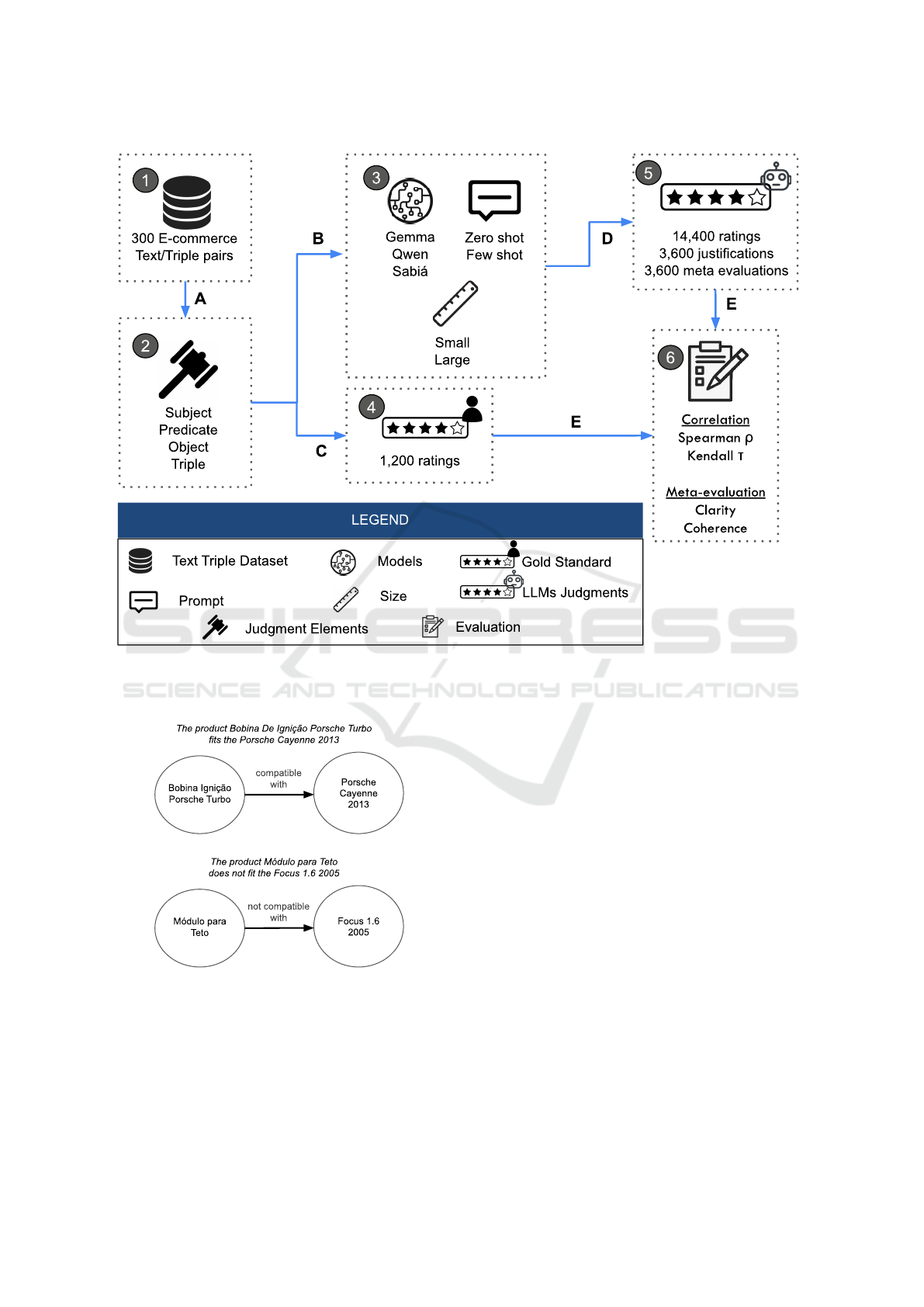
Figure 1: Methodology to evaluate LLMs’ capacity in judging RDF generation from text. The numbers represent components
and the letters the actions among them. A) Evaluation Components Definition; B) LLMs Setup Definition; C) Gold Standard
Creation; D) LLM Judgment; E) Metrics Evaluation.
Figure 2: Two examples of summarized texts and their cor-
responding RDF triples.
This meta-evaluation model was chosen due to its
significantly higher capacity, which allows for deeper
reasoning and a stronger ability to detect logical in-
consistencies between a justification and its corre-
sponding evaluation (So et al., 2025). This consis-
tency check was conducted separately from the main
evaluation to preserve fairness and avoid biasing the
comparative results (cf. Section 3.5).
3.3 Prompt Design
To evaluate the semantic plausibility of RDF triples,
we designed two types of prompts (component 3 of
Figure 1): one for the main evaluation LLMs (acting
as graders), and another for a larger LLM used as a
meta-evaluator (consistency checker).
The primary prompt was written in Portuguese
and designed to simulate a structured evaluation sce-
nario. It instructs the model to behave as an ontol-
ogy and knowledge representation expert tasked with
judging whether a given RDF triple accurately reflects
the information in a corresponding natural language
sentence. The input to this prompt consists of a sum-
marized sentence derived from an e-commerce QA
interaction and an RDF triple automatically extracted
from the sentence.
The model is asked to provide four Likert-scale
KEOD 2025 - 17th International Conference on Knowledge Engineering and Ontology Development
78

ratings (from 1 to 5), assessing the correctness of the
subject, predicate, and object, as well as the overall
fidelity of the triple to the source sentence. A textual
justification, with a maximum of 30 words, is also re-
quired to explain the rationale behind the scores.
Prompt for RDF Triple Generation from
Text Judgment
You are an expert in natural language un-
derstanding and RDF. Your task is to judge
the quality of RDF triples generated from
texts. In other words, given a descriptive sen-
tence and an RDF triple, you should act as a
judger, grading the quality of the triples.
Here is the explanation of each grade:
{likert grades and explanations}
Here is each of the judgments:
{list of judgments}
Below are some examples of the sentences,
triples and their corresponding judgments:
Examples: {examples}
With the examples above as reference, gener-
ate the grades for the following sentence and
triple:
Text: {text}
Triple: {triple}
Judgments:
This prompt format standardizes the evaluation
across all grader LLMs and supports later compari-
son with human annotations.
Two versions of the grader prompt were used in
the experiments:
• Zero-Shot Prompt: Contains only the evaluation
instruction and the specific text–triple pair;
• Few-Shot Prompt: Includes two randomly
selected examples of evaluated sentences and
triples, followed by the new instance to be judged.
Few-shot prompting, a form of in-context learning
(Brown et al., 2020), was chosen over tuning-based
approaches due to its flexibility and lower data re-
quirements. Fine-tuning would demand thousands of
annotated examples, which is impractical in this case.
Additionally, by testing both zero-shot and few-shot
configurations, we aim to assess whether the presence
of examples influences grading behavior or score in-
flation.
To assess the internal consistency of the LLM-
generated judgments, we employed a separate
prompt, that receives as input: the original sentence;
the extracted RDF triple and the judgment provided
by another LLM, consisting of four scores and a jus-
tification.
The task of this consistency evaluator is to assess
two aspects:
1. Clarity of the Justification: Is the justification
provided by the LLM understandable and well-
written?
2. Coherence of the Ratings: Do the numeric
scores logically match the justification?
This additional layer of evaluation is intended to
validate whether the LLMs’ justifications are not only
syntactically well-formed but also logically consistent
with their numerical evaluations. A larger model was
chosen for this step to provide deeper reasoning capa-
bilities and stronger metalinguistic analysis.
Both aspects are rated using a 1–5 Likert scale,
and the output is structured as the following example:
{
"EVALUATION 1": 4,
"EVALUATION 2": 5
}
3.4 Gold Standard
To serve as a point of comparison for the LLM-
generated judgments, we constructed a gold standard
dataset composed of human evaluations (component
4 of Figure 1). These annotations were performed by
a group of ten human evaluators, each one with prior
exposure to Semantic Web technologies, Knowledge
Graphs, and RDF modeling. The group includes pro-
fessionals from the public sector, graduate students
from academic institutions, and employees from pri-
vate companies with technical backgrounds.
Each human evaluator was randomly assigned
30 summarized sentences and their corresponding
RDF triples, totaling 300 unique sentence–triple pairs
across the full dataset. The evaluators were instructed
to assess the quality of the transformation from sen-
tence to triple according to the same four dimensions
used in the LLM evaluation prompts:
1. Subject Correctness: Was the subject correctly
extracted?
2. Predicate Correctness: Does the predicate accu-
rately represent the relationship expressed in the
sentence?
Leveraging Large Language Models for Semantic Evaluation of RDF Triples
79

3. Object Correctness: Does the object reflect the
target of the relation?
4. Triple Fidelity: Does the complete triple faith-
fully represent the sentence’s meaning?
For each question, the evaluators assigned a score
on a 5-point Likert scale, which was clearly defined
in the annotation protocol to minimize ambiguity:
1 – Incorrect
2 – Many errors
3 – Approximately half correct
4 – Few errors
5 – Correct
Given the cognitive efforts required to make accu-
rate semantic judgments, the number of evaluations
per annotator (30) was chosen to balance annotation
reliability with fatigue reduction. The total number of
annotated instances (300) reflects the practical con-
straints of recruiting and coordinating qualified hu-
man annotators familiar with the nuances of RDF
triple structures and the Semantic Web, expertise that
is not widespread even among computer science re-
searchers.
3.5 Evaluation Procedure
The evaluation procedure was designed to systemati-
cally compare the judgments of human evaluators and
multiple LLMs across 300 text-to-triple transforma-
tions. Both types of evaluators assessed the same se-
mantic dimensions, allowing for direct comparison.
We evaluated three different LLM fami-
lies—Gemma, Qwen, and Sabi
´
a—each in two
sizes (a smaller and a larger version), and under
two prompt engineering strategies: zero-shot and
few-shot. This resulted in 12 distinct evaluation
setups:
3 models × 2 sizes × 2 prompt styles = 12 setups
Each of these 12 setups was used to independently
evaluate all 300 sentence–triple pairs across the four
semantic dimensions, generating a total of 14, 400 in-
dividual scores (12 setups × 300 triples × 4 ratings),
along with 3, 600 textual justifications.
To quantify agreement levels, we calculated the
average scores for each of the four dimensions in the
human-annotated gold standard. Similarly, we com-
puted the average scores produced by each of the 12
LLM setups. These aggregate values are compared in
Section 4, allowing us to analyze how closely LLM
judgments align with human expectations.
For each of the 3, 600 judgments generated by the
grader models, DeepSeek model was used as meta-
evaluator and prompted to assess the criteria pre-
sented in Section 3.3.
3.6 Metrics
For each of the four evaluation dimensions (subject,
predicate, object, and full triple), we computed the
correlation between the human scores and the scores
produced by each of the 12 LLM setups across all
300 sentence–triple pairs (component 6 of Figure 1).
The use of rank-based correlation metrics allows us
to quantify the strength and direction of association
between human and machine-generated judgments,
even when the absolute values differ.
• Spearman’s ρ (Spearman, 1987) evaluates the
monotonic relationship between two variables. It
is useful when we are interested in whether the or-
dering of scores (rather than their exact values) is
preserved between annotators. This is appropri-
ate in our case, where some variation in scoring
behavior is expected, but consistency in ranking
is desirable. The coefficient ranges from –1 to
1, where 1 indicates perfect agreement in ranking
(i.e., identical order), 0 indicates no correlation,
and –1 indicates a perfectly reversed ranking.
• Kendall’s τ (Kendall, 1938) measures the num-
ber of concordant and discordant pairs between
two rankings. It is more conservative than Spear-
man’s ρ and more sensitive to small rank differ-
ences, making it a complementary metric that pro-
vides robustness to the analysis. Like Spearman’s
ρ, Kendall’s τ ranges from –1 to 1.
Both metrics are well-suited for ordinal data such
as Likert-scale judgments, and together they offer a
comprehensive view of how similarly LLMs and hu-
man evaluators perceive the semantic quality of RDF
triples.
3.7 Running Example
To illustrate the evaluation method in practice, we
present a representative example from the dataset, in-
cluding the original sentence, the corresponding RDF
triple, and the evaluation provided by one of the LLM
graders under the few-shot prompting condition.
Summarized Sentence. “O produto Kit Quadros
Decorativos Sala Quarto Moldura est
´
a dispon
´
ıvel em
tamanho maior, desde que seja solicitado o tamanho
KEOD 2025 - 17th International Conference on Knowledge Engineering and Ontology Development
80
desejado.” [original sentence in Portuguese]
2
RDF Triple. Kit Quadros Decorativos Sala Quarto
Moldura — dispon
´
ıvel — tamanho maior[original
triple in Portuguese]
3
LLM Judgments. The LLM evaluated the semantic
plausibility of the triple based on four distinct dimen-
sions, assigning the following Likert-scale scores:
• Subject Correctness: 5;
• Predicate Correctness: 5;
• Object Correctness: 5;
• Triple Fidelity: 5.
Justification. “The triple correctly represents the
sentence, with the correct subject, predicate, and ob-
ject well extracted from the context.”
This example illustrates a high-agreement case,
where the LLM accurately interprets and assesses the
semantic alignment between the natural language in-
put and the RDF triple. All dimensions received the
maximum score, and the justification shows logical
clarity and alignment with the numeric judgments.
4 RESULTS
This section presents the obtained results of the evalu-
ation experiments, organized into three parts. We first
report average scores given by human and LLM eval-
uators (Subsection 4.1). Next, we analyze the corre-
lation between LLM and human scores using Spear-
man’s ρ and Kendall’s τ (Subsection 4.2). Finally,
we present the results of the meta-evaluation using a
larger language model to assess the clarity and coher-
ence of the LLMs’ judgments (Subsection 4.3).
4.1 Average Ratings from Humans and
LLMs
Human annotators (Gold Standard, GS) and each
of the 12 LLM setups evaluated the same 300 sen-
tence–triple pairs across four grading dimensions:
subject, predicate, object, and full triple. The first step
in our analysis was to compute mean scores for each
grading dimension, both for human evaluators and for
the combined LLMs.
The overall average score assigned by all LLMs
across all dimensions was 4.300, whereas the aver-
age score from the GS was 4.498. This suggests
2
The Decorative Picture Kit Living Room Bedroom
Frame product is available in a larger size, as long as the
desired size is requested. – translated by the authors.
3
Decorative Picture Kit Living Room Bedroom Frame
— available — larger size
that human annotators rated the triple transformations
slightly more favorably than the LLMs.
When disaggregating the averages by evaluation
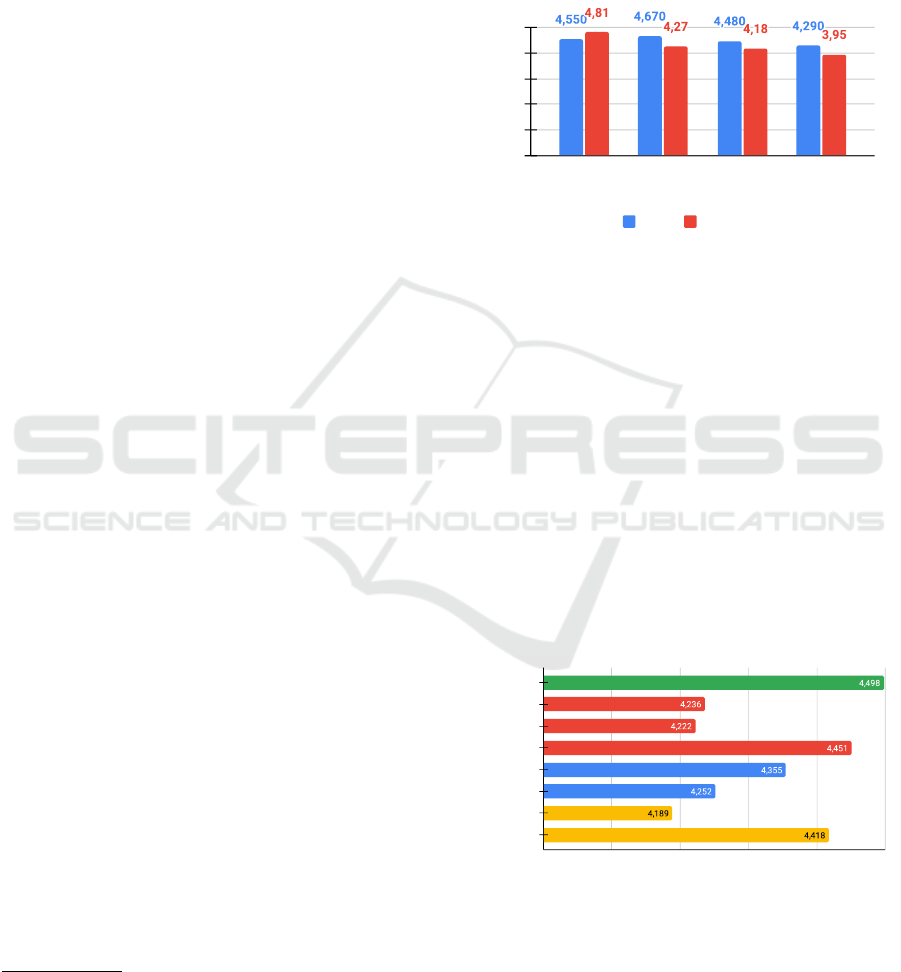
dimension, we observed a pattern (Figure 3): LLMs
assigned higher scores than humans only in the sub-
ject dimension. For predicate, object, and triple, hu-
man evaluators assigned higher grades.
0
1
2
3
4
5
SUBJECT
PREDICATE
OBJECT
TRIPLE
GS LLMs
Figure 3: Grading average by dimensions (triple part) using
Likert scale.
We computed average scores grouped by three
comparative axes: (i) model family (Gemma, Qwen,
Sabia), (ii) model size (small or large), and (iii)
prompt type (zero-shot vs. few-shot). For each
model, averages were calculated over all four execu-
tions (e.g., all versions of Gemma). Figure 4 presents
these comparisons. The closest match to the human
gold standard came from:
• Few-shot prompts (µ = 4.418),
• Sabia models (µ = 4.451), and
• Small models (higher than large counterparts).
Despite these proximities, no LLM setup sur-
passed the human average in any of the categories.
Grades
GS
GEMMA
QWEN
SABIA
SMALL
LARGE
ZERO SHOT
FEW SHOT
4,000 4,100 4,200 4,300 4,400 4,500
Figure 4: Comparison among average gradings of Gold
Standard dataset (green), LLM family (red), LLM size
(blue), and prompt type (yellow).
Leveraging Large Language Models for Semantic Evaluation of RDF Triples
81
4.2 Correlation Between LLMs and
Human Ratings
To quantify the alignment between human and LLM
ratings, we computed Spearman’s ρ and Kendall’s τ
correlation coefficients for each of the 12 LLM se-
tups, across each of the four evaluation dimensions.
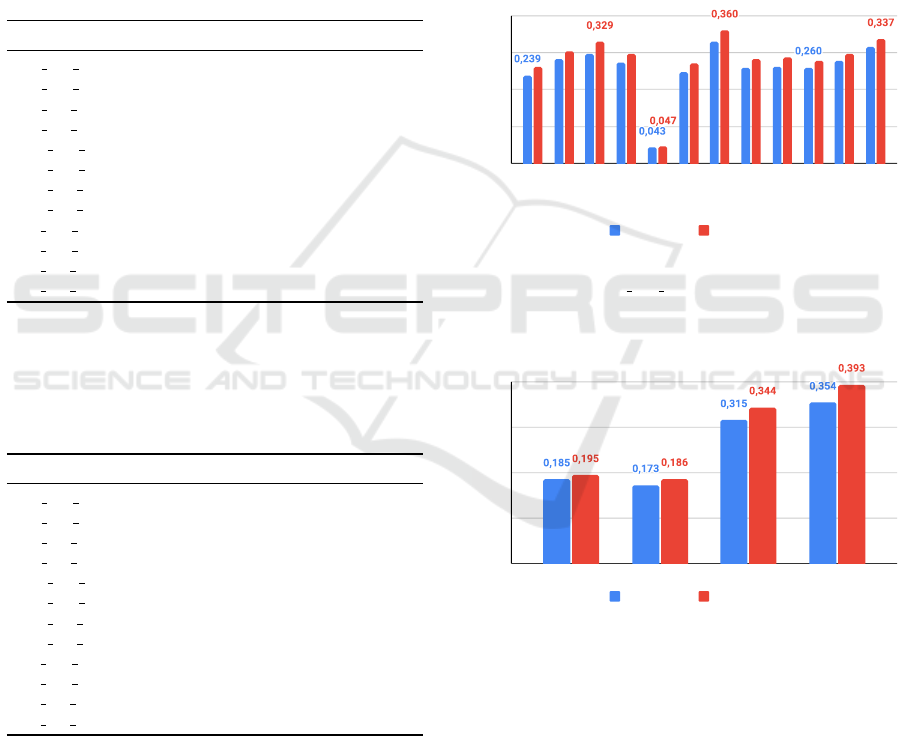
Table 1 (Spearman) and Table 2 (Kendall) present the
attained results.
Table 1: Spearman scores for each component of the triple.
The highest value in each column is highlighted in bold. In
the first column, the LLM setup identifier is composed by
three parts: the LLM (e.g GE for Gemma), the size (e.g SM
for small) and prompt type (e.g ZS for zero shot).
LLM Subject Predicate Object Triple
GE SM ZS 0.112 0.216 0.350 0.372
GE SM FS 0.119 0.225 0.435 0.435
GE LA ZS 0.165 0.244 0.428 0.480
GE LA FS 0.134 0.198 0.414 0.443
QW SM ZS 0.075 0.110 -0.055 0.057
QW SM FS 0.104 0.147 0.406 0.426
QW LA ZS 0.560 0.172 0.350 0.358
QW LA FS 0.252 0.183 0.303 0.396
SA SM ZS 0.137 0.157 0.392 0.467
SA SM FS 0.078 0.148 0.460 0.421
SA LA ZS 0.265 0.241 0.310 0.375
SA LA FS 0.333 0.193 0.330 0.491
Table 2: Kendall Tau scores for each component of the
triple. The highest value in each column is highlighted in
bold. In the first column, the LLM setup identifier is com-
posed by three parts: the LLM (e.g GE for Gemma), the
size (e.g SM for small) and prompt type (e.g ZS for zero
shot).
LLM Subject Predicate Object Triple
GE SM ZS 0.107 0.199 0.315 0.334
GE SM FS 0.115 0.214 0.405 0.395
GE LA ZS 0.157 0.217 0.388 0.424
GE LA FS 0.129 0.184 0.382 0.395
QW SM ZS 0.070 0.101 -0.050 0.051
QW SM FS 0.100 0.140 0.366 0.382
QW LA ZS 0.530 0.155 0.316 0.314
QW LA FS 0.241 0.167 0.272 0.354
SA SM ZS 0.128 0.143 0.353 0.423
SA SM FS 0.075 0.143 0.436 0.386
SA LA ZS 0.250 0.226 0.293 0.339
SA LA FS 0.322 0.183 0.309 0.451
Highest Correlations per Dimension
• Subject: Highest ρ = 0.560 (Qwen Large Zero-
Shot), τ = 0.530 (same set).
• Predicate: Highest ρ = 0.244 (Gemma Large
Zero-Shot), τ = 0.217 (same set).
• Object: Highest ρ = 0.460 (Sabia Small Few-
Shot), τ = 0.436 (same set).
• Triple: Highest ρ = 0.491 (Sabia Large Few-
Shot), τ = 0.451 (same set).
No correlation score exceeded 0.56 in any case,
indicating a moderate agreement at best. To facilitate
interpretation, we computed:
• Mean correlation per LLM setup (averaging
across the four dimensions), yielding 12 Spear-
man and 12 Kendall values (Figure 5).
• Mean correlation per evaluation dimension
(averaging across the 12 setups), yielding four
mean Spearman and four mean Kendall scores
(Figure 6).
0,000
0,100
0,200
0,300
0,400
GE_SM_ZS
GE_SM_FS
GE_LA_ZS
GE_LA_FS
QW_SM_ZS
QW_SM_FS
QW_LA_ZS
QW_LA_FS
SA_SM_ZS
SA_SM_FS
SA_LA_ZS
SA_LA_FS
Kendall Tau Spearman
Figure 5: Correlation results by each setup. X axis shows
the 12 setups (e.g GE SM ZS stands for Gemma small zero
shot setup) and the y axis shows the values of Kendall and
Spearman.
0,000
0,100
0,200
0,300
0,400
SUBJECT PREDICATE OBJECT TRIPLE
Kendall Tau Spearman
Figure 6: Correlation results by each dimension. X axis
shows the 4 dimensions and the y axis shows the values of
Kendall and Spearman.
The majority of LLM setups (11 out of 12) yielded
mean correlations in the range of 0.2–0.35. When ag-
gregated by dimension, we found that correlations for
subject and predicate were notably lower than for
object and triple. The highest average correlation ap-
peared in the triple dimension:
• ρ = 0.393, τ = 0.354
These results indicate that LLMs tend to align
more closely with human evaluators when judging the
semantic quality of the complete triple rather than its
KEOD 2025 - 17th International Conference on Knowledge Engineering and Ontology Development
82
4,2
4,4
4,6
4,8
5,0
GE_SM_ZS
GE_SM_FS
GE_LA_ZS
GE_LA_FS
QW_SM_ZS
QW_SM_FS
QW_LA_ZS
QW_LA_FS
SA_SM_ZS
SA_SM_FS
SA_LA_ZS
SA_LA_FS
Clarity Coherence
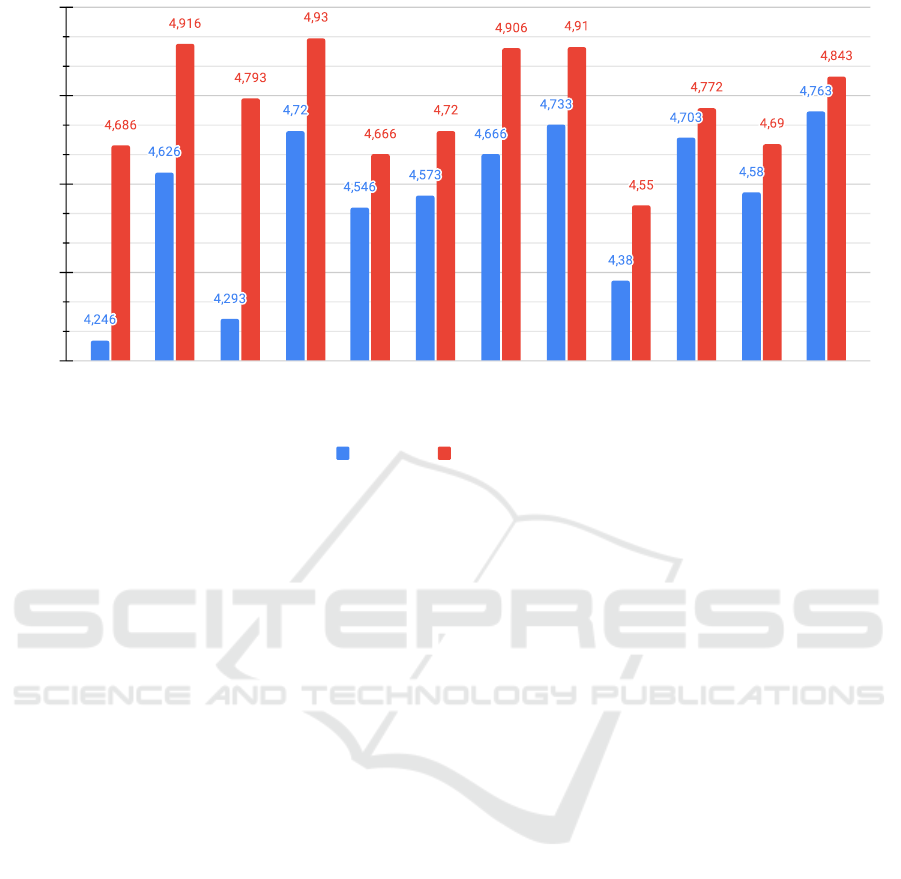
Figure 7: Clarity and coherence values by each setup.
individual components. The fact that both correlation
metrics point to the same pattern strengthens the reli-
ability of this conclusion.
4.3 Meta-Evaluation Using a Large
Language Model
To assess the quality of the judgments produced by
the 12 LLM setups, we employed DeepSeek R1 as a
meta-evaluator. This model assessed each LLM judg-
ment based on two criteria:
1. Clarity of the justification, and
2. Coherence of the ratings with the justification.
Figure 7 presents the results. Average scores per
LLM setup ranged from 4.245 to 4.930 for both di-
mensions.
• Coherence scores were consistently higher than
clarity scores across all models.
• Few-shot setups (denoted by “FS” in the Fig-
ure 7) achieved higher average scores than their
zero-shot counterparts.
These results suggest that the judgments provided
by the smaller LLMs were, on average, both inter-
pretable and internally consistent—particularly when
few-shot prompting was used.
5 DISCUSSION
This study originally explored an evaluation frame-
work that combines expert human judgments with au-
tomated assessments from LLMs across twelve con-
figurations. Each configuration differed in model
family (Gemma, Qwen, and Sabia), model size (small
vs. large), and prompting strategy (zero-shot vs. few-
shots). This design enabled a thorough examination
of the study’s core question: Can LLMs reliably eval-
uate structured outputs, such as RDF triples? Our
results indicate that although LLMs show promising
capabilities, they do not consistently achieve human-
level discernment across all evaluation criteria.
The credibility of the gold standard annotations
arises from the expertise of all annotators in Semantic
Web technologies and KG construction. A carefully
designed Likert scale facilitated nuanced evaluations
across four dimensions: subject, predicate, object,
and full triple. Each annotator assessed 30 distinct in-
stances to maintain a balanced distribution of labor,
and the overall design emphasized consistency de-
spite the sample size (N=300). Recruiting experts for
this specialized task presented logistical challenges,
highlighting the need to explore automated grading
alternatives while preserving the rigor of the gold
standard.
The LLMs’ efficacy varied significantly across
the 12 evaluation setups. Larger models tended to
produce scores more aligned with human judgments,
particularly under the few-shot prompting paradigm.
Leveraging Large Language Models for Semantic Evaluation of RDF Triples
83

Few-shot setups provided the models with exemplars
that likely improved semantic grounding and scoring
consistency. However, some smaller models unex-
pectedly demonstrated sharper precision in isolated
cases, particularly in predicate evaluation. These in-
consistencies highlight that model size alone is not
a sufficient predictor of alignment; prompting con-
text and model architecture also play important roles.
The results underscore that while LLMs can replicate
some human-like judgment behavior, their reliability
fluctuates depending on setup.
We used Spearman and Kendall Tau metrics to
measure the alignment between human and LLM
scores across all four evaluation axes. Some configu-
rations, particularly those with large models and few-
shot prompting, displayed moderate positive correla-
tions, especially in subject and full triple evaluations.
Many setups produced low or inconsistent correla-
tions, indicating that LLMs, in their current state and
configuration (open-source, mid-sized models in the
e-commerce domain), are not yet suitable for fully re-
placing human evaluators. Their best application may
be as copilots in the RDF triple generation pipeline,
aiding in draft evaluations that humans subsequently
review.
We utilized DeepSeek to analyze the quality of
30-word justifications provided by LLM graders, val-
idating their reliability. This secondary meta evalua-
tion focused on two aspects: the clarity of justifica-
tions and the coherence of assigned scores. Notably,
most setups received high scores from DeepSeek, in-
dicating that LLMs often articulated their reasoning
coherently, even when their ratings differed from hu-
man assessments. This finding highlights that the
quality of justification may improve trust and trans-
parency, despite potential misalignment in scores.
However, DeepSeek’s evaluations did not strongly
correlate with human ratings, revealing a gap between
the clarity of explanations and the accuracy of judg-
ments.
Our findings indicate significant implications for
using LLMs in Semantic Web evaluation tasks. Al-
though LLMs cannot yet replace expert annotators,
they can serve as valuable auxiliary evaluators, es-
pecially for large-scale RDF generation from text.
Their capability to produce structured justifications
is particularly beneficial in hybrid pipelines, where
automated scoring complements human review. Fu-
ture research should investigate multi-agent architec-
tures, enabling several LLMs to collaboratively as-
sess and vote on outputs, which may enhance eval-
uation reliability. Improvements through optimized
prompt design, focused fine-tuning, or human-in-the-
loop frameworks can lead to more trustworthy and ef-
fective systems in semantic evaluation contexts.
Both the dataset and the Sabia models employed
in this study were optimized for Portuguese. This in-
troduces a language-specific constraint that may limit
the generalizability of our results. While the find-
ings provide strong evidence within the Portuguese
domain, further work is needed to validate whether
similar outcomes hold across other languages. As a
natural next step, future research should explore mul-
tilingual evaluation settings, testing the robustness of
the proposed approaches in diverse linguistic contexts
and broadening their applicability to global Semantic
Web scenarios.
6 CONCLUSION
Knowledge Graphs are central to organizing struc-
tured information, making the automation of their val-
idation important for scaling their real-world appli-
cations. Large Language Models can interpret both
natural and formal languages, offering an alternative
to the labor-intensive process of human evaluation.
This study examined 12 configurations of LLMs as
graders of RDF triples generated from e-commerce
texts, comparing their scores to those from expert hu-
man annotators. We measured the alignment between
LLM and human evaluations using Spearman and
Kendall Tau correlations, analyzing both complete
triples and their components (subject, predicate, ob-
ject). The results indicated that while some configu-
rations achieved moderate correlation, no model con-
sistently matched human reliability across all com-
ponents. We also assessed justification-based rat-
ings using the DeepSeek R1 reasoning model, which
highlighted potential indicators of grader quality. We
found that these indicators did not strongly correlate
with human judgments. Our findings indicate that
while LLMs cannot fully replace expert reviewers,
they serve as promising supportive tools for seman-
tic validation tasks, providing scalability and facilitat-
ing preliminary assessments. Importantly, the mod-
erate correlation scores highlight that the proposed
approach is not yet ready for deployment in high-
stakes KG validation scenarios where accuracy and
reliability are critical. At present, LLM-based valida-
tion should be regarded as complementary, augment-
ing but not substituting expert judgment. Our eval-
uation analysis study lays the groundwork for future
research that integrates model reasoning, prompt re-
finement, multilingual testing, and human-in-the-loop
systems to improve the accuracy, trustworthiness, and
efficiency of RDF validation workflows.
KEOD 2025 - 17th International Conference on Knowledge Engineering and Ontology Development
84

ACKNOWLEDGMENTS
We thank the National Council of Technological
and Scientific Development (CNPq), Brazil, grant
#301337/2025-0.
REFERENCES
Achiam, J., Adler, S., Agarwal, S., Ahmad, L., Akkaya, I.,
Aleman, F. L., Almeida, D., Altenschmidt, J., Altman,
S., Anadkat, S., et al. (2023). Gpt-4 technical report.
arXiv preprint arXiv:2303.08774.
Bonatti, P. A., Decker, S., Polleres, A., and Presutti,
V. (2019). Knowledge graphs: New directions
for knowledge representation on the semantic web
(dagstuhl seminar 18371). Dagstuhl reports, 8(9):29–
111.
Brown, T., Mann, B., Ryder, N., Subbiah, M., Kaplan, J. D.,
Dhariwal, P., Neelakantan, A., Shyam, P., Sastry, G.,
Askell, A., et al. (2020). Language models are few-
shot learners. Advances in neural information pro-
cessing systems, 33:1877–1901.
Elshin, D., Karpachev, N., Gruzdev, B., Golovanov, I.,
Ivanov, G., Antonov, A., Skachkov, N., Latypova, E.,
Layner, V., Enikeeva, E., et al. (2024). From gen-
eral llm to translation: How we dramatically improve
translation quality using human evaluation data for
llm finetuning. In Proceedings of the Ninth Confer-
ence on Machine Translation, pages 247–252.
Guerdan, L., Barocas, S., Holstein, K., Wallach, H. M.,
Wu, Z. S., and Chouldechova, A. (2025). Validating
llm-as-a-judge systems in the absence of gold labels.
CoRR.
Huang, H., Chen, C., He, C., Li, Y., Jiang, J., and
Zhang, W. (2024). Can llms be good graph judger
for knowledge graph construction? arXiv preprint
arXiv:2411.17388.
Kendall, M. G. (1938). A new measure of rank correlation.
Biometrika, 30(1-2):81–93.
Khorashadizadeh, H., Amara, F. Z., Ezzabady, M., Ieng,
F., Tiwari, S., Mihindukulasooriya, N., Groppe, J.,
Sahri, S., Benamara, F., and Groppe, S. (2024). Re-
search trends for the interplay between large lan-
guage models and knowledge graphs. arXiv preprint
arXiv:2406.08223.
Liu, A., Feng, B., Xue, B., Wang, B., Wu, B., Lu, C.,
Zhao, C., Deng, C., Zhang, C., Ruan, C., et al.
(2024). Deepseek-v3 technical report. arXiv preprint
arXiv:2412.19437.
Racharak, T., Wang, T., and Jearanaiwongkul, W. (2024).
An automated medical rdf knowledge graph construc-
tion from text using in-context learning. In 2024 16th
International Conference on Knowledge and System
Engineering (KSE), pages 465–471. IEEE.
Regino, A. and dos Reis, J. C. (2025). Can llms be knowl-
edge graph curators for validating triple insertions?
In Genet Asefa Gesese, Harald Sack, H. P. A. M.-P.
and Chen, L., editors, Proceedings of the Workshop
on Generative AI and Knowledge Graphs (GenAIK)
co-located with the 31st International Conference on
Computational Linguistics (COLING 2025), pages
87–99, Abu Dhabi, UAE. International Committee on
Computational Linguistics.
Regino, A. G., Caus, R. O., Hochgreb, V., and dos Reis,
J. C. (2023). From natural language texts to rdf triples:
A novel approach to generating e-commerce knowl-
edge graphs. In Coenen, F., Fred, A., Aveiro, D.,
Dietz, J., Bernardino, J., Masciari, E., and Filipe,
J., editors, Knowledge Discovery, Knowledge Engi-
neering and Knowledge Management, pages 149–174.
Springer Nature Switzerland.
So, C. C., Sun, Y., Wang, J.-M., Yung, S. P., Loh, A.
W. K., and Chau, C. P. (2025). Are large language
models capable of deep relational reasoning? insights
from deepseek-r1 and benchmark comparisons. arXiv
preprint arXiv:2506.23128.
Spearman, C. (1987). The proof and measurement of asso-
ciation between two things. The American journal of
psychology, 100(3/4):441–471.
Touvron, H., Lavril, T., Izacard, G., Martinet, X., Lachaux,
M.-A., Lacroix, T., Rozi
`
ere, B., Goyal, N., Hambro,
E., Azhar, F., et al. (2023). Llama: Open and ef-
ficient foundation language models. arXiv preprint
arXiv:2302.13971.
Zhang, H., Yu, P. S., and Zhang, J. (2025). A systematic sur-
vey of text summarization: From statistical methods
to large language models. ACM Computing Surveys,
57(11):1–41.
Zheng, L., Chiang, W.-L., Sheng, Y., Zhuang, S., Wu, Z.,
Zhuang, Y., Lin, Z., Li, Z., Li, D., Xing, E., et al.
(2023). Judging llm-as-a-judge with mt-bench and
chatbot arena. Advances in Neural Information Pro-
cessing Systems, 36:46595–46623.
Zhuang, Y., Yu, Y., Wang, K., Sun, H., and Zhang, C.
(2023). Toolqa: A dataset for llm question answering
with external tools. Advances in Neural Information
Processing Systems, 36:50117–50143.
Leveraging Large Language Models for Semantic Evaluation of RDF Triples
85
