
RFG Framework: Retrieval-Feedback-Grounded Multi-Query
Expansion
Ronaldinho Vega Centeno Olivera
1 a
, Allan M. de Souza
1,2 b
and Julio Cesar dos Reis
1,2 c
1
Institute of Computing, University of Campinas (UNICAMP), Campinas, Brazil
2
Hub de Intelig
ˆ
encia Artificial e Arquiteturas Cognitivas (H.IAAC), Campinas, Brazil
Keywords:
Information Retrieval, Query Expansion, Retrieval-Augmented Generation, Pseudo-Relevance Feedback.
Abstract:
Information Retrieval (IR) systems face challenges such as query ambiguity and lexical mismatch, which limit
the effectiveness of dense retrieval models, whose generalization capability to new domains or tasks is often
limited. This study proposes a novel query expansion framework, named RFG, which integrates the capabil-
ities of Large Language Models (LLMs) into an architecture that combines Retrieval-Augmented Generation
(RAG) with Pseudo-Relevance Feedback (PRF). Our solution is based on using an initial document retrieval
as a grounding context for the LLMs, a process that mitigates the generation of unsubstantiated information
(“hallucinations”) by guiding the creation of a diverse set of pseudo-queries. Following an evaluation across
a broad spectrum of retrieval models, including unsupervised and supervised dense models, our experimen-
tal results demonstrate that RFG consistently outperforms baseline methods, such as HyDE and Query2doc.
In contrast to previous findings that suggest a negative correlation between retriever performance and query
expansion benefits, this study originally reveals that our approach not only benefits models with lower initial
effectiveness but also improves the results of more robust retrievers. This positions the generation of multiple,
contextualized queries as a versatile and highly effective expansion strategy.
1 INTRODUCTION
Information Retrieval (IR) systems face the funda-
mental challenge of bridging the lexical and seman-
tic gap between user queries, which are often short
and ambiguous, and the documents within an ex-
tensive corpus (Zhu et al., 2024). This “vocabulary
mismatch” limits the effectiveness of both traditional
sparse retrieval models, like BM25 (Robertson and
Walker, 1994), and modern dense retrievers based on
embeddings (Wang et al., 2023). Although dense re-
trievers have proven effective when abundant labeled
training data is available, their effectiveness often de-
grades in zero-shot scenarios or when facing domain
shifts, where the distribution of new queries and docu-
ments differs from the training data (Zhu et al., 2024).
Query expansion has been a widely studied tech-
nique for decades. Classical methods, such as
Pseudo-Relevance Feedback (PRF) (Rocchio, 1971),
aim to refine the query by incorporating terms
from the top-ranked documents in an initial retrieval
a
https://orcid.org/0009-0001-4756-9726
b
https://orcid.org/0000-0002-5518-8392
c
https://orcid.org/0000-0002-9545-2098
(Mackie et al., 2023). The positive outcome of these
approaches heavily depends on the quality of the ini-
tial results; if they are not relevant, PRF can intro-
duce noise and divert the query from its original topic
(Rashid et al., 2024).
The advent of Large Language Models (LLMs)
has led to new expansion strategies that leverage their
vast world knowledge and generative capabilities.
Approaches like Query2doc (Wang et al., 2023) gen-
erate “pseudo-documents” to be concatenated with
the original query. HyDE (Gao et al., 2023), on
the other hand, generates “hypothetical documents”
to find similar real documents in the embedding
space. While innovative, these techniques risk gener-
ating plausible, but incorrect, or disconnected content
(”hallucinations”) (Zhang et al., 2023; Lewis et al.,
2020), as they often operate without being directly
grounded in the target corpus (Gao et al., 2023).
Recent research has questioned the universal util-
ity of query expansion. A comprehensive analysis by
Weller et al. (Weller et al., 2024) found a strong neg-
ative correlation between a retrieval model’s perfor-
mance and the benefits gained from expansion. These
techniques tend to improve weaker models, but harm
Vega Centeno Olivera, R., de Souza, A. M. and dos Reis, J. C.
RFG Framework: Retrieval-Feedback-Grounded Multi-Query Expansion.
DOI: 10.5220/0013836900004000
Paper published under CC license (CC BY-NC-ND 4.0)
In Proceedings of the 17th International Joint Conference on Knowledge Discovery, Knowledge Engineering and Knowledge Management (IC3K 2025) - Volume 1: KDIR, pages 509-516
Proceedings Copyright © 2025 by SCITEPRESS – Science and Technology Publications, Lda.
509

stronger, more robust ones (Weller et al., 2024). This
observation suggests that the addition of information,
while potentially beneficial for recall, may introduce
noise that degrades the precision of more advanced
models. Concurrently, it has been argued that gen-
erating a single rewritten query may be insufficient.
In this sense, creating multiple diverse queries is cru-
cial for improving the coverage of relevant documents
(Rackauckas, 2024).
This study proposes a novel query expan-
sion framework named RFG (Retrieval-Feedback-
Grounded) that addresses the aforementioned limita-
tions. Our solution uniquely integrates the principles
of Retrieval-Augmented Generation (RAG) (Lewis
et al., 2020) and PRF (Rocchio, 1971). Unlike other
methods, RFG originally uses the documents from an
initial retrieval as a grounding context for an LLM,
rather than for direct term extraction. This ground-
ing process guides the model to generate a diverse set
of pseudo-queries that are semantically relevant and
faithful to the corpus content, thereby significantly
mitigating the risk of hallucinations (Lewis et al.,
2020) by constraining the generation to the vocabu-
lary and concepts present in the retrieved documents.
This set of generated queries is then used to expand
the original search intent.
Our experimental evaluation, conducted across a
broad spectrum of retrieval models, including unsu-
pervised dense and state-of-the-art supervised dense
retrievers, demonstrates that RFG consistently outper-
forms baseline methods like HyDE (Gao et al., 2023)
and Query2doc (Wang et al., 2023). Our findings
challenge the notion that query expansion is only use-
ful for low-performing models. We demonstrate that
RFG enhances the effectiveness of weaker retrievers
and improves that of the most robust and advanced
models, positioning our designed approach as a ver-
satile and highly effective expansion method.
This investigation provides the following contri-
butions:
• The design and full implementation of the RFG, a
novel query expansion framework that uses feed-
back from an initial retrieval to ground the gen-
eration of multiple diverse queries via an LLM,
combining simultaneously the strengths of RAG
and PRF.
• A comprehensive empirical evaluation demon-
strating the superiority of our method over base-
line query expansion architectures across various
retrieval models.
• A key contribution to the ongoing debate about
the utility of query expansion, showing evidence
that a well-grounded expansion approach can ben-
efit both low-performing and robust, state-of-the-
art retrieval models.
2 RELATED WORK
Query expansion is a fundamental technique in IR
designed to address the persistent problem of lexical
mismatch between user queries and the documents in
a corpus (Weller et al., 2024). Historically, one of
the most influential approaches has been PRF (Roc-
chio, 1971), which assumes that the top-ranked doc-
uments from an initial retrieval are relevant and uses
their terms to expand the original query. The main
limitation of these methods refers to their high depen-
dency on the quality of the initial retrieval, which can
introduce noise and degrade quality if the first results
are not pertinent.
The advent of LLMs has enabled new strate-
gies to emerge that leverage their vast text genera-
tion capabilities to overcome these limitations. Ap-
proaches like HyDE (Hypothetical Document Em-
beddings) (Gao et al., 2023) use an LLM to gen-
erate multiple “hypothetical documents” that answer
the query. It then averages the embeddings of these
documents to create a single vector used to find se-
mantically similar real documents in the corpus.
Query2doc (Wang et al., 2023) approach gener-
ates a single “pseudo-document” that is concatenated
with the original query. Unlike zero-shot approaches,
Query2doc relies on few-shot prompting (specifically,
with four examples), which implies it requires ac-
cess to a training dataset with query-document pairs
to function. A common thread and key limitation of
these methods is that the generation of new content re-
lies exclusively on the internal and parametric knowl-
edge of the LLM, making them susceptible to gen-
erating “hallucinations”, suggesting information that,
although plausible, may be factually incorrect or ir-
relevant to the target corpus and query resolution.
Other investigations have explored different an-
gles. Generative Relevance Feedback (GRF) (Mackie
et al., 2023), for example, generates long-form texts
independently of the initial retrieval to avoid depen-
dence on its quality. Another notable strategy is RAG-
Fusion (Rackauckas, 2024), which rewrites the origi-
nal query into multiple versions to retrieve a broader
set of documents. It then utilizes the Reciprocal Rank
Fusion (RRF) algorithm (Cormack et al., 2009) to
rerank the combined results. Despite the demon-
strated success of these techniques, their benefit is not
universal.
A comprehensive study by Weller et al. (Weller
et al., 2024) revealed a strong negative correlation
KDIR 2025 - 17th International Conference on Knowledge Discovery and Information Retrieval
510

between a retrieval model’s base results and the
gains obtained from expansion, indicating that exist-
ing techniques benefit weaker models, but harm more
robust ones. In this sense, high-performing models
are negatively affected because the generated text in-
troduces noise that dilutes the original relevance sig-
nal.
Our present investigation is situated at the in-
tersection of these research lines. Our proposed
RFG framework explores LLMs for query expansion.
However, unlike HyDE, RAG-Fusion, or Query2doc,
our approach grounds the LLM’s generation using
pseudo-relevance feedback to mitigate hallucinations.
Unlike classic PRF, our solution does not use the re-
trieved documents for term extraction, but rather as
a context to guide the generation of multiple diverse
queries. Finally, our investigation directly addresses
the question posed by Weller et al. (Weller et al.,
2024), by examining whether our grounded expansion
strategy approach can benefit both weak models and
more robust ones.
3 THE RFG FRAMEWORK
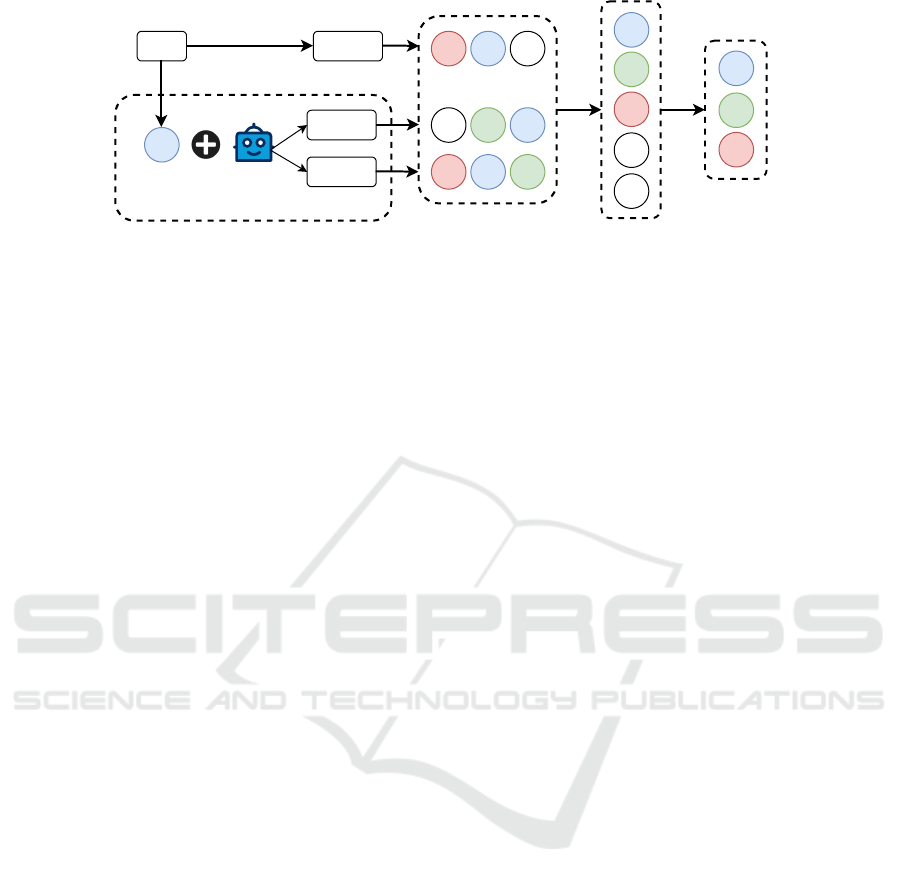
Figure 1 presents the design of our solution for gener-
ating multiple high-quality queries that are grounded
in relevant information from the corpus, aiming to en-
hance retrieval diversity. The process is organized
into three main stages: 1) Retrieval and Grounded
Query Generation, 2) Document Retrieval and Aggre-
gation, and 3) Reranking and Final Context Selection.
The RFG workflow begins with an initial retrieval
based on the original user query to obtain a set of
context documents. These retrieved documents serve
to “ground” an LLM, which then generates a set of
new and diverse queries. Each of these new queries is
used to perform a second round of document retrieval.
Finally, all retrieved documents are aggregated and
reranked to select a high-quality subset, which serves
as the final context for answer generation. We detail
each stage of the RFG framework along with its math-
ematical formulation.
Stage 1: Retrieval and Grounded Query Genera-
tion. Given an original user query q and a corpus
of documents C = {d
1
, d
2
, . . . , d
m
}, the first step is
to perform an initial retrieval to obtain a context set.
This process can be formalized as:
D
c
= Retrieve(q, C, N) (1)
where Retrieve is a standard retrieval function that
returns the top N most relevant documents from C
for the query q. This set of contextual documents,
D
c
= {d
c
1
, d
c
2
, . . . , d
c
N
}, is used to ground the LLM’s
query generation expansion.
The LLM generates a set of M diverse and
grounded queries, Q
′
= {q
′
1
, q
′
2
, . . . , q
′
M
}. Each new
query q
′
j
is the result of a generation function that
takes the original query q, the context document set
D
c
, and a specific prompt P
j
as input, which can be
varied to induce different rewriting styles:
q
′
j
= LLM(q, D
c
, P
j
) ∀ j ∈ {1, . . . , M} (2)
This grounding mechanism ensures that the new
queries do not solely depend on the parametric knowl-
edge of the LLM. They are informed by relevant con-
tent from the corpus.
Stage 2: Document Retrieval and Aggregation.
Once the set of diverse queries Q
′
is generated, each
new query q
′
j
is used to perform an independent re-
trieval operation over the same corpus C, obtaining
the top N most relevant documents for each, as fol-
lows.
L
j
= Retrieve(q
′
j
, C, N) (3)
where L
j
is the list of documents retrieved for query
q
′
j
. Subsequently, all the retrieved document lists are
aggregated to form a single set of candidate docu-
ments, D
cand
. This process is defined as the union of
all retrieved lists:
D
cand
=
M
[
j=1
L
j
(4)
Stage 3: Rank Fusion and Final Context Selection.
The set of retrieved lists, L
1
, . . . , L
M
, contains relevant
information from the perspectives of multiple queries.
To effectively combine these lists and obtain a single,
unified ranking, we apply the Reciprocal Rank Fu-
sion (RRF) algorithm (Cormack et al., 2009). This
method computes a fusion score s
d
for each unique
document d present in the candidate set D
cand
:
s
d
=
M
∑
j=1
1
k +rank
j
(d)
(5)
where rank
j
(d) is the rank of document d in the list
L
j
(if a document does not appear in a list, its contri-
bution for that list is zero), and k is a constant used
to mitigate the impact of high ranks. All unique doc-
uments from the candidate set are then sorted in de-
scending order according to their RRF score s
d
, pro-
ducing a final fused list, L
fused
. Finally, the top-K sub-
set of documents from this list is selected to form the
final context that is provided to the downstream LLM
for answer generation, as follows:
D
final
= Top-K(L
fused
) (6)
RFG Framework: Retrieval-Feedback-Grounded Multi-Query Expansion
511
query query
hypothetical
Answer
hypothetical
document
1 3 5
4 2 3
1 3 2
3
2
1
4
5
3
2
1
Query Expansion
Parallel Retrieval
Reciprocal Rank
Fusion (RRF)
3
RAG
Top k
documents
Pseudo-Relevance
Feedback (PRF)
Figure 1: Complete flow of the RFG Framework.
This selected subset, D
final
, represents the most rele-
vant and diverse information, consolidated from mul-
tiple retrievals through a robust fusion process.
4 EVALUATION
METHODOLOGY
This section outlines the experimental methodology
used to evaluate the effectiveness of our RFG frame-
work. We describe the evaluation benchmark and
datasets, the retrieval models serving as baselines, the
implementation details of our approach, and the eval-
uation metrics.
4.1 Evaluation Benchmark and
Datasets
To ensure a robust and comprehensive evaluation
across diverse retrieval challenges, we selected four
datasets from the well-established BEIR (Bench-
marking IR) benchmark (Thakur et al., 2021). This
benchmark is specifically designed to assess the zero-
shot generalization capabilities of retrieval models.
The chosen datasets are:
• ArguAna: (Wachsmuth et al., 2018) This dataset
is classified as a ”Long Query Shift” task (Weller
et al., 2024). It is chosen to test whether models,
typically trained on short queries, can generalize
to new length formats. The queries in ArguAna
are notably long, with an average length of 197.1
words, effectively making them document-sized
and posing a significant generalization challenge
(Weller et al., 2024).
• NFCorpus: (Boteva et al., 2016) This is a “Do-
main Shift” dataset (Weller et al., 2024). It is used
to evaluate a model’s ability to generalize from its
common training domain (e.g., general web doc-
uments from MS MARCO) to a new, specialized
domain, such as medicine. This type of shift is
made difficult by the specialized vocabulary in-
herent to the medical field (Weller et al., 2024).
• FiQA-2018: (Maia et al., 2018) Similar to NF-
Corpus, FiQA-2018 is used to evaluate “Do-
main Shift”, testing model generalization from
the training domain to the financial sector. This
presents a challenge due to its specialized vocab-
ulary (Weller et al., 2024).
• SciDocs: (Cohan et al., 2020) This is a “Domain
Shift” dataset. Similar to NFCorpus and FiQA. It
is used to evaluate the ability of models to gener-
alize from a common training domain (web text)
to a highly specialized domain, such as scientific
literature. This shift is challenging due to the tech-
nical vocabulary and unique structure of scien-
tific articles, testing the robustness of the retrieval
model.
4.2 Baseline Models
To contextualize the results of our solution, we com-
pared it against a broad spectrum of retrieval models,
including:
Dense Retrievers. We evaluate both unsupervised
and supervised dense models.
• Unsupervised: We include Contriever (Izacard
et al., 2022), a dense retrieval model trained in an
unsupervised manner.
• Supervised: We evaluate several high-
performance models trained on benchmark
corpora, such as Contriever-ft (fine-tuned on MS
MARCO) (Izacard et al., 2022), DPR (fine-tuned
on Natural Questions) (Karpukhin et al., 2020),
and two of the most powerful recent embedding
models, which consistently rank as top perform-
ers on the MTEB (Massive Text Embedding
Benchmark) leaderboard (Muennighoff et al.,
KDIR 2025 - 17th International Conference on Knowledge Discovery and Information Retrieval
512

2023)
1
: BGE-large (Xiao et al., 2024) and
GTE-large (Li et al., 2023).
Furthermore, our query expansion approach was
compared against two LLM-based baseline methods:
• HyDE: Evaluated on all the aforementioned em-
bedding models and datasets.
• Query2doc: Evaluated on the embedding models
for the NFCorpus and FiQA datasets, as these are
the only ones that have the necessary training sets
for its few-shot prompting approach.
4.3 Implementation Details
Query Generator. For the generation of pseudo-
queries within our RFG framework, the Mistral-
small 3.1 model (Mistral AI, 2025) was used as the
generative LLM. The first step is to retrieve the top
N = 5 documents to serve as a grounding context.
Next, the LLM generates a set of M = 2 diverse and
grounded queries, Q
′
= {q
′
1
, q
′
2
}. Each query is cre-
ated using a distinct strategy:
1. Generated Document (q
′
1
): A query that emu-
lates the format and structure of a relevant docu-
ment that could answer q. This strategy is similar
to the ”hypothetical document” concept in HyDE
(Gao et al., 2023).
2. Generated Answer (q
′
2
): A direct answer to the
original query q, containing keywords and infor-
mation likely to be found in the correct docu-
ments.
Baseline Implementation. For HyDE, 4 pseudo-
documents were generated for each original query,
and their embeddings were averaged as suggested by
the method. For Query2doc, 4 examples (few-shots)
from the corresponding training sets were used to
guide the generation of the pseudo-document.
Retrieval and Reranking. For managing and
searching through the embedding vectors efficiently,
we used Qdrant (Qdrant, 2024) as our vector store.
Information retrieval for all dense models was per-
formed using cosine similarity as the similarity mea-
sure. Our approach (RFG) performs three paral-
lel retrieval operations, using the Original Query,
the Generated Document, and the Generated An-
swer to each produce a ranked list of documents.
These three resulting lists are then fused into a sin-
gle, improved ranking using Reciprocal Rank Fu-
sion (RRF) as the sole reranking strategy.
1
Cf. the MTEB leaderboard at:
https://huggingface.co/spaces/mteb/leaderboard
Infrastructure and Reproducibility. All experi-
ments were conducted on a single NVIDIA Quadro
RTX 6000 GPU with 24 GB of VRAM. To ensure the
reproducibility of our findings, the source code and
configurations used in this research are made publicly
available in a GitHub repository.
2
4.4 Evaluation Metrics
The effectiveness of the different retrieval and query
expansion methods was evaluated using standard met-
rics in the IR community. The primary metric for
ranking is nDCG@10 (Normalized Discounted Cu-
mulative Gain at 10), which measures the quality of
the ranking within the top 10 results.
4.5 Ablation Studies
To evaluate our framework, we performed two key
analyses. First, an ablation study isolated the con-
tribution of each query component (Generated Docu-
ment and Generated Answer). Additionally, a cost-
benefit analysis determined the practical viability
by calculating the operational cost per 1,000 queries
across the FiQA-2018 and NFCorpus datasets, using
Mistral-small for generation and official token pric-
ing
3
.
5 EXPERIMENTAL RESULTS
We present the empirical results of our evaluation by
analyzing the effectiveness of our proposed frame-
work, RFG, in comparison with the baselines.
5.1 Overall Outcome Comparison
Table 1 presents the main results of our evaluation,
comparing the effectiveness of the different query ex-
pansion methods on the four selected datasets. The re-
ported metric is nDCG@10. The evaluated methods
are: 1) No Expansion, which serves as our baseline;
2) Query2doc; 3) HyDE; and 4) RFG, our proposed
method. Each method was evaluated on the full set of
embedding models. To facilitate visual analysis, the
best results for each model and dataset are marked in
bold in Table 1. The background colors of the cells
indicate the performance change concerning the ”No
2
The code for this research is available at:
https://github.com/DinhoVCO/RFG
3
Mistral AI pricing information, accessed July 24,
2025, available at: https://mistral.ai/pricing#api-pricing
RFG Framework: Retrieval-Feedback-Grounded Multi-Query Expansion
513
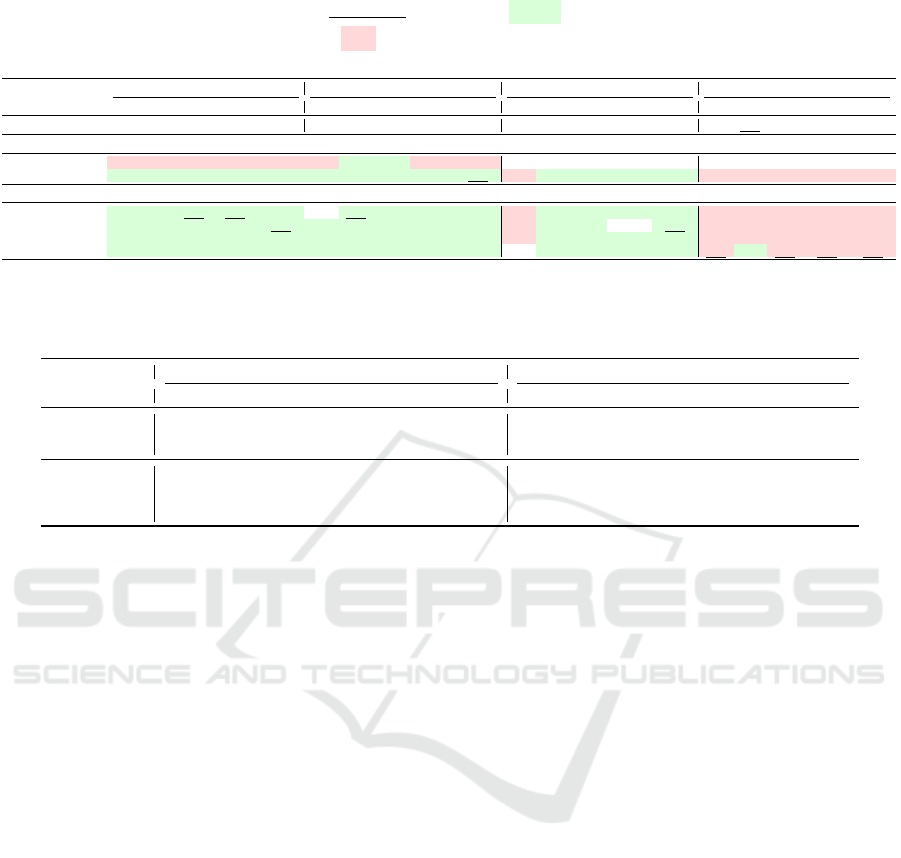
Table 1: Consolidated results (nDCG@10, scaled by 100) comparing all expansion methods and ablations. The best result
per column is in bold and the second-best is underlined. Cells with a green background indicate an improvement over the
baseline (Original Query), while those with a red background indicate a performance degradation. Symbols: ♢ Original
Query, □ Generated Document, ♣ Generated Answer.
Method
NFCorpus FiQA-2018 SciDocs ArguAna
DPR Ctr Ctr-ft GTE-L BGE-L DPR Ctr Ctr-ft GTE-L BGE-L DPR Ctr Ctr-ft GTE-L BGE-L DPR Ctr Ctr-ft GTE-L BGE-L
Original Query ♢ 14.8 26.0 30.7 37.9 36.1 5.9 11.9 27.0 44.5 44.3 4.4 11.6 15.3 22.7 22.5 21.5 46.8 50.4 56.2 70.3
State-of-the-art Methods
Query2Doc 12.3 21.1 24.9 28.6 30.8 5.4 20.5 28.0 43.8 43.6 - - - - - - - - - -
HyDE 17.1 27.9 32.1 39.3 38.1 6.2 24.5 30.8 45.0 45.9 4.1 14.3 15.9 22.9 22.8 17.0 41.0 40.0 50.4 66.1
Our Method (RFG) and Ablations
RFG Gen Doc □ 17.6 29.4 35.1 41.2 39.9 5.9 16.8 29.7 45.0 44.5 4.0 13.3 16.4 23.0 22.8 17.4 41.8 43.8 51.7 63.4
RFG Gen Answer ♣ 16.8 29.6 34.2 41.1 40.1 6.9 15.0 30.8 45.6 44.9 4.1 13.3 15.9 22.7 23.1 19.6 39.7 45.3 46.5 60.6
RFG (□ + ♣) 17.8 30.1 35.3 41.4 40.6 6.6 16.5 31.3 45.9 45.8 4.2 13.7 16.3 23.1 22.9 19.5 43.7 46.8 52.5 64.9
RFG (♢ + □ + ♣) 18.1 30.5 34.5 40.9 39.8 6.9 15.9 31.6 46.4 47.0 4.4 13.6 16.4 23.3 23.5 21.1 49.9 49.1 55.0 68.6
Table 2: Cost and Performance Analysis for FiQA-2018 and NFCorpus. Costs are calculated per 1,000 prompts (at $0.10/1M
input tokens and $0.30/1M output tokens). Performance is measured by nDCG@10. Symbols denote the query components
used: ♢ for the Original Query, □ for the Generated Document, and ♣ for the Generated Answer.
Method
FiQA-2018 NFCorpus
Input Tokens Output Tokens Cost/1k ($) nDCG@10 Input Tokens Output Tokens Cost/1k ($) nDCG@10
Original Query ♢ 0.00 0.00 0.0000 44.3 0.00 0.00 0.0000 36.1
HyDE 35.67 2112.80 0.6374 45.9 27.33 1713.82 0.5169 38.1
Query2Doc 1197.96 461.42 0.2582 43.6 1713.82 444.05 0.3046 30.8
RFG Gen Doc □ 1294.59 381.33 0.2439 44.5 2166.86 357.70 0.3240 39.9
RFG Gen Ans ♣ 1294.59 140.91 0.1717 44.9 2166.86 177.03 0.2698 40.1
RFG (□ + ♣) 2589.18 522.24 0.4156 45.8 4333.72 534.73 0.5938 40.6
RFG (♢ + □ + ♣) 2589.18 522.24 0.4156 47.0 4333.72 534.73 0.5938 39.8
Expansion” baseline: greenish cells represent an im-
provement, while reddish cells indicate a performance
degradation.
An analysis of Table 1 reveals the consistent supe-
riority of the RFG framework. Variants of our method
achieve the top nDCG@10 score in 14 out of the 20
evaluated configurations. For instance, on the NFCor-
pus dataset with the DPR model, our full RFG ap-
proach elevates the baseline nDCG@10 from 14.8 to
18.1, a relative increase of over 22%. Similarly, on
FiQA-2018 with the high-performing BGE-L model,
RFG reaches a score of 47.0, surpassing both the
baseline (44.3) and HyDE (45.9).
This stability contrasts sharply with existing meth-
ods, which can be detrimental. Query2doc, for ex-
ample, causes a performance drop on NFCorpus with
GTE-L (from 37.9 to 28.6). In contrast, our RFG
framework yields performance gains (greenish cells)
in nearly all scenarios, demonstrating its robustness
and effectiveness across different datasets and re-
trieval models.
5.2 Cost-Benefit Analysis
This analysis is crucial for understanding the practi-
cal and financial viability of each approach when de-
ployed on a large scale. Table 2 details this cost anal-
ysis alongside the average token counts per prompt.
The analysis reveals a clear trade-off between cost
and performance. On the NFCorpus dataset, the
combination of our components RFG (Gen Doc +
Gen Ans) achieves the highest nDCG@10 (40.6), al-
beit at the highest cost. Notably, RFG Gen Ans offers
nearly identical performance (40.1) for less than half
the cost, presenting itself as a highly efficient alterna-
tive.
For the FiQA-2018 dataset, the highest perfor-
mance is achieved by the full RFG (Original Query
+ Gen Doc + Gen Ans) strategy, which reaches an
nDCG@10 score of 47.0. HyDE follows with a score
of 45.9 but at a significantly higher cost ($0.6374).
From a cost-benefit perspective, RFG Gen Ans pro-
vides the most favorable balance, delivering a solid
outcome improvement to 44.9 (from a baseline of
44.3) for the lowest cost among the effective expan-
sion strategies ($0.1717).
6 DISCUSSION
Our experimental results confirm that the RFG frame-
work consistently enhances retrieval effectiveness. Its
success is rooted in two core principles: grounded
generation and multi-perspective fusion. Unlike
ungrounded methods such as HyDE or Query2doc,
which rely solely on an LLM’s parametric knowl-
edge, RFG grounds the query generation process on
documents from an initial retrieval. This forces the
KDIR 2025 - 17th International Conference on Knowledge Discovery and Information Retrieval
514

LLM to produce queries that are faithful to the corpus
content, mitigating hallucinations and improving rel-
evance. The synergy of our approach is evident when
we fuse the original query with the generated docu-
ment and answer using RRF (♢ + □ + ♣), which con-
sistently yields the best results by combining multiple
unique perspectives.
The robustness of this multi-perspective fusion is
particularly clear in challenging scenarios like the Ar-
guAna dataset. On this benchmark, where long, de-
tailed queries make most expansion methods harm
performance, our full framework significantly miti-
gated this degradation. By retaining the original query
in the fusion set, RFG provides the necessary signal
diversity for RRF to consolidate rankings effectively,
outperforming other methods even under unfavorable
conditions.
These findings have significant implications, di-
rectly challenging the conclusion from Weller et al.
that query expansion offers diminishing returns for
strong retrieval models. Our results demonstrate con-
sistent improvements even for powerful models like
GTE-large and BGE-large. We argue that the perfor-
mance degradation observed in prior studies is not a
flaw of expansion itself, but a symptom of using noisy,
ungrounded generative methods. Our work shows
that controlled, context-aware expansion remains a
valuable technique, shifting the focus from whether
to use expansion to how to implement it effectively.
Our study has two primary limitations. First, the
evaluation was confined to a specific set of datasets
from the BEIR benchmark, which limits its proven
generalizability. Second, we did not analyze the com-
putational overhead and latency of our multi-query
process, a key factor for real-world production sys-
tems.
Future work will address these limitations and ex-
plore new directions. A key step will be to evaluate
RFG on diverse domains beyond BEIR, such as con-
versational, legal, and other specialized fields (e.g.,
Medicine, Oil & Gas, or Finance). We also plan to
develop an adaptive version of RFG that dynamically
selects pseudo-queries based on query complexity to
reduce computational costs. Finally, we will investi-
gate more advanced fusion algorithms beyond RRF.
7 CONCLUSION
We observe an unresolved challenge in IR query ex-
pansion regarding the risk of hallucinations and the
questioned effectiveness of these models on high-
performing retrieval systems. This study introduced
RFG, a novel framework that effectively integrates
pseudo-relevance feedback (PRF) to ground the LLM
generation, thereby producing diverse and faithful
multiple queries regarding the corpus content. Our
comprehensive empirical evaluation, which relied
on several datasets from the BEIR benchmark and
spanned a broad spectrum of retrieval models, demon-
strated that RFG consistently outperformed baseline
methods. We found that our grounded expansion
strategy benefits both low-performing and more ro-
bust, supervised retrievers. We demonstrated the syn-
ergistic effect of combining multiple retrievals using
Reciprocal Rank Fusion (RRF), which confirms that
the diversity of the generated queries is crucial for
more comprehensive and accurate IR mechanisms.
The RFG approach, based on grounding and diversity,
represents a promising research path, opening new av-
enues for the creation of more accurate and reliable
RAG systems. We contributed a robust and effective
query expansion framework that reframes the debate
on the utility of expansion in the era of LLMs.
ACKNOWLEDGEMENTS
This study was sponsored by Petr
´
oleo Brasileiro S.A.
(PETROBRAS) within the project “Application of
Large Language Models (LLMs) for online monitor-
ing of industrial processes” conducted in partnership
with the University of Campinas [01-P-34480/2024 -
62208].
REFERENCES
Boteva, V., Gholipour, D., Sokolov, A., and Riezler, S.
(2016). A full-text learning to rank dataset for med-
ical information retrieval. In Ferro, N., Crestani,
F., Moens, M.-F., Mothe, J., Silvestri, F., Di Nun-
zio, G. M., Hauff, C., and Silvello, G., editors,
Advances in Information Retrieval, pages 716–722,
Cham. Springer International Publishing.
Cohan, A., Feldman, S., Beltagy, I., Downey, D., and Weld,
D. (2020). SPECTER: Document-level representation
learning using citation-informed transformers. In Ju-
rafsky, D., Chai, J., Schluter, N., and Tetreault, J.,
editors, Proceedings of the 58th Annual Meeting of
the Association for Computational Linguistics, pages
2270–2282, Online. Association for Computational
Linguistics.
Cormack, G. V., Clarke, C. L. A., and Buettcher, S. (2009).
Reciprocal rank fusion outperforms condorcet and in-
dividual rank learning methods. In Proceedings of
the 32nd International ACM SIGIR Conference on Re-
search and Development in Information Retrieval, SI-
GIR ’09, page 758–759, New York, NY, USA. Asso-
ciation for Computing Machinery.
RFG Framework: Retrieval-Feedback-Grounded Multi-Query Expansion
515

Gao, L., Ma, X., Lin, J., and Callan, J. (2023). Precise
zero-shot dense retrieval without relevance labels. In
Rogers, A., Boyd-Graber, J., and Okazaki, N., editors,
Proceedings of the 61st Annual Meeting of the Associ-
ation for Computational Linguistics (Volume 1: Long
Papers), pages 1762–1777, Toronto, Canada. Associ-
ation for Computational Linguistics.
Izacard, G., Caron, M., Hosseini, L., Riedel, S., Bo-
janowski, P., Joulin, A., and Grave, E. (2022). Unsu-
pervised dense information retrieval with contrastive
learning. Transactions on Machine Learning Re-
search.
Karpukhin, V., Oguz, B., Min, S., Lewis, P., Wu, L.,
Edunov, S., Chen, D., and Yih, W.-t. (2020). Dense
passage retrieval for open-domain question answer-
ing. In Webber, B., Cohn, T., He, Y., and Liu,
Y., editors, Proceedings of the 2020 Conference on
Empirical Methods in Natural Language Processing
(EMNLP), pages 6769–6781, Online. Association for
Computational Linguistics.
Lewis, P., Perez, E., Piktus, A., Petroni, F., Karpukhin,
V., Goyal, N., K
¨
uttler, H., Lewis, M., Yih,
W.-t., Rockt
¨
aschel, T., Riedel, S., and Kiela,
D. (2020). Retrieval-augmented generation for
knowledge-intensive nlp tasks. In Larochelle, H.,
Ranzato, M., Hadsell, R., Balcan, M., and Lin, H.,
editors, Advances in Neural Information Processing
Systems, volume 33, pages 9459–9474. Curran Asso-
ciates, Inc.
Li, Z., Zhang, X., Zhang, Y., Long, D., Xie, P., and Zhang,
M. (2023). Towards general text embeddings with
multi-stage contrastive learning.
Mackie, I., Chatterjee, S., and Dalton, J. (2023). Genera-
tive relevance feedback with large language models.
In Proceedings of the 46th International ACM SIGIR
Conference on Research and Development in Infor-
mation Retrieval, SIGIR ’23, page 2026–2031, New
York, NY, USA. Association for Computing Machin-
ery.
Maia, M., Handschuh, S., Freitas, A., Davis, B., Mc-
Dermott, R., Zarrouk, M., and Balahur, A. (2018).
Www’18 open challenge: Financial opinion mining
and question answering. In Companion Proceedings
of the The Web Conference 2018, WWW ’18, page
1941–1942, Republic and Canton of Geneva, CHE.
International World Wide Web Conferences Steering
Committee.
Mistral AI (2025). Mistral small 3.1. https://mistral.ai/
news/mistral-small-3-1. Accessed: June 25, 2025.
Muennighoff, N., Tazi, N., Magne, L., and Reimers, N.
(2023). MTEB: Massive text embedding benchmark.
In Vlachos, A. and Augenstein, I., editors, Proceed-
ings of the 17th Conference of the European Chap-
ter of the Association for Computational Linguistics,
pages 2014–2037, Dubrovnik, Croatia. Association
for Computational Linguistics.
Qdrant (2024). Qdrant documentation: Overview.
https://qdrant.tech/documentation/overview/. Ac-
cessed: June 25, 2025.
Rackauckas, Z. (2024). Rag-fusion: A new take on retrieval
augmented generation. International Journal on Nat-
ural Language Computing, 13(1):37–47.
Rashid, M. S., Meem, J. A., Dong, Y., and Hristidis, V.
(2024). Progressive query expansion for retrieval over
cost-constrained data sources.
Robertson, S. E. and Walker, S. (1994). Some simple effec-
tive approximations to the 2-poisson model for proba-
bilistic weighted retrieval. In Proceedings of the 17th
Annual International ACM SIGIR Conference on Re-
search and Development in Information Retrieval, SI-
GIR ’94, page 232–241, Berlin, Heidelberg. Springer-
Verlag.
Rocchio, J. J. (1971). Relevance feedback in information
retrieval. In Salton, G., editor, The SMART Retrieval
System: Experiments in Automatic Document Pro-
cessing, pages 313–323. Prentice-Hall, Englewood
Cliffs, NJ.
Thakur, N., Reimers, N., R
¨
uckl
´
e, A., Srivastava, A., and
Gurevych, I. (2021). BEIR: A heterogeneous bench-
mark for zero-shot evaluation of information retrieval
models. In Thirty-fifth Conference on Neural Infor-
mation Processing Systems Datasets and Benchmarks
Track (Round 2).
Wachsmuth, H., Syed, S., and Stein, B. (2018). Retrieval of
the best counterargument without prior topic knowl-
edge. In Gurevych, I. and Miyao, Y., editors, Proceed-
ings of the 56th Annual Meeting of the Association for
Computational Linguistics (Volume 1: Long Papers),
pages 241–251, Melbourne, Australia. Association for
Computational Linguistics.
Wang, L., Yang, N., and Wei, F. (2023). Query2doc: Query
expansion with large language models. In Bouamor,
H., Pino, J., and Bali, K., editors, Proceedings of the
2023 Conference on Empirical Methods in Natural
Language Processing, pages 9414–9423, Singapore.
Association for Computational Linguistics.
Weller, O., Lo, K., Wadden, D., Lawrie, D., Van Durme, B.,
Cohan, A., and Soldaini, L. (2024). When do gener-
ative query and document expansions fail? a compre-
hensive study across methods, retrievers, and datasets.
In Graham, Y. and Purver, M., editors, Findings of
the Association for Computational Linguistics: EACL
2024, pages 1987–2003, St. Julian’s, Malta. Associa-
tion for Computational Linguistics.
Xiao, S., Liu, Z., Zhang, P., Muennighoff, N., Lian, D.,
and Nie, J.-Y. (2024). C-pack: Packed resources
for general chinese embeddings. In Proceedings of
the 47th International ACM SIGIR Conference on Re-
search and Development in Information Retrieval, SI-
GIR ’24, page 641–649, New York, NY, USA. Asso-
ciation for Computing Machinery.
Zhang, Y., Li, Y., Cui, L., Cai, D., Liu, L., Fu, T., Huang, X.,
Zhao, E., Zhang, Y., Chen, Y., Wang, L., Luu, A. T.,
Bi, W., Shi, F., and Shi, S. (2023). Siren’s song in the
ai ocean: A survey on hallucination in large language
models.
Zhu, Y., Yuan, H., Wang, S., Liu, J., Liu, W., Deng, C.,
Chen, H., Liu, Z., Dou, Z., and Wen, J.-R. (2024).
Large language models for information retrieval: A
survey.
KDIR 2025 - 17th International Conference on Knowledge Discovery and Information Retrieval
516
