
LLMs and Knowledge Discovery in Low-Resource Language
Parliamentary Corpora: The PQ Dashboard Case Study
Joel Azzopardi
a
Department of AI, Faculty of ICT, University of Malta, Malta
Keywords:
Parliamentary Questions (PQs), Large Language Models (LLMs), Artificial Intelligence (AI), Natural
Language Processing (NLP), Civic Engagement, Distant Reading, Interactive Dashboard.
Abstract:
Parliamentary Questions (PQs) are a critical mechanism for democratic oversight and accountability. However,
their comprehensive analysis can be hindered by limitations such as single-language availability (especially
when the language is a low-resource language such as Maltese) and a lack of structured thematic organisation
or interlinking. This paper introduces the PQ Dashboard, a web-based platform developed to enhance the
accessibility and analytical utility of Maltese Parliamentary Questions. The system employs AI and open Large
Language Models (LLMs) to automate PQ collection, translate content into English, classify it according to the
COFOG-99 taxonomy, extract key terms, and identify interconnections. The interactive dashboard provides
users – including the public, journalists, and academic researchers – with functionalities to navigate PQs by
category or keyword, visualise thematic distributions, and analyse trends in MPs’ activity and ministerial
responses. This enhanced data accessibility aims to facilitate deeper insights into parliamentary discourse,
policy development, and governmental accountability. The PQ Dashboard demonstrates a practical application
of AI-driven solutions for transforming unstructured public data into a more accessible and analysable format,
thereby contributing to increased transparency and informed public engagement.
1 INTRODUCTION
Parliamentary Questions (PQs) constitute a corner-
stone of democratic governance, serving as a vital
mechanism through which Members of Parliament
(MPs) hold ministries accountable, seek information,
and scrutinise government policy. The effective func-
tioning of this oversight process relies heavily on the
accessibility and interpretability of these parliamen-
tary records for various stakeholders, including the
public, journalists, and academic researchers.
However, traditional parliamentary portals, such
as the official Maltese Parliament website hosting
the PQs (https://pq.gov.mt; last accessed: Septem-
ber 2025), typically offer basic search functionalities
and categorisation based on metadata like date, MP,
or ministry. While these provide fundamental access,
they often lack advanced semantic search capabilities,
thematic overviews, or tools for longitudinal analy-
sis. This limitation is particularly pronounced for par-
liamentary data in low-resource languages, such as
Maltese, where readily available Natural Language
a
https://orcid.org/0000-0001-6709-8530
Processing (NLP) tools and pre-trained models are
less common, posing a significant barrier to compre-
hensive analysis and public engagement (Koehn and
Knowles, 2017; Ranathunga et al., 2022). Early work
on Maltese parliamentary data, such as Analysing and
Visualising Parliamentary Questions: A Linked Data
Approach (Abela and Azzopardi, 2018), has explored
methods to enhance accessibility through linked data
and visualisations, but these did not incorporate ad-
vanced Artificial Intelligence (AI) for semantic en-
richment or multilingual access to the extent now pos-
sible with Large Language Models (LLMs).
Specifically, the current Maltese parliamentary
portal publishes all answered PQs exclusively in Mal-
tese. While it offers basic search and categorises PQs
by criteria such as category, heading, MP, ministry,
and sitting, it does not readily reveal overarching top-
ics, enable tracking of trends in topics’ popularity, or
facilitate analysis of MPs’ activity over time. Further-
more, references within PQs to other questions are
not directly linked, which limits navigability and the
ability to trace interconnected legislative discourse.
These deficiencies collectively restrict the ability of
users to gain high-level overviews, thematic insights,
Azzopardi, J.
LLMs and Knowledge Discovery in Low-Resource Language Parliamentary Corpora: The PQ Dashboard Case Study.
DOI: 10.5220/0013835100004000
Paper published under CC license (CC BY-NC-ND 4.0)
In Proceedings of the 17th International Joint Conference on Knowledge Discovery, Knowledge Engineering and Knowledge Management (IC3K 2025) - Volume 1: KDIR, pages 159-170
Proceedings Copyright © 2025 by SCITEPRESS – Science and Technology Publications, Lda.
159

and a deeper understanding of the parliamentary pro-
cess.
This paper introduces the PQ Dashboard, a novel
online platform designed to address these critical lim-
itations. By leveraging advanced AI and NLP tech-
niques, namely open LLMs, the PQ Dashboard aims
to transform the accessibility and analytical utility
of Maltese Parliamentary Questions, thereby promot-
ing greater transparency and informed civic partici-
pation. As a publicly accessible web portal avail-
able at https://pq.ir.mt, the PQ Dashboard’s innova-
tive features considerably enhance the value of the
available data. It achieves this by offering content
in both Maltese and English, providing categorisation
into COFOG-99 categories, identifying relevant key-
words, and pinpointing citations between Parliamen-
tary Questions. This comprehensive approach facil-
itates the presentation of rich insights and aggregate
information, including the profiling of MPs and Min-
istries’ activities through the PQs being submitted,
and enables seamless navigation between PQs that are
linked together via citations.
The rest of this paper is structured as follows: Sec-
tion 2 first provides an overview of similar systems.
Section 3 then describes the underlying process of
the system, from data acquisition via web scraping to
the processing of the data utilising LLMs, and finally,
the updating of the server hosting the web applica-
tion. Section 4 details the functionalities of the de-
veloped online dashboard and presents some key in-
sights that can be extracted. In Section 5, we describe
the evaluation that was carried out. Finally, Section
6 presents the conclusions and outlines our plans for
future work.
2 SIMILAR SYSTEMS
Modern legislatures table thousands of Parliamentary
Questions (PQs) each session – Malta alone recorded
almost 30,000 PQs between May 2022 and July
2025, and this legislature is not yet complete (Par-
liament of Malta, 2022). While most parliaments
now publish PQs and responses online, practices vary
widely. Basic portals that provide documents (in
docx or pdf formats) remain common, while only
a minority offer machine-readable formats or public
APIs (Inter-Parliamentary Union (IPU) and UN/IPU
Global Centre for ICT in Parliament, 2024). Meta-
data is often inconsistent, and keyword-based search
systems limit the discoverability of relevant mate-
rial (Inter-Parliamentary Union (IPU) and Parliamen-
tary Data Science Hub, Centre for Innovation in Par-
liament, 2024). Further hindrances to transparency
include delayed responses or evasive replies such as
“data not held” (TMID Editorial, 2024).
Recent advances in Artificial Intelligence (AI)
and Natural Language Processing (NLP), particularly
through the development of Large Language Mod-
els (LLMs), offer the potential to overcome these
limitations (Zhuang et al., 2025). These tools can
deliver semantic search that transcends literal key-
word matching (Alvarez and Morrier, 2025), gener-
ate concise summaries of technical responses, and
extract topics for building interactive dashboards.
They can also support classification and trend detec-
tion, link related questions, and assess response qual-
ity—enabling deeper analysis of political discourse.
2.1 Comparative Practices and
International Benchmarks
Several research initiatives and civic technology
projects demonstrate best-practice applications of AI
using data from different national parliaments:
• United Kingdom: Provides comprehensive APIs
and machine-readable formats via https://explore.
data.parliament.uk, which supports civic tools
like TheyWorkForYou (Parliament, 2024).
• Brazil: Uses machine learning in its “Ulysses
Suite” to categorise citizen input and assist
legislative drafting (Inter-Parliamentary Union
(IPU), 2022).
• Italy: Applies generative AI to cluster and as-
sess thousands of amendments before committee
review (Citino, 2024).
• Finland: Leverages semantic web technologies in
the ParliamentSampo platform for concept- and
speaker-based exploration (Hyv
¨
onen et al., 2022).
• France: Employs the LLaMandement LLM
to summarise complex legislative amend-
ments (Gesnouin et al., 2024).
These systems are commonly underpinned
by open data standards, cross-parliamentary
collaboration, and responsible AI frame-
works (Inter-Parliamentary Union (IPU) and
UN/IPU Global Centre for ICT in Parliament, 2024;
Inter-Parliamentary Union (IPU) and Parliamen-
tary Data Science Hub, Centre for Innovation in
Parliament, 2024).
2.2 Current Capabilities in Malta
While Malta has established a foundational level of
transparency through its official PQ portal (Abela and
Azzopardi, 2018), the absence of a structured data
KDIR 2025 - 17th International Conference on Knowledge Discovery and Information Retrieval
160

pipeline or a public API continues to limit both in-
ternal analysis and external reuse. A linked data pro-
totype developed in 2017–2018, known as PQViz,
demonstrated the feasibility of graph-based explo-
ration (Abela and Azzopardi, 2018). Building on this
foundation, the PQ Dashboard presented in this paper
– accessible at https://pq.ir.mt – incorporates a range
of LLM-based features, as detailed in Section 4.
Despite these advancements, persistent delays and
incomplete responses from ministries remain a sig-
nificant barrier to effective scrutiny (TMID Editorial,
2024). Table 1 provides a comparative overview of
PQ access capabilities across various national parlia-
ments.
2.3 AI Techniques Utilised in
Parliamentary Analysis
2.3.1 Semantic Search and Retrieval
Conventional search in legislative portals is limited
by exact term matching (Bryłkowski and Klikowski,
2025). Semantic search techniques, driven by LLMs,
enable retrieval based on meaning and intent (Al-
varez and Morrier, 2025). Embedding-based mod-
els transform language into vector representations, al-
lowing for similarity matching even in the absence of
direct keyword overlap (Bryłkowski and Klikowski,
2025). This significantly enhances search and re-
trieval through large, complex corpora.
Retrieval-Augmented Generation (RAG) archi-
tectures combine traditional retrieval with gener-
ative capabilities, enabling factual, grounded re-
sponses (Sharma, 2025). This is particularly valu-
able for civic applications, where hallucinated content
could erode public trust. Although RAG improves ac-
curacy, it also introduces challenges such as retrieval
noise and outdated knowledge bases. Ongoing re-
search aims to refine these systems for reliable use
in governance (Sharma, 2025).
2.3.2 Summarisation and Topic Modelling
LLMs can generate high-quality summaries of PQ re-
sponses, aiding readers in quickly understanding de-
tailed content (Alvarez and Morrier, 2025; Siino et al.,
2025). France’s LLaMandement project exemplifies
the effectiveness of such summarisation in legislative
settings (Gesnouin et al., 2024). Topic modelling fur-
ther enables the discovery of dominant themes and
emerging trends (Polat and Korpe, 2022; Hyv
¨
onen
et al., 2022), supporting policy research and media
scrutiny.
2.3.3 Discourse and Answer Quality Analysis
LLMs can classify PQs based on rhetorical purpose
(e.g., factual, policy, accusatory) and assess the qual-
ity of responses (e.g., explanatory, evasive) (Alvarez
and Morrier, 2025). This supports analysis of dis-
course strategies and highlights avoidance tactics (Al-
varez and Morrier, 2025). Additional work has in-
vestigated potential algorithmic bias and the need for
domain-aware evaluation frameworks (Cunningham
et al., 2025; Rozado, 2024).
2.4 AI in Broader Public Sector
Applications
AI is increasingly embedded in public-sector work-
flows to optimise service delivery, automate ap-
provals, and assist decision-making (Zhao et al.,
2025). These applications have been shown to en-
hance efficiency and public trust by enabling respon-
sive and transparent government operations.
In the United States, over 1,700 AI use cases
have been documentedi in December 2024, includ-
ing fraud detection at the Veterans Administration and
decision support at the Social Security Administra-
tion (Martorana, 2025). Malta has also seen innova-
tion through AI-based analysis of legal judgments us-
ing cross-lingual information retrieval and rhetorical
role labelling (Azzopardi, 2024).
2.5 Ethical and Regulatory
Considerations
The deployment of AI in public-sector contexts raises
important concerns around transparency, bias, and
privacy. The Artificial Intelligence Act adopted by
the European Union (European Parliament and Coun-
cil of the European Union, 2024) establishes a regu-
latory framework for trustworthy AI, including clas-
sification of high-risk applications such as those
used in governance and public services. The Inter-
Parliamentary Union (IPU) has complemented this
with its Guidelines for AI in Parliaments, which out-
line principles for responsible AI use within leg-
islative contexts, emphasising human oversight, fair-
ness, and accountability (Inter-Parliamentary Union
(IPU) and Parliamentary Data Science Hub, Centre
for Innovation in Parliament, 2024). These frame-
works encourage parliaments and related organisa-
tions to adopt ethical practices that safeguard public
trust while enabling innovation.
LLMs and Knowledge Discovery in Low-Resource Language Parliamentary Corpora: The PQ Dashboard Case Study
161

Table 1: Comparative Analysis of PQ Access Features.
Feature Malta (Current
State)
UK (Best Practice) Canada (Best Prac-
tice)
Brazil/Italy/Finland
(Advanced AI Ex-
amples)
Online Portal Ac-
cess
Yes, via https:
//parlament.mt
Yes, via https://
questions-statements.
parliament.uk and
data API
Yes, Open Parliament
portal and LEGISinfo
Integrated into main
websites
Search Functional-
ity
Basic keyword search Advanced filtering
and API support
Advanced portal
search and filtering
Semantic/NL search,
AI dashboards
Data Format
Availability
PDF and DOC only Open formats (XML,
JSON, CSV)
CSV/XML via API Structured data and
Linked Open Data
Public API Not available Fully documented
API
API access supported APIs power civic and
internal tools
Visualisation /
Analysis
PQViz (legacy) External tools (e.g.,
TheyWorkForYou)
Tools like OpenPar-
liament.ca
AI-driven dashboards
and semantic portals
AI Integration
Status
Minimal / exploratory Emerging Early-stage interest Fully operational
(Brazil, Italy), cus-
tom LLMs (France)
Answer Timeli-
ness / Quality
Significant delays
and evasive answers
Some evasions but
procedural account-
ability
Formal processes AI being used to as-
sess quality
3 METHODOLOGY
The PQ Dashboard is an innovative online plat-
form developed using entirely open-source technolo-
gies, demonstrating a commitment to transparency,
reusability, and data sovereignty. This section details
the system architecture, operational workflow, and the
specific Artificial Intelligence (AI) and Natural Lan-
guage Processing (NLP) techniques employed.
3.1 System Architecture and
Technologies
The system is built upon a robust, Linux-based in-
frastructure, specifically utilising Ubuntu 24.04 for its
operating environment. The core components of the
web application are developed using Python Flask,
served by Gunicorn, with the front-end interface con-
structed using standard HTML, CSS, and JavaScript.
Data persistence is managed by MongoDB, a NoSQL
database, chosen for its schema-less design which is
optimal for handling document-oriented data, typi-
cally in Binary JSON (BSON) format. MongoDB
also supports efficient data retrieval through indexing,
crucial for the interactive dashboard.
The PQ Dashboard operates across a two-server
architecture:
• Processing Server: This in-house server, located
within the University of Malta, is dedicated to
data acquisition and intensive processing tasks. Its
specifications include an Nvidia RTX 4090 GPU
with 24GB of dedicated memory, 32GB of RAM,
and an Intel i7-13700K CPU (providing 24 vir-
tual processors). This hardware configuration is
specifically chosen to support the computational
demands of Large Language Models (LLMs) and
other NLP operations, enabling the hosting of
LLMs up to approximately 12 billion parameters.
• Publicly Accessible Virtual Private Server
(VPS): This server hosts the web application,
making the PQ Dashboard publicly available. It
is configured with 8GB of RAM and an Intel(R)
Xeon(R) CPU E5-2680 (2 virtual processors).
The VPS focuses solely on serving user queries
via the web interface, with all heavy data process-
ing offloaded to the dedicated processing server.
3.2 Operational Workflow and Data
Acquisition
The system operates on a daily automated cycle to
ensure the PQ Dashboard remains up-to-date with the
latest parliamentary information. Each night, the data
processing server performs the following sequence of
operations:
1. It connects to the official Maltese Parliament por-
tal (https://pq.gov.mt) to check for newly available
Parliamentary Questions.
KDIR 2025 - 17th International Conference on Knowledge Discovery and Information Retrieval
162

2. The system maintains a record of previously pro-
cessed parliamentary sittings, identifying any new
sittings for which data has been submitted.
3. New PQs from these sittings are then scraped
from the portal. The scraping process is exe-
cuted using Selenium, which operates a headless
Google Chrome browser to interact with the web-
site. JavaScript is employed to identify and extract
the salient parts of each PQ from the web page,
with Python then retrieving this data and harvest-
ing it into the MongoDB database.
4. The newly acquired PQ data is then processed us-
ing the LLM.
5. All processed PQs are stored in the MongoDB
database on the data processing server.
6. To maintain synchronisation, the processed PQs
are also pushed to the publicly accessible VPS
via a custom-built API, ensuring data consistency
across both servers.
Each Parliamentary Question is accompanied by
several core metadata fields, including: title, question
and answer texts, the Member of Parliament (MP)
submitting the question, the responding minister and
ministry, and supplementary information such as the
legislature, PQ number, sitting, date, and classifica-
tion category.
3.3 Large Language Model (LLM)
Processing
The core of the data enrichment process relies on an
open Large Language Model. The system currently
utilises the Gemma 2 9B Instruction Tuned model,
released by Google and available via Hugging Face
(Google, 2024). This model was selected following
comparative testing with other open LLMs available
at the time of development, including Meta Llama
3 and Mistral. Gemma demonstrated superior per-
formance in processing Maltese language texts. The
choice of LLM size was constrained by the available
24GB GPU memory on the processing server, which
efficiently supports models up to approximately 12
billion parameters. Running the LLMs on CPU was
tested but found to be prohibitively slow.
The LLM performs several critical tasks on the
scraped PQ data:
• Translation: The Title, Question, Answer, and
associated ministry fields of each PQ are automat-
ically translated from Maltese into English.
• COFOG-99 Categorisation: The LLM identi-
fies and assigns the relevant COFOG-99 (Classifi-
cation of the Functions of Government) category
to each PQ (United Nations Statistics Division,
2024). This United Nations standard provides a
thematic classification of government activities.
• Keyword Extraction: Key terms are extracted
from the PQ content to facilitate thematic brows-
ing and analysis.
• Inter-PQ Link Identification: The LLM identi-
fies references within PQs to other Parliamentary
Questions, establishing outgoing links.
Given the inherent limits of LLM queries, particu-
larly for longer PQs, the system implements a strat-
egy where lengthy PQs are split into sections, pro-
cessed separately by the LLM, and then the results
are merged to ensure comprehensive analysis.
3.4 Additional Data Processing and
Synchronisation
Beyond the LLM-driven tasks, additional processing
is performed to enhance data navigability. Once out-
going links from a PQ to other PQs are identified,
the system automatically establishes corresponding
incoming links for the referenced PQs. This allows
the user interface to display both outgoing and in-
coming links, improving the user’s ability to trace in-
terconnected legislative discourse, a feature not avail-
able on the official parliamentary portal. All extracted
and processed data is then harvested into the Mon-
goDB database on the processing server.
Data synchronisation between the processing
server (located within the University of Malta’s secure
network and not publicly accessible) and the public-
facing VPS is managed via a custom-built API. The
processing server pushes newly processed data to the
VPS over HTTPS through a custom-built API. The
API, residing on the VPS, listens for incoming re-
quests via HTTPS and is only accessible from a pre-
defined range of trusted IP addresses, enhancing se-
curity. This API exposes calls to check which par-
liamentary sittings are currently stored on the server
database, and which PQs are stored for that sitting.
It then provides methods to store the details about a
new parliamentary sitting and to add PQs to a sit-
ting. Through this API, the databases on the data
processing server and the VPS are kept automatically
synchronised, ensuring up-to-date content on the pub-
lic dashboard without exposing the processing infras-
tructure. The data processing server specifically uses
this API to push the data relevant to newly processed
PQs to the VPS thus ensuring that the PQ Dashboard
is kept updated.
LLMs and Knowledge Discovery in Low-Resource Language Parliamentary Corpora: The PQ Dashboard Case Study
163

3.5 Web Portal
The online PQ Dashboard, accessible at https://pq.ir.
mt, serves as the user-facing component, hosted on
the VPS. It does not perform additional data process-
ing but provides an intuitive interface for users to
query and explore the processed parliamentary data.
The system was developed using open-source tech-
nologies. Further details on the functionalities pro-
vided within this dashboard are described in Section
4 below.
The backend is powered by Python Gunicorn,
proxied behind Apache2. The frontend is built with
HTML, CSS, and JavaScript, utilising Bootstrap to
ensure a responsive design across various screen
sizes. Other libraries incorporated include DataTa-
bles for efficient data presentation and quick search-
ing within tables, and Chart.js for data visualisations.
MongoDB is used as the database.
4 PQ DASHBOARD:
FUNCTIONALITIES AND
EXTRACTED INSIGHTS
The PQ Dashboard is available publicly on https:
//pq.ir.mt. It currently covers Parliamentary Ques-
tions (PQs) from the current (14th) legislature, and
the system is updated nightly with newly published
PQs available on the official PQ portal (process de-
scribed in Section 3). Figure 1 shows a screenshot of
the dashboard.
Key functionalities available to users include:
• Browse by Categories: Users can explore PQs
classified into COFOG-99 Categories, enabling
thematic navigation of government functions.
• Browse by Keywords: The dashboard allows
users to search and browse PQs using extracted
keywords, facilitating the discovery of frequently
discussed topics.
• Analysing MPs’ Activity: The platform provides
tools to analyse the activity patterns of Members
of Parliament (MPs).
• Overview by Ministry: Users can view PQs or-
ganised by the ministries they were directed to,
offering insights into ministerial engagement.
• Advanced Filtering: Users can filter by date,
MPs, ministry, category and keyword. Any com-
bination is possible, and multiple values for MPs,
ministry, category and keyword can be entered.
Select2 is utilised to allow users easy search
through the dropdown values.
• Bilingual Access: The dashboard provides access
to PQs in both their original Maltese and the auto-
matically translated English versions, catering to
a wider audience.
• Official Source Linking: For each PQ, a direct
link is provided to the official version on https:
//pq.gov.mt. This ensures transparency and allows
users to verify any information or inconsistencies
with the authoritative source.
• Inter-PQ Navigation: Users can seamlessly
browse between PQs via identified incoming and
outgoing links. This feature significantly en-
hances research capabilities, as PQs often refer to
previous questions, and the dashboard eliminates
the need for manual searches for referenced doc-
uments.
The subsequent subsections provide further de-
tails and some insights obtained when utilising the
different functionalities.
4.1 Browse by Categories
Users can view the distribution of PQs across the dif-
ferent COFOG-99 categories. They can then drill
down by selecting a particular category to view the
list of PQs categorised within that category. This ac-
tion opens the list of PQs as a clickable table, allowing
users to view individual PQs. Furthermore, horizon-
tal bar charts are displayed, showing the distribution
of ministries targeted within these PQs and the distri-
bution of MPs who posed these questions.
For instance, the majority of PQs published from
the start of the current legislature (16th May 2022)
to mid-July 2025 related to General Public Services
(8855 PQs). The second most popular COFOG-99
category within the same period is Economic Affairs,
with 4358 PQs. Of these PQs (related to General Pub-
lic Services), 866 PQs were addressed to the Minis-
ter for National Heritage, the Arts and Local Gov-
ernment, and 594 were addressed to the Ministry for
Transport, Infrastructure and Public Works. The MP
who asked the majority of PQs from this category was
Jerome Caruana Cilia (929 PQs), followed by Ivan
Bartolo (658 PQs).
4.2 Analysing MPs’ Activity
Users can view a list of MPs who posed questions,
along with statistics on the number of PQs posed as
per the filtering selected. For instance, Jerome Caru-
ana Cilia submitted the most PQs (2195) in this legis-
lature, followed by Graziella Galea (2006 PQs). How-
ever, if only PQs related to Environmental Protec-
KDIR 2025 - 17th International Conference on Knowledge Discovery and Information Retrieval
164
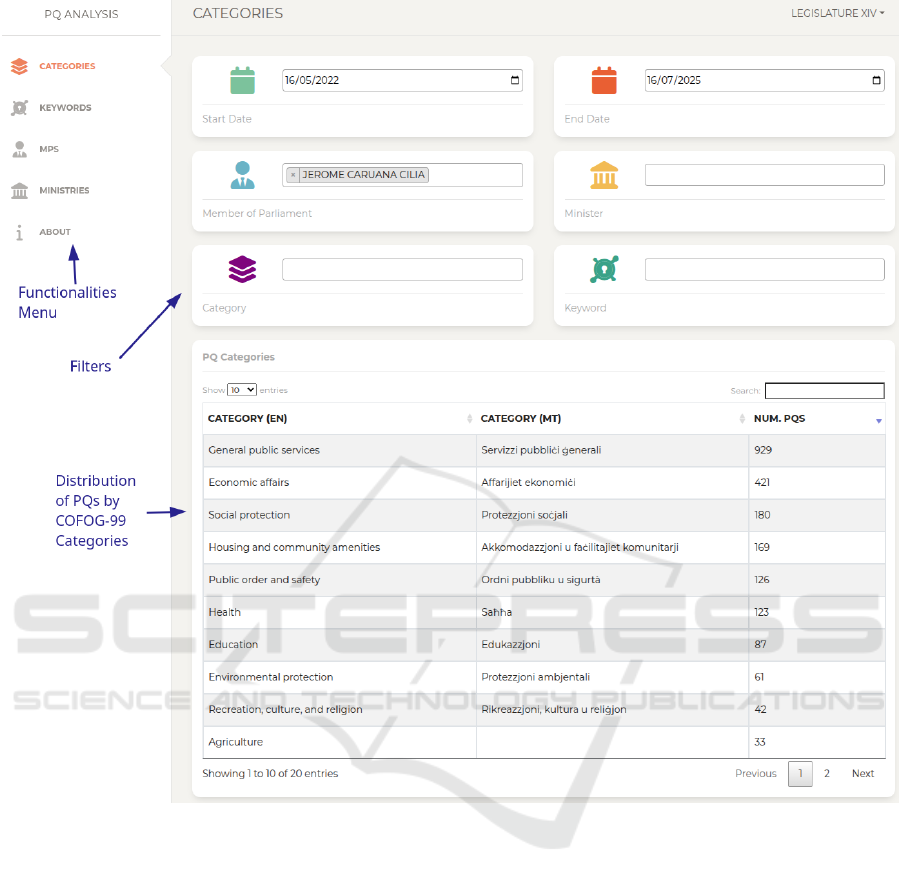
Figure 1: The PQ Dashboard landing page showing the distribution of PQs by Jerome Caruana Cilia according to the different
COFOG-99 categories.
tion are considered, Rebekah Borg submitted the most
questions (117), followed by Graziella Galea (95).
Users can then select a particular MP to drill down
into that MP’s activity. This opens a clickable table
listing PQs, along with horizontal bar charts showing
the distribution of ministries targeted by that MP, the
distribution of categories to which those PQs belong,
and the distribution of keywords associated with those
PQs.
For instance, when considering the PQs related
to Environmental Protection by Rebekah Borg, the
majority of them were submitted to the Ministry for
the Environment, Energy and the Regeneration of the
Grand Harbour (54 PQs), the Ministry for the En-
vironment, Energy and Public Health (32 PQs) and
the Ministry for the Environment, Energy and Enter-
prise (9 PQs). It should be noted that when ministe-
rial portfolios are modified by the government, the af-
fected ministries appear as ‘new’ ministries. Most of
the PQs submitted by Rebekah Borg related to Envi-
ronmental Protection concerned the Environment and
Resources Authority. This was clearly highlighted by
the visualisation of keyword distribution.
4.3 Overview by Ministry
This section displays a list of ministries along with the
number of PQs addressed to each of them. Users can
select a ministry to view a list of PQs addressed to that
ministry (subject to any additional filtering provided
by the users), a horizontal bar chart showing the dis-
tribution of MPs who posed these questions, a hori-
LLMs and Knowledge Discovery in Low-Resource Language Parliamentary Corpora: The PQ Dashboard Case Study
165
zontal bar chart showing the distribution of categories
to which those PQs belong, and a horizontal bar chart
showing the distribution of keywords associated with
those PQs.
For example, the Ministry for Education, Sport,
Youth, Recreation and Innovation is the most com-
monly addressed ministry (2911 PQs). Over 20%
of these PQs (632) were posed by Justin Schembri,
with Graziella Galea submitting the second most (249
PQs). The great majority of these PQs were cate-
gorised within the obvious COFOG-99 category ‘Ed-
ucation’. Others were categorised within ‘General
Public Services’, and ‘Recreation, Culture and Re-
ligion’, amongst others. Some of the most popular
keywords include ‘Schools’, ‘Students’ and ‘Sport’.
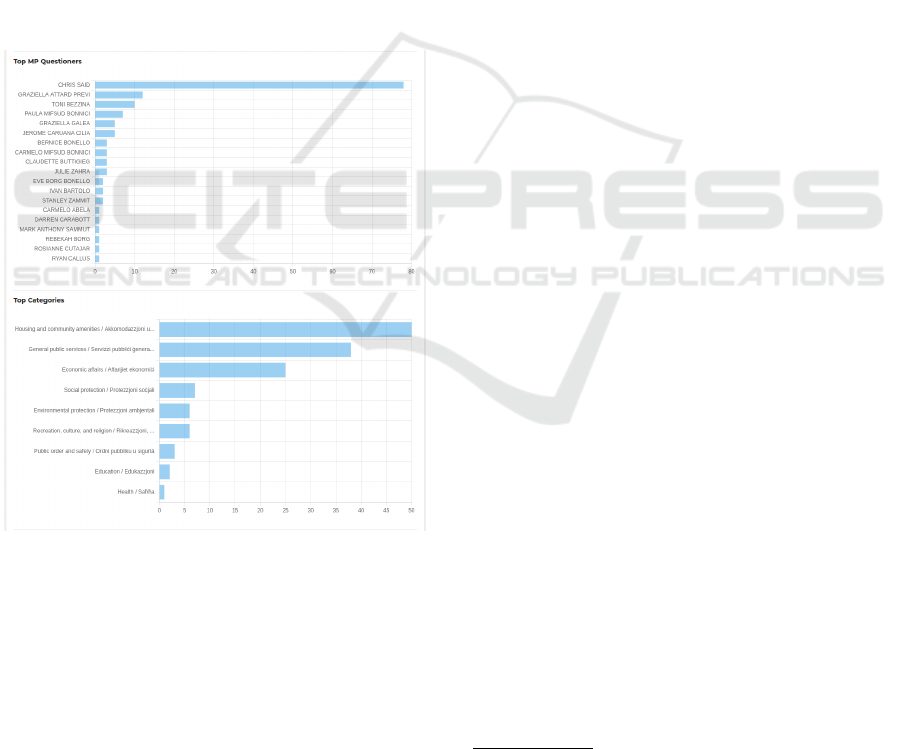
Figure 2 provides additional insights, showing the
breakdown of PQs directed to the Ministry for Gozo
and Planning between May and July 2025, classified
by the Member of Parliament (MP) posing the ques-
tion and the corresponding COFOG-99 categories.
Figure 2: Insights into Parliamentary Questions (PQs) di-
rected to the Ministry for Gozo and Planning from May to
July 2025, highlighting the activity of posing MPs and the
distribution across COFOG-99 categories.
4.4 Viewing a PQ
When a user is presented with PQs in a datatable,
these are clickable to view the details of that PQ. The
presented details for a PQ include:
• Details available in the original official PQ,
namely:
– PQ number
– Sitting
– MP posing the question
– PQ Type (Oral vs. Written)
– The Ministry to which the PQ is addressed (in
Maltese)
– The Minister answering the PQ
– PQ Title (in Maltese)
– Question Text (in Maltese)
– Answer Text (in Maltese)
• Translated version of the applicable fields, more
specifically:
– Ministry name
– Title
– Question Text
– Answer Text
• Other details retrieved from the LLM processing:
– COFOG-99 Category (in both Maltese and En-
glish)
– Extracted Keywords (in both Maltese and En-
glish)
– Links to PQs cited within this PQ (a.k.a. out-
going links)
– Links to PQs citing this PQ (a.k.a. incoming
links)
• Link to the original PQ from the official Parlia-
ment of Malta portal (https://pq.gov.mt).
Figure 3 shows the PQ Dashboard’s detailed view
of a specific PQ.
1
It should be noted that the origi-
nal PQ may contain links to documents laid on the
Clerk’s table. These ‘documents laid’ are to date not
processed or displayed in the PQ Dashboard.
5 EVALUATION
The PQ Dashboard was informally evaluated through
demonstrations to various key stakeholders, includ-
ing officials from the Parliament of Malta, civil ser-
vice officials within the Government of Malta, and
former Members of Parliament. Qualitative feedback
was recorded during these sessions. While acknowl-
edging that a more rigorous and systematic evaluation
would have been desirable, the insights gathered from
this qualitative feedback still proved valuable in as-
sessing the system’s utility and identifying areas for
future enhancement.
2
The original PQ is accessible at https://pq.gov.
mt/pqweb.nsf/06d013e9f9ab0283c12568f50054014f/
c1257d2e0046dfa1c1258c8100253c15 (last accessed:
September 2025).
KDIR 2025 - 17th International Conference on Knowledge Discovery and Information Retrieval
166
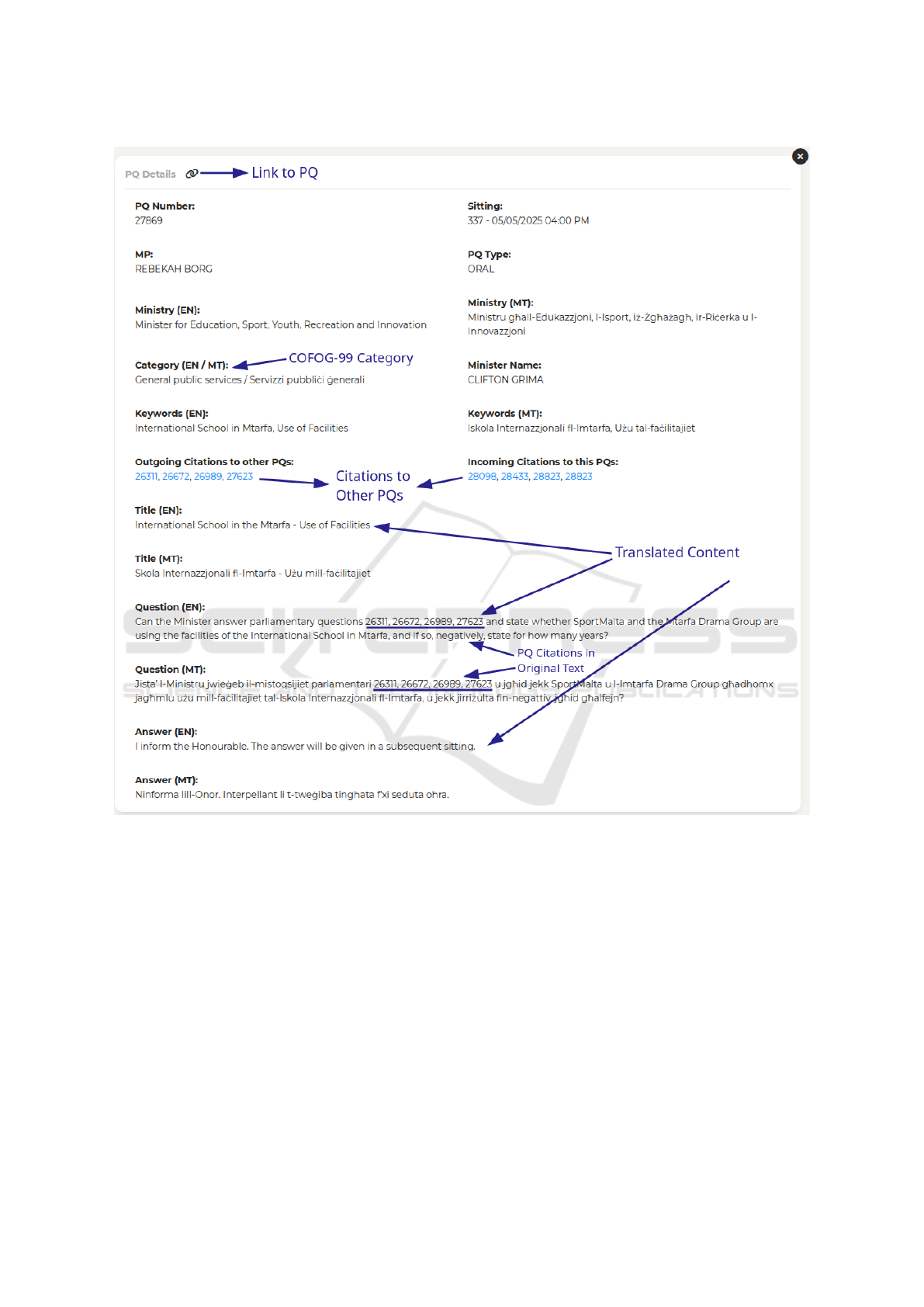
Figure 3: A detailed view of a Parliamentary Question (PQ) within the dashboard, displaying all relevant information.
2
Positive Feedback
The overall feedback received was overwhelm-
ingly positive, particularly highlighting several key
strengths of the system:
• Multilingual Search Capability: A significant
advantage highlighted was the ability to search
Parliamentary Questions (PQs) using English,
which greatly enhances accessibility for non-
Maltese speakers and facilitates broader research.
• Simplified Navigation through Inter-PQ Links:
Users appreciated the simplification of PQ
searches, especially when different PQs refer to
each other. The system’s ability to identify and
link related questions streamlines the research
process, eliminating the need for users to initiate
new searches for referenced PQs, a limitation of
the official parliamentary portal.
• Thematic Overviews: The dashboard provides
clear overviews of the typical subjects of ques-
tions, allowing users to quickly grasp prevailing
topics and trends in parliamentary discourse.
Beyond general research into PQs, specific useful
applications of such a system were highlighted:
• Tracking Civil Service Projects: The system
was identified as a valuable tool for keeping track
of current projects related to the civil service. It
was noted that, until recently, PQs were often
LLMs and Knowledge Discovery in Low-Resource Language Parliamentary Corpora: The PQ Dashboard Case Study
167

the only means to acquire certain governmental
data (e.g., data related to governmental authori-
ties) when not shared through other official chan-
nels, making the dashboard a key tool for data ac-
quisition in such scenarios.
• Ministerial Consistency Checks: Ministerial of-
ficials found the system useful for preparing an-
swers to new PQs, enabling them to ensure con-
sistency with information previously provided in
past PQ answers.
Identified Shortcomings and Areas for
Improvement
Despite the positive reception, a number of shortcom-
ings and areas for improvement were also noted, pro-
viding crucial guidance for future development:
• Translation Nuances: While the automatic trans-
lations were generally considered to be of good
quality, it was observed that they occasionally
failed to capture the exact meaning implied in the
original Maltese text. Such issues were typically
present in “canned” parts of the text—frequently
recurring phrases in PQs. For instance, the phrase
“Ninforma lill-Onor. Interpellant illi...” (“I in-
form the Honourable Member that...”) was some-
times translated as “I inform the Honourable...”,
omitting the word ‘Member’. A suggested
workaround involves implementing rules to apply
pre-prepared, accurate translations for such com-
mon phrases, thereby correcting the AI-generated
output.
• Clear Source Attribution: It was recommended
that the system explicitly mark which parts of the
displayed text were obtained directly from offi-
cial sources (e.g., original Maltese question and
answer texts) and which were generated or pro-
cessed by AI. This would enhance transparency
and user trust.
• System Independence Disclaimer: To avoid
misconceptions due to potential inaccuracies in
AI-generated data, it was suggested that the sys-
tem explicitly state its separation from the official
parliamentary version. This clarifies that the PQ
Dashboard is a supplementary tool and defers to
https://pq.gov.mt as the authoritative source.
• Limited Historical Coverage: The current sys-
tem is limited to PQs from the 14th legislature.
Stakeholders expressed a strong desire for the sys-
tem to be extended to cover all PQs available on-
line, from the 9th legislature onwards, as provided
by the official PQ portal. This expansion would
unlock a wealth of historical data for more com-
prehensive longitudinal analysis.
• User Language Preference: The current inter-
face displays both Maltese and English versions
of PQs side-by-side. Feedback suggested imple-
menting a user-selectable language flag, allow-
ing users to choose their preferred language for
all subsequent interactions within the dashboard,
rather than a dual display.
The qualitative feedback, despite its informal na-
ture, has been instrumental in validating the core util-
ity of the PQ Dashboard and in clearly delineating
a roadmap for its future development, ensuring that
subsequent enhancements directly address user needs
and improve the system’s accuracy and usability.
6 CONCLUSIONS AND FUTURE
WORK
The PQ Dashboard stands as a compelling demonstra-
tion of how accessible public data can be achieved
through the strategic utilisation of relatively low-cost
hardware and the integration of Machine Translation.
By offering access to Parliamentary Questions (PQs)
in both their original Maltese and automatically trans-
lated English versions, the system broadens substan-
tially the potential audience for this vital public in-
formation. Furthermore, the extraction of key details
from each document, such as COFOG-99 categories,
keywords, and inter-document citations, serves to en-
hance accessibility further. These extracted details
are then leveraged to generate valuable aggregations,
enabling users to ‘profile’ Members of Parliament
(MPs) and Ministries, and identify their primary in-
terests, thereby offering deeper insights into parlia-
mentary activity.
A fundamental principle underpinning the sys-
tem’s development was the exclusive reliance on free
and publicly available open-source technologies, pur-
posefully eschewing commercial services. This ap-
proach not only ensures inherent cost-effectiveness
but also serves as a robust showcase for the devel-
opment of secure and privacy-preserving Artificial
Intelligence (AI) solutions within the public sector.
This is particularly relevant even when dealing with
publicly available information where immediate pri-
vacy concerns might appear less pressing, as it un-
derscores a commitment to data sovereignty and ethi-
cal AI practices through on-premise Large Language
Model (LLM) deployment.
Future work will expand the capabilities and scope
of the PQ Dashboard. The first priority is to ad-
KDIR 2025 - 17th International Conference on Knowledge Discovery and Information Retrieval
168

dress the limitations identified during evaluation (see
Section 5), with emphasis on extending coverage
to earlier legislatures—starting from the 9th—whose
records are already publicly available. Secondly, the
system will be updated to incorporate more recent
or advanced Large Language Models, ensuring con-
tinued state-of-the-art performance. In addition, dis-
course analysis is planned to capture different ques-
tion types (e.g., factual, policy-oriented, or account-
ability questions) and to categorise response types
(e.g., factual, explanatory, or evasive answers), offer-
ing a more nuanced understanding of parliamentary
dialogue. Furthermore, a more formal and structured
user study is planned to systematically assess the sys-
tem’s strengths and weaknesses.
ACKNOWLEDGEMENTS
The authors acknowledge the use of Artificial Intel-
ligence (AI) language models in the drafting and re-
finement of this manuscript. Specifically, the Gem-
ini family of Large Language Models (developed
by Google) and OpenAI’s ChatGPT (version GPT-
4, July 2025) were utilised to support summarisation,
language refinement and structural organisation. All
AI-assisted content was thoroughly reviewed, edited,
and validated by the authors to ensure accuracy, orig-
inality, and compliance with academic standards.
REFERENCES
Abela, C. and Azzopardi, J. (2018). Analysing and visualis-
ing parliamentary questions: A linked data approach.
In Szyma
´
nski, J. and Velegrakis, Y., editors, Semantic
Keyword-Based Search on Structured Data Sources,
pages 32–43, Cham. Springer International Publish-
ing.
Alvarez, R. M. and Morrier, J. (2025). Measuring the qual-
ity of answers in political q&as with large language
models. Political Analysis, page 1–18.
Azzopardi, J. (2024). Translating justice: A cross-lingual
information retrieval system for maltese case law doc-
uments. In Goharian, N., Tonellotto, N., He, Y., Li-
pani, A., McDonald, G., Macdonald, C., and Ounis,
I., editors, Advances in Information Retrieval, pages
236–240. Springer Nature Switzerland, Cham.
Bryłkowski, A. and Klikowski, J. (2025). Large language
models in legislative content analysis: A dataset from
the polish parliament. Available at https://arxiv.org/
abs/2503.12100.
Citino, Y. M. (2024). Leveraging automated technologies
for law-making in italy: Generative ai and constitu-
tional challenges. Parliamentary Affairs, 78(3):625–
647.
Cunningham, E., Cross, J., and Greene, D. (2025). Iden-
tifying algorithmic and domain-specific bias in par-
liamentary debate summarisation. Available at https:
//arxiv.org/abs/2507.14221.
European Parliament and Council of the European Union
(2024). Artificial Intelligence Act (regulation (eu)
2024/1689). Entered into force 1 August 2024; full
text available via EUR-Lex. https://eur-lex.europa.eu/
eli/reg/2024/1689/oj.
Gesnouin, J., Tannier, Y., Silva, C. G. D., Tapory, H., Brier,
C., Simon, H., Rozenberg, R., Woehrel, H., Yakaabi,
M. E., Binder, T., Marie, G., Caron, E., Nogueira, M.,
Fontas, T., Puydebois, L., Theophile, M., Morandi, S.,
Petit, M., Creissac, D., Ennouchy, P., Valetoux, E.,
Visade, C., Balloux, S., Cortes, E., Devineau, P.-E.,
Tan, U., Namara, E. M., and Yang, S. (2024). Llaman-
dement: Large language models for summarization of
french legislative proposals.
Google (2024). Gemma 2 9b instruction tuned
model. Hugging Face. https://huggingface.co/google/
gemma-2-9b-it.
Hyv
¨
onen, E., Leskinen, P., Sinikallio, L., Mela, M. L.,
Tuominen, J., Elo, K., Drobac, S., Koho, M., Ikkala,
E., Tamper, M., Leal, R., and Kes
¨
aniemi, J. (2022).
Finnish parliament on the semantic web: Using parlia-
mentsampo data service and semantic portal for study-
ing political culture and language. In Digital Par-
liamentary Data in Action (DiPaDa 2022) Workshop,
CEUR Workshop Proceedings, Vol. 3133, pages 69–
82, Uppsala, Sweden. CEUR-WS.org. Presented 15
March 2022; licensed under CC BY 4.0.
Inter-Parliamentary Union (IPU) and Parliamentary Data
Science Hub, Centre for Innovation in Parlia-
ment (2024). Use Cases for AI in Parlia-
ments. Published in partnership with the Par-
liamentary Data Science Hub, following IPU As-
sembly resolution on AI (October 2024). Avail-
able at: https://www.ipu.org/resources/publications/
reference/2024-12/use-cases-ai-in-parliaments.
Inter-Parliamentary Union (IPU) (2022). Brazil: A dig-
itally mature parliament. Case study; published
1 June 2022 on the IPU News & Case Studies
page https://www.ipu.org/news/case-studies/2022-06/
brazil-digitally-mature-parliament.
Inter-Parliamentary Union (IPU) and Parliamentary
Data Science Hub, Centre for Innovation in
Parliament (2024). Guidelines for ai in parlia-
ments. Published December 2024; launched
at event on 3 December 2024; framework for
responsible AI use in parliamentary contexts
https://www.ipu.org/resources/publications/reference/
2024-12/guidelines-ai-in-parliaments.
Inter-Parliamentary Union (IPU) and UN/IPU Global Cen-
tre for ICT in Parliament (2024). World e-parliament
report 2024. Based on survey of 115 parliaments
in 86 countries; licensed under CC BY-NC-SA 4.0.
https://www.ipu.org/resources/publications/reports/
2024-10/world-e-parliament-report-2024.
Koehn, P. and Knowles, R. (2017). Six challenges for neural
machine translation. In Luong, T., Birch, A., Neubig,
G., and Finch, A., editors, Proceedings of the First
LLMs and Knowledge Discovery in Low-Resource Language Parliamentary Corpora: The PQ Dashboard Case Study
169

Workshop on Neural Machine Translation, pages 28–
39, Vancouver. Association for Computational Lin-
guistics.
Martorana, C. (2025). Ai in action: 5 essential findings
from the 2024 federal ai use case inventory. Accessed
July 2025; official .gov publication https://www.cio.
gov/ai-in-action/.
Parliament, U. (2024). Explore data from the uk parliament.
Online data portal. https://explore.data.parliament.uk/
Accessed: 2024-10-09.
Parliament of Malta (2022). Parliament of malta — par-
liamentary questions. https://pq.gov.mt. Accessed:
2025-07-23.
Polat, H. and Korpe, M. (2022). Estimation of demographic
traits of the deputies through parliamentary debates
using machine learning. Electronics, 11(15).
Ranathunga, S., Prifti Skenduli, M., Shekhar, R., Alam, M.,
and Kaur, R. (2022). Neural machine translation for
low-resource languages: A survey. ACM Computing
Surveys, 55.
Rozado, D. (2024). The political preferences of llms. PLOS
ONE, 19:1–15.
Sharma, C. (2025). Retrieval-augmented generation:
A comprehensive survey of architectures, enhance-
ments, and robustness frontiers. Available at https:
//arxiv.org/abs/2506.00054.
Siino, M., Falco, M., Croce, D., and Rosso, P. (2025).
Exploring llms applications in law: A literature re-
view on current legal nlp approaches. IEEE Access,
13:18253–18276.
TMID Editorial (2024). Pqs should be answered. The Malta
Independent. Editorial (“TMID Editorial: PQs should
be answered”).
United Nations Statistics Division (2024). Revision of the
classification of the functions of government (cofog).
Webpage, UN Statistics Division. https://unstats.un.
org/unsd/classifications/cofog/revision.
Zhao, X., Huo, Y., Abedin, M. Z., Shang, Y., and Alofaysan,
H. (2025). Intelligent government: The impact and
mechanism of government transparency driven by ai.
Public Money & Management, 0(0):1–12.
Zhuang, Z., Chen, J., Xu, H., Jiang, Y., and Lin, J. (2025).
Large language models for automated scholarly paper
review: A survey. Information Fusion, 124:103332.
KDIR 2025 - 17th International Conference on Knowledge Discovery and Information Retrieval
170
