
PSemQE: Disambiguating Short Queries Through Personalised
Semantic Query Expansion
Oliver Baumann
a
and Mirco Schoenfeld
b
University of Bayreuth, Universit
¨
atsstraße 30, 95447 Bayreuth, Germany
Keywords:
Information Retrieval, Query Expansion, User-Centric Design, Word Embeddings, Word Sense Disambigua-
tion.
Abstract:
Locating items in large information systems can be challenging, especially if the query has multiple senses
referring to different items: depending on the context, Amazon may refer to the river, rainforest, or a myth-
ical female warrior. We propose and study Personalised Semantic Query Expansion (PSemQE) as a means
of disambiguating short, ambiguous queries in information retrieval systems. This study examines PSemQE’s
effectiveness in retrieving relevant documents matching intended senses of ambiguous terms and ranking them
higher versus a base query without expansion. Synthetic user profiles focused on narrow domains were gener-
ated to model well-defined information needs. Word embeddings trained on these profiles were used to expand
queries with semantically related terms. Experiments were conducted on corpora of varying sizes to measure
the retrieval of predetermined target articles. Our results show that PSemQE successfully disambiguated pol-
ysemous queries and ranked the target articles higher than the base query. Furthermore, PSemQE produces
result sets with higher relevance to user interests. Despite limitations like synthetic profiles and cold-start
issues, this study shows PSemQE’s potential as an effective query disambiguation engine. Overall, PSemQE
can enhance search relevance and user experience by leveraging user information to provide meaningful re-
sponses to short, ambiguous queries.
1 INTRODUCTION
Large knowledge repositories have become a staple of
digital life; however, navigating their content can be
daunting for users. Galleries, libraries, archives, and
museums consistently strive to make their collections
accessible through digital catalogues; there are hardly
any commodities that cannot be located in the vast
catalogue of e-commerce platforms, media-streaming
platforms are abundant in content, and the de facto
go-to online encyclopedia, English Wikipedia, lists
more than seven million content pages as of July
2025. Various methods have been explored in the
field of information retrieval to improve the naviga-
bility of large collections and ultimately present users
with relevant results. Query reformulation consti-
tutes a general framework for improving the “coordi-
nation match” (Krovetz and Croft, 1992) to increase
retrieval performance by adding, reweighting, or re-
moving search query terms. The addition of synony-
mous or semantically similar terms to the initial query
a
https://orcid.org/0000-0003-4919-9033
b
https://orcid.org/0000-0002-2843-3137
is known as query expansion, which allows the search
engine to potentially find more relevant documents
that match these terms.
However, queries may suffer from ambiguity
when the surface forms of the terms have differ-
ent meanings. This is especially apparent for short
queries, where a search for “python” may return doc-
uments related to the programming language, family
of snakes, or any other meaning referred to by this
surface form. While query expansion may still help
shed light on the fact that all these different senses
exist, it will likely take several iterations for the user
to arrive at the results they expected, so much so that
most users will pre-empt this process by performing
manual query expansion at the first iteration, provid-
ing a query such as “python programming language”
to narrow down the set of relevant documents. How-
ever, this requires knowledge that the query is am-
biguous in the first place.
Personalised query expansion (PQE) can largely
avoid this manual query modification by selecting ex-
pansion terms based on user context. Broadly, this
context is any side-channel information that charac-
Baumann, O. and Schoenfeld, M.
PSemQE: Disambiguating Short Queries Through Personalised Semantic Query Expansion.
DOI: 10.5220/0013787500003985
Paper published under CC license (CC BY-NC-ND 4.0)
In Proceedings of the 21st International Conference on Web Information Systems and Technologies (WEBIST 2025), pages 289-300
ISBN: 978-989-758-772-6; ISSN: 2184-3252
Proceedings Copyright © 2025 by SCITEPRESS – Science and Technology Publications, Lda.
289

terises a user’s potential information needs, such as
query histories, page views, or social media content.
This approach inherently requires a language model
for both the “user language” and the corpus.
The dominant approach to language modelling
is embedding, by which words are represented as
dense high-dimensional vectors. Recently, the con-
textualised word embeddings underlying large lan-
guage models (LLMs) have advanced information re-
trieval; however, their size and computational cost
during training and inference can become an obsta-
cle for constrained settings. In contrast, static embed-
ding models, such as word2vec and GloVe, remain
efficient to train and query, even on consumer-grade
hardware. Furthermore, they facilitate the develop-
ment of explainable intelligent systems, as querying
the embedding for similar terms directly relates to the
training set, specifically a user profile, rather than ex-
tensive Web-scale collections, such as the Common
Crawl.
In this study, we propose and analyse a refinement
of PQE, which we refer to as Personalised Seman-
tic Query Expansion (PSemQE). PSemQE expands
queries with semantically close terms with respect to
the user’s context by performing a nearest-neighbour
search in the embedding space. Crucially, it uses lo-
cal embeddings of user profiles only during query ex-
pansion and defers actual retrieval to a downstream
search engine.
Although similar systems have been explored pre-
viously, their ability to disambiguate queries for the
user’s benefit is not well understood. This study pro-
vides insights into the extent to which PSemQE can
perform word-sense disambiguation in a user-centric
manner.
Our contributions are summarised as follows:
• Detailed analysis of the rank dynamics governing
personalised query expansion for short, ambigu-
ous queries;
• Outlier analysis of cases where expansion pro-
duces inferior results;
• Collection of a labelled dataset for evaluating
query disambiguation, as well as synthetic user
modelling.
The remainder of this paper is structured as fol-
lows: Section 2 discusses related work and positions
this study in a broader context. In Section 3, we pro-
vide an operationalisation and describe our approach
to data collection and analysis, as well as the experi-
mental design. The results are reported and discussed
in Section 4. Finally, Section 5 concludes the paper
and provides an outlook on future research.
2 RELATED WORK
In the following section, we review the literature re-
lated to our study. We begin by reviewing query
expansion in general before moving to the subfield
of personalised query expansion. As language mod-
elling is an important part of any query modification
system, we conclude this section by reviewing the
key contributions in this field, including recent ap-
proaches using large language models.
Query Expansion and Ambiguity
Query expansion is a type of query reformulation
that extends the initial query with additional terms
to improve retrieval performance. Suitable candi-
dates for expansion terms can be sourced from the
search results themselves or from “knowledge struc-
tures” (Efthimiadis, 1996).
Relying on search results as a source for ex-
pansion terms constitutes a form of relevance feed-
back (Manning et al., 2008), where the results re-
trieved from an initial search using the original query
are presented to the user, who judges which docu-
ments are relevant to their information needs. To au-
tomate this procedure, the top k results of an initial
search may be regarded as relevant; this is known as
pseudo-relevance feedback.
However, these initial search results may contain
irrelevant documents or miss relevant documents ow-
ing to the ambiguity of words in the corpus and/or
query (Krovetz and Croft, 1992). Therefore, imbal-
ances in the corpus may be reflected in the initial re-
trieval if an ambiguous term is overrepresented, lead-
ing to query drift (Croft et al., 2001). Clarity has been
suggested as a measure by which users can be guided
in disambiguating queries (Croft et al., 2001; Cronen-
Townsend and Croft, 2002).
Personalised QE
The prevalence of user-generated data on the Web has
been influential in the development of personalised
query expansion. By considering users’ actions out-
side the search context, these approaches attempt to
produce results that are closely tied to users’ interests.
A wide variety of sources from which expansion
terms can be drawn have been explored, such as
emails (Chirita et al., 2007), social tagging (Bouad-
jenek et al., 2019), and the fusion of social annota-
tions with knowledge bases (Zhou et al., 2017).
For instance, Ould Amer et al. (Ould-Amer et al.,
2016) investigated personalised book search by con-
structing word2vec embeddings of users’ item cata-
WEBIST 2025 - 21st International Conference on Web Information Systems and Technologies
290

logues. While they found that the personalised set-
ting outperformed the non-personalised setting only
when a small number of expansion terms were in-
cluded, they explained this finding with the quality
of the corpus rather than the method in general.
Recently, Bassani et al. (Bassani et al., 2023) used
contextual word embeddings for personalised QE by
aligning topical clusters of user and document embed-
dings and selecting the most appropriate terms using
a nearest-neighbour search.
Language Modelling
Following Efthimiadis’ classification, expansion
terms can also be sourced from knowledge structures
that are not directly tied to the search process, such as
domain-specific or general thesauri. Language mod-
els, such as word embeddings, can also be considered
a form of knowledge structure.
Popular approaches for training word embeddings
include word2vec (Mikolov et al., 2013a; Mikolov
et al., 2013b) and GloVe (Pennington et al., 2014).
These vectors are derived such that words with simi-
lar meanings correspond to vectors that are also close
in the embedding space; cosine distance is a common
choice as a metric. This property also makes em-
beddings an interesting resource for candidate terms
for query expansion because words that are similar to
the original query can be chosen for expansion. Roy
et al. (Roy et al., 2016) studied different methods to
extract candidate terms from word2vec embeddings;
among others, they explored the compositionality of
word vectors to extend a query with terms similar to
a bigram decomposition of the initial query.
Large language models, such as BERT (Devlin
et al., 2019), use contextualised embeddings, where
individual words are represented by multiple vectors
depending on their context. Contextualised word em-
beddings have been shown to perform well in cap-
turing senses and performing word sense disambigua-
tion (Wiedemann et al., 2019; Loureiro et al., 2021).
Specifically, SensEmBert (Scarlini et al., 2020) fuses
BERT with semantic networks to produce multilin-
gual sense embeddings.
Naseri et al. (Naseri et al., 2021) used contextu-
alised embeddings provided by BERT for query ex-
pansion, reporting improvements in average precision
on TREC test collections compared to static mod-
els. Wang et al. (Wang et al., 2023) and Jagerman
et al. (Jagerman et al., 2023) used LLMs to gener-
ate pseudo-documents and expansion terms by utiliz-
ing the inference capabilities of these models. The
model output was subsequently appended to the orig-
inal query, with improvements in retrieval perfor-
amazon
amazon river brazil
Profile Embedding
Expansion
Interaction profile
User query
Expanded query
amazon
river
brazil
...
...
...
CORPUS
Figure 1: Components of the expansion system. Users’ past
interactions are recorded and represented via word embed-
dings. Any query issued by the user passes through the ex-
pansion component, where the top-k similar terms are ap-
pended.
mance across several test collections.
While large models have been shown to perform
well in word sense disambiguation, this remains an
open question for static models. However, these
smaller models are efficient even in constrained set-
tings and constitute a “small world” model of a user’s
language, thus aiding explainability for downstream
tasks. To the best of our knowledge, this is the
first study to investigate the “disambiguation power”
of personalised query expansion using local embed-
dings.
3 METHODOLOGY
The query expansion system we consider comprises
three key components: In an offline procedure, word
embeddings are trained on individual user profiles to
capture semantic relationships between terms within
the user’s context. The expansion component uses
these embeddings to extend the original query with
semantically similar expansion terms. Finally, the
search engine processes the query and retrieves and
ranks the documents. The components and their in-
teractions are shown in Figure 1.
This architecture enables personalised semantic
query expansion by leveraging user profile informa-
tion to disambiguate short, ambiguous queries and re-
trieve more relevant results tailored to the user’s inter-
ests and context.
To better understand the extent to which PSemQE
can disambiguate queries, we addressed the following
research questions:
RQ1. For short, ambiguous queries, can PSemQE re-
trieve documents that the base query can’t?
RQ2. Are relevant documents ranked higher under
PSemQE than the base query?
PSemQE: Disambiguating Short Queries Through Personalised Semantic Query Expansion
291

RQ3. Does PSemQE yield more relevant documents
than the base query?
In the following section, we operationalise the key
concepts for our work and then document our data
collection process. In particular, we describe how we
built synthetic user profiles in the absence of ground
truth.
3.1 Operationalization
User Context
We broadly define user context as any data that char-
acterises the interests of a user. For this study, we
used browsing histories containing items that a user
had viewed previously. We assume that these histo-
ries implicitly describe a user’s interests and under-
standing of the domain.
Query Disambiguation
We consider a query ambiguous if it consists of one
or more words that exhibit multiple senses. Query
disambiguation is the process of inferring the sense
intended by the user and having the search results re-
flect this sense.
We chose to model the problem setting on the En-
glish Wikipedia owing to the availability of ambigu-
ous lemmata along with possible disambiguations.
The titles of dedicated disambiguation pages refer
to ambiguous lemmata, and the body contains a list
of links to pages that disambiguate the term. For
the evaluation data, we selected the title of a disam-
biguation page as the query and selectively sampled
two pages from the list as the disambiguation targets.
Given a user profile that consists of articles relating
to the sense of one of the targets, we regard disam-
biguation as successful if the target is present in the
search results. An illustrative example: for the query
“Amazon” and a user showing interest in geography,
ecosystems, and climate, the query is successfully
disambiguated if the results contain the target article
“Amazon rainforest”.
Synthetic User Profiles
While the raw Wikipedia Web request
stream (Wikipedia contributors, 2025a) contains
the requesting IP address and requested URL, this
data is considered sensitive personal information
according to the Wikimedia Foundation’s privacy
policy (Wikipedia contributors, 2025d) and is not
available to the general public. Anonymised ag-
gregated data are available in the form of pageview
dumps (Wikipedia contributors, 2025b) or the
Wikipedia Clickstream dataset (Wikipedia con-
tributors, 2025c), but these can only provide an
approximation of real users’ browsing habits. While
Arora et al. (Arora et al., 2022) argued that in certain
cases, “synthetic data is enough”, they also noted that
real user traces are useful for tracking the patterns
of individual users. We reproduced their approach
in preliminary experiments but found the profiles
generated in this way to be too broad in terms of
the domains of interest of the resulting profiles, and
no meaningful keywords were extracted from these
profiles. These preliminary findings suggest that to
perform meaningful personalised query expansion,
user profiles should revolve around well-defined
topics.
Owing to the lack of publicly available user pro-
files for Wikipedia, we generated synthetic profiles
based on a simple knowledge graph, the process of
which is described in Section 3.2. The synthetic
profiles we collected consist of an unordered set of
unique page IDs of Wikipedia articles and consti-
tute a model of users with specific interests browsing
Wikipedia.
3.2 Data Collection
As a consequence of the operationalisation given in
the preceding section, we require two datasets for
our evaluation: ambiguous Wikipedia articles, along
with possible disambiguations, and user profiles. This
section describes the collection strategies for both
datasets.
Ambiguous Articles
We selectively sampled a set of 14 disambiguation
pages from the category listing for all article disam-
biguation pages
1
; we refer to these as the parent term
or simply parent in the remainder of this paper. From
each disambiguation page, we again selectively sam-
pled two pages as disambiguation targets, from which
we extracted the full-text content of the latest revi-
sion
2
. The raw contents were stripped from wiki-
markup
3
in preparation for further processing. We
collected 28 (parent,target)-tuples, two of which are
listed in Table 1.
User Profiles
As outlined in Section 3.1, for this study, we regard a
user profile as an unordered set of Wikipedia articles
1
https://en.wikipedia.org/wiki/Category:
All article disambiguation pages
2
https://www.mediawiki.org/wiki/API:Main page
3
https://github.com/earwig/mwparserfromhell
WEBIST 2025 - 21st International Conference on Web Information Systems and Technologies
292

Table 1: Two example parent terms and the corresponding target articles to gauge disambiguation; each target is a concrete
article linked to from the parent’s disambiguation page.
Parent ID Parent title Target ID Target title
29621629 Amazon
1701 Amazon River
90451 Amazon (company)
8239 Dylan
4637590 Bob Dylan
8741 Dylan (programming language)
e
t,i
e
m,i
e
c,i
extract
mention-relations
extract
category-relations
Figure 2: Construction of the knowledge graph.
with the requirement that the articles share a common
theme. In this section, we describe the process of
generating synthetic profiles using random walks on
a knowledge graph.
Knowledge graphs (KGs) model facts regarding a
domain using a graph structure. In KGs, nodes are
typically referred to as entities E, and the edges be-
tween them as relations R; formally, KG = (E, R).
The entities in our knowledge graph KG
wiki
consist
of Wikipedia articles, which we connect through two
types of undirected relations: r
m
, a mentions-relation
indicating that one article is mentioned in the body
of the other, and r
c
, a category-relation indicating
that the endpoints have a common Wikipedia cate-
gory. Figure 2 illustrates the iterative procedure used
to generate the knowledge graph.
Initially, KG
wiki
contained the 28 target articles as
entities (cf. Section 3.2); we refer to these as e
t
. In
the first step, we identified articles mentioned in the
body of the target articles, added them to the graph
as new entities e
m
, and connected each to the target
in which they were mentioned through a new relation
r
m
. In the second step, for each e
m
, we determined
which Wikipedia category they belonged to and col-
lected further articles from these categories. These
are again added to the graph as entities e
c
, connected
to e
m
through a category-relation.
To identify mentions-relations, we used DBpedia
Spotlight(Daiber et al., 2013), a service for annotat-
ing text with Wikipedia articles that are indexed by
DBpedia. Spotlight identifies surface terms in the
text that refer to DBpedia entities in a context-aware
way. For instance, the surface form “boroughs” in the
Wikipedia article on Berlin is linked to the concept
“Boroughs and neighborhoods of Berlin”, We queried
the Spotlight API using the default settings, notably
a confidence setting of 0.5. For each identified DB-
pedia entity, we fetched the Wikipedia page ID and
retrieved the full text of the latest revision.
For each article obtained in this way, we extracted
the category labels from the wiki-markup and queried
the Wikipedia API for up to ten members of each cate-
gory. As before, we retrieved the full text of the latest
revision of each article.
This process iteratively builds a knowledge graph
of articles, starting with the target articles. By includ-
ing articles mentioned in the text as well as those re-
lated through mutual categories, we intend to cover
strongly related concepts alongside broader associa-
tions via categories.
The final user profiles are then generated as ran-
dom walks on KG
wiki
. We generated one profile per
target article, and each walk originated from the node
corresponding to the target article, terminating af-
ter a maximum of 40 steps. Because KG
wiki
is un-
weighted, each transition occurs with probability
1
d
,
where d denotes the degree of the current node. For
each node visited during the walk, we recorded the
Wikipedia page ID of the corresponding article. The
ID of the target article was dropped from the sequence
and recorded as an identifier to retrieve each profile in
the experiment. The profile vectors obtained in this
way consist of Wikipedia articles that share a com-
mon theme: one article may mention another, or a re-
lated concept that is subsequently researched, or the
articles may share a common category. These profiles
approximate users browsing a knowledge base, whose
journeys eventually lead to the target article.
Finally, we trained a word-embedding model for
each profile vector using the full text of each article.
As before, we retrieved the latest revision, removed
markup, and performed minimal pre-processing us-
ing gensim (
ˇ
Reh
˚
u
ˇ
rek and Sojka, 2010): tokenisation
on whitespace, lower-case normalisation, removal of
punctuation characters, and pruning of tokens shorter
than two and longer than 15 characters; stop words
were removed using a stop word corpus (Bird et al.,
2009).
The collection of documents comprising a single
profile was then used to train the word2vec model.
We used the default settings provided by gensim, with
the following deviations: the dimension of the embed-
PSemQE: Disambiguating Short Queries Through Personalised Semantic Query Expansion
293

ding vectors was set to 300, using a window size of
three and a minimum word frequency of one; models
were trained over seven epochs.
3.3 Experimental Design
To evaluate whether user profiles can be used to dis-
ambiguate search queries, we devised an experimen-
tal setting that simulates users searching a knowl-
edge base. Predefined ambiguous search queries cor-
responding to the titles of Wikipedia disambiguation
pages were submitted to a search engine. The queries
were provided in two forms: the base case with no fur-
ther keywords appended and the expansion case with
additional keywords appended to the base form. Ex-
pansion keywords were retrieved from the word em-
beddings that constitute user profiles. For each word
in the query, the two closest neighbours in terms of
the cosine distance of their embedding vectors were
determined. Out-of-vocabulary misses were ignored,
and if none of the query words appeared in the embed-
ding, the expanded and plain queries were the same.
Let q
orig
denote the original query, ⟨w
1
, . . . , w
n
⟩ the
set of expansion terms, and ⊕ the string concatena-
tion operator. The two queries are then given by
q
base
= q
orig
q
expansion
= q
orig
⊕ ⟨w
1
, . . . , w
n
⟩
We used this setup for two distinct experiments
that differed in the size and composition of the search
corpora but otherwise followed the same protocol.
Recall from Section 3.2 that we collected 14 am-
biguous parent terms, and two articles relate to each
parent that disambiguate it, leading to a total of 28
(parent, target) tuples. In this collection, each par-
ent appears twice, with one of the two associated ar-
ticles serving as the target. For each tuple, the two
queries were constructed as given above, using the
parent-term as q
orig
and the profile built around the
respective target article as the source of expansion
terms. The goal is to search the corpus for the tar-
get using q
base
and q
expansion
. An example best illus-
trates this approach: for the parent term “Amazon”,
the first target instance is “Amazon River”; q
base
is set
to “amazon”, and based on the profile around this tar-
get, q
expansion
is determined as “amazon river brazil”.
These two queries were submitted to the search en-
gine, and the results were analysed with respect to
the target instance. This process is repeated for the
second target instance, “Amazon (company)”, and so
forth, for each of the remaining tuples.
In the first experiment, referred to as SMALL in the
remainder of this paper, the intention was to evaluate
disambiguation on corpora containing highly similar
Table 2: Setup for experiments SMALL and LARGE.
Experiment #Documents #Corpora
SMALL [2, 7] 14
LARGE 3576 1
documents. These corpora contain a small number
of documents related to one ambiguous query. They
are generated dynamically, once for each parent term,
and always contain both instances of the target arti-
cle, plus up to five other articles sampled from the
same disambiguation page, which serve as “flares”.
Table 2 illustrates the corpus configurations for the
experiments. This leads to 14 distinct corpora used in
SMALL, each consisting of up to seven documents:
(target
a
,target
b
, f lare
1
, ..., f lare
5
)
For the second experiment (LARGE), we increased the
corpus size and included all articles collected during
the construction of the knowledge graph. The idea is
to mirror a real-world corpus that comprises a multi-
tude of different items. The corpus is compiled once
and reused for all subsequent queries.
The experiments are conducted using lunr.py
4
,
which uses BM25 internally to weight results. The
search results were retrieved in the order determined
by lunr and were limited to the top 100 results. In to-
tal, we collected 56 result sets (14 parents × 2 targets
× 2 query types).
3.4 Evaluation
We observed that four queries were not expanded, re-
sulting in q
base
and q
expansion
being identical. In each
of these instances, the absence of expansion terms can
be attributed to an out-of-vocabulary miss in one or
both of the word embedding models utilised during
the expansion phase. As we cannot reason about dif-
ferences in retrieval for identical base and expansion
queries, we omit these cases from the evaluation, re-
ducing the overall number of result sets from 56 to 40
by 16 (4 parents × 2 targets × 2 query types). This
resulted in 20 sets of results per experiment for eval-
uation.
After filtering out unexpanded trials, the result sets
for SMALL contain a mean of 5.8 (±1.11) results for
the base case and 5.85 (±1.09) for the expansion case.
The result sets for LARGE contained 89.2 items on
average (±20.3) for the base group, and 99 items
(±4.47) for the expansion group. Figure 3 shows the
distribution of the set size for both experiments.
We measured whether the target article was part of
the result list on a binary level, as well as the numeric
4
https://github.com/yeraydiazdiaz/lunr.py
WEBIST 2025 - 21st International Conference on Web Information Systems and Technologies
294

Figure 3: Distribution of the result set size across the two
experiments, SMALL and LARGE.
rank of the target in the list. In addition, we measured
the overlap of the sets of categories appearing in the
results with those appearing in the profile.
4 RESULTS & DISCUSSION
4.1 Results
The following section documents our results, which
are discussed in Section 4.2. We report our findings
on hit rate, rank distribution, and category overlap.
This section concludes with an analysis of observed
outliers.
4.1.1 Hit Rate
Recall that we use target articles as proxies for dis-
ambiguation: they cover two of the multiple possible
senses of the parent term. Therefore, if a search can
retrieve the predetermined target, we assume that the
query has been disambiguated. However, if the target
was not retrieved, the intended meaning was not in-
ferred correctly. HitRate@K is the fraction of queries
that contained at least one relevant document over all
queries:
HitRate@K =
Hit@K
|Q|
(1)
Here, Hit@K is a binary indicator determining
presence or absence of the target article t in the set
of results R
q
for a query q at the cutoff K:
Hit@K =
(
1 if t ∈ R
q
0 otherwise
(2)
Note that each query q ∈ Q returns results, as the
search corpus always contains at least two articles (the
targets) that match the query (cf. Section 3.3). In
other words, R
q
in Eq. 2 is never empty.
HitRate@K
Figure 4: HitRate@K over all queries for selected K. Ow-
ing to the size of the SMALL corpus, no query returned more
than seven results.
Figure 4 shows the HitRate@K for fixed values of
K ∈ {1, 3, 5, 10, 25, 50, 75, 100}. Across both experi-
ments, we found that for lower K and hence shorter
result lists, query expansion outperformed the base
case in terms of HitRate and retrieved the target ar-
ticle in more cases. As the length of the result set
increases, the rate approaches 1.0 for both base and
expansion. In other words, the longer the result list,
the more likely it is to include the target. This is un-
surprising and similar to the observation that perfect
recall can be achieved by simply returning all docu-
ments in the collection (cf. (Manning et al., 2008)).
It is important to consider the two data points in
LARGE at k = 10 and k = 25. In these cases, q
base
achieves a higher HitRate@K than q
expansion
; that
is, using only the plain query, the target is present
in more result sets. In other words, outliers exist
for which query expansion fails to retrieve the target.
Upon closer examination, we discovered that this is-
sue affected only a single query, and that the observa-
tion stemmed from the specific expansion terms em-
ployed. A more detailed analysis of this observation
is presented in Section 4.1.4.
4.1.2 Distribution of Ranks
Next, we evaluated the rank distribution of the target
articles. Previous work indicates that users tend to
regard the first ten search results highly (Silverstein
et al., 1999; Jansen et al., 2000). Thus, a document’s
rank is an important factor in the subjective assess-
ment of relevance, and the lower the rank, the higher
the chance that the user will direct their interest to the
document.
Figure 5 shows the distribution of ranks for both
experiments across the two groups. The expansion
group tends to yield the target article at lower ranks
than the plain query.
Table 3 shows the characteristics of the distri-
PSemQE: Disambiguating Short Queries Through Personalised Semantic Query Expansion
295
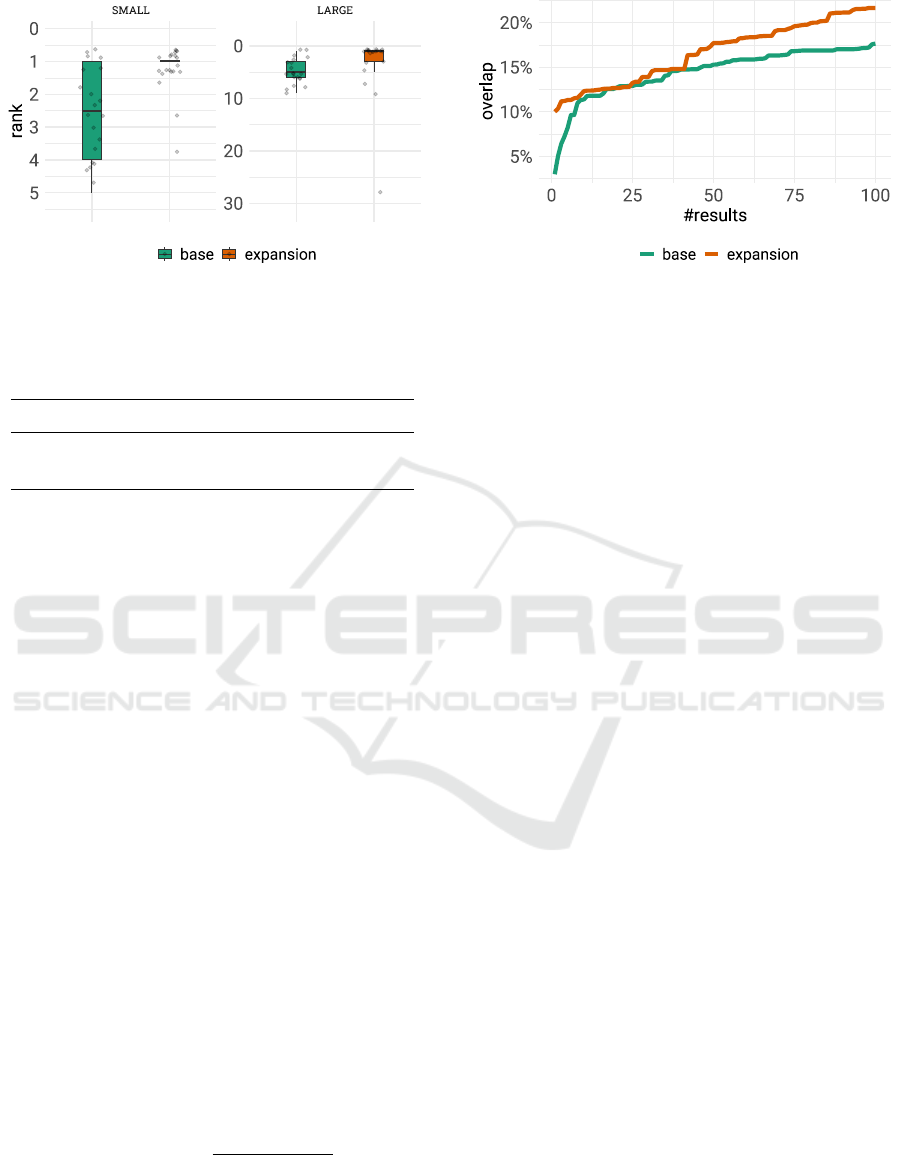
Figure 5: Distribution of ranks; lower rank is better.
Table 3: Summary statistics of rank by query type, pooled
over the experiments. A Mann-Whitney U test of base pro-
ducing larger ranks than exp. was significant at p < 0.001.
type Mean (SD) Median (IQR) Range
base 3.7 (2.2) 3.0 (2.0, 5.0) 1.0, 9.0
exp. 2.4 (4.5) 1.0 (1.0, 1.0) 1.0, 28.0
bution of target ranks across the two folds, plain
and expansion. We see that the median rank im-
proves from plain to expansion by two ranks, from
3.0 to 1.0. We conduct a one-tailed Mann-Whitney-
U test (α = 0.001) with a null hypothesis defined as
plain producing ranks lower than or equal to expan-
sion. As indicated in the table, we reject the null
(p = 2.771× 10
−6
) and accept the alternative hypoth-
esis that plain produces greater ranks than expansion.
Thus, we conclude that query expansion tends to pro-
duce lower ranks for target articles than plain queries,
placing them higher on the list of results.
4.1.3 Category Overlap
Our final analysis investigated the overall relevance of
the results, specifically whether PSemQE would re-
turn more relevant results than the base query. We
gauge relevance via Wikipedia categories: for all arti-
cles in the search corpus, we collect the assigned cate-
gory tags. Then, we determine the proportion of these
categories that are also present in the search results As
described in Section 4.1.1, we determined this overlap
for different subsets of the results. Let C
user
denote
the set of categories appearing in a user profile and
C
k
search
the set of categories contained in the top-k re-
sults. Then, we define overlap@k as
overlap@k =
|C
user
∩C
k
search
|
|C
k
search
|
The mean overlap@k is shown in Figure 6. As
shown in the figure, query expansion consistently
achieves a higher overlap between the two category
Figure 6: Overlap between search result categories and user
profile.
sets than the plain variant. This is true not only for
the experiment on the SMALL corpus, where the de-
gree of overlap tops off at 11% owing to the limited
size of the search corpus, but also for the LARGE cor-
pus, where query expansion starts off with a higher
overlap even for a single result (k = 1) than a plain
query. In this case, as we increased the size of the re-
sult set (k ≥ 100), the degree of overlap approached
25%. Thus, query expansion can better reproduce
users’ interests than a plain query, even for compa-
rably small result lists of 50 items or fewer.
4.1.4 Outlier Analysis
In this section, we revisit the outliers observed during
the analysis in Section 4. Evaluating HitRate@K, we
observed that on the LARGE corpus with query expan-
sion, some targets were not retrieved, even for result
lists of length 25 (cf. Figure 4). This observation is
tightly coupled with the outlier in Figure 5, where one
article is ranked at position 28 with query expansion.
The latter observation explains the former: because of
its rank, the article only appears in the result lists with
a length of 28 or greater.
The article in question is “Amazon (company)”,
and the expanded query presented to the search en-
gine was “amazon products linux”. In the respec-
tive embedding, the terms “products” (cos(θ) = 0.99)
and “linux” (cos(θ) = 0.96) were closest to “amazon”
based on their vectors’ cosine similarity. Overall, the
embedding captured the notion of “amazon” in a tech-
nology context, with terms such as developers, com-
puter, app, and startup among the 20 most similar
terms. However, the term linux appears only in one
of the 31 articles used to train the embedding: “An-
droid (operating system)”. Notably, the target article
“Amazon (company)” also does not contain the term
linux.
As mentioned in Section 3.3, the documents were
scored using the BM25 model, which is sensitive to
WEBIST 2025 - 21st International Conference on Web Information Systems and Technologies
296
term frequencies. For document D and query Q =
Q
0
, . . . , q
n
, the document-level score BM25(Q, D) is
(cf. (Manning et al., 2008))
n
∑
i=0
IDF(q
i
) ·
t f (q
i
, D) · (k
1
+ 1)
t f (q
i
, D) + k
1
· (1 − b + b
DL
AV DL
)
Here, k
1
and b are tunable parameters (discussed
below), t f (q
i
, D) is the raw term frequency of query
word q
i
in document D, IDF(q
i
) is the inverse doc-
ument frequency of q
i
in the corpus, and DL and
AV DL are the current document’s length and aver-
age document length across the entire corpus, respec-
tively. The final score for document D and query
Q = q
0
, . . . , q
n
is then computed as follows (cf. (Man-
ning et al., 2008)):
In Table 4, we compare the raw term counts and
the BM25 score for the outlier with the top three re-
sults in the set. Although the target article achieves
marginally higher BM25 scores for both product and
linux, these differences do not outweigh the absence
of linux: with a term frequency of zero, the summand
for this query word also becomes zero.
To further gauge the impact of k
1
, b, and t f (·)
on the rank of “Amazon (company)”, we conducted
a sensitivity analysis for each parameter. k
1
deter-
mines the scaling of term frequencies, with suggested
values in [1.2, 2] (Sp
¨
arck Jones et al., 1998). At
the extremes, this parameter turns BM25 into a bi-
nary model (k
1
= 0), detecting only term presence, or
scales the score linearly in t f (·) (large k
1
) as if using
raw term frequency (Manning et al., 2008). The pa-
rameter b influences the score’s dependence on doc-
ument length and ranges from [0, 1]; for b = 0, docu-
ment length is not factored in, b = 1 fully scales the
score by document length.
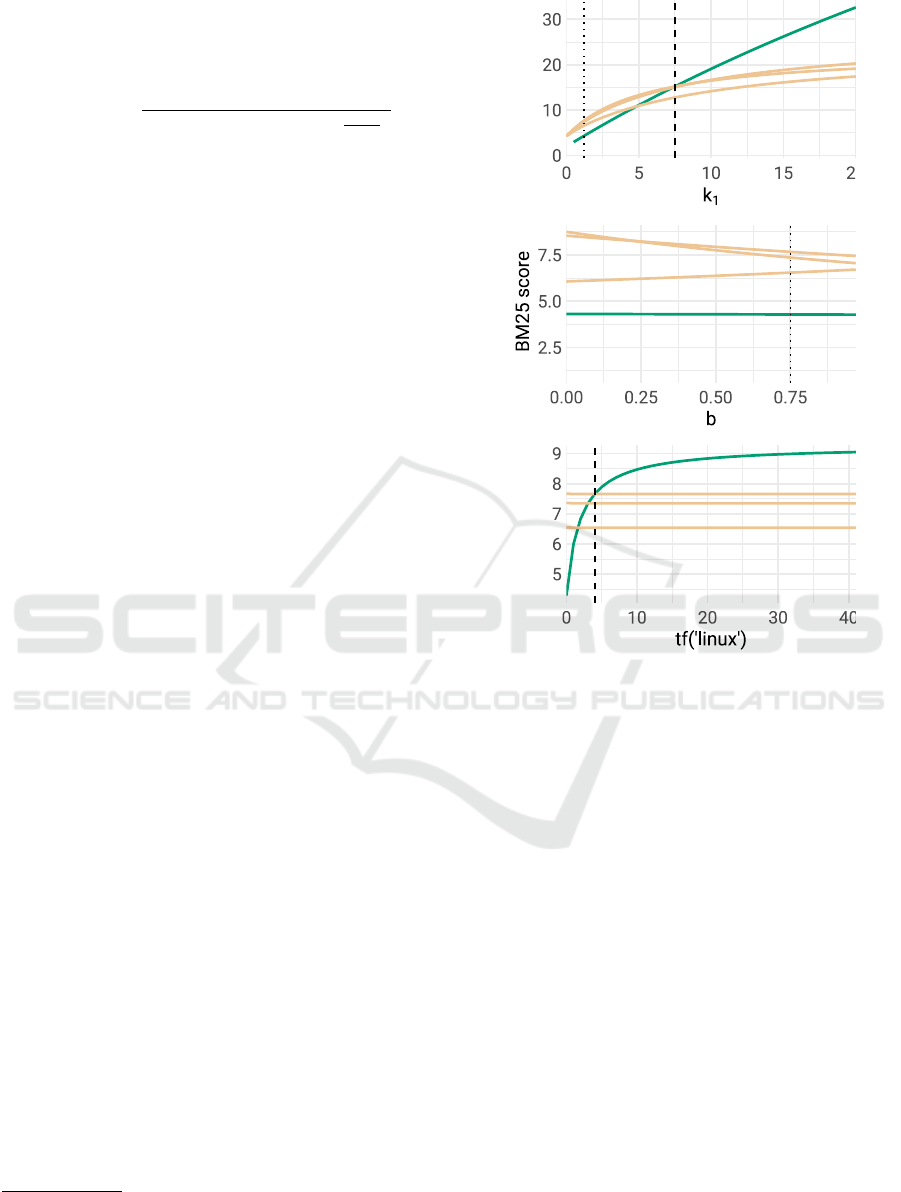
Figure 7 shows the results of the parameter analy-
sis. We vary k
1
over [0, 20] and b over [0, 1], as well
as the raw term frequency only for the target article,
over the range [0, 41], up to the maximum term fre-
quency in the set of these four articles
5
. To achieve
the highest score for the target article, we would have
to set k
1
= 7.5, which is well above the recommended
range. Changing the document length scaling factor
b does not affect the target’s rank. However, if the
term linux appeared at least twice in the document, it
would rank among the top three results; if it appeared
at least four times, it would take the top position.
An interesting observation is that although the tar-
get article was ranked far down the list using the
expanded query, the search results nevertheless con-
tained more relevant results in terms of category over-
5
Varying the term frequency also influences the term’s
IDF; as the difference is only on the order of 1 × 10
−2
, we
omit further analysis of this effect.
Figure 7: BM25 score analysis for k
1
, b, and term counts of
linux. The line corresponding to the target-article is high-
lighted; dashed lines indicate the threshold at which the
target-article score exceeds the others’, dotted lines indicate
the values of k
1
and b set for the experiments.
lap than the base query, especially for ranks 1 through
3 and up to 10, as illustrated in Figure 8.
In summary, we found that the target article was
not retrieved among the top results because of the
expansion with a keyword that was not relevant to
this document. Altering the tunable parameter k
1
of
the BM25 model to scale the remaining query-term
frequencies resolves this issue, although the conse-
quences for other queries are unclear. A more viable
approach would be to not augment the query with ir-
relevant keywords, although “irrelevant” is subjective
in this setting: we only know that the keyword is ir-
relevant because we know the target beforehand. A
better approach would be to further refine the mod-
els used for the profile embeddings by, for example,
pruning words from the vocabulary that occur below
a given threshold or shrinking the window size of the
word2vec-algorithm to avoid loose associations be-
tween terms.
PSemQE: Disambiguating Short Queries Through Personalised Semantic Query Expansion
297
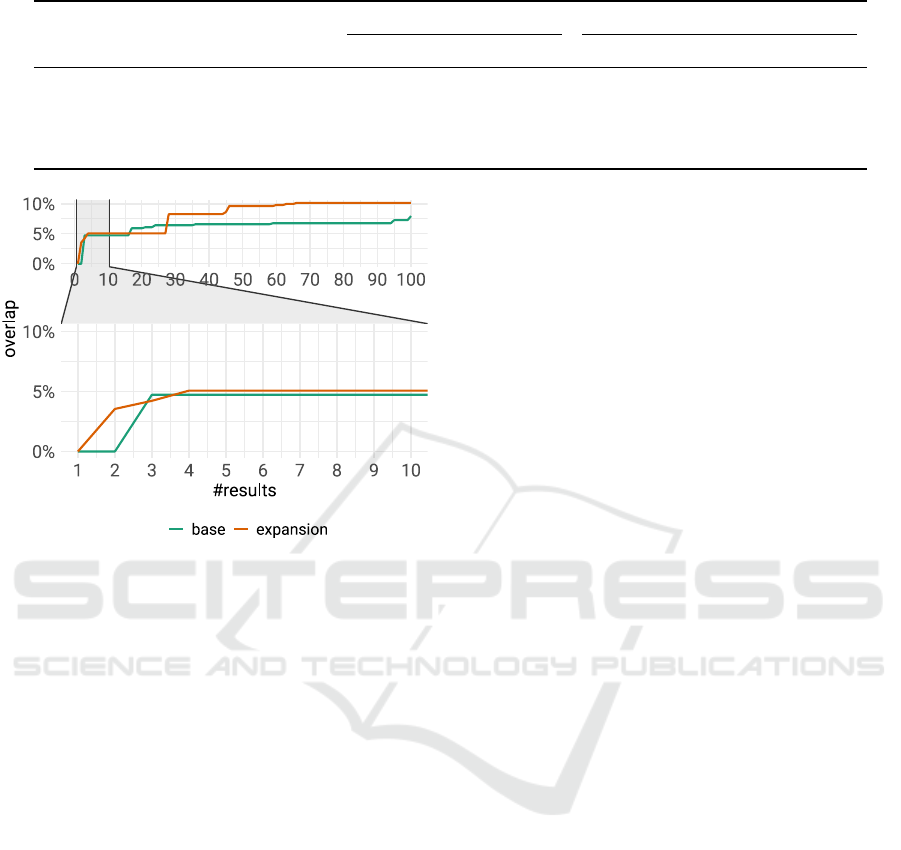
Table 4: Raw term counts and BM25 scores for the outlier article, compared to the top three results.
term counts BM25
rank title product amazon linux product amazon linux Σ
1 Tablet computer 15 11 13 0.87 2.67 4.13 7.67
2 Android (operating system) 9 10 41 0.66 2.24 4.47 7.36
3 Audible (service) 8 8 1 0.92 3.00 2.63 6.55
28 Amazon (company) 48 167 0 0.98 3.30 0.00 4.29
Figure 8: Category overlap in the search for “Amazon
(company)”.
4.2 Discussion
In RQ1, we asked whether query expansion could
be used to disambiguate queries exhibiting multiple
senses and return results that the base query would
not reveal. To answer this question, we measured suc-
cessful disambiguation by retrieving a predefined tar-
get article. We found that both the plain query and the
expanded version returned the target article at least
within the first ten results. Therefore, both approaches
yield the intended sense at some position in the result
list, and PSemQE only outperforms on top-k lists for
small k.
RQ2 then asked whether query expansion could
rank relevant documents higher. Our analysis of ranks
showed that personalised semantic query expansion
has a significant tendency to produce lower ranks, that
is, it places the article higher in the list. Thus, per-
sonalised semantic query expansion is a supportive
measure for inferring a user’s intended sense based
on their prior interactions with the system.
Finally, in RQ3, we asked whether PSemQE
could produce results that are more relevant to a user
than a simple query. We measured relevance via cat-
egories assigned to articles in terms of the proportion
of categories from a user profile that were present in
the search results. We observed that query expan-
sion can result in more of the user’s categories being
present in the result list, especially in the long tail of
50 results or more. This may indicate that as users
browse through more items through pagination, lazy
loading, or other measures, the relevance of the results
does not necessarily degrade.
In summary, we conclude that personalised query
expansion can be a supportive aid in disambiguating
queries to the intended sense and, overall, can re-
turn more potentially relevant documents than a plain
query would.
4.3 Limitations
The approach we explored has two limitations: First,
we rely on synthetic user profiles that we generated to
model a narrowly focused information need; real user
profiles may not be as strictly focused on a single do-
main. However, as long as there is a dominant con-
text that allows the framing of ambiguous terms, the
profile should be suitable for this approach. We be-
lieve this to be true, especially for libraries, archives,
and research databases, which are often consulted by
users with well-defined research interests.
Second, during profile generation, we controlled
the size of the local profile corpus. For users whose
profiles are sparse or, in the case of new users, entirely
empty, no meaningful word embeddings are available.
This sensitivity to cold start is inherent in any person-
alisation facet of information retrieval, such as recom-
mender systems. In these cases, it may be desirable
to focus on interactive query disambiguation, detect-
ing ambiguity via, for example, thesauri or measures
such as clarity (Croft et al., 2001; Cronen-Townsend
and Croft, 2002). Additionally, users with sparse pro-
files may be prompted to provide seed documents that
have been relevant to them in the past, in the form of
short excerpts or abstracts.
WEBIST 2025 - 21st International Conference on Web Information Systems and Technologies
298

5 CONCLUSION
Query expansion is an important component of in-
formation retrieval (IR) systems. It allows users to
bridge the query-document vocabulary gap without
having to invest mental effort in framing their infor-
mation needs in the context of the queried collection.
This study demonstrated the potential of Person-
alised Semantic Query Expansion (PSemQE) as an
effective approach for disambiguating short, ambigu-
ous queries in IR systems. The experimental re-
sults showed that PSemQE could successfully re-
trieve relevant documents that matched the intended
sense of ambiguous terms, often ranking them higher
than a base query without expansion. Further-
more, PSemQE consistently produced result sets with
higher relevance to user interests, as measured by the
category overlap between search results and user pro-
files.
Although PSemQE shows promise in improving
search relevance and user experience, some limita-
tions must be considered. Reliance on synthetic user
profiles focused on narrow domains may not fully rep-
resent real-world user behaviour. Additionally, this
approach may face challenges with new or inactive
users owing to insufficient profile data for meaningful
word embeddings.
Further research is required to explore ways to ad-
dress these limitations, such as investigating methods
for building more diverse synthetic profiles when no
real-world data are available, developing strategies for
cold-start scenarios, and incorporating interactive dis-
ambiguation techniques. Overall, this study shows
that systems for personalised query expansion can act
as disambiguation engines when they integrate user
information and reliably return meaningful responses
for short, ambiguous queries.
DATA AVAILABILITY
The code to reproduce our experiments is published
at https://github.com/baumanno/psqe-2024.
Data is published via Zenodo at https://doi.org/10.
5281/zenodo.10729730.
ACKNOWLEDGMENTS
This article is the outcome of research conducted
within the Africa Multiple Cluster of Excellence
at the University of Bayreuth, funded by the
Deutsche Forschungsgemeinschaft (DFG, German
Research Foundation) under Germany’s Excellence
Strategy – EXC 2052/1 – 390713894.
REFERENCES
Arora, A., Gerlach, M., Piccardi, T., Garc
´
ıa-Dur
´
an, A.,
and West, R. (2022). Wikipedia reader navigation:
When synthetic data is enough. In Proceedings of
the Fifteenth ACM International Conference on Web
Search and Data Mining, WSDM ’22, page 16–26,
New York, NY, USA. ACM.
Bassani, E., Tonellotto, N., and Pasi, G. (2023). Personal-
ized Query Expansion with Contextual Word Embed-
dings. ACM Trans. Inf. Syst., 42(2):61:1–61:35.
Bird, S., Loper, E., and Klein, E. (2009). Natural Language
Processing with Python. O’Reilly.
Bouadjenek, M. R., Hacid, H., and Bouzeghoub, M. (2019).
Personalized social query expansion using social an-
notations. In Hameurlain, A., Wagner, R., Morvan, F.,
and Tamine, L., editors, Transactions on Large-Scale
Data- and Knowledge-Centered Systems XL, pages 1–
25, Berlin, Heidelberg. Springer Berlin Heidelberg.
Chirita, P. A., Firan, C. S., and Nejdl, W. (2007). Person-
alized query expansion for the web. In Proceedings
of the 30th Annual International ACM SIGIR Con-
ference on Research and Development in Informa-
tion Retrieval, SIGIR ’07, page 7–14, New York, NY,
USA. Association for Computing Machinery.
Croft, W. B., Cronen-Townsend, S., and Lavrenko, V.
(2001). Relevance feedback and personalization: A
language modeling perspective. In DELOS Workshops
/ Conferences.
Cronen-Townsend, S. and Croft, W. B. (2002). Quantifying
query ambiguity. In Proceedings of the Second In-
ternational Conference on Human Language Technol-
ogy Research, HLT ’02, page 104–109, San Francisco,
CA, USA. Morgan Kaufmann Publishers Inc.
Daiber, J., Jakob, M., Hokamp, C., and Mendes, P. N.
(2013). Improving efficiency and accuracy in mul-
tilingual entity extraction. In Proceedings of the
9
th
International Conference on Semantic Systems, I-
SEMANTICS ’13, page 121–124, New York, NY,
USA. ACM.
Devlin, J., Chang, M.-W., Lee, K., and Toutanova,
K. (2019). BERT: Pre-training of Deep Bidirec-
tional Transformers for Language Understanding. In
Burstein, J., Doran, C., and Solorio, T., editors, Pro-
ceedings of the 2019 Conference of the North Amer-
ican Chapter of the Association for Computational
Linguistics: Human Language Technologies, Volume
1 (Long and Short Papers), pages 4171–4186, Min-
neapolis, Minnesota. Association for Computational
Linguistics.
Efthimiadis, E. N. (1996). Query expansion. In Williams,
M. E., editor, Annual Review of Information Systems
and Technology (ARIST), volume 31, pages 121–187.
Jagerman, R., Zhuang, H., Qin, Z., Wang, X., and Bender-
sky, M. (2023). Query expansion by prompting large
PSemQE: Disambiguating Short Queries Through Personalised Semantic Query Expansion
299

language models. In Gen-IR@SIGIR 2023: The First
Workshop on Generative Information Retrieval.
Jansen, B. J., Spink, A., and Saracevic, T. (2000). Real
life, real users, and real needs: A study and analysis
of user queries on the web. Information Processing &
Management, 36(2):207–227.
Krovetz, R. and Croft, W. B. (1992). Lexical ambigu-
ity and information retrieval. ACM Trans. Inf. Syst.,
10(2):115–141.
Loureiro, D., Rezaee, K., Pilehvar, M. T., and Camacho-
Collados, J. (2021). Analysis and evaluation of lan-
guage models for word sense disambiguation. Inter-
national Conference on Computational Logic.
Manning, C. D., Raghavan, P., and Sch
¨
utze, H. (2008). In-
troduction to Information Retrieval. Cambridge Uni-
versity Press.
Mikolov, T., Chen, K., Corrado, G., and Dean, J. (2013a).
Efficient Estimation of Word Representations in Vec-
tor Space. In Bengio, Y. and LeCun, Y., editors, 1st In-
ternational Conference on Learning Representations,
ICLR 2013, Scottsdale, Arizona, USA.
Mikolov, T., Sutskever, I., Chen, K., Corrado, G., and Dean,
J. (2013b). Distributed Representations of Words and
Phrases and their Compositionality. In Proceedings of
the 27th International Conference on Neural Informa-
tion Processing Systems - Volume 2, NIPS’13, page
3111–3119, Red Hook, NY, USA. Curran Associates
Inc.
Naseri, S., Dalton, J., Yates, A., and Allan, J. (2021).
CEQE: Contextualized Embeddings for Query Ex-
pansion. In Hiemstra, D., Moens, M.-F., Mothe, J.,
Perego, R., Potthast, M., and Sebastiani, F., editors,
Advances in Information Retrieval, Lecture Notes in
Computer Science, pages 467–482, Cham. Springer
International Publishing.
Ould-Amer, N., Mulhem, P., and G
´
ery, M. (2016). To-
ward Word Embedding for Personalized Information
Retrieval. In Neu-IR: The SIGIR 2016 Workshop on
Neural Information Retrieval.
Pennington, J., Socher, R., and Manning, C. (2014). GloVe:
Global Vectors for Word Representation. In Pro-
ceedings of the 2014 Conference on Empirical Meth-
ods in Natural Language Processing (EMNLP), pages
1532–1543, Doha, Qatar. Association for Computa-
tional Linguistics.
ˇ
Reh
˚
u
ˇ
rek, R. and Sojka, P. (2010). Software Framework
for Topic Modelling with Large Corpora. In Proceed-
ings of the LREC 2010 Workshop on New Challenges
for NLP Frameworks, pages 45–50, Valletta, Malta.
ELRA.
Roy, D., Paul, D., Mitra, M., and Garain, U. (2016). Using
Word Embeddings for Automatic Query Expansion.
In Neu-IR: The SIGIR 2016 Workshop on Neural In-
formation Retrieval.
Scarlini, B., Pasini, T., and Navigli, R. (2020). Sensembert:
Context-enhanced sense embeddings for multilingual
word sense disambiguation. AAAI Conference on Ar-
tificial Intelligence.
Silverstein, C., Marais, H., Henzinger, M., and Moricz, M.
(1999). Analysis of a very large web search engine
query log. ACM SIGIR Forum, 33(1):6–12.
Sp
¨
arck Jones, K., Walker, S., and Robertson, S. (1998). A
probabilistic model of information and retrieval: De-
velopment and status. Technical Report UCAM-CL-
TR-446, University of Cambridge, Computer Labora-
tory.
Wang, L., Yang, N., and Wei, F. (2023). Query2doc: Query
Expansion with Large Language Models. In Bouamor,
H., Pino, J., and Bali, K., editors, Proceedings of the
2023 Conference on Empirical Methods in Natural
Language Processing, pages 9414–9423, Singapore.
Association for Computational Linguistics.
Wiedemann, G., Remus, S., Chawla, A., and Biemann,
C. (2019). Does bert make any sense? inter-
pretable word sense disambiguation with contextual-
ized embeddings. In Proceedings of the 15th Con-
ference on Natural Language Processing (KONVENS
2019): Long Papers, pages 161–170, Erlangen, Ger-
many. German Society for Computational Linguistics
& Language Technology.
Wikipedia contributors (2025a). Data Platform/Data
Lake/Traffic/Webrequest — Wikitech. [Online; ac-
cessed 25
th
January 2025].
Wikipedia contributors (2025b). Research:Page view —
Wikimedia Meta-Wiki. [Online; accessed 25
th
Jan-
uary 2025].
Wikipedia contributors (2025c). Research:Wikipedia Click-
stream — Wikimedia Meta-Wiki. [Online; accessed
25
th
January 2025].
Wikipedia contributors (2025d). Wikimedia Foundation
Privacy Policy — Wikimedia Foundation Governance
Wiki. [Online; accessed 25
th
January 2025].
Zhou, D., Wu, X., Zhao, W., Lawless, S., and Liu, J. (2017).
Query expansion with enriched user profiles for per-
sonalized search utilizing folksonomy data. IEEE
Transactions on Knowledge and Data Engineering,
29(7):1536–1548.
WEBIST 2025 - 21st International Conference on Web Information Systems and Technologies
300
