
Towards a Progressive Scalability for Modular Monolith Applications
Maur
´
ıcio Carvalho, Juliana de Melo Bezerra
a
and Karla Donato Fook
b
Department of Computing Science, Instituto Tecnol
´
ogico de Aeron
´
autica (ITA), S
˜
ao Jos
´
e dos Campos, Brazil
Keywords:
Software Engineering, Software Architecture, Cloud Computing, Modular Monolith, Microservices.
Abstract:
Cloud-native software startups face intense pressure from limited resources, high uncertainty, and the need for
rapid validation. In this context, early architectural decisions have lasting effects on scalability, maintainabil-
ity, and adaptability. Although microservices are often favored for their modularity, they introduce significant
operational overhead and require organizational maturity that many startups lack. Traditional monoliths offer
simplicity but tend to evolve into rigid, tightly coupled systems. When designed with disciplined modularity,
modular monoliths can offer internal boundaries that support sustainable growth while avoiding the fragmen-
tation and complexity of premature microservices adoption. The existing literature emphasizes microservices,
leaving gaps in guidance for modular monoliths on topics like modularization, scalability, onboarding, and de-
ployment. This paper proposes guidelines for designing scalable modular monoliths, maintaining architectural
flexibility, and reducing complexity, thereby supporting long-term evolution under typical startup constraints.
The initial category of guidelines is presented, and their intended structure is thoroughly outlined.
1 INTRODUCTION
Startup entrepreneurs often face significant chal-
lenges when transforming ideas into products; only
one in ten startups succeeds and self-inflicted is-
sues are the reasons why most fail within two years
(Crowne, 2002). Yet funding shortfalls are not the pri-
mary culprit because among venture-backed startups,
only 25% generate any return on capital, and 30% to
40% of failures wipe out investors’ entire initial in-
vestment. This suggests that internal missteps, rather
than lack of money, drive the vast majority of startup
failures.
A startup is a human institution designed to cre-
ate new products or services under uncertainty (Ries,
2011), and it can be understood as a temporary orga-
nization searching for a repeatable and scalable busi-
ness model (Blank and Dorf, 2012). Unlike small
businesses, startups aim to scale rapidly once they
reach product–market fit by identifying a target au-
dience, understanding customer needs, and delivering
an effective product (Ries, 2011).
Technological advances such as cloud comput-
ing, artificial intelligence and modern web and mobile
frameworks have dramatically lowered the barrier to
launching startups. These improvements make soft-
a
https://orcid.org/0000-0003-4456-8565
b
https://orcid.org/0000-0002-3631-2554
ware a uniquely scalable form of leverage, since code
can be deployed repeatedly at near-zero marginal
cost. Code allows a single engineer to reach millions
of users with minimal marginal cost. Yet even ten
talented engineers can waste effort if they pursue the
wrong model, build the wrong product, or make poor
engineering decisions (Ravikant, 2020).
Startups face critical early choices. Some adopt
microservices from the outset to seek modularity and
scalability but incur complexity in deployment, or-
chestration and team coordination. Others begin with
a monolithic approach to prioritize speed and simplic-
ity yet encounter significant obstacles when evolving
their systems to meet growing demands.
A recurring challenge in modular monolith and
microservice architectures is achieving and maintain-
ing scalability. This raises a critical question for soft-
ware teams, namely to avoid premature microservices
adoption, as monoliths evolve, what architectural as-
pects must be evaluated to ensure modularity is pre-
served and the system remains distribution-ready?
Despite recognition of these tensions and chal-
lenges in the cloud era, there are no widely adopted
guidelines exist for progressively evolving software
architecture, especially monoliths. Startups lack con-
crete criteria to assess when and how to introduce
modular structures, split components, or transition to
distributed systems including microservices.
228
Carvalho, M., Bezerra, J. M. and Fook, K. D.
Towards a Progressive Scalability for Modular Monolith Applications.
DOI: 10.5220/0013786800003985
Paper published under CC license (CC BY-NC-ND 4.0)
In Proceedings of the 21st International Conference on Web Information Systems and Technologies (WEBIST 2025), pages 228-235
ISBN: 978-989-758-772-6; ISSN: 2184-3252
Proceedings Copyright © 2025 by SCITEPRESS – Science and Technology Publications, Lda.

This paper explores how modular monoliths ad-
dress the need for flexible and scalable design and
what is required to build modular, cloud-native ap-
plications through this architecture. It focuses on a
key trade-off in cloud-native systems, that is, whether
startups should adopt a modular monolithic archi-
tecture or a microservices-based design during their
early stages of software development. The primary
objective of this research is to propose a set of archi-
tectural guidelines that position modular monolithic
architectures as a pragmatic starting point for build-
ing scalable and maintainable cloud-native applica-
tions in startups.
The paper is structured as follows. In the next sec-
tion, we provide the background of our work. Section
3 outlines the related work. Section 4 provides a com-
prehensive overview of the proposed guidelines for
designing and maintaining modular monolith appli-
cations, focusing on progressive scalability. The final
section addresses our initial conclusions and explains
the subsequent steps.
2 BACKGROUND
This section presents the technical foundations rele-
vant to this paper, with a focus on the definitions and
characteristics of cloud-native applications, microser-
vices, monolithic architecture, system modularity and
modular monoliths. Together, these paradigms shape
how systems are built, maintained, and scaled in soft-
ware startups.
Cloud native applications are software systems ex-
plicitly designed to operate in cloud environments
leveraging elasticity, horizontal scalability, fault tol-
erance and automation. These systems adopt dis-
posability, resilience and automation from incep-
tion, enabling faster delivery, effective failure re-
covery and seamless scaling using containeriza-
tion (Docker), orchestration (Kubernetes) and CI/CD
pipelines (Fowler, 2020). They emphasize service
oriented or event driven architectures with decoupled,
stateless components that degrade gracefully, recover
autonomously and scale independently. For early
stage startups, cloud native principles offer faster time
to market and alignment with DevOps practices yet
introduce complexity requiring clear modular bound-
aries and operational maturity.
Monolithic systems combine user interface, busi-
ness logic and data access layers into a single deploy-
able unit, simplifying early development and deploy-
ment. Fowler (2020) recommends starting with a well
structured monolith and migrating to microservices
only when demands justify added complexity. The
challenge lies in engineering a monolith with clear
internal modules from the outset. Without defined
boundaries, many monoliths become tightly coupled
and resistant to change, making future decomposi-
tion costly and error prone (Alshuqayran et al., 2016).
Legacy monolith modernization remains one of the
most complex and risky undertakings in software evo-
lution.
Microservices architecture structures applications
as collections of small, autonomous services, each en-
capsulating a distinct business capability. Services
communicate via RESTful APIs or asynchronous
messaging (Kafka, RabbitMQ), enforcing bound-
aries, promoting team autonomy, and supporting in-
dependent scaling. Fowler and Lewis (2014), Drag-
oni et al. (2017), and Taibi et al. (2018) emphasize
how decomposition fosters organizational agility and
technological flexibility.
At the same time, microservices introduce op-
erational overhead, requiring distributed tracing, re-
silience strategies, and advanced automation that may
exceed the capacity of early-stage teams. Premature
adoption can lead to overengineering, performance
bottlenecks, and cognitive overload (Fritzsch et al.,
2019; Gysel et al., 2016). Moreover, translating ideals
such as bounded context into clear service boundaries
often proves difficult, resulting in architectural in-
consistencies and accidental complexity (Taibi et al.,
2018; Lauretis, 2019). These limitations motivate ex-
ploration of approaches that preserve modularity and
scalability while minimizing overhead.
Modularity describes the degree to which a sys-
tem’s internal components can be isolated, composed
and recombined without excessive coupling (Tilkov,
2015). It underpins sustainable software evolution
across architectural styles but often remains assumed
rather than engineered, leading to structural erosion
over time. For startups, modularity enables rapid iter-
ation, change isolation and adaptation of boundaries
as products evolve. Enforcing internal boundaries
early lets teams defer distribution decisions until real
needs emerge. Neglecting modularity leads to two
traps, either premature microservices adoption with
unnecessary complexity or monoliths so tightly cou-
pled that scaling requires expensive rewrites or risky
migrations.
A modular monolith is an architectural style
where a system is deployed as a single process but in-
ternally structured into independently evolvable and
testable modules. Each module encapsulates a do-
main or functional responsibility, enforcing bound-
aries through internal APIs, strict dependency man-
agement, and clear ownership. Unlike traditional
monoliths, modular monoliths aim for scalability and
Towards a Progressive Scalability for Modular Monolith Applications
229

maintainability from inception, combining deploy-
ment simplicity with design flexibility.
Literature shows that cloud-native monoliths can
achieve coherence and scalability by applying evolu-
tionary software architecture principles (Ford et al.,
2017) and adhering to YAGNI “You Ain’t Gonna
Need It” (Beck, 1999). Proper boundary enforcement
prevents the big ball of mud syndrome (Foote and Yo-
der, 1999), enables faster local testing, and provides
intra-process performance advantages over microser-
vices.
Recent industry case studies illustrate a return to
modular monoliths in cloud-native applications. Seg-
ment adopted microservices for rapid parallel de-
velopment but suffered operational overhead and la-
tency; consolidating into a modular monolith re-
duced complexity and improved productivity (Seg-
ment, 2023). Shopify embraced a modular mono-
lith from the start to preserve velocity and enforce
boundaries (Shopify, 2022). Amazon Prime Video
saw up to 90% performance and cost gains merging
few microservices back to a modular monolith (Ama-
zon, 2023). These cases show that modularity mono-
liths simplify CI/CD, reduce inter-service overhead
and allow service extraction or merge without mas-
sive rewrites and complexity that increase develop-
ment costs.
3 RELATED WORK
This section synthesizes prior research on cloud-
native software architecture, with particular empha-
sis on modular monoliths. The analysis follows es-
tablished Systematic Literature Review (SLR) guide-
lines (Kitchenham and Charters, 2007). The author
screened peer reviewed journal and conference papers
from 2019 to 2024 retrieved from IEEE Xplore and
the ACM Digital Library. A Boolean search com-
bined terms for modular monoliths, microservices,
scalability and cloud native design. Inclusion required
each study to address at least one core theme, modu-
larity, maintainability, deployment strategy, scalabil-
ity or system evolution, and was considered only En-
glish language publications. After full text screening
and duplicate removal, 18 articles remained.
These studies were evaluated against twelve cri-
teria organized into four dimensions. Architectural
Design considers clear module boundaries, long-term
maintainability, and scalability potential. Operational
Fit examines migration readiness, deployment and
automation strategies, and the adequacy of observ-
ability. Organizational Alignment evaluates the cor-
respondence between architecture and team structure,
the maturity of DevOps practices, and the ease of
onboarding. Finally, Guideline Orientation empha-
sizes the use of practical patterns, adaptation to busi-
ness context, and recognition of trade-offs. Together,
these criteria establish a systematic basis for identify-
ing strengths and weaknesses between studies.
Modularity is foundational because it enables sys-
tems to evolve without excessive coupling, supports
clearer ownership boundaries, and lays the foundation
for scalability and maintainability. Prakash and Arora
(2024), Johnson et al. (2024), and Su et al. (2024) ad-
dress the modularity of software directly. Migration-
focused works such as Lauretis (2019) and Berry et al.
(2024) examine it through refactoring or service ex-
traction without detailed boundary analysis.
Maintainability emerges consistently across stud-
ies because it is central to the long-term viability of
software systems. Berry et al. (2024) offer empiri-
cal metrics, while Su et al. (2024) provide qualitative
insights. In microservices literature, maintainability
is often linked to bounded contexts and team auton-
omy, whereas in modular monoliths it is associated
with cohesion and local consistency. Yet few studies
propose reusable patterns or tools that support long-
term maintainability in real systems.
Scalability is emphasized across studies as it de-
termines how systems respond to growth in users,
data, and workload. Arya et al. (2024) and Berry
et al. (2024) demonstrate microservices’ horizontal
scaling via containers and orchestration platforms.
Conversely, Montesi et al. (2021) and Lauretis (2019)
argue that modular monoliths satisfy moderate scala-
bility requirements with lower operational complex-
ity. However, formal models and guidance for hybrid
or staged scalability remain scarce.
Migration readiness refers to assessing how pre-
pared a monolithic system is to transition into a cloud-
native, modular, and scalable application. Berry et al.
(2024) and Ng et al. (2024) document legacy mod-
ernization efforts, while Montesi et al. (2021) po-
sition modular monoliths as a transitional stage be-
tween legacy architectures and modern systems.
Deployment strategy is well covered in microser-
vices research because it underpins reliability, release
velocity, and operational control. Fowler (2020),
Arya et al. (2024), and Johnson et al. (2024) explore
Kubernetes orchestration, CI/CD pipelines, and ca-
nary releases. Modular monoliths benefit from sim-
plified, unified deployment but lack in-depth tooling
analysis (Montesi et al., 2021).
Complexity management is observed across all ar-
chitectures because it influences how teams handle
accidental complexity and toolchain fragmentation.
Su et al. (2024) and Montesi et al. (2021) propose
WEBIST 2025 - 21st International Conference on Web Information Systems and Technologies
230

strategies to mitigate these challenges, while Prakash
and Arora (2024) link complexity tolerance to orga-
nizational maturity, suggesting that teams with fewer
resources often prefer monolithic coherence. How-
ever, there remains an opportunity to propose quan-
tifiable strategies for managing complexity and cog-
nitive load across architectural styles.
Computing Performance evaluations vary across
studies. Berry et al. (2024) and Blinowski et al.
(2022) compare response times and resource usage,
showing microservices scale at the cost of inter ser-
vice latency. Modular monoliths are less frequently
benchmarked in production scenarios, leaving an
evaluation gap.
Team fit is underexplored, particularly in terms of
quantitatively assessing how architectural decisions
affect collaboration and team structure. Prakash and
Arora (2024) and Su et al. (2024) suggest that modu-
lar monoliths reduce cognitive load and improve col-
laboration in small cross-functional teams. However,
most studies overlook broader social and organiza-
tional dynamics.
DevOps maturity is highlighted in Arya et al.
(2024) and Johnson et al. (2024), contrasting the high
operational demands of microservices with the acces-
sibility of modular monoliths (Montesi et al., 2021).
A clearer comparison of DevOps tooling and prac-
tices across architectures, particularly for early-stage
teams, is still missing, and formal analyses of such
requirements remain rare.
Onboarding of new engineers is seldom dis-
cussed, highlighting the need to evaluate how differ-
ent architectural styles influence the onboarding expe-
rience and developer ramp-up. Montesi et al. (2021)
and Tsechelidis et al. (2023) note that unified code-
bases can ease this process, but systematic evaluation
remains absent.
Practical adoption guidance varies, particularly
regarding how to bridge academic findings with con-
crete steps and decision support frameworks. Su
et al. (2024) link architectural decisions to implemen-
tation workflows, while Tsechelidis et al. (2023) pro-
pose classification models without empirical valida-
tion. This persistent gap between theory and practice
highlights promising avenues for future research.
Target context is inconsistently specified, under-
scoring the need to clarify the applicability of archi-
tectural recommendations to specific organizational
scenarios. Prakash and Arora (2024) focus on small
to medium teams, while Su et al. (2024) distinguish
startup from enterprise settings. Greater clarity on or-
ganizational environments would improve the practi-
cal relevance of architectural recommendations.
Table 1 synthesizes literature coverage across the
12 criteria, highlighting key findings and gaps for fu-
ture research.
4 GUIDELINES FOR MODULAR
MONOLITH ARCHITECTURES
Rather than offering a static framework, the proposed
guidelines aim to function as decision-making heuris-
tics, designed to be actionable principles that inform
architectural evolution without prescribing a single
and rigid path. The guidelines are organized accord-
ing to the four analytical dimensions, as shown in Fig-
ure 1: Architectural Design, Operational Fit, Organi-
zational Alignment, and Guideline Orientation.
The Architectural Design dimension covers crite-
ria related to the software’s internal structure. Guide-
line G1 (Enforce Clear Modular Boundaries) empha-
sizes the need for explicit separation between mod-
ules, which reduces coupling, improves code coher-
ence, and supports independent evolution of compo-
nents. Guideline G2 (Assure Long-Term Maintain-
ability) highlights practices that control complexity
and preserve software quality, enabling that the sys-
tem remains adaptable to future changes with mini-
mal technical debt. Guideline G3 (Ensure Scalability
by Design) requires structuring the architecture from
the outset to accommodate increases in workload and
user demand, thereby sustaining performance and re-
liability without structural degradation.
The Operational Fit dimension addresses the op-
erational requirements needed to support produc-
tion environments. Guideline G4 (Ensure Migra-
tion Readiness) emphasizes the importance of ar-
chitectural flexibility, allowing systems to adapt to
significant transitions such as decomposing into mi-
croservices or adopting new technological platforms.
Guideline G5 (Define a Robust Deployment Strategy)
establishes the need for reliable, automated, and re-
peatable release processes that minimize human error
and accelerate delivery cycles. Guideline G6 (Enable
Comprehensive Observability) highlights the role of
logging, metrics, and monitoring in providing trans-
parency, which supports fault detection, performance
tuning, and continuous operational awareness.
The Organizational Alignment dimension focuses
on aligning the software architecture with the or-
ganization’s structure and development practices.
Guideline G7 (Balance Architecture with Organiza-
tional Structure) emphasizes that architectural de-
sign should neither passively mirror organizational
communication patterns nor entirely ignore them.
While Conway’s Law explains the natural tendency
for systems to reflect team boundaries, this reflec-
Towards a Progressive Scalability for Modular Monolith Applications
231

Table 1: Literature Gap analysis by evaluation criterion and opportunities for research contributions.
Evaluation
Criterion
Literature Coverage Opportunity for Contribution
Modularity High across studies, but often implied in
migration-focused works.
To formalize modularity strategies beyond im-
plicit mentions by proposing enforceable and
testable design structures.
Maintainability Frequently addressed with both qualitative and
quantitative methods.
To develop reusable patterns and automated
tools that enable sustainable long-term main-
tainability in practice.
Scalability Widely benchmarked, especially for microser-
vices; hybrid strategies are rare.
To design hybrid or staged scaling models and
to evaluate their effectiveness in real-world sce-
narios.
Migration
Readiness
Strong presence in legacy transformation
works.
To model phased migration paths and to vali-
date modular monoliths as a viable intermediate
architecture.
Deployment
Strategy
Well-covered in microservices; modular mono-
liths receive limited attention.
To analyze streamlined deployment approaches
and to propose tooling practices optimized for
modular monoliths.
Complexity
Management
Acknowledged in most papers but rarely quan-
tified or modeled.
To propose quantifiable strategies for managing
complexity and cognitive load across architec-
tural styles.
Performance
Implications
Covered in about half the studies; modular
monoliths are under-tested.
To conduct empirical benchmarks that measure
performance trade-offs between modular mono-
liths and microservices.
Team Fit Rarely analyzed directly; mostly inferred from
architectural discussions.
To quantify how architectural decisions influ-
ence collaboration, communication, and team
structure.
DevOps Matu-
rity
Common in cloud-native and microservices lit-
erature.
To compare DevOps tooling and practices
across architectures, with particular attention to
early-stage teams.
Onboarding Largely absent; only anecdotal mentions in
modular monolith studies.
To evaluate onboarding processes and devel-
oper ramp-up experiences under different archi-
tectural styles.
Practicality of
Adoption
Mentioned conceptually, rarely operationalized. To bridge academic insights with actionable
guidance and decision-support frameworks for
practitioners.
Target Context Often missing or broadly defined. To clarify the applicability of architectural rec-
ommendations across distinct organizational
scenarios.
tion can create silos and incoherent products if left
unmanaged. Balancing requires intentionally shap-
ing the relationship between organizational and tech-
nical structures to preserve modular coherence, en-
courage cross-functional collaboration, and sustain
adaptability. Guideline G8 (Foster SRE and DevOps
Maturity) highlights the integration of cultural and
technical practices that connect software engineering
with site reliability engineering, ensuring that system
reliability, performance, and deployment pipelines
are treated as shared responsibilities. This matu-
rity enhances delivery speed while safeguarding sta-
bility through monitoring, automation, and continu-
ous feedback loops. Guideline G9 (Support Friction-
less Onboarding) underscores the importance of de-
signing systems and workflows that reduce barriers
for new contributors, enabling them to quickly gain
autonomy and contribute productively with minimal
technical friction.
The Guideline Orientation dimension refers to
high-level recommendations that drive design deci-
sions without imposing rigid rules. Guideline G10
(Apply Actionable Design Patterns) emphasizes the
use of pragmatic and well-established architectural
patterns that can be directly implemented in practice,
ensuring that theoretical concepts are translated into
concrete solutions. Guideline G11 (Promote Contex-
tual Adaptation) highlights the need to tailor archi-
tectural guidelines to the specific organizational and
business environment, recognizing that no single ap-
WEBIST 2025 - 21st International Conference on Web Information Systems and Technologies
232
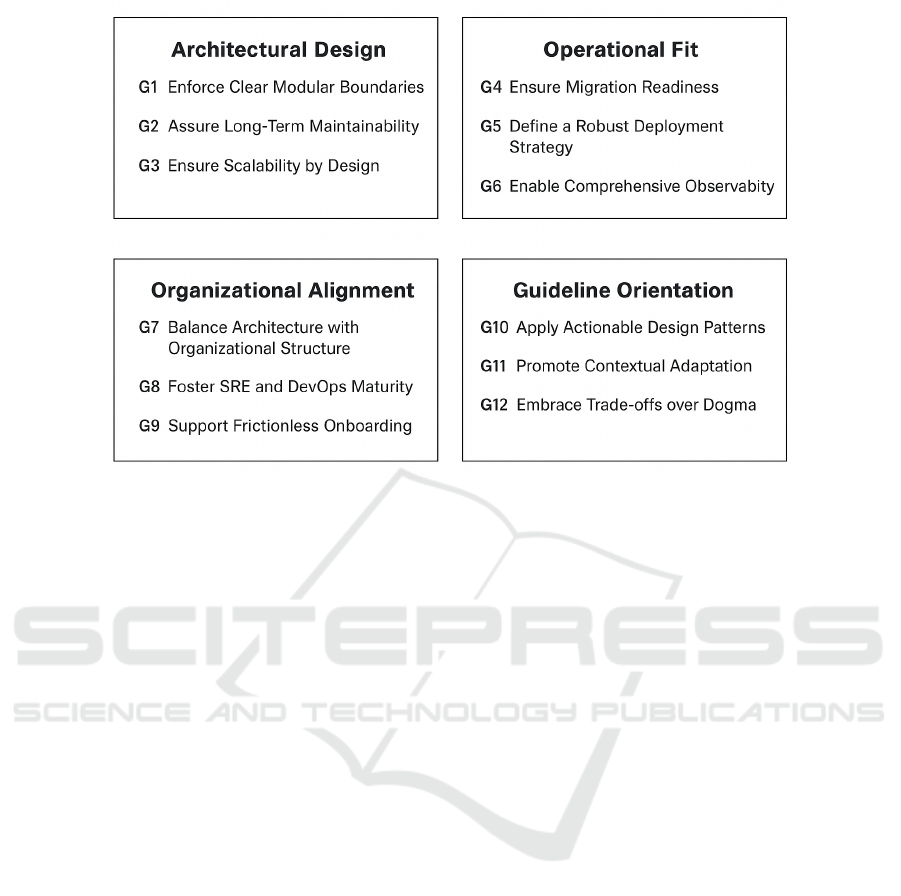
Figure 1: Four guideline dimensions for evaluating modular monolith architectures.
proach universally fits all scenarios. Guideline G12
(Embrace Trade-offs over Dogma) stresses that archi-
tectural design inherently involves balancing compet-
ing forces, encouraging engineers to evaluate dilem-
mas critically rather than adhere to rigid prescriptions.
Each dimension group provides a set of guidelines
that, together, form the foundation for the proposal
of this research. It illustrates how technical, opera-
tional, organizational, and orientation-based consid-
erations should be integrated when selecting or evolv-
ing a modular monolith architecture in software star-
tups. What follows is a descriptive presentation of
the guidelines within each dimension, starting with
those that address the architectural design of modular
monoliths.
We aim to structure each guideline according to
a template with the following topics: Conceptual
Overview, Objectives, Key Principles, Metrics and
Verification, Tool Capabilities, and Literature Support
Commentary. Here we outline what is expected in
the template, taking the G1 guideline (Enforce Clear
Modular Boundaries) as a representative example.
The Conceptual Overview topic aims to explain
the purpose of the guideline. Considering G1, it
should define clear boundaries around each module
so that each module encapsulates its internal imple-
mentation, dependencies between modules occur only
through explicitly declared interfaces, and unintended
coupling is prevented (allowing independent evolu-
tion of modules).
The Objectives topic outlines what a guideline
should ensure. Regarding G1, it is expected that this
guideline assures, for instance, encapsulation (to keep
internal classes, data, and resources hidden within a
module) and early verification (to detect boundary vi-
olations at build or test time rather than at runtime).
The Key Principles topic defines the directives
to implement a guideline. For G1 these include
inter-module communication via synchronous public-
interface calls or automated asynchronous event-
driven channels and traceability by recording bound-
ary changes in an Architectural Decision Record.
The Metrics and Verification topic addresses what
to measure in the application to verify the accom-
plishment of a guideline. For example, an interesting
metric for G1 is the boundary violation count, which
is the number of occurrences where a module refer-
ences a class or resource in another module without
a declared dependency. Another metric related to G1
can be the verification failures, in a way to count the
build/test failures triggered by automated boundary
checks.
The Tool Capabilities topic refers to the auxil-
iary tools that can aid in the implementation of the
guideline. Regarding G1, it is suggested that the soft-
ware tool (open-source or proprietary) used to en-
force modular boundaries should support, for exam-
ple, module discovery (to automatically identify mod-
ules via conventions or explicit configuration), and
isolated testing (to allow tests to load only a given
module and its declared dependencies, failing early if
the module tries to wire code from undeclared mod-
ules).
The Literature Support Commentary topic aims to
Towards a Progressive Scalability for Modular Monolith Applications
233

explain the support of the literature behind the guide-
line. For example, this topic for G1 should explain
that although modularity is acknowledged as essen-
tial, most research treats it as an outcome of refactor-
ing rather than a design criterion (Prakash and Arora,
2024; Su et al., 2024). Few works propose proac-
tive structural mechanisms for enforcing modularity
in monoliths (Montesi et al., 2021; Tsechelidis et al.,
2023), and they lack empirical validation. This gap
underscores the necessity of G1 to provide clear and
actionable steps to define and verify module bound-
aries to fill a critical void in both theory and practice.
By presenting Guideline G1 (Enforce Clear Mod-
ular Boundaries) in detail, the proposed template
has been illustrated as a structured path to capture
both conceptual and practical aspects of each recom-
mendation. G1 serves as the first worked example,
demonstrating how objectives, principles, verification
mechanisms, tool support, and literature insights can
be articulated in a consistent manner. The remaining
guidelines (G2–G12) are introduced at a conceptual
level and will be progressively developed and refined
throughout the course of this research.
5 INITIAL CONCLUSIONS
Over the past decade, advances in cloud computing,
open-source ecosystems, and software development
tooling have significantly reduced the cost and com-
plexity of launching digital products. These enablers
have contributed to a surge in software startups capa-
ble of reaching global scale and onboarding thousands
or even millions of customers within days or months,
rather than the years or decades typically required for
traditional businesses to mature. This acceleration,
however, also introduces new forms of complexity
that challenge sustainability and long-term adaptabil-
ity.
Startups in particular operate under critical re-
source constraints and must validate their business
models quickly, facing conditions that amplify the
long-term consequences of early technical decisions.
Among these, the choice of software architecture
plays a pivotal role in determining a product’s ca-
pacity to evolve, scale, and remain maintainable over
time.
Our proposal introduces a set of initial guidelines
for modular monolith architectures in cloud-native
ecosystems that enforce clear module boundaries, in-
cremental scalability, operational fit, and organiza-
tional alignment, all aimed at reducing complexity
while preserving the option to extract services when
real demand emerges. At this stage, these guidelines
serve as a conceptual foundation; their detailing and
implementation guidance will be progressively devel-
oped and refined throughout the course of this re-
search. To advance from this conceptual stage toward
practical applicability, several important steps remain.
First, validation of our proposal with industry
practitioners is essential. We plan to engage special-
ists from companies that have successfully adopted
modular monoliths, such as GitHub and Shopify, as
well as engineering teams that continue to struggle
with highly coupled legacy monoliths applications.
Through expert interviews, case studies, and hands-
on experiments, we will gather feedback to refine
the guidelines, confirm their effectiveness, and ensure
they address real-world pain points.
Second, we must test the applicability of these
guidelines in real startups to measure how much they
contribute to early architectural decisions, how they
support initial product definitions, and how they facil-
itate the extraction of modules into independent ser-
vices. In addition, we should evaluate alternative re-
search paths: whether to focus on a smaller set of
core guidelines with greater depth of analysis, or to
present the full catalog of recommendations and as-
sess each. Determining which approach delivers the
greatest practical value for engineering teams operat-
ing under time and resource constraints is a key ob-
jective.
These research activities and experiments are nec-
essary to move from theoretical heuristics to a val-
idated set of guidelines that startup engineers can
adopt with confidence. By combining expert valida-
tion with controlled pilot projects, we aim to produce
both actionable patterns and empirical evidence that
modular monoliths can serve as a pragmatic architec-
tural foundation for cloud-native software startups.
REFERENCES
Alshuqayran, N., Ali, N., and Evans, R. (2016). A
systematic mapping study in microservice architec-
ture. Proceedings of the 9th International Confer-
ence on Service-Oriented Computing and Applica-
tions (SOCA), pages 1–9.
Amazon (2023). Scaling up the prime video audio/video
monitoring service and reducing costs by 90%. Ac-
cessed: 2025-05-12.
Arya, S., Chauhan, D., Tanishq, Anand, S., and Sharma, O.
(2024). Beyond monoliths: An in-depth analysis of
microservices adoption in the era of kubernetes.
Beck, K. (1999). Extreme Programming Explained: Em-
brace Change. Addison-Wesley, Boston, MA.
Berry, V., Castelltort, A., Lange, B., Teriihoania, J., Tiber-
macine, C., and Trubiani, C. (2024). Is it worth mi-
WEBIST 2025 - 21st International Conference on Web Information Systems and Technologies
234

grating a monolith to microservices? an experience
report on performance, availability and energy usage.
Blank, S. and Dorf, B. (2012). The Startup Owner’s Man-
ual: The Step-by-Step Guide for Building a Great
Company. K&S Ranch Press.
Blinowski, G., Ojdowska, A., and Przybyłek, A. (2022).
Monolithic vs. microservice architecture: A perfor-
mance and scalability evaluation.
Crowne, M. (2002). Why software product startups fail and
what to do about it. evolution of software product de-
velopment in startup companies. In Proceedings of the
2002 IEEE International Engineering Management
Conference (IEMC ’02), volume 331, pages 338–343,
Cambridge, UK. IEEE.
Dragoni, N., Lanese, I., Larsen, S., Mazzara, M., Mustafin,
R., and Safina, L. (2017). Microservices: Yesterday,
today, and tomorrow. Present and Ulterior Software
Engineering, pages 195–216.
Foote, B. and Yoder, J. (1999). Big ball of mud. In Pattern
Languages of Program Design, volume 4. Addison-
Wesley, Boston, MA.
Ford, N., Parsons, R., and Kua, P. (2017). Building Evo-
lutionary Architectures: Support Constant Change.
O’Reilly Media, Sebastopol, CA.
Fowler, M. (2020). What does cloud-native mean? Ac-
cessed: Accessed: 2024-11-26.
Fowler, M. and Lewis, J. (2014). Microservices: A defi-
nition of this new architectural term. Accessed: Ac-
cessed: 2024-11-26.
Fritzsch, J., Bogner, J., Wagner, S., and Zimmermann, A.
(2019). Microservices migration in industry: Inten-
tions, strategies, and challenges. In 2019 IEEE In-
ternational Conference on Software Maintenance and
Evolution (ICSME), pages 481–490. IEEE.
Gysel, M., K
¨
olbener, L., Giersche, W., and Zimmermann,
O. (2016). Service cutter: A systematic approach
to service decomposition. In Service-Oriented and
Cloud Computing (ESOCC 2016), volume 9846 of
Lecture Notes in Computer Science, pages 185–200.
Springer.
Johnson, J., Kharel, S., Mannamplackal, A., Abdelfattah,
A. S., and Cerny, T. (2024). Service weaver: A
promising direction for cloud-native systems? arXiv
preprint, arXiv:2404.09357. Preprint.
Kitchenham, B. and Charters, S. (2007). Guidelines for per-
forming systematic literature reviews in software en-
gineering. Technical Report EBSE-2007-01, EBSE
Technical Report. Available online.
Lauretis, L. D. (2019). From monolithic architecture to mi-
croservices architecture.
Montesi, F., Peressotti, M., and Picotti, V. (2021). Sliceable
monolith: Monolith first, microservices later.
Ng, T., Rawi, A. A. B., Sum, C. S., Tso, E., Yau, P. C., and
Wong, D. (2024). Migrating from monolithic to mi-
croservices with hybrid database design architecture.
Prakash, C. and Arora, S. (2024). Systematic analysis
of factors influencing modulith architecture adoption
over microservices.
Ravikant, N. (2020). The Almanack of Naval Ravikant: A
Guide to Wealth and Happiness.
Ries, E. (2011). The Lean Startup: How Today’s En-
trepreneurs Use Continuous Innovation to Create
Radically Successful Businesses. Crown Business.
Segment (2023). Goodbye microservices. https://segment.
com/blog/goodbye-microservices/. Accessed: 2024-
11-26.
Shopify (2022). Deconstructing the monolith. https:
//shopify.engineering/deconstructing-the-monolith.
Accessed: 2024-11-26.
Su, R., Li, X., and Taibi, D. (2024). From microservice to
monolith: A multivocal literature review. Electronics,
13(8):1452.
Taibi, D., Lenarduzzi, V., and Pahl, C. (2018). Defining
microservices architectural style. Proceedings of the
IEEE International Conference on Software Architec-
ture Companion (ICSA-C), pages 74–78.
Tilkov, S. (2015). Don’t start with a monolith. https:
//martinfowler.com/articles/dont-start-monolith.html.
Accessed: 2024-11-26.
Tsechelidis, M., Nikolaidis, N., Maikantis, T., and Ampat-
zoglou, A. (2023). Modular monoliths the way to stan-
dardization.
Towards a Progressive Scalability for Modular Monolith Applications
235
