
Question Answering over Linked Data with Vague Temporal Adverbials
David Maria Schmidt
1,∗ a
, Svenja Kenneweg
1,∗ b
, Julian Eggert
2 c
, J
¨
org Deigm
¨
oller
2 d
and Philipp Cimiano
1 e
1
Semantic Computing Group, CITEC, Technical Faculty, Bielefeld University, Bielefeld, Germany
2
Honda Research Institute Europe, Offenbach, Germany
Keywords:
Question Answering over Linked Data, Vague Temporal Adverbials, Compositional Question Answering.
Abstract:
Vague temporal adverbials are common in human communication but most question answering over linked
data (QALD) approaches only work with exact time points. We present a QALD system that interprets vague
temporal adverbials (e.g., “just”, “recently”) using a factorized probabilistic model. Building on NeoDUDES,
an existing QALD approach, we map vague temporal adverbials to time intervals via empirically grounded
Gaussian functions and generate SPARQL queries with temporal filters, enabling compositional interpretation
of questions involving vagueness. Evaluated on a knowledge graph based on real-world smart home data, our
system shows strong performance.
1 INTRODUCTION
Humans often rely on vague temporal adverbials
such as just, to describe past events when their ex-
act happening time is irrelevant (Van Jaarsveld and
Schreuder, 1985; May et al., 2021). Unlike explicit
references (e.g., on 17.01.2024 at 13:00), these ad-
verbials lack a precise point in time but still convey
a shared intuitive meaning (e.g., “I just took a bath”
usually implies earlier today, while “I just cleaned the
house” could mean yesterday or even two days ago.).
Question Answering over Linked Data (QALD)
maps natural language questions into SPARQL
queries that can be executed over a knowledge graph
to compute corresponding answers. Despite the ubiq-
uity of vague expressions in natural language, most
QALD systems for temporal knowledge graphs solely
focus on queries anchored to exact temporal points or
intervals (Jia et al., 2021; Kannen et al., 2023; Chen
et al., 2022; Sharma et al., 2023; Huang et al., 2024).
This mismatch between human use of vague tempo-
ral adverbials and the capabilities for their interpreta-
tion by current question answering systems limits the
a
https://orcid.org/0000-0001-7728-2884
b
https://orcid.org/0009-0002-3025-7563
c
https://orcid.org/0000-0003-4437-6133
d
https://orcid.org/0009-0007-5931-6973
e
https://orcid.org/0000-0002-4771-441X
* Equal contribution
practical utility of current QALD systems.
To address this gap, we extend the NeoDUDES
QALD system (Schmidt et al., 2025), adding support
for vague temporal adverbials. We added a config-
urable reference time as well as a lexicon compris-
ing vague temporal adverbials and events. Addition-
ally, we modified the DUDES creation and SPARQL
generation modules in order to translate vague tem-
poral adverbials and corresponding events into query
clauses guided by the factorized probabilistic model
proposed by Kenneweg et al. (Kenneweg et al.,
2025a), which we call FuzzyLLI (“Fuzzy probabiLis-
tic adverbiaL Interpretation”). Through a special
predicate vaguetemp, the NeoDUDES pipeline calls
FuzzyLLI, provides the event and respective adver-
bial, and gets back a crisp interval as an interpreta-
tion of the adverbial. Adding the reference time to
this interval yields the bounds for the corresponding
FILTER statements. This crisp interval, determined
by FuzzyLLI (Kenneweg et al., 2025a), represents the
most likely time span - in minutes relative to the ref-
erence time - during which the event described by the
vague temporal adverbial is assumed to have occurred
with a probability exceeding a predefined threshold.
As the original model only accounts for six different
events, we generalize the model using a decision-tree
classifier based on the typical duration and frequency
of the corresponding event. This allows our model to
generalize to any daily event with a duration typically
expressed in minutes or hours, with the limitation that
164
Schmidt, D. M., Kenneweg, S., Eggert, J., Deigmöller, J. and Cimiano, P.
Question Answering over Linked Data with Vague Temporal Adverbials.
DOI: 10.5220/0013778400004000
Paper published under CC license (CC BY-NC-ND 4.0)
In Proceedings of the 17th International Joint Conference on Knowledge Discovery, Knowledge Engineering and Knowledge Management (IC3K 2025) - Volume 2: KEOD and KMIS, pages
164-174
ISBN: 978-989-758-769-6; ISSN: 2184-3228
Proceedings Copyright © 2025 by SCITEPRESS – Science and Technology Publications, Lda.

the event’s duration needs to be manually added to
FuzzyLLI.
We evaluate our system in a controlled set-
ting using the CASAS smart home datasets (Cook
et al., 2013), specifically the annotated twor.2010
dataset (Cook and Schmitter-Edgecombe, 2009),
which includes data collected from two residents per-
forming thirteen common household events. After
preprocessing, we refine the dataset to include eleven
distinct events and transform it into a temporal RDF
knowledge graph (KG). Based on this KG, we gen-
erate our evaluation dataset, containing 2, 780 natural
language questions paired with ground truth answers.
The questions are created using templates spanning
four categories, organized as follows:
1. Did - e.g., Did Tom sleep some time ago?
2. What - e.g., What did Mary do a long time ago?
3. What happened - e.g., What happened recently?
4. Who - e.g., Who has just watched TV?
In short, our contributions are as follows:
• We introduce a novel extension to an existing
QALD system that enables the interpretation of
questions containing vague temporal adverbials.
• We propose a complete pipeline integrating
Lemon (McCrae et al., 2011) lexica, configurable
reference times, and enriched SPARQL genera-
tion to support vague temporal QALD.
• We extend a model for vague temporal adverbials
to handle more events, using a decision-tree based
on event frequency and duration.
• We evaluate our system on a newly constructed
dataset comprising 2, 780 questions and answers
based on real-world household events.
The exact match rate of our system, i.e., the num-
ber of exact matches divided by the total number of
benchmark items, is very promising, achieving scores
between 0.85 and 0.91 for the best-performing query
selection model. However, these results are based
on a number of assumptions that limit the generaliz-
ability of the approach to other domains and events,
which we discuss in detail in the paper. In particular,
only events which happen daily and have a duration
typically measured in minutes or hours are supported
by the system, with the duration requiring manual
classification in advance. Further, the approach re-
lies on lexical entries for all relevant words. Fu-
ture work concerns how well our system performs
on other types of questions. The source code and
data used in our experiments are available at Zenodo:
https://doi.org/10.5281/zenodo.16893293.
2 RELATED WORK
2.1 (Temporal) Tagger
Temporal taggers identify and normalize temporal ex-
pressions in text by mapping them to standardized for-
mats such as ISO. A key markup language for anno-
tating temporal information is TimeML (Pustejovsky,
2005), with ISO-TimeML as its revised and interop-
erable revision (Pustejovsky et al., 2010). A simpler
alternative is TIE-ML (Cavar et al., 2021).
When looking at available temporal taggers, there
exist both rule-based and language model-based
approaches. For example, HeidelTime (Str
¨
otgen
and Gertz, 2010) and SUTIME (Chang and Man-
ning, 2012) are two well-known rule-based systems,
whereas (Lange et al., 2023) and (Schilder and Ha-
bel, 2001) are based on masked language modeling.
Additionally, there also exist some taggers supporting
vague expressions (May et al., 2021). In contrast, the
focus of this work is to evaluate and interpret vague
temporal adverbials w.r.t. a knowledge graph to ob-
tain relevant information using SPARQL queries.
2.2 (Temporal) Ontologies and
Reasoners
There are a multitude of ontologies supporting the
modeling of temporal and also vague concepts. There
exist in particular different ontologies with a focus on
temporal aspects in the context of the Web Ontology
Language (OWL). Two examples are OWL-Time
1
and FuzzyOWL (Stoilos et al., 2005). OWL-Time is
an OWL-2 DL ontology supporting the modeling of
temporal concepts that can be used to describe tem-
poral properties of resources. We use OWL-Time in
our knowledge graph to specify the interval in which
an event happened. FuzzyOWL handles uncertainty
and vagueness by introducing a degree value that de-
scribes to which degree a certain concept applies to a
resource, like “tall” to a person. This can, however,
not be applied to vague temporal adverbials easily, as
their degree value would not just depend on the adver-
bial and the event, but also on the temporal distance
from a non-static reference time point. Since generat-
ing values for all possible reference times is not feasi-
ble, we follow a more dynamic approach in this paper,
using FuzzyLLI. Moreover, the DUL (DOLCE+DnS
Ultralite) ontology also covers certain temporal as-
pects. We use dul:hasAgent in our knowledge graph
to model who performed an event. In addition, there
is also a wide variety of OWL reasoners, such as ELK
1
https://www.w3.org/TR/owl2-overview/
Question Answering over Linked Data with Vague Temporal Adverbials
165

(Kazakov et al., 2014), RDFox (Nenov et al., 2015),
and ldfu (K
¨
afer and Harth, 2018). Few reasoners,
however, are capable of processing vague predicates,
e.g., DeLorean (Bobillo et al., 2012) and fuzzyDL
(Bobillo and Straccia, 2016).
2.3 Vague Expressions
Vagueness arises when an expression has borderline
cases – instances where it neither clearly applies nor
clearly fails to apply. For example, the adjective tall
is vague because the boundaries for when a person
counts as tall are not fixed. Vague expressions are
typically context-dependent: Young may describe a
baby of a few months or an adult at the age of twenty
(Damerau, 1977). While most of the literature focuses
on vagueness in adjectives (Kamp and Sassoon, 2016;
Solt and Gotzner, 2012), less attention has been given
to vague temporal adverbials, such as recently or a
long time ago. These adverbials refer to past events
relative to the time of utterance, but leave the exact
time this event took place underspecified.
An exception is the work by (Kenneweg et al.,
2024), who performed an online survey to measure
how native English speakers interpret adverbials such
as recently, or long time ago in relation to different
types of events that have occurred a certain time ago.
For example, participants rated the appropriateness of
statements like “Tom had his birthday recently” when
the birthday occurred one day ago. The results al-
low to quantify how likely one of their empirically-
measured adverbials is to be used to describe one
of their empirically-measured events that happened t
units of time ago.
(Kenneweg et al., 2025a) have also proposed a
model that captures these interpretations. Crucially,
the authors demonstrated that Large Language Mod-
els perform poorly at this task: They struggle to
identify the correct time ranges of events described
by vague temporal adverbials, when compared with
the humans’ interpretations from the above empiri-
cal work (Kenneweg et al., 2024). This highlights the
need for an explicit model of the meaning of temporal
adverbials. The model is described in detail in Sec-
tion 3.2, as well as the extension supporting normal-
ization across a broader range of events in Section 4.3.
2.4 Temporal Knowledge Graph
Question Answering
There already exist various QALD approaches that
can deal with temporal knowledge graphs (see, e.g.,
(Su et al., 2024) for an overview). However, these
approaches usually focus on temporal predicates with
exact boundaries or precise relationships between in-
tervals, either stated explicitly (Jia et al., 2021) or
implicitly (Kannen et al., 2023; Chen et al., 2022;
Sharma et al., 2023; Huang et al., 2024). Tem-
poral relationships typically captured include “be-
fore”/“after” and “during”/“include” (Neelam et al.,
2021; Mavromatis et al., 2022; Jiao et al., 2023; Chen
et al., 2022). However, to the best of our knowledge,
none of these approaches deals with vague temporal
expressions, i.e., temporal predicates that do not have
precisely-defined boundaries.
3 METHOD
3.1 Question Answering System
We present a QALD system supporting different
vague temporal adverbials for different kinds of
events. To do so, we build on the work of (Schmidt
et al., 2025), extending the NeoDUDES QALD sys-
tem. Due to its modular, compositional and lexi-
cal knowledge-based nature, it is very well-suited for
adding support for vague temporal expressions.
The NeoDUDES pipeline works by first applying
dependency parsers to the input question. The result-
ing dependency trees are then compacted by merging
different tree nodes based on a set of heuristics, e.g.,
merging determiners into their parent nodes. This is
done to facilitate ontology matching in the next step,
during which candidate entities and properties from
the target ontology are assigned to each tree node.
This is achieved by utilizing different data sources,
most importantly lexical entries that bridge the lexical
gap between natural language and ontology resources.
As ambiguities may arise throughout all of these
steps, the approach accounts for all possible combina-
tions in those cases. As this results in a large number
of possible interpretations, the tree scoring step ranks
the available ontology-matched trees by how promis-
ing they appear to be. More precisely, the scores in-
clude how many nodes there are compared to the un-
merged dependency tree, how many nodes have suc-
cessfully been matched with an ontology resource,
and how well those resources match the node. The
resulting order determines which candidate is further
investigated first, thus focusing on the most promising
paths first, without discarding other possibilities.
Afterwards, based on the assigned ontology
resources, Dependency-based Underspecified Dis-
course Representation Structures (DUDES, (Cimi-
ano, 2009; Cimiano et al., 2014)) are created. A
DUDES consists of three main parts: i) a list of log-
ical expressions representing the relations between
KEOD 2025 - 17th International Conference on Knowledge Engineering and Ontology Development
166

the matched ontology resources, ii) a main variable
used during composition of two DUDES in combina-
tion with iii) selection pairs, indicating variables in a
DUDES that are not bound to a fixed value or already
unified with a variable from another DUDES.
A formal composition operator is defined for
DUDES, allowing to compose two DUDES into a sin-
gle resulting DUDES that represents the combined
meaning of both input DUDES. Ultimately, this al-
lows the composition of all DUDES of a tree into a
unified representation of the input question’s mean-
ing. This is done in the DUDES composition step.
Based on the composed final DUDES of a candi-
date tree, a SPARQL query can be generated straight-
forwardly. The basic triple patterns are generated by
using the Z3 SMT solver (de Moura and Bjørner,
2008) to determine which variables are bound to a
fixed value and which are free and have to be trans-
lated to SPARQL variables accordingly. More so-
phisticated SPARQL syntax, e.g., FILTER, is handled
by introducing special properties that are processed
separately and trigger the introduction of the corre-
sponding SPARQL syntax. As ambiguities can also
arise in the steps after the tree scoring, there may be
multiple candidate SPARQL queries even for a sin-
gle candidate tree. Therefore, the SPARQL selection
step, similarly to the tree scoring step, selects the fi-
nal SPARQL query returned as final output using an
LLM-based approach. The final SPARQL query can
then be evaluated against the target knowledge graph
to retrieve the actual answer.
3.2 Modeling Vague Temporal
Adverbials
In order to enable the NeoDUDES QALD system (see
Section 3.1) to handle questions involving vague tem-
poral adverbials, such as “Did Tom just brush his
teeth?”, it is key to determine the most likely tempo-
ral interval, relative to a reference time, during which
the event “brushing teeth” - described by the adverbial
“just” - took place. As discussed in Section 2.3, the
interpretation of temporal adverbials depends on their
comparison class. Consequently, we adopt a factor-
ized modeling approach, inspired by Frege’s principle
of compositionality (Frege, 1953), which posits that
“the meaning of a complex predicate can be modeled
via the meaning of its parts and how they are com-
posed together”.
In our case, relevant components are the vague
temporal adverbial (e.g., “just,” “recently”) and its
comparison class - the event (e.g., “brushing teeth”,
“sleep”). We base our approach on the factorized
compositional model proposed by (Kenneweg et al.,
2025a), FuzzyLLI, which estimates the probability
that a human would use temporal adverbial Adv to
describe an event Ev that occurred t time units in
the past: P
Adv
(P
Ev
(t)). They model the probability
P
Ev
(t) by using the cumulative distribution function
of a Gaussian distribution:
P
Ev
(t) =
1
2
er f
t
√
2σ
e
+ 1
(1)
In this equation, the parameter σ
e
depends on the
event. A smaller σ
e
means the probability increases
faster together with the temporal distance t to the ref-
erence time. A larger σ
e
, in turn, leads to a slower
probability increase. The probability associated with
a temporal adverbial P
Adv
is modeled with a normal-
ized Gaussian distribution:
P
Adv
= exp
−
1
2
x −µ
a
σ
a
2
!
(2)
In this function, µ
a
and σ
a
are the mean and stan-
dard deviation, respectively, which are unique for
each temporal adverbial. Consider again the question
“Did Tom just brush his teeth?” from the beginning.
In this example, the adverbial is just and the event
brushing teeth. To identify the most plausible tem-
poral interval during which brushing teeth could just
have taken place, we calculate P
Adv
(P
Ev
(t)), which re-
sults in different possibilities depending on t. A cho-
sen threshold θ defines the lower and upper bounds
of the temporal interval during which brushing teeth
could plausibly just have taken place. More precisely,
the bounds are the minimal and maximal t for which
P
Adv
(P
Ev
(t)) is above or equal to θ.
To determine σ
e
, µ
a
and σ
a
for specific events and
adverbials, the parameters of FuzzyLLI have been
empirically fitted by (Kenneweg et al., 2025a) using
data from a previous study (Kenneweg et al., 2025b),
as described in Section 2.3. The dataset (Kenneweg
et al., 2025b) includes four temporal adverbials (just,
recently, some time ago, long time ago) and six events
(brushing teeth, birthday, vacation, marriage, sab-
batical, and year abroad), thus limiting the existing
model to these specific events and adverbials. Given
that the current model developed by (Kenneweg et al.,
2025a) does not directly support the events present in
our dataset, we extended their approach accordingly,
as described in Section 4.3.
3.3 Extensions to NeoDUDES
In principle, there are three main ways of handling
vague temporals in a QALD setting. First, one can in-
clude the temporal information in the SPARQL query
by transforming the adverbial into a time interval de-
pending on the event in question. This interval can
Question Answering over Linked Data with Vague Temporal Adverbials
167

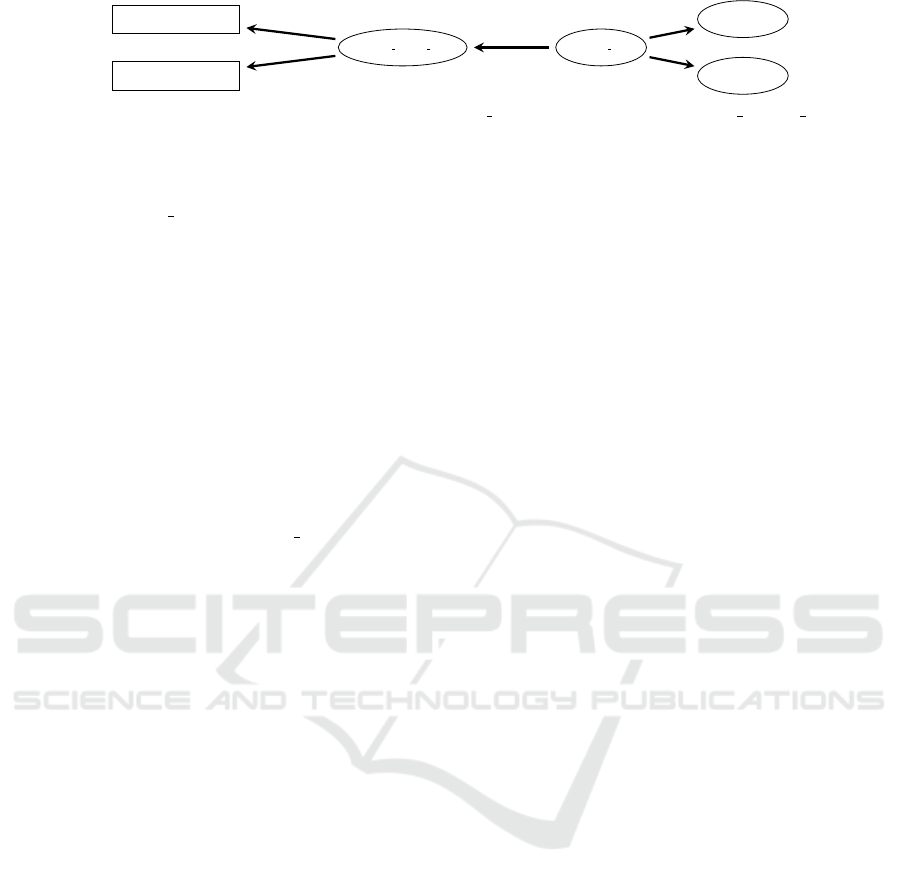
Figure 1: Illustration of initial tree representation over
DUDES creation and composition to final SPARQL query
for “Did Tom eat a long time ago?”. Yellow parts represent
new behavior for vague temporal expressions.
then be included into the query within a FILTER state-
ment, thus turning the vague temporal adverbial into
a crisp interval. Another way is to generate a gen-
eral SPARQL query, returning all potential candidates
without the vague temporal constraint and handling
the interpretation of vagueness in a separate step,
post-processing the query bindings. This has the ad-
vantage of remaining flexible w.r.t. a concrete inter-
pretation of the respective vague temporal adverbial.
However, this extra step substantially differs from the
typical QALD setting, where all information is usu-
ally condensed in a SPARQL query. Finally, a third
way to address vagueness would be by adding built-in
functions to the SPARQL query engine. These built-
in functions would be evaluated as part of the reason-
ing procedures. Although this allows both to remain
flexible w.r.t. interpretation and have all information
as part of the SPARQL query, it also needs a special-
ized SPARQL endpoint supporting the definition and
evaluation of such built-in functions.
In this paper, we decided to follow the first ap-
proach and extend the existing NeoDUDES pipeline
in order to support the interpretation of vague tempo-
ral expressions. First, we pass a reference time point
to the pipeline, such that reasoning w.r.t. a specific
(and adaptable) definition of “now” is possible. Ad-
ditionally, we provide a small set of 17 lexical entries
for the target knowledge graph described in Section
4.1.2. This lexicon mainly consists of two categories
of entries. First, the supported events (e.g., “eat” or
“sleep”) are bound to the dul:hasAgent property.
Second, there exist entries for the supported tempo-
ral adverbials (e.g., “recently” or “a long time ago”),
identifying them as temporal adverbials. The entries
allow the pipeline to recognize terms relevant for the
FuzzyLLI module and to forward them accordingly
to build FILTER statements for the target KG.
The extension of the pipeline mainly involved
the modification of the DUDES generation process,
adding a semantic representation involving a special
property vaguetemp for vague temporal adverbials.
The property is added when vague temporal adver-
bials are encountered in the dependency tree, i.e.,
when a tree node matches a lexical entry describing
a vague temporal adverbial. The adverbial, together
with the corresponding event, which is typically lo-
cated in the parent node, are given to the vaguetemp
property as arguments. The third argument is then the
variable for the event instances that are filtered based
on this information. In the following, this variable is
part of the DUDES composition process, ensuring it is
correctly integrated with the meaning and constraints
of the other parts of the question.
The vaguetemp property is the interface between
the NeoDUDES pipeline and FuzzyLLI, triggering
the vague temporal adverbial evaluation as well as
the generation of corresponding FILTER statements
and bearing all necessary information for this pro-
cess. More precisely, this is realized by adding a mod-
ule to the SPARQL generation which reacts to the
previously-generated special property vaguetemp.
The module then calls (extended) FuzzyLLI, forward-
ing the event and vague temporal adverbial in order
to get the temporal interval within which the event in-
stance(s) referred to possibly happened. Based on this
interval determined by FuzzyLLI, we can define the
truth condition of the vaguetemp property as follows:
vaguetemp(adverbial adv, event ev,
event instance w)
⇔ ref time −t
adv,ev
start
≤ end(w) ≤ ref time −t
adv,ev
end
where:
• ref time denotes the reference time
• end(w) is the time point at which the
event instance w ends
• t
adv,ev
start
= argmin
t
(P
Adv
(P
Ev
(t)) ≥ θ)
• t
adv,ev
end
= argmax
t
(P
Adv
(P
Ev
(t)) ≥ θ), and
• θ denotes the chosen threshold for the possible
temporal interval
This truth condition is then expressed in the form
of SPARQL statements as follows:
? w ex : h ap pe n s A t ? w In t . ? wInt t i me : has En d ? wEnd .
? w rdf : type ex : E at in g .
KEOD 2025 - 17th International Conference on Knowledge Engineering and Ontology Development
168

FI LT ER ( xsd : d a t e Ti me (? w End ) <= ref time −t
adv,ev
end
)
FI LT ER ( xsd : d a t e Ti me (? w End ) >= ref time −t
adv,ev
start
)
If t
adv,ev
start
is ∞, the last line is omitted as it is al-
ways true. Moreover, in practice, the two FILTER
statements are combined to a single one using &&. An
illustration of these steps is presented in Figure 1, il-
lustrating the DUDES representations for the differ-
ent expressions in the question “What did Tom eat
a long time ago?”. Note in particular that there is
a DUDES for the expression “long time ago” that is
combined with an event of type “eating”, and how
the resulting interval is reflected in the corresponding
SPARQL query. If no event is mentioned in the ques-
tion, such as in “What did Tom do recently?”, or the
event is not recognized as one of the supported events,
the SPARQL query consists of a union of all possi-
ble event types and their associated intervals. In addi-
tion, just some minor adjustments for different parts
of the pipeline to support the new knowledge graph
and question types were necessary.
4 EXPERIMENTS
4.1 Dataset and Resource Construction
4.1.1 Dataset
For evaluation purposes, we rely on datasets from
the WSU CASAS smart home project (Cook et al.,
2013). The whole project contains 89 publicly avail-
able datasets
2
, which vary by annotation status, num-
ber of participants, recording periods, seasonal con-
texts, among other factors. For our evaluation, we
selected the dataset titled twor.2010, which includes
sensor data from two participants living their daily
lives in a smart home from August 23, 2009, to May
1, 2010. The sensor data are annotated by (Cook and
Schmitter-Edgecombe, 2009), leading to the follow-
ing thirteen events: Bathing, Bed Toilet Transition,
Eating, Enter Home, Housekeeping, Leave Home,
Meal Preparation, Personal Hygiene, Sleep, Sleep-
ing Not in Bed, Wandering in Room, Watch TV, and
Work. Each event annotation also specifies the partic-
ipant (denoted as R1 or R2) performing the action.
4.1.2 Knowledge Graph and Evaluation Dataset
To construct the KG and evaluation dataset, we
cleaned the data by first merging consecutive identi-
cal events and combining the similar labels “Sleeping
Not in Bed” and “Sleep”. We then removed “Sleep”
2
Accessible via https://casas.wsu.edu/datasets/
and “Work” events shorter than 10 minutes and dis-
carded “Wandering in Room”, and finally merged
consecutive identical events again.
The cleaned twor.2010 dataset was used to build
the KG, which is illustrated in Figure 2 using the
exemplary event instance Bathing 100 performed by
Tom. The KG is structured as an RDF graph using the
DUL and OWL-Time ontologies. Specifically:
• Pseudonyms were assigned to residents: “Tom”
for R1 and “Mary” for R2.
• Key entities represented in the graph include:
– Agents: Residents such as “Tom” and “Mary”,
instantiated as rdf:type of dul:Agent.
– Events: Each of the eleven events is modeled
as a rdfs:subClassOf of ex:Event.
– Time Intervals: Each event instance hap-
pens at a temporal interval, modeled us-
ing time:ProperInterval. The start and
end times of the interval are defined using
time:hasBeginning and time:hasEnd.
The evaluation dataset consists of questions from
four categories. Each question is associated with a
reference time point, either randomly sampled within
the dataset’s overall time frame (August 23, 2009, to
May 1, 2010), or deliberately set outside this range
such that no event matches the question. Ground truth
(GT) answers were determined using an extended ver-
sion of FuzzyLLI (see Section 3.2 for the base model
and Section 4.3 for the extension), in combination
with our KG, with specific criteria defined per ques-
tion category. We describe the question categories in
the following:
For “Did” questions (“Did <resident name>
<event> <adverbial>?”), the GT is “Yes” if a cor-
responding event instance exists in the KG that is
within the possible temporal interval of <event> and
<adverbial> (determined by the extended FuzzyLLI)
and was performed by <resident name>, “No” oth-
erwise. An equal distribution of “Yes” and “No” an-
swers was achieved by adjusting the reference time.
“What” questions (“What has <resident name>
done <adverbial>?”) are answered by extracting
all event instances from the KG that match <res-
ident name>. Afterwards, we determine for each
event instance and <adverbial> the possible tempo-
ral interval by using the extended FuzzyLLI model.
The event is added to the GT if it happened within
this possible temporal interval.
“What happened” For such types of questions,
i.e. (“What happened <adverbial>?”), the question
criteria are defined solely by the possible temporal in-
terval determined by the <adverbial> and an event.
Accordingly, we perform the same steps as for the
Question Answering over Linked Data with Vague Temporal Adverbials
169
Bathing 100Interval Bathing 100
Tom
Bathing
2009-09-18T00:26:44.078515
2009-09-18T00:26:44.078515
happensAt
type
hasAgent
hasEnd
hasBeginning
Figure 2: Example KG, containing only the event instance Bathing 100 performed by Tom at Interval Bathing 100 which is
defined by a start and end time point in ISO 8601 format.
“What” questions but for all event instances regard-
less of the <resident name>.
“Who” questions (“Who <event> <adver-
bial>?”). In this case, the criteria are defined by the
possible temporal interval determined by using the
extended FuzzyLLI model with <event> and <ad-
verbial>. If the happening time of an event instance
from <event> in the KG lies inside this temporal in-
terval, the corresponding resident name is added to
the GT. To generate cases with empty GTs, we also
selected reference times from before the dataset’s start
date.
All <adverbial> values were among the four sup-
ported by FuzzyLLI: just, recently, some time ago,
and a long time ago. In the case of just, the <ad-
verbial> stands after the <resident name> or after
the question word for “What happened” or “Who”.
The eleven events were mapped to natural language
phrases, e.g., “Bed Toilet Transition” → “go to the
toilet”, “Personal Hygiene” → “take care of personal
hygiene”, etc., used for <event>. In total, we au-
tomatically generated 2, 780 questions, distributed as
follows: 780 “Did”, 800 “What”, 400 “What hap-
pened”, and 800 “Who” questions.
4.2 Query Selection
For query selection, we further fine-tuned the best-
performing query selection model from (Schmidt
et al., 2025) based on Flan-T5 (Chung et al., 2024)
with a dataset based on all candidate queries gener-
ated by the pipeline for the above dataset. To under-
line adaptability to small amounts of data and account
for the low linguistic diversity of the questions, we
split the 2, 780 questions into 20% train, 10% valida-
tion and 70% test splits.
The list of candidate queries was then slightly
cleaned such that an F
1
score of 1 (i.e., perfect match)
was only assigned to queries that contain at least one
FILTER statement as well as UNION statements if the
corresponding question is a “What” question.
The training dataset was created as described by
Schmidt et al. (Schmidt et al., 2025), generating up
to 100 comparisons per question. A hyperparameter
search was performed comprising 20 trials using Op-
tuna (Akiba et al., 2019), choosing a learning rate be-
tween 10
−5
and 10
−4
(logarithmic scale), a λ value
for the lambda learning rate scheduler between 0.9
and 1.0 (logarithmic scale) as well as between 1 and
5 epochs. The best-performing model w.r.t. vali-
dation loss was chosen for the final evaluation. We
used the same single-model strategies as proposed by
(Schmidt et al., 2025) together with the upper-bound
BestScore strategy that simulates a perfect query se-
lection. For evaluation, the first (up to) 64 candidate
queries were considered for each question.
4.3 Extension of FuzzyLLI
As outlined in Section 3.2, the original FuzzyLLI can
not be generalized to unseen events, as each event has
a specific standard deviation σ
e
, used by the event-
specific function (see Equation 1). This design ties
the original model to events which are empirically
measured with surveys like the one from (Kenneweg
et al., 2024). To address this limitation and enable
generalization across all eleven events in our KG,
we propose an extension to the model: According
to (Kenneweg et al., 2025a), based on the work of
(Van Jaarsveld and Schreuder, 1985), each event is
characterized by a characteristic temporal signature,
defined by its typical duration and frequency. The pa-
rameters of the original FuzzyLLI, estimated in (Ken-
neweg et al., 2025a) support this hypothesis: brushing
teeth, for instance, is characterized by a short duration
and high frequency, resulting to a low standard devia-
tion σ
e
= 935, whereas year abroad has a long dura-
tion, low frequency, and consequently a high standard
deviation σ
e
= 1,240,803.
Accordingly, to generalize FuzzyLLI to our
eleven events, we follow this hypothesis: A direct
comparison between our events and those from the
original FuzzyLLI is not feasible, as all of our events
have a daily frequency and durations typically mea-
sured in minutes or hours. Among the original events
(Brushing Teeth, Birthday, Vacation, Sabbatical, Year
Abroad and Marriage), only brushing teeth shared a
similar characteristic temporal signature. Since the
original empirical data from (Kenneweg et al., 2024)
did not include participants’ expectations w.r.t. event
duration and frequency, we used data from (Ken-
neweg et al., 2025b), who performed an extended ver-
sion of the survey for seven events: They also asked
participants to estimate both the typical duration and
KEOD 2025 - 17th International Conference on Knowledge Engineering and Ontology Development
170

frequency of each event.
An initial version of this extension used open-
ended input fields for time units (seconds, minutes,
hours, etc.), but the results were inconsistent and un-
reliable. Consequently, they followed a Likert-scale
approach, which participants found easier to under-
stand and complete. The scale for duration was: Min-
utes, Hours, Days, Weeks, Months, Years, Decades;
and for frequency: Daily, Monthly, Yearly, Decadal,
Once in a Lifetime.
We fitted this survey results to FuzzyLLI to de-
termine σ
e
for each of their events. Additionally, we
estimated the typical duration of each event by tak-
ing the median of all survey responses. We used these
data – the pair of (σ
e
, duration) for each event – to
train a (simplified) decision tree regression model.
The characteristic temporal signature of an event is
here only defined by its duration as the frequency of
all our eleven events is “Daily”. The resulting tree had
depth 1, assigning a σ
e
of 7, 619 minutes for events
categorized as “minutes” and 22, 367 for events cate-
gorized as “hours”.
Based on this decision rule, we manually catego-
rized our events into those typically lasting minutes
(Bathing, Bed Toilet Transition, Eating, Enter Home,
Meal Preparation, Personal Hygiene) and those last-
ing hours (Housekeeping, Sleep, Watch TV, Work,
Leave Home). This categorization leads to σ
e
for each
event as shown in Table 1.
Table 1: The duration-based σ
e
(in minutes) of all our
events. The duration is set manually by us.
Event Duration σ
e
(Minutes)
Bathing
Bed Toilet Transit.
Eating
Enter Home
Meal Preparation
Personal Hygiene
Minutes 7, 619
Housekeeping
Sleep
Watch TV
Work
Leave Home
Hours 22, 367
In conclusion, when the vague temporal adver-
bial evaluation is triggered in the extended pipeline
via the property vaguetemp (see Section 3.3), the
extended FuzzyLLI is provided with both the vague
temporal adverbial and the corresponding event, and
returns the “possible temporal interval” during which
the adverbial applies above a defined threshold θ to
the event. For our experiments, we set θ to 0.6, mean-
ing the adverbial is considered to apply to at least a
degree of 0.6 to the event during this “possible tem-
poral interval”. This interval is defined by start and
end times relative to the reference time and is com-
puted by the extended FuzzyLLI using the stored pa-
rameters µ
a
and σ
a
of the provided adverbial for the
adverbial-specific function (see Equation 2), and the
stored duration-based value σ
e
of the provided event
for the event-specific function (see Equation 1). For
example, given the event eat and the adverbial just,
the model returns an interval such as “0 to 140 min-
utes ago.”. Similarly, for eat and the adverbial long
time ago, it returns “62, 545 to ∞ minutes ago.”
5 RESULTS & DISCUSSION
The evaluation results of the extended NeoDUDES
pipeline are presented in Table 2. The table con-
tains two kinds of results. First, BestScore repre-
sents the best achievable score based on the gener-
ated candidate queries, thus indicating whether the
queries generated by our approach are generally cor-
rect. Second, the table shows the results for the best-
performing query selection model from the hyper-
parameter search combined with different strategies
from (Schmidt et al., 2025) (Accum and MostWins, ei-
ther accumulating the raw model outputs or counting
separate wins for the final decision, respectively).
By design, the dataset contains questions and cor-
responding reference times for which the answer is
empty, making micro or macro F
1
score evaluation
impractical. Therefore, we present the number of ex-
act matches in relation to the total number of ques-
tions, i.e., the exact match rate, in Table 2.
First, we can observe that the pipeline in principle
generates correct queries among the candidate queries
for all questions and reference times, as BestScore is
1.00. Similarly, the best-performing query selection
model shows promising results for all tested query
selection strategies, achieving exact match rates be-
tween 0.85 and 0.91.
Although these scores are very promising, they
rely on a number of assumptions and preconditions.
Most importantly, the pipeline’s ability to translate
vague temporal expressions into corresponding time
intervals is limited by the events and temporal adver-
bials that FuzzyLLI can process. Events that do not
occur daily, do not typically last minutes or hours,
or lack a manually-specified duration in FuzzyLLI,
as well as adverbials beyond the four supported ones
can not be interpreted with the current pipeline and
would demand further data and experiments. More-
over, we adapted the pipeline to support these types
of questions, such that the success on a limited set of
Question Answering over Linked Data with Vague Temporal Adverbials
171

questions is not particularly surprising. Similarly, the
pipeline relies on lexical entries for those adverbials,
events and all other relevant terms. Finally, the dataset
is synthetic and limited w.r.t. question and SPARQL
query diversity. An example SPARQL query for the
question “Who ate a long time ago?” and reference
date 2010-03-13T18:05:35.069542 is:
SE LE CT D IS TI NC T ? v 3 W HE R E {
? v1 d ul : has Ag en t ? v 3 .
? v1 ex : ha pp en sA t ? v1 In te rv a l .
? v 1 I n te rv al t im e : ha sE nd ? v1E nd .
? v1 r df : type ex : E at in g .
FI LT ER ( xsd : d a t e Ti me (? v 1E n d )
<= xsd : da t e T i me ("2 01 0 -0 1 -2 9 T 07 :4 0 : 3 5. 0 69 5 4 2 ") ) }
The result of this query would be ex:Mary and
ex:Tom. As we can see, the vague temporal adverbial
“a long time ago” is transformed into a FILTER state-
ment w.r.t. the corresponding event ex:Eating and
reference time. Notably, “a long time ago” is inter-
preted as an interval with no lower bound, thus result-
ing in only one comparison included in the FILTER
clause. As the question asks for the agent of those
events, the query returns ?v3, i.e., the object of the
dul:hasAgent property.
“Did” questions asking for the existence of a cor-
responding triple pattern are thus very similar. An ex-
ample for “Did Tom eat a long time ago?” including
the intermediate steps is illustrated in Figure 1.
As we can see, the queries are very similar except
for the reference time, some additional type checks
and the query type being an ASK query. The struc-
ture of queries for questions of type “What happened”
differs considerably from those, as all possible event
types need to be considered in the query, leading to a
complex disjunction. In the following, we see parts of
an example for “What happened some time ago?”:
SE LE CT D IS TI NC T ? v 0 W HE R E {
? v0 d ul : has Ag en t ? v 3 .
? v0 ex : ha pp en sA t ? v0 In te rv a l .
{
? v 0 I n te rv al t im e : ha sE nd ? v0E nd .
? v0 r df : type ex : B at hi ng .
FI LT ER (( x sd : dat eT im e (? v0 E nd )
<= xsd : da t e T i me ("2 01 0 -0 1 -2 4 T 09 :1 6: 23 ") )
&& ( xs d : d a t e T i me (? v 0E n d )
>= xsd : da t e T i me ("2 01 0 -0 1 -1 8 T 09 :1 4: 23 " ) ) )
} U NIO N {
? v 0 I n te rv al t im e : ha sE nd ? v0E nd .
? v0 r df : type ex : H o us ek e ep in g .
FI LT ER (( x sd : dat eT im e (? v0 E nd )
<= xsd : da t e T i me ("2 01 0 -0 1 -1 6 T 18 :5 7: 23 ") )
&& ( xs d : d a t e T i me (? v 0E n d )
>= xsd : da t e T i me ("2 00 9 -1 2 -3 0 T 04 :0 8: 23 " ) ) )
} U NIO N ...
In contrast to questions with a fixed event like
ex:Eating, “What happened” questions contain
Table 2: Results for full dataset with best-performing (in
terms of validation loss) query selection model.
Strategy Exact Match Rate
Accum
logits
0
0
0.
.
.9
9
91
1
1
Accum
sigmoid
0
0
0.
.
.9
9
91
1
1
MostWins
0.0
0.85
MostWins
0.1
0.85
MostWins
0.25
0.86
MostWins
0.5
0.87
MostWins
0.75
0.88
MostWins
0.9
0.89
BestScore 1.00
UNIONs of possible intervals for the respective ad-
verbial, each constrained by the corresponding event.
In such cases with no specific event mentioned in the
question, the intervals for all known events have to be
listed, yielding a long SPARQL query.
All in all, our NeoDUDES pipeline extension il-
lustrates the feasibility of including vague temporal
expressions in QALD. Moreover, this shows the ben-
efits of a modular and compositional question answer-
ing pipeline, which can therefore be easily adapted
to support additional aspects of natural language and
even for new domain-specific knowledge graphs with-
out the need to manually create large amounts of
training data.
6 CONCLUSIONS & FUTURE
WORK
In this paper, we have presented an extension of
the QALD system by (Schmidt et al., 2025) towards
supporting questions with vague temporal adverbials.
The interpretation of vague temporal adverbials in
relation to a specific event relies on the extended
FuzzyLLI model, a factorized probabilistic adverbial
interpretation model introduced by (Kenneweg et al.,
2025a). Our pipeline yields promising results, with
exact match rates between 0.85 and 0.91 for the best-
performing query selection model. Considering all
generated candidate queries, our pipeline even gener-
ates correct queries for every question in the dataset.
However, those scores have to be interpreted w.r.t. the
limitations of our approach. For example, only four
vague temporal adverbials (just, recently, some time
ago, long time ago) and events that occur daily and
have a duration in the range of “minutes” or “hours”
are supported by the current implementation of the
system. Further, the lexicon and some parts of the
pipeline need to be extended for each new event to be
supported by the system. Yet, the simplicity of the
KEOD 2025 - 17th International Conference on Knowledge Engineering and Ontology Development
172

pipeline extension shows the benefits of a modular,
compositional QALD approach. Considering the lim-
ited question diversity of the evaluation dataset, future
work could investigate other question categories such
as “How often . . . ?” as well as involving Allen’s re-
lations (Allen and Ferguson, 1997), i.e., relations be-
tween two events, e.g., “Did Tom brush his teeth just
before he ate?”. In addition, besides events, the con-
text in which a person speaks (prior communication,
time, location) may also influence the interpretation
of vague temporal adverbials. Finally, the query scor-
ing model could be adapted to the temporal setting by
including reference times in the model input.
ACKNOWLEDGEMENTS
This work is partially funded by the Ministry of
Culture and Science of the State of North Rhine-
Westphalia under grant no NW21-059A (SAIL) and
by the Honda Research Institute Europe.
REFERENCES
Akiba, T., Sano, S., Yanase, T., Ohta, T., and Koyama, M.
(2019). Optuna: a next-generation hyperparameter
optimization framework. In Proceedings of the 25th
ACM SIGKDD international conference on knowl-
edge discovery and data mining.
Allen, J. F. and Ferguson, G. (1997). Actions and Events
in Interval Temporal Logic, pages 205–245. Springer
Netherlands, Dordrecht.
Bobillo, F., Delgado, M., and G
´
omez-Romero, J. (2012).
DeLorean: A reasoner for fuzzy OWL 2. Expert Sys-
tems with Applications, 39(1):258–272.
Bobillo, F. and Straccia, U. (2016). The fuzzy ontology
reasoner fuzzyDL. Knowledge-Based Systems, 95:12–
34.
Cavar, D., Dickson, B., Aljubailan, A., and Kim, S. (2021).
Temporal Information and Event Markup Language:
TIE-ML Markup Process and Schema Version 1.0.
arXiv:2109.13892 [cs].
Chang, A. X. and Manning, C. (2012). SUTime: A li-
brary for recognizing and normalizing time expres-
sions. In Calzolari, N., Choukri, K., Declerck, T.,
Do
˘
gan, M. U., Maegaard, B., Mariani, J., Moreno,
A., Odijk, J., and Piperidis, S., editors, Proceed-
ings of the Eighth International Conference on Lan-
guage Resources and Evaluation (LREC‘12), pages
3735–3740, Istanbul, Turkey. European Language Re-
sources Association (ELRA).
Chen, Z., Zhao, X., Liao, J., Li, X., and Kanoulas, E.
(2022). Temporal knowledge graph question answer-
ing via subgraph reasoning. Knowledge-Based Sys-
tems, 251:109134.
Chung, H. W., Hou, L., Longpre, S., Zoph, B., Tay, Y., Fe-
dus, W., Li, E., Wang, X., Dehghani, M., Brahma,
S., Webson, A., Gu, S. S., Dai, Z., Suzgun, M.,
Chen, X., Chowdhery, A., Narang, S., Mishra, G.,
Yu, A., Zhao, V. Y., Huang, Y., Dai, A. M., Yu, H.,
Petrov, S., Chi, E. H., Dean, J., Devlin, J., Roberts,
A., Zhou, D., Le, Q. V., and Wei, J. (2024). Scal-
ing instruction-finetuned language models. Journal of
Machine Learning Research, 25(70):1–53.
Cimiano, P. (2009). Flexible semantic composition with
DUDES (short paper). In Bunt, H., Petukhova, V., and
Wubben, S., editors, Proceedings of the eight interna-
tional conference on computational semantics, IWCS
2009, tilburg, the netherlands, january 7-9, 2009,
pages 272–276. Association for Computational Lin-
guistics.
Cimiano, P., Unger, C., and McCrae, J. P. (2014). Ontology-
based interpretation of natural language. Synthesis
lectures on human language technologies. Morgan &
Claypool Publishers.
Cook, D. and Schmitter-Edgecombe, M. (2009). Assessing
the quality of activities in a smart environment. Meth-
ods of information in medicine, 48:480–5.
Cook, D. J., Crandall, A. S., Thomas, B. L., and Krishnan,
N. C. (2013). CASAS: A Smart Home in a Box. Com-
puter, 46(7):62–69.
Damerau, F. J. (1977). On “fuzzy” adjectives. Linguistics,
15(196):57–64.
de Moura, L. and Bjørner, N. (2008). Z3: An efficient SMT
solver. In Ramakrishnan, C. R. and Rehof, J., editors,
Tools and algorithms for the construction and anal-
ysis of systems, pages 337–340, Berlin, Heidelberg.
Springer Berlin Heidelberg.
Frege, G. (1953). The Foundations of Arithmetic: A Logico-
Mathematical Enquiry into the Concept of Number.
Blackwell, Oxford.
Huang, R., Wei, W., Qu, X., Xie, W., Mao, X., and Chen,
D. (2024). Joint Multi-Facts Reasoning Network For
Complex Temporal Question Answering Over Knowl-
edge Graph. arXiv:2401.02212 [cs].
Jia, Z., Pramanik, S., Saha Roy, R., and Weikum, G. (2021).
Complex Temporal Question Answering on Knowl-
edge Graphs. In Proceedings of the 30th ACM In-
ternational Conference on Information & Knowledge
Management, CIKM ’21, pages 792–802, New York,
NY, USA. Association for Computing Machinery.
Jiao, S., Zhu, Z., Wu, W., Zuo, Z., Qi, J., Wang, W., Zhang,
G., and Liu, P. (2023). An improving reasoning net-
work for complex question answering over temporal
knowledge graphs. Applied Intelligence, 53(7):8195–
8208.
Kamp, H. and Sassoon, G. W. (2016). Vagueness. In Aloni,
M. and Dekker, P., editors, The Cambridge Handbook
of Formal Semantics. Cambridge University Press.
Kannen, N., Sharma, U., Neelam, S., Khandelwal, D., Ik-
bal, S., Karanam, H., and Subramaniam, L. (2023).
Best of Both Worlds: Towards Improving Temporal
Knowledge Base Question Answering via Targeted
Fact Extraction. In Bouamor, H., Pino, J., and Bali,
K., editors, Proceedings of the 2023 Conference on
Question Answering over Linked Data with Vague Temporal Adverbials
173

Empirical Methods in Natural Language Processing,
pages 4729–4744, Singapore. Association for Compu-
tational Linguistics.
Kazakov, Y., Kr
¨
otzsch, M., and Siman
ˇ
c
´
ık, F. (2014). The
Incredible ELK. Journal of Automated Reasoning,
53(1):1–61.
Kenneweg, S., Deigmoeller, J., Eggert, J., and Cimiano, P.
(2025a). A factorized probabilistic model of the se-
mantics of vague temporal adverbials relative to dif-
ferent events. In Proceedings of the Annual Meeting
of the Cognitive Science Society, volume 47.
Kenneweg, S., Deigm
¨
oller, J., Cimiano, P., and Eggert, J.
(2025b). TRAVELER: A Benchmark for Evaluating
Temporal Reasoning across Vague, Implicit and Ex-
plicit References. arXiv:2505.01325 [cs].
Kenneweg, S., Jackson, B. B., Deigmoeller, J., Eggert, J.,
and Cimiano, P. (2024). An Empirical Study on Vague
Deictic Temporal Adverbials. In Zock, M., Chersoni,
E., Hsu, Y.-Y., and de Deyne, S., editors, Proceedings
of the Workshop on Cognitive Aspects of the Lexicon
@ LREC-COLING 2024, pages 26–31, Torino, Italia.
ELRA and ICCL.
K
¨
afer, T. and Harth, A. (2018). Specifying, Monitoring, and
Executing Workflows in Linked Data Environments.
In The Semantic Web – ISWC 2018: 17th Interna-
tional Semantic Web Conference, Monterey, CA, USA,
October 8–12, 2018, Proceedings, Part I, pages 424–
440, Berlin, Heidelberg. Springer-Verlag.
Lange, L., Str
¨
otgen, J., Adel, H., and Klakow, D. (2023).
Multilingual Normalization of Temporal Expressions
with Masked Language Models. arXiv:2205.10399
[cs].
Mavromatis, C., Subramanyam, P. L., Ioannidis, V. N.,
Adeshina, A., Howard, P. R., Grinberg, T., Hakim, N.,
and Karypis, G. (2022). TempoQR: Temporal Ques-
tion Reasoning over Knowledge Graphs. Proceed-
ings of the AAAI Conference on Artificial Intelligence,
36(5):5825–5833. Number: 5.
May, U., Zaczynska, K., Moreno-Schneider, J., and
Rehm, G. (2021). Extraction and Normalization
of Vague Time Expressions in German. In Evang,
K., Kallmeyer, L., Osswald, R., Waszczuk, J., and
Zesch, T., editors, Proceedings of the 17th Confer-
ence on Natural Language Processing (KONVENS
2021), pages 114–126, D
¨
usseldorf, Germany. KON-
VENS 2021 Organizers.
McCrae, J. P., Spohr, D., and Cimiano, P. (2011). Link-
ing lexical resources and ontologies on the semantic
web with lemon. In Proceedings of the 8th extended
semantic web conference on The semantic web: re-
search and applications (ESWC), volume 6643, pages
245–259.
Neelam, S., Sharma, U., Karanam, H., Ikbal, S., Kapani-
pathi, P., Abdelaziz, I., Mihindukulasooriya, N., Lee,
Y.-S., Srivastava, S., Pendus, C., Dana, S., Garg, D.,
Fokoue, A., Bhargav, G. P. S., Khandelwal, D., Ravis-
hankar, S., Gurajada, S., Chang, M., Uceda-Sosa, R.,
Roukos, S., Gray, A., Riegel, G. L., Luus, F., and Sub-
ramaniam, L. V. (2021). SYGMA: System for Gen-
eralizable Modular Question Answering OverKnowl-
edge Bases. arXiv:2109.13430 [cs].
Nenov, Y., Piro, R., Motik, B., Horrocks, I., Wu, Z., and
Banerjee, J. (2015). RDFox: A Highly-Scalable
RDF Store. In Arenas, M., Corcho, O., Simperl,
E., Strohmaier, M., d’Aquin, M., Srinivas, K., Groth,
P., Dumontier, M., Heflin, J., Thirunarayan, K., and
Staab, S., editors, The Semantic Web - ISWC 2015,
pages 3–20, Cham. Springer International Publishing.
Pustejovsky, J. (2005). Time and the semantic Web. In 12th
International Symposium on Temporal Representation
and Reasoning (TIME’05), pages 5–8. ISSN: 2332-
6468.
Pustejovsky, J., Lee, K., Bunt, H., and Romary, L. (2010).
ISO-TimeML: An International Standard for Seman-
tic Annotation. In Calzolari, N., Choukri, K., Mae-
gaard, B., Mariani, J., Odijk, J., Piperidis, S., Ros-
ner, M., and Tapias, D., editors, Proceedings of the
Seventh International Conference on Language Re-
sources and Evaluation (LREC‘10), Valletta, Malta.
European Language Resources Association (ELRA).
Schilder, F. and Habel, C. (2001). From temporal expres-
sions to temporal information: semantic tagging of
news messages. In Proceedings of the workshop on
Temporal and spatial information processing -, vol-
ume 13, pages 1–8, Not Known. Association for Com-
putational Linguistics.
Schmidt, D. M., Elahi, M. F., and Cimiano, P. (2025). Lex-
icalization Is All You Need: Examining the Impact
of Lexical Knowledge in a Compositional QALD Sys-
tem. In Alam, M., Rospocher, M., van Erp, M.,
Hollink, L., and Gesese, G. A., editors, Knowledge
Engineering and Knowledge Management, pages
102–122, Cham. Springer Nature Switzerland.
Sharma, A., Saxena, A., Gupta, C., Kazemi, S. M., Taluk-
dar, P., and Chakrabarti, S. (2023). TwiRGCN: Tem-
porally Weighted Graph Convolution for Question
Answering over Temporal Knowledge Graphs. In
Proceedings of the 17th Conference of the European
Chapter of the Association for Computational Lin-
guistics, pages 2049–2060. arXiv:2210.06281 [cs].
Solt, S. and Gotzner, N. (2012). Experimenting with degree.
In Semantics and Linguistic Theory, volume 22.
Stoilos, G., Stamou, G., Tzouvaras, V., Pan, J. Z., and Hor-
rocks, I. (2005). Fuzzy OWL: Uncertainty and the
Semantic Web. In OWL: Experiences and Directions.
Str
¨
otgen, J. and Gertz, M. (2010). HeidelTime: High Qual-
ity Rule-Based Extraction and Normalization of Tem-
poral Expressions. In Erk, K. and Strapparava, C.,
editors, Proceedings of the 5th International Work-
shop on Semantic Evaluation, pages 321–324, Upp-
sala, Sweden. Association for Computational Linguis-
tics.
Su, M., Li, Z., Chen, Z., Bai, L., Jin, X., and Guo, J. (2024).
Temporal Knowledge Graph Question Answering: A
Survey. arXiv:2406.14191 [cs].
Van Jaarsveld, H. and Schreuder, R. (1985). Implicit quan-
tification of temporal adverbials. Journal of Seman-
tics, 4(4):327–339.
KEOD 2025 - 17th International Conference on Knowledge Engineering and Ontology Development
174
