Leaving the Tech Debt Behind: How to Sustainably Improve the User
and Developer Experience of a Legacy Frontend by Designing, Building
and Migrating to a New Web Client
Friedrich Maiwald
1 a
, Nina Weber
1
, Kay Massow
2 b
and Ilja Radusch
2
1
Daimler Center for Automotive IT Innovations (DCAITI), Technische Universit
¨
at Berlin, Berlin, Germany
2
Fraunhofer Institute for Open Communication Systems (FOKUS), Berlin, Germany
Keywords:
Legacy Systems, Technical Debt, Software Maintenance, Software Modernization, Migration Strategy,
Software Engineering, User Experience, Developer Experience, Web Development.
Abstract:
Legacy web applications often suffer from declining user and developer experience, driven by technical debt,
outdated technologies, and architectural complexity. This paper presents a structured approach for modern-
izing such systems, targeting simultaneous improvements in user experience (UX) and developer experience
(DX). The process encompasses strategy selection, requirements elicitation and prioritization, technology eval-
uation, and construction best practices, all grounded in research and practical guidelines. Evaluation methods
are defined for both UX and DX, combining established frameworks and actionable technical metrics. The
approach is applied to the real-world migration of a legacy web application to a new frontend, using a gradual
Strangler Fig strategy. The case study demonstrates how well-founded decisions with stakeholder involvement,
modular architecture, modern tooling, and resilient testing can break free from legacy constraints. Quantitative
and qualitative results show substantial gains in user satisfaction, codebase health, and developer productivity.
The findings suggest that systematic modernization not only resolves immediate issues but enables sustainable,
maintainable web applications. Future work should explore advanced quality assessment, long-term effects,
and the integration of AI to support decision-making and automation in the modernization process.
1 INTRODUCTION
Legacy applications are older software systems that
remain critical to the operations and success of the
organizations that rely on them (Khadka et al., 2014).
As these systems age, they tend to accrue substantial
technical debt, which makes them increasingly diffi-
cult and costly to maintain (Abu Bakar et al., 2020).
Technical debt includes the consequences of subop-
timal design choices, outdated technologies, and ac-
cumulated complexities that hinder the system’s per-
formance and adaptability. This state of affairs has
profound implications for both user experience (UX)
and developer experience (DX) (Besker et al., 2020).
User experience refers to how efficiently, effec-
tively, and satisfactorily users can complete their tasks
using the system (Hassenzahl, 2008). A poor UX can
lead to reduced productivity, frustration, and disen-
gagement among users. Developer experience, on the
a
https://orcid.org/0009-0009-3741-4307
b
https://orcid.org/0000-0002-3760-5762
other hand, pertains to the ease and motivation with
which developers can maintain and extend the system
(Fagerholm and M
¨
unch, 2012). A diminished DX can
result in reduced morale, increased operational costs,
and difficulties in responding to new requirements in
a timely manner.
Given the critical role of legacy applications and
the challenges posed by their maintenance, modern-
ization strategies are essential. These strategies aim to
address technical debt, improve system performance,
and enhance both UX and DX. Modernization can in-
volve various approaches, such as re-architecting the
system, adopting new technologies, and refining the
user interface.
This paper presents a comprehensive approach to
modernizing legacy web applications, focusing on
the implications of different modernization decisions.
The approach is structured to include the crucial steps
of an effective modernization process followed by
suitable evaluation methods to make the outcomes
verifiable as easily as possible. The goal is to pro-
vide a clear process and highlight the decision points
Maiwald, F., Weber, N., Massow, K. and Radusch, I.
Leaving the Tech Debt Behind: How to Sustainably Improve the User and Developer Experience of a Legacy Frontend by Designing, Building and Migrating to a New Web Client.
DOI: 10.5220/0013775500003985
Paper published under CC license (CC BY-NC-ND 4.0)
In Proceedings of the 21st International Conference on Web Information Systems and Technologies (WEBIST 2025), pages 213-219
ISBN: 978-989-758-772-6; ISSN: 2184-3252
Proceedings Copyright © 2025 by SCITEPRESS – Science and Technology Publications, Lda.
213

that need to be considered, discussing the potential
advantages and disadvantages of each choice.
To validate the proposed strategy, it is applied as a
case study to the WebScE application, a web applica-
tion for managing and visualizing mobility data. As a
typical legacy system it is facing common challenges
such as outdated technologies, accumulated technical
debt, and complex codebases. The case study illus-
trates the modernization process, providing concrete
examples of how to tackle various issues. Addition-
ally, the effectiveness of the approach is evaluated by
comparing the UX and DX of the current and modern-
ized applications by applying the presented evaluation
metrics.
By presenting this approach in a comprehensive
and structured manner, this paper aims to offer valu-
able insights and practical guidance for similar mod-
ernization projects. While the case study is specific
to the WebScE application, the principles and strate-
gies discussed are expected to be applicable to a wide
range of legacy web applications. The ultimate objec-
tive is to enhance the UX and DX of legacy systems,
ensuring their continued relevance and effectiveness
in meeting organizational needs.
The rest of this paper is organized as follows. In
Section 2 we present the steps of our approach from
specific modernization strategies, requirements anal-
ysis and technology decisions to architecture and con-
struction best practices, all backed by intensive liter-
ature review. In Section 3, we describe the evaluation
methods and specific metrics to profoundly assess the
UX and DX of any modernization results. The ap-
proach and the evaluation methods are subsequently
applied in the case study in Section 4. We finally con-
clude our findings in Section 5 and we give an outlook
on the future work.
2 APPROACH
This section presents a structured, generalizable ap-
proach to modernizing legacy web applications, with
the dual goal of improving user experience UX and
DX. The approach balances the need for gradual re-
newal with maintainability and adaptability, and is di-
vided into five key steps: modernization strategy, de-
velopment process, requirements engineering, tech-
nology selection, and software construction best prac-
tices.
2.1 Modernization Strategy
Modernizing legacy systems typically involves choos-
ing between a complete rewrite (”big bang”) and in-
cremental refactoring of the existing system (Althani
et al., 2016) (Stevenson and Pols, 2004). A full
rewrite can eliminate technical debt but involves high
risk and resource use, while incremental refactoring
can be slow and demotivating for developers. Recent
research and practical experience indicate that a mid-
dle ground, such as the Strangler Fig Pattern, provides
a sustainable and less risky path (Ma et al., 2022).
In the Strangler Fig approach, new functional-
ity is developed alongside the legacy application,
with gradual migration of features to the new system
(Fowler, 2004). This enables continuous user feed-
back, reduces business risk, and leverages modern
technologies early. Integration strategies can include
embedding parts of the legacy UI in the new frontend
or providing seamless navigation to legacy modules
(Verhaeghe et al., 2022). This ensures continuity and
user acceptance during migration, while also allowing
for early validation of UX and DX improvements.
A key insight from related work is that moderniza-
tion should not simply replicate legacy features. In-
stead, it should leverage the opportunity to reassess
requirements, address known pain points, and ques-
tion the necessity of existing features. This helps
avoid perpetuating legacy issues and supports both us-
ability and long-term maintainability.
2.2 Development Process
Modernization projects have unique demands on the
development process, as they must improve both UX
and DX. A hybrid process model often combines the
strengths of traditional, plan-driven methods (which
support long-term code quality and maintainability
— critical for DX) with those of agile methodologies
(which foster continuous user feedback and iterative
UX improvements) (Heimicke et al., 2020).
An effective approach begins with an initial plan-
driven phase for high-level requirements, architec-
ture, and technology decisions, providing a stable
foundation. Subsequent development proceeds iter-
atively, prioritizing features based on value and cost-
benefit considerations. Regular feedback from stake-
holders and end-users is incorporated, enabling con-
tinuous refinement and early validation of UX and
DX improvements. The process should remain flexi-
ble, adapting depth and documentation to the project’s
scale and team structure.
2.3 Requirements
Successful modernization requires not only reproduc-
ing existing functionality, but also explicitly identi-
fying what must be improved (Kotonya and Som-
WEBIST 2025 - 21st International Conference on Web Information Systems and Technologies
214

merville, 1998). The requirements phase should be-
gin by eliciting the current pain points and desired im-
provements through techniques such as stakeholder
interviews and explanatory observation. System ar-
chaeology — analyzing existing documentation and
code — can supplement understanding, but should
not be the sole source of requirements, as it risks per-
petuating legacy flaws and unused features.
Requirements should be prioritized based on cost,
benefit, and migration feasibility, often using analyti-
cal methods such as value/cost/risk matrices. Not all
details should be fixed upfront; instead, high-level re-
quirements are refined iteratively, in line with agile
principles. Grouping related features into migration
steps (as per the Strangler Fig pattern) helps plan in-
cremental releases and ensures that each step delivers
tangible value to users and developers alike.
2.4 Technology Selection
Selecting an appropriate technology stack is a crit-
ical decision in modernization, directly affecting
both UX and DX. A structured technology selection
framework should be applied (Kibanov et al., 2013)
(Maxville et al., 2009), typically involving:
• Criteria Specification: Define clear, measurable
selection criteria based on project goals, including
usability, maintainability, community support, ex-
tensibility, testability, and documentation.
• Mandatory/Desirable Criteria: Distinguish be-
tween essential (must-have) and desirable (nice-
to-have) features to efficiently narrow down can-
didates.
• Weighting and Evaluation: Assign weights to
criteria according to their importance (e.g., main-
tainability and TypeScript support for DX, acces-
sibility and theming for UX) and score candidates
accordingly.
• Final Selection: Aggregate scores and make a fi-
nal decision, considering both the quantitative re-
sults and qualitative fit with team experience.
Technologies should be chosen not only for their
immediate fit, but also for their ecosystem maturity,
long-term viability, and alignment with established
community conventions. Frameworks and libraries
that support resilient testing, enforce code conven-
tions, and offer strong documentation can signifi-
cantly ease onboarding and long-term maintenance.
2.5 Construction
The software construction phase emphasizes practices
that ensure quality, maintainability, and adaptability:
• Testing: Automated tests are essential for sus-
tainable modernization. Unit tests validate com-
ponents in isolation, while end-to-end (E2E) tests
verify complete user workflows and serve as liv-
ing documentation for requirements. Tests should
be resilient — robust against refactorings and
changes in implementation details — to avoid
maintenance overhead and encourage continuous
improvement.
• Code Conventions: Enforcing consistent cod-
ing standards, ideally following widely-accepted
community conventions (e.g., Clean Code (Mar-
tin, 2008)), enhances code readability and main-
tainability. Automated tools should be used to
check and enforce these conventions.
• Documentation: Documentation should be con-
cise, up-to-date, and maintained close to the code-
base (e.g., within the project repository) (Som-
merville, 2016). This ensures it remains rele-
vant and easily accessible, reducing the risk of
outdated information while facilitating onboard-
ing and handovers.
• Incremental Integration: Where necessary,
wrappers or abstraction layers around third-party
libraries can reduce coupling and facilitate fu-
ture replacements, but should be introduced judi-
ciously to avoid unnecessary complexity.
By adhering to these principles throughout the
construction phase, the modernization process not
only delivers immediate UX improvements but also
lays the foundation for long-term DX benefits, such
as easier onboarding, maintenance, and future evolu-
tion.
3 EVALUATION METHODS
The success of a software modernization initiative
must be evaluated against its primary objectives: en-
hancing user experience UX and DX. This section
outlines a structured methodology — grounded in
current research and best practices — for assess-
ing improvements in both dimensions. The pro-
posed approach combines standardized, multidimen-
sional frameworks with practical, replicable metrics,
enabling a comprehensive comparison of legacy and
modernized systems.
3.1 User Experience
User experience is a multidimensional concept en-
compassing pragmatic and hedonic qualities, such as
effectiveness, efficiency, satisfaction, and aesthetics
Leaving the Tech Debt Behind: How to Sustainably Improve the User and Developer Experience of a Legacy Frontend by Designing,
Building and Migrating to a New Web Client
215

(ISO 9241-210:2019, 2019). To reliably assess the
impact of modernization on UX, a combination of
subjective and objective evaluation methods should be
applied. A proven method is the HEART framework
(Rodden et al., 2010), which structures UX assess-
ment along key dimensions: Happiness (user satis-
faction), Engagement, Adoption, Retention, and Task
Success. For modernization projects, the most rele-
vant dimensions are typically Happiness, Adoption,
and Task Success.
• Subjective Assessment: Administer standard-
ized UX questionnaires to capture users’ per-
ceived satisfaction, ease of use, and impres-
sion before and after modernization (D
´
ıaz-Oreiro
et al., 2019).
• Task-Based Usability Testing: Conduct con-
trolled usability experiments in which represen-
tative users perform typical tasks on both system
versions. Collect metrics such as task completion
time (efficiency), task success rate and error fre-
quency (effectiveness), and error recovery time.
• Performance Measurement: Measure objective
performance indicators like page load times, sys-
tem responsiveness, and interaction delays (El-
berkawi et al., 2016).
• Adoption and Retention: Track changes in the
proportion of users who switch to the new system
and their willingness to continue using it.
This multi-method approach provides both quan-
titative and qualitative data, enabling a thorough as-
sessment of whether the modernized system achieves
significant improvements in UX.
3.2 Developer Experience
Developer experience encompasses technical, cog-
nitive, and affective aspects of working on a soft-
ware system (Greiler et al., 2023). For modernization
projects, the technical and process-related factors are
particularly actionable and measurable.
• Codebase Health: Assess maintainability using
static code analysis metrics such as cyclomatic
complexity (McCabe, 1976). Lower complexity
generally indicates more modular, understandable
code.
• Tooling and Environment: Evaluate the ease
of setting up the development environment, the
availability and integration of modern develop-
ment tools, and the automation of repetitive tasks.
• Build and Release Efficiency: Measure build
times, deployment times, and the speed of devel-
opment feedback cycles. Reduced build and re-
lease times correspond to better DX.
• Test Suite Quality: Quantify the robustness of
automated tests using code coverage (statement
coverage) and track the presence of meaningful
unit and end-to-end tests. Maintain a balance be-
tween high coverage and maintainable test suites
(Dodds, 2019).
• Developer Feedback: Supplement technical met-
rics with developer surveys or interviews to cap-
ture subjective perceptions of productivity, moti-
vation, and friction points (Storey et al., 2021).
By combining automated technical measurements
with qualitative feedback, this methodology offers a
comprehensive and replicable framework for evaluat-
ing the success of modernization efforts in terms of
developer experience.
4 CASE STUDY AND RESULTS
The following section applies the proposed modern-
ization strategy to the WebScE web application and
evaluates the results after the redevelopment.
4.1 Case Study: WebScE to VueScE
WebScE (Web Scenario Editor) is an internally used
web application originally developed in the SimTD
project (St
¨
ubing et al., 2010) for planning and evalu-
ating field tests for connected driving. It is developed
and maintained on a part-time basis by several se-
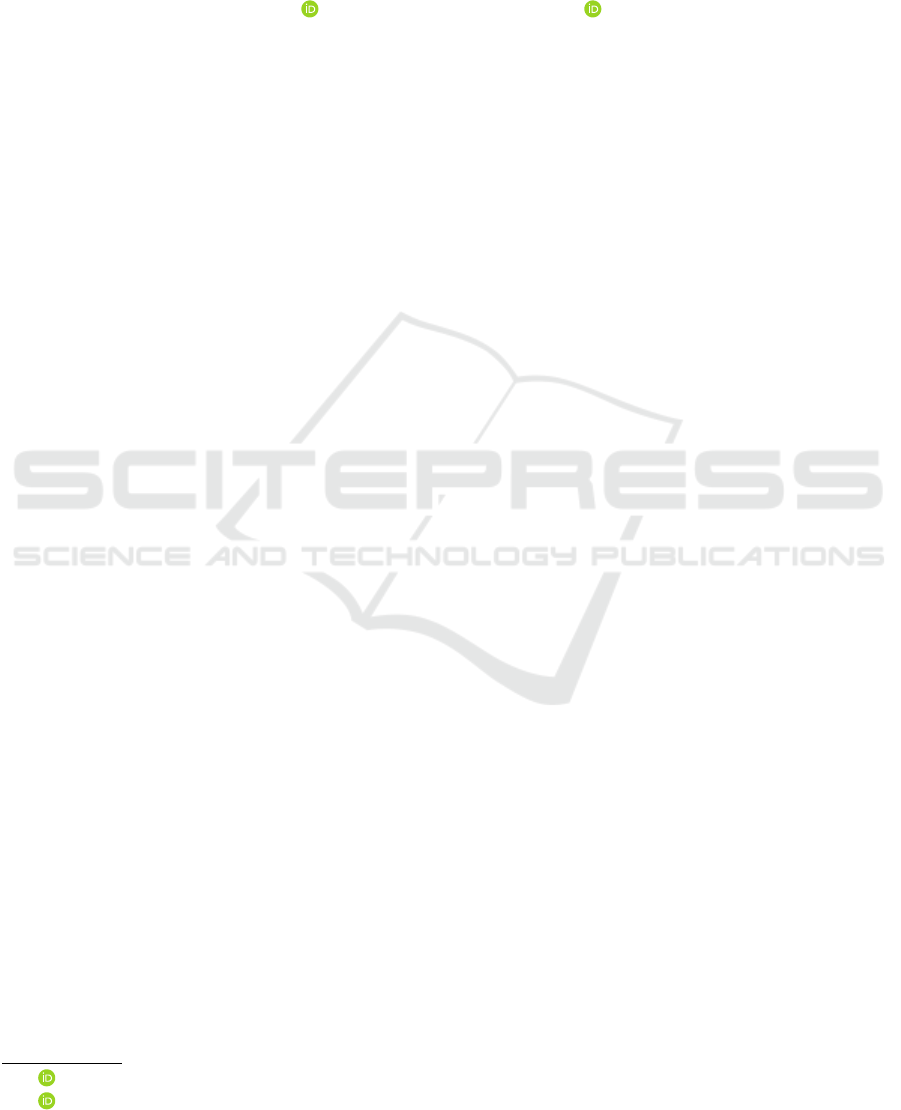
nior and junior developers, its user interface is shown
in Figure 1. The successive extension with project-
specific features across multiple research projects
eventually led to a significant accumulation of techni-
cal debt in the TEAM project (Bellotti et al., 2019): its
frontend was implemented using frameworks that are
now outdated (GWT and GXT), resulting in increas-
ingly poor maintainability, degraded performance,
and a lack of extensibility. The codebase grew com-
plex and inconsistent, documentation became out-
dated, essential developer tooling was no longer avail-
able, and framework updates became difficult. As a
result, both UX and DX suffered, with users facing
long loading times and unexpected behavior, while
developers struggled to introduce changes in a safe
and efficient manner, and it became nearly impossi-
ble to find new developers to work with the outdated
technologies.
WEBIST 2025 - 21st International Conference on Web Information Systems and Technologies
216
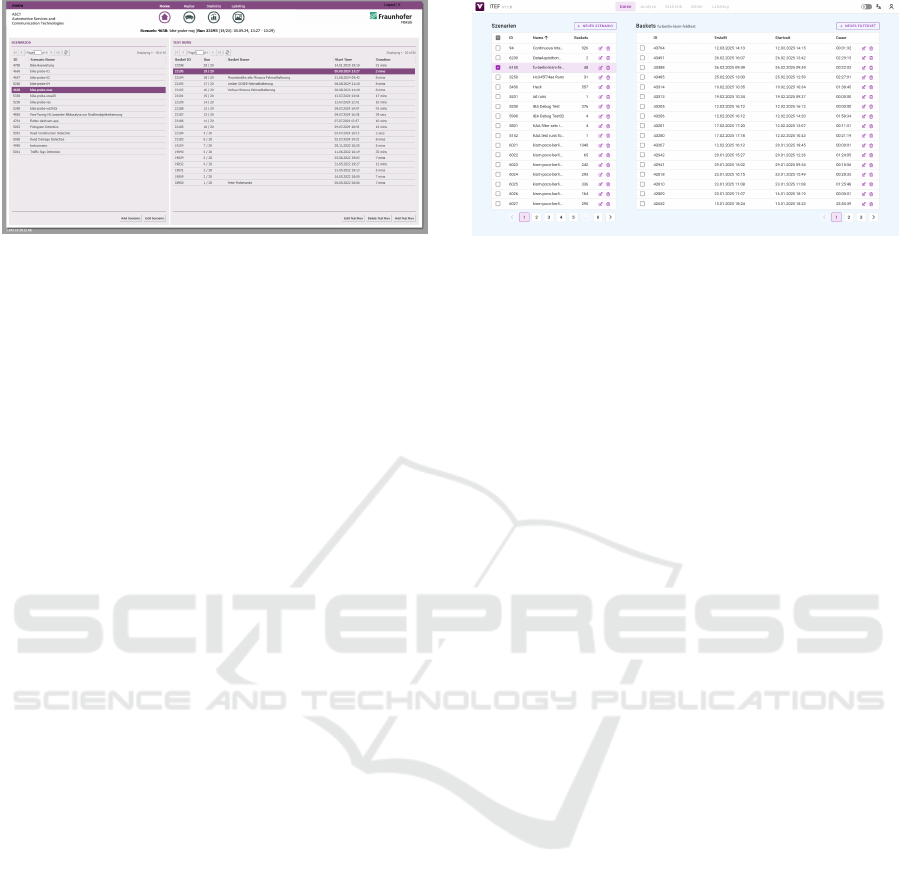
Figure 1: WebScE is the previous application, whose user
interface looks outdated and is slow, and whose underlying
code base is also outdated and difficult to maintain.
4.2 Development Process Taken
To address these issues during the KIS’M project
(Kwella et al., 2024) and add support for large-scale
bicycle data (Massow et al., 2024), the moderniza-
tion followed the approach described in Section 2.
The chosen strategy was a gradual migration using the
Strangler Fig pattern. Rather than refactoring the ex-
isting WebScE codebase, a new frontend application
— VueScE as shown in Figure 2 — was developed
from scratch using modern web technologies (Type-
Script, Vue 3, and Ant Design).
The process began with an initial requirements
elicitation phase, combining stakeholder interviews
and explanatory observation to identify core user
needs and pain points. Requirements were priori-
tized analytically, and only essential and high-priority
features were included in the initial scope. Non-
functional requirements focused on usability, effi-
ciency, maintainability, and extensibility.
For technology selection, the proposed structured
framework from Section 2.4 was applied, ensuring
that the chosen stack would maximize both UX and
DX. Vue 3 was selected as the application frame-
work due to its modern architecture, moderate learn-
ing curve, strong community support, and excellent
TypeScript integration. Ant Design was selected as
the UI library for its rich component set and theming
capabilities.
A modular architecture was adopted, grouping
features into independent modules to facilitate main-
tainability and incremental evolution. The integration
with the legacy WebScE was implemented via nav-
igation: users could seamlessly switch to remaining
legacy features directly from the new frontend, sup-
porting early adoption and continuous feedback.
Development followed a hybrid process model
(Water-Scrum-Fall (West, 2011)), combining plan-
driven phases (for foundational decisions and archi-
tecture) with agile, iterative feature development and
Figure 2: VueScE is the newly developed application. It
adopts the previous WebScE interface to facilitate a quick
transition for users, but is based on new, maintainable code.
regular stakeholder reviews. Automated tests, code
conventions and concise in-repository documentation
were established from the beginning.
4.3 Results
The effectiveness of the modernization was evaluated
using the methods described in Section 3, comparing
the legacy WebScE and the new VueScE.
User Experience: The HEART framework was
used to assess UX improvements. User satisfac-
tion surveys showed a substantial increase, with the
median satisfaction rising from 3.5 (WebScE) to 9
(VueScE) out of 10. Adoption and retention rates
for the new frontend were high for available fea-
tures. Task-based usability experiments demonstrated
significant improvements: users were able to com-
plete representative workflows up to 10 times faster in
VueScE, primarily due to reduced loading times and a
more intuitive interface. Objective performance mea-
surements confirmed that page load times and naviga-
tion were greatly reduced.
Developer Experience: Developer experience
was assessed via technical metrics and surveys. The
codebase health improved dramatically: the percent-
age of functions with high cyclomatic complexity
dropped below 1%, and the average complexity was
significantly lower in VueScE. Modern developer
tools and a simplified setup process increased produc-
tivity and reduced onboarding time. Build and release
cycles became much faster — production builds were
five times faster, and development builds enabled in-
stant feedback. Automated test coverage increased to
over 50% for unit tests, with meaningful E2E tests
supporting safe refactoring. Developer surveys re-
flected much higher satisfaction (from 3 to 8 out of
10). Importantly, the anticipated long-term maintain-
ability also began to manifest: two new developers
were able to efficiently familiarize themselves with
the code, successfully replace the originally selected
Leaving the Tech Debt Behind: How to Sustainably Improve the User and Developer Experience of a Legacy Frontend by Designing,
Building and Migrating to a New Web Client
217

UI library Ant Design by Vuetify, and expand the
modular structure with new features.
In summary, applying the described moderniza-
tion approach to the migration from WebScE to
VueScE resulted in substantial improvements to both
user and developer experience, validating the effec-
tiveness of the proposed process for legacy web ap-
plication renewal.
5 CONCLUSION
This paper presented a structured approach for mod-
ernizing legacy web applications, with the dual objec-
tive of improving both UX and DX. The approach was
grounded in current research and best practices, cov-
ering all stages from modernization strategy and re-
quirements engineering to technology selection, con-
struction, and evaluation. By applying this process
to the migration from WebScE to VueScE, the case
study demonstrated substantial improvements in both
UX and DX, as evidenced by quantitative and quali-
tative evaluation metrics.
The results show that modernization — when ap-
proached systematically — can successfully over-
come the typical challenges of legacy systems, such
as technical debt, poor maintainability, and degraded
user and developer satisfaction. The described mod-
ernization approach enabled not only short-term im-
provements in usability and productivity, but also laid
the foundation for a sustainable, long-term maintain-
able software system. Key success factors included
early and continuous stakeholder involvement, prior-
itization of requirements, use of modern and well-
supported technologies, modular and extensible ar-
chitecture, and the establishment of resilient testing
and documentation practices.
Applying this approach to other similar modern-
ization projects in addition to this case study would
be useful for a more comprehensive assessment.
5.1 Future Work
While this paper demonstrates substantial improve-
ments in UX and DX through systematic moderniza-
tion, several open questions and promising research
directions remain. First, the field of developer experi-
ence (DX) assessment is still in its infancy. Although
initial frameworks for quantitative measurement ex-
ist, further validation is required to ensure reliability
and generalizability across contexts. Developing new,
robust, and practical DX metrics, as well as investi-
gating their relationship to long-term productivity and
team satisfaction, represents an important avenue for
future work.
Second, quality assessment methods for code, test
suites, and documentation remain limited in scope
and tooling. Metrics such as cyclomatic complexity
and code coverage are widely used but have known
weaknesses. Future research should focus on creat-
ing more meaningful, language-agnostic metrics and
affordable tooling for code quality, mutation test-
ing, and especially documentation quality (Treude
et al., 2020). Automated, objective measurement ap-
proaches would benefit both scientific evaluation and
industry practice.
Third, the long-term effects of modernization ap-
proaches merit further longitudinal studies. While
initial results are promising, repeated UX and DX
assessments over time could provide valuable evi-
dence about the sustainability and maintainability of
the modernized solution, and the real impact of archi-
tectural and process decisions.
Fourth, the integration of artificial intelligence
(AI) into modernization processes is a promising but
largely unexplored field. AI could support decision-
making in requirements analysis, technology selec-
tion, or automated quality analyses. However, the
effective and responsible use of AI tools in modern-
ization workflows needs systematic investigation in
terms of technical capabilities and human oversight.
Finally, as modernization projects are often highly
context-specific, further case studies in diverse do-
mains and settings will help to generalize and re-
fine the proposed approach. Collaboration between
academia and industry can accelerate knowledge
transfer and the development of best practices for sus-
tainable software modernization.
ACKNOWLEDGEMENTS
Relevant parts of the literature review, the developed
modernization approach and the implementation of
the VueScE application originate from the thesis (We-
ber, 2024), which was supervised by the authors of
this paper. An AI tool was used to check the wording,
grammar, and spelling in this paper.
REFERENCES
Abu Bakar, H. K., Razali, R., and Jambari, D. I. (2020). A
guidance to legacy systems modernization. Interna-
tional Journal on Advanced Science, Engineering and
Information Technology, 10(3):1042–1050.
Althani, B., Khaddaj, S., and Makoond, B. (2016). A qual-
ity assured framework for cloud adaptation and mod-
ernization of enterprise applications. In 2016 IEEE
WEBIST 2025 - 21st International Conference on Web Information Systems and Technologies
218

Intl Conference on Computational Science and En-
gineering (CSE) and IEEE Intl Conference on Em-
bedded and Ubiquitous Computing (EUC) and 15th
Intl Symposium on Distributed Computing and Appli-
cations for Business Engineering (DCABES), pages
634–637.
Bellotti, F., Kopetzki, S., Berta, R., Paranthaman, P. K.,
Dange, G. R., Lytrivis, P., Amditis, A. J., Raffero, M.,
Aittoniemi, E., Basso, R., Radusch, I., and De Gloria,
A. (2019). Team applications for collaborative road
mobility. IEEE Transactions on Industrial Informat-
ics, 15(2):1105–1119.
Besker, T. et al. (2020). The influence of technical debt on
software developer morale. Journal of Systems and
Software, 167:110586.
Dodds, K. C. (2019). Write tests. not too many. mostly
integration. https://kentcdodds.com/blog/write-tests.
visited on Oct. 13, 2023.
D
´
ıaz-Oreiro, I. et al. (2019). Standardized questionnaires
for user experience evaluation: A systematic literature
review. In Proceedings 31.1, page 14.
Elberkawi, E. K. et al. (2016). Usability evaluation of
web-based systems: A new method and results. In
2016 International Conference on Engineering & MIS
(ICEMIS), pages 1–5.
Fagerholm, F. and M
¨
unch, J. (2012). Developer experience:
Concept and definition. In Proceedings of the Inter-
national Conference on Software and System Process
(ICSSP), pages 73–77.
Fowler, M. (2004). Strangler fig application. https:
//martinfowler.com/bliki/StranglerFigApplication.
html. visited on June 30, 2025.
Greiler, M., Storey, M.-A., and Noda, A. (2023). An ac-
tionable framework for understanding and improving
developer experience. IEEE Transactions on Software
Engineering, 49(4):1411–1425.
Hassenzahl, M. (2008). User experience (ux): Towards
an experiential perspective on product quality. In
Proceedings of the 20th Conference on l’Interaction
Homme-Machine, pages 11–15.
Heimicke, J., Chen, R., and Albers, A. (2020). Agile meets
plan-driven – hybrid approaches in product develop-
ment: A systematic literature review. In Proceed-
ings of the Design Society: DESIGN Conference, vol-
ume 1, pages 577–586.
ISO 9241-210:2019 (2019). Ergonomics of human-system
interaction — part 210: Human-centred design for
interactive systems. Standard, International Orga-
nization for Standardization. https://www.iso.org/
standard/52075.html.
Khadka, R. et al. (2014). How do professionals perceive
legacy systems and software modernization? Pro-
ceedings of the 36th International Conference on Soft-
ware Engineering, pages 36–47.
Kibanov, M., Erdmann, D. J., and Atzm
¨
uller, M. (2013).
How to select a suitable tool for a software devel-
opment project: Three case studies and the lessons
learned. In Software Engineering 2013 - Workshop-
band, pages 415–424.
Kotonya, G. and Sommerville, I. (1998). Requirements En-
gineering: Processes and Techniques. John Wiley &
Sons.
Kwella, B., Massow, K., Schaeufele, B., Radusch, I., Hark,
J. N., Ritter, C. N., Cao, B., Kleinert, M., Wille,
C., and Strop, O. (2024). Implementation and test-
ing of v2x-applications for near future urban traffic
in berlin. In 2024 IEEE International Conference on
Omni-layer Intelligent Systems (COINS), pages 1–5.
Ma, S.-P., Li, C.-Y., Lee, W.-T., and Lee, S.-J. (2022). Mi-
croservice migration using strangler fig pattern and
domain-driven design”. Journal of Information Sci-
ence and Engineering, 38(6):1285–1303.
Martin, R. C. (2008). Clean Code: A Handbook of Agile
Software Craftsmanship. Prentice Hall.
Massow, K., Maiwald, F., Thiele, M., Heimendahl, J.,
Protzmann, R., and Radusch, I. (2024). Crowd-based
road surface assessment using smartphones on bicy-
cles. In 2024 International Conference on Artificial
Intelligence, Computer, Data Sciences and Applica-
tions (ACDSA), pages 1–8.
Maxville, V., Armarego, J., and Lam, C. (2009). Apply-
ing a reusable framework for software selection. IET
Software, 3(5):369–380.
McCabe, T. (1976). A complexity measure. IEEE Transac-
tions on Software Engineering, SE-2(4):308–320.
Rodden, K., Hutchinson, H., and Fu, X. (2010). Measuring
the user experience on a large scale: User-centered
metrics for web applications. In Proceedings of the
SIGCHI Conference on Human Factors in Computing
Systems (CHI ’10), pages 2395–2398.
Sommerville, I. (2016). Software Engineering. Pearson,
10th edition.
Stevenson, C. and Pols, A. (2004). An agile approach to
a legacy system. In Extreme Programming and Agile
Processes in Software Engineering. XP 2004, pages
123–129.
Storey, M.-A. et al. (2021). Towards a theory of soft-
ware developer job satisfaction and perceived produc-
tivity. IEEE Transactions on Software Engineering,
47(10):2125–2142.
St
¨
ubing, H., Bechler, M., Heussner, D., May, T., Radusch,
I., Rechner, H., and Vogel, P. (2010). simtd: a car-to-
x system architecture for field operational tests [top-
ics in automotive networking]. IEEE Communications
Magazine, 48(5):148–154.
Treude, C., Middleton, J., and Atapattu, T. (2020). Beyond
accuracy: assessing software documentation quality.
In Proceedings of the 28th ACM Joint Meeting on Eu-
ropean Software Engineering Conference and Sym-
posium on the Foundations of Software Engineering,
ESEC/FSE 2020, page 1509–1512, New York, NY,
USA. Association for Computing Machinery.
Verhaeghe, B. et al. (2022). A hybrid architecture for the in-
cremental migration of a web front-end:. In Proceed-
ings of the 17th International Conference on Software
Technologies. ICSOFT, pages 101–110.
Weber, N. (2024). Improving user and developer experience
of a legacy web application. Master’s thesis, Technis-
che Universit
¨
at Berlin, Berlin, Germany.
West, D. (2011). Water-scrum-fall is the reality of agile for
most organizations today. https://www.forrester.com/
blogs/11-07-26-water scrum fall is the reality of
agile for most organizations today/. visited on Feb.
26, 2024.
Leaving the Tech Debt Behind: How to Sustainably Improve the User and Developer Experience of a Legacy Frontend by Designing,
Building and Migrating to a New Web Client
219
