
Measuring the Maturity of Knowledge-Based Management of Human
Resources
Sini Tenhovuori
a
and Nina Helander
b
Department of Management and Business, Tampere University, Korkeakoulunkatu 7, Tampere, Finland
Keywords: Knowledge-Based Management, Human Resources, Knowledge Management, HR-Analytics, Maturity of
HR-Analytics, Maturity of Knowledge-Based Management of Human Resources.
Abstract: In today’s volatile and demanding environments, organizations face increasing pressure to balance employee
well-being (Kim & Cho, 2024). Given that personnel expenses often constitute the largest share of
organizational budgets (Kuntaliitto, 2024), knowledge-based human resource management (KHRM) becomes
essential for organizations to survive and remain competitive. The purpose of this research was to investigate
the factors influencing the development of knowledge-based management of human resources and to develop
an assessment model for evaluating the maturity level of knowledge-based management of human resources.
The developed assessment model was tested in Finnish public sector context. The model complements
existing maturity frameworks by operationalizing maturity dimensions into measurable statements, enabling
organizations to assess not only structural readiness but also perceived satisfaction and cultural alignments.
Measuring employee satisfaction as part of determining maturity levels is important, as previous studies have
shown that employee satisfaction supports the adoption of new ways of working in organizations. In addition,
this model can be used to measure the realization of the benefits achieved with KHRM in the organization.
This model has dual focus on objective capability and subjective experience, and it offers a novel contribution
to the maturity model literature and supports more holistic HR development strategies.
1 INTRODUCTION
The advancement of technology has increased the
amount of information within organizations, thereby
making the role of knowledge-based management
(KBM) increasingly important (Jääskeläinen et al.,
2022). According to Helander et al. (2020) KBM can
be defined as a holistic and systematic process that
integrates technology and human aspects to enable
dialogic management in organizations. Many
organizations are heavily investing in the
development of KMB by allocating both employee
work effort and financial resources (Sen, 2024). It is
not uncommon for organizations to utilize separate
information systems to manage customer, personnel,
and financial data and processes (Chuma, 2020).
From the perspective of KBM this presents a
significant development challenge, as supporting
architectures and data governance must be
established for each system. As a result, organizations
a
https://orcid.org/0009-0003-4258-7241
b
https://orcid.org/0000-0003-2201-6444
often must prioritize which internal domains receive
focus in terms of KBM.
Many maturity models assess the overall maturity
level of KBM (see e.g. Hsieh et al., 2009;
Jääskeläinen et al., 2022; Khatibian et al., 2010; Pee
& Kankanhalli, 2009). This can lead to uneven
development across different organizational domains.
According of Finnish Local and Regional Authorities,
in Finnish public organizations, personnel expenses
often account for approximately 40–50% of the cost
structure (Kuntaliitto, 2024). At the same time, the
provision of public services relies on a skilled and
sufficient workforce. By measuring the maturity of
KBM of human resources separately, a more
comprehensive picture of its implementation can be
obtained, as it is a vital area for the functioning of the
organization
The purpose of this research is to investigate the
factors influencing the development of knowledge-
based management of human resources (KHRM) and
484
Tenhovuori, S. and Helander, N.
Measuring the Maturity of Knowledge-Based Management of Human Resources.
DOI: 10.5220/0013746100004000
Paper published under CC license (CC BY-NC-ND 4.0)
In Proceedings of the 17th International Joint Conference on Knowledge Discovery, Knowledge Engineering and Knowledge Management (IC3K 2025) - Volume 2: KEOD and KMIS, pages
484-491
ISBN: 978-989-758-769-6; ISSN: 2184-3228
Proceedings Copyright © 2025 by SCITEPRESS – Science and Technology Publications, Lda.

to develop a maturity model for evaluating the
maturity level of KHRM. The research question is:
How the maturity level of KHRM can be measured?
In developing the model, the process phases for
designing maturity models suggested by de Bruin et
al. (2005) were followed.
2 THEORETICAL
BACKGROUND
2.1
Knowledge-Based Human Resource
Management
(KHRM)
The core components of human resource
management (HRM) are considered the most critical
elements in driving organizational effectiveness
(Delaney & Huselid, 1996). KHRM is related to
every element of HRM. It leverages analytics to
transform employee-related data into actionable
insights and organizational knowledge. This
approach enables decision-makers to uncover
patterns and understand the underlying causes and
effects of employee-related phenomena based on
systematically collected HR data (Kaboor et al.,
2012). KHRM seeks to promote decision-making that
is efficient, impartial, and grounded in rational
analysis (Margherita, 2022).
Ferreira et al. (2022) show in their literature
review that KMB processes – such as the creating,
sharing and application of knowledge – support the
different dimensions of HRM. In particular, the
individual and professional development of
employees benefits from both creation and sharing of
knowledge. The preservation and application of
knowledge, on the other hand, strengthen
organizational and strategic development, while the
acquisition and evaluation of knowledge can support
technological and cultural renewal. (Ferreira et al.,
2022)
KHRM processes must be designed so that they
strengthen the flow of information in the
organization. This requires the acquisition,
assimilation, transformation and sharing of
information. (Donate & de Pablo, 2015). KHRM is
most effective, when it is part of the organization’s
strategy and organizational culture (Le & Ha, 2024).
It enables the development of a significant
competitive advantage for the organizations by
supporting organizational learning and innovations
(Al-Qaralleh & Atan, 2022) and it can also contribute
to the growth of internal trust, mutual respect,
employee dedication and a sense of belonging
(Soliman & Spooner, 2000).
In essence, KHRM aligns closely with the
evolution of human resource analytics (HRA), which
has matured from basic administrative reporting to
advanced diagnostic and predictive capabilities. As
highlighted by Margherita (2022), HR analytics now
encompasses a wide range of enablers, applications,
and value drivers that support strategic decision-
making. When embedded within organizational
processes and supported by digital technologies and
artificial intelligence, KHRM can transform HR
functions into powerful engines of organizational
agility and innovation. This integration not only
enhances employee development but also strengthens
the organization’s ability to adapt and thrive in
dynamic environments. (Margherita, 2022.)
2.2 Maturity Models (MM)
According to Kucińska-Landwójtowicz (2019),
maturity refers to “the extent to which a specific
process is defined, managed, measured, controlled,
and effective”, and maturity models help
organizations to identify their current state and guide
their progression toward higher levels. In other
words, maturity models refer to structured
frameworks for assessing the different development
levels of organizational capabilities, processes, or
systems. They provide structured description of
different stages of maturity. (Kucińska-
Landwójtowicz, 2019.) Several maturity models have
been developed to measure the maturity level of
KBM, but almost none of them are suitable for
measuring the maturity level of KHRM (Hsieh et al.,
2009; Jääskeläinen et al., 2022; Khatibian et al., 2010;
Pee & Kankanhalli, 2009; Serrat, 2023).
In the context of HRM and HRA, these models
help organizations evaluate current state, identify
gaps, and define pathways for strategic
advancements. Traditional maturity models, such as
the Capability Maturity Model (CMM), have been
adapted to HR contexts to assess areas like strategic
alignment, data governance and analytics
capabilities. (Marler & Boudreau, 2017; Ulrich &
Dulebohn, 2015.) A recent influential framework in
the field of HR analytics is the HR Analytics Maturity
Model (HRAMM), developed by Rigamonti et al.
(2024). This model outlines four key domains –
strategy, data, technology, and people – each of which
is further divided into specific dimensions that
together describe an organization’s overall capability
to utilize HRA effectively. HRAMM has broader and
more integrated perspective than earlier maturity
models and it incorporates not only technical and
process-related aspects but also highlights the
importance of organizational culture, leadership
commitment, and employee engagement as essential
enablers of maturity.
Measuring the Maturity of Knowledge-Based Management of Human Resources
485
3 THE PROPOSED MATURITY
MODEL FOR KHRM
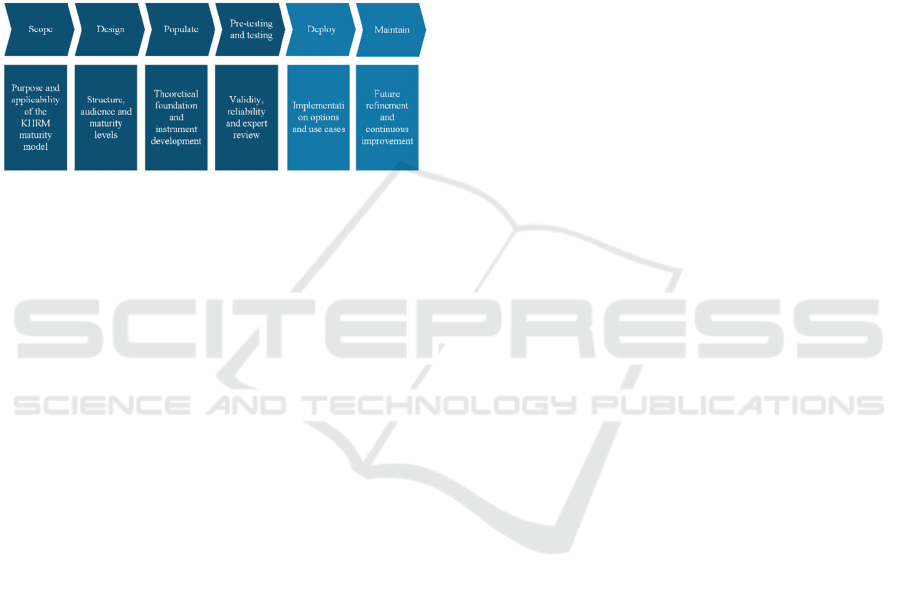
The development of this maturity model is illustrated
in Figure 1, which visualizes the six phases of
designing a maturity model following the framework
by de Bruin et al (2005). Each phase is described
below in the context of developing a maturity model
for KHRM. The lighter-coloured phases in the figure-
Deploy and Maintain- represent steps that will guide
the future refinement and implementation of the
model (Figure 1).
Figure 1: Developing KHRM maturity model (modified
from de Bruin et al. 2005).
In the first phase the scope of this model was
determined. The purpose of this model is to provide a
description of the maturity level of KHRM. This
model is not tied only to organizations in a specific
industry, but it is suitable only for the measurement
of KHRM maturity level. The first phase is followed
by design phase, which includes designing the
model’s architecture and audience, choosing
application methods and defining maturity levels (de
Bruin et al., 2005). The audience of this model is
primarily HR professionals, organizational
developers and strategic decision-makers. The
suggested model has staged maturity structure,
consisting of five cumulative levels. Each level builds
upon the capabilities of the previous one. The levels
are initial, emerging, defined, advanced and strategic.
In the third phase the content of the maturity
model was defined. The goal was to ensure that the
model captures all the essential capabilities and
practices required for effective knowledge-based
management of human resources, while also enabling
meaningful assessment and improvement. To do so, a
systematic literature review was made. The results
provided a theoretical foundation of the model, and
they have been published in Tenhovuori (2024).
Based on the results of the review a survey instrument
consisting of 55 questions was designed. The
questions were divided into five sub-areas:
organizational culture and strategy, resources,
information needs, information acquisition and
storage, HR analytics, HR metrics and information
products, and the use and benefits of HR information.
All the questions were evaluated on a Likert scale of
1 to 5, where 1 = strongly disagree and 5 = completely
agree. In addition, it was possible to answer the
statements "I don't know". The survey was designed
to be distributed either electronically or through
structured interviews.
In the testing phase, the validity, reliability and
usability of the HR knowledge maturity model was
evaluated. The developed maturity model was first
assessed by a steering group of 9 experts in field of
knowledge-based human resources management.
The pre-testers for the questionnaire were selected
based on their work tasks and they worked in several
different organisations. The purpose of the pre-testing
was to ensure that the content of the maturity model
is easy to understand and that there are no
contradictions in the separate statements. The pre-
testers were also asked whether they thought the
model was missing anything essential. Based on the
pre-testing phase, the maturity model was redefined
by harmonizing the terminology used. In addition,
several statements were clarified-particularly to
better anchor them in the context of HR management
and HR data.
After the pre-testing, the actual testing phase of
the maturity model was carried out. Choice of
research method has a significant impact on the
reliability and validity of the research (Anders, 2012).
The data for knowledge-based management maturity
measurements are often collected with the help of
electronic questionnaires (Becker et al., 2009;
Khabatian et al., 2010). However, when using an
electronic questionnaire, there is a risk that
respondents do not understand the questions and
therefore answer "I don't know" or, in the worst case,
do not answer at all. Although the maturity models
of knowledge management are often surveys; in this
study the researcher ended up conducting interviews.
The choice of interview method was particularly
supported by the desire to ensure that the respondents
understood the questions correctly and could give
also their development ideas to specific questions.
Interviews can be divided into structured, semi-
structured and unstructured (Doody & Noonan, 2013;
Rowley, 2012). In a structured interview, all
participants are asked the questions in the same order.
This reduces the subjectivity of the researcher but
does not allow for additional questions (Doody &
Noonan, 2013). As the aim was to develop a tool that
can be used to determine the maturity level of
KHRM, the interviews were conducted in a structured
manner and the answers were collected in numerical
form.
The data was analysed using quantitative
methods using SPSS for MAC. The data is described
KMIS 2025 - 17th International Conference on Knowledge Management and Information Systems
486
using frequencies, percentages, averages, standard
deviation, medians and quartiles. Average sum
variables were formed from the maturity of
knowledge-based management of human resources,
its five dimensions and the satisfaction with the
knowledge-based management of human resources.
The reliability of the sum variables was examined
using Cronbach's alpha value. The results of this
testing phase analysis are presented in detail in
section four.
The main purpose of this maturity model is to
provide a structured description of a current state of
KHRM within an organization. It enables
organizations to identify the maturity level of
different KHRM dimensions and to target
development actions where they are most needet.
Furthermore, the model allows organizations to
assess how the benefits of KHRM are realized in
practice and to evaluate the impact of development
efforts over time. In this paper the model has been
tested in a limited setting and these results are opened
in next section four. However, further development is
required to enhance its generalizability and precision.
In the next phase, the model will be tested using an
electronic questionnaire to reach a broader group of
respondents. This will allow for more robust
statistical validation and a more detailed description
of maturity test.
The qualitative data collected through transcribed
interviews will also be used to refine the model.
Special attention will be given to statements that
required clarification during interviews. A more
granular and validated description of the maturity
levels will require a larger sample size. This will
support the model’s continued evolution and its
practical utility in diverse organizational contexts.
4 RESULTS OF TESTING THE
MODEL
4.1 Demographics of Respondents
Testing of the model was carried out in a Finnish
public sector organisation with a total of 755
employees. The interviewees were selected based on
the following admission criteria: work in knowledge
management positions, work as a manager or
manager, or work in human resources management
tasks. A total of 20 employees were interviewed. It
was considered more important than the large number
of interviewees that the interviewees work in
knowledge-based management, management,
managerial or human resources management
positions. The interviews were conducted remotely
using Microsoft Teams, and the interviews were
transcribed using the same application. The
interviews were recorded and transcribed.
Most of the interviewees worked in managerial
positions (n=9) or in leadership positions (n=5) and
most of them had worked for the organization for five
years or more (n=12). Only a quarter of the
interviewees did not work as a supervisor (n=5). Most
of the interviewees had a master’s degree (n=18). The
interviewees were on average 46 years old (MD 45,5,
Q1 43, Q3 53.75).
Composite score variables (Cheung et al., 2024)
were formed of the organizational culture and
strategy, resources and employee capabilities, HR-
information needs, HR information products and HR
analytics, knowledge usage and benefits achieved and
satisfaction with knowledge-based management of
human resources. The reliability of the variables was
examined using Cronbach's alpha value (Gagnon et
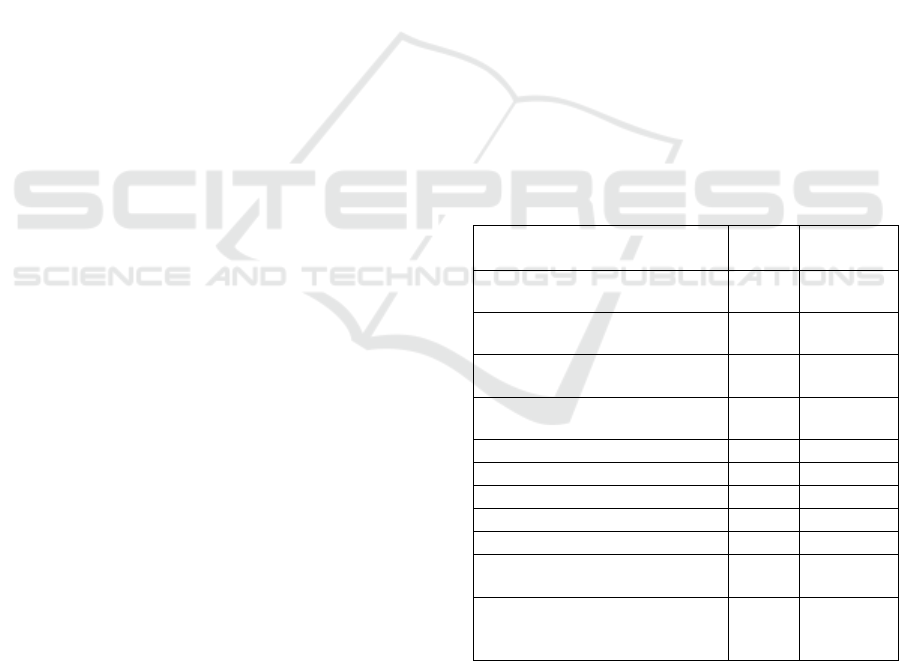
al., 2017). Table 1 summarizes the results of
statistical evaluation of the model. Cronbach’s alphas
varied between 0,492 and 0,889. Therefore,
composite score variables were not formed among
those variables with lowest Cronbach’s alphas
(availability and collection of HR data, organization
and storage of HR data and integration of HR data).
Those variables were analysed as independent
variables for this measurement.
Table 1: Statistical testing of the survey instrument.
Perspective N of
items
Cronbach’
s Alpha
Organizational culture and
strateg
y
12 0,753
Resources and employee
ca
p
abilities
6 0,677
Availability and collection of
HR data
3 0,508
Organization and storage of HR
data
2 0,492
Integration of HR data
3 0,648
HR information needs
4 0,766
HR analytics
3 0,738
Level of HR-analytics
3 0,741
HR-metrics
4 0,766
Utilisation of HR-data and
b
enefits achieve
d
10 0,889
Satisfaction with knowledge-
based management of human
resources
5 0,778
4.2 Organizational Culture and
Strategy
Organizational culture and strategy were moderately
realised in the organization (Md= 3,4). Of the areas of
organisational culture and strategy, the best
Measuring the Maturity of Knowledge-Based Management of Human Resources
487
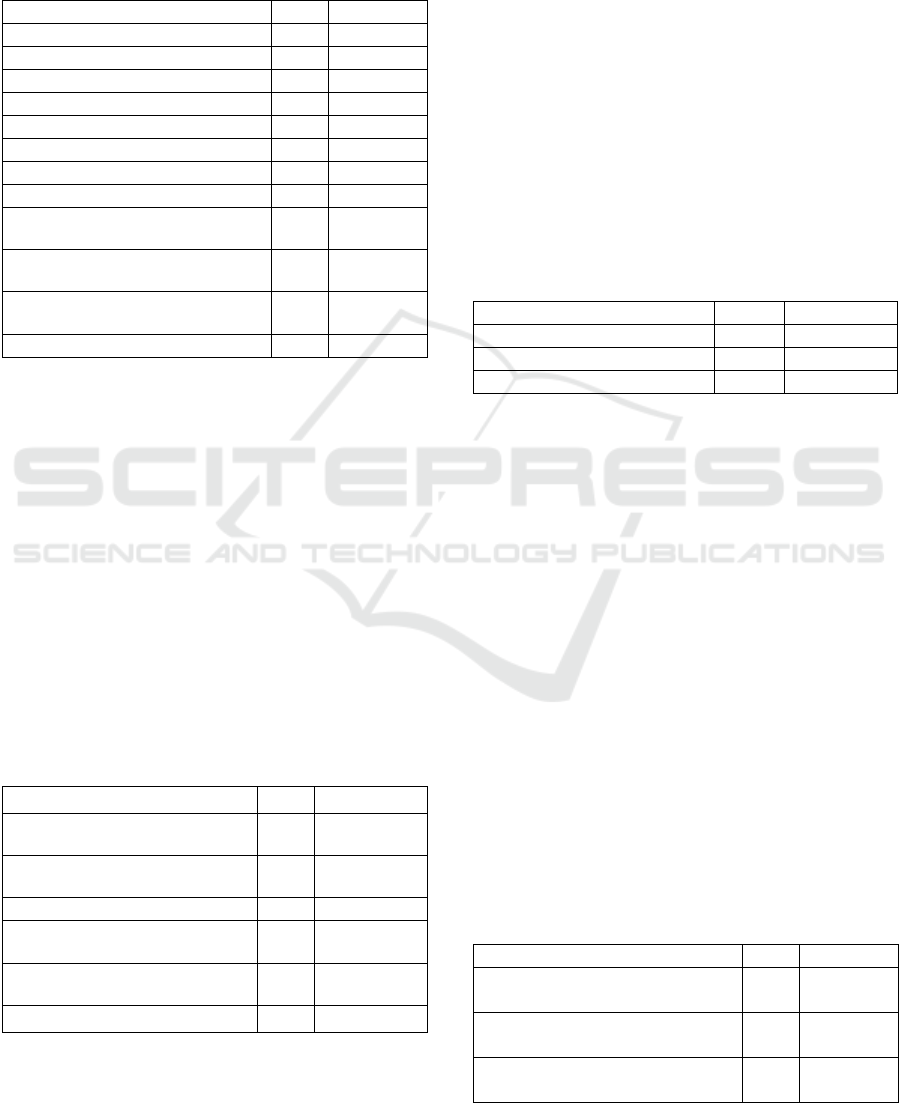
realisation was the positive attitude towards the
KHRM and the support of executives for the
development of KHRM and the assigned roles of
KHRM (Table 2).
Table 2: Organizational culture and strategy.
Perspective Md Q
1
-Q
3
KHRM and strategy
4 2.00-4.00
KHRM and management system
4 2.00-4.00
KHRM objectives
4 2.75-4.00
KHRM roles
5 4.00-5.00
KHRM development plan
4 3.75-4
KHRM and ICT architecture
3 2.00-4.00
Executive commitment
4 4.00-5.00
Supervisors encourage
2 2.00-4.00
Executive support for KHRM
development
5 4.00-5.00
Employees participate in KHRM
development
4 2.00-4.00
End-user participation in KHRM
develo
p
ment
4 4.00-5.00
Attitude towards KHRM
5 4.00-5.00
4.3 Resources
The interviewees estimated the resources of KHRM
to be rather inadequate (MD 2,5, Q1 2,33, Q3 3,13).
The interviewees estimated that competence related
to KHRM is particularly poor. The employees do not
understand what knowledge management of human
resources means, and the organization does not offer
training related to knowledge management of human
resources. The interviewees also estimated that the
knowledge management tools of human resources are
poorly used. Although the organization has a team
responsible for the implementation and development
of KHRM, the resources were estimated to be
sufficient to process data but not to utilize it (Table 3).
Table 3: Resources.
Perspective Md Q
1
-Q
3
Employees understanding
re
g
ardin
g
KHRM
2 1.75-2.00
Capability to utilize KHRM
tools
2 2.00-3.00
Existence of KHRM training
1 1.00-4.00
Sufficient resources for data
p
rocessing
4 2.25-4.00
Sufficient resources for data
utilization
2 2.00-4.00
KHRM team in organization 5 4.25-5.00
4.4 HR Data
The interviewees estimated that the availability of HR
data is quite poor (Md 2, Q
1
1, Q
3
3,5) and the HR
data collection processes are not automated (Md 1,
Q
1=
1, Q
3
=2) or efficient (Md 1, Q
1=
1, Q
3
=2). HR data
has not been integrated to the organization's data lake
(Md 1, Q
1=
1, Q
3
=), but common basic data for the
most important HR entities is available (Md 4, Q
1=
2,
Q
3
=4).
The interviewees estimated that the integration of
HR data is not systematic or controlled, and that HR
data is not consistent between different systems. The
interviewees estimated that HR data does not enable
real-time reporting (Table 4). Overall, the integration
of HR data was estimated to be unavoidable (Md
1.33).
Table 4: Integration of HR Data.
Perspective
Md
Q
1
-Q
3
Integration of HR data 2 1.00-2.00
HR data consistency 1 1.00-2.00
Real-time reporting capability 2 1.00-2.00
4.5 HR Information Needs and HR
Analytics
According to the interviewees the organization
mainly utilizes electronic reports (Md 4, Q
1
=4, Q
3
=5)
and visual analytics (Md 4, Q
1
=2, Q
3
=4) in HR
reporting. The organization's practices enable a good
level of granularity when examining HR data (Md 4,
Q
1
=2, Q
3
=4) However, drilling down into the HR data
is only moderately well supported (Md 3,5, Q
1
=1,75,
Q
3
=4). There is no dashboard solution that includes
HR data in the organization (Md 2, Q
1
=1, Q
3
=2).
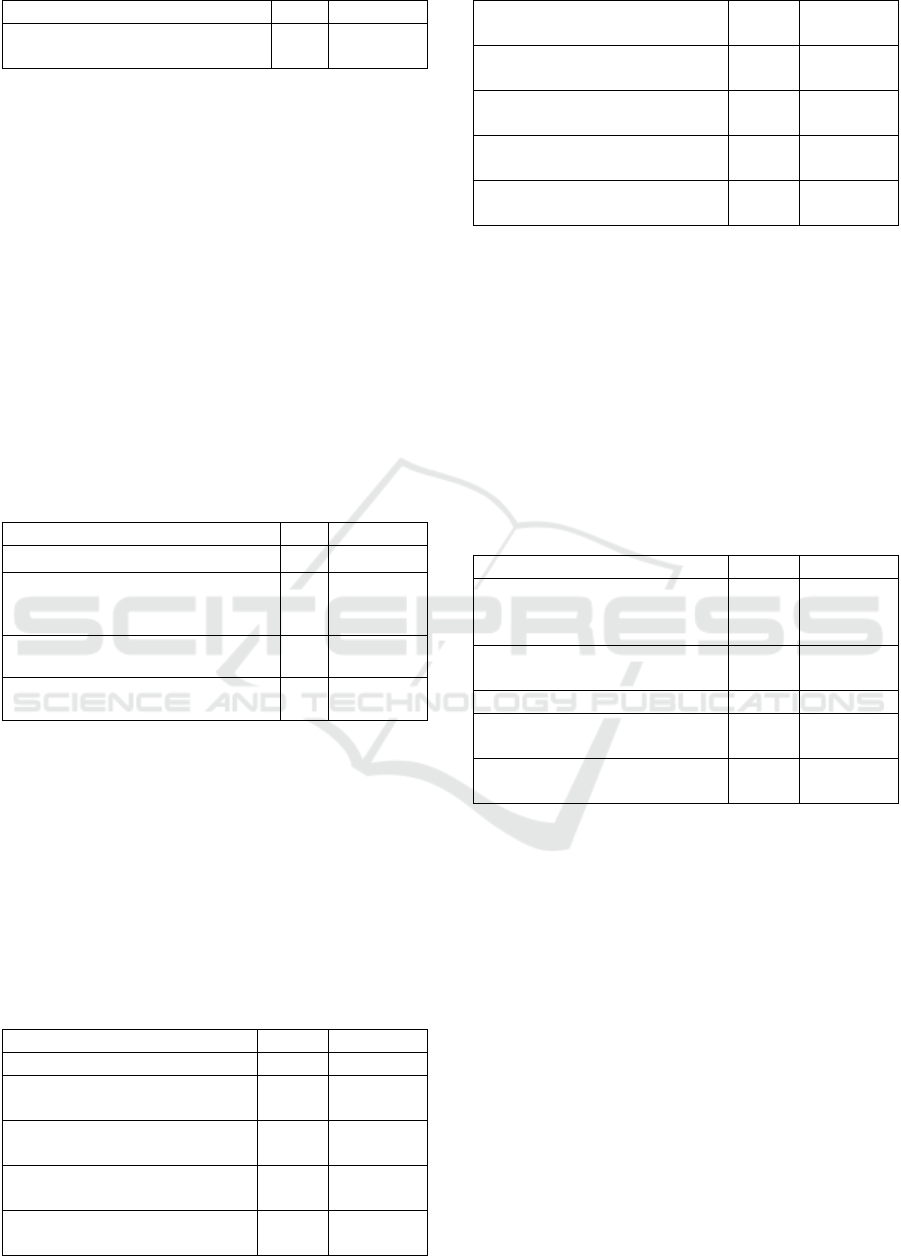
Overall, the level of implementation of HR analytics
in the organization was quite low (M 2,58, Sd 1,18)
(Table 6). The interviewees estimated that all levels
of HR analytics are implemented poorly or fairly
poorly. However, based on the responses, it can be
assumed that the organization uses some descriptive
analytics (Md 2,50, Q
1
=2, Q
3
=4). Overall, the level
of HR analytics was relatively low (M 2, Sd 0,84)
(Table 5).
Table 5: HR analytics and the level of HR-analytics.
Perspective Md Q
1
-Q
3
Descriptive HR analytics is
utilized
2,50 2,00-4,00
Explanatory HR analytics is
utilized
2 1,00-2,00
Viewing HR data at different
levels of accuracy
4 2,00-4,00
KMIS 2025 - 17th International Conference on Knowledge Management and Information Systems
488
Drilling down into HR data 3,50 1,75-4,00
The existence of dashboard that
contains HR information
2 1,00-2,00
The interviewees assessed that the definition of
HR metrics based on strategic objectives was
implemented at a moderate level in the organization
(Md 3, Q
1
=2,00, Q
3
=3,00). Similarly, the
requirements of different stakeholder groups and
management levels were moderately considered in
the design of the metrics (Md 3,00, Q
1
=2,00,
Q
3
=4,00). Respondents indicated that the analysis and
modelling of relationships between measurable HR
aspects were carried out rather weakly (Md 2,
Q
1
=1,00, Q
3
=3,00), and that the examination of HR
metrics alongside other indicators, such as those
describing customer data, was also implemented
rather weakly (Md 3, Q
1
=2,00, Q
3
=4,00. Overall, the
framework describing HR information needs and
metrics was realized rather weakly (Md 2,5, Q
1
=1,25,
Q
3
=2,75) (Table 6).
Table 6: HR metrics.
Perspective Md Q
1
-Q
3
HR metrics and strategic objectives
3 2,00-3,00
HR metrics and requirements of
stakeholders and management
levels
3 2,00-4,00
Analysis and relationships between
HR as
p
ects
2 1,00-3,00
Examination of HR-metrics
alongside other indicators
3 2,00-4,00
4.6 Utilization of HR Data and Benefits
Achieved
Overall, the benefits and utilization of KHRM were
realized to a rather limited extent (M 2,41, Sd 0,88).
None of the areas of the utilization of HR data and the
benefits achieved were realized even moderately. Of
all the areas, the interviewees estimated the
improvement in capability management through
KHRM to be the weakest (Table 7).
Table 7: Utilization of HR Data and Benefits Achieved.
Perspective Md Q
1
-Q
3
Decisions are guided by KHRM 2 1.00-2.00
Information can reveal
operational issues
2,50 2,00-4,00
HR metrics are used to monitor
resource utilization
2 1,50-4,00
Resource allocation is justified
with data
2,50 2,00-4,00
KHRM supports the quality of
decision-making
2 1,75-3,00
KHRM increases employee
well-being
2 2,00-4,00
KHRM improves resource
allocation
2 2,00-4,00
KHRM improves capability
management
1 1,00-2,00
KHRM improves performance
management
2 1,00-4,00
KHRM enhances employee
retention and attractiveness
2 1,00-4,00
4.7 Satisfaction with Knowledge-Based
Management of Human Resources
Overall, the interviewees were quite dissatisfied with
the current level of HR knowledge management in the
organization (M 2,46, Sd 0,80). The interviewees
estimated that they were most satisfied with the
organisation and resources of KHRM (Md 4,
Q
1
=2,25, Q
3
=4,00). Satisfaction with how HR data is
used to support decision-making, and management
was the weakest (Md 2, Q
1
=2,00, Q
3
=2,80) (Table 8).
Table 8: Satisfaction with KHRM.
Perspective Md Q
1
-Q
3
Satisfaction with KHRM
strategy and organizational
culture
2 2,00-4,00
Satisfaction with KHRM
resources
4 2,25-4,00
Satisfaction with HR data 2 2.00-3.00
Satisfaction with HR analytics
and HR metrics
2 2.00-4.00
Satisfaction with utilization of
HR data
2 2,00-2,80
5 DISCUSSION AND
CONCLUSIONS
This study contributes to the field of KHRM by
developing and testing a maturity model tailored to
the needs of public sector organizations. The model
provides a structured framework for assessing the
maturity level of KHRM across five dimensions:
organizational culture and strategy, resources, HR
data, HR analytics and the utilization and benefits of
HR knowledge. The results indicate that while
strategic alignment and executive support for KHRM
are relatively well established, significant gaps
remain in data integration, analytics capabilities and
employee competence.
Although various KM maturity models have been
presented in literature, only a few of those are suitable
Measuring the Maturity of Knowledge-Based Management of Human Resources
489

for measuring the maturity level of KHRM (Hsieh et
al., 2009; Jääskeläinen et al., 2022; Khatibian et al.,
2010; Pee & Kankanhalli, 2009; Serrat, 2023). The
aim of the new model is to create a tool that allows
public sector organisations to measure the maturity
level of KHRM in a practical way while assessing the
realisation of the benefits achieved by KHRM in the
organisation. Based on previous literature, employee
satisfaction strengthens the rooting of new operating
models in organizations (Vieira et al., 2023; Voordt
& Jensen, 2023). With the help of this maturity
model, it is possible for organizations to examine the
level of maturity of the KHRM, but also the
satisfaction experienced by the employees. Thanks to
this feature, organizations can, in addition to
developing HR systems, for example, identify areas
where organizational culture needs to be supported
and developed.
In this study, a practical self-assessment model
was tailored primarily in the context of the Finnish
public sector. However, based on the comments
received during the preliminary testing, the model can
also be used in organizations operating in other
sectors, and this is one interesting idea for further
development. The model complements existing
frameworks by operationalizing maturity dimensions
into measurable statements, enabling organizations to
assess not only structural readiness but also perceived
satisfaction and cultural alignments. Measuring
employee satisfaction as part of determining maturity
levels is important, as previous studies have shown
that employee satisfaction supports the adoption of
new ways of working in organizations (Vieira et al.,
2023; Voordt & Jensen, 2023). In addition, this model
can be used to measure the realization of the benefits
achieved with KHRM in the organization. This model
has dual focus on objective capability and subjective
experience, and it offers a novel contribution to the
maturity model literature and supports more holistic
HR development strategies.
Despite its contributions, this study has
limitations. The maturity model developed in this
study needs further development, especially in those
areas where Cronbach's alpha does not reach the
target value of 0.7. The qualitative data collected in
the interviews will be utilised in the development of
these areas. Due the rather small sample of
interviewees further testing with larger sample should
also be done in the future. It is also relevant to test
how the model works when the data is collected using
an electronic questionnaire instead of interviews.
Additionally, longitudinal studies could explore how
maturity levels evolve over time and how they
correlate with organizational performance indicators.
ACKNOWLEDGEMENTS
The first author of this paper gratefully acknowledges
the financial support received from Tietojohtamisen
verkosto ry for participation in the KMIS conference,
including travel and accommodation expenses. This
support made it possible to present and discuss the
findings of this study with an international academic
audience.
REFERENCES
Anders, A. In: Lesley, A. (2012). “Designing and doing
survey research”. London: Sage
Becker, J., Knackstedt, R. and Pöppelbuß, J., (2009)
Developing maturity models for IT management – a
procedure model and its application, Business &
Information Systems Engineering, s. 213–222.
Cheung, G. W., Wang, C., & Chan, D. (2024).
Measurement reliability and validity in organizational
research: Advances in composite score modeling.
Journal of Applied Psychology, 109(2), 215–230.
https://doi.org/10.1037/apl0001056
Chuma. L. (2020) The Role of Marketing Information
Systems on Business Firms Competitiveness:
Integrated Review Paper from Business Perspective.
Journal of Marketing and Consumer Research. Vol. 72.
de Bruin, T., Rosemann, M., Freeze, R. & Kulkarni, U.
(2005), “Understanding the main phases of developing
a maturity assessment model”, Proceedings of 16
th
Australasian Conference on Information Systems
(ACIS), Sydney, November 30-December 2.
Delaney, J. T., & Huselid, M. A. (1996). The impact of
human resource management practices on perceptions
of organizational performance. Academy of
Management Journal, 39(4), 949–969,
https://www.jstor.org/stable/256718
Donate, M.J. & de Pablo, J.D.S. (2015), “The role of
knowledge-oriented leadership in knowledge
management practices and innovation”, Journal of
Business Research, Vol. 68 No. 2, pp. 360-370.
Doody, O., & Noonan, M. (2013). Preparing and
conducting interviews to collect data. Nurse researcher,
20(5).
Ferreira, B., Curado, C., & Oliveira, M. (2022). The
contribution of knowledge management to human
resource development: A systematic and integrative
literature review. Journal of the Knowledge Economy,
13, 2319–2347. https://doi.org/10.1007/s13132-021-
00815-9
Gagnon, R. J., Stone, G. A., & Garst, B. A. (2017). Beyond
composite scores and Cronbach’s alpha: Advancing
methodological rigor in recreation research. Journal of
Outdoor Recreation, Education, and Leadership, 9(4),
323–327. https://js.sagamorepub.com/jorel/article/
view/7959
KMIS 2025 - 17th International Conference on Knowledge Management and Information Systems
490

Helander, N., Ahonen, O., Houhala, K., & Jääskeläinen, A.
(2020). Tiedolla johtaminen julkisella sektorilla:
käytännön tapauksia eri hallinnon aloilta. Focus localis,
48(3), 22–42. (In Finnish)
Hsieh, P.J., Lin, B. & Lin, C., (2009). The construction and
application of knowledge navigator model (KNMTM):
An evaluation of knowledge management maturity.
Expert Systems with Applications 36, 4087–4100.
Jääskeläinen, A., Sillanpää, V., Helander, N., Leskelä, R.-
L., Haavisto, I., Laasonen, V. & Torkki, P., (2022).
Designing a maturity model for analyzing information
and knowledge management in the public sector. VINE
Journal of information and knowledge management
systems 52, 120–140.
Kaboor, B. & Sherif, J. (2012). Human resources in an
enriched environment of business intelligence.
Kybernetes. 41(10), 1625–1637.
Khatibian, N., Hasan, T. & Jafari, H. A. (2010),
Measurement of knowledge management maturity level
within organizations, Business Strategy Series, Vol. 11,
No. 1, s. 54-70.
Kim T. & Cho W. (2024) Employee Voice Opportunities
Enhance Organizational Performance When Faced with
Competing Demands. Review of Public Personnel
Administration. Vol. 44, No. 4, pp 713-739.
https://doi.org/10.1177/0734371X231190327
Kucińska-Landwójtowicz, A. (2019). Organizational
maturity models – Review and classification. Central
Bohemia University Proceedings, 7, 258–265.
https://doi.org/10.12955/cbup.v7.1360
Kuntaliitto (2024). Kuntatalouden tilastot. Retrieved from
https://www.kuntaliitto.fi/talouselinvoima/kuntataloud
en-tilastot
Margherita A. (2022). Human resources analytics: a
systematization of research topics and directions for
future research. Human Resource Management
Review, 32 (2022), 100795.
Marler, J. H., & Boudreau, J. W. (2017). An evidence-based
review of HR Analytics. The International Journal of
Human Resource Management, 28(1), 3–26.
https://doi.org/10.1080/09585192.2016.1244699
Pee, L.G. & Kankanhalli, A., (2009). A Model of
Organisational Knowledge Management Maturity
Based on People, Process, and Technology. Journal of
Information and Knowledge Management, 08, 79–99.
Presser, S., Couper, M. P., Lessler, J. T., Martin, E., Martin,
J., Rothgeb, J. M., & Singer, E. (2004) Methods for
testing and evaluating survey questions. Public Opinion
Quarterly. https://doi.org/10.1093/poq/nfh008
Rigamonti, E., Gastaldi, L., & Corso, M. (2024). Measuring
HR analytics maturity: Supporting the development of
a roadmap for data-driven human resources
management. Management Decision, 62(13), 243–266.
https://doi.org/10.1108/MD-11-2023-2087
Rowley, J. (2012). Conducting research interviews.
Management Research Review, 35(3/4), 260–271.
Sen A. (2024). Organizational Knowledge and Knowledge
Management – A New Framework. American Journal
of Management Science and Engineering, Vol. 9, No.
1, pp.1-12. https://doi.org/10.11648/j.ajmse.20240
901.11
Soliman, F. & Spooner, K. (2000) Strategies for
implementing knowledge management: of human
resources management, Journal of Knowledge
Management, Vol. 4, No. 4, pp. 337-345.
https://doi.org.libproxy.tuni.fi/10.1108/136732700103
79894
Tenhovuori, S. (2024). The Maturity Level and Benefits of
Human Resource Analytics in a Public Organization
Providing Social and Health Services. In G. Morales-
Alonso & G. Schiuma (Eds.), Proceedings of the 19th
International Forum on Knowledge Asset Dynamics
(IFKAD 2024): Translating Knowledge into Innovation
Dynamics (pp. 1081–1093). Madrid, Spain: Institute of
Knowledge Asset Management. ISBN 978-88-96687-
17-8.
Ulrich, D., & Dulebohn, J. H. (2015). Are we there yet?
What’s next for HR? Human Resource Management
Review, 25(2), 188–204. https://doi.org/10.101
6/j.hrmr.2015.01.00
Vieira J., Silva F., Teixeira J., Menezes A. & de Azevedo
S. (2023) Climbing the ladders of job satisfaction and
employee organizational commitment: cross-country
evidence using a semi-nonparametric approach, Journal
of Applied Economics, 26:1, https://doi.org/1
0.1080/15140326.2022.2163581
Voordt, T.v.d. and Jensen, P.A. (2023), "The impact of
healthy workplaces on employee satisfaction,
productivity and costs", Journal of Corporate Real
Estate, Vol. 25 No. 1, pp. 29-49. https://doi.
org/10.1108/JCRE-03-2021-0012
Measuring the Maturity of Knowledge-Based Management of Human Resources
491
