
Toward Semantic Explainable AI in Livestock: MoonCAB Enrichment
for O-XAI to Sheep BCS Prediction
Nourelhouda Hammouda
1 a
, Mariem Mahfoudh
2 b
and Khouloud Boukadi
3 c
1
University of Sfax, MIRACL Laboratory, National School of Electronics and Telecommunications, Sfax, Tunisia
2
University of Sfax, MIRACL Laboratory, Institute of Computer Science and Multimedia, Sfax, Tunisia
3
University of Sfax, MIRACL Laboratory, Faculty of Economics and Management, Sfax, Tunisia
Keywords:
Ontology, O-XAI, MoonCAB, SWRL, Body Condition Score, Computer Vision.
Abstract:
Body Condition Score (BCS) is a key metric for monitoring the health, productivity, and welfare of livestock,
playing a crucial role in supporting farmers and experts in effective herd management. Despite advancements
in BCS prediction for cows and goats, no computer vision-based methods exist for sheep due to their complex
body features. This absence, coupled with the lack of interpretability in existing AI models, hinders real-
world adoption in sheep farming. To address this, we propose the first interpretable AI framework for sheep
BCS prediction leveraging ontology-based knowledge representation. In this paper, we enrich the ontology
MoonCAB, which models livestock behavior in pasture systems, with BCS-related knowledge to prepare it for
future integration into explainable AI (XAI) systems. Our methodology involves enhancing the “Herd” module
of MoonCAB with domain-specific concepts and 200 SWRL rules to support logical inference. The enriched
ontology is evaluated using Pellet, SPARQL, and the MoOnEV tool. As a result, MoonCAB now enables
reasoning-based support for BCS-related decision-making in precision sheep farming, laying the groundwork
for future developments in ontology-based explainable AI (O-XAI).
1 INTRODUCTION
The Body Condition Score (BCS) is a critical in-
dicator used to monitor animal health, productivity,
and welfare It enables both domain experts and farm-
ers to make informed, cost-effective, and ethically
sound decisions in animal management (Hamza and
Bourabah, 2024).
While several studies have developed AI-based
tools to predict BCS in animals such as cows and
goats using computer vision techniques; deep learn-
ing (Rodr
´
ıguez Alvarez et al., 2019; C¸ evik, 2020),
machine learning algorithms (V
´
azquez-Mart
´
ınez
et al., 2023), no such work exists for sheep. This
research gap is primarily due to the anatomical and
visual complexities of sheep — including thick wool,
variable fleece color, and less pronounced body con-
tours — which make visual assessment and feature
extraction far more challenging. As a result, BCS
prediction in sheep remains a largely unexplored
a
https://orcid.org/0009-0005-5185-0325
b
https://orcid.org/0000-0001-7860-8604
c
https://orcid.org/0000-0002-6744-711X
task, particularly in large-scale settings where regu-
lar, manual evaluations are impractical.
This lack of automation is critical, given that a
sheep’s BCS can vary rapidly due to nutrition man-
agement (Corner-Thomas et al., 2020). Without fre-
quent and reliable assessments, breeders risk compro-
mising animal health, reproductive performance, and
overall productivity. Therefore, there is a pressing
need for intelligent, automated, and interpretable so-
lutions that can assess BCS in sheep at both the indi-
vidual and herd levels.
Moreover, beyond prediction accuracy, explain-
ability is crucial in agricultural settings. Farmers and
domain experts require not only accurate predictions
but also transparent explanations to support their de-
cisions. In this regard, contrary to the XAI tech-
niques such as Gradient-weighted Class Activation
Mapping (Grad-CAM) (Selvaraju et al., 2017) and
SHapley Additive exPlanations (SHAP) (Lundberg
and Lee, 2017), semantic explainable AI (O-XAI)
offers a promising direction by integrating symbolic
knowledge through ontologies and reasoning rules,
thereby making AI decisions more interpretable and
actionable.
52
Hammouda, N., Mahfoudh, M. and Boukadi, K.
Toward Semantic Explainable AI in Livestock: MoonCAB Enrichment for O-XAI to Sheep BCS Prediction.
DOI: 10.5220/0013717500004000
Paper published under CC license (CC BY-NC-ND 4.0)
In Proceedings of the 17th International Joint Conference on Knowledge Discovery, Knowledge Engineering and Knowledge Management (IC3K 2025) - Volume 2: KEOD and KMIS, pages
52-63
ISBN: 978-989-758-769-6; ISSN: 2184-3228
Proceedings Copyright © 2025 by SCITEPRESS – Science and Technology Publications, Lda.

In this paper, we propose the first step toward
building an interpretable AI framework for sheep
BCS prediction. Our approach is based on the en-
richment of the Modular ontology for Computational
analysis of Animal Behavior (MoonCAB) (Ham-
mouda et al., 2023), which models the behav-
ior of livestock animals (sheep and goats) in pas-
ture environments. MoonCAB currently comprises
154 classes, 156 properties, 234 individuals, and
14,653 axioms, structured into three main modules:
M Pasture, M Herd, and M Behavior.
Our contribution focuses on integrating all rel-
evant concepts and implications of BCS into the
“Herd” module, along with formal axioms and rea-
soning capabilities using SWRL (Semantic Web Rule
Language) (Horrocks et al., 2004). Although Moon-
CAB already provides structured representations, it
lacks inferential capacity. By embedding semantic
rules, we enhance its ability to derive implicit knowl-
edge and support informed decision-making in live-
stock management. In addition to structural enrich-
ment, we define and integrate 200 SWRL rules to en-
able inferential reasoning about BCS conditions, be-
havioral patterns, and their impact on management
decisions. These rules enhance the ontology’s capac-
ity to support actionable insights for precision live-
stock farming.
To ensure semantic consistency, structural sound-
ness, and practical utility, a rigorous evaluation of
the enriched MoonCAB ontology was conducted. We
relied on several established tools, including OOPS!
(Poveda-Villal
´
on et al., 2014), Delta-T (Kondylakis
et al., 2021), and XDTesting (Ciroku and Presutti,
2022), each addressing complementary aspects of
ontology quality. For in-depth modular validation,
we employed the MoOnEV tool, selected for its
compatibility with the OMEVA framework (Gobin-
Rahimbux, 2022), which encompasses 35 evaluation
metrics across eight quality dimensions. Its support
for modular analysis and detailed diagnostics makes
it particularly suited for assessing the robustness of
complex ontologies like MoonCAB.
This paper is organized as follows: Section 2 re-
views related work on XAI and animal ontologies.
Section 3 presents our MoonCAB-XAI framework,
detailing the enrichment of the ontology with BCS-
related concepts and SWRL rules. Section 4 de-
scribes the evaluation using Pellet, SPARQL, and the
MoOnEV tool. Section 5 discusses the results, and
Section 6 concludes with future perspectives.
2 RELATED WORK
2.1 Explainable Artificial Intelligence
(XAI)
Explainable Artificial Intelligence (XAI) seeks to en-
hance transparency and trust in AI systems by reveal-
ing how decisions are made, particularly in complex
or black-box models (Altukhi et al., 2025).
As illustrated in Figure 1, XAI frameworks vary
across multiple dimensions, including the explanation
stage (ante-hoc, in-process, post-hoc), scope (local,
global, system-wide), and target audience (develop-
ers, experts, or general users) (Brdnik and
ˇ
Sumak,
2024). XAI methods also differ depending on in-
put type (structured, unstructured, multimodal) and
produce outputs in various forms—visual, quanti-
tative, symbolic, or linguistic (Kong et al., 2024).
They incorporate different rationalization strategies
(contrastive, counterfactual, extractive) and treatment
models (inherently interpretable or post-hoc explana-
tions) (Brdnik and
ˇ
Sumak, 2024). Evaluation metrics
such as fidelity, clarity, fairness, and usefulness help
assess the quality and reliability of explanations (Ret-
zlaff et al., 2024).
To address these diverse dimensions, XAI lever-
ages a broad range of techniques including SHAP
(Lundberg and Lee, 2017), LIME (Ribeiro et al.,
2016), Grad-CAM (Selvaraju et al., 2017), Anchors
(Ribeiro et al., 2018), and meta-frameworks like Au-
toXAI (Cugny et al., 2022). These approaches are
applied in critical domains such as healthcare, cyber-
security, finance, smart cities, and agriculture. Ef-
fective XAI system design is supported by structured
tools like ODCM and REXAI, alongside user-centred
and low-code development interfaces (Aslam et al.,
2023). Increasingly, semantic approaches to XAI are
being explored to incorporate ontologies and struc-
tured knowledge for deeper, more human-aligned ex-
planations. These efforts collectively contribute to
more ethical, interpretable, and reliable AI systems.
2.2 Semantic eXplainable Artificial
Intelligence (S-XAI)
The integration of semantics in Explainable Arti-
ficial Intelligence (XAI) has become essential to
enhance the clarity and relevance of machine-
generated explanations. Traditional XAI meth-
ods often rely on attribution techniques or statisti-
cal saliency, which—though informative—lack align-
ment with human cognition and domain semantics.
In contrast, semantic XAI leverages structured, in-
terpretable representations such as ontologies, logical
Toward Semantic Explainable AI in Livestock: MoonCAB Enrichment for O-XAI to Sheep BCS Prediction
53
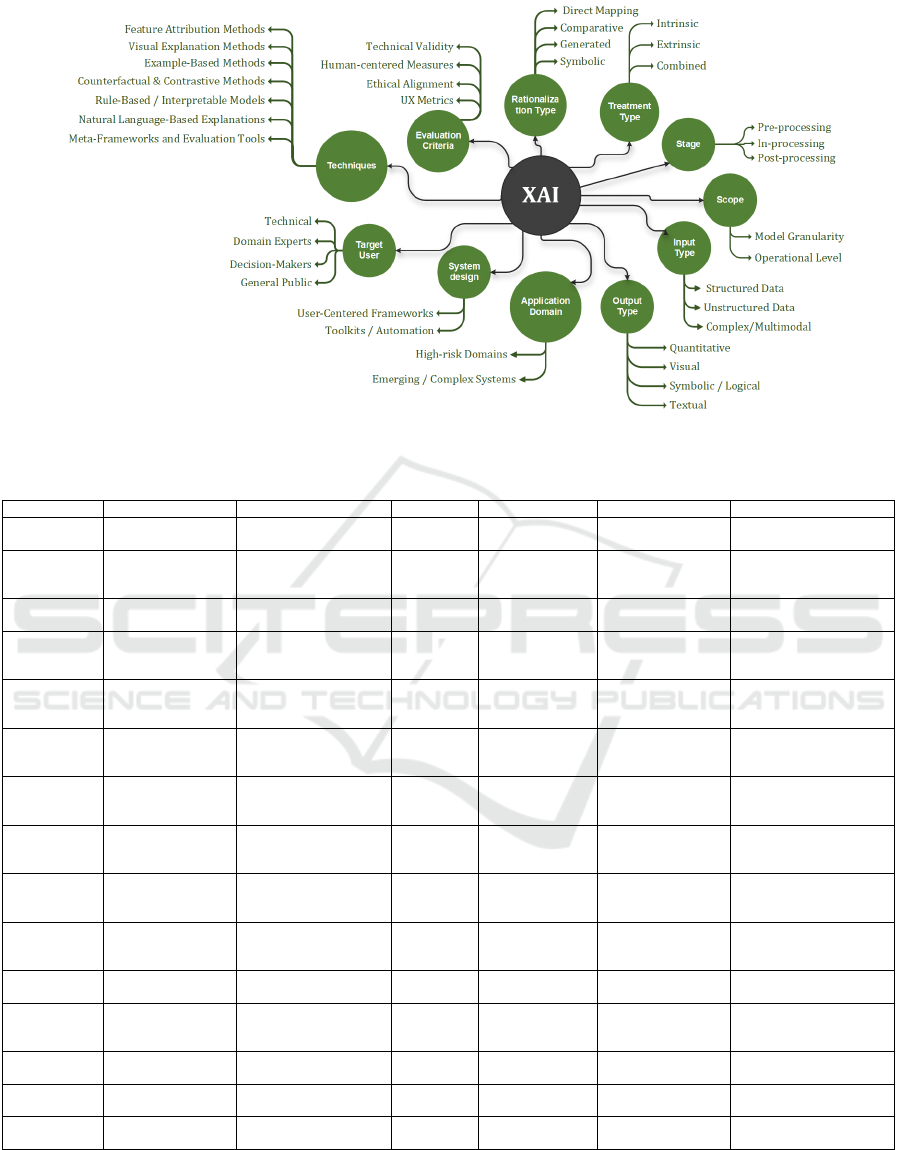
Figure 1: Overview of the key conceptual components of Explainable AI (XAI).
Table 1: Comparative overview of recent works employing semantic-based approaches in XAI.
Paper Scope Semantic Technique Stage Input Output Evaluation Criteria
(Dong et al.,
2017)
Image classifica-
tion (CNNs)
Semantic concepts + in-
terpretable neurons
Ante-hoc Visual images Concept attention
maps
Clarity, alignment with
concepts
(Garcez et al.,
2019)
Cross-domain rea-
soning
Neural-symbolic inte-
gration
In-process Structured and
unstructured data
Symbolic justifica-
tions + logical in-
ference
Logical completeness,
scalability
(Marcos et al.,
2019)
Image recognition
with explanation
Semantic Interpretable
Activation Maps
Ante-hoc CNN activations
+ image inputs
Tripartite semantic
maps
Map interpretability, se-
mantic decomposition
(Donadello
and Dragoni,
2020)
Image classifica-
tion
Ontological predicates,
fuzzy logic
Ante-hoc +
Post-hoc
Images, concept
labels
Logical rules +
fuzzy predicates
Faithfulness, inter-
pretability
(Ngo et al.,
2022)
Smart agricul-
ture knowledge
formalization
AgriComO +
OAK4XAI
Post-hoc Data mining
results, concept
definitions
Structured explana-
tions (no interface)
No UI for end users,
lacks feature attribution
(Dragoni and
Donadello,
2022)
Generic AI deci-
sion justification
Explanation Graph Post-hoc Structured
knowledge, logic
rules
Graph-structured
semantic explana-
tion
No interaction interface,
only conceptual structure
(Chhetri et al.,
2023)
Cassava disease de-
tection
Ontology + SWRL +
DL
Post-hoc Images + sensor
data
Weighted decision
combining CNN
and SWRL rules
CNN opacity, rule-based
model lacks scalability
(Sajitha et al.,
2023)
Banana quality
classification
Knowledge Graph +
KEGCNN
Post-hoc Banana images Knowledge-
embedded GCN
output
High complexity, opaque
embedding layer
(Corbucci
et al., 2023)
Sequential diagno-
sis prediction
Ontology mapping
(ICD-9 to SNOMED-
CT)
Post-hoc ICD codes, clini-
cal notes
Ontology-linked
text highlights
F1-score (text match),
human validation
(Sun et al.,
2024)
Image classifi-
cation and OOD
detection
Self-supervised con-
cept extraction (PCA,
SVD)
Post-hoc Images Concept prototypes
and semantic labels
User trust, semantic clar-
ity, interpretability
(Kosov et al.,
2024b)
Credit risk assess-
ment
Ontology + SWRL for
tabular data
Post-hoc Tabular records
(credit attributes)
Symbolic explana-
tion via rules
Explanation coverage,
clarity
(Kosov et al.,
2024a)
Images (Fashion-
MNIST), general-
izable
Generalized explana-
tory properties
In-process Visual features Ontology-based
JSON explanation
Faithfulness, reusability
(Sharma and
Jain, 2024)
Medical diagnosis
(Dengue)
Ontology + SWRL +
ChatGPT
Post-hoc Clinical data Natural language
explanation
Accuracy, clarity, preci-
sion vs. ML
(Doh et al.,
2025)
Face verification Face regions +
LIME/SHAP + LLMs
Post-hoc Face image pairs Similarity map +
textual rationale
User preference, faithful-
ness, LLM clarity
(Chandra
et al., 2025)
Disease diagnosis
& treatment
BFO + PCD Ontology
+ SWRL + GPT
Post-hoc Clinical data, test
results (OCR)
SPARQL results +
XAI suggestions
Precision, recall, batch
event timing
rules, and conceptual traits to bridge the gap between
model reasoning and human understanding. These
elements can be applied at various stages of the AI
pipeline.
Several works illustrate this semantic shift, as
summarized in Table 1. Foundational contributions
KEOD 2025 - 17th International Conference on Knowledge Engineering and Ontology Development
54

include (Dong et al., 2017), (Garcez et al., 2019), and
(Marcos et al., 2019), which embed semantic mean-
ing directly into neural models. (Dong et al., 2017)
aligns CNN filters with semantic concepts via neuron
regularization, enabling concept-level attention maps.
(Garcez et al., 2019) promotes neural-symbolic in-
tegration for logic-based reasoning with deep learn-
ing. (Marcos et al., 2019) introduces the What-
Where-How framework, decomposing CNN deci-
sions into interpretable spatial and conceptual com-
ponents—especially useful for image classification.
Building on these foundations, several notable
contributions have proposed diverse and robust se-
mantic XAI systems. (Donadello and Dragoni, 2020)
introduced SeXAI, using fuzzy logic and ontological
constraints to guide DNNs, producing rule-based ex-
planations. (Sun et al., 2024) proposed AS-XAI, a
self-supervised method that extracts concept proto-
types via PCA and SVD, enabling global, annotation-
free interpretation. (Doh et al., 2025) developed a se-
mantic multimodal XAI system for face verification,
combining structured face-region semantics, similar-
ity maps, and LLM-generated explanations tailored to
users.
In agriculture, where interpretability is critical for
non-experts (Grati et al., 2025), (Ngo et al., 2022)
used AgriComO in OAK4XAI to organize and ex-
plain model outcomes through domain knowledge.
(Chhetri et al., 2023) combined CNNs with SWRL
and ontology reasoning for cassava disease detection,
while (Sajitha et al., 2023) used KEGCNN for ba-
nana grading by embedding graph methods based on
a graph convolutional network (GCN).
In healthcare, (Corbucci et al., 2023) linked clin-
ical notes and model predictions with SNOMED-
CT via ontology-based highlights. (Sharma and
Jain, 2024) introduced OntoXAI using SWRL and
ChatGPT to provide human-readable explanations for
dengue diagnosis. (Chandra et al., 2025) extended
this with GPT-driven logic and SWRL using BFO and
PCD ontologies for diagnostic support.
Other representative efforts expanded semantic
XAI across domains: (Kosov et al., 2024b) pro-
posed ontology-driven rule explanations for credit as-
sessment, while (Kosov et al., 2024a) extended this
to cross-modal reasoning with JSON-structured sym-
bolic outputs.
These contributions mark the evolution of seman-
tic XAI—from embedding meaning in models to de-
veloping modular frameworks combining ontological
reasoning, visual and textual explanation. Ontolo-
gies are now key to structuring knowledge, ensuring
traceability, and aligning AI with domain expecta-
tions. They support integration of SWRL, rule-based
reasoning, and cross-domain adaptation. Yet, chal-
lenges remain in engineering, scalability, and integra-
tion with deep learning. Despite these, ontologies an-
chor semantic XAI as a bridge between opaque com-
putation and intelligible, trustworthy AI.
2.3 Animal Ontologies
Ontology languages like OWL allow for the formal
representation of domain knowledge, but they are lim-
ited in expressing complex logic. The Semantic Web
Rule Language (SWRL) extends OWL by enabling
the integration of logical rules directly into the ontol-
ogy structure (Horrocks et al., 2004). They support
reasoning by establishing cause-and-effect relation-
ships, enabling the inference of new knowledge from
existing facts (Amith et al., 2021). As a result, SWRL
enhances ontology expressiveness, supports dynamic
decision-making, and improves the semantic richness
of knowledge-based systems.
In this context, several ontologies have been de-
veloped to semantically model knowledge related
to animals and their environments. However, de-
spite the potential of SWRL to enrich these ontolo-
gies, only a few of them incorporate rule-based rea-
soning mechanisms. MBO (Beck et al., 2009) fo-
cuses on mammalian species but does not integrate
SWRL rules. NBO (Gkoutos et al., 2012) includes
23 SWRL rules to infer regulatory relationships in
animal-related studies. AHSO (D
´
oreas et al., 2017)
addresses animal health surveillance and was devel-
oped using the eXtreme Design (XD) methodology.
ATOL (Golik et al., 2012) provides extensive termi-
nology for livestock traits without implementing for-
mal rules. GEOBIA (Gu and et al, 2017) deals with
environmental concepts extracted from remote sens-
ing and employs SWRL to enhance semantic interpre-
tation. MoonCAB (Hammouda et al., 2023) follows
the MOMo methodology to describe animals and pas-
ture systems semantically.
Several ontology engineering methodologies fo-
cus on reusing existing ontologies and adopting mod-
ular design principles to enhance clarity and scalabil-
ity. Approaches like Enterprise (Uschold and King,
1995), XD (Blomqvist et al., 2016), and MOMo
(Shimizu et al., 2021) encourage creating reusable
components. MOMo specifically supports system-
atic reuse and modularity through diagram-first mod-
eling, pattern-based instantiation, and collaborative
tools like CoModIDE (Shimizu et al., 2021).
Toward Semantic Explainable AI in Livestock: MoonCAB Enrichment for O-XAI to Sheep BCS Prediction
55
3 MOONCAB ENRICHMENT
FOR SHEEP BCS PREDICTION
EXPLICATION
MoonCAB is a modular ontology designed to seman-
tically represent knowledge about sheep and goats
in pasture (Hammouda et al., 2023). It was devel-
oped in collaboration with INRAT to support smart
farming through semantic annotation of observational
data. The ontology adheres to the MOMo method-
ology (Shimizu et al., 2021), ensuring modularity,
reusability, and expert validation. Existing resources
like ATOL (Golik et al., 2012) and GEOBIA (Gu and
et al, 2017) were reused to enhance semantic cover-
age. MoonCAB integrates standardized traits and en-
vironmental concepts relevant to livestock systems.
It includes 143 classes and 106 properties dis-
tributed for 3 modules: Herd, Pasture, and Produc-
tion. These rules support dynamic inference and au-
tomated decision-making. Logical consistency was
checked using FaCT++, and SPARQL queries val-
idated the defined competency questions. The on-
tology was further assessed with the MoOnEv tool
(Hammouda et al., 2024) across 36 evaluation criteria.
Results confirmed its quality, modularity, and reason-
ing capabilities.
In this work, we apply the MOMo methodology
to guide the enrichment of the MoonCAB ontology.
This choice is motivated by its support for reusabil-
ity and modularity, as the current extension focuses
specifically on the Herd module.
3.1 Enrichment of Existing MoonCAB
Modules
We contribute to the enrichment of the “Herd” mod-
ule within the MoonCAB ontology by integrating
structured knowledge related to the Body Condition
Score (BCS) of sheep. This contribution is based on
the MOMo (Modular Ontology Modeling) methodol-
ogy. Evaluating the body condition in sheep is a key
method for determining their overall health and nu-
tritional status. This evaluation is based on the Body
Condition Score (BCS) scale, which ranges from 1
(very thin) to 5 (obese).
To support ontology enrichment and reasoning in
BCS, it is essential to formalize the process by which
sheep are scored. This includes identifying the rele-
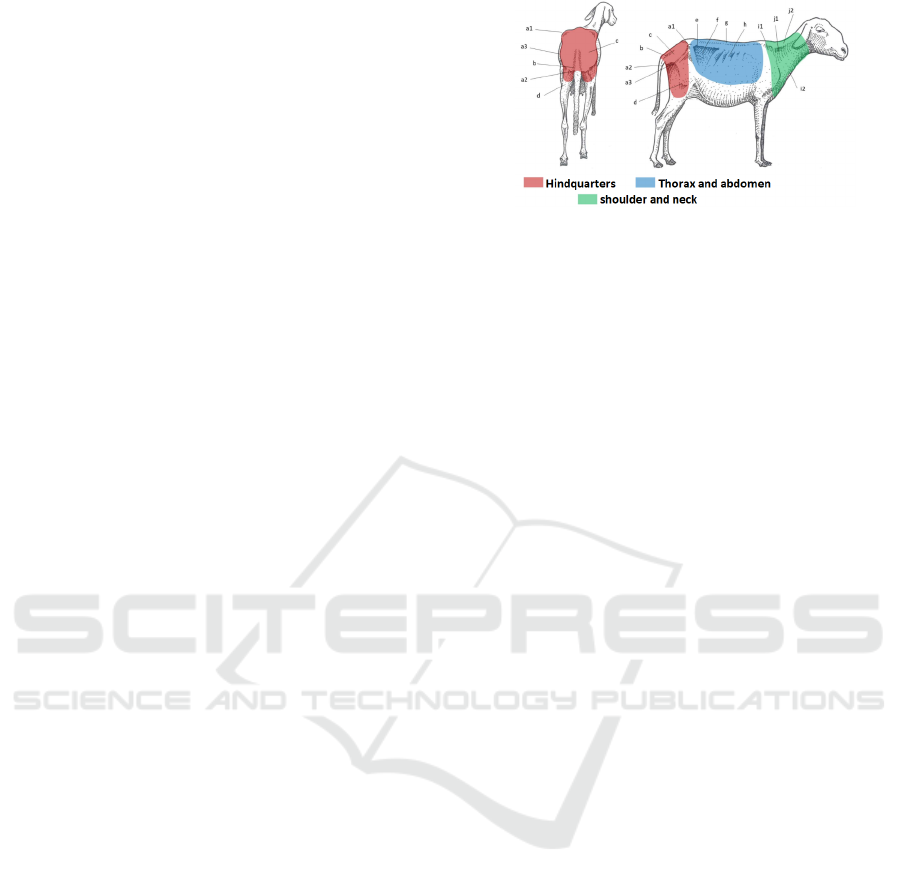
vant anatomical parts. As illustrated in Figure 2, BCS
in sheep involves evaluating three major anatomical
regions.
• Hindquarters — shown in red: includes the iliac
spines (a1), ischial spines (a2), coxo-femoral joint (a3),
Figure 2: Main anatomical zones used for BCS in sheep
(Vall, 2020).
the base of the tail and caudal vertebrae (b), pelvic cov-
erage (c), and the thighs (d).
• Thorax and Abdomen — shown in blue: covers the
transverse processes of the lumbar vertebrae (e), flank
depression (f), dorsal vertebrae spinous processes (g),
and the ribs (h).
• Shoulder and Neck — shown in green: includes the
scapula (i1), humerus joint (i2), neck hollow (j1), and
the occiput (j2).
3.1.1 Use Cases and Data Sources
From these sources, to guide the development of our
ontology according to the MOMo methodology, we
describe below five representative use cases. Sev-
eral use cases are proposed to guide the enrichment
of the ontology, based on documents selected by the
expert domain at INRAT laboratory, such as (Brug
`
ere-
Picoux, 2004; Vall, 2020), which addresses the body
condition scoring of sheep.
• BCS-Based Nutritional Diagnosis. Develop an ontol-
ogy module to diagnose undernutrition in sheep by
representing BCS scores alongside physiological states
(e.g., gestation, lactation). The ontology should sup-
port semantic rules to flag under-conditioned individu-
als and generate intervention alerts. It must be extend-
able to integrate nutritional thresholds, herd averages,
and seasonal feeding plans.
• Reproduction Management Based on BCS. Create an
ontology module to guide mating decisions based on
pre-breeding BCS scores. It will encode rules such
as “BCS ≤ 3 is required for optimal conception,” and
generate warnings if criteria are not met. The module
should be extensible to support breed-specific thresh-
olds, fertility indicators, and reproductive history.
• Climate Impact on Body Condition. Model the relation-
ship between climate events (e.g., drought, heatwaves)
and BCS trends using region-linked data. The ontology
will represent BCS measurements over time, tied to en-
vironmental conditions, enabling risk alerts. It should
be extendable to include pasture quality data, seasonal
climate profiles, and grazing system types.
• Maternal BCS and Lamb Survival Risk. Design a mod-
ule to assess lamb mortality risk based on maternal BCS
at lambing. BCS values will be linked to birth events
KEOD 2025 - 17th International Conference on Knowledge Engineering and Ontology Development
56
and lamb outcomes to support causal inference. The
model should allow extension with lamb weight, birth
season, and maternal feeding data.
• Anatomical Justification of BCS Scoring. Build an
ontology module to represent anatomical zones (e.g.,
spine, ribs, pelvis) used in BCS evaluation. Scoring de-
cisions will be justified through linked observations and
evaluator metadata. The module can be extended to in-
clude visual markers, and palpation techniques.
3.1.2 Competency Questions
Based on the five use cases previously mentioned,
here is a table (Table 2) of competency questions
aligned with each one, including the key concepts in-
volved. Competency questions are natural language
queries that define the scope and objectives of the on-
tology by illustrating the kinds of questions it should
be able to answer once developed.
Table 2: Competency questions and key concepts for the
Body Condition Score (BCS) ontology.
Competency Questions Key Concepts
Which sheep currently show
signs of undernutrition based
on BCS?
BCS, Undernutrition
Threshold, Physiologi-
cal Status
Which ewes should receive ad-
ditional feeding due to low BCS
during lactation?
Lactation Status, Feed-
ing Plan, BCS Trend
Which sheep have shown a sig-
nificant drop in BCS during a
recent climate event?
Climate Event, BCS
Over Time, Region,
Date
What is the lamb mortality risk
based on the mother’s BCS at
parturition?
Maternal BCS, Lamb
Survival, Parturition,
Risk Factor
Which anatomical indicators
justify the BCS score assigned
to a specific sheep?
Hindquarters, Thorax
and abdomen, Shoulder
and neck, Criteria
3.1.3 Identification of Existing Ontology Design
Patterns (ODPs)
We rely on the Modular Ontology Design Library
(MODL) (Shimizu et al., 2019), which provides well-
curated and consistently documented ODPs.
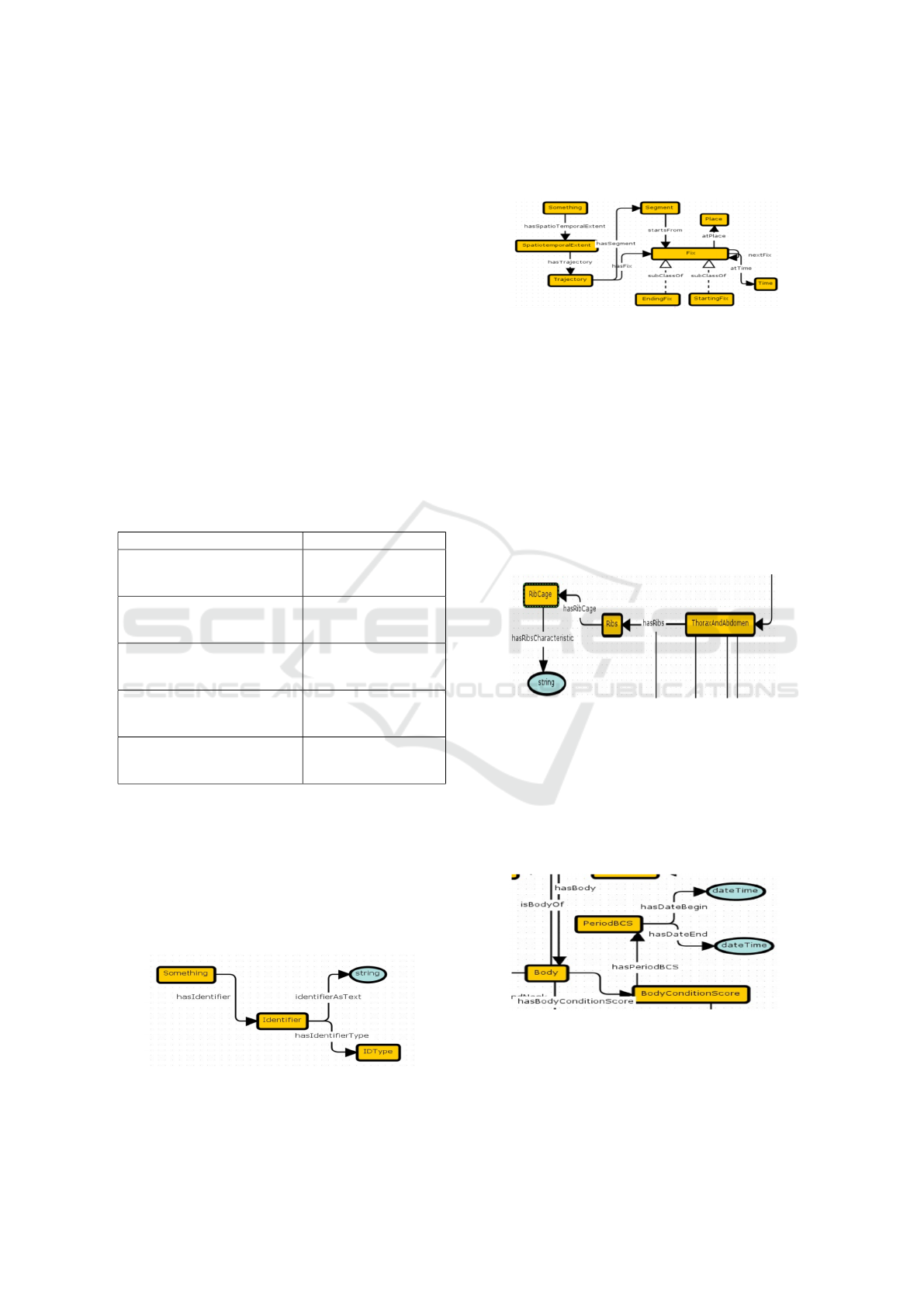
Our ontology integrates the “Identifier” pattern
(see Figure 3). Additionally, the “Spatiotemporal Ex-
Figure 3: Schematic diagram for the MODL identifier
model.
tent” pattern (see Figure 4) is adapted to enhance the
“Herd” module.
Figure 4: Schematic diagram for the MODL spatiotemporal
extent model.
3.1.4 Schema Diagrams for the Enriched
“Herd” Module
Figure 5 illustrates the ontological schema for the
“Identifier” model, featuring three main entities: Tho-
rax and Abdomen, Ribs, and Rib Cage. These entities
are linked hierarchically: ThoraxAndAbdomen con-
nects to Ribs via the hasRibs property, and Ribs con-
nects to RibCage via hasRibCage. The RibCage en-
tity includes a hasRibsCharacteristic property of type
string.
Figure 5: Schematic diagram for the identify model.
Figure 6 depicts a schema based on the “Spa-
tiotemporal Extent” pattern, modeling the body con-
dition assessment. The main entity, Body, must have
a BodyConditionScore, which is associated with Peri-
odBCS instances that include hasDateBegin and has-
DateEnd (both of type dateTime). This model allows
tracking body condition across different periods.
Figure 6: Schematic Diagram for the Spatio-Temporal
Model.
Toward Semantic Explainable AI in Livestock: MoonCAB Enrichment for O-XAI to Sheep BCS Prediction
57
3.1.5 Document Modules and Axioms
Documentation is a key step in ontology develop-
ment, enabling communication with domain experts
and facilitating the validation of knowledge models.
Following MOMo guidelines, we present here the for-
mal axioms that structure the BCS concepts.
• Animal ⊑ ∃hasBody.Body
• Body ⊑ (≥ 1 hasBodyCondition-
Score.BodyConditionScore)
• PeriodBCS ⊑ (= 1 DateBegin :xsd:dateTime) ⊓ (= 1
DateEnd :xsd:dateTime)
• Body ⊑ ∃hasHindquarters.Hindquarters
⊓ ∃hasTailBase.TailBase ⊓
∃hasThoraxAndAbdomen.ThoraxAndAbdomen
• Hindquarters ⊑ (= 1 hasPelvicBonesAnd-
Hip.PelvicBonesAndHip) ⊓ (= 1 hasBaseOf-
Tail.TailBase) ⊓ (= 1 hasPelvis.Pelvis) ⊓ (= 1
hasThighs.Thighs)
• Pelvis ⊑ ∃hasPelvisCharacteristic :xsd:string
• Pelvis ⊑ ∃hasBaseOfTailCharacteristic :xsd:string
3.1.6 Create Ontology Diagram
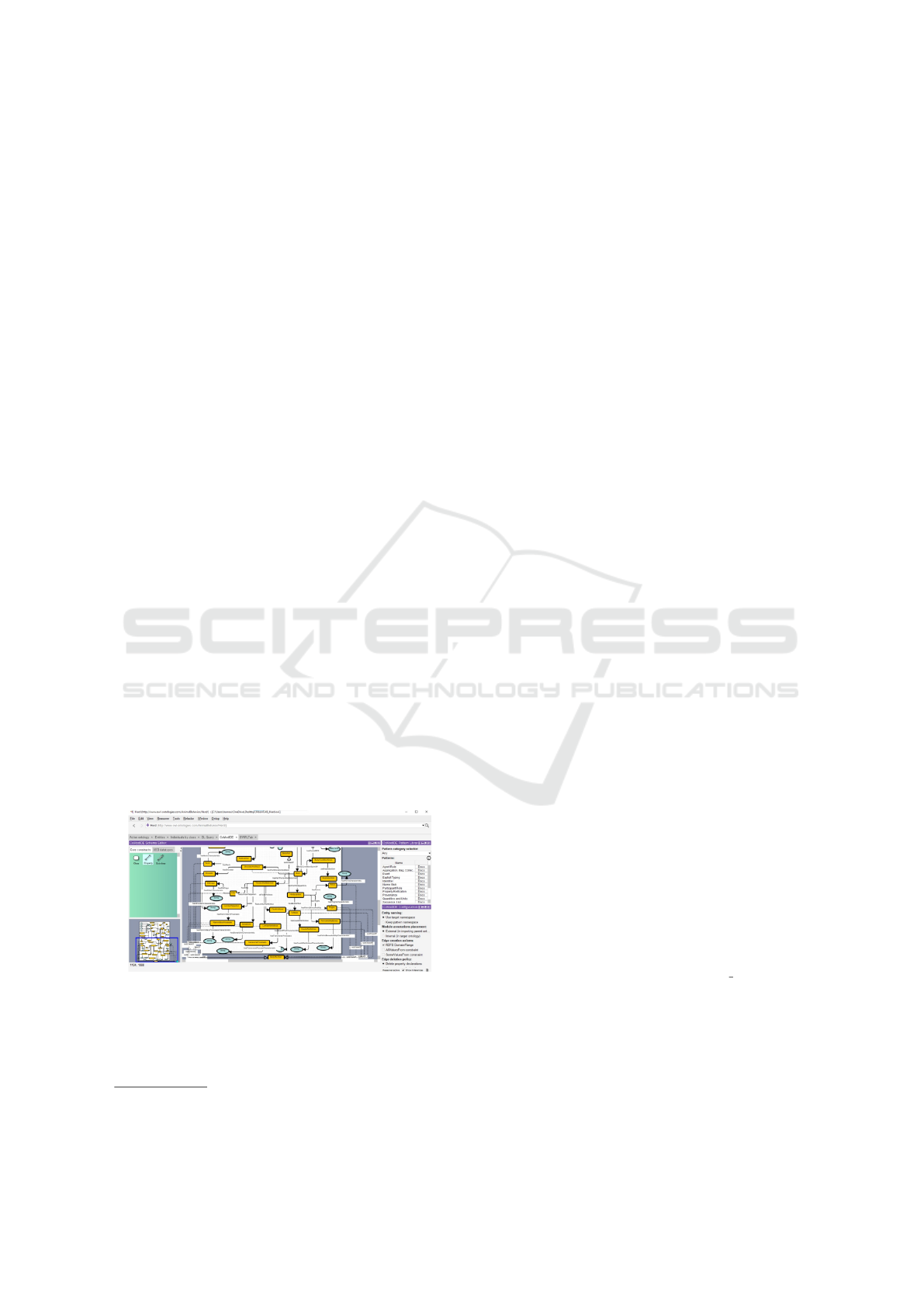
This diagram (Figure 7) presents the enriched version
of the Herd module, created using the CoModIDE
plugin
1
. The module integrates the key concepts iden-
tified in the previous use case and competency ques-
tion phases. It is now ready to be reintegrated into
the global MoonCAB ontology and will serve as the
foundation for the next modeling step: establishing
inter-module and intra-module relations. Specifically,
links will be defined between the Herd module and
other modules such as Pasture and Behavior, enabling
semantic consistency across all BCS-related compo-
nents.
Figure 7: An enriching view of the “Herd” module, visual-
ized using the CoModIDE plugin.
1
CoModIDE is a Prot
´
eg
´
e plugin for ODP-based modu-
lar ontology engineering: https://comodide.com/
3.2 Enrichment of MoonCAB by SWRL
Rules
To enable automated reasoning and explainable BCS
classification within MoonCAB, we enriched the on-
tology with a set of 200 SWRL rules derived from
anatomical features of the sheep body. These rules
utilize previously defined structural axioms that de-
scribe the anatomical composition of an animal and
enable the inference of Body Condition Score (BCS)
levels from observed body part characteristics.
• BCS = 5: This rule identifies sheep with very convex
pelvis, abundant tail base fat, invisible flank depth, and
very high shoulder fat cover as over-conditioned, as-
signing them a BCS of 5.
Herd:Animal(?x) ∧
Herd:hasCategory(?x,Herd:Sheep) ∧
Herd:hasBody(?x,?b)
∧ Herd:hasPartHindquarters(?b,?hq)∧
Herd:hasPelvicAndHipBones(?hq,?phb) ∧
Herd:hasPelvicBonesAndHipCharacteristic(?phb,
“CoveredByFat”) ∧ Herd:hasPelvis(?hq,?p) ∧
Herd:hasPelvisCharacteristic(?p,“VeryConvex”)
∧ Herd:hasThighs(?hq,?t) ∧
Herd:hasThighsCharacteristic(?t,”Bulging”)
∧ Herd:hasTailBase(?hq,?tb) ∧
Herd:hasCaudalVertebrae(?hq,?ctb) ∧
Herd:hasCaudalVertebraeCharacteristic(?ctb,
“FatAccumulation”) ∧
Herd:hasPartThoraxAndAbdomen(?b,?ta)
∧ Herd:hasDorsalLine(?ta,?dl) ∧
Herd:hasDorsalLineCharacteristic(?dl,“Invisible”)
∧ Herd:hasFlankHollows(?ta,?fh) ∧
Herd:hasFlankHollowsCharacteristic(?fh,“Invisible”)
∧ Herd:hasLumbarPalpation(?ta,?lp) ∧
Herd:hasMammillaryProcesses(?lp,?mp) ∧
Herd:hasMammillaryProcessesCharacteristic(?mp,
“BarelyPalpable”) ∧
Herd:hasLumbarVertebrae(?ta,?lv) ∧
Herd:hasVertebralAchCharacteristic(?lv,
“BarelyPalpable”) ∧
Herd:hasTransverseProcesses(?ta,?tp) ∧
Herd:hasTransverseProcessCharacteristic(?tp,
“CannotBeFelt”) ∧
Herd:hasPartShoulderAndNeck(?b,?sn)
∧ Herd:hasShoulder(?sn,?s) ∧
Herd:hasShoulderCharacteristic(?s,“ThickFatCover”)
∧ Herd:hasNeck(?sn,?n) ∧
Herd:hasNeckCharacteristic(?n,“Muscular”)
∧ Herd:hasBodyConditionScore(?b,?scoreObj)
→Herd:hasScore(?scoreObj, “Score 5”)
• Feed Supplementation During Lactation for Low
BCS Ewes: This rule triggers a feeding adjustment for
lactating ewes whose BCS falls below 2.5, indicating the
need for increased nutritional support during this energy-
demanding phase.
Herd:Animal(?x) ∧
Herd:hasCategory(?x,Herd:Sheep)
∧ Herd:hasBody(?x,?b) ∧
KEOD 2025 - 17th International Conference on Knowledge Engineering and Ontology Development
58

Herd:hasBodyConditionScore(?b,?s) ∧
Herd:hasNumericScore(?s,?scoreValue)
∧ swrlb:lessThan(?scoreValue,2.5) ∧
Herd:hasPhysiologicalStatus(?x,Herd:Lactating)
→ Herd:requiresFeedingAdjustment(?x, true)
• Predict Lamb Mortality Risk Based on Maternal
BCS: This rule predicts a high risk of lamb mortality
if the ewe’s BCS at parturition is below 2.0, highlighting
the importance of maternal condition in neonatal survival
outcomes.
Herd:Animal(?m) ∧
Herd:hasCategory(?m,Herd:Sheep) ∧
Herd:hasBodyConditionScore(?m,?s) ∧
Herd:hasNumericScore(?s,?scoreValue)
∧ swrlb:lessThan(?scoreValue, 2.0)
∧ Herd:hasChild(?m,?lamb) ∧
Herd:hasBirthEvent(?lamb,?b) ∧
Herd:hasBirthType(?b,“Parturition”)
→Herd:hasLambMortalityRisk(?lamb,“High”)
4 EVALUATION AND
VALIDATION OF NEW
MOONCAB VERSION
4.1 Evaluation Using the Pellet
Reasoner
To verify the consistency of the ontology and to detect
any potential logical conflicts, we used the Pellet
2
rea-
soner, which is designed for reasoning over Descrip-
tion Logics (DL). It accepts OWL files as input and
is capable of processing concepts, properties, and in-
stances. In particular, it allows the verification of the
ontology’s coherence and the detection of logical in-
consistencies. This reasoning phase was successfully
completed, and no inconsistencies were detected by
the reasoner.
4.2 Evaluation Using SPARQL Query
Language
To verify the accuracy and the coverage of the on-
tology, we have used the SPARQL language by re-
formulating the competency questions as SPARQL
queries. Table 3 shows some examples of competency
questions (represented in Table 2), their correspond-
ing SPARQL queries, and the results of the execution
of these queries on our ontology.
2
https://owl.cs.manchester.ac.uk/tools/fact
4.3 Evaluation Using MoonEv Tool
Evaluating ontology is crucial for its effectiveness in
information exchange and knowledge management.
This involves analyzing its clarity, structure, valid-
ity, modularity, and decision-enabling capacity. Sev-
eral tools and methodologies have been developed for
this purpose, such as Delta (Kondylakis et al., 2021),
which evaluates specific metrics, OMEVA (Gobin-
Rahimbux, 2022) for assessing ontology modules
across all possible metrics (35 metrics) in eight cat-
egories, and OOPS! (Poveda-Villal
´
on et al., 2014) for
identifying 40 common ontology pitfalls. XDTest-
ing (Ciroku and Presutti, 2022) introduces unit testing
of ontology modules. MoOnEV (Hammouda et al.,
2024) is a modular ontology evaluation and verifica-
tion tool that stands out from other existing tools due
to its comprehensive coverage of metrics. It allows
for the performance testing of ontologies through use
cases and provides in-depth reports of evaluation re-
sults to aid in correcting and improving ontology per-
formance.
Figure 8 presents the evaluation of MoonCAB
modules based on relatedness metrics. All modules
show high independence (above 92%) and zero redun-
dancy, confirming good modular isolation. The Herd
module stands out with strong encapsulation (68) and
the lowest relative intra-module distance (0.721), in-
dicating high internal cohesion.
Figure 9 shows the results of metrics classified in
the module’s Quality category, including precision,
recall, cohesion, coupling, and overall quality score.
All modules achieve perfect precision (1.000), but re-
call varies, with the Herd module achieving the high-
est overall quality (200.700). The Behavior mod-
ule has the lowest recall (0.257) and overall quality
(82.500), indicating opportunities for structural im-
provement.
5 DISCUSSION
Compared to the ontologies presented in Section 2.3,
those lacking SWRL rule integration—or incorporat-
ing only limited rule sets—remain confined to deliv-
ering explicit, surface-level information. Such on-
tologies are incapable of performing logical inference
or capturing complex semantic relationships. In con-
trast, the MoonCAB ontology, after enrichment, com-
prises 14,653 axioms, 154 classes, 97 object proper-
ties, 62 data properties, and 234 individuals. Most
importantly, it integrates 200 SWRL rules, enabling
it to move beyond static representation and support
advanced reasoning. This allows for the inference of
Toward Semantic Explainable AI in Livestock: MoonCAB Enrichment for O-XAI to Sheep BCS Prediction
59
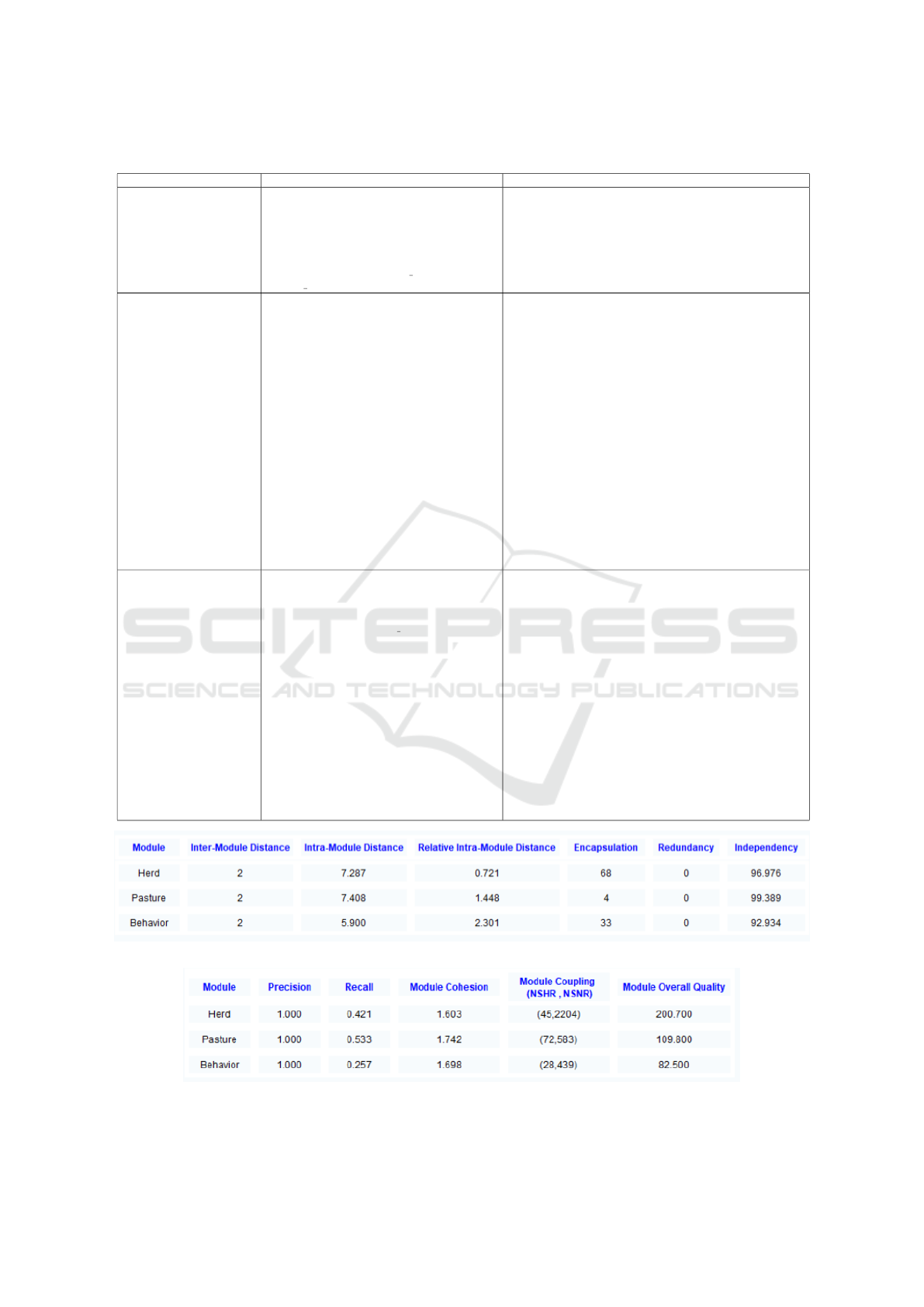
Table 3: Ontology evaluation.
Competency Question SPARQL Query Result
CQ01: Which sheep cur-
rently show signs of under-
nutrition based on BCS?
SELECT ?animal ?p WHERE {
?animal h:hasBody ?body.
?body h:hasBodyConditionScore ?bcs.
?bcs h:hasPeriodBCS ?bcsp.
?bcsp h:hasDateBegin ?p.
?bcs h:hasScore ?score.
FILTER(?score = "Score 1" || ?score =
"Score 2") }
{ "head":{"vars":["animal","p"]},
"results":{"bindings":[ { "animal":{"type":"URI",
"value":".../AnimalBehavior/Herd/H01Sh02"},
"p":{"type":"literal","datatype":"...#dateTime",
"value":"2024-07-01T00:00:00"} } ] } }
CQ03: Which sheep have
shown a significant drop
in BCS during X climate
event?
SELECT ?animal ?score0 ?score1 WHERE {
?event h:hasClimateEventName "Dry
Rain".
?event h:hasPeriodClimateEvent ?pe
?pe h:hasPeriodClimateEventBegin ?peB.
?pe h:hasPeriodClimateEventEnd ?peE.
?animal h:hasBody ?body1.
?body1 h:hasBodyConditionScore ?bcs1.
?bcs1 h:hasNumericScore ?score1.
?bcs1 h:hasPeriodBCS ?bcsp.
?bcsp h:hasDateBegin ?peB.
?bcsp h:hasDateEnd ?peE.
bcsp h:hasIDPeriodBCS ?id.
?animal h:hasBody ?body0.
?body0 h:hasBodyConditionScore ?bcs0.
?bcs0 h:hasPeriodBCS ?bcsp0.
?bcsp0 h:hasIDPeriodBCS ?id0.
?bcs0 h:hasNumericScore ?score0.
BIND(xsd:integer(?id) - 1 AS ?prevID).
FILTER(?score0 - ?score1 >= 1 &&
xsd:integer(?id0) = ?prevID) }
{ "head":{"vars":["animal","score0","score1"]},
"results":{"bindings":[ { "animal":{"type":"URI",
"value":".../Animal-Behavior/Herd/H01Sh02"},
"score0":{"type":"literal",
"datatype":"...#decimal", "value":"3.0"},
"score1":{"type":"literal",
"datatype":"...#decimal", "value":"2.0"} } ] }
}
CQ04: Which anatomical
indicators justify the BCS
score assigned to a specific
sheep?
SELECT ?partclass ?property ?value
WHERE {
?animal h:hasBody ?body .
?body h:hasBodyConditionScore ?bcs .
?bcs h:hasScore ‘Score 3" .
?body ?hasPart ?part .
FILTER(STRSTARTS(STR(?hasPart),
STR(h:hasPart)))
?part rdf:type ?partclass .
FILTER(STRSTARTS(STR(?partclass),
STR(h:)))
OPTIONAL {?part ?property ?rawValue .
FILTER(STRSTARTS(STR(?property),
STR(h:)))
OPTIONAL {FILTER(isLiteral(?rawValue))
BIND(?rawValue AS ?value) }
OPTIONAL {FILTER(isIRI(?rawValue))
?rawValue ?subProp ?value .
FILTER(isLiteral(?value)) } } } }
{ "head":{"vars":["partclass","property",
"value"]}, "results":{"bindings":[
{ "partclass": {"type":"URI",
"value":".../Herd/Hindquarters"}, "property":
{"type":"URI", "value":".../Herd/hasPelvis"},
"value":{"type":"literal", "value":"Flat to
convex"} }, ... } ] }
Figure 8: MoOnEV: Module’ relatedness metrics results.
Figure 9: MoOnEV: Module’ quality metrics results.
KEOD 2025 - 17th International Conference on Knowledge Engineering and Ontology Development
60
implicit knowledge, unveiling hidden patterns and re-
lationships within agricultural datasets—an essential
feature for smart agriculture systems that require in-
telligent decision support and semantic awareness.
Our ongoing research aims to make a substantial
contribution to the management of livestock breed-
ing and the sustainable use of agricultural resources.
This objective is grounded in the design, semantic en-
richment, and quality evaluation of a domain ontol-
ogy that is intended to support decision-making pro-
cesses in agricultural applications. We have devel-
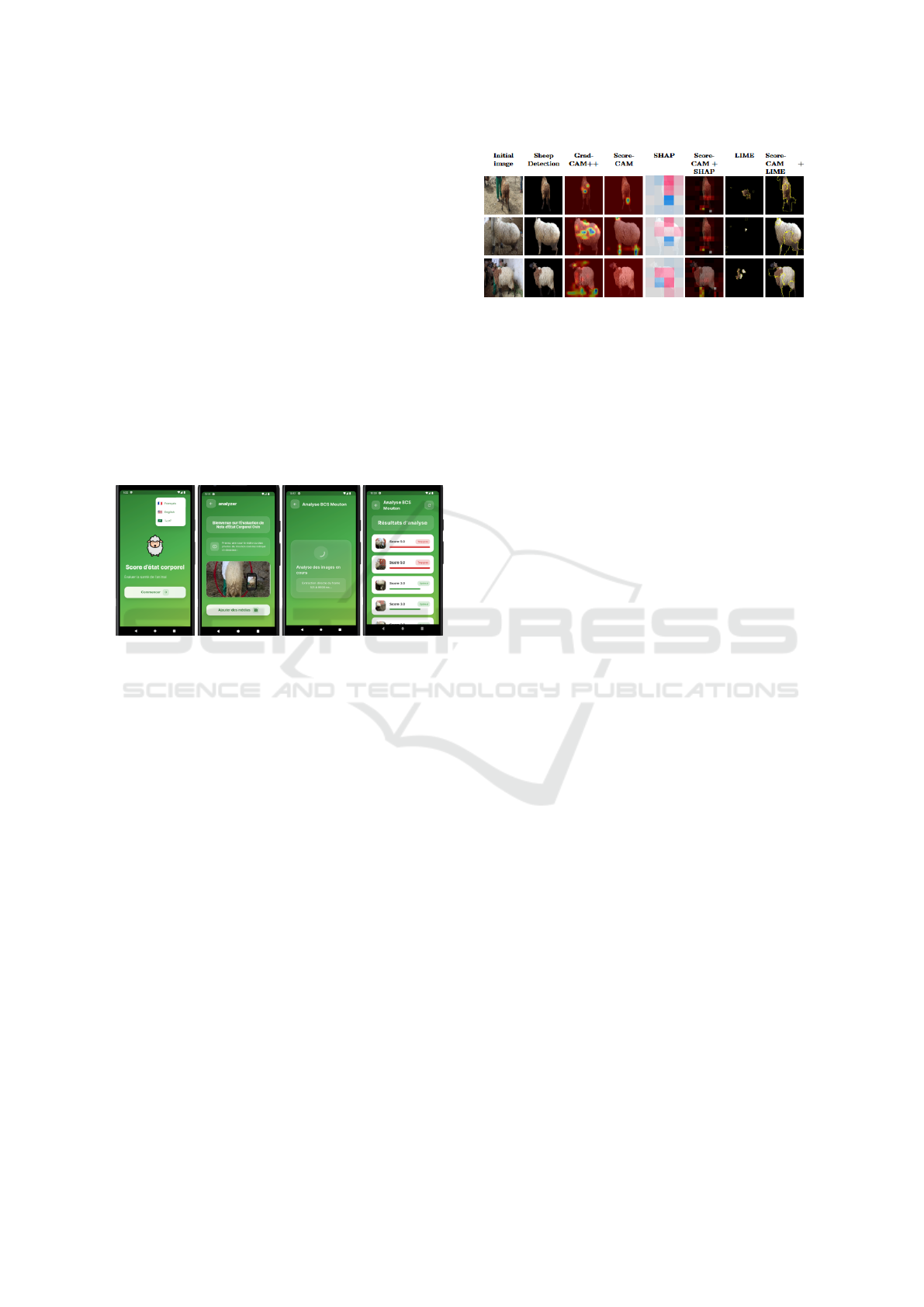
oped a mobile application that predicts the Body Con-
dition Score (BCS) of sheep using deep learning mod-
els, as shown in Figure 10. The next step is to inte-
grate the enriched MoonCAB ontology into this ap-
plication, where it will serve a critical role in explain-
ing AI-generated predictions and enhancing their in-
terpretability.
Figure 10: Mobile application interfaces for startup, video
selection, and BCS classification results.
Figure 11 presents a comparative analysis of the
XAI methods Grad-CAM++, Score-CAM, SHAP,
LIME, and their hybrid combinations. This evalua-
tion enabled us to identify the key body regions the
model relies on for its predictions by visualizing the
discriminative features involved in classifying BCS
scores—features that aim to replicate the tactile as-
sessment typically performed by human palpation un-
der real-world conditions. These insights guided us
to prioritize information and image collection on crit-
ical anatomical regions (e.g., back, rump, tail base)
to enhance model accuracy. However, as no single
method met all evaluation criteria, we transitioned to
a semantic-based approach.
However, given that our system targets both agri-
cultural experts and farmers—who vary in their levels
of technical expertise—it is essential to provide ex-
planations that are both semantically structured and
accessible. Simple XAI methods alone are insuffi-
cient to meet these demands; therefore, we move to-
ward adopting Ontology-based Explainable AI (O-
XAI). The ontology will fulfill this role by delivering
multi-level justifications: clear and intuitive for farm-
ers, yet scientifically rigorous for domain experts.
Figure 11: Attention regions generated by diverse XAI
methods (Hammouda et al., 2025).
Furthermore, it will support evidence-based decision-
making aligned with animal body condition assess-
ment, thereby enhancing the efficiency, transparency,
and sustainability of livestock management in smart
agriculture.
6 CONCLUSION AND FUTURE
WORKS
With the support of INRAT and based on expert-
validated scientific documentation, we successfully
enriched the MoonCAB ontology to comprehensively
represent the Body Condition Score (BCS) evaluation
process in sheep. The enriched ontology now contains
over 14,653 axioms, 154 classes, 97 object properties,
62 data properties, and 234 individuals. Additionally,
it integrates 200 SWRL rules, enabling semantic rea-
soning to answer complex questions related to BCS
levels, their indicators, and corresponding decision-
making scenarios. To ensure the quality, effective-
ness, and accuracy of the ontology, a multi-method
evaluation was conducted using the Pellet reasoner,
SPARQL queries, and the MoOnEV tool.
This enriched version of MoonCAB is designed to
enhance semantic explainability and provide deeper
insights into BCS detection, both at the individual
animal level and across the entire herd. This is the
first work to address BCS prediction in sheep using
computer vision, as no existing research has explored
this specific application. This pioneering contribution
opens new opportunities for automating sheep moni-
toring in a transparent and interpretable way.
As a future perspective, we aim to use the
Ontology-based eXplainable Artificial Intelligence
(O-XAI) through MoonCAB-XAI to enable transpar-
ent and interpretable BCS prediction. This leads to
a broader research question: To what extent and in
depth can ontology-based models like MoonCAB be
integrated into computational animal behavior analy-
sis systems (CABA) in general into smart agriculture
systems?
Toward Semantic Explainable AI in Livestock: MoonCAB Enrichment for O-XAI to Sheep BCS Prediction
61

ACKNOWLEDGEMENTS
We would like to express our sincere gratitude to
our collaborators, Dr Samir Smetti and Pr Moukhtar
Mahouchi, from the Institut National de Recherche
Agronomique de Tunis (INRAT) for their valuable
support and for facilitating access to the experimen-
tal farm of the University of Jendouba, at the Higher
School of Agriculture of Kef, which enabled the sci-
entific documents used to enrich our ontology Moon-
CAB.
REFERENCES
Altukhi, Z. M., Pradhan, S., and Aljohani, N. (2025). A
systematic literature review of the latest advancements
in xai. Technologies, 13(3):93.
Amith, M., Harris, M. R., Stansbury, C., Ford, K., Manion,
F. J., and Tao, C. (2021). Expressing and executing
informed consent permissions using swrl: the all of us
use case. In American Medical Informatics Associa-
tion Annual (AMIA), volume 2021, page 197. Ameri-
can Medical Informatics Association.
Aslam, M., Segura-Velandia, D., and Goh, Y. M. (2023). A
conceptual model framework for xai requirement elic-
itation of application domain system. IEEE Access,
11:108080–108091.
Beck, T., Hancock, J. M., and Mallon, A.-M. (2009). De-
veloping a mammalian behaviour ontology. Interna-
tional Conference on Biomedical Ontology (ICBO),
page 159.
Blomqvist, E., Hammar, K., and Presutti, V. (2016). En-
gineering ontologies with patterns-the extreme design
methodology. Ontology Engineering with Ontology
Design Patterns, (25):23–50.
Brdnik, S. and
ˇ
Sumak, B. (2024). Current trends, chal-
lenges and techniques in xai field; a tertiary study of
xai research. In 2024 47th MIPRO ICT and Electron-
ics Convention (MIPRO), pages 2032–2038. IEEE.
Brug
`
ere-Picoux, J. (2004). Maladies des moutons. France
Agricole Editions.
C¸ evik, K. K. (2020). Deep learning based real-time body
condition score classification system. IEEE Access,
8:213950–213957.
Chandra, R., Tiwari, S., Rastogi, S., and Agarwal, S.
(2025). A diagnosis and treatment of liver diseases:
integrating batch processing, rule-based event detec-
tion and explainable artificial intelligence. Evolving
Systems, 16(2):1–26.
Chhetri, T. R., Hohenegger, A., Fensel, A., Kasali, M. A.,
and Adekunle, A. A. (2023). Towards improving
prediction accuracy and user-level explainability us-
ing deep learning and knowledge graphs: A study on
cassava disease. Expert Systems with Applications,
233:120955.
Ciroku, F. and Presutti, V. (2022). Providing tool support
for unit testing in extreme design. In Proceedings of
the 1st Workshop on Modular Knowledge (PWMK).
Corbucci, L., Monreale, A., Panigutti, C., Natilli, M., Smi-
raglio, S., and Pedreschi, D. (2023). Semantic enrich-
ment of explanations of ai models for healthcare. In
International Conference on Discovery Science, pages
216–229. Springer.
Corner-Thomas, R., Sewell, A., Kemp, P., Wood, B., Gray,
D., Morris, S., Blair, H., and Kenyon, P. (2020). Body
condition scoring of sheep: intra-and inter-observer
variability.
Cugny, R., Aligon, J., Chevalier, M., Roman Jimenez, G.,
and Teste, O. (2022). Autoxai: A framework to auto-
matically select the most adapted xai solution. In Pro-
ceedings of the 31st ACM International Conference on
Information & Knowledge Management, pages 315–
324.
Doh, M., Rodrigues, C. M., Boutry, N., Najman, L., Man-
cas, M., and Gosselin, B. (2025). Found in translation:
semantic approaches for enhancing ai interpretability
in face verification. arXiv preprint arXiv:2501.05471.
Donadello, I. and Dragoni, M. (2020). Sexai: introduc-
ing concepts into black boxes for explainable artificial
intelligence. In Proceedings of the Italian Workshop
on Explainable Artificial Intelligence co-located with
19th International Conference of the Italian Associa-
tion for Artificial Intelligence, XAI. it@ AIxIA 2020,
Online Event, November 25-26, 2020, volume 2742,
pages 41–54. CEUR-WS.
Dong, Y., Su, H., Zhu, J., and Zhang, B. (2017). Improv-
ing interpretability of deep neural networks with se-
mantic information. In Proceedings of the IEEE con-
ference on computer vision and pattern recognition,
pages 4306–4314.
D
´
oreas, F., Vial, F., Hammar, K., Lindberg, A., Blomqvist,
E., and Revie, C. (2017). Development of an animal
health surveillance ontology. Proceeding of the 3rd In-
ternational Conference of Animal Health Surveillance
(ICAHS)., pages 97–99.
Dragoni, M. and Donadello, I. (2022). A knowledge-based
strategy for xai: The explanation graph. Semantic Web
Journal.
Garcez, A. d., Gori, M., Lamb, L. C., Serafini, L., Spranger,
M., and Tran, S. N. (2019). Neural-symbolic comput-
ing: An effective methodology for principled integra-
tion of machine learning and reasoning. arXiv preprint
arXiv:1905.06088.
Gkoutos, G. V., Schofield, P. N., and Hoehndorf, R. (2012).
The neurobehavior ontology: an ontology for annota-
tion and integration of behavior and behavioral phe-
notypes. International Review of Neurobiology (IRN),
103:69–87.
Gobin-Rahimbux, B. (2022). Evaluation metrics for ontol-
ogy modules. In International Conference on Data
Science and Information System (ICDSIS), pages 1–6.
IEEE.
Golik, W., Dameron, O., Bugeon, J., Fatet, A., Hue, I.,
Hurtaud, C., Reichstadt, M., Sala
¨
un, M.-C., Vernet,
J., Joret, L., et al. (2012). Atol: the multi-species
livestock trait ontology. In 6th Metadata and Seman-
tics Research Conference (MTSR), pages 289–300.
Springer.
KEOD 2025 - 17th International Conference on Knowledge Engineering and Ontology Development
62

Grati, R., Fattouch, N., and Boukadi, K. (2025). Ontologies
for smart agriculture: A path toward explainable ai–a
systematic literature review. Ieee Access.
Gu, H. and et al (2017). An object-based semantic classifi-
cation method for high resolution remote sensing im-
agery using ontology. Remote Sensing (RS), 9(4):329.
Hammouda, N., Mahfoudh, M., and Boukadi, K. (2023).
Mooncab: a modular ontology for computational
analysis of animal behavior. In 2023 20th ACS/IEEE
International Conference on Computer Systems and
Applications (AICCSA), pages 1–8. IEEE.
Hammouda, N., Mahfoudh, M., and Boukadi, K. (2024).
Moonev: Modular ontology evaluation and validation
tool. Procedia Computer Science, 246:3532–3541.
Hammouda, N., Mahfoudh, M., Grati, R., and Boukadi, K.
(2025). Predicting sheep body condition scores via
explainable deep learning model. International CAIP,
30.
Hamza, M. C. and Bourabah, A. (2024). Exploratory study
on the relationship between age, reproductive stage,
body condition score, and liver biochemical profiles
in rembi breed ewes. Iranian Journal of Veterinary
Medicine, 18(2).
Horrocks, I., Patel-Schneider, P. F., Boley, H., Tabet, S.,
Grosof, B., Dean, M., et al. (2004). Swrl: A semantic
web rule language combining owl and ruleml. W3C
Member submission, 21(79):1–31.
Kondylakis, H., Nikolaos, A., Dimitra, P., Anastasios, K.,
Emmanouel, K., Kyriakos, K., Iraklis, S., Stylianos,
K., and Papadakis, N. (2021). Delta: a modular ontol-
ogy evaluation system. Information, 12(8):301.
Kong, X., Liu, S., and Zhu, L. (2024). Toward human-
centered xai in practice: A survey. Machine Intelli-
gence Research, 21(4):740–770.
Kosov, P., El Kadhi, N., Zanni-Merk, C., and Gardashova,
L. (2024a). Advancing xai: new properties to broaden
semantic-based explanations of black-box learning
models. Procedia Computer Science, 246:2292–2301.
Kosov, P., El Kadhi, N., Zanni-Merk, C., and Gardashova,
L. (2024b). Semantic-based xai: Leveraging ontol-
ogy properties to enhance explainability. In 2024 In-
ternational Conference on Decision Aid Sciences and
Applications (DASA), pages 1–5. IEEE.
Lundberg, S. M. and Lee, S.-I. (2017). A unified approach
to interpreting model predictions. Advances in neural
information processing systems, 30.
Marcos, D., Lobry, S., and Tuia, D. (2019). Semantically
interpretable activation maps: what-where-how expla-
nations within cnns. In 2019 IEEE/CVF International
Conference on Computer Vision Workshop (ICCVW),
pages 4207–4215. IEEE.
Ngo, Q. H., Kechadi, T., and Le-Khac, N.-A. (2022).
Oak4xai: model towards out-of-box explainable arti-
ficial intelligence for digital agriculture. In Interna-
tional Conference on Innovative Techniques and Ap-
plications of Artificial Intelligence, pages 238–251.
Springer.
Poveda-Villal
´
on, M., G
´
omez-P
´
erez, A., and Su
´
arez-
Figueroa, M. C. (2014). Oops!(ontology pitfall scan-
ner!): An on-line tool for ontology evaluation. In-
ternational Journal on Semantic Web and Information
Systems (IJSWIS), 10(2):7–34.
Retzlaff, C. O., Angerschmid, A., Saranti, A., Schnee-
berger, D., Roettger, R., Mueller, H., and Holzinger,
A. (2024). Post-hoc vs ante-hoc explanations: xai de-
sign guidelines for data scientists. Cognitive Systems
Research, 86:101243.
Ribeiro, M. T., Singh, S., and Guestrin, C. (2016). ” why
should i trust you?” explaining the predictions of any
classifier. In Proceedings of the 22nd ACM SIGKDD
international conference on knowledge discovery and
data mining, pages 1135–1144.
Ribeiro, M. T., Singh, S., and Guestrin, C. (2018). Anchors:
High-precision model-agnostic explanations. In Pro-
ceedings of the AAAI conference on artificial intelli-
gence, volume 32.
Rodr
´
ıguez Alvarez, J., Arroqui, M., Mangudo, P., Toloza,
J., Jatip, D., Rodriguez, J. M., Teyseyre, A., Sanz,
C., Zunino, A., Machado, C., et al. (2019). Estimat-
ing body condition score in dairy cows from depth
images using convolutional neural networks, transfer
learning and model ensembling techniques. Agron-
omy, 9(2):90.
Sajitha, P., Andrushia, A. D., Mostafa, N., Shdefat, A. Y.,
Suni, S., and Anand, N. (2023). Smart farming ap-
plication using knowledge embedded-graph convolu-
tional neural network (kegcnn) for banana quality de-
tection. Journal of Agriculture and Food Research,
14:100767.
Selvaraju, R. R., Cogswell, M., Das, A., Vedantam, R.,
Parikh, D., and Batra, D. (2017). Grad-cam: Visual
explanations from deep networks via gradient-based
localization. In Proceedings of the IEEE international
conference on computer vision, pages 618–626.
Sharma, S. and Jain, S. (2024). Ontoxai: a semantic web
rule language approach for explainable artificial intel-
ligence. Cluster Computing, 27(10):14951–14975.
Shimizu, C., Hammar, K., and Hitzler, P. (2021). Modular
ontology modeling. Semantic Web (SW), (Preprint):1–
31.
Shimizu, C., Hirt, Q., and Hitzler, P. (2019). Modl:
a modular ontology design library. arXiv preprint
arXiv:1904.05405.
Sun, C., Xu, H., Chen, Y., and Zhang, D. (2024). As-xai:
Self-supervised automatic semantic interpretation for
cnn. Advanced Intelligent Systems, 6(12):2400359.
Uschold, M. and King, M. (1995). Towards a methodology
for building ontologies. Citeseer.
Vall, E. (2020). Guide harmonis
´
e de notation de l’etat cor-
porel (nec) pour les animaux de ferme du sahel: rumi-
nants de grande taille (bovins, camelins) et de petite
taille (ovins, caprins) et
´
equid
´
es (asins et
´
equins).
V
´
azquez-Mart
´
ınez, I., Tırınk, C., Salazar-Cuytun, R.,
Mezo-Solis, J. A., Garcia Herrera, R. A., Orzuna-
Orzuna, J. F., and Chay-Canul, A. J. (2023). Pre-
dicting body weight through biometric measurements
in growing hair sheep using data mining and machine
learning algorithms. Tropical Animal Health and Pro-
duction, 55(5):307.
Toward Semantic Explainable AI in Livestock: MoonCAB Enrichment for O-XAI to Sheep BCS Prediction
63
