
The Role of Context to Detect Conflict Expression in Text
Philippe Herr and Nada Matta
LIST3N, University of Technology of Troyes, 12 Rue Marie Curie, 42060 10004 Troyes Cedex, France
Keywords: Textual Semantics, Text, Context, Ambiguity, Conflict, Hermeneutics, Knowledge, NLP.
Abstract: The notion of context, present since Antiquity, has gained increasing importance across various fields such
as linguistic semantics, cognitive psychology, artificial intelligence (AI), and natural language processing
(NLP) since the 1980s. In text analysis, a distinction is made between “internal context” (textual elements
surrounding a linguistic item) and “external context” (circumstances surrounding the production of a fact or
process). Context is thus crucial both for determining the meaning of linguistic signs and for interpreting texts
Although NLP and generative AI systems simulate linguistic exchanges, they often lack explicit internal
representations of contextualization processes This paper aims to shed light on what is meant by “context,”
with a particular focus on “cultural context.” It specifically investigates the expression of conflictual elements
that can be identified in texts through the activation of context.
1 INTRODUCTION
The concept or idea of context, which emerged
implicitly as early as Antiquity, has attracted growing
interest in various fields of knowledge since the
1980s, notably in linguistic semantics, cognitive
psychology, artificial intelligence (AI), and natural
language processing (NLP) (Rastier, 2001). In the
field of text analysis, it is necessary to distinguish
between “internal context,” meaning the textual
elements surrounding the linguistic item under
consideration, and “external context,” referring to the
set of circumstances in which a fact or process is
produced (Hassler et al., 2024).
While NLP and generative AI systems today
make it possible to simulate linguistic exchanges in
human–machine interactions in a convincingly
realistic way, they do not provide an explicit
representation of how linguistic elements are
combined across the different levels of text analysis
(Gastaldi et al., 2024). It is therefore of interest to ask
how potentially active contexts can be identified and
how they operate to generate meaning for a textual
element. First and foremost, we must better define
what is meant by “context,” with particular emphasis
on the notion of “cultural context.”
Our research focuses on written texts. We
approach written texts as structured objects organized
into various levels, whose complex interactions
generate semantic perceptions in the reader–
interpreter (Rastier, 2010). More specifically, we
examine how context enables the identification and
characterization of textual elements that express
conflict. The texts considered span all types of
discourse: legal, religious, scientific popularization,
etc.; private, public; normative, playful; explanatory,
argumentative, etc. (Bronckart, 2008), and all genres:
narrative (fictional or real stories, e.g., novels),
theatrical, poetic, or "literature of ideas" (defined
primarily by its defense or refutation of a thesis). Our
hypothesis is that any type and genre of text may
contain points of conflict, whether in specific parts or
as a whole.
Our specific interest in the expression of conflict
stems from a preliminary study (Matta No.et al.,
2024). The connection between context and elements
of conflict. To identify linguistic segments expressing
conflict and uncover conflictual dimensions, the
reader–interpreter had to engage the identification of
contextual explication, relying not only on their
linguistic knowledge (linguistic competence) but also
on their knowledge of the natural and cultural world.
In the first part of this article, we provide a
conceptual framework for understanding “context”
and “cultural context.” The second part focuses on the
notion or concept of conflict, ultimately preferred
over confrontation. The third part analyzes a text
example by activating only the linguistic context and
considers the limitations of such approach in
identifying conflictual tensions.
Herr, P. and Matta, N.
The Role of Context to Detect Conflict Expression in Text.
DOI: 10.5220/0013712000004000
Paper published under CC license (CC BY-NC-ND 4.0)
In Proceedings of the 17th International Joint Conference on Knowledge Discovery, Knowledge Engineering and Knowledge Management (IC3K 2025) - Volume 2: KEOD and KMIS, pages
401-408
ISBN: 978-989-758-769-6; ISSN: 2184-3228
Proceedings Copyright © 2025 by SCITEPRESS – Science and Technology Publications, Lda.
401

2 CONTEXT vs. CULTURAL
CONTEXT
The notion of context is relevant to numerous
disciplines, including linguistics, semantics,
pragmatics Austin J. (1970). Bazire and Brézillon
(2005) highlight the challenges associated with
understanding context by identifying its main
components through an analysis of definitions across
cognitive science domains. They trace the evolution
of explicit uses of context in industrial applications.
In knowledge engineering, Bachimont (2005)
emphasizes that the definition of an ontology is linked
to “the meaning given in context” (2005, p. 343).
Chuntao and Caiying (2019) underline the
importance of contextual relevance for textual
coherence and assert that language production and
comprehension cannot be separated from context.
Condamines (2005) questions whether it is possible
to decontextualize linguistic phenomena,
emphasizing the interdependence between linguistic
features and the situation in which they are produced.
This theoretical overview highlights the variety,
complexity of the concept of context. Is it even
possible to identify the relevant contexts in a text, to
measure their degree of relevance and their
interactions in order to construct coherent and
explainable interpretive paths? For Adam (2012) the
text possesses a structural cohesion that must be
accounted for as completely as possible, based on the
linguistic elements functioning in each of its
segments (word, phrase, sentence…) and levels (e.g.,
the clause – considered the first hermeneutic level by
Rastier – the paragraph, the whole text). In response
to Schmoll’s (1996) straightforward question: “Is the
notion of context operative?” – which interrogates its
theoretical validity – we can at least say that textual
cohesion is matched by textual coherence, an
interpretive phenomenon that goes beyond the text’s
internal structure and thus justifies maintaining the
hypothesis of an operative external context, at least
heuristically.
Relying on Lichao (2010), Matta et al, (2023), and
Beyssade (2024), we propose a minimal and abstract
initial definition of context as: the set of information
that enables the identification and characterization of
an element. Every act of discourse is a text made
concrete, that is, anchored in a situation. In the same
way, since reading is a situated act, a text read by a
reader–interpreter becomes actualized as discourse
(an internal discourse). Our minimal and abstract
definition of context is not sufficient here. In
discourse, both spoken and written, we distinguish
between the strictly linguistic context (words deriving
meaning from one another based on the language
system) and the extralinguistic situational context
(who is speaking, to whom, under what
circumstances, where, when, how, with what
intentions, etc.), which conditions the interpretation
of utterances – this is the domain of pragmatics
Austin J, (1970). In the individual reading of a written
text, the immediate situational extralinguistic context
appears less decisive: the reader is in solitary
interaction with the text – at least, this is our current
assumption. So, what constitutes the extralinguistic,
or more precisely, extratextual context? It consists of
the representations activated or activatable in the
reader’s memory (or mind?), enabling them to
actualize the text into a coherent discourse – coherent,
that is, for them. This actualization of the text into
discourse depends on cognitive processes of
semantic, pragmatic, encyclopedic, and cultural
orders, some of which are conscious, others not.
These include encyclopedic knowledge, social
representations, cultural frames of reference, and
genre – and discourse-type-related expectations. A
minimal interpretive context is activated as a global
“horizon of expectation” upon approaching the text,
then progressively enriched and refined throughout
the reading process, as the reader builds mental
configurations and hypotheses of meaning according
to their interpretive competence (Rastier, 2010). The
context encoded linguistically and textually (the left–
right linear context of a linguistic element, as well as
the top–bottom typographic context, including
paratext and headlines) activates an interpretive
cognitive context aimed at overall coherence. A
global discursive configuration progressively unfolds
in this “dialogue” with the text. In addition to
linguistic competence (the language code), reading
mobilizes textual competence (a “grammar of text,”
an acquired understanding of textual structures),
pragmatic competence (relevant here to interpret
interlocution situations represented in the text),
shared presupposition knowledge (what Stalnaker,
1998, calls the Common Ground), encyclopedic
knowledge about the real world and fictional worlds
(Beyssade, 2024; Adam, 2012).
Our goal is to better understand what is
encompassed by the notion of “cultural context,”
which at this stage remains a working hypothesis.
Related to these studies, a definition may be
formulated as follows: Cultural context encompasses
the structured set of knowledge, beliefs, norms,
conventions, values, representations, practices, and
symbolic references shared by a community at a
given time, which shape the production, circulation,
and reception of discourse. Cultural context thus
KMIS 2025 - 17th International Conference on Knowledge Management and Information Systems
402

constitutes a collective memory that guides – and may
even condition – the interpretation of texts by
activating implicit frames of understanding. Cultural
context influences both the production and the
interpretation of texts, helping to actualize them into
coherent discourses (Hoskovec, 2010; Lichao, 2010;
Beyssade, 2024). As we stated before, we aim to
detect conflict in text using context. So, let-us define
the notion of conflict.
3 THE CONCEPT OF CONFLICT
The choice of term – “conflict” or “confrontation” –
to designate the central concept was not made without
debate. Gauducheau & Marcoccia (Gauducheau &
Marcoccia, 2023) point out that conflict can be
expressed indirectly, implicitly, or managed through
discursive avoidance strategies, and thus without
confrontation. Conversely, pure confrontation can
occur without conflict – as in the case of comparing
testimonies in a legal inquiry, which doesn’t
necessarily involve emotional escalation or hostility,
hence no conflict. Similarly, a conflict may exist –
such as over water resource allocation – without
direct confrontation between farmers and local
authorities.
In the literature, “conflict” is the preferred
hypernym used to encompass all forms of
disagreement or opposition, whether these manifest in
confrontation (for clarification on conflict ontology:
Greco Morasso, 2008; Dehais, 2000). Our aim is to
define the conceptual domain of conflict so that it
may be operational in identifying conflict expressions
through explainable contextualization processes.
We aim to determine how different types of
contexts contribute to identifying and interpreting
expressions of conflict in texts, with special attention
to the role of cultural context. This requires a clear
definition of conflict, distinctions between its types,
and the development of analytical methods to assess
the interpretive role of context. Several challenges
arise: enabling NLP to more accurately detect textual
expressions of conflict, enriching linguistic and
semantic theories on context, and potentially
proposing a tool for text analysis.
While an ontology of conflict could be defined
based on prior work (Dehais, 2000; Müller, 2000;
Talmy, 2000; Greco Morasso, 2008), the main
challenge lies in accounting for the complexity and
diversity of contextual factors that define conflict –
especially cultural context.
The expression and representation of conflict are
of interest to linguistics, semantics, and knowledge
engineering. Dehais and Pasquier (2000) propose an
ontology and typology of conflict in cognitive science
that clarifies terminology and conceptual structure.
Müller and Dieng (2000) offer a broad overview of
conflict definitions, emphasizing the diverse contexts
in which conflicts arise. Castelfranchi (2000)
distinguishes psychological from internal conflicts,
revisits Lewin’s (1948) typology, and proposes
formal models for conflict detection and
management. Fayol (1985) adopts an approach rooted
in linguistics and cognitive psychology to analyze the
construction and interpretation of conflict-driven
narratives. Sauquet and Vielajus (2014) explore
conflict in intercultural mediation related to social
and cultural dimensions of conflict. Greco Morasso
(2008) clarifies the ontology of conflict,
distinguishing interpersonal hostility (emotional
level) from propositional incompatibility (intellectual
level), and shows that the meaning of conflict varies
across cultural and social contexts.
A synthesis of these approaches allows us to
propose the following definition of conflict: a
discursive or interactional situation in which two or
more positions, interests, values, representations, or
intentions come into opposition – explicitly or
implicitly – with the potential outcome being
resolution, domination, or coexistence of these
divergences. In texts, conflict is expressed through
linguistic forms (in the language code), discursive
forms (how language is used in context – pragmatics
and rhetoric), or symbolic forms (codified cultural or
ideological representations) that signal tension,
incompatibility, or confrontation. Conflict may be
explicitly expressed (e.g., through markers of direct
opposition, confrontation verbs, syntactic structures,
etc.) or implicitly conveyed – its interpretation then
relying on the activation of encyclopedic knowledge
(general world knowledge), cultural knowledge
(collective socio-historical knowledge), or situational
knowledge (shared assumptions presumed known or
accessible to the interlocutors in a given context).
Our object of study is the written text: we do not
treat conflicts as social or historical facts but as
discursive representations.
In many domains, conflict primarily appeared
through language. This is the case with legal conflicts
(resulting in exchanges or transcripts), discursive
conflicts (expressed in debates or arguments), and
semantic conflicts (where lexical interpretation
disagreements lead to misunderstandings). Pragmatic
conflicts concern the contextual use of language,
particularly through conflicting speech acts
(accusations, reproaches, denials). Intertextual
conflicts are constructed in the relationship between
The Role of Context to Detect Conflict Expression in Text
403

texts that contradict, respond to, or refute each other
through citations or allusions. Finally, ideological
conflicts involve opposing value systems that
underpin discourse.
The Relevance of Cultural Context in Identifying
Conflicts
The specific importance of cultural context –
compared to linguistic context (the left-to-right
sequence of language units) and situational context
(the immediate conditions of enunciation) – lies in its
interpretive depth: it determines the axiological
frameworks through which speakers perceive and
categorize utterances. It thus guides the recognition of
conflict markers, forms of disagreement, and implicit
normative systems embedded in discourse. Conflict
itself is a cultural construct. What constitutes a
manifestation of conflict in one cultural setting may
be interpreted elsewhere as a simple disagreement or
a normative interactional ritual. The use of rhetorical
devices such as irony or indirect criticism varies
across cultural groups and micro-cultures. Likewise,
some cultures value explicit verbal confrontation,
while others regard it as a violation of interactional
norms. Ignoring these frameworks risks
misinterpretation, whether in real-life analyses or in
texts. Cultural context is often implicit in texts.
Unlike linguistic context, which is observable in the
text itself, it is usually inferential: it relies on shared
knowledge, historical references, and implicit norms.
It operates regardless of the type of discourse –
legal, religious, scientific, or literary. It enables the
identification of conflicting value systems, culturally
anchored discursive strategies, and the interpretive
frameworks needed to detect expressions of conflict.
4 DETECTING CONFLICT
THROUGH ACTIVATION OF
INTERNAL CUES
Ultimately, our objective is to demonstrate that taking
cultural context into account is necessary to identify
and characterize certain conflictual tensions within a
text. However, as a first step, let us examine how the
expression of conflict can be detected through cues
that do not require reference to cultural context.
Our previous analysis of the notion of conflict
leads us to identify several types of cues. Some
explicitly indicate conflict; others are implicit but
may suggest the presence of conflict. More often than
not, only the combination of cues enables the
detection of a conflictual dimension.
The table of types of indices for identifying
conflict tensions is based on knowledge of French
grammar (Rigel M. et al., 2014), semantics (Lyons J.,
1980) and more broadly language sciences (Ducrot O.
& Schaefffer J.-M., 1999)." This list is incomplete
and will be gradually expanded and refined.
Table 1: Table of Indices Types for Detecting Conflictual
Tension.
Type of
Indices
Definition Examples
Lexical
Lexemes or
nominal/verbal phrases
whose meaning includes
antagonism, refusal, or
confrontation—directly
or indirectly signaling a
conflictual or
intersubjective tension.
“contest,” “refuse,” “to
oppose,” “internal
tensions,” “to come into
conflict with,” “to reject
outright”
Grammatical
Pertains to grammatical
morphology: agreement,
tense, mood, negation,
determiners, pronouns,
conjugations… e.g.,
morphemes or structures
that mark negation or
distancing.
“He does not want to
yield” (negation); “He
might have lied”
(enunciative distancing)
Syntactic
Related to sentence
structure, syntactic roles
(subject, object...),
constituent order,
coordination,
subordination, or
p
ropositional structure
(e.g., conditional
clauses).
“He wanted to come, but
s
he refused”; “Although
he’s right, we must go”;
“If you keep this up…”
Pragmatic
Speech acts (actions
p
erformed by speaking,
with clearly identifiable
intent) or implicatures
(suggested meaning)
expressing
communicative tension.
“Shut up now” (explicit
threat); “I suggest you be
careful…” (implicit
threat); “You always do
that, don’t you?” (implicit
reproach)
Enunciative
Marks of the speaker's
subjective positioning
toward their own
statement, showing
involvement, distance,
judgment, or attitude—
modulating the intensity
of conflict expression.
“It seems he cheated”; “In
my opinion, this is
unacceptable”; “I fear he
sabotaged the project”
(emotional modalization +
implicit accusation); “He
allegedly ignored the
instructions”
Referential
References to entities,
groups, or events
p
resented as opposed or
in tension; may imply
latent or explicit conflict.
“The protesters and the
police…”; “ Two
worldviews are clashing
on the TV set ”
Discursive
Indicators tied to
discourse structure
(dialogue or monologue)
that express opposition,
disagreement, or
argumentative tension via
adversative links,
rebuttals, or refutations.
“Granted… but…”
(concession); “- You
wanted this. -
N
o, you
did.” (conflictual reply /
direct refutation); “While
s
ome applauded, others
walked out.”
Symbolic
Linguistic elements
(metaphors, imagery,
“Fire and ice stood face to
f
ace”; “Between them, it
KMIS 2025 - 17th International Conference on Knowledge Management and Information Systems
404

Type of
Indices
Definition Examples
mentioned objects) that
figuratively or
allegorically evoke
separation, confrontation,
or incompatibility,
implying implicit
conflict.
was a minefield” (The
conflict presupposes a
relationship, shown here
by “stood face to face”
and “between them”)
Stylistic /
Rhetorical
Formal devices (figures
of speech) that produce
contrast, contradiction, or
reversal, suggesting or
reflecting a conflictual
tension.
“Deafening silence”
(oxymoron); “I live, I die”
(antithesis)
Prosodic /
Typographic
punctuation
Graphic or rhythmic
markers in writing that
mimic or transpose
effects of intonation,
rhythm, volume, or
emphasis—signaling
enunciative tension or
affective intensity.
Expressive punctuation:
“You lied to me again…
Again!” (ellipsis +
exclamation = emotional
intensity + accusatory
insistence); Repetition:
“No, no, no, I don’t
believe you.” (effect of
stubborn refusal, growing
tension)
It is worth noting that so-called “symbolic”
indicators raise questions. For example, fire vs. ice,
or minefield, are allegorical and metaphorical images
that are only activated as such within a given cultural
context - not necessarily in another. At the very least,
it is a matter of identifying some indicators as being
potentially interpretable as symbols of something,
without necessarily specifying what they symbolize.
5 CASE STUDY
The example of text analyzed comes from Chapter 19
of Candide, a philosophical tale by Voltaire published
in 1759 in France: The original text, in French:
“Quand nous travaillons aux sucreries, et que la
meule nous attrape le doigt, on nous coupe la main ;
quand nous voulons nous enfuir, on nous coupe la
jambe : je me suis trouvé dans les deux cas. C’est à ce
prix que vous mangez du sucre en Europe.”The
Literary translation can be
1:
“When we labor in the
sugar works, and the mill happens to snatch hold of a
finger, they instantly chop off our hand; and when we
attempt to run away, they cut off a leg. Both these
cases have happened to me, and it is at this expense
that you eat sugar in Europe.”
This block of this text displays features of
cohesion (grammatical) and coherence (semantic,
logical, enunciative, argumentative, narrative) that
allows for a preliminary interpretation. The objective
is to interpret the part based only on the clues it
contains – that is, internally – seeking to identify
1
https://en.wikisource.org/wiki/Candide/Chapter_19
conflictual tensions (regardless of their type or level),
without relying on surrounding textual context or
extra-textual knowledge. On this basis, our
interpretive process, guided only by the types of
indices listed in 0 and linguistics analysis principles
(ADAM, 2012), followed the steps below:
5.1 Interpretive Steps
1. Identify WHAT is being discussed:
Establish the “world” in question—
considered a preliminary “domain of
definition” with heuristic value. This can be
linked to referential Category.
2. Identify WHO is involved: Determine which
entities are present (real persons, narrators,
characters), and what kind of physical or
discursive relationships they have. What
linguistic elements refer to them?
3. Identify the verbs: What semantic
relationships exist among them (synonymy,
antonymy, hypernymy, etc.)? What lexical
or semantic fields do they belong to?
4. Analyze the syntactic structures: Look for
recurring structures (e.g., parataxis,
coordination, subordination), structural
parallelisms, or contrasts.
5. Identify temporal elements: Are there
expressions of anteriority, posteriority,
simultaneity, etc.? It can be expressed
through grammatical and syntaxical indices.
6. Identify logical relationships: Detect explicit
or implicit cause-effect relations, conditions,
or hypothetical constructs.
7. Map relationships between entities: Identify
named entities and pronouns. If any entity is
implicit, try to infer its identity. Clarify who
does what to whom and how.
8. Pragmatic approach: Identify and interpret
speech acts Austin J., (1962) and their
discursive roles (e.g., indirect accusations).
ChatGPT 4 has been used to check if this type of
generative AI algorithm can be used to detect conflict
in text. Firstly the description of Cultural context and
conflicts noted in sections (2, 3) has been given to the
algorithm as same as the table of indices (0) and the
interpretative steps we defined (5.1.) Then the
following prompt has been submitted:
“Here is the example to be analyzed:
[EXAMPLE]. The goal is to identify and detect
conflictual tensions or conflicts (of any type or level)
within the text. Analyze the example without using
The Role of Context to Detect Conflict Expression in Text
405
textual context (i.e., the rest of the text) or any
encyclopedic or cultural knowledge. Rely on the
types of indicators listed in the table (0) . Follow
interpretative steps (5.1). The first column presents
each interpretive step. The second column provides
an analysis based only on internal elements of the
text. The third column identifies oppositions or
conflicts revealed through the analysis. At the end of
the table, suggest additional internal indicators
relevant to conflict detection, and their interpretation.
Then produce a written synthesis of your table”.
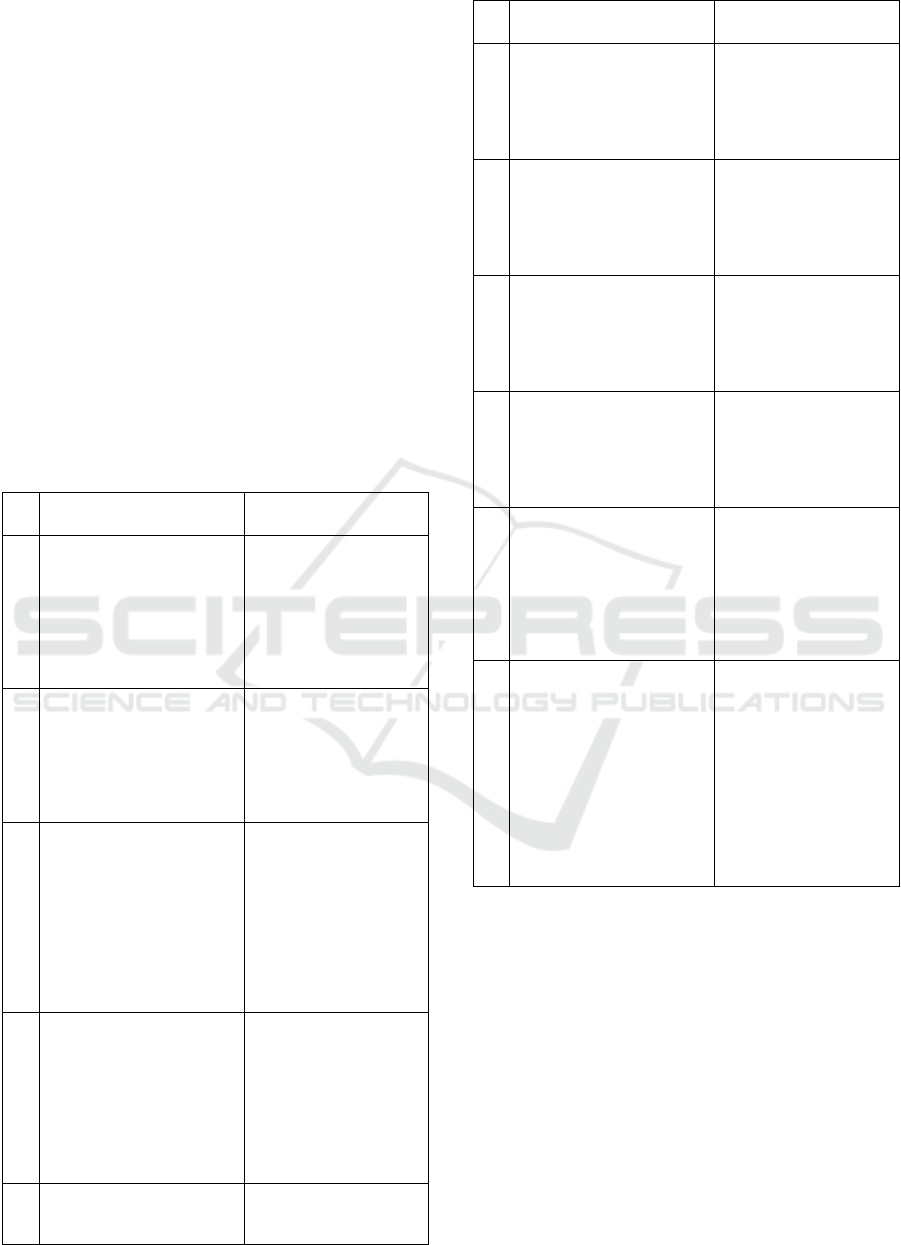
5.2 Result Generated by the ChatGPT4
0 presents an analysis strictly based on the text itself,
without drawing on any external encyclopedism or
cultural knowledge. It relies only on linguistic,
syntactic, and semantic cues internal to the text.
Table 2: Internal textual analysis table with detection of
oppositions and conflicts (without contextual data).
Step
Analysis (based on internal
textual elements)
Oppositions / Conflicts
Revealed
0.
The text forms a structured
whole. It presents two similar
situations (introduced by
"when") leading to a punitive
consequence. A conclusion
results in the form of a
generalization addressed to a
recipient ("you").
Structural: repetition + final
rupture → tension between
a cyclic logic (recurrent
violence) and a final
revelation or denunciation.
1.
It concerns an activity (let’s
work), an incident (the mill
catches our finger), an attempt
to flee (we want to escape),
corporal punishments (our
hand/leg is cut off), and
consumption (you eat sugar).
Semantic: opposition
b
etween local physical
action and distant
consumption; tension
b
etween production and
consumption.
2.
- we: group including the
speaker. - I: the speaker
himself, included in we. - they
(« on » in French): indefinite
agent acting upon us. - you:
designated recipient at the end.
Relations: they (« on » in
French) acts on us, I confirm
the experience, you receive an
indirect effect.
Enunciative and relational:
conflict between we/I
(suffering) and they (« on »
in Fr.) (inflicting), and
b
etween I/we and you
(beneficiaries not involved
in the suffering).
3.
Main verbs: work, catch, cut,
want, flee, found myself, eat. -
Oppositions: work (productive
action) ↔ cut (punitive action).
- Semantic fields: action, will,
pain, consumption. - Logical
grouping: activity verbs →
sanction verbs → consequence
verbs.
Lexical / semantic: tension
b
etween positive active
verbs (work, want) and
violent passive verbs (cut);
opposition between
individual will and brutal
sanction.
4.
- Structural repetition: two
sentences beginning with
"when we..." followed by "they
Syntactic: contrast between
the mechanical regularity of
the first structures and the
Step
Analysis (based on internal
textual elements)
Oppositions / Conflicts
Revealed
cut off our...". - Binary
structure: initial condition →
violent result. - Rupture: the
last sentence breaks the
previous pattern and directly
addresses a "you".
uniqueness of the last →
conflict between violent
routine and awareness.
5.
When: simultaneity or
recurrent condition. - I found
myself: past perfect, personal
moment. - You eat: present,
generalizing and current.
Temporal: opposition
b
etween lived past (I found
myself) vs present ("you
eat") → tension between
memory of experience and
ignorance of the present.
6.
- Implicit causal relations:
when A, then B. - Last sentence
makes explicit a logical
relation: "It is at this price
that..." → consequence of the
previous narrative.
Logical and moral: cause-
effect relation between pain
and consumption; implicit
moral conflict between
b
anal act (eating) and its
hidden consequence.
7.
- we perform two actions
(work, want to flee) and suffer
two actions (they cut off
our...). - I am affected by both
events. - you eat, linked to the
price of the recounted events.
Pragmatic / interactional:
conflict of positions and
effects: we suffer what you
indirectly cause; implicit
hierarchy among actors.
8.
- we: homogeneous group in
discourse. - I: emphasis on
personal experience within the
group. - you: external position,
indirectly but explicitly
concerned. This creates a
confrontation effect between
I/we and you.
Enunciative and
axiological: opposition
b
etween inclusion (we) and
distancing (you); conflict of
perspectives between lived
suffering and implicit
comfort.
9.
- Repetition of constructions
"when... they cut off our..." →
confinement, lack of choice. -
Use of the pronoun "they"
("on" in Fr.) without
specification → impersonal
threat. - Implicit opposition
I/we ↔ you. - Last sentence
b
egins with "It is at this price":
expression of a paradoxical
equivalence between pain and
consumption.
Structural / symbolic:
repetition = confinement;
they (« on » in Fr.) =
impersonal threat; you =
unnamed complicit
addressee; "at this price" =
conflict of values.
5.3 Discussions of the ChatGPT4
Results
In this example, conflicts emerge through clearly
structured formal oppositions. Personal pronouns
establish a power dynamic: we (workers, the speaker
group) and I (individual experience) are opposed to
they (an anonymous punitive force) and you (the
consumer audience). This enunciative opposition
reveals a relational and moral conflict between those
who suffer physical violence and those who benefit
from it, whether knowingly or unknowingly. The
repetitive syntactic structure in the first two sentences
(“when... they cut...”) creates a mechanical,
inescapable pattern that reinforces the idea of
KMIS 2025 - 17th International Conference on Knowledge Management and Information Systems
406
systemic conflict based on domination. The contrast
between verb tenses (narrative present and past
perfect) and the generalized present in “you eat”
reflects a temporal tension between lived experience
and ongoing consumption. Finally, logical structures
such as the conditional clause “It is at this price
that...” point to a cause–effect relationship between
suffering and comfort, revealing an implicit moral
conflict regarding the conditions of commodity
production. These various indicators suggest a
conflict of axiological, social, and political nature,
rooted in the invisibilities of real violence within
consumption systems.
5.4 Limitations of an Analysis Without
Encyclopedic or Cultural Context
Without cultural context, and using only intra-textual
linguistic clues, one can detect the violence of the
situation – and even infer a possible “relational and
moral conflict between those subjected to physical
harm and another group that benefits from it without
suffering the consequences.” However, it is not
possible to infer the deeper critical scope of the
conflict – namely, the contrast between
Enlightenment values and the colonial reality of 18th-
century Europe.
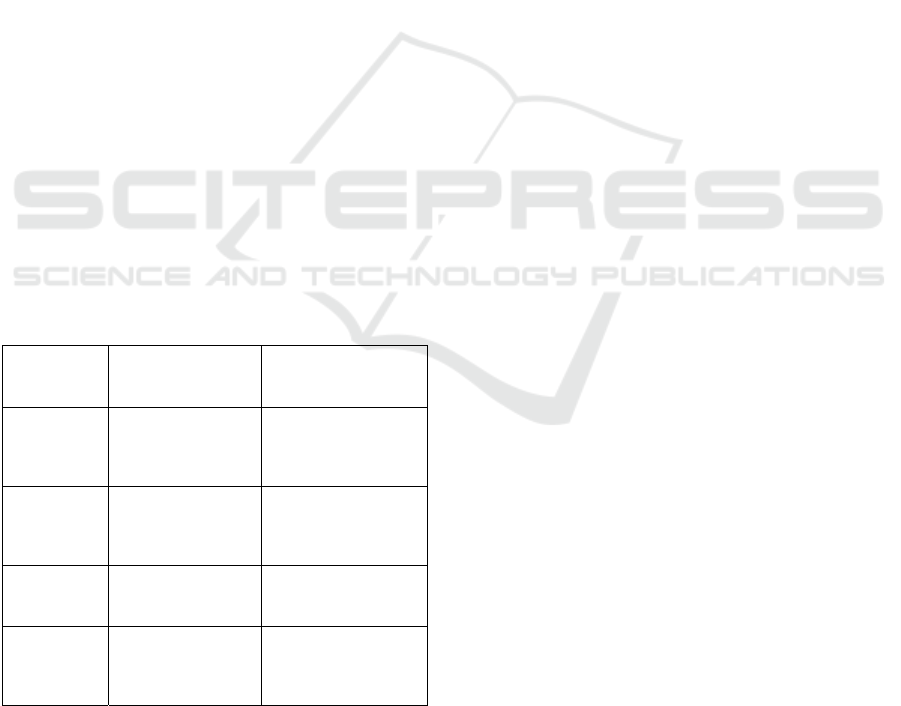
Table 3 illustrates a few specific points where
cultural context would be essential for interpreting the
example:
Table 3: Few specific points where cultural context would
be essential for interpreting the example.
Aspect
analyzed
Interpretation
without cultural
context
Interpretation with
cultural context
Interpretation
of “you”
Unidentified
addressee; may be an
individual or collective
interlocuto
r
Direct address to
Europeans, readers
complicit in the slavery
system
Meaning of “at
this price”
Personal cost,
individual suffering
Moral and political cost
of European
consumption (sugar =
product of slavery)
Status of the
speaker
Suffering subject,
witness of a brutal
system
Spokesperson for the
oppressed, allegorical
figure of social critique
Effect
produced on
the reader
(hypothesis)
Compassion,
indignation towards
violence
Moral discomfort,
questioning of collective
responsibility
6 CONCLUSION
The analysis in this paper has demonstrated that
identifying and detecting the expression of conflict in
a text cannot be accomplished without careful
consideration of the textual elements forming the
internal context. By integrating insights from
traditional grammar, semantics, and pragmatics, we
have shown that conflict can, to a certain extent, be
delineated on the basis of linguistic indicators alone -
that is, through an interpretation internal to the
language system, without needing to appeal to extra-
textual context.
Cultural context, understood as a shared memory
of representations, values, and norms, plays a crucial
role in activating the interpretive frameworks
necessary for detecting conflictual tensions. Without
activating an extra-linguistic context, some conflicts
remain invisible or are poorly interpreted. Thus,
cultural context is not a mere backdrop; it functions
as a hermeneutic operator essential to textual
interpretation.
This approach highlights the need to integrate
more refined and culturally informed
contextualization models. Conflict analysis cannot
remain confined to the linguistic analysis of the text;
it must also mobilize cultural knowledge to clarify
what is implied or latent. We aim at analyzing other
types of text to enrich to define a methodology that
guides to integrate some elements of cultural context
in text analysis and conflict detection.
This study is as first steps to identify guidelines
and Patterns that help the identification of conflicts
and cultural context when analyzing text using
Generative AI algorithms. We aim at studying
linguistics and semantic relations from one side and
testing more LLMs algorithms.
REFERENCES
Adam J-M., « Le modèle émergentiste en linguistique
textuelle ». In: L'Information Grammaticale, N. 134,
2012. L'émergence : un concept opératoire pour les
sciences du langage ? pp. 30-37. doi:
https://doi.org/10.3406/igram.2012.4211
Austin J., Quand dire, c'est faire (trad. Gilles Lane), Paris,
Editions du Seuil, 1970 – traduction de (en) How to do
things with Words : The William James Lectures
delivered at Harvard University in 1955, Oxford, J.O.
Urmson, 1962.
Bachimont B., « Corpus et connaissances : de l’extraction
linguistique à la modélisation conceptuelle » ,
Sémantique et corpus, (dir. A. CONDAMINES),
The Role of Context to Detect Conflict Expression in Text
407

ouvrage de la série Cognition et traitement de
l’information. Lavoisier-Hermès, 2005, pp. 319-346.
Bazire M., et Brezillon P. (2005) « Understanding Context
Before Using It ». In : Dey A., Kokinov B., Leake D.,
Turner R. (eds) Modeling and Using Context.
CONTEXT 2005. Lecture Notes in Computer Science,
3554. Springer, Berlin, Heidelberg.
Beyssade C., « Signification et mises à jour du contexte »,
Le contexte en question. Série : Les concepts fondateurs
de la philosophie du langage, volume 10 (Chapitre 13).
Sous la direction de Gerda Hassler. ISTE éditions, pp.
269-293, 2024.
Bronckart, J-P., « Genres de textes, types de discours, et «
degrés » de langue ». In: Texto !, 2008, vol. 13, n° 1.
https://archive-ouverte.unige.ch/unige:37287
Castelfranchi C., « Conflict ontology ». Computational
conflicts : conflict modelling for distributed intelligent
systems, ed. Springer-Verlag Berlin Heidelberg 2000 .
pp. 21-40.
Chuntao Li, Caiying Han Caiying. « Contextual Relevance:
The Basic Condition for Textual Coherence ».
International Journal of Language and Linguistics. Vol.
7, No. 1, 2019, pp. 42-49. doi:
10.11648/j.ijll.20190701.16
Condamines A. (dir.), Sémantique et corpus, ouvrage de la
série Cognition et traitement de l’information.
Lavoisier-Hermès, 2005.
Dehais F. et Pasquier Ph., « Conflit : vers une définition
générique ». In: Acte de l'Interférence Homme Machine
(Biarritz, France), 2000. pp.1-13. hal-04531115
Ducrot O, Schaeffer J.-M., Nouveau dictionnaire
encyclopédique des sciences du langage, Points Essais.
Paris, 1999
Fayol M., Le récit et sa construction : une approche de
psychologie cognitive, Delachaux & Niestlé, coll.
Actualités pédagogiques et psychologiques, 1985
Gastaldi J. L., Moot R., Retore Ch., « Le contexte en
traitement automatique des langues », Le contexte en
question. Série : Les concepts fondateurs de la
philosophie du langage, volume 10 (Chapitre 14). Sous
la direction de Gerda Hassler. ISTE éditions, pp. 295-
323, 2024. ⟨hal-04008967⟩
Gauducheau N., Marcoccia M., « La violence verbale dans
un forum de discussion pour les 18-25 ans : Comment
les jeunes jugent-ils les messages ? ». La haine en ligne,
Réseaux, 2023/5 N°241, La Découverte.
Greco Morasso S., « The ontology of conflict ». Pragmatics
& Cognition 16 (3), 2008, pp. 540-567.
Hassler G. (Dir.), Le contexte en question. Série : Les
concepts fondateurs de la philosophie du langage,
volume 10 (Chapitre 14). Sous la direction de Gerda
Hassler. ISTE éditions, pp. 295-323, 2024.
Hoskovec T., « La linguistique textuelle et le programme
de philologie englobante », Verbum XXXII, n°2, 2010.
Lichao S., « The Role of Context in Discourse Analysis »,
Journal of Language Teaching and Research, Vol. 1, No.
6, pp. 876-879, November 2010, ACADEMY
PUBLISHER, Manufactured in Finland ;
doi:10.4304/jltr.1.6.876-879
Lyons J., Sémantique linguistique, Larousse, 1980
(traduction de : Semantics, vol. 2, London : Cambridge
University Press, 1977)
Matta No., Matta N. and Herr Ph. (2024). « Importance of
Context Awareness in NLP ». In Proceedings of the
16th International Joint Conference on Knowledge
Discovery, Knowledge Engineering and Knowledge
Management - Volume 3: KMIS, 2024 ; ISBN 978-989-
758-716-0, SciTePress, pages 280-286. DOI:
10.5220/0012994700003838
Müller H.J. and Dieng R., « On Conflicts in General and
their Use in AI in Particular ». Computational
conflicts : conflict modelling for distributed intelligent
systems, ed. Springer-Verlag Berlin Heidelberg 2000.
pp. 1-20
Rastier F., Arts et sciences du texte, Paris, PUF, 2001
Rastier F., Sémantique et recherches cognitives, Paris, PUF,
coll. Formes sémiotiques, 2010.
Rigel M., Pellat J-Ch., Rioul R., Grammaire méthodique du
français, PUF, Paris, 2014 (5e édition)
Sauquet M., Vielajus M., « Le désaccord et le conflit : entre
affrontement et évitement ». Chapitre 11 de l’ouvrage
collectif : L’intelligence interculturelle : 15 thèmes à
explorer pour travailler au contact d’autres cultures.
Essai n°205. Editions Charles Leopold Mayer, Paris,
2014
Schmoll P.. « Production et interprétation du sens : la notion
de contexte est-elle opératoire ? », Contexte(s), Scolia
[sciences cognitives, linguistique et intelligence
artificielle / revue de linguistique], 1996, 6, pp.235-255.
Halshs-02071397
Talmy L., Toward a Cognitive Semantics. Cambridge,MIT
Press, 2000.
KMIS 2025 - 17th International Conference on Knowledge Management and Information Systems
408
