
Rule-Based Selection of Languages for Modeling
Cyber-Physical Systems
Veronica Opranescu
a
and Anca Daniela Ionita
b
National University of Science and Technology Politehnica Bucharest, Bucharest, 060042, Romania
Keywords: Cyber-Physical Systems, Modeling Languages, Recommendation Systems, Rule-Based Systems.
Abstract: In the context of Cyber-Physical Systems (CPS), the choice of suitable modeling languages plays an important
role in effectively addressing the varied interests of the system stakeholders. This paper proposes a rule-based
recommendation system to suggest appropriate modeling languages that optimally cover all identified
viewpoints required for a set of stakeholders. The recommendation engine employs Drools as business rule
management system, to highlight the connection between stakeholders’ viewpoints and the kind of models
supported by available modeling languages. For assessing this method, a case study was performed with a
realistic example from the domain of industrial automation and a selection from three modeling languages.
1 INTRODUCTION
The design of advanced cyber-physical systems
(CPS) must cover a combination of viewpoints, as
each stakeholder possesses distinctive requests and
understandings. This complexity requires a
meticulous approach to modeling language selection
to capture all the relevant viewpoints and promote
continuous collaboration at all levels of development
of the same system (Cederbladh et al., 2024).
CPS are defined as systems where physical
processes are integrated with computational activities
for the purposes of real time monitoring, control and
automatic operation. Applications for CPS can be
seen in transportation, healthcare, and manufacturing
industries (
Hamzah et al., 2023
). Effective detection,
data processing and actuation are major requirements
to successfully interface with physical processes in
safety critical environments (Aslam et al., 2025).
Understanding how digital control contributes to
physical behaviors, and how physical performance
affects digital control, highlights a reciprocal
influence for systems control (Stary, 2021), implying
a CPS design characterized by resilience, security and
efficiency, capable to easily adapt to different
environments while ensuring dependable operations
within multi-faceted real-world scenarios.
a
https://orcid.org/0009-0005-7886-6888
b
https://orcid.org/0000-0002-8966-6196
Modeling within CPS involves creating an
abstract representation of both physical processes and
computational elements (Barišić et al., 2022) . This
process is executed in order to evaluate, model, and
verify the behavior of the system. Modeling is an
important step in understanding the complexity of
interactions in CPS since models allow engineers to
determine how the changes to one element of the
system may propagate through the system (Daun and
Tenberge, 2023). Modeling also provides
stakeholders with the ability to represent and test
different use cases and understand where problems
may exist, as well as identify ways to optimize
systems, before putting them into production (Taha et
al., 2021). Overall, modeling methods enable
effective design decision making that leads to safer,
more reliable, and efficient cyber-physical system
applications in any industry.
The study of scientific literature has proved that
there is a large variety of languages used for CPS
analysis and modeling (Broman et al., 2012),
therefore the question about finding a set of criteria
for making the right choice for modeling a specific
application. We base this work on a study of three
languages from the same technological space: UML
(Unified Modeling Language) (Ordinez et al., 2020
)
,
SysML (Systems Modeling Language) (Parant et al.,
120
Opranescu, V. and Ionita, A. D.
Rule-Based Selection of Languages for Modeling Cyber-Physical Systems.
DOI: 10.5220/0013710200004000
Paper published under CC license (CC BY-NC-ND 4.0)
In Proceedings of the 17th International Joint Conference on Knowledge Discovery, Knowledge Engineering and Knowledge Management (IC3K 2025) - Volume 2: KEOD and KMIS, pages
120-127
ISBN: 978-989-758-769-6; ISSN: 2184-3228
Proceedings Copyright © 2025 by SCITEPRESS – Science and Technology Publications, Lda.

2023), and MARTE (Modeling and Analysis of Real-
Time and Embedded Systems) (Mallet et al., 2017).
Such criteria for identifying the views covered by
their various types of diagrams were presented in
(Opranescu and Ionita, 2025), which represents the
starting point of the current research.
To address this challenge, in the first section, the
paper introduces a framework based on a rule-based
recommendation system designed specifically for the
CPS domain, which automates the decision-making
process by providing a set of defined rules for
stakeholder - viewpoint - modeling language
relationships. The system operates within the CPS
context, having predefined rules on how stakeholders,
their viewpoints (e.g., performance, safety, security),
and the modeling languages best suited to represent
those viewpoints are mapped. This section also
presents the mapping rules, discusses their
limitations, and explains the strategies adopted to
mitigate them.
In the second section, the implemented algorithm
that encompasses the rule-based part is described,
translating the predefined mapping rules into an
operational logic that can be executed to support
automated and consistent recommendations within
the system.
The last section contains a presentation of a case
study for analysis and modeling in the industrial
automation domain. The recommendation system is
tested against a real-world CPS, evaluating its
practicality and usefulness. The construction the
recommendation system’s architecture and the
implementation of the rules have undergone rigorous
validation procedures based on an actual scenario
discussed in the previously mentioned case study.
The use of a real-life case study enables assessing
the system’s performance within empirical
conditions, verifying the recommendations in
practice and not only in theory.
2 RULE-BASE SELECTION OF
MODELING LANGUAGES
In the design and development of CPS, a clear
alignment between stakeholders and their areas of
concern is of prime importance (Shahin et al., 2019).
Different roles like system architects or hardware
engineers, would naturally focus on different
dimensions or aspects of the system that are otherwise
referred to as a concern or viewpoint (ISO/IEC/IEEE,
2011). A system architect focuses on the different
configurations in a system, which are partially
defined by the control mechanisms and data flows,
whereas a hardware engineer deals with the exact
timing schedule of physical events, including
associated constraints.
In an effort to minimize the time it takes
individuals to manually establish properly connected
stakeholders (
Azzouzi et al., 2022) to their proposed
concerns, a rules-based approach was selected,
employing automated connection to what they would
typically be responsible for. The defined rules act as
the knowledge base and will be clear enough to help
the system look up the proper stakeholder name, and
connected viewpoints for that name to process.
This study uses the structure and classifications
presented in (Opranescu and Ionita, 2025), thereby
assuming them as an evidenced basis for continued
research and methodological refinement.
Once the stakeholders have been mapped onto
their individual perspectives, consideration is made to
determine the most suitable languages to address
these concerns. A list of languages will be suggested,
offering complete coverage, and additional languages
may be suggested to allow for greater flexibility or
specificity. Moreover, a summary describing the
relevance of each language to specific stakeholders
will be given, thereby assisting teams in putting the
recommendations into context for improved practical
usage.
By using this strategy we aim to cover
stakeholders’ needs, and to allow project teams to
focus on design and implementation and avoid the
gap between stakeholders’ concerns and specific
technical requirements.
2.1 Mapping Rules
CPS projects generally comprise a broad group of
stakeholders, such as system architects, network
architects, system engineers, software developers,
hardware engineers, business/data analysts, and
testers. Every one of these stakeholders is
accountable for certain system-related issues that are
communicated through various viewpoints
(Rahatulain and Onori, 2018).
These include structural, behavioral, and non-
functional concerns such as data flow, control flow,
state transitions, scheduling, timing constraints,
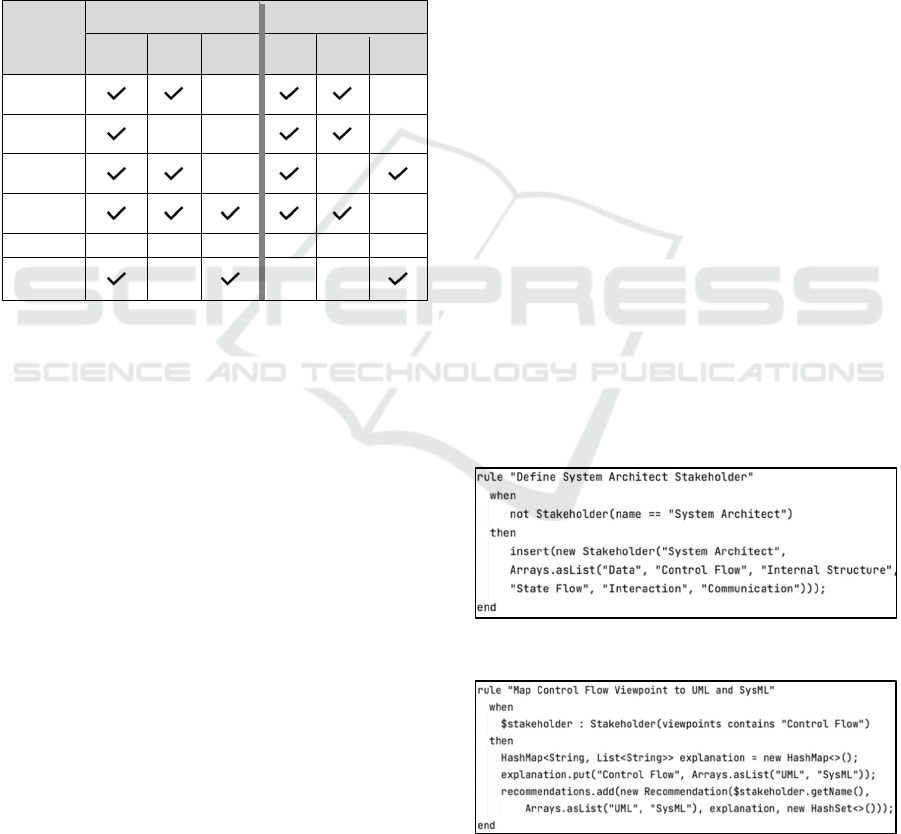
security, etc., amounting to a total of 16 views
identified in the present framework, based on our
previous results from (Opranescu and Ionita, 2025) in
Table 7 from which a subset is hereby presented in
Table 1.
With the intention of ensuring these concerns are
properly addressed, adequate modeling languages
Rule-Based Selection of Languages for Modeling Cyber-Physical Systems
121
must be selected to cover identified viewpoints. In
this approach, the modeling languages to consider are
UML, SysML, and MARTE. UML is most used for
general-purpose systems and software modeling.
SysML, as an extension of UML, handles additional
specific features, addressing systems engineering'
model requirements, behavior, structure, and
parametric. MARTE, on the other hand, is focused on
embedded and real-time systems and is essential
when dealing with scheduling and timing constraints
in CPS.
Table 1: Mapping examples of stakeholders' viewpoints to
modeling languages.
Viewpoint
Stakeholder Modeling Language
System
Architect
Data
Analyst
Tester
...
UML SySML MARTE
Data Flow
Internal
Structure
Timing
Functional
Re
q
....
... ... ... ... ... ...
Resources
Instead of using a logic that encompasses every
stakeholder and their respective viewpoints and
related modeling languages, in the above method, the
system is based on a rule-based system supported by
Drools (
Proctor, 2012)
. Drools is a business rules
management system that allows for the domain
knowledge to be expressed in a declarative manner.
The proposed method introduces a measure of
flexibility into the process as an entity (Huang et al.,
2020).
The relationships between stakeholders,
perspectives, and modeling languages are expressed
by adjustable rules that are simple to change or
extend. For this reason, when new stakeholders or
modeling languages are added, the system needs to
make minimal adjustments to its internal logic.
The Drools rules framework presents a formal
technique of knowledge representation (Grimm,
2009), which encodes professional insights related to
stakeholder roles and viewpoints as well as their
respective modeling languages. Through its
declarative nature the system manages complex
relationships to generate consistent recommendations
within the CPS framework.
The selection of the Drools-Java technology stack
is based on the findings of a previous study
(Opranescu et al., 2020), which analyzed a range of
technologies relevant to ontology-based
recommendation system development. That paper
provided a comparative overview and practical
insights for researchers and practitioners, with a
particular focus on the automatic integration of rule
engines into CPS. Based on that analysis, Drools was
identified as a suitable choice due to its declarative
rule syntax, compatibility with semantic
technologies, and native integration with Java
applications, particularly effective for supporting
automated rule integration.
This approach proposes that Drools rules defined
in .drl files should serve as the core mechanism for
domain-specific knowledge encapsulation which
enables stakeholder view alignment and view-to-
modeling language mapping. By enabling declarative
logic specification through the Drools platform users
can increase readability and simplify maintenance
efforts.
Every single rule contains a specific, focused
piece of logic, totaling 7 rules to map each
stakeholder to corresponding viewpoints and 16 rules
that map each viewpoint to covered modeling
languages. For instance, one guideline might stipulate
that an individual in the role of a "System Architect"
will generally be concerned with viewpoints such as
"Data", "Control Flow", "Internal Structure", "State
Flow", "Interaction", "Communication" etc. (see
Figure 1).
Another rule states that if a stakeholder is
interested in the "Control Flow" viewpoint, both
UML and SysML are the appropriate modeling
languages to fulfill that concern (see Figure 2).
Figure 1: Rule that maps Stakeholder to Viewpoints.
Figure 2: Rule mapping Viewpoint to Modeling Language.
KEOD 2025 - 17th International Conference on Knowledge Engineering and Ontology Development
122

2.2 Limitations Analysis
Utilizing Drools rules for stakeholder–viewpoint–
language mapping is an adaptable option
characterized by high transparency, but it also has
certain limitations and concerns that require further
research. Despite the modularity and flexibility of
the knowledge-mapping specification methods
available in rule-based systems, such as Drools, they
are subject to specific restrictions that can impact the
scalability and adaptability of the recommendation.
One such limitation is the expressiveness of static
rules (Kaczor et al., 2011
). All rules need to be
manually and consistently articulated, and all changes
made to the domain model (e.g., adding a new kind of
stakeholder class, an extra viewpoint, or using a
different modeling language) still require human
intervention in most of the of rules. The ongoing cost
of maintaining such an architecture (often difficult to
quantify) combined with the impediments that arise
as system components differ over time, frequently
outweighs its benefits. This is particularly true when
operational costs are considered within the broader
context of system sustainability and long-term
effectiveness.
Another restriction focuses on the conflict
resolution and rule ordering (Jung et al., 2012). If
there are multiple rules that pertains to the same
stakeholder or perspective, the reasoning mechanism
must decide between the rules as to which one holds
higher priority. Pushing execution order control to the
level of Drools, with salience (rule priority) and
agenda groups, can result in the rule base becoming
large, hard to understand and debug.
Also, the proposed method provides a binary
classification feature, indicating whether a modeling
language addresses a particular viewpoint (Hille
Pascal Van et al., 2012). As such, this method is
insensitive to the subtle nature involved in modeling
needs. . In practice, a language may provide partial
support of a viewpoint, or several languages must be
combined to achieve complete representation—
situations difficult to articulate by a set of declarative
rules.
Scalability is a particular concern as the expansion
of stakeholders, perspectives and languages will lead
to a nonlinear increment on the number of rules (Luo
et al., 2021). This growth can have a negative impact
on performance or further complicate the ruleset into
which to evaluate and maintain.
These limitations suggest that although Drools
rules will enable the expression of linear
transformations easily, it is very likely that they
would have to be complemented with more flexible
or data-driven approaches (e.g., learning algorithms,
ontology-based reasoning - enhances Drools by
supplying inferred facts for richer reasoning, or
several layers of metadata - provide a mechanism for
more nuanced and adaptive recommendations), to
deal with the sophisticated environments which
characterize the development of cyber-physical
systems.
2.3 Mitigating Rule-Based Mapping
Limitations
To achieve greater scalability, the rule-based system
is cautiously designed with an emphasis on
modularity. Every individual rule is clearly defined to
perform a specific mapping operation (e.g., mapping
a stakeholder to viewpoints or mapping a viewpoint
to one or more modeling languages). The proposed
architecture facilitates the ease of managing,
maintaining, and integrating rules, even as systems
undergo requirement transformations. Adding extra
stakeholders, viewpoints, or modeling languages is
done through the creation of new rules, hence
securing the underlying logic.
Using Java programming, advanced post-
processing is addressed by employing rules through
the Drools engine. After the rules are executed, and
processed, and the mappings are loaded, the Java
code supports the algorithm by resolving any
inconsistencies, ordering modeling languages based
on coverage, and presenting the recommendations.
These additional steps provide a simple and compact
way of handling rules, while the Java part of the
algorithm manages internal logic, including ordering
and sorting.
The transparency principle is a critical advantage
that is linked with this design. In .drl files used in the
Drools framework, stakeholders' concerns and
modeling languages are well defined. These are
designed to be readable and editable by domain
experts, irrespective of programming knowledge. The
system thus achieves traceability and flexibility,
hence improving peer-review mechanisms and
allowing recommendation rules to evolve
incrementally.
3 RECOMMENDATION SYSTEM
The highlight of the language modeling
recommendation algorithm is its integration with a
general rule-based knowledge representation system
by utilizing Drools. Integration makes it easy to
separate decision logic from domain knowledge so
Rule-Based Selection of Languages for Modeling Cyber-Physical Systems
123

that the system is flexible enough to handle the
changing modeling demands for CPS design.
3.1 Algorithm
The recommendation flow starts by accepting as input
a set of stakeholders and the respective viewpoints
that are of interest to each stakeholder. Upon
receiving the input, the process moves through a
number of steps.
One of the most important features of the
recommendation framework is that it acknowledges
the collective nature of all stakeholders working
together on the same CPS. Instead of making
individual language recommendations for each
stakeholder, the algorithm calculates a shared set of
modeling languages that collectively represent the
opinions of all parties involved. This approach
maintains communication and modeling consistency
within the team and thereby guarantees the smooth
integration of contributions from all disciplines. The
engineering process is made more efficient and less
prone to misinterpretation or redundancy by creating
a common linguistic foundation.
As previously mentioned, the system uses a rule
based Drools engine to find the specific viewpoints
for each stakeholder. The input dataset provided by
the stakeholders determine what viewpoints they are
concerned with. The rule engine takes this
information and attempts to map stakeholders with
their appropriate viewpoints.
Then, the algorithm correlates those viewpoints to
the appropriate modeling languages, like UML,
SysML, and MARTE. This mapping is also
performed using Drools rules which specify, for each
viewpoint, its corresponding modeling language/s. If
a viewpoint is not covered by any of the previously
selected languages, the algorithm will add the newly
identified modeling language to recommended
languages list that provide full coverage for the initial
viewpoints.
After mapping the viewpoints and modeling
languages, the algorithm analyses and compares the
language with the number of covered viewpoints.
This analysis is carried out in the Java logic part of
the system which sorts the languages based on the
number of viewpoints they cover, starting with the
most used. The selection is done first for the primary
languages considering the overall coverage of
viewpoints.
Lastly, the algorithm then generates a list of
recommended modeling languages, necessary to
capture the view of all stakeholders involved. In the
situation where more than one language is needed to
capture the view of a specific stakeholder, the system
will explicitly state that the mentioned languages are
meant to be used concurrently, giving a clear and
comprehensible indication of the language(s) needed
for full representation.
The integration of Drools rules within the Java
application is a straightforward process, which
contributes to the system’s adaptability and
maintainability. This approach facilitates changes
implementation of mapping rules and
recommendations without impact on the logic part of
the algorithm. Consequently, the proposed solution
supports rolling adjustments while decreasing the
impact to existing features of the system.
3.2 Outputs
The results generated by the modeling language
recommendation system are intended to offer users
who are engaged in the design of CPS precise and
helpful advice. Taking as input a collection of
stakeholders and corresponding views, the system
generates two significant categories of output: a
general proposal of modeling languages that cover all
viewpoints, and individualized recommendations
specific to each stakeholder.
Basically, the system determines the specific
modeling languages (e.g., UML, SysML, MARTE)
needed to address the total set of viewpoints
accumulated from all users as specified by the
stakeholders. The languages are listed and extracted
with information on the number and percentage of
viewpoints that they address. This then provides users
with a concise overview of the significance and
applicability of each language in the present
framework. In cases where one language is not
enough, the system clearly announces that a
multilingual approach is unavoidable, pointing to the
need for interdisciplinary collaboration.
Besides the overall global guidelines, the system
also generates personalized recommendations for
specific stakeholders. For every one of the
stakeholders identified, it lists the applicable
modeling languages and indicates the viewpoints
supported by each language. This assists in making
sure that every team member not only knows which
tools to utilize but also why specific languages are
needed, based on their role and responsibilities.
This dual reporting, both individual and team
wise, enables organizations to achieve modeling
practice harmonization between functions, leading to
consistency, better communication, and reduced
integration complexity in cyber physical systems
design projects.
KEOD 2025 - 17th International Conference on Knowledge Engineering and Ontology Development
124
The recommendation system generates a
structured, multi-layered output aimed at ensuring
that the views of all stakeholders are addressed by
appropriate modeling languages. The outputs include:
a. Modeling Language Integration for Complete
Coverage
The framework could provide one modeling language
or define a collection of modeling languages, which
collectively guarantee full coverage of all the views
described across the different stakeholders. The set is
presented as a conjunctive set (i.e., all the modeling
languages mentioned need to be used in conjunction
with each other) so that no viewpoint is left out.
b. Individual Modeling Language Coverage
Summary
For each modeling language in the suggested
combination, the system reports:
a. the number of viewpoints that it encompasses
b. the percentage of the entire list of viewpoints
that it covers
c. the specific viewpoints covered by that
language.
This enables users to see the position of each
modeling language in the total coverage.
c. Stakeholder-Centered Language Assignment
To provide precision in how each stakeholder's
interests are supported and what modeling tools they
need to use. For each stakeholder, the system
identifies:
• the modeling language(s) that must be used to
respond to their respective viewpoints
• the list of the viewpoints addressed by each
recommended modeling language.
Together, these outputs provide a comprehensive,
traceable recommendation framework that translates
modeling language choice to stakeholder needs and
viewpoint requirements.
4 CASE STUDY
In order to assess and analyze the performance of the
proposed modeling language recommendation
system, an industrial automation case study has been
chosen, specifically a Cyber-Physical Production
System (CPPS) as described in (Weyer et al., 2016).
This case study illustrates a mature and highly
modular smart factory setting, in which several
stakeholders with varying perspectives collaborate in
the modeling, simulation, and operation of
manufacturing systems.
Using the proposed recommendation model
within the industrial automation domain, the purpose
is to present its potential to effectively recommend
relevant modeling languages that can fully cover the
large variety of stakeholder concerns as well as
system perspectives required in such environments.
The real-life environment offers a good test case for
testing the appropriateness and comprehensiveness of
the proposed modeling methods. As presented in
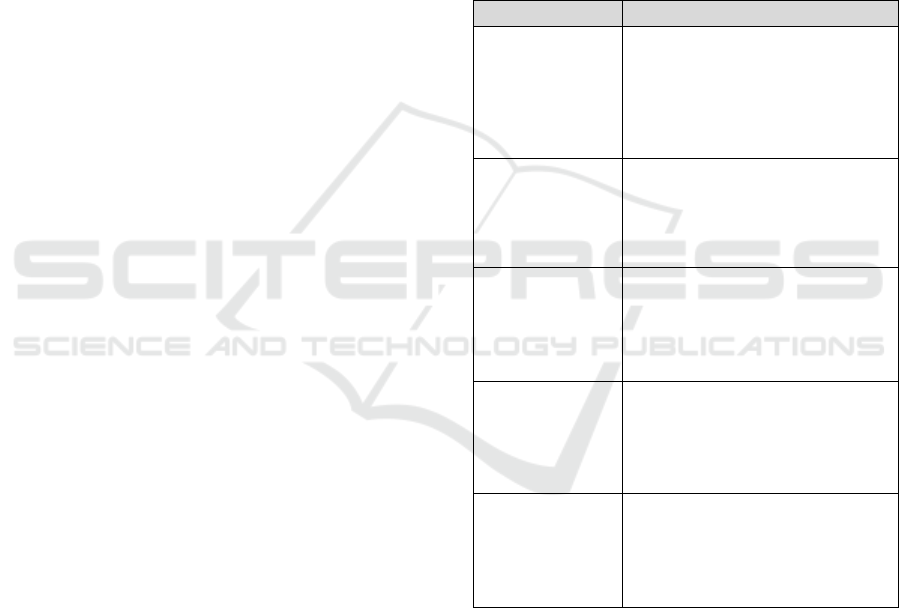
Table 2, a representative subset of stakeholders and
their associated concerns has been identified in the
studied test case, although these do not encompass all
stakeholders and concerns involved.
Table 2: Case study data input for recommendation system.
Stakeholder Selected Viewpoints
System Architect
Deployment
Resources
Communication
Functional Req
Non-Functional Req
Software Assembly Structure
System Engineer
Control Flow
State Flow
Timing
Allocation
Functional Req
Software
Developer
Data Flow
Timing
Communication
Internal Structure
Software Assembly Structure
Hardware
Engineer
Deployment
Resources
Allocation
Communication
Timing
Data Analyst
Data
Data Flow
Functional Req
Communication
Interaction
In the domain of industrial automation, modeling
and simulation processes are of utmost significance.
The increasing complexity of manufacturing
environments, combined with the need for shorter
product life cycles, requires the application of tools
that can accurately mimic behavior, effectiveness,
and system flexibility.
The output of recommendation system is the
selection of UML in conjunction with both profiles,
SysML and MARTE: "All requested viewpoints (16)
are fully covered by using: UML and SysML and
Rule-Based Selection of Languages for Modeling Cyber-Physical Systems
125
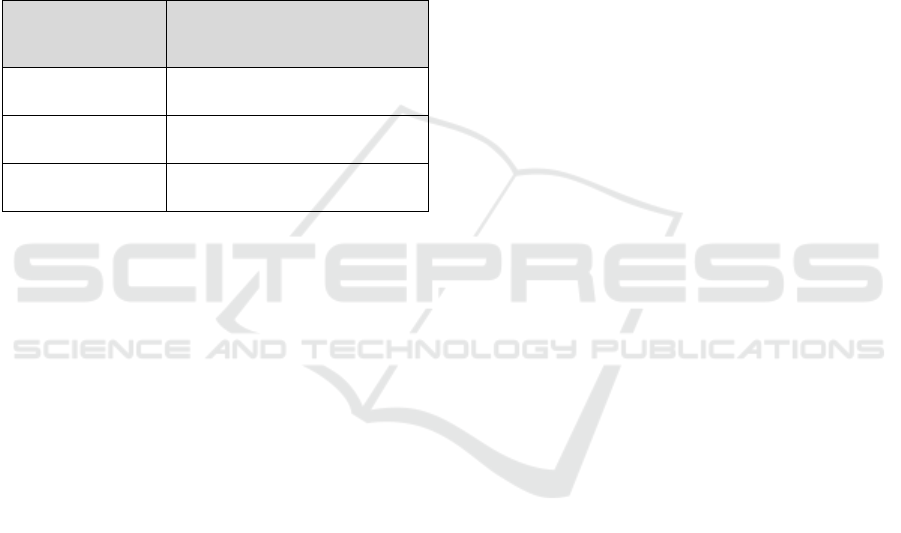
MARTE (Coverage: 100.0%)", providing the
coverage percentage for each of them (as presented in
Table 3).
Also, for each stakeholder, the system
recommends the corresponding modeling language
that covers its specific viewpoints. For example:
"Stakeholder 'Hardware Engineer' should use:
MARTE (to cover viewpoint(s): Allocation,
Resources, Timing, Communication) and UML (to
covers viewpoint(s): Deployment, Timing,
Communication) and optional SysML (to cover
viewpoint(s): Allocation)".
Table 3: Mandatory recommended modeling languages to
achieve complete viewpoints coverage.
Recommended
modeling language
Coverage
UML
68.8%
covers 11 out of 16 viewpoints
SysML
62.5%
covers 10 out of 16 viewpoints
MARTE
43.8%
covers 7 out of 16 viewpoints
To ensure complete stakeholder-relevant
perspective coverage in the industrial automation
CPS field, the system proposes all relevant modeling
languages that may address each perspective. In the
majority of cases, there is more than one modeling
language capable of serving the same perspective
(e.g., both UML and MARTE can serve Timing and
Communication for the Hardware Engineer).
Presenting all relevant options gives freedom in
model selection.
Nevertheless, certain perspectives important to
individual stakeholders are addressed by only one
modeling language. For example, the Non-Functional
Requirements perspective important to the System
Architect is facilitated by SysML alone. In these
cases, the system must incorporate that specific
modeling language for full viewpoint representation
for all stakeholders.
This method guarantees that every issue for the
stakeholders is adequately represented without
precluding flexibility when various languages can be
used for similar functions.
5 CONCLUSIONS
This study proposes a rule-based solution to the
recommendation of modeling languages in CPS
development, thereby focusing on one of the biggest
challenges in the assurance that the viewpoints of all
stakeholders are properly addressed. From a pre-
established mapping model and based on a rule-based
system implemented with Drools, the proposed
recommendation system determines a language or a
set of languages that cover end-to-end modeling of
the viewpoints of concern to a particular stakeholder
group. It aims the removal of modeling gaps and
offers a clear, traceable justification for language
choice.
Employment of formal specifications improves
clearness and reliability, characteristics that are
typically absent from the conventional selection
processes of modeling languages.
The applicability of the proposed methodology
was demonstrated in an industrial automation CPS
case study. The system produced an enriched set of
outputs, covering language pairs in terms of
quantified coverage, per-modeling language
contribution, and stakeholder-specific guidance.
Currently, the system analyzes the possibilities
offered by three modeling languages (i.e., UML,
SysML, and MARTE). Future work is expected to
expand its potential to supply additional modeling
languages and viewpoint ranking, enhancing its
applicability across domains with different and new
stakeholder requirements, intricate testing activities
using automated generated use cases and a user-
friendly interface.
REFERENCES
Aslam, M. et al. (2025). Cyber Security in Cyber Physical
Systems. In AI-Enhanced Solutions for Sustainable
Cybersecurity, pp.149–180.
Azzouzi, E et al. (2022). A Model-Based Engineering
Methodology for Stakeholders Coordination of
Multienergy Cyber-Physical Systems. In IEEE Systems
Journal, vol. 16, no. 1, pp. 219–230.
Barišić, A et al. (2022). Multi-paradigm modeling for
cyber–physical systems: A systematic mapping review.
In Journal of Systems and Software, vol. 183, p.
111081.
Broman, D et al. (2012). Viewpoints, formalisms,
languages, and tools for cyber-physical systems.
Proceedings of the 6th International Workshop on
Multi-Paradigm Modeling, ACM, New York, NY,
USA, pp.49–54.
Cederbladh, J et al. (2024). Experiences and challenges
from developing cyber‐physical systems in industry‐
academia collaboration. In Software: Practice and
Experience, vol. 54, no. 6, pp. 1193–1212.
Daun, M. and Tenbergen, B. (2023). Context modeling for
cyber‐physical systems. In Journal of Software:
Evolution and Process, vol. 35, no. 7.
KEOD 2025 - 17th International Conference on Knowledge Engineering and Ontology Development
126

Grimm, S. (2009). Knowledge Representation and
Ontologies. In Scientific Data Mining and Knowledge
Discovery, Springer Berlin Heidelberg, Berlin,
Heidelberg, pp.111–137.
Hamzah, M et al. (2023). Distributed Control of Cyber
Physical System on Various Domains: A Critical
Review. In Systems, vol. 11, no. 4, p. 208.
Hille Pascal Van et al. (2012). Comparing Drools and
ontology reasoning approaches for telecardiology
decision support. In Studies in Health Technology and
Informatics.
Huang, B., He, Z., and Tang, Y. (2020). Application
Research of Business Rules Engine Management
System Based on Drools. In Cyber Security Intelligence
and Analytic, pp.238–242.
‘ISO/IEC/IEEE Systems and software engineering --
Architecture description’. 2011.
Jung, CY., Sward, KA., and Haug, PJ. (2012). Executing
medical logic modules expressed in ArdenML using
Drools. In Journal of the American Medical Informatics
Association, vol. 19, no. 4, pp. 533–536.
Kaczor, K et al. (2011). Visual Design of Drools Rule Bases
Using the XTT2 Method. In Semantic Methods for
Knowledge Management and Communication. Studies
in Computational Intelligence, vol 381. Springer,
Berlin, pp.57–66.
Luo, X et al. (2021). A scalable rule engine system for
trigger-action application in large-scale IoT
environment. In Computer Communications, vol. 177,
pp. 220–229.
Mallet, F., Villar, E., and Herrera, F. (2017). MARTE for
CPS and CPSoS. In Cyber-Physical System Design
from an Architecture Analysis Viewpoint, Springer
Singapore, Singapore, pp.81–108.
Opranescu, V. and Ionita, AD. (2025). Review of Cyber-
Physical Systems Modeling With UML, SysML, and
MARTE. In IEEE Access, vol. 13, pp. 47132–47145.
Opranescu, V., Anghel, A. M., Ionita, A. D. (2024). Study
of Ontologies and Rule Engine Integration Applied to
Sensor Networks. In 2024 28th International
Conference on System Theory, Control and Computing
(ICSTCC), Sinaia, Romania.
Ordinez, L et al. (2020). Using UML for Learning How to
Design and Model Cyber-Physical Systems. In IEEE
Revista Iberoamericana de Tecnologias del
Aprendizaje, vol. 15, no. 1, pp. 50–60.
Parant, A et al. (2023). Model-based engineering for
designing cyber-physical systems from product
specifications. In Computers in Industry, vol. 145, p.
103808.
Proctor, M. (2012). Drools: A Rule Engine for Complex
Event Processing. In Applications of Graph
Transformations with Industrial Relevance. AGTIVE
2011. Lecture Notes in Computer Science, vol 7233.
Springer, Berlin, Heidelberg.
Rahatulain, A. and Onori, M. (2018). Viewpoints and views
for the architecture description of cyber-physical
manufacturing systems. In Procedia CIRP, vol. 72, pp.
450–455.
Shahin, M et al. (2019). An empirical study of architecting
for continuous delivery and deployment. In Empirical
Software Engineering, vol. 24, no. 3, pp. 1061–1108.
Stary, C. (2021). Digital Twin Generation: Re-
Conceptualizing Agent Systems for Behavior-Centered
Cyber-Physical System Development. In Sensors, vol.
21, no. 4, p. 1096.
Taha, WM., Taha, A-EM., and Thunberg, J. (2021). Cyber-
Physical Systems: A Model-Based Approach. In
Springer International Publishing, Cham.
Weyer, S. et al. (2016). Future Modeling and Simulation of
CPS-based Factories: an Example from the Automotive
Industry. In IFAC Workshop on Intelligent
Manufacturing Systems (IMS), vol. 49, no. 31, pp. 97–
102.
Rule-Based Selection of Languages for Modeling Cyber-Physical Systems
127
