
Semantic Rewriting of SPARQL Queries: The Key Role of
Subsumption in Complex Ontology Alignments
Anicet Lepetit Ondo and Laurence Capus
Dep. of Computer and Software Engineering, Laval University, Quebec, G1V 0A6, Quebec, Canada
Keywords: Subsumption Relations, SPARQL Query Rewriting, Aligned Ontology, Large Language Models (LLMs).
Abstract: This article introduces an innovative method for rewriting SPARQL queries in the context of complex
ontology alignment by leveraging hierarchical relations such as subClassOf and subPropertyOf. The method
relies on generalization and specialization links between concepts to retrieve relevant results, even when strict
equivalences are missing. In addition, the use of natural language, assisted by the GPT-4 model, helps address
the syntactic complexity of SPARQL and facilitates interaction with ontologies. Unlike existing approaches
that focus mainly on simple (s: s) or semi-complex (s: c) alignments based on equivalence between source
and target entities, our method reinforces semantic matching by explicitly incorporating subsumption relations.
It also integrates complex (c: c) correspondences, which are often overlooked in the literature, thereby
improving both query coverage and accuracy. Experiments conducted on ontology datasets in the conference
domain confirm the method’s ability to capture a wide range of hierarchical relations. While the method is
designed to be generic, further evaluations on large-scale ontologies are required to assess its robustness and
generalizability.
1 INTRODUCTION
Formal ontologies hold a central place in the
Semantic Web, as they enable the structuring and
formalization of a domain’s semantics in a machine-
interpretable manner. However, the coexistence of
multiple ontologies for the same domain introduces
significant heterogeneity, whether syntactic,
terminological, or conceptual, thus compromising
data sharing and interoperability between systems.
Ontology alignment constitutes a crucial response to
this challenge by establishing correspondences
between entities from different ontologies (Ondo et
al., 2025 ; Amini et al., 2024). These correspondences
may be simple (s: s), semi-complex (s: c), or complex
(c: c), where “s” denotes an elementary entity and “c”
a complex expression, depending on the nature of the
entities being aligned.
Homogeneous querying of aligned complex
ontologies represents a major challenge in
interoperable Semantic Web systems. When a query
is initially formulated on a source ontology, it must
be rewritten to apply to a target ontology, taking into
account syntactic, terminological, and conceptual
heterogeneities between the two. While this rewriting
can be relatively straightforward when based on
elementary correspondences, it becomes significantly
more complex when involving composite entities,
that is, conceptual expressions formed from multiple
interconnected entities (Ondo et al., 2025 ; Thiéblin
et al., 2016). This complexity intensifies when
alignments include hierarchical relations such as
generalization and specialization. These relations are
nevertheless essential to capture the semantic
richness of ontologies, notably by establishing
relevant links even in the absence of strict
equivalences, including when they involve complex
entities. However, they remain largely
underexploited in existing approaches (Ondo et al.,
2025 ; Thiéblin et al., 2021, 2016).
This article presents a method for homogeneous
querying of aligned ontologies, finely exploiting
subsumption relations, including complex
correspondences (c: c). Experimental results
demonstrate that this approach effectively
incorporates various forms of hierarchical relations
between source and target entities, thereby
highlighting the structuring role of subsumptions in
the semantic enrichment of alignments and promoting
interoperability in heterogeneous environments.
The remainder of the article is organized as
follows: we first present related work, followed by the
Ondo, A. L. and Capus, L.
Semantic Rewriting of SPARQL Queries: The Key Role of Subsumption in Complex Ontology Alignments.
DOI: 10.5220/0013676700004000
Paper published under CC license (CC BY-NC-ND 4.0)
In Proceedings of the 17th International Joint Conference on Knowledge Discovery, Knowledge Engineering and Knowledge Management (IC3K 2025) - Volume 2: KEOD and KMIS, pages
99-107
ISBN: 978-989-758-769-6; ISSN: 2184-3228
Proceedings Copyright © 2025 by SCITEPRESS – Science and Technology Publications, Lda.
99

proposed methodology, experimental results, and
conclude with a discussion and research perspectives.
2 RELATED WORKS
Despite considerable advances over the past decade
in the field of ontology alignments, whether simple
alignments (of type (s: s)) or complex
correspondences (of type (s: c) or (c: c)), research
specifically focused on automatic rewriting
mechanisms for SPARQL queries between a source
ontology and a target ontology remains relatively
scarce.
Indeed, the majority of these works have primarily
focused on identifying and formalizing equivalence
relations between ontological entities, based on
simple (s: s) alignments. In this context, each entity
in the source ontology is simply replaced by its
equivalent in the target ontology by substituting the
original IRI with the one specified in the alignment,
in order to rewrite the query (David et al., 2011).
Some existing works, although they do not
explicitly integrate generalization/specialization
(subsumption) relationships into the rewriting
process, nevertheless exploit complex
correspondences, mainly of the (s: c) type (Thiéblin
et al., 2016, 2017). These approaches use
transformation rules to adapt SPARQL queries,
particularly SELECT queries, to different target
vocabularies. However, a deeper integration of
subsumption relations and complex correspondences
(c: c) may be essential for handling highly structured
ontologies.
Correndo et al. (2010) propose a SPARQL query
rewriting algorithm based on vocabulary alignments
to query heterogeneous RDF sources. While relevant
for data integration, support for complex (c: c)
correspondences and exploration of concept
hierarchies could improve rewriting quality.
Similarly, Fujino et al. (2012) translated queries
between ontologies by focusing on (s: c) and (c: s)
types, without considering complex correspondences
or hierarchical relationships. Thiéblin et al. (2021)
explore two rewriting strategies based on simple
alignments or instance-based approaches, but
highlight the potential of more expressive
correspondences, such as (c: c).
Thakker et al. (2018) also propose a SPARQL
reformulation framework using vocabulary
mappings, though without specifying the types used.
Ondo et al. (2025) propose an innovative
approach for the automatic rewriting of SPARQL
queries across aligned ontologies, taking into account
different types of alignments, both simple (s: s) and
complex. This method places particular emphasis on
complex correspondences (c: c), which constitutes a
notable advancement. However, although
subsumption relations are recognized as relevant in
this context, they are not directly addressed in this
work. Their potential is nevertheless highlighted as a
relevant direction for future research, opening the
way to new avenues of exploration in the field of
semantic interoperability.
This work builds upon the foundation laid in Ondo
et al. (2025), aiming to strengthen the semantic
interoperability of knowledge across aligned
ontologies.
3 ADOPTED METHOD
Our method consists in generating a set 𝑉 and a set
𝑇
, representing respectively the variables and
the triples present in the SPARQL query of the source
ontology 𝑂. Then, taking into account the
correspondences based on subsumption between the
ontologies, we obtain a set 𝑉
and a set 𝑇
,
corresponding to the rewritten query in the target
ontology 𝑂′.
To formalize this, we define:
𝑇
=
𝑇
,𝑇
,…,𝑇
(1)
Where T
triplet
is a set of n triples, each triple T
i
=⟨sᵢ, pᵢ,
oᵢ⟩ for i ∈ {1, 2, …, n}, representing respectively the
subject, predicate, and object in the ontology.
The proposed method combines logical inference,
hierarchical extraction, and semantic analysis to
identify and exploit relevant concepts from two
aligned ontologies, following a structured and concise
six-step process.
3.1 Loading and Inference on the
Ontology
The process starts by importing the aligned ontology
via the Owlready2 library (Lamy, 2020), enabling
OWL model manipulation. The ontology is then
enriched using the Pellet reasoner, which infers
implicit knowledge such as subclass, subproperty,
equivalence, and complex axioms, ensuring full
reasoning for subsequent semantic processing and
query rewriting tasks.
KEOD 2025 - 17th International Conference on Knowledge Engineering and Ontology Development
100
3.2 Hierarchical Identification and
Extraction of Source and Target
Entities
This step involves exploring the ontology to extract
two distinct sets of entities (classes and properties),
differentiated by their membership in the source or
target ontology, as indicated by IRI prefixes. This
separation structures the analysis of correspondences.
For each source entity, one or more target
correspondences are identified based on hierarchical
generalization and specialization relations. When an
equivalence relation connects a complex entity pair,
dedicated functions are applied to derive logical
expressions comprising operators such as
conjunction, disjunction, existential and universal
quantification, and negation. This analytical phase
uncovers explicit complex correspondences, enabling
a fine‑grained and formally interpretable modeling of
the semantic relationships between the aligned
ontologies.
3.3 Building a Cross-Knowledge Base
A correspondence table is generated for each entity of
the source ontology, relying on the subsumption and
equivalence relations established between the two
ontologies. This table contains the source super-
entity, the semantic sub-entities associated with it in
the source ontology, whether atomic elements or
complex expressions, as well as the corresponding or
inferred sub-entities in the target ontology. All of
these correspondences are structured within a formal
knowledge base, intended to be reused in our
SPARQL query rewriting process.
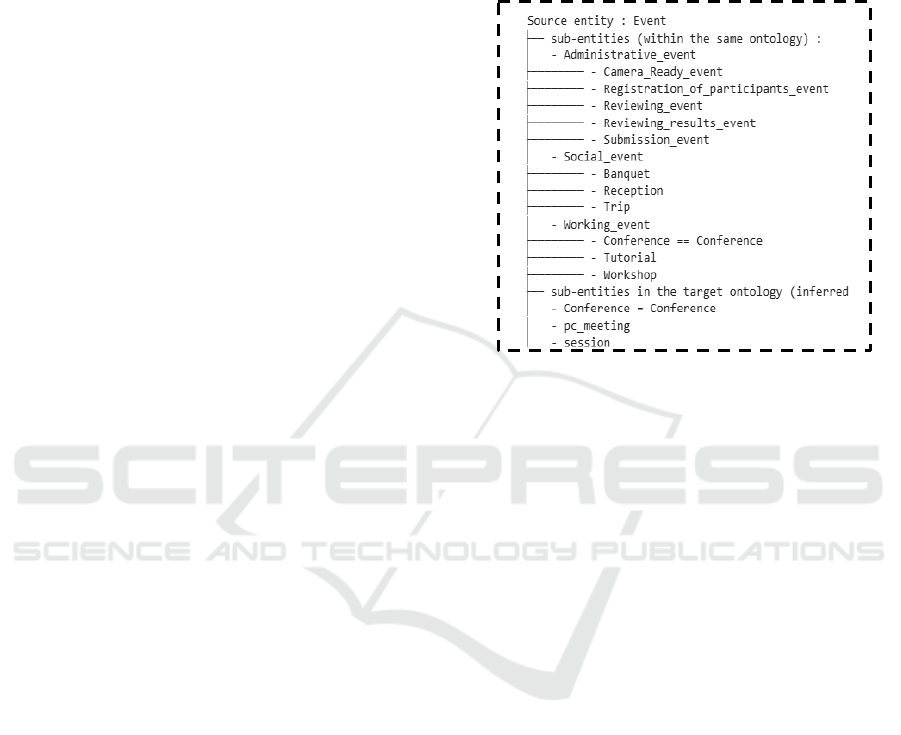
Figure 1 below illustrates an excerpt from the
correspondence table generated by our methodology,
which is based on the transitive propagation of
subsumption relations across multiple levels. This
excerpt highlights all the sub-entities of Event in the
source ontology along with their possible
counterparts (sub-entities) in the target ontology.
More precisely, the entities in the target ontology
identified as subclasses of the Event class in the
source ontology are explicitly defined as subclasses
of the Working_event class in the source ontology due
to the hierarchical structure of subclasses. Since
Working_event is itself a subclass of Event, these
entities are automatically inferred to be subclasses of
Event. This inference relies on the transitivity of
subsumption, which states that:
Let A, B, and C be three sets defA includes the
entities from the target ontology that are identified as
direct subclasses of Working_event. Set B represents
the Working_event entity in the source ontology,
while C corresponds to the Event entity within the
same source ontology.
𝑖𝑓 ∶ ∀𝑥𝐴
𝑥
→𝐵
𝑥
𝑎𝑛𝑑 ∀𝑥𝐵
𝑥
→𝐶
𝑥
Then, by logical transitivity, ∀𝑥𝐴
𝑥
→𝐶
𝑥
Figure 1: Example of a correspondence table.
3.4 Interaction with the User via
Natural Language and AI Model
When a question is posed, a structured prompt is
automatically generated, incorporating the previously
established semantic correspondence base between
entities of the source and target ontologies. This
prompt is then submitted to the OpenAI’s GPT-4
model, which analyzes the query, identifies the
relevant part of the source graph, and extracts two sets
of corresponding entities (source side and target side),
grouped as a structured paired list. The elements of
these two lists represent the components of a
hierarchy of entities from the source ontology, as well
as their equivalents or subsuming concepts identified
in the target ontology.
3.5 An Automatic SPARQL Query
Generator
Based on the entities extracted respectively from the
source and target ontologies, are automatically
generated SPARQL queries. Each entity is analyzed
to produce, for each scenario type, a query adapted to
the source ontology as well as its translated version
for the target ontology. Structural analysis enables the
extraction of relevant RDF triples, which then serve
as the basis for the dynamic construction of queries.
Thus, the generated SPARQL query adapts to the
Semantic Rewriting of SPARQL Queries: The Key Role of Subsumption in Complex Ontology Alignments
101

semantic and structural characteristics of the analyzed
entities.
3.6 Validation of the Generated
SPARQL Queries
To validate the SPARQL queries automatically
generated from the semantic correspondences
between entities in the source and target ontologies,
our method relied on a rigorous process combining
multiple levels of verification.
We began by analyzing the structure of the data
sources using Protégé 2000. Our method then
automatically generated a correspondence table
linking equivalent source and target subgraphs. This
table was compared against the aligned ontologies to
ensure consistency.
When a user submitted a natural language
question, our method retrieved the relevant source
and target subgraphs from the correspondence table,
followed by a compliance check to ensure logical
soundness.
Validation continued with a structural and visual
comparison of source and target queries, referencing
the subgraph table. This was reinforced by a syntactic
analysis of the automatically generated SPARQL
queries to verify compatibility of the results and
confirm the accuracy of the rewriting. This process
served as a qualitative evaluation of the fidelity of the
generated queries.
4 EXPERIMENT AND RESULTS
This section presents the results obtained by applying
our method to several ontology alignment scenarios,
illustrating its capability to automatically detect,
interpret, and rewrite complex expressions across
aligned ontologies. It begins by introducing the
dataset used in the experiments, followed by a
description of typical cases involving generalization
and specialization. For each scenario, we provide the
corresponding SPARQL query rewritings,
emphasizing their semantic relevance and structural
consistency with respect to the detected alignments.
4.1 The Dataset
In the context of querying complex aligned
ontologies, it is essential to consider the various
correspondence structures that may exist between
them. These configurations constitute a fundamental
basis for developing effective query answering
methods. Consequently, the selection of a suitable
dataset is critical to the success of such experiments.
However, identifying a fully aligned ontology that
enables the evaluation of all possible correspondence
scenarios is often challenging and, in some cases,
infeasible.
To address these challenges, we enriched two
existing datasets (cmt-ConOf.owl) by leveraging a
collection of sixteen ontologies derived from the
well-known conference dataset, commonly used in
research on ontology alignment and querying. This
dataset was prioritized due to its widespread adoption
within the ontology alignment and query rewriting
research community (Thiéblin et al., 2018, 2021 ;
Shvaiko et al., 2023 ; Trojahn et al., 2021), and it
serves as a well-established reference in these
applications.
Furthermore, to assess the robustness and
adaptability of the method across different alignment
configurations, an additional pair of alignments (cmt–
edas.owl), derived from the same dataset but without
enrichment, was also considered.
4.2 Scenarios and Results
Our dataset analysis identified several ontology
alignment scenarios involving subsumption relations.
These include generalization and specialization cases,
where source entities relate to target entities with
partial correspondences, as well as direct
equivalences. These scenarios illustrate the variety
and complexity of relationships present in ontology
alignments.
4.2.1 Scenario 1: Combinations of
SubClassOf Relations with Complex
(c: c) Correspondences
This scenario illustrates a typical case of equivalence
between two classes from aligned ontologies, each
featuring its own internal hierarchy. Defining an
equivalence axiom between the central concepts
enables the propagation of subsumption relations
across both ontologies. Consequently, specializations
defined in one ontology can be inferred in the other,
thus facilitating semantic integration and enabling
coherent query rewriting. Such configurations are
crucial in systems that rely on alignments to query
heterogeneous data sources effectively.
Let us consider the example shown in Figure 2,
inferred from our dataset.
In the source ontology, the concepts are defined
as follows:
- The class PeerReviewedJournal, denoted as 𝑐
,
is defined by an equivalence to the following
KEOD 2025 - 17th International Conference on Knowledge Engineering and Ontology Development
102
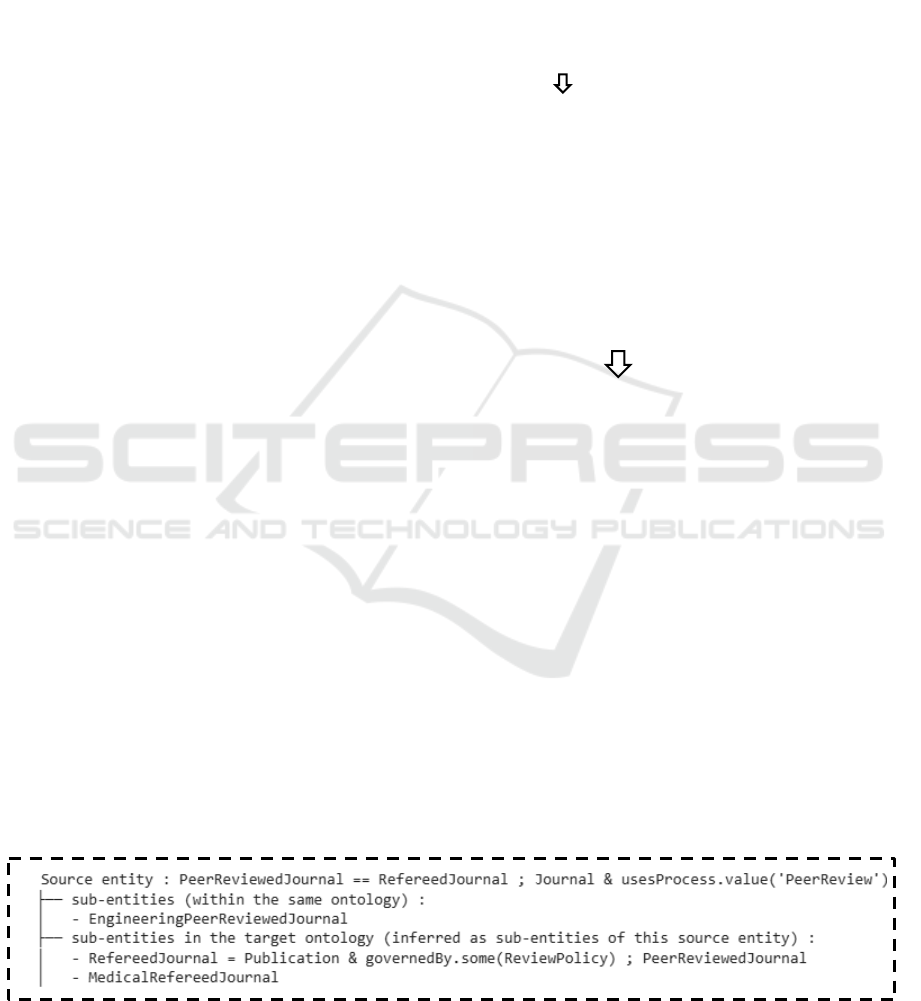
conjunction: 𝑐
≡𝐽𝑜𝑢𝑟𝑛𝑎𝑙 ⊓
𝑢𝑠𝑒𝑠𝑃𝑟𝑜𝑐𝑒𝑠𝑠. 𝑣𝑎𝑙𝑢𝑒′𝑃𝑒𝑒𝑟𝑅𝑒𝑣𝑖𝑒𝑤′
- The class EngineeringPeerReviewedJournal,
denoted as 𝑐
, is a subclass of 𝑐
:𝑐
⊑𝑐
In the target ontology:
- The class RefereedJournal, denoted as 𝑐
, is
defined as follows: 𝑐
≡ Publication
⊓
governedBy.some(ReviewPolicy).
- The class MedicalRefereedJournal, denoted as
𝑐
, is a subclass of 𝑐
: 𝑐
⊑𝑐
An ontological alignment is established between the
concepts 𝑐
(in the source ontology) and 𝑐
(in the
target ontology), in the form of an equivalence
axiom:𝑐
≡𝑐
.
According to description logic, an axiom of the
form EquivalentClasses (A, B) implies that:
𝐴⊑𝐵 and 𝐵⊑𝐴
The definitions associated with A and B are
considered interchangeable
Any entity subsumed by A is also subsumed by
B, and vice versa (Baader et al.,2003).
On this basis, several logical inferences can be drawn:
If 𝑐
≡𝑐
, 𝑐
⊑𝑐
,𝑐
⊑𝑐
, Then, by transitivity and
equivalence:
𝑐
⊑𝑐
; 𝑐
⊑𝑐
; 𝑐
⊑𝑐
; 𝑐
⊑𝑐
After performing a test for the same information need
expressed through different formulations, Figure 3
illustrates the processing within this category
generated by our approach.
Examples of questions used for evaluation
include:
Which journals make use of the peer-review
process?
Can you list all journals that are associated with
the peer-review process?
In this category, the rewriting proceeds as follows,
with:
𝑻
𝒙, 𝑪
⋀𝑻
𝒚, 𝑪
:
x and y are of type C (a class
of the ontology), with 𝐶=𝑐
,𝑐
,…,𝑐
𝑷𝒙, 𝒑, 𝒗: x has the data property p with the
value v
𝑹𝒙, 𝒚, 𝒓 : there exists a relation r (object
property) between x and y, with x and y ∈ C
Based on the results illustrated in Figure 3, we
observe that the WHERE clause applied to the source
ontology satisfies the following conditions:
𝑇
=𝑨 ∪𝑩∪𝑪
, with:
For the target ontology, the WHERE clause satisfies
the following conditions
:
𝑇
=
𝐷 ∪ 𝐸 ∪ 𝐹
,
with:
4.2.2 Scenario 2: Combinations of
SubclassOf, SubPropertyOf, and
Complex (c: c) Correspondences
In this category, we apply a rewriting strategy based
on the combination of the subClassOf and
subPropertyOf relations, leveraging the semantic
hierarchies defined between the entities of the source
and target ontologies.
Figure 2: Combinations of subClassOf relations with complex (c: c) correspondences.
𝐴=
𝑥
|
𝑇𝑥,𝑐
}
𝐵=
𝑥
|
𝑇𝑥,𝑐
}
𝐶=
𝑥
|
𝑇𝑥,𝑐
∧𝑃𝑥,𝑝,𝑣 }
𝐴=
𝑥
|
𝑇𝑥, 𝐸𝑛𝑔𝑖𝑛𝑒𝑒𝑟𝑖𝑛𝑔𝑃𝑒𝑒𝑟𝑅𝑒𝑣𝑖𝑒𝑤𝑒𝑑𝐽𝑜𝑢𝑟𝑛𝑎𝑙}
𝐵=
𝑥
|
𝑇𝑥, 𝑃𝑒𝑒𝑟𝑅𝑒𝑣𝑖𝑒𝑤𝑒𝑑𝐽𝑜𝑢𝑟𝑛𝑎𝑙 }
𝐶=
𝑥
|
𝑇
𝑥, 𝐽𝑜𝑢𝑟𝑛𝑎𝑙
∧
𝑃𝑥, 𝑢𝑠𝑒𝑠𝑃𝑟𝑜𝑐𝑒𝑠𝑠, 𝑃𝑒𝑒𝑟𝑅𝑒𝑣𝑖𝑒𝑤 }
𝐷=
𝑥
|
𝑇𝑥,𝑐
}
𝐸=
𝑥
|
𝑇𝑥,𝑐
}
𝐹=
𝑥
|
𝑇𝑥,𝑐
∧ ∃𝑦𝑇𝑦, 𝑐
∧𝑅𝑥,𝑦,𝑟
}
𝐷=
𝑥
|
𝑇𝑥, 𝑅𝑒𝑓𝑒𝑟𝑒𝑒𝑑𝐽𝑜𝑢𝑟𝑛𝑎𝑙 }
𝐸=
𝑥
|
𝑇𝑥, 𝑀𝑒𝑑𝑖𝑐𝑎𝑙𝑅𝑒𝑓𝑒𝑟𝑒𝑒𝑑𝐽𝑜𝑢𝑟𝑛𝑎𝑙 }
𝐹=
𝑥
|
𝑇𝑥, 𝑃𝑢𝑏𝑙𝑖𝑐𝑎𝑡𝑖𝑜𝑛 ∧
∃𝑦𝑇𝑦, 𝑅𝑒𝑣𝑖𝑒𝑤𝑃𝑜𝑙𝑖𝑐𝑦 ∧
𝑅𝑥, 𝑦, 𝑔𝑜𝑣𝑒𝑟𝑛𝑒𝑑𝐵𝑦
(3)
(2)
Semantic Rewriting of SPARQL Queries: The Key Role of Subsumption in Complex Ontology Alignments
103
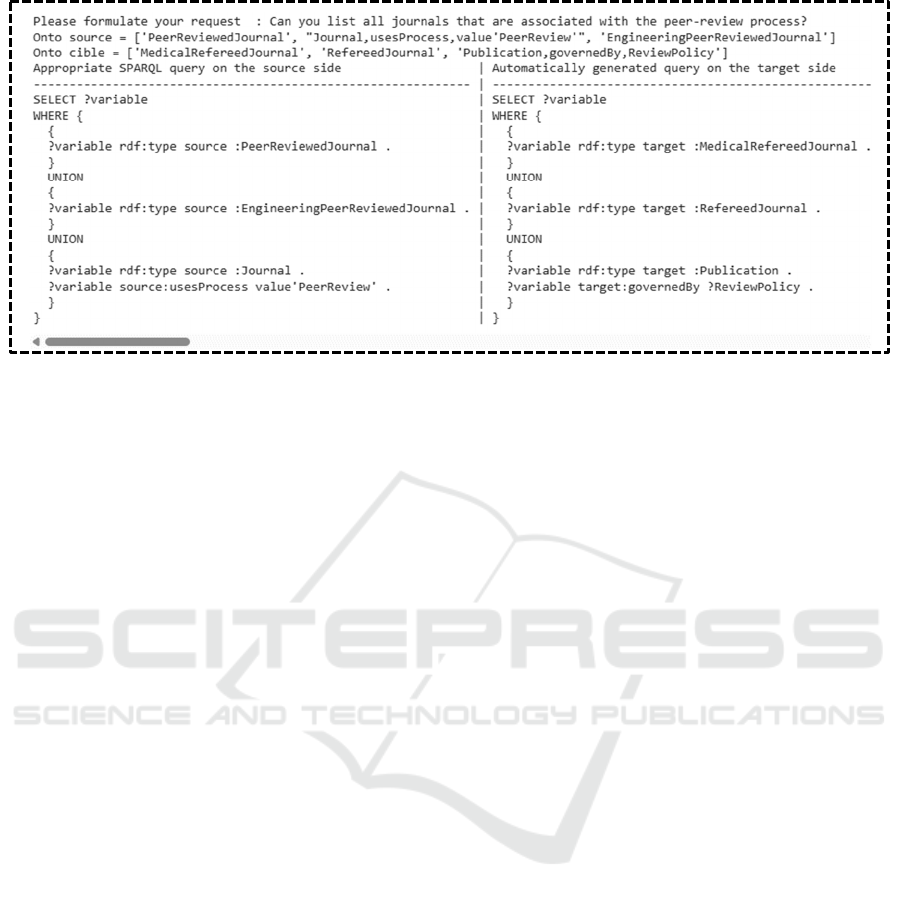
Figure 3: Query rewriting with combinations of subClassOf relations.
Let there be two aligned ontologies, with:
Source ontology: Let 𝑐
𝑎𝑛𝑑 𝑐
be two classes,
r an object property, and p a data property.
Target ontology: Let 𝑐
𝑎𝑛𝑑 𝑐
be two classes,
𝒓
an object property, and 𝑝
a data property.
And the following relationships between the entities
of the two ontologies:
𝑐
≡𝑐
, 𝑐
⊑𝑐
𝑟
⊑ 𝑟 , with 𝑑𝑜𝑚𝑎𝑖𝑛
𝑟
=𝑐
𝑒𝑡 𝑟𝑎𝑛𝑔𝑒
𝑟
=
𝑐
; 𝑑𝑜𝑚𝑎𝑖𝑛
𝑟
=𝑐
𝑒𝑡 𝑟𝑎𝑛𝑔𝑒
𝑟
=𝑐
𝑝
⊑𝑝, 𝑑𝑜𝑚𝑎𝑖𝑛
𝑝
=𝑐
; 𝑑𝑜𝑚𝑎𝑖𝑛𝑝
=
𝑐
Thus, by leveraging subsumption relationships over
data properties, object properties, and classes, our
approach enabled us to infer the following
correspondences:
For relationships between classes and object
properties, our approach allowed us to identify
two main categories:
- Subsumption with existential quantifiers (∃)
𝑥
|
𝑇𝑥, 𝑐
∧ ∃𝑦𝑇𝑦, 𝑐
∧𝑅𝑥,𝑦,𝑟
⊑
𝑥
|
𝑇𝑥, 𝑐
∧ ∃𝑦𝑇𝑦, 𝑐
∧𝑅𝑥,𝑦,𝑟 }
(4)
- Subsumption with universal quantifiers (∀)
𝑥
|
𝑇𝑥, 𝑐
∧ ∀𝑦𝑇𝑦, 𝑐
⇒𝑅𝑥,𝑦,𝑟
⊑
𝑥
|
𝑇𝑥, 𝑐
∧ ∀𝑦𝑇𝑦, 𝑐
⇒𝑅𝑥,𝑦,𝑟}
(5)
For relationships between classes and data
properties, the following category was identified
through our approach:
𝑥
|
𝑇
𝑥,𝑐
∧𝑃
𝑥,𝑝
,𝑣
⊑
𝑥
|
𝑇
𝑥,𝑐
∧
𝑃
𝑥,𝑝,𝑣
(6)
These relations show that, if the subsumption
relationships are correctly exploited, a query
formulated on the target ontology can be considered
a valid specialization of an equivalent query on the
source ontology. Figure 4 illustrates the result
deduced from the logic formalized in Equation (4).
The evaluation of this category was based on the
following natural language questions:
I require the set of individuals of type Person
who are associated with at least one postal
address.
I would like to obtain the list of people who have
at least one postal address.
4.2.3 Scenario 3: Transitive Propagation of
Subsumptions across Multiple Levels
The idea developed in this category is illustrated in
Figure 1, which presents the complete ontological
hierarchy of the superclass Event, including entities
inferred within the target ontology. Although entities
such as Conference, pc_meeting, and session, which
are specific to the target ontology, are explicitly
defined as direct subclasses of Working_event in the
source ontology, they are inferred as specializations
of Event through transitive propagation of
subsumption relations, in accordance with
ontological inference mechanisms.
Figure 5 illustrates the results generated from the
subsumption relations identified between the source
and target ontologies. In the absence of complex
triples, the results correspond to the union of
instances of atomic classes from both ontologies,
aggregated in the following generalized form.
KEOD 2025 - 17th International Conference on Knowledge Engineering and Ontology Development
104
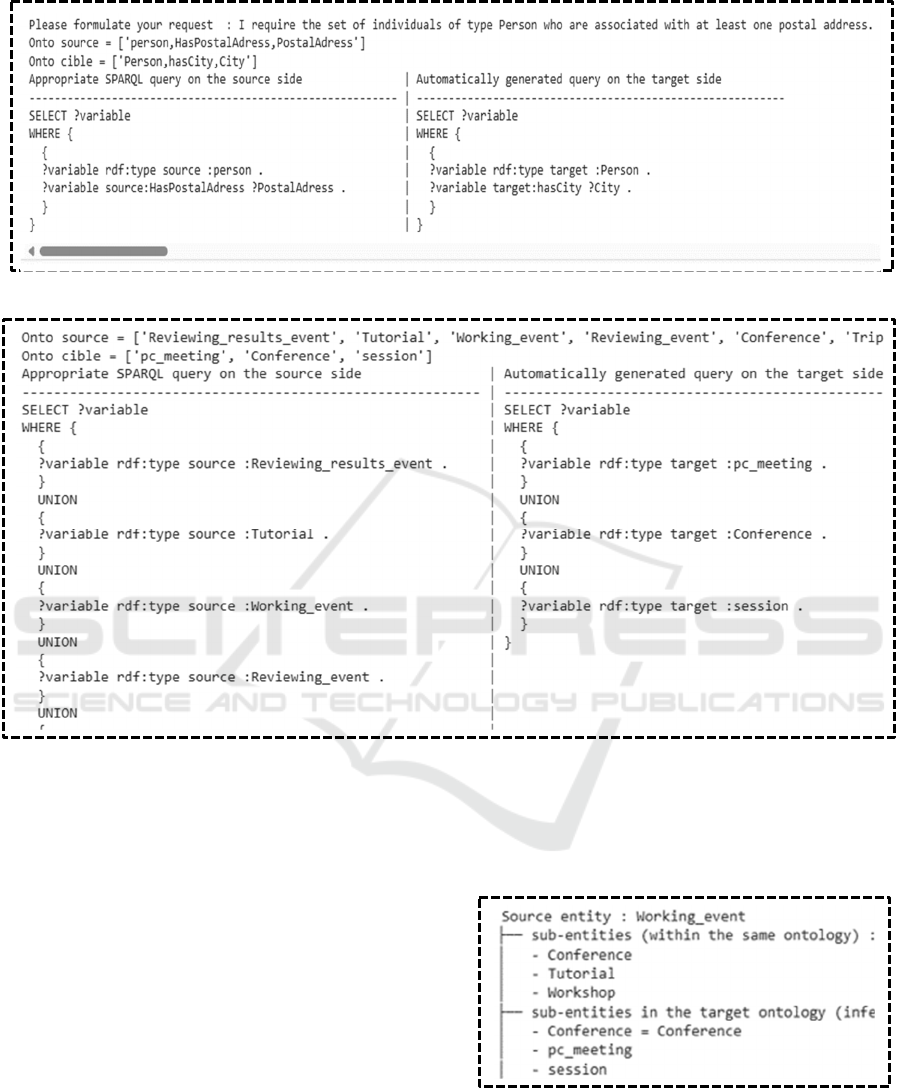
Figure 4: Rewriting results involving combinations of subClassOf, subPropertyOf.
Figure 5: Rewriting result involving transitive propagation of subsumption relations over multiple levels.
Source Ontology:
𝑇
=
𝑥
|
𝑇
𝑥,𝑐
∨𝑇
𝑥,𝑐
∨𝑇
𝑥,𝑐
∨
…∨𝑇
𝑥,𝑐
(7)
Target Ontology:
𝑇
=
𝑥
|
𝑇
𝑥,𝑐
∨𝑇
𝑥,𝑐
∨𝑇
𝑥,𝑐
∨…∨
𝑇
𝑥,𝑐
(8)
Here, n denotes the number of entities (Classes)
involved in the rewriting process.
4.2.4 Scenario 4: Specific Sublevel
Relying on the logic represented in Figure 1, a query
issued to the entity Working_event automatically
triggers the retrieval of its explicitly defined
subclasses in the target ontology, through ontological
inference mechanisms consistent with the established
subsumption relations. Figure 6 presents the class
Working_Event from the source ontology along with
its subclasses explicitly defined in the target
ontology.
Figure 6:
Rewriting of a Specific Sublevel.
Semantic Rewriting of SPARQL Queries: The Key Role of Subsumption in Complex Ontology Alignments
105
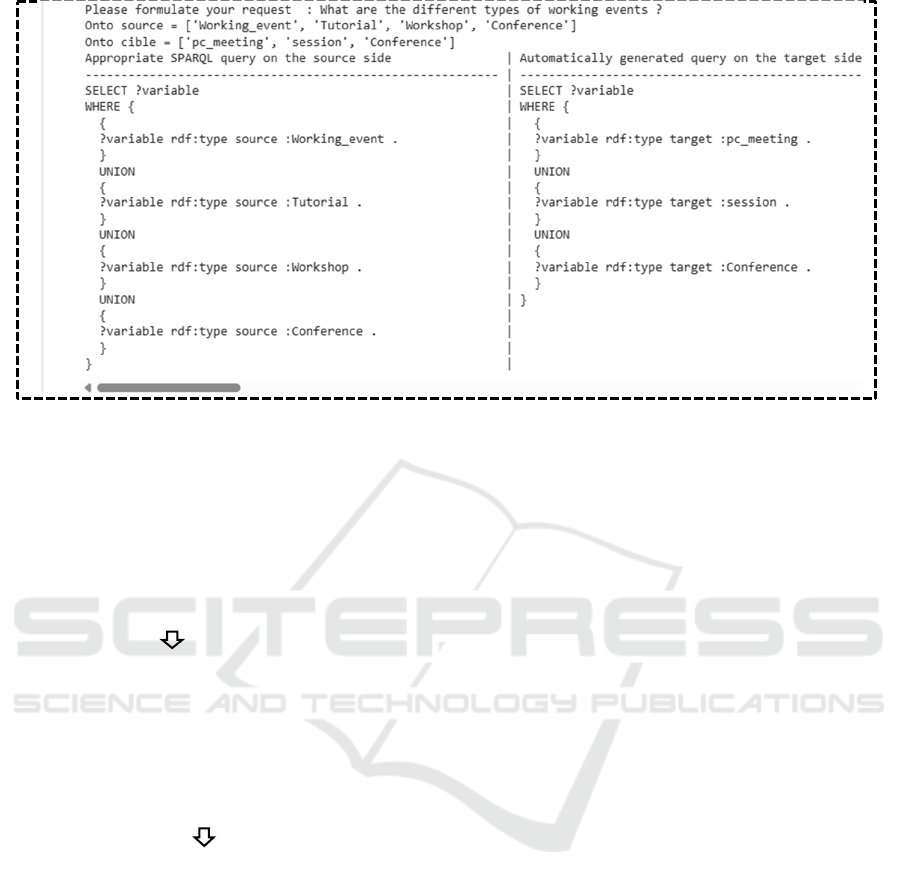
Figure 7: result of the subsumption relations of a specific sublevel.
In this category, the SPARQL query on the source
ontology consists of selecting triples that satisfy the
conditions specified in the WHERE clause, if any
conditions are present. As illustrated in Figure 7, the
WHERE clause of the source query must evaluate a
set of criteria:
𝑇
=
𝑥
|
𝑇
𝑥,𝑐
∨𝑇
𝑥,𝑐
∨𝑇
𝑥,𝑐
∨𝑇
𝑥,𝑐
(9)
𝑇
=
𝑥
|
𝑇𝑥, 𝑊𝑜𝑟𝑘𝑖𝑛𝑔_𝑒𝑣𝑒𝑛𝑡 ∨
𝑇𝑥, 𝐶𝑜𝑛𝑓𝑒𝑟𝑒𝑛𝑐𝑒 ∨ 𝑇𝑥, 𝑇𝑢𝑡𝑜𝑟𝑖𝑎𝑙 ∨
𝑇
𝑥,𝑊𝑜𝑟𝑘𝑠ℎ𝑜𝑝
While the target query is required to satisfy the
constraints imposed by the target ontology.
𝑇
=
𝑥
|
𝑇
𝑥,𝑐
∨𝑇
𝑥,𝑐
∨𝑇
𝑥,𝑐
(10)
𝑇
=
𝑥
|
𝑇
𝑥, 𝐶𝑜𝑛𝑓𝑒𝑟𝑒𝑛𝑐𝑒
∨𝑇𝑥,𝑝𝑐
∨𝑇
𝑥, 𝑠𝑒𝑠𝑠𝑖𝑜𝑛
The application of our approach to the example
questions below yields the results shown in Figure 7.
Tested questions were :
What events are part of the working event group?
What are the different types of working events?
5 DISCUSSION
As previously mentioned, most existing approaches
focus on simple or partially complex
correspondences, while those addressing complex
correspondences rely primarily on equivalence
relations. By taking into account the majority of
subsumption relations, our method represents a
significant advancement over these previous methods
by broadening the range of relations utilized during
rewriting our method is characterized by strong
modularity, enabling easy adaptation to different
types of ontologies and alignment configurations. It
thus aims to enrich the state of the art, responding to
the limited support for subsumption relations in
automatic rewriting processes, particularly when
involving complex correspondences (c: c) in
SPARQL query rewriting.
In this study, we consider that we have
significantly achieved the objectives we initially set,
by demonstrating the feasibility and effectiveness of
our method to SPARQL query rewriting in the
context of complex ontology alignment involving
subsumption relations. Nevertheless, certain
challenges remain to be addressed, notably the
systematization and full automation of handling these
relations, especially in contexts of very large-scale
aligned ontologies. Another promising avenue for
future research lies in the systematic exploration of
various forms of correspondences involving
cardinality restrictions, particularly those that
leverage minimum, maximum, and exact
cardinalities.
REFERENCES
Amini, R., Norouzi, S.S., Hitzler, P., & Amini, R. (2024).
Towards Complex Ontology Alignment using Large
Language Models. Iberoamerican Conference on
Knowledge Graphs and Semantic Web.
KEOD 2025 - 17th International Conference on Knowledge Engineering and Ontology Development
106

Baader, F., Calvanese, D., McGuinness, D., Nardi, D., et
Patel-Schneider, PF (dir.). (2003). Manuel de logique
de description: théorie, implémentation et applications.
Cambridge University Press.
Correndo, G., Salvadores, M., Millard, I., Glaser, H., &
Shadbolt, N. (2010, March). SPARQL query rewriting
for implementing data integration over linked data.
In Proceedings of the 2010 EDBT/ICDT
Workshops (pp. 1-11).
David, J., Euzenat, J., Scharffe, F., & Trojahn dos Santos,
C. (2011). The alignment API 4.0. Semantic web, 2(1),
3-10.
Fujino, T., & Fukuta, N. (2012, September). A SPARQL
query rewriting approach on heterogeneous ontologies
with mapping reliability. In 2012 IIAI International
Conference on Advanced Applied Informatics (pp. 230-
235). IEEE.
Lamy, J.-B. (2020). Ontologies with Python: Programming
OWL 2.0 Ontologies with Python and Owlready2.
Publisher Apress Berkeley, CA. ISBN 978-1- 4842-
6551-2. https://doi.org/10.1007/978-1-4842-6552-9
Ondo, A.L., Capus, L., & Bousso, M. (2025). Enhancing
SPARQL Query Rewriting for Complex Ontology
Alignments. International journal of Web & Semantic
Technology, Vol.16 (2). DOI: 10.5121/ijwest.
2025.16201
Shvaiko P., M. Abd Nikooie Pour, A. Algergawy, P. Buche,
L. J. Castro, J. Chen, A. Coulet, J. Cu , H. Dong, O.
Fallatah, D. Faria, I. Fundulaki, S. Hertling, Y. He, I.
Horrocks, M. Huschka, L. Ibanescu, S. Jain, E.
Jim´enez-Ruiz, N. Karam, P. Lambrix, H. Li, Y. Li, P.
Monnin, E. Nasr, H. Paulheim, C. Pesquita, T. Saveta,
G. Sousa, C. Trojahn, J. Vatascinova, M. Wu, B.
Yaman, O. Zamazal, L. Zhou,(2023). Results of the
ontology alignment evaluation initiative 2023, in: P.
Shvaiko, J. Euzenat, E. Jim´ enezRuiz, O. Hassanzadeh,
C. Trojahn (Eds.), Proceedings of the 18th International
Workshop on Ontology Matching (OM 2023) co-
located with the 22nd International Semantic Web
Conference (ISWC 2023), Athens, Greece, November
7, 2023, volume 3591 of CEUR Workshop
Proceedings, CEUR-WS.org, 2023, pp. 97–139. URL:
https://ceur-ws.org/Vol-3591/oaei23 paper0.pdf
Thakker D, Schwabe D, Kozaki K, et al. Estimating query
rewriting quality over LOD. Semantic Web.
2018;10(3):529-554. doi:10.3233/SW-180311
Thiéblin, É., Amarger, F., Haemmerlé, O., Hernandez, N.,
& Trojahn, C. (2016). Rewriting SELECT SPARQL
queries from 1: n complex correspondences. CEUR-
WS: Workshop proceedings.
Thiéblin, E., Amarger, F., Hernandez, N., Roussey, C., &
Trojahn Dos Santos, C. (2017). Cross-querying lod
datasets using complex alignments: an application to
agronomic taxa. In Metadata and Semantic Research:
11th International Conference, MTSR 2017, Tallinn,
Estonia, November 28– December 1, 2017,
Proceedings 11 (pp. 25-37). Springer International
Publishing.
Thiéblin, E., Haemmerlé, O., & Trojahn, C. (2021).
Automatic evaluation of complex alignments: An
instance-based approach. Semantic Web, 12(5), 767-
787.
Thiéblin, Haemmerlé, Jane Hernandez, Trojahn dos Santos
(2018). Task-Oriented Complex Ontology Alignment:
Two Alignment Evaluation Sets. European Semantic
Web Conference (ESWC 2018), Jun 2018, Heraklion,
Greece. pp.655–670, ff10.1007/978-3-319-93417-
4_42ff.ffhal-02102383f
Trojahn C., M. Abd Nikooie Pour, A. Algergawy, F.
Amardeilh, R. Amini, O. Fallatah, D. Faria, I.
Fundulaki, I. Harrow, S. Hertling, P. Hitzler, M.
Huschka, L. Ibanescu, E. Jim´ enez-Ruiz, N. Karam, A.
Laadhar, P. Lambrix, H. Li, Y. Li, F. Michel, E. Nasr,
H. Paulheim, C. Pesquita, J. Portisch, C. Roussey, T.
Saveta, P. Shvaiko, A. Splendiani, J. Vatascinov´a, B.
Yaman, O. Zamazal, L. Zhou, (2021). Results of the
ontology alignment evaluation initiative 2021, in: P.
Shvaiko, J. Euzenat, E. Jim´enez-Ruiz, O.
Hassanzadeh, C. Trojahn (Eds.), Proceedings of the
16th International Workshop on Ontology Matching
co-located with the 20th International Semantic Web
Conference (ISWC 2021), Virtual conference, October
25, 2021, volume 3063 of CEUR Workshop
Proceedings, CEUR-WS.org, 2021, pp. 62–108. URL:
http://ceur-ws.org/Vol-3063/oaei21 paper0.pdf.
Semantic Rewriting of SPARQL Queries: The Key Role of Subsumption in Complex Ontology Alignments
107
