
Assessing Grade Levels of Texts via Local Search over Fine-Tuned LLMs
Changfeng Yu and Jie Wang
Richer Miner School of Computer and Information Sciences, University of Massachusetts, Lowell, MA, U.S.A.
Keywords:
Automatic Grade Assessment, Linguistic Features, Large Language Models, Local Search.
Abstract:
The leading method for determining the grade level of a written work involves training an SVC model on
hundreds of linguistic features (LFs) and a predicted grade generated by a fine-tuned large language model (FT-
LLM). When applied to a diverse dataset of materials for grades 3 through 12 spanning 33 genres, however,
this approach yields a poor accuracy of less than 51%. To address this issue, we devise a novel local-search
algorithm called LS-LLM independent of LFs. LS-LLM employs different FT-LLMs to identify a genre,
predict a genre-aware grade, and compare readability of the text to a randomly selected set of annotated works
from the same genre and grade level. We demonstrate that LS-LLM significantly improves accuracy, exceeding
65%, and achieves over 92% accuracy within a one-grade error margin, making it viable for certain practical
applications. To further validate its robustness, we show that LS-LLM also enhances the performance of the
leading method on the WeeBit dataset used in prior research.
1 INTRODUCTION
The leading method for automatic grade assessment
(Lee et al., 2021) trains a multi-label SVC model on
all 255 known LFs and grade predictions from a fine-
tuned BERT model, which produces the best results
to date on the datasets of WeeBit (Vajjala and Meur-
ers, 2012) and Newsela (Xia et al., 2016). WeeBit
consists of texts categorized into five age groups and
spans a limited range of genres, while Newsela con-
tains only news articles. These datasets fall short of
our requirements for evaluating grade levels across di-
verse genres of written materials.
To address this need, we collected all freely avail-
able written works from the CommonLit Digital Li-
brary (CommonLit.org) along with their genres and
grade levels. This results in a dataset of 1,654 written
works spanning 33 genres for U.S. students in grades
3 through 12. We refer to this dataset as CLDL1654,
or simply CLDL.
Applying the leading method using the code pro-
vided by Lee et al., we train a multi-label SVC model
with all 255 LFs on CLDL and grade levels pre-
dicted by FT-M, with M being, respectively, BERT,
RoBERTa, BART, and GPT-4o. These models all ex-
hibit low accuracy below 51%. We further show that
using only about 10% of the LFs, varying for different
LLMs, the trained SVC model can achieve accuracy
levels comparable to those obtained using all 255 LFs.
This calls for a new approach independent of
LFs. Initially, we attempted to fine-tune a GPT-
4o classifier and use few-shot prompting with exam-
ples of texts at each grade level and genre. How-
ever, experimental results show that the accuracy of
these two approaches is below the SVC-based mod-
els, which is likely due to the complexity introduced
by genre variation–texts from different genres at the
same grade level can vary significantly in style, struc-
ture, and vocabulary. Furthermore, a single few-shot
prompt cannot capture all representative examples,
and even if it could, GPT-4o may be influenced by
conflicting signals across genres.
This suggests the necessity of a new way to lever-
age the vast knowledge depository and strong infer-
ence capability of an LLM. To this end, we devise a
local-search method called LS-LLM that employs a
number of FT-LLMs, each tailored to a specific task.
LS-LLM falls in the framework of AI-oracle ma-
chines (Wang, 2025), which decomposes the grade as-
sessment into sub-tasks of genre identification, grade
assessing for texts of a specific genre, and readabil-
ity comparison for texts in the same genre. We ad-
dress each sub-task using an FT-LLM and apply a
local-search algorithm to determine the appropriate
grade level for a given text through an iterative pro-
cess, guided by the outputs of these sub-tasks.
We show that LS-LLM consistently outperforms
the leading method on CLDL and WeeBit with GPT-
224
Yu, C. and Wang, J.
Assessing Grade Levels of Texts via Local Search over Fine-Tuned LLMs.
DOI: 10.5220/0013674400004000
Paper published under CC license (CC BY-NC-ND 4.0)
In Proceedings of the 17th International Joint Conference on Knowledge Discovery, Knowledge Engineering and Knowledge Management (IC3K 2025) - Volume 1: KDIR, pages 224-231
Proceedings Copyright © 2025 by SCITEPRESS – Science and Technology Publications, Lda.

4o and freely available BERT and RoBERTa as the
underlying LLMs.
This paper is organized as follows: Section 2 pro-
vides a brief overview of prior works. Section 3 eval-
uates the prior leading method. Sections 4 and 5 de-
scribe LS-LLM in detail and report evaluation results.
Section 6 concludes the paper.
2 RELATED WORK
Early systems for automatic readability assessment
include Dale-Chall (Jeanne Sternlicht Chall, 1995)
and Fog (Gunning, 1969), which use linear regres-
sions to estimate readability based on lexical fea-
tures of word length, sentence length, syllable count,
and word frequencies. These features, however, fall
short in addressing semantics, discourse structure,
and other nuanced elements of language. Feng et al.
(Feng et al., 2009) analyzed a broader set of cogni-
tively motivated features, such as the number of enti-
ties in a sentence. Tonelli et al. (Tonelli et al., 2012)
reported a set of syntactic features related to part of
speech, phrasal structure, and dependency structure
of the text. These more complex features have been
shown to correlate better with part-of-speech usage
and complex nominal construction.
More sophisticated systems were later developed
using machine learning techniques. For example,
Schwarm (Schwarm and Ostendorf, 2005) and Osten-
dorf employed linguistic features (LFs) such as syn-
tactic complexity, semantic difficulty, and discourse
coherence to train an SVM model for predicting text
readability. The performance of these methods de-
pends heavily on how well the LFs capture the infor-
mation related to text readability (Lu, 2010).
Lee et al. (Lee et al., 2021) presented the lead-
ing method that trains an SVC model on 255 LFs
combined with a grade level of a written work pre-
dicted by an FT-PLM. SVC was chosen as the non-
neural classifier as it performs well on classification
with small training datasets. They evaluated their
method using WeeBit (Vajjala and Meurers, 2012)
and Newsela (Xia et al., 2016) as training data. Like-
wise, Deutsch et al. (Deutsch et al., 2020) showed that
incorporating only 86 LFs into LLMs can improve the
accuracy, especially with small training datasets. Re-
cent advances in LLMs have led to interest in reliably
assessing and manipulating the readability of the text,
including measuring and modifying the readability of
text (Trott and Rivi
`
ere, 2024; Engelmann et al., 2024).
3 GRADE ASSESSING WITH LFS
LFs can be computed using the Python library at
https://github.com/brucewlee/lingfeat. for any input
text. We use the code provided by Lee et al. (Lee
et al., 2021) to train an SVC model using all 255 LFs,
employing various FT-LLMs to predict the grade level
of a written work. In particular, we divide CLDL
into a standard 80-20 split for training and testing,
and leverage the Scikit-Learn library. All subsequent
model training, fine-tuning, and evaluation will be
performed using this same 80-20 split.
We fine-tune BERT, RoBERTa, BART, and GPT-
4o separately so that each can assign a grade to a given
written work. To fine-tune BERT, RoBERTa, and
BART, we apply the 5-fold cross validation method
using Hugging Face’s transformers library with 10
epochs and 1 batch size. We use fastai’s learn.lr find()
to find the optimal learning rate during fine-tuning. To
fine-tune GPT-4o we use default settings of GTP-4o
and the following prompt template (Note that in all
prompts we specify that the user is an experienced as-
sessor of the language and literature curricular for the
public K-12 schools in the US):
User: Your task is to determine the grade level
of the following text. {text}
Assistant: {grade level}
We name the corresponding SVC classifiers as
SVC-255/M, where M represents, respectively, FT-
BERT, FT-RoBERTa, FT-BART, and FT-GPT-4o. We
generalize this notation to SVC-k/M to represent a
model trained using k LFs with an FT-LLM M. Fig-
ure 1 depicts the fine-tuning and training processes
and the application of the models.
In addition to exact matches, where the predicted
grade aligns perfectly with the true grade, referred
to adjacent distance-0 (AD-0), we also include cases
where the predicted grade has an error margin of one
grade level, referred to as adjacent distance-1 (AD-1)
(Heilman et al., 2008). This adjustment accounts for
possible inconsistencies and potential imperfections
in human evaluations, providing a more nuanced as-
sessment. Using the same notation, we can define ad-
jacent distance-2 (AD-2) similarly.
Table 1: Evaluation of the leading method.
Model AD-0 AD-1 AD-2
SVC-255/BERT 0.4988 0.8871 0.9153
SVC-255/RoBERTa 0.5022 0.8915 0.9262
SVC-255/BART 0.4932 0.8902 0.9226
SVC-255/GPT-4o 0.5024 0.8891 0.9324
FT-GPT-4o (no LFs) 0.4512 0.8611 0.8922
Table 1 shows the results on the test data of CLDL
using the four SVC classifiers trained on the training
Assessing Grade Levels of Texts via Local Search over Fine-Tuned LLMs
225
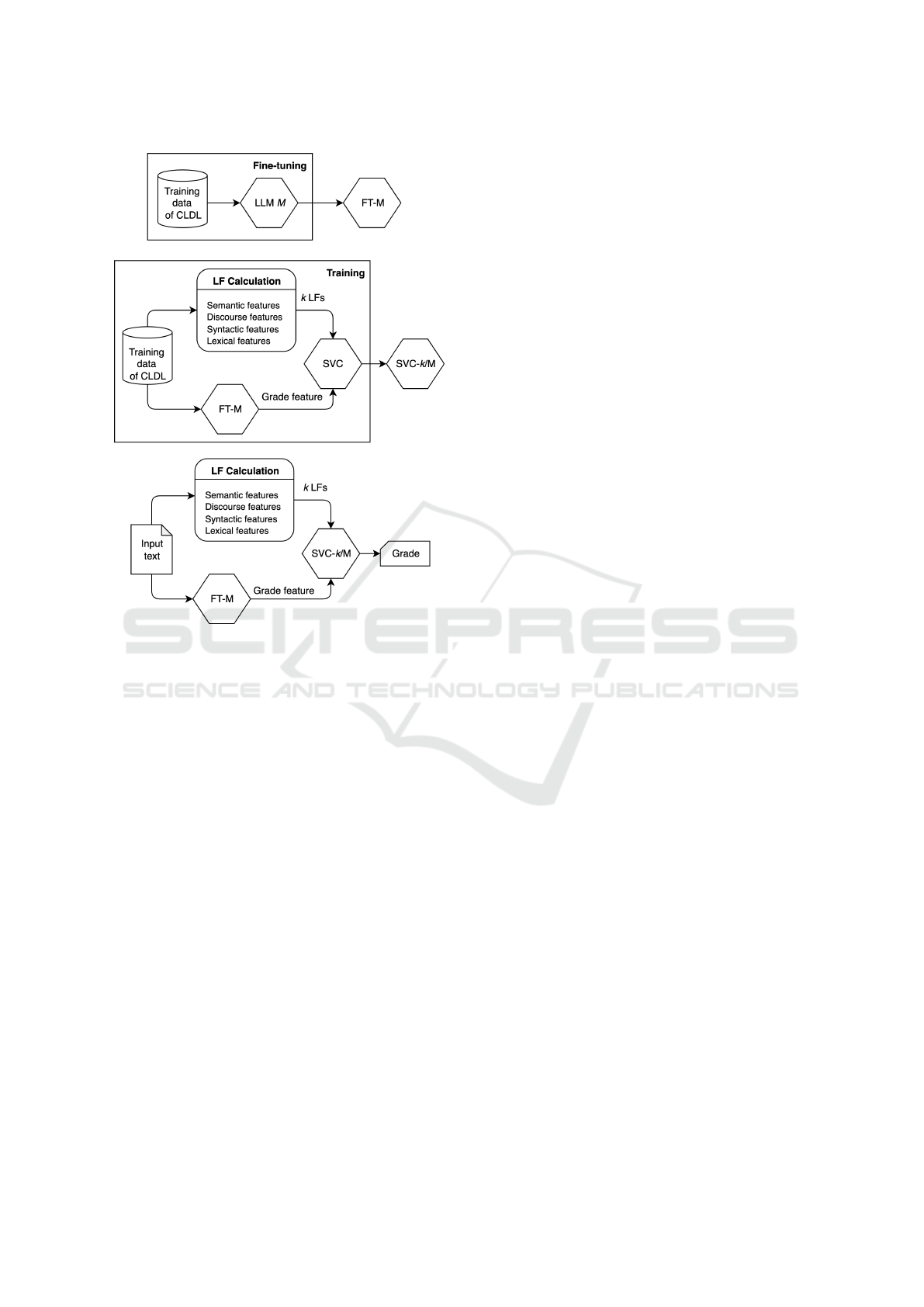
Figure 1: Schematics of training and application of the hy-
brid model.
data of CLDL, as well as the result generated by the
fine-tuned GPT-4o without LFs, where fine-tuning is
carried out using the training data of CLDL. The num-
bers in boldface indicate the largest in the underlying
column.
It is evident that SVC-255/GPT-4o achieves the
highest AD-0 accuracy. This result can be regarded
as the performance ceiling when all LFs are incorpo-
rated.
We observe that among the 255 LFs, some are es-
sential, others are redundant, and a few are even coun-
terproductive. This observation motivates the follow-
ing investigation into how many of these features are
primarily responsible for the model’s performance.
According to their definitions, we select 100 LFs
that appear to be more significant and use them,
instead of all 255 LFs, to train an SVC model with an
FT-LLM for predicting grade levels using the leading
method. Our results demonstrate that the SVC model
using these 100 LFs achieves the same accuracy as
that trained on all 255 LFs when paired with the same
FT-LLM for predicting grades. These 100 LFs, along
with their feature names and definitions, are available
at https://github.com/readability-assessment/ARA/
blob/main/LFs.pdf, classified into four categories:
semantic, discourse-based, syntactic, and lexical
features.
We further observe that not all these 100 LFs are
necessary to achieve the same level of accuracy. To
identify how many LFs from these 100 LFs are es-
sential, we intend to carry out a grid search as fol-
lows: Enumerate all combinations of these 100 LFs,
and identify the smallest number of LFs such that an
SVC trained on them reaches the performance upper
bound. However, this approach results in an expo-
nential blowup, rendering it intractable to implement.
Moreover, our experiments also indicate that, because
different PLMs are trained differently, the essential
LFs may vary across different PLMs.
To reduce computation time, instead of exhaus-
tively evaluating all combinations of LFs, we conduct
a constrained grid search as follows: (1) For each
PLM, select an approximately equal number of LFs
from each category independently at random, starting
from 0 to max, where max is the largest number of
LFs in a category, with a total number of LFs from
0 to 100. (2) Train an SVC model using these LFs in
the same method as before. (3) After training the SVC
classifier with the reduced number of LFs, we assess
its performance on the test data of CLDL. To ensure
robustness, we repeat the experiment three times for
each value of k and the final accuracy reported is the
average across these three runs.
Table 2 depicts the evaluation results of AD-0.
It is evident that increasing the number of LFs does
not necessarily lead to improved AD-0 accuracy, as
some LFs can be counterproductive. For example,
SVC/GPT-4o with 20 LFs achieves an AD-0 accuracy
of 50.5%, which drops to 50.3% when using 24 LFs,
and ultimately falls further to 50.24% when all LFs
are used, as shown in Table 1, where “SVC/M with k
LFs” is defined in the same manner as “SVC/M with
all LFs,” and k represents the number of LFs used.
4 LS-LLM
Let M be the LLM chosen for fine-tuning genre as-
sessors, grade assessors (one for each genre), and text
comparators (one for each genre).
4.1 Genre Assessor
We observe that it is more appropriate to compare
readability between written works in the same genre,
as texts from different genres such as poem and biog-
raphy can vary significantly, even at the same grade
level. To support this, we fine-tune M to create a genre
assessor that predicts the genre of a given text.
KDIR 2025 - 17th International Conference on Knowledge Discovery and Information Retrieval
226
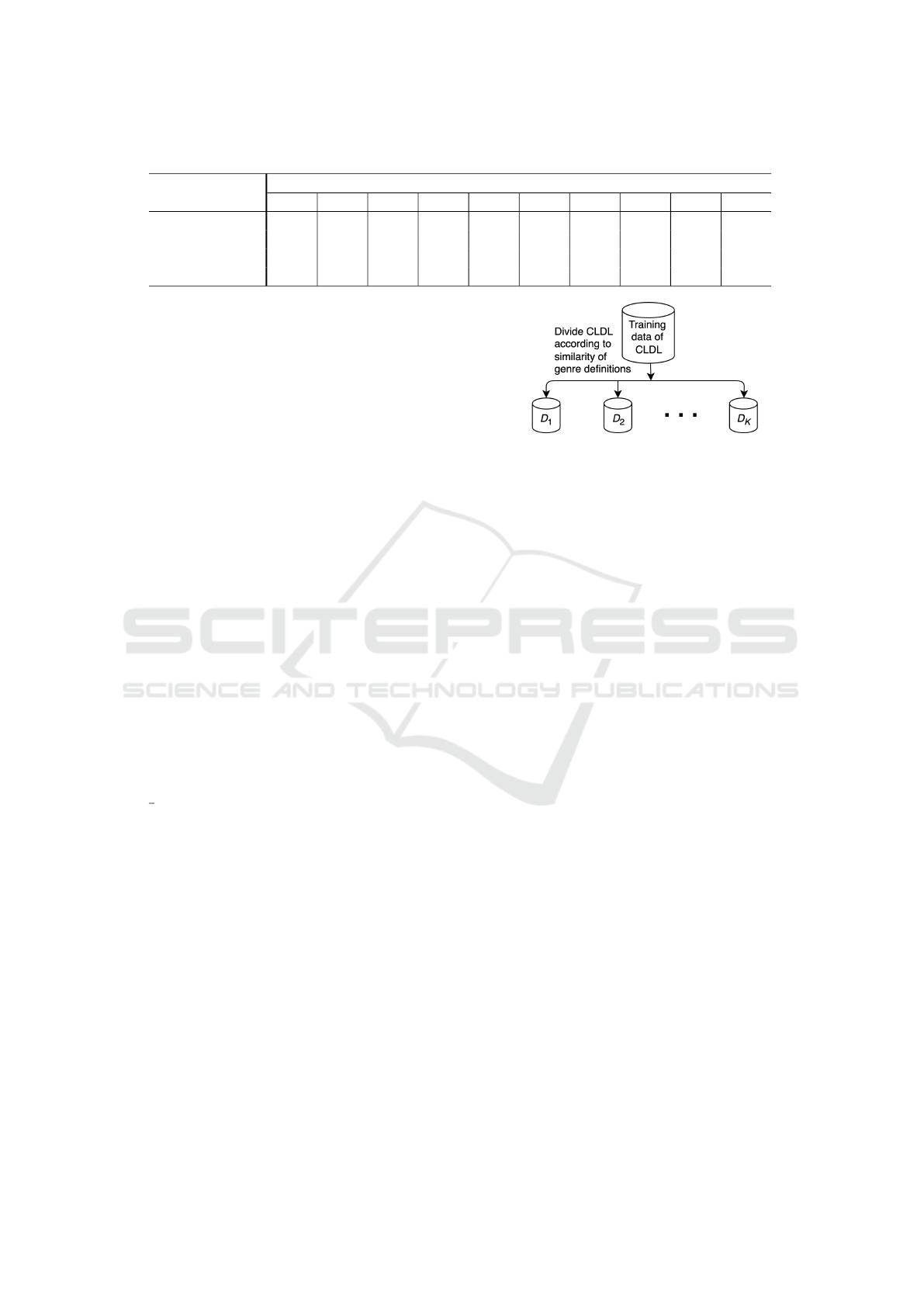
Table 2: Evaluation of SVC models with k LFs
Model
AD-0 with value of k
0 4 8 12 16 20 24 28 32 36
SVC-k/BERT 0.432 0.463 0.487 0.489 0.496 0.504 0.501 0.493 0.502 0.498
SVC-k/RoBERTa 0.420 0.455 0.461 0.475 0.489 0.506 0.495 0.499 0.502 0.506
SVC-k/BART 0.428 0.452 0.469 0.481 0.484 0.498 0.501 0.499 0.501 0.493
SVC-k/GPT-4o 0.451 0.473 0.489 0.502 0.499 0.505 0.503 0.498 0.499 0.502
If M is a generative model such as BART and
GPT-4o, we fine-tune M using the following prompt
template, where the {genre list} is all genres in Table
3, contained in CLDL:
User: Your task is to determine the genre of
the following text. {text}
The list of genres is given below: {genre list}
Assistant:{the genre of the text}
If M is a non-generative transformer such as
BERT and RoBERTa, we fine-tune M as a classifier
following the standard procedure.
4.2 Partitioning
It is evident from Table 3 that texts in CLDL are un-
evenly distributed across genres, and for certain gen-
res, there is an insufficient number of texts spanning
all grade levels. To address these issues, we group
texts by similar genres to ensure that each genre group
contains an adequate number of texts at each grade
level. To do so, let E = [e
1
,e
2
,... ,e
n
] denote the
list of n genres for the underlying dataset (n = 33
for CLDL), sorted in descending order according to
the percentage, p
i
, of the number of texts with genre
e
i
over the total number of texts in the dataset. Let
K be the smallest number such that
∑
K
i=1
p
i
≥ ∆ for
∆ ∈ (
1
2
,1].
We partition E into K clusters: C
1
,C
2
,. .. ,C
K
,
with genre e
i
∈ C
i
for i = 1, .. ., K. We call e
i
the base
genre of C
i
. For each remaining genre of e
K+1
,. .. ,e
n
,
we place it in C
i
if it has the highest similarity with the
base genre e
i
of C
i
among all clusters. The similarity
of two genres is calculated as the cosine similarity of
the BERT embeddings of sentences describing the re-
spective genres. We generate these sentences using
GPT-3.5 with the following prompt template:
User: Your task is to generate an explanation
of the genre {name of the genre} in one sen-
tence.
Denote by D
i
for i = 1, .. ., K the subset of texts
and the corresponding grades whose genres are in C
i
,
as shown in Figure 2.
Figure 2: Grouping texts according to genre participation.
4.3 Grade Assessors
If M is a generative model, we fine-tune M to predict
grade levels for written works in each subset D
i
using
the following prompt template, resulting in a grade
assessor denoted as GA
i
:
User: Your task is to determine the grade level
of the following text. {text}
Assistant: {grade level}
If M is a non-generative model, we fine-tune M as
a classifier to classify grade levels for files in D
i
fol-
lowing the standard procedure, still denoted as GA
i
.
4.4 Text Comparators
From each D
i
, we select independently at random m
(e.g., m = 10) written works at a given grade level g
to create a set of reference texts, denoted by
F
i,g
= { f
i,g, j
| j = 1, .. ., m}. (1)
Next, we construct a labeled pairwise dataset for
fine-tuning M as follows: For each grade level g ∈
[g
min
,g
max
− ℓ] with ℓ ≥ 1, where g
min
and g
max
de-
note, respectively, the lowest and the highest grade
levels in the dataset (e.g., in CLDL, g
min
= 3 and
g
max
= 12), let
P
+
i,g+ j
= {((x, y), +1) | (x, y) ∈ F
i,g
× F
i,g+ j
},
P
−
i,g+ j
= {((x, y), −1) | (x, y) ∈ F
i,g+ j
× F
i,g
},
where +1 and −1 are labels, and 1 ≤ j ≤ ℓ sets the
range of grade levels. Let
P
i
=
[
g
min
≤g≤g
max
−ℓ,1≤ j≤ℓ
P
+
i,g+ j
S
P
−
i,g+ j
. (2)
Finally, if M is a generative model, we fine-tune
it on P
i
to create a text comparator, denoted by TC
i
,
with the following prompt template:
Assessing Grade Levels of Texts via Local Search over Fine-Tuned LLMs
227
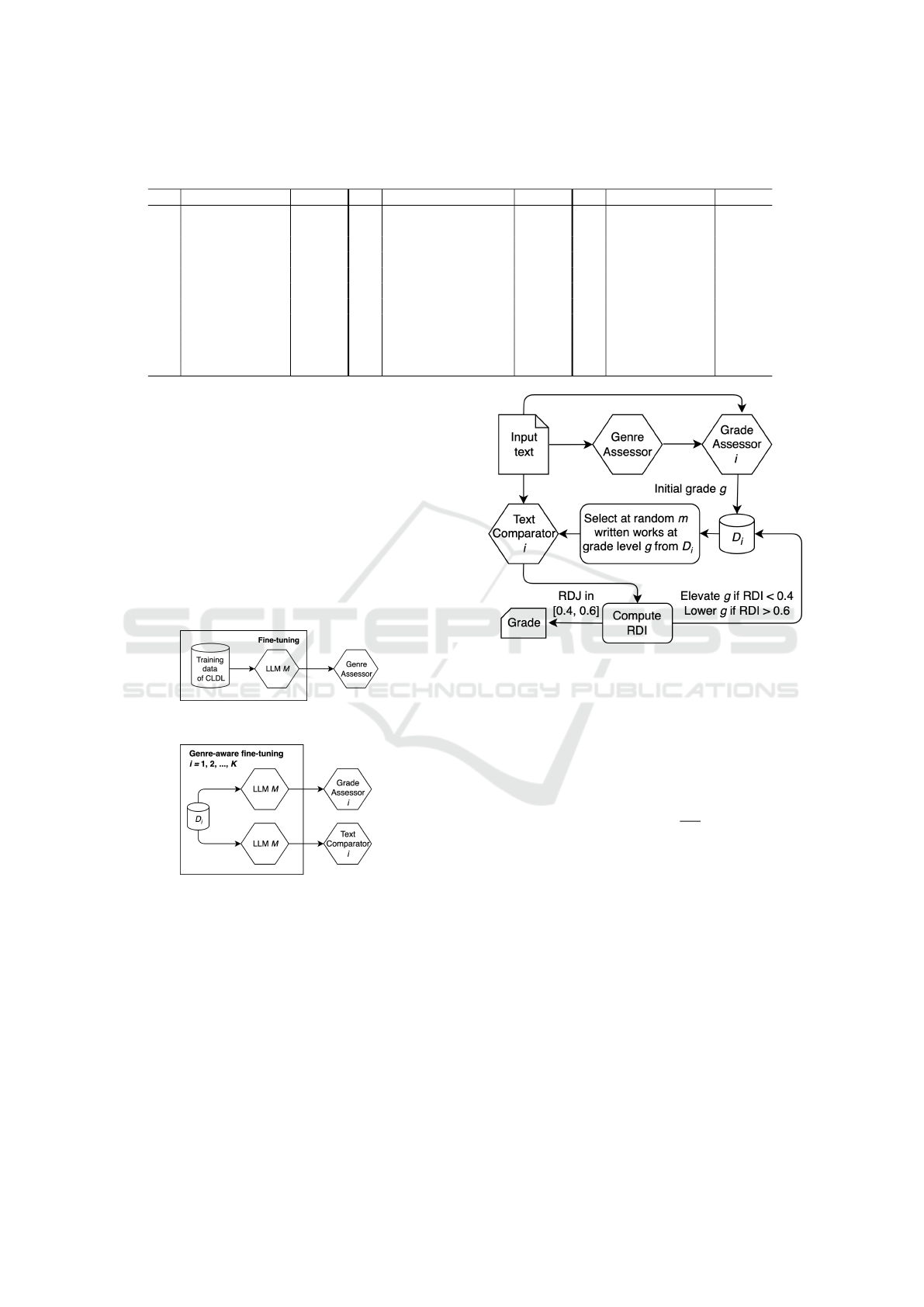
Table 3: The genres in CLDL in descending order of percentage, where “R” represents the ranking of a genre in terms of the
number of texts in that genre.
R Genre % R Genre % R Genre %
1 Information text 0.3622 12 Fable 0.0160 23 Science fiction 0.0046
2 Poem 0.1709 13 Psychology 0.0153 24 Religious text 0.0038
3 Short story 0.1041 14 Fantasy 0.0122 25 Political theory 0.0038
4 Essay 0.1041 15 Folktale 0.0122 26 Allegory 0.0030
5 Fiction 0.0574 16 Opinion 0.0115 27 Autobiography 0.0030
6 Speech 0.0428 17 Myth 0.0076 28 Legal document 0.0023
7 Biography 0.0383 18 Primary source doc 0.0076 29 Satire 0.0022
8 News 0.0214 19 Historical fiction 0.0068 30 Letter 0.0015
9 Memoir 0.0176 20 Philosophy 0.0067 31 Main ideas 0.0007
10 Non-fiction 0.0161 21 Drama 0.0054 32 Magical realism 0.0007
11 Interview 0.0161 22 Historical document 0.0053 33 Skill lesson 0.0007
User: You are provided with a pair of texts de-
limited with XML tags. Your task is to deter-
mine which of the two texts is more difficult to
read.
<text 1> {x
i
} <text 1>
<text 2> {y
i
} <text 2>
Assistant: {<text 1> or <text 2>}
If M is a non-generative model, we fine-tune M on P
i
as a binary classifier to determine which of the two
input texts is more difficult to read following the stan-
dard procedure. Figures 3 and 4 depict the process of
fine-tuning these models.
Figure 3: A schematic for fine-tuning the genre assessor.
Figure 4: A schematic for fine-tuning genre-aware grade
assessors and text comparators.
4.5 The Local-Search Algorithm
Let F be an input text. Figure 5 depicts the data flow
of LS-LLM.
1. Use the genre assessor to predict F’s genre, de-
noted by e.
2. Case 1: e ∈ C
i
for some i (1 ≤ i ≤ K).
(a) Use the grade assessor GA
i
to predict an initial
grade level of F, denoted as g, and use it as the
starting point for carrying out the local search.
Figure 5: Data flow of LS-LLM.
(b) Select at random m files from D
i
with grade
level g, denoted by F
i,g
.
(c) Use the text comparator TC
j
to compare F with
each file in F
i,g
. Let n
L
i,g
denote the number of
texts in F
i,g
with a lower grade level then g. De-
fine the relative difficulty index (RDI) by
RDI
i,g
=
n
L
i,g
m
. (3)
Case 1.1: RDI
i,g
< 0.4. If g > g
min
, then set
g ← g − 1, one grade lower, and repeat the al-
gorithm. Otherwise, the local search concludes
with an output “F is easier than Grade g
min
.”
Case 1.2: 0.4 ≤ RDI
g,i
≤ 0.6. The local search
concludes with the current value of g being the
final grade of F.
Case 1.3: RDI
i,g
> 0.6. If g < g
max
, then set
g ← g + 1, one grade higher, and repeat the al-
gorithm. Otherwise, the local search concludes
with an output “F is harder than Grade g
max
.”
3. Case 2: e ̸∈ E. Namely, e is unseen in the training
data. We identify the existing genre that is most
similar to e using the same clustering method ap-
plied to genres clustering and proceed as in Case
KDIR 2025 - 17th International Conference on Knowledge Discovery and Information Retrieval
228
1, applying the genre-aware grade assessor and
text comparator associated with that genre.
Remark. While we may randomly select refer-
ence works from the training data for a given grade
on the fly, independent of those used for fine-tuning
the grade comparators, our experiments show that this
approach achieves almost the same accuracy.
5 EVALUATION
We first evaluate the accuracy of the genre assessor,
grade assessor, and text comparator on CLDL. We
then evaluate the overall performance of LS-LLM/M
on both CLDL and WeeBit. We would like to apply
LS-LLM to Newsela, but we have not received per-
mission to access Newsela at the time of writing
1
.
For brevity, we sometimes refer to a model as a
D-based model if it is trained or fine-tuned on the
dataset D. We carry out evaluations for WeeBit in
two settings: (1) Repeat the same fine-tuning pro-
cess for WeeBit as for CLDL but with five levels of
readability using a genre-agnostic grade assessor. (2)
Apply the CLDL-based genre assessor, genre-aware
grade assessors, and genre-aware text comparators
to WeeBit. Finally, we compare the performance of
genre-agnostic LS-LLM with genre-aware LS-LLM
on both CLDL and WeeBit, as well as the number of
visits to LLMs and the actual running time.
5.1 Evaluation of CLDL-Based Models
The test sets for the genre assessor and grade asses-
sor are the test data of CLDL. The test set for the text
comparator is constructed in the same way as for con-
structing P
i
(see Equation 2) with the following set-
ting: For CLDL: g
min
= 3, g
max
= 12, and ℓ = 2. For
WeeBit: g
min
= 1, g
max
= 5, and ℓ = 1, where the
readability level is treated as the grade level. We use
the average precision to measure accuracy. For mea-
suring the genre assessor, a predicted genre is con-
sidered correct if it falls in the correct cluster of gen-
res. Table 4 shows the evaluation results, where GenA
stands for “genre assessor,” GraA for “grade asses-
sor,” and TexC for “text comparator.”
It can be seen that the CLDL-based genre asses-
sor, genre-aware grade assessor, and genre-aware text
comparator using GPT-4o achieve the highest accu-
racy compared to other LLMs, with accuracies ex-
ceeding 82%, 45%, and 85%, respectively. We will
use the CLDL-based genre assessor using GPT-4o as
1
Access to Newsela requires permission, as does
WeeBit.
Table 4: Evaluation of CLDL-based models.
Model GenA GraA TexC
BERT 0.7435 0.3912 0.7692
RoBERTa 0.7847 0.3968 0.8121
BART 0.7422 0.3975 0.8010
GPT-3.5 0.7833 0.4017 0.8244
GPT-4o
0.8206 0.4512 0.8538
the default genre assessor for its highest accuracy. It
is worth noting that the genre assessor may generate
a new genre not present in the training data.
5.2 Evaluation of LS-LLM on CLDL
and WeeBit
WeeBit doesn’t provide genre information. To re-
solve this, we use the genre assessor trained on CLDL
to generate genres for all 3,115 written works in
WeeBit. Table 5 depicts the results. A total of 857
written works have generated genres not included in
CLDL, highlighting the advantage of using a genera-
tive model over a traditional classifier.
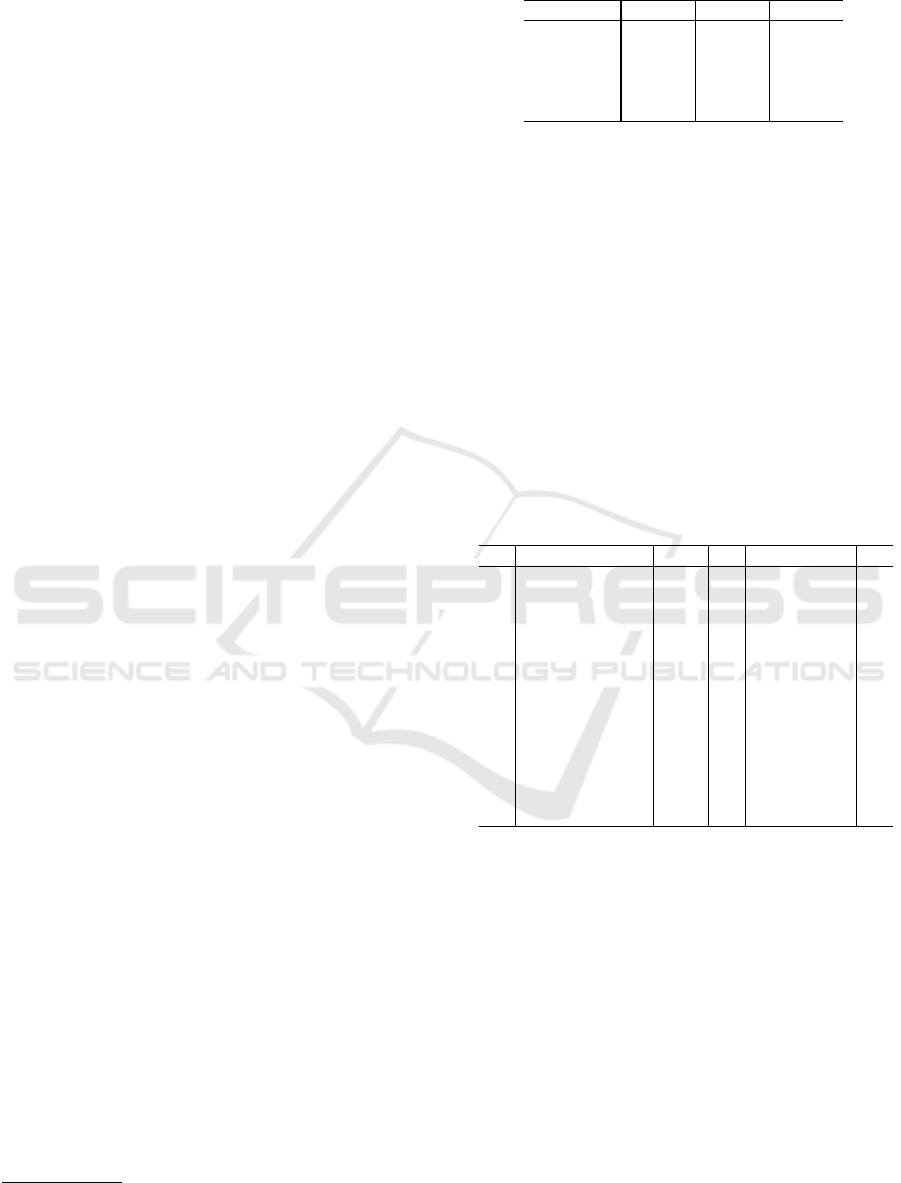
Table 5: Statistical results of predicted genres for WeeBit,
where #Art represents “the number of texts”
R Genre # R Genre #
1 Info text 1424 14 Lang lesson 18
2 News 386 15 Short story 18
3 Advertisement 365 16 Mathematics 14
4 Interview 345 17 Poem 8
5 Information 99 18 Biography 8
6 Science 78 19 Drama 7
7 Statement 71 20 FLLR 5
8 Info technology 68 21 Religious 3
9 Summary 49 22 Recipe 2
10 Education 47 23 Joke 2
11 Literary analysis 37 24 Case study 1
12 Philosophy 30
25
Character
1
13 Opinion 29 Analysis
Selecting ∆ = 0.65 and 0.75, respectively, for
CLDL and WeeBit yields K = 4 for both datasets in
genre partitioning, which means that datasets are par-
titioned into four groups, with the top four genres in
Tables 3 and 5 being, respectively, the base genres for
the underlying cluster. This partition provides a suffi-
cient number of works in each D
i
spanning all grade
levels. We set m = 10 to construct the set of reference
works F
i,g
(see Equation 1) for each D
i
.
Table 6 depicts the evaluation results, where GPT-
4o (direct) generates grade levels using a few-shot
prompt, LS-L stands for LS-LLM, /3.5 and /4o stand
for /GPT-3.5 and /PGT-4o, and SVC-255/4o is trained
over, respectively, CLDL and WeeBit.
It can be seen that, for both CLDL and WeeBit
under both AD-0 and AD-1 accuracy, LS-LLM/M
Assessing Grade Levels of Texts via Local Search over Fine-Tuned LLMs
229
Table 6: Evaluation results of various models trained or
fine-tuned on their respective datasets.
Model
AD-0 AD-1
CLDL WeeBit CLDL WeeBit
GPT-4o (Direct) 0.4378 0.7623 0.8420 0.8220
FT-GPT-4o 0.4512 0.8950 0.8611 0.9050
SVC-255/4o 0.5024 0.9187 0.8891 0.9532
LS-L/BERT 0.6387 0.9195 0.9103 0.9593
LS-L/RoBERTa 0.6516 0.9221 0.9179 0.9611
LS-L/BART 0.6425 0.9250 0.9101 0.9678
LS-L/3.5 0.6526 0.9316 0.9174 0.9668
LS-L/4o 0.6542 0.9327 0.9202 0.9697
for all M outperforms the leading method trained
with all LFs, which in turn outperforms fine-tuned
GPT-4o, and fine-tuned GPT-4o outperforms out-of-
the-box GPT-4o. In particular, under the measure
of AD-0, for CLDL, LS-LLM/GPT-4o achieves a
substantial 23.20% improvement. Even the least-
performant model, LS-LLM/BERT, surpasses the
leading method with a notable 21.34% improvement.
For WeeBit, LS-LLM/GPT-4o achieves a 1.50% im-
provement over the leading method.
In can also be seen that all models achieve higher
accuracy on WeeBit compared to CLDL. This is likely
because WeeBit features coarser readability levels, al-
lowing certain grade predictions that are incorrect for
CLDL to be correct for WeeBit.
Table 7: Evaluation of CLDL-based models on WeeBit.
Model AD-0 AD-1
SVC-255/GPT-4o 0.4412 0.5929
LS-LLM/BERT 0.4648 0.6246
LS-LLM/RoBERTa 0.4701 0.6290
LS-LLM/BART 0.4677 0.6263
LS-LLM/GPT-3.5 0.4711 0.6302
LS-LLM/GPT-4o 0.4716 0.6308
Next, we evaluate the transferability of CLDL-
based LS-LLM/M on WeeBit. For a written work F in
the test set of CLDL, if LS-LLM predicts “F is easier
than Grade 3,” we classify F as belonging to Grade
3. Similarly, if LS-LLM predicts “F is harder than
Grade 12,” we classify F as belonging to Grade 12.
We map the predicted grade by LS-LLM/M as fol-
lows: (1) Texts easier than Grade 3 are classified as
Level 1. (2) Texts at Grades 3 and 4 are classified as
Level 2. (3) Texts at Grades 5 and 6 are classified as
Level 3. (4) Texts at Grades 7, 8, and 9 are classified
as Level 4. (5) Texts at Grades 10, 11, 12, and those
harder than Grade 12 are classified as Level 5. Table
7 presents the evaluation results, where SVC/GPT-4o
with all LFs is trained on CLDL.
5.3 The Role of Genres
We compare the performance of LS-LLM/GPT-4o
with genre-agnostic and genre-aware grade assessor
GA and text comparator TC fine-tuned on, respec-
tively, where Genre-agnostic models are trained with-
out organizing the training data according to genre.
Table 8 depicts the evaluation results.
Table 8: The average AD-0 accuracy of LS-LLM/GPT-4o.
Method
AD-0
CLDL WeeBit
Genre-agnostic 65.22% 93.25%
Genre-aware 65.42% 93.27%
It appears that the genre-aware method performs
slightly better; however, the advantage is marginal,
which is somewhat counterintuitive. This may be at-
tributed to the imbalance in the dataset across genres,
where a few dominant genres disproportionately in-
fluence the results. To enable a fairer comparison, a
more balanced dataset is necessary for future studies.
Table 9 (a) and (b) show, respectively, the maxi-
mum and average numbers of visits to LLMs and the
running time of LS-LLMs.
Table 9: The number of visits to LLMs and running time,
where G-AG and G-AW stand for, respectively, genre-
agnostic and genre-aware
Maximum Average
CLDL WeeBit CLDL WeeBit
G-AG 41 21 14.8 12.9
G-AW 32 22 12.6 12.5
(a)
Worst-case time Average time
CLDL WeeBit CLDL WeeBit
BERT
G-AG 28.23 14.13 10.21 9.13
G-AW 23.26 15.60 9.04 9.01
GPT-4o
G-AG 42.34 21.7 15.38 13.33
G-AW 33.06 22.76 13.22 12.92
(b)
It can be seen that, in general, the genre-agnostic
approach requires more visits to the underlying fine-
tuned PLM models compared to the genre-aware ap-
proach. This is expected, as the genre-aware approach
is confined to a smaller set of genres, which results in
a faster local search process. Consequently, the ac-
tual running time of LS-LLM using fine-tuned PLMs
like BERT or RoBERTa, which run locally, is signifi-
cantly shorter compared to LS-LLM using fine-tuned
commercial PLMs such as the GPT-4o API. Table 9
depicts the comparison results of running time, where
the fine-tuned BERT models are run on a NVIDIA
GeForce RTX 3090 GPU.
KDIR 2025 - 17th International Conference on Knowledge Discovery and Information Retrieval
230

6 CONCLUSIONS
We presented a novel local search method for read-
ability assessment, leveraging fine-tuned models over
a selected PLM for various tasks. Our experiments
demonstrated that the proposed local search method
significantly enhances ARA accuracy over the lead-
ing method. Investigations for further improvements
of accuracy can be carried out along the following
lines: (1) Construct a dataset that is larger and more
balanced than CLDL. Specifically, for each genre, we
aim to collect a sufficient number of written works
that are evenly distributed across all grade levels. This
will eliminate the need to partition the dataset by sim-
ilar genres and enable fairer comparisons between
genre-agnostic and genre-aware grade assessment and
readability evaluation methods. (2) Explore alterna-
tive black-box LLMs with improved fine-tuning ca-
pabilities to enhance the accuracy of various tasks.
(3) Investigate white-box LLMs, such as the LLaMA
models, to optimize fine-tuning for specific tasks.
REFERENCES
Collins-Thompson, K. (2014). Computational assessment
of text readability: A survey of current and future re-
search running title: Computational assessment of text
readability.
Deutsch, T., Jasbi, M., and Shieber, S. (2020). Linguis-
tic features for readability assessment. In Burstein,
J., Kochmar, E., Leacock, C., Madnani, N., Pil
´
an, I.,
Yannakoudakis, H., and Zesch, T., editors, Proceed-
ings of the Fifteenth Workshop on Innovative Use of
NLP for Building Educational Applications, pages 1–
17.
Engelmann, B., Kreutz, C. K., Haak, F., and Schaer, P.
(2024). Arts: Assessing readability and text simplic-
ity. In Proceedings of EMNLP.
Feng, L., Elhadad, N., and Huenerfauth, M. (2009). Cog-
nitively motivated features for readability assessment.
In Lascarides, A., Gardent, C., and Nivre, J., editors,
Proceedings of the 12th Conference of the European
Chapter of the ACL (EACL 2009), pages 229–237.
Filighera, A., Steuer, T., and Rensing, C. (2019). Auto-
matic Text Difficulty Estimation Using Embeddings
and Neural Networks, pages 335–348.
Gunning, R. (1969). The fog index after twenty years. Jour-
nal of Business Communication, 6:13 – 3.
Hale, J. (2016). Information-theoretical complexity metrics.
Lang. Linguistics Compass, 10:397–412.
Heilman, M., Collins-Thompson, K., and Eskenazi, M.
(2008). An analysis of statistical models and features
for reading difficulty prediction. Proceedings of the
Third Workshop on Innovative Use of NLP for Build-
ing Educational Applications.
Holtgraves, T. (1999). Comprehending indirect replies:
When and how are their conveyed meanings acti-
vated? Journal of Memory and Language, 41(4):519–
540.
Jeanne Sternlicht Chall, E. D. (1995). Readability Re-
visited: The New Dale-Chall Readability Formula.
Brookline Books.
Lee, B. W., Jang, Y. S., and Lee, J. (2021). Pushing on text
readability assessment: A transformer meets hand-
crafted linguistic features. In Moens, M.-F., Huang,
X., Specia, L., and Yih, S. W.-t., editors, Proceedings
of the 2021 Conference on Empirical Methods in Nat-
ural Language Processing, pages 10669–10686. Re-
public.
Lee, B. W. and Lee, J. (2020). Lxper index 2.0: Improving
text readability assessment for l2 English learners in
South Korea.
Lu, X. (2010). Automatic analysis of syntactic complexity
in second language writing. International Journal of
Corpus Linguistics, 15:474–496.
Peabody, M. A. and Schaefer, C. (2016). Towards semantic
clarity in play therapy. International Journal of Play
Therapy, 25:197–202.
Schwarm, S. and Ostendorf, M. (2005). Reading level as-
sessment using support vector machines and statisti-
cal language models. In Knight, K., Ng, H. T., and
Oflazer, K., editors, Proceedings of the 43rd Annual
Meeting of the Association for Computational Lin-
guistics (ACL’05), pages 523–530.
Tonelli, S., Tran Manh, K., and Pianta, E. (2012). Mak-
ing readability indices readable. In Williams, S., Sid-
dharthan, A., and Nenkova, A., editors, Proceedings
of the First Workshop on Predicting and Improving
Text Readability for target reader populations, pages
40–48. Canada.
Trott, S. and Rivi
`
ere, P. (2024). Measuring and modifying
the readability of English texts with GPT-4. In Shard-
low, M., Saggion, H., Alva-Manchego, F., Zampieri,
M., North, K.,
ˇ
Stajner, S., and Stodden, R., editors,
Proceedings of the Third Workshop on Text Simpli-
fication, Accessibility and Readability (TSAR 2024),
pages 126–134. Linguistics.
Vajjala, S. and Meurers, D. (2012). On improving the ac-
curacy of readability classification using insights from
second language acquisition. pages 163—-173.
Wang, J. (2025). Ai-oracle machines for intelligent com-
puting. AI Matters, 11:8–11.
Xia, M., Kochmar, E., and Briscoe, T. (2016). Text
readability assessment for second language learn-
ers. In Tetreault, J., Burstein, J., Leacock, C., and
Yannakoudakis, H., editors, Proceedings of the 11th
Workshop on Innovative Use of NLP for Building Ed-
ucational Applications, pages 12–22.
Assessing Grade Levels of Texts via Local Search over Fine-Tuned LLMs
231
