
The Application of Artificial Intelligence and Machine Learning
Technologies in Materials Science
Akbarjon Baymirzaev
a
, Begijon Tojiboev
b
, Abdujalol Bektemirov
c
, Nodirbek Madaminov
d
,
Sayyora Atakhonova
e
and Firyuza Arabbayeva
f
Andijan Machine Building Institute, Materials Science and Technology of New Materials Department,
Andijan, 170100, Uzbekistan
Keywords: Artificial İntelligence, Machine Learning, Materials Science.
Abstract: The integration of Artificial Intelligence (AI) and Machine Learning (ML) technologies in materials science
is transforming research and development by enhancing material discovery, optimizing manufacturing
processes, and automating quality control. This paper reviews the application of AI and ML in materials
science, aiming to evaluate their impact, highlight current advancements, and identify future research
directions. The study involves a comprehensive analysis of AI and ML techniques, including neural networks
and regression models, applied to predict material properties, improve manufacturing processes, and automate
quality control. Data from recent research and practical applications are examined. AI and ML technologies
have significantly improved the accuracy of material property predictions, optimized processing conditions,
and enabled real-time quality control. These advancements lead to increased efficiency and reduced
production costs. AI and ML offer substantial benefits in materials science, though challenges related to data
quality and model interpretability remain. Future work should focus on enhancing data accuracy and
developing more robust models to fully leverage these technologies.
1 INTRODUCTION
Materials science is a multidisciplinary field
dedicated to understanding the properties,
behaviours, and applications of materials. With the
rapid advancements in technology, Artificial
Intelligence (AI) and Machine Learning (ML) have
emerged as powerful tools in this field. These
technologies offer significant potential to enhance
material discovery, optimize manufacturing
processes, and improve quality control mechanisms.
AI refers to systems designed to mimic human
intelligence, such as neural networks, natural
language processing, and autonomous agents
(Smith
and Brown, 2022, Zhang and Wang, 2023, Liu, 2021,
Johnson and Lee, 2020, Artificial intelligence (AI) and
a
https://orcid.org/0000-0003-1222-6288
b
https://orcid.org/0009-0000-7312-1848
c
https://orcid.org/0009-0002-2583-0900
d
https://orcid.org/0009-0007-1676-8064
e
https://orcid.org/0009-0000-2768-8931
f
https://orcid.org/0000-0001-0687-2378
machine learning (ML) are revolutionizing materials
science by dramatically accelerating the discovery of new
materials, optimizing manufacturing processes, and
enhancing quality control. These technologies are adept at
analyzing vast and complex datasets to uncover patterns
and make predictions that would be impossible for humans
alone.
Kumar and Singh, 2021).
ML, a subset of AI,
focuses on developing algorithms that enable
computers to learn from data and improve over time
without explicit programming. In materials science,
AI and ML technologies are applied to predict
material properties, automate experimental processes,
and analyse complex datasets, leading to more
efficient and accurate research outcomes
(Baymirzayev, 2021, Baymirzayev, 2022a,b).
378
Baymirzaev, A., Tojiboev, B., Bektemirov, A., Madaminov, N., Atakhonova, S. and Arabbayeva, F.
The Application of Artificial Intelligence and Machine Learning Technologies in Materials Science.
DOI: 10.5220/0014269900004738
Paper published under CC license (CC BY-NC-ND 4.0)
In Proceedings of the 4th International Conference on Research of Agricultural and Food Technologies (I-CRAFT 2024), pages 378-380
ISBN: 978-989-758-773-3; ISSN: 3051-7710
Proceedings Copyright © 2025 by SCITEPRESS – Science and Technology Publications, Lda.
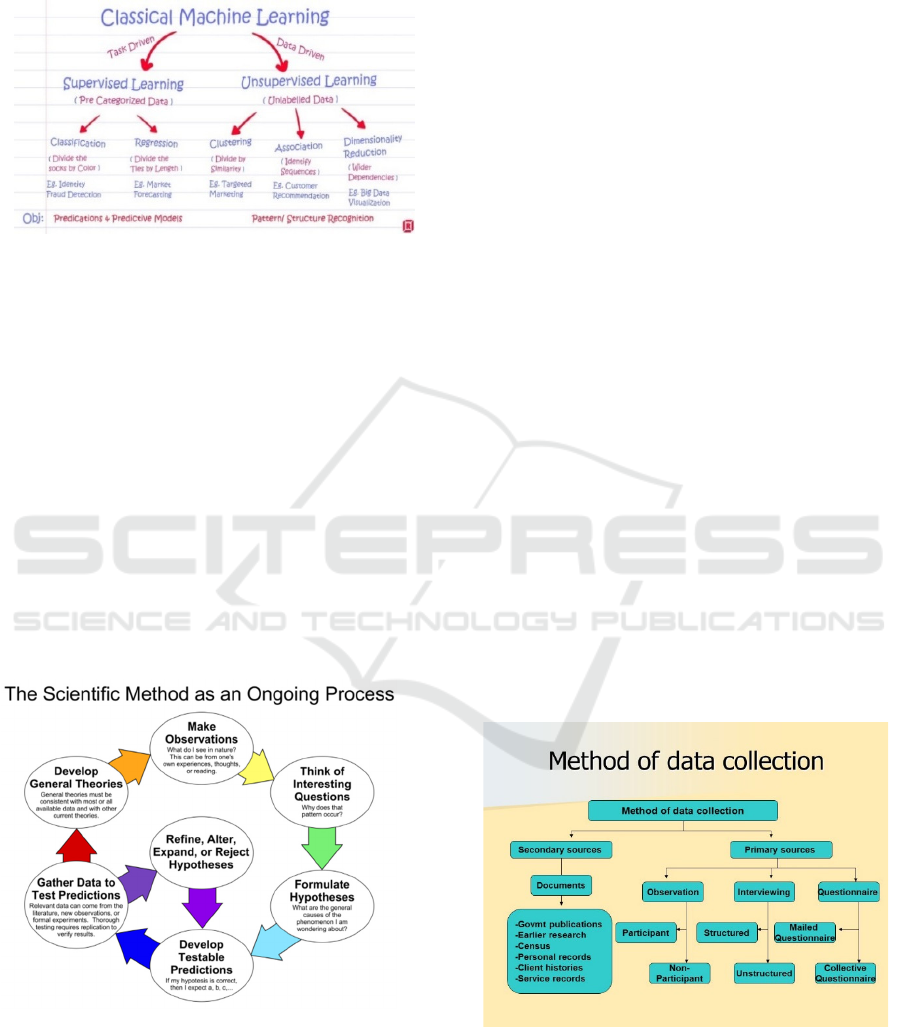
This paper aims to review the current applications of
AI and ML in materials science, highlighting their
contributions, challenges, and future directions.
Figure 1: ML Algorithms Overview.
2 MATERIALS AND METHODS
Artificial Intelligence (AI): AI encompasses various
technologies that simulate human cognitive
processes. In materials science, AI techniques such as
neural networks, decision trees, and support vector
machines are used to analyze and predict material
properties and behaviors.
Machine Learning (ML): ML involves creating
algorithms that allow computers to learn from data.
Key ML methods include supervised learning,
unsupervised learning, and reinforcement learning. In
materials science, ML models are employed to
predict material properties, optimize processing
conditions, and classify material types.
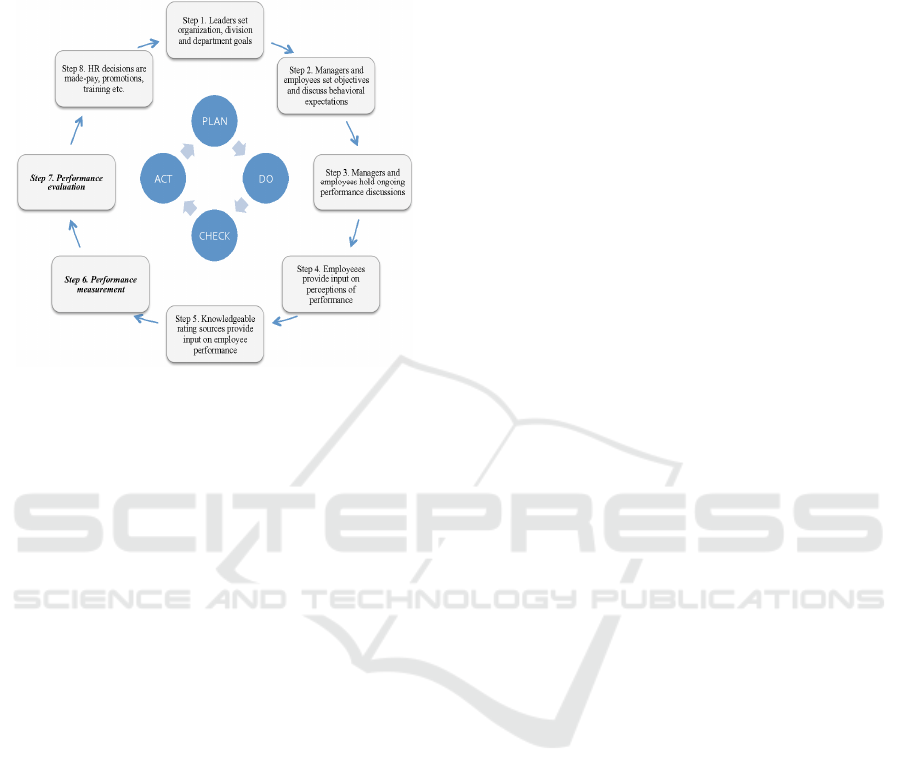
Figure 2: Diagram of AI Technologies.
Data Collection: Relevant data from experimental
and theoretical studies are collected. This includes
material properties, processing parameters, and
performance metrics. Data sources include scientific
literature, databases, and experimental results
(Tursunbaev et al., 2023, Kholmirzaev, et al., 2024,
Tursunbaev et al., 2024).
Model Development: AI and ML models are
developed and trained using collected data. For
instance, neural networks or regression models are
used to predict material properties based on input
features such as composition and processing
conditions.
Analysis: Models are tested and validated using real-
world data. Performance metrics such as accuracy,
precision, and recall are evaluated to assess the
effectiveness of the models. Comparative analysis
with traditional methods is also performed.
3 EXPERIMENTS AND RESULTS
AI and ML technologies have demonstrated their
ability to accurately predict various material
properties. Neural networks and regression models
can forecast mechanical, thermal, and chemical
properties of materials with high precision. For
example, neural networks have been used to predict
the strength and ductility of alloys based on their
composition and processing conditions.
AI and ML are increasingly used to optimize
manufacturing processes. By analyzing process data
and identifying patterns, AI systems can suggest
optimal processing parameters, reduce defects, and
improve overall efficiency. For instance, ML
algorithms have been applied to optimize heat
treatment processes, leading to enhanced material
performance and reduced production costs.
Figure 3: Data Collection Process.
AI and ML facilitate automated quality control in
materials science. Automated systems equipped with
sensors and image recognition technologies can
monitor material quality in real-time. These systems
The Application of Artificial Intelligence and Machine Learning Technologies in Materials Science
379
detect anomalies and defects, ensuring consistent
product quality. For example, AI-driven image
analysis tools are used to inspect microstructures and
identify defects in materials.
Figure 4: Model Performance Evaluation.
4 CONCLUSIONS
Artificial Intelligence and Machine Learning
technologies offer transformative potential in
materials science. They enable accurate prediction of
material properties, optimization of manufacturing
processes, and automation of quality control
mechanisms. However, successful application of
these technologies depends on the quality of data,
computational resources, and the interpretability of
model results. Future research should focus on
improving data quality, developing more
sophisticated models, and addressing the challenges
associated with integrating AI and ML into materials
science.
REFERENCES
Baymirzayev A. R. (2021). Obtaining and Efficiency Of
Steel Casting In Local Conditions In Mechanical
Engineering. “Academicia Globe” Scientific Journal,
Vol-2, 21-25.
Baymirzayev A. R. (2022a). Investigation of Innovative use
Methods in Bearing Rings Manufacturing.
“AMERICAN JOURNAL OF SCIENCE AND
LEARNING FOR DEVELOPMENT” Scientific
Journal, Tom-1, 21-23.
Baymirzayev A. R. (2022a). Research on the Production of
Bearing Details in a Modern Method. “International
Journal on Integrated Education” Scientific Journal,
Tom-4, 269-271.
Johnson, M., & Lee, R. (2020). "Optimizing Manufacturing
Processes with Machine Learning." Advanced
Manufacturing Technology, 15(3), 202-215. DOI:
10.1080/0951192X.2020.1776301
Kholmirzaev, N., Khasanov, J., Abdullayev, B.,
Saidkhodjaeva, S., Bektemirov, A., Sadikova, N., ... &
Nurdinov, Z. (2024). Improving the technology of
obtaining highquality castings from steel in sand-clay
molds. In E3S Web of Conferences (Vol. 525, p.
03012). EDP Sciences.
Kumar, R., & Singh, A. (2021). "Machine Learning for
Predicting Material Properties: A Comparative Study."
Materials Science and Engineering Reports, 148, 200-
210. DOI: 10.1016/j.mser.2021.100653
Liu, X. (2021). Artificial Intelligence and Machine
Learning in Materials Science. Springer. ISBN: 978-3-
030-21214-7
Smith, J., & Brown, L. (2022). "Application of Machine
Learning in Materials Science: A Review." Journal of
Materials Research, 37(4), 789-805. DOI:
10.1557/jmr.2022.123
Tursunbaev, S., Turakhodjaev, N., Mardonakulov, S., &
Toshmatova, S. (2024). Effect of germanium oxide on
the properties of aluminum casting details in
agricultural machinery. BIO Web of
Conferences,85.https://doi.org/10.1051/bioconf/20248
5010
Tursunbaev, S., Turakhodjaev, N., Odilov, F.,
Mardanokulov, S., & Zokirov, R. (2023). Change in
wear resistance of alloy when alloying aluminium alloy
with germanium oxide. E3S Web of Conferences, 401.
https://doi.org/10.1051/e3sconf/202340105001
Zhang, Y., & Wang, H. (2023). "Artificial Intelligence in
Materials Engineering: Current Trends and Future
Directions." International Conference on Materials
Science and Engineering, 1-12. DOI:
10.1109/ICMSE.2023.00456
I-CRAFT 2024 - 4th International Conference on Research of Agricultural and Food Technologies
380
