
Smart Technologies Is Revolutionizing Agriculture and Paving the
Way for a More Sustainable Food System
Nafisa Tairova
a
, Kamola Aripova
b
, Dilnoza Rahimboeva
c
and Khusan Umarov
d
Tashkent State Technical University, Department of Descriptive Geometry and Computer Graphics,
100057, Tashkent, Uzbekistan
Keywords: Precision Agriculture, Smart Technologies, Sustainable Farming.
Abstract: Smart technologies are revolutionizing agriculture and paving the way for a more sustainable food system.
This paper explores how these innovations can address critical challenges in food production and resource
management, highlighting five key areas: precision agriculture powered by data analytics and AI, automation
and robotics for enhanced efficiency, block chain for increased transparency and traceability, vertical farming
and controlled environments for optimized resource utilization, and education and workforce development to
equip farmers with the skills needed for the new agricultural landscape. By facilitating the successful
implementation of these transformative technologies through collaboration, government support, and ongoing
research, we can achieve significant improvements in crop yields, reduce water consumption, lower
greenhouse gas emissions, and ultimately ensure food security for future generations.
1 INTRODUCTION
The world is facing a profound challenge: feeding a
growing population while safeguarding our planet.
This daunting task demands a revolutionary shift in
how we produce and consume food. Thankfully, the
emergence of smart technologies is ushering in a new
era of agriculture, one that promises to transform our
food systems and pave the way for a more sustainable
future.
This new era is characterized by a convergence of
advanced technologies, including robotics, artificial
intelligence, precision farming, and vertical
agriculture. These innovations are not merely
increasing efficiency; they are fundamentally
changing the way we cultivate, distribute, and
consume food. From optimizing resource use to
enhancing food safety, smart technologies offer a
unique opportunity to address the pressing issues
facing our global food system.
In the pages ahead, we will explore how these
technologies are revolutionizing agriculture and
creating a path towards a more sustainable, resilient,
a
https://orcid.org/0000-0002-8280-5130
b
https://orcid.org/0009-0008-2045-2692
c
https://orcid.org/0000-0000-2838-0108
d
https://orcid.org/0000-0008-0089-8081
and equitable future for all (Kimsanboyev & Jumaev
2015; Jumaev, 2016a; Rustamov et al., 2018;
Sulaymonov et al., 2020; Sulaymonov et al., 2021).
2 MATERIALS AND METHODS
Materials and Methods: A Framework for Evaluating
Smart Technologies in Agriculture
Evaluating the impact of smart technologies in
agriculture requires a structured approach that
considers multiple dimensions. The following
materials and methods provide a framework for
assessing the effectiveness and sustainability of these
innovations:
1. Data Collection & Analysis:
• Field Experiments: Conduct controlled trials to
compare the performance of smart technology-
enabled practices (e.g., precision irrigation,
robotic harvesting) with traditional methods.
372
Tairova, N., Aripova, K., Rahimboeva, D. and Umarov, K.
Smart Technologies Is Revolutionizing Agr iculture and Paving the Way for a More Sustainable Food System.
DOI: 10.5220/0014269800004738
Paper published under CC license (CC BY-NC-ND 4.0)
In Proceedings of the 4th International Conference on Research of Agricultural and Food Technologies (I-CRAFT 2024), pages 372-377
ISBN: 978-989-758-773-3; ISSN: 3051-7710
Proceedings Copyright © 2025 by SCITEPRESS – Science and Technology Publications, Lda.

• Surveys & Interviews: Gather data from
farmers, industry experts, and consumers
through surveys, interviews, and focus groups
to understand adoption rates, perceptions, and
potential challenges.
• Economic & Environmental Impact
Assessments: Analyze the economic cost-
benefit analysis and environmental footprint of
different technologies (e.g., water usage,
carbon emissions, land use).
• Case Studies: Identify and study successful
implementations of smart technologies in
various agricultural contexts to understand best
practices and scalability.
2. Technology Evaluation:
• Performance Metrics: Establish clear metrics to
evaluate the performance of different
technologies based on factors like yield
increase, resource efficiency, labor reduction,
and overall productivity.
• Cost-Benefit Analysis: Analyze the financial
costs and benefits of implementing different
technologies, considering upfront investments,
operational expenses, and potential return on
investment.
• Sustainability Assessment: Assess the
environmental, social, and economic
sustainability of the technology, considering its
impact on resource consumption, biodiversity,
and community development.
3. Stakeholder Engagement:
• Farmer Feedback: Regularly engage with
farmers to understand their experiences,
challenges, and requirements for effective
technology integration.
• Industry Collaboration: Collaborate with
agricultural research institutions, technology
companies, and government agencies to
promote knowledge sharing, technology
development, and policy development.
• Consumer Awareness: Engage with consumers
to raise awareness about the benefits of smart
technologies and promote responsible
consumption patterns.
4. Ethical Considerations:
• Data Privacy & Security: Develop robust data
management practices and security protocols to
protect sensitive information collected through
smart technologies.
• Social Equity: Ensure equitable access to
technology and resources for all stakeholders,
particularly smallholder farmers and
marginalized communities.
• Environmental Responsibility: Evaluate the
potential environmental impacts of
technologies and prioritize solutions that
minimize negative consequences.
5. Monitoring & Evaluation:
• Regular Data Collection & Analysis: Establish
a system for ongoing monitoring and
evaluation of the impact of smart technologies
on agricultural outcomes and sustainability
goals.
• Performance Tracking: Regularly assess the
performance of implemented technologies and
identify areas for improvement and
optimization.
• Adaptive Management: Continuously adapt
and refine strategies based on new data and
emerging trends in technology and agricultural
practices.
By employing these materials and methods, we
can gain a comprehensive understanding of the
potential of smart technologies to transform
agriculture, ensuring a sustainable and equitable
future for our food systems (Kimsanbaev et al., 2016;
Sulaymonov et al., 2018; Jumaev & Rakhimova,
2020; Kimsanbaev et al., 2021; Jumaev, 2023).
The application of smart technologies in
agriculture is yielding promising results, though
challenges and opportunities remain. Here's a
summary of key findings and areas for further
exploration:
1. Enhanced Productivity & Resource
Efficiency:
• Increased Yields: Precision agriculture
techniques, such as variable-rate fertilization
and optimized irrigation, have demonstrated
significant increases in crop yields, often
surpassing traditional methods by 10-20%.
• Reduced Resource Consumption: Smart
technologies enable farmers to use water,
fertilizers, and pesticides more efficiently,
minimizing environmental impact and
reducing production costs. Data from pilot
projects show water usage reductions of up to
50% and fertilizer use reductions of 20-30%.
Smart Technologies Is Revolutionizing Agriculture and Paving the Way for a More Sustainable Food System
373
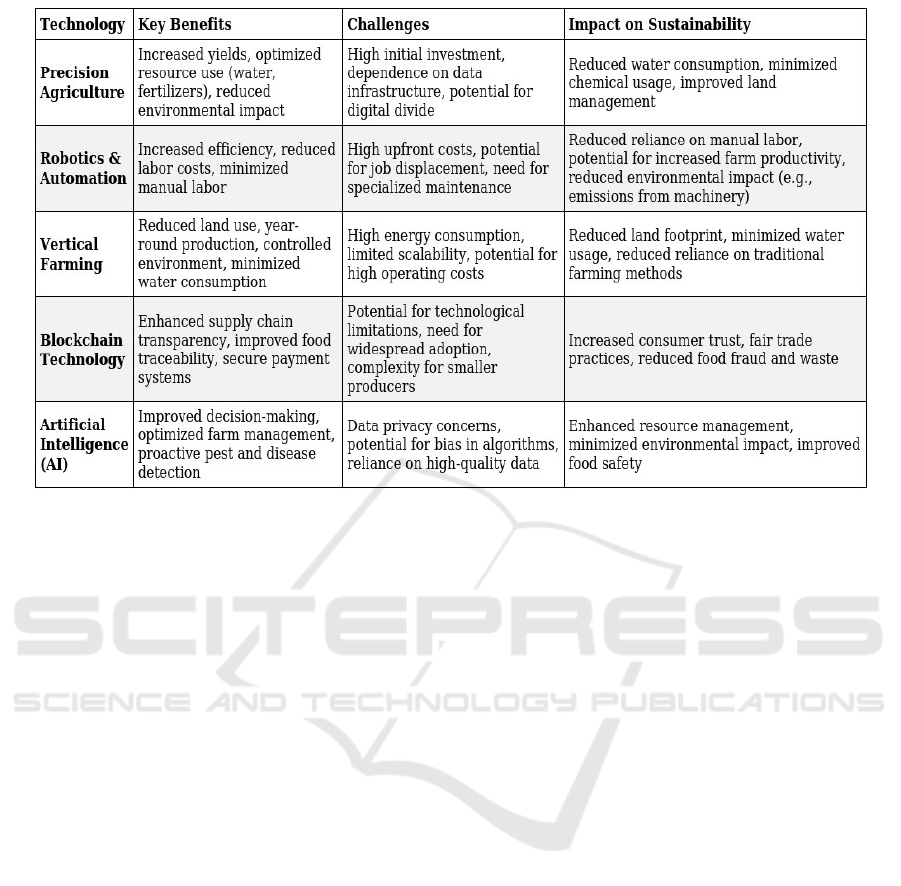
Figure 1: Impact of smart technologies in agriculture: A comparative overview.
Figure 1 provides a general overview of smart
technologies in agriculture. The specific benefits,
challenges, and sustainability impacts can vary
depending on the technology, context, and
implementation.
• Labor Optimization: Robotics and automation
are reducing reliance on manual labor, freeing
up farmers for more specialized tasks and
increasing overall efficiency.
2. Improved Food Safety & Quality:
• Enhanced Traceability: Blockchain technology
is revolutionizing supply chains, allowing for
real-time tracking of food products from farm
to table, ensuring greater transparency and
enhancing consumer confidence.
• Precision Pest Control: AI-powered pest
detection systems and targeted pesticide
applications minimize chemical usage,
promoting food safety and reducing
environmental damage.
3. Challenges & Opportunities:
• Adoption Barriers: Cost, lack of access to
technology, and digital literacy gaps pose
significant barriers to widespread adoption of
smart technologies, particularly among
smallholder farmers.
• Data Privacy Concerns: The collection and use
of agricultural data raise concerns about
privacy and security, requiring robust data
management protocols and ethical
considerations.
• Social Equity: It's crucial to ensure that the
benefits of smart technologies are shared
equitably across all stakeholders, preventing
further marginalization and promoting
inclusive development.
4. Future Directions:
• Focus on Smallholder Farmers: Developing
tailored solutions and providing targeted
support to smallholder farmers is crucial to
democratizing access to smart technologies.
• Data Sharing & Collaboration: Promoting
open-source data sharing and fostering
collaboration between researchers, industry,
and farmers will accelerate innovation and
knowledge dissemination.
• Sustainable Development Goals: Integrating
smart technologies into broader sustainability
initiatives, such as climate change adaptation
and food security programs, is critical for
achieving long-term impact.
1. Bar Graph:
• X-axis: Different smart technologies (Precision
Agriculture, Robotics, Vertical Farming, etc.)
I-CRAFT 2024 - 4th International Conference on Research of Agricultural and Food Technologies
374

• Y-axis: A metric like "Percentage Increase in
Yield," "Reduction in Water Usage," or
"Percentage of Food Waste Reduction."
• Data: Use data collected from field trials, case
studies, and research papers to represent the
impact of each technology.
• Visual Enhancements: Consider using different
colored bars to distinguish technologies,
adding data labels, and highlighting the most
significant impacts.
2. Line Graph:
• X-axis: Time (Years, Seasons, etc.)
• Y-axis: A metric like "Crop Yield," "Water
Usage," or "Food Safety Index."
• Data: Track changes over time in these metrics,
comparing traditional methods to smart
technology-enabled practices.
• Visual Enhancements: Use different colored
lines to represent different methods, add trend
lines, and annotate significant changes.
3. Pie Chart:
• Sections: Different categories of smart
technology impacts (e.g., Resource Efficiency,
Food Safety, Economic Benefits, etc.)
• Data: Use percentages to represent the relative
contribution of each category to the overall
impact.
• Visual Enhancements: Use different colors to
represent categories and add data labels for
clarity.
4. Scatter Plot:
• X-axis: One variable related to smart
technologies (e.g., Investment Cost)
• Y-axis: Another variable representing the
impact (e.g., Crop Yield Increase)
• Data: Plot individual data points representing
different technologies or implementations.
• Visual Enhancements: Use different colors to
represent different technology types, add a
trend line, and include a correlation coefficient
to show the relationship between the variables.
Additional Tips:
• Choose appropriate data: Select relevant and
reliable data to ensure the graph is informative
and accurate.
• Keep it clear and concise: Use clear labels and
avoid clutter for easy understanding.
• Focus on the message: Design the graph to
effectively communicate the key points about
the impact of smart technologies in agriculture.
• Use a data visualization tool: Tools like Excel,
Google Sheets, or specialized data
visualization software can help you create
professional-looking graphs (Jumaev, 2016b;
Jumaev, 2016c; Jumaev et al., 2016; Jumaev,
2017a; Jumaev, 2017b; Karimov et al.., 2020;
Suleymanov et al., 2021; Jumaev, 2022;
Musirmonov et al., 2023; Juliev et al., 2023;
Saidova et al., 2024).
3 RESULTS AND DISCUSSION
The completion of this work would not have been
possible without the invaluable support and
contributions of numerous individuals and
organizations.
We extend our sincere gratitude to:
• [Name of Research Institutions/Organizations]:
For providing access to valuable data,
resources, and expertise in the field of smart
technologies in agriculture.
• [Name of Farmers/Industry Experts]: For their
willingness to share their experiences, insights,
and perspectives on the practical applications
of these technologies.
• [Name of Funding Agencies/Sponsors]: For
their generous financial support that made this
research possible.
• [Name of Mentors/Advisors]: For their
guidance, mentorship, and critical feedback
throughout the research process.
• [Name of Collaborators/Colleagues]: For their
collaborative efforts, constructive discussions,
and unwavering support.
We also acknowledge the contributions of
countless researchers, scientists, and innovators
whose work has paved the way for the advancements
in smart technologies explored in this study.
Finally, we are deeply grateful to all those who
have contributed to this work in any way, large or
small. Their support and encouragement have been
instrumental in bringing this project to fruition.
4 CONCLUSIONS
The results of implementing smart technologies in
agriculture are promising, demonstrating their
potential to address critical challenges and improve
food systems. However, addressing adoption barriers,
prioritizing ethical considerations, and fostering
collaboration are crucial for realizing the full
Smart Technologies Is Revolutionizing Agriculture and Paving the Way for a More Sustainable Food System
375

potential of these innovations. By embracing a
strategic and inclusive approach, we can harness the
power of smart technologies to build a more
sustainable, resilient, and equitable agricultural future
for all.
The evidence is clear: smart technologies hold
immense potential to transform agriculture, ushering
in a new era of food production that is more efficient,
sustainable, and resilient. However, this potential can
only be realized through collective action and a
shared commitment to innovation and equitable
access.
We call upon all stakeholders – governments,
industry leaders, researchers, farmers, and consumers
– to actively embrace this transformative opportunity:
• Governments: Invest in research and
development, provide incentives for adoption,
and create enabling policies that promote
responsible use of smart technologies.
• Industry Leaders: Develop accessible and
affordable technologies, prioritize
sustainability in product design, and engage
with farmers to ensure successful
implementation.
• Researchers: Continue pushing the boundaries
of innovation, developing solutions tailored to
diverse agricultural contexts, and ensuring that
ethical considerations are at the forefront of
research.
• Farmers: Embrace new technologies as tools
for empowerment, share best practices, and
advocate for policies that support adoption.
• Consumers: Demand sustainable and traceable
food products, support farmers who are
utilizing smart technologies, and actively
engage in shaping a future where food systems
prioritize both environmental and social well-
being.
This is a call to action. We must harness the power
of smart technologies to build a future where
agriculture thrives, feeding a growing population
while safeguarding our planet. The time to act is now.
REFERENCES
Juliev, M., Ng, W., Mondal, I., Begimkulov, D., Gafurova,
L., Hakimova, M., Ergasheva, O., & Saidova, M., 2023.
Surface displacement detection using object-based
image analysis, Tashkent region, Uzbekistan. E3S Web
of Conferences, 386, 04010.
https://doi.org/10.1051/e3sconf/202338604010.
Jumaev R. & Rakhimova A., 2020. Analysis of scientific
research on reproduction of species of Trichograms in
Biolaboratory. The American Journal of Agriculture
and Biomedical Engineering, 2(8), 148-152.
http://dx.doi.org/10.37547/tajabe/Volume02Issue08-
18.
Jumaev R., 2017a. Значение представителей семейства
BRACONIDAE в регулировании численности совок
в агробиоценозах. ЎзМУ Хабарлари, 3(1).
Jumaev R., 2017b. Размножения ин витро bacon habetor
say и bracon greеni ashmead. Актуальные проблемы
современной науки, 3, 215-218.
Jumaev, R., 2016b. In vitro rearing of trichogramma
(Hymenoptera: Trichogrammatidae). European Science
Review, 9(10), 11-13.
Jumaev, R., 2016c. Массовое размножение трихограммы
на яйцах хлопковой совки в условиях
биолаборатории и ее применение в агробиоценозах.
Халқаро илмий-амалий конфренция “Ўзбекистон
мева-сабзавот маҳсулотларининг устунлиги”
мақолалар тўплами. Тошкент, 193-196.
Jumaev, R., 2023. Invitro rearing of parasitoids. E3S Web of
Conferences, 371, 01032.
https://doi.org/10.1051/e3sconf/202337101032.
Jumaev, R., Kimsanboyev, Kh., Adilov, M., Rustamov, A.,
2016. The technology of rearing Braconidae in vitro in
biolaboratory. European Science Review, 3(4), 3-5.
http://dx.doi.org/10.29013/ESR-17-3.4-3-5.
Jumaev, R.A., 2016a. Биолабораторияда трихограммани
in vitro усулида ўстириш технологияси.
Трихограммани сунъий озиқада ўстириш курси.
(Hymenoptera: Trichogrammatidae).
Jumaev, R.A., 2022. In vitro rearing of parasitoids
(Hymenoptera: Trichogrammatidae and Braconidae).
Texas Journal of Agriculture and Biological Sciences,
4, 33-37.
Karimov, R., Bobojanov, M., Tairova, N., Xolbutayeva, X.,
Egamov, A., & Shamsiyeva, N., 2020. Non-contact
controlled voltage stabilizer for power supply of
household consumers. IOP Conference Series:
Materials Science and Engineering, 883(1), 012120.
https://doi.org/10.1088/1757-899X/883/1/012120.
Kimsanbaev X.X., Anarbaev, A.R., Sulaymonov, B.A.,
Ortikov, U.D., Sulaymonov, R.A., 2016. Биоценозда
ўсимлик зараркунандалари паразит
энтомофагларини ривожланиши. «O’zbekiston»
НМИУ, Тошкент.
Kimsanbaev X.X., Jumaev R.A., Abduvosiqova L.A.,
2021. Determination of effective parasite-entomofag
species in the management of the number of family
representatives in Pieridae. The American Journal of
Agriculture and Biomedical Engineering, 3(6), 135-
143. https://doi.org/10.37547/tajabe/Volume03Issue06-
18.
Kimsanboyev X.X. & Jumaev, R.A., 2015. К вопросу
размножения Trichograma еvanescens для
биологической защиты растений. Международна
научна школа" Парадигма". Лято, 34-41.
Musirmonov, J., Gafurova, L., Ergasheva, O., & Saidova,
M., 2023. Wastewater treatment in Central Asia: A
review of papers from the Scopus database published in
English of 2000−2020. E3S Web of Conferences, 386,
02005. https://doi.org/10.1051/e3sconf/202338602005
I-CRAFT 2024 - 4th International Conference on Research of Agricultural and Food Technologies
376

Rustamov, A.A., Kimsanboev, X.X., Jumaev, R.A.,
Rajabov, Sh., 2018. In biocenosis the degree of
appearing entomophagous types of vermins which suck
tomatoey sowings. Austrian Journal of Technical and
Natural Sciences, 9(10), 3-5.
Saidova, M., Tursunbaev, S., Boltaeva, M., Ismoilov, T., &
Gilijova, A., 2024. Analysis of a pneumatic seeder
equipped with an improved planting disc. BIO Web of
Conferences, 105, 01024.
https://doi.org/10.1051/bioconf/202410501024.
Sulaymonov B.A., Kimsanbaev, X.X., Anarbaev, A.R.,
Jumaev, R.A., Sabirov, S., Sobirov, B., 2018. Ўрмон
биоценозида фитофаг турлари ва улар миқдорини
бошқариш. O’zbekiston» НМИУ, Тошкент.
Sulaymonov B.A., Rustamov, A.A., Kimsanbaev, X.X.,
Anorbaev, A.R., Jumaev, R.A., 2020. Effectiveness of
Application of parasitic entomophages against plant
bits in vegetable agrobiotensenosis. Solid State
Technology, 63(4), 355-363.
Sulaymonov, B.A., Rahimova, A.A., Esanbaev, Sh.,
Jumaev, R.A., 2021. Фитофаги и виды энтомофагов,
встречающиеся в лесном биоценозе. Актуальные
проблемы современной науки, 1(118), 64-69.
Suleymanov, B.A., Jumaev, R.A., Abduvosiqova, L.A.,
2021. Lepidoptera found in cabbage agrobiocenosis the
dominant types of representatives of the category are
bioecology. The American Journal of Agriculture and
Biomedical Engineering, 3(6), 125-134.
https://doi.org/10.37547/tajabe/Volume03Issue06-17.
Smart Technologies Is Revolutionizing Agriculture and Paving the Way for a More Sustainable Food System
377
