
Influence of Bacteria on the Strength of Materials
Fazilatkhon Turakhodjaeva
1a
, Shirinkhon Turakhujaeva
2
b
, Furkat Jurakulov
3
c
,
Ilyosjon Siddiqov
4d
and Muattar Milieva
5
e
1
Arifov Institute of Ion-plasma and Laser Technologies of Uzbekistan Academy of Sciences, Tashkent, Uzbekistan
2
Turin Polytechnic University in Tashkent, Tashkent, Uzbekistan
3
Jizzakh State Pedagogical University, Jizzakh, Uzbekistan
4
Fergana State University, Fergana, Uzbekistan
5
Uzbekistan State University of World Languages, Tashkent, Uzbekistan
Keywords: Bioconcrete, Bacterial Calcite, Self-Healing Materials.
Abstract: This article explores the innovative field of bioconcrete, where bacteria, specifically Bacillus pasteurii, are
employed to enhance the strength and durability of concrete structures. The key mechanism involves the
bacteria's ability to produce urease, catalyzing the hydrolysis of urea into carbonate and ammonia. The
resulting carbonate ions react with calcium ions in the concrete, forming calcium carbonate (calcite), which
fills cracks and pores in the structure. This process not only contributes to increased strength but also provides
bioconcrete with remarkable self-healing properties.
1 INTRODUCTION
In world practice, many parts of mechanical
engineering are made of aluminum and its alloys.
This, in turn, is the reason for the increasing demand
for aluminum alloys in the world and various studies
to improve their properties (Ahmed et al., 2021).
Many studies have been conducted on the mechanical
properties of aluminum-lithium alloys. Including
Chinese scientists Wang Ya., Vru Ya., Liu M., studies
were conducted on the technology of obtaining a
material with the necessary strength, forging and high
elasticity, using alloying elements.At the same time,
they proposed a method of rolling during the
collection (Metwally et al., 2021). From the work of
the above-mentioned researchers, it can be seen that
when a lithium element is applied to aluminum as a
leaching element, its mechanical properties improve.
The evolution of construction materials has been a
constant endeavor to meet the ever-growing demands
for structures that are not only robust and durable but
also sustainable and environmentally conscious. In
a
https://orcid.org/0009-0005-4879-7252
b
https://orcid.org/0009-0004-2069-9362
c
https://orcid.org0000-0001-6916-4394
d
https://orcid.org/0000-0003-0629-0005
e
https://orcid.org/0000-0002-6866-9494
this pursuit, the integration of biological agents,
specifically bacteria, into concrete formulations has
emerged as a groundbreaking approach, giving rise to
a novel class of materials known as bioconcrete This
introduction delves into the innovative realm of
bioconcrete, exploring the transformative potential of
harnessing the biological prowess of Sporosarcina
pasteurii, a urease-producing bacterium, to enhance
the strength, durability, and resilience of concrete
structures (Metwally et al., 2021).
The Challenge of Traditional Concrete:Traditional
concrete, while a cornerstone of construction, has
inherent limitations, including susceptibility to
cracking and reduced ability to withstand
environmental stressors. The quest for materials that
not only address these shortcomings but also
contribute to sustainable construction practices has
fueled the exploration of alternative solutions
(Alateah, 2023).
Enter Bioconcrete:Bioconcrete represents a
paradigm shift in materials science, where living
organisms become integral components of the
Turakhodjaeva, F., Turakhujaeva, S., Jurakulov, F., Siddiqov, I. and Milieva, M.
Influence of Bacteria on the Strength of Materials.
DOI: 10.5220/0014247200004738
Paper published under CC license (CC BY-NC-ND 4.0)
In Proceedings of the 4th International Conference on Research of Agricultural and Food Technologies (I-CRAFT 2024), pages 229-233
ISBN: 978-989-758-773-3; ISSN: 3051-7710
Proceedings Copyright © 2025 by SCITEPRESS – Science and Technology Publications, Lda.
229

construction matrix (Seifan et al., 2016). At the
forefront of this innovation is Sporosarcina pasteurii,
a bacterium renowned for its ability to produce urease,
an enzyme catalyzing the hydrolysis of urea. This
biological process results in the precipitation of calcite
within the concrete, imparting unique qualities to the
material.
Urease-Induced Calcite Precipitation:The crux of
bioconcrete lies in the bacteria-induced calcite
precipitation mechanism (Nasser et al., 2022)As
Sporosarcina pasteurii is introduced into the concrete
mix, it initiates a cascade of reactions leading to the
formation of calcium carbonate. This calcite not only
reinforces the concrete matrix but also exhibits
remarkable self-healing properties, addressing the
age-old challenge of cracks and structural
degradation.
The Promise of Bioconcrete:The potential benefits
of bioconcrete extend beyond enhanced strength and
durability. The self-healing nature of this material
offers the prospect of reduced maintenance
requirements, thereby contributing to sustainable
construction practices by minimizing resource
consumption and waste (Tursunbayev et al., 2023).
Scope of Exploration:While the concept of
bioconcrete holds immense promise, challenges such
as bacterial survival in the harsh concrete
environment, cost implications, and scalability need
careful consideration (Sarkar et al., 2023, Keyvanfar
et al., 2015). This introduction sets the stage for a
comprehensive exploration into the experimental
investigation, materials and methods employed,
results obtained, and the implications of integrating
bioconcrete into mainstream construction practices.
As we venture into this frontier of bio-augmented
construction materials, the fusion of biology and
concrete opens a realm of possibilities that could
redefine the very essence of building materials
(Chahal et al., 2012). The following sections will
delve into the intricacies of the experimental journey,
shedding light on the tangible outcomes and insights
gained from the integration of Sporosarcina pasteurii
into the concrete matrix.In recent years, researchers
have been exploring the potential use of bacteria to
enhance the strength and durability of concrete
through a process known as bioconcrete or bacterial
concrete (Turakhodjaeva, 2020) The most commonly
studied bacterium for this purpose is Sporosarcina
pasteurii. Here's how it works:
Sporosarcina pasteurii is capable of producing
urease enzyme (Schwantes-Cezario, 2019), which
catalyzes the hydrolysis of urea into carbonate and
ammonia. The carbonate ions react with calcium ions
in the concrete to form calcium carbonate (calcite), a
mineral that can fill in cracks and pores in the concrete
(Chahal, 2012). When cracks form in the concrete, the
bacteria present in the concrete can proliferate and
produce calcite, effectively healing the cracks (Wiktor
and Jonkers, 2011). The formation of calcite in the
concrete matrix contributes to improved strength and
durability by filling in voids and reinforcing the
structure (Maddalena et al., 2021, Khaliq et al., 2016,
Tursunbaev et al., 2023). Moreover, The self-healing
capability of bioconcrete can help extend the service
life of structures and reduce the need for frequent
repairs.While bioconcrete shows promise, challenges
include ensuring the survival and activity of bacteria
in the harsh environment of concrete, as well as
addressing concerns related to cost and scalability
(Turakhodjaeva, 2019, Sarkar et al., 2022, Sarvar et
al., 2024, Vijay et al., 2017).
2 MATERIALS AND METHODS
To incorporate bacteria into concrete for
strengthening purposes, several steps are involved:
Isolation of bacterial strains: The bacteria are
isolated from the components of concrete, in
particular from cement and sand.
Mixing: The bacteria are added to the concrete
mix during the mixing process.
Activation: Urea for the bacteria is added to
activate them, providing the necessary conditions for
urease production. Curing: After casting, the concrete
is cured to allow the bacteria to proliferate and
facilitate calcite precipitation.
3 RESULTS AND DISCUSSION
The research group of the U.A.Arifov Institute of Ion
Plasma and Laser Technologies at the Academy of
Sciences of the Republic of Uzbekistan selected
bacteria of the genus S. pasteuri, S. ureae and B.
thuringiensis for the study of this current work. After
isolation of the bacterium from the appropriate
sources, namely from cement and sand, the stage of
isolation of culture cells on nutrient agarized media
was performed.
For this purpose, the cultures were grown on a
liquid nutrient medium consisting of 8 g/l of nutrient
broth (5 g / l of peptone and 3 g/ l of meat extract) at
pH 7. 10 g/l MnSO
4
·H
2
O was added to each nutrient
medium to enhance the sporulation of cultivated
crops. All liquid nutrient media were sterilized in an
autoclave for 20 minutes at 120 °C at a pressure of 1.0
I-CRAFT 2024 - 4th International Conference on Research of Agricultural and Food Technologies
230
atm. In order to determine a promising type of
microorganisms, the available ability to produce
calcite crystals suspension of natural bacterial cell
samples in sterile saline solution (9 g/l NaCl). In this
case, the solution was diluted accordingly and sown
on an agar containing 3 g/l of nutrient broth, 20 g/l of
urea, 2.12 g/l NaHCO
3
, 10 g/l NH4Cl. Crystal
formation was observed on the 7th and 14th days.
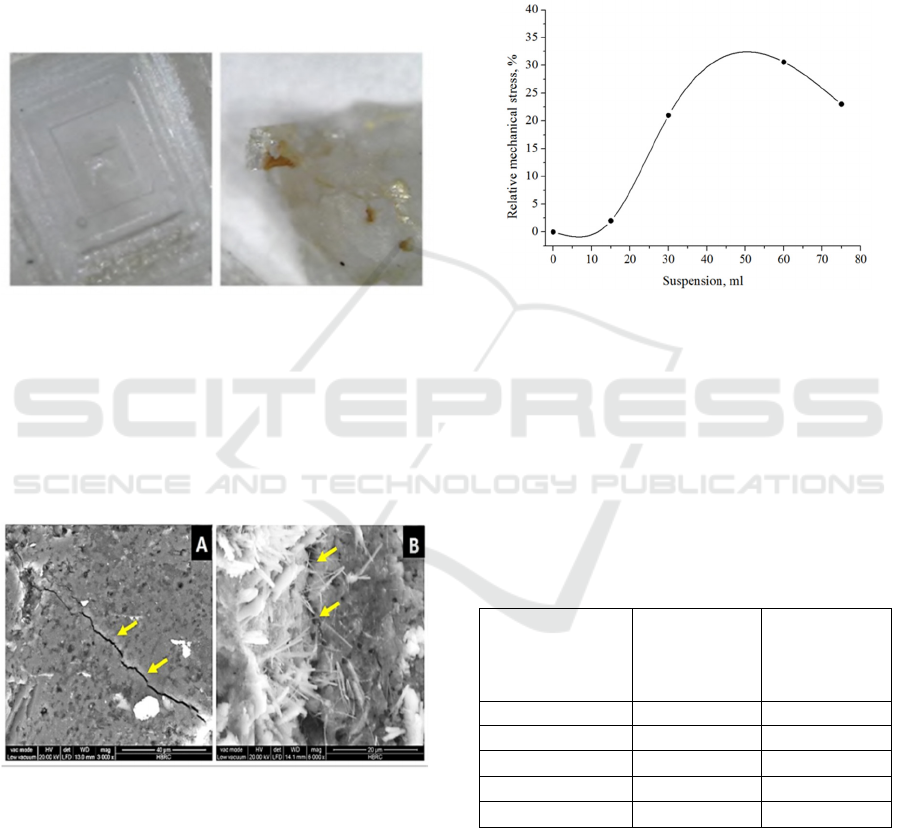
Figure 1 shows the result of the crystals formed after
volatilization of the saline solution (9 g/l NaCl),
seeing through 1K of the digital microscope.
Figure 1: Calcite crystals formed after the volatilization of
NaCl.
As a result, it was determined that the apparent
crystals were formed from the culture cells of a
bacterium of the genus Sporosarcina.
Results in figure 2 (A, B) suggested that the
incorporated bacteria can heal the internal micro-
cracks through the bio-precipitation of CaCO
3
.
Figure 2: SEM photographs of control (A) showing micro-
cracks after half-failure loading and bacterial mortar
samples of B. pasteurii 0.2% (B) during the healing process
showing the initiation of CaCO
3
crystals precipitation.
Arrows refer to the micro-cracks.
The authors of this article measured the concrete
composition of traditional cementing and compared it
with a destructive control method, namely on a
hydraulic press.
It was found that the traditional method of
cementing concrete products withstands 5.62 GPa,
after which the present authors came to the
conclusion of improving the strength of concrete
products by a harmless and low-cost method. In this
direction, a biological method for strengthening
concrete structures was chosen, namely, a
bacteriological method for improving the quality of
cementing.
Figure 3: Relative mechanical pressing of concrete samples.
The number of viable microorganisms was
determined by seeding a dilute suspension of cells
onto a plate with nutrient agar and urea. The number
of heat-resistant spores was calculated by sowing
after heating at 65 °C for 15 and 45 minutes. Based
on the data of the table 1, it was found that the
biological method of increasing the cementation of
concrete products can withstand 8.9 HPa.
Table 1: The results of experiment data that increasing of
concrete structure strength.
Suspension
concentration
(ml)
Degree of
strength
(HPa)
Change in
relation to
the concrete
sample (%)
0 5.62 0
15 5.7 1.4
30 7.3 23.0
60 8.9 36.8
75 7.8 27.9
Thus, it was determined that of all the families
of bacteria, it is Sporosarcina expresses its ability to
produce calcium carbonate precipitate by the explicit
manifestation of crystal formation. These crystals are
a confirmatory agent for improving the mechanical
properties of construction objects, namely concrete,
which is caused by maintaining a compressive force
of 8.9 HPa. In the future, other types of bacteria can
Influence of Bacteria on the Strength of Materials
231

also be considered, capable of forming calcite crystals
with subsequent formation of a calcium carbonate
precipitate in order to develop a bacterial suspension
on existing cracks.
In the realm of construction materials, the
integration of bacteria into concrete, known as
bioconcrete, represents a transformative leap towards
enhancing strength, durability, and sustainability. The
focal point of this investigation was the utilization of
Sporosarcina pasteurii, a urease-producing
bacterium, to induce calcite precipitation within the
concrete matrix, thereby imparting unique properties
to the material.The experimental results presented a
compelling case for the efficacy of bioconcrete in
augmenting the performance of traditional concrete.
The compressive strength of the experimental groups
surpassed that of the control group, indicating a
tangible improvement in the material's ability to
withstand external forces. The microscopic analysis
corroborated these findings, revealing the presence of
calcite formations that contributed to enhanced
durability. One of the most promising aspects of
bioconcrete is its self-healing capability.
The ability of Sporosarcina pasteurii to proliferate
and facilitate calcite precipitation in response to
structural damage showcased a remarkable potential
for reducing maintenance requirements. This self-
healing property not only contributes to the longevity
of structures but also aligns with the growing
emphasis on sustainable and resilient construction
practices.While the results are encouraging,
challenges in the practical application of bioconcrete
should not be overlooked. Issues related to the
survival and activity of bacteria in the concrete
environment, cost considerations, and scalability
pose hurdles that require careful consideration in
future research and development efforts.
4 CONCLUSIONS
In conclusion, the integration of Sporosarcina
pasteurii into concrete exhibits great promise for
revolutionizing the construction industry. The
demonstrated improvements in strength, durability,
and self-healing properties open avenues for the
development of more sustainable and resilient
structures. As the field of bioconcrete continues to
evolve, ongoing research efforts will be essential to
address challenges, optimize formulations, and
facilitate the widespread adoption of this innovative
construction material. The journey from the
laboratory to practical implementation marks a
paradigm shift in our approach to building materials,
offering a glimpse into a future where construction is
not merely static but a dynamic, self-sustaining entity.
REFERENCES
Shiren O. Ahmed, Amal A. Nasser, Rateb N. Abbas, Monir
M. Kamal, Magdy A. Zahran, Noha M. Sorour.
Production of bioconcrete with improved durability
properties using Alkaliphilic Egyptian bacteria. 3
Biotech // Volume 11, article number 231, April 2021.
https://doi.org/10.1007/s13205-021-02781-0.
Gehad A. M. Metwally, Mohamed Mahdy, Ahmed H. A. El-
Raheem. Performance of Bio Concrete by Using
Bacillus Pasteurii Bacteria. Civil Engineering Journal //
Vol. 6, No. 8, August, 2020. DOI:10.28991/cej-2020-
03091559.
Ali H. Alateah. Graphene concrete: Recent advances in
production methods, performance properties,
environmental impact and economic viability. Case
Studies in Construction Materials // Volume 19,
December 2023.
https://doi.org/10.1016/j.cscm.2023.e02653.
Seifan M, Samani AK, Berenjian A. Bioconcrete: next
generation of self-healing concrete. Appl Microbiol
Biotechnol. 2016 Mar;100(6):2591-602. doi:
10.1007/s00253-016-7316-z. Epub 2016 Jan 29. PMID:
26825821.
Amal A. Nasser, Noha M. Sorour, Mohamed A. Saafan,
Rateb N. Abbas. Microbially-Induced-Calcite-
Precipitation (MICP): A biotechnological approach to
enhance the durability of concrete using Bacillus
pasteurii and Bacillus sphaericus // Heliyon 8 (2022)
e09879. https://doi.org/10.1016/j.heliyon.2022.e09879.
Tursunbayev, S., Turakhodjayev, N., Mardanokulov, S.,
Zokirov, R., & Odilov, F. (2023). The effect of lithium
on the mechanical properties of alloys in the Al-Li
system. E3S Web of Conferences, 390.
https://doi.org/10.1051/e3sconf/202339005046
Manas Sarkar, Moumita Maiti, Shilang Xu, Saroj Mandal.
Bio-concrete: Unveiling self-healing properties beyond
crack-sealing. Journal of Building Engineering //
Volume 74, 1 September 2023, 106888.
https://doi.org/10.1016/j.jobe.2023.106888
Ali Keyvanfar, Amirreza Talaiekhozani, Hesam Kamyab,
Mohammad Ismail, Mohanadoss Ponraj, Muhd Zaimi
Abd Majid, Rosli Mohamad Zin. Bioconcrete Strength,
Durability, Permeability, Recycling and Effects on
Human Health: A Review. Third International
Conference on Advances in Civil, Structural and
Mechanical Engineering- CSM 2015 / 26 - 27 May,
2015. DOI : 10.15224/978-1-63248-062-0-28.
Chahal, N., Siddique, R., Rajor, A. Influence of bacteria on
the compressive strength, water absorption and rapid
chloride permeability of fly ash concrete. Construction
and Building Materials, 28, 351-356. 2012.
Turakhodjaeva Fazilatkhon. Solution of Ecological
Problems using Biologically Active. Proceedings of the
XXII International Scientific and Practical Conference
I-CRAFT 2024 - 4th International Conference on Research of Agricultural and Food Technologies
232

International Trends in Science and Technology Vol.1,
February 2020, Warsaw, Poland. ISBN 978-83-956628-
3-6.
Schwantes-Cezario N, Porto MF, Sandoval G, Nogueira G,
Couto A, Toralles B. Efects of Bacillus subtilis
biocementation on the mechanical properties of
mortars. Revista IBRACON de Estruturas e Materiais
12(1):31–38. 2019.
Chahal N, Siddique R, Rajor A Infuence of bacteria on the
compressive strength, water absorption and rapid
chloride permeability of fy ash concrete. Constr Build
Mater 28(1):351–356. 2012.
Wiktor, V and Jonkers, H. N. Quantification of crack
healing in novel bacteria based self-healing concrete.
Cement & Concrete Composites. 33, 763-770. 2011.
Riccardo Maddalena, Hussameldin Taha, Diane Gardner.
Self-healing potential of supplementary cementitious
materials in cement mortars: Sorptivity and pore
structure. Developments in the Built Environment //
Volume 6, May 2021, 100044.
https://doi.org/10.1016/j.dibe.2021.100044
Wasim Khaliq, Muhammad Basit Ehsan. Crack healing in
concrete using various bio influenced self-healing
techniques. Construction and Building Materials //
Volume 102, Part 1, 15 January 2016, Pages 349-357.
https://doi.org/10.1016/j.conbuildmat.2015.11.006
Tursunbaev, S., Ashirbaev, A., Valiev, A., Xalimov, M., &
Tashimov, N. (2023). The effect of the amount of
lithium in aluminum lithium alloys on the property of
fluidity. E3S Web of Conferences, 414.
https://doi.org/10.1051/e3sconf/202341704010
Fazilatkhon N. Turakhodjaeva. Metods to Improve the
Mechanical Properties of Biomass. Processing and
Fabrication of Advanced Materials XXVII, May 2019.
Jonkoping, Sweden.
Manas Sarkar, Moumita Maiti, Muhammad Akbar Malik,
Shilang Xu. Evaluation of the crack-healing
performance and durability of bacteria integrated
alkali-activated fly ash composites. Journal of Building
Engineering // Volume 54, 15 August 2022, 104642.
https://doi.org/10.1016/j.jobe.2022.104642.
Sarvar, T., Nodir, T., Mardonov, U., Saydumarov, B.,
Kulmuradov, D., & Boltaeva, M. (2024). EFFECTS OF
GERMANIUM (GE) ON HARDNESS AND
MICROSTRUCTURE OF AL-MG, AL-CU, AL-MN
SYSTEM ALLOYS. International Journal of
Mechatronics and Applied Mechanics, 2024(16), 179–
184. https://doi.org/10.17683/ijomam/issue16.21
Kunamineni Vijay, Meena Murmu, Shirish V. Deo. Bacteria
based self-healing concrete – A review. Construction
and Building Materials // Volume 152, 15 October
2017, Pages 1008-1014.
https://doi.org/10.1016/j.conbuildmat.2017.07.040.
Influence of Bacteria on the Strength of Materials
233
