To Question Use Caddy for Transportation Vegetables
Gulchehra Juraeva
a
, Nargiza Maxmudova
b
, Muqaddas Djabborova
c
and Gulnoz Abdikayimova
d
Tashkent State Technical University, 100095, University str. 2, Tashkent, Uzbekistan
Keywords: Soft Containers, Transportation, Polypropylene.
Abstract: The paper discusses the use of soft containers (MC) for transportation of vegetables, especially root crops.
Until recently, MK, simply put bags, used in agriculture for cargo weighing up to 100 kg. As the increase in
the proportion of mechanization in the urgent becomes the use of MK larger size, because their advantage is
obvious. The article discusses the pressure on the walls of production of small and large size MC and
compared with the strength of polypropylene fabric. The calculation of pressure on the walls of the MC shown
the possibility of using different density PP fabric.
1 INTRODUCTION
In the following years, comprehensive measures were
implemented in the Republic to support international
carriers, to introduce modern information
technologies in the provision of logistics services and
to create an effective transport infrastructure.
Despite the large-scale practical work carried out
today in the field of transport and logistics, there are
still systemic shortcomings in this field, requiring
improvement of certain norms and harmonization
based on world experience, reducing the sector's
share in the hidden economy.
2 MATERIALS AND METHODS
The widespread use of soft containers in the world
today makes them an advantage over other types of
containers (metal, wood, plastic, small wooden crates,
iron barrels vaxacoza), which are associated with a
number of advantages.
− small capacity coefficient of transport comb
(0.01....0,02);
− small price (5-10$ 1 T per load);
a
https://orcid.org/0009-0009-8710-3769
b
https://orcid.org/0000-0001-6552-2510
c
https://orcid.org/0000-0003-0835-1879
d
https://orcid.org/0000-0003-3739-8430
− complex mechanization in loading, laying,
unloading, storage, inability when using a
simple bag;
− achieve a high utilization rate when applying
soft containers to the storage area, especially
when laying up.
In recent years, there has been a sharp increase in the
transportation of soft containers and the storage of
cargo (Melikhova and Tekuteva, 2012), (Umarov and
Salimov, year?).
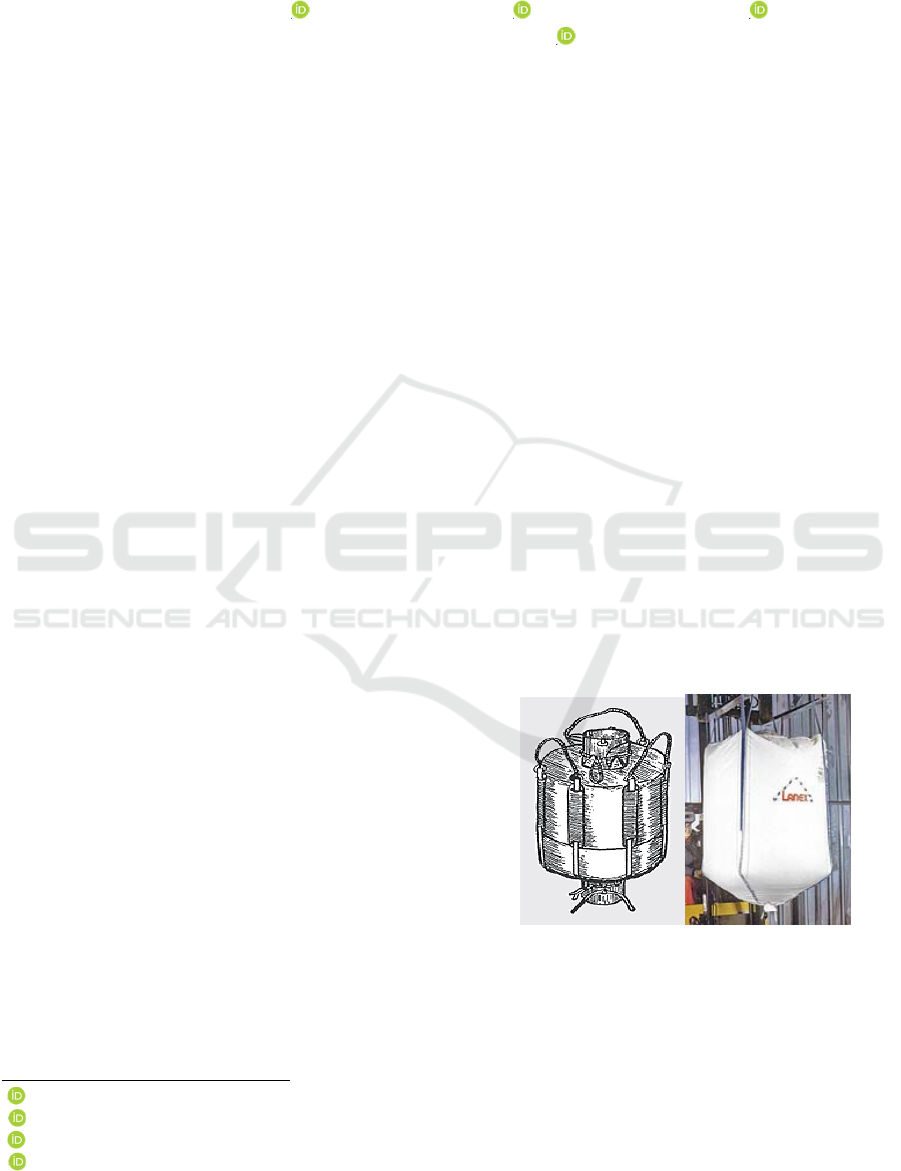
Figure 1: First made and modern soft containers. The
Taykon softok contaner s on the left. In the mddle
95x95x130 four stanzas, sngle layer, bottom drop knot.
212
Juraeva, G., Maxmudova, N., Djabborova, M. and Abdikayimova, G.
To Question Use Caddy for Transportation Vegetables.
DOI: 10.5220/0014244000004738
Paper published under CC license (CC BY-NC-ND 4.0)
In Proceedings of the 4th International Conference on Research of Agricultural and Food Technologies (I-CRAFT 2024), pages 212-215
ISBN: 978-989-758-773-3; ISSN: 3051-7710
Proceedings Copyright © 2025 by SCITEPRESS – Science and Technology Publications, Lda.
Experimental-industrial soft containers designed
to transport liquid foods such as sunflower oil are
being produced. Then soft containers, hermetically
sewn from dense material, are provided with fasteners
that are placed on the platform (1000x1200 mm) and
installed at the corners (Levachev, 1984).
The filling of the soft container is carried out
through a special valve using a pump. The platforms
can be increased to closed railway cars, large-ton
cutters. Such a wide and effective application of soft
containers today is a significant competition for
traditional containers.
Soft containers were first manufactured in 1919 by
the Japanese firm" Taiyo Kogro Co". The farm is
designed to carry a scattered load on the railway, with
a small lift at the head of a soft container named
"Taykon". It was then that the United States and
Western European countries began to apply the cargo.
For the first namanu, natural fibers were used – cotton
palatnos, brizent and hakozo.
They did not have a high level of resistance , and
they quickly rotted and did not have a long service life,
so the external support system, on which supports
were installed inside or outside, was made of standing
upright angular carcass.
In the middle of the 20th century, the development
of the chemical industry of the 1950s and 1970s,
synthetic polyamide and paliefir fibers were applied
when working the edges of the load canter. Polyamide
fibers (nylon, Capron, perlon and hakazo) are very
resistant to chemicals, able to withstand water and
forces. Its disadvantage is wear and tear under the
influence of light, and the coefficient of stretching is
relatively high.
Polyfoil fabrics (teripen, tetran, diopen) are crispy,
resistant to sunlight and atmospheric influences, but
have the property of static electricity collection.
Fabrics from artificial fiber (viscase, artificial silk)
have also been used in cargo container Assembly,
which are robust and transmit initial 60% resistance
due to moisture exposure in their durability and
subsequent hydrolysis.
The shipping container (Big-beglar)is made of
quality, foliar before the shipping elements and now
the hook.
In the CIS countries, cargo containers with the
following description are used:
− SPK-1.5 m mainly designed for polystyrene
Transportation, two-layer, 4-hook hole
pogruzchik, loading and unloading;
− KS-superphosphate, designed for granular
polyethylene, made of poddon, rubber-added
fabric, similar in size to the current Belting
material 1.3 m3, length 910 mm, width 700 mm,
height 180 mm, climbing capacity 1.5 t;
− MK P, j-L. For different load, from rubber-
mixed fabrics visnoxa, Capron, kouchik (brands
Skms, nk, Ski and SKD), lifting holes with a
tape on MKR, J-ada ironwork.
In the above types, the weight went up to 95 kg
due to the addition of rubber as a fabric, and
sometimes it was not planked.
Currently, patents for more than 2000 inventions
have been obtained on soft containers. Despite the
large number of patents, their main elements remained
the same; loading and unloading nodes, load elements,
hanging pendants, pocket for documents.
The soft container is processed from different
fabrics according to the load mass and purpose for the
upper layer material, making 1-2 layers after the load
is filled some soft containers have a cylinder,
sometimes a parallelepiped form. Big beglar (soft
containers, Big beg–big bag) is a widely used
universal.
The most commonly used sizes of soft containers:
• two stanzas, one stanza, two stanzas, two
stanzas;
• 75x75x125 double stanza, single layer;
• 75x75x125 double stanza, double layer;
• 75x75x150 double stanza, single layer;
• 95x95x130 four stanzas, single layer;
• 95x95x150 four stanzas, single layer;
• 95x95x180 four stanzas, one layered.
3 RESULTS AND DISCUSSION
The issues of establishing the production of big-begs
in the conditions of Uzbekistan, conducting research,
calculating pressure on bags, finding fabrics that can
raise this pressure and sewing soft containers should
be considered.
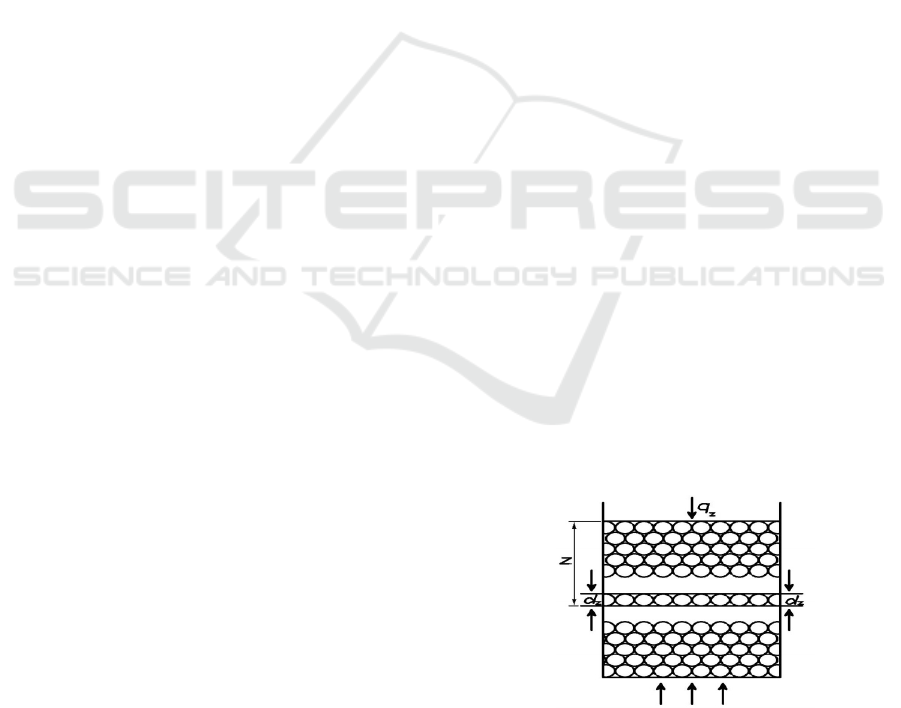
We consider the structure of the container to
determine the size of the pressure on the wall of soft
containers (Figure 2).
Figure 2: Drawing to calculate the magnitude of the product
impact forces on the walls of soft containers in the q
x
layer
at a depth of Z.
To Question Use Caddy for Transportation Vegetables
213
From the upper surface we separate the
elementary layer of d
z
at the depth of Z, and if the
product has
γ
mass, the force directed from the top
in the layer is q
z
and from the bottom is q
z
+dq
z
force,
and the forces of friction by the wall are affected. The
force falling from the top to the load is negative.
The equation of forces is expressed as:
γ
z
Sd
z
+Sq
z
– Sq
z
–Sd
z
–fEq
z
S=0
Thus, if we consider the horizontal layer for the
product (potatoes, apples, pears, carrots, etc.) that is
being put to maintain the equilibrium conditions and
calculate the forces of action, it is possible to find a
pressure of q
z
at a depth of Z. As an example, the
pressure acting on the container wall is q
z
, and the
pressure on the product is calculated relative to the
potato and the carrot product. On an industrial scale,
soft containers of 500-1000 kg are used. The density
of potatoes is 650 kg/m
3
, the density of carrots is 550
kg/m
3
. We bring a calculation methodology for a
simple bag. At a depth of container radius r = 0.25 m
Z, the friction angle of the product is 25
0
.
S=
Rπ
2
counting
S=0,196m
2
U=2
Rπ
U=1,57
m assuming that
The coefficient of internal friction of the product
is equal to the tangent of internal friction:
f=tg
25tg=α
0
=0,4663
Side pressure coefficient E=
α+
α−
sin1
sin1
, sin
25sin=α
0
= 0,4226
While Е=0,4 (2) and (3) from formulas q
z
and q
x
we find the q
x
Table 1: Table for calculating the pressure of potatoes on
the bottom and wall of the container.
Characteristic
Z, m q
z, Pа
q
x, Pа
Size field
positioning
depth, m
0,1 4600 1840
0,2 8490 3390
0,3 12020 4810
0,4 15560 6220
0,5 18740 7500
0,6 20160 8060
0,7 22280 8890
0,8 24050 9620
0,9 25460 10180
1,0 26880 10750
We take the size of the container as 95x95x1300
CM, and in the next table we will calculate the effect
of potatoes on the wall.
Table 2: Calculation of the effect of potatoes on the wall.
Characteristic
Score
Z, m depth
1,3
Container eni a, m
0,95
Container length b, m
0,95
q
x МPа
0,85
The result of the research and their discussion.
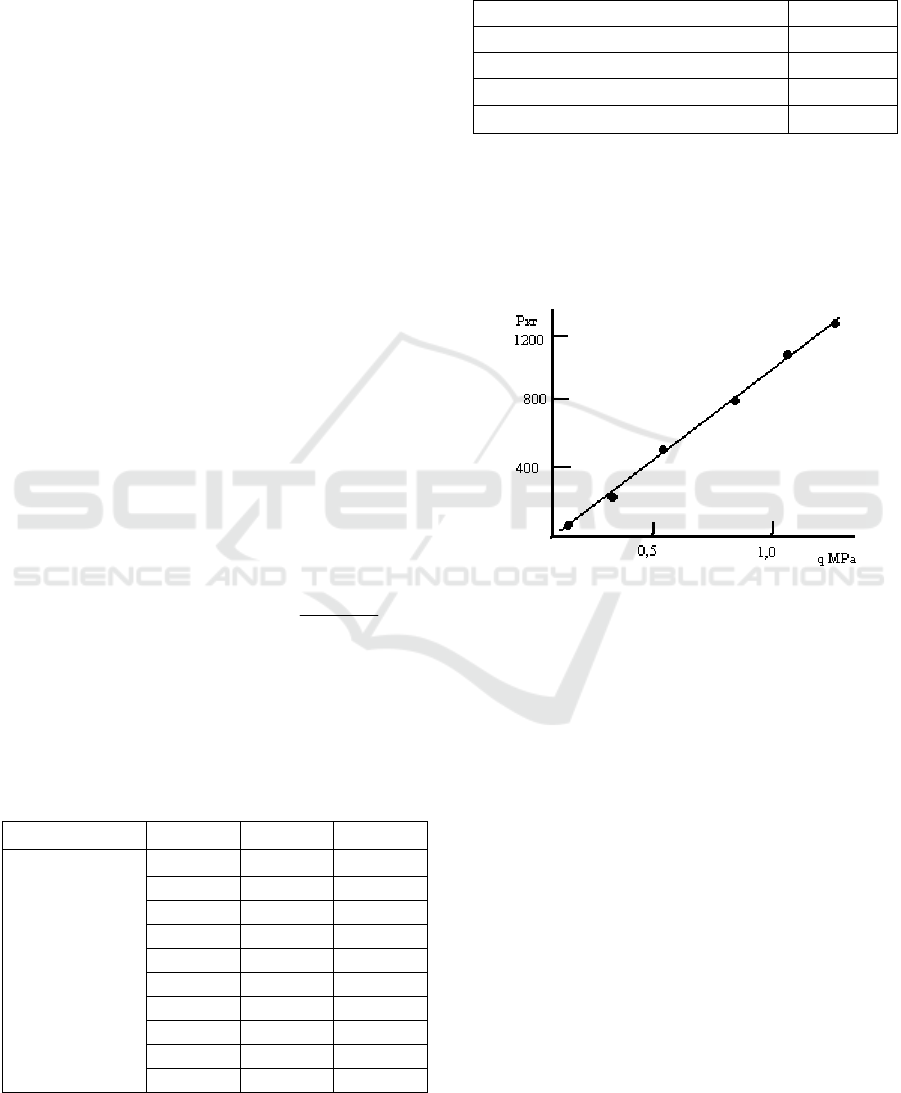
The following outline graph illustrates the
dependence of pressure on the walls and bottom of a
soft container with a small volume and a large volume
and the weight of the product inside the container
(Figure 3).
Figure 3: Pressure on the walls of the soft container and the
weighted attachment of the product.
4 CONCLUSIONS
As can be seen from the graph, the Wall pressure on a
large container did not exceed 1.5 MP. Soft containers
have been produced from PP in recent years. Ppni has
the property to withstand pressure up to 40 MPa
(Proizvodstvo, 2024). Such highly resistant PP fabrics
are used to produce very large containers with a load
of 3-4 tons (Proizvodstvo, 2024). So, it is possible to
produce small soft containers for agricultural
products from thin PP fabric and thicker fabric for
large bags, and fulfil orders according to the technical
indicators of PP fabric.
REFERENCES
http://agrobiznes.ru/agro/agroprod_0004010
http://agrosetka.ya.ru/ - this page is not found !!!
I-CRAFT 2024 - 4th International Conference on Research of Agricultural and Food Technologies
214

http://www.center-pack.ru/articles/polipropilen-i-oblast-
ego-primeneniq - not found !!!!
Levachev N.A., 1984. Mechanization of loading and
unloading, transport and storage operations in the food
industry. – M.: Light and Food Industry.
Melikhova L.V., Tekuteva L.A., 2012. Raspredelenie
davleniya v myagkix container dlya xraneniya
plodoovotshnoy produktsii. Khranenie I pererabotka
selkhozsirya, № 10: 54-55.
Proizvodstvo P ?????????????????
Umarov V.F., Salimov G.I., 2013. TASHSTU The use of
optimal containers for transportation and storage of
agricultural products. St. Petersburg, International
Conference. Institute of Cold, 352-353.
To Question Use Caddy for Transportation Vegetables
215
