
The Technology of Storage Chinese Cabbage (Brassica Rapal)
R. Khakimov
a
and S. Sharipov
b
Tashkent State Agrarian University, 100140, University str. 2, Tashkent, Uzbekistan
Keywords: Storage Technology, Chinese Cabbage, Refrigerated Warehouses.
Abstract: The scientific article analyzes the fundamental factors affecting the long-term preservation of cabbage heads
during the storage of Beijing cabbage. It identifies that the air temperature in the warehouse is influenced by
the relative humidity, and the processes involved in knocking down cabbage heads impact their readiness for
storage and the continuation of sorting processes. Additionally, the study examines the effect of various
packaging materials on the quality preservation of the product, emphasizing the importance of long-lasting
storage of cabbage heads in refrigerated warehouses
.
1 INTRODUCTION
In the conditions of Tashkent region, Chinese
cabbage (Brassica Rapa L). is cultivated as a repeated
crop. This fact is based on the geographical location
of the region, as well as the availability of fertile soil.
Vegetables are the main type of food consumed fresh
by the population. This is since these vegetables
contain all the vitamins, minerals, pectin substances,
etc. necessary for human health. However, there are
many problems associated with the use of these types
of products in the food industry. One of them is the
problem of long-term storage of vegetables. Since
most of the vegetable products in the republic are
grown mainly in a certain period of the year, i.e.
season, then the use of modern high-quality long-term
storage technologies will simply be necessary to
supply food industry enterprises with this type of raw
material throughout the year (GOST 28373-94,
1996), (Meshkov and Terekhova, 2005), (Rusanov,
2000), (Shirokov, 1998).
In the food industry, storage of vegetable raw
materials is divided into two types, namely temporary
and long-term. At the same time, long-term storage in
the food industry can be considered a period of time
when vegetables cannot maintain basic quality
indicators without the use of any special storage tools.
a
https://orcid.org/0009-0003-9933-320X
b
https://orcid.org/0009-0001-8965-2130
2 MATERIALS AND METHODS
The amount of dry matter in Chinese cabbage
(Brassica Rapa L). according to ISO 2113-2013
GOST adopted by the International Board of
metrology and certification, the amount of active acid
is according to GOST 26188-2016, the determination
of the amount of nitrate in pear fruit is according to
GOST 34570-2019, before and after storage of
Chinese cabbage (Brassica Rapa L). containing
organic acids, pectin substances - by the carbazole
method; vitamin C - by titration with KNO
3
solution;
physical, chemical and organoleptic quality
indicators of Chinese cabbage (Brassica Rapa L).
before and after storage were carried out according to
the method of E.P. Shirokov.
“Khibinskaya” was included in the state register
of agricultural crops recommended for planting in the
territory of the Republic of Uzbekistan in 1988, and
the varieties “Billur”, “Zangori”, “Mezon” included
in this register in 2022 were selected as research
objects.
3 RESULTS AND DISCUSSION
It is known to us that during the storage of cabbage
heads, there is a decrease in the content of antioxidant
activity and phenolic compounds in their raw
Khakimov, R. and Sharipov, S.
The Technology of Storage Chinese Cabbage (Brassica Rapal).
DOI: 10.5220/0014243500004738
Paper published under CC license (CC BY-NC-ND 4.0)
In Proceedings of the 4th International Conference on Research of Agricultural and Food Technologies (I-CRAFT 2024), pages 201-205
ISBN: 978-989-758-773-3; ISSN: 3051-7710
Proceedings Copyright © 2025 by SCITEPRESS – Science and Technology Publications, Lda.
201
materials, as well as a short-term violation of products
as a result. The preservation of Chinese cabbage
(Brassica Rapa L)., among other types of vegetables,
is directly influenced by the conditions of their
cultivation. The reason is the geographical location of
the region in which the plant was grown during
storage, and the processes that take place in the plants,
also have their effect during storage. The basis of the
vital activity of any living organism is breathing,
which produces the energy contained in organic
matter and necessary for the implementation of all
other vital processes.
In different varieties of Chinese cabbage (Brassica
Rapa L)., the process of respiration and the
physiological processes that take place in them occur
differently. During the storage of Chinese cabbage
(Brassica Rapa L)., the breathing process also occurs
differently in individual tissues of cabbage heads.
Some tissues have different breathing coefficients.
The breathing duration of Chinese cabbage (Brassica
Rapa L).is accelerated in the first days after harvest.
This effect is caused by their reaction to separation
from the plant, that is, from the stem of cabbage. At
the time when the heads of cabbage come out of the
dormant state, there is an increase in nutrient
consumption as a result of increased breathing.
During the storage of Chinese cabbage (Brassica
Rapa L)., moisture evaporates from the products, so
the normal course of metabolic processes in them is
disrupted. As a result, the initial leaf tissue in the head
of cabbage begins to dry out, and the process of
decomposition of organic matter is accelerated, there
is a sharp violation of energy metabolism. After that,
the resistance of cabbage heads to pathogens
decreases. The quality of the stored product is greatly
influenced by the temperature in the storage tank, and
when it increases, the intensity of biochemical
processes increases, that is, the breakdown of
complex organic matter, the exchange of breathing
gases and anaerobic respiration of cabbage heads
occurs.
During the storage of cabbage heads, the mass of
raw material is partially reduced mainly due to
evaporation of moisture and consumption of organic
matter by respiration. This leads to an increase in the
relative amount of dry matter in cabbage heads. To
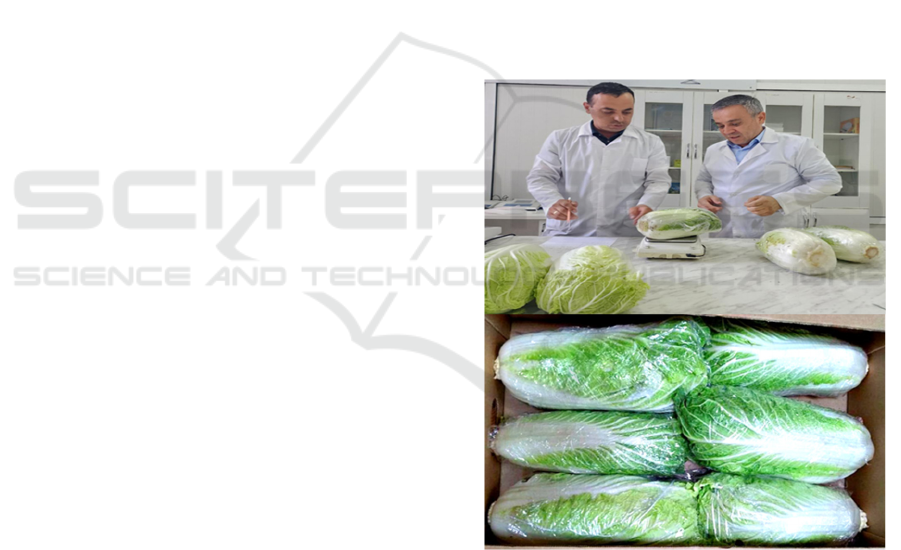
protect cabbage heads from wilting, it is important to
maintain a sufficiently high humidity in the storage
warehouse (Figure 1).
Experiments have shown that Chinese cabbage
(Brassica Rapa L). has a positive result when stored
in wooden and cardboard boxes.
During the storage of Chinese cabbage (Brassica
Rapa L)., products are more susceptible to pathogenic
microorganisms. It was observed in our experiments
that this process accelerates, especially if the product
is slightly mechanically damaged. Despite the sharp
reduction in the vital activity of microorganisms
when the temperature is close to 0 °C during product
storage, it was observed that the resistance of the
stored product to natural losses is significantly
weakened. In addition, in some cases it is necessary
to store products at slightly higher temperatures. It
was found during our experiments that this is due to
the fact that different levels of cabbage heads use
different organic substances for respiration (Misirov
et al., 2023).
During the storage of Chinese cabbage (Brassica
Rapa L)., it was observed that the natural reductions
and spoilage of products happened differently in
different varieties. Experiments were carried out
focusing on the preservation of Chinese cabbage
(Brassica Rapa L). varieties grown in one period and
in one region (Hakimov, 2024), (Musirmonov et al.,
2023), (Alimova et al., 2022), (Hakimov, 2024).
Figure 1: The process of preparing Chinese cabbage
(Brassica Rapa L). for storage in cold storage.
It should be said that although the weight and size
of the heads of cabbage do not differ sharply from
each other, it was found in our experiments that the
levels of natural reduction during their storage were
different. In the experiment, 100 kg of products of
each variety were stored in wooden boxes for storage.
In our experiments, products were stored at
different temperatures during the season. In our initial
I-CRAFT 2024 - 4th International Conference on Research of Agricultural and Food Technologies
202
experiment, the temperature of the air in the storage
warehouse was set to +3
0
C and the relative humidity
was set to 95%. Observations were conducted 4 times
every 10 days. When the total natural reduction
indicators of cabbage heads stored for 40 days were
analyzed, it was found that the varieties were similar.
In this case, the level of natural decrease in products
was determined in the “Khibinskaya” variety, 10% in
the “Billur” variety, 10% in the “Zangori” variety,
and up to 9% in the “Mezon” variety (Table 1).
Table 1: Effects of storage temperature and relative humidity on the natural shrinkage of the product during the storage of
Chinese cabbage (Brassica Rapa L). varieties.
Varieties of Chinese
cabbage
The rate of natural los
t
(%) Avera
g
e resul
t
+3
0
С +2
0
С+1
0
С0
0
С +1,5
0
С
95 % 96 % 97 % 98 % 96,5 %
“Khibinska
y
a” (control) 11 10 9 9 9,75
“Billur” 10 10 8 7 8.75
“Zan
g
ori” 10 10 8 7 8,75
“Mezon” 9 9 7 5 7,5
Sx 0,08 0,07 0,05 0,04 0,06
LSD
05
0,3 0,3 0,4 0,5 0,3
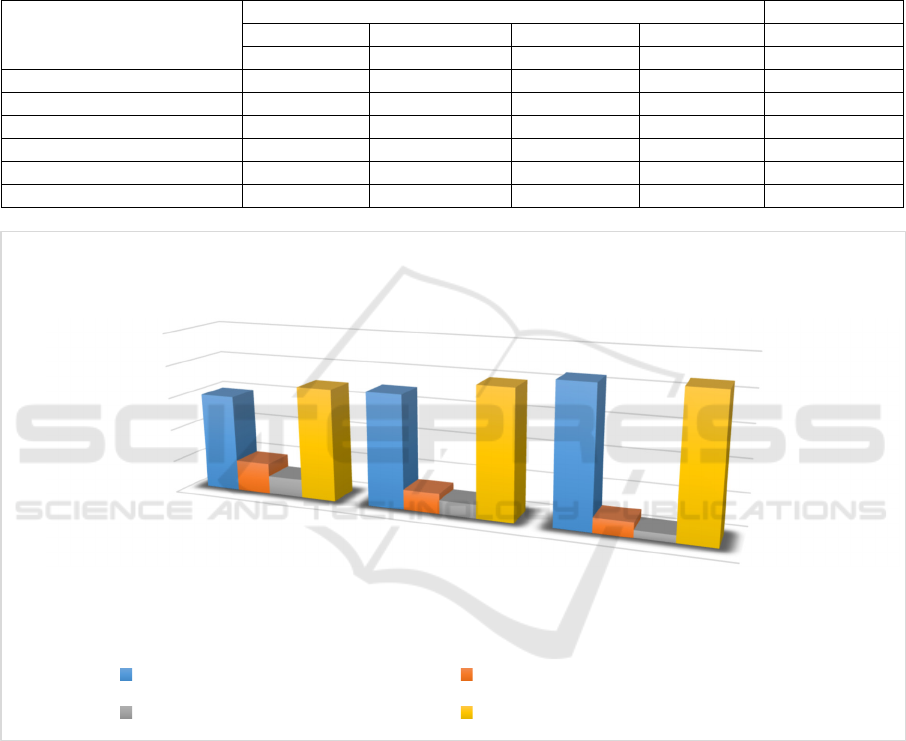
Figure 2: Chinese cabbage (Brassica Rapa L). storage period in refrigerated warehouses and natural reduction during storage
and quality product yield were analyzed in (%).
From the data in the table, we can see that when
the temperature of the air in the storage warehouse is
+2
0
С and the relative humidity of the air is 96%, the
indicators of natural reduction of the products were
observed up to 10% in the “Khbinskaya” variety, 10%
in the “Billur” variety, 10% in the “Zangori” variety,
and 9% in the “Mezon” variety.
During the storage of products, when the
temperature of the air in the warehouse is +1
0
C and
the relative humidity of the air is 97%, natural
reduction indicators of the “Khibinskaya” variety, 9%
in the “Billur” variety, 8% in the “Zangori” variety,
and 7% in the “Mezon” variety were determined.
During storage, when the temperature of the air in
the warehouse was 0
0
C and the relative humidity of
the air was 98%, the natural decrease in the products
was determined up to 9% in the “Khibinskaya”
variety, 7% in the “Billur” variety, 7% in the
“Zangori” variety, and 5% in the “Mezon” variety.
It should be said that the relatively low
temperature of the air in the storage warehouse and
the relative humidity of the air not less than 97% lead
0
20
40
60
80
100
Keeping cabbage
heads open in
boxes
Keeping cabbage
heads wrapped in
paper in boxes
Keeping cabbage
heads wrapped in
film in boxes
60
70
85
19.2
12.5
9.1
11.3
8.5
4.6
69.5
79
86.3
Period of storage of Chinese cabbage (Brassica Rapa L). in
refrigerated warehouses and natural decrease during
storage and yield of quality product %
product storage period (days) natural lost in output (%)
decay (%) qualitative product output (%)
The Technology of Storage Chinese Cabbage (Brassica Rapal)
203

to a sharp decrease in the level of natural reduction in
the products. In addition, a sharp decrease in the
effect of certain harmful microorganisms in stored
products was determined during these experiments.
When comparing the most resistant varieties to
storage, it was found that the “Mezon” variety of
Chinese cabbage (Brassica Rapa L). showed a
relatively high result compared to other varieties
studied in our experiment.
In our research, when storing Chinese cabbage,
when cabbage heads were wrapped in a film, their
storage time was slightly longer compared to the
usual method. It is not recommended to store Chinese
cabbage (Brassica Rapa L). together with other types
of fruits and vegetables. Otherwise, it affects the
quality indicators of cabbage heads.
In addition to the refrigerator, Chinese cabbage
(Brassica Rapa L). can also be stored in ordinary
warehouses. In this case, it is necessary to ensure that
the storage area does not get direct sunlight and
maximum darkness and cool temperature. Chinese
cabbage (Brassica Rapa L). can be stored in ordinary
cellars.
In our experiments, we analyzed the changes in
the duration of storage of different types of Chinese
cabbage (Brassica Rapa L). during storage in
refrigerated warehouses in cardboard boxes in an
open state and in polyethylene bags or wrapped in
food film. In this process, there is no need to remove
the leaves from the upper layer of cabbage heads, and
this situation makes it possible to store cabbage heads
for a long time in some processes. Air humidity
exceeding 100% during storage causes cabbage heads
to spoil very quickly.
In our experiments, studies were conducted on
storing Chinese cabbage in a refrigerated warehouse
in an open state in cardboard boxes, wrapped in paper
and wrapped in film. In this case, the air temperature
in the cold room was set at +2
0
C, and the relative air
humidity was set at 95%. In this process, it was found
that the shelf life of cabbage heads, natural
reductions, rotting and yield of quality products were
different (Fig. 2).
Studies have shown that when we store Chinese
cabbage (Brassica Rapa L). heads in different
packaging materials, i.e., when cabbage heads are
stored in cardboard boxes with the top open, the shelf
life of the product is 60 days, the rate of natural cane
is 19.2%, the rate of decay is 11.3%, and the rate of
quality product output is 79.0%. was observed during
our experiments.
When the products were stored in cardboard
boxes wrapped in paper, it was found that the
product's shelf life was 70 days, natural reed rate was
12.5%, decay rate was 8.5%, and quality product
output rate was 69.5%.
During our research, it was found that when
Chinese cabbage (Brassica Rapa L). heads are stored
in cardboard boxes wrapped in plastic, the shelf life
of the product is 85 days, the rate of natural cane is
9.1%, the rate of decay is 4.6%, and the rate of quality
product output is 86.3%. It should be said that despite
the microclimate in the storage warehouse being the
same in our experiment, the storage of carm heads in
different packaging materials showed different
differences.
It was found that when the heads of cabbage were
stored in a cardboard box wrapped in a film, the
duration of storage, the degree of natural cane, rotting
and quality product yield had a high effect.
4 CONCLUSIONS
It was found that Chinese cabbage (Brassica Rapa L).
varieties “Mezon” showed the best results when the
temperature and relative humidity of the air in the
warehouse was set to 1.5%
0
C and the relative
humidity of the air was 96.5% during their storage. At
the same time, the efficiency of Chinese cabbage
(Brassica Rapa L). storage in refrigerated warehouses
increases if cabbage heads are kept wrapped in film
in cardboard boxes. Quality storage and long-term
storage of cabbage heads is ensured.
REFERENCES
GOST 28373-94. Fresh cabbage. Storage guide. Date
of introduction 01.01.1996.
Meshkov A.V., Terekhova V.N. Technology of production
of Peking cabbage for products and seeds in the Central
Chernozem region of the Russian Federation:
methodological recommendations [Text]/
A.V.Meshkov, -M.: "Agropromizdat", 2005. - 35 p.
Rusanov B.G. Cabbage: Varieties, cultivation, storage,
application: scientific and practical. the manual/ B.G.
Rusanov. - St. Petersburg: St. Petersburg: LLC
"Diamant", LLC "Golden Age Publishing House",
"Agropromizdat", 2000. - 192 p.
Shirokov E.P. Technology of fruit storage and processing
with the basics of standardization: a textbook./ E.P.
Shirokov — M.: "Agropromizdat", 1998. - 319 p.
Kadam D.M., Samuel. The effect of pretreatment and
packaging material on the physico-chemical properties
and shelf life of cauliflower after solar drying. (India) =
Impact of processing treatment and packaging material
on some properties of stored dehydrated cauliflower.
I-CRAFT 2024 - 4th International Conference on Research of Agricultural and Food Technologies
204

Misirov Sh., Sharipov S. Methods of storing broccoli in
different periods /E3S Web of Conferences 389, 03065
(2023) UESF-2023.
https://doi.org/10.1051/e3sconf/202338903065
Hakimov R. Beijing cabbage cultivation and storage/
modern transformation of Education. Set 7 No. 2024. –
B. 190-193. www.tadqiqotlar.uz.
Musirmonov, J., Gafurova, L., Ergasheva, O., & Saidova,
M. (2023). Wastewater treatment in Central Asia: a
review of papers from the Scopus database published in
English of 2000−2020. E3S Web of Conferences, 386.
https://doi.org/10.1051/e3sconf/202338602005
Alimova, F. A., Primkulov, B. Sh., Saidova, M. T., &
Boboniyozov, E. A. (2022). Combined aggregate for
strip tillage and simultaneous sowing of re-crops. IOP
Conference Series: Earth and Environmental Science,
1112(1).https://doi.org/10.1088/1755-
1315/1112/1/012021
Hakimov R. Factors affecting the process of storage of
Beijing cabbage /modern transformation of Education.
Set 7 No. 2024. – p. 194-197. www.tadqiqotlar.uz
The Technology of Storage Chinese Cabbage (Brassica Rapal)
205
