
Organization of New Methodologies by Combining the It Sector in
the Agricultural Sector
Alisher Azimov
a
, Tohir Azimov
b
and Komil Baltabaev
c
Tashkent State Technical University, Department of Descriptive Geometry and Computer Graphics,
100057, Tashkent, Uzbekistan
Keywords: Smart Agriculture, IT Integration, Precision Farming.
Abstract: The integration of Information Technology (IT) into the agricultural sector presents a unique opportunity to
create a more sustainable and efficient food system. This paper outlines a framework for organizing new
methodologies that combine the strengths of both IT and agriculture. It focuses on key areas: data-driven
precision agriculture, automation and robotics, block chain for traceability, vertical farming and controlled
environments, and agricultural education and workforce development. By leveraging these methodologies,
we can address challenges in resource management, production efficiency, and food security, leading to a
more resilient and profitable agricultural industry. The paper emphasizes the importance of collaboration
between IT companies and agricultural institutions, government support, and ongoing research and
development to maximize the potential of these new technologies.
1 INTRODUCTION
The integration of the IT sector with agriculture is
ushering in a new era of smart farming,
revolutionizing traditional practices and unlocking
unprecedented potential for efficiency, sustainability,
and profitability. This fusion creates a powerful
synergy, requiring a robust organizational framework
to ensure successful implementation and long-term
impact.
Innovation is more important in modern
agriculture than ever before. The industry as a whole
is facing huge challenges: from rising costs of
supplies and labor shortages to changes in consumer
preferences for transparency and sustainability. There
is increasing recognition from agriculture
corporations that immediate solutions are needed for
these challenges. Thankfully, agriculture technology,
also known as attach is here (Kimsanbayev et al.,
2015; Jumaev, 2016a; Rustamov, 2018; Sulaymonov
et al., 2018; Sulaymonov, 2020).
This new concept refers to the use of technology
in farming and agricultural practices to increase
efficiency, productivity, and sustainability in food
a
https://orcid.org/0000-0002-3190-506X
b
https://orcid.org/0000-0002-7285-5396
c
https://orcid.org/0000-0008-5289-0021
production. It includes several different types of
technologies, such as precision agriculture, smart
irrigation, biotechnology, and automation.
Additionally, there are significant technological
advancements in areas like indoor vertical farming,
livestock technology, modern greenhouse practices,
artificial intelligence, and blockchain, which we will
explore further in this article (Kimsanbaev et al.,
2021; Jumaev, 2023).
2 MATERIALS AND METHODS
The agrcultural sector s undergong a rapd
transformaton drven by the ntegraton of
nformaton technology (IT). Ths paper explores the
potental of mergng IT and agrculture to create new
methodologes that address crtcal challenges n food
producton and resource management. It hghlghts
fve key areas: precson agrculture drven by data
analytcs and AI, automaton and robotcs for
enhanced effcency, blockchain for increased
transparency and traceability, vertical farmng and
controlled envronments for optmzed resource
176
Azimov, A., Azimov, T. and Baltabaev, K.
Organization of New Methodologies by Combining the It Sector in the Agricultural Sector.
DOI: 10.5220/0014241400004738
Paper published under CC license (CC BY-NC-ND 4.0)
In Proceedings of the 4th International Conference on Research of Agricultural and Food Technologies (I-CRAFT 2024), pages 176-180
ISBN: 978-989-758-773-3; ISSN: 3051-7710
Proceedings Copyright © 2025 by SCITEPRESS – Science and Technology Publications, Lda.

utlzaton, and educaton and workforce
development to equp farmers wth the sklls needed
for the new agrcultural landscape. The paper
emphaszes the mportance of collaboraton,
government support, and ongong research to
facltate the successful mplementaton of these
transformatve technologes. Ths ntegraton holds
the potental to create a more sustanable, reslent,
and productve food system, ensurng food securty
and envronmental stewardshp for future
generatons.
The agrcultural landscape s undergong a
dramatc transformaton, drven by a wave of
nnovaton that merges the power of the IT sector wth
the age-old practces of farmng. Ths convergence s
usherng n an era of smart agrculture, promsng a
future where technology plays a pvotal role n
shapng a more effcent, sustanable, and proftable
food system.
Tradtonally separate, the worlds of nformaton
technology and agrculture are now ntertwnng,
creatng new possbltes and presentng unque
challenges. Ths fuson demands a robust
organzatonal framework, one that effectvely
harnesses the strengths of both sectors to unlock the
full potental of smart farmng.
Ths exploraton delves nto the strateges and
methodologes for organzng ths dynamc
collaboraton, examnng how partnershps, data
management, technology adopton, and a focus on
sustanablty can pave the way for a thrvng future
of smart agrculture.
Here's a breakdown of key methodologies for
organizing this collaboration:
I. Strategic Partnerships:
• Public-Private Partnerships (PPPs):
Collaborations between government agencies,
technology companies, and agricultural
organizations foster innovation, knowledge
sharing, and infrastructure development. This
can lead to targeted investments in research,
technology transfer, and capacity building for
farmers.
• Joint Ventures: Partnerships between
agricultural businesses and IT companies can
leverage complementary strengths, leading to
the development of innovative solutions
tailored to specific agricultural needs. This can
foster a mutually beneficial exchange of
expertise and resources.
II. Data-Driven Decision-Making:
• Data Collection & Management: Establishing
robust data collection systems using sensors,
drones, and other smart devices is crucial for
gathering real-time information on crop health,
soil conditions, weather patterns, and livestock
management.
• Data Analysis & Interpretation: Utilizing AI
algorithms and data analytics tools allows for
the interpretation of complex data sets,
providing actionable insights for decision-
making and optimized resource allocation.
• Data Sharing & Collaboration: Creating secure
platforms for data sharing between farmers,
researchers, and industry stakeholders
facilitates knowledge exchange and accelerates
the development of new solutions.
III. Technology Integration & Adoption:
• Pilot Projects: Implementing pilot projects with
a focus on specific crops, regions, or challenges
allows for testing and refining new
technologies before widespread adoption. This
helps to identify challenges and optimize
implementation strategies.
• Training & Capacity Building: Providing
farmers and agricultural professionals with
training in digital literacy, data analysis, and
technology utilization is essential for effective
adoption and long-term success.
• Technology Support & Maintenance:
Establishing reliable technical support systems,
including maintenance and troubleshooting
services, ensures the smooth functioning of
implemented technologies and minimizes
disruptions.
IV. Value Chain Transformation:
• Precision Farming: Data-driven insights enable
optimized resource use, leading to higher
yields, reduced costs, and increased
profitability for farmers.
• Smart Supply Chain Management: Blockchain
technology facilitates transparent traceability,
secure payment systems, and efficient logistics
for agricultural products.
• Direct-to-Consumer Marketing: Digital
platforms and online marketplaces empower
farmers to connect directly with consumers,
enabling greater market access and potentially
higher prices.
V. Focus on Sustainability & Inclusivity:
• Environmental Sustainability: Smart
technologies can be leveraged for sustainable
practices like precision irrigation, climate-
smart agriculture, and carbon sequestration.
• Social Equity: Ensuring equitable access to
technology, training, and resources is crucial
for empowering smallholder farmers and
fostering inclusive growth.
Organization of New Methodologies by Combining the It Sector in the Agricultural Sector
177
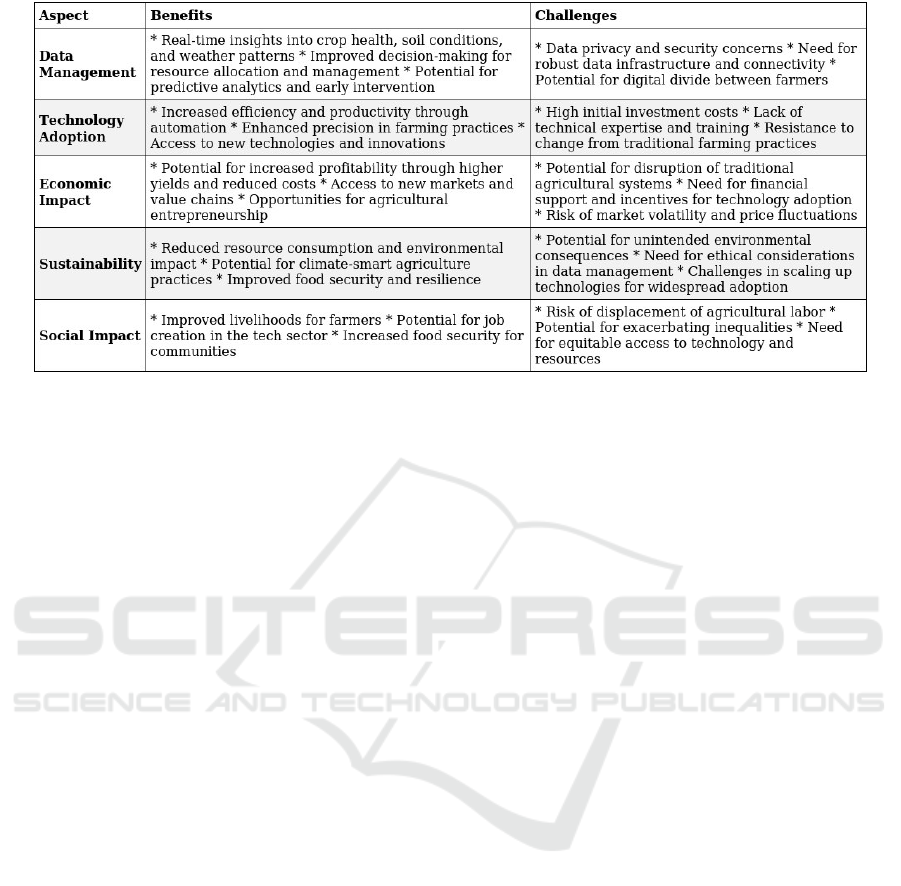
Figure 1: Benefits and challenges of combining IT & agriculture.
VI. Research & Development:
• Continuous Innovation: Investing in research
and development is essential for creating new
technologies, refining existing solutions, and
adapting to evolving agricultural needs and
challenges.
• Partnerships with Universities & Research
Institutions: Collaborating with academic
institutions fosters the transfer of knowledge,
promotes technology development, and
supports the development of a skill
(Kimsanbayev, 2016; Sulaymonov et al., 2021;
Jumaev & Rakhimova, 2020).
The evidence is clear: merging IT with agriculture
offers a path toward a more efficient, sustainable and
equitable food system. However, this transformation
requires a collective effort, a shared commitment
from all stakeholders to embrace a new paradigm of
food production.
3 RESULTS AND DISCUSSION
We call upon:
• Governments: To invest in research and
development, create enabling policies that
incentivize and support the adoption of smart
agriculture, and ensure equitable access to
technology and resources for all farmers.
• Industry Leaders: To develop accessible and
affordable technologies, prioritize
sustainability in product design, and work
closely with farmers to ensure successful
implementation.
• Researchers: To continue pushing the
boundaries of innovation, develop solutions
tailored to diverse agricultural contexts, and
ensure ethical considerations are at the
forefront of research.
• Farmers: To embrace new technologies as tools
for empowerment, share best practices, and
advocate for policies that support their
adoption.
• Consumers: To demand sustainably produced
food products, support farmers who are
utilizing smart technologies, and actively
engage in shaping a future where food systems
prioritize both environmental and social well-
being.
This exploration of the transformative power of
merging the IT sector with agriculture would not have
been possible without the invaluable contributions of
numerous individuals and organizations.
We extend our sincere gratitude to:
• [Name of Research Institutions/Organizations]:
For their pioneering work in developing and
applying smart technologies in agriculture,
providing valuable data and insights.
• [Name of Farmers/Industry Experts]: For
sharing their experiences, challenges, and
perspectives on the practical implementation of
these technologies.
• [Name of Funding Agencies/Sponsors]: For
their generous financial support, enabling the
research and development of innovative
solutions.
• [Name of Mentors/Advisors]: For their
guidance, mentorship, and critical feedback
throughout this exploration.
I-CRAFT 2024 - 4th International Conference on Research of Agricultural and Food Technologies
178

• [Name of Collaborators/Colleagues]: For their
collaborative efforts, stimulating discussions,
and unwavering support.
We also acknowledge the countless researchers,
innovators, and policymakers who are working
tirelessly to advance the field of smart agriculture and
build a more sustainable future for food production
(Jumaev, 2016b; Jumaev, 2016c; Jumaev et al.,
2017).
Finally, we are deeply grateful to all those who
have contributed to this work in any way, large or
small. Their support and encouragement have been
instrumental in bringing this exploration to fruition.
Innovation is more important in modern
agriculture than ever before. The industry as a whole
is facing huge challenges: from rising costs of
supplies and labor shortages to changes in consumer
preferences for transparency and sustainability. There
is increasing recognition from agriculture
corporations that immediate solutions are needed for
these challenges. Thankfully, agriculture technology,
also known as agtech is here.
This new concept refers to the use of technology
in farming and agricultural practices to increase
efficiency, productivity, and sustainability in food
production. It includes several different types of
technologies, such as precision agriculture, smart
irrigation, biotechnology, and automation.
Additionally, there are significant technological
advancements in areas like indoor vertical farming,
livestock technology, modern greenhouse practices,
artificial intelligence, and block chain, which we will
explore further in this article
Indoor vertical farming can increase crop yields,
overcome limited land area, and even reduce
farming’s impact on the environment by cutting down
the distance traveled in the supply chain. This new
concept can be defined as the practice of growing
produce stacked one above another in a closed and
controlled environment. Its key attribute is that it can
significantly reduce the amount of land space needed
to grow plants compared to traditional farming
methods.
Vertical agriculture has the added value that in
some setups it doesn’t require soil for plants to grow.
Most are either hydroponic -the plants grow in a
nutrient-dense bowl of water, or aeroponic, where the
plant roots are systematically sprayed with water and
nutrients. Vertical farms use up to 70% less water than
traditional farms (Jumaev, 2017a; Jumaev, 2017b;
Alimova et al., 2024a; Alimova et al., 2024b; Saidova
et al., 2024).
From sustainable urban growth to maximizing
crop yield with reduced labor costs, the advantages of
indoor vertical farming are apparent. This new
agriculture technology can control variables such as
light, humidity, and water to precisely measure year-
round, increasing food production with reliable
harvests.
Labor is also greatly reduced by using robots to
handle harvesting, planting, and logistics, solving the
challenge farms face from the current labor shortage
in the agriculture industry.
• Expand on the environmental benefits: While
you mention reduced water usage and the
impact on the supply chain, you could add more
specific details about the environmental
advantages. For example:
• Reduced carbon footprint: Mention how
vertical farms can contribute to lower
emissions by reducing transportation distances
and minimizing the need for pesticides and
fertilizers.
• Land preservation: Emphasize the importance
of preserving natural habitats and biodiversity
by reducing the need for land clearing for
agriculture.
• Add a bit more about the technology: Briefly
explain the differences between hydroponic
and aeroponic systems to give the reader a
better understanding of how these methods
work.
• Connect the benefits to the challenges: You've
outlined the challenges facing agriculture in the
introduction. Now, directly connect those
challenges to the solutions offered by vertical
farming. For example:
“Vertical farming directly addresses the
challenges of limited land availability and rising costs
of traditional farming by offering a space-efficient
and controlled environment for year-round
production”.
4 CONCLUSIONS
Indoor vertical farming can increase crop yields,
overcome limited land area, and even reduce
farming’s impact on the environment by cutting down
the distance traveled in the supply chain. This
innovative practice, which involves growing produce
stacked one above another in a closed and controlled
environment, offers a significant solution to the
challenges facing modern agriculture. Vertical farms
can significantly reduce the amount of land space
needed to grow plants compared to traditional
farming methods, contributing to the preservation of
Organization of New Methodologies by Combining the It Sector in the Agricultural Sector
179

natural habitats and biodiversity. Additionally,
vertical farms can operate year-round, maximizing
crop yield with reduced labor costs. These controlled
environments allow for precise measurement of
variables such as light, humidity, and water, resulting
in reliable harvests. Most vertical farms utilize either
hydroponic or aeroponic systems. In hydroponic
systems, plants grow in nutrient-dense water, while
aeroponic systems deliver water and nutrients
through a fine mist to the plant roots. Both methods
significantly reduce water usage compared to
traditional farming, often by up to 70%. By
minimizing the need for pesticides, fertilizers, and
long-distance transportation, vertical farming
contributes to a lower carbon footprint and a more
sustainable food system.
REFERENCES
Alimova, F., Saidova, M., Primqulov, B., Erdem, T., 2024a.
Optimization of the parameters of the pneumatic feed
mechanism for precise clustered sowing. BIO Web of
Conferences, 85, 01026.
https://doi.org/10.1051/bioconf/20248501026.
Alimova, F., Saidova, M., Boboniyozov, E., & Mirzayev,
B., 2024b. Analysis of the state of mechanized sowing
of rice in seedlings. BIO Web of Conferences, 85,
01032.
http://dx.do.org/10.1051/boconf/20248501032.
Jumaev, R.A., 2016a. Биолабораторияда трихограммани
in vitro усулида ўстириш технологияси.
Трихограммани сунъий озиқада ўстириш курси (1)
(Hymenoptera: Trichogrammatidae).
Jumaev, R.A., 2016b. Массовое размножение
трихограммы на яйцах хлопковой совки в условиях
биолаборатории и ее применение в агробиоценозах.
Халқаро илмий-амалий конфренция “Ўзбекистон
мева-сабзавот маҳсулотларининг устунлиги”
мақолалар тўплами, Тошкент, 193-196.
Jumaev, R.A., 2016c. In vitro rearing of trichogramma
(Hymenoptera: trichogrammatidae). European Science
Review, 6(9), 11-13.
Jumaev R. A., Kimsanboyev, Kh., Adilov, M., Rustamov,
A., 2017. The technology of rearing Braconidae in vitro
in biolaboratory. European Science Review, 3-5.
http://dx.doi.org/10.29013/ESR-17-3.4-3-5.
Jumaev, R.A., 2017a. Размножения ин витро bacon
habetor say и bracon greеni ashmead. Актуальные
проблемы современной науки, 3, 215-218.
Jumaev, R.A., 2017b. Значение представителей
семейства BRACONIDAE в регулировании
численности совок в агробиоценозах. ЎзМУ
Хабарлари, 3(1).
Jumaev, R.A. & Rakhimova, A., 2020. Analysis of
scientific research on reproduction of species of
Trichograms in Biolaboratory. The American Journal of
Agriculture and Biomedical Engineering, 2(8), 148-
152.
Jumaev R., 2023. Invitro rearing of parasitoids. E3S Web of
Conferences, 371, 01032.
https://doi.org/10.1051/e3sconf/202337101032.
Kimsanbayev, H.H., Jumaev, R.A., 2015. К вопросу
размножения Trichograma еvanescens для
биологической защиты растений. Международная
научная школа “Парадигма”. Лято, 34-41.
Kimsanbayev, X.X., et al., 2016. Биоценозда ўсимлик
зараркунандалари паразит энтомофагларини
ривожланиши. «O’zbekiston» НМИУ, Тошкент.
Kimsanbaev X.X., Jumaev R.A., Abduvosiqova L.A.,
2021. Determination of effective parasite-entomofag
species in the management of the number of family
representatives in pieridae. The American Journal of
Agriculture and Biomedical Engineering, 3(06), 135-
143.
Rustamov, A.R, Kimsanboev, X.X., Jumaev, R.A., Rajabov,
Sh., 2018. In biocenosis the degree of appearing
entomophagous types of vermins which suck tomatoey
sowings. Austrian Journal of Technical and Natural
Sciences, 9(10), 3-5.
Saidova, M., Tursunbaev, S., Boltaeva, M., Ismoilov, T., &
Gilijova, A., 2024. Analysis of a pneumatic seeder
equipped with an improved planting disc. BIO Web of
Conferences, 105, 01024.
https://do.org/10.1051/boconf/202410501024.
Sulaymonov, B.A. et al., 2018. Ўрмон биоценозида
фитофаг турлари ва улар миқдорини бошқариш.
O’zbekiston» НМИУ, Тошкент.
Sulaymonov, B.A., Rustamov, A.A., Kimsanbaev, X.X.,
Anorbaev, A.R., Jumaev, R.A., 2020. Effectiveness of
application of parasitic entomophages against plant bits
in vegetable agrobiotensenosis. Solid State Technology,
63(4), 355-363.
Sulaymonov, B.A., et al., 2021. Фитофаги и виды
энтомофагов, встречающиеся в лесном биоценозе.
Актуальные проблемы современной науки, 1, 64-69.
I-CRAFT 2024 - 4th International Conference on Research of Agricultural and Food Technologies
180
