
Past, Present and Future Prospects of Grain Farming in Uzbekistan
Baxram Azizov
a
, Umurzoq Charshanbiev
b
, Chorshanbi Ulugov
c
, Nargiza Ergasheva
d
,
Xolik Allanov
e
and Sherzod Hikmatov
f
Tashkent State Agrarian University, 100140, University str. 2, Tashkent, Uzbekistan
Keywords: Planting Machine, Seedling Automation, Sand Afforestation.
Abstract: Wheat is one of the most important food crops in agriculture. In most countries of the world, the bulk of the
diet consists of products from grains and legumes. In connection with this, grains, including wheat, are of
great importance in our lives. Currently, an average of about 760 million tons of grain are stored annually in
the world; by 2030, this figure is planned to increase to 850 million tons. In Uzbekistan, too, during the years
of independence, very great achievements were noted in grain growing. During the years of independence,
the gross grain harvest increased from 943 thousand tons to 8 million 200 thousand tons, and grain yield from
11.9 ts/ha to 78.0 ts/ha. The results of the experiment carried out in a variant where a suspension from a leaf
was applied once in the grafting "Sila Kremniy" at a norm of 200 g/ha and a one-year spike against weeds
Starpik 24% e.k. when spraying herbicide 0.15 liters per hectare, an additional grain yield l of 10.8 ts/Ha was
obtained compared to the control option of 79.7 ts/ha. In grading, a variant that uses "Sila Kremniy" twice in
the 200 g/ha norm has a total of 80% s.e.k against annual spike and double-bladed and perennial double-
bladed when herbicide was administered at 30 grams per hectare, the grain yield was 82.1 ts/ha, with an
additional grain yield of 13.2 ts/ha per control option.
1 INTRODUCTION
Cereal crops are of great economic and production
importance in the national economy of the Republic
of Uzbekistan. Cereal crops play an important role in
meeting the food needs of the population, providing
livestock with concentrate and coarse fodder, and raw
materials for some industries.
Increasing grain production is the main problem in
agriculture. After the independence of the Republic of
Uzbekistan, a number of practical works were carried out,
decrees and laws were adopted to increase the production of
grain, to meet the demand of the country's population and the
national economy for grain at the expense of the grain crop
grown in the republic.
Altman (1983), Atabayeva & Azizov (2008),
Arabi & Javhar (2000), Azizov et al. (2021a),
a
https://orcid.org/0000-0002-3013-6844
b
https://orcid.org/0000-0001-8685-6843
c
https://orcid.org/0000-0003-0545-0978
d
https://orcid.org/0000-0003-0545-0978
e
https://orcid.org/0000-0003-2423-8913
f
https://orcid.org/0000-0002-3013-6844
Charshanbiev et al. (2021) and Yodgorov et al. (2023),
on the development of grain growing in our country,
increasing the yield of grain crops, Azizov et al. (2017),
Azizov et al. (2021b) and Charshanbiev (2023),
conducted scientific research.
Scientists such as R.I.Siddikov, A.A.Amonov,
A.O.Amanov conducted research on the selection and
breeding of grain crops in different regions of our
country, and created many varieties of wheat.
Scientists such as Professor Kh.N. Atabaeva,
N.Kh. Khalilov, B.M.Azizov carried out scientific
research on the technologies of growing autumn and
spring wheat under irrigated conditions, the resistance
of wheat to winter and various stress factors, and the
nutrition of wheat from roots and without roots .
Scientists such as A.I.Nurbekov,
P.Kh.Bobomirzaev, G'.Gaybullaev carried out
scientific research on the development of
Azizov, B., Charshanbiev, U., Ulugov, C., Ergasheva, N., Allanov, X. and Hikmatov, S.
Past, Present and Future Prospects of Grain Farming in Uzbekistan.
DOI: 10.5220/0014067900004738
Paper published under CC license (CC BY-NC-ND 4.0)
In Proceedings of the 4th International Conference on Research of Agricultural and Food Technologies (I-CRAFT 2024), pages 99-105
ISBN: 978-989-758-773-3; ISSN: 3051-7710
Proceedings Copyright © 2025 by SCITEPRESS – Science and Technology Publications, Lda.
99
technologies for growing wheat in dry conditions,
minimizing tillage.
D. Altman, M. Arabi on grain production and
especially wheat cultivation in foreign countries.
Many scientists, such as Z. Borlan A. Kassan,
conducted scientific research. Nevertheless, there are
many problems in grain farming today. Grown grain
cannot fully satisfy the population's need for this
product. Global economic changes are causing a
number of difficulties in the cultivation of winter
wheat and other grain crops, the grain quality is
relatively low.
There are different views on a number of issues in
grain farming, and these problems await resolution.
Therefore, it is appropriate to continue scientific
research in this regard, to conduct scientific research
on innovative technologies.
2 MATERIALS AND METHODS
In order to ensure the reliability of data in the conduct
of every scientific work and scientific analysis, it is
necessary to ensure that the research is carried out
methodologically correctly.
Field experiments were carried out according to
B.A. Dospehov's "Methods of conducting field
experiments", statistical analysis of data was carried
out using "Excel 2010" "Statistisa 7.0 for Windows"
computer programs based on B.A. Dospehov's
"Metodika polevogo opyta" method. on the basis of
the panel data obtained in our research, the results of
the analysis were obtained using the "Variable effect"
(Random effects) model in the STATA-17 program
package in the economic assessment of the factors
affecting the productivity of durum wheat in dry
farming.
Led to the depletion of groundwater resources due
to the unauthorized construction of water intake
structures and uncontrolled water extraction. which
led to a percent decrease and depletion of water
reserves in some sources. Applying the technology of
solar panels, which is considered a renewable energy
source, to the water transmission networks in our
country, as well as to all sectors, allows to eliminate
technical failures and excess energy consumption in
the system and provide the population with water at
the same rate (Arabi & Javhar, 2000; Azizov et al.,
2017; Azizov et al., 2021b).
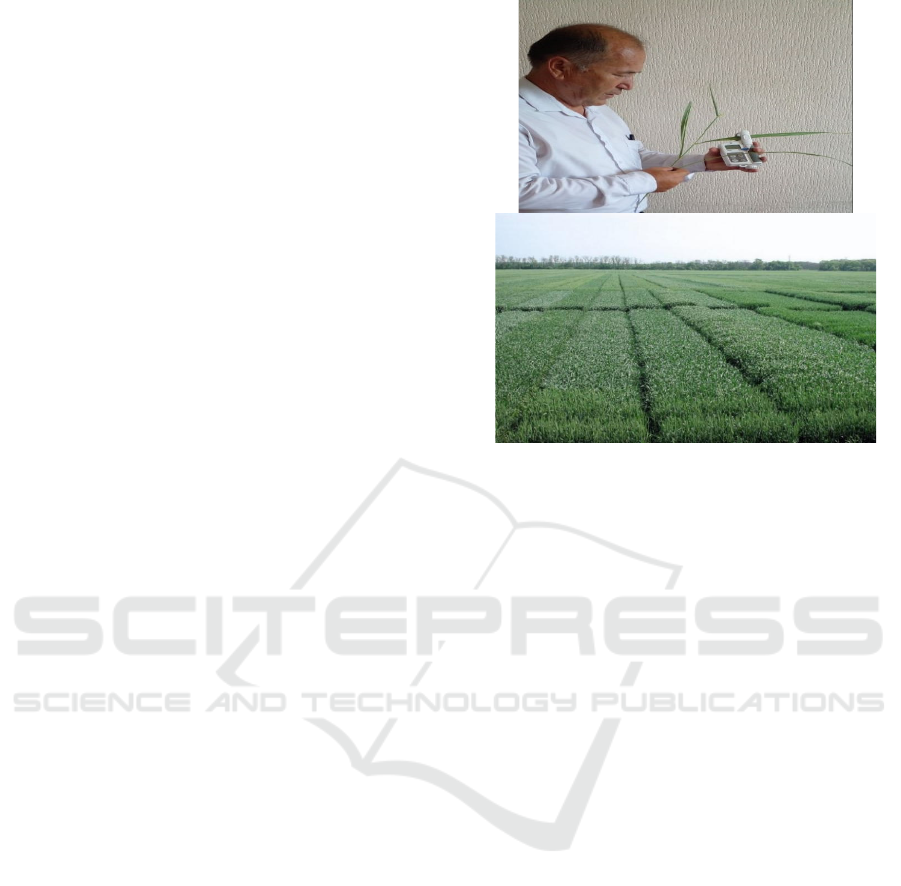
Figure 1: Conducting experiments to determine the leaf surface.
View of the experimental field.
3 RESULTS AND DISCUSSION
For the sustainable development of grain farming in
our country, including the cultivation of grain crops,
we need to thoroughly study and analyze the past of
grain farming, identify the shortcomings and develop
ways to eliminate them. You can't take a bold step
into the future without knowing the past.
Indeed, during the years of independence, great
work was done in the field of grain production in our
country, and we achieved great victories. Grain yield
has increased almost 5-6 times.
After the independence of the Republic of
Uzbekistan, major changes took place in the structure
of cultivated areas. Areas of the main crop cotton and
fodder crops were reduced, and the area of grain crops
was increased dramatically. There are 4.3 million
hectares of irrigated and 750 thousand hectares of
arable land in our republic (Yodgorov et al., 2023;
Saidova, et al., 2024; Saidova, 2024).
After the independence of our republic, the yield
of corn and other grain crops has been increasing year
by year. In 1992-1994, the yield of grain crops on
irrigated land reached 12 t/ha, 41 t/ha in 2004, and
78.0 t/ha by 2023. The increase in productivity is
observed for all grain crops. Table 1 provides
information on the increase in grain cultivation and
the growth rate of grain yield in Uzbekistan during
the years of independence.
I-CRAFT 2024 - 4th International Conference on Research of Agricultural and Food Technologies
100
Before independence, the gross harvest in grain
cultivation in Uzbekistan was 990 thousand tons, and
the grain yield was 9-10 t/ha. The main reasons for
this are that most of the grain arable land is grown in
relatively low-fertility areas and dry lands. In the
irrigated areas, the cultivated area was less.
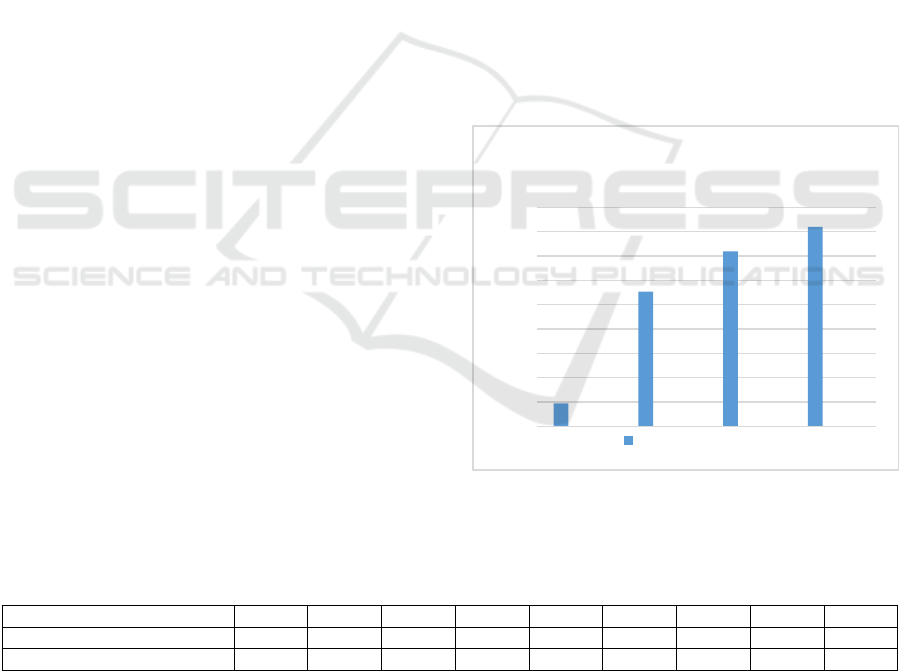
Data on the gross wheat crop grown in Uzbekistan
during the years of independence (1991-2023) are
presented in Figure 1. In the first years of
independence, the gross harvest was 1,200-1,550
thousand tons, and the grain yield was 11.9-13.0
tons/ha. Because in this period, there was not yet
enough experience in grain growing, grain growing
technologies had not been developed. Low-yielding
wheat varieties were planted in the main fields. The
rate of grain planting is 3 mln. Ha, and the planting
dates in most cases corresponded to November.
By 2002, due to the planting of intensive varieties
such as Yuna, Kroshka, Demintra, Kupava, Chillaki,
Sanzar 4, Sanzar 8, Yonbosh, and Marjon, the total
grain yield reached 4500 thousand tons and the grain
yield reached 42.0 t/ha.
It was arranged to sow 5-6 million grain seeds in
October in all areas. A cotton-cereal short rotation
cropping system was formed.
Finally, in 2022-2023, due to the use of innovative
technologies in grain farming, programming of
mineral fertilizers for the planned harvest on a
scientific basis, the widespread introduction of foliar
feeding, and the use of biostimulants, the gross grain
yield reached 7193-8200 thousand tons in the next
two years. Grain yield reached 69.8-78.0 tons/ha.
In the first years of independence in 1991-1992,
the number of plants in the field was 1.5-2 million,
the total leaf area was only 10-15 thousand m2/ha, in
2001-2002, the number of plants was 2.5-3.0 million
ha, the total leaf area was 20-25 thousand m2/ha, by
the last years 2022-2023, the thickness of seedlings
was 4.0-4.5 million ha, the total leaf area was 35-40
thousand m2/ha.
Foliar feeding of winter wheat in grain production
increased the total leaf area in the field, accelerated
physiological processes, and significantly increased
the efficiency of plant absorption of mineral
fertilizers.
It was observed that when winter wheat is fed
through the usual roots, only 35-40% of mineral
fertilizers, especially nitrogen fertilizers, are
absorbed by the plant, and the nitrogen that is not
absorbed by the plant has a negative impact on the
environment (ecology). When winter wheat is foliarly
fed, the absorption rate of mineral fertilizers by the
plant increases to 80-85%.
It was found that feeding winter wheat from the
leaves in addition to the roots increases the efficiency
of mineral fertilizers, increases the immunity of the
plant to pests and diseases, and has a positive effect
on the grain quality.
The conducted scientific research shows that
when autumn wheat is fed with leaves and roots, the
amount of protein in the grain increases by 1.5-2%,
and the amount of gluten increases by 3-4%. Foliar
feeding of winter wheat has been shown to
significantlyincrease immunity to plant-sucking pests
along with a positive effect on grain quality.
Figure 2: Development dynamics of grain cultivation in
Independence 1991-2023 (per thousand tons).
Table 1: Information on the growth dynamics of wheat grain cultivation in Uzbekistan during the years of independence.
Years 1990 1992 1994 199
6
1998 2000 2002 2022 2023
Harvest, Thousand/ton 990 1200 1550 2550 3000 3100 4500 7193 8200
Productivity, ts/ha 10.
0
11.9 13.
0
21.3 25.2 26.1 42,
0
69.8 78.
0
From the above data, it can be seen that in the first
years of independence, the gross grain yield of our
country was only 943 thousand tons. This harvest
could not satisfy the population's need for grain. The
early years of independence were planted in dry lands
with low gross grain yields, as well as in low-fertility
lands. Mainly old local varieties with low
productivity are planted. Wheat is traditionally
cultivated in a primitive way. The seed production
system is not well established. The seed sowing rate
0
1000
2000
3000
4000
5000
6000
7000
8000
9000
1991 2002 2022 2023
The total wheat grain crop grown in
Uzbekistan during 1991-2023, thousand. tons
Past, Present and Future Prospects of Grain Farming in Uzbekistan
101
was only 80-100 kg/ha. As a result, low grain yield
and productivity have been recorded. Because of this,
increasing grain production was considered one of the
most urgent tasks.
As a result of increased attention to grain
production, by 2002, the total grain yield reached
5139 thousand tons. Gross yield has increased almost
5-5.5 times. The gross grain harvest in 2022 was 7192
thousand tons, and in 2023 it was 8200 thousand tons.
A record was set in grain production. In our country,
a significant increase was noted in the grain yield as
well as the gross wheat yield.
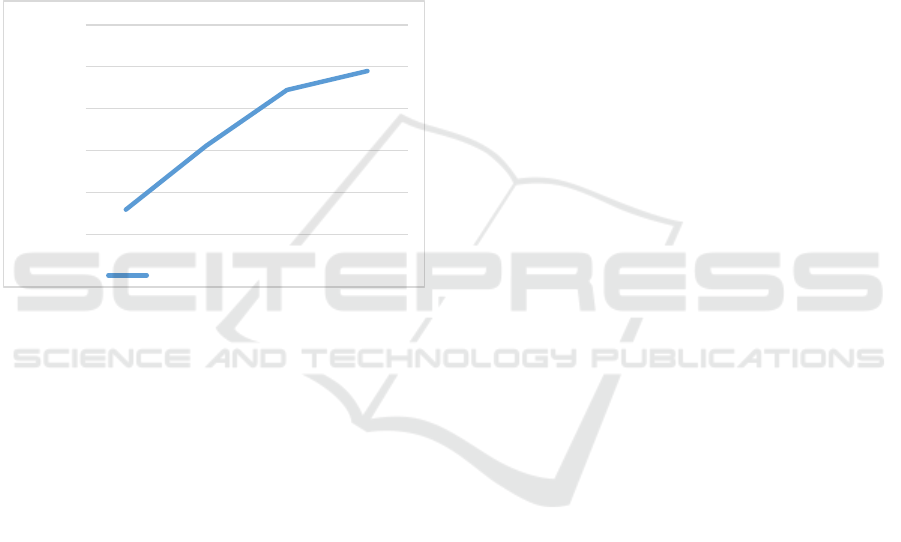
Data on the growth dynamics of wheat grain yield
are presented in Figure 2.
Figure 3: Wheat grain yield in 1991-2023.
As can be seen from the above data, in the early
years of independence, the yield of wheat grain in our
country was 11.9 t/ha, in 2002 the yield was 42.4 t/ha,
in 2022 69.8 t/ha, and in 2023 78.0 made ts/ha.
According to the indicator of grain productivity,
Uzbekistan was ranked from 98 to 12 out of 210
countries in the world. However, these indicators are
not enough, the strategy of actions indicates to
increase the yield of wheat grain to 80-85 tons/ha by
2025-2030.
Due to the significant increase in grain yield in
Uzbekistan in recent years, it entered the top 10 in the
world ranking in terms of yield in 2022. The first
place in the world ranking is Ireland - 100.8 t/ha, the
second place is New Zealand - 97.1 t/ha, the third
place is Great Britain - 78.1 t/ha, Uzbekistan - 69.8
t/ha grain yield
List of countries with the top 10 grain yields:
1. Ireland - 100.8 tons/ha;
2. New Zealand - 97.1 ts/ha;
3. Great Britain - 78.1 ts/ha;
4. Germany - 73.0 ts/ha;
5. France - 70.3 tons/ha;
6. Uzbekistan - 69.8 tons/ha;
7. Egypt - 64.5 tons/ha;
8. China - 58.1 tons/ha;
9. Ukraine - 45.3 tons/ha;
10. South Africa - 43.1 ts/ha.
If our country's annual need for grain for bread
and bakery products is 6.0-6.5 million tons, the
annual need for grain to meet the needs of the
population for food products, industry for raw
materials, and livestock for concentrate feed is 16-20
million Makes a ton. That is, in order to bring grain
production to the level of developed countries, we
need to grow at least 500-600 kg of grain per capita.
In the future, it is expected that the increase of grain
production in our country will be carried out mainly
due to the increase of productivity, the development
and introduction of technologies for intensive
cultivation in grain growing.
In order to further improve the above processes,
we conducted several experiments on winter wheat.
In increasing the productivity of winter wheat, agro-
measures such as timely provision of its food
requirements, keeping the field free of weeds and
protection against diseases and pests play an
important role.
The experiments were carried out to ensure the
nutritional requirements of winter wheat and to
protect against weeds. The experiments were
conducted in the grassland soils of the Tashkent
region and were carried out on Asr and Vassa
varieties of winter wheat.
Winter wheat was fed according to the norm
adopted in the farm to ensure its need for mineral
fertilizers during the growth period. In addition, it
was additionally suspended with "Nano silicon" (Sila
silicon) through the leaves at the rate of 150, 200 g/ha,
once and twice.
Experiments were conducted on Asr and Wassa
varieties of winter wheat. In the experiments carried
out on Asr variety, in the control variant, mineral
fertilizers were applied in the norms of
N250P175K125, and the yield of winter wheat was
obtained on average of 63.8 t/ha when no herbicide
was sprayed against weeds. In the cultivation of
winter wheat, N250P175K125 (FON) mineral
fertilizer is used, "Sila kremniy" 150 g/ha once from
the leaves, Starpik 24% e.c. When 0.2 liters of
herbicide was sprayed per hectare, the yield increased
by 4.6 t/ha compared to the control option (68.4 t/ha).
"Sila kremniy" 150 g/ha is added to mineral fertilizers
in the feeding of winter wheat against annual spike
and dicotyledonous weeds and perennial
dicotyledonous weeds Total 80% s.e.g. When 40
grams of herbicide was sprayed per hectare, the yield
0
20
40
60
80
100
1991 2002 2022 2023
grain yield, c/h
I-CRAFT 2024 - 4th International Conference on Research of Agricultural and Food Technologies
102
increased by 7.8 t/ha compared to the control option
(71.6 t/ha).
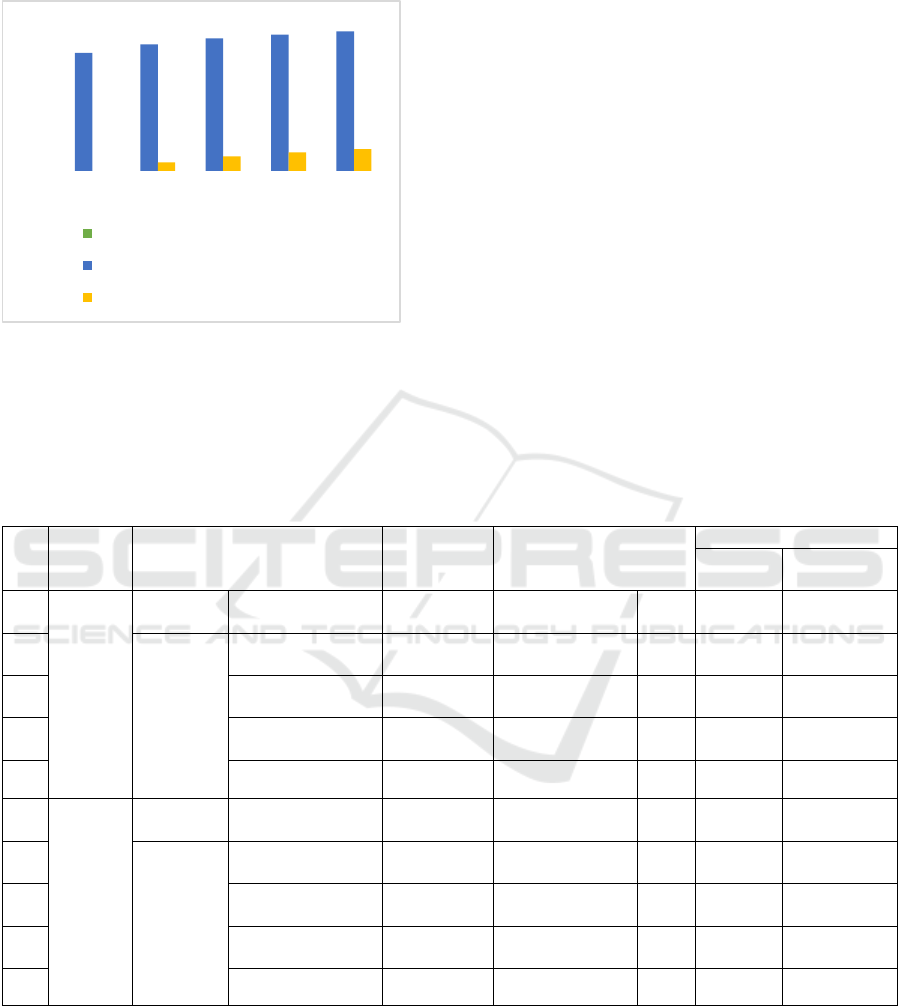
Figure 4: Effect of mineral fertilizers, foliar feeding and herbicide
application on winter wheat yield.
Addition to mineral fertilizers "Sila kremniy" 200
g/ha once applied against one-year spiked weeds
Starpik 24% e.c. When 0.15 liters of herbicide was
applied per hectare, the yield was increased by 9.9
t/ha compared to the control option (73.7 t/ha). "Sila
kremniy" 200 g/ha twice-applied option against
annual spike weeds, annual spike and dicotyledonous
weeds and perennial dicotyledonous weeds Total
80% s.e.g. When 30 grams of herbicide was applied
per hectare, the yield was increased by 11.7 t/ha
compared to the control option (75.5 t/ha) (Table 2).
In the experiments carried out on the Vassa
variety of winter wheat, an average yield of 68.9 t/ha
was obtained in the control option. When winter
wheat is fed with mineral fertilizers, "Sila silicon"
150 g/ha once as a leaf suspension and Starpik 24%
e.c. When 0.2 liters of herbicide was sprayed per
hectare, the yield increased by 6.3 t/ha compared to
the control variant (75.2 t/ha). "Sila kremniy" 150
g/ha is added to mineral fertilizers in the feeding of
winter wheat against annual spike and dicotyledonous
weeds and perennial dicotyledonous weeds Total
80% s.e.g. When 40 grams of herbicide was applied
per hectare, the yield was increased by 8.9 tons/ha
compared to the control option (77.8 tons/ha).
Table 2: Effects of feeding and weed control on winter wheat yield (2019, 2021, 2023).
№
Crop
variety
Mineral fertilizer rate, kg/ha
Organic
fertilizer
rate, g/ha
H
erbicide name and rate
k
g/ha, l/ha
Productivity, ts/ha
A
verage
y
ield, ts/ha
D
ifference fro
m
control, ts/ha
1
2007375
Аsr
Control
N
250
P
175
К
125
(
FON
)
- No herbicide - 63,8 -
2
FON+Sila
Kremniy
FON
150 g once
Starpik 24% e.k.
g/kg
0,2l 68,4 4,6
3
FON 150 g
Twice
Total, 80% s.e.g. 40 g 71,6 7,8
4
FON
200 g once
Starpik 24% e.k.
g
/k
g
0,15
l
73,7 9,9
5
FON
200 g twice Total, 80% s.e.g. 30 g 75,5 11,7
6
2010420
Vassa
Control
N
250
P
175
К
125
(
FON
)
-
No herbicide
- 68,9 -
7
FON+Sila
Kremniy
FON 150 g once Starpik 24% e.k.
g
/k
g
0,2 l 75,2 6,3
8
FON 150 g
Twice
Total, 80% s.e.g.
40 g 77,8 8,9
9
FON 200 g once Starpik 24% e.k.
g
/k
g
0,15
l
79,7 10,8
10
FON 200 g twice Total, 80% s.e.g.
30 g 82,1 13,2
"Sila kremniy" 200 g/ha once as a foliar
suspension against annual spike weeds Starpik 24%
e.c. When 0.15 liters of herbicide was sprayed per
hectare, the yield increased by 10.8 tons/ha compared
to the control option (79.7 tons/ha). "Sila Kremniy" at
the rate of 200 g/ha twice applied against annual spike
and dicotyledonous and perennial dicotyledonous
weeds Total 80% s.e.g. when herbicide was applied
at 30 grams per hectare, yield was increased by 13.2
t/ha compared to the control option (82.1 t/ha) (Table
2, Fig. 4).
0
63.8
68.4
71.6
73.7
75.5
0
4.6
7.8
9.9
11.7
0
20
40
60
80
1. 2. 3. 4. 5.
Crop variety
Average yield, ts/ha
Difference from control, ts/ha
Past, Present and Future Prospects of Grain Farming in Uzbekistan
103
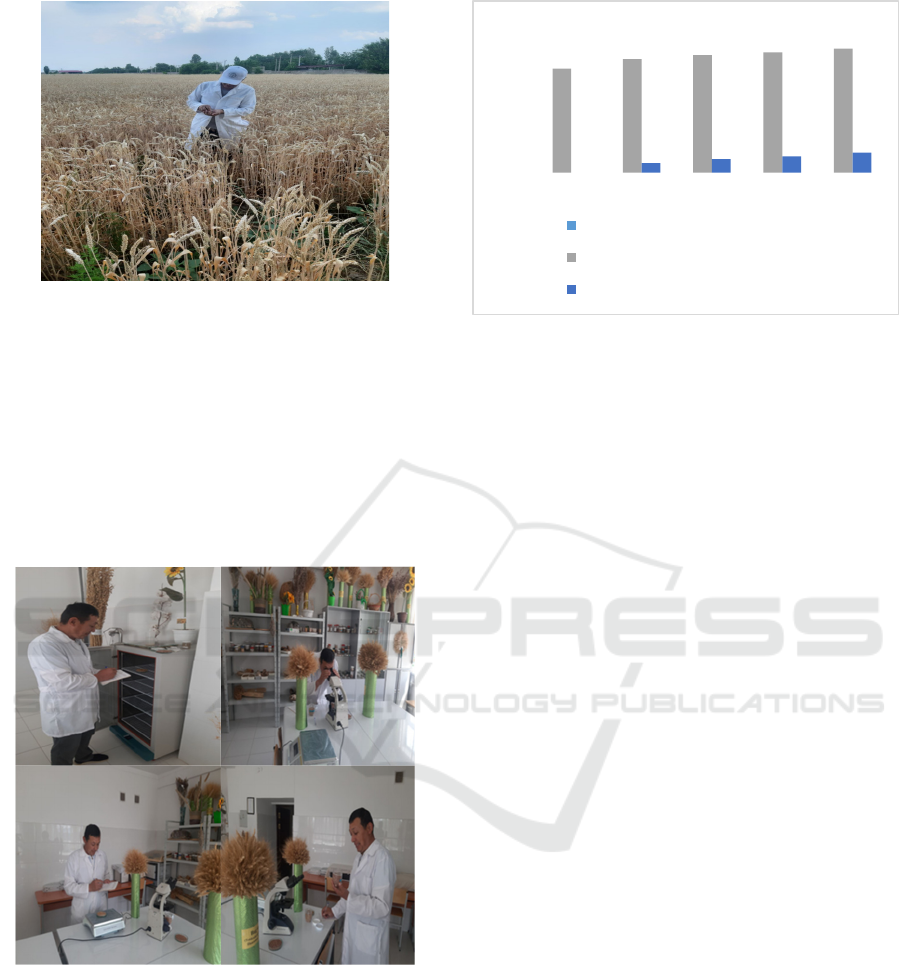
Figure 5: Calculate wheat yield.
The results of the experiment show that feeding
plays an important role in increasing the yield of
winter wheat. In addition to the use of mineral
fertilizers, it was found that the growth of winter
wheat can be achieved by using the drug "Sila silicon"
created on the basis of nanotechnology through the
leaf during the growth period, by applying herbicides
with high efficiency against weeds in one and two
times.
Figure 6: Analysis of experimental results.
Therefore, in the future development of grain
growing in our country, the main attention should be
focused on increasing grain yield, increasing product
quality, increasing soil fertility, and improving
ecological conditions.
Figure 7: Effect of mineral fertilizers, foliar feeding and
herbicide application on winter wheat yield.
4 CONCLUSIONS
Based on the above information, we can draw the
following conclusions:
1. Wide introduction of new innovative technologies
in grain production to further increase wheat grain
yield and improve grain quality;
2. Organization of planting of winter wheat varieties
of intensive type with high potential productivity:
3. Improvement of crop rotation system, introduction
of short rotation rotation;
4. Timely and scientifically based application of all
agrotechnical measures;
5. In addition to the roots, foliar feeding, using micro-
fertilizers along with macro-fertilizers;
6. Application of biostimulants in grain cultivation.
7. Application of advanced foreign technologies in
grain cultivation;
8. The use of such as the use of smart agriculture in
grain production is important..
REFERENCES
Altman, D., 1983. Grain protein percentage, kernel,
hardness, and grain yield of winter wheat with foliar
applied urea. Agron. J., 87-91.
Arabi M. & Javhar M., 2000. Grain field kerne weight, and
septorin tritici biotch responses of wheat topotassium
and nitrogen fertilization. Cereal Res. Commun., 30(1-
3), 141- 147.
Atabayeva, H.N. & Azizov, B.M., 2008. Wheat.
Monograph, T. Tosh DAU.
Azizov, B.M, Ravshanova, N.A, Dzhaborov, Sh.R., 2021a.
Productivity and technological qualities of winter
Wheat grain with foliar feeding. Academicia an
International Multidisciplinary Research Journal, 1.
0
68.9
75.2
77.8
79.7
82.1
0
6.3
8.9
10.8
13.2
0
20
40
60
80
100
1. 2. 3. 4. 5.
Crop variety
Average yield, ts/ha
Difference from control, ts/ha
I-CRAFT 2024 - 4th International Conference on Research of Agricultural and Food Technologies
104

Azizov, B.M., Djabborov, Sh., Asatova, S., Kuchkorova,
N., 2021b. Influence of extracurricular fertilization on
growth, development, quality indicators and grain yield
of winter wheat. E3S Web of Conferences, 284, 03012.
https://doi.org/10.1051/e3sconf/202128403012.
Azizov, B.M., Israilov, B.A, Khujamiayrov, E.Yu., 2017.
Effect of foliage spraying on technological qualities of
winter wheat seed. The Way of Scienсe, 1(42), 47-50.
Charshanbiev, U.Yu., 2023. Effect of organic fertilizers in
growing alfalfa for seed and forage. E3S Web of
Conferences, 371, 01050.
https://doi.org/10.1051/e3sconf/202337101050 AFE-
2022.
Charshanbiev, U.Yu., Shodmanov, M., Sultanov, U.,
Dusbaev, I., 2021. Effects of continuous application of
Samurai and Zellek Super herbicides on cotton fields
against weeds in the conditions of Uzbekistan. E3S Web
of Conferences, 258, 04052.
Saidova, M., Tursunbaev, S., Boltaeva, M., & Isakulova,
N., 2024. Comparison of pneumatic sowing machines
by the number of seeds in the slots of the discs and the
distance between the slots. BIO Web of Conferences,
105, 01004.
https://doi.org/10.1051/bioconf/202410501004
Saidova, M., Tursunbaev, S., Boltaeva, M., Ismoilov, T., &
Gilijova, A., 2024. Analysis of a pneumatic seeder
equipped with an improved planting disc. BIO Web of
Conferences, 105, 01024.
https://doi.org/10.1051/bioconf/202410501024.
Yodgorov, N.G, Azizov, B.M, Holicov, B.M., 2023. Thi
timing of planiting the autumn wheat grant crop unter
the conditions of taut soils of the desert region, the
procedure for watering and the effect of norm of ore
fertelizers. Journal of Modern Edicational Achiemets
(JMEA), 5.
Past, Present and Future Prospects of Grain Farming in Uzbekistan
105
