
Experimental Research Based on the Parameters of the Pneumatic
Seeder
Mukhayyokhon Saidova
1a
, Tunahan Erdem
2b
, Sarvar Tursunbaev
1c
, Temurbek Ismoilov
3d
and Sadbarxon Mavlanova
3e
1
Tashkent State Technical University, 100095 Tashkent, Uzbekistan
2
Cukurova University, 01250, Adana, Turkey
3
Namangan State University, 160107 Namangan, Uzbekistan
Keywords: Pneumatic Seeder, Seed Spacing, Planting Accuracy.
Abstract: In the article, the authors analyzed the results of laboratory tests of a pneumatic sowing apparatus that
accurately sows bare cotton seeds. The experiments were carried out on seeds of the “Sultan” variety. Tests
to change the number of revolutions of the sowing disks in 2 different variants, the distance between slots,
the coefficient of variation of the actual value of the interval between slots, the number of seeds falling into
each slot, their standard deviation. The number of slots without seeds, the percentage of slots with seeds, and
slot elongation were examined. The article presents conclusions based on the results obtained.
1 INTRODUCTION
In world practice, it has been proven that in
pneumatic diluents it is most acceptable to use
landing discs rotating along a vertically longitudinal
surface, and most companies producing pneumatic
diluents produce diluents equipped with just such
discs. The research paper considers the main
parameters of the landing disc, which rotates on a
vertically longitudinal surface, that is, on a horizontal
axis located transversely to the direction of movement
of the seal (QXA-3-001 practical project, 2018;
Ramesh et al., 2017; Xiangdong et al., 2017; Lu et al.,
2022; Li et al., 2023; Verma et al., 2024).
It is known that in order to obtain higher crop
yields, it is necessary to evenly distribute seeds
throughout the field, that is, plant them evenly to the
desired depth, ensuring a given range and distance to
the node. In world practice, when using seeds
prepared with high quality, seed sowing is used in a
clear norm, one seed per slot.
a
https://orcid.org/0009-0007-0870-4802
b
https://orcid.org/0000-0002-1595-6852
c
https://orcid.org/0000-0003-2516-3597
d
https://orcid.org/0000-0003-0414-2148
e
https://orcid.org/0009-0007-9824-8002
In addition to the general requirements, specific
planting requirements are developed according to the
climate and soil of each area. In particular, the soil
and climatic conditions of Uzbekistan are such that in
the spring sowing period, after precipitation, in most
cases tar appears in the soil, and seeds planted in one
grain risk getting stuck under it, failing to split the
resin.For this reason, when planting rotten seeds or
other seed materials, it is advisable to sow them in a
slot way, that is, laying 2-3 seeds in each slot (El-
Sayad, 2012; Javellonar et al., 2016; Veerangouda et
al., 2020; Alimova et al., 2022; Saidova et al., 2023;
Saidova et al., 2024).
2 MATERIALS AND METHODS
Experimental studies according to GOST 31345-
2017 "Agricultural machinery. Tractor tractors. Test
methods", as well as UzDst 3193:2017. "Testing of
agricultural machinery. The method of energy
68
Saidova, M., Erdem, T., Tursunbaev, S., Ismoilov, T. and Mavlanova, S.
Experimental Research Based on the Parameters of the Pneumatic Seeder.
DOI: 10.5220/0014044700004738
Paper published under CC license (CC BY-NC-ND 4.0)
In Proceedings of the 4th International Conference on Research of Agricultural and Food Technologies (I-CRAFT 2024), pages 68-73
ISBN: 978-989-758-773-3; ISSN: 3051-7710
Proceedings Copyright © 2025 by SCITEPRESS – Science and Technology Publications, Lda.
assessment of machines " (Uzdst 3193, 2017; GOST
31345-2017, 2018).
By changing the number of revolutions of the
sowing discs of 2 different variants of the bare cottons
seeds pneumatic sowing machine, the distance
between the hives, the coefficient of variation of the
actual value of the interval between the hives, the
number of seeds that fell into each slot, their standard
deviation, the proportion of slots into which the seed
did not fall, the proportion of slots into which the seed
fell were studied on a special stand, the length of the
slots.
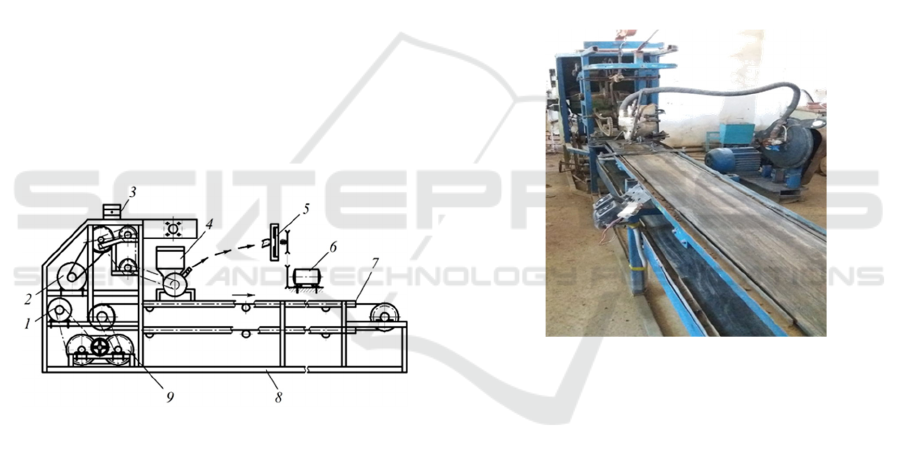
The laboratory stand is a model of the planting
process, while in practice it moves across the field on
the surface of unobstructed soil, while the landing
device is freely accessible on the stand, and the "soil"
in the form of a conveyor belt is movable (Fig. 1).
A pneumatic landing device 4 was installed on
this test bench. To create a vacuum, an exhauster 5
was installed, which is powered by an electric motor
6. The pneumatic landing device is connected to the
exhauster by an air wire. The electric motor 2, which
is powered by direct current, and the circuit extension
act as a landing gear drive. Rheostat 3 allows you to
change the number of revolutions transmitted to the
lander.
Figure 1: Scheme of the laboratory stand for testing the
planting apparatus.1, 6 – AC electric motors; 2-DC electric
motors; 3-rheostat; 4-pneumatic landing apparatus; 5-
extractor; 7-conveying belt; 8-frame; 9-variator.
Experimental studies were carried out with a
single-row layout of the lander in the following order
(Fig. 2).
− the seeds are placed in the hopper of a
pneumatic seeding machine;
− solidol is applied to the conveyor belt so that
the seeds from the sowing machine can stick to
the tape;
− adjustment of the set values of the unit speed
was carried out using a variator;
− when adjusting or changing the distances
between the seeds in the slot, the number of
revolutions of the disc of the sowing machine
changed;
− the number of revolutions of the disc of the
seeding machine is determined using a
tachometer through the valve of the disc of the
seeding machine;
− the laboratory stand has been launched. From
the sowing machine, the seeds fell onto the
surface of the conveyor belt. The stand was
stopped when the surface of the tape was
completely covered with seeds along the
length;
− the number of seeds in the slots that appeared
on the surface of the tape, the distance between
the slots and their elongation were measured;
− counted the number of seeds that got into the
slots;
− the distance between the slots was measured
using an electronic vernier caliper.
Figure 2: General view of laboratory stand equipped with
improved pneumatic planting apparatus.
The set of numbers obtained as a result of
measurements was processed by mathematical
statistics methods and the average values of random
variables (Mmed), the mean square deviation (±σ)
and variational coefficients (V) were determined.
They were entered into the appropriate tables and
analyzed.
In the punched planting method, the accuracy of
sowing and the set distance between seeds (pitch)
were taken into account, which corresponded to the
criterion for evaluating the quality of sowing.If the
sowing step between the seeds was less than half of
the specified distance, then one seeder and two
seeders were accepted.It was believed that if the step
between the sown seeds is one and a half times larger
than the specified step, then empty slots remain.This
method was used to evaluate the performance of
various seeding machines (Testing of agricultural
Experimental Research Based on the Parameters of the Pneumatic Seeder
69

machinery, 1991; Testing of agricultural machinery,
2001; Karimov et al., 2020; Irisov et al., 2023). Using
this method of estimating the location of seeds, it is
possible to quantify the quality of the sown seeds and
visually assess the deviation for a given planting
accuracy. This method makes it much more difficult
to estimate the location of the seeds (Tukhtakuziev et
al., 2020; Norchayev et al., 2022; Alimova, 2023;
Aslonov & Irisov, 2023; Tukhtakuziev et al., 2023;
Djiyanov et al., 2024; Mirzakhodjaev et al., 2024).
3 RESULTS AND DISCUSSION
All studies were carried out with seeds of the “Sultan”
variety in good condition. The data obtained during
the experimental studies were processed in
accordance with the methods used in the study of
technological processes in agriculture.
Laboratory experiments were conducted
according to GOST 31345-2007, accepted among the
CIS countries, "Tractor seeders. The method was
carried out on the basis of the requirements
established in accordance with the "interstate
standard", in particular in standard 6.3.2
"determination of the quality indicators of the seeding
apparatus during bench tests" and 6.3.6
"determination of the distribution of seeds (slots) in a
row".
Experimental studies were carried out through the
following planting discs.
Option 1 is a planting disc with a circular hole (3.5
mm in diameter);
Option 2 is a planting disc with two circular holes
(3.5 mm in diameter).
Figure 3: Planting discs with holes of different sizes.
The prepared a-shaped disk was mounted on an
additionally machined pneumatic landing gear and
mounted on a universal stand. During the
experiments, the linear speed of the conveyor belt was
increased to 2.1 m/s. This corresponds to the speed of
the unit in the field, equal to 7.57 km/ h (MTZ-80x5
tractor - reduced speed). The number of revolutions
of the sowing disc was adjusted depending on the
required value of the distance between the seeds.
The holes for planting seeds in one row have a
diameter of 3.5 mm, the diameter of the circle in
which the holes are located is 180 mm, the number of
holes is 32, the number of revolutions of the disk is
31.5 ail/min, the linear speed of the conveyor belt is
2.1 m/s, the degree of thinning in the pneumotype is
40 mbar. With these parameters, the distance between
the seeds in a row should be 10 cm.
Based on the initial temporary requirements,
when sowing seeds in rows and lowering one into
each slot, the coefficient of variation of the actual
values of the intervals between seeds should not
exceed 15%, the number of seeds laid per unit length
should be provided with an accuracy of at least 95%.
The results of experiments on sowing seeds in
one row are presented in Table 1. Vmed = 2,1 m/s; d
= 180 mm; z = 32 piece; dm = 3,5 mm; P = 40 mbar;
The variety of seeds is "Sultan".
The results obtained in experiments on planting
seeds in one row are as follows: the planting accuracy
was 97.1%, the coefficient of variation was 13.0%.
In the experiments, two cases of fertilization per
slot were noted, which amounted to about 8.1%.
Cases where there were two seeds in one slot instead
of one are also observed in modern overseas seeders,
and no restrictions are imposed on the initial
requirements. So we can say that at the Meyer level.
Further experiments were aimed at determining the
performance indicators of the pneumatic landing
device during slot landing. The intervals between
slots, the number of seeds dropped per slot, as well as
the degree of elongation of the slots were taken as
criteria for evaluating the slotting of seeds. In
accordance with the temporary preliminary
requirements, it is required that the coefficient of
variation of the actual value of the interval between
cells does not exceed 25%, that 85% of the generated
cells are filled at a given value and that the number of
cells is one more, equal or one less so that the cells
are filled, stretched, does not exceed the sum of the
seed lengths.
The experiments were carried out in the following
modes and parameters: the speed of movement of the
conveyor belt (seeder) is 2.1 m/s, the rotation speed
of the sowing disc is 31.5 and 19.7 rpm, the degree of
thinning in the pneumotype is 40 mb, the diameter of
the planting disc - circles with holes in the planting
disc are 180 and 200 mm, the number of holes - in this
case, the distance between the slots should be 12.5 cm
(31.5 rpm) and 20 cm (19.7 rpm).
I-CRAFT 2024 - 4th International Conference on Research of Agricultural and Food Technologies
70
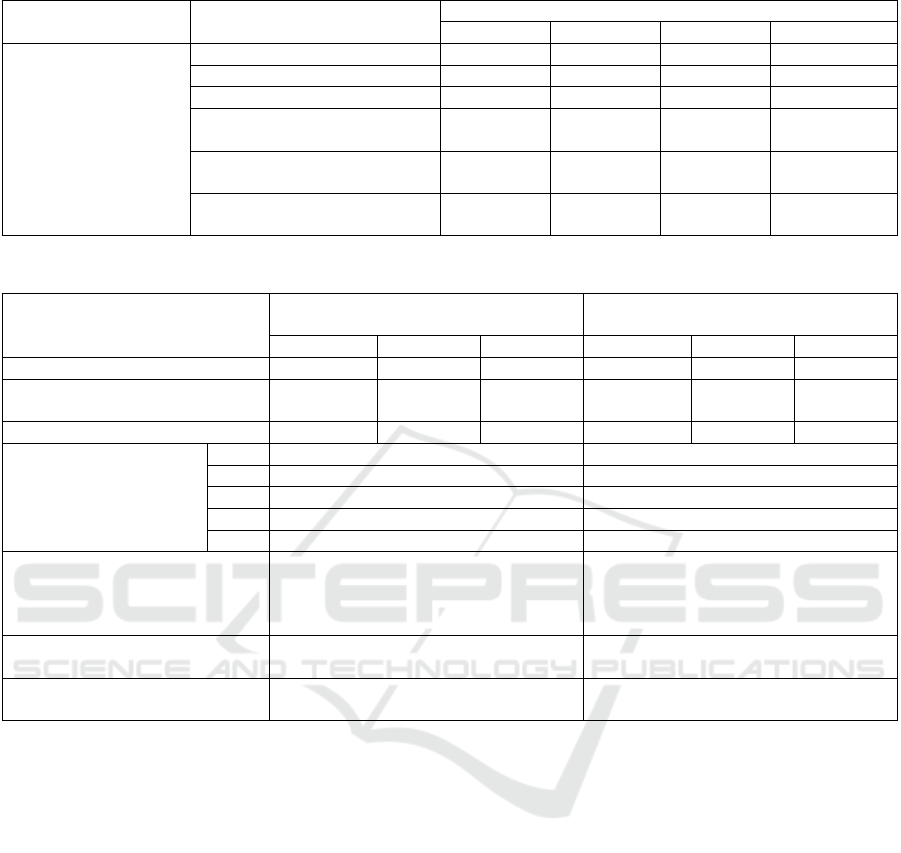
Table 1: Results of planting seeds in one row.
Working mode Specification
Distance between seeds, c
m
I II III Med.
n = 31,5 rpm
l
у
= 10 cm
М
med
, cм 10,1 10,5 10,4 10,3
b
±, cм 1,35 1,15 1,53 1,34
V, % 13,3 11,0 14,7 13,0
Share of seedless slots
(
≥ l
у
х 1,5
)
, %
2,9 2,0 2,7 2,5
Share of two-seeded slots
(
≤ l
у
/ 2
)
, %
2,6 12,5 9,3 8,1
Share of 3 seed slots and more,
%
0 0 0 0
Table 2: Results of slot seeds in two.
Specification
n = 31,5 rpm;
l
у
= 12,5 c
m
n = 19,7 rpm;
l
у
= 20 c
m
М
med
±
σ
V
, %
М
med
±
σ
V
, %
Interval between slots, c
m
13,1 1,37 10,4 19,2 1,91 10,0
Number of seeds falling into the
slots,
p
cs
2,1 0,33 15,7 2,1 0,38 17,6
Stretching of the slots, c
m
0,9 0,70 81,2 0,9 0,76 85,0
Distribution of slots by
seed, %
0 1,2
1 9,0 4,7
2 76,0 75,2
3 13,4 15,3
4 1,6 3,6
Planting accuracy (the amount of
slots in which the number of
seeds corresponds to standard
(2±1 pcs.), %
98,4 95,2
Share of slots no more than 2 cm
in len
g
th, %
93,4 91,6
The amount of slots falling
b
etween the intervals, %
4,1 4,7
The results of the experiments carried out are
presented in Table 2. V
med
= 2,1 m/s; d
1
= 200 mm;
d
2
= 180 mm; z = 32х2 piece; d
m
= 3,5 mm; P = 40
mbar; The variety of seeds is "Sultan".
4 CONCLUSIONS
According to the results of the experiment, the
following conclusion can be drawn:
1. The number of rotations of the planting disc
was 31.5 rpm, in the option where the specified
interval was 12.5 cm: the interval between the
slots was on average 13.1 cm, the vibrational
coefficient of the actual value of the interval
between the slots was equal to 10.4%. The
average number of seeds per slot was 2.1, with
an average quadratic deviation of 0.33. The
distribution of slots by seed was as follows: the
proportion of unfertilized slots – 0%, the
proportion of 1 – seeded slot – 9.0%, 2 –
76.0%; 3 – 13.4% and 4-1.6%. The share of
2±1 seed slots was 98.4% (according to the
standard should not be less than 80%). The
lengthening of the slots was on average 0.9 cm.
It is required that the lengthening of the slots
according to Standard does not exceed the sum
of the lengths of the seeds that actually fell on
them. Considering that the average length of
the seed we have is 9.1 mm, the length of the
slots should not exceed 1.82 cm or 2 cm when
rounded (in experiments, based on GOST
(standard), the measurement accuracy was
taken 0.5 cm). According to the results of the
experiment, the amount of slots no more than 2
cm in length was 93.4%.
2. The number of revolutions of the landing disc
was 19.7 rpm in the variant where the specified
interval was 20 cm: the interval between the
grooves averaged 19.2 cm, the coefficient of
Experimental Research Based on the Parameters of the Pneumatic Seeder
71

variation of the actual value of the interval
between the grooves was 10.0%. The number
of seeds in the slot in this variant also averaged
2.1 pieces, with an average square deviation of
0.38. The distribution of slots by seed was as
follows: the proportion of unfertilized slots –
1.2%, the proportion of 1 – seeded slots – 4.7%,
2 – 75.2%; 3 – 15.3% and 4-3.6%. The share of
2±1 seed slots was 95.2%. The lengthening of
the slots was on average 0.9 cm, the amount of
slots no more than 2 cm in length was 91.6%.
REFERENCES
Alimova, F.A., 2023. Mathematical modeling of small soil
channel laboratory stand drive and evaluation of its
energy state. IOP Conference Series: Earth and
Environmental Science, 1284, 012031.
https://doi.org/10.1088/1755-1315/1284/1/012031.
Alimova, F., Primqulov, B., & Boboniyozov, E., 2022.
Parametres of the strip-tilling working bodies for re-
crops sowing. AIP Conference Proceedings, 2637,
050007. https://doi.org/10.1063/5.0118617.
Aslonov, N., & Irisov, K., 2023. Mathematical model of
resistance to spreading forces using a bulldozer blade.
E3S Web of Conferences, 390, 01032.
https://doi.org/10.1051/e3sconf/202339001032.
Djiyanov, M., Xalilov, R., & Isakova, F., 2024. Justification
of commercialization of export-oriented harvesting
apparatus for intensive processing of cotton boxes. BIO
Web of Conferences, 85, 01034.
https://doi.org/10.1051/bioconf/20248501034.
El-Sayad, Y.A., 2012. Design and fabricate a metering
device of vacuum seeder to suit egyptian cotton.
Egyptian Journal of Agricultural Research, 90(4),
1723-1742. https://doi.org/10.21608/ejar.2012.164070.
GOST 31345-2017. Agricultural machinery. Tractor
seeders. Test methods. Moscow: Standartinform, 53 p.
Irisov, K.D. & Bekmurodov, I.R., 2023. Theoretical aspects
of substantiating the parameters of the working body of
an environmentally comfortable spraying unit. IOP
Conference Series: Earth and Environmental Science,
1284, 012041. https://doi.org/10.1088/1755-
1315/1284/1/012041.
Javellonar, R.P., Delaraga, L.V. & Alegato, O.R., 2016.
Design, development and evaluation of a disc-type corn
seeder. Ilocos Journal of Science, 61.
Karimov, R., Bobojanov, M., Tairova, N., Xolbutayeva, X.,
Egamov, A. & Shamsiyeva, N., 2020. Non-contact
controlled voltage stabilizer for power supply of
household consumers. IOP Conference Series:
Materials Science and Engineering, 883, 012120. DOI:
10.1088/1757-899X/883/1/012120.
Li, K., Li, S., Ni, X., Lu, B., & Zhao, B., 2023. Analysis
and experimental of seeding process of pneumatic split
seeder for cotton. Agriculture, 13(5), 1050.
Lu, B., Ni, X., Li, S., Li, K., & Qi, Q., 2022. Simulation and
experimental study of a split high-speed precision
seeding system. Agriculture, 12(7), 1037.
https://doi.org/10.3390/agriculture12071037.
Mirzakhodjaev, S., Djiyanov, M., Nurmikhamedov, B., &
Mamasov, S., 2024. Results of frontal plug tests
combined with active working body. BIO Web of
Conferences, 85, 01035.
https://doi.org/10.1051/bioconf/20248501035.
Norchayev, D.R., Xaliqulov, M.A., Turkmenov, X.I.,
Shermuxamedov, X.P., & Ibragimova, G.N., 2022.
Acceptable solutions for harvesting root crops in the
soil climate of the Republic of Uzbekistan. IOP
Conference Series: Earth and Environmental Science,
1076, 012029. https://doi.org/10.1088/1755-
1315/1076/1/012029.
QXA-3-001 Practical project, 2018. Development of an
energy resource-efficient pneumatic sealant that plants
seeds of crops in specific norms. Gulbahor, 97 p.
Ramesh, M.B., Veerangouda, M., Reddy, B.S., Anantachar,
M., & Sharanagouda, H., 2017. Simulation of Design
and Operational Parameters of Pneumatic Seed Planter
for Cotton Using ANSYS Software. Agricultural
Engineering Today, 41(4), 37-45.
Saidova, M., Alimova, F., Tursunbaev, S., Kulmuradov, D.,
& Boltaeva, M., 2023. Influence of the shape of the disc
slots of the seeder on the suction force of the vacuum
for precise sowing of seeds. IOP Conference Series:
Earth and Environmental Science, 1284, 012014.
https://doi.org/10.1088/1755-1315/1284/1/012014.
Saidova, M., Tursunbaev, S., Boltaeva, M., & Isakulova,
N., 2024. Comparison of pneumatic sowing machines
by the number of seeds in the slots of the discs and the
distance between the slots. BIO Web of Conferences,
105, 01004.
https://doi.org/10.1051/bioconf/202410501004.
Testing of agricultural machinery, 1991. Sowing machines.
The program and test methods. - RD.10.5.1.-91
//Official publication – Moscow. 100 p.
Testing of agricultural machinery, 2001. Sowing machines.
The program and test methods. - Uz RH 63.06: 2001
//The publication is official. - Tashkent, 95 p.
Tukhtakuziev, A., & Rasuljonov, A. R., 2020. Ensuring the
stability of the processing depth of suspended soil
mounted machines. IOP Conference Series: Earth and
Environmental Science, 614, 012156. DOI:
10.1088/1755-1315/614/1/012156.
Tukhtakuziev, A., Rasuljonov, A.R., Turkmenov, H.I.,
Irgashev, A.A., & Barlibaev, S., 2023. Ensuring the
stability of the suspended chisel-cultivator processing
depth. E3S Web of Conferences, 390, 01038.
https://doi.org/10.1051/e3sconf/202339001038.
Uzdst 3193: 2017. Testing agricultural techniques. Method
of energy evaluation of machines. - Tashkent, 21 p.
Veerangouda, M., Maski, D., Desai, B.K., & Doddagoudar,
S.R., 2020. Study on some engineering properties of
cotton seeds in relation to the development of a tractor
operated seed dibbler. Journal of Pharmacognosy and
Phytochemistry
, 9(5), 1836-1839.
I-CRAFT 2024 - 4th International Conference on Research of Agricultural and Food Technologies
72

Verma, K., Mohanty, S. K., Dash, R. C., Mishra, J., Behera,
A., & Rath, I., 2024. Optimization of Power Tiller
Operated Pneumatic Planter under Laboratory
Conditions for Enhancing Cotton Planting Efficiency.
Journal of Experimental Agriculture International,
46(5), 526-537.
https://doi.org/10.9734/jeai/2024/v46i52407.
Xiangdong, N.I., Guojie, X.U., Qi, W.A.N.G., Xiaorui,
P.E.N.G., Jian, W.A.N.G., & Bin, H.U., 2017. Design
and experiment of pneumatic cylinder array precision
seed-metering device for cotton. Nongye Jixie
Xuebao/Transactions of the Chinese Society of
Agricultural Machinery, 48(12).
Experimental Research Based on the Parameters of the Pneumatic Seeder
73
