
Effects of Irrigation Technologies on Soybean Varieties Planted as
Repeated Crops in Uzbekistan
Shavkatjon Abdurakhimov
a
, Umbetali Sultanov
b
, Mansur Tukhtamishev
c
and Sevara Karimboyeva
d
Tashkent State Agrarian University, 100140, University str. 2, Tashkent, Uzbekistan
Keywords: Soybean Irrigation, Meadow-Gray Soils, Yield Optimization.
Abstract: This article deals with the timing of sowing, germination, growth, development, obtaining high and quality
grain crops, irrigation timing, irrigation procedures, development of irrigation standards and effective care
agrotechnology in the conditions of light soils of grasslandgray mechanical composition of Jizzakh province
in Uzbekistan and data on the conducted scientific researchers are given
.
1 INTRODUCTION
It is known that one of the main factors of high yields
of agricultural crops is the improvement of land
reclamation and fertility. In recent years, a number of
scientists have found that the amount of humus in the
soils of Uzbekistan is declining. This leads to the
degradation of all the properties and characteristics of
the soil (Tuxtamishev et al., 2020; Tuxtamishev et
al., 2021; Tuxtamishev et al., 2022).
At present, the average humus content in the soil
in Uzbekistan is only 0.6-0.7%. One of the main
reasons for this is that mistakes and shortcomings are
made in crop rotation and soil fertility is not taken into
account when planting crops (Abdalova et al., 2021;
Tuxtamishev et al., 2022). As a result of planting the
same crop without paying attention to the chemical,
physical and reclamation conditions of the soil,
microbiological processes in the soil are disrupted,
and the environment for humus and other nutrients in
the soil is lost (Tuxtamishev et al., 2020; Abdalova et
al., 2021; Khujanovich, 2021; Tuxtamishev et al.,
2022).
Similarly, the soil fertility of Jizzakh province is
low, the amount of humus is 0.8-0.9%, the area of
saline soils is increasing due to limited water
resources (Khujanovich, 2021).
a
https://orcid.org/0009-0007-2412-6088
b
https://orcid.org/0009-0007-2372-9768
c
https://orcid.org/0009-0002-9350-8892
d
https://orcid.org/0009-0002-9350-8892
Even in such extreme conditions, it is necessary to
increase the productivity of cotton and other
agricultural crops, efficient use of land and increase
soil fertility. The total area of irrigated lands in
Jizzakh province is 300,000 hectares, of which
165,000 hectares are 55.1% weak, 70,700 hectares are
23.6% medium and 6,200 hectares are 2.7% strongly
saline, and 20% are low-yielding lands (Khujanovich,
2021; Obidjonovich, 2022).
In such lands, it is absolutely impossible to get
high yields of cotton, wheat and other agricultural
crops without increasing soil fertility (Rudenko,
2008; Turdievich, 2016; Muradov & Ilkhamov, 2014;
Obidjonovich, 2022). In this regard, one of the most
pressing issues in Jizzakh province is the
development of water and resource-saving
technologies for the care of soybeans from legumes
to increase the productivity of irrigated lands, in order
to increase soil fertility.
Such studies have not been conducted before in
the soil climate of Jizzakh province. Extensive
scientific work has been carried out by a number of
scientists abroad and at home on the cultivation of
legumes, soybeans and sunflowers in the main and
secondary periods, as well as the study of their
biology and cultivation technologies (Rudenko, 2008;
Muradov & Ilkhamov, 2014; Turdievich, 2016;
60
Abdurakhimov, S., Sultanov, U., Tukhtamishev, M. and Karimboyeva, S.
Effects of Irr igation Technologies on Soybean Varieties Planted as Repeated Crops in Uzbekistan.
DOI: 10.5220/0014044500004738
Paper published under CC license (CC BY-NC-ND 4.0)
In Proceedings of the 4th International Conference on Research of Agricultural and Food Technologies (I-CRAFT 2024), pages 60-63
ISBN: 978-989-758-773-3; ISSN: 3051-7710
Proceedings Copyright © 2025 by SCITEPRESS – Science and Technology Publications, Lda.
Khujanovich, 2021; Obidjonovich, 2022). However,
today, at a time of growing water shortages not only
in Uzbekistan but around the world, it is important to
develop optimal irrigation technologies for the
cultivation of soybeans as a secondary crop after
winter wheat.
Therefore, the purpose of the study was to
determine the water-saving technology for irrigation
of Nafis and Orzu varieties of soy in the conditions of
hydromorphic, meadowgray, lightly sandy, weakly
saline soils, groundwater level at a depth of 2.0-3.0
meters in Jizzakh province. to study the impact of
varieties on growth, development and productivity,
and to develop scientific and practical
recommendations for farms.
2 MATERIALS AND METHODS
Laboratory analysis and field experiments were
conducted on the basis of methodological manuals
such as "Methods of conducting field experiments"
UzPITI, Tashkent, 2007. The work on soil and plant
sampling and their agrochemical analysis was carried
out on the basis of " Methods of agrochemical,
agrophysical and microbiological research in
irrigated cotton provinces" and "Methods of
agrochemical analyzes of soils and plants in Central
Asia". The data obtained on productivity were
statistically evaluated by mathematical processing by
the method of Dospekhov (1985) (Rudenko 2008;
Rudenko et al., 2012; Abdullaeva, 2014; Muradov
and Ilkhamov 2014; Turdievich, 2016; Jan et al.,
2020; Abdalova et al., 2021; Alimova et al., 2022;
Alimova et al., 2023).
3 RESULTS AND DISCUSSION
Soil volume weight and field moisture capacity In
order to determine the timing and norms of irrigation
depending on soil moisture, the experimental field
soil volume weight and field moisture capacity were
determined in early spring and autumn in order to
determine its change. The results of our findings
showed that the volumetric weight of the soil in the
0-30.0-50.0-70 and 0-100 cm layers of the soil was
1.36-1.37-1.39-1.40 g/cm
3
. The field moisture
capacity of the soil in these layers was 18.5-18.9-
19.5-20.2% relative to the absolute dry mass of the
soil (Table 1), and the volume weight of the soil at the
end of the growing season was determined by the
options. According to the results of the observation,
at the end of the growing season the weight of the soil
increased slightly and was 1.43-1.44-1 in layers 0-50,
0-70 and 0-100 cm in the options irrigated in the
normal way (option No. 1, 4, 7, 10) , Was 46 g/cm
3
,
while in the options mulched with film (option No. 3,
6, 9, 12) it was 1.41-1.43-1.44 g/cm
3
.
By the end of the growing season, the increase in
the volume weight of the soil was due to the passage
of seasonal irrigation and their norms, as well as the
use of tillage techniques between rows. In the
experiment, it was found that in options 3, 6, 9, and
12, which were irrigated with a film covering the soy,
the soil was less compacted by 0.01-0.02 g/cm
3
.
As a result of soil compaction during the season,
its water permeability also decreased. At the
beginning of the growing season, the water
permeability of the soil was 1,550 m
3
/ha for 6 hours.
The water permeability of the soil decreased from 585
m
3
/ha in the first hour of observation to the following
hours, and the water absorption to the ground in the
sixth hour was 60 m
3
/ha. Observations show that as a
result of irrigation during the growing season and
their norms, as well as the transition of techniques
between rows, soil water permeability decreased
slightly in autumn, and soybean varieties are irrigated
in the usual way. If there is a film-lined irrigation
between the edges, 3,6,9 and 12 options were
consumed 1,105-1,245 m
3
/ha.
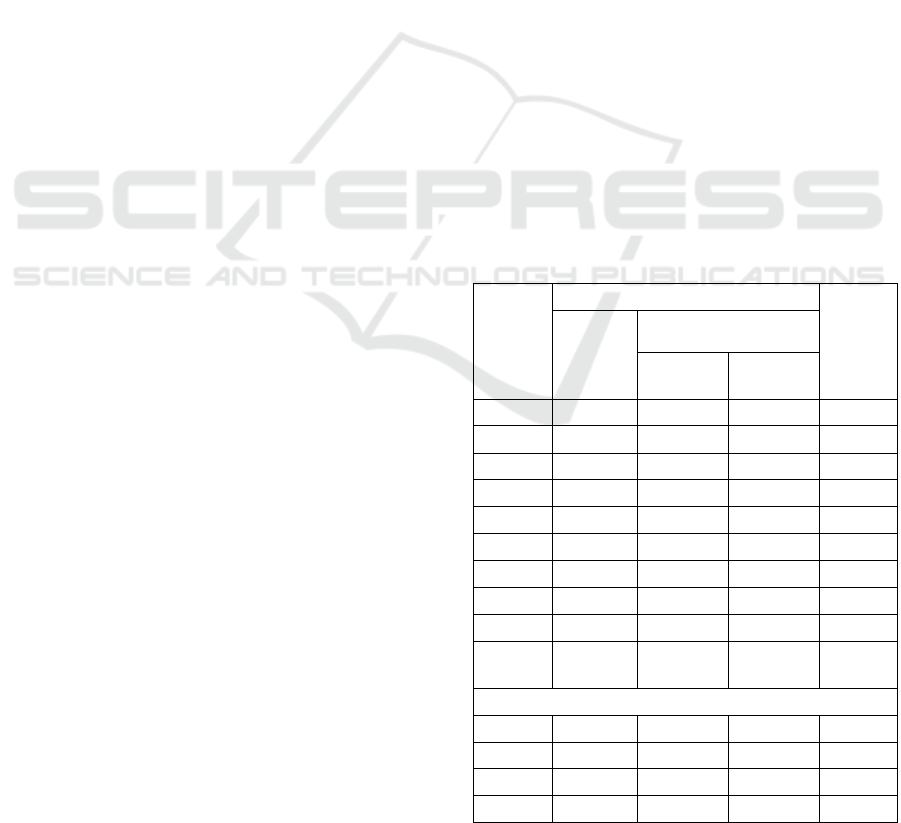
Table 1: Volume weight of the experimental field soil and
the limited field moisture capacity (LFMC).
Layers,
cm
Volume weight of soil, g/сm
3
LFMC,
%
Summer
Autumn
No
mulching
With
mulching
0-10 1.35 1.42 1.40 17.8
10-20 1.36 1.41 1.39 18.6
20-30 1.37 1.42 1.41 19.2
30-40 1.43 1.44 1.43 19.4
40-50 1.47 1.47 1.45 19.6
50-60 1.42 1.48 1.46 20.6
60-70 1.43 1.47 1.47 21.0
70-80 1.45 1.50 1.49 21.4
80-90 1.44 1.52 1.51 22.0
90-
100
1.43 1.54 1.53 22.9
0-30 1.36 1.41 140 18.5
0-50 1.39 1.43 1.41 18.9
0-70 1.40 1.44 1.43 19.5
0-100 1.41 1.46 1.44 20.2
Effects of Irrigation Technologies on Soybean Varieties Planted as Repeated Crops in Uzbekistan
61

Adequate moisture in the soil during the growing
season for soybean varieties is important for its
growth, development and harvest. To keep the soil
moisture before irrigation at 70-70-60% of the limited
field moisture capacity, Nafis and Orzu varieties of
soybean are applied once during the application
period, and soy to maintain the soil moisture before
irrigation at around 75-75-65% of the limited field
moisture capacity. varieties were required to irrigate
2 times. Irrigation timing and norms Soybean
varieties are irrigated from 1 to 4 cm, depending on
the amount of soil moisture in the layer 0-50 cm
before flowering, 0-70 cm during the formation of
pods and 0-50 cm during ripening. In options 2, 5, 8,
and 11, depending on the amount of soil moisture in
the layer 0-50 cm before flowering, 0-50 cm during
the formation of pods and 0-50 cm during ripening, in
rows 3, 6, 9, and 12 irrigated with film between rows
and 0-30 cm before flowering, 0-50 cm during the
formation of pods and 0-30 cm during ripening,
depending on the amount of soil moisture in the layer.
During the period of application of soybean varieties,
the established irrigation regime was fully followed,
and the error was around 0.3-1.9%. Preirrigation soil
moisture in the order of 70-70-60% relative to the
limited field moisture capacity In the 1st option,
irrigated from all branches, the soil moisture after
irrigation (in the 0-100 cm layer of soil) is 15.1%
from 212.9 mm - 18.1 % Up to 255.2 mm, in the 2nd
option irrigated between the rows from 16.1% to
227.0 mm - from 18.0% to 253.8 mm, in the 3rd
option irrigated with a film between the rows of soy
16.4% (232.1 mm) - increased by 17.8% to 250.9
mm. Nafis variety of soy In the 4,5, and 6 options
irrigated in the order of 75-75-60% relative to the
limited field moisture capacity of the soil before
irrigation, the soy is from 16.0% to 225.6 mm to
17.8% to 250.9 mm , from 16.7% to 235.4 mm to
18.0% to 253.8 mm when irrigated, and from 16.8%
to 236.8 mm to 17.6% to 248.1 mm in the case of
irrigated with a film between the rows of soy. found
to increase. Similar data preceded the planted
varieties of the soy Orzu variety.
These figures were 180-225 m3/ha (24-29%) in
the inter-irrigated options of the Orzu variety of soy
and 350-375 m3/ha (40-56%) in the irrigated options
of the soy. In the experiment, the lowest yield in the
options planted with fine soybeans was observed in
the irrigated options of soybeans in the order of 70-
70-60% relative to the limited field moisture capacity
before irrigation with the lowest yield. The yield was
25.426.6 q/ha. The minimum yield in the options was
25.4-26.6 q/ha
.
4 CONCLUSIONS
In the conditions of meadow-gray soils of Jizzakh
province, the most favorable conditions for their
growth and development in the care of Nafis and Orzu
varieties of soy were preirrigation in the order of 75-
75-65% of the limited field moisture content of the
soil. In the experiment, the bulk weight of the soil
increased slightly towards the end of the growing
season and the bulk weight of the soil in the 0-50, 0-
70 and 0-100 cm layers increased slightly and the
soybean varieties were irrigated from all branches in
the 0-50, 0-70 and 0100 cm layers of the soil. 1.43-
1.44-1.46 g/cm
3
, while in the irrigated options
covered with a film on the soy branches is 1.41-1.43-
1.44 g/cm
3
. It was found to be less dense at 01-0.02
g/cm
3
.
While the water permeability of the soil was 1,550
m3/ha in 6 hours in spring, the water permeability of
the soil decreased slightly in autumn as a result of
irrigation during the growing season and their norms
and the passage of techniques between rows, and
1,0451,050 m3/ha was 1,105-1,245 m3/ha in the
irrigated options with a film between the edges.
It was found that 175-220 m3/ha of 27-29% of
water was saved in each irrigation in the irrigated
options of the Shaf Nafis variety compared to all
irrigated options, while 40-56% of water was saved in
the 340-355 m3/ha of film irrigated options. These
figures were 2429% for 180-225 m3/ha in the inter-
irrigated options of the Orzu variety of soy and 40-
56% for 350-375 m3/ha in the irrigated options with
film coating on the soy.
In the experiment, the highest yields in the options
of Nafis and Orzu soybeans were obtained from the
options irrigated by covering the soil moisture in the
order of 75-75-65% with respect to the limited field
moisture capacity before irrigation, and the yield was
33.631.1 q/ha.
In the experiment, the minimum water consumption
for the cultivation of 1 q of soybean was 8.4 m3/q in
3 options of film soy for the owners of Nafis variety
of soybeans and 9.7 m3/q in the option of 9 varieties
of soybeans irrigated with film
.
REFERENCES
Abdalova, G.N., Eshonkulov, J.S., Sulaymonov, S. O., &
Abdullayeva, F.M., 2021. Improvement of cotton
nutrition procedure and irrigation technologies.
ACADEMICIA: An International Multidisciplinary
Research Journal, 11(4), 720-723.
Abdalova, G. N., Eshonkulov, J. S., Sulaymonov, S. O., &
Abdullayeva, F.M., 2021. Improvement of cotton
nutrition procedure and irrigation technologies.
I-CRAFT 2024 - 4th International Conference on Research of Agricultural and Food Technologies
62

ACADEMICIA: An International Multidisciplinary
Research Journal, 11(4), 720-723.
Abdullaeva, Y., 2014. Biochar effects on fertility of saline
and alkaline soils (Navoiy Region, Uzbekistan). Final
project, Agriculture, United Nations University Land
Restoration Training Programme Iceland.
Alimova, F.A., Primkulov, B.Sh., Saidova, M.T., &
Boboniyozov, E.A., 2022. Combined aggregate for
strip tillage and simultaneous sowing of re-crops. IOP
Conference Series: Earth and Environmental Science,
1112(1).
Alimova, F.A., Saidova, M.T., & Primkulov, B. Sh., 2023.
Pneumatic feed mechanism for accurate sowing of bare
cotton seeds. IOP Conference Series: Earth and
Environmental Science, 1231(1).
https://doi.org/10.1088/1755-1315/1231/1/012012.
Jan, M., Hussain, S., Haq, M.A., Iqbal, J., Ahmad, I.,
Aslam, M., & Faiz, A., 2020. Effect of farm yard
manure and compost application on transgenic BT
cotton varieties. Pak. J. Agric. Res, 33(2), 371-380.
Khujanovich, B.B., 2021. Cost-effectiveness of Fertilizer
Rate Setting in the Cultivation of the Planned Fine-fiber
Cotton Crop. European Journal of Agricultural and
Rural Education, 2(6), 30-33.
Muradov, B., & Ilkhamov, A., 2014. Uzbekistan’s Cotton
Sector: Financial Flows and Distribution of Resources.
Open Society Eurasia Program Working Paper, 1-66.
Obidjonovich, H. A., 2022. Diseases of the cotton plant and
its analysis. Web of Scientist: International Scientific
Research Journal, 3(4), 308-313.
Rudenko, I., 2008. Value chains for rural and regional
development: The case of cotton, wheat, fruit and
vegetable value chains in the lower reaches of the Amu
Darya River, Uzbekistan.
Rudenko, I., Nurmetov, K., & Lamers, J.P., 2012. State
order and policy strategies in the cotton and wheat value
chains. Cotton, water, salts and Soums: economic and
ecological restructuring in Khorezm, Uzbekistan, 371-
387
Turdievich, M.A., 2016. The substantiation of energy-
saving technology and field tests of universal machines
for tilling the soil in interrows of gardens. European
science review, (9-10), 195-198.
Tuxtamishev, M.A., Eshonqulov, J.S., Tuxtamishev, E.Q.,
2022. Effects irrigation procedures and methods on the
oil and protein quality of shade varieties.
ACADEMICIA: An International Multidisciplinary
Research Journal, 11-14.
Tuxtamishev, M.A. & Shamsiyev, A.S., 2020. The impact
of orzu and nafis soybean varieties on the irrigation
regimes of the harvest. Remote Possibilities and
Achievements of Science International Scientific and
Practical Conference, 28-31.
Tuxtamishev, M.A., Shamsiyev, A.S., Eshonqulov, J.S.,
Tuxtamishev, E.Q., 2022. Influence of irrigation
procedures and methods on the growth and
development of shade varieties. International
Multidisciplinary Conference Hosted from Manchester,
England, 47-49.
Tuxtamishev, M.A., Shamsiyev, A.S., Sheraliyev, X.,
Nishanov J., 2021. The effect of shade on the yield of
irrigation procedures of nafis and orzu varieties in the
conditions of jizzakh region. Galaxy International
Interdisciplinary Research Journal, 1425-1429.
Effects of Irrigation Technologies on Soybean Varieties Planted as Repeated Crops in Uzbekistan
63
