Development Testing and Energy Efficiency Assessment of
Electrotechnology for Resiving Mulberry Silkworm Sponge
Urolboy Khaliknazarov
a
, Bobur Kamilov
b
, Abbas Tursunov
c
, Ulugbek Ibrokhimov
d
and Bekzod Choriev
e
Tashkent State Agrarian University, 100140, University str. 2, Tashkent, Uzbekistan
Keywords: Electrotechnology, Silkworm Processing, Energy Efficiency.
Abstract: Since the cocoon and the dome inside it have different electrical absorption capacity, treatment with an
ultrahigh frequency electromagnetic field during degreasing of the silkworm dome of the silkworm makes it
possible to achieve higher efficiency compared with other electrical physical influences. Because the ultrahigh
frequency electromagnetic field is absorbed only in the dome, almost not being absorbed by the cocoon shell.
As a result, the dome inside the cocoon is burned by heating at high temperature for a short period of time
.
1 INTRODUCTION
Today, new technologies are being applied in the
world for growing, storing and processing cocoons.
In particular, scientific-research works aimed at
developing new scientific and technical solutions of
resource-saving technology and techniques of cocoon
devitrification are being carried out. In this regard,
special attention is paid to the use of energy and
resource-saving methods, which ensure complete
inanimation of the cocoon without cracking,
compared to heat and chemical treatment. Therefore,
it is an important task to develop an electrotechnology
that ensures the complete death of the cocoon without
adversely affecting the quality of the cocoon, as well
as to justify its technological parameters and
operating modes.
In the cocoon processing enterprises in our
country, the silkworm inside the cocoon is killed by
hot air treatment to kill the cocoon during the drying
process. In this process, the high energy consumption,
low productivity and 7-8 hours of re-drying after
processing lead to deterioration of the quality index
of the obtained silk product. Therefore,
a
https://orcid.org/0009-0003-8775-5333
b
https://orcid.org/0000-0003-1430-5029
c
https://orcid.org/0000-0003-1430-4489
d
https://orcid.org/0009-0008-6732-9915
e
https://orcid.org/0009-0005-4806-1982
comprehensive measures are being implemented to
gradually provide the silk industry with modern,
energy-efficient technologies (Khaliknazarov et al.,
2021; Khaliknazarov & Turdiboyev, 2021; Radjabov
et al., 2021; Turdiboyev et al., 2022; Khaliknazarov
et al., 2024; Khaliknazarov & Ibrokhimov, 2024;
Mirzakhodjaev et al., 2024).
The demand for natural silk and silk fabrics in
Jakhan bazaar is increasing day by day. In the world,
more than 630,000 tons of cocoons are grown
annually by more than 35 countries, and they are
primarily processed into raw silk. China, India,
Uzbekistan, Thailand, Brazil, Vietnam, North Korea
and Iran are among the advanced countries engaged
in cocoon preparation and processing (Khaliknazarov
& Turdiboyev, 2021; Radjabov et al., 2021;
Turdiboyev et al., 2022; Khaliknazarov &
Ibrokhimov, 2024).
One of the important issues is the modernization
and technical re-equipment of silk industry
enterprises, the introduction of modern energy-saving
innovative technologies and developments that can
ensure the improvement of the quality of natural silk
products.
Khaliknazarov, U., Kamilov, B., Tursunov, A., Ibrokhimov, U. and Choriev, B.
Development Testing and Energy Efficiency Assessment of Electrotechnology for Resiving Mulberry Silkworm Sponge.
DOI: 10.5220/0014043900004738
Paper published under CC license (CC BY-NC-ND 4.0)
In Proceedings of the 4th International Conference on Research of Agricultural and Food Technologies (I-CRAFT 2024), pages 45-49
ISBN: 978-989-758-773-3; ISSN: 3051-7710
Proceedings Copyright © 2025 by SCITEPRESS – Science and Technology Publications, Lda.
45
2 MATERIALS AND METHODS
Requirements for technical and technological
indicators of animized and dried cocoons.
According to GOST 8417-57, depending on the
quality of the dead and dried cocoons and the yield of
raw silk, the cocoons are divided into 1 and 2 grades.
(Turdiboyev et al., 2022).
According to the characteristics of the shell
surface, each type of cocoon must meet the following
requirements:
Table 1: Classification of the cocoon into classes depending
on the characteristics of the shell surface.
Varieties
of
cocoons
Characteristics of the surface of the
cocoon
1
Clean, unshelled cocoons. A batch with no
spots on the surface or spots with a total
diameter of no more than 5 mm, each scar
no more than 10 mm, and spots with
smooth shiny spots no longer than 10 mm
in len
g
th is allowed.
2
A cocoon with a spot or a total spot on the
surface not exceeding 25% of the shell
surface, each spot not exceeding 15 mm in
length, a batch of spots with smooth shiny
areas not exceeding 15 mm, deformed,
thin-walled, forms characteristic of this
variety, or hybrid and thin transparent
cocoons.
If there are several scars or smooth shiny areas on
the surface of the cocoon, its variety is determined by
the largest size of one of the scars or smooth shiny
area (Khaliknazarov & Turdiboyev, 2021).
Varieties include undifferentiated cocoons,
cocoons with spots on the cocoon surface more than
25% of the total cocoon shell surface, scar more than
15 mm, smooth shiny area more than 15 mm. The
entire length of the shell is strongly deformed and the
bark is sticky, the surface of the shell is covered with
spots, twining, leaking, moldy, hardened,
underdeveloped, and the shape is sharply distorted
(Khaliknazarov & Turdiboyev, 2021; Radjabov et al.,
2021; Turdiboyev et al., 2022; Khaliknazarov &
Ibrokhimov, 2024; Mirzakhodjaev et al., 2024).
A whole cocoon that is of high quality in terms of
shell surface characteristics and meets the
requirements of Level 2 cocoons, but has a raw silk
yield of less than 23%, is classified as substandard.
The productivity of cocoons of grade 1 should be
-35.7%, the productivity of cocoons of grade 2 -
28.8% (Turdiboyev et al., 2022).
Moisture content for all types of cocoons is set at
10.0%.
No more than 10.0% of the cocoon content of
black pods and live specimen pods, separated into
varieties, is allowed.
Moisture content of raw silk is allowed up to
11.0%.
The moisture content of cocoons supplied to
sericulture factories should be less than 4%
(Khaliknazarov & Ibrokhimov, 2024).
3 RESULTS AND DISCUSSION
An ultra-high frequency electromagnetic field
treatment device in killing mulberry silkworm
cocoons.
On the basis of the above results obtained in
laboratory conditions, a technical assignment was
developed for the design of an electrical technological
device for the death of the mulberry silkworm
cocoon.
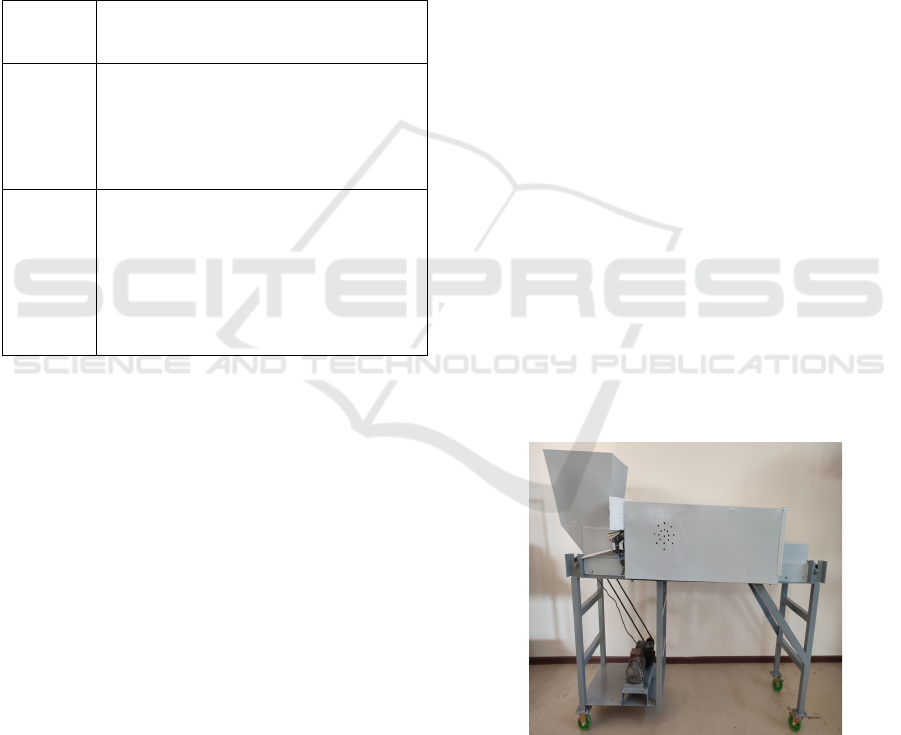
Figure 4.1 shows an overview of the ultra-high-
frequency electro-magnetic field treatment device
used to kill the mulberry silkworm cocoon. The first
processed cocoons are placed in a hopper with a
distributing iron box. From the hopper, the cocoons
are transferred to the processing chamber by means
of a moving belt conveyor. The belt conveyor is
driven by a 1.1 kW asynchronous electric motor and
a reduction gear. The drive of the belt conveyor
through the reducer is carried out with the help of
pulleys and a belt.
Figure 1: An overview of the first ultra-high-frequency
electric magnetic field treatment device for cocoons.
The device consists of three working cameras.
Three 1000 W magnetrons are installed on the side
walls of the working chamber. (Figure 2). The
cocoons are placed in a hopper with a distributing iron
I-CRAFT 2024 - 4th International Conference on Research of Agricultural and Food Technologies
46
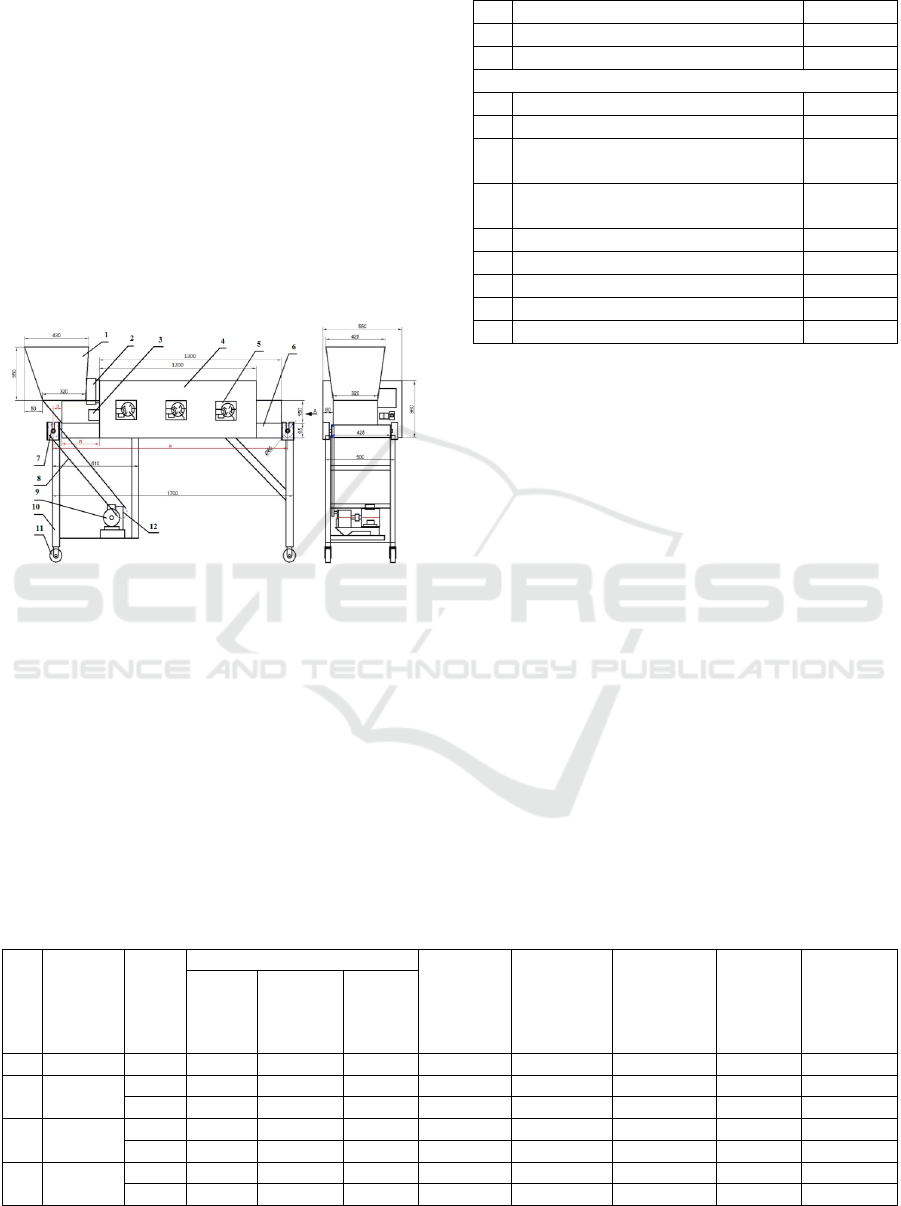
box. Device start-up electrical control box 2 and 3
(shchiti). From the hopper, the cocoons are
transferred to the processing chamber 4 by means of
a moving belt conveyor. On the sides of the working
chambers, 5 magnetrons with 1000 W of power for
primary processing of the cocoon are installed. The
dead cocoons are introduced into the working
chamber through a conveyor belt 6. The conveyor
with a moving belt is driven by the drive shaft 7, the
electric motor 9 with a power of 1.1 kW.
The principle circuit diagram of the cocoon
pretreatment device with an ultra-high frequency
electric magnetic field is shown in Figure 2. The
device is protected by a circuit breaker (QF) to protect
it from short circuit and overload currents.
a) Main view b) Side view
Figure 2: Scheme of arrangement of the elements of the
pretreatment device with an ultra-high frequency electric
magnetic field in the cocoon. 1. Iron cell bunker 2. Electric
control box that starts the device 3. Programmable time
relay 4. Working camera 5. Ultra high frequency
electromagnetic wave scattering magnetron 6. A cocoon
conveyor with a moving belt 7. Belt conveyor drive shaft 8.
Belt drive belt conveyor 9. Electric motor 10. Device
support 11. Wheels of the device.
An M1 electric motor is used to rotate the
conveyor belt.
The main technical indicators of the device are
presented in Table 2.
Table 2: Technical indicators of the device.
№ Productivity Value
1 During the death of the cocoon, kg∙h 60
2 During semi-drying, kg∙h 12
Device parameters
1 Number of working chamber, piece 3
2 Width of the working chamber, mm 320
3 The thickness of the processed
cocoon layer, mm
30
4 Movement speed of conveyors,
m/min
0,68
5 Installed electric motor capacity, kW 1,1
6 Power of magnetrons, kW 3∙1=3
7 Fan power for cooling, kW 0,075
8 Total energy consumption, kWh 2.1
9 Service worker 1 person
The structural indicators of the cocoon obtained
for the experiment are presented in Table 3.
Results of an experiment conducted under
production conditions of a mulberry silkworm cocoon
deactivation device.
The following were taken as the main factors
representing the effect of an extremely high
frequency electric magnetic field: Power of
processing device (R), Processing time (t), and
thickness of the processed product layer (h). In order
to evaluate the effectiveness of the ultra-high
frequency electromagnetic field and to characterize
the processed product, the degree of inactivation of
the sponge inside the cocoon (W) was adopted.
The following parameters were adopted in order
to achieve the maximum level of inanimation during
treatment with an extremely high frequency electric
magnetic field before inanimation of the mulberry
silkworm cocoon: R=950-1000 W; t = 29-30 minutes;
h = 30mm.
In killing the silkworm cocoon: the cocoon is
treated with an extremely high frequency electric
magnetic field.
Table 3: Structural indicators of the cocoon taken for the experiment.
№ Cocoon
Class
Class The size of the cocoon, % Average
weight of
the
cocoon, g
The
average
weight of
the
cocoon,
g
Average
silkiness of
cocoons,%
Average
flatness
of silk
Metric
number
of cocoon
fiber, m/g
Small
(14-15
мм)
Medium
(16-19
мм)
Large
(20-22
мм)
1 2 3 4 5 6 7 8 9 10 11
1. China
I 4,50 78,26 17,24 2,.23 0,417 41,78 0,274 3650
II 4,10 77,15 16,33 1,94 0,389 40,28 0,238 3592
2.
Ipakchi-
1
I 4.48 77.33 16.67 2.22 0.497 50.90 0.272 3676
II 4,36 76,83 16,12 1,99 0,415 50,56 0,242 3601
3.
Ipakchi
-2
I 4.31 78.21 16.85 2.21 0.424 42.25 0.269 3595
II 4,25 76,28 16,61 2,18 0,422 41,85 0,253 3498
Development Testing and Energy Efficiency Assessment of Electrotechnology for Resiving Mulberry Silkworm Sponge
47
By first treating the cocoon with an ultra-high
frequency electromagnetic field, the degree of
inactivation of the cocoon bubble was increased to
96-100%. The duration of electrical treatment, the
thickness of the cocoon layer, the amount of slime on
the surface of the cocoon, the type of cocoon, and the
intensity of the electric field affect the death of the
mulberry silkworm cocoon. The duration of electrical
treatment, the thickness of the cocoon layer, the
amount of slime on the surface of the cocoon, the type
of cocoon, and the intensity of the electric field affect
the death of the mulberry silkworm cocoon.
The following varieties of cocoons were taken for
research.
"China" - I, II class
"Ipakchi 1" - I, II class
"Ipakchi 2" - I, II class
As a result of the tests conducted under production
conditions, it was determined that the cocoon
processing device with an ultra-high frequency
electric magnetic field is suitable for providing the
parameters and modes of the technological process
under the production conditions of the laboratory
copy.
A study was conducted to check the technological
mode and parameters of mulberry silkworm cocoons
in the production line of the cocoon primary
processing enterprise belonging to "TST Agrocluster"
LLC, Kuyichirchik district, Tashkent region.
In order to conduct experiments under production
conditions, the structural indicators of cocoons were
analyzed in the laboratory of the primary cocoon
processing enterprise belonging to "TST Agroklaster"
LLC.
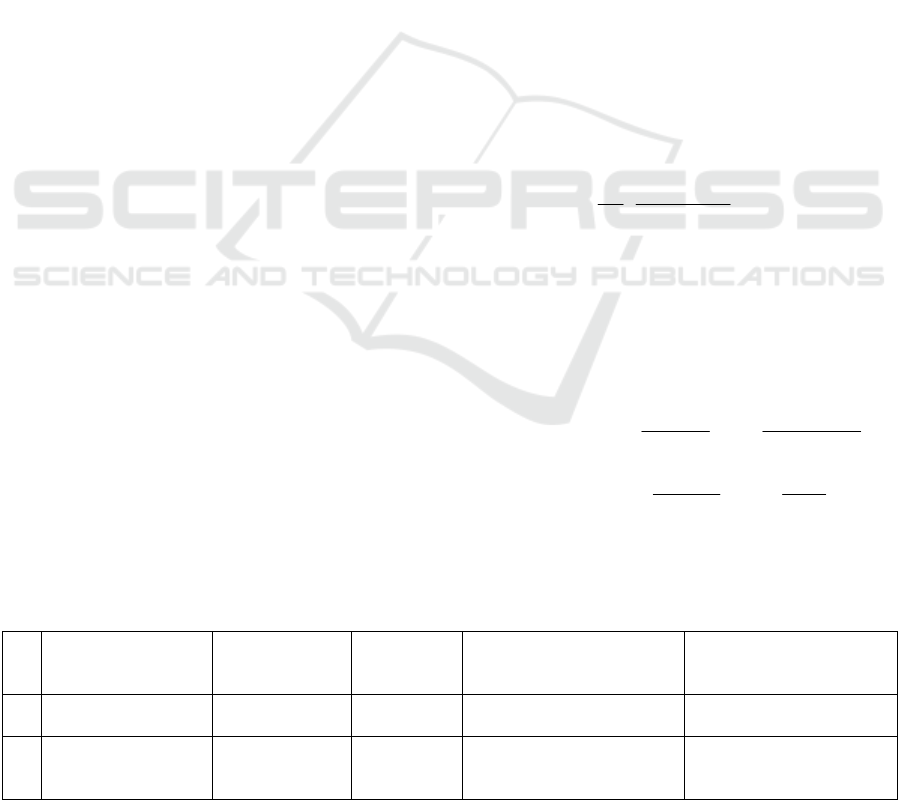
The results of the experiment on killing the
mulberry silkworm cocoon with an extremely high
frequency electric magnetic field are presented in
Table 4.
From the experimental tests carried out under
production conditions, we can say that the yield of
defective cocoons when killing the mulberry
silkworm cocoon according to the proposed
technology is up to 4-5%, while in the current
technology it is 10-11%. Compared to the current
technology, the output of defective cocoons is
reduced to 5-6%. As a result, it is possible to improve
the quality indicators of the silk obtained from the
cocoon.
Evaluating the efficiency of electrotechnology
for killing the mulberry silkworm cocoon.
The ultra-high frequency (UHF) electric magnetic
field treatment device for killing the mulberry
silkworm cocoon was tested at the cocoon processing
enterprise of "TST Agrocluster" LLC, Lower
Chirchik district. Economic efficiency was calculated
on the basis of the current technology used in killing
the mulberry silkworm and the results obtained with
ultra-high frequency (UHF) electromagnetic field
treatment. Table 5 lists the names of the equipment
used in the death of mulberry silkworm cocoons and
the amount of electricity and heat energy used to
process 1 ton of the product.
Based on the table given above, we determine the
relative amount of electricity and fuel used for the
processing of 1 ton of the product and the amount of
processed product of the equipment used in the
process of killing the mulberry silkworm through the
following expression.
tons
hourkW
,
⋅
=
i
i
i
A
P
W
(1)
Here Р
i
– power of the equipment;
А
i
– Product
processing efficiency of the equipment in 1 hour;
We calculate the relative electricity and diesel fuel
consumption for killing 1 tons of mulberry silkworm
cocoon in the SK-150K device.
tons
96
3625,0
8,34
yelectricit
hourкW
W
⋅
==
tons
liter
100
3625,0
5,36
diesel
==W
Table 4: The technological process of killing the mulberry silkworm cocoon and the amounts of energy used for it.
№
Technological
process
Device name Productivity
Electricity consumption in
1 hour for cocoon
p
rocessin
g
; kWh
Diesel fuel consumption
in 1 hour for cocoon
p
rocessin
g
; l.
1
Killing the mulberry
silkworm cocoon
SK-150K 8,7 tons/day 34,8 36,5
2
Killing the mulberry
silkworm cocoon
Very high
frequency
electric fiel
d
0,288
tons/day
2,1 -
I-CRAFT 2024 - 4th International Conference on Research of Agricultural and Food Technologies
48
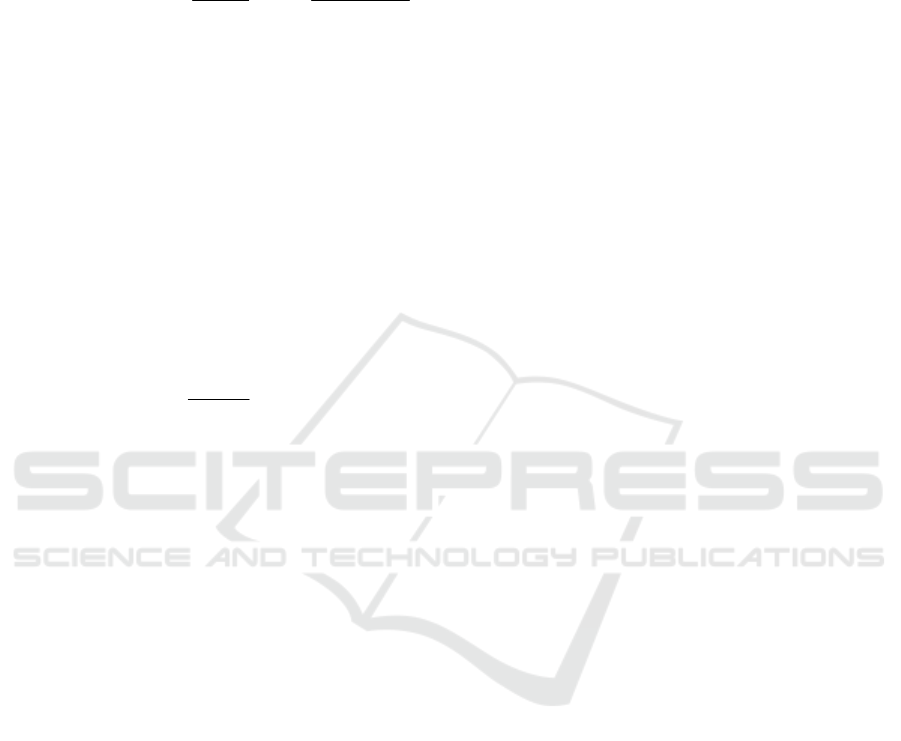
We calculate the relative electricity consumption
for killing 1 tons of mulberry silkworm cocoons in the
proposed ultra-high frequency electric magnetic field
treatment device.
tons
175
012,0
1,2
yelectricit
hourкW
W
⋅
==
Considering that the price of 1 kW∙s of electricity
for production enterprises today is 450 soums, 43200
soums for processing 1 ton of live cocoons in the SK-
150K device;
Considering the price of diesel fuel is 5800 soums,
580000 soums will be spent.
78750 soums will be spent if the proposed ultra-
high-frequency electric magnetic field is treated.
We determine the difference in comparative costs
for killing 1 ton of mulberry silkworms according to
the current and proposed technology.
tons
Э
soum
544450
7875058000043200
=
−+=Δ
If an average capacity cocoon processing plant
processes 60 tons of cocoons in one season;
soum32667000
54445060
seasonseason
=
⋅=Δ⋅=Δ ЭАЭ
38925000 soums are saved in one season.
If we subtract 5825000 soums from this profit, the
expected economic efficiency per season is 26842000
soum
.
4 CONCLUSIONS
According to the results of experimental tests carried
out in production conditions, the level of deactivation
of the sponge increases up to 96% with the initial
treatment of the cocoon with an extremely high
frequency electric magnetic field. The duration of
treatment with electric physical action in killing the
sponge inside the cocoon affects the type of cocoon,
its physical-mechanical properties and processing
power, and allows up to 41% energy saving compared
to the current technology. As a result, the cost of the
silk obtained from the cocoon is reduced. Because the
high-frequency electric magnetic field is almost not
absorbed in the cocoon, but only in the mushroom. As
a result, the fungus inside the cocoon becomes dead
due to heating at high temperature in a short period of
time
.
REFERENCES
Khaliknazarov U.А. & Turdiboyev А.А., 2021. Using the
Ultrahigh Frequency Effect (UFEF) Electromagnetic
Field During Dehydration of Silkworm. International
Journal of Advanced Research in Science, Engineering
and Technology, 8(7), 17623-17625.
Khaliknazarov, U. & Ibrokhimov, U., 2024. Design of a
water pump-solar source system for drinking water
supply. BIO Web of Conferences, 85, 01004
https://doi.org/10.1051/bioconf/20248501004
Khaliknazarov, U., Tursunov, A., Jalilov, N., Dinikulov,
D., 2024. Lecture Notes in Networks and Systems, 733,
573.
Khaliknazarov, U., Akbarov, D., Tursunov, A., Gafforov,
S., Abdunabiev, D., 2021. Existing problems of drying
cocoon and making chrysalis feeble, and their solutions.
IOP Conference Series: Earth and Environmental
Science, 939(1), 012020. DOI: 10.1088/1755-
1315/939/1/012020.
Mirzakhodjaev, S., Djiyanov, M., Nurmikhamedov, B.,
Mamasov, S., 2024. Results of Frontal Plug Tests
Combined with Active Working Body. BIO Web of
Conferences, 85, 01035
https://doi.org/10.1051/bioconf/20248501035.
Radjabov A., Ibragimov M., Eshpulatov, N., 2021. The
study of the electrical conductivity of Apples and
Grapes as an object of electrical processing. E3S Web
of Conferences, 226, 00002.
https://doi.org/10.1051/e3sconf/202122600002.
Turdiboyev, A., Khaliknazarov, U., Akbarov, D.,
Kholiyarov, M., Abdullaeva, S., Butaev, T., 2022.
Study on the energy efficiency issues in extracting fat
and oils from cotton seeds. AIP Conference
Proceedings, 2686 (1), 020019. DOI:
HTTPS://DOI.ORG/10.1063/5.0112950
Development Testing and Energy Efficiency Assessment of Electrotechnology for Resiving Mulberry Silkworm Sponge
49
